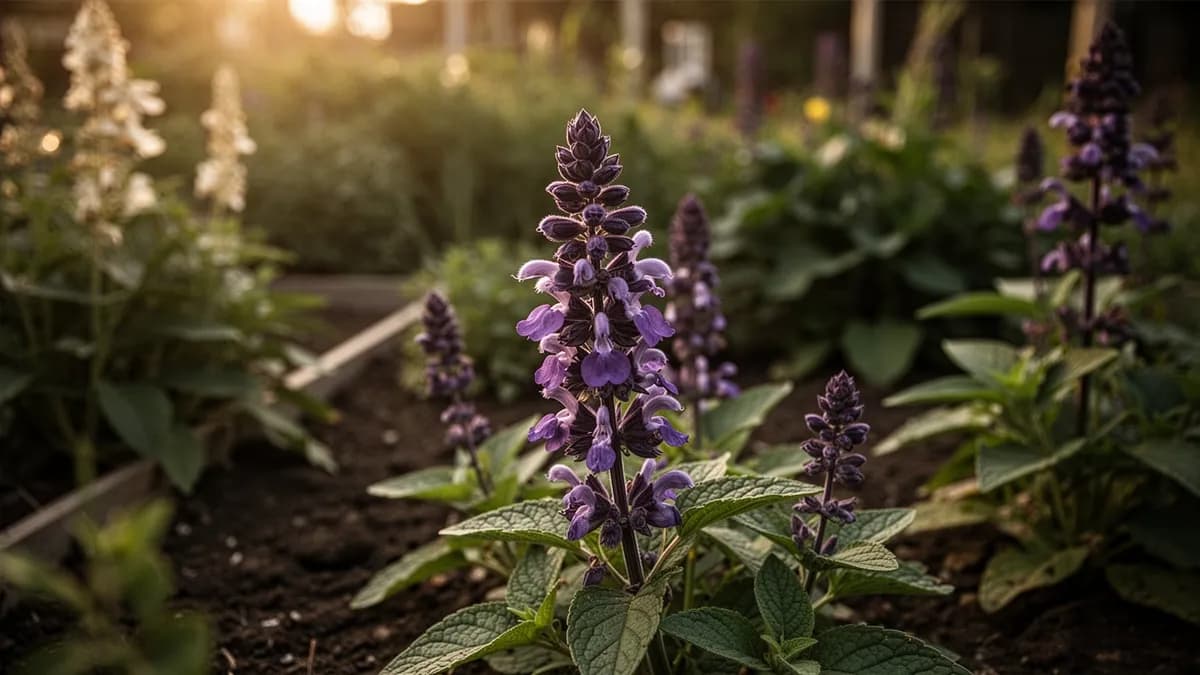
Perennial Salvia
Salvia nemorosa
At a Glance
A long-blooming perennial with dense spikes of violet-blue flowers that attract bees and hummingbirds all season. Perennial salvia is drought-tolerant, deer-resistant, and requires almost no maintenance beyond cutting back spent flower stalks. It makes an excellent companion for roses and pairs beautifully with yellow and orange flowers.
Planting & Harvest Calendar
Growth Stages
From Seed to Harvest
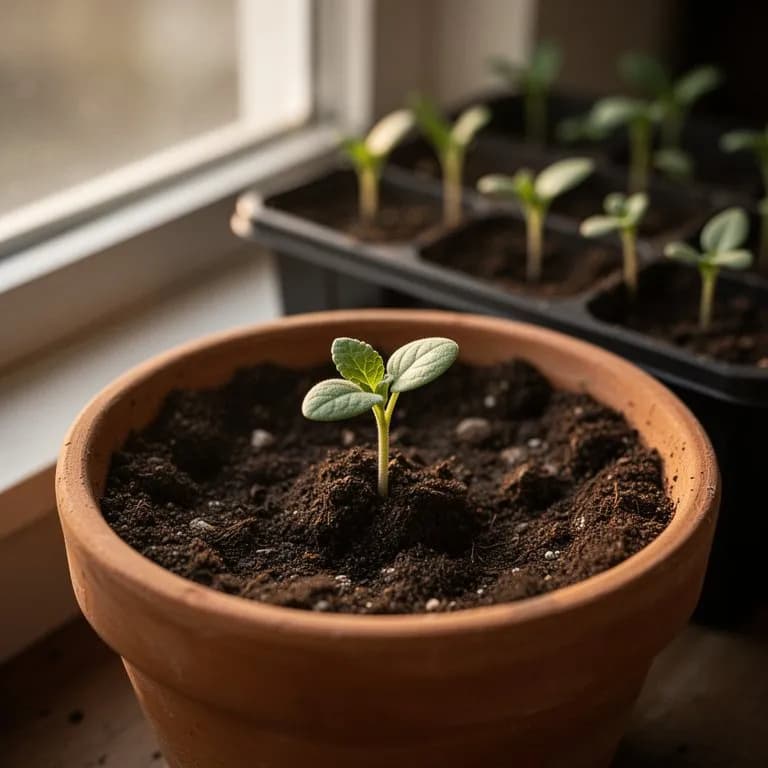
Seed Germination
Days 0–21
Seeds require light and consistent moisture to germinate. Surface-sow on fine compost and keep at 18-22 °C. Germination is often irregular, taking 10 to 21 days depending on seed freshness and temperature.
💡 Care Tip
Do not cover seeds deeply; they need light to germinate. Mist the surface gently to avoid displacing the tiny seeds.
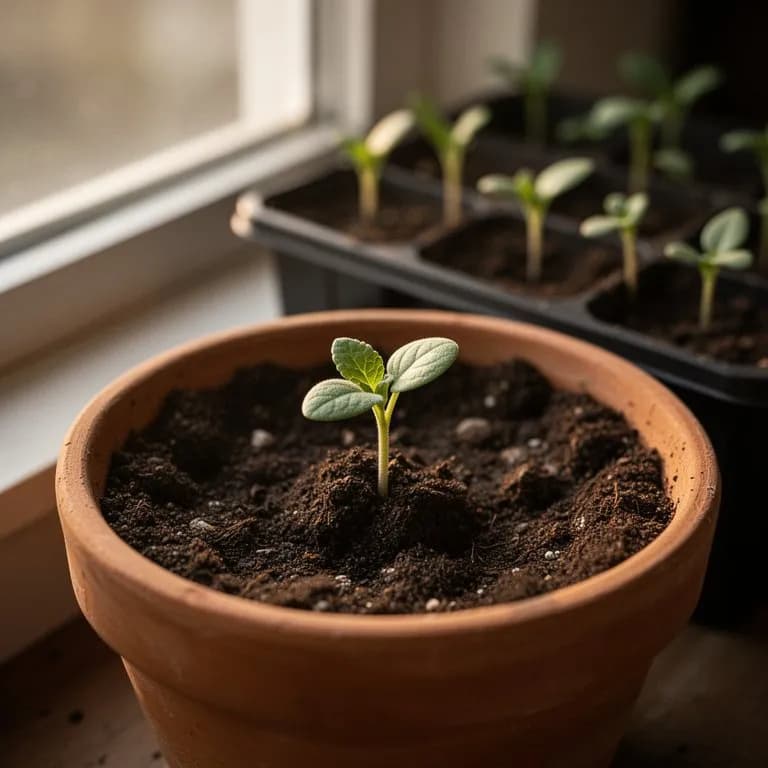
Perennial salvia seedlings develop slowly but establish strong root systems in their first season.
Monthly Care Calendar
What to do each month for your Perennial Salvia
May
You are hereApply a 5 cm layer of gravel or bark mulch around the base to conserve moisture and suppress weeds. Water deeply once per week if rainfall is insufficient.
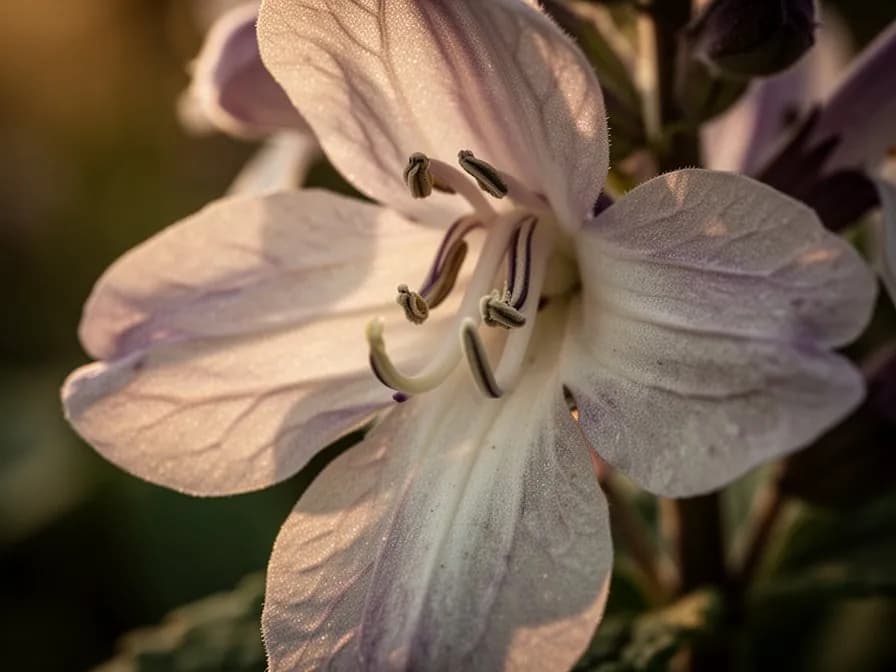
Removing faded spikes promptly encourages a strong second flush of blooms in late summer.
Did You Know?
Fascinating facts about Perennial Salvia
The genus name Salvia comes from the Latin word 'salvere', meaning 'to heal' or 'to save', reflecting the long medicinal history of sage relatives.
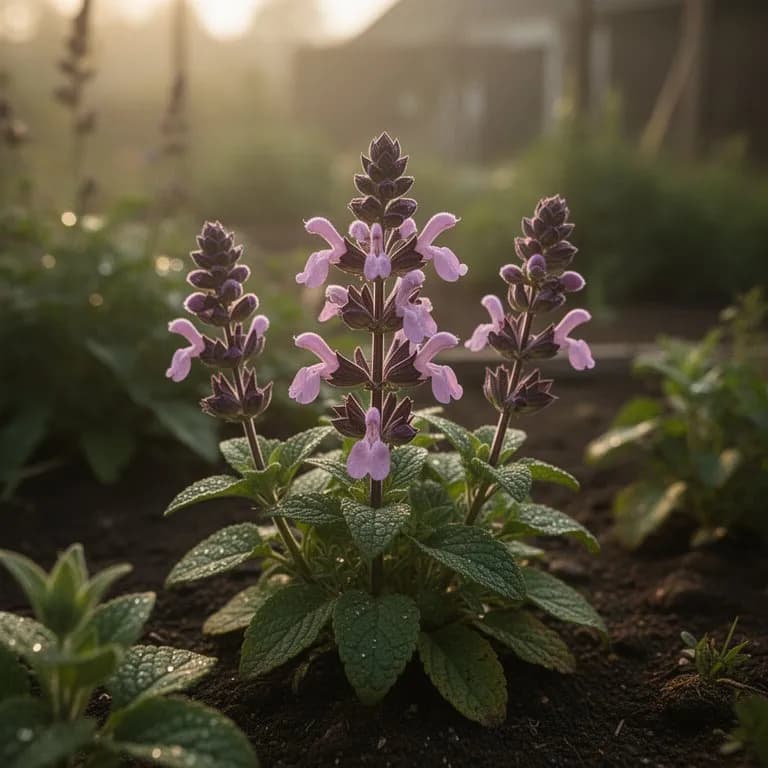
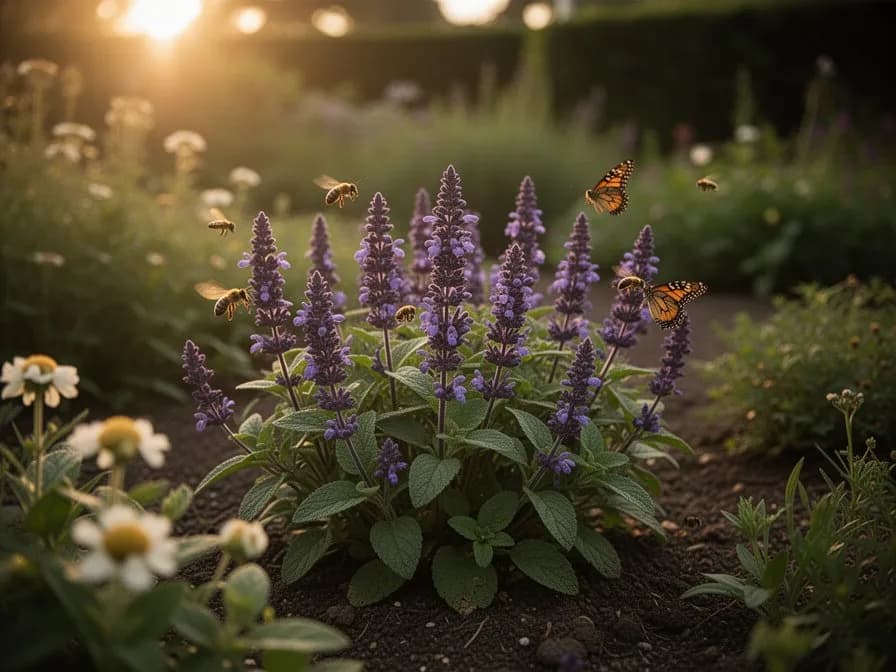
Salvia nemorosa is a magnet for bees, butterflies, and hummingbirds throughout the blooming period.
Perennial salvia (Salvia nemorosa and its hybrids) is one of the most dependable and long-flowering garden perennials, producing dense spikes of violet-blue, purple, pink, or white flowers from late spring well into autumn. Growing 30-60cm tall in neat, compact mounds, these salvias are drought-tolerant, deer-resistant, and virtually pest-free—the ideal low-maintenance perennial.
Plant in full sun in average, well-drained soil. Like most salvias, these plants perform better in lean conditions than rich ones—too much fertility produces floppy growth with fewer flowers. Space 35cm apart for a solid planting that knits together quickly. Water to establish, then these tough plants need supplemental irrigation only during extended drought.
The key to season-long bloom is deadheading: when the first flush of flowers fades, cut the entire flower stem back to the basal foliage. This triggers rapid regrowth and a second, sometimes third flush of bloom. Many cultivars have attractive colored calyces that provide continued color even as individual flowers fade. Cut back all growth in late autumn or early spring to keep plants tidy and vigorous.
Salvia nemorosa, commonly known as perennial meadow sage or woodland sage, is native to a broad geographic range spanning Central Europe, the Balkans, and Western Asia, extending eastward through Turkey and into parts of the Caucasus region. The species thrives naturally in dry meadows, steppe grasslands, and sunny woodland margins, typically on calcareous or well-drained loamy soils at elevations up to 1,500 metres. It was first formally described by the Swedish botanist Carl Linnaeus in his landmark 1753 publication 'Species Plantarum', though European herbalists had recognised and used sage relatives for medicinal purposes long before that date. During the 18th and 19th centuries, European plant collectors brought Salvia nemorosa into cultivation as an ornamental garden plant, prized for its long flowering season, vivid colour, and low maintenance requirements. German and Dutch nurseries were particularly influential in selecting and naming improved cultivars. The celebrated cultivar 'Mainacht' (May Night) was bred by the renowned German nurseryman Karl Foerster in the mid-20th century and quickly became one of the most widely planted perennial salvias worldwide. Other notable selections including 'Caradonna', valued for its near-black stems, and 'Ostfriesland' (East Friesland) followed in subsequent decades. By the late 20th century, Salvia nemorosa had become a cornerstone of the New Perennial planting movement championed by designers such as Piet Oudolf, who featured it prominently in naturalistic public planting schemes across Europe and North America. Today the species and its cultivars are grown on every temperate continent, valued equally for their ornamental merit, drought tolerance, and exceptional benefit to pollinating insects.
Perennial salvia can be grown from seed, though named cultivars do not come true. Sow seeds on the surface of moist compost at 18-22°C, as they need light for germination. Expect seedlings in 14-21 days. Seed-grown plants flower in the second year. For named varieties, divide established clumps in spring or take basal cuttings in late spring. Cuttings root easily in 2-3 weeks in gritty, moist compost.
Perennial salvia thrives in average to lean, well-drained soil with a pH of 6.0-7.5. It performs best in moderately poor conditions—rich soil produces lax growth. Sandy or gravelly soils are ideal. Add grit to heavy clay before planting. Little fertilization is needed; a light application of balanced slow-release fertilizer in spring is sufficient. Avoid high-nitrogen feeds. Container plants need a well-drained mix and monthly feeding during the growing season.
Check Your Zone
See if Perennial Salvia is suitable for your location.
-34°C – 35°C
-29°F – 95°F
Salvia nemorosa is exceptionally cold-hardy, surviving winter temperatures as low as -34 °C (USDA Zone 4). It performs best when daytime growing-season temperatures range between 18 °C and 28 °C. The plant tolerates brief heat spikes up to 35 °C provided it has well-drained soil and is not waterlogged. Prolonged temperatures above 35 °C combined with high humidity may stress the plant and increase susceptibility to powdery mildew.
Common issues affecting Perennial Salvia and how to prevent and treat them organically.
Floppy growth from too much shade or rich soil is the most common complaint—grow lean and in full sun for compact, upright plants. Failure to deadhead results in a shortened bloom season. Crown rot in wet winter soil can kill plants; ensure drainage is excellent. In the coldest part of their range (Zone 4), apply a light winter mulch for protection. Perennial salvias are otherwise remarkably trouble-free.
Perennial salvia is the quintessential rose companion—the blue-violet spikes complement every rose color from white through pink to deep red. Plant with catmint, coneflowers, and ornamental grasses for a pollinator-friendly, low-maintenance border. The vertical spikes contrast beautifully with the rounded forms of geraniums and the flat heads of yarrow and sedum. Yellow flowers—coreopsis, rudbeckia, and achillea—create vibrant complementary combinations with blue salvias.
- 1Plant in full sun with at least 6 hours of direct sunlight daily for the best flower production and most compact growth habit.
- 2Ensure excellent drainage — Salvia nemorosa will not tolerate waterlogged soil, especially in winter. Amend heavy clay with coarse grit or perlite before planting.
- 3Space plants 30-45 cm apart to allow adequate air circulation, which reduces the risk of powdery mildew in humid climates.
- 4Deadhead the first flush of flowers promptly by cutting spikes back to the basal rosette to trigger a strong second bloom in late summer.
- 5Avoid excessive nitrogen fertiliser, which promotes floppy, leggy growth at the expense of flowers. A single spring application of balanced fertiliser is sufficient.
- 6Divide established clumps every 3-4 years in early spring to maintain vigour, prevent the centre from becoming woody, and produce free new plants.
- 7Mulch with gravel or stone chippings rather than organic mulch directly against the crown, as this keeps the base dry and mimics the plant's natural rocky habitat.
- 8Take basal stem cuttings in September from non-flowering shoots for a reliable propagation method that produces true-to-type plants faster than seed.
- 9Leave the final autumn flower spikes and dried foliage in place until late winter — they provide seed for birds, shelter for overwintering beneficial insects, and attractive winter structure.
- 10Pair with complementary companions such as Nepeta, Perovskia, Echinacea, and ornamental grasses for a naturalistic, low-maintenance planting scheme that looks stunning from late spring through autumn.
Perennial salvia spikes make attractive additions to fresh flower arrangements. Cut when the lower third of the spike is in full bloom and upper buds are showing color. The spikes last 5-7 days in water. The flowers also dry well—cut at peak bloom and hang upside down in a dark room for 1-2 weeks. Dried spikes retain their purple-blue color and work beautifully in dried arrangements.
Dried salvia spikes maintain excellent color and form for months in dried arrangements. Hang-dry bundles for 2 weeks in a warm, dark location. The flowers can also be pressed for crafts. For seed saving, allow some flower spikes to mature fully on the plant in autumn—collect dried seed when stems are brown and crisp. Named cultivars do not come true from seed and must be propagated vegetatively.
Plan your garden with ease
Love growing Perennial Salvia? Use our free garden planner to design your beds, track planting dates, and get personalized care reminders.
Nutritional Info
Per 100g serving
0
Calories
Health Benefits
- Salvia nemorosa is grown exclusively as an ornamental perennial and is not cultivated for culinary or nutritional use.
- Unlike culinary sage (Salvia officinalis), perennial meadow sage leaves are not palatable and are not used in cooking.
- The plant's primary value lies in its ecological contribution as a nectar and pollen source for bees, butterflies, and hummingbirds.
- Essential oils present in the foliage have aromatic properties but are not approved for dietary supplementation.
- Some Salvia species have ethnobotanical uses, but S. nemorosa is classified strictly as an ornamental in modern horticulture.
💰 Why Grow Your Own?
A single nursery-bought Salvia nemorosa plant (typically £4-£8 / $5-$10) can be divided every 3-4 years into 4-6 new plants, multiplying your investment significantly. Once established, it requires almost no supplemental watering, fertiliser, or pest control, saving on annual garden input costs. Its long lifespan of 10+ years and ability to self-sow lightly means you can fill entire borders for the price of a few starter plants, avoiding the recurring expense of annual bedding.
Quick Recipes
Simple recipes using fresh Perennial Salvia
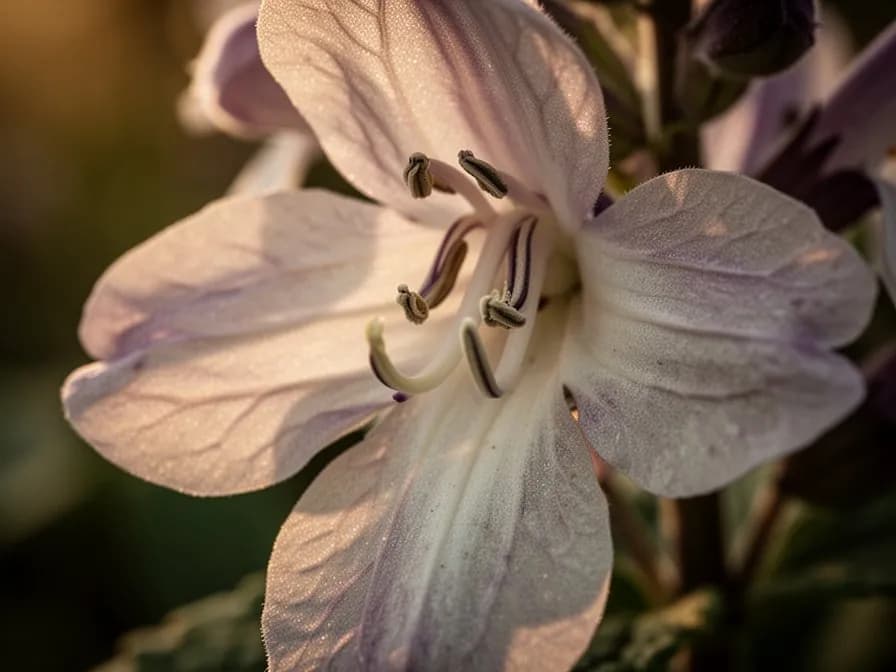
Dried Salvia Flower Arrangement
20 minutesHarvest salvia flower spikes at peak bloom and air-dry them upside down in a dark, well-ventilated space for two to three weeks. The dried spikes retain their violet-blue colour beautifully and make a stunning addition to dried bouquets, wreaths, and table centrepieces that last for months.
Salvia-Infused Pollinator Garden Seed Bombs
45 minutesCombine collected salvia seeds with clay, compost, and companion wildflower seeds to create seed bombs that can be tossed into bare garden patches or roadside verges. This is a fun family activity that helps establish pollinator-friendly habitat with minimal effort.
Fragrant Salvia Foliage Potpourri
30 minutes plus 2 weeks dryingThe aromatic grey-green leaves of perennial salvia dry well and contribute a subtle herbal fragrance to homemade potpourri. Combine with lavender, rose petals, and a few drops of essential oil for a long-lasting natural room freshener.
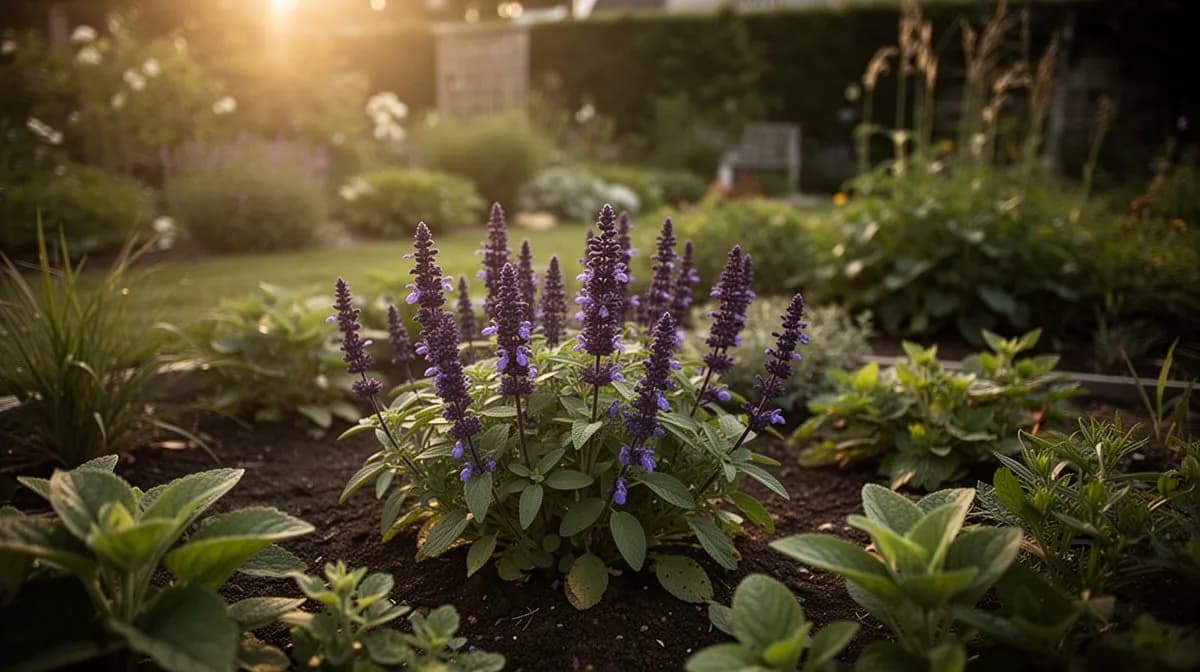
Meadow sage excels as a mid-border plant, pairing beautifully with roses, nepeta, and ornamental grasses.
Yield & Spacing Calculator
See how many Perennial Salvia plants fit in your garden bed based on the recommended 35cm spacing.
9
Perennial Salvia plants in a 4×4 ft bed
3 columns × 3 rows at 35cm spacing
Popular Varieties
Some of the most popular perennial salvia varieties for home gardeners, each with unique characteristics.
Salvia nemorosa 'Caradonna'
The finest perennial salvia with deep violet-blue flowers on dramatic near-black stems. Outstanding architectural quality and long flowering season.
Salvia nemorosa 'May Night' (Mainacht)
Deep indigo-violet spikes on compact 45cm plants. Perennial Plant of the Year and one of the most reliable garden salvias.
Salvia nemorosa 'Snow Hill' (Schneehügel)
Pure white flower spikes that brighten borders and provide striking contrast when planted alongside blue and purple varieties.
Salvia nemorosa 'Rose Marvel'
Bright rose-pink flowers on compact plants, offering a warm alternative to the typical blue-violet color range.
When should I plant Perennial Salvia?
Plant Perennial Salvia in March, April, September. It takes approximately 365 days to reach maturity, with harvest typically in May, June, July, August, September.
What are good companion plants for Perennial Salvia?
Perennial Salvia grows well alongside Rose, Catmint, Coneflower. Companion planting can improve growth, flavor, and natural pest control.
What hardiness zones can Perennial Salvia grow in?
Perennial Salvia thrives in USDA hardiness zones 4 through 9. With greenhouse protection, it may be grown in zones 2 through 10.
How much sun does Perennial Salvia need?
Perennial Salvia requires Full Sun (6-8h+). This means at least 6-8 hours of direct sunlight daily.
How far apart should I space Perennial Salvia?
Space Perennial Salvia plants 35cm (14 inches) apart for optimal growth and air circulation.
What pests and diseases affect Perennial Salvia?
Common issues include Powdery Mildew, Root Rot, Slugs. Prevention through good garden practices like crop rotation, proper spacing, and companion planting is the best approach. See the detailed pests and diseases section above for symptoms, prevention, and treatment for each.
How do I store Perennial Salvia after harvest?
Dried salvia spikes maintain excellent color and form for months in dried arrangements. Hang-dry bundles for 2 weeks in a warm, dark location. The flowers can also be pressed for crafts. For seed saving, allow some flower spikes to mature fully on the plant in autumn—collect dried seed when stems ar...
What are the best Perennial Salvia varieties to grow?
Popular varieties include Salvia nemorosa 'Caradonna', Salvia nemorosa 'May Night' (Mainacht), Salvia nemorosa 'Snow Hill' (Schneehügel), Salvia nemorosa 'Rose Marvel'. Each has unique characteristics suited to different growing conditions and culinary preferences. See the varieties section above for detailed descriptions.
What soil does Perennial Salvia need?
Perennial salvia thrives in average to lean, well-drained soil with a pH of 6.0-7.5. It performs best in moderately poor conditions—rich soil produces lax growth. Sandy or gravelly soils are ideal. Add grit to heavy clay before planting. Little fertilization is needed; a light application of balance...
Is Salvia nemorosa the same as culinary sage?
No. Culinary sage is Salvia officinalis, a different species bred for flavour and cooking use. Salvia nemorosa (perennial meadow sage) is grown purely as an ornamental and pollinator plant. While both belong to the Salvia genus and share aromatic foliage, their uses are distinct and they should not be confused in the kitchen.
How do I encourage a second flush of flowers?
Cut the spent flower spikes back to the basal foliage as soon as the first flush fades, typically in mid-July. Apply a light feed of balanced granular fertiliser and water well. Within 3-4 weeks, new flower spikes will emerge for a reliable late-summer display that often continues into early October.
Can Salvia nemorosa grow in partial shade?
Perennial salvia performs best in full sun with at least 6 hours of direct light daily. It will tolerate light afternoon shade in hot climates, but flowering will be reduced and stems may become leggy. In consistently shady conditions the plant is likely to flop, produce few flowers, and become more susceptible to fungal diseases.
Is perennial salvia deer and rabbit resistant?
Yes. Salvia nemorosa is considered highly resistant to browsing by deer and rabbits. The strongly aromatic essential oils in the foliage are unpalatable to most herbivores. While no plant is completely deer-proof under extreme pressure, meadow sage is among the most reliable choices for gardens with regular wildlife visitors.
When and how should I divide my salvia clump?
Divide in early spring just as new shoots appear, typically March or April depending on your climate. Lift the entire clump with a garden fork, shake off excess soil, and use a sharp spade or knife to split it into sections, each with several healthy shoots and a good portion of roots. Replant immediately at the same depth and water thoroughly.
Why is my perennial salvia flopping over?
Floppy growth is usually caused by too much shade, overly rich soil, or excessive nitrogen fertilisation. Move the plant to a sunnier spot, reduce feeding, and ensure excellent drainage. Growing through a low metal plant support ring installed in early spring can also help keep stems upright without looking obtrusive once the foliage fills in.
Ready to Grow Perennial Salvia?
Add Perennial Salvia to your garden plan and start designing your perfect layout.

Vladimir Kusnezow
Gardener and Software Developer
Zone 6b gardener. Growing vegetables and fruits in soil and hydroponics for 6 years. I built PlotMyGarden to plan my own gardens.
Jump to Section