Red Maple
Acer rubrum
At a Glance
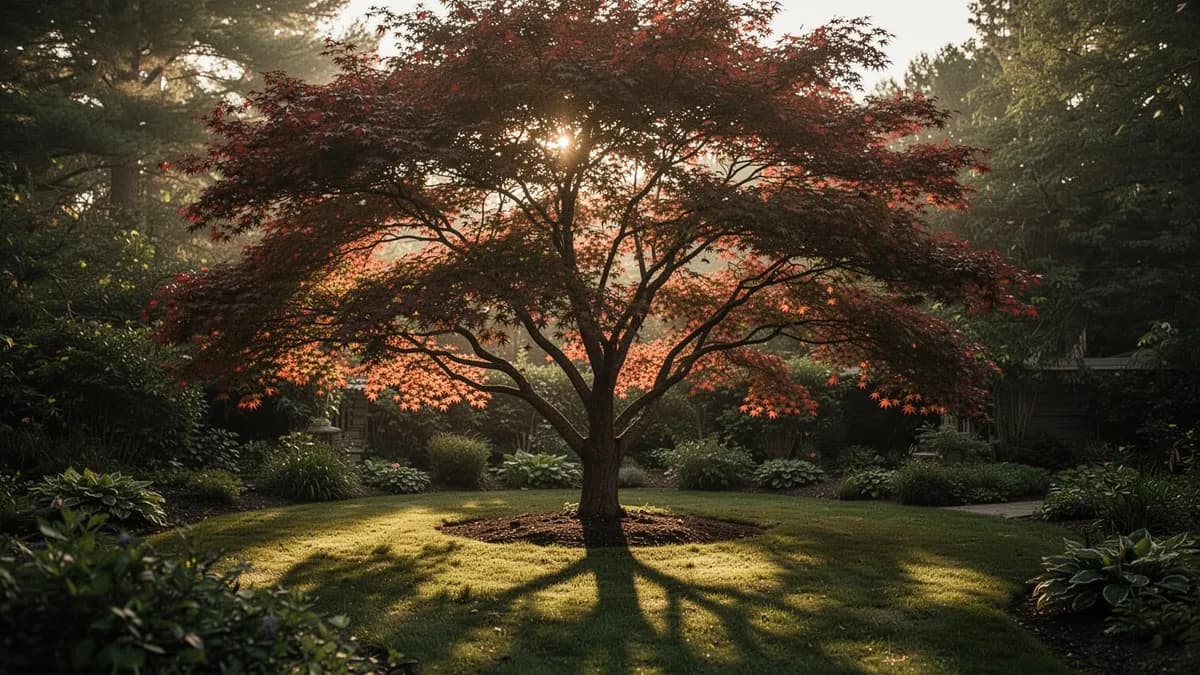
One of the most widely adapted and colorful native shade trees, with red flowers in early spring, red-tinged summer samaras, and brilliant scarlet fall foliage. Red maples tolerate wet soil better than sugar maples and grow faster, making them popular residential shade trees. Choose named cultivars like October Glory or Red Sunset for the most reliable and intense autumn color. They develop surface roots that can lift sidewalks, so plant at least ten feet from paved areas.
Planting & Harvest Calendar
Growth Stages
From Seed to Harvest
Seed Germination and Seedling Emergence
Days 0–30
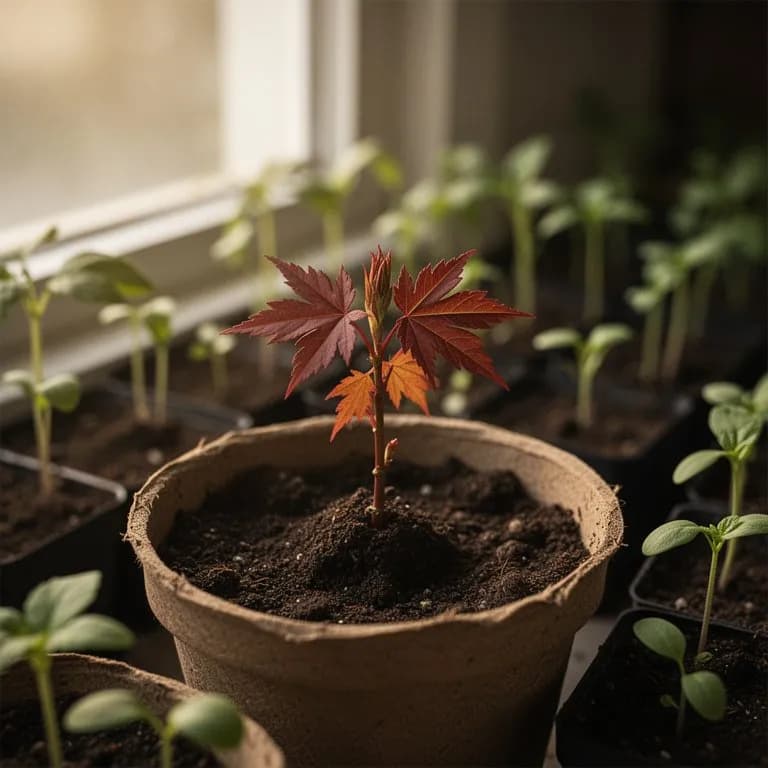
Red maple samaras germinate readily in moist soil without requiring cold stratification, unlike many other maple species. The paired helicopter seeds split apart on landing, and the embryonic root emerges within one to two weeks in warm, moist conditions. Cotyledons push through the soil surface and unfurl, followed shortly by the first pair of true leaves that already show a simplified version of the characteristic three-lobed shape. Seedlings are highly adaptable and can establish in a wide range of soil types from sandy loam to heavy clay.
💡 Care Tip
Keep the soil consistently moist but not waterlogged during germination. Provide light shade for emerging seedlings as direct intense sun can scorch cotyledons. A thin layer of fine mulch helps retain soil moisture without smothering delicate sprouts.
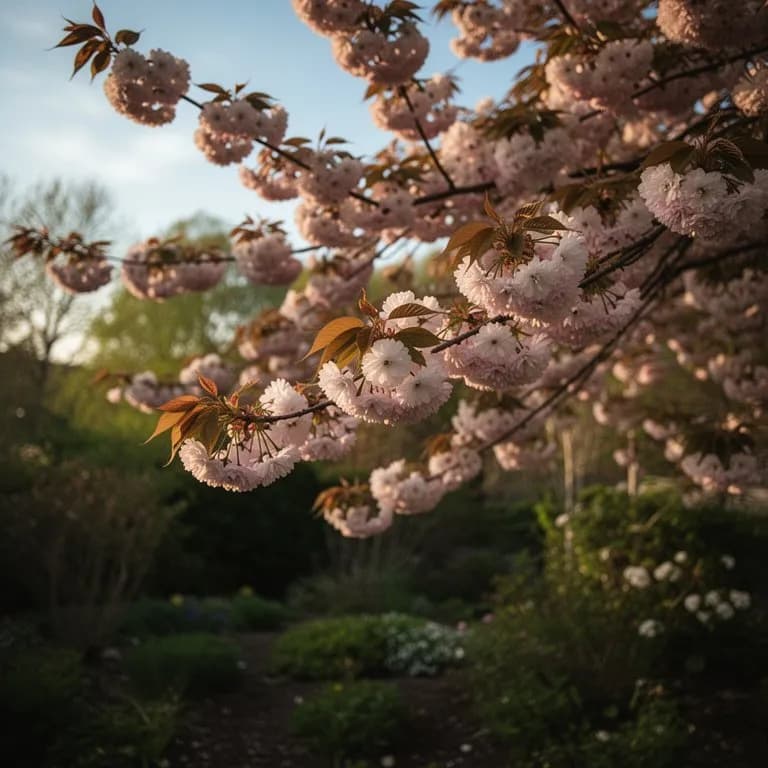
Red maple produces small but vibrant red flower clusters in March and April, providing early-season nectar for pollinators
Monthly Care Calendar
What to do each month for your Red Maple
May
You are hereSamaras ripen and begin dispersing — remove unwanted seedlings from garden beds before they establish deep roots. Watch for aphid infestations on tender new growth and treat with a strong water spray if needed. Young trees benefit from consistent deep watering as the canopy expands rapidly.
Did You Know?
Fascinating facts about Red Maple
Red maple is one of the most abundant native trees in eastern North America, growing naturally from Manitoba to Newfoundland and south to Florida and east Texas, thriving in an extraordinarily wide range of habitats from dry ridgetops to swamp margins.
Red maple bark transitions from smooth silvery-gray on young trees to darker, scaly plates on mature specimens
Plant red maples in full sun to partial shade in moist, slightly acidic soil with a pH of 5.5 to 6.5. Unlike sugar maples, red maples tolerate wet soil conditions and even periodic flooding, making them excellent choices for low-lying areas and rain gardens. Space trees 30 to 40 feet apart to accommodate their broad, rounded canopy. Avoid planting near sidewalks, driveways, or foundations, as surface roots can lift pavement and damage hardscape.
Plant balled-and-burlapped or container-grown trees in spring or fall. Dig a hole two to three times the width of the root ball but no deeper. Set the root flare at grade level and backfill with native soil without amendments. Water deeply once a week during the first two growing seasons. Mulch with 3 inches of acidic material like pine bark or pine needles, keeping it away from the trunk.
Red maples require minimal pruning once established. Remove crossing branches and maintain a strong central leader in the first five years. Avoid heavy pruning in spring when sap is running heavily. Red maples are among the first trees to flower in late winter, producing clusters of tiny red blossoms that are an important early nectar source for pollinators. Select named cultivars for the most reliable and vivid fall color, as seedling trees vary greatly in their autumn display.
Red maple (Acer rubrum) is native to eastern and central North America, with one of the largest natural ranges of any deciduous tree on the continent. Its range extends from southern Newfoundland and Nova Scotia west to Manitoba and Minnesota, and south through the eastern United States to southern Florida and east Texas. The species has been present in the North American fossil record for millions of years, with pollen evidence suggesting it was a component of forests throughout the Pleistocene glacial and interglacial periods. Indigenous peoples across its range made extensive use of red maple. Various tribes prepared infusions from the inner bark to treat eye ailments, muscle pain, and coughs. The wood was used for tools, frames, and fuel. European colonists quickly recognized the tree's value and tapped it for maple syrup alongside sugar maple, though they noted its lower sugar content. By the eighteenth century, red maple was being exported to Europe as an ornamental, where it was prized for its autumn color in a landscape dominated by trees that turn yellow and brown. In the twentieth century, red maple became one of the most commonly planted street and landscape trees in North America due to its fast growth rate, adaptability to a wide range of soil and moisture conditions, and spectacular fall color. Ecological studies have documented that red maple has actually increased its abundance and range over the past two centuries, expanding into areas previously dominated by oaks and other fire-adapted species as fire suppression practices have taken hold across the eastern forests.
Red maple seeds ripen in late spring, much earlier than other maple species, and germinate immediately without any dormancy period. Collect the reddish-pink samaras when they mature in May or June and sow them on the soil surface or barely covered. Keep the seedbed consistently moist, and germination occurs within one to two weeks. Seedlings grow quickly, reaching 12 to 18 inches in the first year. Named cultivars must be propagated by budding or grafting onto seedling rootstock to preserve their specific fall color and growth characteristics.
Red maples prefer moist, slightly acidic soil with a pH of 5.5 to 6.5 but tolerate a wider range including neutral conditions. They are sensitive to alkaline soil, which causes interveinal chlorosis from manganese deficiency. Apply an acidifying fertilizer formulated for acid-loving plants if soil pH exceeds 7.0. Young trees benefit from balanced fertilization in early spring for the first three to five years. Established specimens in good soil rarely need supplemental feeding. Mulch with acidic materials like pine bark to maintain preferred soil chemistry.
Check Your Zone
See if Red Maple is suitable for your location.
-34°C – 38°C
-29°F – 100°F
Red maple is extremely cold-hardy, surviving winter temperatures as low as -34 degrees Celsius in USDA hardiness zones 3 through 9. It performs best in regions with moderate summers where average highs remain below 32 degrees Celsius, though it tolerates brief periods of extreme heat up to 38 degrees Celsius if adequate soil moisture is available. The tree requires a meaningful winter chill period to break dormancy and flower properly in spring, making it poorly suited to tropical and subtropical climates that lack sustained cold temperatures.
Common issues affecting Red Maple and how to prevent and treat them organically.
Surface roots are the most common landscape concern, as red maples develop shallow, spreading root systems that can buckle sidewalks and make mowing difficult. Plant at least 10 feet from paved surfaces. Chlorosis from alkaline soil causes yellowing leaves with green veins and can be corrected with soil acidification or chelated iron applications. Girdling roots from improper planting or container-bound root balls can slowly strangle the trunk at the soil line, causing gradual decline years after planting. Leaf scorch occurs during drought on exposed sites.
The shallow root system of red maples makes them somewhat challenging for underplanting, as companion plants must compete for moisture and nutrients near the soil surface. Shade-tolerant, shallow-rooted groundcovers like wild ginger, epimedium, and woodland ferns perform best. Spring ephemeral bulbs like Virginia bluebells and trillium thrive beneath red maples because they complete their growth cycle before the canopy fills in. Avoid planting hostas directly against the trunk where root competition is most intense. Acidic mulch from pine needles benefits both the tree and acid-loving companions.
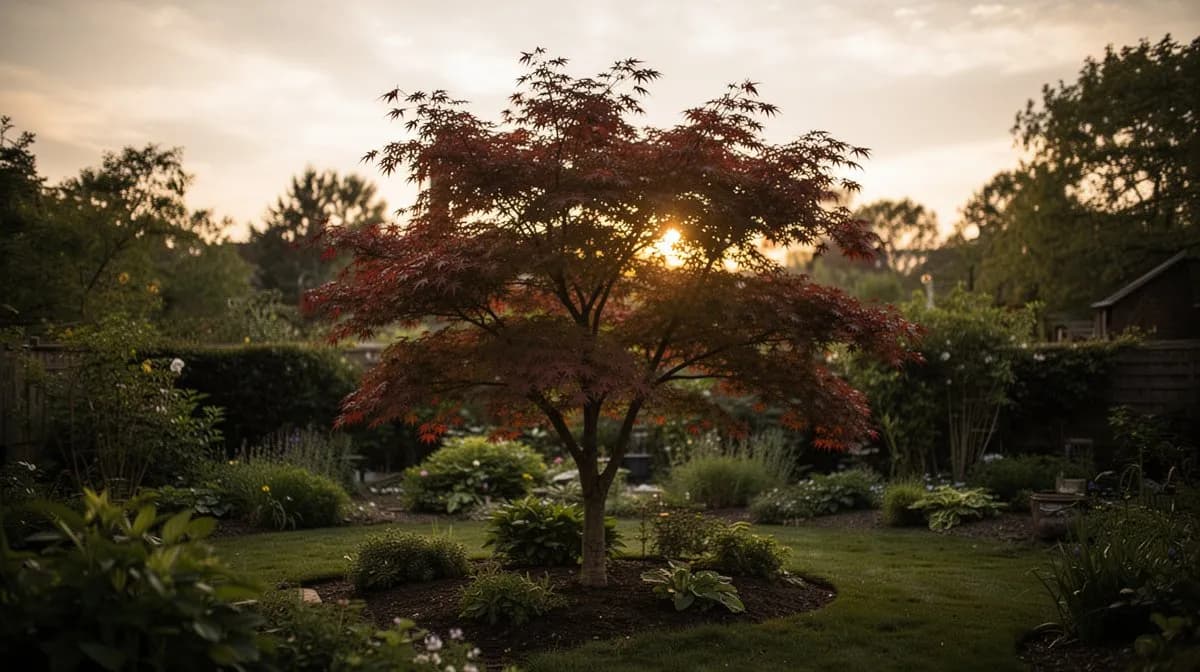
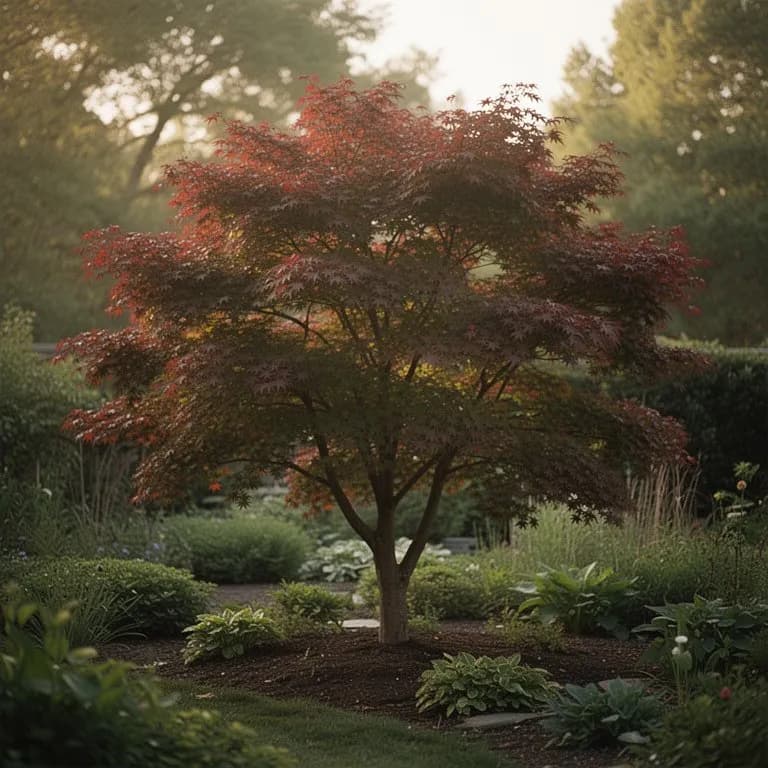
The broad, rounded crown of a mature red maple provides excellent shade coverage throughout the summer months
- 1Plant red maples in full sun to partial shade — trees develop the most vibrant fall color when they receive at least six hours of direct sunlight daily, while trees grown in heavy shade tend to produce more muted yellow autumn tones.
- 2Red maples are remarkably adaptable to soil conditions and thrive in acidic to neutral soils with a pH range of 4.5 to 7.0, but they struggle in highly alkaline soils where manganese deficiency causes interveinal chlorosis on the leaves.
- 3Provide consistent moisture during the first three years after planting by deep watering weekly during dry periods — red maples naturally grow near streams and swamp edges and perform best with reliable soil moisture.
- 4Apply a 5 to 10 centimeter ring of organic mulch around the tree extending to the drip line but keep mulch pulled back 10 to 15 centimeters from the trunk to prevent bark decay and discourage rodent nesting.
- 5Avoid planting red maples near sidewalks, driveways, or foundations as their aggressive shallow root system is notorious for heaving pavement and can interfere with underground utilities within 5 to 8 meters of the trunk.
- 6Select named cultivars rather than seedling-grown trees if consistent fall color is important — seedling trees are genetically variable and may produce yellow, orange, or red autumn foliage unpredictably.
- 7Protect young red maples from deer browse damage by installing tree tubes or fencing around new plantings in areas with high deer populations, as deer readily browse on the tender terminal buds and young bark.
- 8Avoid excessive pruning during the growing season because red maples are heavy bleeders — sap flows profusely from fresh cuts made in spring and summer, which while not harmful to the tree can be unsightly and attract insects.
- 9Never plant red maple in pastures or paddocks where horses have access, as wilted and dried red maple leaves are highly toxic to horses and can cause fatal hemolytic anemia even in small quantities.
- 10When planting for syrup production, select trees growing in open sunny locations as they tend to develop larger crowns and produce more sap than forest-grown trees with narrow crowns competing for light.
Red maples are ornamental shade trees and do not produce edible fruit or nuts for harvest. The paired winged seeds called samaras mature in late spring and can be collected for propagation. Sap can theoretically be tapped for maple syrup, but red maple sap has lower sugar content than sugar maple and the season is shorter. The primary seasonal harvest is the spectacular fall foliage display, which peaks from late September through mid-October depending on latitude and elevation.
Red maple seeds are short-lived and should be planted immediately after collection in spring, as they do not store well and lose viability quickly. Unlike sugar maple seeds, red maple samaras require no cold stratification and germinate readily upon contact with moist soil. Pressed autumn leaves make attractive decorations and can be preserved between sheets of wax paper. Red maple wood is used for furniture, flooring, and musical instruments, though it is softer than sugar maple and considered less desirable commercially.
Plan your garden with ease
Love growing Red Maple? Use our free garden planner to design your beds, track planting dates, and get personalized care reminders.
Nutritional Info
Per 100g serving
260
Calories
Health Benefits
- Red maple syrup contains manganese, providing roughly 100 percent of the daily recommended intake per 60 mL serving, which supports bone health and metabolism
- Maple syrup provides zinc, riboflavin, and trace amounts of calcium, magnesium, and iron in small but meaningful quantities
- The glycemic index of pure maple syrup is approximately 54, lower than white sugar at 65, making it a moderately lower-glycemic natural sweetener
- Maple syrup contains over 60 identified polyphenol antioxidant compounds including quebecol, a compound unique to maple syrup that forms during the boiling process
- While not a significant source of vitamins, maple syrup provides natural sugars primarily as sucrose along with small amounts of glucose and fructose
💰 Why Grow Your Own?
A single mature red maple provides an estimated $2,000 to $5,000 in annual ecosystem services value including energy savings from summer shade that can reduce home cooling costs by 15 to 35 percent, stormwater management through canopy interception and root absorption, air quality improvement, and increased property values of 5 to 15 percent for well-landscaped properties with mature shade trees.
Quick Recipes
Simple recipes using fresh Red Maple
Homemade Red Maple Syrup
4-6 hours active boiling timeCollect sap from red maple trees in late winter when daytime temperatures rise above freezing and nights drop below. Boil the clear sap in a large flat pan outdoors until it reaches 104 degrees Celsius or 7.1 degrees above the boiling point of water. The finished syrup should have a rich amber color and smooth consistency. Filter through felt or wool to remove sugar sand before bottling in sterilized jars.
Maple Sap Birch-Style Beverage
10 minutesFresh red maple sap collected during the late winter tapping season is a lightly sweet, refreshing drink that can be consumed raw or gently heated. The sap has a clean, faintly sweet flavor with subtle woody notes. Serve chilled as a hydrating spring tonic or warm it gently with a cinnamon stick and a slice of fresh ginger for a comforting seasonal beverage. The sap should be consumed within two to three days of collection or frozen for longer storage.
Maple Vinegar from Red Maple Sap
15 minutes active, 4-6 weeks fermentationRed maple sap can be fermented into a mild, subtly sweet vinegar that is excellent for salad dressings and marinades. First, allow fresh sap to undergo primary fermentation at room temperature for one to two weeks until it becomes slightly alcoholic. Then introduce a vinegar mother or a splash of raw unpasteurized vinegar and allow it to acetify in a loosely covered jar for another three to four weeks. The resulting vinegar has a delicate maple flavor that pairs beautifully with roasted root vegetables and hearty grain salads.
Red maple sap can be tapped for syrup production, though sugar content is lower than sugar maple and the season is shorter
Yield & Spacing Calculator
See how many Red Maple plants fit in your garden bed based on the recommended 900cm spacing.
0
Red Maple plants in a 4×4 ft bed
0 columns × 0 rows at 900cm spacing
Popular Varieties
Some of the most popular red maple varieties for home gardeners, each with unique characteristics.
October Glory
One of the most popular red maples for its brilliant orange-red to deep crimson fall color that holds later in the season than most cultivars. Grows 40 to 50 feet tall with a rounded crown.
Red Sunset
An early-coloring cultivar with reliable brilliant red fall foliage. Dense, upright-oval form provides excellent shade and strong branch structure resistant to storm damage.
Autumn Blaze
A hybrid between red and silver maple combining fast growth with outstanding orange-red fall color. Exceptionally cold-hardy and adaptable, growing to 50 feet with an upright oval form.
Brandywine
A seedless male cultivar with outstanding reddish-purple fall color that persists for several weeks. Grows 35 feet tall with a symmetrical oval canopy and produces no messy seeds.
When should I plant Red Maple?
Plant Red Maple in March, April, October, November. It takes approximately 3650 days to reach maturity, with harvest typically in .
What are good companion plants for Red Maple?
Red Maple grows well alongside Daffodil, Tulip, Pansy. Companion planting can improve growth, flavor, and natural pest control.
What hardiness zones can Red Maple grow in?
Red Maple thrives in USDA hardiness zones 3 through 9. With greenhouse protection, it may be grown in zones 1 through 10.
How much sun does Red Maple need?
Red Maple requires Full Sun (6-8h+). This means at least 6-8 hours of direct sunlight daily.
How far apart should I space Red Maple?
Space Red Maple plants 900cm (354 inches) apart for optimal growth and air circulation.
What pests and diseases affect Red Maple?
Common issues include Verticillium Wilt, Asian Longhorned Beetle, Tar Spot. Prevention through good garden practices like crop rotation, proper spacing, and companion planting is the best approach. See the detailed pests and diseases section above for symptoms, prevention, and treatment for each.
How do I store Red Maple after harvest?
Red maple seeds are short-lived and should be planted immediately after collection in spring, as they do not store well and lose viability quickly. Unlike sugar maple seeds, red maple samaras require no cold stratification and germinate readily upon contact with moist soil. Pressed autumn leaves mak...
What are the best Red Maple varieties to grow?
Popular varieties include October Glory, Red Sunset, Autumn Blaze, Brandywine. Each has unique characteristics suited to different growing conditions and culinary preferences. See the varieties section above for detailed descriptions.
What soil does Red Maple need?
Red maples prefer moist, slightly acidic soil with a pH of 5.5 to 6.5 but tolerate a wider range including neutral conditions. They are sensitive to alkaline soil, which causes interveinal chlorosis from manganese deficiency. Apply an acidifying fertilizer formulated for acid-loving plants if soil p...
Can I tap a red maple for syrup the same way I would tap a sugar maple?
Yes, red maples can be tapped using the same equipment and techniques as sugar maple. Drill a 7/16 inch hole about 5 centimeters deep into the trunk at a slight upward angle, insert a spile, and hang a bucket or attach tubing. However, red maple sap typically contains about 1.5 to 2 percent sugar compared to 2 to 3 percent in sugar maples, so you will need roughly 50 to 60 liters of sap per liter of finished syrup. The tapping season for red maple is also slightly shorter because the trees break dormancy and bud out earlier in spring, at which point sap develops an off flavor.
Why does my red maple have yellow fall color instead of the brilliant red I expected?
Fall color in seedling-grown red maples is genetically variable and strongly influenced by environmental factors. Trees grown in alkaline soils or heavy shade tend to produce more yellow and orange tones rather than deep red. Warm nights in autumn also reduce red pigment development. If reliable red fall color is your goal, plant a named cultivar like October Glory, Red Sunset, or Autumn Blaze that has been selected and grafted specifically for consistent crimson autumn foliage.
Is red maple a good choice as a street tree or for planting near a house?
Red maple is widely planted as a street and residential shade tree due to its fast growth and beautiful fall color, but it does have limitations. Its shallow, aggressive root system can heave sidewalks and pavement, and surface roots can make mowing difficult in lawn settings. Plant red maples at least 6 to 8 meters from foundations, driveways, and underground utilities. For smaller spaces, consider compact cultivars like Scarlet Jewel or Armstrong which have a narrower columnar form and somewhat less aggressive root spread.
How fast does a red maple tree grow, and how large will it get?
Red maple is considered a medium to fast-growing tree, adding 30 to 60 centimeters of height per year under good conditions during its first 15 to 20 years. Growth rate slows considerably as the tree approaches maturity. A fully mature red maple typically reaches 12 to 21 meters in height with a crown spread of 9 to 15 meters, though exceptional specimens can exceed 27 meters. In landscape settings, expect a newly planted nursery tree to reach functional shade-providing size of 8 to 10 meters within 10 to 15 years.
What diseases and pests should I watch for on red maple trees?
The most serious disease affecting red maples is verticillium wilt, a soil-borne fungus that causes branch dieback, wilting foliage, and olive-green streaking in the sapwood. There is no chemical cure — remove infected branches promptly and avoid replanting maples in contaminated soil. Anthracnose can cause leaf spots and defoliation in wet springs but is rarely fatal. Common pests include Asian longhorned beetle, gloomy scale, lecanium scale, maple bladder gall mites, and various aphid species. Most insect problems are cosmetic rather than life-threatening for established trees.
Are red maple leaves really dangerous to horses, and what should I do if my horse eats them?
Yes, wilted or dried red maple leaves are genuinely toxic to horses and this is a well-documented veterinary emergency. The toxin, primarily gallic acid and related compounds, causes oxidative destruction of red blood cells leading to hemolytic anemia. Symptoms appear within 18 to 24 hours and include dark brown urine, pale or yellowish gums, rapid breathing, lethargy, and refusal to eat. As little as 700 grams of dried leaves per 450 kilogram horse can be fatal. If you suspect ingestion, contact a veterinarian immediately — aggressive intravenous fluid therapy and blood transfusions are the primary treatments. Never plant red maples in or near horse pastures and remove any fallen branches with leaves immediately after storms.
Ready to Grow Red Maple?
Add Red Maple to your garden plan and start designing your perfect layout.

Vladimir Kusnezow
Gardener and Software Developer
Zone 6b gardener. Growing vegetables and fruits in soil and hydroponics for 6 years. I built PlotMyGarden to plan my own gardens.
Jump to Section