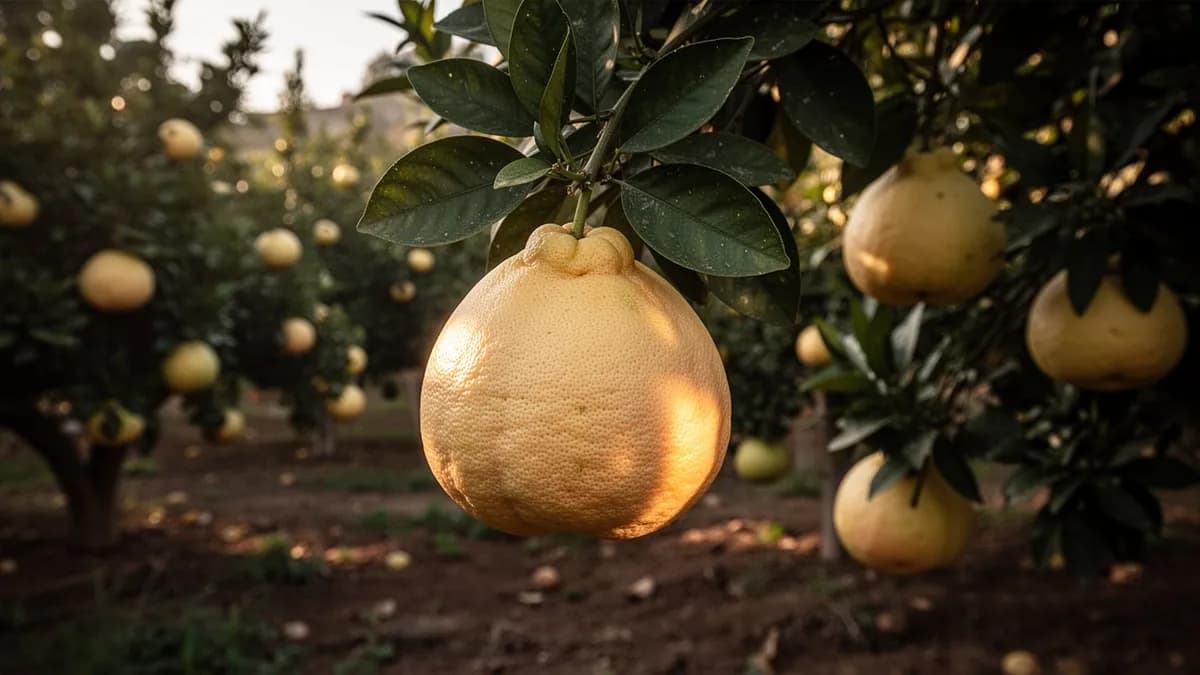
Pomelo
Citrus maxima
At a Glance
It's planting season for Pomelo! Start planning your garden now.
The largest of all citrus fruits, producing softball-sized or larger fruits with thick, pithy rind and sweet, mild flesh. Pomelos are a parent species of the grapefruit but lack the bitterness, with juicy segments that separate cleanly. They are widely grown in Southeast Asia and make impressive ornamental trees with their large, fragrant flowers.
Planting & Harvest Calendar
Growth Stages
From Seed to Harvest
Planting and Establishment
Days 0–90
Young pomelo trees planted from nursery-grown grafted stock spend their first three months establishing a strong root system. Visible above-ground growth may be modest during this period, but the tree is actively colonising the soil with fine feeder roots. Grafted trees on trifoliate or Rough Lemon rootstock adapt quickly to a range of soil conditions. New flush growth — bright lime-green leaves appearing in flushes of five to ten leaves at a time — signals that establishment is underway.
💡 Care Tip
Water every two to three days during the first month, then gradually reduce to once or twice weekly as roots establish. Apply a 10 cm layer of organic mulch in a 60 cm ring around the tree, keeping it 15 cm clear of the trunk, to retain moisture and suppress weeds. Do not fertilise for the first six weeks to avoid burning the young root system.
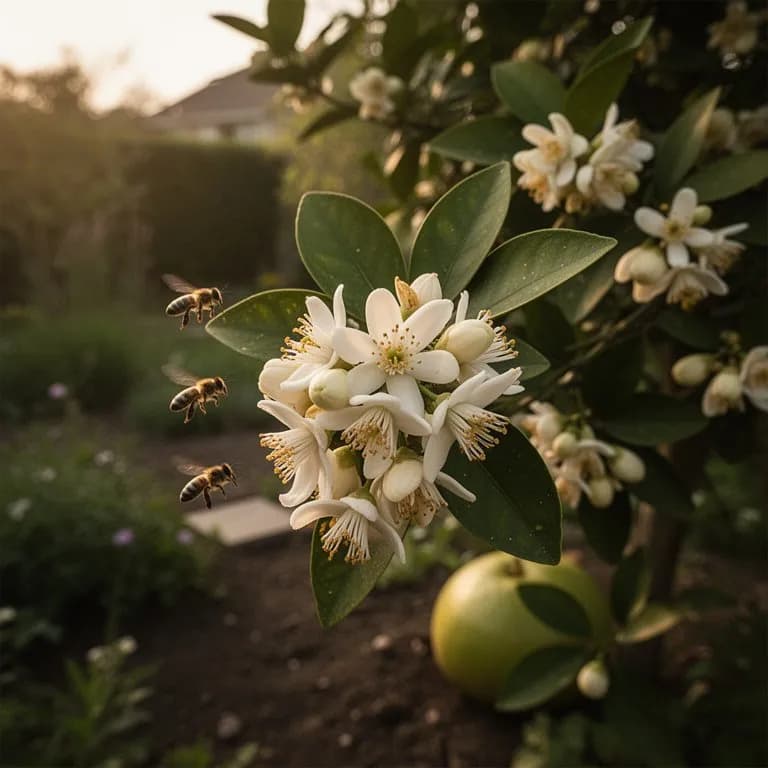
Pomelo blossoms are among the largest in the citrus family, releasing a powerful sweet fragrance that fills the garden
Monthly Care Calendar
What to do each month for your Pomelo
April
You are hereNo specific care tasks for this month.
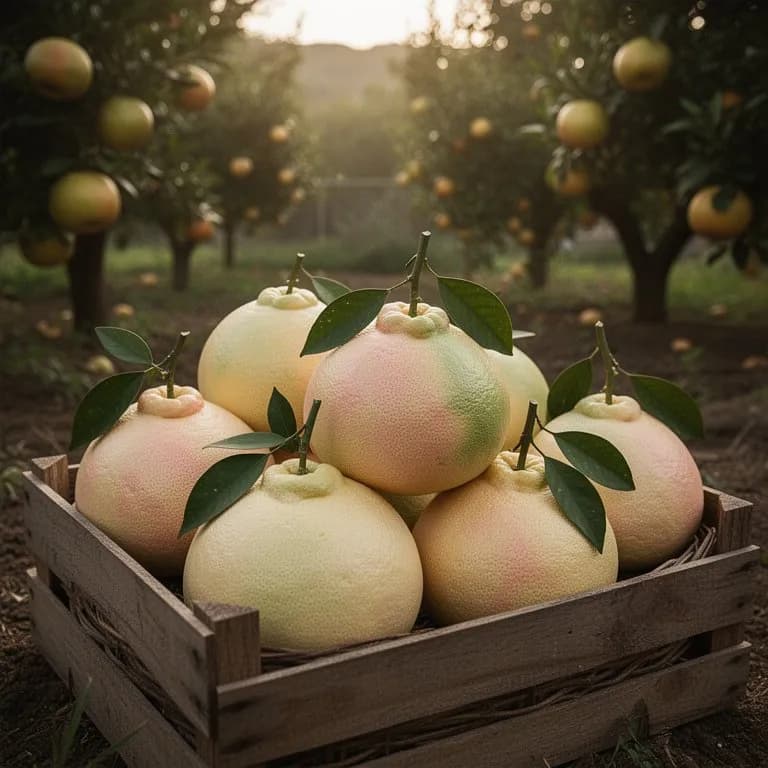
A home harvest of pomelos — each fruit can store at room temperature for several weeks, improving in flavour as the pith dries slightly
Did You Know?
Fascinating facts about Pomelo
The pomelo is the largest fruit in the entire citrus family and is also the oldest cultivated citrus species, with evidence of cultivation in Southeast Asia dating back over 4,000 years — predating both the lemon and the orange by thousands of years.
Pomelos thrive in USDA zones 9 through 12 with long, warm growing seasons needed to develop their massive fruit. Plant grafted trees in full sun, spacing 15 to 20 feet apart to accommodate the large, rounded canopy. The tree is vigorous, reaching 15 to 25 feet tall. Set the graft union above soil level and water deeply at planting.
Pomelo fruit takes eight to twelve months to mature, requiring sustained warmth throughout development. The enormous fruits can weigh two to five pounds each and need ample energy from the tree, so thin fruit to four or five per branch for best size and quality. The tree blooms with intensely fragrant large white flowers that are among the most perfumed of any citrus.
Fertilize generously three to four times per year with a citrus formula rich in nitrogen and potassium. Pomelos are heavy feeders supporting both vigorous growth and massive fruit. Water deeply and consistently, as drought stress during fruit development causes dry, pithy flesh. Prune to control height and open the canopy for air circulation. Provide frost protection when temperatures threaten to drop below 30 degrees.
The pomelo (Citrus maxima) is native to Southeast Asia, with its origins centred in the region encompassing modern-day Malaysia, Indonesia, Thailand, and southern China. Archaeological and textual evidence suggests it has been cultivated in these regions for at least 4,000 years, making it the oldest domesticated citrus species and the ancestor from which virtually all other commercially important citrus fruits were derived through millennia of natural hybridisation and human selection. Ancient Chinese records from as far back as the first millennium BCE describe pomelo cultivation and its ceremonial significance, with the fruit featuring in court records of the Zhou Dynasty as a luxury tribute item transported to northern China from subtropical southern provinces. The tree's introduction to Europe came indirectly through Arab traders who brought various citrus species westward across the Mediterranean, though the pomelo itself remained largely confined to tropical and subtropical Asia for most of its history. English sea captain Captain Shaddock is credited in Caribbean lore with bringing pomelo seeds to Barbados from the East Indies in the 17th century, giving rise to the name 'shaddock' still used in the Caribbean today. On the island of Barbados, a natural cross between the pomelo and the sweet orange occurred, producing the grapefruit — a fruit that would go on to dominate Western citrus markets despite its parents' relative obscurity outside Asia. In China, pomelo cultivation has a documented horticultural tradition stretching back over 2,000 years, with distinct regional varieties developed across Guangdong, Fujian, and Guangxi provinces each reflecting the preferences and growing conditions of their localities. The Shatian pomelo from Guangdong, the Guanxi honey pomelo from Fujian, and the Mato pomelo from Thailand represent the pinnacle of this long breeding tradition, with flesh colours ranging from white to deep rose-pink and flavour profiles spanning from intensely sweet to pleasantly tart. Today, China produces approximately 85 percent of the world's pomelo crop, followed by Thailand, Vietnam, and other Southeast Asian nations. The fruit is experiencing growing international interest as consumers seek alternatives to grapefruit and discover the pomelo's distinctive combination of floral fragrance, manageable bitterness, and exceptional keeping quality.
Pomelos grow readily from seed, with some varieties producing nucellar seedlings that are clones of the parent. Seeds should be planted fresh, as citrus seeds lose viability quickly when dried. Plant one inch deep in warm, moist potting mix and maintain 75 to 85 degrees. Germination occurs in two to four weeks. Seed-grown trees take six to ten years to fruit and grow very large. For home gardens, purchase grafted trees on dwarfing rootstock for faster fruiting and manageable size.
Pomelos prefer deep, well-drained soil with a pH of 5.5 to 7.0. They are vigorous growers that benefit from generous fertilization with a high-nitrogen citrus formula applied four times per year. Supplement with potassium during fruit development for better sweetness and size. Micronutrient foliar sprays correct iron, zinc, and manganese deficiencies common in alkaline soils. Maintain thick organic mulch around the drip line to conserve moisture and feed soil biology.
Check Your Zone
See if Pomelo is suitable for your location.
10°C – 35°C
50°F – 95°F
Pomelo is a tropical to subtropical citrus species that performs best in warm, frost-free climates. Optimal growth and fruit development occurs between 25 and 33°C (77-91°F). The tree tolerates brief temperature dips to around 4°C without permanent damage to established specimens, but prolonged cold below 7°C causes leaf drop and can kill young trees. Unlike lemons and limes, pomelos benefit from a mild cool or dry season of 6-8 weeks to trigger synchronised flowering — a minimum night temperature of 12-15°C for several weeks produces the most reliable and abundant flower set. Fruit quality is highest in areas with warm days, mild nights, and low humidity during the ripening period, which develops the characteristic floral fragrance and balances sugar-to-acid ratios.
Common issues affecting Pomelo and how to prevent and treat them organically.
The primary challenge with pomelos is the extended maturation period of eight to twelve months, which limits production to warm, frost-free regions. Fruit grown in insufficient heat develops thick, dry pith at the expense of juicy flesh. The enormous tree size can be problematic in small gardens, though dwarfing rootstocks help. Heavy fruit loads may break branches without proper thinning. In humid climates, the thick rind can develop cosmetic fungal spots that do not affect internal quality.
Pomelo's large canopy provides shade for understory plantings. Grow shade-tolerant herbs like parsley, cilantro, and mint beneath the tree. Nitrogen-fixing cover crops benefit the heavy-feeding pomelo. Lemongrass and galangal make culturally appropriate companions for an Asian fruit garden. Nasturtiums and marigolds provide pest deterrence. Avoid competing large trees that shade the pomelo, which needs maximum sun for fruit development.
- 1Pomelo trees demand full sun for at least 8 hours daily to flower and fruit reliably — a position receiving less than 6 hours will produce a healthy-looking tree that rarely fruits. In cooler subtropical climates, planting against a north-facing (southern hemisphere) or south-facing (northern hemisphere) masonry wall dramatically boosts heat accumulation and allows successful cultivation several degrees of latitude beyond the normal range.
- 2A distinct cool or dry stress period of 4 to 8 weeks is essential for triggering synchronised flowering in most pomelo varieties. In humid tropical areas without a natural dry season, artificially inducing drought stress by withholding irrigation in late autumn or early winter is the most reliable technique for encouraging annual flowering rather than irregular, sporadic blooms.
- 3Pomelo trees are highly sensitive to waterlogged soils and will develop root rot and gummosis within weeks if planted in poorly drained positions. If your soil drains slowly, plant on a raised bed or mound at least 30 cm above the surrounding soil level, or plant in a very large container (minimum 200 litres) using a premium free-draining citrus potting mix.
- 4Consistent deep watering is significantly more beneficial than frequent shallow watering. Deep watering once or twice weekly encourages the root system to grow deep and wide, accessing a larger soil reservoir during dry spells. Shallow daily watering keeps roots near the surface where they are vulnerable to drought, heat, and competition from lawn grasses.
- 5Unlike many citrus species, pomelo is relatively self-fertile, but fruit set, size, and quality are noticeably improved by the presence of a second compatible variety within 30 metres for cross-pollination. Where space allows, planting two different pomelo varieties or a pomelo alongside a grapefruit tree will reward you with heavier and more consistent crops.
- 6Pomelo trees respond exceptionally well to mulching. Maintaining a permanent 10 to 15 cm layer of organic mulch — sugarcane mulch, wood chip, or shredded straw — over the entire root zone out to and slightly beyond the drip line conserves soil moisture, moderates root zone temperature, suppresses weeds, feeds soil biology, and reduces the frequency of required irrigation by 30 to 50 percent.
- 7Potassium is the most important nutrient for pomelo fruit development, size, and flavour quality. In the period from fruit set through to harvest, switch from a balanced fertiliser to one with an elevated potassium-to-nitrogen ratio (such as a 4:1:8 blend). Potassium deficiency manifests as small, pale, thin-skinned fruit with poor flavour even on otherwise healthy-looking trees.
- 8The citrus leafminer moth (Phyllocnistis citrella) is one of the most consistent pests of pomelo, tunnelling distinctive silvery serpentine trails through new flush growth. Damage is cosmetic on mature trees but can severely set back young trees. Spray new flush growth every 7 to 10 days with neem oil or a spinosad-based product as soon as growth emerges, before the moths have a chance to lay eggs on the soft new leaves.
- 9When harvesting pomelos, always use clean sharp secateurs rather than pulling or twisting the fruit from the tree. Leaving a short 2 to 3 cm stem stub attached to the fruit prevents premature drying and fruit deterioration at the calyx end. Freshly harvested pomelos stored at room temperature will continue to develop flavour for one to two weeks post-harvest as the pith dries and loses some bitterness.
- 10Container-grown pomelo trees can thrive and produce fruit if given a container of at least 200 litres filled with a premium free-draining citrus mix. Repot every three to four years when roots begin circling the bottom. Feed more frequently than in-ground trees — every four weeks during the growing season — as frequent watering leaches nutrients from the container mix rapidly.
Pomelos ripen from November through February, taking up to twelve months from flowering to harvest. The fruit is ready when it turns pale green to yellow, feels heavy for its size, and gives slightly to pressure. The thick rind can be misleading, so taste-test before harvesting broadly. Cut fruit from the tree with pruning shears. The massive fruit needs careful handling to avoid damaging branches. Pomelos can remain on the tree for several weeks after ripening without deterioration.
The thick, pithy rind gives pomelo exceptional storage life, keeping three to four weeks at room temperature and up to two months refrigerated. The rind itself is not wasted in Asian cuisines, where it is candied or used in stir-fries. Pomelo segments freeze well for later use in salads and desserts. The juice can be frozen in ice cube trays. In Southeast Asia, pomelo is preserved in honey or sugar syrup. The dried rind is used in traditional Chinese medicine.
Plan your garden with ease
Love growing Pomelo? Use our free garden planner to design your beds, track planting dates, and get personalized care reminders.
Nutritional Info
Per 100g serving
38
Calories
Health Benefits
- Exceptional source of vitamin C with 61 mg per 100 g of flesh — a single large serving of pomelo can deliver well over 100% of the daily recommended intake, supporting immune function, collagen synthesis, and iron absorption
- Contains naringenin, a bioflavonoid concentrated in the pith and membranes that has been studied for its anti-inflammatory, antioxidant, and potential cholesterol-lowering properties
- Provides a meaningful amount of potassium at 216 mg per 100 g, supporting healthy blood pressure, nerve function, and muscle contractions
- Notably low in calories at just 38 kcal per 100 g despite its sweet flavour, making it an exceptionally satisfying and nutrient-dense snack for calorie-conscious diets
- Unlike grapefruit, pomelo contains negligible levels of furanocoumarins, meaning it does not interfere with the cytochrome P450 enzyme system responsible for metabolising many common prescription medications
- Rich in lycopene in pink and red-fleshed varieties — the same carotenoid pigment found in tomatoes and watermelon that is associated with reduced risk of certain cancers and cardiovascular disease
💰 Why Grow Your Own?
A single mature pomelo tree can produce 20 to 50 large fruit per year once fully established, with premium pomelos frequently retailing for $4 to $12 each in Western supermarkets and specialty Asian grocery stores. A productive home tree generating even 30 fruit annually represents $120 to $360 worth of fresh fruit at retail prices. Beyond the direct savings on fresh fruit, home-grown pomelos eliminate the need to purchase specialty Asian ingredients such as candied pomelo pith, pomelo juice, and pomelo zest that are sold at considerable premiums in gourmet food shops. A grafted pomelo tree purchased from a nursery for $30 to $60 will typically recover its purchase cost within the first or second fruiting season.
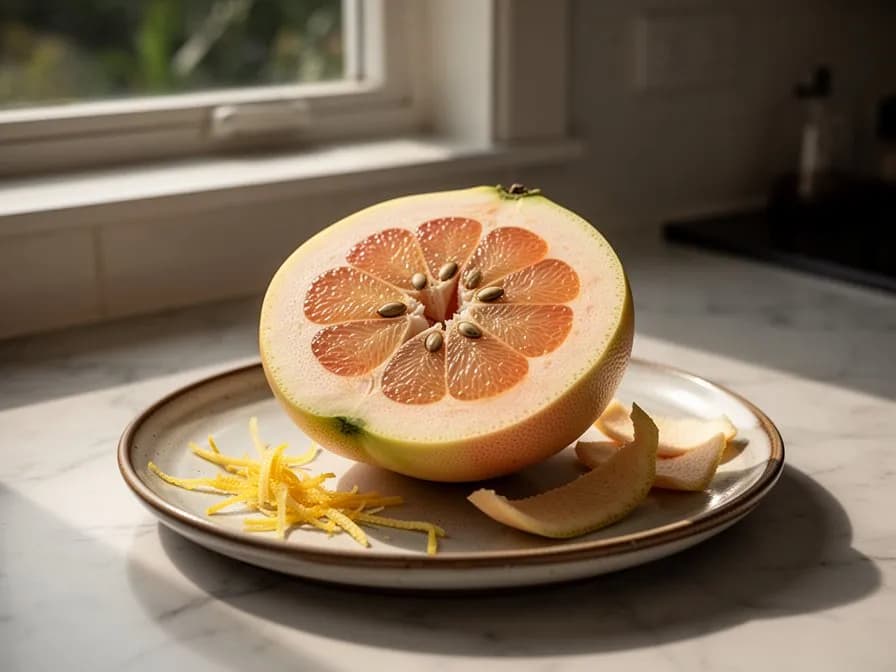
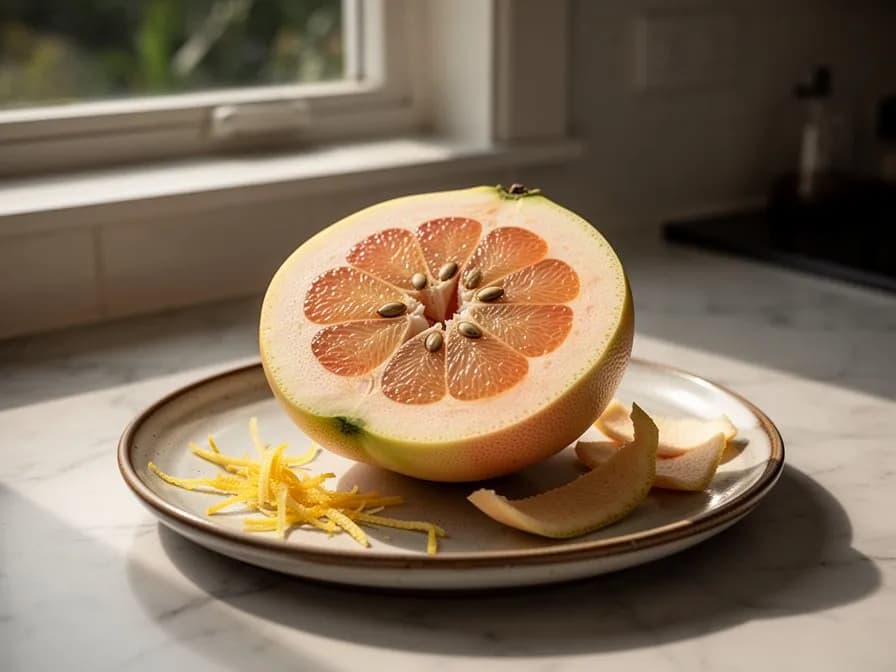
The thick spongy pith of a pomelo surrounds tightly packed segments of sweet-tart pink flesh
Quick Recipes
Simple recipes using fresh Pomelo

Thai Pomelo Salad (Yam Som-O)
20 minutesThis vibrant Thai salad pairs the floral sweetness of fresh pomelo segments with toasted coconut, crispy shallots, crunchy peanuts, and a fiery-sweet lime dressing. The pomelo's firm texture holds up beautifully against the bold dressing, making it ideal for preparing 30 minutes ahead. It is one of the most beloved uses of pomelo in Southeast Asian cuisine and showcases the fruit's unique ability to absorb flavours while maintaining its own distinctive character.
Pomelo Honey Mint Agua Fresca
10 minutesA refreshing cold drink that celebrates the pomelo's extraordinary floral fragrance and clean citrus flavour. Unlike commercial pomelo juices that can taste flat or excessively sweet, this agua fresca made from freshly squeezed pomelo preserves the bright volatile aromatics that make the fruit so distinctive. The addition of a small amount of honey smooths any bitterness while fresh mint adds a cooling depth. Ideal served over crushed ice on a warm day.
Candied Pomelo Pith
30 minutes active (2 hours total)In Thailand and China, the thick spongy pith of the pomelo is transformed into a delicate sweet confection through a simple candying process. The pith is first boiled to remove bitterness, then slowly simmered in sugar syrup until translucent and jewel-like. The result is a chewy, fragrant sweet with a gentle floral bitterness that makes it addictive. It is traditionally enjoyed as an afternoon snack with tea and also makes a beautiful garnish for desserts and cocktails.
Peeling a pomelo is a rewarding ritual — the thick pith strips away cleanly to reveal gem-like juice sacs within each segment
Yield & Spacing Calculator
See how many Pomelo plants fit in your garden bed based on the recommended 360cm spacing.
0
Pomelo plants in a 4×4 ft bed
0 columns × 0 rows at 360cm spacing
Popular Varieties
Some of the most popular pomelo varieties for home gardeners, each with unique characteristics.
Chandler
The most popular pomelo in the United States with pink flesh that is sweet and low in acid. The most widely available variety for home gardens.
Kao Phuang
A Thai variety with greenish-yellow rind and very sweet, pale flesh. Popular throughout Southeast Asia. Vigorous tree with heavy production.
Valentine
A red-fleshed pomelo hybrid with beautiful ruby interior and excellent sweetness. Discovered in California. More compact tree than standard pomelos.
Tahitian
A large pomelo with greenish-yellow skin and sweet, juicy, pale yellow flesh. Less cold-sensitive than some varieties. Good flavor in warmer climates.
Pomelo flesh has a sweet, mild flavor without grapefruit's bitterness, making it excellent for fresh eating. The large, easily separated segments are perfect for salads, especially the Thai pomelo salad with shrimp, coconut, and peanuts. The juice makes refreshing beverages and cocktails. In Chinese cuisine, the candied rind is a New Year delicacy. Pomelo segments complement seafood dishes and fruit salads. The pith can be stir-fried with shrimp paste in Southeast Asian cooking.
When should I plant Pomelo?
Plant Pomelo in March, April, May. It takes approximately 365 days to reach maturity, with harvest typically in November, December, January, February.
What are good companion plants for Pomelo?
Pomelo grows well alongside Basil, Lavender. Companion planting can improve growth, flavor, and natural pest control.
What hardiness zones can Pomelo grow in?
Pomelo thrives in USDA hardiness zones 9 through 12. With greenhouse protection, it may be grown in zones 7 through 13.
How much sun does Pomelo need?
Pomelo requires Full Sun (6-8h+). This means at least 6-8 hours of direct sunlight daily.
How far apart should I space Pomelo?
Space Pomelo plants 360cm (142 inches) apart for optimal growth and air circulation.
What pests and diseases affect Pomelo?
Common issues include Asian Citrus Psyllid, Citrus Black Spot, Fruit Fly. Prevention through good garden practices like crop rotation, proper spacing, and companion planting is the best approach. See the detailed pests and diseases section above for symptoms, prevention, and treatment for each.
How do I store Pomelo after harvest?
The thick, pithy rind gives pomelo exceptional storage life, keeping three to four weeks at room temperature and up to two months refrigerated. The rind itself is not wasted in Asian cuisines, where it is candied or used in stir-fries. Pomelo segments freeze well for later use in salads and desserts...
What are the best Pomelo varieties to grow?
Popular varieties include Chandler, Kao Phuang, Valentine, Tahitian. Each has unique characteristics suited to different growing conditions and culinary preferences. See the varieties section above for detailed descriptions.
What soil does Pomelo need?
Pomelos prefer deep, well-drained soil with a pH of 5.5 to 7.0. They are vigorous growers that benefit from generous fertilization with a high-nitrogen citrus formula applied four times per year. Supplement with potassium during fruit development for better sweetness and size. Micronutrient foliar s...
How long does it take a pomelo tree to produce fruit?
A grafted pomelo tree purchased from a reputable nursery will typically produce its first small crop in the third year after planting. By years four to five, fruit yields become meaningful. Trees grown from seed are not recommended for home gardeners because they enter a prolonged juvenile phase lasting 8 to 15 years before flowering, and they do not breed true to type from seed. Always purchase grafted trees for predictable flavour and timely fruiting.
Why does my pomelo tree flower but not set fruit?
Poor fruit set despite abundant flowering is usually caused by one of three factors: inadequate pollination due to a lack of bee activity or the absence of a compatible nearby variety; temperatures that are too cold during flowering, which damages pollen viability; or excessive nitrogen fertilisation in the lead-up to flowering, which drives leafy growth at the expense of fruit set. Ensure pollinators have access to the tree, consider planting a second compatible variety nearby, and switch to a low-nitrogen, high-potassium fertiliser six weeks before expected flowering.
Can I grow a pomelo tree in a pot in a cold climate?
Yes, pomelo trees can be grown in large containers in cold climates provided they can be moved to a frost-free position such as a heated greenhouse, conservatory, or indoors under grow lights during the coldest months. Use a container of at least 200 litres, as root restriction limits both tree size and fruit production. Bear in mind that pomelo trees are significantly larger than dwarf lemon or lime varieties, so the container management required is considerable. In marginal climates with winters that barely frost, planting against a sun-trap masonry wall with overhead frost cloth protection can allow in-ground cultivation.
What is the difference between a pomelo and a grapefruit?
The pomelo (Citrus maxima) is the parent species, while the grapefruit is a natural hybrid of pomelo and sweet orange that arose in Barbados in the 18th century. Pomelos are generally larger than grapefruits, have much thicker pith, less juice, firmer flesh, and a sweeter flavour profile with far less of the bitter aftertaste associated with grapefruit. Importantly, pomelo does not contain the furanocoumarins that make grapefruit interact dangerously with many prescription medications, making it accessible to a broader range of consumers.
How do I know when a pomelo is ripe and ready to harvest?
Pomelo ripeness cannot be reliably judged by skin colour alone, as many varieties remain green even when fully ripe. The most reliable indicators are: the fruit feels noticeably heavy for its size; the skin gives very slightly when pressed firmly at the blossom end; the peel releases a strong fragrant citrus aroma when scratched; and the fruit separates cleanly from the branch with only gentle upward pressure. When in doubt, taste-test one fruit before harvesting the entire crop — ripe pomelo flesh is sweet-tart with a floral fragrance, while under-ripe flesh tastes flat and astringent.
Why does my pomelo have dry or 'puffy' flesh with little juice?
Dry or granulated flesh in pomelo is a condition called 'granulation' or 'dryness', and is most commonly caused by leaving fruit on the tree too long past peak ripeness, inconsistent irrigation during fruit development, very high temperatures during ripening, or excessive potassium deficiency. Harvest fruit promptly when ripe rather than leaving it on the tree as a natural storage strategy. Maintaining consistent irrigation and applying a balanced fertiliser with adequate potassium throughout fruit development significantly reduces granulation in subsequent seasons.
Ready to Grow Pomelo?
Add Pomelo to your garden plan and start designing your perfect layout.

Vladimir Kusnezow
Gardener and Software Developer
Zone 6b gardener. Growing vegetables and fruits in soil and hydroponics for 6 years. I built PlotMyGarden to plan my own gardens.
Jump to Section