Serrano Pepper
Capsicum annuum
At a Glance
It's planting season for Serrano Pepper! Start planning your garden now.
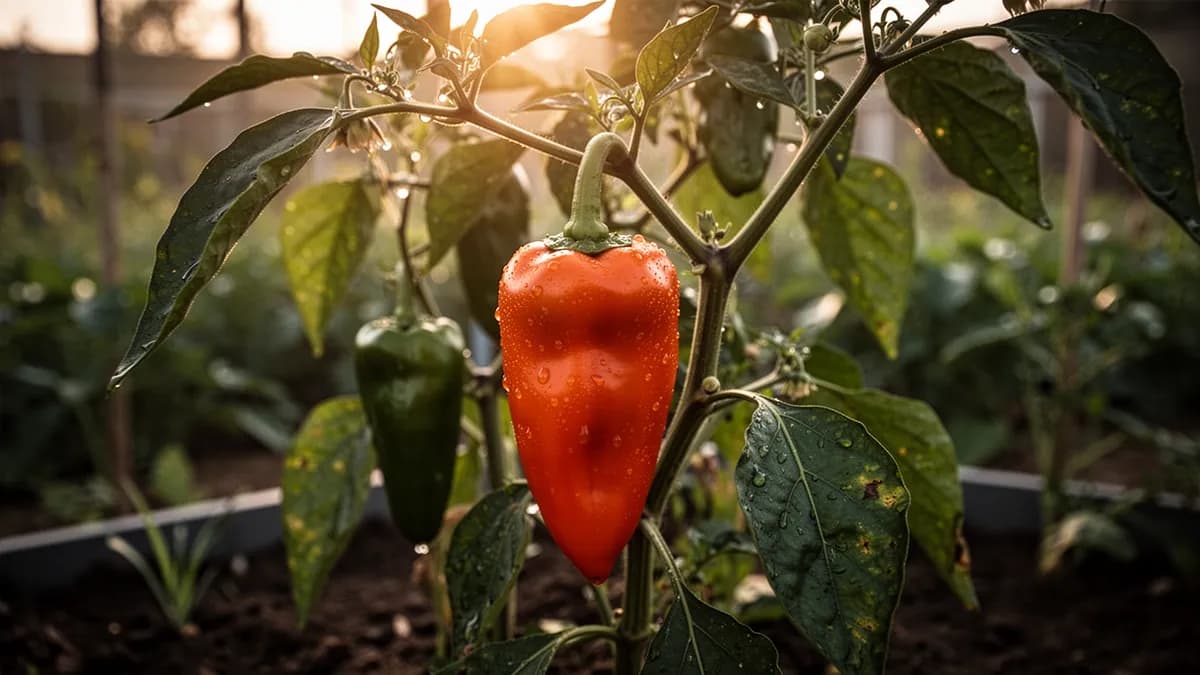
A small, bullet-shaped pepper that packs more heat than a jalapeno with a bright, crisp flavor ideal for fresh salsas. Serrano plants are prolific and compact, producing dozens of peppers that can be harvested green or allowed to ripen to red. The thin walls make them easy to slice and use raw, and they add clean heat without overwhelming other ingredients. These peppers are a staple in Mexican cuisine and are excellent in pico de gallo and guacamole.
Planting & Harvest Calendar
Growth Stages
From Seed to Harvest
Seed Germination
Days 0–14
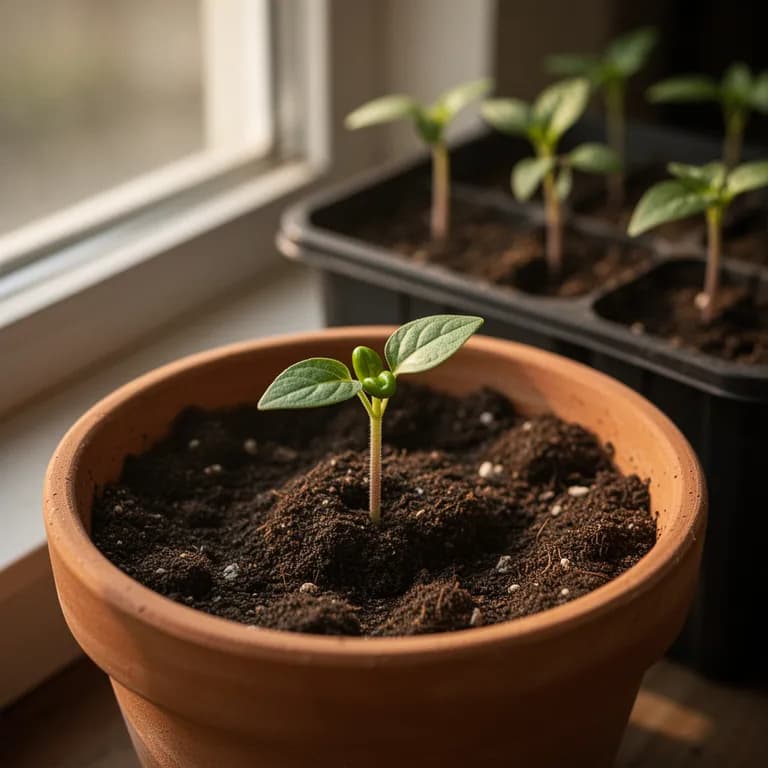
Seeds germinate in warm, moist conditions. The first sign of life is a pale radicle root emerging, followed by the hypocotyl arch pushing the seed coat above the soil surface. Cotyledon leaves unfold to begin photosynthesis. Germination requires consistent warmth and typically takes 10-14 days.
💡 Care Tip
Maintain soil temperature at 24-27°C (75-80°F) using a heat mat for fastest germination. Keep the growing medium consistently moist but not waterlogged. Provide 14-16 hours of light as soon as cotyledons emerge.
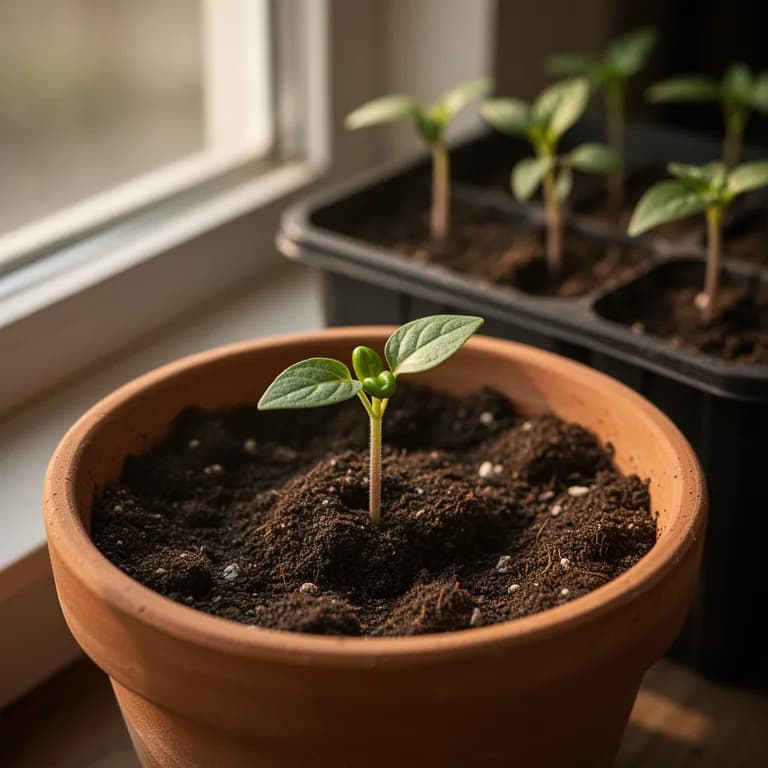
Serrano seedlings grow compactly and are ready to transplant once they have 4-6 true leaves
Monthly Care Calendar
What to do each month for your Serrano Pepper
May
You are herePrimary transplanting month for most zones. Plant outdoors after all frost danger has passed and soil has warmed to 18°C (65°F). Space plants 35-45 cm apart in full sun. Apply balanced slow-release fertilizer and mulch.
Did You Know?
Fascinating facts about Serrano Pepper
Serrano peppers are named after the mountain ranges (sierras) of the Mexican states of Puebla and Hidalgo where they were originally cultivated — 'serrano' literally means 'from the mountains' in Spanish.
Serrano peppers are compact, highly productive plants that thrive in warm conditions and produce prolifically throughout summer. Start seeds indoors 8-10 weeks before the last frost, sowing 6mm deep at 24-27°C (75-80°F). Seeds germinate in 10-14 days. Grow seedlings under strong light and transplant outdoors once nighttime temperatures stay above 13°C (55°F) and soil is warm.
Space plants 35-45 cm apart in full sun. Serranos are naturally compact and bushy, rarely exceeding 60-75 cm in height, making them well-suited for containers and small gardens. They respond well to rich, well-drained soil amended with compost. Apply a balanced slow-release fertilizer at planting time and mulch to conserve moisture and moderate soil temperature.
Water consistently at the base of plants, providing 2.5-4 cm per week through drip irrigation. Serranos are remarkably productive, with a single plant capable of yielding 50 or more peppers per season. Harvest regularly to encourage continued flowering and fruit set. Plants are self-pollinating but benefit from gentle shaking or wind to improve pollination rates. Serrano plants are one of the most resilient pepper types and tolerate some neglect better than many other varieties.
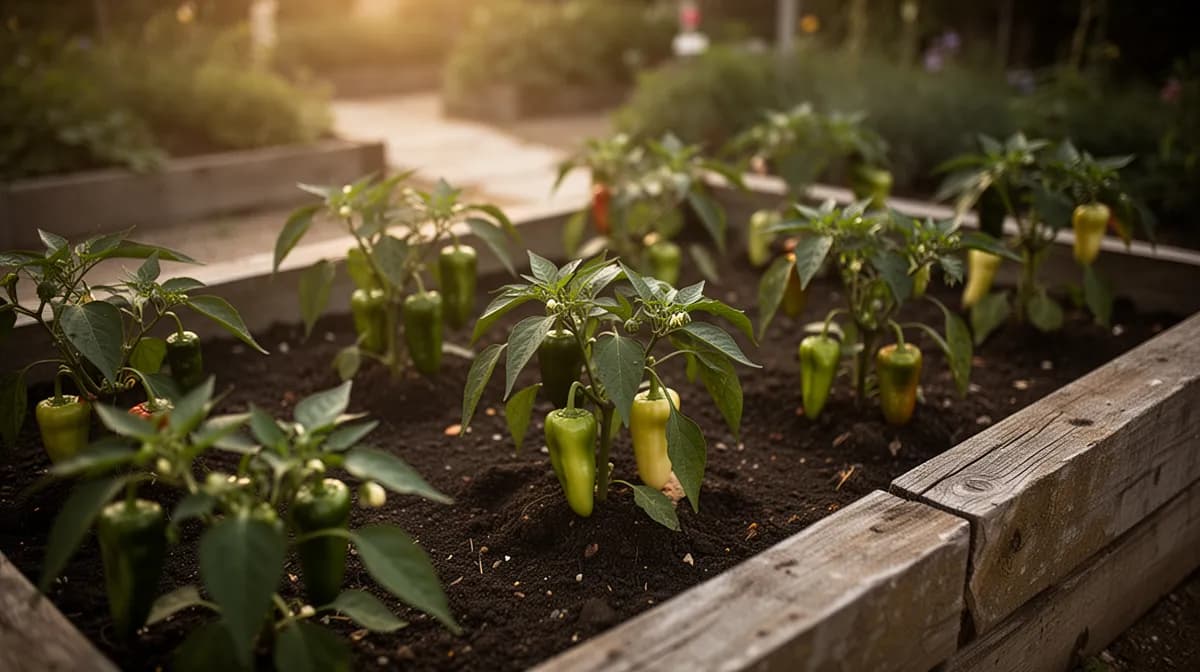
Compact serrano plants rarely exceed 75 cm tall, making them excellent for containers and small spaces
The serrano pepper (Capsicum annuum) originated in the mountainous regions of the Mexican states of Puebla and Hidalgo, where indigenous peoples cultivated it for centuries before European contact. The name 'serrano' derives from the Spanish word 'sierra,' meaning mountain range, reflecting the pepper's highland origins in the Sierra Norte and Sierra Madre Oriental. Archaeological evidence suggests that Capsicum species were among the earliest domesticated plants in Mesoamerica, with cultivation dating back over 6,000 years, and the serrano was one of the many regional varieties developed through generations of selective breeding by pre-Columbian farmers.
When Spanish conquistadors arrived in Mexico in the early 1500s, they encountered a sophisticated chile pepper culture with dozens of distinct varieties used for specific culinary purposes. Serranos were prized for their bright, clean heat and their suitability for fresh salsas — a role they still fill today. Spanish traders carried Capsicum seeds throughout their global trade networks, and peppers quickly spread to Asia, Africa, and Europe, transforming cuisines worldwide. However, the serrano itself remained largely a Mexican specialty, deeply embedded in the regional cooking traditions of central and southern Mexico rather than becoming a global commodity like some other pepper varieties.
Today, the serrano is the second most popular fresh chile pepper in Mexico after the jalapeno, with over 180,000 tonnes produced annually. Cultivation is concentrated in the states of Veracruz, Sinaloa, Nayarit, and Tamaulipas. In the United States, serrano cultivation has expanded significantly since the 1990s as Mexican cuisine gained mainstream popularity. They are now widely available in supermarkets and are increasingly grown in home gardens across warm-climate regions. Despite their global spread, serranos remain most deeply appreciated in their homeland, where they are an essential daily ingredient in pico de gallo, salsa verde, guacamole, and countless regional dishes that define Mexican culinary identity.
Start serrano seeds indoors 8-10 weeks before the last frost date. Sow 6mm deep in moist, sterile seed-starting mix and maintain soil temperature at 24-27°C (75-80°F). Seeds germinate in 10-14 days. Provide 14-16 hours of daily light using grow lights placed 5-8 cm above seedlings. Serrano seedlings are compact and grow at a moderate pace. Pot up to 8 cm containers when the first true leaves develop. Begin hardening off 7-10 days before transplanting by placing seedlings outdoors for gradually increasing periods. Transplant after all frost danger passes and soil has warmed to 18°C (65°F).
Serranos prefer well-drained, fertile soil with a pH of 6.0-7.0 enriched with compost. Work a balanced fertilizer into the soil before planting and side-dress with compost when flowering begins. Serranos are moderate feeders and can actually be over-fertilized, resulting in excessive foliage and reduced fruit set. A light application of potassium-rich fertilizer when fruits begin forming helps improve pepper quality. Avoid heavy nitrogen applications after the first flush of flowers. In containers, use a quality potting mix and feed with liquid fertilizer every 2 weeks.
Check Your Zone
See if Serrano Pepper is suitable for your location.
21°C – 32°C
70°F – 90°F
Serrano peppers thrive in warm conditions typical of their Mexican highland origins. Growth stalls below 13°C (55°F) and frost kills plants instantly. Seeds rot in soil below 18°C (65°F). The optimal range for flowering and fruit set is 21-32°C (70-90°F). Blossom drop occurs when night temperatures fall below 13°C (55°F) or daytime temperatures exceed 35°C (95°F). Unlike some tropical peppers, serranos tolerate moderate heat well but produce best when nights are warm and days are not excessively hot.
Common issues affecting Serrano Pepper and how to prevent and treat them organically.
Serrano plants may develop blossom drop when night temperatures are below 13°C or above 24°C. Maintain consistent conditions during flowering for best fruit set. Leaf curl without discoloration is typically heat or water stress and resolves with consistent irrigation. Small, misshapen fruits result from poor pollination during extreme heat; gently shake plants to improve pollen distribution. Plants that grow tall and leggy are not receiving enough light; ensure 6-8 hours of direct sun. Extremely prolific plants may benefit from light thinning of fruit clusters to improve individual pepper size.
Serranos benefit from planting alongside tomatoes, which provide partial shade during the hottest part of the day. Cilantro planted nearby attracts hoverflies and other beneficial insects that prey on aphids. Basil repels thrips and aphids while enhancing the garden with pleasant aromatics. Plant carrots between pepper plants to loosen soil and improve drainage. Alyssum serves as a living mulch, attracting parasitic wasps. Keep serranos away from fennel, kohlrabi, and other brassicas that may attract conflicting pest populations.
- 1Start seeds early indoors — serranos need 8-10 weeks of indoor growing time before transplanting. They germinate and grow more slowly than tomatoes, so patience is essential. A heat mat makes a significant difference in germination speed and uniformity.
- 2Do not transplant until nighttime temperatures reliably stay above 13°C (55°F). Serranos planted in cold soil sulk for weeks and never fully recover their potential productivity. Wait for genuinely warm conditions.
- 3Serrano plants are naturally compact and bushy, rarely exceeding 60-75 cm tall. This makes them excellent candidates for container growing — use at least a 15-20 liter pot with quality potting mix and feed regularly.
- 4Water consistently at the base using drip irrigation or soaker hoses. Fluctuations between wet and dry soil cause blossom end rot, cracking, and blossom drop. Aim for 2.5-4 cm of water per week during active growth.
- 5Pinching the first few flower buds when plants are young (before they reach 30 cm tall) redirects energy into root and branch development, resulting in a sturdier plant that ultimately produces more peppers over the season.
- 6Harvest regularly every 2-3 days once peppers reach 5-8 cm. Leaving ripe peppers on the plant signals it to slow flower production. Consistent picking is the single most effective way to maximize total yield.
- 7Allow some peppers to ripen fully to red on the plant for a sweeter, more complex flavor. Red serranos are slightly hotter than green and have a fruity depth that is wonderful in cooked salsas and hot sauces.
- 8In regions with short growing seasons, use black plastic mulch to warm the soil before transplanting, and consider row covers during cool nights in early summer. Every extra degree of soil warmth translates to better pepper production.
Serranos are best harvested when fruits are 5-8 cm long, firm, and glossy green for their characteristic bright, clean heat. For more complexity and slightly more heat, allow some fruits to ripen to red or orange. Unlike jalapenos, serranos do not need to develop corking for peak flavor. Snap or cut fruits from the plant, taking care not to damage the branch. Harvest every 2-3 days during peak production to keep plants producing heavily. A single healthy plant can produce 50 or more peppers across the season.
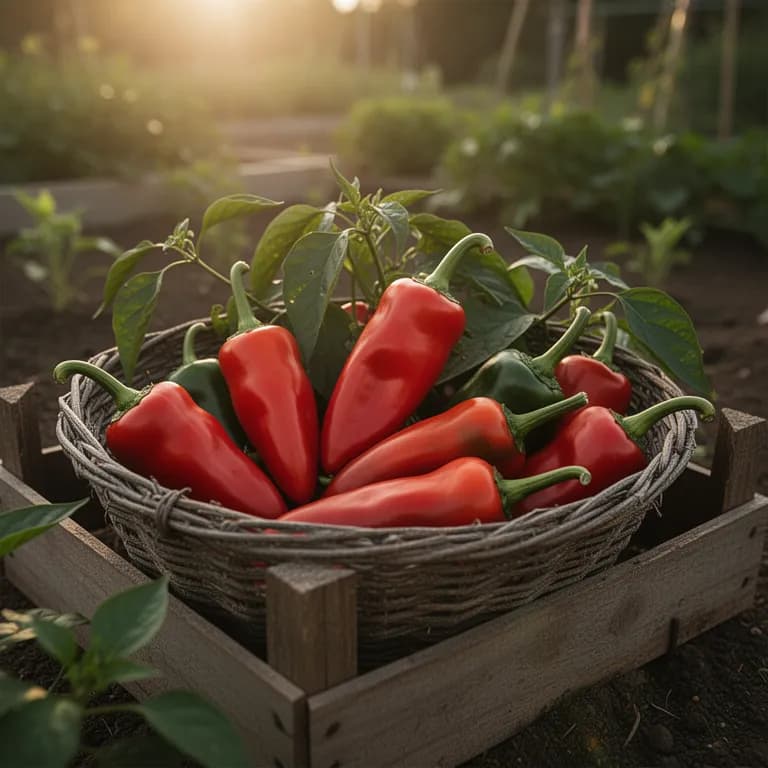
Serranos left to ripen turn red, developing sweeter and slightly hotter flavor
Fresh serranos keep refrigerated for 2-3 weeks when stored unwashed in a paper bag. Their thin walls make them challenging to dry whole, so slice them thinly before dehydrating at 57°C (135°F) for 6-8 hours. Freeze whole or sliced serranos on a sheet pan before transferring to freezer bags for up to 12 months. Pickled serranos in a simple vinegar brine with garlic are a popular taqueria-style condiment. Blend fresh serranos with tomatillos, cilantro, and onion for a vibrant green salsa that freezes beautifully.
Plan your garden with ease
Love growing Serrano Pepper? Use our free garden planner to design your beds, track planting dates, and get personalized care reminders.
Nutritional Info
Per 100g serving
32
Calories
Health Benefits
- Exceptionally rich in vitamin C — a single serrano pepper provides about 50% of the daily value, more per gram than most citrus fruits
- Contains capsaicin, the compound responsible for heat, which has been shown to boost metabolism, reduce inflammation, and support cardiovascular health
- Good source of dietary fiber at 3.7g per 100g, supporting digestive regularity and gut microbiome health
- Provides vitamin B6 (pyridoxine), essential for protein metabolism, neurotransmitter synthesis, and immune function
- Low in calories at only 32 per 100g while delivering significant micronutrient density — an excellent addition to weight-conscious diets
- Contains vitamin A and beta-carotene, particularly in red-ripe peppers, supporting eye health, skin integrity, and immune defense
💰 Why Grow Your Own?
A single serrano plant costing $2-4 (or pennies from seed) produces 50 or more peppers over a season. Fresh serranos sell for $3-6 per pound at grocery stores, and organic serranos can exceed $8 per pound. Growing just 3-4 plants can save $30-60 per season on fresh peppers alone. The savings increase further when you consider the cost of prepared salsas ($4-8 per jar) and hot sauces ($5-12 per bottle) that are easily made from homegrown serranos at a fraction of the price.
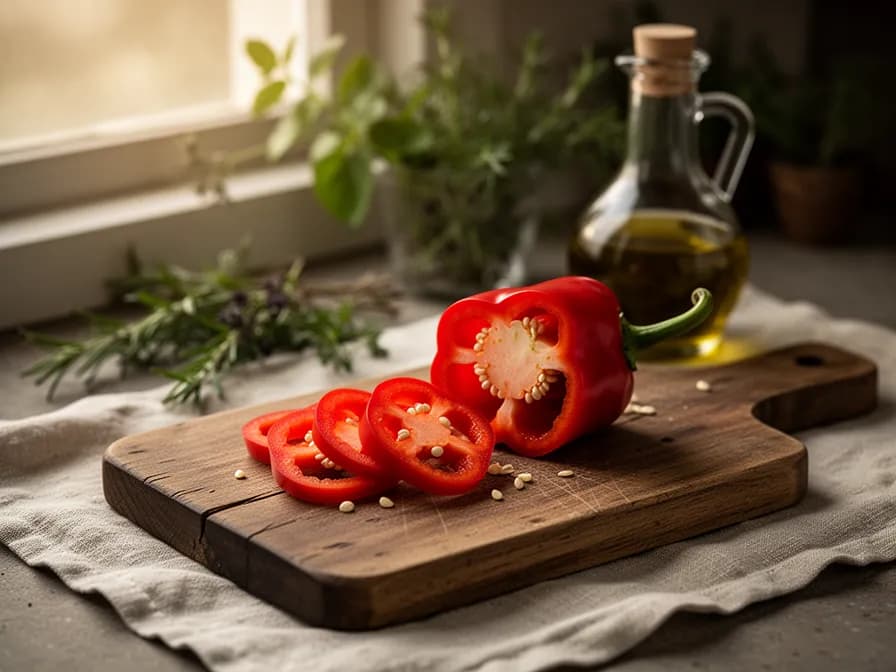
Serrano peppers have thinner walls than jalapenos, making them ideal for fresh salsas and slicing
Quick Recipes
Simple recipes using fresh Serrano Pepper
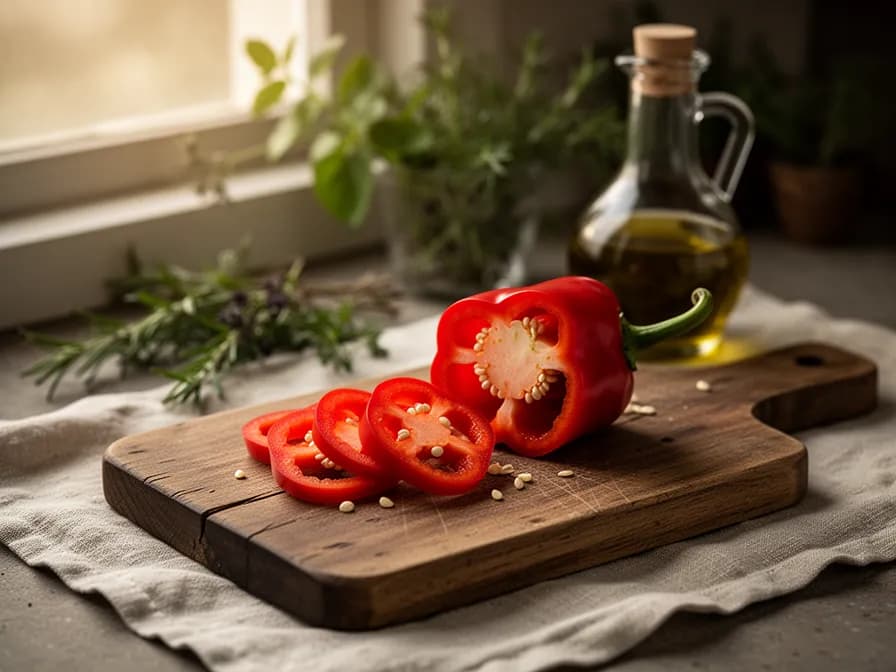
Classic Pico de Gallo
15 minThe quintessential Mexican fresh salsa where serranos provide clean, bright heat that cuts through the richness of tortilla chips, tacos, and grilled meats. No cooking required — just sharp knife work and the freshest ingredients.
Roasted Tomatillo-Serrano Salsa Verde
30 minA smoky, tangy green salsa made by charring tomatillos and serranos under the broiler before blending into a vibrant sauce. This is the authentic table salsa found in taquerias across Mexico.
Serrano-Cilantro Guacamole
10 minPerfectly ripe avocados mashed with raw serrano peppers and fresh lime juice for a guacamole with genuine heat and bright flavor. The thin-walled serranos distribute evenly through the creamy avocado.
Roasted serrano salsa verde — the classic Mexican table sauce
Yield & Spacing Calculator
See how many Serrano Pepper plants fit in your garden bed based on the recommended 40cm spacing.
9
Serrano Pepper plants in a 4×4 ft bed
3 columns × 3 rows at 40cm spacing
Popular Varieties
Some of the most popular serrano pepper varieties for home gardeners, each with unique characteristics.
Serrano Tampiqueno
The standard variety used in Mexican cuisine, producing 5-7 cm bullet-shaped fruits with 10,000-25,000 SHU. Extremely prolific with upright, compact growth habit. Matures in 75 days from transplant.
Serrano del Sol
A hybrid with improved disease resistance and earlier maturity at 65 days. Produces uniform, slightly larger fruits than heirloom types. Excellent heat and productivity in northern climates with shorter seasons.
Purple Serrano
An ornamental and edible variety producing deep purple fruits that ripen through orange to red. Similar heat profile to green serranos with a slightly sweeter finish. Compact plants ideal for container gardening.
Huasteco
A Mexican variety selected for heavier yields and larger fruits up to 9 cm long. Disease-resistant plants with vigorous growth. Heat level is at the upper end of serrano range at 15,000-30,000 SHU.
Serranos are the go-to fresh pepper in Mexican cuisine, prized for their bright, crisp heat that does not overpower other flavors. Dice raw into pico de gallo, guacamole, and ceviche. Roast or char for smoky salsas. Slice into thin rings for garnishing tacos, soups, and rice dishes. Blend with tomatillos for authentic salsa verde. Serranos are typically used with seeds and membranes intact, as their moderate heat is well-balanced for most palates.
When should I plant Serrano Pepper?
Plant Serrano Pepper in March, April, May. It takes approximately 75 days to reach maturity, with harvest typically in July, August, September.
What are good companion plants for Serrano Pepper?
Serrano Pepper grows well alongside Tomato, Basil, Carrot. Companion planting can improve growth, flavor, and natural pest control.
What hardiness zones can Serrano Pepper grow in?
Serrano Pepper thrives in USDA hardiness zones 4 through 12. With greenhouse protection, it may be grown in zones 2 through 13.
How much sun does Serrano Pepper need?
Serrano Pepper requires Full Sun (6-8h+). This means at least 6-8 hours of direct sunlight daily.
How far apart should I space Serrano Pepper?
Space Serrano Pepper plants 40cm (16 inches) apart for optimal growth and air circulation.
What pests and diseases affect Serrano Pepper?
Common issues include Whiteflies, Cercospora Leaf Spot, Flea Beetles. Prevention through good garden practices like crop rotation, proper spacing, and companion planting is the best approach. See the detailed pests and diseases section above for symptoms, prevention, and treatment for each.
How do I store Serrano Pepper after harvest?
Fresh serranos keep refrigerated for 2-3 weeks when stored unwashed in a paper bag. Their thin walls make them challenging to dry whole, so slice them thinly before dehydrating at 57°C (135°F) for 6-8 hours. Freeze whole or sliced serranos on a sheet pan before transferring to freezer bags for up to...
What are the best Serrano Pepper varieties to grow?
Popular varieties include Serrano Tampiqueno, Serrano del Sol, Purple Serrano, Huasteco. Each has unique characteristics suited to different growing conditions and culinary preferences. See the varieties section above for detailed descriptions.
What soil does Serrano Pepper need?
Serranos prefer well-drained, fertile soil with a pH of 6.0-7.0 enriched with compost. Work a balanced fertilizer into the soil before planting and side-dress with compost when flowering begins. Serranos are moderate feeders and can actually be over-fertilized, resulting in excessive foliage and red...
How hot are serrano peppers compared to jalapenos?
Serranos are roughly 2-5 times hotter than jalapenos, measuring 10,000-25,000 Scoville Heat Units compared to the jalapeno's 2,500-8,000 SHU. However, serrano heat tends to dissipate more quickly, giving a bright burst rather than a prolonged burn. The heat is concentrated in the white pith inside the pepper, not the seeds themselves. For milder heat, remove the pith and seeds before using. Red-ripe serranos are slightly hotter than green ones.
Should I harvest serranos green or wait until they turn red?
Both are excellent — it depends on your intended use. Green serranos have a sharp, bright, grassy heat that is traditional in pico de gallo, guacamole, and fresh salsas. Red-ripe serranos develop a sweeter, fruitier flavor with slightly more heat, making them ideal for cooked salsas, hot sauces, and drying. Harvesting green encourages the plant to keep producing, while waiting for red means fewer total peppers but more complex flavor. Most gardeners harvest a mix of both.
Can I grow serrano peppers in containers?
Yes, serranos are one of the best peppers for container growing due to their naturally compact, bushy habit. Use a container of at least 15-20 liters (4-5 gallons) with drainage holes and quality potting mix. Place in full sun (6-8 hours minimum) and water daily in hot weather since containers dry out quickly. Feed every 2 weeks with a balanced liquid fertilizer, switching to a high-phosphorus formula once flowering begins. Container-grown serranos can produce 30-50 peppers per season.
Why are my serrano plants dropping their flowers without setting fruit?
Blossom drop in serranos is almost always caused by temperature extremes — night temperatures below 13°C (55°F) or daytime temperatures above 35°C (95°F) interfere with pollination and cause flowers to abort. Other causes include inconsistent watering, excessive nitrogen fertilization (too much leafy growth at the expense of fruit), and poor pollination on still, windless days. Gently shake plants to distribute pollen, maintain consistent watering, and use a balanced or phosphorus-rich fertilizer once flowering starts.
How do I dry serrano peppers?
Serrano peppers have thinner walls than jalapenos, which actually makes them easier to dry. Slice peppers lengthwise or into thin rings and spread on dehydrator trays. Dry at 57°C (135°F) for 6-8 hours until completely brittle — they should snap, not bend. Alternatively, thread whole peppers on string through the stems and hang in a warm, dry, well-ventilated area for 2-3 weeks. Dried serranos can be ground into a flavorful chili powder or rehydrated in warm water for sauces. Store in airtight containers away from light for up to a year.
Are serrano peppers perennial or do I need to replant each year?
Serranos are tropical perennials that can live for several years in frost-free climates (zones 10-12), but they are grown as warm-season annuals in most gardens. They die at the first frost. In cooler zones, you can overwinter plants indoors by potting them up before frost, cutting back foliage by two-thirds, and placing in a bright, cool room. Overwintered plants produce an earlier and often heavier crop the following season since they have an established root system. Most gardeners find it simpler to start fresh from seed each year.
Ready to Grow Serrano Pepper?
Add Serrano Pepper to your garden plan and start designing your perfect layout.

Vladimir Kusnezow
Gardener and Software Developer
Zone 6b gardener. Growing vegetables and fruits in soil and hydroponics for 6 years. I built PlotMyGarden to plan my own gardens.
Jump to Section