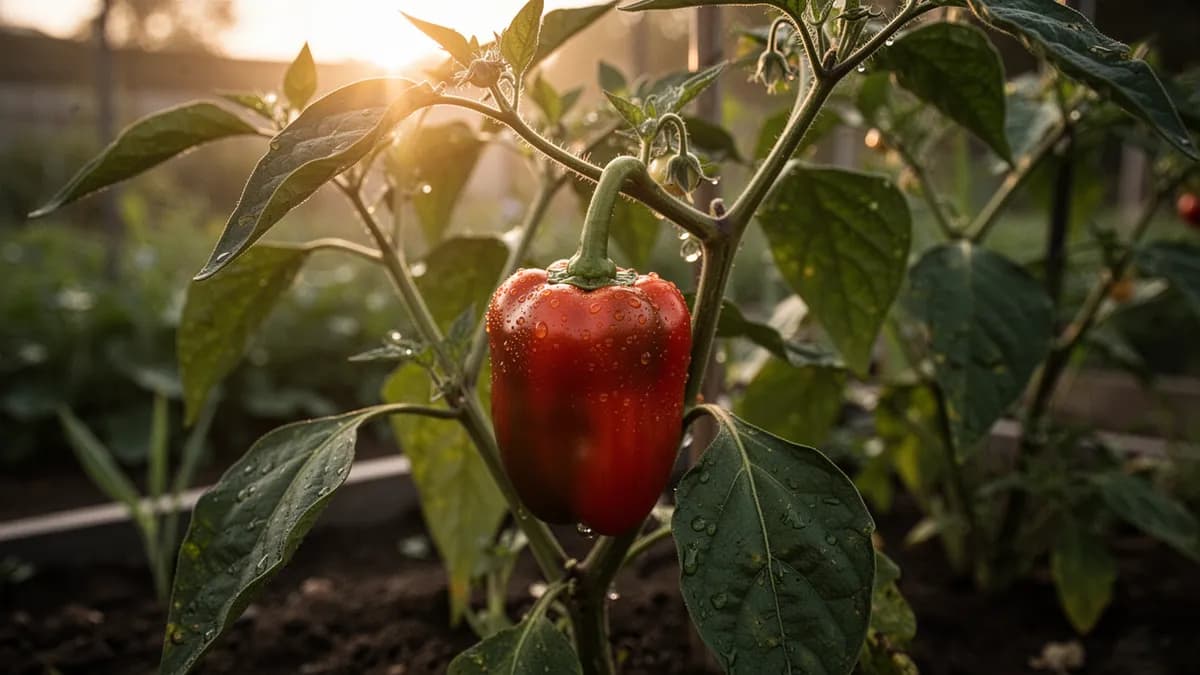
Cherry Pepper
Capsicum annuum
At a Glance
It's planting season for Cherry Pepper! Start planning your garden now.
A compact, round pepper with mild to moderate heat, perfect for stuffing and pickling. Plants are prolific producers and adapt well to containers, making them ideal for patio gardens. Water consistently and fertilize every two weeks during fruiting for best yields. Pick fruits when they turn bright red for maximum sweetness.
Planting & Harvest Calendar
Growth Stages
From Seed to Harvest
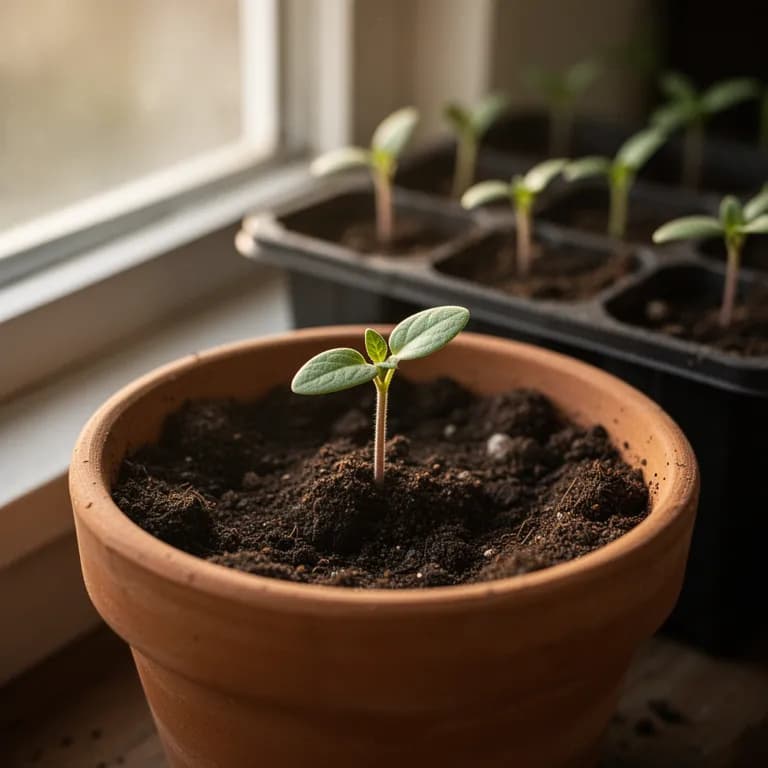
Seed Starting
Days 0–14
Seeds germinate slowly in warm, moist conditions. Cherry pepper seeds require consistent soil warmth of 27-30°C (80-85°F) for reliable germination. Tiny cotyledon leaves emerge after 10-14 days, appearing as a pair of small rounded leaves.
💡 Care Tip
Use a heat mat to maintain soil temperature at 80-85°F. Keep soil moist but not waterlogged. Cover trays with a humidity dome until sprouts appear, then remove immediately to prevent damping off.
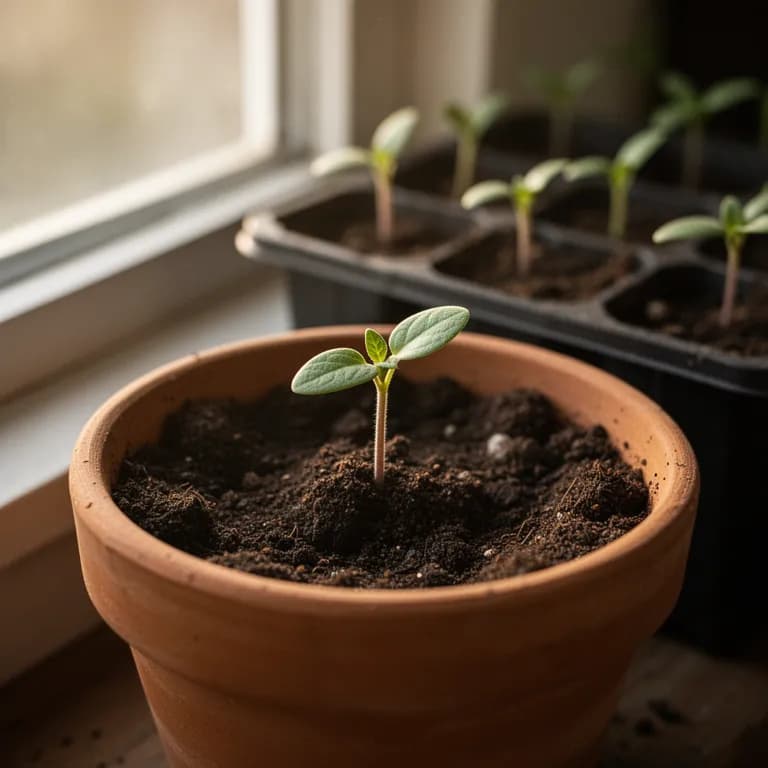
Cherry pepper seedling developing its first true leaves under grow lights
Monthly Care Calendar
What to do each month for your Cherry Pepper
May
You are hereTransplant outdoors after the last frost when nighttime temperatures stay above 13°C (55°F). Space plants 45-60 cm apart. Water deeply and apply mulch after soil has warmed thoroughly.
Did You Know?
Fascinating facts about Cherry Pepper
Cherry peppers get their name from their resemblance to cherries — they are round, roughly the same size, and turn a deep glossy red when ripe, often confusing garden visitors at first glance.
Cherry peppers are compact, round peppers about the size of a cherry tomato, with mild to moderate heat and thick, juicy walls perfect for stuffing and pickling. Start seeds indoors 8-10 weeks before the last frost. Transplant after soil reaches 65°F and nighttime temperatures are consistently above 55°F. Space plants 18-24 inches apart.
These bushy, compact plants grow 18-24 inches tall and are naturally sturdy, rarely needing staking. They are excellent for container growing in pots at least 5 gallons. Water consistently with 1 inch per week and mulch to maintain even soil moisture. Cherry peppers are among the most productive pepper types, with each plant producing 30-50 or more small fruits over the season.
Cherry peppers can be harvested green for milder flavor or left to ripen to bright red for sweeter, slightly hotter fruit. They are very heat-tolerant and continue producing through summer temperatures that cause other peppers to drop blossoms. Their compact size and prolific production make them ideal for home gardeners who want large yields from small spaces. Regular harvesting encourages continued flower and fruit production throughout the growing season.
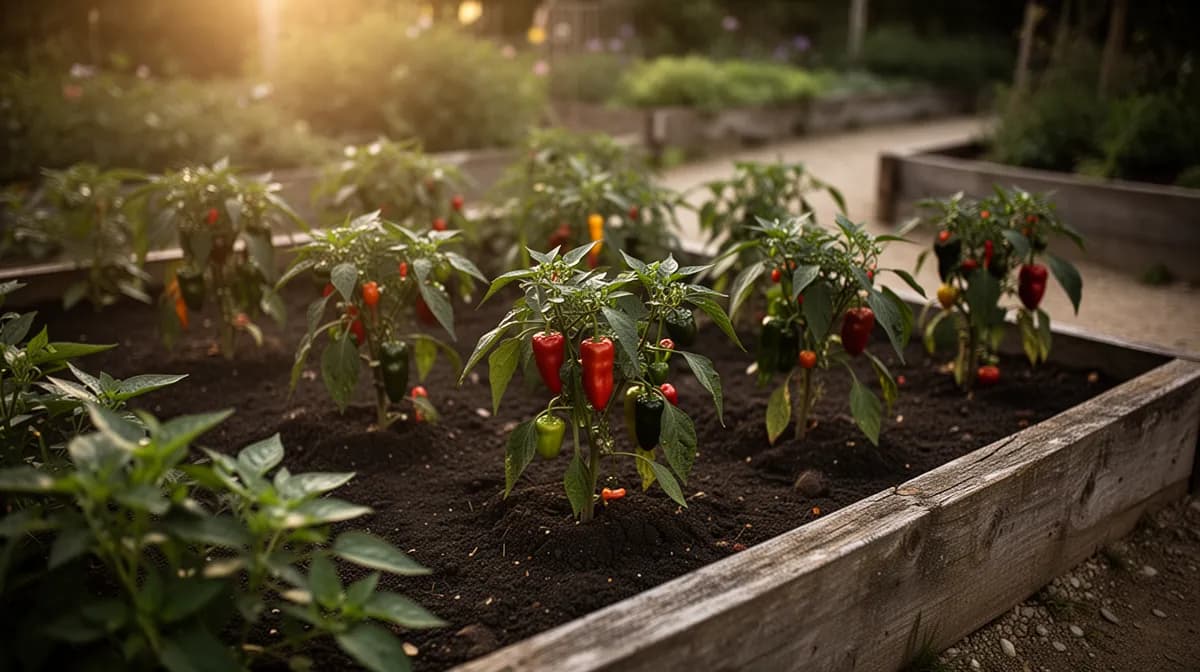
Cherry peppers are ideal container plants due to their compact bushy habit
Cherry peppers belong to the species Capsicum annuum, which originated in central Mexico and was one of the earliest crops domesticated in the Americas, with evidence of pepper cultivation dating back to at least 5000 BC. Small, round pepper forms closely resembling modern cherry peppers were among the first shapes selected by indigenous growers in Mesoamerica, prized for their thick flesh and ease of drying.
Spanish and Portuguese traders introduced peppers to Europe in the early 1500s, where they rapidly spread across the Mediterranean. Italy and Hungary became particularly important centers of pepper cultivation and breeding. Italian immigrants brought their beloved cherry pepper varieties to the United States in the late 1800s and early 1900s, establishing the tradition of stuffed and pickled cherry peppers that remains central to Italian-American cuisine, particularly in Philadelphia and New Jersey.
Today cherry peppers are grown worldwide and remain one of the most popular home garden pepper varieties due to their compact size, prolific production, and versatility in the kitchen. Modern breeding has expanded the cherry pepper family to include varieties ranging from completely sweet to moderately hot, all maintaining the characteristic round shape and thick, juicy walls.
Start cherry pepper seeds indoors 8-10 weeks before the last frost. Plant seeds one-quarter inch deep at 80-85°F using a heat mat for consistent warmth. Germination takes 10-14 days. Provide strong light for 14-16 hours daily after sprouting. Pot up seedlings to 3-4 inch pots when they develop true leaves. Harden off for 10-14 days before transplanting when nighttime temperatures stay above 55°F. Cherry peppers are excellent candidates for container growing; transplant into pots of at least 5 gallons.
Cherry peppers thrive in well-drained, fertile soil with a pH of 6.0-6.8. Work in compost before planting and apply balanced fertilizer at transplanting. Side-dress with a phosphorus-rich fertilizer when flowering begins to support the heavy fruit production. In containers, use quality potting mix and feed with liquid fertilizer every 2 weeks during the growing season. Avoid excessive nitrogen which promotes leafy growth over fruit production. Calcium supplements help prevent blossom end rot on the thick-walled fruits.
Check Your Zone
See if Cherry Pepper is suitable for your location.
18°C – 32°C
64°F – 90°F
Cherry peppers thrive in warm conditions and are more heat-tolerant than many other pepper types. Below 13°C (55°F), growth stalls and fruit will not set. Unlike bell peppers, cherry peppers continue to flower and set fruit at temperatures above 32°C (90°F), making them excellent choices for hot-summer gardens. The ideal daytime range is 21-29°C (70-85°F) with nighttime temperatures above 15°C (60°F).
Common issues affecting Cherry Pepper and how to prevent and treat them organically.
The most common issue is overproduction; cherry pepper plants are so prolific that fruits may go unharvested and rot. Plan for preservation from the start. Blossom drop in extreme heat or cold is temporary and production resumes when temperatures moderate. Overwatering in containers causes root rot; ensure good drainage. Thick-walled fruits are prone to blossom end rot if calcium is deficient or watering is irregular. Small fruit size may indicate overcrowding or insufficient fertility.
Cherry peppers make excellent companion plants due to their compact size and minimal shading. Grow alongside tomatoes, basil, and carrots in traditional garden beds. Marigolds planted nearby deter aphids and whiteflies. Basil may help repel pepper pests and improve flavor. Avoid planting near fennel or brassicas. In containers, pair cherry peppers with herbs like basil, oregano, and parsley for a productive patio garden. Onions and garlic nearby may help deter insect pests.
- 1Cherry peppers are the ideal starter pepper for beginners — their compact size, disease resistance, and prolific production make them nearly foolproof in warm conditions. Start with Large Red Cherry or Sweet Cherry varieties for the easiest experience.
- 2Container growing is where cherry peppers truly excel. Use at least a 19-liter (5-gallon) pot with drainage holes, quality potting mix, and feed with liquid fertilizer every two weeks. A single plant in a sunny patio spot can produce enough peppers for stuffing and pickling all season.
- 3Do not rush transplanting outdoors. Cherry peppers are tropical plants that suffer in cold soil. Wait until nighttime temperatures are reliably above 13°C (55°F) and soil has warmed to at least 18°C (65°F). Cold-stressed transplants may stunt permanently.
- 4Unlike large-fruited peppers, cherry peppers rarely need staking or support. Their naturally compact, bushy growth habit and small fruit size means branches can support their own weight. This makes them even easier for beginners and container growers.
- 5Harvest frequently — every 2-3 days during peak production. Leaving ripe fruit on the plant signals it to slow flower production. Regular picking keeps the plant in full production mode and extends the harvest window by several weeks.
- 6For the hottest cherry pepper varieties like Cherry Bomb, harvest when fully red for maximum heat. For the sweetest flavor from any variety, let peppers ripen fully to deep red on the plant rather than picking green.
- 7Mulch is essential but timing matters. Wait until the soil has thoroughly warmed in early summer before applying 5-8 cm of organic mulch. Mulching too early keeps soil cool and slows pepper growth. Once applied, mulch conserves moisture and suppresses weeds.
- 8Plan for abundance. Cherry peppers produce far more than most families can eat fresh. Before planting, decide how you will preserve the surplus — pickling, stuffing and jarring in oil, freezing, or drying into pepper flakes are all excellent options.
Harvest cherry peppers at any stage from green to fully red depending on your taste preference. Green fruits are milder and crunchier; red-ripe fruits are sweeter with more developed heat. Cut from the plant with scissors or pruners rather than pulling. Each plant produces prolifically, often 30-50 peppers per season. Pick every few days to encourage continuous production. For stuffing and pickling, harvest at full size when walls are thick and firm regardless of color. Handle hot varieties with gloves.
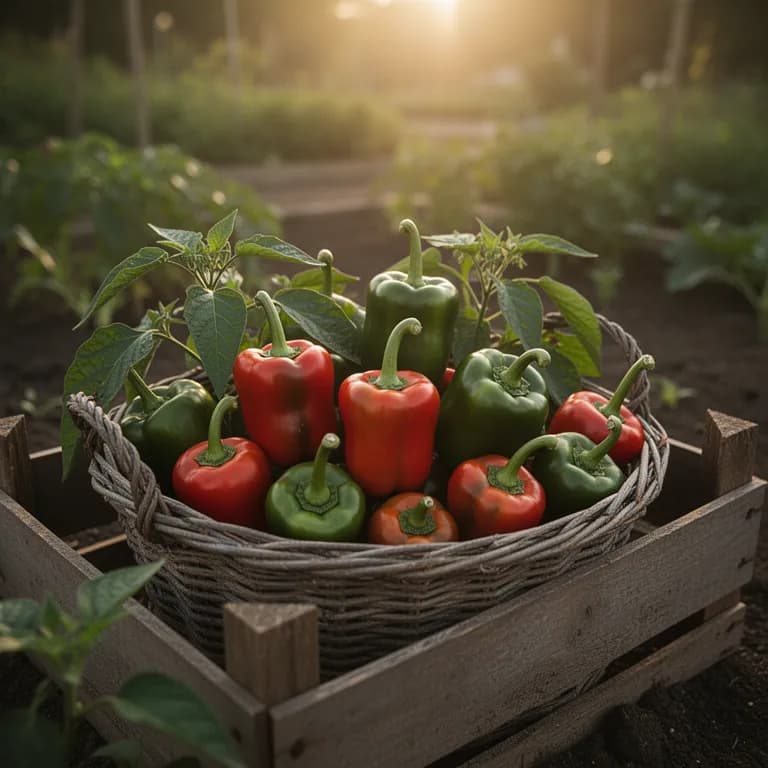
Fully ripe cherry peppers turn a glossy bright red with thick juicy walls
Fresh cherry peppers keep in the refrigerator for 2-3 weeks. Their thick walls and small size make them ideal for pickling; stuff with cheese or garlic before submerging in vinegar brine. Cherry peppers can also be preserved in olive oil after roasting. For freezing, halve and remove seeds, then freeze on trays before bagging. Dried cherry pepper flakes add mild heat to dishes. Hot-pack canning with vinegar brine creates shelf-stable pickled peppers. Cherry peppers are among the most versatile peppers for preservation.
Plan your garden with ease
Love growing Cherry Pepper? Use our free garden planner to design your beds, track planting dates, and get personalized care reminders.
Nutritional Info
Per 100g serving
26
Calories
Health Benefits
- Extremely high in Vitamin C — a single red cherry pepper provides more than a full day's requirement, even surpassing oranges gram-for-gram
- Rich in Vitamin A as beta-carotene, supporting eye health and immune function — red-ripe fruits contain up to 10x more than green
- Contains capsaicin, which boosts metabolism, reduces inflammation, and may help with pain relief
- Low calorie and nutrient-dense at only 26 calories per 100g, making them an excellent diet-friendly snack
- Good source of Vitamin B6, which supports brain health and helps the body produce serotonin and norepinephrine
- Provides Vitamin E and antioxidant carotenoids including lutein and zeaxanthin that protect eye health
💰 Why Grow Your Own?
A single cherry pepper plant costing $3-5 can produce 30-50 peppers worth $8-15 at grocery prices, where specialty cherry peppers sell for $4-6 per pint. A jar of pickled stuffed cherry peppers costs $6-10 at the deli counter — homemade versions from your garden cost pennies per jar. Growing just 3-4 plants provides enough fresh and preserved peppers for an entire year.
Quick Recipes
Simple recipes using fresh Cherry Pepper
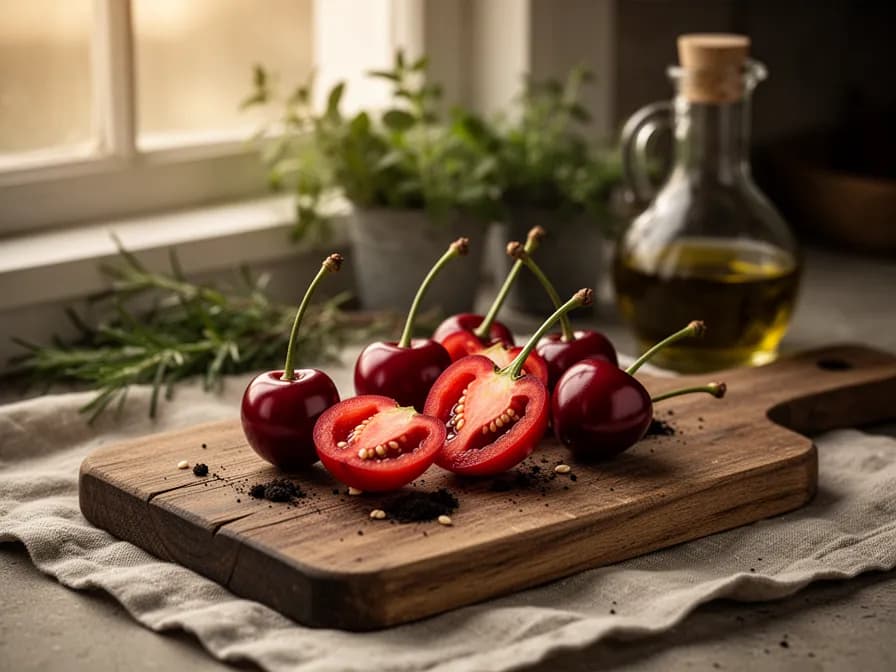
Italian Stuffed Cherry Peppers
25 minA classic Italian antipasto that showcases the cherry pepper's thick walls and mild heat. Whole peppers are cored and stuffed with a savory mixture of cream cheese, prosciutto, and fresh herbs, then drizzled with olive oil. Perfect as an appetizer or party snack.
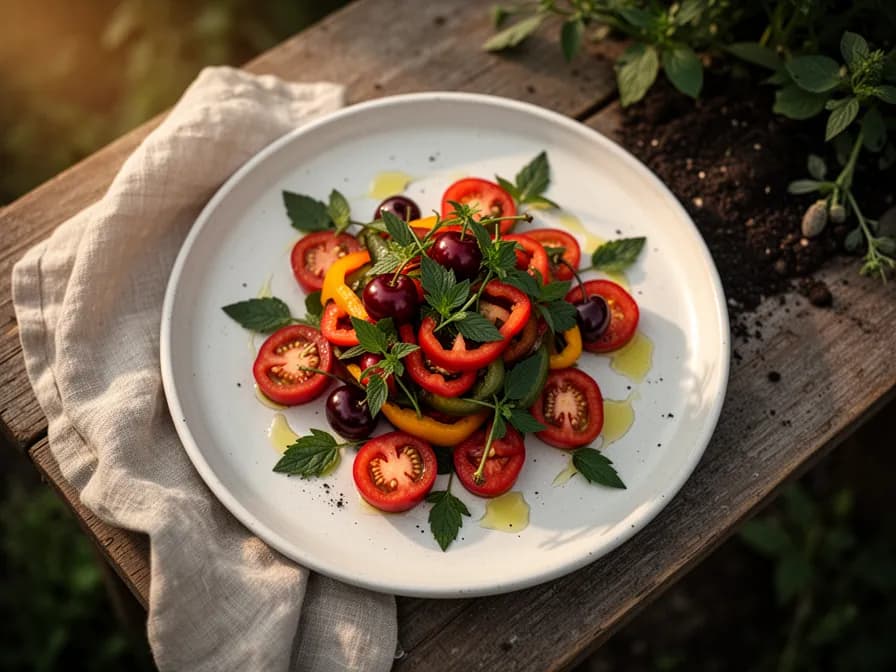
Quick Pickled Cherry Peppers
20 min plus 24 hours restingTangy, crunchy pickled cherry peppers that keep for months in the refrigerator. This quick-pickle method preserves the pepper's crisp texture and adds bright acidity that makes them irresistible on sandwiches, pizza, and charcuterie boards.
Roasted Cherry Pepper Relish
30 minA versatile condiment that transforms simple dishes into something special. Roasting concentrates the cherry pepper's natural sweetness while adding smoky depth. Spoon over grilled meats, toss with pasta, or spread on crusty bread.
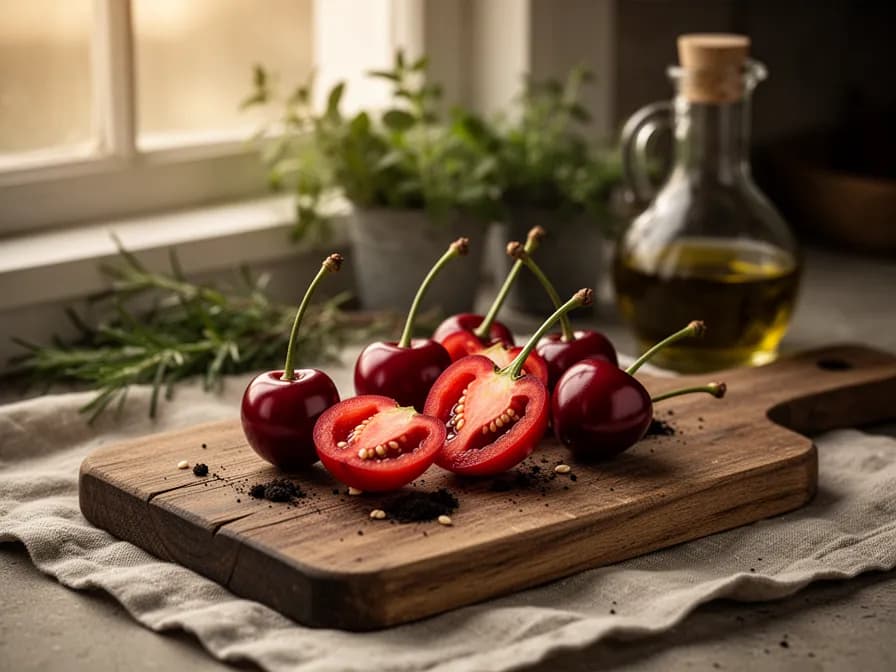
Stuffed cherry peppers are a classic appetizer that showcases their thick walls
Yield & Spacing Calculator
See how many Cherry Pepper plants fit in your garden bed based on the recommended 40cm spacing.
9
Cherry Pepper plants in a 4×4 ft bed
3 columns × 3 rows at 40cm spacing
Popular Varieties
Some of the most popular cherry pepper varieties for home gardeners, each with unique characteristics.
Large Red Cherry
Classic round, thick-walled cherry pepper with mild heat. Perfect for stuffing and pickling. Very productive.
Cherry Bomb
Hot cherry pepper hybrid with thick walls and medium heat. Excellent for pickling and adds spice to stuffed preparations.
Sweet Cherry
Completely mild cherry pepper with no heat. Sweet, thick flesh perfect for snacking, salads, and mild pickled peppers.
Besler's Cherry
Heirloom German variety with round red fruits and moderate heat. Compact plants ideal for containers.
Cherry peppers are incredibly versatile. Stuff with mozzarella and prosciutto or cream cheese and wrap in bacon for appetizers. Pickle whole or halved in vinegar with garlic and herbs for an Italian antipasto staple. Slice into salads, pizza, and sandwiches. Roast and preserve in olive oil. Dice into salsas, relishes, and bruschetta toppings. Hot varieties add flavor to fermented hot sauces. Cherry peppers stuffed with cheese and packed in oil are a classic Italian delicatessen product.
When should I plant Cherry Pepper?
Plant Cherry Pepper in March, April, May. It takes approximately 65 days to reach maturity, with harvest typically in July, August, September.
What are good companion plants for Cherry Pepper?
Cherry Pepper grows well alongside Tomato, Basil, Onion. Companion planting can improve growth, flavor, and natural pest control.
What hardiness zones can Cherry Pepper grow in?
Cherry Pepper thrives in USDA hardiness zones 4 through 12. With greenhouse protection, it may be grown in zones 2 through 13.
How much sun does Cherry Pepper need?
Cherry Pepper requires Full Sun (6-8h+). This means at least 6-8 hours of direct sunlight daily.
How far apart should I space Cherry Pepper?
Space Cherry Pepper plants 40cm (16 inches) apart for optimal growth and air circulation.
What pests and diseases affect Cherry Pepper?
Common issues include Aphids, Bacterial Leaf Spot, Pepper Weevil. Prevention through good garden practices like crop rotation, proper spacing, and companion planting is the best approach. See the detailed pests and diseases section above for symptoms, prevention, and treatment for each.
How do I store Cherry Pepper after harvest?
Fresh cherry peppers keep in the refrigerator for 2-3 weeks. Their thick walls and small size make them ideal for pickling; stuff with cheese or garlic before submerging in vinegar brine. Cherry peppers can also be preserved in olive oil after roasting. For freezing, halve and remove seeds, then fre...
What are the best Cherry Pepper varieties to grow?
Popular varieties include Large Red Cherry, Cherry Bomb, Sweet Cherry, Besler's Cherry. Each has unique characteristics suited to different growing conditions and culinary preferences. See the varieties section above for detailed descriptions.
What soil does Cherry Pepper need?
Cherry peppers thrive in well-drained, fertile soil with a pH of 6.0-6.8. Work in compost before planting and apply balanced fertilizer at transplanting. Side-dress with a phosphorus-rich fertilizer when flowering begins to support the heavy fruit production. In containers, use quality potting mix a...
Are cherry peppers hot or sweet?
It depends entirely on the variety. Sweet Cherry peppers have zero heat and taste like a miniature bell pepper. Large Red Cherry peppers have mild heat around 1,000-3,500 Scoville units — noticeable but not uncomfortable for most people. Cherry Bomb peppers reach up to 5,000 SHU, comparable to a mild jalapeno. Check the variety description before planting to match your heat preference.
Can I grow cherry peppers in a container on my patio?
Cherry peppers are one of the best peppers for container growing. Their compact 45-60 cm (18-24 inch) height and bushy habit are perfectly suited to pots. Use at least a 19-liter (5-gallon) container with drainage holes, quality potting mix, and feed with liquid fertilizer every two weeks during the growing season. Place in the sunniest spot available — at least 6 hours of direct sun daily.
Why are my cherry pepper plants dropping their flowers?
Blossom drop in peppers is usually caused by temperature extremes — either nighttime temperatures below 13°C (55°F) or prolonged daytime heat above 35°C (95°F). However, cherry peppers are more heat-tolerant than most peppers. Other common causes include inconsistent watering, nitrogen-heavy fertilizer (switch to phosphorus-rich), or insufficient pollination. The issue is usually temporary and production resumes when conditions stabilize.
What is the best way to preserve cherry peppers?
Pickling is the most popular method — halve and pack peppers in a hot vinegar brine with garlic and herbs for shelf-stable preservation or quick-pickle in the refrigerator. For stuffed peppers, fill with cream cheese or provolone and pack in olive oil. Freezing works well: halve, seed, and flash-freeze on a tray before bagging. You can also dry them in a dehydrator for cherry pepper flakes that add mild heat to dishes year-round.
How do I tell when cherry peppers are ready to harvest?
Cherry peppers can be harvested at any color stage. Green peppers are milder and crunchier, ideal for fresh eating and salads. As they ripen to red, they become sweeter with slightly more heat and softer flesh — best for stuffing, pickling, and cooking. Fully ripe red cherry peppers are glossy, firm, and about 3-4 cm in diameter. Use scissors to cut the stem rather than pulling, which can damage the branch.
Ready to Grow Cherry Pepper?
Add Cherry Pepper to your garden plan and start designing your perfect layout.

Vladimir Kusnezow
Gardener and Software Developer
Zone 6b gardener. Growing vegetables and fruits in soil and hydroponics for 6 years. I built PlotMyGarden to plan my own gardens.
Jump to Section