Coral Charm Peony
Paeonia lactiflora
At a Glance
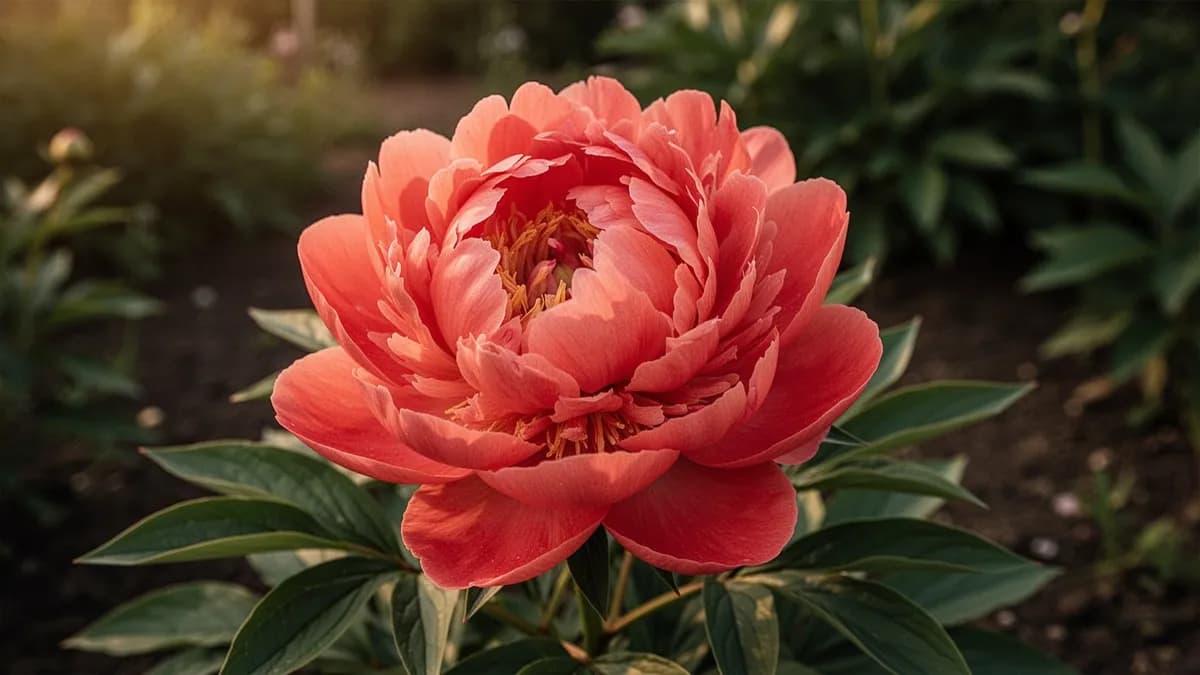
A highly sought-after peony cultivar with semi-double coral blooms that fade to soft peach and ivory as they mature, creating a stunning color shift. Coral Charm is one of the best peonies for cutting, with strong stems that rarely need staking. Plant the eyes no more than two inches below the soil surface in fall for blooms within two to three years.
Planting & Harvest Calendar
Growth Stages
From Seed to Harvest
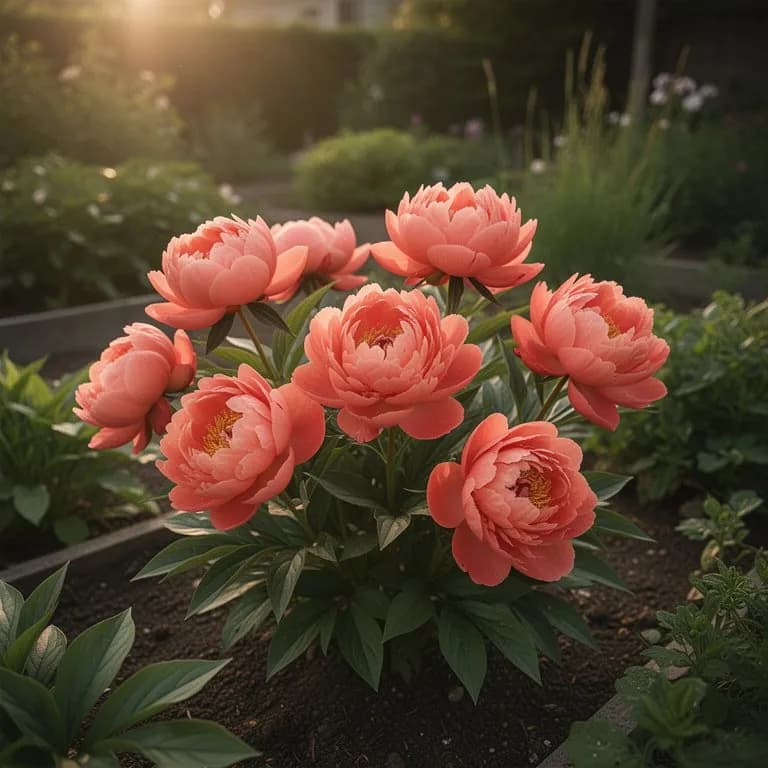
Winter Dormancy
Days 0–75
The peony is completely dormant underground. The tuberous root system rests beneath the soil surface, accumulating the chill hours essential for strong spring flowering. Coral peonies require approximately 500 to 1,000 cumulative hours below 5 °C to satisfy their vernalisation requirement. Without adequate winter chilling, bud formation will be sparse and blooms may fail to open properly. The crown buds, called eyes, remain tightly closed just below soil level throughout the cold months.
💡 Care Tip
Apply a 5–8 cm layer of organic mulch such as shredded bark or straw over the planting area after the ground freezes to insulate the roots and prevent damaging freeze-thaw heaving. Pull the mulch back gradually in late winter as temperatures begin to moderate so the eyes are not smothered as they start to grow.
Monthly Care Calendar
What to do each month for your Coral Charm Peony
June
You are hereNo specific care tasks for this month.
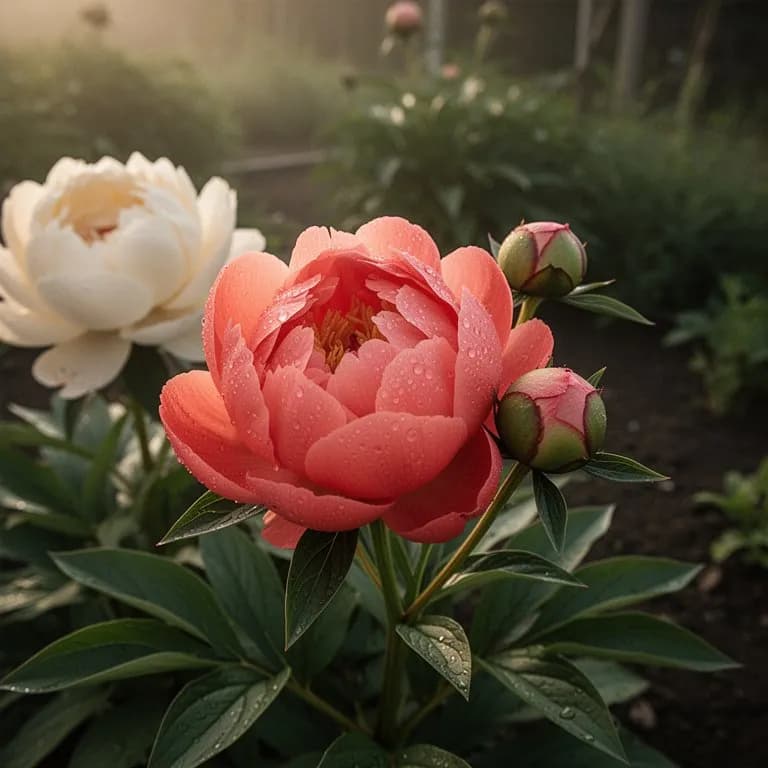
Buds at the marshmallow stage — soft and showing colour — are the ideal time to cut stems for indoor arrangements
Did You Know?
Fascinating facts about Coral Charm Peony
Coral Charm was bred by Samuel Wissing in the 1960s and won the American Peony Society Gold Medal in 1986, the highest honour given to a peony cultivar for outstanding garden performance over many years.
Plant Coral Charm peony roots in autumn, setting the eyes (pink growth buds) no more than two inches below the soil surface. This planting depth is critical, as planting too deeply is the single most common reason peonies fail to flower. Space three to four feet apart in full sun with rich, well-drained soil. Choose a permanent location, as peonies resent being moved and can take two to three years to re-establish after transplanting.
Water regularly during the first two growing seasons, then provide supplemental water only during extended dry periods. Peonies are remarkably drought tolerant once their deep root system is established. Feed with a balanced granular fertilizer in early spring as growth emerges and again lightly after flowering. Avoid high-nitrogen feeds which promote foliage at the expense of flowers.
Coral Charm is exceptional among peonies for its color-changing blooms that open deep coral, fade to soft peach, and finish in ivory, sometimes displaying all three stages simultaneously on one plant. The strong stems of Coral Charm rarely need staking, unlike many other peony varieties. Support with peony rings if needed. Deadhead after flowering but leave the foliage until it naturally dies back in autumn, as it feeds the root system for next year's bloom.
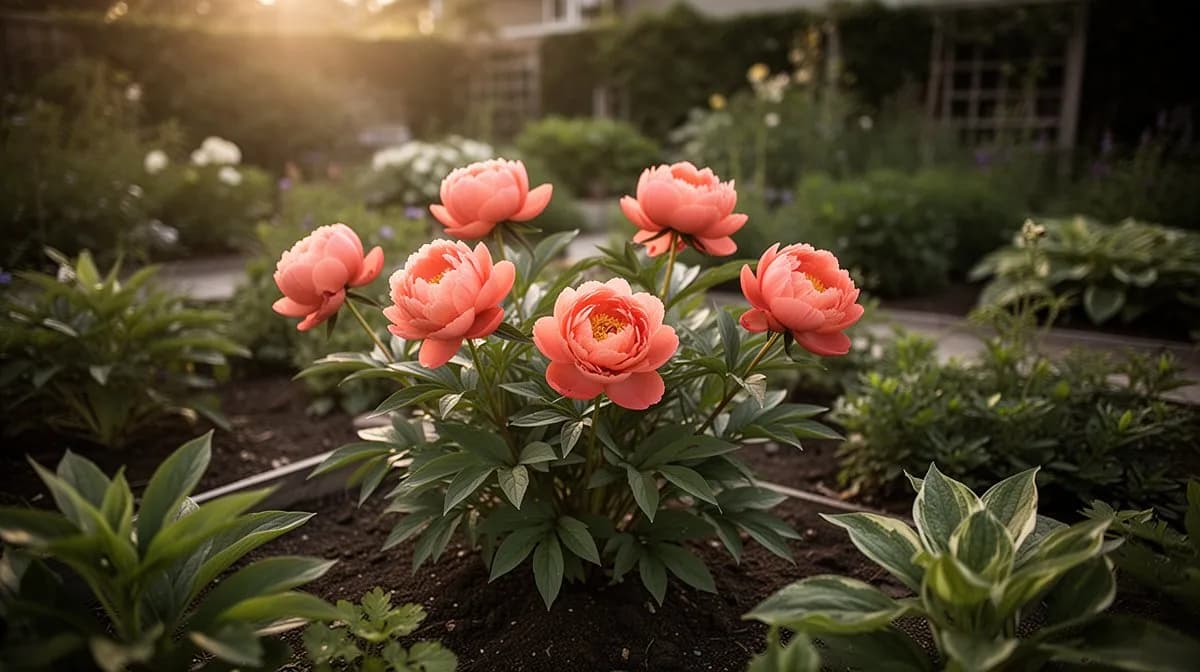
Coral peonies make striking border plants, providing bold colour in late spring and handsome foliage through the rest of the growing season
Coral-toned herbaceous peonies represent one of the most celebrated achievements in twentieth-century ornamental plant breeding. The breakthrough came from the pioneering work of Samuel Wissing, a peony hybridiser based in Lombard, Illinois, who spent decades crossing carefully selected Paeonia lactiflora cultivars with other species to introduce the elusive coral pigmentation into garden peonies. His two most famous creations, Coral Charm and Coral Sunset, remain benchmarks of the colour class more than half a century after their development. Coral Charm was registered with the American Peony Society in 1964 and went on to receive the society prestigious Gold Medal in 1986, an award reserved for cultivars that demonstrate exceptional garden merit over an extended period of evaluation. Coral Sunset was registered posthumously in 1981 after Wissing passing and has since earned its own Gold Medal recognition, cementing the breeder legacy. The parent species, Paeonia lactiflora, is native to a broad swathe of temperate eastern Asia, spanning from eastern Siberia through northern China, Mongolia, and into the Korean Peninsula. Wild populations grow in open meadows, grasslands, and forest margins at elevations ranging from lowland river valleys up to around 2,400 metres. Chinese gardeners recognised the beauty and medicinal value of peonies well over two millennia ago, and by the Tang Dynasty the flowers had become symbols of prosperity, honour, and romance. European plant collectors introduced Chinese garden peonies to the West in the late eighteenth and early nineteenth centuries, and European and American breeders soon began their own hybridising programmes. The coral colour break was particularly challenging to achieve because standard Paeonia lactiflora cultivars lack the carotenoid pigments responsible for orange and coral tones, requiring the introduction of genetics from other peony species through complex interspecific crosses.
Coral Charm peonies are renowned for their dramatic colour shift — opening deep coral and fading through apricot to ivory as the bloom matures
Peony cultivars including Coral Charm do not come true from seed and must be propagated by root division. Divide established clumps in autumn, cutting the root mass into pieces each containing three to five eyes and a substantial root portion. Dust cuts with fungicide and replant immediately at the correct depth. Divisions may take two to three years to flower. Do not divide plants younger than five years old. Growing peonies from seed is a multi-year project that may take five to seven years to produce flowers.
Coral Charm peony thrives in rich, deep, well-drained soil with a pH of 6.0 to 7.5. Prepare the planting hole deeply, amending with compost and bone meal. Apply a balanced granular fertilizer in early spring and a light application of bone meal after flowering. Avoid high-nitrogen feeds. Peonies benefit from a thick compost mulch applied in autumn but keep it away from the crown. The deep root system accesses nutrients from well below the surface.
Check Your Zone
See if Coral Charm Peony is suitable for your location.
-30°C – 30°C
-22°F – 86°F
Coral peonies are exceptionally cold-hardy, surviving winter temperatures down to -30 °C (USDA zones 3–8). They require a sustained cold period of 500–1,000 hours below 5 °C to break dormancy and bloom reliably. During the growing season, they perform best in daytime temperatures between 18 °C and 25 °C. Prolonged heat above 30 °C can shorten bloom duration and cause bud blast. In warm climates, afternoon shade and deep mulching help moderate root zone temperatures.
Common issues affecting Coral Charm Peony and how to prevent and treat them organically.
The most common cause of non-flowering is planting the eyes too deeply. Check depth and replant shallower if no blooms appear after two to three years. Botrytis blight is the most serious disease, blackening shoots in wet springs. Thorough autumn cleanup is the best prevention. Peony plants may take two to three years to establish after planting or dividing before flowering prolifically. Ants on buds are harmless despite widespread concern.
Coral Charm peony is magnificent in mixed borders with roses, delphiniums, and iris. Plant alongside later-blooming perennials like daylilies and phlox that will disguise the peony foliage as it matures through summer. Spring bulbs planted around peonies provide early color before the peony emerges. The strong, bushy form of peonies makes an excellent framework plant around which other border perennials can be arranged.
- 1Plant bare-root peony divisions in autumn with the topmost eye positioned exactly 3 to 5 cm below the soil surface. Planting too deep is the single most common reason peonies fail to bloom, and even 2 cm too deep can delay flowering by years.
- 2Choose a planting site that receives at least six hours of direct sunlight daily. In hot climates with temperatures regularly above 30 degrees Celsius, provide light afternoon shade to extend bloom duration and prevent bud blast.
- 3Prepare the planting hole to a depth of 40 to 50 cm and work in generous amounts of aged compost and a handful of bone meal. Peonies are long-lived plants, so thorough soil preparation at planting time pays dividends for decades.
- 4Space coral peony plants 90 to 120 cm apart to allow mature clumps room to spread and to ensure adequate air circulation, which is essential for reducing the risk of botrytis blight and powdery mildew.
- 5Install peony support rings, grow-through grids, or sturdy stake-and-twine cages in early spring when shoots are 10 to 15 cm tall. The large semi-double blooms of coral varieties are heavy and will flatten to the ground without support, especially after rain.
- 6Water deeply and consistently during bud development and bloom, providing at least 2.5 cm per week. Avoid overhead irrigation, which wets the foliage and promotes fungal diseases. Drip irrigation or soaker hoses at the base of the plant are ideal.
- 7Never cut back peony foliage during the growing season — the leaves are actively photosynthesising to build root reserves for the following year. Wait until the foliage has died back naturally after the first hard autumn frost, then cut stems to 3 to 5 cm above ground level.
- 8Apply a balanced fertiliser such as 10-10-10 in early spring as shoots emerge, and follow with a low-nitrogen feed like 5-10-10 or bone meal after flowering to support root and bud development for the next season.
- 9Remove and dispose of all dead stems and fallen foliage in autumn to prevent overwintering of botrytis spores. Do not compost peony debris if any fungal disease was present during the growing season.
- 10Divide established clumps every 8 to 12 years in early autumn if flowering declines or the centre of the clump becomes congested. Lift the entire root mass, wash off soil, and cut into divisions with three to five eyes and a proportional root system. Replant immediately at the correct depth.
Cut Coral Charm peonies at the marshmallow stage, when the bud feels like a soft marshmallow when gently squeezed and shows color but petals are still tightly furled. Buds cut at this stage will open beautifully in the vase over three to five days and last seven to ten days total. Cut in the morning and place immediately in cold water. The spectacular coral-to-peach-to-ivory color transformation is one of the most stunning effects in the cut flower world.
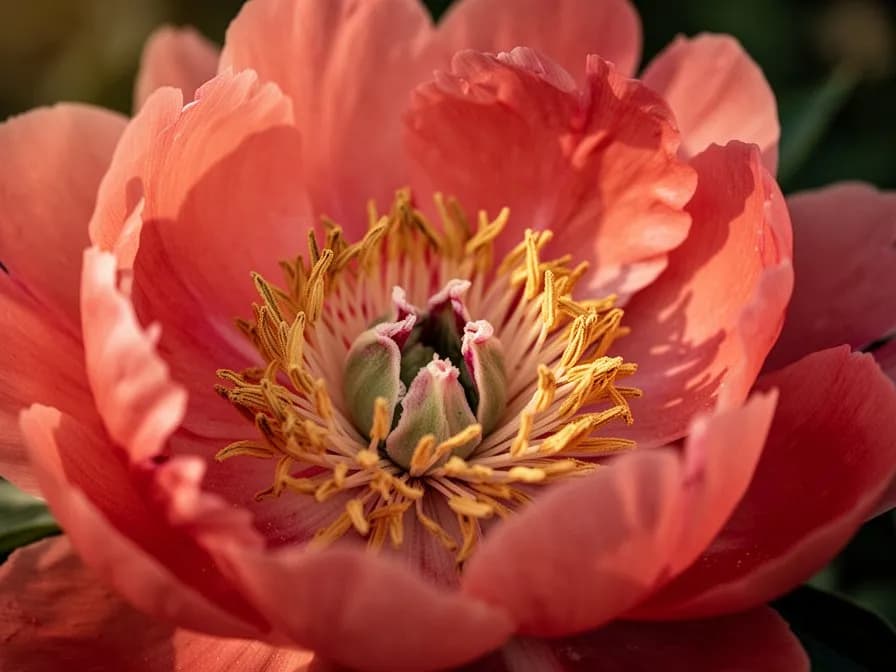
Coral Sunset peonies are prized as cut flowers, lasting seven to ten days in a vase when harvested at the soft-bud stage
Peony roots should remain in the ground permanently. They are extremely long-lived perennials that improve with age and can bloom for fifty years or more. For extended cut flower storage, peony buds can be dry-stored in the refrigerator for two to four weeks: cut at the marshmallow stage, wrap loosely in newspaper, and refrigerate at 34 degrees Fahrenheit. When ready to use, recut stems and place in warm water. Buds will open within twenty-four to forty-eight hours.
Plan your garden with ease
Love growing Coral Charm Peony? Use our free garden planner to design your beds, track planting dates, and get personalized care reminders.
Nutritional Info
Per 100g serving
0
Calories
Health Benefits
- Peonies are grown as ornamental and cut-flower plants and are not eaten as a food crop
- Peony petals are occasionally used as an edible garnish in small quantities, but they have negligible nutritional value
- The root bark of Paeonia lactiflora (bai shao) is used in traditional Chinese medicine and contains the bioactive compound paeoniflorin
- Paeoniflorin has been studied for its potential anti-inflammatory, analgesic, and antispasmodic properties in laboratory settings
- Peony root preparations should only be used under the guidance of a qualified practitioner, as improper use can cause adverse effects
💰 Why Grow Your Own?
Coral peony stems sell for $6 to $12 per stem at florists and farmers markets during the brief spring season, and premium coral varieties like Coral Charm and Coral Sunset often command prices at the higher end of that range. A mature clump producing 25 to 40 stems annually represents $150 to $480 worth of cut flowers each season. Since peonies are perennial and can thrive for 50 to 100 years without replacement, a single $15 to $30 bare-root investment pays for itself within the first two to three years of mature blooming and continues delivering returns for decades. Dividing established clumps every 8 to 10 years yields additional plants at no cost, further multiplying the savings.
Quick Recipes
Simple recipes using fresh Coral Charm Peony
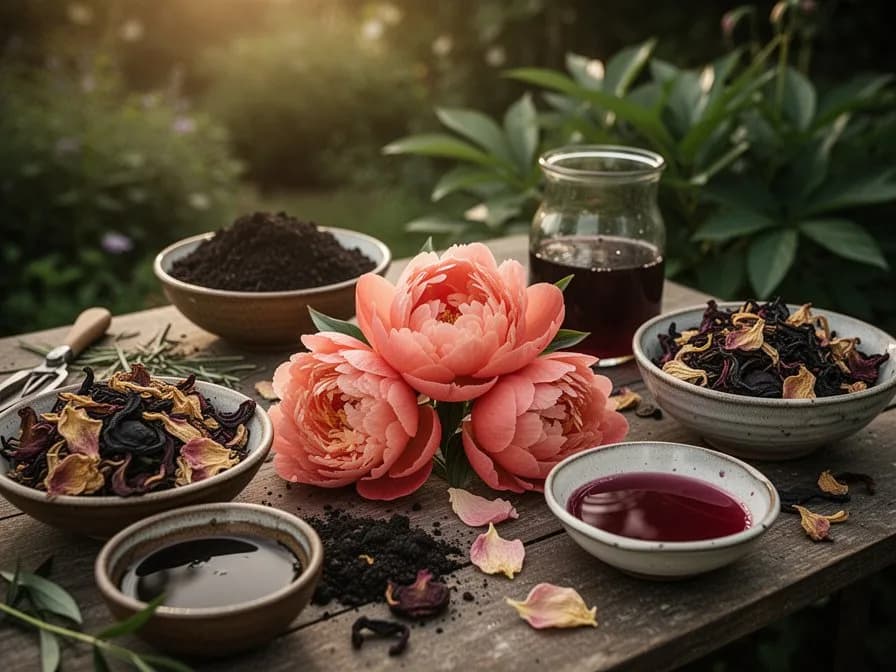
Peony Petal Simple Syrup
15 minutes plus 2 hours steepingA fragrant floral syrup made from fresh coral peony petals, perfect for adding to lemonade, cocktails, or drizzling over vanilla ice cream. The petals impart a delicate floral sweetness with subtle honey-like notes. Use only petals from plants that have not been treated with pesticides.
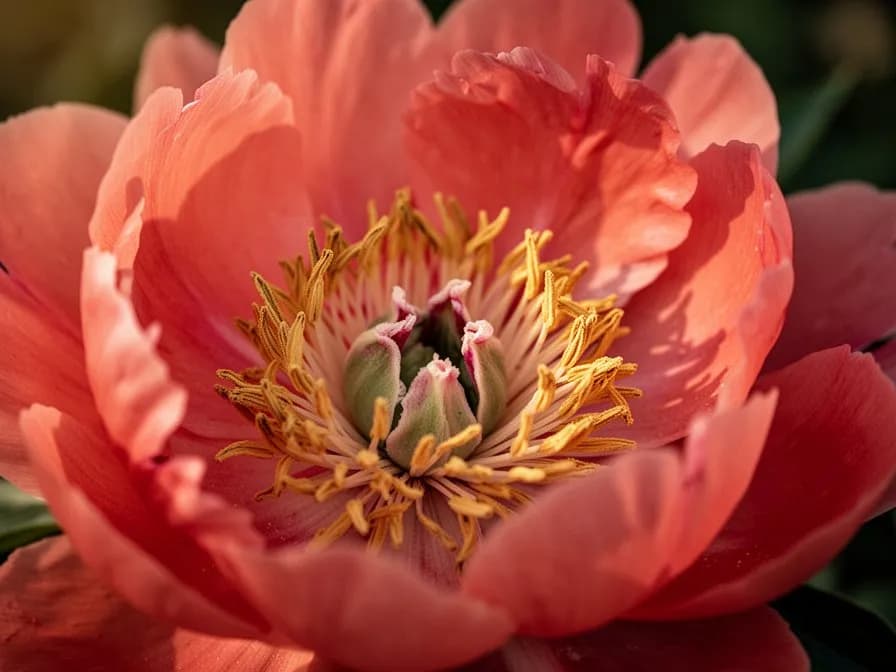
Peony Petal Infused Honey
10 minutes plus 2 weeks infusingFresh coral peony petals steeped in raw honey for two weeks create an elegantly perfumed spread that is lovely on warm scones, stirred into herbal tea, or used as a glaze for baked goods. The slow infusion allows the floral oils to gently permeate the honey without overpowering its natural flavour.
Peony and Rose Petal Potpourri
20 minutes plus 2 to 3 weeks dryingDried coral peony petals blended with complementary dried flowers, herbs, and essential oils make a beautiful and fragrant potpourri for the home. The coral petals dry to lovely warm apricot and cream tones that retain visual appeal for months. This makes an excellent handmade gift when packaged in a decorative jar or sachet.
Yield & Spacing Calculator
See how many Coral Charm Peony plants fit in your garden bed based on the recommended 90cm spacing.
1
Coral Charm Peony plants in a 4×4 ft bed
1 columns × 1 rows at 90cm spacing
Popular Varieties
Some of the most popular coral charm peony varieties for home gardeners, each with unique characteristics.
Coral Charm
The original coral peony with semi-double blooms that transition from deep coral to peach to ivory, strong stems that rarely need staking.
Coral Sunset
A companion variety with similar color transformation but fully double blooms that are more peony-like in form.
Coral Supreme
Later-blooming coral peony with a more cupped flower form, extending the coral peony season by a week or two.
Blue-flowered companions like catmint and salvia create a striking complementary colour contrast with coral peony blooms
Peony petals are edible and have been used in Chinese cuisine for centuries. The delicate petals can be added to salads, floated in cocktails and punches, or crystallized with sugar for cake decoration. Peony-infused water and peony petal tea are traditional preparations. The flavor is subtly floral and sweet. Only use petals from plants that have not been treated with pesticides, and remove the bitter white base of each petal before use.
When should I plant Coral Charm Peony?
Plant Coral Charm Peony in September, October. It takes approximately 730 days to reach maturity, with harvest typically in May, June.
What are good companion plants for Coral Charm Peony?
Coral Charm Peony grows well alongside Peony, Rose, Delphinium. Companion planting can improve growth, flavor, and natural pest control.
What hardiness zones can Coral Charm Peony grow in?
Coral Charm Peony thrives in USDA hardiness zones 3 through 8. With greenhouse protection, it may be grown in zones 1 through 9.
How much sun does Coral Charm Peony need?
Coral Charm Peony requires Full Sun (6-8h+). This means at least 6-8 hours of direct sunlight daily.
How far apart should I space Coral Charm Peony?
Space Coral Charm Peony plants 90cm (35 inches) apart for optimal growth and air circulation.
What pests and diseases affect Coral Charm Peony?
Common issues include Botrytis Blight, Peony Wilt (Phytophthora), Ants. Prevention through good garden practices like crop rotation, proper spacing, and companion planting is the best approach. See the detailed pests and diseases section above for symptoms, prevention, and treatment for each.
How do I store Coral Charm Peony after harvest?
Peony roots should remain in the ground permanently. They are extremely long-lived perennials that improve with age and can bloom for fifty years or more. For extended cut flower storage, peony buds can be dry-stored in the refrigerator for two to four weeks: cut at the marshmallow stage, wrap loose...
What are the best Coral Charm Peony varieties to grow?
Popular varieties include Coral Charm, Coral Sunset, Coral Supreme. Each has unique characteristics suited to different growing conditions and culinary preferences. See the varieties section above for detailed descriptions.
What soil does Coral Charm Peony need?
Coral Charm peony thrives in rich, deep, well-drained soil with a pH of 6.0 to 7.5. Prepare the planting hole deeply, amending with compost and bone meal. Apply a balanced granular fertilizer in early spring and a light application of bone meal after flowering. Avoid high-nitrogen feeds. Peonies ben...
Why did my coral peony not bloom this year even though it has healthy foliage?
The most common cause of healthy foliage but no flowers is planting too deep. The eyes at the top of the root crown must be positioned only 3 to 5 cm below the soil surface. If they are deeper than this, the plant will produce vigorous leaves but few or no flower buds. Other causes include too much shade (less than six hours of direct sun), excessive nitrogen fertiliser that promotes foliage at the expense of blooms, a recently transplanted or divided plant that has not yet established sufficient root reserves (typically two to three years), or insufficient winter chill in climates that are too warm (USDA zone 9 and above).
How do I get the longest vase life from cut coral peony stems?
Harvest stems when the buds are at the marshmallow stage — the bud should feel soft like a marshmallow when gently squeezed and should be showing colour but not yet fully open. Cut stems early in the morning when the plant is fully hydrated, using sharp clean secateurs. Place stems immediately into cool water with a clean vase and commercial cut-flower preservative. Remove any foliage that would sit below the waterline. Change the water every two days. Stems cut at this stage typically last seven to ten days in the vase and will open fully indoors, displaying the complete coral-to-ivory colour transition.
Do ants help coral peony buds open, and should I be concerned about ants on the plants?
No, ants are not necessary for peony buds to open. This is a persistent garden myth. Ants are attracted to the sweet nectar produced by the bud sepals, and they visit the buds simply to collect this sugary food source. The buds will open perfectly well without any ant activity. Ants are harmless to the plant and do not need to be removed or controlled. If you are cutting stems for indoor arrangements and want to remove ants, simply shake the stems gently or hold them upside down and give them a light tap before bringing them inside.
Can I grow coral peonies in containers?
Coral peonies can be grown in containers, but it requires careful management and is not ideal for long-term culture. Use a container at least 45 cm deep and 45 cm wide with excellent drainage holes. Fill with a premium potting mix amended with slow-release fertiliser. The main challenge is providing adequate winter chilling — containerised roots are more exposed to temperature extremes and may freeze too deeply or, in mild climates, not receive enough chill hours. In cold regions, insulate the pot heavily or move it to an unheated garage for winter. Expect reduced bloom count compared to in-ground planting, and plan to repot or plant out after three to four years.
When is the best time to plant or transplant coral peonies?
The ideal time to plant bare-root peony divisions or transplant existing clumps is in early to mid-autumn, from September through October in the Northern Hemisphere. Planting in autumn allows the roots to establish in cool, moist soil before winter dormancy and ensures the plant receives the full winter chilling period it needs to bloom the following spring. Spring planting is possible but not recommended, as it gives the roots less time to establish before the demands of top growth and flowering, often resulting in a delayed first bloom by an extra year.
What is the difference between Coral Charm and Coral Sunset peonies?
Both cultivars were bred by Samuel Wissing and share the signature coral colour-shifting trait, but they differ in several ways. Coral Charm opens a bright deep coral-orange and fades to pale ivory, has a semi-double flower form with large guard petals, grows 80 to 90 cm tall, and typically blooms in early to mid-season. Coral Sunset opens a slightly deeper, more saturated coral-red and transitions through peach and apricot tones, has a more rounded and compact bloom shape, grows 75 to 85 cm tall, and blooms at roughly the same time. Coral Sunset is generally considered the rarer and more expensive of the two, and many peony enthusiasts grow both to extend the colour range in their garden displays.
Ready to Grow Coral Charm Peony?
Add Coral Charm Peony to your garden plan and start designing your perfect layout.

Vladimir Kusnezow
Gardener and Software Developer
Zone 6b gardener. Growing vegetables and fruits in soil and hydroponics for 6 years. I built PlotMyGarden to plan my own gardens.
Jump to Section