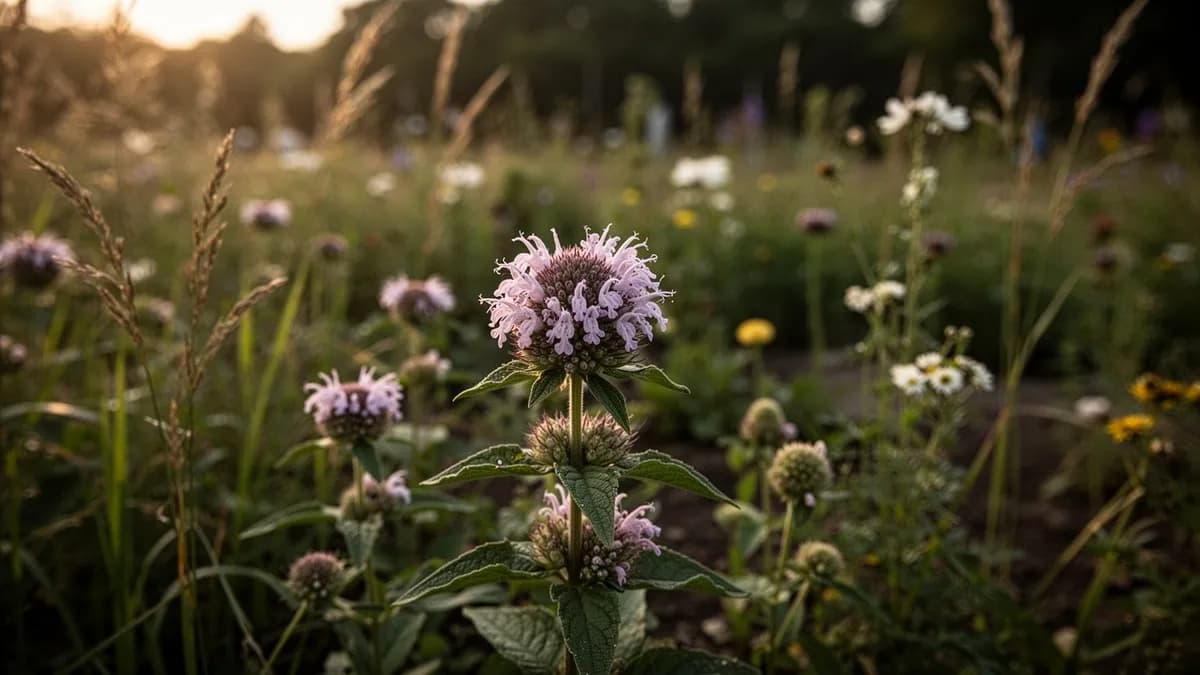
Wild Bergamot
Monarda fistulosa
At a Glance
It's planting season for Wild Bergamot! Start planning your garden now.
A native wildflower with globes of lavender-pink tubular flowers that attract hummingbirds, butterflies, and native bees in abundance. Wild bergamot is more drought tolerant and mildew resistant than garden bee balm varieties, thriving in dry prairies and meadows. The aromatic leaves make a pleasant herbal tea and the dried seed heads provide winter interest.
Planting & Harvest Calendar
Growth Stages
From Seed to Harvest
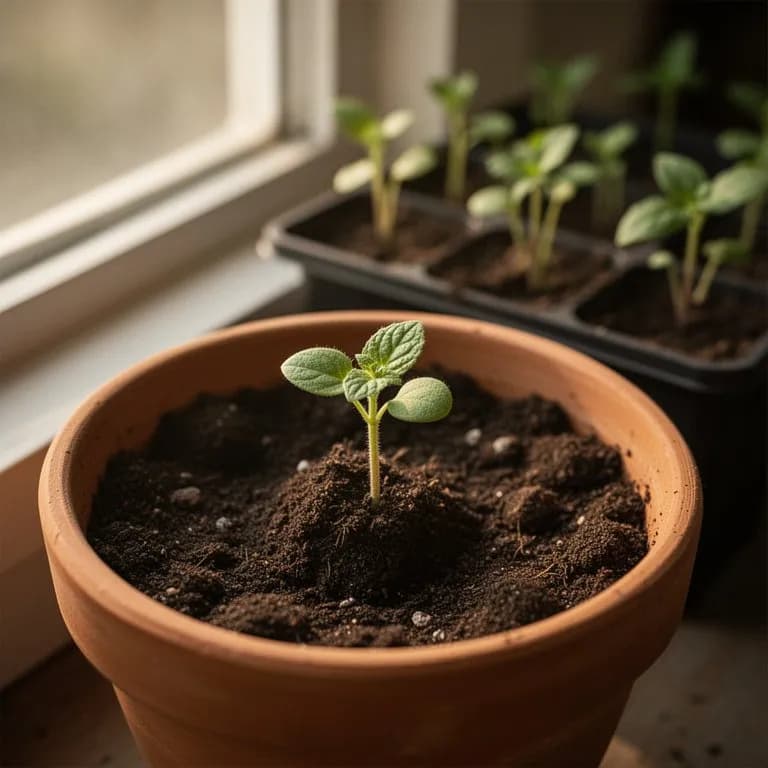
Seed Germination
Days 0–21
Monarda punctata seeds are tiny and require light for germination. Under favorable conditions of warmth and consistent moisture, seedlings emerge in 7-21 days. The initial cotyledon leaves are small and rounded, soon followed by the first true leaves that already carry the characteristic minty-oregano scent when gently rubbed. Seeds sown in autumn may benefit from natural cold stratification over winter and germinate vigorously the following spring.
💡 Care Tip
Surface-sow seeds on moist, well-drained seed-starting mix — do not cover them, as light promotes germination. Maintain soil temperature between 18-22°C (65-72°F). Mist gently to keep the surface moist without dislodging the tiny seeds. Cold stratification for 2-4 weeks in the refrigerator before spring sowing can improve germination rates from roughly 40% to over 70%.
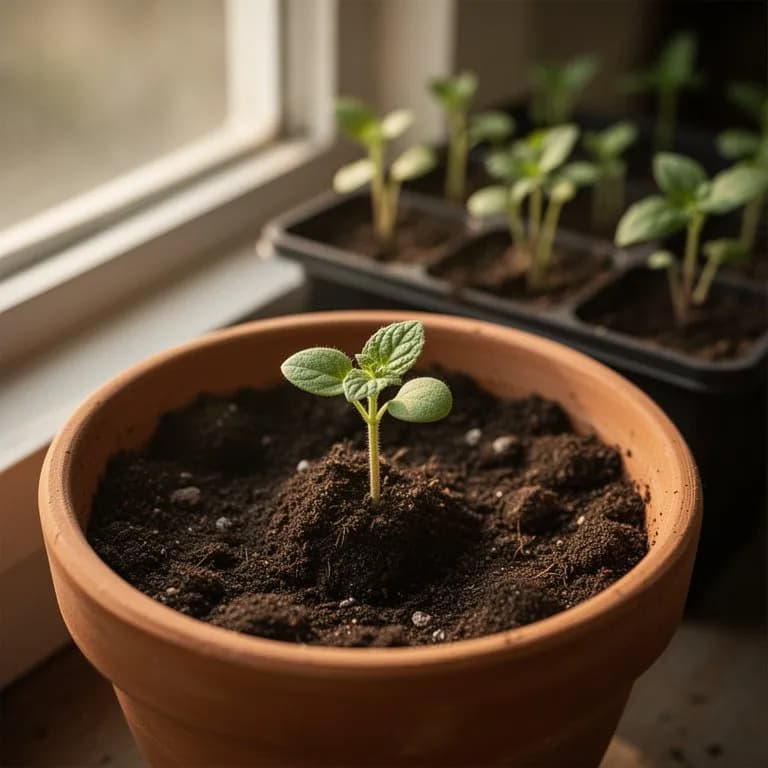
Spotted bee balm seedling at about 3 weeks — the square stem and opposite leaf arrangement are already visible
Monthly Care Calendar
What to do each month for your Wild Bergamot
May
You are herePlants grow rapidly as temperatures warm. Pinch growing tips of young plants once to encourage branching and a bushier habit. Avoid fertilizing — lean soil produces the most aromatic plants with the highest essential oil content. Monitor for spider mites in hot, dry conditions; a strong spray of water from the hose dislodges them.
Did You Know?
Fascinating facts about Wild Bergamot
Monarda punctata contains remarkably high concentrations of thymol — the same antiseptic compound found in commercial Thyme — and during World War I, spotted bee balm was commercially harvested in the United States as a domestic source of thymol when European thyme supplies were disrupted by the conflict.
Plant wild bergamot in spring or autumn in full sun with average, well-drained soil. Unlike its garden cousin bee balm (Monarda didyma), wild bergamot is remarkably drought tolerant and thrives in lean, dry prairie conditions that would cause cultivated bee balm to decline. Space plants eighteen to twenty-four inches apart and provide good air circulation to minimize mildew issues.
Wild bergamot requires minimal watering once established, tolerating dry conditions that many perennials cannot handle. Avoid rich, moist soil and heavy fertilization, which promote lush growth susceptible to powdery mildew. The lavender-pink globes of tubular flowers appear in midsummer and attract an extraordinary diversity of pollinators including hummingbirds, butterflies, native bees, and even hummingbird moths.
Wild bergamot spreads moderately by rhizomes and self-seeding. Divide clumps every three to four years in spring to maintain vigor and control spread. Deadhead after flowering to prevent excessive self-seeding, or allow seed heads to stand through winter for bird food and garden architecture. Cut back to the ground in late winter before new growth begins.
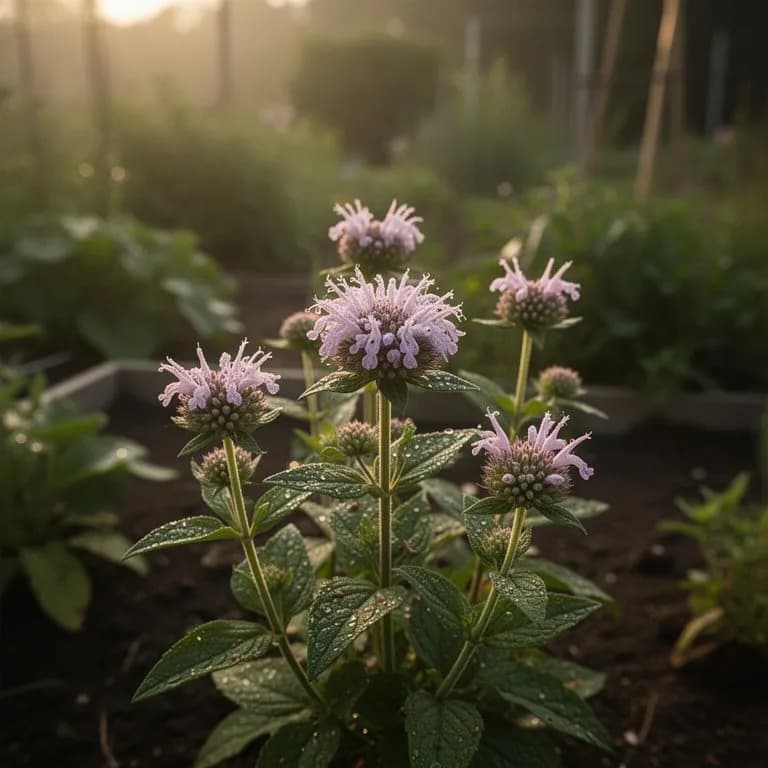
The extraordinary pagoda-like flower heads display yellow tubular flowers dotted with purple spots — a unique form among the mints
Monarda punctata, commonly known as spotted bee balm or horsemint, is native to eastern and central North America, where it ranges from Vermont south to Florida and west to Minnesota and Texas. The plant occurs naturally in sandy prairies, coastal dunes, dry open woodlands, rocky outcrops, and disturbed sandy soils — always in well-drained sites with full sun exposure. It is a characteristic species of the sandy coastal plain flora from Long Island to the Gulf Coast and thrives in the nutrient-poor, fast-draining soils that many other wildflowers cannot tolerate.
Native American peoples were the first to recognize and exploit the medicinal properties of spotted bee balm. The Choctaw brewed leaf tea to treat colds and fevers, while the Delaware used it as a remedy for digestive ailments and applied poultices of the crushed leaves to relieve headaches. The Nanticoke people used Monarda punctata preparations for back pain and general body aches. European settlers quickly adopted these uses and added their own — by the 1800s, horsemint was a staple of American folk medicine, appearing in numerous herbal pharmacopoeias as a treatment for nausea, flatulence, and urinary complaints.
The plant gained unexpected commercial importance during World War I. Thymol, the powerful antiseptic compound used to treat wound infections and as a medical disinfectant, was traditionally sourced from European thyme (Thymus vulgaris). When the war disrupted transatlantic supply chains, American chemists discovered that Monarda punctata contained thymol concentrations equal to or exceeding those of European thyme. Large-scale harvesting operations were established across the southeastern United States, and the native horsemint became a critical wartime resource for medical thymol production.
In recent decades, Monarda punctata has experienced a renaissance in sustainable landscaping and ecological restoration. As water restrictions increase and gardeners seek drought-tolerant alternatives to thirsty ornamentals, spotted bee balm has emerged as a premier choice for xeriscape gardens, green roofs, and pollinator habitat projects. Its extraordinary ability to attract diverse native pollinators — particularly specialist bees and predatory wasps that provide natural pest control — has made it a cornerstone species in integrated pest management and conservation plantings across its native range.
Wild bergamot seed germinates best after cold stratification. Sow outdoors in autumn for natural winter treatment, or cold-stratify in moist paper towels in the refrigerator for four to six weeks before spring sowing. Surface sow on moist compost without covering, as seeds need light to germinate. Seeds sprout in ten to twenty-one days at 60 to 70 degrees Fahrenheit. Transplant seedlings to their permanent location while still small. Plants typically flower in their second year from seed.
Wild bergamot thrives in lean, average to dry, well-drained soil with a pH of 6.0 to 8.0. It performs well in poor, rocky, or sandy soil where garden bee balm varieties would fail. Avoid rich, heavily amended soil which promotes lush growth prone to mildew. No supplemental fertilization is needed in average garden conditions. The plant's native habitat is dry prairie and open woodland edges with mineral-based soil.
Check Your Zone
See if Wild Bergamot is suitable for your location.
10°C – 35°C
50°F – 95°F
Monarda punctata is adapted to the hot summers and variable winters of eastern North America, performing well in USDA zones 3-9. Active growth begins when soil temperatures reach 10°C (50°F) in spring and continues vigorously through summer heat up to 35°C (95°F) and beyond. The plant's prairie and coastal dune heritage gives it exceptional heat and drought tolerance — it thrives in full sun even in zone 9 conditions that wilt most garden herbs. Winter hardiness is excellent to -35°C (-30°F) once established, provided the root crown remains in well-drained soil. Seeds germinate optimally at 18-22°C (65-72°F). Humidity tolerance is moderate; the plant prefers dry heat and good airflow to prevent foliar diseases.
Common issues affecting Wild Bergamot and how to prevent and treat them organically.
While wild bergamot is far more mildew resistant than garden bee balm cultivars, powdery mildew can still appear in humid conditions with poor air circulation. Planting in full sun with adequate spacing largely eliminates this problem. The spreading rhizomes can be aggressive in small gardens, so plan for containment or division. Lower leaves may drop in mid to late summer, which is normal for this species.
Wild bergamot is a cornerstone of prairie-style gardens alongside coneflowers, black-eyed susans, liatris, and native grasses. It pairs beautifully with butterfly weed for a pink and orange pollinator garden. The aromatic foliage may help deter some garden pests when planted near vegetables. Wild bergamot is one of the top nectar plants for native bees and butterflies, making it invaluable in any wildlife garden.
- 1Drainage is the single most critical factor for success with Monarda punctata. The plant evolved in sandy prairies and coastal dunes and will quickly succumb to root rot in heavy clay or consistently moist soils. Amend planting sites with generous amounts of coarse sand, pea gravel, or crusite to ensure rapid water drainage away from the root zone.
- 2Full sun is essential — spotted bee balm requires a minimum of 6-8 hours of direct sunlight daily for compact growth, maximum flowering, and peak essential oil production. Plants grown in partial shade become leggy, produce fewer flowers, and are more susceptible to powdery mildew and other fungal diseases.
- 3Resist the urge to fertilize. Monarda punctata produces its highest concentrations of thymol and other essential oils when grown in lean, nutrient-poor soil. Rich garden soil and nitrogen fertilizers result in lush but floppy foliage with diminished fragrance and medicinal potency.
- 4Cold-stratify seeds for 2-4 weeks before spring sowing to significantly improve germination rates. Place seeds in a sealed plastic bag with a small amount of damp sand and store in the refrigerator. Alternatively, sow seeds directly outdoors in late autumn and allow natural winter cold to break dormancy.
- 5Pinch the growing tips of young plants once when they reach 15-20 cm tall to encourage branching and a bushier, more compact habit. This single pinch can double the number of flowering stems a plant produces without delaying bloom significantly.
- 6Space plants at least 30-45 cm apart to ensure adequate airflow, which is important for preventing foliar diseases in humid climates. In naturalized or meadow plantings, wider spacing of 45-60 cm allows each plant to develop its full architectural form.
- 7Water only during establishment and extended drought periods. Once established, spotted bee balm is remarkably drought tolerant and actually performs better with occasional deep watering than with frequent shallow irrigation. Overwatering is the most common cause of failure with this species.
- 8Harvest foliage for herbal use by cutting stems just above a lower leaf node when flowers are at peak bloom. This timing ensures maximum essential oil content and allows the plant to regrow and potentially produce a second flush of flowers later in the season.
- 9Leave dried flower stalks standing through winter rather than cutting them back in autumn. The hollow stems provide critical overwintering habitat for native solitary bees and other beneficial insects, and the seed heads feed small birds throughout the cold months.
- 10Combine spotted bee balm with other xeric natives for a low-maintenance, high-impact pollinator garden. Excellent companions include Liatris spicata, Rudbeckia hirta, Asclepias tuberosa, Schizachyrium scoparium, and Echinacea purpurea — all share similar preferences for sun, drainage, and lean soil.
Cut wild bergamot stems for arrangements when about half the tiny tubular flowers in each globe have opened. The lavender-pink color and interesting spherical form add a wildflower charm to summer bouquets. Stems last about a week in water. Harvest leaves for herbal tea by cutting stems in the morning after the dew has dried, when essential oil content is highest. Bundle and hang upside down to dry in a well-ventilated area away from direct sunlight.
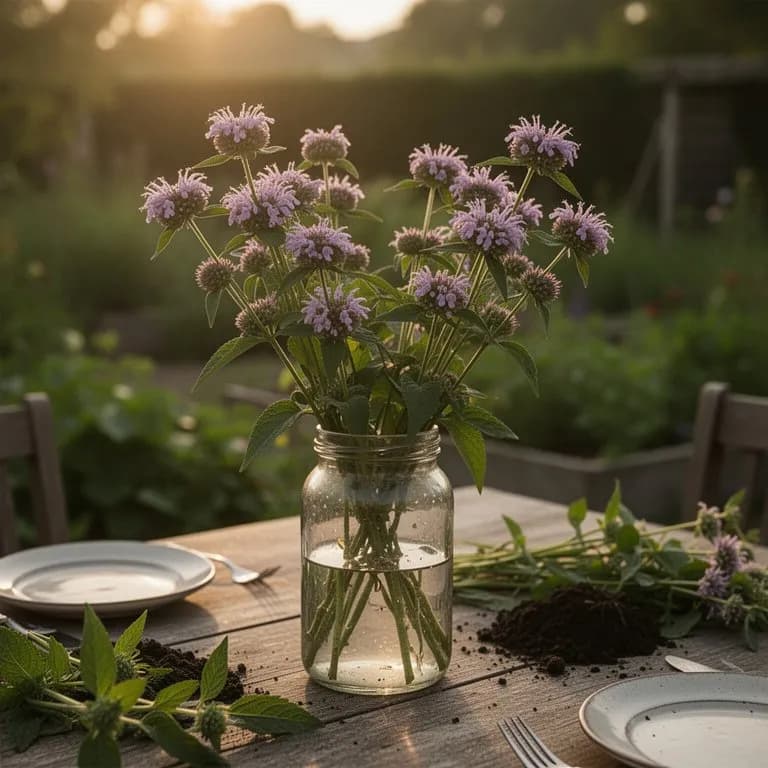
Harvest stems when flowers are fully open for maximum thymol content — the aromatic oils are most concentrated at peak bloom
Dried wild bergamot leaves and flowers can be stored in airtight glass jars in a cool, dark location for up to a year. The aromatic leaves maintain their flavor well when dried slowly in a warm, dark space. Seeds can be collected from dried flower heads in autumn and stored in paper envelopes. For the freshest tea, freeze small bundles of fresh leaves in resealable bags. Dried flower heads can be used in potpourri and sachets.
Plan your garden with ease
Love growing Wild Bergamot? Use our free garden planner to design your beds, track planting dates, and get personalized care reminders.
Nutritional Info
Per 100g serving
22
Calories
Health Benefits
- Exceptionally rich in thymol, a phenolic monoterpene with powerful antimicrobial, antifungal, and antioxidant properties — Monarda punctata essential oil can contain 50-80% thymol by weight, rivaling or exceeding concentrations found in common thyme
- Contains significant levels of carvacrol, a structural isomer of thymol with complementary antimicrobial activity — together these compounds provide broad-spectrum protection against foodborne and environmental pathogens
- The leaves provide measurable amounts of rosmarinic acid, a polyphenol antioxidant also found in rosemary and sage, which has demonstrated anti-inflammatory and antiallergic properties in research studies
- Fresh leaves contain flavonoids including luteolin and apigenin that contribute to the plant's antioxidant capacity and may support cardiovascular health and healthy inflammatory response
- The essential oil contains p-cymene, gamma-terpinene, and other monoterpenes that enhance the bioavailability and antimicrobial synergy of the primary thymol and carvacrol compounds
- As a culinary herb used in small quantities, spotted bee balm provides trace minerals including iron, manganese, and calcium from its growth in mineral-rich sandy soils
💰 Why Grow Your Own?
Spotted bee balm is one of the most cost-effective medicinal and culinary herbs to grow at home. A single packet of seeds ($3-5) produces 50-100 plants that, once established, self-sow and spread to create a permanent, self-sustaining colony. The high thymol content means the dried leaves substitute directly for purchased dried thyme and oregano ($4-8 per jar), while fresh herbal tea from the garden replaces boxed herbal tea blends ($5-9 per box). Essential oil distilled from Monarda punctata retails for $15-30 per 10ml bottle, yet a small home patch of 10-15 plants produces enough plant material for multiple home distillation batches per season. The plant's drought tolerance and zero-fertilizer requirements further reduce garden input costs compared to thirsty, high-maintenance herb varieties.
Quick Recipes
Simple recipes using fresh Wild Bergamot
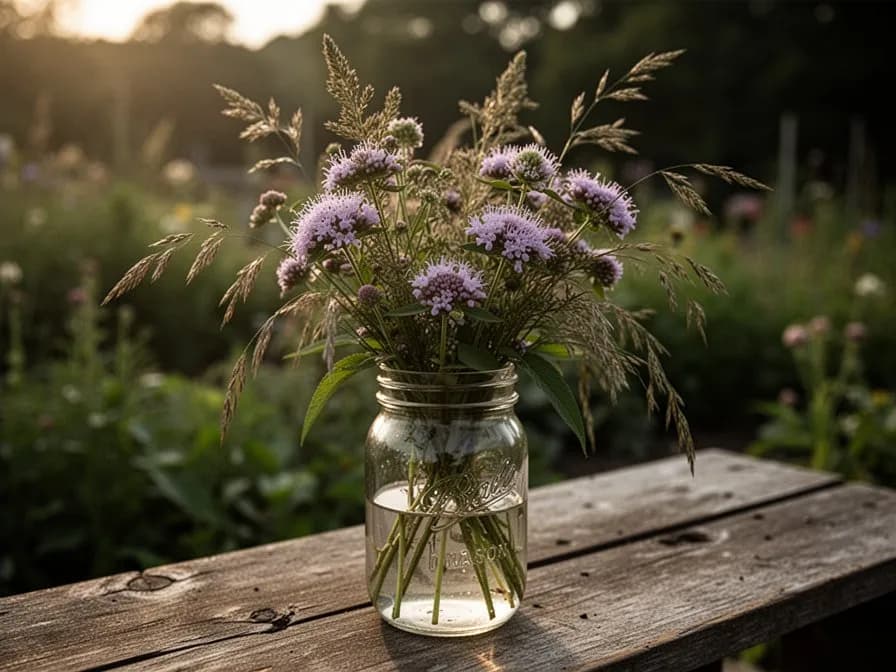
Spotted Bee Balm Herbal Tea
10 minA soothing and aromatic herbal tea brewed from fresh or dried Monarda punctata leaves. The flavor is complex, combining the warmth of oregano and thyme with subtle floral and citrus undertones. Traditionally used as a digestive tonic and cold remedy, this tea is equally enjoyable as an everyday herbal beverage.
Horsemint Herb Butter
15 min (plus 1 hour chilling)A savory compound butter infused with finely chopped spotted bee balm leaves. The thyme-oregano flavor of the herb pairs beautifully with grilled meats, roasted vegetables, and crusty bread. Roll into a log, chill, and slice into rounds for an elegant finish to summer dishes.
Wild Bee Balm and Honey Vinegar Dressing
10 minA bright herb vinaigrette using spotted bee balm as the starring aromatic. The thymol-rich leaves lend a savory depth to this versatile dressing that works on mixed green salads, grilled vegetable platters, or as a marinade for chicken and fish.
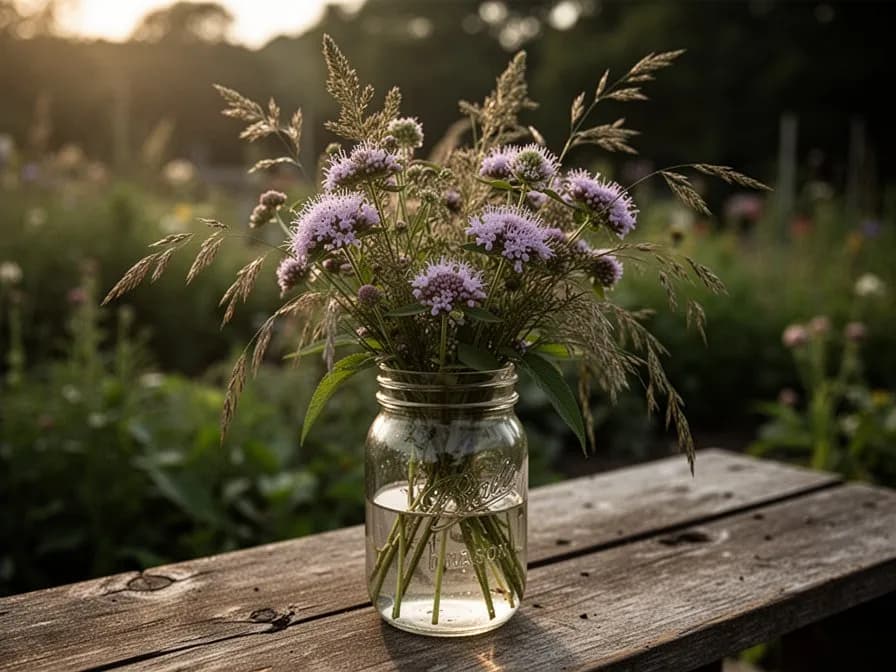
Brewed from fresh or dried leaves, spotted bee balm tea has a complex oregano-thyme flavor with subtle citrus notes
Yield & Spacing Calculator
See how many Wild Bergamot plants fit in your garden bed based on the recommended 45cm spacing.
4
Wild Bergamot plants in a 4×4 ft bed
2 columns × 2 rows at 45cm spacing
Popular Varieties
Some of the most popular wild bergamot varieties for home gardeners, each with unique characteristics.
Fistulosa
The straight species with lavender-pink flowers, the most drought tolerant and mildew resistant of all monardas.
Claire Grace
A selected form with deep lavender flowers and excellent mildew resistance, named for its outstanding garden performance.
Bradburiana
Eastern bee balm, a closely related species with pale pink flowers and spotted bracts, very drought tolerant.
Wild bergamot leaves make a delightful herbal tea with a flavor reminiscent of Earl Grey due to the presence of the aromatic compound thymol. Steep fresh or dried leaves in boiling water for five to ten minutes. The flowers are edible and make attractive, flavorful garnishes for salads, desserts, and summer drinks. Indigenous peoples used wild bergamot extensively as both food seasoning and medicine. The leaves can be used fresh or dried in place of oregano or thyme in cooking.
When should I plant Wild Bergamot?
Plant Wild Bergamot in March, April, May. It takes approximately 365 days to reach maturity, with harvest typically in July, August.
What are good companion plants for Wild Bergamot?
Wild Bergamot grows well alongside Coneflower, Black-eyed Susan, Blazing Star. Companion planting can improve growth, flavor, and natural pest control.
What hardiness zones can Wild Bergamot grow in?
Wild Bergamot thrives in USDA hardiness zones 3 through 9. With greenhouse protection, it may be grown in zones 1 through 10.
How much sun does Wild Bergamot need?
Wild Bergamot requires Full Sun (6-8h+). This means at least 6-8 hours of direct sunlight daily.
How far apart should I space Wild Bergamot?
Space Wild Bergamot plants 45cm (18 inches) apart for optimal growth and air circulation.
What pests and diseases affect Wild Bergamot?
Common issues include Powdery Mildew, Stalk Borer. Prevention through good garden practices like crop rotation, proper spacing, and companion planting is the best approach. See the detailed pests and diseases section above for symptoms, prevention, and treatment for each.
How do I store Wild Bergamot after harvest?
Dried wild bergamot leaves and flowers can be stored in airtight glass jars in a cool, dark location for up to a year. The aromatic leaves maintain their flavor well when dried slowly in a warm, dark space. Seeds can be collected from dried flower heads in autumn and stored in paper envelopes. For t...
What are the best Wild Bergamot varieties to grow?
Popular varieties include Fistulosa, Claire Grace, Bradburiana. Each has unique characteristics suited to different growing conditions and culinary preferences. See the varieties section above for detailed descriptions.
What soil does Wild Bergamot need?
Wild bergamot thrives in lean, average to dry, well-drained soil with a pH of 6.0 to 8.0. It performs well in poor, rocky, or sandy soil where garden bee balm varieties would fail. Avoid rich, heavily amended soil which promotes lush growth prone to mildew. No supplemental fertilization is needed in...
Is Monarda punctata the same as regular bee balm (Monarda didyma)?
No — while they are closely related members of the same genus, Monarda punctata (spotted bee balm) and Monarda didyma (scarlet bee balm) are distinct species with different growing requirements and appearances. Spotted bee balm produces tiered whorls of small yellow-and-purple spotted flowers surrounded by lavender bracts, while scarlet bee balm has large red tubular flowers in a single terminal cluster. Critically, M. punctata is far more drought tolerant and prefers sandy, well-drained soil, whereas M. didyma demands consistently moist, rich soil. Spotted bee balm is also more resistant to powdery mildew, which commonly plagues M. didyma in humid climates.
Can I use spotted bee balm as a substitute for thyme or oregano in cooking?
Yes — Monarda punctata's flavor profile sits right between thyme and oregano, making it a versatile culinary substitute for either herb. The high thymol content gives it a warm, savory quality similar to thyme, while additional terpenes contribute oregano-like notes. Use fresh leaves in roughly the same quantities as you would fresh thyme. For dried leaf, start with about two-thirds the amount you would use of dried thyme, as spotted bee balm is more intensely flavored. It works beautifully in Mediterranean dishes, bean soups, roasted meats, and pizza toppings.
Why is my spotted bee balm getting leggy and falling over?
Leggy, floppy growth in Monarda punctata almost always indicates one of two issues: too much shade or too much fertility. Move or transplant the plant to a location receiving at least 6-8 hours of direct sun daily, and stop fertilizing — this species performs best in lean, sandy soil. If the plant is already in full sun, the soil may be too rich or moisture-retentive; amend with coarse sand. You can also pinch growing tips in spring when stems are 15-20 cm tall to promote bushier, more compact growth. Avoid planting in wind-sheltered spots where air circulation is poor.
How do I harvest and dry spotted bee balm for tea and herbal use?
Harvest stems by cutting them 10-15 cm above ground level when flowers are at peak bloom — this is when the essential oil content is highest. Cut in the morning after dew has dried but before the heat of midday causes volatile oils to dissipate. Bundle 4-6 stems together with twine and hang upside down in a warm, dark, well-ventilated area for 5-7 days until completely dry. Alternatively, strip leaves and flowers from stems and spread them on mesh drying screens. Store dried material in airtight glass jars away from light and heat. Properly dried spotted bee balm retains its potency for 12-18 months.
Is spotted bee balm safe for pets, and will deer eat it?
Monarda punctata is generally considered non-toxic to dogs and cats, though as with any strongly aromatic herb, ingestion of large quantities may cause mild gastrointestinal upset. The plant is highly deer resistant — the strong thymol-rich fragrance that humans find pleasant is a powerful deterrent to browsing deer, rabbits, and groundhogs. This makes spotted bee balm an excellent choice for gardens in areas with heavy deer pressure where many other ornamentals and herbs are regularly damaged. It is also resistant to most insect pests for the same reason.
Will spotted bee balm spread aggressively and take over my garden?
Monarda punctata spreads at a moderate, manageable rate through two mechanisms: self-sowing from seed and slow rhizomatous expansion of existing clumps. It is far less aggressive than its cousin Monarda fistulosa and most garden mints. In well-drained sandy soil, clumps expand by 5-10 cm per year, which is easy to manage by dividing every 3-4 years. Self-sown seedlings appear in nearby bare soil but are easy to pull or transplant when young. To further limit spreading, deadhead spent flower whorls before seeds fully mature. In rich, moist garden soil the plant may spread somewhat faster, but it never achieves the rampant spreading habit of culinary mint.
Ready to Grow Wild Bergamot?
Add Wild Bergamot to your garden plan and start designing your perfect layout.

Vladimir Kusnezow
Gardener and Software Developer
Zone 6b gardener. Growing vegetables and fruits in soil and hydroponics for 6 years. I built PlotMyGarden to plan my own gardens.
Jump to Section