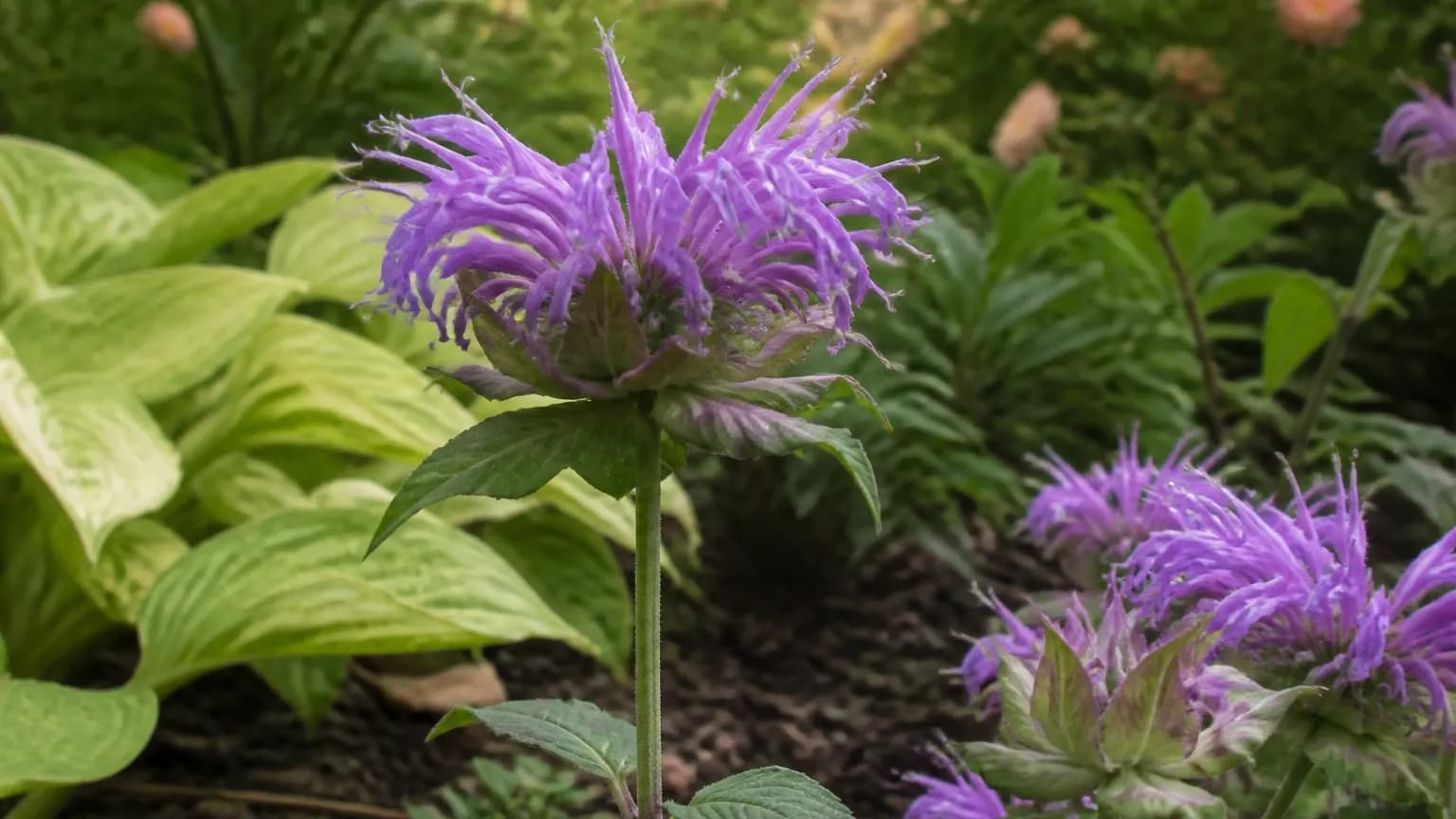
Wild Bergamot
Monarda fistulosa
At a Glance
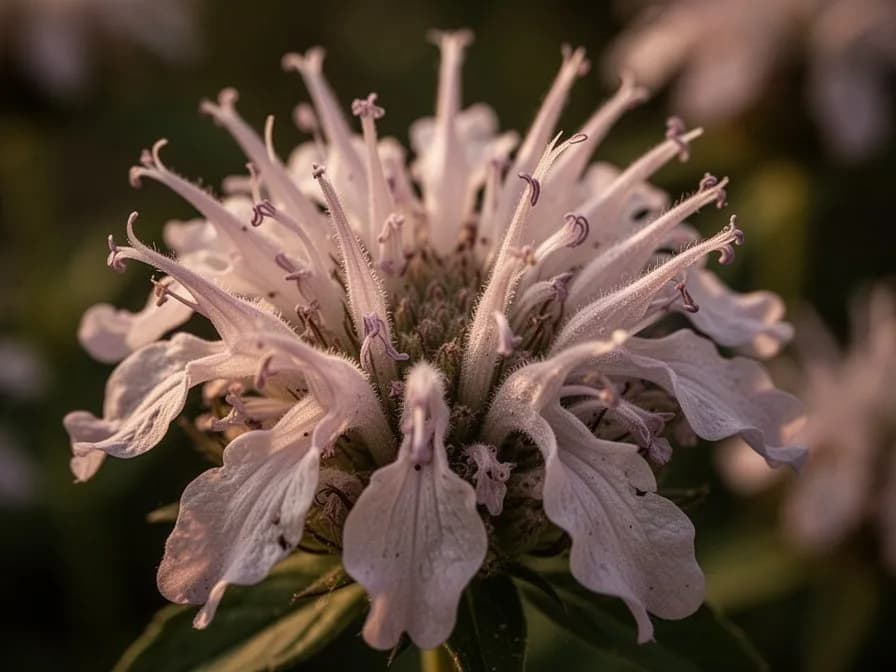
A native wildflower with lavender-pink tubular flowers that support native bees, butterflies, and hummingbirds. Wild bergamot is more drought-tolerant and mildew-resistant than its cultivated cousin bee balm. The aromatic leaves can be dried for tea and the plant naturalizes beautifully in meadow gardens.
Planting & Harvest Calendar
Growth Stages
From Seed to Harvest
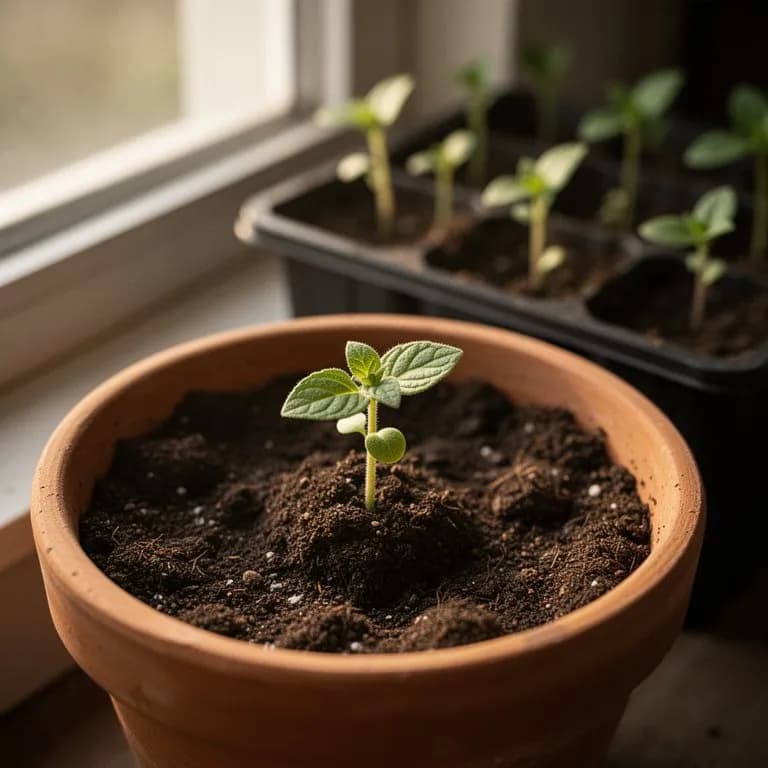
Seed Germination
Days 0–21
Wild bergamot seeds are tiny and require light to germinate. Sow them on the surface of moist seed-starting mix without covering, pressing gently to ensure soil contact. Cold stratification for 4-6 weeks at 1-4°C dramatically improves germination rates, mimicking natural winter conditions. Expect patchy germination over 10-21 days at soil temperatures of 15-21°C.
💡 Care Tip
Mist the surface daily with a spray bottle and cover trays with a clear humidity dome. Remove the dome for an hour each day to prevent damping-off disease in the delicate seedlings.
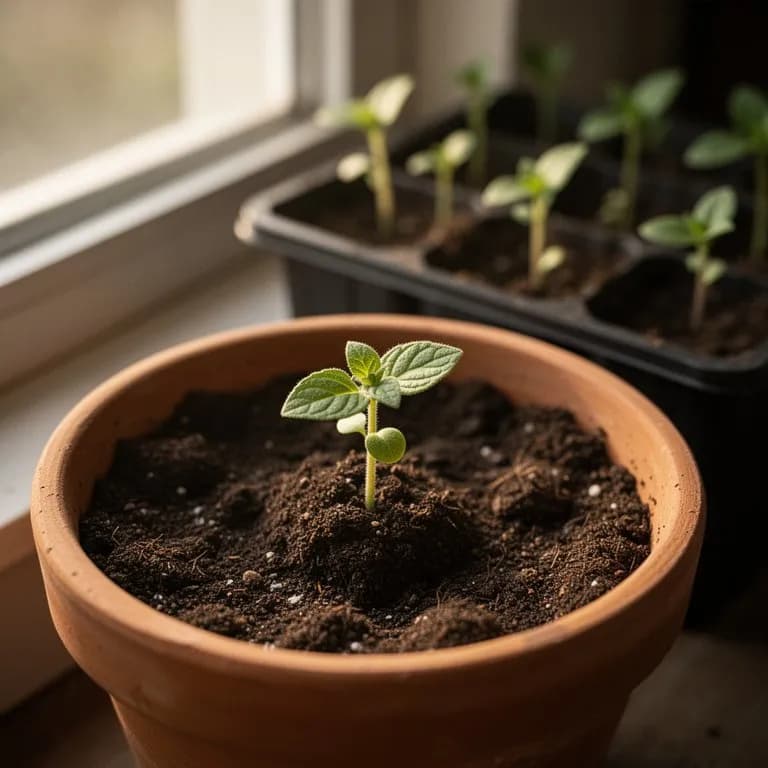
Wild bergamot seedlings develop the characteristic square stems and opposite, lance-shaped leaves of the mint family within the first few weeks
Monthly Care Calendar
What to do each month for your Wild Bergamot
May
You are hereMonitor new transplants and water weekly until established. Begin harvesting young leaves for fresh culinary use once plants are growing vigorously. Watch for aphids on tender new growth and blast them off with a water spray if found.
Did You Know?
Fascinating facts about Wild Bergamot
Wild bergamot was one of the most widely used medicinal plants among Indigenous peoples of North America, with documented use by the Blackfoot, Ojibwe, Winnebago, Menominee, and many other nations for treating colds, fevers, and respiratory infections.
Wild bergamot (Monarda fistulosa) is a tough, adaptable North American wildflower found naturally from Quebec to Georgia and west to the Rocky Mountains. More drought-tolerant and naturally mildew-resistant than its showier cousin bee balm (M. didyma), wild bergamot is the better choice for dry, naturalistic, and low-maintenance plantings. It grows 60-120cm tall with wiry stems topped by lavender-pink globular flower heads.
Plant in full sun in average to dry, well-drained soil. Wild bergamot thrives in conditions that are too lean and dry for bee balm—it is native to prairies, dry meadows, and open woodlands. Space 45cm apart for a dense planting or scatter through wildflower meadows. Once established, it requires no supplemental watering, fertilizing, or fussing.
Wild bergamot spreads by both stolons and self-seeding, naturalizing gracefully in informal settings. In formal borders, remove seed heads before they shatter and divide clumps every 3-4 years to contain spread. Cut stems to the ground in late autumn or early spring. The dried seed heads provide winter interest and food for birds if left standing through the cold months.
Wild bergamot (Monarda fistulosa) is native to nearly all of North America, ranging from Quebec and Ontario across the northern Great Plains to British Columbia, and southward through most of the United States into northern Mexico. It thrives in prairies, open woodlands, dry meadows, and along roadsides, often forming extensive colonies through its creeping rhizomes. The genus Monarda was named by Linnaeus in 1753 in honor of Nicolás Monardes, a sixteenth-century Spanish physician and botanist who wrote extensively about the medicinal plants of the New World, though Monardes himself never set foot in the Americas.
Indigenous peoples across North America relied on wild bergamot as one of their most versatile medicinal plants for centuries before European contact. The Blackfoot used poultices of the leaves to treat skin infections and inhaled steam from boiling leaves to relieve respiratory congestion. The Ojibwe made teas to treat fevers and colds, while the Menominee used it as a general tonic and to treat bronchial complaints. The Winnebago and Dakota applied it as a calming remedy and used the aromatic oils to repel insects. Many nations also valued wild bergamot as a culinary seasoning, using the dried leaves much as European cooks used oregano and thyme.
European settlers quickly adopted wild bergamot into their own folk medicine traditions. By the nineteenth century, the plant appeared in several published herbals and materia medica. The Eclectic physicians of the era prescribed monarda preparations for digestive complaints, fevers, and as a carminative. Today, wild bergamot has gained renewed interest as a native landscaping plant for pollinator gardens, prairie restorations, and sustainable herb gardens, valued equally for its ecological importance and its culinary and medicinal heritage.
Wild bergamot is easily grown from seed, making it ideal for large meadow plantings. Surface-sow seeds in autumn for natural cold stratification, or stratify seeds in the refrigerator for 2-4 weeks before spring sowing. Scatter on moist compost and press lightly without covering, as seeds need light. Germination takes 10-21 days at 18-22°C. For meadow establishment, mix seeds with sand and broadcast over prepared ground in autumn. Division in spring is the fastest way to increase stock of specific plants.
Wild bergamot thrives in average to lean, well-drained soil with a pH of 6.0-8.0—it tolerates both slightly acidic and alkaline conditions. It performs well in sandy, gravelly, and loamy soils and actively prefers drier, less fertile conditions than bee balm. Do not enrich the soil with compost or fertilizer; too much nutrition produces weak, floppy growth. This is a true prairie plant adapted to nutrient-poor soils and needs no supplemental feeding.
Check Your Zone
See if Wild Bergamot is suitable for your location.
-35°C – 35°C
-31°F – 95°F
Wild bergamot is an extremely cold-hardy perennial (USDA zones 3-9) that tolerates winter temperatures as low as -35°C when dormant. Active growth occurs between 10-30°C, with optimal growth and flowering at 18-28°C. It handles summer heat well provided it has adequate drainage, and is notably more heat and drought tolerant than its relative Monarda didyma. Prolonged humidity above 30°C increases susceptibility to powdery mildew.
Common issues affecting Wild Bergamot and how to prevent and treat them organically.
Wild bergamot has fewer problems than bee balm but can still develop mildew in humid, crowded conditions—provide sun and space. Self-seeding can be prolific in favorable conditions; remove seed heads before they shatter if this is a concern. Spreading stolons may need management in formal borders. The plant can look untidy in late summer after flowering; cut back to basal foliage for a neater appearance or leave seed heads for birds and winter interest.
Wild bergamot is essential in prairie and meadow gardens, combining naturally with coneflowers, black-eyed Susans, little bluestem, prairie dropseed, and blazing star. It is one of the best native plants for supporting pollinator populations, providing nectar for dozens of bee, butterfly, and moth species. Plant alongside other native wildflowers for maximum ecological value. In more formal gardens, wild bergamot pairs well with ornamental grasses, Russian sage, and yarrow.
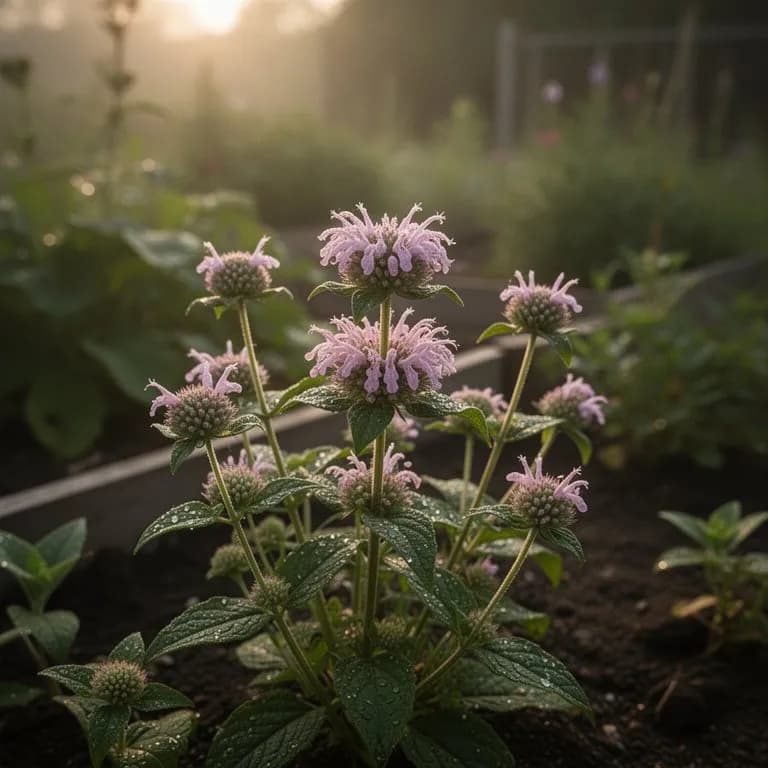
Wild bergamot is one of the most important native pollinator plants in North America, supporting over 15 species of specialist bees
- 1Cold stratify seeds for 4-6 weeks in a sealed bag with damp sand in the refrigerator before sowing to dramatically improve germination rates from around 30% to 70% or higher.
- 2Sow seeds on the soil surface without covering, as wild bergamot seeds require light to germinate. Press them gently into the soil for good contact but do not bury them.
- 3Choose a planting site with full sun and lean, well-drained soil. Wild bergamot actually performs better in poor to average soil than in rich, fertile conditions, where it tends to flop and develop more disease.
- 4Space plants 45-60 cm apart to allow excellent air circulation, which is the single most effective cultural practice for preventing powdery mildew in all monarda species.
- 5Water deeply but infrequently during the first growing season to establish deep roots. Once established, wild bergamot is remarkably drought-tolerant and rarely needs supplemental irrigation.
- 6Divide congested clumps every 3-4 years in early spring by digging up the entire plant, discarding the woody center sections, and replanting the vigorous outer portions with fresh compost.
- 7Pinch or cut back stems by one-third in late May or early June to produce shorter, bushier plants that are less prone to flopping and develop more flower heads per stem.
- 8Deadhead spent flower heads promptly to prevent excessive self-seeding and to encourage a second, lighter flush of blooms in late summer and early autumn.
- 9Avoid overhead watering entirely, especially during flowering, to reduce humidity around the foliage and minimize the risk of powdery mildew, which is the most common problem with all monarda species.
- 10Leave a few dried seed heads standing through winter to feed goldfinches and other songbirds, and to provide overwintering habitat for beneficial insects in the hollow stems.
Harvest wild bergamot leaves and flowers for herbal tea throughout the growing season. The most flavorful harvest is taken just before or during peak flowering, when essential oil content is highest. Cut stems in the morning and use fresh or dry for later use. The flowers are also harvested for fresh bouquets—cut when the first florets open. Both leaves and flowers have a distinctive oregano-thyme-bergamot flavor that makes an excellent herbal tea.
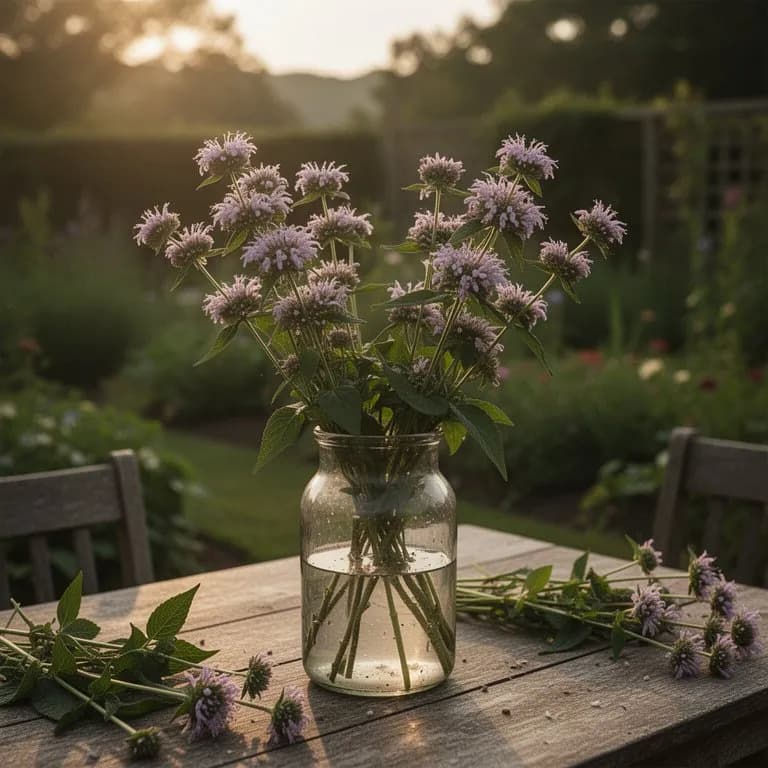
Harvest wild bergamot stems when about half the florets on each head have opened for the best balance of flavor and essential oil concentration
Dry wild bergamot by bundling stems and hanging upside down in a warm, dark, airy room for 1-2 weeks. Strip dried leaves and flowers from stems and store in airtight glass jars. Dried wild bergamot makes a pleasant herbal tea with notes of oregano, thyme, and citrus—it was historically used by Native Americans and early settlers as Oswego tea. The dried material retains good flavor for 12-18 months. Flower heads can also be pressed for botanical crafts.
Plan your garden with ease
Love growing Wild Bergamot? Use our free garden planner to design your beds, track planting dates, and get personalized care reminders.
Nutritional Info
Per 100g serving
22
Calories
Health Benefits
- Rich in the natural antiseptic compound thymol, also found in thyme and oregano
- Contains significant levels of carvacrol, rosmarinic acid, and other antimicrobial phenolic compounds
- Provides antioxidant flavonoids including luteolin and apigenin that support immune function
- Good source of dietary fiber when leaves are consumed fresh in salads or as cooked greens
- Essential oil contains linalool and geraniol, compounds valued in aromatherapy for stress relief
- Low in calories, making it an excellent way to add flavor and nutrition to dishes without caloric load
💰 Why Grow Your Own?
A single wild bergamot plant costs $4-8 as a nursery transplant and will spread to fill a large area within 2-3 years through rhizomes, providing an ongoing supply of fresh and dried leaves for herbal tea, culinary seasoning, and home remedies. Commercial dried monarda tea blends sell for $8-15 per ounce, while a single established clump can yield 200-400 grams of dried herb per season. The plant is also perennial and extremely low-maintenance, eliminating annual replanting costs and requiring almost no watering, fertilizing, or pest control once established.
Quick Recipes
Simple recipes using fresh Wild Bergamot
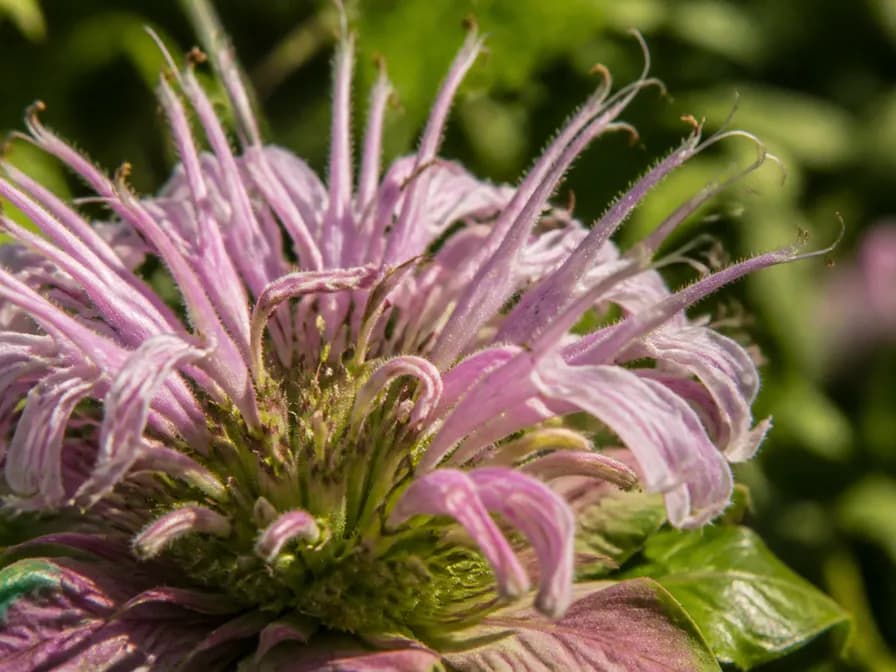
Wild Bergamot Herbal Tea
10 minutesA soothing, aromatic herbal tea with warm oregano-mint notes that has been enjoyed for centuries as both a comforting drink and a traditional remedy for colds, sore throats, and digestive discomfort. Use fresh or dried leaves and flowers.
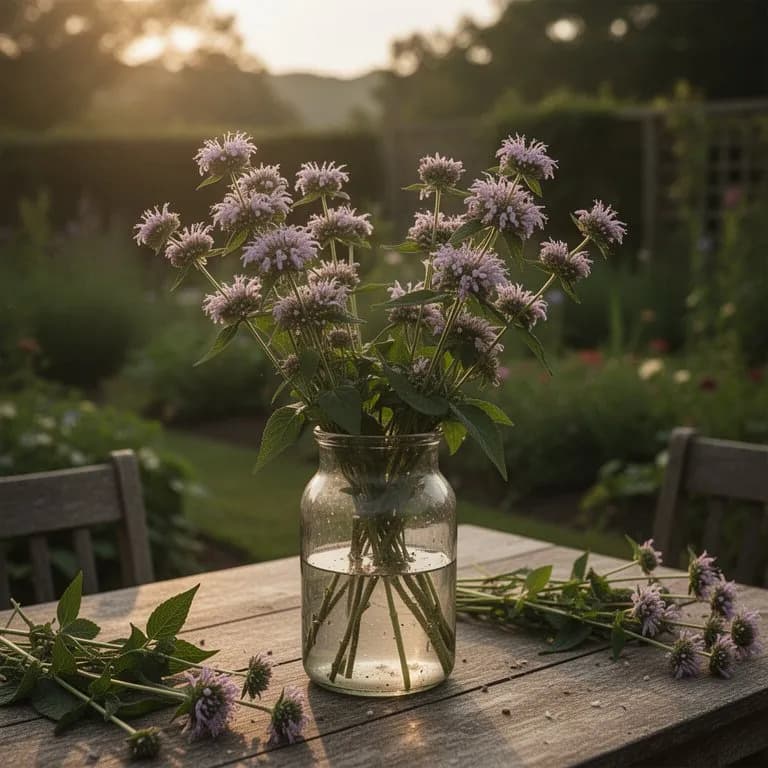
Wild Bergamot Pesto
15 minutesA unique twist on traditional pesto that replaces basil with wild bergamot leaves for a more pungent, oregano-thyme flavored spread. Excellent on pasta, grilled bread, roasted vegetables, or as a marinade for grilled chicken.
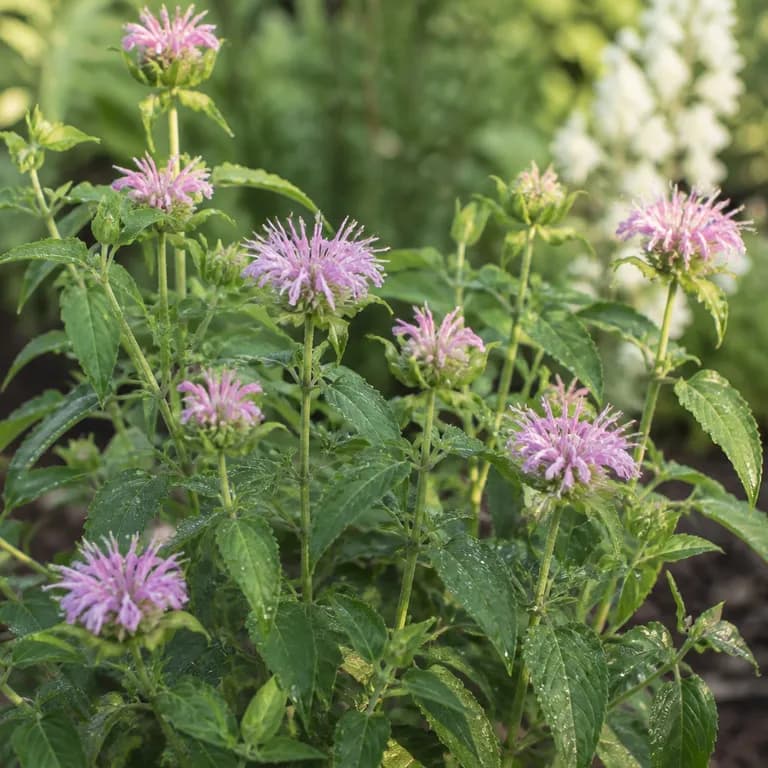
Wild Bergamot Flower Vinegar
10 minutes plus 2 weeks infusionAn infused vinegar that captures the floral, slightly spicy essence of wild bergamot blossoms. Use as a salad dressing base, a deglazing liquid for pan sauces, or drizzled over fresh summer tomatoes and mozzarella.
Dried wild bergamot makes a soothing herbal tea with a warm, minty-oregano flavor that has been used medicinally for centuries by Indigenous peoples
Yield & Spacing Calculator
See how many Wild Bergamot plants fit in your garden bed based on the recommended 45cm spacing.
4
Wild Bergamot plants in a 4×4 ft bed
2 columns × 2 rows at 45cm spacing
Popular Varieties
Some of the most popular wild bergamot varieties for home gardeners, each with unique characteristics.
Monarda fistulosa (Wild Type)
The straight species with soft lavender-pink flowers, the best choice for meadow gardens and naturalistic plantings.
Monarda fistulosa 'Claire Grace'
A selected form with improved vigor and more upright habit, with excellent mildew resistance and abundant lavender flowers.
Monarda bradburiana (Eastern Bee Balm)
A closely related species with pale pink spotted flowers that blooms earlier than fistulosa, extending the Monarda season.
When should I plant Wild Bergamot?
Plant Wild Bergamot in March, April, September. It takes approximately 365 days to reach maturity, with harvest typically in July, August.
What are good companion plants for Wild Bergamot?
Wild Bergamot grows well alongside Bee Balm, Coneflower, Black-eyed Susan. Companion planting can improve growth, flavor, and natural pest control.
What hardiness zones can Wild Bergamot grow in?
Wild Bergamot thrives in USDA hardiness zones 3 through 9. With greenhouse protection, it may be grown in zones 1 through 10.
How much sun does Wild Bergamot need?
Wild Bergamot requires Full Sun (6-8h+). This means at least 6-8 hours of direct sunlight daily.
How far apart should I space Wild Bergamot?
Space Wild Bergamot plants 45cm (18 inches) apart for optimal growth and air circulation.
What pests and diseases affect Wild Bergamot?
Common issues include Powdery Mildew, Rust, Four-Lined Plant Bug. Prevention through good garden practices like crop rotation, proper spacing, and companion planting is the best approach. See the detailed pests and diseases section above for symptoms, prevention, and treatment for each.
How do I store Wild Bergamot after harvest?
Dry wild bergamot by bundling stems and hanging upside down in a warm, dark, airy room for 1-2 weeks. Strip dried leaves and flowers from stems and store in airtight glass jars. Dried wild bergamot makes a pleasant herbal tea with notes of oregano, thyme, and citrus—it was historically used by Nativ...
What are the best Wild Bergamot varieties to grow?
Popular varieties include Monarda fistulosa (Wild Type), Monarda fistulosa 'Claire Grace', Monarda bradburiana (Eastern Bee Balm). Each has unique characteristics suited to different growing conditions and culinary preferences. See the varieties section above for detailed descriptions.
What soil does Wild Bergamot need?
Wild bergamot thrives in average to lean, well-drained soil with a pH of 6.0-8.0—it tolerates both slightly acidic and alkaline conditions. It performs well in sandy, gravelly, and loamy soils and actively prefers drier, less fertile conditions than bee balm. Do not enrich the soil with compost or f...
What is the difference between Monarda fistulosa (wild bergamot) and Monarda didyma (bee balm)?
While both are commonly called bergamot or bee balm, Monarda fistulosa has lavender-pink flowers and is far more drought-tolerant, heat-resistant, and disease-resistant than Monarda didyma, which has scarlet red flowers and prefers moist, rich soil. Wild bergamot is generally easier to grow, more adaptable to a wider range of conditions, and less susceptible to powdery mildew. Flavor-wise, wild bergamot has a stronger oregano-thyme character, while bee balm is more floral and citrusy.
Is wild bergamot safe to eat, and what parts are edible?
Yes, all above-ground parts of wild bergamot are edible and have a long history of culinary and medicinal use by Indigenous peoples across North America. The leaves can be used fresh or dried as an herbal seasoning similar to oregano or thyme. The flowers are edible and make a beautiful, mildly spicy garnish for salads, desserts, and cocktails. Both leaves and flowers make an excellent herbal tea. As with any herb, start with small amounts to ensure you tolerate it well, and avoid medicinal doses during pregnancy.
How do I prevent powdery mildew on wild bergamot?
The best prevention strategies are cultural rather than chemical. Plant in full sun with excellent air circulation, spacing plants at least 45 cm apart. Avoid overhead watering and water at the base of plants in the morning so foliage dries quickly. Thin congested clumps by dividing every 3-4 years. If mildew does appear, remove and dispose of affected foliage promptly. Monarda fistulosa is naturally more mildew-resistant than Monarda didyma, and selecting mildew-resistant cultivars like 'Claire Grace' can further reduce problems.
Will wild bergamot spread aggressively in my garden?
Wild bergamot spreads moderately through shallow rhizomes, expanding its clump by 15-30 cm per year in typical garden conditions. It is less aggressive than some mint family members but will fill an area over time. To control spread, plant in a bed with defined edges such as a mowed path or stone border, divide clumps regularly, and deadhead flowers before they set seed to prevent self-sowing. In naturalized or prairie plantings, its spreading habit is an asset that helps it compete with grasses and weeds.
Can I grow wild bergamot in containers?
Yes, wild bergamot can be grown in containers, though it performs best in pots at least 30 cm deep and wide to accommodate its rhizomatous root system. Use a well-drained potting mix amended with perlite or coarse sand, and avoid keeping the soil consistently wet. Container plants may need dividing annually and will require winter protection in zones 3-5 by moving the pot to an unheated garage or wrapping it with insulation. Expect slightly smaller plants and fewer flowers than in-ground specimens.
When and how should I harvest wild bergamot for tea and cooking?
Harvest leaves anytime during the growing season for fresh use, taking no more than one-third of the plant at a time. For the strongest flavor and highest essential oil content, harvest flowering stems when approximately half the florets on each head have opened, typically mid-July through August. Cut stems in the morning after the dew has dried. For drying, bundle 4-5 stems together and hang upside down in a warm, dark, well-ventilated space for 1-2 weeks. Store dried leaves and flowers in airtight glass jars away from light for up to one year.
Ready to Grow Wild Bergamot?
Add Wild Bergamot to your garden plan and start designing your perfect layout.

Vladimir Kusnezow
Gardener and Software Developer
Zone 6b gardener. Growing vegetables and fruits in soil and hydroponics for 6 years. I built PlotMyGarden to plan my own gardens.
Jump to Section