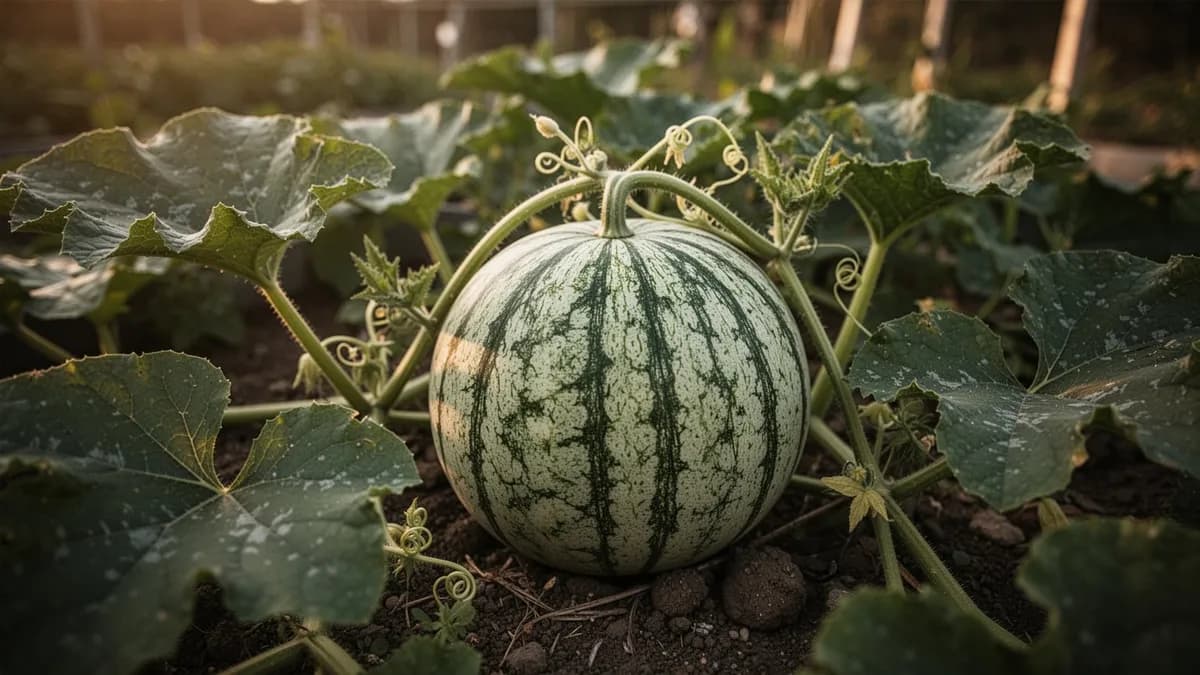
Mini Watermelon
Citrullus lanatus
At a Glance
It's planting season for Mini Watermelon! Start planning your garden now.
A personal-sized watermelon variety producing sweet, crisp fruits weighing three to seven pounds that fit easily in a refrigerator. Thin rinds and seedless or near-seedless flesh maximize the edible portion compared to full-sized watermelons. Compact vines take up less garden space and produce two to four fruits per plant. Tap the melon and listen for a hollow sound to determine ripeness, and check for a yellow ground spot.
Planting & Harvest Calendar
Growth Stages
From Seed to Harvest
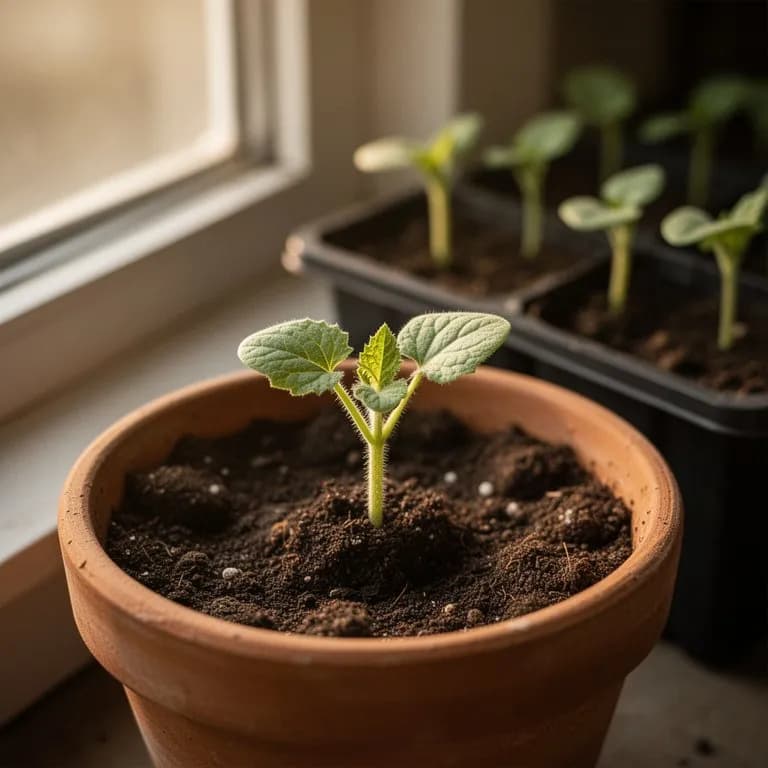
Seed Starting
Days 0–12
Mini watermelon seeds germinate in warm soil within 5-12 days. Like all watermelons, they require soil temperatures of at least 21°C (70°F) for reliable germination, with the ideal range being 27-30°C (80-85°F). The first sign of life is a white radicle root, followed by rounded cotyledon leaves pushing through the soil surface.
💡 Care Tip
Start seeds indoors 3-4 weeks before the last frost date using a heat mat set to 27°C (80°F). Plant seeds 1-2 cm deep in individual biodegradable pots to avoid disturbing the sensitive taproot at transplant. Keep soil consistently moist but never waterlogged.
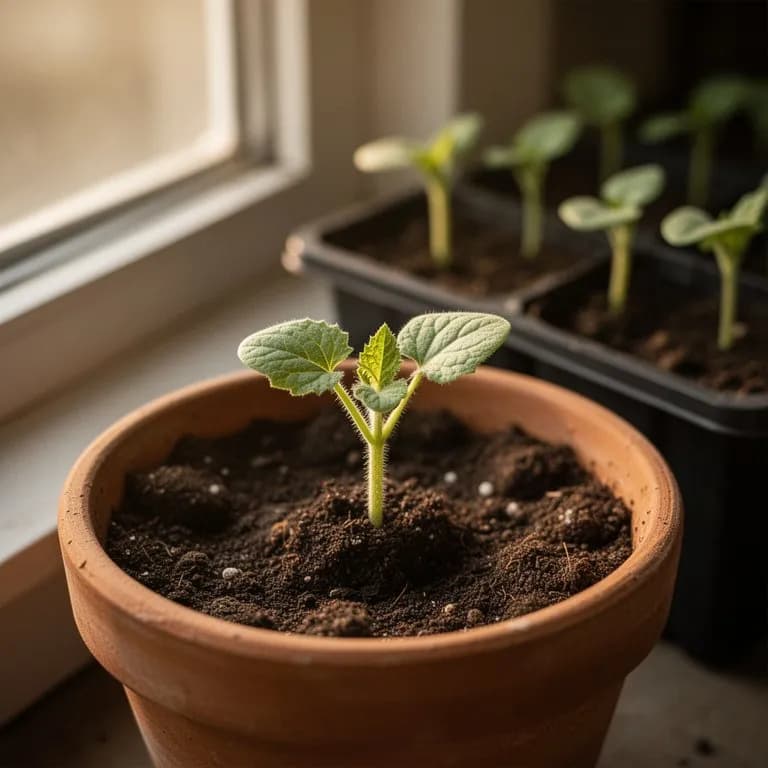
Mini watermelon seedlings look identical to full-sized varieties at this stage — the compact habit shows later
Monthly Care Calendar
What to do each month for your Mini Watermelon
May
You are herePrimary transplanting month for most zones. Set hardened-off seedlings into warm soil (at least 21°C / 70°F) after all frost danger has passed. Space plants 90-120 cm apart — closer than full-sized types due to their compact vines. Apply black plastic or straw mulch.
Did You Know?
Fascinating facts about Mini Watermelon
Mini watermelons like Sugar Baby were first developed in the 1950s specifically for small families and home gardeners who wanted a whole watermelon they could eat in one or two sittings without wasting half a massive fruit in the refrigerator.
Start mini watermelon seeds indoors three to four weeks before the last frost date, using biodegradable pots to avoid disturbing the sensitive taproot during transplanting. Seeds germinate best at soil temperatures of 80 to 85 degrees Fahrenheit, so use a heat mat for consistent warmth. Harden off seedlings gradually over a week before planting outdoors once soil reaches at least 70 degrees.
Transplant seedlings into hills or raised beds spaced three to four feet apart, with two to three plants per hill. Work in generous amounts of aged compost and a balanced fertilizer before planting. Use black plastic mulch to warm the soil, suppress weeds, and retain moisture. Provide drip irrigation or soaker hoses to keep soil consistently moist but not waterlogged during vine growth.
As fruits develop, reduce watering slightly to concentrate sugars and improve flavor. Place straw or cardboard beneath each developing melon to prevent rot from soil contact. Pinch off any new female flowers once each plant sets three to four fruits to redirect energy toward ripening existing melons. Watch for a color change on the ground spot from white to creamy yellow as the primary ripeness indicator.
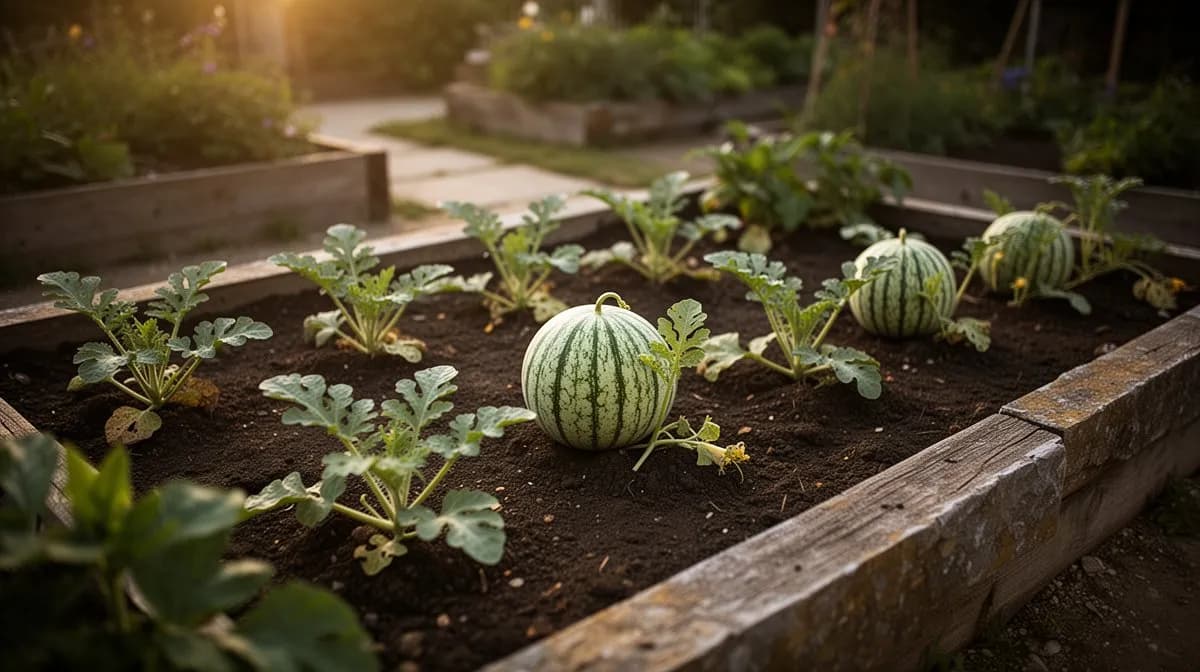
Perfect for small gardens, raised beds, and even large containers — mini watermelons thrive where full-sized types cannot fit
Watermelon (Citrullus lanatus) traces its origins to the Kalahari Desert region of southern Africa, where wild ancestors with hard, bitter flesh still grow today. Archaeological evidence from Libya dates watermelon seeds to approximately 5,000 years ago, and ancient Egyptians cultivated the fruit by at least 2000 BCE. Seeds and depictions of watermelons have been found in pharaonic tombs, suggesting the fruit held both practical and ceremonial significance. Early cultivated watermelons were prized less for sweetness and more for their ability to store water in arid climates — a portable reservoir in fruit form.
Watermelon cultivation spread from Africa through the Mediterranean via ancient trade routes. By the 10th century, the Moors had introduced it to the Iberian Peninsula. Watermelons reached China by the 13th century, and today China produces more watermelon than any other nation. European colonists and the transatlantic slave trade brought watermelon to the Americas in the 1500s and 1600s, where the warm climate of the southern United States proved ideal for cultivation.
Mini watermelon varieties emerged in the mid-20th century as breeders responded to demand for personal-sized fruit suited to smaller households. The Sugar Baby, introduced in 1956 by M. Hardin of Oregon, was the breakthrough variety — compact vines producing dark-skinned, intensely sweet melons weighing just 2-4 kg. This variety opened watermelon growing to gardeners with limited space and transformed the commercial market. Since then, breeders have created dozens of mini cultivars including Crimson Sweet compacts, icebox types, and seedless mini varieties. Today mini watermelons are one of the fastest-growing segments of the melon market, prized for portion control, reduced food waste, refrigerator-friendly size, and concentrated sweetness.
Start seeds indoors three to four weeks before the last expected frost date. Plant two seeds per three-inch biodegradable pot, one inch deep, in a warm seed-starting mix. Maintain soil temperature of 80 to 85 degrees Fahrenheit using a heat mat for germination in five to ten days. Provide 14 to 16 hours of bright light daily once seedlings emerge. Thin to the strongest seedling per pot. Harden off over seven to ten days, gradually increasing outdoor exposure. Transplant after soil temperatures consistently exceed 70 degrees Fahrenheit, spacing plants 36 inches apart.
Mini watermelons thrive in sandy loam soil with a pH of 6.0 to 6.8 and excellent drainage. Amend heavy soils with coarse sand and aged compost to improve structure. Apply a balanced 10-10-10 fertilizer at planting, then switch to a low-nitrogen, high-potassium formula like 5-10-10 once vines begin flowering to promote fruit development. Side-dress with compost or fish emulsion every three weeks during active growth. Avoid over-fertilizing with nitrogen, which promotes excessive vine growth at the expense of fruit production.
Check Your Zone
See if Mini Watermelon is suitable for your location.
24°C – 35°C
75°F – 95°F
Mini watermelons share the heat-loving nature of all watermelons. Seeds require 21-30°C (70-85°F) for germination, with the ideal being 27°C (80°F). Optimal vine growth and fruit development occurs between 24-35°C (75-95°F) with warm nights above 15°C (60°F). Plants are killed by any frost and growth stalls below 15°C (60°F). Short-season mini varieties like Blacktail Mountain are more tolerant of cool nights than full-sized types, making them viable in zones as cool as 4-5 with season extension techniques.
Common issues affecting Mini Watermelon and how to prevent and treat them organically.
Blossom end rot appears as dark, sunken patches on the fruit bottom, caused by inconsistent watering and calcium deficiency. Maintain even soil moisture with mulch and drip irrigation. Poor pollination results in misshapen or small fruits; attract bees by planting flowers nearby or hand-pollinate using a small brush. Vine borers can hollow out stems, causing sudden wilting. Wrap stem bases with aluminum foil and inject Bt into affected stems. Sunscald can damage exposed fruits in extreme heat, so allow adequate leaf cover over developing melons.
Plant mini watermelons near corn, which provides partial shade for developing fruits during peak summer heat. Marigolds repel aphids and cucumber beetles while attracting beneficial pollinators. Radishes planted along the border mature quickly and help break up compacted soil before vines spread. Nasturtiums serve as trap crops for aphids. Avoid planting near potatoes, which compete for nutrients, and other cucurbits to reduce shared disease pressure and cross-pollination issues.
- 1Mini watermelons are the ideal choice for small-space gardeners. Their compact vines spread only 1.5-2.5 meters compared to 3-5 meters for full-sized types, making them suitable for raised beds, small garden plots, and even large containers of 75 liters or more.
- 2Vertical growing is highly effective with mini varieties. Train vines up a sturdy trellis or cattle panel and support developing fruit in fabric slings, old pantyhose, or mesh produce bags. This technique grows watermelons in under one square meter of ground space.
- 3Soil warmth is more important than air temperature for watermelons. Use black plastic mulch to raise soil temperatures 3-5°C above ambient — this can advance your planting date by 2-3 weeks and significantly boost early-season growth and total yield.
- 4Water deeply and consistently during vine growth and fruit development — 2.5-5 cm per week at the base of the plant. Then reduce watering dramatically as fruit nears maturity to concentrate sugars. Overwatering late in the season produces bland, watery melons.
- 5Pollination is critical and entirely dependent on bees. If you notice female flowers dropping without setting fruit, hand-pollinate in the early morning by using a small brush or cotton swab to transfer pollen from male flowers (straight stems) to female flowers (tiny round ovary at the base).
- 6Allow 4-6 fruit to develop per plant and remove any additional small melons that set late in the season. This focuses the plant's energy into fewer melons with better size and sweetness rather than many undersized, bland fruit.
- 7Master the ripeness indicators before your first harvest — picking too early is the most common mistake. Check for: a dried brown tendril near the fruit stem, a creamy yellow ground spot, a matte rather than glossy rind, and a deep hollow thump when knocked with a knuckle.
- 8For the earliest possible harvest in short-season climates, choose Blacktail Mountain (70 days) or Sugar Baby (75 days) and start seeds indoors 4 weeks early. Use black plastic mulch, row covers for the first 3 weeks after transplant, and south-facing slopes to maximize heat accumulation.
Mini watermelons are ready to harvest 70 to 80 days after transplanting. Check for three key indicators: the tendril closest to the fruit turns brown and dry, the ground spot changes from white to creamy yellow, and the melon produces a deep hollow thump when tapped. Cut the stem with sharp pruners rather than pulling, leaving about an inch of stem attached. Harvest in the morning when fruits are coolest for best post-harvest quality. Each plant typically yields two to four melons weighing three to seven pounds each.
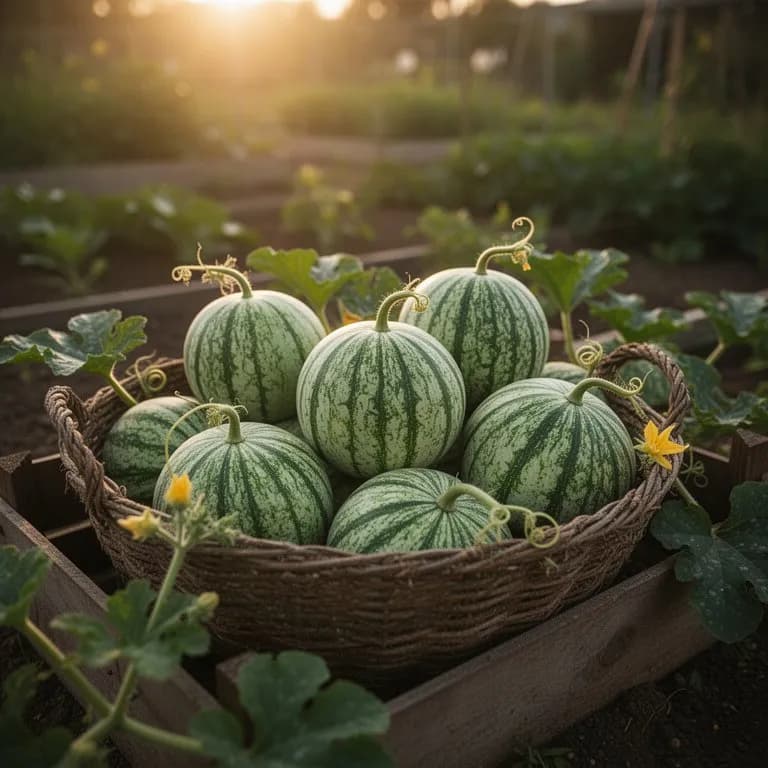
The perfect personal-sized melon — small enough to fit in one hand and eat in a single sitting
Store whole mini watermelons at room temperature for up to one week or refrigerate for up to two weeks. Once cut, wrap tightly in plastic wrap or store in airtight containers and refrigerate for three to five days. For longer preservation, cube the flesh and freeze on a parchment-lined baking sheet before transferring to freezer bags for smoothies and frozen treats. Watermelon can also be pickled by preserving the rind in a sweet vinegar brine, a traditional Southern preparation.
Plan your garden with ease
Love growing Mini Watermelon? Use our free garden planner to design your beds, track planting dates, and get personalized care reminders.
Nutritional Info
Per 100g serving
30
Calories
Health Benefits
- Excellent natural source of lycopene — the red pigment and powerful antioxidant linked to heart health and reduced cancer risk — with concentrations comparable to or exceeding raw tomatoes
- Contains citrulline, an amino acid the body converts to arginine, supporting healthy blood pressure, improved circulation, and faster post-exercise muscle recovery
- Over 91% water content makes mini watermelon one of the most hydrating foods available, delivering fluids alongside electrolytes like potassium and magnesium
- Good source of vitamin A as beta-carotene (11% DV per 100g), supporting healthy vision, immune function, and skin cell regeneration
- Provides vitamin C for immune support and collagen production, plus B vitamins including thiamine (B1) and pyridoxine (B6) for energy metabolism
- Extremely low calorie density at just 30 calories per 100g — a personal-sized mini watermelon is a satisfying, guilt-free snack that naturally curbs sweet cravings
💰 Why Grow Your Own?
Mini watermelons sell for $3-6 each at grocery stores and $5-8 at farmers markets. A single productive plant yielding 4-8 melons can save $15-40 per season. Growing 3-4 plants can produce 15-25 melons worth $50-120 at retail prices. A packet of seeds costs under $3 and produces 15-20 plants — the investment is minimal. Beyond dollar savings, homegrown mini watermelons picked at peak ripeness deliver dramatically superior sweetness and flavor compared to store-bought melons harvested underripe for shipping durability.
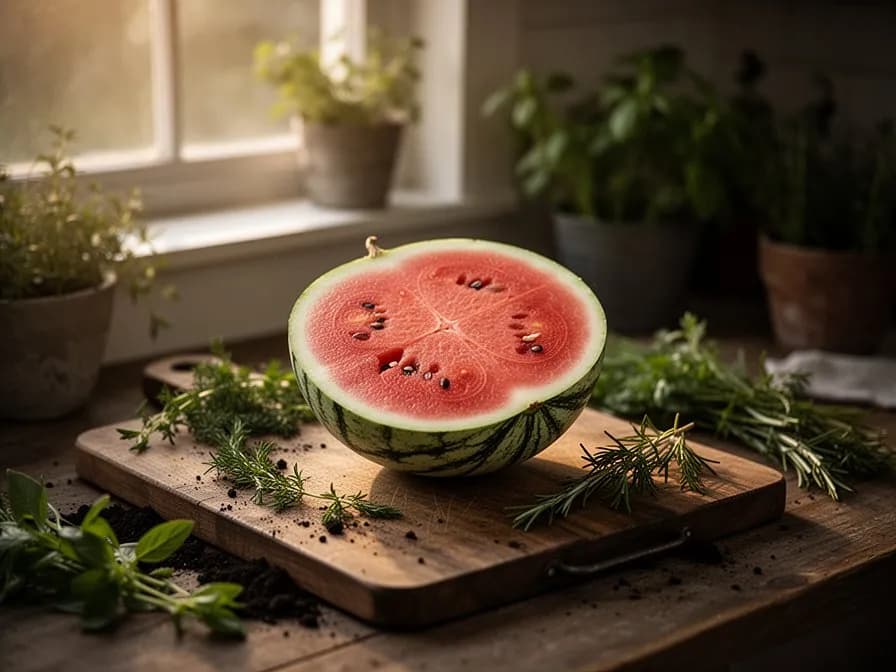
Mini watermelons have a remarkably thin rind and a high flesh-to-rind ratio with intensely sweet flavor
Quick Recipes
Simple recipes using fresh Mini Watermelon
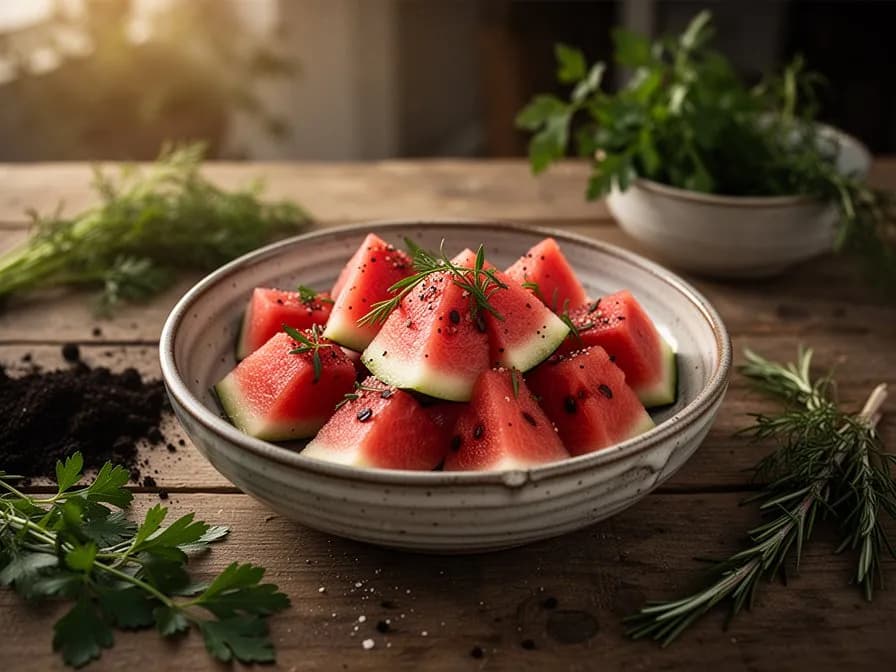
Mini Watermelon Smoothie Bowl
10 minOne mini watermelon blended into a thick, frosty pink bowl — topped with granola, fresh berries, and coconut flakes for a stunning and refreshing breakfast. The perfect personal-portion recipe that uses exactly one melon with no waste.
Watermelon Pizza Rounds
10 minThick cross-section slices of mini watermelon used as edible pizza bases, topped with yogurt, fresh fruit, and crunchy toppings. A playful, no-cook dessert that kids and adults adore — the round shape of mini watermelons makes perfect individual portions.
Mini Watermelon Feta Bites
15 minCubed mini watermelon threaded onto skewers with feta, fresh basil, and a balsamic glaze — an elegant appetizer that captures the quintessential summer flavor combination of sweet, salty, and tangy in every bite.
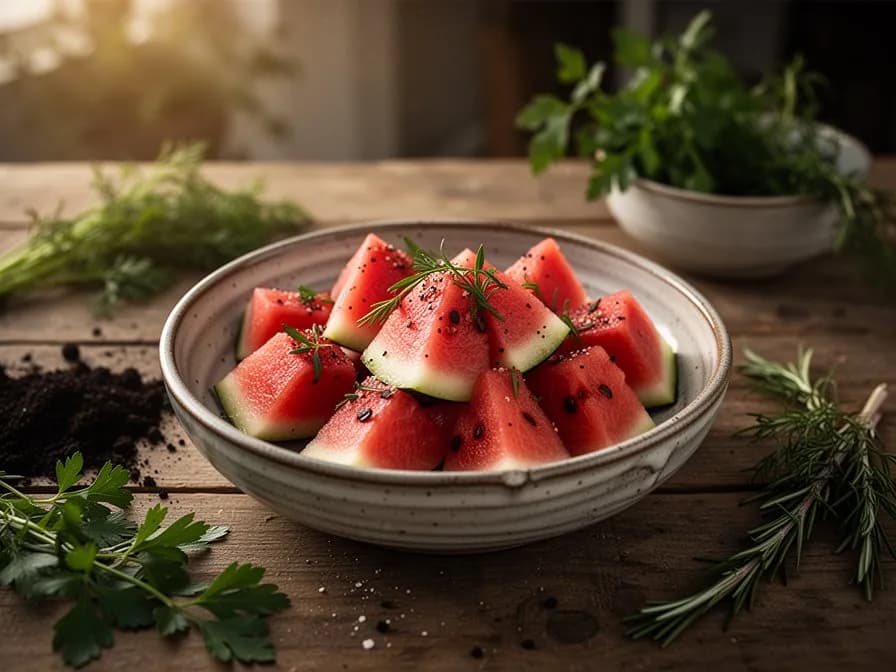
One mini watermelon makes the perfect single-batch smoothie — no leftover melon to store
Yield & Spacing Calculator
See how many Mini Watermelon plants fit in your garden bed based on the recommended 90cm spacing.
1
Mini Watermelon plants in a 4×4 ft bed
1 columns × 1 rows at 90cm spacing
Popular Varieties
Some of the most popular mini watermelon varieties for home gardeners, each with unique characteristics.
Sugar Baby
Classic icebox variety with dark green rind and deep red, sweet flesh weighing six to eight pounds.
Mini Love
Award-winning hybrid producing uniformly round, five to seven pound fruits with excellent sugar content.
Little Darling
Seedless personal-sized variety with bright red flesh and thin rind, ideal for small gardens.
Cal Sweet Bush
Compact bush-type plant perfect for containers, producing sweet ten-pound melons on short vines.
Golden Midget
Heirloom variety with golden rind when ripe and pink-red flesh, maturing in just 65 days.
Mini watermelons are perfect for fresh eating, sliced into wedges or cubed for fruit salads. Blend the flesh into refreshing agua fresca or cocktails. Pair with feta cheese, mint, and balsamic reduction for an elegant summer salad. Juice the flesh for popsicles or granita. The rind can be pickled as a sweet-tangy condiment. Watermelon pairs exceptionally well with lime, basil, chili flakes, and prosciutto.
When should I plant Mini Watermelon?
Plant Mini Watermelon in May, June. It takes approximately 75 days to reach maturity, with harvest typically in August, September.
What are good companion plants for Mini Watermelon?
Mini Watermelon grows well alongside Corn, Marigold. Companion planting can improve growth, flavor, and natural pest control.
What hardiness zones can Mini Watermelon grow in?
Mini Watermelon thrives in USDA hardiness zones 4 through 11. With greenhouse protection, it may be grown in zones 2 through 12.
How much sun does Mini Watermelon need?
Mini Watermelon requires Full Sun (6-8h+). This means at least 6-8 hours of direct sunlight daily.
How far apart should I space Mini Watermelon?
Space Mini Watermelon plants 90cm (35 inches) apart for optimal growth and air circulation.
What pests and diseases affect Mini Watermelon?
Common issues include Aphids, Cucumber Beetle, Fusarium Wilt, Anthracnose. Prevention through good garden practices like crop rotation, proper spacing, and companion planting is the best approach. See the detailed pests and diseases section above for symptoms, prevention, and treatment for each.
How do I store Mini Watermelon after harvest?
Store whole mini watermelons at room temperature for up to one week or refrigerate for up to two weeks. Once cut, wrap tightly in plastic wrap or store in airtight containers and refrigerate for three to five days. For longer preservation, cube the flesh and freeze on a parchment-lined baking sheet ...
What are the best Mini Watermelon varieties to grow?
Popular varieties include Sugar Baby, Mini Love, Little Darling, Cal Sweet Bush, Golden Midget. Each has unique characteristics suited to different growing conditions and culinary preferences. See the varieties section above for detailed descriptions.
What soil does Mini Watermelon need?
Mini watermelons thrive in sandy loam soil with a pH of 6.0 to 6.8 and excellent drainage. Amend heavy soils with coarse sand and aged compost to improve structure. Apply a balanced 10-10-10 fertilizer at planting, then switch to a low-nitrogen, high-potassium formula like 5-10-10 once vines begin f...
What is the best mini watermelon variety for beginners?
Sugar Baby is the gold standard for beginners — it was the original mini watermelon, introduced in 1956, and remains the most reliable and widely available variety. It produces 2-4 kg round melons with dark green rind and sweet, deep red flesh in about 75 days from transplant. It tolerates less-than-perfect conditions better than most watermelon varieties and is available from virtually every seed company.
Can I grow mini watermelons in containers?
Yes, mini watermelons are among the best melons for container growing. Use a container of at least 75 liters (20 gallons) with excellent drainage. Fill with a quality potting mix enriched with compost. Place in full sun (8+ hours daily) and water daily in hot weather since containers dry out quickly. Feed every 2 weeks with liquid fertilizer, switching to high-potassium once fruit sets. Expect 2-4 melons per container-grown plant. Compact varieties like Bush Sugar Baby are specifically bred for confined spaces.
How long does it take for mini watermelons to grow?
Mini watermelons mature faster than full-sized types. From transplant to harvest, most mini varieties take 70-85 days: Blacktail Mountain is the fastest at 70 days, Sugar Baby takes about 75 days, and Crimson Sweet compacts take 80-85 days. From seed to harvest, add 3-4 weeks for the indoor seedling stage, making the total time from seed roughly 95-115 days. Warm, sunny weather accelerates ripening while cool, cloudy conditions can add 1-2 weeks.
Why are my mini watermelons not sweet?
The most common causes are harvesting too early, overwatering during the ripening period, insufficient sunlight, or cool growing temperatures. To maximize sweetness: wait for all four ripeness indicators before picking (dried tendril, yellow ground spot, matte rind, hollow thump), reduce watering 7-10 days before harvest, ensure at least 8 hours of full direct sun, and apply potassium-rich fertilizer during fruit development. Warm daytime temperatures above 27°C (80°F) are essential for sugar accumulation in the flesh.
How many mini watermelons will one plant produce?
A healthy mini watermelon plant typically produces 4-8 melons per season under good growing conditions, with each fruit weighing 1-4 kg depending on variety. This is more individual fruit than full-sized watermelon plants produce because the smaller fruit size allows the plant to support more melons simultaneously. For the best quality, limit plants to 4-6 fruit and remove late-setting extras so the plant's energy concentrates into fewer, sweeter melons.
Do mini watermelons need a pollinator plant like seedless varieties?
No. Standard (seeded) mini watermelons like Sugar Baby and Blacktail Mountain are diploid and produce viable pollen — they can pollinate themselves and each other with bee assistance. You do not need a separate pollinator variety. However, if you choose a seedless mini variety like Mini Love, you will need a seeded pollinator planted nearby, just as with any seedless watermelon. Having multiple watermelon plants of any type growing near each other improves pollination rates overall.
Ready to Grow Mini Watermelon?
Add Mini Watermelon to your garden plan and start designing your perfect layout.

Vladimir Kusnezow
Gardener and Software Developer
Zone 6b gardener. Growing vegetables and fruits in soil and hydroponics for 6 years. I built PlotMyGarden to plan my own gardens.
Jump to Section