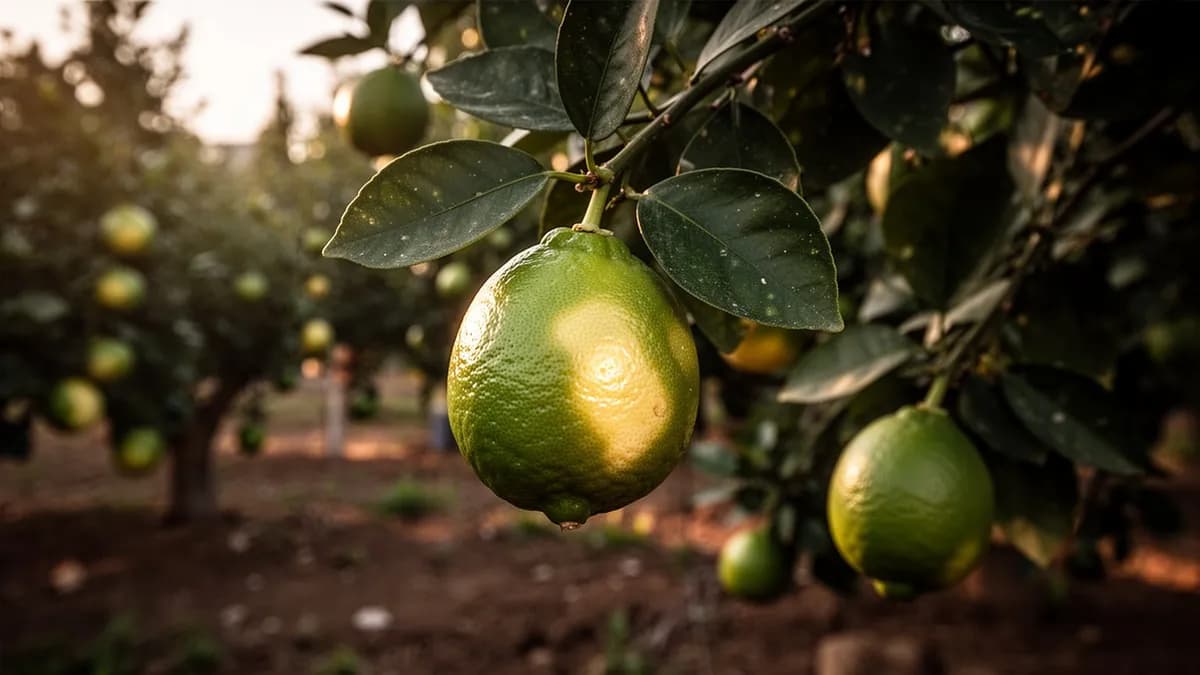
Key Lime
Citrus aurantiifolia
At a Glance
It's planting season for Key Lime! Start planning your garden now.
A small, thorny citrus tree producing golf ball-sized limes with a distinctive floral aroma crucial to authentic key lime pie. Key limes are more aromatic and complex in flavor than Persian limes but have more seeds and thinner skin. These tropical trees can be grown in containers and brought indoors during winter in cooler climates.
Planting & Harvest Calendar
Growth Stages
From Seed to Harvest
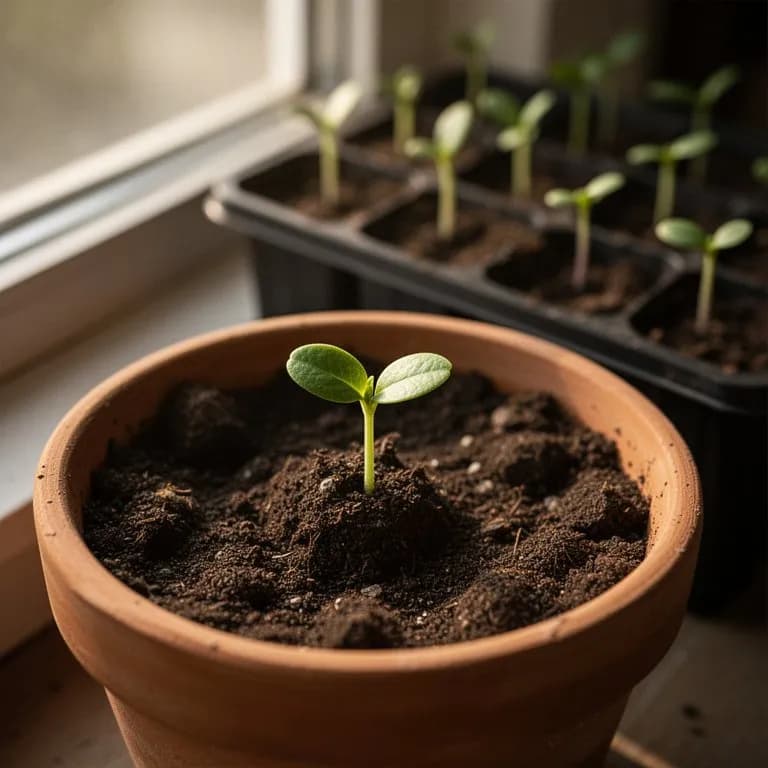
Seed Germination / Graft Establishment
Days 0–30
Key limes are most commonly propagated by grafting onto a rootstock such as trifoliate orange or sour orange, or from cuttings rather than seed. Grafted trees establish quickly in warm, well-drained soil. Seed-grown trees are slower but possible; fresh seeds sown in warm, moist potting mix germinate in 2-4 weeks and produce polyembryonic seedlings, most of which are genetically identical to the parent.
💡 Care Tip
If planting a grafted tree, ensure the graft union sits 10-15 cm above the soil line to prevent rootstock suckering. Water deeply after planting and apply a 5-8 cm layer of mulch, keeping it away from the trunk to prevent collar rot.
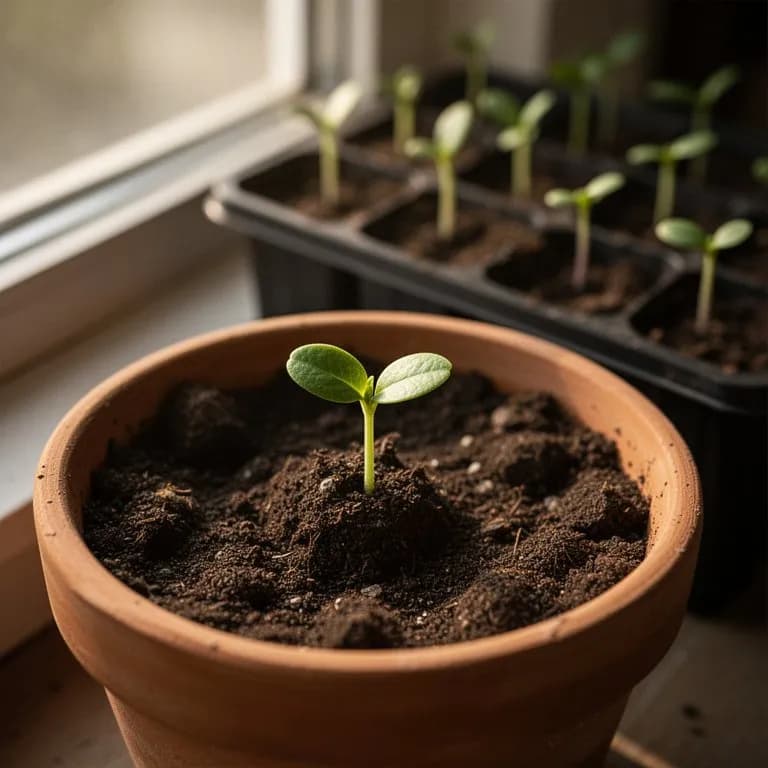
A Key lime seedling at the nursery stage, showing the glossy, aromatic foliage typical of the species
Monthly Care Calendar
What to do each month for your Key Lime
May
You are hereFruitlets are developing from successfully pollinated flowers. Begin regular deep watering as temperatures climb. Watch for the first signs of citrus leafminer damage on new leaf flushes. Apply spinosad-based spray if leafminer damage is severe enough to warrant treatment.
Did You Know?
Fascinating facts about Key Lime
Key limes (Citrus × aurantiifolia) are genetically distinct from the common Persian lime found in most supermarkets. Persian limes are a larger, seedless hybrid of Key lime and citron developed in the 20th century specifically for commercial production.
Key lime trees are compact, reaching only 6 to 12 feet tall, making them well-suited for container growing and smaller garden spaces. They demand the warmest conditions of any citrus, thriving in zones 10 through 12 where temperatures rarely dip below 60 degrees Fahrenheit. Choose a location with full sun and excellent wind protection, as the thorny branches are brittle and can snap in strong gusts.
Plant key limes in spring after all danger of frost has passed. Dig a hole twice the width of the root ball and set the tree so the graft union sits at least two inches above the soil surface. Water deeply at planting and establish a regular watering schedule, providing one to two inches per week during the growing season. Container-grown key limes need more frequent watering, often every two to three days in summer.
Fertilize key limes with a citrus-specific formula every six to eight weeks from early spring through early fall. These trees produce fruit year-round in tropical climates, with the heaviest crop during summer months. Prune lightly to remove dead wood and water sprouts, maintaining a naturally rounded shape. Bring container trees indoors when temperatures drop below 50 degrees, placing them near a bright south-facing window.
The Key lime (Citrus × aurantiifolia) is believed to have originated in Southeast Asia, most likely in the region encompassing present-day Malaysia, Indonesia, and the surrounding island archipelagos, where related wild Citrus species still grow today. Botanical and genetic evidence suggests it is a natural hybrid that arose from crosses between the micrantha (papeda) citrus and the citron, making it one of the more ancient cultivated citrus varieties. From its Southeast Asian homeland, the Key lime spread westward along ancient maritime and overland trade routes, reaching India and the Middle East well before the Common Era. Arab traders carried the fruit across North Africa, and by the time of the Moorish occupation of the Iberian Peninsula, Key limes were being cultivated in southern Spain and Portugal. When Christopher Columbus made his second voyage to the Americas in 1493, he carried Key lime seeds among the agricultural supplies loaded for the new colonies. Spanish settlers subsequently introduced the tree to the Caribbean islands and to Florida, where the warm, humid climate of the Florida Keys proved ideally suited to its cultivation. For centuries, Key lime groves were a staple of the Keys economy, with the fruit supplying ships and local populations throughout the region. The iconic Key lime pie emerged from this agricultural tradition, likely developed by local fishermen and sponge divers who needed a nourishing, preservable food that could be made without refrigeration or an oven, as the acidity of the lime juice set the egg yolk custard without baking. A catastrophic hurricane in 1926 destroyed most of the commercial Key lime groves in Florida, and the larger, tougher, seedless Persian lime — better suited to commercial shipping — replaced it in national markets. Today the Key lime is enjoying a culinary renaissance, prized by home gardeners and chefs alike for its superior flavor complexity and its irreplaceable role in classic Florida and Caribbean cuisine. It remains a significant commercial crop in Mexico, which is now the world's largest producer, as well as in Central America, Egypt, and parts of Asia.
Key limes are polyembryonic, meaning seeds often produce multiple seedlings that are genetic clones of the mother tree, making them one of the few citrus that grow reasonably true from seed. Plant fresh seeds immediately after extraction, as they dry out and lose viability within days. Sow half an inch deep in moist potting mix and maintain temperatures of 75 to 85 degrees Fahrenheit. Germination occurs in two to four weeks. Thin to the strongest seedling per pot. Seed-grown key limes typically begin bearing fruit in three to six years.
Key limes grow best in well-drained sandy or loamy soil with a pH of 6.0 to 7.0. In heavy clay soils, plant in raised beds or mounds to prevent waterlogging. Apply citrus fertilizer with micronutrients every six to eight weeks during the growing season, tapering off in fall and winter. Supplement with Epsom salt foliar spray twice yearly to provide magnesium. Mulch with a two-inch layer of organic material, keeping it away from the trunk to prevent collar rot.
Check Your Zone
See if Key Lime is suitable for your location.
10°C – 38°C
50°F – 100°F
Key lime trees are among the least cold-hardy of all citrus species and thrive in USDA zones 10-11. They prefer temperatures between 21-32°C (70-90°F) for optimal growth and fruiting. Growth slows noticeably below 15°C (60°F), and prolonged exposure to temperatures below 4°C (40°F) will cause significant leaf drop and branch damage. Even a brief frost can kill the tree outright. In cooler climates, Key limes must be grown in containers and brought indoors for winter.
Common issues affecting Key Lime and how to prevent and treat them organically.
Key lime trees are extremely cold-sensitive and suffer damage at temperatures below 50 degrees Fahrenheit, making cold protection critical. Thorns make harvesting difficult, so consider thornless varieties for ease of picking. The thin-skinned fruits bruise easily during handling and have a shorter shelf life than other limes. Excessive fruit drop is common when trees are stressed by drought, overwatering, or temperature fluctuations. Nutrient deficiencies, particularly zinc and manganese, cause mottled yellow leaves.
Plant key limes alongside herbs like basil, dill, and cilantro to attract beneficial pollinators. Lavender planted nearby repels aphids and adds fragrance to the garden. Low-growing thyme and oregano serve as living mulch, suppressing weeds and retaining soil moisture around the root zone. Avoid planting near large shade trees that compete for sunlight, as key limes demand full sun. Marigolds and nasturtiums planted at the base deter nematodes and draw aphids away from the citrus foliage.
- 1Purchase a grafted Key lime tree rather than growing from seed if you want fruit within 2-3 years. Seed-grown trees can take 5-7 years to begin bearing and may show slight variation from the parent tree, though most Key lime seeds are polyembryonic and produce true-to-type plants.
- 2Select a planting site with full sun exposure for at least 8 hours daily and well-drained soil. Key limes are highly intolerant of standing water and will develop root rot within days of waterlogged conditions. If your soil is heavy clay, plant in a raised bed or mound.
- 3In climates colder than USDA zone 10, grow your Key lime in the largest container you can practically manage — ideally a 75-150 liter pot. The larger the root zone, the more vigorous and productive the tree will be. Use a high-quality, fast-draining citrus potting mix.
- 4Fertilize with a citrus-specific fertilizer that includes chelated micronutrients (zinc, iron, manganese, and magnesium) three to four times per year. Key limes are heavy feeders and show deficiency symptoms — particularly yellowing leaves — quickly when nutrients are insufficient.
- 5Water deeply and consistently during the flowering and fruit development stages. Irregular irrigation during these periods causes blossom and fruit drop, dramatically reducing yields. Install a drip irrigation system if possible to automate consistent watering.
- 6Wear thick gloves and long sleeves when pruning or harvesting. Key lime branches are studded with hard, sharp spines up to 3 cm long that can cause painful punctures and introduce skin infections if not treated promptly.
- 7Maintain the soil pH between 6.0 and 7.0 for optimal nutrient availability. Test your soil or potting mix annually and amend accordingly. Slightly acidic conditions promote healthy leaf color and vigorous growth in all citrus species.
- 8Remove any shoots that emerge from below the graft union (rootstock suckers) immediately, cutting them flush with the trunk. These vigorous suckers will eventually overtake the desired Key lime variety if left to grow, producing inferior fruit or no fruit at all.
- 9Protect your tree from freezing temperatures proactively. Even a few hours below 0°C (32°F) can kill or severely damage a Key lime. Wrap container trees in frost cloth and move them indoors or into an unheated greenhouse when temperatures are forecast to drop below 4°C (40°F).
- 10Encourage beneficial insects by planting flowering herbs like basil, cilantro, and borage nearby. Pollinators significantly improve the fruit set on Key lime blossoms, and predatory insects such as ladybugs and lacewings help keep populations of citrus aphids and scale insects under natural control.
Key limes are ripe when they reach about one to two inches in diameter and yield slightly to gentle pressure. Unlike Persian limes, key limes turn yellow when fully ripe, but they are typically harvested green for the tart flavor prized in cooking. The thin skin bruises easily, so handle with care and twist gently from the stem rather than pulling. Key limes drop from the tree when overripe, so check frequently during peak harvest. The fruits contain numerous seeds that should be strained from juice before use.
Key limes have a shorter shelf life than Persian limes due to their thin skin. Store at room temperature for three to four days or refrigerate for up to two weeks. Juice key limes in bulk and freeze in ice cube trays for year-round availability, as fresh key limes can be hard to find outside tropical regions. The juice freezes well for up to eight months. Key lime zest can be dried and stored in airtight containers. Traditional key lime pie filling can also be frozen for later use.
Plan your garden with ease
Love growing Key Lime? Use our free garden planner to design your beds, track planting dates, and get personalized care reminders.
Nutritional Info
Per 100g serving
30
Calories
Health Benefits
- Excellent source of vitamin C, providing up to 32% of the daily recommended value per 100g, supporting immune function, collagen synthesis, and iron absorption
- Contains flavonoid antioxidants including quercetin, kaempferol, and hesperidin that help neutralize free radicals and support cardiovascular health
- Rich in citric acid, which inhibits kidney stone formation by binding to calcium in urine and reducing crystallization
- Good source of folate (8 mcg per 100g), essential for DNA synthesis and particularly important during pregnancy for fetal neural development
- Contains limonoids, plant compounds concentrated in the peel and pith that have demonstrated anti-tumor and anti-bacterial properties in laboratory studies
- Provides meaningful amounts of calcium (33mg per 100g) and potassium (102mg per 100g) that contribute to bone health and healthy blood pressure regulation
💰 Why Grow Your Own?
A mature Key lime tree in a warm climate can produce 200-400 fruits per year. At specialty grocery prices of $0.50-1.50 per lime, this represents a harvest value of $100-600 annually from a single tree. Fresh-squeezed Key lime juice sells for $20-40 per liter at specialty retailers, and a productive tree can yield 8-15 liters of juice per season. Even a container-grown specimen producing a modest 50-100 fruits per year easily recoups its purchase price within the first fruiting season.
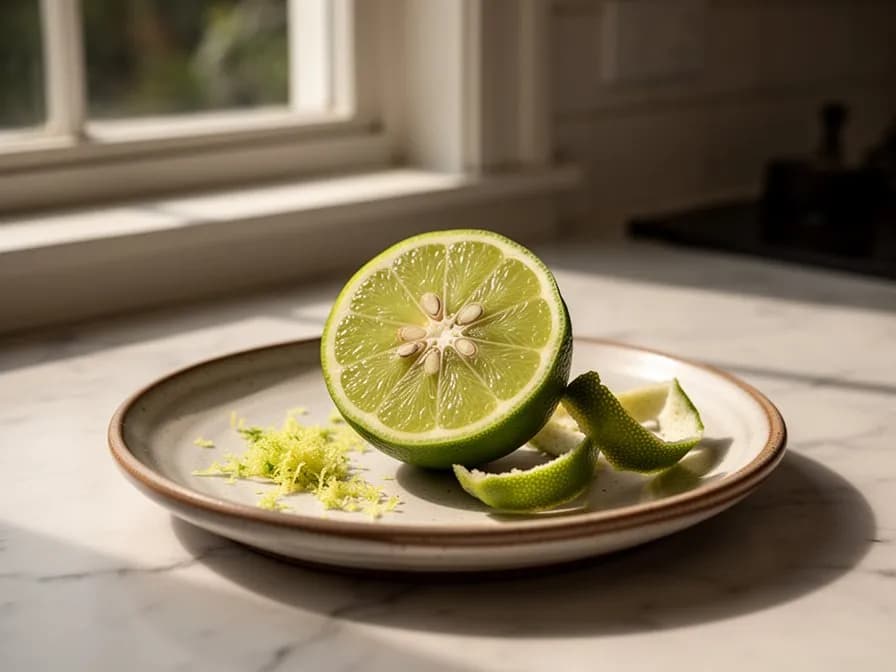
The cross-section of a ripe Key lime reveals its pale, juicy flesh, multiple seeds, and thin rind characteristic of the variety
Quick Recipes
Simple recipes using fresh Key Lime
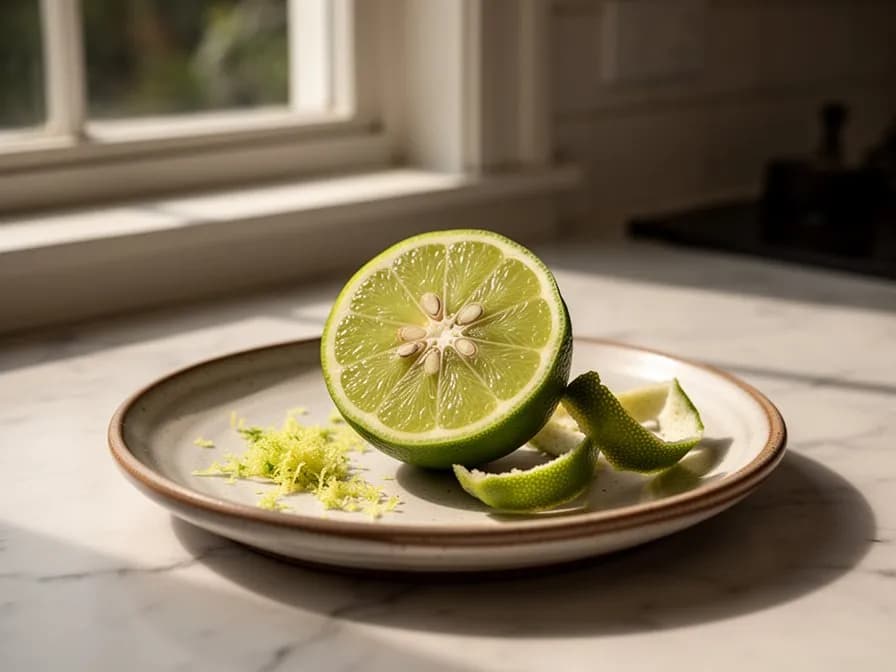
Classic Key Lime Pie
20 minutes plus 2 hours chillingThe authentic Florida Keys version of this iconic dessert uses only freshly squeezed Key lime juice — never bottled — combined with sweetened condensed milk and egg yolks in a graham cracker crust. The filling sets without baking (though a brief oven time is used for food safety), producing a silky, intensely tart-sweet custard that is pale yellow, never green. Topped with whipped cream, it is one of the most celebrated American regional desserts.
Key Lime Ceviche
15 minutes plus 30 minutes marinatingA bright, fresh ceviche that lets the unique floral acidity of Key lime juice take center stage. The citric acid denatures the proteins in the seafood, effectively curing it without heat. This preparation is common throughout the Caribbean and coastal Mexico and showcases the Key lime's versatility beyond desserts. Best served immediately after marinating with tortilla chips or on tostadas.
Key Lime Agua Fresca
10 minutesA refreshing Mexican-style fruit water that celebrates the aromatic intensity of fresh Key lime juice. This drink is lighter and more floral than lemonade, with the characteristic slightly bitter-floral notes of the Key lime cutting through the sweetness. It is perfect for hot days and can be spiked with white rum or tequila for an adult version that rivals any margarita.
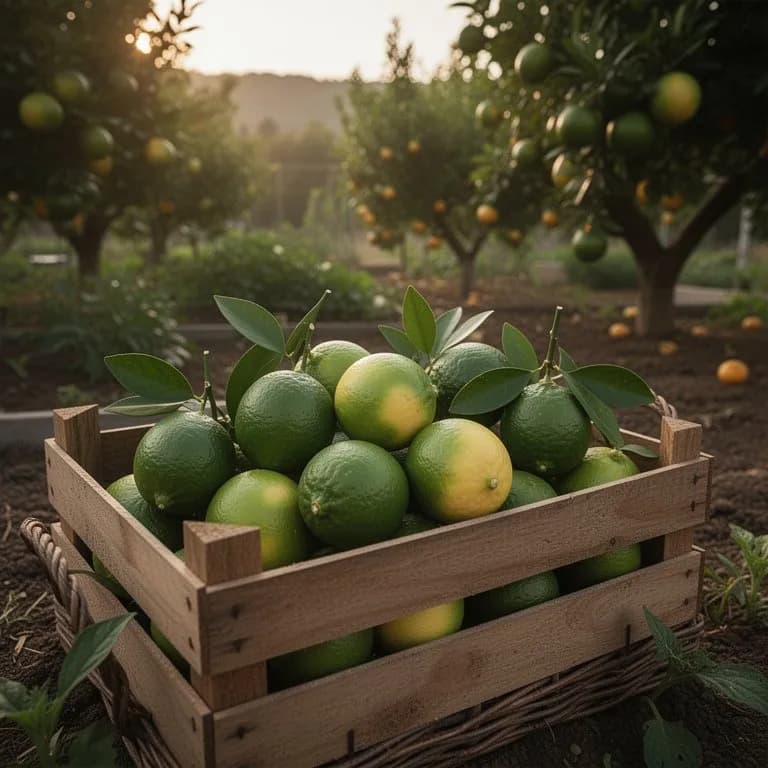
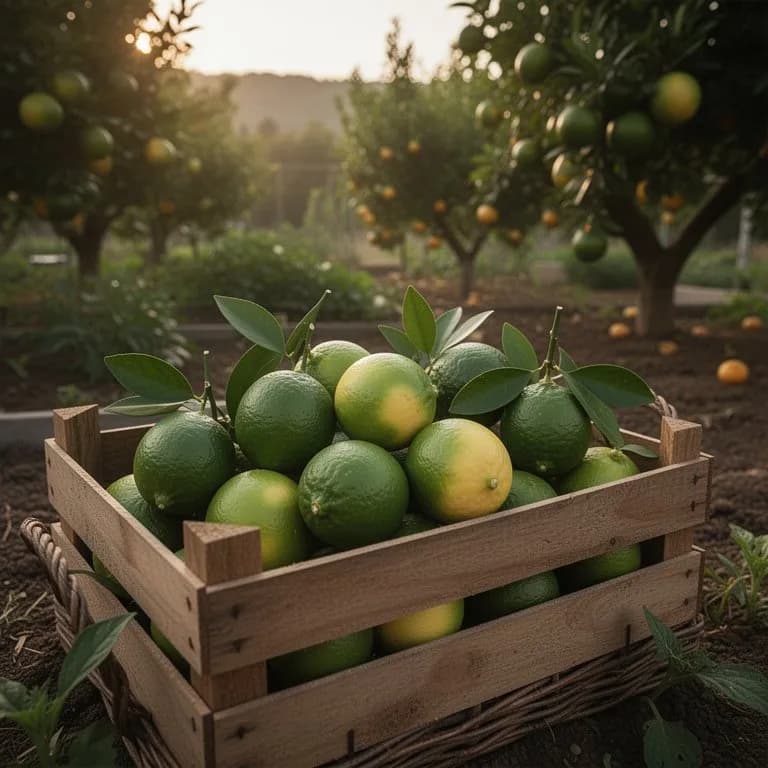
Ripe Key limes are smaller than Persian limes and turn yellow-green when fully mature and at peak juice content
Yield & Spacing Calculator
See how many Key Lime plants fit in your garden bed based on the recommended 240cm spacing.
0
Key Lime plants in a 4×4 ft bed
0 columns × 0 rows at 240cm spacing
Popular Varieties
Some of the most popular key lime varieties for home gardeners, each with unique characteristics.
Mexican Key Lime
The standard key lime with small, seedy, intensely aromatic fruits and a thorny growth habit widely grown throughout the tropics.
Giant Key Lime
A larger-fruited selection that retains the distinctive key lime flavor while producing fruits nearly twice the size of standard key limes.
Thornless Key Lime
A spineless mutation making harvesting much easier while maintaining the classic key lime aroma and flavor.
Key Lime on Flying Dragon
A key lime grafted onto dwarfing Flying Dragon rootstock, creating a compact tree ideal for container culture and small spaces.
Key limes are essential for authentic key lime pie, delivering a more complex and floral flavor than Persian limes. Their intense juice brightens ceviche, fish tacos, Thai curries, and Caribbean marinades. Use the zest in cocktails, tropical desserts, and salad dressings. Key lime juice pairs exceptionally well with coconut in both sweet and savory dishes. The juice is also a staple in traditional Yucatecan and Filipino cuisines.
When should I plant Key Lime?
Plant Key Lime in March, April, May. It takes approximately 365 days to reach maturity, with harvest typically in June, July, August, September, October, November.
What are good companion plants for Key Lime?
Key Lime grows well alongside Basil, Lavender. Companion planting can improve growth, flavor, and natural pest control.
What hardiness zones can Key Lime grow in?
Key Lime thrives in USDA hardiness zones 10 through 12. With greenhouse protection, it may be grown in zones 8 through 13.
How much sun does Key Lime need?
Key Lime requires Full Sun (6-8h+). This means at least 6-8 hours of direct sunlight daily.
How far apart should I space Key Lime?
Space Key Lime plants 240cm (94 inches) apart for optimal growth and air circulation.
What pests and diseases affect Key Lime?
Common issues include Citrus Whitefly, Citrus Scab, Scale Insects. Prevention through good garden practices like crop rotation, proper spacing, and companion planting is the best approach. See the detailed pests and diseases section above for symptoms, prevention, and treatment for each.
How do I store Key Lime after harvest?
Key limes have a shorter shelf life than Persian limes due to their thin skin. Store at room temperature for three to four days or refrigerate for up to two weeks. Juice key limes in bulk and freeze in ice cube trays for year-round availability, as fresh key limes can be hard to find outside tropica...
What are the best Key Lime varieties to grow?
Popular varieties include Mexican Key Lime, Giant Key Lime, Thornless Key Lime, Key Lime on Flying Dragon. Each has unique characteristics suited to different growing conditions and culinary preferences. See the varieties section above for detailed descriptions.
What soil does Key Lime need?
Key limes grow best in well-drained sandy or loamy soil with a pH of 6.0 to 7.0. In heavy clay soils, plant in raised beds or mounds to prevent waterlogging. Apply citrus fertilizer with micronutrients every six to eight weeks during the growing season, tapering off in fall and winter. Supplement wi...
Can I grow a Key lime tree if I don't live in a tropical climate?
Yes, with the right approach. Key limes are successfully grown in containers throughout much of North America and Europe by gardeners who move them indoors during cold weather. Choose a dwarf or semi-dwarf grafted variety for better container performance. During warm months, keep the tree outdoors in full sun. Before the first frost, move it to the brightest room in your home or under grow lights, and water sparingly through winter. With this treatment, container Key lime trees reliably fruit even in cold climates, though yields will be lower than those of in-ground trees in subtropical zones.
Why is my Key lime tree dropping its leaves and fruit?
Leaf and fruit drop in Key limes most commonly results from one of three causes: cold stress, inconsistent watering, or a sudden change in environment. Key limes are extremely sensitive to temperatures below 10°C (50°F), which triggers leaf drop as a survival response. Irregular watering — alternating between very dry and very wet — also causes fruit to abort. If you recently moved a container tree, it may simply be adjusting to its new light and humidity conditions. Ensure the tree receives full sun, consistent moisture, and temperatures above 15°C (60°F), and new growth should resume within 4-6 weeks.
How do I know when Key limes are ready to harvest?
Key limes are counterintuitively at peak ripeness before they turn fully yellow. The ideal harvest window is when the skin transitions from dark green to a lighter yellow-green color and the fruit gives slightly when gently squeezed. At this stage, juice content and acidity are at their maximum. Fully yellow Key limes are overripe and have declining acidity and juice content. Unlike many fruits, Key limes do not continue to ripen off the tree, so harvest only when the color change is visible. A gentle tug should release the fruit cleanly; if it resists, give it a few more days.
What pests and diseases should I watch for on my Key lime tree?
The most common pests affecting Key limes are citrus leafminer (which creates silvery serpentine tunnels in new leaves), citrus scale insects (brown or white bumps on stems and leaves), citrus rust mite (causes bronzing of fruit skin), and aphids (clustered on new growth). Diseases of concern include Phytophthora root rot (caused by waterlogged soil), citrus canker (bacterial spots on leaves and fruit), and greasy spot (a fungal disease causing yellow-brown blotches on leaves). Prevention through proper watering, good air circulation, and avoiding wounding the trunk is more effective than reactive treatment. Horticultural oil sprays address most insect pests when applied in the cooler parts of the day.
How is a Key lime different from a regular lime at the grocery store?
The limes sold in virtually every supermarket are Persian limes (Citrus × latifolia), a 20th-century hybrid developed for its large size, seedlessness, thick rind, and resistance to shipping damage. Key limes (Citrus × aurantiifolia) are smaller (3-5 cm diameter versus 5-7 cm), have a thinner skin, contain multiple seeds, and possess a far more complex flavor profile that is simultaneously more aromatic, more tart, more floral, and slightly more bitter. In classic recipes like Key lime pie, the flavor difference is dramatic and Persian limes make an inferior — though usable — substitute. Key limes are rarely found in mainstream supermarkets outside Florida and specialty stores, making home cultivation particularly rewarding.
How much juice does one Key lime produce, and how many do I need for Key lime pie?
A single Key lime typically yields 10-15ml (about 2-3 teaspoons) of juice, significantly less per fruit than a Persian lime due to the Key lime's smaller size. A standard Key lime pie recipe requires about 120ml (half a cup) of fresh juice, meaning you will need approximately 15-20 Key limes per pie. This is one reason freshly grown Key limes are such a prized home garden crop — buying enough Key limes for a single recipe at specialty prices can cost $8-15, while a single productive tree can supply dozens of pies worth of fruit each season. Juice can be squeezed in large batches and frozen in ice cube trays for convenient year-round use.
Ready to Grow Key Lime?
Add Key Lime to your garden plan and start designing your perfect layout.

Vladimir Kusnezow
Gardener and Software Developer
Zone 6b gardener. Growing vegetables and fruits in soil and hydroponics for 6 years. I built PlotMyGarden to plan my own gardens.
Jump to Section