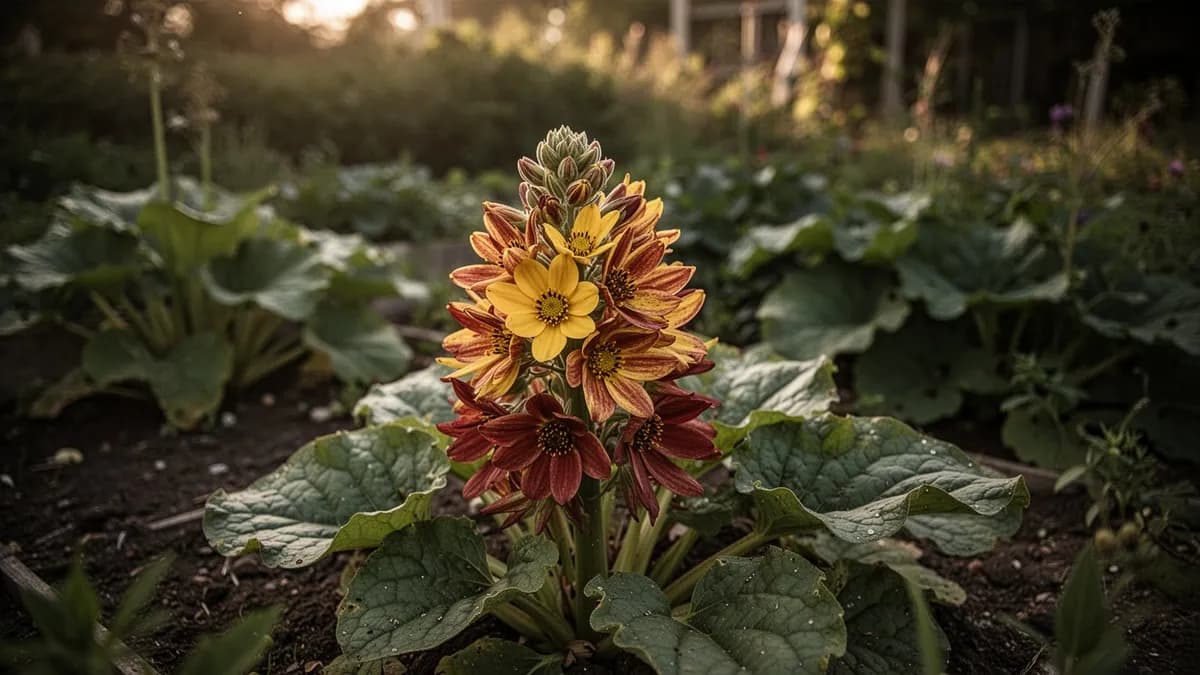
Ligularia
Ligularia dentata
At a Glance
It's planting season for Ligularia! Start planning your garden now.
A bold, moisture-loving perennial with large, rounded, dark-burgundy leaves and tall spikes of bright orange daisy flowers. Ligularia wilts dramatically in sun and heat but recovers quickly when watered, performing best in consistently moist shade. It makes a stunning architectural statement beside ponds and in rain gardens.
Planting & Harvest Calendar
Growth Stages
From Seed to Harvest
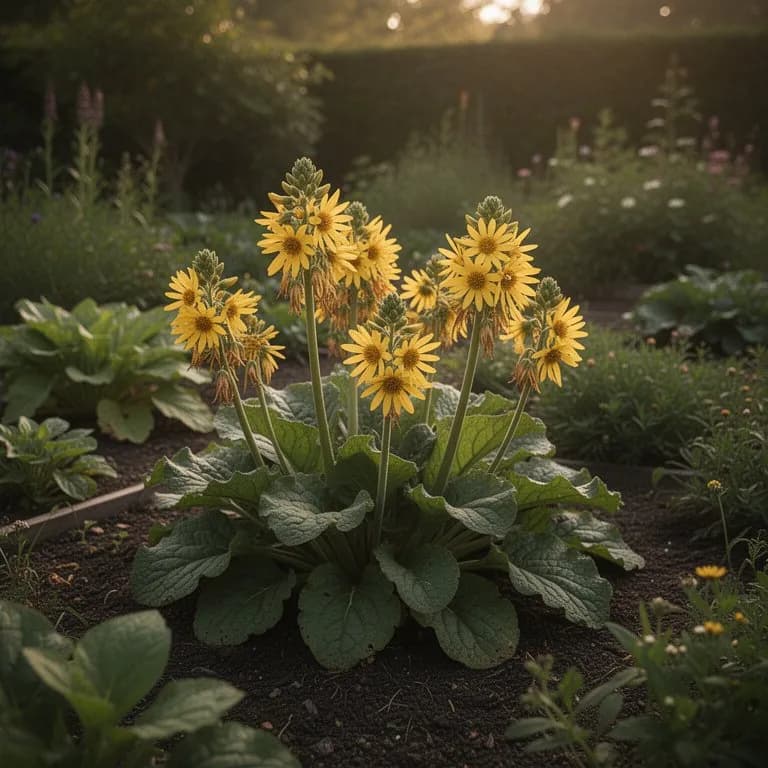
Dormancy & Early Emergence
Days 0–30
In late winter to early spring, ligularia breaks dormancy as soil temperatures rise above 5°C. Small tightly furled shoots emerge from the crown, often with a dark purplish tinge. Root activity resumes below ground as the plant draws on stored energy reserves.
💡 Care Tip
Clear away any remaining dead foliage from the previous season and apply a layer of compost or well-rotted manure around the crown to provide nutrients for the growing season ahead.
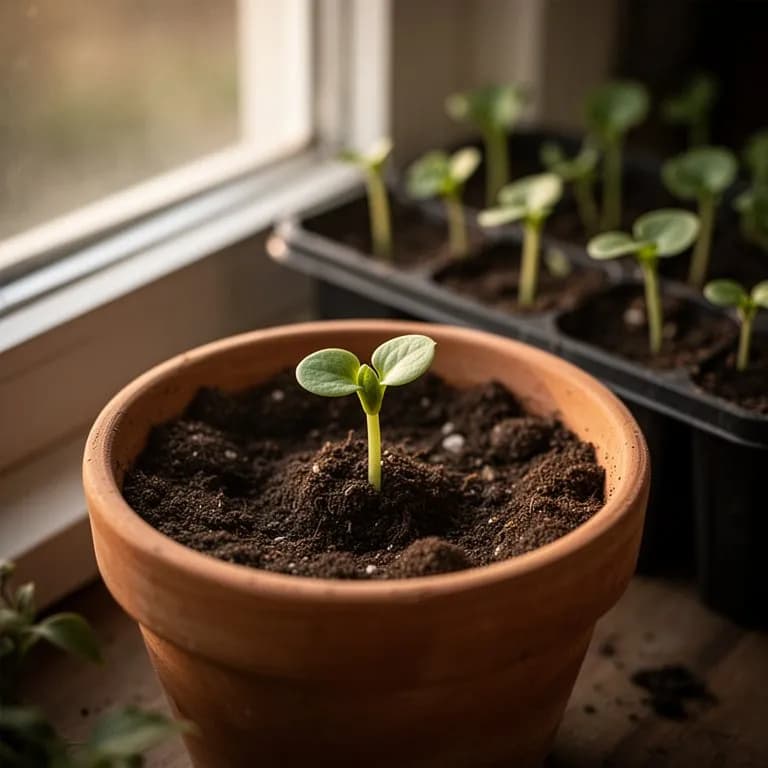
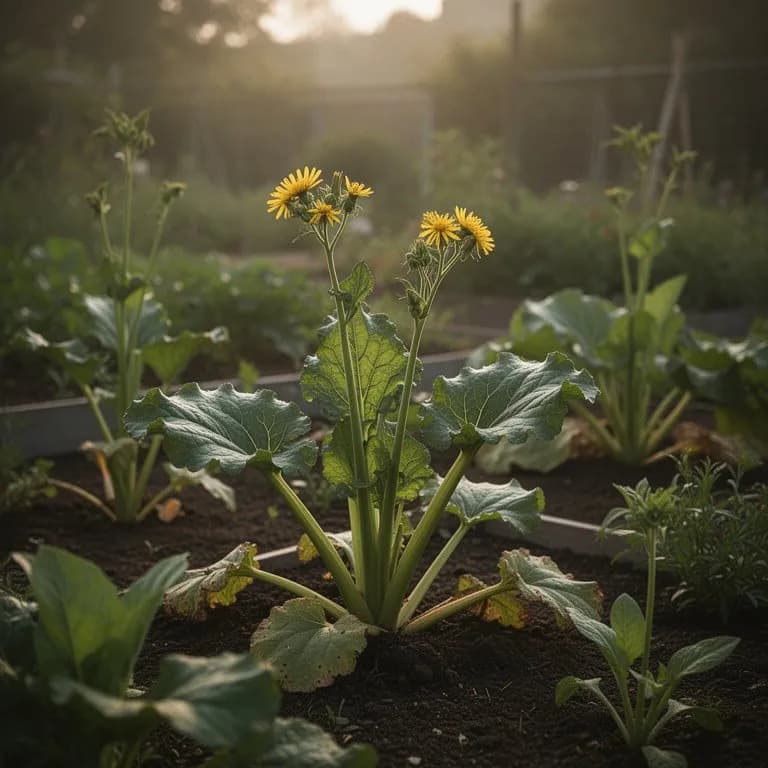
Ligularia seedlings showing their characteristic rounded leaf shape in early spring
Monthly Care Calendar
What to do each month for your Ligularia
May
You are hereMaintain consistent soil moisture as rapid leaf expansion accelerates water demand. Apply a thick organic mulch layer to conserve moisture and suppress weeds around plants. Monitor for aphid infestations on young leaves and treat with insecticidal soap if needed.
Did You Know?
Fascinating facts about Ligularia
Ligularia gets its name from the Latin word 'ligula' meaning 'little tongue,' referring to the strap-shaped ray florets of its daisy-like flowers.
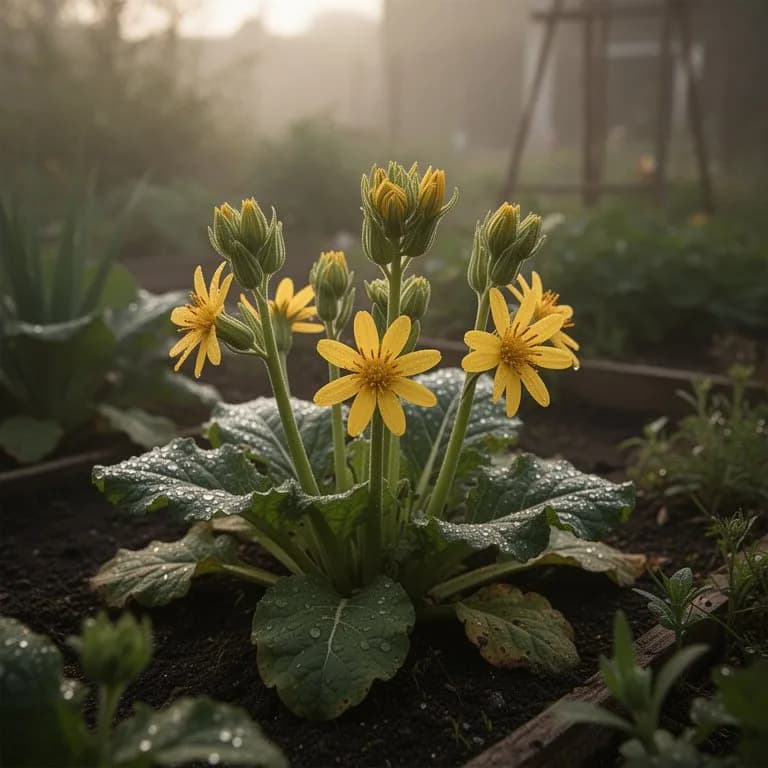
Ligularia flowers are magnets for pollinators including bees, butterflies, and hoverflies during the summer months
Ligularia is a bold, architectural shade perennial that demands rich, consistently moist soil. Plant in spring, spacing 24-30 inches apart in partial to full shade. The large, rounded or jagged-edged leaves are often dark burgundy-chocolate on the undersides, providing striking foliage interest all season.
Bright orange or yellow daisy flowers appear on tall spikes in midsummer. Ligularia wilts dramatically in direct sun and heat but recovers quickly once shade returns or it is watered. Plant in a protected spot with dappled or afternoon shade.
Ligularia excels beside ponds, streams, and in bog gardens where the soil stays consistently moist. It makes a stunning architectural statement and can reach 3-4 feet tall when flowering. Divide clumps every 4-5 years in spring to maintain vigor.
Ligularia is a genus of approximately 150 species belonging to the daisy family Asteraceae, with its center of diversity in the mountainous regions of East and Central Asia. The majority of species are native to China, with significant populations also found in Japan, Korea, Siberia, and parts of Central Asia extending westward to Europe. These plants have evolved to thrive in cool, moist habitats including stream banks, boggy meadows, damp woodland margins, and high-altitude grasslands where consistent moisture is available throughout the growing season.
The genus was first formally described by the French botanist Alexandre Henri Gabriel de Cassini in 1816, though many individual species had been documented earlier by various botanical explorers traveling through Asia. European and North American gardeners became increasingly interested in ligularia during the late 19th and early 20th centuries as plant hunters brought specimens back from expeditions to China and Japan. The bold architectural foliage and striking flower displays quickly established ligularia as a prized ornamental for shaded and waterside gardens in temperate climates.
In East Asian cultures, several ligularia species hold significance beyond ornamental use. Ligularia fischeri has been used in Korean and Chinese traditional medicine for centuries, valued for its purported anti-inflammatory and expectorant properties. In Korean cuisine, the young spring leaves of this species are a cherished wild vegetable. Japanese gardeners have cultivated various ligularia species for centuries in their traditional shade and water gardens, appreciating the plants for their naturalistic beauty and their ability to create lush ground cover in challenging damp and shaded conditions. Modern breeding programs have produced numerous cultivars with enhanced foliage color, compact growth habits, and improved garden performance, ensuring ligularia's continued popularity among shade gardeners worldwide.
The bold, dramatic foliage of a mature ligularia plant provides excellent ground cover in shaded gardens
Sow fresh seed in autumn outdoors for cold stratification. Germination occurs in spring. Division in spring is more reliable and ensures true-to-type plants for named cultivars.
Ligularia demands rich, moist to wet soil with a pH of 5.5-7.0. Amend heavily with compost. Apply balanced fertilizer in spring. Mulch generously. Cannot tolerate dry conditions.
Check Your Zone
See if Ligularia is suitable for your location.
4°C – 24°C
39°F – 75°F
Ligularia performs best in cool to moderate temperatures and struggles in prolonged heat. Ideal growing conditions range from 10°C to 24°C during the active season. Plants are hardy to USDA zones 4 through 8, tolerating winter lows down to approximately minus 34°C when dormant. Temperatures consistently above 27°C, especially combined with direct sun or low humidity, cause significant leaf wilting and stress. Providing afternoon shade and consistent moisture helps mitigate heat damage in warmer climates.
Common issues affecting Ligularia and how to prevent and treat them organically.
Wilting in heat and sun is normal—plants recover. But repeated stress weakens over time, so site in shade. Slugs are the primary pest on the large, succulent leaves. Crown rot occurs in truly stagnant, oxygen-depleted waterlogging.
Ligularia pairs with bold-leaved shade plants: hostas, rodgersias, and astilbes. Plant near water features for a tropical effect. Combine with ferns and Japanese maples for lush shade borders. Orange flowers contrast beautifully with blue hostas.
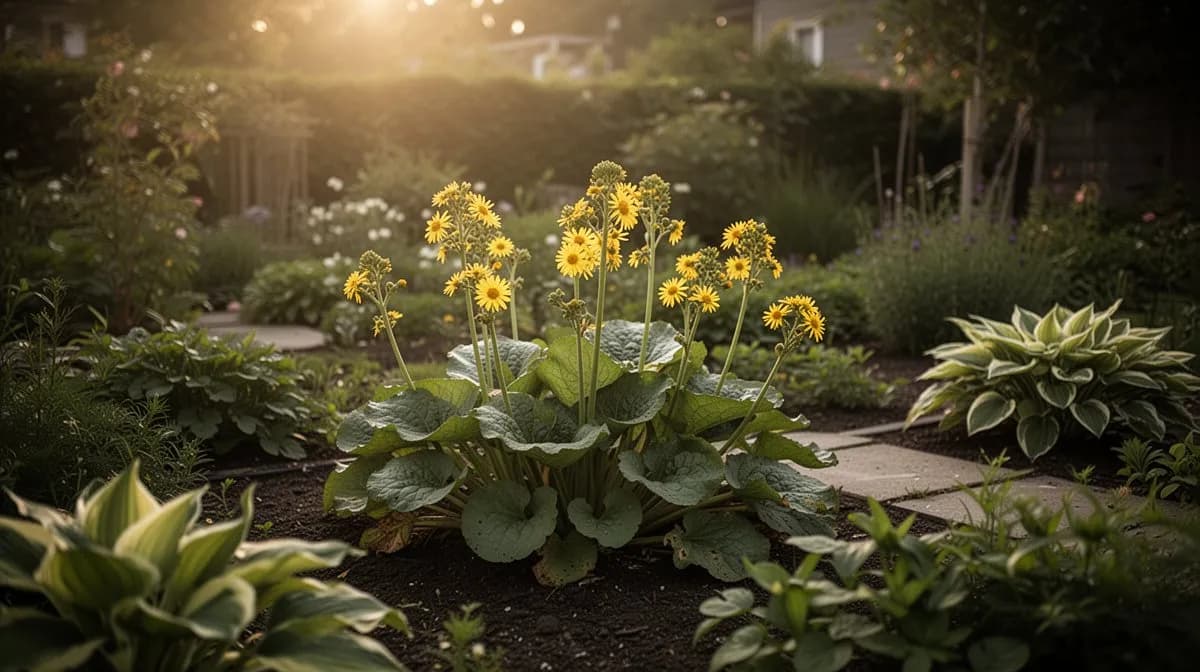
Ligularia thrives in shaded borders alongside companion plants like hostas, astilbe, and ferns
- 1Plant ligularia in partial to full shade with consistent moisture. These plants are not suited to hot, dry, or sunny positions and will wilt persistently if exposed to afternoon sun.
- 2Amend the planting area generously with compost, leaf mold, or well-rotted manure to create the humus-rich moisture-retentive soil that ligularia demands.
- 3Water deeply and regularly throughout the growing season. Ligularia has large leaves with high transpiration rates and will show dramatic wilting if the soil dries out even briefly.
- 4Apply a thick mulch layer of 7 to 10 cm around plants each spring to conserve soil moisture, moderate root zone temperatures, and suppress competing weeds.
- 5Protect young foliage from slugs and snails which are strongly attracted to the tender emerging leaves in spring. Use organic slug pellets, copper tape, or beer traps around vulnerable plants.
- 6Divide established clumps in early spring just as new growth appears, or in early autumn while the soil is still warm. Replant divisions immediately and water thoroughly.
- 7Choose the right species for your garden style. Ligularia stenocephala 'The Rocket' produces tall narrow flower spikes, while Ligularia dentata types offer broader clusters of daisy-like blooms.
- 8Site plants near water features such as ponds, streams, or bog gardens where naturally higher humidity and soil moisture create ideal growing conditions.
- 9Stake tall-growing varieties in exposed or windy positions to prevent flower stalks from snapping. Insert supports early in the season before the stalks reach full height.
- 10Remove spent flower stalks promptly after blooming to maintain a tidy appearance and prevent unwanted self-seeding, which can occur readily in ideal growing conditions.
The bold leaves and tall flower spikes make dramatic additions to large-scale arrangements. Cut flower spikes when the lowest flowers have opened. Individual leaves serve as statement foliage. Both last 5-7 days in water.
Ligularia is fully hardy. Cut back after frost. Mulch over the crown for winter protection. Divide in spring every 3-4 years.
Plan your garden with ease
Love growing Ligularia? Use our free garden planner to design your beds, track planting dates, and get personalized care reminders.
Nutritional Info
Per 100g serving
32
Calories
Health Benefits
- Young leaves of Ligularia fischeri are consumed as a traditional vegetable in Korean and Japanese cuisine.
- Contains notable levels of beta-carotene and other carotenoid pigments contributing to its vitamin A content.
- Provides moderate dietary fiber supporting digestive health when consumed as a cooked green vegetable.
- Rich in polyphenolic compounds with documented antioxidant properties in laboratory studies.
- Traditionally blanched or steamed before eating to reduce bitterness and improve palatability.
- Not all ligularia species are suitable for consumption and positive identification is essential before foraging.
💰 Why Grow Your Own?
Ligularia is a long-lived perennial that, once established, requires minimal ongoing expense. A single purchased plant can be divided every three to four years to produce multiple new plants at no additional cost. In Korean communities, foraging the edible leaves of Ligularia fischeri provides a free seasonal vegetable. As an ornamental, ligularia eliminates the need for annual bedding plant purchases in shaded garden areas, providing reliable bold foliage and flowers year after year with only basic mulch and water inputs.
Quick Recipes
Simple recipes using fresh Ligularia
Korean Gomchwi Ssam (Ligularia Leaf Wraps)
25 minutesA traditional Korean dish where blanched ligularia leaves are seasoned with a savory soy-based sauce and used as wraps for steamed rice and grilled meat. The slightly bitter, earthy flavor of the leaves pairs beautifully with the umami of the dipping sauce.
Stir-Fried Ligularia Stems with Garlic
20 minutesTender young ligularia stems are peeled and stir-fried with garlic, soy sauce, and a touch of sugar for a simple side dish popular in Korean home cooking. The stems have a pleasant crunchy texture and mild earthy flavor that complements grilled meats and rice.
Ligularia Leaf Jangajji (Soy-Pickled Leaves)
30 minutes plus 3 days fermentationA Korean preserved side dish where ligularia leaves are layered and steeped in a seasoned soy brine. The fermentation process mellows the bitterness and creates a deeply savory, slightly tangy condiment that keeps for weeks in the refrigerator.
Yield & Spacing Calculator
See how many Ligularia plants fit in your garden bed based on the recommended 60cm spacing.
4
Ligularia plants in a 4×4 ft bed
2 columns × 2 rows at 60cm spacing
Popular Varieties
Some of the most popular ligularia varieties for home gardeners, each with unique characteristics.
Ligularia dentata 'Britt-Marie Crawford'
Near-black leaves with dark purple undersides. The darkest foliage of any ligularia. Orange daisy flowers.
Ligularia stenocephala 'The Rocket'
Tall, narrow yellow flower spikes on dark stems above jagged-toothed leaves. Very architectural.
Ligularia dentata 'Desdemona'
Classic dark bronze-green leaves with bright orange flowers. Robust and reliable.
When should I plant Ligularia?
Plant Ligularia in March, April, May. It takes approximately 365 days to reach maturity, with harvest typically in July, August.
What are good companion plants for Ligularia?
Ligularia grows well alongside Astilbe, Hosta, Turtlehead. Companion planting can improve growth, flavor, and natural pest control.
What hardiness zones can Ligularia grow in?
Ligularia thrives in USDA hardiness zones 4 through 8. With greenhouse protection, it may be grown in zones 2 through 9.
How much sun does Ligularia need?
Ligularia requires Partial Sun (3-6h). This means 3-6 hours of sunlight, ideally morning sun with afternoon shade.
How far apart should I space Ligularia?
Space Ligularia plants 60cm (24 inches) apart for optimal growth and air circulation.
What pests and diseases affect Ligularia?
Common issues include Slugs and Snails, Crown Rot. Prevention through good garden practices like crop rotation, proper spacing, and companion planting is the best approach. See the detailed pests and diseases section above for symptoms, prevention, and treatment for each.
How do I store Ligularia after harvest?
Ligularia is fully hardy. Cut back after frost. Mulch over the crown for winter protection. Divide in spring every 3-4 years.
What are the best Ligularia varieties to grow?
Popular varieties include Ligularia dentata 'Britt-Marie Crawford', Ligularia stenocephala 'The Rocket', Ligularia dentata 'Desdemona'. Each has unique characteristics suited to different growing conditions and culinary preferences. See the varieties section above for detailed descriptions.
What soil does Ligularia need?
Ligularia demands rich, moist to wet soil with a pH of 5.5-7.0. Amend heavily with compost. Apply balanced fertilizer in spring. Mulch generously. Cannot tolerate dry conditions.
Why do my ligularia leaves wilt every afternoon even though the soil is moist?
This is normal behavior for ligularia and does not necessarily indicate a problem. On warm days, the large leaves lose water through transpiration faster than the roots can absorb it, causing temporary wilting. The leaves typically recover fully by evening as temperatures cool. To minimize this, ensure plants are sited in shade, especially afternoon shade, and maintain consistent deep soil moisture with mulch.
Can ligularia grow in full sun?
Ligularia strongly prefers partial to full shade and generally performs poorly in full sun, especially in warmer climates. Consistent direct sunlight causes severe leaf scorch, persistent wilting, and stunted growth. In cooler northern regions with reliable rainfall, some varieties can tolerate morning sun if the soil remains consistently moist. However, afternoon shade is essential in nearly all growing conditions.
How do I propagate ligularia?
Division is the easiest and most reliable propagation method. In early spring as new shoots emerge, lift the entire clump with a garden fork, separate it into sections each containing at least two or three growth points, and replant the divisions immediately in prepared soil. Water thoroughly after planting. Ligularia can also be grown from fresh seed sown on the surface of moist compost in autumn or early spring, though seed-grown plants take two to three years to reach flowering size.
Is ligularia toxic to pets or children?
Ligularia is not generally considered highly toxic, but it is not recommended for casual consumption by pets or children. Some species contain pyrrolizidine alkaloids which can be harmful to the liver if ingested in significant quantities over time. The edible species Ligularia fischeri is traditionally eaten in Korean cuisine after proper preparation including blanching, but other species should not be consumed. Keep plants out of reach of curious pets and children as a precaution.
What are the best companion plants for ligularia?
Ligularia pairs beautifully with other moisture-loving shade perennials. Excellent companions include hostas, astilbe, Japanese primrose, rodgersia, ferns such as osmunda and matteuccia, brunnera, and iris ensata. For a naturalistic waterside planting, combine ligularia with marsh marigold, trollius, and ornamental grasses like hakonechloa. These companions share similar cultural requirements and create visually harmonious combinations of contrasting leaf textures and forms.
How often should I divide ligularia plants?
Established ligularia clumps benefit from division every three to four years. Over time, the center of the clump can become woody and less productive while the outer portions remain vigorous. Dividing rejuvenates the plant, improves flowering, and provides new plants for other garden areas or to share. The best time to divide is in early spring as new growth begins, or in early autumn at least six weeks before the first expected frost to allow roots to establish.
Ready to Grow Ligularia?
Add Ligularia to your garden plan and start designing your perfect layout.

Vladimir Kusnezow
Gardener and Software Developer
Zone 6b gardener. Growing vegetables and fruits in soil and hydroponics for 6 years. I built PlotMyGarden to plan my own gardens.
Jump to Section