Honey Locust
Gleditsia triacanthos
At a Glance
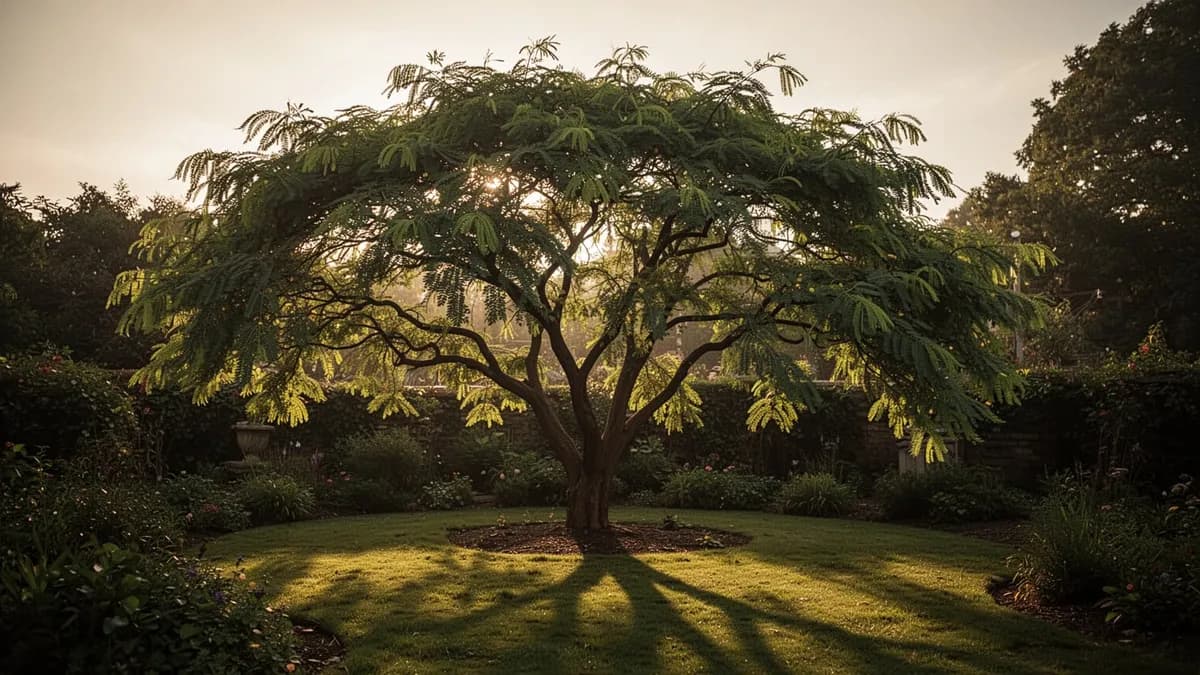
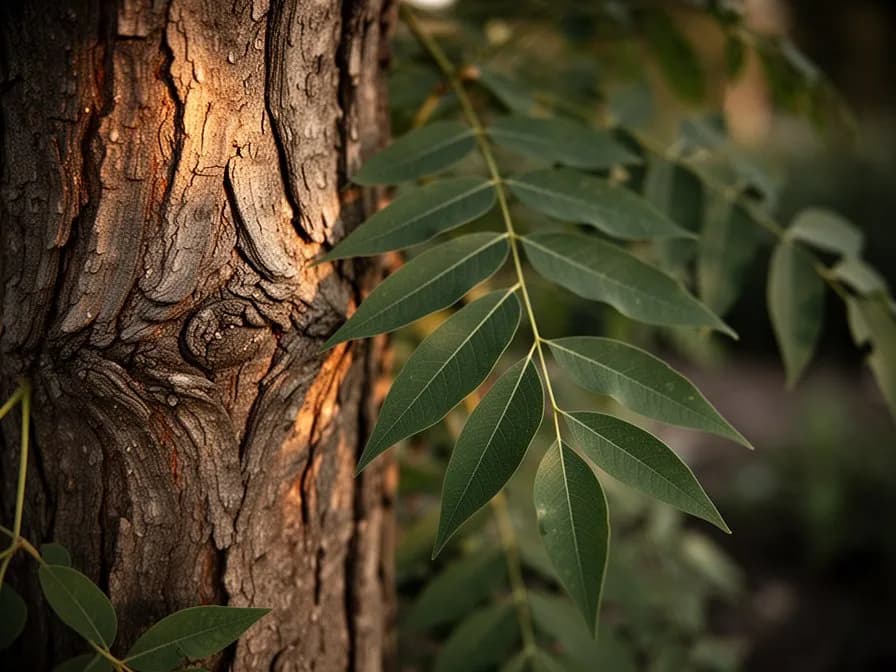
A graceful shade tree with fine, feathery compound leaves that cast light, dappled shade allowing grass and flowers to grow beneath the canopy. Thornless and podless cultivars have made honey locusts popular street and lawn trees, eliminating the dangerous thorns and messy seed pods of wild trees. They are extremely tolerant of drought, salt, alkaline soil, and urban conditions. The small leaflets decompose quickly in autumn and rarely require raking, unlike most other shade trees.
Planting & Harvest Calendar
Growth Stages
From Seed to Harvest
Seed Germination
Days 0–21
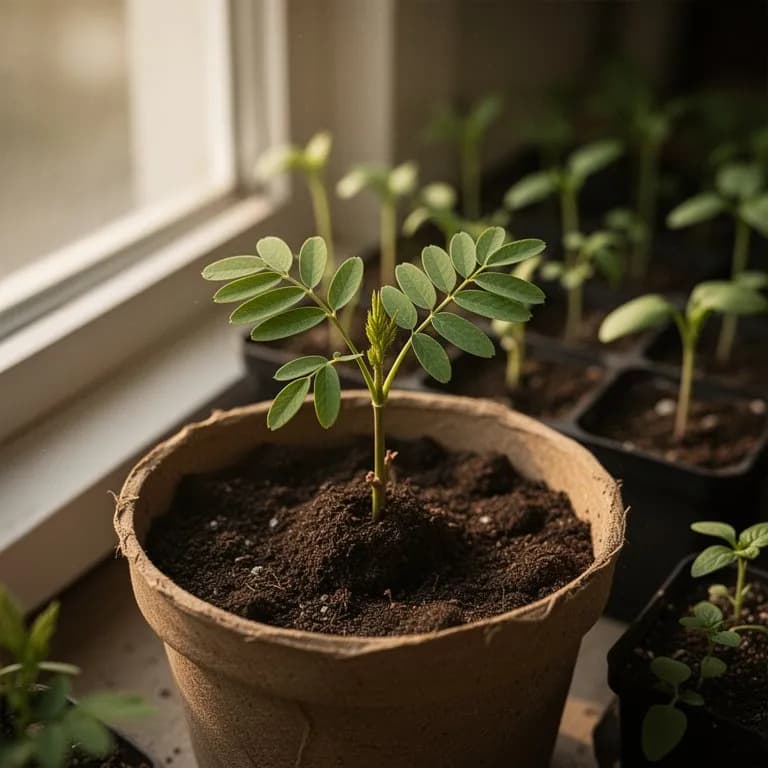
Honey locust seeds have an extremely hard seed coat that requires scarification before germination. Seeds can be nicked with a file or soaked in hot water for 24 hours to break dormancy. Once treated, germination typically occurs within 7 to 21 days in warm, moist soil.
💡 Care Tip
Scarify seeds by soaking in near-boiling water and letting them cool overnight, or nick the seed coat with a metal file. Plant seeds about 1 inch deep in well-draining soil.
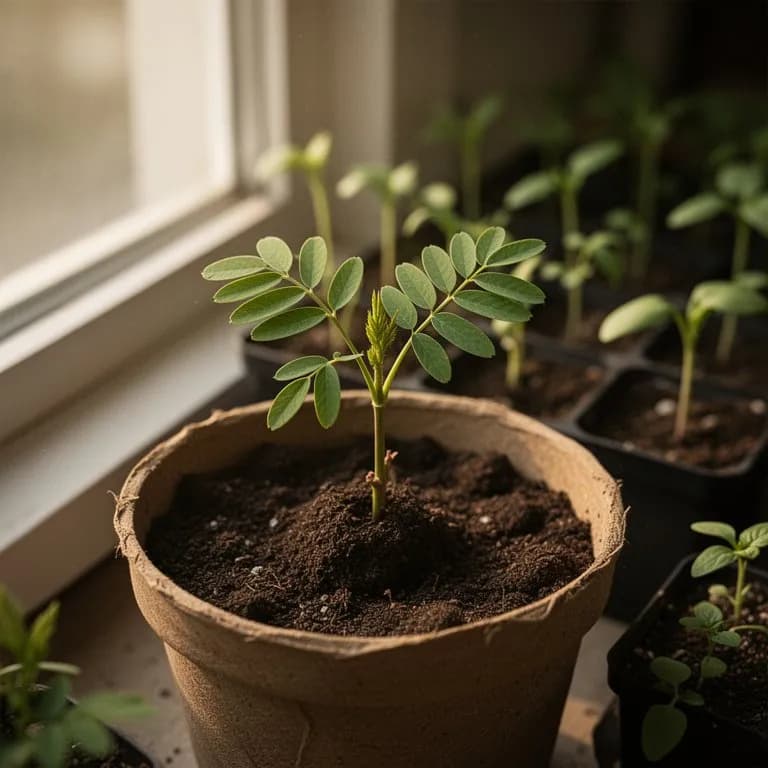
A honey locust seedling displaying its characteristic bipinnately compound foliage in early spring.
Monthly Care Calendar
What to do each month for your Honey Locust
May
You are hereObserve flowering on mature trees to identify female specimens for pod production. Fertilize young trees with a balanced slow-release fertilizer
Did You Know?
Fascinating facts about Honey Locust
The sweet pulp inside honey locust pods contains up to 30 percent sugar and was a significant food source for Native American peoples, who ate the pulp raw, made it into beverages, and used it as a sweetener long before European contact.
Plant honey locusts in full sun in almost any soil type, including heavy clay, sandy, alkaline, and compacted urban soils. Their exceptional adaptability makes them ideal for challenging sites. Space trees 30 to 40 feet apart for shade planting. Always select thornless, podless cultivars such as Shademaster or Sunburst for landscape use, as wild-type trees have dangerous thorns and produce messy seed pods.
Water newly planted trees deeply once a week during the first growing season. Honey locusts are among the most drought-tolerant shade trees once established and rarely need supplemental irrigation. Apply a 2 to 3 inch layer of organic mulch over the root zone. The fine compound leaves cast light, dappled shade that allows turf grass and perennials to grow beneath the canopy.
Prune in late winter to maintain a strong central leader and remove any crossing or dead branches. Honey locusts develop a naturally open, spreading crown that requires relatively little corrective pruning. Watch for webworm and mimosa webworm damage in summer. The tiny leaflets break down rapidly in autumn and rarely require raking, which is a significant advantage over most shade trees.
The honey locust (Gleditsia triacanthos) is native to the central United States, with its natural range stretching from Pennsylvania westward to Nebraska and southward to Texas and Mississippi. It thrives along river bottoms, floodplains, and woodland edges throughout the Mississippi and Ohio River valleys, where it grows alongside oaks, hickories, and other hardwoods in rich alluvial soils. The species was first formally described by Carl Linnaeus in 1753, with the genus name honoring Johann Heinrich Gleditsch, a German botanist and contemporary of Linnaeus. The specific epithet triacanthos means 'three-thorned,' referring to the frequently three-branched thorns found on the trunk and older branches of wild specimens. Native American peoples across its range made extensive use of the tree. The Cherokee, Creek, and other southeastern nations consumed the sweet pod pulp as a food, brewed it into a beverage, and used bark preparations medicinally. Early European settlers quickly recognized the tree's value, using its durable wood for fence posts and its pods as livestock fodder. The pods contain a sweet, honey-like pulp with up to 30 percent sugar content, which gives the tree its common name. By the nineteenth century, honey locust had been widely planted beyond its natural range as a living fence due to its impenetrable thorns. The development of thornless and podless cultivars in the mid-twentieth century transformed it into one of the most popular urban street and shade trees in North America. Its fine-textured foliage casts a light, dappled shade that allows turfgrass to grow beneath it, and its tolerance of pollution, salt, compacted soil, and drought make it ideally suited to challenging urban environments.
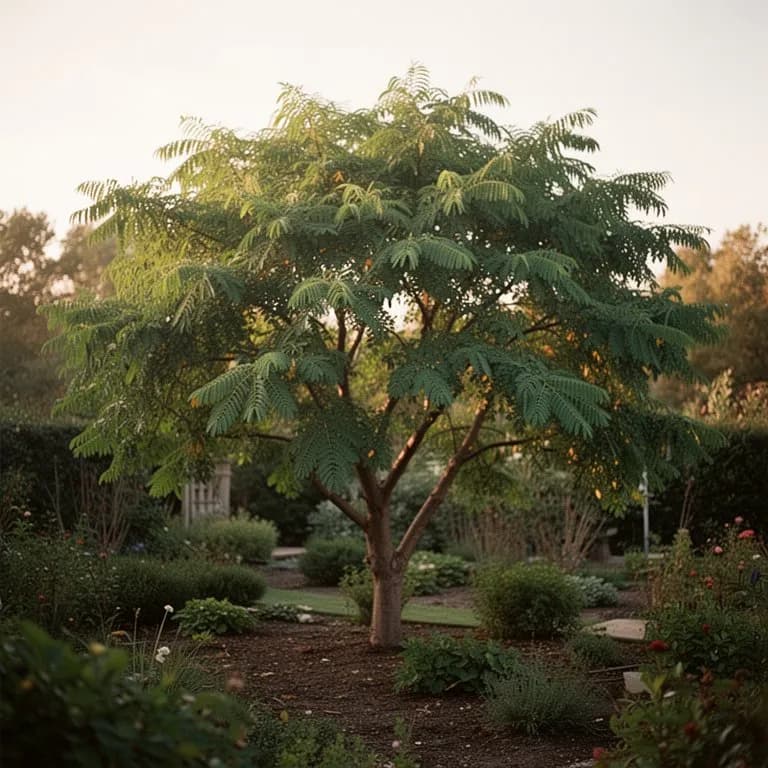
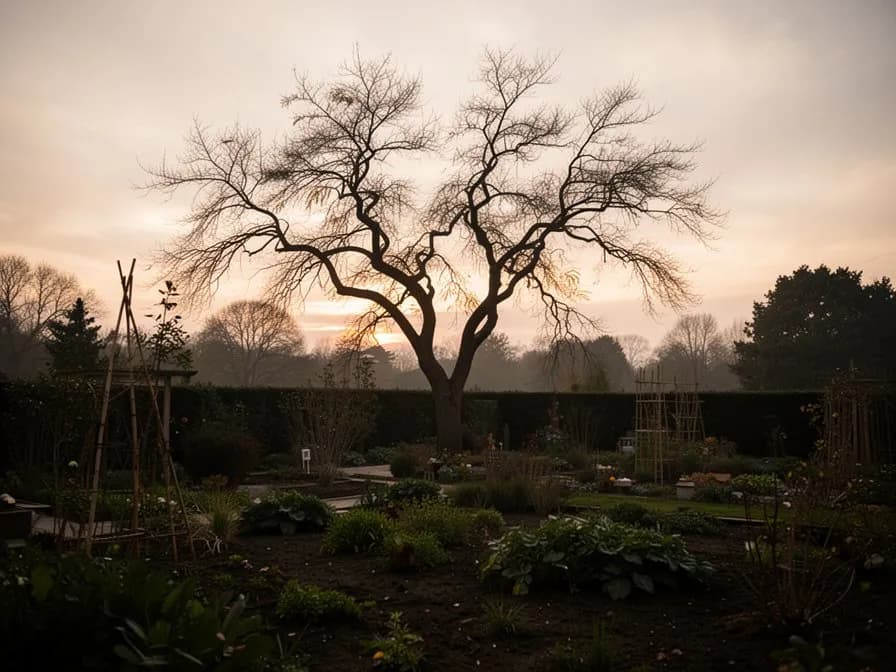
A fully grown honey locust tree providing dappled shade with its fine, feathery leaf canopy.
Honey locust seeds have an extremely hard coat that must be scarified before germination. Nick the seed coat with a file or soak seeds in concentrated sulfuric acid for 30 minutes, then rinse thoroughly. Alternatively, pour boiling water over seeds and allow them to soak for 24 hours. Sow scarified seeds in moist potting mix at 70 to 80 degrees Fahrenheit, where they germinate in 7 to 21 days. Named cultivars must be grafted onto seedling rootstock, as they do not come true from seed.
Honey locusts thrive in an extraordinarily wide range of soils, from heavy clay to sand, and tolerate pH levels from 5.0 to 8.5. They are one of the few shade trees that perform well in strongly alkaline and saline soils. Young trees benefit from a balanced 10-10-10 fertilizer applied in early spring. Mature trees rarely need supplemental fertilization due to their nitrogen-fixing root nodules that improve soil fertility. Avoid over-fertilizing, which promotes succulent growth susceptible to frost and pest damage.
Check Your Zone
See if Honey Locust is suitable for your location.
-33°C – 40°C
-27°F – 104°F
Honey locust is remarkably cold hardy, surviving winter temperatures as low as -33°C (-28°F) in USDA zones 3 through 9. It is equally heat tolerant, thriving in summer temperatures exceeding 40°C (104°F). The tree performs best with warm summers and cold winters, and it tolerates a wide range of humidity levels. Once established, it is one of the most temperature-resilient deciduous trees available for landscaping.
Common issues affecting Honey Locust and how to prevent and treat them organically.
Mimosa webworm is the most significant pest, creating unsightly webs throughout the canopy in summer. Honeylocust plant bugs can cause distorted spring growth that may alarm homeowners, though trees typically recover. The fine leaflets can clog gutters despite their small size. Wild-type trees with thorns pose a serious hazard in landscapes and should never be planted near foot traffic. Surface roots may develop in shallow or compacted soils. Some cultivars are prone to included bark in branch crotches that weakens the structure.
Honey locusts are one of the best shade trees for companion planting because their fine, compound foliage casts light, filtered shade that allows turf grass, perennials, and even vegetables to grow beneath them. The tiny leaflets decompose rapidly, adding nitrogen-rich organic matter to the soil. Plant sun-loving perennials like coneflowers, black-eyed Susans, and ornamental grasses under the open canopy. Spring bulbs including tulips, daffodils, and crocuses thrive in the dappled light. Avoid moisture-sensitive plants directly over surface roots.
- 1Select thornless cultivars such as 'Shademaster', 'Skyline', or 'Sunburst' for residential landscapes to avoid the dangerous branched thorns found on wild species specimens.
- 2Plant in full sun for the best growth and pod production; honey locust tolerates partial shade but becomes leggy and produces fewer pods with less sunlight.
- 3The tree adapts to virtually any soil type, from heavy clay to sandy loam, and tolerates both acidic and alkaline conditions with a pH range of 4.5 to 8.2, making site preparation minimal.
- 4Water newly planted trees deeply once per week during the first two growing seasons to establish a strong root system, then discontinue regular watering as the tree is exceptionally drought tolerant once established.
- 5If growing for pod production, ensure you plant a female tree or a seedling-grown tree rather than a grafted podless cultivar; nurseries can help identify pod-bearing selections.
- 6Space trees at least 30 to 40 feet from structures, driveways, and other trees to accommodate the eventual 60 to 80 foot height and 40 to 50 foot canopy spread.
- 7Apply mulch in a wide ring around young trees, extending at least 3 feet from the trunk, but never pile mulch against the bark as this promotes rot and pest harboring.
- 8Prune in late winter or early spring while the tree is still dormant to shape the canopy and remove deadwood; avoid heavy pruning in summer as it can stress the tree and attract boring insects.
- 9Collect fallen pods promptly in autumn if you want to prevent self-seeding, as honey locust can spread aggressively in favorable conditions when pods are left on the ground.
- 10Monitor for mimosa webworm, the most common pest of honey locust, which creates silken tents in the canopy during summer; remove tents by hand or treat with Bacillus thuringiensis if infestations are severe.
Honey locusts are primarily grown as ornamental shade trees, and thornless podless cultivars produce no harvestable material. Wild-type honey locust trees produce long, twisted brown pods in autumn that contain a sweet pulp historically used as animal feed and occasionally as a human food source. Pods should be collected after they fall from the tree in late autumn. The pulp has a sweet, honey-like flavor that can be extracted by soaking pods in water.
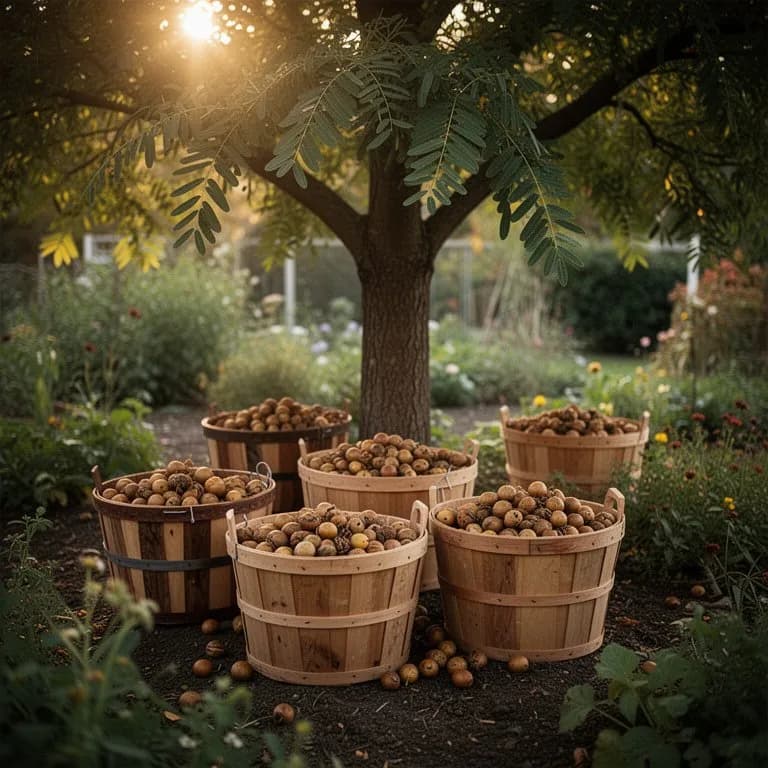
Clusters of dark brown, twisted pods ripening on the branch in late autumn.
Seed pods from wild-type honey locusts can be stored in burlap sacks in a dry, cool location for several months. The sweet pulp can be separated from the seeds and dried or processed into a syrup by boiling the pods in water and straining. Dried pods keep for over a year in airtight containers. The extremely hard, durable wood is prized for fence posts and outdoor construction due to its natural rot resistance. Seeds remain viable for years when stored dry and cool.
Plan your garden with ease
Love growing Honey Locust? Use our free garden planner to design your beds, track planting dates, and get personalized care reminders.
Nutritional Info
Per 100g serving
356
Calories
Health Benefits
- Pod pulp contains up to 30 percent natural sugars, primarily sucrose and fructose, providing a significant energy source
- Rich in dietary fiber at approximately 8 grams per 100 grams of pulp, supporting digestive health
- Contains notable amounts of potassium, calcium, and iron, contributing to mineral intake
- The seeds contain approximately 14 percent protein, though they require processing to be edible
- Pod pulp has been traditionally used as a natural sweetener and fermented into a nutritious beverage
- Low in fat with less than 1 gram per 100 grams of pod pulp
💰 Why Grow Your Own?
A single mature honey locust tree can produce 50 to 100 pounds of pods annually, providing a free source of natural sweetener, flour substitute, and livestock feed. The pods can replace purchased sweeteners and animal feed supplements, while the tree itself eliminates the need for expensive shade structures. Honey locust's nitrogen-independent growth means it requires no fertilizer once established, and its drought tolerance drastically reduces irrigation costs. The durable wood from pruning provides excellent firewood, further reducing household expenses.
The sweet, honey-flavored pulp inside the pods has been used as a food source for centuries.
Quick Recipes
Simple recipes using fresh Honey Locust
Honey Locust Pod Pulp Syrup
45 minutes plus overnight soakingA rich, dark syrup made by extracting the sweet pulp from ripe honey locust pods. This traditional preparation captures the tree's namesake honey-like sweetness and can be used as a pancake syrup, sweetener for beverages, or drizzled over desserts.
Honey Locust Pod Flour Bread
2 hours including rising timeA mildly sweet, earthy bread incorporating dried and ground honey locust pod pulp as a partial flour substitute. The pod flour adds natural sweetness and a subtle caramel-like flavor reminiscent of carob, reducing the need for added sugar.
Fermented Honey Locust Pod Beverage
20 minutes active plus 3 to 5 days fermentationA traditional naturally fermented drink made from honey locust pods, similar to beverages produced by Native American peoples for centuries. The high sugar content of the pods ferments naturally, creating a mildly effervescent, slightly sweet and tangy drink.
Yield & Spacing Calculator
See how many Honey Locust plants fit in your garden bed based on the recommended 900cm spacing.
0
Honey Locust plants in a 4×4 ft bed
0 columns × 0 rows at 900cm spacing
Popular Varieties
Some of the most popular honey locust varieties for home gardeners, each with unique characteristics.
Shademaster
The most popular cultivar with a strong central leader, upright spreading form, and excellent dark green foliage. Thornless and podless, reaching 45 to 50 feet with a broad canopy.
Sunburst
New growth emerges bright golden-yellow, maturing to green, creating a striking bicolor effect throughout the growing season. Thornless and podless, slightly smaller at 30 to 40 feet.
Skyline
A broadly pyramidal form with a strong central leader and ascending branches. Excellent golden-yellow fall color and good resistance to webworm. Reaches 45 feet tall.
Imperial
A compact selection with a rounded, spreading crown and fine-textured foliage. Ideal for smaller landscapes where a full-sized honey locust would be too large. Reaches 30 to 35 feet.
When should I plant Honey Locust?
Plant Honey Locust in March, April, October, November. It takes approximately 2555 days to reach maturity, with harvest typically in .
What are good companion plants for Honey Locust?
Honey Locust grows well alongside Daffodil, Tulip, Pansy. Companion planting can improve growth, flavor, and natural pest control.
What hardiness zones can Honey Locust grow in?
Honey Locust thrives in USDA hardiness zones 3 through 9. With greenhouse protection, it may be grown in zones 1 through 10.
How much sun does Honey Locust need?
Honey Locust requires Full Sun (6-8h+). This means at least 6-8 hours of direct sunlight daily.
How far apart should I space Honey Locust?
Space Honey Locust plants 900cm (354 inches) apart for optimal growth and air circulation.
What pests and diseases affect Honey Locust?
Common issues include Mimosa Webworm, Honeylocust Plant Bug, Canker Disease. Prevention through good garden practices like crop rotation, proper spacing, and companion planting is the best approach. See the detailed pests and diseases section above for symptoms, prevention, and treatment for each.
How do I store Honey Locust after harvest?
Seed pods from wild-type honey locusts can be stored in burlap sacks in a dry, cool location for several months. The sweet pulp can be separated from the seeds and dried or processed into a syrup by boiling the pods in water and straining. Dried pods keep for over a year in airtight containers. The ...
What are the best Honey Locust varieties to grow?
Popular varieties include Shademaster, Sunburst, Skyline, Imperial. Each has unique characteristics suited to different growing conditions and culinary preferences. See the varieties section above for detailed descriptions.
What soil does Honey Locust need?
Honey locusts thrive in an extraordinarily wide range of soils, from heavy clay to sand, and tolerate pH levels from 5.0 to 8.5. They are one of the few shade trees that perform well in strongly alkaline and saline soils. Young trees benefit from a balanced 10-10-10 fertilizer applied in early sprin...
Are honey locust pods actually edible for humans?
Yes, the pulp inside ripe honey locust pods is edible and has a sweet, honey-like flavor with notes of caramel. Native American peoples consumed it for centuries as a food source. The pulp can be eaten raw from fresh pods, dried and ground into flour, brewed into beverages, or cooked down into syrup. However, only the pulp is palatable; the hard seeds require extensive processing and are generally not consumed directly by humans, though they are high in protein.
What is the difference between honey locust and black locust?
Honey locust (Gleditsia triacanthos) and black locust (Robinia pseudoacacia) are both members of the legume family but are quite different trees. Honey locust has bipinnately compound leaves, long twisted pods with sweet edible pulp, and branched thorns. Black locust has once-compound leaves, short flat pods without sweet pulp, paired thorns at leaf bases, and showy white fragrant flowers. Importantly, black locust contains toxic compounds in its bark, leaves, and seeds, while honey locust pod pulp is safely edible. Black locust fixes nitrogen; honey locust does not.
Do I need to worry about the thorns on honey locust trees?
Wild or seedling-grown honey locust trees produce large branched thorns that can be 3 to 8 inches long and are genuinely dangerous. However, nearly all honey locusts sold by nurseries for landscape use are thornless cultivars bred specifically to eliminate this hazard. Popular thornless varieties include 'Shademaster', 'Sunburst', 'Skyline', and 'Imperial'. If you purchase a named cultivar from a reputable nursery, thorns will not be a concern. Avoid planting seedling-grown trees in areas where children or pets play.
How fast does a honey locust tree grow?
Honey locust is classified as a fast-growing tree, typically adding 13 to 24 inches of height per year under favorable conditions. Young trees in good soil with adequate moisture can grow even faster, sometimes exceeding 2 feet per year. A newly planted tree can reach 30 feet in 10 to 15 years. The growth rate slows as the tree approaches its mature height of 60 to 80 feet. This rapid growth rate, combined with its tolerance of poor conditions, makes it one of the quickest shade trees to establish.
Will a honey locust tree damage my lawn or garden?
Honey locust is actually one of the best large shade trees for maintaining a healthy lawn beneath it. Its finely textured, bipinnately compound leaves cast a light, dappled shade that allows enough sunlight to penetrate for turfgrass and understory plants to thrive. The small leaflets decompose quickly in autumn and often do not require raking. However, pod-bearing trees drop large quantities of pods in fall that should be collected, and the tree can self-seed prolifically if pods are left on the ground.
Can honey locust pods be used as animal feed?
Yes, honey locust pods are an excellent and historically important livestock feed. Cattle, horses, goats, sheep, pigs, and chickens all readily consume the sweet pods. The pods contain approximately 30 percent sugar and 10 to 14 percent protein in the seeds, making them a nutritious supplement. Pods can be fed whole, crushed, or ground into meal. Many permaculture practitioners plant honey locust specifically as a dual-purpose tree that provides both shade and a free, annually renewable feed source for livestock.
Ready to Grow Honey Locust?
Add Honey Locust to your garden plan and start designing your perfect layout.

Vladimir Kusnezow
Gardener and Software Developer
Zone 6b gardener. Growing vegetables and fruits in soil and hydroponics for 6 years. I built PlotMyGarden to plan my own gardens.
Jump to Section