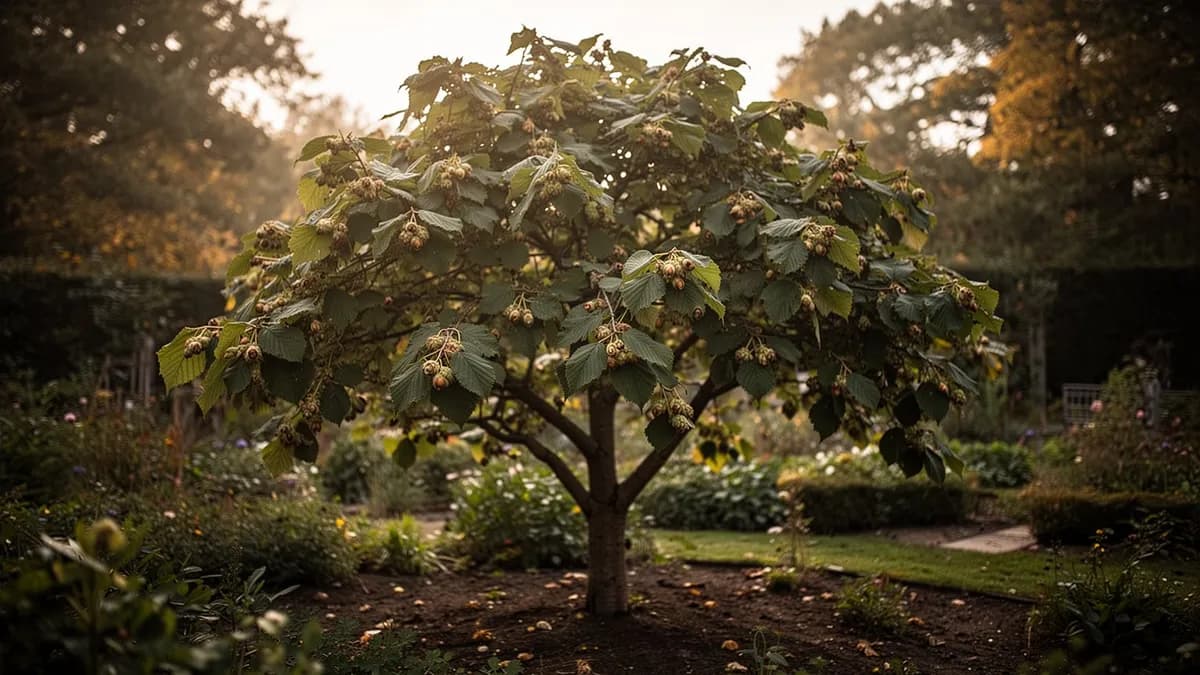
Hazelnut Tree
Corylus avellana
At a Glance
A multi-stemmed shrubby tree that produces delicious nuts in attractive husked clusters in late summer and autumn. Hazelnuts are wind-pollinated and need a compatible pollinator variety nearby, so plant at least two different cultivars. They thrive in moderate climates and tolerate partial shade better than most nut trees. Eastern filbert blight is the primary concern for growers east of the Rockies, so choose resistant varieties when available.
Planting & Harvest Calendar
Growth Stages
From Seed to Harvest
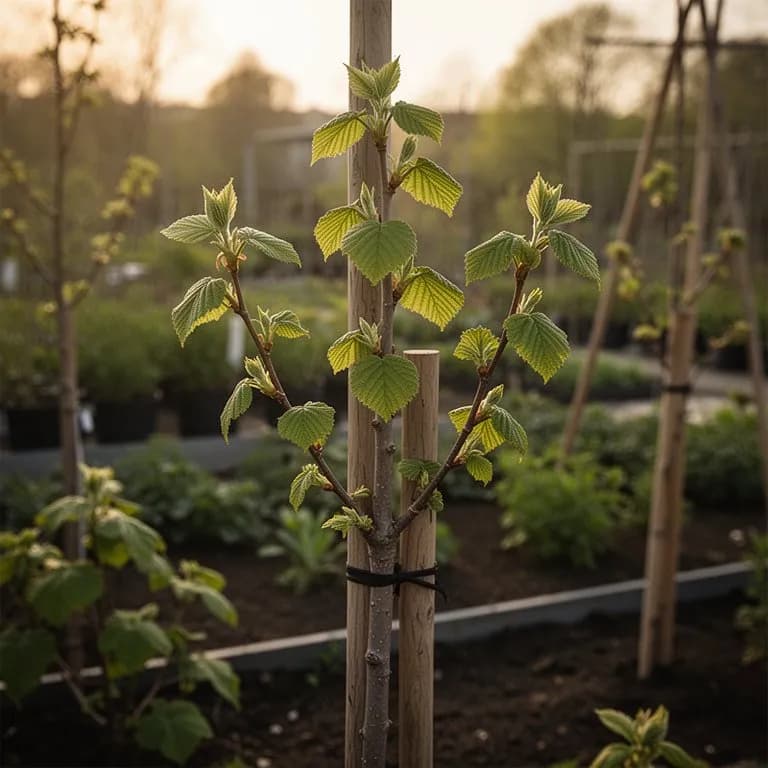
Dormancy and Planting
Days 0–75
Bare-root hazelnut trees are planted during the winter dormancy period when the tree has shed all its leaves and energy is stored in the root system and woody tissue. Hazelnuts require 800 to 1200 chill hours below 7°C to break dormancy properly, making them well suited to temperate climates. During this stage the root system begins establishing in the surrounding soil even though no above-ground growth is visible.
💡 Care Tip
Plant bare-root hazelnuts in late autumn to early winter while fully dormant. Dig a hole twice the width of the root ball and deep enough so the original soil line on the trunk sits flush with the ground. Water thoroughly after planting and apply a 10 cm layer of organic mulch such as wood chips around the base, keeping it 10 cm away from the trunk to prevent bark rot.
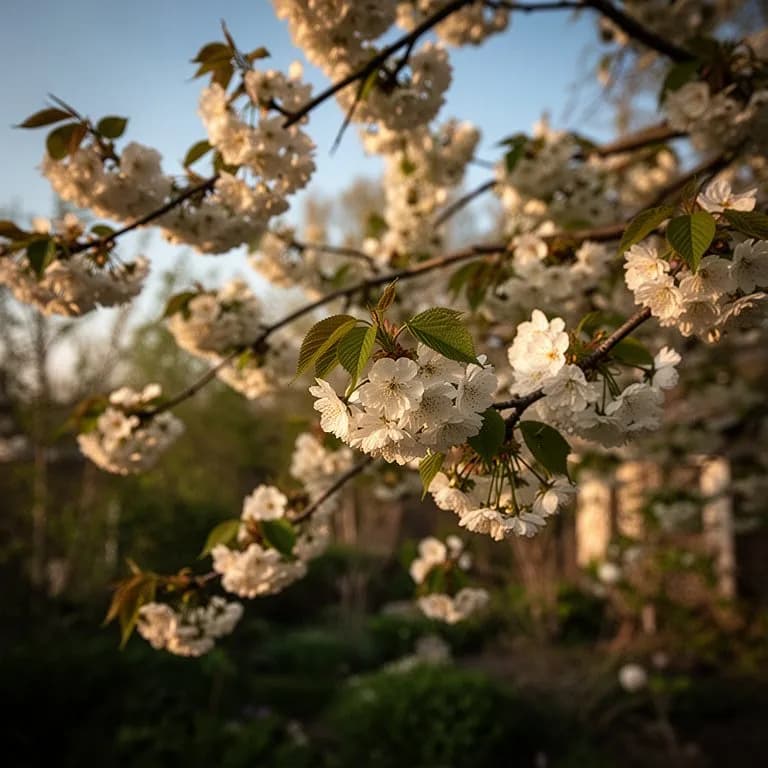
Male catkins dangle from hazelnut branches in February, releasing wind-borne pollen to fertilize the tiny red female flowers
Monthly Care Calendar
What to do each month for your Hazelnut Tree
June
You are hereNo specific care tasks for this month.
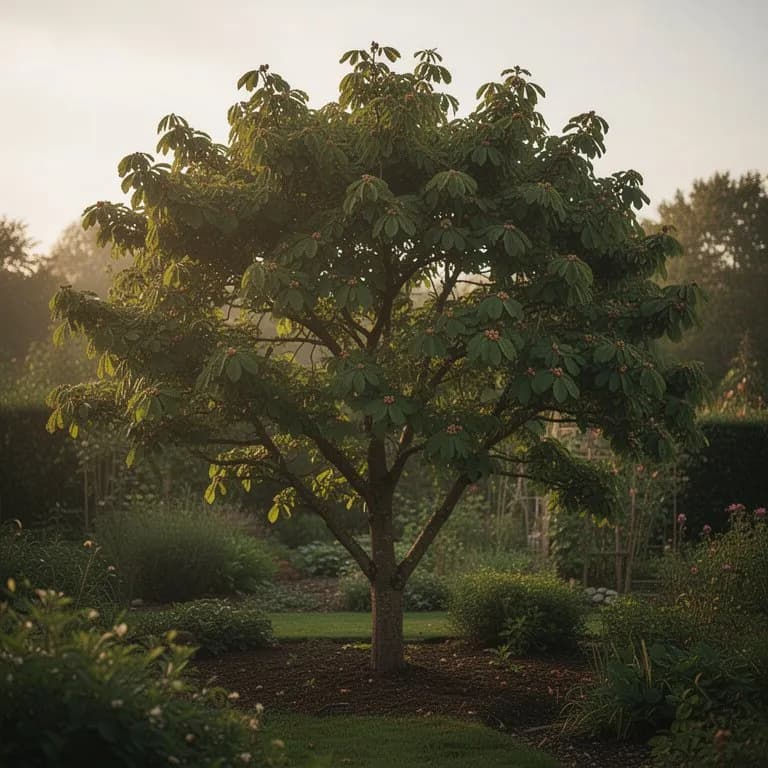
Winter pruning of a hazelnut to remove suckers and maintain an open goblet shape for better air circulation and light penetration
Did You Know?
Fascinating facts about Hazelnut Tree
Hazelnuts have been a staple food in Europe for over 9000 years, with evidence of large-scale nut processing found at Mesolithic archaeological sites in Scotland dating to around 7000 BCE.
Hazelnut trees, also known as filberts, are multi-stemmed, shrubby trees reaching 12 to 20 feet tall. They thrive in moderate climates with cool, moist winters and mild summers, similar to the Pacific Northwest or maritime Europe. Plant in full sun to partial shade in well-drained soil with a pH of 6.0 to 7.0. Hazelnuts tolerate more shade than any other nut tree but produce best crops in full sun. Space trees 15 to 20 feet apart.
Hazelnuts are wind-pollinated and require cross-pollination from a compatible variety that sheds pollen at the same time. This timing is critical because hazelnuts bloom in late winter, with male catkins releasing pollen in January and February when the tiny red female flowers are receptive. Plant at least two different varieties within 50 feet of each other. Water regularly during the first 2 to 3 years, then reduce to supplemental irrigation during dry periods.
Hazelnuts naturally grow as multi-stemmed bushes but can be trained to a single trunk or small tree form. If growing as a bush, allow 3 to 5 main stems and remove suckers growing from the base to prevent the planting from becoming an impenetrable thicket. Prune in late winter to remove dead wood, thin the interior for air circulation, and maintain shape. Begin harvesting nuts at 3 to 4 years of age, with full production reached at about 8 years. Annual yields of 10 to 25 pounds per bush are typical.
The common hazelnut (Corylus avellana) is native to Europe and western Asia, where it has grown wild since the end of the last Ice Age roughly 10,000 years ago. As glaciers retreated northward, hazel was among the first pioneering tree species to colonize the newly exposed landscape, forming dense thickets across much of temperate Europe long before larger forest trees could establish. Archaeological evidence from Mesolithic sites in Britain, Ireland, and Scandinavia shows that early human communities gathered and processed hazelnuts on an enormous scale, roasting them in pits and storing them as a critical winter food source. The Romans cultivated hazelnuts extensively and are credited with spreading improved varieties across their empire, referring to the nut as 'nux avellana' after the town of Avella in the Campania region of Italy where superior cultivars were grown. During the Middle Ages, hazel coppice woodlands were managed as a renewable resource across northern Europe, providing not only nuts but also straight poles for fencing, hurdles, thatching spars, and charcoal production. The hazelnut arrived in North America with European settlers in the 17th century, though a native species, Corylus americana, already grew wild across the eastern half of the continent. Modern commercial hazelnut production is dominated by Turkey, followed by Italy, Azerbaijan, and the United States, where Oregon's Willamette Valley produces over 99 percent of the American crop. Breeding programs in Oregon and elsewhere have developed blight-resistant cultivars that have transformed the industry and allowed hazelnut orchards to expand into regions previously unsuitable due to Eastern Filbert Blight disease.
Hazelnuts are propagated by several methods. Layering, where a low branch is bent to the ground, covered with soil, and allowed to root, is the traditional home method and produces plants true to the parent variety. Tie-off layering or mound layering of the entire bush base are both effective. Hardwood cuttings taken in late winter can root with rooting hormone. Seeds require 3 to 4 months of cold stratification and produce variable seedlings. Named varieties are commercially propagated by layering or tissue culture for uniformity.
Hazelnuts prefer well-drained loamy soil with a pH of 6.0 to 7.0. They tolerate a wider range of conditions than most nut trees but struggle in heavy, waterlogged clay or extremely sandy soil. Apply a balanced fertilizer in early spring, using about one-quarter pound of actual nitrogen per year of tree age. Boron deficiency causes blank nuts and reduced kernel development; apply borax at one ounce per tree annually if deficiency is suspected. Avoid excessive nitrogen that promotes vegetative growth over nut production.
Check Your Zone
See if Hazelnut Tree is suitable for your location.
-15°C – 33°C
5°F – 91°F
Hazelnuts are cold-hardy deciduous trees that thrive in temperate climates with cool wet winters and mild summers. They require 800 to 1200 chill hours below 7°C to break dormancy and flower properly. While dormant trees tolerate temperatures down to -15°C or lower, catkins and female flowers are vulnerable to frost damage below -5°C during their late winter flowering period. Summer temperatures above 33°C combined with dry conditions can cause kernel blanking, where shells develop without a fully formed kernel inside. The ideal growing range is between 12°C and 27°C during the active season, with moderate humidity and rainfall of 750 to 1200 mm distributed throughout the year.
Common issues affecting Hazelnut Tree and how to prevent and treat them organically.
Eastern filbert blight is the most devastating disease for hazelnuts grown east of the Cascade Range and can kill susceptible trees within a few years. Choosing resistant varieties is the single most important decision for growers in affected areas. Blank nuts with no kernel development result from poor pollination or boron deficiency. Squirrels are the primary pest competitor, often harvesting the crop before the grower. Suckering from the base requires regular removal to prevent the planting from becoming an unmanageable thicket.
Hazelnuts work well in mixed hedgerows and agroforestry systems, providing habitat for wildlife while producing a nut crop. Underplant with shade-tolerant ground covers like white clover, wood sorrel, or native violets. In food forest designs, hazelnuts occupy the shrub layer between larger canopy trees and ground-level plants. Comfrey planted nearby provides nutrient-rich mulch material. Avoid planting near walnut trees due to potential juglone sensitivity. Spring bulbs and wildflowers thrive beneath the light hazelnut canopy.
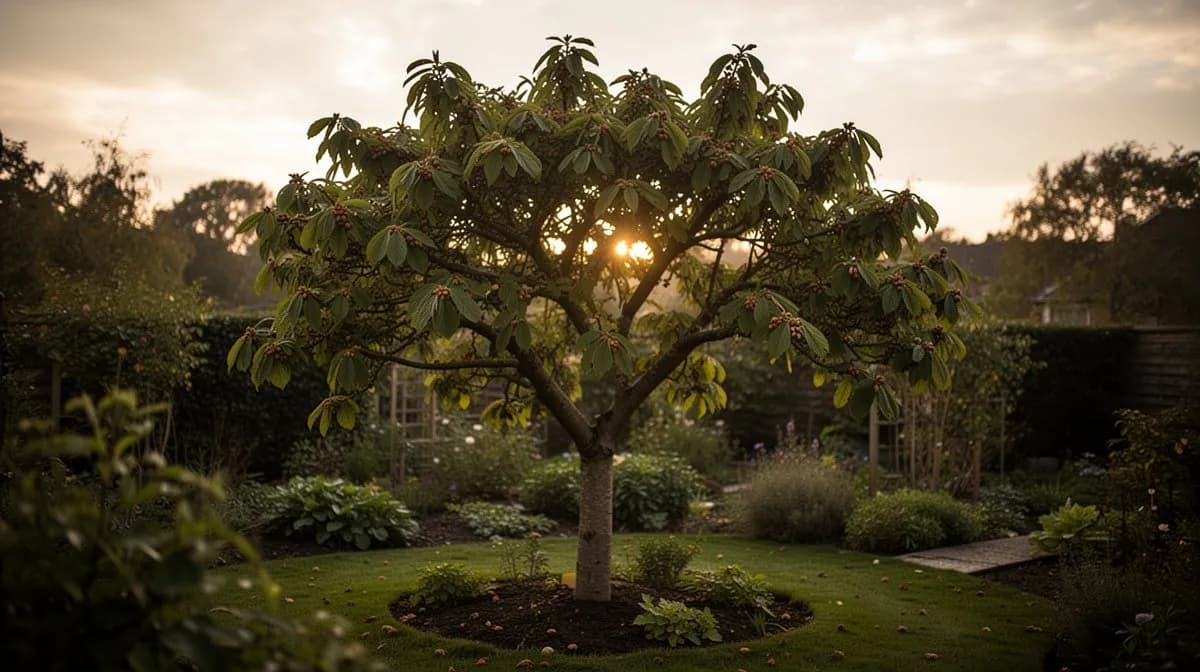
Companion planting beneath a hazelnut tree with deep-rooted comfrey for nutrient accumulation and clover for nitrogen fixation
- 1Always plant at least two different hazelnut varieties within 15 metres of each other to ensure cross-pollination, as most cultivars are self-incompatible and will produce empty shells without a compatible pollinator nearby.
- 2Train hazelnut bushes as a single-trunk tree or an open multi-stemmed goblet with six to eight main stems by removing all suckers and basal shoots regularly during the first three to four years after planting.
- 3Apply a 10 to 15 cm deep mulch ring of wood chips, bark, or straw around the base of each tree extending to the drip line, keeping mulch 10 cm away from the trunk to prevent bark rot and rodent harbourage.
- 4Water deeply and consistently during the kernel-filling period from July through September, as drought stress during this critical window leads to poorly developed kernels, blanks, and reduced overall yield.
- 5Prune during full dormancy between November and February, removing dead wood, crossing branches, and any new suckers at the base, while maintaining an open centre for good light penetration and air circulation.
- 6Protect young trees from squirrel and jay damage by installing wire mesh cages or netting around developing nut clusters from August onward when the nuts become attractive to wildlife.
- 7Test soil pH annually and maintain it between 5.5 and 7.0 for optimal nutrient uptake; hazelnuts prefer slightly acidic to neutral soils and may develop chlorosis in highly alkaline conditions above pH 7.5.
- 8Apply a balanced organic fertilizer in early spring just as buds begin to swell, using approximately 100 grams per year of tree age scattered evenly under the canopy drip line and watered in thoroughly.
- 9Monitor for Eastern Filbert Blight in regions where it is present by inspecting branches for dark cankers in summer; promptly remove and burn any infected wood at least 60 cm below the visible canker margin.
- 10Harvest nuts promptly as they fall naturally in September and October by gathering from the ground every two to three days, and cure them on drying racks in a warm well-ventilated space for two to three weeks before storage.
Hazelnuts mature in September and October, indicated by the husks turning brown and the nut separating easily from the husk. Allow nuts to fall naturally or shake branches to dislodge ripe clusters. Collect from the ground daily to prevent moisture damage and squirrel theft. Remove husks and dry the nuts in a warm, well-ventilated area for 2 to 4 weeks until the kernel snaps cleanly when broken. Properly dried hazelnuts rattle in the shell when shaken.
Dried in-shell hazelnuts store at room temperature for 3 to 4 months and in the refrigerator for up to a year. Shelled kernels keep best in the freezer in airtight containers for up to 2 years. Roasting brings out the characteristic hazelnut flavor and makes the thin brown skin easier to rub off. Hazelnuts are outstanding ground into flour, made into hazelnut butter, or combined with chocolate in spreads and confections. Hazelnut oil is a prized culinary oil for salad dressings and finishing dishes.
Plan your garden with ease
Love growing Hazelnut Tree? Use our free garden planner to design your beds, track planting dates, and get personalized care reminders.
Nutritional Info
Per 100g serving
628
Calories
Health Benefits
- Exceptionally rich in vitamin E at 15 mg per 100 g, providing 100% of the recommended daily value and supporting skin health and immune function
- Contains 60% monounsaturated oleic acid, the same heart-healthy fat found in olive oil, which helps reduce LDL cholesterol levels
- Excellent source of manganese at 6.2 mg per 100 g, delivering 270% of the daily value for bone health and metabolism
- Provides 113 mg of calcium per 100 g, making hazelnuts one of the richest nut sources of this bone-building mineral
- High in folate at 113 mcg per 100 g, supplying 28% of the daily value, which is vital during pregnancy for neural tube development
- Rich in the antioxidant proanthocyanidins concentrated in the brown skin, which may reduce inflammation and support cardiovascular health
💰 Why Grow Your Own?
A single mature hazelnut tree can produce 11 to 25 kg of in-shell nuts per year, equivalent to roughly 5 to 12 kg of shelled kernels. With retail prices for quality shelled hazelnuts ranging from 15 to 25 euros per kilogram, one productive tree can provide 75 to 300 euros worth of nuts annually. Hazelnut trees begin bearing a small crop by the third or fourth year and reach full production by year eight to ten, continuing to produce for 40 to 80 years with minimal inputs. Growing your own eliminates packaging waste and food miles while guaranteeing freshness that surpasses anything available in shops. A small planting of three to five trees provides a cross-pollinated orchard capable of supplying a household with enough nuts for year-round eating, baking, and homemade nut butter.
Quick Recipes
Simple recipes using fresh Hazelnut Tree
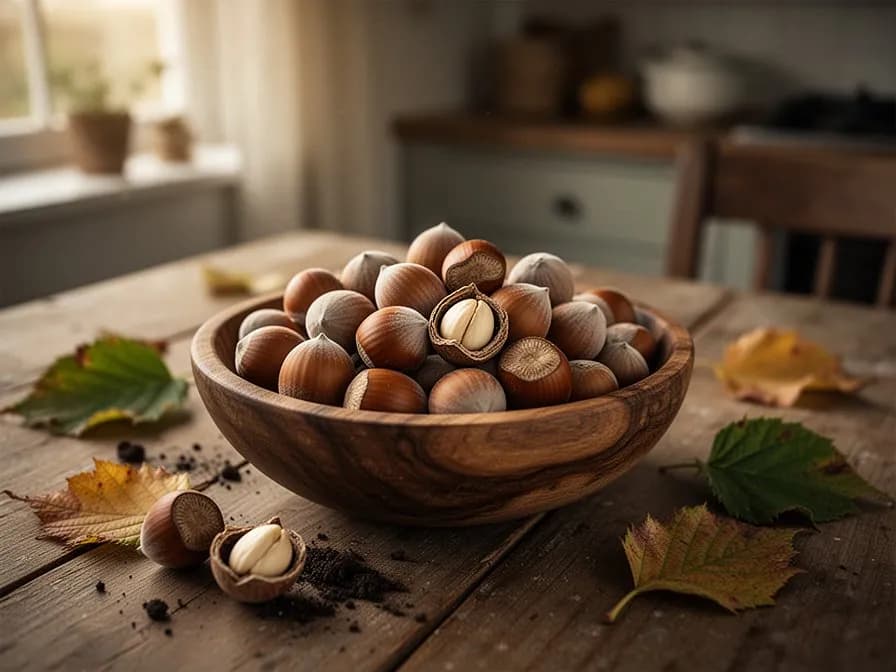
Roasted Hazelnuts with Sea Salt and Rosemary
15 minutesWhole hazelnuts tossed with olive oil, fresh rosemary, and flaky sea salt then oven-roasted until fragrant and golden. The rosemary adds an aromatic herbaceous note that complements the rich buttery flavour of the freshly roasted nuts. Serve warm as a simple appetiser or package in jars as a homemade gift.
Homemade Hazelnut Butter
20 minutesFreshly roasted hazelnuts blended in a food processor until they release their natural oils and transform into a smooth creamy butter. This homemade version contains no added sugar, palm oil, or preservatives, letting the pure nutty flavour shine through. Spread on toast, swirl into porridge, or use as a base for sauces and dressings.
Hazelnut and Chocolate Biscotti
50 minutesCrisp twice-baked Italian biscotti studded with coarsely chopped garden hazelnuts and dark chocolate chunks. The nuts provide a satisfying crunch and rich flavour that pairs beautifully with the bittersweet chocolate. Perfect for dipping into coffee or dessert wine and they keep well in an airtight tin for up to three weeks.
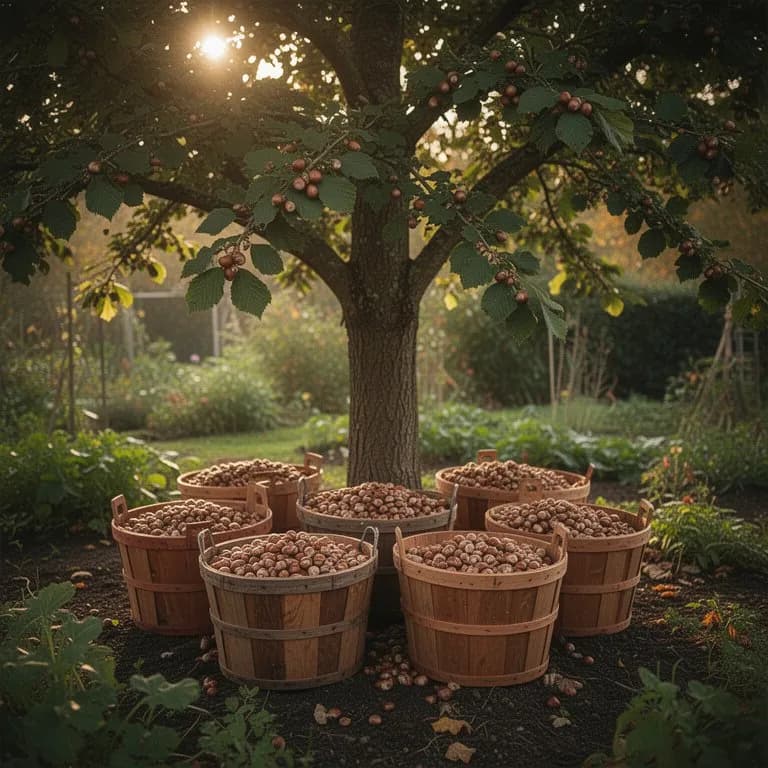
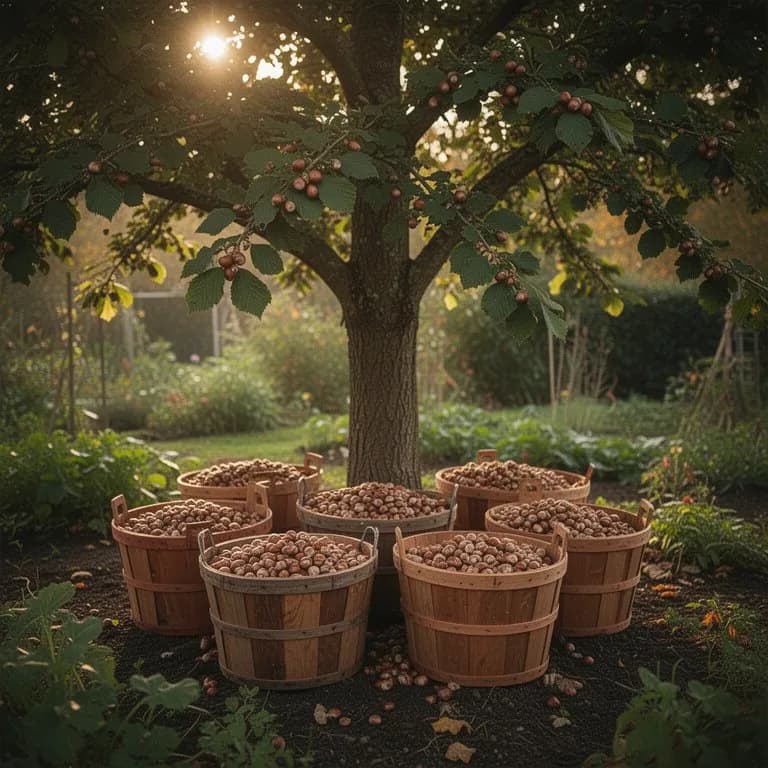
Ripe hazelnuts dropping from the tree in early autumn, ready to be gathered from the ground
Yield & Spacing Calculator
See how many Hazelnut Tree plants fit in your garden bed based on the recommended 500cm spacing.
0
Hazelnut Tree plants in a 4×4 ft bed
0 columns × 0 rows at 500cm spacing
Popular Varieties
Some of the most popular hazelnut tree varieties for home gardeners, each with unique characteristics.
Jefferson
An Oregon State University release with excellent blight resistance and large, round nuts with outstanding flavor. Currently the leading variety for home and commercial plantings.
Yamhill
Compact tree with very good blight resistance and high-quality kernels. An excellent pollinizer for Jefferson and other varieties.
Theta
A very blight-resistant variety with good nut quality and moderate tree size. Well-suited to home garden production.
Barcelona
The traditional standard commercial variety with large nuts and vigorous growth. Susceptible to eastern filbert blight; best for the Pacific Northwest.
Hazelnuts have a distinctively rich, sweet flavor that makes them one of the most prized culinary nuts worldwide. The classic combination of hazelnut and chocolate is showcased in spreads, truffles, and pastries. Hazelnut flour adds richness to cakes, cookies, and macarons. Toasted hazelnuts are excellent in salads, pasta dishes, and grain bowls. Hazelnut oil is a premium finishing oil. Frangelico and other hazelnut liqueurs are popular in desserts and cocktails.
When should I plant Hazelnut Tree?
Plant Hazelnut Tree in March, April, November. It takes approximately 1460 days to reach maturity, with harvest typically in September, October.
What are good companion plants for Hazelnut Tree?
Hazelnut Tree grows well alongside Marigold. Companion planting can improve growth, flavor, and natural pest control.
What hardiness zones can Hazelnut Tree grow in?
Hazelnut Tree thrives in USDA hardiness zones 4 through 8. With greenhouse protection, it may be grown in zones 2 through 9.
How much sun does Hazelnut Tree need?
Hazelnut Tree requires Full Sun (6-8h+). This means at least 6-8 hours of direct sunlight daily.
How far apart should I space Hazelnut Tree?
Space Hazelnut Tree plants 500cm (197 inches) apart for optimal growth and air circulation.
What pests and diseases affect Hazelnut Tree?
Common issues include Eastern Filbert Blight, Hazelnut Weevil (Filbert Weevil), Bacterial Blight. Prevention through good garden practices like crop rotation, proper spacing, and companion planting is the best approach. See the detailed pests and diseases section above for symptoms, prevention, and treatment for each.
How do I store Hazelnut Tree after harvest?
Dried in-shell hazelnuts store at room temperature for 3 to 4 months and in the refrigerator for up to a year. Shelled kernels keep best in the freezer in airtight containers for up to 2 years. Roasting brings out the characteristic hazelnut flavor and makes the thin brown skin easier to rub off. Ha...
What are the best Hazelnut Tree varieties to grow?
Popular varieties include Jefferson, Yamhill, Theta, Barcelona. Each has unique characteristics suited to different growing conditions and culinary preferences. See the varieties section above for detailed descriptions.
What soil does Hazelnut Tree need?
Hazelnuts prefer well-drained loamy soil with a pH of 6.0 to 7.0. They tolerate a wider range of conditions than most nut trees but struggle in heavy, waterlogged clay or extremely sandy soil. Apply a balanced fertilizer in early spring, using about one-quarter pound of actual nitrogen per year of t...
How long does it take for a hazelnut tree to start producing nuts?
Hazelnut trees typically begin producing a small initial crop of 1 to 2 kg of in-shell nuts by their third or fourth year after planting. Yields increase steadily each year, with trees reaching approximately half their full productive potential by year six. Full production of 11 to 25 kg per tree is generally achieved by year eight to ten. Patience during the early years is rewarded with decades of reliable harvests, as a well-maintained hazelnut tree can continue producing for 40 to 80 years or more.
Do I need more than one hazelnut tree to get nuts?
Yes, you almost certainly need at least two different hazelnut varieties planted within about 15 metres of each other. Most hazelnut cultivars are self-incompatible, meaning their own pollen cannot fertilize their flowers. Without a compatible pollinator variety nearby, the trees will flower normally but produce mostly empty shells. When selecting varieties, check pollination compatibility charts to ensure the two cultivars you choose can pollinate each other, as not all variety combinations are compatible.
How do I know when hazelnuts are ripe and ready to harvest?
Hazelnuts are ripe when they begin to fall naturally from the tree, which typically occurs from mid-September through October. The papery husks turn from green to brown and open to release the nut. Ripe nuts will have a hard brown shell and a firm white to cream-coloured kernel inside. Do not pick nuts directly from the tree as they may not be fully mature. Instead, shake branches gently over a tarp or simply collect fallen nuts from the ground every two to three days throughout the harvest period.
Should I grow a hazelnut as a bush or a single-trunk tree?
Both forms work well, and the choice depends on your garden space and goals. A multi-stemmed bush or open goblet with six to eight main stems is the traditional form for nut production, making harvesting easier and keeping the canopy at a manageable height. A single-trunk tree form works well in smaller gardens or mixed plantings where underplanting is desired. For either form, remove suckers regularly from the base and maintain an open centre for light and airflow. Most garden growers find the open goblet with multiple stems to be the most productive and practical form.
What pests and diseases should I watch for on hazelnut trees?
The main pests are hazelnut weevil, whose larvae feed inside developing nuts leaving small round exit holes, and squirrels and jays that can take a significant portion of the crop before you harvest. Big bud mite causes abnormally swollen buds that fail to develop and should be picked off and destroyed. The most serious disease is Eastern Filbert Blight, a fungal infection that causes dark sunken cankers on branches and can kill affected limbs. Powdery mildew may appear on leaves in humid conditions but rarely causes serious harm. Planting blight-resistant cultivars and maintaining good airflow through pruning are the best preventive strategies.
How should I store harvested hazelnuts to keep them fresh?
After collecting, cure hazelnuts by spreading them in a single layer on trays or screens in a warm, dry, well-ventilated area for two to three weeks. The nuts are fully dried when a kernel snaps cleanly in half rather than bending. Store dried in-shell nuts in mesh bags or breathable containers in a cool, dark, dry location where they will keep for up to 12 months. Shelled kernels should be stored in airtight containers in the refrigerator for up to six months or in the freezer for up to two years. Vacuum sealing shelled nuts before freezing provides the longest storage life and best flavour retention.
Ready to Grow Hazelnut Tree?
Add Hazelnut Tree to your garden plan and start designing your perfect layout.

Vladimir Kusnezow
Gardener and Software Developer
Zone 6b gardener. Growing vegetables and fruits in soil and hydroponics for 6 years. I built PlotMyGarden to plan my own gardens.
Jump to Section