Cypress Tree
Cupressus sempervirens
At a Glance
It's planting season for Cypress Tree! Start planning your garden now.
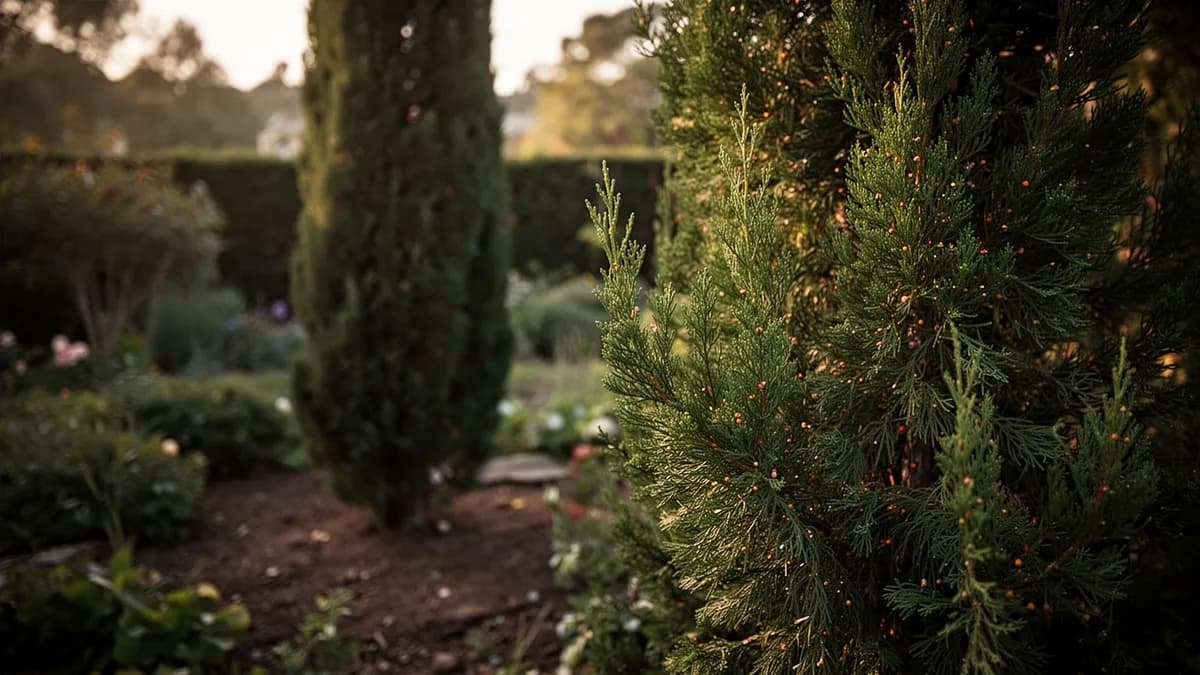
An iconic Mediterranean evergreen with a narrow, columnar silhouette that evokes Tuscan landscapes and formal garden design. Italian cypress is remarkably drought-tolerant and thrives in hot, dry summers with mild winters. They make striking vertical accents flanking doorways, driveways, or garden paths and can serve as a narrow privacy screen in tight spaces. Plant in well-drained soil, as root rot from excessive moisture is their primary vulnerability.
Planting & Harvest Calendar
Growth Stages
From Seed to Harvest
Seed Germination
Days 0–30
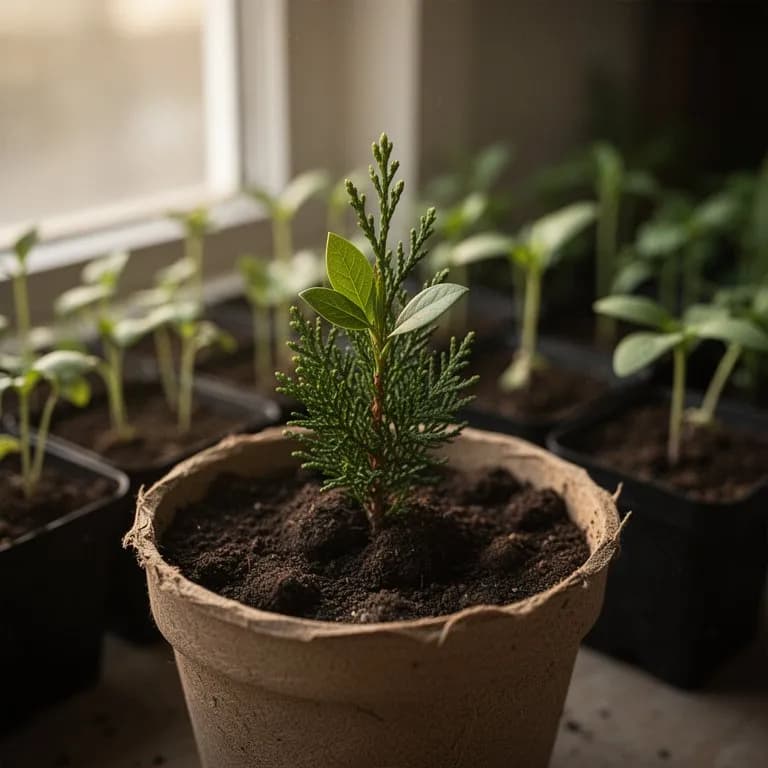
Cypress seeds require stratification and consistent moisture to break dormancy. Germination is slow and irregular, often taking two to four weeks under optimal conditions of 18-22°C.
💡 Care Tip
Soak seeds in water for 24 hours before sowing and cold-stratify in the refrigerator for 4-6 weeks to improve germination rates.
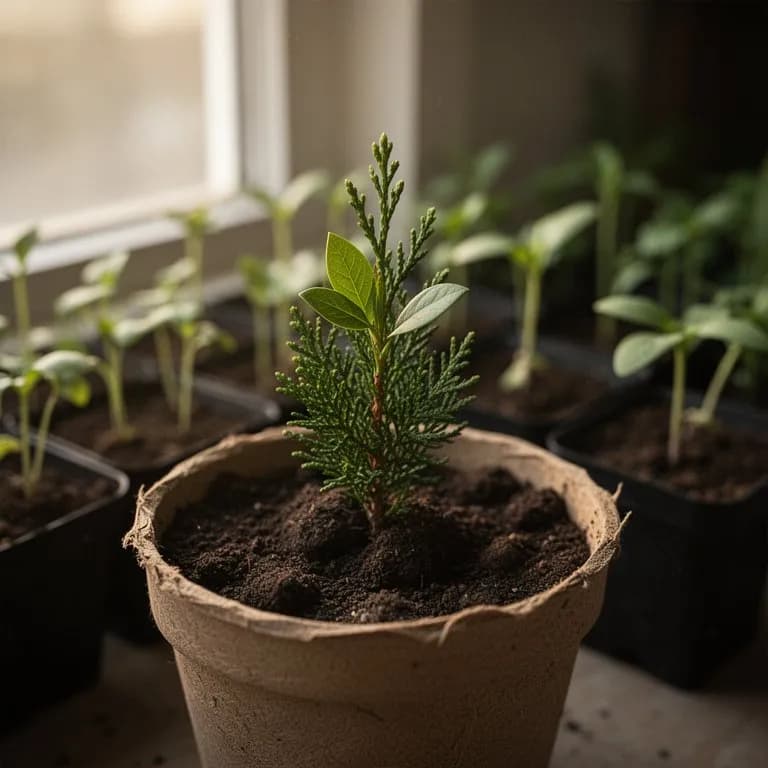
A cypress seedling in its first weeks of growth showing delicate needle-like foliage
Monthly Care Calendar
What to do each month for your Cypress Tree
May
You are hereIncrease watering frequency as temperatures rise especially for young trees. Take semi-ripe cuttings from current season growth for propagation. Apply a foliar feed of seaweed extract to boost overall vigor
Did You Know?
Fascinating facts about Cypress Tree
The oldest known living cypress tree is the Sarv-e Abarkuh in Yazd Province, Iran, estimated to be between 4000 and 5000 years old, making it one of the oldest living organisms on Earth.
Italian cypress creates the iconic vertical exclamation points of Mediterranean landscapes. These extremely narrow, columnar trees can reach 40 to 60 feet tall but only 3 to 5 feet wide. Plant in full sun with well-drained soil — they are remarkably drought-tolerant once established.
Avoid heavy clay and wet sites. Once established, Italian cypress needs almost no supplemental water in Mediterranean climates. They require no pruning to maintain their columnar form. In colder zones (7-8), plant in a sheltered south-facing location. Space 6 to 8 feet apart for a dramatic allee or 3 feet apart for a dense screen.
The genus Cupressus encompasses approximately 16 to 25 species of evergreen conifers distributed across warm temperate and subtropical regions of the Northern Hemisphere. The evolutionary lineage of cypress trees stretches back to the late Cretaceous period, roughly 100 million years ago, placing them among the most ancient groups of seed-bearing plants still in existence today. Fossil evidence of cypress ancestors has been found across Europe, Asia, and North America, indicating that the genus once occupied a far broader range than it does in modern times.
The Mediterranean cypress, Cupressus sempervirens, holds a particularly prominent place in human civilization. Ancient Phoenicians relied on its durable wood for shipbuilding, while the Greeks and Romans planted it extensively around temples, public buildings, and burial sites. The species name sempervirens, meaning 'ever living,' reflects both the tree's evergreen habit and its symbolic association with eternal life in classical cultures. Persian gardens, some dating back over 2500 years, featured cypress as a central design element representing the axis between earth and heaven.
In East Asia, species such as Cupressus funebris (Chinese weeping cypress) have been cultivated for centuries in temple gardens and as sources of aromatic timber. Japanese Hinoki cypress, though belonging to the related genus Chamaecyparis, shares many cultural parallels and has been used in shrine construction for over a millennium.
During the colonial era European settlers introduced Mediterranean and Monterey cypress to regions across the Southern Hemisphere, including Australia, New Zealand, and South Africa, where they became widely naturalized. Today cypress trees serve vital roles as windbreaks, erosion control, ornamental specimens, and sources of essential oils and timber in warm climates worldwide.
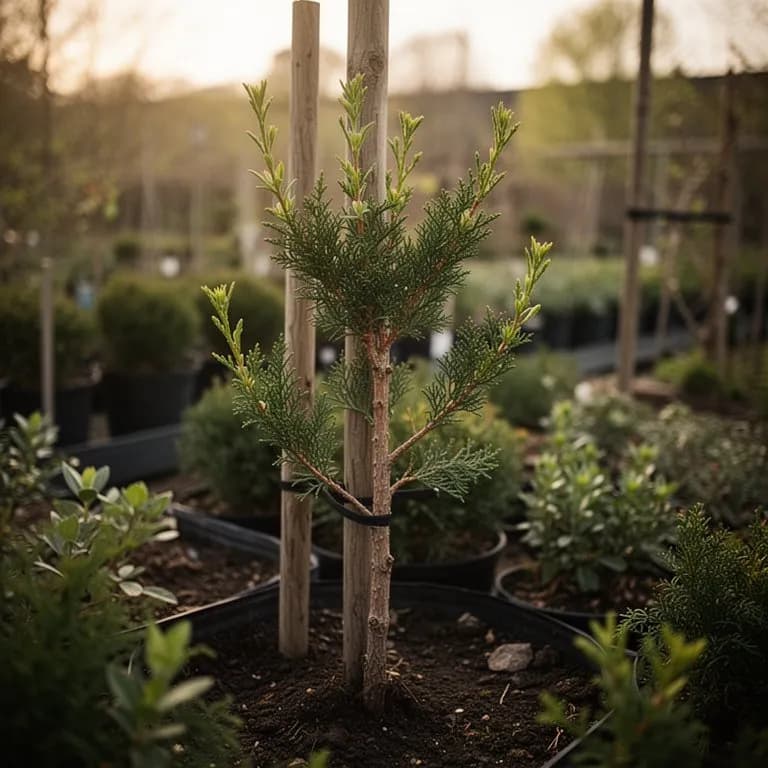
Mature cypress foliage featuring overlapping scale-like leaves arranged in flat sprays
Collect cypress cones when they begin to turn brown. Dry indoors until scales open. Some species benefit from brief cold stratification (30 days). Sow seeds on the surface of well-drained seed mix. Germination occurs in 2 to 4 weeks. Named cultivars and hybrids like Leyland cypress must be propagated by cuttings, as they do not come true from seed.
Cypress trees thrive in well-drained soil and are remarkably tolerant of poor, rocky, and alkaline conditions. Italian cypress prefers dry conditions and lean soil. Leyland cypress is more adaptable but still demands good drainage. Minimal fertilization needed — a light application of balanced fertilizer in spring for young trees. Established cypress need no feeding.
Check Your Zone
See if Cypress Tree is suitable for your location.
-10°C – 38°C
14°F – 100°F
Most cypress species thrive in warm Mediterranean to subtropical climates with mild winters. They prefer daytime temperatures between 15°C and 30°C during the growing season. While established Italian cypress can tolerate brief drops to -10°C, prolonged freezing damages foliage and can kill young trees. In hot climates they handle temperatures up to 38°C provided they receive adequate moisture. Monterey cypress prefers cooler coastal conditions and may suffer heat stress above 32°C in inland locations.
Common issues affecting Cypress Tree and how to prevent and treat them organically.
Seiridium canker is the most serious disease, killing branches and sometimes entire trees. Leyland cypress is especially susceptible to canker diseases in humid climates. Root rot from poor drainage is quickly fatal. Spider mites are persistent in hot, dry conditions. Italian cypress may suffer cold damage in severe winters at the edge of its range.
Mediterranean companions pair beautifully: lavender, rosemary, olive trees, and ornamental grasses. Low groundcovers like thyme and sedum work well at the base. Cypress trees in formal settings are often paired with roses, boxwood, and gravel paths. Avoid moisture-loving plants that require irrigation incompatible with cypress preferences.
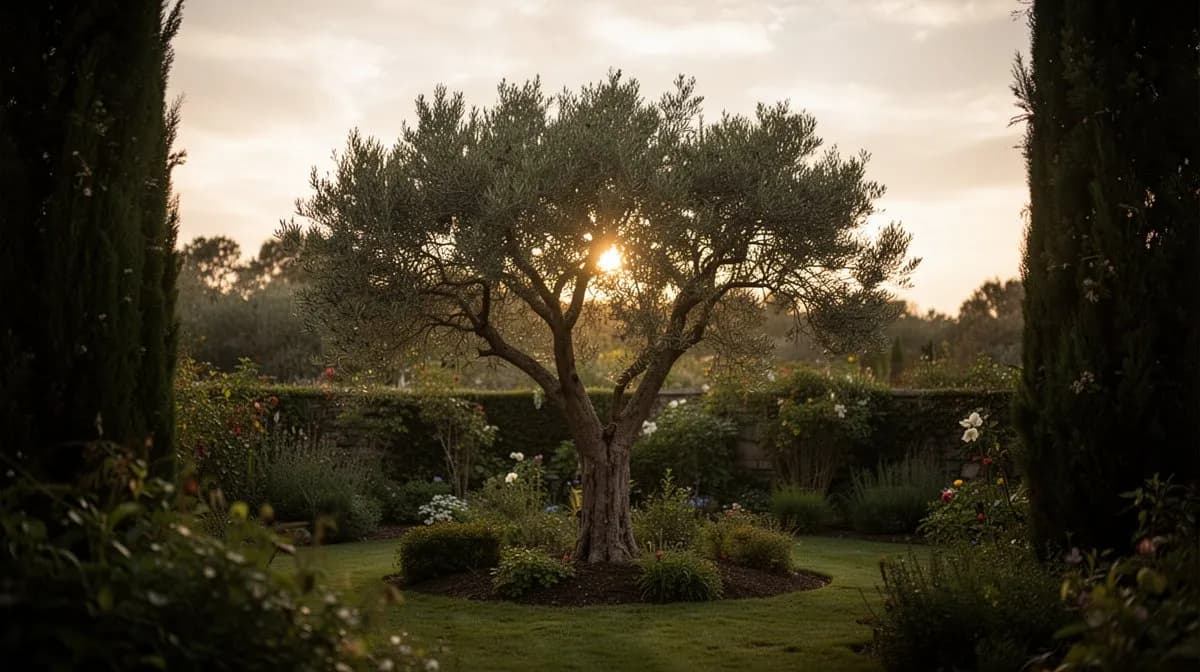
Cypress trees used as windbreaks and ornamental borders along a Mediterranean landscape
- 1Choose a planting site with full sun exposure for at least six hours per day, as cypress trees grow leggy and sparse in too much shade.
- 2Ensure the soil is well-drained, as cypress trees are highly susceptible to root rot in waterlogged conditions. Sandy loam or gravelly soils are ideal.
- 3Water newly planted cypress trees deeply once a week for the first two growing seasons to establish a strong root system before reducing irrigation.
- 4Apply a 7-10 cm layer of organic mulch such as bark chips around the base of the tree, keeping it at least 15 cm away from the trunk to prevent moisture-related bark diseases.
- 5Prune formal cypress hedges twice per year in late spring and early autumn, but never cut back into old bare wood as most cypress species will not regenerate from leafless branches.
- 6Protect young cypress trees from deer browsing by installing tree guards or fencing, as deer frequently strip bark and browse fresh foliage during winter months.
- 7When planting a windbreak row, space trees 1.5 to 3 meters apart depending on species, with Italian cypress at the closer end and Leyland cypress at the wider spacing.
- 8Monitor for cypress canker (Seiridium cardinale) by watching for sunken dark lesions on branches that ooze resin, and prune affected branches at least 15 cm below the infected area using sterilized tools.
- 9In regions with heavy snowfall, gently brush accumulated snow from columnar varieties to prevent branch splaying and permanent deformation of the narrow crown shape.
- 10Feed established cypress trees once per year in early spring with a balanced granular fertilizer, applying it evenly across the root zone from the trunk to just beyond the drip line of the canopy.
Cypress is not harvested for food. The aromatic wood is highly valued for woodworking, furniture, and chests. Cypress essential oil is distilled from foliage and small branches for aromatherapy. Small cones can be collected for decorative use. Branches are occasionally used in holiday arrangements for their unique columnar sprays.
Cypress wood is naturally rot-resistant and has been used in outdoor construction for millennia. Dried foliage retains its form well for use in dried arrangements. Cypress essential oil should be stored in dark glass bottles away from heat. Small cones dry well for craft use.
Plan your garden with ease
Love growing Cypress Tree? Use our free garden planner to design your beds, track planting dates, and get personalized care reminders.
Nutritional Info
Per 100g serving
0
Calories
Health Benefits
- Cypress is not a food crop and its foliage, cones, and wood are not consumed as part of the human diet
- Cypress essential oil extracted from foliage contains bioactive terpenes including alpha-pinene, delta-3-carene, and cedrol
- The aromatic compounds in cypress have been studied for their potential antioxidant and antimicrobial properties
- Cypress pollen is a significant source of proteins and lipids for bees and other pollinators in Mediterranean ecosystems
- Some traditional herbal preparations use cypress cone extracts, but these are not recognized as food products
💰 Why Grow Your Own?
While cypress is not a food-producing plant, a well-placed row of cypress trees can significantly reduce heating costs by serving as an effective windbreak, cutting wind speed by up to 50% and lowering winter energy bills by an estimated 10-25%. Mature cypress hedges also increase property values by 5-15% through enhanced curb appeal and privacy screening, and their dense evergreen canopy provides year-round noise reduction from nearby roads.
Quick Recipes
Simple recipes using fresh Cypress Tree

Cypress Aromatherapy Steam Bowl
10 minutesA soothing steam inhalation using fresh cypress sprigs to help clear nasal congestion and promote relaxation. The natural essential oils released by the warm water create a refreshing and calming aromatic experience.
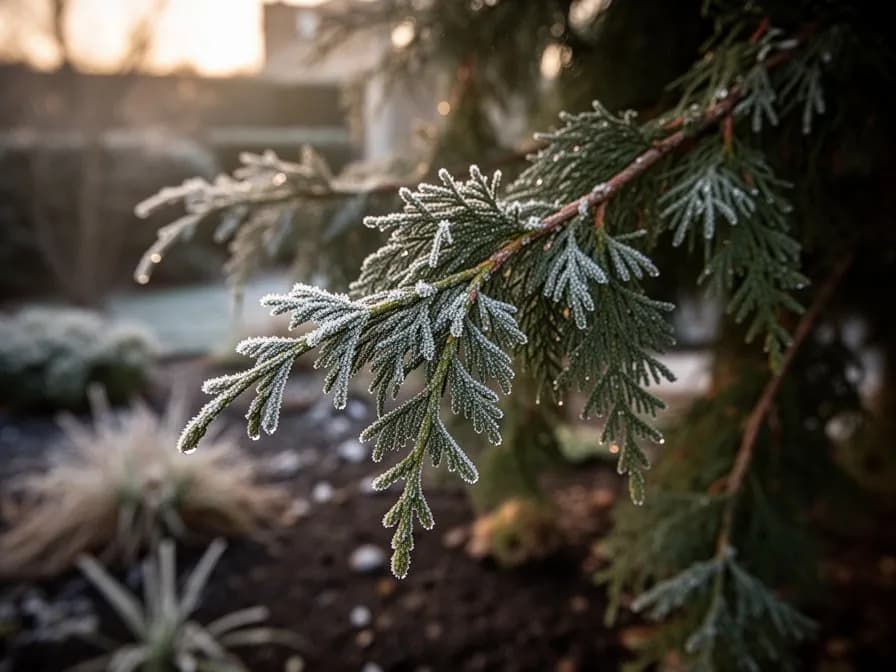
Cypress and Rosemary Sachets
20 minutesHandmade aromatic sachets filled with dried cypress foliage and rosemary, perfect for placing in wardrobes and drawers to naturally repel moths and freshen stored linens with a clean woodsy scent.
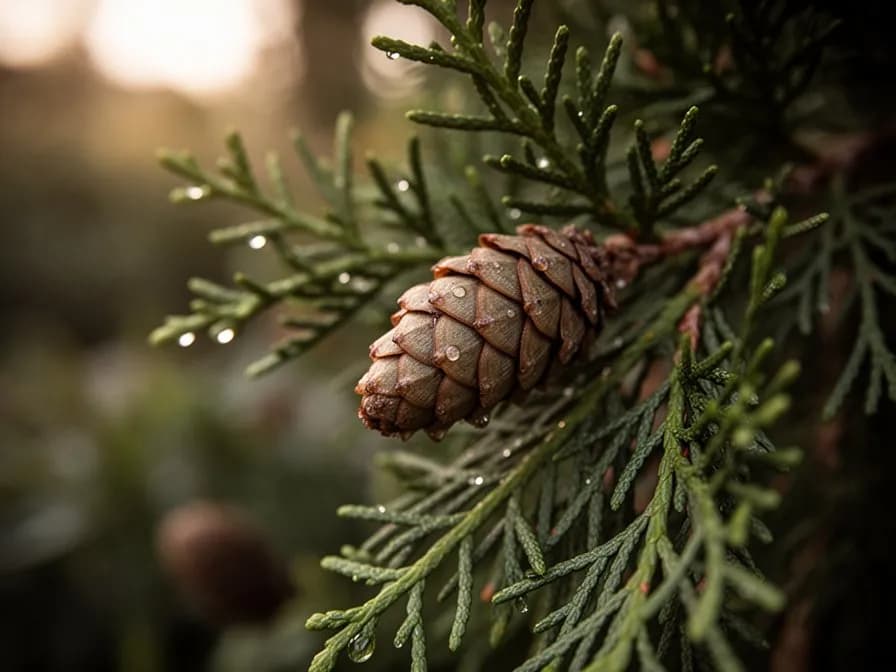
Cypress Foot Soak
15 minutesA refreshing herbal foot soak combining cypress foliage with Epsom salts and peppermint to soothe tired feet, reduce swelling, and leave skin feeling refreshed after a long day of gardening.
Yield & Spacing Calculator
See how many Cypress Tree plants fit in your garden bed based on the recommended 500cm spacing.
0
Cypress Tree plants in a 4×4 ft bed
0 columns × 0 rows at 500cm spacing
Popular Varieties
Some of the most popular cypress tree varieties for home gardeners, each with unique characteristics.
Italian Cypress (Cupressus sempervirens Stricta)
The classic narrow columnar form. Extremely vertical reaching 40-60 feet tall and only 3-5 feet wide. Iconic Mediterranean landscape tree.
Leyland Cypress (x Cuprocyparis leylandii)
Fast-growing hybrid for screening, reaching 60-70 feet. 3-4 feet of growth per year. Tolerates shearing for hedges.
Arizona Cypress (Cupressus arizonica)
Silvery-blue foliage on a broad pyramidal tree. Extremely heat and drought tolerant. Native to the American Southwest.
Monterey Cypress (Cupressus macrocarpa)
Picturesque coastal species with spreading, wind-sculpted form. Best near the coast where fog provides moisture. Limited inland adaptability.
When should I plant Cypress Tree?
Plant Cypress Tree in March, April, May. It takes approximately 3650 days to reach maturity, with harvest typically in .
What are good companion plants for Cypress Tree?
Cypress Tree grows well alongside Lavender, Rosemary. Companion planting can improve growth, flavor, and natural pest control.
What hardiness zones can Cypress Tree grow in?
Cypress Tree thrives in USDA hardiness zones 7 through 11. With greenhouse protection, it may be grown in zones 5 through 12.
How much sun does Cypress Tree need?
Cypress Tree requires Full Sun (6-8h+). This means at least 6-8 hours of direct sunlight daily.
How far apart should I space Cypress Tree?
Space Cypress Tree plants 500cm (197 inches) apart for optimal growth and air circulation.
What pests and diseases affect Cypress Tree?
Common issues include Cypress Canker (Seiridium), Spider Mites, Root Rot. Prevention through good garden practices like crop rotation, proper spacing, and companion planting is the best approach. See the detailed pests and diseases section above for symptoms, prevention, and treatment for each.
How do I store Cypress Tree after harvest?
Cypress wood is naturally rot-resistant and has been used in outdoor construction for millennia. Dried foliage retains its form well for use in dried arrangements. Cypress essential oil should be stored in dark glass bottles away from heat. Small cones dry well for craft use.
What are the best Cypress Tree varieties to grow?
Popular varieties include Italian Cypress (Cupressus sempervirens Stricta), Leyland Cypress (x Cuprocyparis leylandii), Arizona Cypress (Cupressus arizonica), Monterey Cypress (Cupressus macrocarpa). Each has unique characteristics suited to different growing conditions and culinary preferences. See the varieties section above for detailed descriptions.
What soil does Cypress Tree need?
Cypress trees thrive in well-drained soil and are remarkably tolerant of poor, rocky, and alkaline conditions. Italian cypress prefers dry conditions and lean soil. Leyland cypress is more adaptable but still demands good drainage. Minimal fertilization needed — a light application of balanced ferti...
How fast do cypress trees grow?
Growth rate varies significantly by species. Italian cypress (Cupressus sempervirens) typically grows 30-60 cm per year, while Leyland cypress can add 60-90 cm annually under favorable conditions. Monterey cypress falls somewhere in between at 45-75 cm per year. Factors such as soil quality, water availability, climate, and sunlight all influence the actual growth rate of any individual tree.
Are cypress trees toxic to pets or children?
Cypress foliage and cones are generally considered non-toxic to humans and most domestic animals. However, the essential oils concentrated in the leaves can cause mild gastrointestinal upset if consumed in large quantities by cats or dogs. The sap may also cause minor skin irritation in sensitive individuals. As a precaution, discourage pets from chewing on cypress branches and wash hands after extensive pruning.
Why is my cypress tree turning brown?
Browning in cypress trees can result from several causes. The most common are drought stress, root rot from overwatering or poor drainage, cypress canker disease, spider mite infestations during hot dry weather, and winter burn from cold desiccating winds. Examine the pattern of browning carefully: random scattered dieback often indicates canker disease, uniform browning from the inside out suggests environmental stress, and yellowing followed by browning at branch tips may point to pest damage.
Can cypress trees be grown in containers?
Yes, smaller cypress species and dwarf cultivars such as Cupressus macrocarpa 'Goldcrest' grow well in large containers for several years. Use a pot at least 45 cm in diameter with excellent drainage holes and a gritty well-draining potting mix. Container-grown cypress trees require more frequent watering and annual feeding than those planted in the ground. Eventually most species will outgrow their containers and should be planted out or moved to progressively larger pots.
How do I propagate cypress trees from cuttings?
Take semi-ripe heel cuttings of 10-15 cm in length from current season growth during late summer or early autumn. Strip the lower third of foliage, dip the cut end in rooting hormone powder, and insert into a mixture of equal parts perlite and peat. Place in a propagator or cover with a clear plastic bag to maintain humidity. Cuttings typically root in 8-12 weeks at temperatures around 18-21°C. Pot on individually once a healthy root system has developed.
What is the difference between true cypress and false cypress?
True cypress belongs to the genus Cupressus and includes species like Italian cypress, Monterey cypress, and Arizona cypress. False cypress belongs to the genus Chamaecyparis and includes popular garden plants like Hinoki cypress and Lawson cypress. The key botanical difference is in their cones: true cypress produces round woody cones with shield-shaped scales that take two years to mature, while false cypress produces smaller round cones with fewer scales that mature in one year. Their foliage is also subtly different, with false cypress having flatter more fern-like sprays.
Ready to Grow Cypress Tree?
Add Cypress Tree to your garden plan and start designing your perfect layout.

Vladimir Kusnezow
Gardener and Software Developer
Zone 6b gardener. Growing vegetables and fruits in soil and hydroponics for 6 years. I built PlotMyGarden to plan my own gardens.
Jump to Section