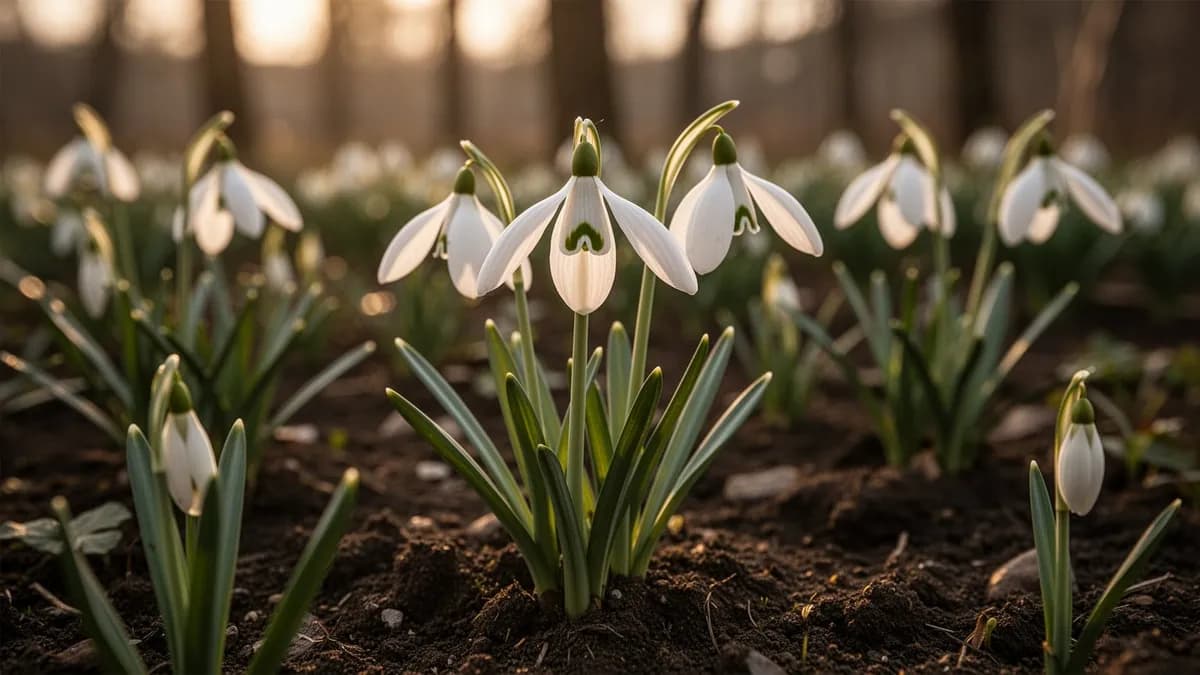
Glory-of-the-Snow
Chionodoxa luciliae
At a Glance
A tiny, early-blooming bulb with star-shaped blue flowers sporting white centers that appear just as the snow melts. Glory-of-the-snow naturalizes beautifully under deciduous trees and in rock gardens, creating carpets of blue in early spring. Plant generously as individual bulbs are small but multiply rapidly over the years.
Planting & Harvest Calendar
Growth Stages
From Seed to Harvest
Bulb Planting
Days 0–14
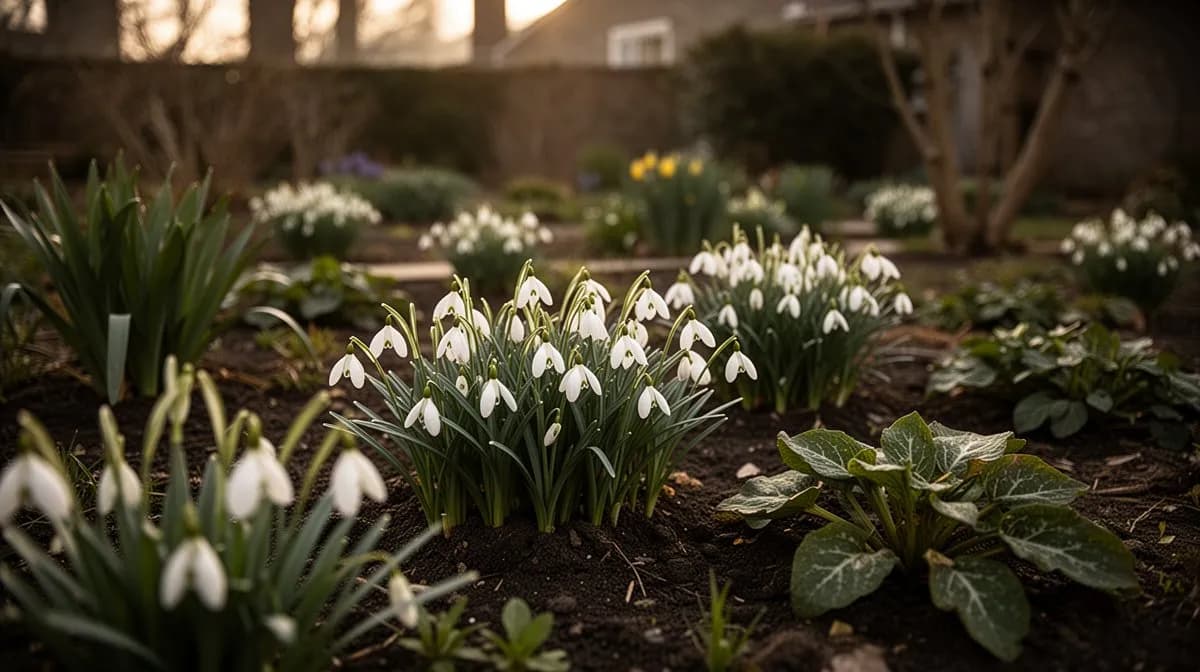
Plant chionodoxa bulbs in autumn, ideally from September to November before the ground freezes. Place bulbs pointed end up at a depth of approximately 8 cm in well-drained soil enriched with a little compost. Space bulbs 5 to 8 cm apart in informal clusters for a natural look. Water the planting area thoroughly after setting the bulbs to encourage root initiation before winter dormancy sets in.
💡 Care Tip
Choose a site that receives full sun to partial shade. Chionodoxa performs especially well beneath deciduous trees, where it receives full light in spring before the canopy leafs out.
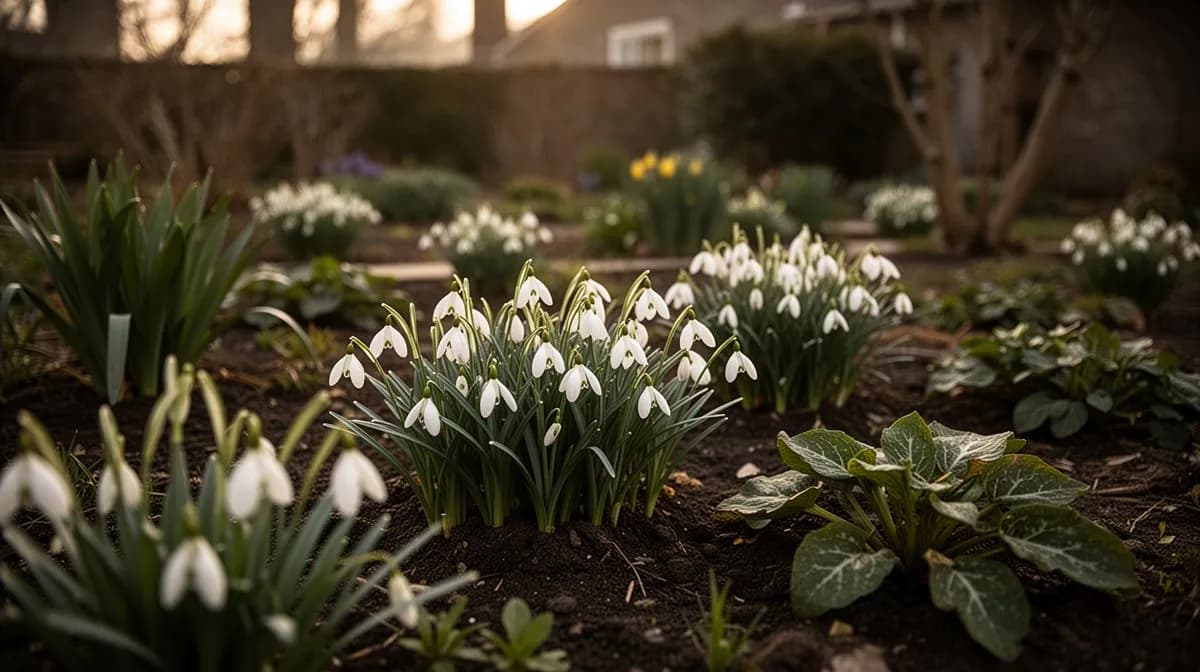
Plant chionodoxa bulbs in autumn about 8 cm deep and 5 cm apart for a dense spring display
Monthly Care Calendar
What to do each month for your Glory-of-the-Snow
May
You are hereLet foliage yellow and die back naturally without cutting or mowing. The leaves are replenishing the bulb for next year. Interplant with summer annuals to mask the ripening foliage.
Did You Know?
Fascinating facts about Glory-of-the-Snow
The name Chionodoxa comes from the Greek words chion meaning snow and doxa meaning glory, because these flowers often bloom while snow still lingers on the ground in their native mountain habitats.
Plant chionodoxa bulbs in autumn, three inches deep and two to three inches apart, in well-drained soil in full sun to partial shade. These tiny bulbs are most effective when planted in large quantities of fifty or more, creating pools of blue beneath deciduous trees and along woodland edges. They thrive in the bright conditions under bare winter branches and complete their growth cycle before the tree canopy leafs out.
Chionodoxa requires virtually no care once established. The bulbs receive adequate moisture from normal autumn and winter rainfall and spring showers. Avoid watering during summer dormancy. Do not remove foliage after flowering; instead, let it die back naturally over four to six weeks to nourish the bulbs for the following year.
These bulbs naturalize enthusiastically by both self-seeding and bulb offsets, spreading to form extensive carpets of blue over several years. They can even colonize lawns if mowing is delayed until the foliage has fully ripened in late spring. For the best visual impact, scatter bulbs randomly and plant where they fall to create natural-looking drifts.
Chionodoxa, commonly known as glory-of-the-snow, is a small genus of spring-flowering bulbous perennials in the family Asparagaceae, subfamily Scilloideae. The genus is native to the eastern Mediterranean region, with the greatest species diversity found in the mountains of western Turkey, particularly in the Boz Dag range near the ancient city of Smyrna, modern-day Izmir. The plants grow naturally in subalpine meadows, rocky scree slopes, and open woodland clearings at elevations between 1,000 and 2,500 meters, where they bloom at the very edge of the retreating snowline in early spring.
The genus was first described scientifically by the Swiss botanist Pierre Edmond Boissier in 1844, based on specimens he collected during botanical expeditions to the mountains of Anatolia. Boissier chose the evocative name from the Greek words chion, meaning snow, and doxa, meaning glory or splendor, to capture the remarkable sight of these intensely blue flowers emerging through patches of melting spring snow. The type species, Chionodoxa luciliae, was named in honor of Lucile Boissier, his wife, who accompanied him on several of his collecting journeys.
Chionodoxa was introduced to European gardens during the 1870s and quickly became a favorite of the Victorian rock garden movement. Its combination of extreme cold hardiness, reliable naturalization, ease of cultivation, and vivid early spring color made it indispensable for woodland gardens, rock gardens, and naturalizing in grass. The bulbs were exported from Turkey and the Netherlands in enormous quantities during the late nineteenth and early twentieth centuries. Today, chionodoxa remains one of the most widely planted and cherished minor spring bulbs in gardens across northern Europe, North America, and temperate regions of Asia, valued both for its ornamental beauty and its ecological importance as an early food source for pollinators.
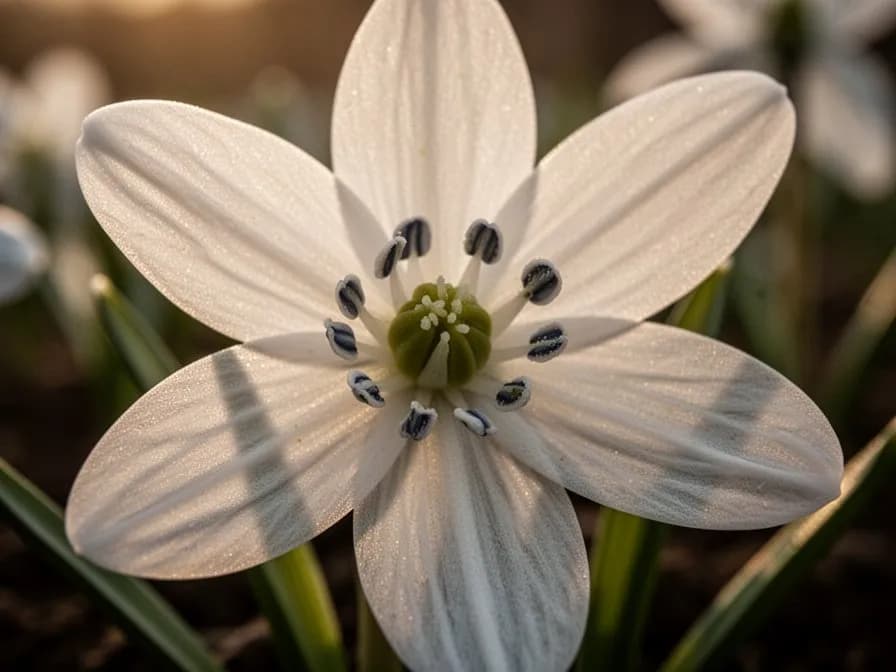
When left undisturbed, chionodoxa naturalizes freely by self-seeding and bulb offsets to create stunning drifts
Chionodoxa self-sows freely and this is the primary means of natural spread. To propagate deliberately, collect seed capsules when they turn brown and sow immediately in pots of gritty, well-drained compost. Seeds germinate the following spring after winter cold stratification. Seedlings are tiny and should be left in their pots for two years before planting out. Flowering begins in the second or third year from seed. Bulb offsets can also be separated in summer after foliage dies back.
Chionodoxa thrives in any average, well-drained garden soil with a pH of 6.0 to 7.5. It tolerates sandy and clay soils alike, provided drainage is adequate. No regular fertilization is needed for established colonies. A light top-dressing of leaf mold or fine compost in autumn provides sufficient nutrition. Avoid heavy mulching over the planting area, as the tiny bulbs need to be close to the surface and emerging shoots can be smothered.
Check Your Zone
See if Glory-of-the-Snow is suitable for your location.
-30°C – 20°C
-22°F – 68°F
Chionodoxa is exceptionally cold-hardy, surviving winter temperatures as low as minus 30 degrees Celsius (USDA hardiness zones 3 through 8). The bulbs require a prolonged cold period of at least 12 to 14 weeks below 7 degrees Celsius for proper vernalization and spring bloom initiation. During the active growing and flowering period in early spring, the plants thrive in cool temperatures between 4 and 15 degrees Celsius. Sustained temperatures above 20 degrees Celsius during the flowering window will shorten bloom duration and accelerate foliage dieback into summer dormancy.
Common issues affecting Glory-of-the-Snow and how to prevent and treat them organically.
The biggest challenge with chionodoxa is planting too few bulbs, resulting in a sparse display. Plant at least fifty to one hundred bulbs for meaningful impact. Squirrels may dig up freshly planted bulbs but usually leave established plantings alone. In extremely wet, heavy clay without drainage, bulbs may rot during summer dormancy. Mowing lawns too early before foliage has ripened will weaken the colony over time.
Chionodoxa creates stunning displays when interplanted with other early spring bulbs such as crocuses, snowdrops, and winter aconites. The blue flowers are a classic companion for yellow daffodils, creating a cheerful color contrast. Plant under deciduous trees and shrubs where they receive winter sun but summer shade. They work well in rock gardens alongside early primulas and creeping thyme.
Pair chionodoxa with other early bulbs like crocuses, snowdrops, and scilla for weeks of successive spring color
- 1Plant chionodoxa bulbs at a depth of approximately three times the height of the bulb, which is typically 7 to 10 cm deep, in any well-drained soil. Heavy clay soils should be amended with coarse grit or sharp sand to prevent waterlogging and bulb rot during winter.
- 2For the most naturalistic effect, scatter bulbs by hand across the planting area and plant each one exactly where it lands. This random distribution mimics the irregular patterns found in wild populations and avoids the artificial look of evenly spaced rows.
- 3Chionodoxa thrives in full sun to light dappled shade. The ideal location is beneath deciduous trees or shrubs that are leafless in early spring, providing full sunlight during the blooming period and welcome shade during summer dormancy.
- 4Avoid lifting and dividing chionodoxa bulbs unless the clumps have become severely overcrowded and flowering has noticeably declined. These bulbs perform best when left completely undisturbed for many years to form large naturalized colonies.
- 5Interplant chionodoxa with later-emerging perennials such as hostas, daylilies, or hardy geraniums whose expanding foliage will conceal the yellowing chionodoxa leaves as they ripen in late spring without competing for early-season light.
- 6When naturalizing in lawns, delay the first mowing of the season until at least six weeks after chionodoxa flowering has finished and the foliage has yellowed completely. This allows the bulbs to fully recharge for the following year.
- 7Chionodoxa can also be grown very successfully in containers, alpine troughs, and raised beds. Use a gritty, freely draining potting mix and ensure the container is frost-proof, as the bulbs need to remain outdoors through winter to receive their cold treatment.
- 8To create a succession of early spring color, combine chionodoxa with other minor bulbs that bloom at slightly different times: snowdrops flower first, followed by chionodoxa and early crocuses, then scilla and grape hyacinths.
- 9Squirrels and rodents rarely bother chionodoxa bulbs, making them an excellent alternative to tulips and crocuses in gardens where bulb predation by wildlife is a persistent problem.
- 10Apply a thin top-dressing of well-rotted compost or leaf mold over established chionodoxa colonies each autumn. This gentle feeding mimics the natural accumulation of organic matter on the forest floor and supports healthy bulb division.
Chionodoxa is best enjoyed in the garden rather than as a cut flower, as the short stems make them impractical for arrangements. However, small clusters can be picked and floated in shallow bowls for charming spring tablescapes. Allow all foliage to yellow and die back naturally after flowering to strengthen the bulbs. Seed capsules can be left to ripen and scatter for natural self-sowing, or collected for controlled propagation.
Allow seed capsules to ripen and drop naturally to encourage self-sowing and expanding colonies over the years
Chionodoxa bulbs should remain in the ground year-round, as they are fully hardy and naturalize best when left undisturbed. If you must move bulbs, lift and replant immediately after flowering while still in leaf, as they do not store well when dry. Seeds can be collected from ripe capsules in late spring and sown immediately or stored briefly in a cool, dry place for autumn sowing.
Plan your garden with ease
Love growing Glory-of-the-Snow? Use our free garden planner to design your beds, track planting dates, and get personalized care reminders.
Nutritional Info
Per 100g serving
0
Calories
Health Benefits
- Chionodoxa is a purely ornamental bulb and is not edible. All parts of the plant, including the bulb, leaves, and flowers, should not be consumed.
- The bulbs contain alkaloids and glycosides that can cause gastrointestinal discomfort if accidentally ingested by humans or pets.
- Glory-of-the-snow provides important ecological nutrition for early-season pollinators rather than dietary nutrition for humans.
- If you are looking for edible spring-flowering plants, consider alternatives such as violets, borage, or calendula whose flowers are safe for culinary use.
💰 Why Grow Your Own?
Chionodoxa bulbs are among the most affordable spring-flowering bulbs available, typically costing between 5 and 15 cents per bulb when purchased in bulk quantities of 100 or more. Because each bulb multiplies naturally by producing offsets and self-sowing seed, an initial investment of roughly 10 to 20 dollars for 100 bulbs can yield a self-sustaining colony of over 1,000 blooming bulbs within six to eight years. This exponential multiplication means that chionodoxa provides one of the highest long-term returns of any ornamental garden investment, delivering decades of spring color from a single modest purchase with zero ongoing cost for replacement bulbs.
Quick Recipes
Simple recipes using fresh Glory-of-the-Snow
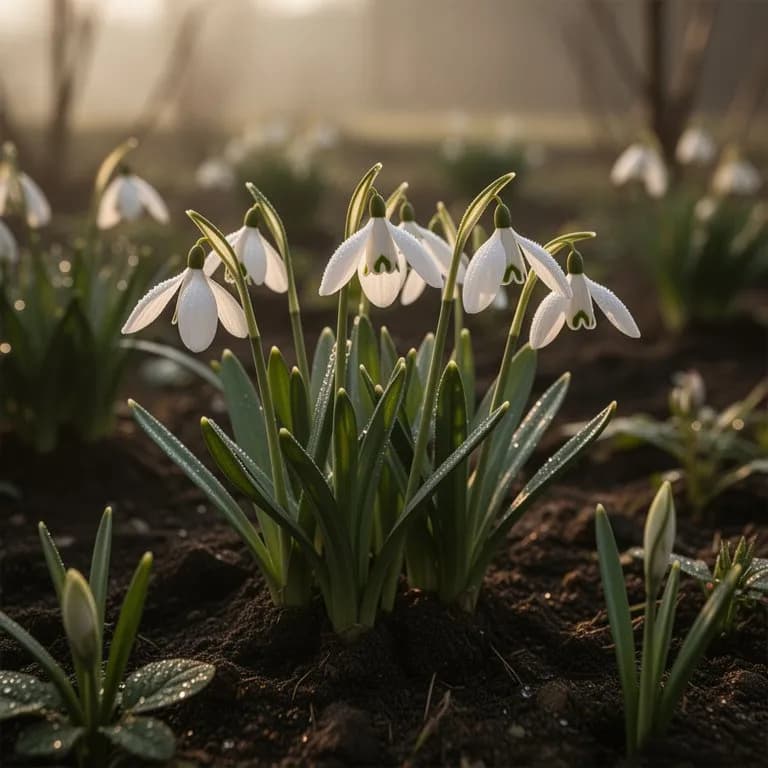
Spring Glory Bulb Arrangement
15 minutesCreate a charming living centerpiece by potting up pre-chilled chionodoxa bulbs in a decorative shallow bowl with moss and pebbles. This indoor forcing arrangement brings the beauty of the spring garden to your table weeks before outdoor blooms appear. The bulbs will flower for two to three weeks indoors in a cool bright room.
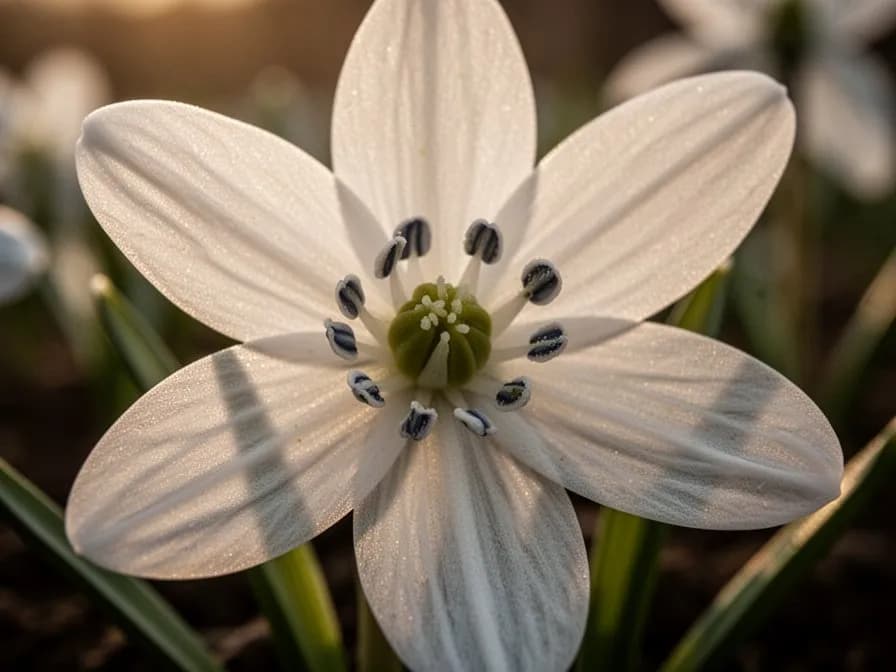
Naturalized Meadow Bulb Mix
45 minutes planting timeDesign a self-sustaining spring meadow by blending chionodoxa bulbs with other early minor bulbs for a succession of color from late winter through mid-spring. Scatter the mixed bulbs randomly across a grassy area and plant them where they fall for the most natural-looking effect. Within three to four years the planting will have naturalized into a breathtaking carpet of color.
Pressed Flower Spring Botanical Art
20 minutes active plus 2 weeks pressingPreserve the delicate beauty of chionodoxa flowers by pressing them into botanical art. The star-shaped blooms retain their blue color remarkably well when pressed and dried. Mount the pressed flowers on acid-free card stock for framed artwork, bookmarks, or handmade greeting cards that capture the fleeting magic of early spring.
Yield & Spacing Calculator
See how many Glory-of-the-Snow plants fit in your garden bed based on the recommended 8cm spacing.
225
Glory-of-the-Snow plants in a 4×4 ft bed
15 columns × 15 rows at 8cm spacing
Popular Varieties
Some of the most popular glory-of-the-snow varieties for home gardeners, each with unique characteristics.
Violet Beauty
Rich violet-blue flowers with smaller white centers, creating a more intensely colored display than the species.
Pink Giant
Soft lilac-pink flowers with white centers on slightly taller stems, a lovely companion to the blue forms in mixed plantings.
Alba
Pure white flowers that glow in shaded garden corners, stunning when planted alongside the blue species for contrast.
Chionodoxa forbesii Pink Giant offers a soft rose-pink alternative to the classic blue species
When should I plant Glory-of-the-Snow?
Plant Glory-of-the-Snow in September, October. It takes approximately 150 days to reach maturity, with harvest typically in March, April.
What are good companion plants for Glory-of-the-Snow?
Glory-of-the-Snow grows well alongside Crocus, Grape Hyacinth, Giant Snowdrop. Companion planting can improve growth, flavor, and natural pest control.
What hardiness zones can Glory-of-the-Snow grow in?
Glory-of-the-Snow thrives in USDA hardiness zones 3 through 8. With greenhouse protection, it may be grown in zones 1 through 9.
How much sun does Glory-of-the-Snow need?
Glory-of-the-Snow requires Full Sun (6-8h+). This means at least 6-8 hours of direct sunlight daily.
How far apart should I space Glory-of-the-Snow?
Space Glory-of-the-Snow plants 8cm (3 inches) apart for optimal growth and air circulation.
What pests and diseases affect Glory-of-the-Snow?
Common issues include Squirrels, Botrytis. Prevention through good garden practices like crop rotation, proper spacing, and companion planting is the best approach. See the detailed pests and diseases section above for symptoms, prevention, and treatment for each.
How do I store Glory-of-the-Snow after harvest?
Chionodoxa bulbs should remain in the ground year-round, as they are fully hardy and naturalize best when left undisturbed. If you must move bulbs, lift and replant immediately after flowering while still in leaf, as they do not store well when dry. Seeds can be collected from ripe capsules in late ...
What are the best Glory-of-the-Snow varieties to grow?
Popular varieties include Violet Beauty, Pink Giant, Alba. Each has unique characteristics suited to different growing conditions and culinary preferences. See the varieties section above for detailed descriptions.
What soil does Glory-of-the-Snow need?
Chionodoxa thrives in any average, well-drained garden soil with a pH of 6.0 to 7.5. It tolerates sandy and clay soils alike, provided drainage is adequate. No regular fertilization is needed for established colonies. A light top-dressing of leaf mold or fine compost in autumn provides sufficient nu...
Are chionodoxa and scilla the same plant?
Modern botanical taxonomy has merged Chionodoxa into the genus Scilla based on DNA analysis, and you may see glory-of-the-snow listed as Scilla luciliae or Scilla forbesii in some references. However, the name Chionodoxa remains widely used in the horticultural trade and most gardening books. The plants previously classified as Chionodoxa are distinguished from other scillas by their flowers having flattened, basally fused staminal filaments and wider-opening, more star-shaped blooms. For practical gardening purposes, the growing requirements are identical regardless of which name is used.
Will chionodoxa come back every year?
Yes, chionodoxa is a reliably perennial bulb in USDA hardiness zones 3 through 8. Not only will the original bulbs return and flower each spring, but they will actively multiply by producing offset bulblets and self-sowing seed. A small initial planting will gradually expand into a large naturalized colony over several years, requiring no replanting or special care beyond leaving the foliage to ripen naturally after flowering.
When is the best time to plant chionodoxa bulbs?
Plant chionodoxa bulbs in autumn, from September through November in the Northern Hemisphere, before the ground freezes solid for winter. The bulbs need to be in the ground early enough to establish roots before dormancy, and they require at least 12 to 14 weeks of cold temperatures below 7 degrees Celsius for proper vernalization. If you receive bulbs late in the season, plant them immediately even if conditions are not ideal, as unplanted bulbs will desiccate and lose viability in storage.
Can I grow chionodoxa indoors or force them in pots?
Yes, chionodoxa can be forced indoors for early bloom. Plant bulbs in a pot of gritty, well-drained potting mix in autumn, water them once, and then place the pot in a consistently cold location such as an unheated garage, root cellar, or refrigerator at 2 to 7 degrees Celsius for 12 to 14 weeks. After the chilling period, bring the pot into a cool, bright room at around 10 to 15 degrees Celsius, and the bulbs will bloom within three to four weeks. Avoid warm rooms as high temperatures will cause weak, stretched growth.
Are chionodoxa toxic to pets or children?
Chionodoxa bulbs and foliage contain alkaloids and glycosides that can cause mild gastrointestinal upset including nausea, vomiting, and diarrhea if ingested in significant quantities. While not considered severely toxic, it is prudent to keep the bulbs out of reach of curious children and pets during planting, and to discourage pets from digging in areas where bulbs are established. If ingestion is suspected, contact a veterinarian or poison control center for guidance.
Why did my chionodoxa stop flowering after a few years?
The most common cause of declining chionodoxa bloom is premature removal of the foliage after flowering. The leaves must be allowed to yellow and wither naturally over a period of about six weeks so that the bulb can photosynthesize and store enough energy for next year. Other possible causes include excessive shade from maturing trees or shrubs that now block spring sunlight, overcrowding of bulb clumps that may benefit from lifting and dividing, or waterlogged soil conditions that are causing gradual bulb rot. Addressing these issues typically restores vigorous flowering within one to two growing seasons.
Ready to Grow Glory-of-the-Snow?
Add Glory-of-the-Snow to your garden plan and start designing your perfect layout.

Vladimir Kusnezow
Gardener and Software Developer
Zone 6b gardener. Growing vegetables and fruits in soil and hydroponics for 6 years. I built PlotMyGarden to plan my own gardens.
Jump to Section