Giant Snowdrop
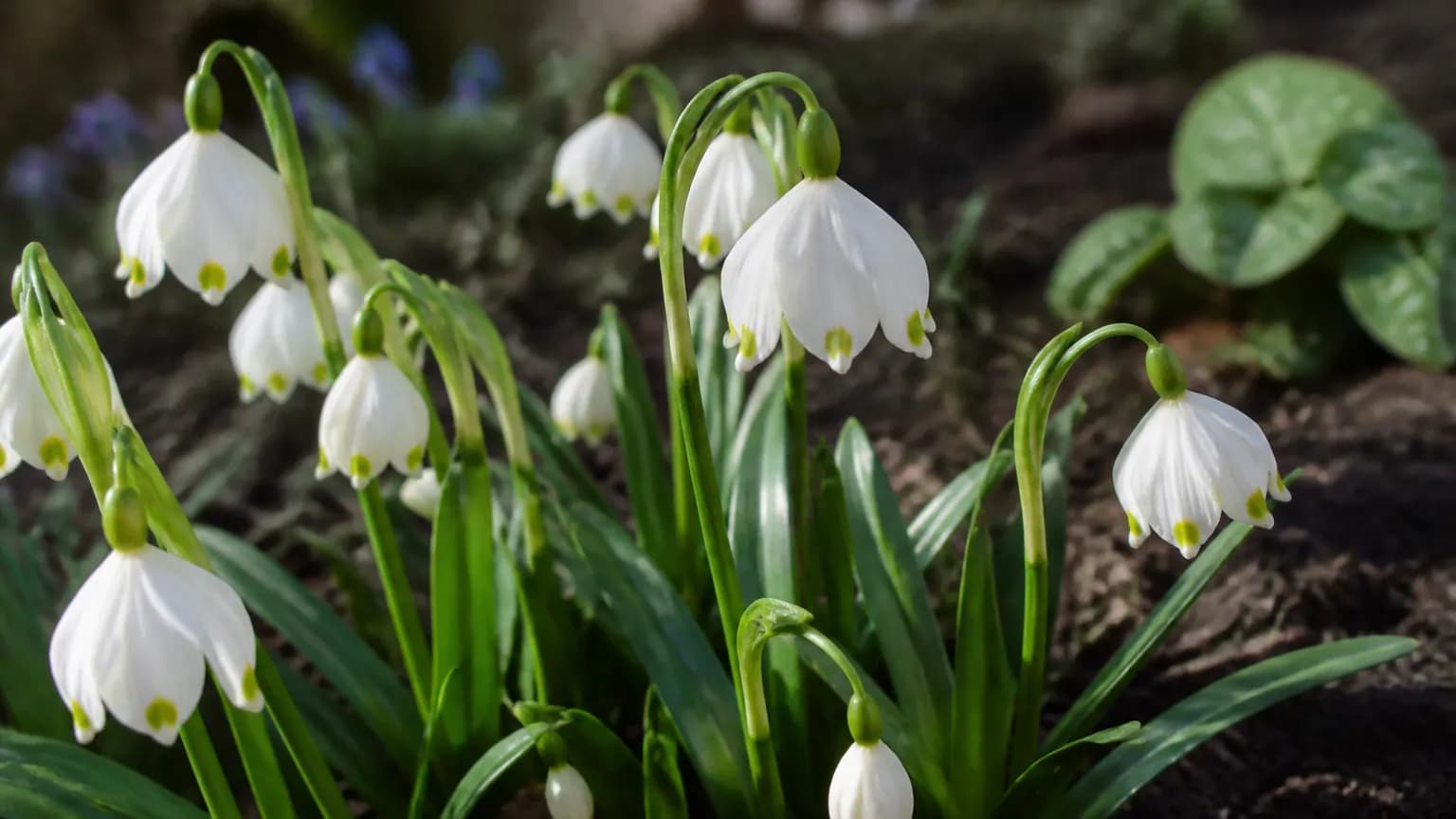
A robust snowdrop species with larger flowers and broader grey-green leaves than the common snowdrop, blooming bravely through the coldest months.





On this pageOverview
Meet Giant Snowdrop
A robust snowdrop species with larger flowers and broader grey-green leaves than the common snowdrop, blooming bravely through the coldest months. Giant snowdrops are among the first flowers of the year and bring hope to winter-weary gardeners. Plant in the green immediately after flowering for best establishment.
When to plant Giant Snowdrop
Snowdrops self-sow naturally, and seed-grown plants are genetically diverse, potentially producing new variations. Collect seeds from ripe capsules in late spring when they turn yellow-green and sow immediately, as viability drops rapidly if seeds dry out. Sow on the surface of moist, humus-rich compost and cover lightly with fine grit. Seeds germinate the following spring after winter cold treatment. Seedlings take three to five years to reach flowering size. Division in the green is the fastest propagation method.
Your Giant Snowdrop Year
Composed for Zone 7 · typical seasons · frost passes Apr 2, returns Nov 1
Plant Giant Snowdrop Sep – Oct, pick Jan – Mar. Check the planting methods below and set your climate to personalize these windows.
How to grow Giant Snowdrop
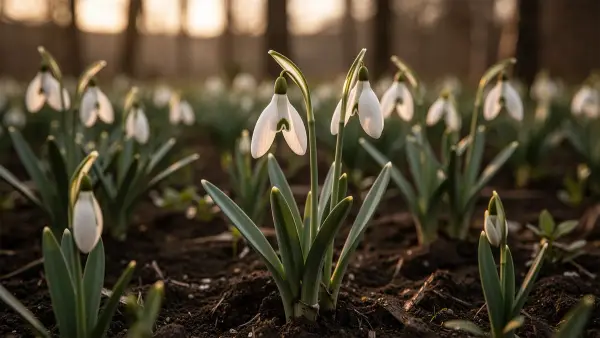
Plant giant snowdrop bulbs in early autumn or, ideally, transplant them in the green immediately after flowering in late winter or early spring. Set bulbs three to four inches deep and three inches apart in humus-rich, moisture-retentive soil beneath deciduous trees, along hedgerows, or in dappled woodland shade. Giant snowdrops are more tolerant of dry conditions than common snowdrops and adapt well to a wider range of garden situations.
During the brief growing season from winter through early spring, snowdrops need consistent moisture and will not perform well in bone-dry soil. They are fully dormant by late spring and tolerate summer dryness without issue. Top-dress with leaf mold in autumn to replicate the natural woodland floor conditions they prefer.
Giant snowdrops increase steadily by bulb offsets and self-sowing. Divide overcrowded clumps immediately after flowering by lifting, separating, and replanting single bulbs or small groups. This in-the-green method has a much higher success rate than planting dry bulbs from retail packs. The larger flowers and broader grey-green leaves distinguish this species from the common snowdrop and make it a superior choice for garden display.
450 plants fit a 4 × 8 ft bed
Each Giant Snowdrop wants 8 cm of elbow room. The planner keeps that spacing for you — every plant, every bed.
Giant Snowdrop's best neighbours
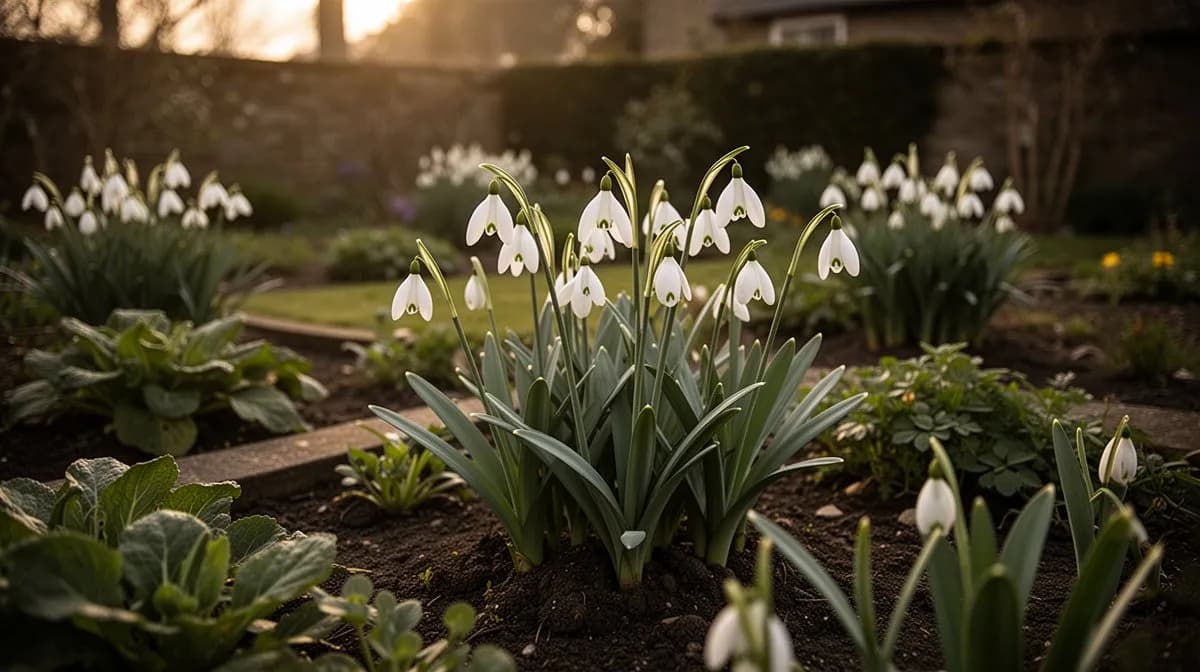
Giant snowdrops create classic winter combinations with winter aconites, early crocuses, and cyclamen coum. Underplant beneath witch hazel, wintersweet, or Cornus mas for a complete winter garden picture. They naturalize beautifully in lawns if mowing is delayed until foliage has died back. Plant near windows and pathways where the earliest flowers of the year can be spotted and enjoyed during winter walks.
Winter Aconite belongs beside it.
Old growers' knowledge, checked against Giant Snowdrop's real companion table below — test any plant you're growing.
Try Giant Snowdrop in a bed — right here
A real planner bed with Giant Snowdrop already in it. Tap a companion to place it and watch the pairing checks answer — green for good neighbours, red for a clash.


Related growing guides
Feed it well
Giant snowdrops thrive in humus-rich, moisture-retentive soil with a pH of 6.5 to 7.5, tolerating both clay and sandy soils if organic matter is present. Amend planting areas with leaf mold, compost, or well-rotted manure. Annual top-dressing with leaf mold in autumn is the best ongoing care. No supplemental chemical fertilizer is typically needed in good garden soil. The bulbs naturally grow in alkaline to neutral conditions under deciduous trees.
Ideal Temperature
Hardiness Zone Compatibility
From seed to harvest, stage by stage
Dormancy (Summer Rest)
Throughout summer the bulb rests underground in a completely dormant state. The fleshy bulb, typically 2-3 cm in diameter, is protected by a papery brown tunic. Internally the embryonic flower bud and leaf primordia have already formed during the previous spring. Root initials sit at the basal plate ready to activate once soil temperatures begin to drop in autumn. The bulb relies on stored starch reserves accumulated during the previous growing season.
Root Development and Shoot Initiation
As autumn soil temperatures fall below 10°C, the basal plate activates and produces a dense ring of fleshy white contractile roots that pull the bulb to its optimal depth. These roots also begin absorbing water and nutrients from the surrounding soil, rehydrating the bulb. The shoot tip begins elongating within the bulb neck. Cold stratification during this period is essential for triggering the hormonal changes that allow the flower bud to develop fully.
Shoot Emergence and Bud Formation
In mid to late winter, the tightly wrapped shoot pierces the soil surface — often pushing through frozen ground or light snow cover. The two or three broad, strap-shaped, distinctively glaucous-blue leaves are folded around the developing flower bud in a protective sheath. The leaves are wider and more blue-green than those of G. nivalis, a key identification feature. The flower bud becomes visible as a pale green swelling within the leaf sheaths as they begin to separate.
Flowering
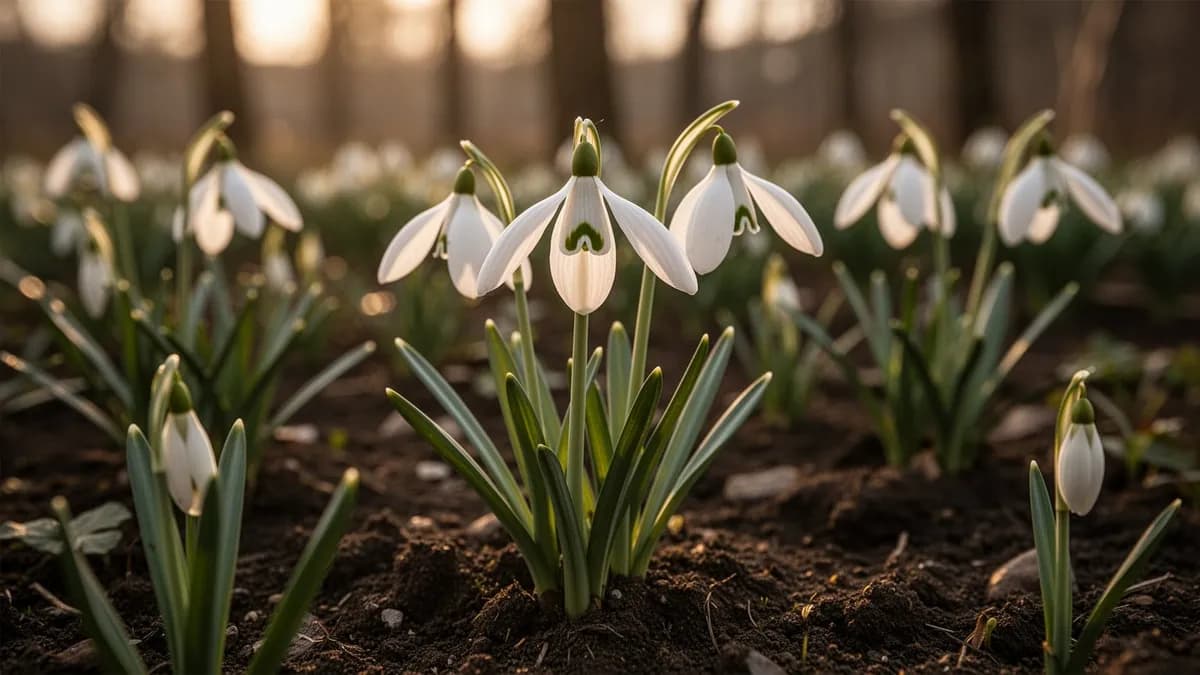
The solitary pendent flower opens on a slender pedicel that arches gracefully from the top of the scape. Each flower has three large, pure-white outer tepals and three shorter inner tepals bearing the characteristic broad green markings — in G. elwesii these markings often merge into a single large horseshoe or bridge shape. Flowers are lightly honey-scented and are visited by early-flying bumblebees, honey bees, and hoverflies. Individual flowers last 2-3 weeks depending on temperature, with cool conditions extending the display.
Seed Set and Foliage Ripening
After pollination the ovary swells into a fleshy green capsule that droops to ground level on the elongating pedicel. Each capsule contains 15-25 pale seeds, each equipped with a fleshy elaiosome appendage that attracts ants, which carry the seeds away and aid dispersal (myrmecochory). Meanwhile the broad leaves continue photosynthesising vigorously, channelling sugars down into the bulb to replenish reserves. The leaves gradually yellow and collapse as the bulb enters dormancy in late spring.
Bulb Offset Multiplication
During late spring and early summer, before full dormancy sets in, the mother bulb produces one or two daughter bulb offsets from axillary buds at the base. These offsets remain attached initially, drawing nutrients from the mother bulb, and will separate naturally over the following seasons to form expanding clumps. A single bulb can develop into a dense clump of 8-12 flowering bulbs within five years under favourable conditions. This vegetative multiplication is the primary means of colony expansion in garden settings.
Avoid disturbing the soil above dormant bulbs during summer. Do not irrigate the planting area excessively as giant snowdrop bulbs are susceptible to fungal rot in warm, waterlogged conditions. Mark planting locations to prevent accidental digging. If you must transplant, lift bulbs 'in the green' just after flowering rather than during dormancy.
Caring for Giant Snowdrop month by month
What to do each month for your Giant Snowdrop
October
You are hereComplete all new bulb planting by mid-month. Apply a light mulch of leaf mould over all snowdrop areas. Root development is now well underway underground. Check for waterlogging in heavy soils and improve drainage if necessary by working in coarse grit.
Know exactly what to do in your garden — every month
One email at the start of each month: what to sow, plant, and tackle right now — for your Giant Snowdrop and everything growing around it. Plus a short starter course that helps you dodge the classic mistakes.
- What to do, right now
- Matched to your season
- Starter course included
Harvesting Giant Snowdrop
Giant snowdrops can be picked in small bunches for miniature winter posies. Cut or carefully pull stems when flowers are just opening and place immediately in cool water. The delicate blooms last about five days indoors. They are most effective displayed in small glass vases or teacups where their intricate markings can be appreciated up close. Always leave the majority of flowers in the garden to set seed and strengthen the colony.
assuming you plant when the window opens — set your real date
From bulbs, tubers or cloves
Pick Giant Snowdrop promptly and the plant keeps producing.
Storage & Preservation
Snowdrop bulbs should not be stored dry, as they deteriorate rapidly out of the ground. The best practice is to always move snowdrops in the green, lifting and dividing immediately after flowering. If brief storage is unavoidable, wrap bulbs in slightly damp newspaper and keep in a cool, shaded location for no more than a few days. Pressed and dried snowdrop flowers can be preserved in botanical collections but the flowers are too delicate for most dried arrangements.
What goes wrong — and the fix
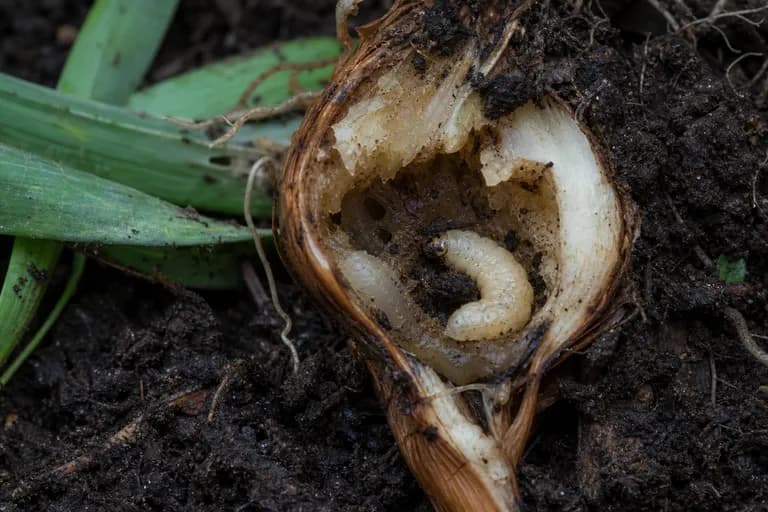
Narcissus Bulb Fly
PestSingle large grub found inside the bulb, which becomes hollow and soft. Affected bulbs produce weak or no foliage.
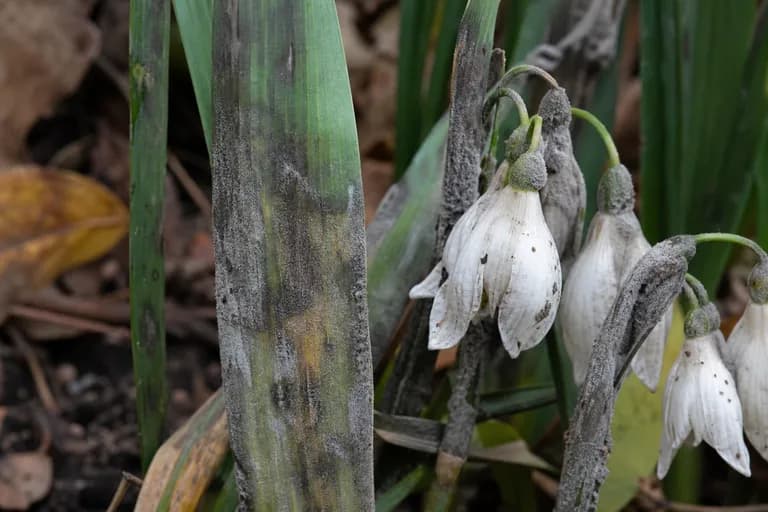
Gray Mold (Botrytis galanthina)
DiseaseFuzzy gray mold on leaves and flowers during cool, wet conditions. Dark spots on leaves that may spread to the bulb.
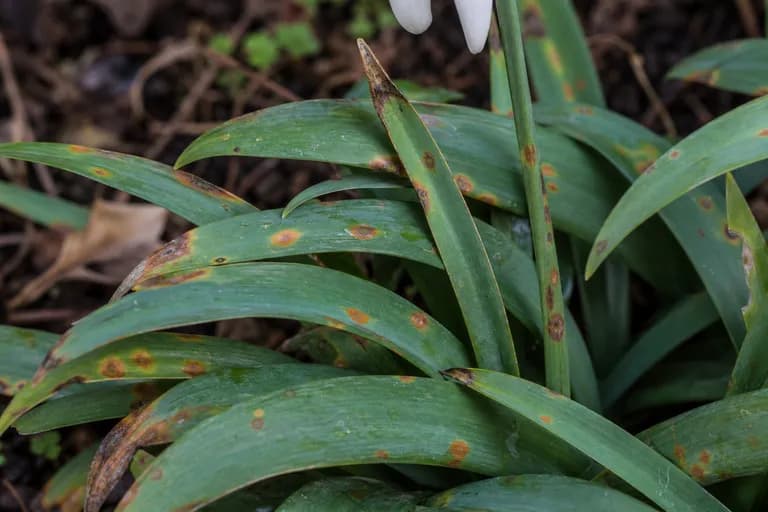
Stagonospora
DiseaseOrange-brown spots on the leaves that can enlarge and cause leaf tip dieback. Lesions may appear on the flower stalks as well.
Troubleshooting Common Problems
The most common problem is poor establishment from dry bulbs, which is why planting in the green after flowering is strongly recommended. Squirrels occasionally dig up newly planted bulbs but generally leave snowdrops alone once established. In very mild winters, premature warm spells can trigger early growth that is then damaged by subsequent freezes. Overcrowded colonies gradually reduce their flowering, signaling the need for division.
Growing Tips
- Plant giant snowdrop bulbs as early in autumn as possible — ideally September — as they deteriorate rapidly when stored dry. If purchasing dry bulbs, choose plump, firm specimens and avoid any that feel light, papery, or show signs of mould.
- For the most reliable establishment, buy and plant snowdrops 'in the green' (as growing plants with roots and foliage) immediately after flowering in February or March rather than as dry bulbs in autumn.
- Choose a planting site in partial shade beneath deciduous trees or shrubs where the bulbs will receive winter sunlight but be sheltered from intense summer sun. North-facing or east-facing slopes are ideal in warmer climates.
- Incorporate generous quantities of leaf mould and coarse horticultural grit into heavy clay soils before planting to improve drainage — Galanthus elwesii will not tolerate waterlogged conditions, especially during summer dormancy.
- Plant bulbs at a depth of 8-10 cm (measured from the base of the bulb) in informal groups of 15-25 for a natural effect. Avoid planting in rigid lines or geometric patterns which look artificial.
- Never cut, mow, or tidy away the foliage until it has fully yellowed and withered in late spring. The leaves photosynthesise for approximately 8-10 weeks after flowering and this energy is essential for the following year's flower production.
- Divide congested clumps every 5-7 years by lifting them immediately after flowering, carefully separating individual bulbs or small clusters, and replanting at the same depth with a handful of leaf mould in each planting hole.
- Wear gloves when handling bulbs and all plant parts, as the alkaloids present — particularly galantamine and lycorine — can cause contact dermatitis, skin irritation, and rashes in sensitive individuals.
- Avoid using fresh manure or high-nitrogen fertilisers near snowdrop plantings. A light annual top-dressing of sieved leaf mould or very well-rotted garden compost applied in autumn provides all the nutrients needed.
- Monitor for grey mould (Botrytis galanthina) which appears as fuzzy grey patches on leaves and flower stems in wet conditions. Remove and destroy affected foliage promptly and improve air circulation around plantings to reduce humidity.
Grow your best Giant Snowdrop yet — and everything around it.
Start a free plan today. Lay out your beds, drop in your Giant Snowdrop, and let PlotMyGarden handle the timing, spacing, companions and reminders from seed to harvest basket.
Pick your Giant Snowdrop
Grumpy
A distinctive cultivar with particularly well-marked inner segments and a grumpy-looking flower shape, highly sought after by collectors.
Comet
An outstanding selection with large flowers showing extended green markings on both inner and outer segments, vigorous and floriferous.
Godfrey Owen
A double-flowered form with neatly arranged extra petals, adding fullness and charm to the familiar snowdrop silhouette.
Giant snowdrop bulbs typically cost between £0.30 and £1.00 each when bought dry in autumn, or £1.50 to £4.00 per clump when purchased 'in the green' from specialist nurseries. However, because each bulb reliably produces 1-2 offsets per year, a single initial planting of 25 bulbs (costing approximately £8-25) can multiply into a colony of 200-400 flowering bulbs within 5-7 years without any additional expenditure. Named cultivars and rare forms can command £50 to over £500 per bulb, making propagation by division an exceptionally cost-effective way to build a collection. Unlike many spring bulbs, snowdrops rarely need replacing as they are truly perennial and will persist and increase for decades in suitable conditions.
Quick recipes
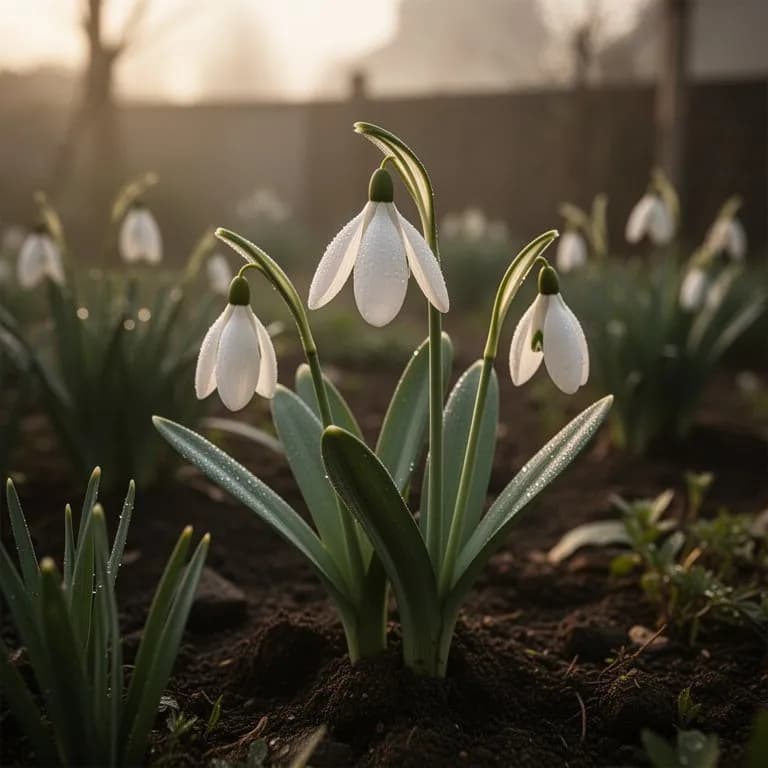
Snowdrop Flower Arrangement for Late Winter
15 minutesCreate a charming miniature arrangement using freshly picked giant snowdrop stems displayed in small vintage glasses or egg cups. Giant snowdrops have longer, sturdier stems than common snowdrops, making them ideal for cutting. Place 5-7 stems in each vessel with a sprig of ivy or fern frond. The flowers will last 4-5 days indoors in a cool room. Note: wash hands after handling as all parts contain irritant alkaloids.
4 ingredientsSnowdrop Forcing Display for Indoor Enjoyment
20 minutes (plus 10-12 weeks chilling)Pot up giant snowdrop bulbs in autumn for a forced indoor display in midwinter. Plant 7-9 bulbs closely in a shallow terracotta pan filled with gritty compost, water well, and place in a cold but frost-free location (such as an unheated garage) for 10-12 weeks. Once shoots appear, bring indoors to a cool bright windowsill (no warmer than 15°C). Flowers will open within 2-3 weeks. After flowering, plant the bulbs out in the garden where they will continue to grow and multiply. Wear gloves when handling bulbs.
4 ingredients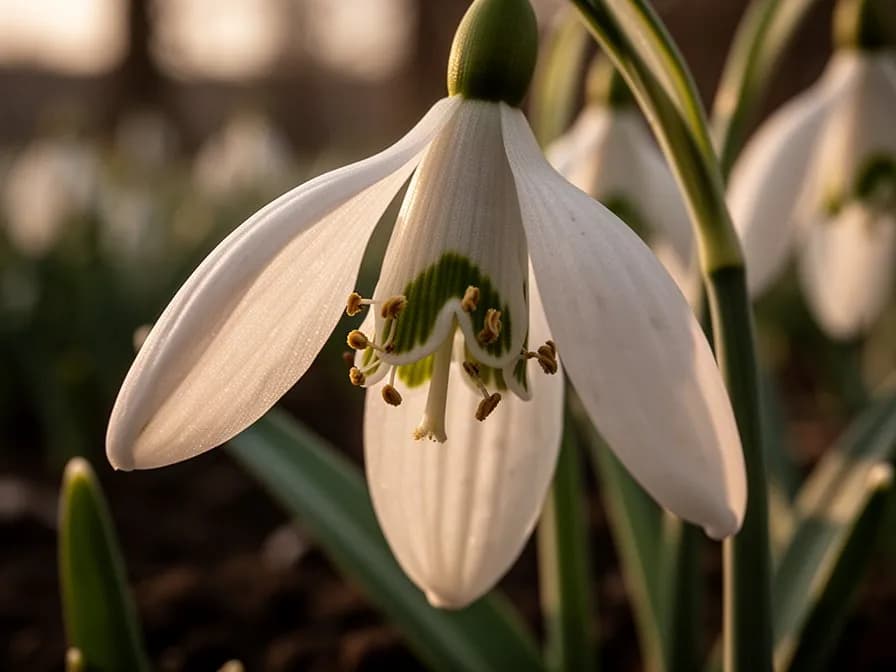
Pressed Snowdrop Botanical Art Card
10 minutes active (plus 2-3 weeks pressing)Press giant snowdrop flowers and leaves to create beautiful botanical greeting cards or framed art. Select freshly opened flowers on a dry day and press them immediately between sheets of blotting paper inside a heavy book or flower press. After 2-3 weeks the specimens will be fully dried and can be arranged on card stock and fixed with acid-free adhesive. The broad inner tepals with their green markings press beautifully and retain their detail. Always wash hands after handling pressed specimens as alkaloids persist in dried tissue.
4 ingredientsWhat's inside
Health Benefits
- CAUTION: Galanthus elwesii is toxic and must never be eaten, brewed, or used in home remedies — all health applications require pharmaceutical processing and medical supervision
- Galantamine, originally isolated from snowdrop bulbs, is an FDA-approved acetylcholinesterase inhibitor used clinically to slow cognitive decline in patients with mild to moderate Alzheimer's disease
- Research indicates galantamine may have neuroprotective properties beyond cholinesterase inhibition, including modulation of nicotinic acetylcholine receptors which may support memory and learning pathways
- Growing snowdrops and tending a winter garden provides documented mental health benefits including reduced symptoms of seasonal affective disorder (SAD) through exposure to daylight and engagement with nature during the darkest months
- The act of dividing, planting, and caring for snowdrop colonies provides gentle low-impact physical activity during winter months when outdoor exercise opportunities are often limited
- Observing the emergence and flowering of snowdrops has been shown in horticultural therapy studies to improve mood, reduce stress, and foster feelings of hope and renewal during the late-winter period
Where Giant Snowdrop comes from
Galanthus elwesii, commonly known as the giant snowdrop or greater snowdrop, is native to a broad arc stretching from the Balkans through western Turkey and into the eastern Mediterranean. Its natural habitat encompasses rocky limestone meadows, open deciduous woodlands dominated by oak and hornbeam, and scrubby mountain slopes at elevations ranging from 150 to 1,700 metres above sea level. The species thrives in regions with cold, wet winters and hot, dry summers — a classic Mediterranean-montane climate pattern that explains the bulb's requirement for a pronounced summer dormancy.
The species was first described scientifically by Joseph Dalton Hooker in 1875, based on bulbs collected the previous year by the English naturalist, entomologist, and big-game hunter Henry John Elwes during an expedition through the Amanus Mountains of southern Turkey. Elwes sent the bulbs to the Royal Botanic Gardens at Kew, where they flowered for the first time in cultivation and immediately attracted attention for their larger stature and bolder markings compared to the already well-known common snowdrop, Galanthus nivalis.
By the late nineteenth century, G. elwesii was being widely distributed among British and European gardeners, and it quickly proved itself an adaptable and robust garden plant. Its willingness to naturalise in grass, borders, and woodland gardens across northern Europe made it a firm favourite. During the twentieth century, galanthophiles began selecting and naming superior forms, and today hundreds of cultivars exist — some commanding extraordinary prices among collectors.
Conservation concern has grown as wild populations in Turkey and the Balkans have been depleted by commercial collection for the horticultural trade. Galanthus is now listed under CITES Appendix II, meaning international trade in wild-collected bulbs is regulated. Responsible gardeners today purchase only nursery-propagated stock or obtain plants through division from established garden colonies, ensuring that wild populations are not further diminished.
Giant Snowdrop: did you know?
Fascinating facts about Giant Snowdrop
Galanthus elwesii was introduced to Western cultivation in 1874 from collections made by Henry John Elwes in the mountains of western Turkey, and the species is named in his honour.
Giant Snowdrop questions, answered
When should I plant Giant Snowdrop?
What are good companion plants for Giant Snowdrop?
What hardiness zones can Giant Snowdrop grow in?
How much sun does Giant Snowdrop need?
How far apart should I space Giant Snowdrop?
What pests and diseases affect Giant Snowdrop?
How do I store Giant Snowdrop after harvest?
What are the best Giant Snowdrop varieties to grow?
What soil does Giant Snowdrop need?
Is Galanthus elwesii poisonous to humans and pets?
What is the difference between Galanthus elwesii and Galanthus nivalis?
When is the best time to plant giant snowdrop bulbs?
Why are my giant snowdrops not flowering?
Can I grow Galanthus elwesii in containers?
Is it legal to collect wild giant snowdrops?
You just read the theory. Now grow it on autopilot.
Everything that makes Giant Snowdrop fiddly — the timing, the spacing, the companions, the harvest window — is exactly what PlotMyGarden handles for you, for every plant in your garden.
A plan that knows your weather
Set your location once. Get sow, feed and harvest dates built around your real last-frost date and live forecast — no more guessing from a generic seed packet.
From the “When to plant” sectionDrag-and-drop bed planner
Design beds on a grid. Every plant snaps to its proper spacing, and you can see your whole season laid out before you spend a cent on seed.
From the “Growing guide” sectionCompanion conflicts, caught early
200+ good-and-bad pairings checked live as you plant — so a season-wrecking mistake never makes it into the ground.
From the “Companions” sectionReminders you'll actually act on
“Water the beans.” “Pick today before it turns.” Timely, specific, and tied to the plants you're really growing.
From the “Harvest” sectionSuccession, scheduled
Want a harvest for six weeks, not six days? It spaces your sowings automatically and reminds you when each new block is due.
From the “When to plant” sectionA record that gets smarter
Every harvest you log teaches it your garden. Next year's plan starts from what actually worked in your soil, not a textbook's.
From the “Overview” sectionPlant these alongside Giant Snowdrop
More Bulbs
Grow your best Giant Snowdrop yet — and everything around it.
Start a free plan today. Lay out your beds, drop in your Giant Snowdrop, and let PlotMyGarden handle the timing, spacing, companions and reminders from seed to harvest basket.