Grape Hyacinth
A tiny bulb producing dense spikes of cobalt-blue flowers that resemble miniature bunches of grapes in early spring.





On this pageOverview
Meet Grape Hyacinth
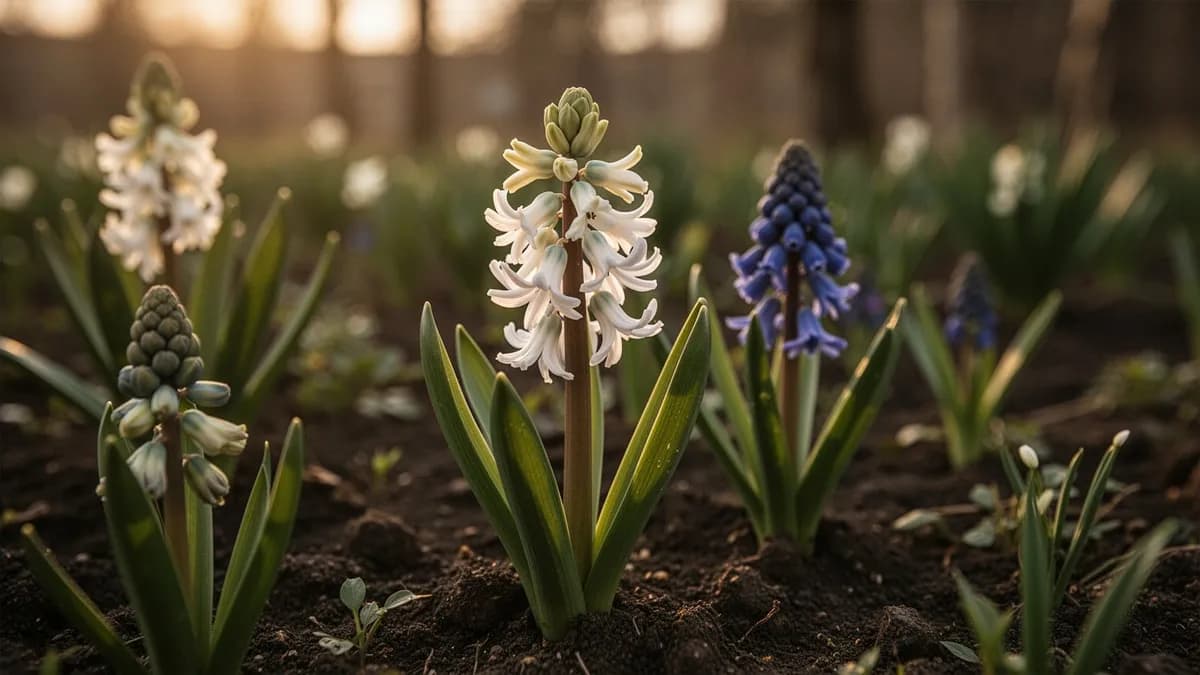
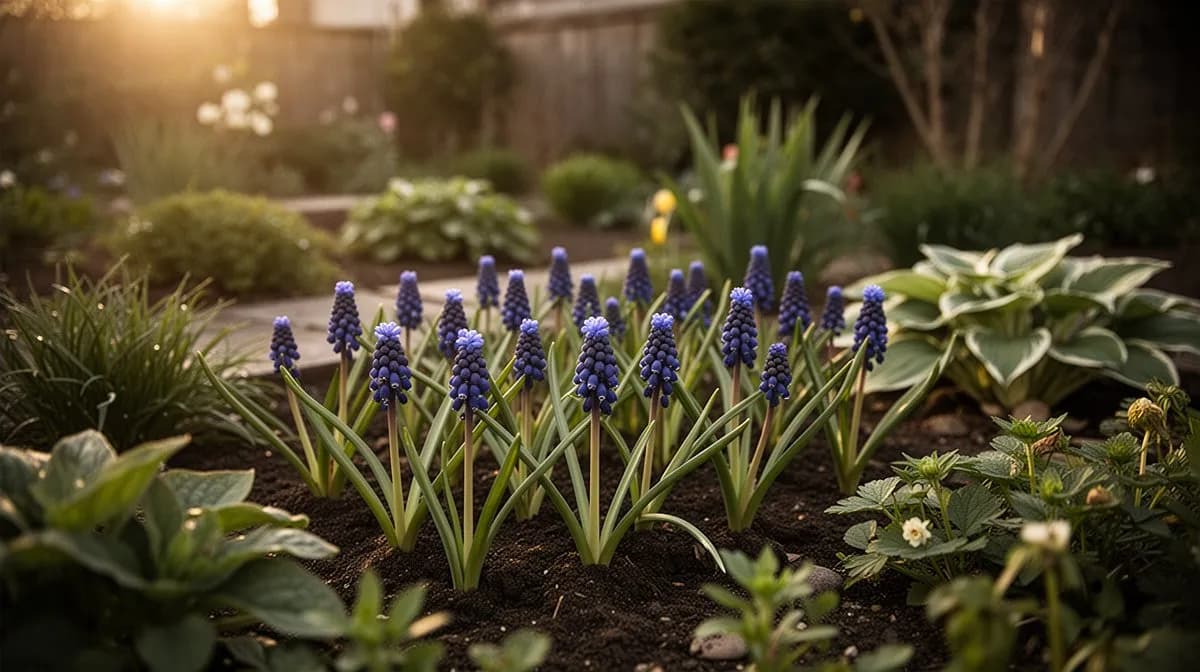
A tiny bulb producing dense spikes of cobalt-blue flowers that resemble miniature bunches of grapes in early spring. Grape hyacinths naturalize aggressively and can create stunning rivers of blue under trees and along pathways. Plant generously in drifts for the best effect and accept that they will spread enthusiastically.
When to plant Grape Hyacinth
Grape hyacinths self-sow freely if seed heads are left on the plant. For deliberate propagation, collect ripe seed in early summer when capsules split. Sow immediately in pots of gritty compost, covering lightly. Leave pots outdoors for natural cold stratification. Seedlings emerge the following spring as fine, grass-like threads. Grow on in pots for two years before planting out. Division of established clumps in late summer is a much faster propagation method.
Your Grape Hyacinth Year
Composed for Zone 7 · typical seasons · frost passes Apr 2, returns Nov 1
Plant Grape Hyacinth Sep – Oct, pick Mar – Apr. Check the planting methods below and set your climate to personalize these windows.
How to grow Grape Hyacinth
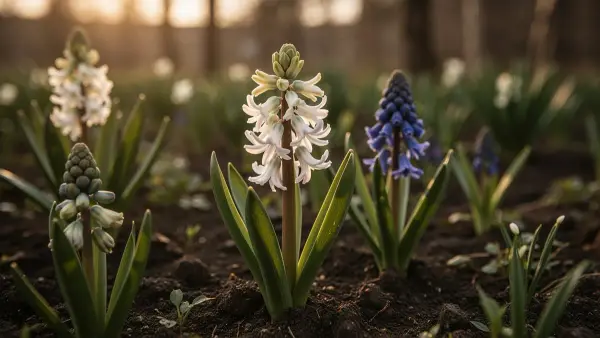
Grape hyacinths are incredibly easy to grow and among the most reliable spring bulbs. Plant the small bulbs 3-4 inches deep and 3 inches apart in autumn, in any position from full sun to partial shade. They thrive under deciduous trees and shrubs where they receive sun before leaves emerge.
For naturalizing, plant bulbs in large groups of 50 or more for maximum impact. Scatter them randomly and plant where they fall for the most natural effect. Grape hyacinths will self-sow prolifically and spread by offsets, eventually creating dense carpets of blue. Be aware that this vigor can become invasive—plant only where spreading is welcome.
Grape hyacinths produce grass-like foliage in autumn that persists through winter, looking somewhat untidy. This is normal and should not be removed, as the leaves are photosynthesizing to build energy for spring flowering. After blooming, allow foliage to yellow naturally before cutting back. Established clumps need virtually no care beyond occasional dividing when flowering diminishes.
450 plants fit a 4 × 8 ft bed
Each Grape Hyacinth wants 8 cm of elbow room. The planner keeps that spacing for you — every plant, every bed.
Grape Hyacinth's best neighbours
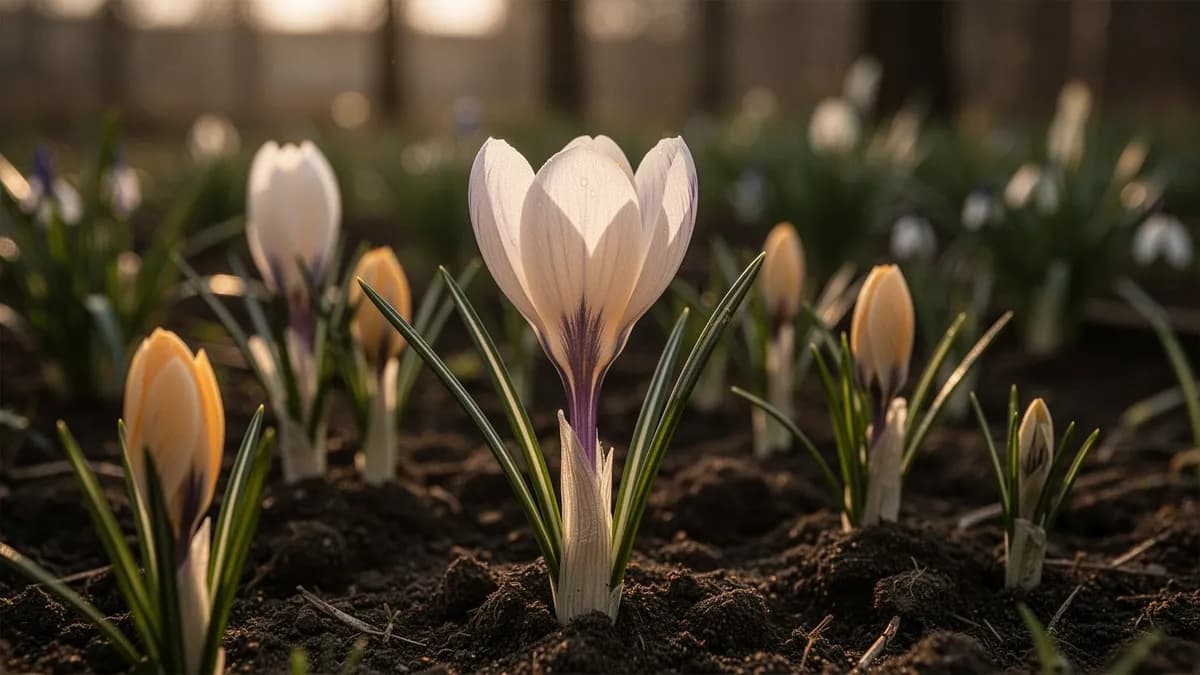
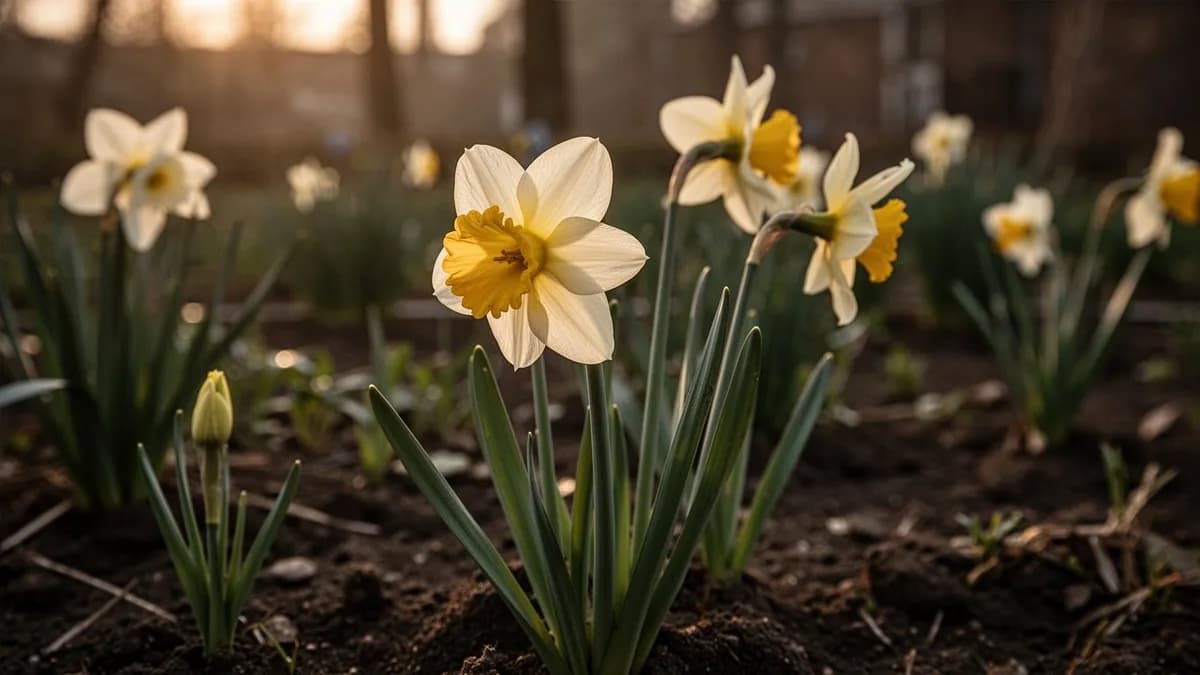
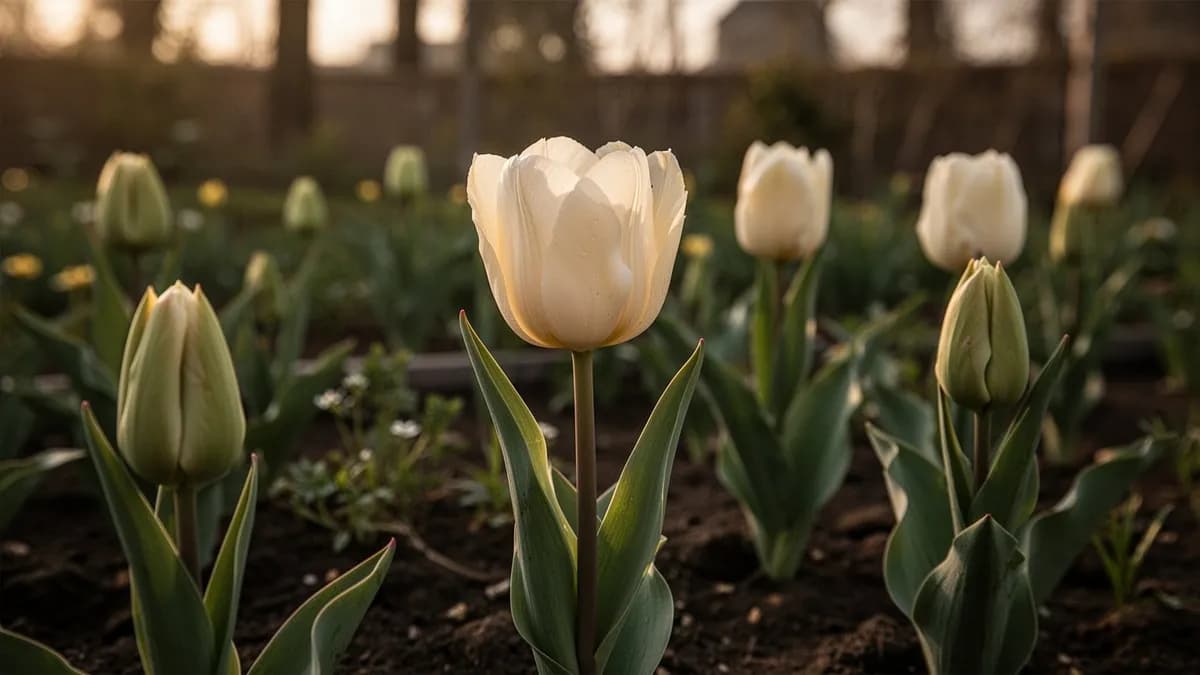
Grape hyacinths are classic companions for tulips and daffodils, creating a stunning blue carpet beneath taller spring bulbs. They look magical planted in rivers or drifts through grass under deciduous trees. Combine with yellow crocuses for a vivid blue-and-gold spring display. Plant among emerging perennial foliage like hostas and daylilies, which will expand to hide the muscari foliage as it yellows.
Crocus belongs beside it.
Old growers' knowledge, checked against Grape Hyacinth's real companion table below — test any plant you're growing.
Try Grape Hyacinth in a bed — right here
A real planner bed with Grape Hyacinth already in it. Tap a companion to place it and watch the pairing checks answer — green for good neighbours, red for a clash.


Related growing guides
Feed it well
Grape hyacinths tolerate almost any well-drained soil, from sandy to clay, with a pH of 6.0-7.5. They perform best in moderately fertile soil but also thrive in poor, stony ground. Fertilizer is rarely needed—a light top-dressing of bone meal every few years when clumps are divided is sufficient. Avoid heavy feeding, which promotes excessive foliage at the expense of flowers.
Ideal Temperature
Hardiness Zone Compatibility
From seed to harvest, stage by stage
Bulb Planting
Plant muscari bulbs in autumn, ideally from September to November, in well-drained soil at a depth of roughly 7 to 10 centimeters. Space bulbs about 5 centimeters apart in clusters of 15 to 25 for a natural, massed effect. The small teardrop-shaped bulbs establish roots quickly once soil temperatures drop below 15 degrees Celsius.
Root Establishment
During late autumn and early winter the bulbs develop a strong root system below the soil surface. Many muscari species also send up narrow, grass-like foliage during this period, which persists through winter. This autumn leaf growth is a distinguishing characteristic of the genus and is perfectly normal.
Winter Dormancy and Chilling
The bulbs require a sustained cold period of at least 12 to 14 weeks with soil temperatures between 1 and 7 degrees Celsius. This vernalisation period triggers the biochemical signals needed for flower bud initiation. Above-ground foliage may appear frost-damaged but remains functional.
Flower Spike Emergence
As soil temperatures rise in late winter to early spring, compact flower spikes push up through the rosette of leaves. Each spike is tightly packed with small urn-shaped buds that colour from bottom to top. The characteristic grape-cluster silhouette becomes visible as the spike elongates to 15 to 20 centimeters.
Full Bloom
The flower spikes reach peak bloom with dozens of tiny cobalt-blue florets open simultaneously, each constricted at the mouth and edged with a white rim. Bloom lasts two to three weeks depending on temperature and variety. The flowers are lightly fragrant with a musky-sweet scent that attracts early pollinators including mason bees and bumblebees.
Seed Set and Foliage Decline
After flowering, round green seed capsules develop if the spikes were not deadheaded. The foliage begins to yellow and die back as the bulb enters its summer dormancy period. During this phase the bulb absorbs remaining nutrients from the declining leaves to fuel next year's growth and to produce small offset bulbils.
Summer Dormancy and Offset Production
The bulb rests underground through summer in a state of true dormancy. Internally it forms daughter bulbils around its base, which is the primary means of colony expansion. A single healthy bulb can produce two to five offsets per year, leading to dense clumps within three to four seasons.
Choose a location with full sun to partial shade. Avoid waterlogged areas as muscari bulbs are prone to rot in saturated soil. Work in coarse sand or grit if your soil is heavy clay.
Caring for Grape Hyacinth month by month
What to do each month for your Grape Hyacinth
October
You are hereContinue planting through October. Layer muscari bulbs above deeper-planted tulip and daffodil bulbs for a succession of spring colour known as bulb lasagna.
Know exactly what to do in your garden — every month
One email at the start of each month: what to sow, plant, and tackle right now — for your Grape Hyacinth and everything growing around it. Plus a short starter course that helps you dodge the classic mistakes.
- What to do, right now
- Matched to your season
- Starter course included
Harvesting Grape Hyacinth
Grape hyacinths can be cut for miniature arrangements when about half the florets on the spike have opened. Cut stems at ground level and place immediately in cool water. They last 5-7 days in small vases and are charming in posies with other spring miniatures like primroses and violets. The flowers have a light, grape-like fragrance that is pleasant at close range.
assuming you plant when the window opens — set your real date
From bulbs, tubers or cloves
Pick Grape Hyacinth promptly and the plant keeps producing.
Storage & Preservation
Grape hyacinth bulbs are fully hardy and should be left in the ground permanently. They multiply rapidly on their own and require no lifting or special storage. If dividing congested clumps, lift in late summer when dormant, separate the numerous offsets, and replant immediately. Surplus bulbs can be stored briefly in mesh bags in a cool, dry place, but plant as soon as possible as small bulbs dehydrate quickly.
What goes wrong — and the fix
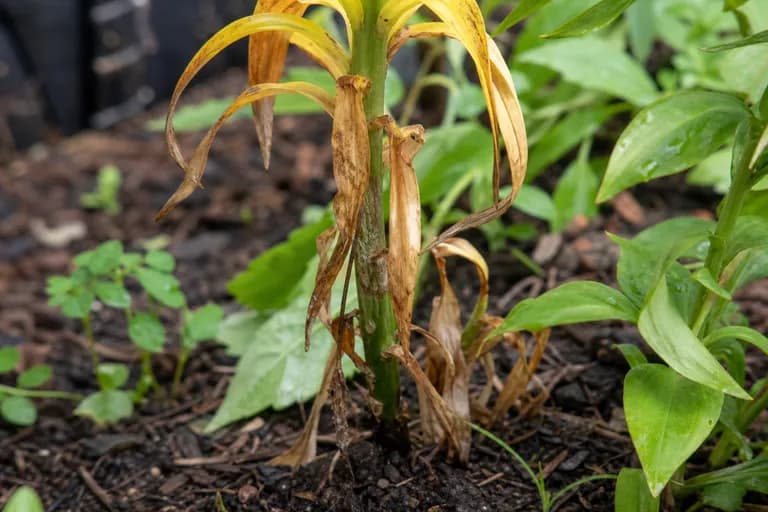
Bulb Rot
DiseaseBulbs become soft and mushy, failing to produce growth in spring. Foul-smelling when dug up.
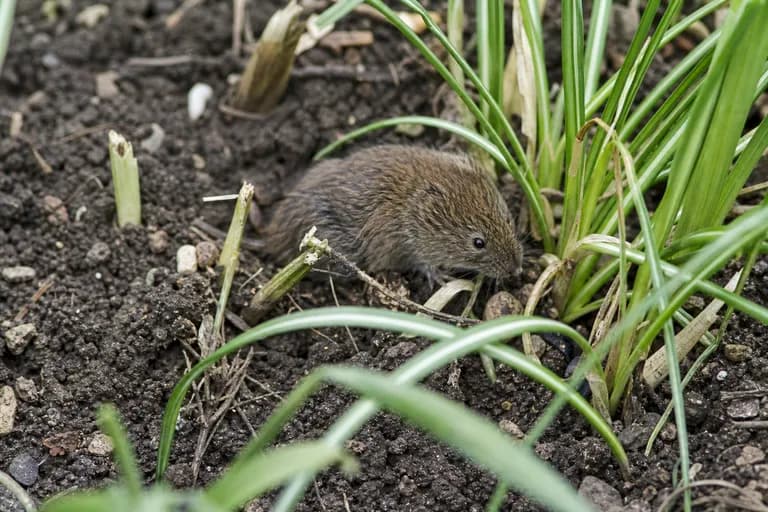
Mice and Voles
PestBulbs eaten underground. Empty holes where bulbs were planted. Tunnels visible near planting sites.
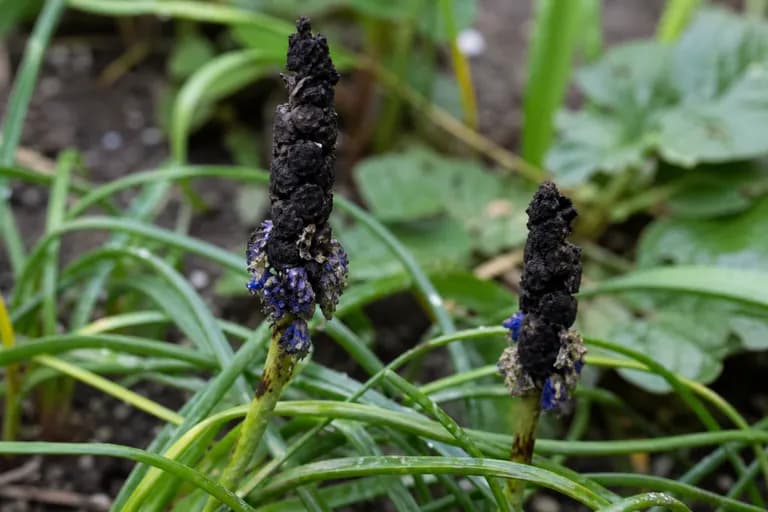
Smut (Ustilago)
DiseaseDark, powdery spore masses replace flower parts. Distorted, blackened flower spikes.
Troubleshooting Common Problems
The main issue is excessive spreading—grape hyacinths can become invasive in favorable conditions, popping up throughout the garden via self-sowing and offset multiplication. Remove seed heads after flowering to reduce self-sowing. Clumps that stop flowering are overcrowded and need dividing. The autumn foliage can look untidy through winter but must be left in place to nourish the bulbs.
Growing Tips
- Plant muscari bulbs in autumn at a depth of three times the bulb height, typically 7 to 10 centimeters, with the pointed end facing upward.
- Group bulbs in clusters of at least 15 to 25 for a naturalistic drift effect rather than planting in single rows or isolated spots.
- Use the bulb lasagna technique by planting muscari in a shallow layer above deeper-planted tulips and daffodils for a layered succession of spring bloom.
- Muscari tolerate a wide range of soils but perform best in moderately fertile, well-drained ground with a slightly acidic to neutral pH between 6.0 and 7.0.
- Allow foliage to die back completely after flowering before removing it, as the leaves photosynthesise to replenish the bulb for next year.
- In heavy clay soils, add generous amounts of coarse horticultural grit or sharp sand to the planting area to prevent waterlogging and bulb rot during winter.
- Muscari can be successfully forced indoors by chilling pre-planted pots at 3 to 5 degrees Celsius for 12 to 14 weeks, then bringing them into a cool bright room.
- To prevent unwanted spreading through self-seeding, remove spent flower spikes promptly after the petals fade but before seed capsules ripen and split.
- Divide overcrowded clumps every three to four years in late summer when the bulbs are dormant to maintain vigorous flowering and improve air circulation.
- Muscari are generally pest-free but watch for bulb rot caused by Fusarium or Botrytis in waterlogged conditions. Discard any soft or discoloured bulbs at planting time.
Grow your best Grape Hyacinth yet — and everything around it.
Start a free plan today. Lay out your beds, drop in your Grape Hyacinth, and let PlotMyGarden handle the timing, spacing, companions and reminders from seed to harvest basket.
Pick your Grape Hyacinth
Muscari armeniacum 'Valerie Finnis'
Unusual pale sky-blue flowers that brighten shady spots. A softer, more refined look than the typical dark blue.
Muscari latifolium
Two-toned spikes with dark violet-blue fertile flowers below and pale blue sterile flowers on top. Architectural and distinctive.
Muscari aucheri 'White Magic'
Pure white grape hyacinth that glows in spring gardens. Excellent for creating contrast alongside blue varieties.
Muscari 'Blue Spike'
Double-flowered variety with densely packed, frilly blue florets creating a fuller, more textured spike than singles.
Muscari comosum 'Plumosum' (Feather Hyacinth)
Wild-looking species with feathery, filament-like purple flowers. Completely different from typical muscari in appearance.
Muscari bulbs are among the most affordable spring-flowering bulbs available, often sold in bulk bags of 50 to 100 for just a few dollars. Because each bulb multiplies rapidly through offset production, a single initial investment of 50 bulbs can grow into a colony of several hundred within four to five years without any additional purchases. In regions where Muscari comosum grows wild or is cultivated for culinary use, foraging or growing your own lampascioni eliminates the need to purchase this specialty ingredient, which can cost 8 to 15 euros per kilogram at Italian markets. The ornamental value alone, providing three to four weeks of vivid blue colour each spring with zero ongoing cost, makes muscari one of the highest return-on-investment plants in any garden.
Quick recipes
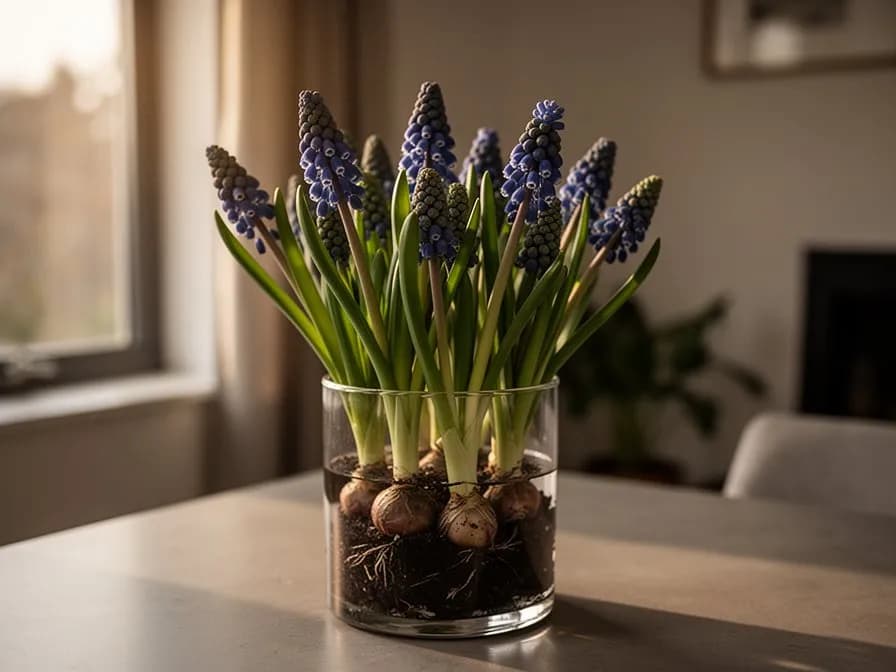
Classic Puglian Pickled Lampascioni
45 minutes plus 24 hours marinatingThe most traditional preparation of muscari bulbs from southern Italy. The bulbs are boiled to remove their natural bitterness, then marinated in red wine vinegar with herbs. Serve as part of an antipasto platter alongside cured meats, olives, and crusty bread.
9 ingredientsRoasted Lampascioni with Olive Oil and Herbs
60 minutesA simple rustic dish where pre-boiled muscari bulbs are roasted until golden and caramelised, bringing out their sweet onion-like flavour. The slow roasting mellows any residual bitterness and creates a tender, melt-in-the-mouth texture. Serve warm as a side dish with grilled lamb or fish.
7 ingredientsLampascioni Frittata
35 minutesA hearty egg frittata studded with sliced pre-boiled muscari bulbs, pecorino cheese, and fresh parsley. This is a popular springtime dish in Basilicata and Puglia, often enjoyed at room temperature as a picnic food or light lunch. The mild sweetness of the roasted bulbs pairs beautifully with the salty pecorino.
7 ingredientsWhat's inside
Health Benefits
- The inulin-type fructans found in muscari bulbs function as prebiotic dietary fibre, promoting the growth of beneficial Bifidobacterium and Lactobacillus species in the gut microbiome.
- Muscari bulbs contain steroidal saponins that have demonstrated mild cholesterol-lowering effects in preliminary laboratory studies, though more human clinical research is needed.
- The potassium content of muscari bulbs supports healthy cardiovascular function and may contribute to maintaining normal blood pressure levels as part of a balanced diet.
- Traditional Mediterranean herbalism has long used muscari bulb preparations as a digestive stimulant and mild appetite enhancer, particularly during convalescence from illness.
- The low calorie density combined with moderate fibre content makes pickled lampascioni a satisfying snack that can support healthy weight management within a Mediterranean-style eating pattern.
- Phenolic compounds present in the bulb skin and outer scales exhibit antioxidant activity in vitro, potentially helping to neutralise free radicals and reduce oxidative stress in the body.
Where Grape Hyacinth comes from
Muscari is a genus of approximately 40 to 50 species of bulbous perennial plants in the family Asparagaceae, subfamily Scilloideae, native to the Mediterranean Basin, central and southern Europe, and western Asia. The greatest species diversity is found in Turkey, which is home to roughly half of all known muscari species, many of them endemic to the Anatolian plateau and the mountains of the eastern Black Sea coast. Archaeological and ethnobotanical evidence suggests that muscari bulbs have been gathered as a wild food source in the eastern Mediterranean for thousands of years, long before the genus was cultivated as an ornamental plant. The edible species Muscari comosum, known as lampascioni or cipollacci in Italian, remains a staple ingredient in the cuisine of Puglia and Basilicata in southern Italy, where the bitter bulbs are boiled to remove glycosides and then pickled, roasted, or stewed. Ancient Greek and Roman writers including Dioscorides and Pliny the Elder mentioned bulbous plants believed to be muscari species, noting both their culinary and medicinal uses. The ornamental cultivation of muscari accelerated during the Ottoman period when the sultans' palace gardens featured carefully curated collections of spring bulbs. European botanists formally described the genus in the 18th century, and Muscari armeniacum was introduced to western horticulture in the 1870s from specimens collected in the mountains of Armenia and north-eastern Turkey. Today muscari is grown in gardens on every temperate continent, valued for its vivid blue colour, reliability, ease of naturalisation, and ability to thrive in a wide range of soils and climates from USDA hardiness zones 3 through 9.
Grape Hyacinth: did you know?
Fascinating facts about Grape Hyacinth
The name Muscari derives from the Latin 'muscus' meaning musk, referring to the faint musky fragrance of certain species, though many gardeners describe the scent as more grape-like than musky.
Grape Hyacinth questions, answered
When should I plant Grape Hyacinth?
What are good companion plants for Grape Hyacinth?
What hardiness zones can Grape Hyacinth grow in?
How much sun does Grape Hyacinth need?
How far apart should I space Grape Hyacinth?
What pests and diseases affect Grape Hyacinth?
How do I store Grape Hyacinth after harvest?
What are the best Grape Hyacinth varieties to grow?
What soil does Grape Hyacinth need?
Are muscari bulbs really edible and safe to eat?
Why do my muscari produce leaves in autumn but no flowers in spring?
How do I stop muscari from spreading too aggressively in my garden?
Can I grow muscari in containers and pots?
What are the best companion plants to grow alongside muscari?
Do muscari attract pollinators and are they beneficial for wildlife?
You just read the theory. Now grow it on autopilot.
Everything that makes Grape Hyacinth fiddly — the timing, the spacing, the companions, the harvest window — is exactly what PlotMyGarden handles for you, for every plant in your garden.
A plan that knows your weather
Set your location once. Get sow, feed and harvest dates built around your real last-frost date and live forecast — no more guessing from a generic seed packet.
From the “When to plant” sectionDrag-and-drop bed planner
Design beds on a grid. Every plant snaps to its proper spacing, and you can see your whole season laid out before you spend a cent on seed.
From the “Growing guide” sectionCompanion conflicts, caught early
200+ good-and-bad pairings checked live as you plant — so a season-wrecking mistake never makes it into the ground.
From the “Companions” sectionReminders you'll actually act on
“Water the beans.” “Pick today before it turns.” Timely, specific, and tied to the plants you're really growing.
From the “Harvest” sectionSuccession, scheduled
Want a harvest for six weeks, not six days? It spaces your sowings automatically and reminds you when each new block is due.
From the “When to plant” sectionA record that gets smarter
Every harvest you log teaches it your garden. Next year's plan starts from what actually worked in your soil, not a textbook's.
From the “Overview” sectionPlant these alongside Grape Hyacinth
More Bulbs
Grow your best Grape Hyacinth yet — and everything around it.
Start a free plan today. Lay out your beds, drop in your Grape Hyacinth, and let PlotMyGarden handle the timing, spacing, companions and reminders from seed to harvest basket.