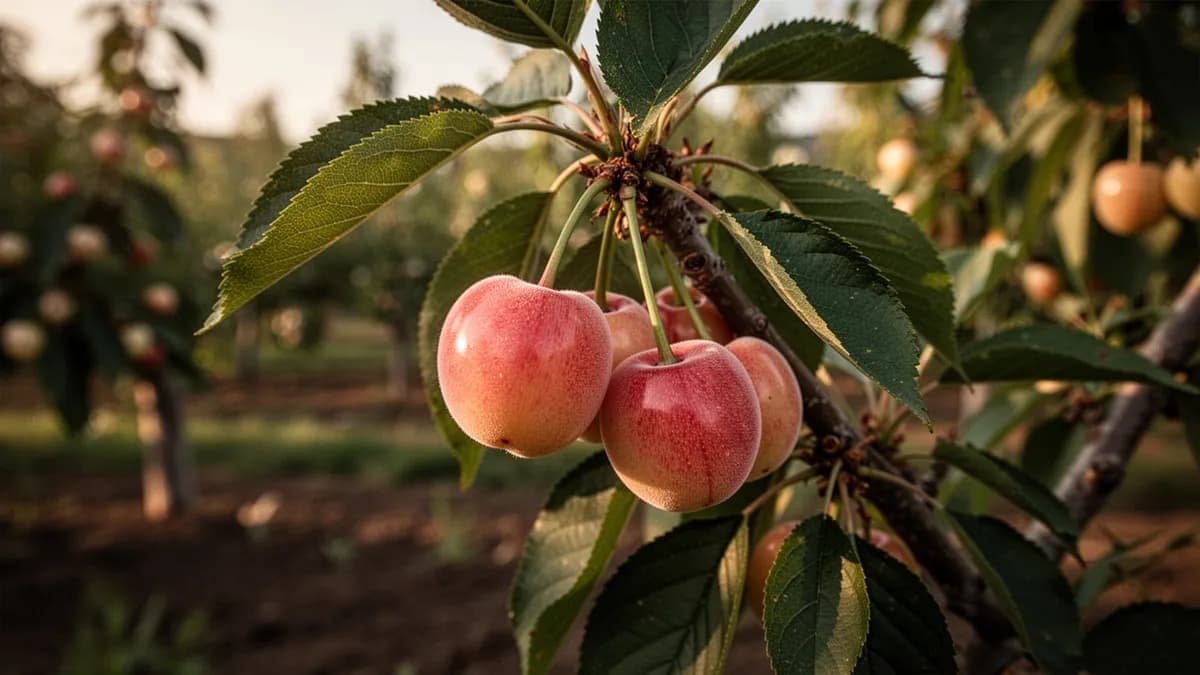
Cherry (Dwarf)
Prunus avium
At a Glance
A dwarf fruiting tree prized for its spring blossoms and summer fruit, requiring netting to protect from birds. Sweet cherries generally need a cross-pollinator, while most sour cherry varieties are self-fertile and better suited to cooking and preserves. Protect blossoms from late spring frosts with horticultural fleece and ensure consistent watering during fruit development to prevent splitting. Harvest cherries with their stems attached when fully colored for the longest shelf life and best flavor.
Planting & Harvest Calendar
Growth Stages
From Seed to Harvest
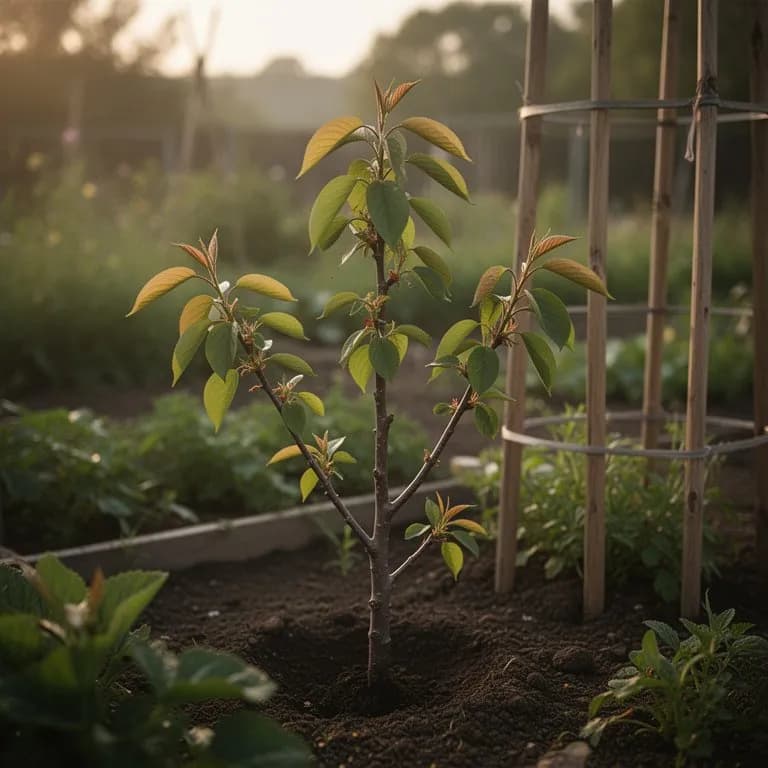
Dormant Period
Days 0–60
Cherry trees enter dormancy in late autumn after leaf drop. During winter, the tree accumulates essential chill hours (typically 700-900 hours below 7°C for sweet cherries) needed to break dormancy and produce vigorous spring growth. The root system remains active below the soil surface, slowly absorbing moisture and nutrients.
💡 Care Tip
Apply a dormant oil spray in late winter to smother overwintering pest eggs and fungal spores. Inspect the trunk and branches for canker damage and prune out any diseased wood. Mulch the root zone with 10 cm of organic material to insulate roots and regulate soil temperature.
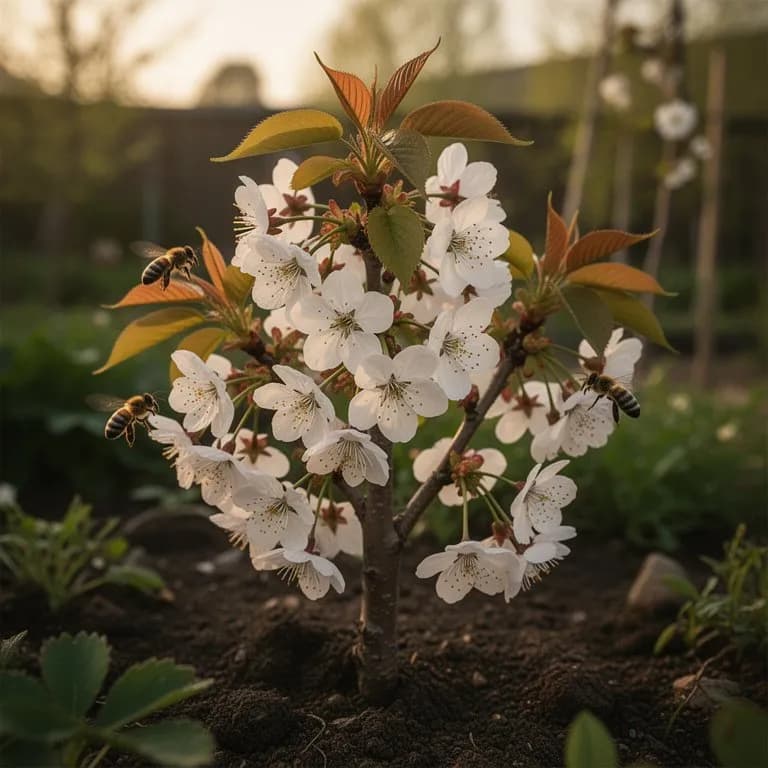
Sweet cherry blossoms appear in early spring before the leaves, attracting pollinators essential for fruit set
Monthly Care Calendar
What to do each month for your Cherry (Dwarf)
June
You are hereNo specific care tasks for this month.
Did You Know?
Fascinating facts about Cherry (Dwarf)
Sweet cherry trees (Prunus avium) can live for over 100 years and reach heights of 20 meters when grown on their own roots, though modern dwarf rootstocks keep garden trees to a manageable 3-4 meters tall.
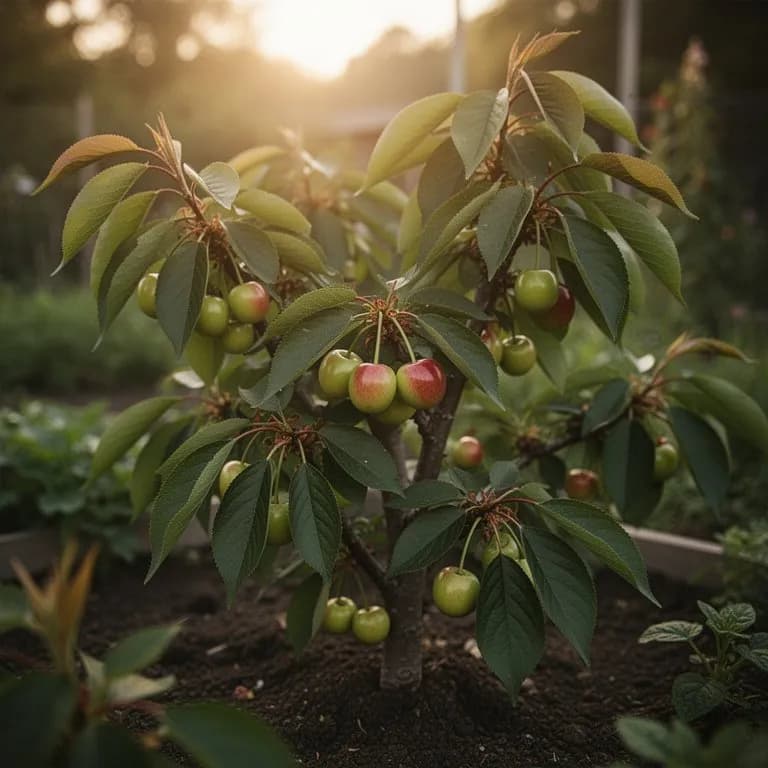
Summer pruning of sweet cherry to control tree size and encourage productive fruiting spurs
Plant cherry trees in a sunny, sheltered position with well-drained soil and good air circulation. Sweet cherries on dwarf rootstocks like Gisela 5 or 6 grow eight to twelve feet tall and require permanent staking. Dig a hole twice the root ball width and plant with the graft union three inches above the soil line. Most sweet cherries need a compatible pollinator, while sour cherries like Montmorency and Meteor are self-fertile.
Water deeply once per week during the first two growing seasons, then rely on natural rainfall supplemented during dry spells. Consistent moisture is critical during fruit development, but avoid overwatering as cherries are sensitive to root rot. Apply a three-inch mulch ring of wood chips around the tree, leaving six inches of clearance from the trunk.
Prune cherry trees in early to mid-summer after harvest rather than during winter dormancy to reduce the risk of bacterial canker and silver leaf disease entering through pruning wounds. Maintain an open center shape that allows sunlight and air into the canopy. Thin interior branches to create an airy structure. Install bird netting before fruit begins to color, as birds can strip an entire tree of cherries in a single day. Remove netting promptly after harvest to prevent branch damage.
Sweet cherry (Prunus avium) is native to the region between the Black Sea and the Caspian Sea in western Asia, where wild cherry trees still grow in the forests of modern-day Turkey, Georgia, and Iran. Archaeological evidence suggests that humans have been gathering wild cherries for at least 10,000 years, with cherry pits found in prehistoric cave dwellings across Europe. The Roman general Lucullus is traditionally credited with introducing cultivated cherries to Rome around 74 BC after his military campaigns in the Pontus region of present-day Turkey, though wild cherries were already known throughout Europe long before this date. The Romans played a crucial role in spreading cherry cultivation across their empire, carrying trees to Britain, France, Germany, and Spain. During the medieval period, monasteries became centers of cherry cultivation and breeding, with monks carefully selecting superior varieties for their monastery orchards. By the 16th century, over 30 distinct cherry varieties were documented in European horticultural texts. European colonists brought cherry trees to North America in the 1600s, and the fruit quickly established itself in the orchards of the eastern seaboard. The modern cherry industry developed rapidly in the 19th century when settlers planted extensive orchards in the Pacific Northwest, where the climate proved ideal for sweet cherry production. Today, Turkey remains the world's leading cherry producer, followed by the United States and Chile. Advances in rootstock technology and breeding have transformed cherry growing from a large-scale orchard enterprise into a pursuit accessible to home gardeners, with dwarf and self-fertile varieties making it possible to grow cherries in modest backyard spaces and even in large containers on patios.
Cherry trees are propagated by budding or grafting scion wood of the desired variety onto compatible rootstocks. Gisela 5 rootstock produces a full dwarf tree about eight feet tall, while Gisela 6 produces a slightly larger semi-dwarf. T-budding performed in late summer is the most common commercial method. Whip-and-tongue grafting in late winter is also effective. Cherry pits require 90 to 120 days of cold stratification to germinate but seedlings are variable and slow to bear. Grafted trees on dwarfing rootstocks begin fruiting in three to four years versus seven or more for seedling-grown trees.
Cherries require well-drained soil with a pH of 6.0 to 7.0 and will not tolerate waterlogged conditions. Sandy loam is ideal. Apply a balanced fertilizer in early spring before bloom, but keep nitrogen applications moderate to avoid excessive shoot growth susceptible to bacterial canker. Potassium is important for fruit color and winter hardiness. Young trees need slightly more nitrogen to establish a good framework. Mature bearing trees need less fertilizer overall than apples or pears.
Check Your Zone
See if Cherry (Dwarf) is suitable for your location.
-5°C – 30°C
23°F – 86°F
Sweet cherries are hardy deciduous trees that tolerate winter cold down to -25°C when fully dormant but require protection from late spring frosts during bloom. Optimal growing season temperatures range from 15-25°C (59-77°F). Trees need 700-900 chill hours below 7°C (45°F) during winter dormancy to fruit properly. Prolonged heat above 35°C during fruit development can cause sunscald and double fruit formation.
Common issues affecting Cherry (Dwarf) and how to prevent and treat them organically.
Fruit cracking after rain is the most frustrating cherry growing problem and is caused by rapid water uptake through the skin. Choose crack-resistant varieties and maintain consistent moisture to reduce the severity. Bird damage is severe and netting is essentially mandatory. Double fruit, where two cherries grow fused together, results from high temperatures during bud formation the previous summer. Poor pollination from cold spring weather reduces fruit set in sweet cherry varieties.
Garlic and chives planted near cherry trees help deter aphids with their pungent aroma and sulfur compounds. Marigolds attract hoverflies whose larvae are voracious aphid predators. Low-growing ground covers like white clover or creeping thyme suppress weeds and attract pollinators during the critical bloom period. Avoid planting near walnut trees due to juglone toxicity. Comfrey grown in the orchard understory provides potassium-rich mulch beneficial for fruit development.
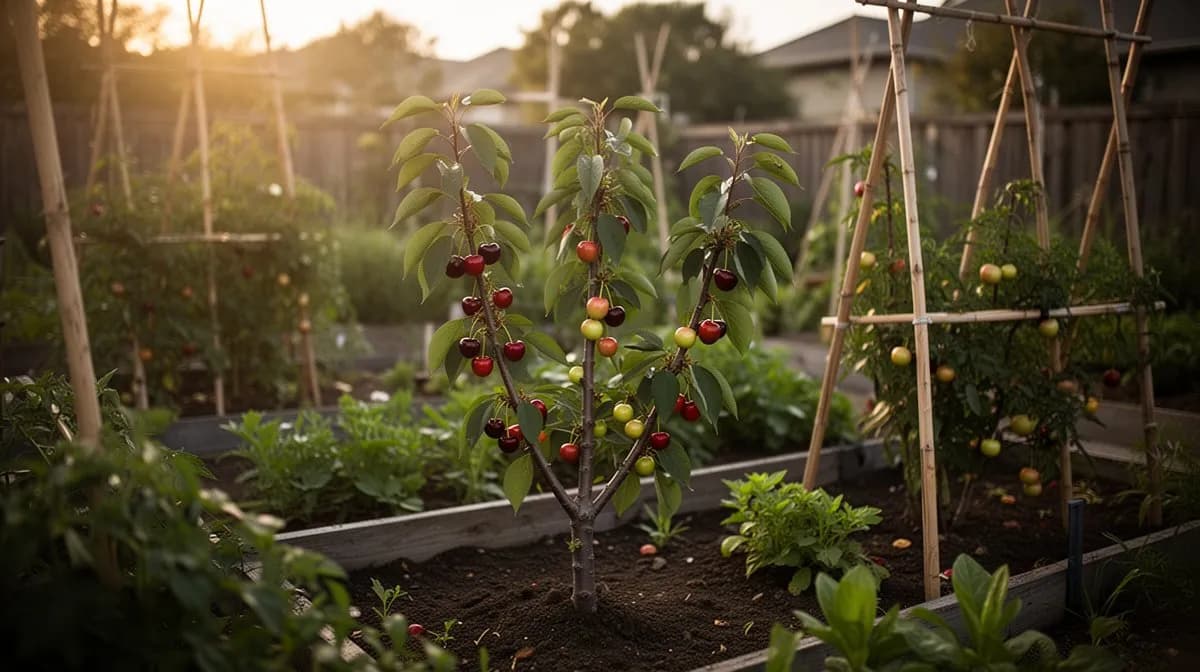
Companion planting with comfrey, chives, and clover beneath a cherry tree to attract beneficial insects
- 1Choose a planting site with full sun, good air circulation, and well-drained soil. Sweet cherries are extremely intolerant of waterlogged roots, which quickly leads to fatal root rot. A gentle slope is ideal for cold air drainage on frosty spring nights.
- 2Most sweet cherry varieties require a compatible pollination partner to set fruit. Plant at least two different compatible varieties within 30 meters of each other, or select a self-fertile cultivar like Stella, Lapins, or Sunburst if space is limited.
- 3Plant bare-root trees in late winter while still dormant, setting the graft union 5-8 cm above soil level. Stake young trees securely for the first two to three years until the root system is well established.
- 4Water young cherry trees deeply once a week during the growing season, providing 20-30 liters per watering. Reduce frequency for mature trees but ensure consistent moisture during fruit development to prevent cracking and small fruit size.
- 5Prune sweet cherries in late summer rather than winter to reduce the risk of bacterial canker and silver leaf disease, which enter through pruning wounds more readily in cold, wet conditions.
- 6Apply bird netting over the entire canopy at least two weeks before cherries begin to color. Birds can devastate an entire crop in a single day, and netting is the only reliable protection method for home gardeners.
- 7Feed cherry trees annually in early spring with a balanced organic fertilizer spread around the drip line. Avoid high-nitrogen feeds after midsummer as they promote soft growth vulnerable to winter damage and disease.
- 8Thin excessive fruit clusters in late spring if the tree has set a very heavy crop, leaving two to three fruitlets per cluster. This improves individual fruit size and sweetness while preventing biennial bearing patterns.
- 9Monitor for common cherry pests including black cherry aphid, cherry fruit fly, and cherry slug sawfly. Use integrated pest management techniques such as sticky traps, dormant oil sprays, and encouraging natural predators like ladybugs and lacewings.
- 10Consider training cherry trees as fan shapes against a south-facing wall or fence. This method saves space, makes netting and harvesting easier, and provides extra warmth from the wall that can advance fruit ripening by one to two weeks.
Sweet cherries are ready when they reach full color for the variety, feel firm but not hard, and taste sweet and flavorful. Always pick with the stem attached by gently lifting and twisting, as stemless cherries deteriorate quickly and are prone to rot. Sour cherries are harvested when they reach full color and develop a slight softness. Taste-test before harvesting in quantity. Pick in the morning when fruit is coolest. A mature dwarf cherry tree can produce 30 to 50 pounds of fruit during its three-to-four-week harvest window.
Fresh cherries keep in the refrigerator for up to one week stored unwashed in a container lined with paper towels. For freezing, pit cherries, spread on a baking sheet to freeze individually, and transfer to freezer bags for up to twelve months. Cherries are outstanding for jams, preserves, and pie filling. Sour cherries are particularly prized for baking and preserving. Dried cherries are a premium product with intense concentrated flavor. Maraschino-style preservation in sugar syrup is another classic method.
Plan your garden with ease
Love growing Cherry (Dwarf)? Use our free garden planner to design your beds, track planting dates, and get personalized care reminders.
Nutritional Info
Per 100g serving
63
Calories
Health Benefits
- Rich in anthocyanins, the powerful antioxidant pigments responsible for their deep red color, which may help reduce inflammation and lower the risk of chronic diseases
- One of the few natural food sources of melatonin, a hormone that helps regulate healthy sleep patterns and circadian rhythms
- Contains quercetin and other polyphenolic compounds with documented anti-inflammatory and cardiovascular protective properties
- Good source of potassium (222 mg per 100g), an essential mineral that supports healthy blood pressure and proper muscle and nerve function
- Provides natural sorbitol and fiber that support digestive regularity and gut health
- Low glycemic index fruit (GI of 22) making sweet cherries a suitable fruit choice for people managing blood sugar levels
💰 Why Grow Your Own?
A dwarf cherry tree costing $25-50 begins producing fruit within 3-4 years and can yield 10-25 kilograms of cherries annually for 20-30 years. At retail prices of $8-15 per kilogram for fresh sweet cherries, a single tree can save $80-375 per year once established, representing a total lifetime savings of $1,600-11,000. Home-grown cherries are also vastly superior in flavor because they can be picked at peak ripeness, unlike commercial fruit harvested early for shipping durability.
Quick Recipes
Simple recipes using fresh Cherry (Dwarf)
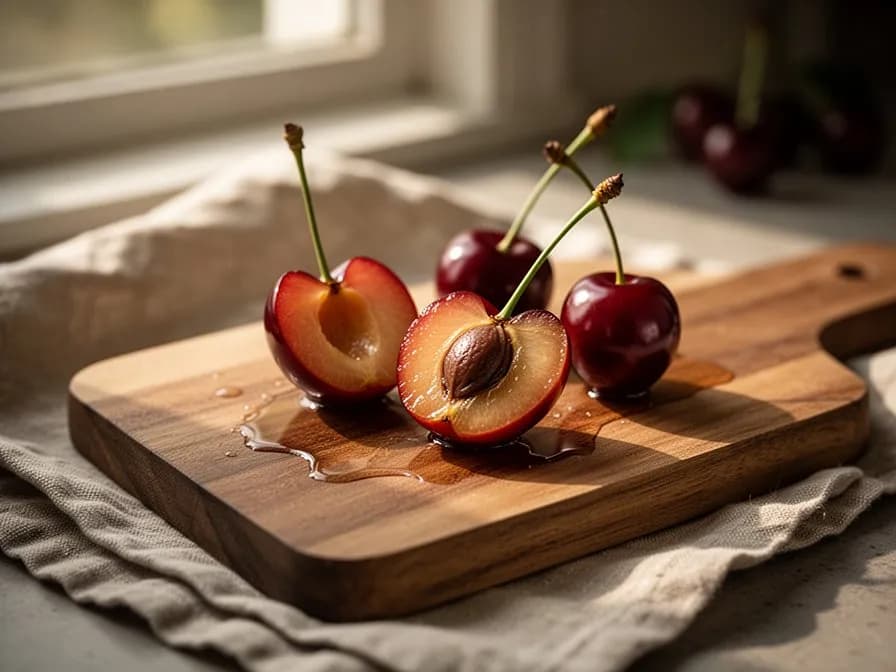
Classic Fresh Cherry Pie
30 minutesA timeless double-crust cherry pie with a juicy filling that balances the natural sweetness and slight tartness of fresh sweet cherries. The lattice top crust allows steam to escape and creates a beautiful golden presentation. Best served warm with a scoop of vanilla ice cream.
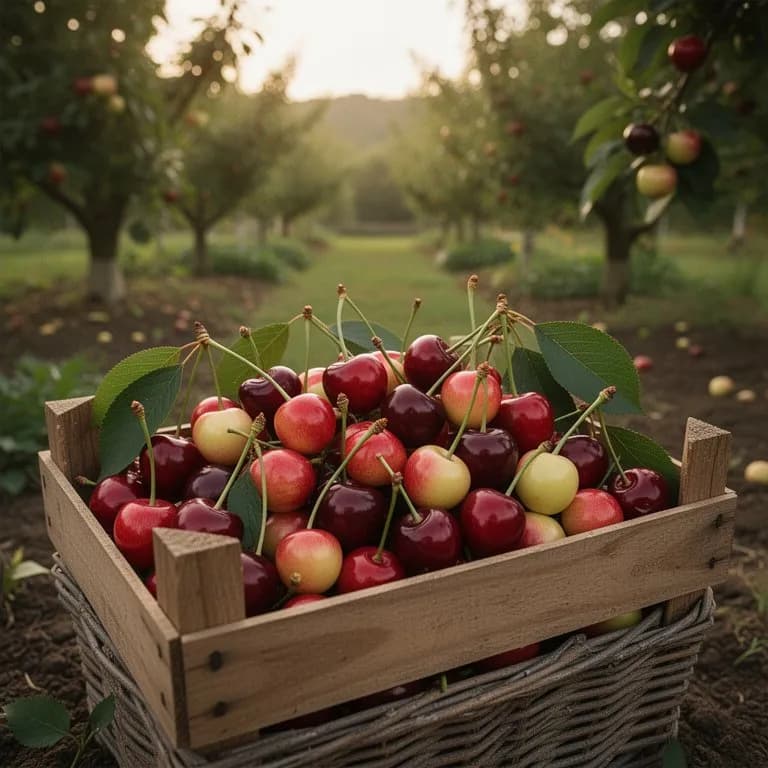
Cherry Clafoutis
15 minutesA traditional French custard dessert from the Limousin region where whole cherries are baked in a light, eggy batter. Purists leave the pits in, as they impart a subtle almond flavor during baking, but pitted cherries work perfectly for a more practical eating experience. Dusted with powdered sugar and served warm.
Quick Cherry Compote
10 minutesA versatile warm cherry sauce that can be spooned over yogurt, pancakes, ice cream, or grilled meats. The cherries break down slightly while retaining their shape, creating a syrupy and intensely flavored topping. Keeps well in the refrigerator for up to a week.
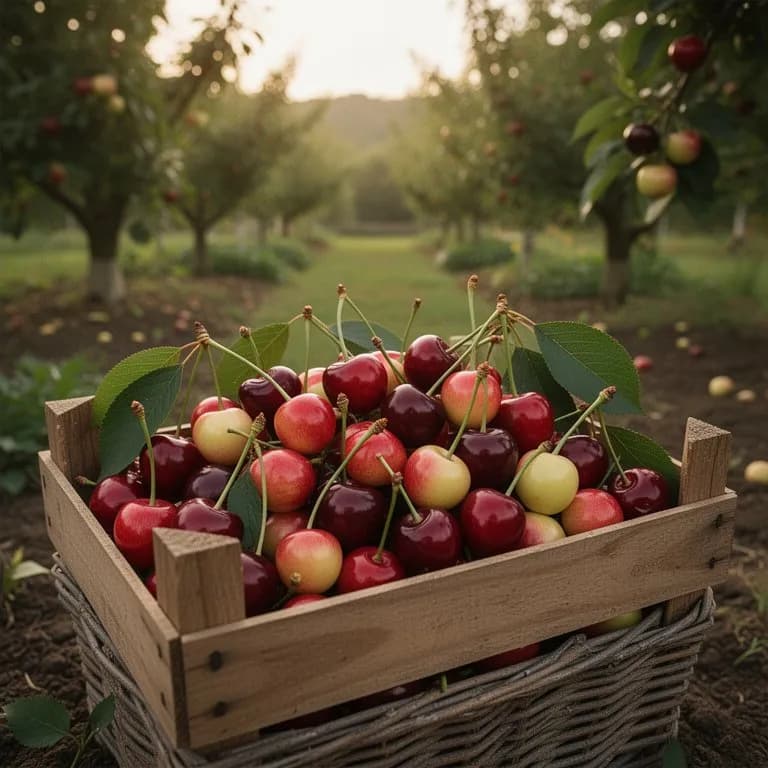
Harvesting sweet cherries by hand with stems attached to prolong freshness and prevent splitting
Yield & Spacing Calculator
See how many Cherry (Dwarf) plants fit in your garden bed based on the recommended 300cm spacing.
0
Cherry (Dwarf) plants in a 4×4 ft bed
0 columns × 0 rows at 300cm spacing
Popular Varieties
Some of the most popular cherry (dwarf) varieties for home gardeners, each with unique characteristics.
Bing
The classic dark red sweet cherry with firm, juicy flesh and rich flavor, the benchmark variety for fresh eating in North America.
Rainier
A premium yellow-red sweet cherry with delicate, exceptionally sweet flesh, often commanding the highest market prices.
Montmorency
The leading sour cherry variety, self-fertile and hardy, producing bright red tart fruit ideal for pies, preserves, and juice.
Stella
One of the first self-fertile sweet cherries, producing dark red fruit of good quality without needing a pollinator tree.
Lapins
A self-fertile sweet cherry with large, dark, crack-resistant fruit that ripens late in the season, extending the harvest window.
Popular sweet cherry varieties: deep red Bing, golden-blushed Rainier, and self-fertile Stella
Sweet cherries are supreme for fresh eating and pair beautifully with chocolate, almonds, vanilla, and balsamic vinegar. Sour cherries are prized for pies, cobblers, preserves, and sauces for meat dishes like duck and pork. Cherries are rich in melatonin, anthocyanins, and vitamins C and A. Cherry clafoutis is a classic French dessert, and kirsch is a traditional cherry brandy. Dried cherries add flavor to trail mixes, salads, and grain pilafs.
When should I plant Cherry (Dwarf)?
Plant Cherry (Dwarf) in March, April. It takes approximately 730 days to reach maturity, with harvest typically in June, July.
What are good companion plants for Cherry (Dwarf)?
Cherry (Dwarf) grows well alongside Garlic, Chives, Marigold. Companion planting can improve growth, flavor, and natural pest control.
What hardiness zones can Cherry (Dwarf) grow in?
Cherry (Dwarf) thrives in USDA hardiness zones 4 through 8. With greenhouse protection, it may be grown in zones 2 through 9.
How much sun does Cherry (Dwarf) need?
Cherry (Dwarf) requires Full Sun (6-8h+). This means at least 6-8 hours of direct sunlight daily.
How far apart should I space Cherry (Dwarf)?
Space Cherry (Dwarf) plants 300cm (118 inches) apart for optimal growth and air circulation.
What pests and diseases affect Cherry (Dwarf)?
Common issues include Brown Rot, Cherry Fruit Fly, Bacterial Canker, Black Cherry Aphid. Prevention through good garden practices like crop rotation, proper spacing, and companion planting is the best approach. See the detailed pests and diseases section above for symptoms, prevention, and treatment for each.
How do I store Cherry (Dwarf) after harvest?
Fresh cherries keep in the refrigerator for up to one week stored unwashed in a container lined with paper towels. For freezing, pit cherries, spread on a baking sheet to freeze individually, and transfer to freezer bags for up to twelve months. Cherries are outstanding for jams, preserves, and pie ...
What are the best Cherry (Dwarf) varieties to grow?
Popular varieties include Bing, Rainier, Montmorency, Stella, Lapins. Each has unique characteristics suited to different growing conditions and culinary preferences. See the varieties section above for detailed descriptions.
What soil does Cherry (Dwarf) need?
Cherries require well-drained soil with a pH of 6.0 to 7.0 and will not tolerate waterlogged conditions. Sandy loam is ideal. Apply a balanced fertilizer in early spring before bloom, but keep nitrogen applications moderate to avoid excessive shoot growth susceptible to bacterial canker. Potassium i...
How long does it take for a cherry tree to produce fruit?
Most sweet cherry trees begin producing a small crop in their third or fourth year after planting, with significant harvests starting in years four to five. Trees on dwarfing rootstocks like Gisela 5 tend to fruit a year earlier than those on more vigorous rootstocks. Full production is typically reached by year seven or eight. Patience in the early years is rewarded with decades of reliable harvests once the tree matures.
Do I need two cherry trees for pollination?
Most sweet cherry varieties are self-infertile and require a different compatible variety nearby for cross-pollination. Varieties are grouped into pollination compatibility groups, and you need trees from different groups that bloom at the same time. However, several modern self-fertile varieties exist, including Stella, Lapins, Sunburst, and Sweetheart, which can produce fruit without a pollination partner. Even self-fertile varieties often produce larger crops when cross-pollinated.
Why are my cherries cracking and splitting on the tree?
Cherry splitting is caused by rapid water uptake through the fruit skin during rain or heavy watering close to harvest time. As the fruit absorbs water, internal pressure exceeds the skin's elasticity and it splits open. To minimize splitting, maintain consistent soil moisture throughout the season so the fruit is not suddenly exposed to excess water. Covering trees with a rain canopy during the ripening period is the most effective prevention. Some varieties like Kordia and Regina have greater crack resistance than others.
How do I protect my cherry tree from birds?
Bird netting is the only consistently effective method for protecting cherry crops. Drape fine-mesh netting (15mm or smaller) over the entire canopy at least two weeks before fruit begins to color, securing it tightly at the base to prevent birds from finding gaps. For dwarf trees, a permanent fruit cage structure makes annual netting much easier. Scare devices like reflective tape, fake owls, and noise makers provide only temporary deterrence as birds quickly habituate to them.
When and how should I prune my cherry tree?
Prune sweet cherry trees in late July or August after harvest, not during the dormant season. Winter pruning leaves wounds exposed to wet conditions that favor bacterial canker and silver leaf disease infection. Focus on removing dead, diseased, and crossing branches first. Then thin the canopy to allow light and air penetration. Sweet cherries fruit on spurs that remain productive for several years, so avoid removing healthy spur-bearing wood. Young trees should be trained to an open center or fan shape during their first three to four formative years.
Can I grow a cherry tree in a container?
Yes, cherry trees on ultra-dwarfing rootstocks like Gisela 5 can be grown successfully in large containers of at least 50-60 liters capacity. Use a well-draining potting mix and ensure the container has adequate drainage holes. Container-grown cherries require more frequent watering and feeding than those planted in the ground. Choose a self-fertile variety to avoid needing a second tree. Repot every three to four years, root-pruning slightly to maintain vigor. Move containers to a sheltered location during extreme winter cold.
Ready to Grow Cherry (Dwarf)?
Add Cherry (Dwarf) to your garden plan and start designing your perfect layout.

Vladimir Kusnezow
Gardener and Software Developer
Zone 6b gardener. Growing vegetables and fruits in soil and hydroponics for 6 years. I built PlotMyGarden to plan my own gardens.
Jump to Section