Ash Gourd
Benincasa hispida
At a Glance
It's planting season for Ash Gourd! Start planning your garden now.
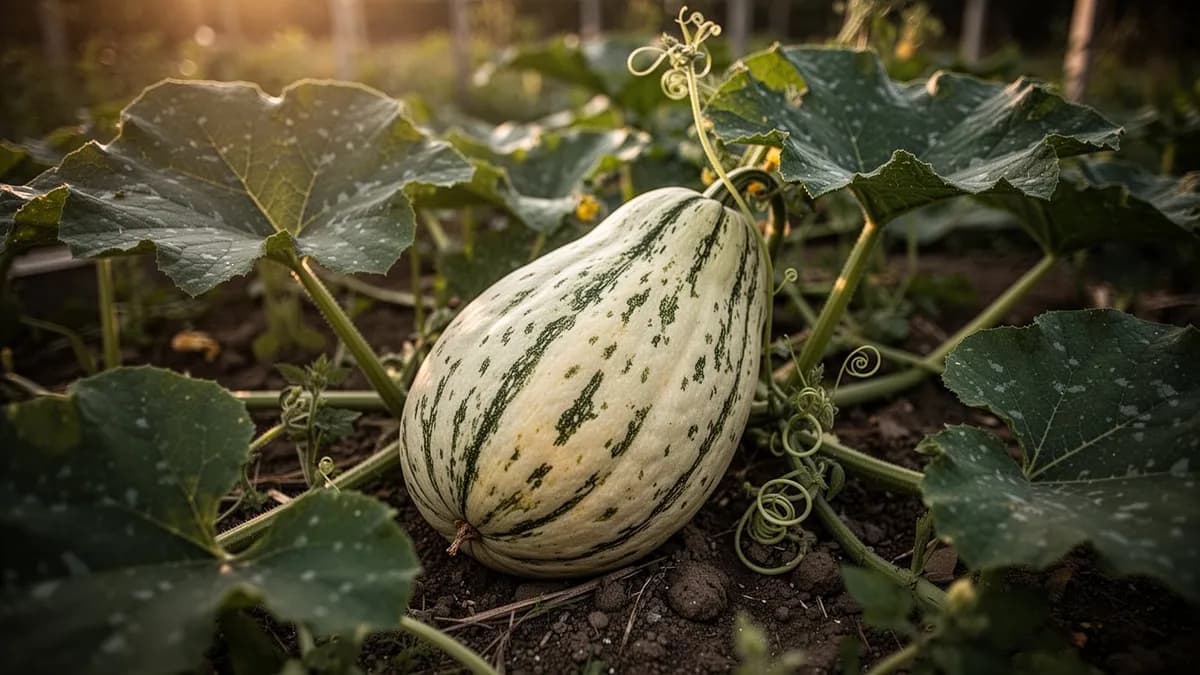
A large Asian gourd that develops a distinctive white, waxy coating on its green skin as it matures, also known as wax gourd. Fruits can grow to 30 pounds and store for months in cool conditions thanks to the protective waxy bloom. Mild, white flesh is used in Indian, Chinese, and Southeast Asian soups, curries, and sweets. Vigorous vines need ample space and a strong trellis, or can be grown along the ground.
Planting & Harvest Calendar
Growth Stages
From Seed to Harvest
Seed Starting
Days 0–10
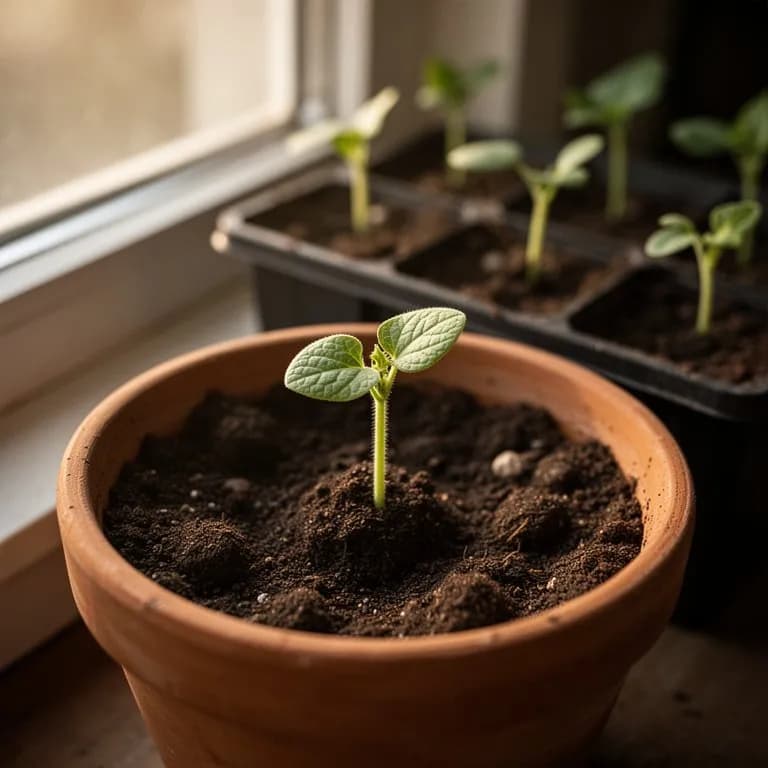
Ash gourd seeds are large, flat, and cream-colored, germinating rapidly in warm soil. The thick seed coat softens quickly when soil moisture is adequate, and the robust radicle root pushes through within 4-7 days. Large, rounded cotyledon leaves emerge and unfold to begin photosynthesis immediately.
💡 Care Tip
Soak seeds in warm water for 8-12 hours before sowing to speed germination. Plant 2-3 cm deep in warm soil at least 21°C (70°F). In cooler climates, start indoors in biodegradable pots 3-4 weeks before last frost to avoid root disturbance during transplanting.
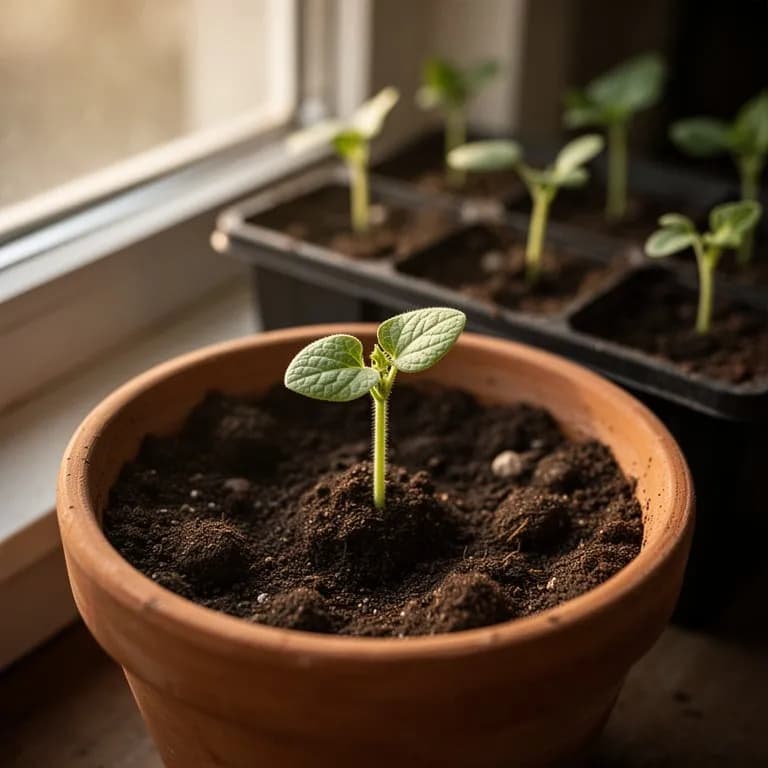
Ash gourd seedlings emerge vigorously with large cotyledons that fuel rapid early growth
Monthly Care Calendar
What to do each month for your Ash Gourd
May
You are herePrimary planting month for most temperate zones. Transplant or direct-sow after all frost risk has passed and soil is warm. Install trellis systems at planting time. Mulch heavily around the base and water deeply. Apply balanced fertilizer.
Did You Know?
Fascinating facts about Ash Gourd
Ash gourd gets its name from the chalky, ash-like white waxy coating (bloom) that develops on the rind as the fruit matures. This natural wax layer is so effective as a preservative that whole ash gourds can be stored for 6-12 months at room temperature without refrigeration — a remarkable trait that made it a vital food security crop across tropical Asia for centuries.
Ash gourd requires a long, warm growing season of 90-120 days and performs best in tropical to subtropical climates. Start seeds indoors 3-4 weeks before the last frost date, or direct sow after soil temperatures reach 70°F. Plant seeds 1 inch deep in mounds or hills spaced 6-8 feet apart, placing 3-4 seeds per hill and thinning to the 2 strongest seedlings. The vigorous vines spread 15-20 feet and need substantial growing space.
Provide consistent moisture throughout the growing season, especially during fruit development. Drip irrigation is ideal to keep foliage dry and prevent fungal diseases. Apply a balanced fertilizer at planting and side-dress with compost or fish emulsion when vines begin to run. For trellis growing, use extremely sturdy supports capable of holding fruits weighing 10-30 pounds each, and provide slings for developing fruits.
Hand pollination may be necessary if bee activity is low, as ash gourd produces separate male and female flowers on the same vine. Male flowers appear first, followed by female flowers with a small swelling at the base. Transfer pollen from male to female flowers early in the morning for best fruit set. Remove all but 2-3 fruits per vine for larger, higher-quality gourds.
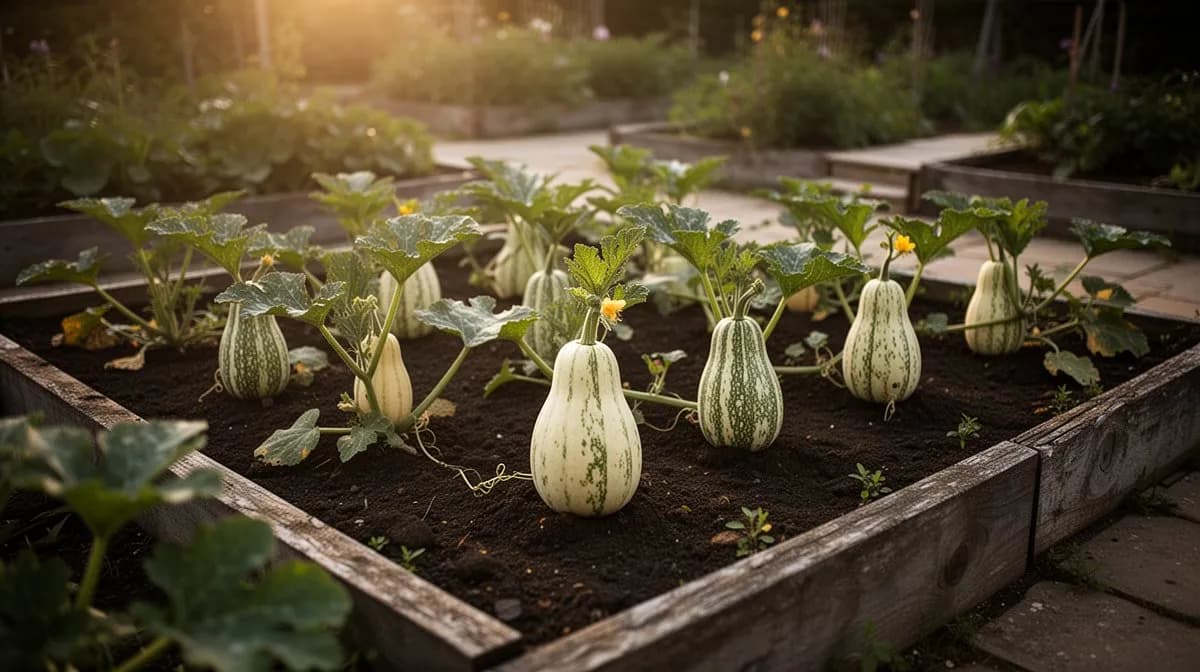
Trellising ash gourd saves ground space and produces cleaner, more uniform fruits
Ash gourd (Benincasa hispida) is native to Southeast Asia, with the most likely center of origin being the Indo-Malayan region encompassing parts of modern-day Indonesia, Malaysia, and southern India. Archaeological evidence and historical texts suggest cultivation stretching back at least 4,000-5,000 years, making it one of the oldest cultivated crops in tropical Asia. Ancient Sanskrit texts including the Charaka Samhita and Sushruta Samhita, foundational works of Ayurvedic medicine dating to approximately 600 BCE, describe ash gourd in detail as both a food and a medicinal plant, prescribing it for urinary disorders, mental clarity, and digestive health.
From its Southeast Asian origins, ash gourd spread along ancient trade routes throughout the tropical and subtropical world. It reached China over 2,000 years ago, where it became known as 'dong gua' (winter melon) and was integrated into traditional Chinese medicine and cuisine. The fruit's extraordinary storage life — lasting 6-12 months without refrigeration thanks to its thick waxy rind — made it invaluable in pre-refrigeration societies where preserving fresh vegetables through dry seasons and winters was a constant challenge. In China, ash gourd became a staple ingredient in soups, stews, and the beloved sweet winter melon tea.
Ash gourd cultivation spread to Japan, Korea, the Philippines, and the Pacific Islands, adapting to diverse climates and culinary traditions in each region. In India, it became deeply embedded in religious and cultural practices — the fruit is considered auspicious in Hindu tradition and is used in temple offerings and ceremonial cooking. The city of Agra developed the art of making Petha, a translucent ash gourd confection, over 350 years ago, creating one of India's most famous sweets. Today, ash gourd is cultivated commercially across India, China, Southeast Asia, and parts of Africa, and is increasingly grown by home gardeners in temperate Western countries who are discovering this remarkably productive, easy-to-grow, and extraordinarily long-storing gourd.
Start ash gourd seeds indoors 3-4 weeks before the last frost in biodegradable pots to minimize root disturbance during transplanting. Soak seeds overnight in warm water to speed germination. Plant seeds 1 inch deep, pointed end down, in a warm location maintaining 75-85°F. Seeds germinate in 7-14 days. Harden off seedlings gradually over 7-10 days before transplanting. For direct sowing, wait until soil temperatures are consistently above 70°F. Plant 3-4 seeds per hill and thin to 2 strongest seedlings after the first true leaves appear.
Ash gourd thrives in rich, well-drained soil with high organic matter content and a pH of 6.0-7.0. Prepare planting hills with generous amounts of compost or well-rotted manure mixed into the soil. Apply a balanced 10-10-10 fertilizer at planting, then switch to a higher phosphorus and potassium formula when flowering begins to support fruit development. Side-dress with compost every 3-4 weeks during the growing season. Avoid excessive nitrogen which promotes vine growth at the expense of fruit production.
Check Your Zone
See if Ash Gourd is suitable for your location.
24°C – 35°C
75°F – 95°F
Ash gourd is a warm-season tropical vine that thrives in sustained heat. The ideal growing range is 24-35°C (75-95°F), with the fastest vine growth and best fruit set occurring above 27°C (80°F). Seeds require soil temperatures of at least 21°C (70°F) to germinate reliably. Growth stalls below 15°C (60°F), and the plant is killed by frost. In hot tropical climates, ash gourd grows year-round as a short-lived perennial. In temperate regions, it needs the warmest 4-5 months of summer to complete its cycle from planting to harvest.
Common issues affecting Ash Gourd and how to prevent and treat them organically.
Ash gourd vines require enormous growing space that can overwhelm small gardens. Inadequate pollination is common due to the short-lived nature of flowers and timing of male and female flower production. Fruit fly damage in tropical regions can devastate crops without protective measures. Heavy fruits on trellises may break vines if not properly supported with slings. Blossom end rot can occur from inconsistent watering or calcium deficiency. Young seedlings are extremely cold-sensitive and will not survive temperatures below 50°F.
Ash gourd benefits from corn planted nearby as a windbreak and partial shade provider during extreme heat. Marigolds planted around the perimeter deter cucumber beetles and other pests. Avoid planting near potatoes which compete for nutrients and can harbor shared soil-borne diseases. Nasturtiums serve as trap crops for aphids, drawing them away from gourd vines. Radishes planted near hills can help break up soil and deter squash vine borers. Allow ample space between ash gourd and other cucurbits to reduce cross-pollination if saving seeds.
- 1Give ash gourd plenty of space — this is a vigorous vine that can spread 4-6 meters in a single season. Either provide a strong trellis system (which produces cleaner, more uniform fruits) or allocate a large ground area for the vine to sprawl across.
- 2Build a sturdy trellis if growing vertically. Mature ash gourds can weigh 3-10 kg each, so the support structure must be robust. Use heavy-gauge wire panels, strong wooden frames, or reinforced cattle panels. Support individual fruits with mesh slings or old fabric hammocks tied to the trellis.
- 3Soak seeds for 8-12 hours before planting and sow in genuinely warm soil of at least 21°C (70°F). Cold soil causes seed rot. In temperate climates, start seeds indoors in biodegradable pots to gain 3-4 weeks of growing time without disturbing the sensitive taproot.
- 4Hand-pollinate for reliable fruit set, especially in cooler climates or urban gardens with low pollinator activity. Transfer pollen from male flowers (long thin stem, no swelling at base) to female flowers (small swelling at base) using a soft brush in the early morning before flowers close.
- 5Limit each vine to 2-3 fruits for the largest individual gourds. Remove additional female flowers after your target number of fruits has set. This concentrates the plant's energy into fewer, larger, better-storing fruits rather than many small ones.
- 6Water deeply and consistently during the vine growth and fruit development stages — at least 2.5 cm per week. Irregular watering causes fruit cracking and poor development. Reduce watering as fruits approach maturity to encourage wax development and rind hardening.
- 7Harvest only when the waxy white bloom is fully developed and the stem has turned dry and corky. Premature harvest results in poor storage life. Leave 5-8 cm of stem attached when cutting, and cure fruits in a warm, dry location for 7-10 days before long-term storage.
- 8Store cured ash gourds in a cool, dry, well-ventilated area at 13-15°C (55-60°F). Do not stack fruits — arrange in a single layer on shelves or racks with space between each. Check monthly for soft spots. A properly cured ash gourd with intact wax coating will store for 6-12 months.
Harvest ash gourd for fresh use when fruits are medium-sized and still green, typically 60-70 days after pollination. For long-term storage, wait until the waxy white coating fully develops on the skin, indicating full maturity at 90-120 days. Cut fruits from the vine with a sharp knife, leaving 2-3 inches of stem attached. Handle carefully despite their tough appearance, as cracks in the waxy coating reduce storage life. Mature fruits with intact wax coating can weigh 10-30 pounds or more.
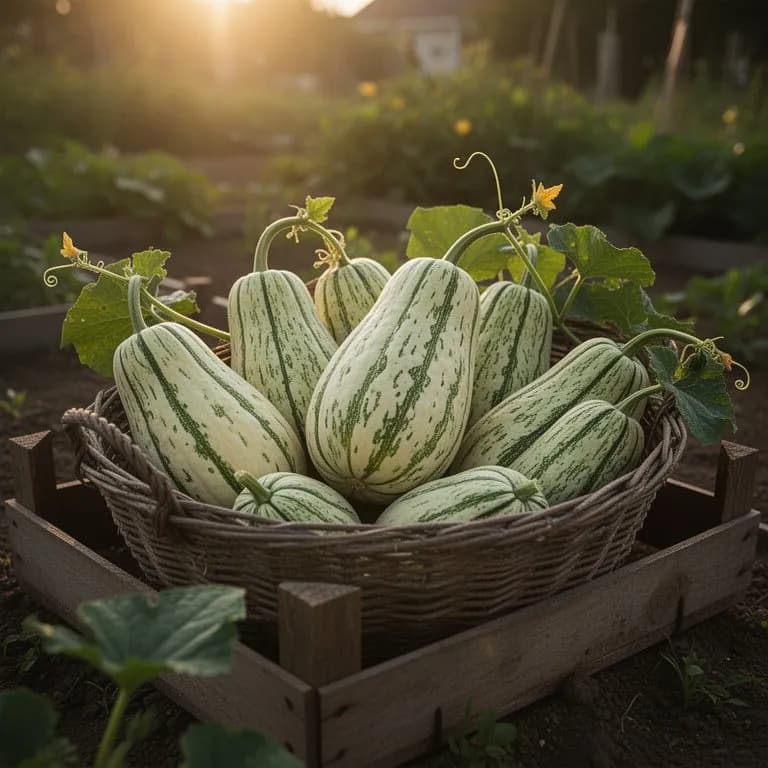
The distinctive white waxy bloom signals full maturity and enables months of storage
Fully mature ash gourd with intact waxy coating stores exceptionally well for 6-12 months in a cool, dry location at 55-60°F. The natural wax coating acts as a preservative, making this one of the longest-storing vegetables. Once cut, wrap remaining portions tightly in plastic and refrigerate for up to a week. Cut flesh can be cubed and frozen for use in soups and curries. In South Asian traditions, petha (candied ash gourd) preserves the flesh in sugar syrup for months. Slices can also be dehydrated for long-term storage.
Plan your garden with ease
Love growing Ash Gourd? Use our free garden planner to design your beds, track planting dates, and get personalized care reminders.
Nutritional Info
Per 100g serving
13
Calories
Health Benefits
- Extremely low in calories at just 13 per 100g — one of the lowest-calorie vegetables available, making it ideal for weight management and calorie-conscious diets
- Contains over 96% water, providing exceptional hydration and a refreshing quality when consumed as juice or in soups during hot weather
- Good source of dietary fiber at 12% of the daily value per 100g, supporting digestive health, regular bowel function, and a feeling of fullness despite very few calories
- Provides vitamin C at 11% of the daily value, contributing to immune defense, collagen synthesis, and antioxidant protection
- Contains B-vitamins including riboflavin (B2) and niacin (B3) that support energy metabolism and cellular function
- Rich in minerals including calcium, phosphorus, and iron in small but meaningful amounts, contributing to bone health and oxygen transport
💰 Why Grow Your Own?
Ash gourd is an exceptional value crop for home gardeners. A single plant producing 10-30 kg of food from a packet of seeds costing under $3 represents remarkable productivity per square meter. At Asian grocery stores, ash gourd typically sells for $1.50-3.00 per kg, meaning a single plant can produce $15-90 worth of food. The extraordinary storage life of 6-12 months without refrigeration adds further value by providing fresh produce throughout winter without preservation equipment. In South and Southeast Asian communities where ash gourd is a dietary staple, growing it at home eliminates repeated grocery trips for a heavy, bulky ingredient.
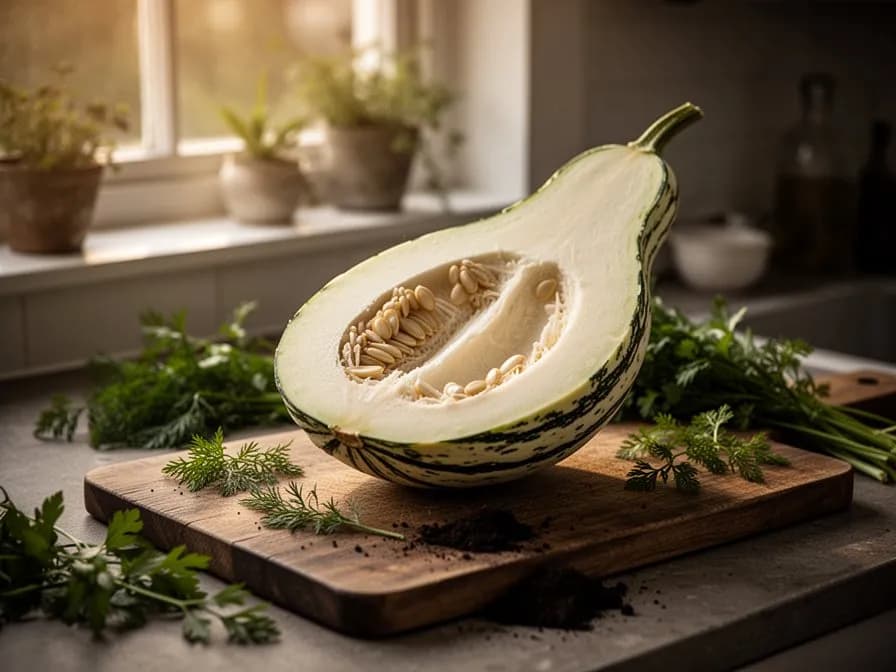
The dense white flesh has a mild flavor and remarkably high water content of over 95%
Quick Recipes
Simple recipes using fresh Ash Gourd
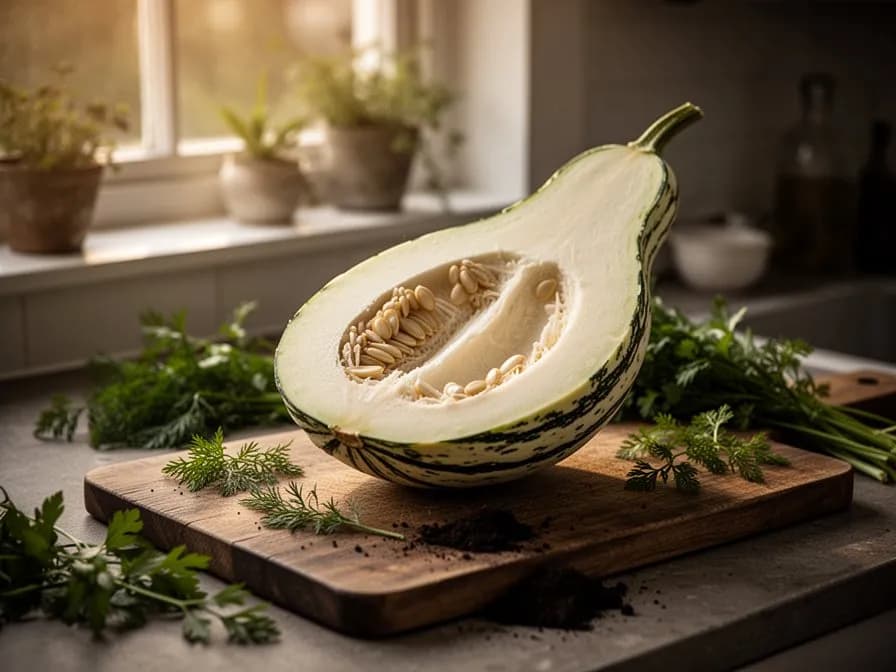
South Indian Ash Gourd Curry (Kumbalanga Curry)
35 minA creamy, mildly spiced coconut curry where tender ash gourd cubes absorb the fragrant blend of curry leaves, mustard seeds, and turmeric. This classic Kerala dish is comforting, easy to digest, and pairs perfectly with steamed rice or chapati.
Ash Gourd and Lentil Soup (Dal Kootu)
40 minA nourishing, protein-rich soup combining soft ash gourd with yellow lentils in a warming South Indian spice base. The gourd melts into the lentils creating a silky, hearty texture that is both satisfying and easy on the stomach.
Ash Gourd Halwa (Petha)
50 minA beloved Indian sweet where grated ash gourd is slowly cooked down with sugar and ghee until translucent and candy-like. Petha from the city of Agra is one of India's most famous confections, and this home version captures the same delicate, melt-in-your-mouth quality.
Ash gourd absorbs spices beautifully in this classic South Indian coconut curry
Yield & Spacing Calculator
See how many Ash Gourd plants fit in your garden bed based on the recommended 120cm spacing.
1
Ash Gourd plants in a 4×4 ft bed
1 columns × 1 rows at 120cm spacing
Popular Varieties
Some of the most popular ash gourd varieties for home gardeners, each with unique characteristics.
CO-1
Indian commercial variety with round fruits averaging 8-10 kg, heavy waxy coating, excellent storage quality.
Pusa Naveen
Improved Indian variety with cylindrical fruits, early maturity, and good resistance to powdery mildew.
Mini Ash Gourd
Compact variety producing 3-5 pound fruits, ideal for small gardens and single-family use.
Tong Qwa
Chinese variety favored for winter melon soup, produces large oblong fruits with dense white flesh.
Ash gourd has a mild, almost neutral flavor that absorbs seasonings beautifully. In Chinese cuisine, it stars in winter melon soup with pork broth and dried shrimp. Indian preparations include petha (crystallized candy from Agra), kootu (lentil-based curry), and raita. Southeast Asian cuisines use it in clear soups, stir-fries, and desserts sweetened with palm sugar. Ayurvedic tradition values ash gourd juice as a cooling health drink. The mild flesh also makes excellent pickles and chutneys.
When should I plant Ash Gourd?
Plant Ash Gourd in April, May, June. It takes approximately 90 days to reach maturity, with harvest typically in August, September, October.
What are good companion plants for Ash Gourd?
Ash Gourd grows well alongside Corn, Marigold. Companion planting can improve growth, flavor, and natural pest control.
What hardiness zones can Ash Gourd grow in?
Ash Gourd thrives in USDA hardiness zones 8 through 12. With greenhouse protection, it may be grown in zones 6 through 13.
How much sun does Ash Gourd need?
Ash Gourd requires Full Sun (6-8h+). This means at least 6-8 hours of direct sunlight daily.
How far apart should I space Ash Gourd?
Space Ash Gourd plants 120cm (47 inches) apart for optimal growth and air circulation.
What pests and diseases affect Ash Gourd?
Common issues include Fruit Fly, Downy Mildew, Cucumber Beetle, Powdery Mildew. Prevention through good garden practices like crop rotation, proper spacing, and companion planting is the best approach. See the detailed pests and diseases section above for symptoms, prevention, and treatment for each.
How do I store Ash Gourd after harvest?
Fully mature ash gourd with intact waxy coating stores exceptionally well for 6-12 months in a cool, dry location at 55-60°F. The natural wax coating acts as a preservative, making this one of the longest-storing vegetables. Once cut, wrap remaining portions tightly in plastic and refrigerate for up...
What are the best Ash Gourd varieties to grow?
Popular varieties include CO-1, Pusa Naveen, Mini Ash Gourd, Tong Qwa. Each has unique characteristics suited to different growing conditions and culinary preferences. See the varieties section above for detailed descriptions.
What soil does Ash Gourd need?
Ash gourd thrives in rich, well-drained soil with high organic matter content and a pH of 6.0-7.0. Prepare planting hills with generous amounts of compost or well-rotted manure mixed into the soil. Apply a balanced 10-10-10 fertilizer at planting, then switch to a higher phosphorus and potassium for...
How long can I store a whole ash gourd?
Ash gourd has one of the longest storage lives of any fresh vegetable. A fully mature fruit with an intact waxy bloom, properly cured for 7-10 days after harvest and stored in a cool, dry, well-ventilated area at 13-15°C (55-60°F), will keep for 6-12 months without refrigeration. The key is to harvest only fully mature fruits, handle them gently to avoid scratching the protective wax layer, and store in a single layer with good air circulation. Once cut, wrap the exposed flesh tightly in plastic wrap and refrigerate — it will keep for 1-2 weeks.
What does ash gourd taste like?
Ash gourd has an extremely mild, almost neutral flavor when raw — slightly sweet and very watery, similar to a very mild cucumber or watermelon rind. This mild taste is actually its greatest culinary asset, as the flesh readily absorbs the flavors of whatever spices, sauces, or seasonings it is cooked with. In savory dishes, it takes on rich curry and stew flavors beautifully. In sweets like Petha, it becomes candy-like and translucent. Fresh ash gourd juice tastes clean and refreshing with a faintly sweet, grassy note.
Can I grow ash gourd in a temperate climate?
Yes, ash gourd can be grown successfully in temperate climates with hot summers (USDA zones 6-9), but you need to maximize your warm growing window. Start seeds indoors 3-4 weeks before last frost, transplant after all frost danger has passed and soil is warm, and use black plastic mulch to raise soil temperature. Choose a full-sun location against a south-facing wall or fence for reflected heat. In zones 6-7, you may only harvest 1-2 fruits per vine due to the shorter season, but in zones 8-9 you can expect full-size harvests comparable to tropical production.
Is ash gourd the same as winter melon?
Yes, ash gourd and winter melon refer to the same plant species (Benincasa hispida). The name 'winter melon' comes from the Chinese name 'dong gua' and refers to the fruit's ability to be stored through winter, not the season in which it grows. Other common names include wax gourd, white gourd, tallow gourd, and Chinese preserving melon. In South Asia it is known as petha, kumbalanga, or boodida gummadikaya depending on the regional language. All these names describe the same versatile, long-storing tropical gourd.
How do I know when ash gourd is ready to harvest?
Look for three key indicators: First, the white waxy bloom should be fully developed, giving the entire fruit a chalky, ash-colored coating. Second, the stem connecting the fruit to the vine should be dry, brown, and corky rather than green and flexible. Third, tap the fruit — a mature ash gourd sounds hollow. If the rind is still shiny green without wax, the fruit is immature. Harvesting too early drastically reduces storage life, so err on the side of leaving fruits on the vine longer rather than picking too soon.
Why are my ash gourd flowers dropping without setting fruit?
The most common reasons are poor pollination, high temperatures above 38°C (100°F) that reduce pollen viability, or the natural shedding of early male flowers. Ash gourd produces many male flowers before female flowers appear — this is normal. Once female flowers appear (identifiable by the small swelling at the base), ensure pollination by hand-transferring pollen in the early morning. Consistent moisture is also critical; drought stress causes flower and fruit drop. Excess nitrogen fertilizer promotes vine growth at the expense of flowering.
Ready to Grow Ash Gourd?
Add Ash Gourd to your garden plan and start designing your perfect layout.

Vladimir Kusnezow
Gardener and Software Developer
Zone 6b gardener. Growing vegetables and fruits in soil and hydroponics for 6 years. I built PlotMyGarden to plan my own gardens.
Jump to Section