Vinca
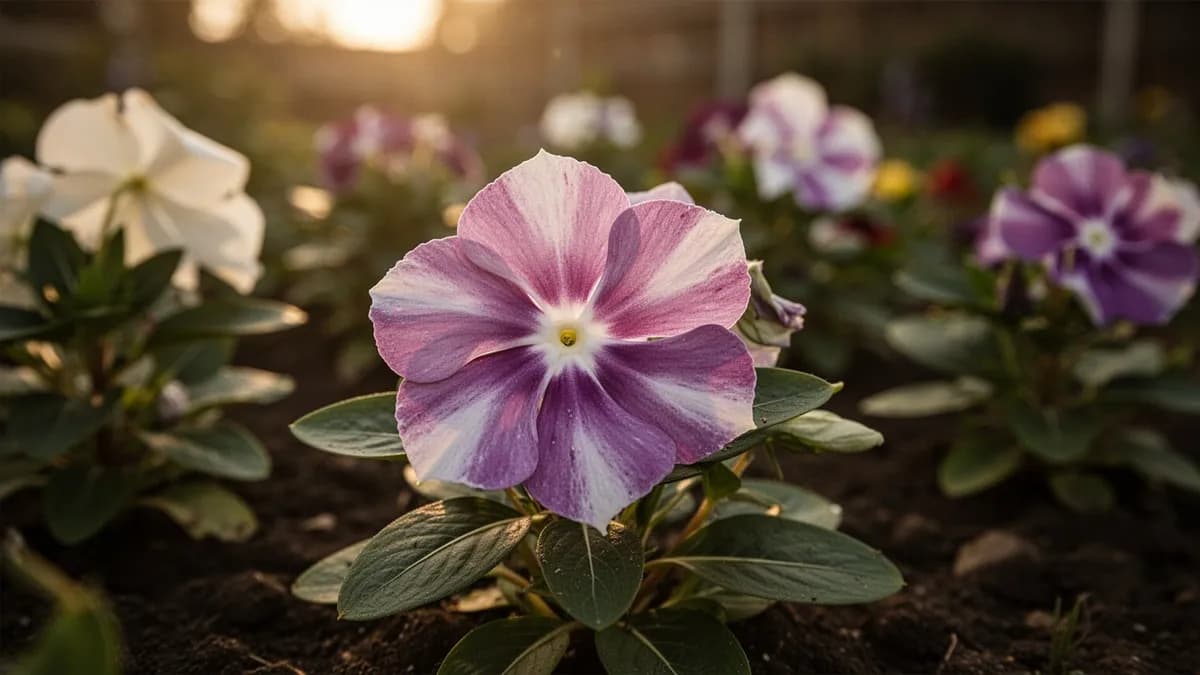
Una anual extremadamente tolerante al calor y a la sequía, con follaje brillante de color verde oscuro y alegres flores de cinco pétalos.





En esta páginaResumen
Conoce Vinca
Una anual extremadamente tolerante al calor y a la sequía, con follaje brillante de color verde oscuro y alegres flores de cinco pétalos. La vinca prospera en las condiciones más calurosas, donde otras anuales sufren, por lo que es perfecta para macetas y bancales soleados. Espere a que el suelo esté bien caliente antes de plantar, ya que las condiciones frías y húmedas provocan pudrición de raíz.
Cuándo plantar Vinca
Las semillas de vinca requieren temperaturas cálidas de 24 a 27 °C para germinar, lo que tarda de diez a quince días en oscuridad total. Comience la siembra en interior de doce a catorce semanas antes de la última helada, cubriendo por completo las semillas, ya que la oscuridad es esencial. Mantenga condiciones cálidas y estables y el sustrato húmedo, pero no mojado. Las plántulas crecen despacio y necesitan luz brillante una vez emergen. Trasplántelas al exterior solo cuando el suelo se haya calentado por completo. La mayoría de los jardineros prefieren trasplantes debido al largo plazo previo y a los requisitos específicos de germinación.
Tu año de Vinca
Ajustado a Zona 7 · temporada típica · la helada se va hacia el 2 abr y vuelve hacia el 1 nov
Planta Vinca May – Jun y cosecha Jun – Oct. Consulta los métodos de plantación y elige tu clima para adaptar los periodos.
Cómo cultivar Vinca
Espere a plantar la vinca anual hasta que la temperatura del suelo se mantenga de forma constante por encima de 18 °C, ya que el suelo frío y húmedo es el principal enemigo de esta planta tropical amante del calor. Separe los trasplantes entre 25 y 30 cm a pleno sol en un suelo bien drenado. La vinca tolera suelos pobres, arenosos y pedregosos, y de hecho rinde mejor en condiciones austeras que en bancales ricos y muy enmendados.
Una vez establecida, la vinca es una de las anuales más tolerantes a la sequía y rara vez necesita riego suplementario salvo durante sequías extremas. El exceso de riego es mucho más dañino que la falta de agua y provoca pudrición de raíz y muerte de la planta. Riegue solo cuando el suelo esté seco al menos dos o tres centímetros de profundidad y evite el riego por encima de la cabeza, que mantiene húmedo el follaje.
La vinca se autoremedia y nunca necesita retirar flores marchitas, lo que la convierte en una de las flores anuales de menor mantenimiento. Las plantas forman matas ordenadas de 30 a 40 cm de alto y ancho, floreciendo sin interrupción desde comienzos del verano hasta la primera helada y sin necesidad de intervención. Abone una vez al mes con moderación con un fertilizante equilibrado, o prescinda por completo de la fertilización en un suelo de jardín normal. La vinca realmente prospera con el abandono y funciona mejor cuando se deja en paz tras plantarla.
36 plantas caben en un bancal de 120 × 240 cm
Cada Vinca pide 25 cm de margen. El planificador guarda ese marco por ti — cada planta, cada bancal.
Los mejores vecinos de Vinca
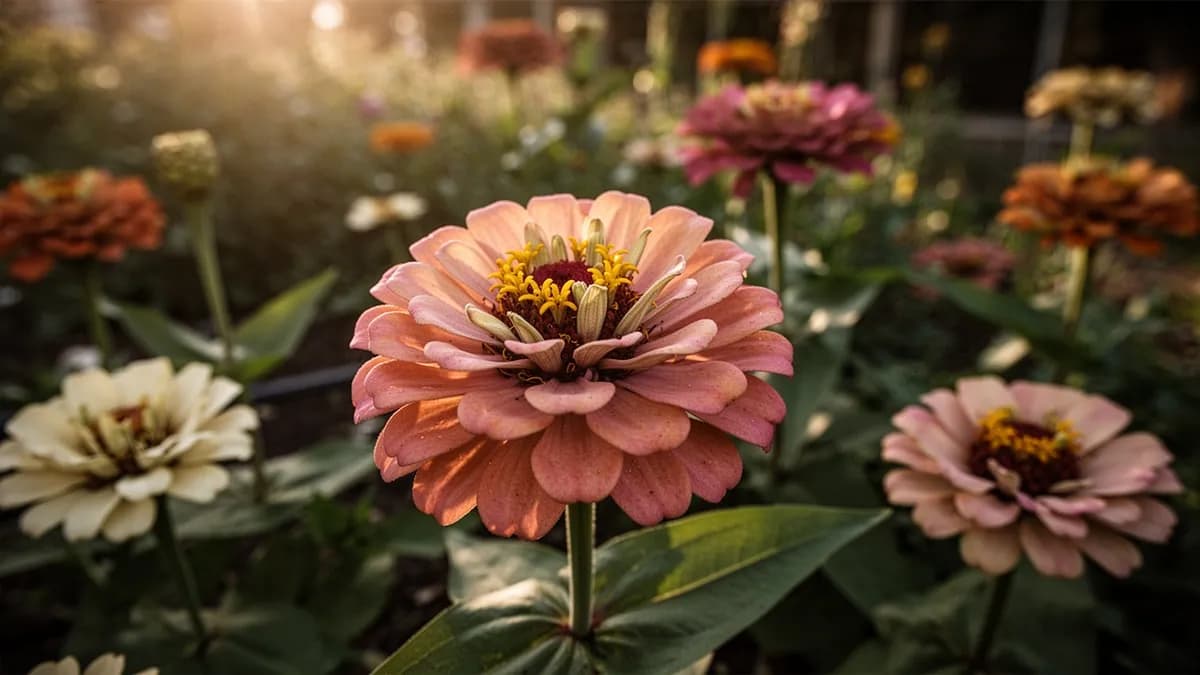
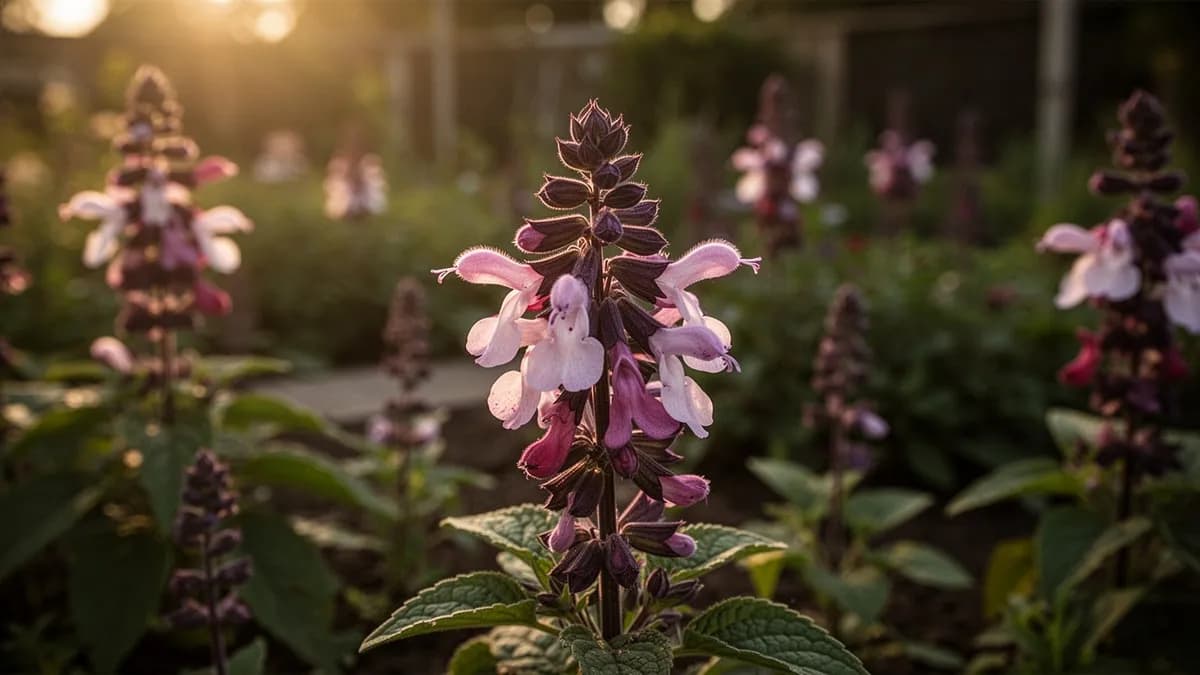
La vinca combina bien con otras plantas amantes del calor y tolerantes a la sequía, como portulaca, lantana y pentas, para una exhibición de verano que prospera en las condiciones más calurosas. Plántela delante de salvia, cleome o zinnia más altas para lograr una composición escalonada. En contenedores, combínela con gramínea de fuente púrpura o pimientos ornamentales como pieza central. La vinca es una excelente elección para franjas de aparcamiento calurosas, plantaciones junto a la calle y bancales orientados al sur en la base de fachadas donde otras anuales sufren.
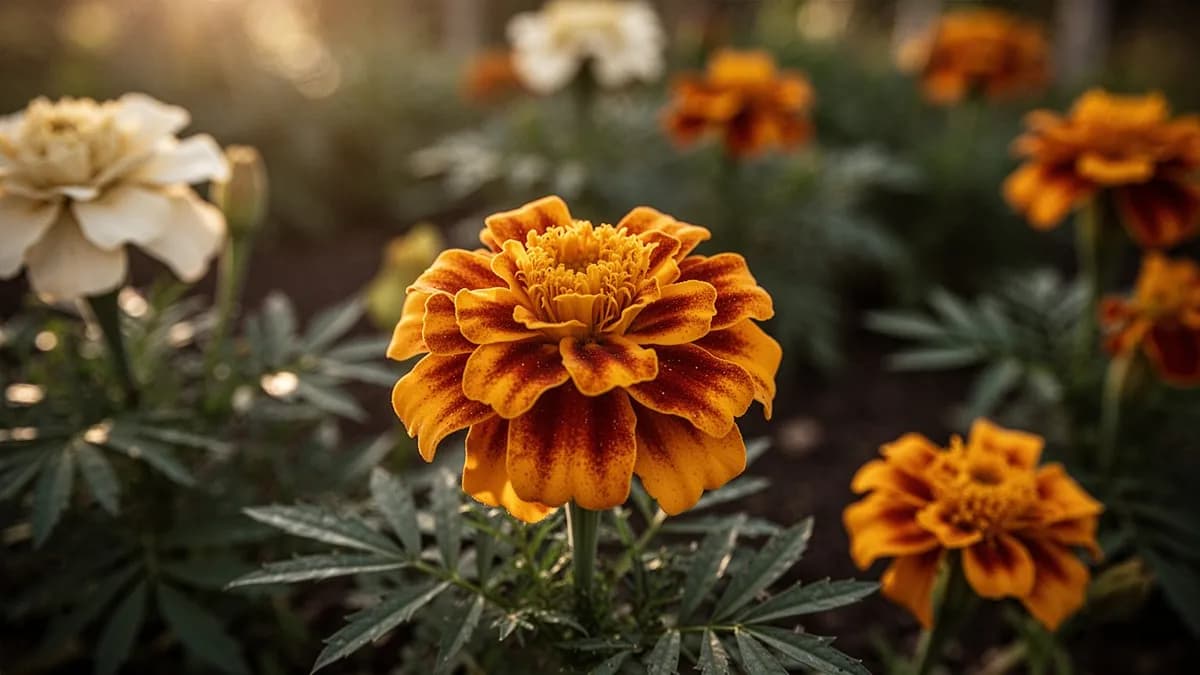
Tagete va a su lado.
Saber de huerto de siempre, cotejado con la tabla real de Vinca — prueba cualquier planta que cultives.
Prueba Vinca en un bancal, aquí mismo
Un bancal real del planificador con Vinca ya plantado. Toca una planta compañera para colocarla y mira cómo responde la comprobación de vecinos: verde para buenos vecinos, rojo si hay conflicto.


Guías de cultivo relacionadas
Abónalo bien
La vinca exige, sobre todo, un suelo bien drenado y no tolera tener los pies mojados. Los suelos arenosos, pedregosos e incluso pobres y rocosos son perfectamente adecuados. El rango ideal de pH es de 5.5 a 6.5. No enmiende demasiado el suelo con compost o materia orgánica que retenga un exceso de humedad. Una aplicación ligera de fertilizante equilibrado de liberación lenta al plantar basta para toda la temporada. Las plantas en contenedor pueden abonarse mensualmente con fertilizante líquido diluido. El exceso de fertilizante favorece un crecimiento exuberante y más susceptible a enfermedades.
Temperatura ideal
Compatibilidad de zonas de rusticidad
De la semilla a la cosecha, etapa por etapa
Germinación de semillas
Las semillas de vinca necesitan oscuridad y calor constante de 24 a 27 °C para germinar. Son muy pequeñas y deben cubrirse apenas con vermiculita fina. La germinación es lenta en comparación con muchas anuales y puede tardar hasta dos semanas.
Desarrollo de plántulas
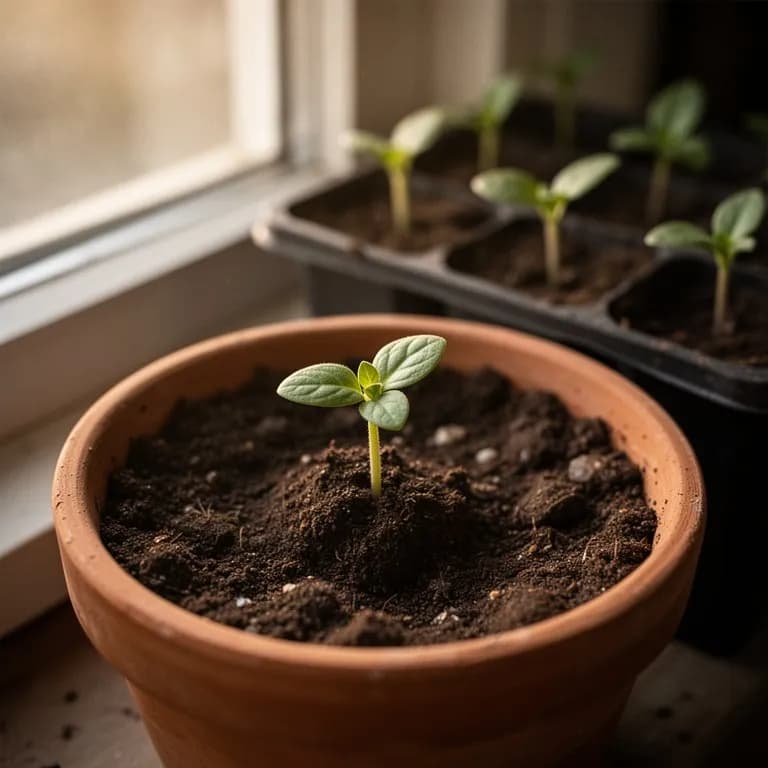
Tras la germinación, las plántulas desarrollan sus primeras hojas verdaderas y comienzan a formar un sistema radicular. El crecimiento es lento en esta etapa y las plántulas son susceptibles al damping off si se mantienen demasiado húmedas o frías.
Crecimiento vegetativo
Las plantas desarrollan un hábito de crecimiento arbustivo y ramificado con hojas verde oscuro y brillantes. Los tallos se vuelven más fuertes y la planta construye el dosel de follaje que sostendrá una floración abundante. Esta es la etapa ideal para trasplantar al exterior una vez que las temperaturas nocturnas se mantengan por encima de 15 °C.
Primera floración
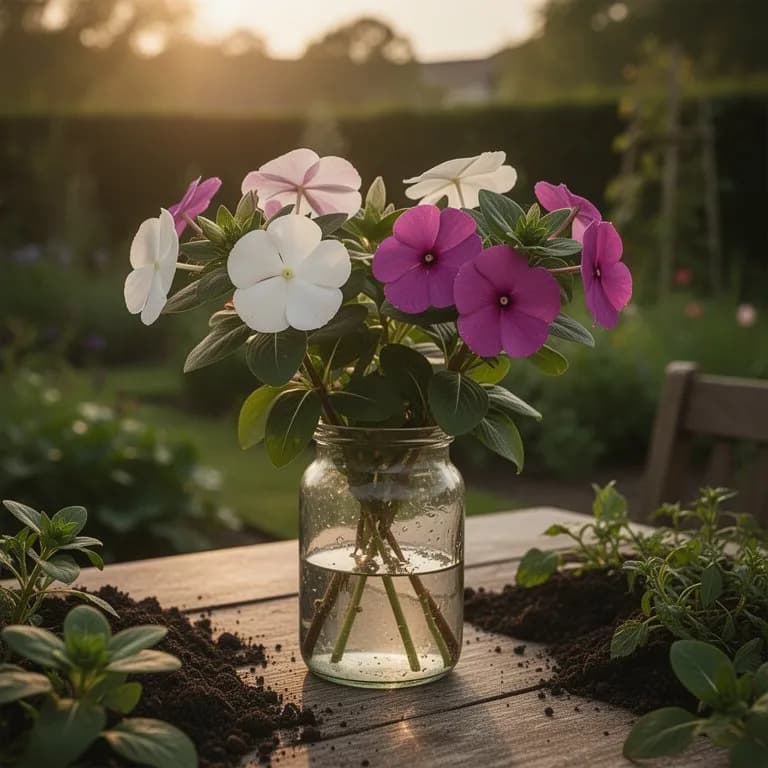
Los botones florales aparecen en las axilas de las hojas y se abren en las características flores de cinco pétalos. Los colores van del blanco y el rosa pálido al rosa intenso, la lavanda y las bicolores con ojos contrastantes. Las plantas empiezan a autorelimpiarse, lo que significa que las flores marchitas caen solas.
Floración máxima y floración continua
La vinca alcanza su máximo rendimiento durante los meses más calurosos, produciendo un flujo continuo de flores. A diferencia de muchas anuales, la vinca prospera cuando las temperaturas superan los 32 °C y florece de forma aún más abundante durante el calor más intenso del verano.
Final de temporada y cuajado de semillas
A medida que las temperaturas se enfrían en otoño, la floración disminuye gradualmente. Se desarrollan vainas de semillas delgadas donde hubo flores polinizadas. Las plantas permanecen atractivas hasta la primera helada, que mata a esta anual tropical sensible al frío.
Cubra las bandejas de semillas con plástico negro o una tapa opaca para bloquear la luz, y mantenga el medio de cultivo constantemente húmedo, pero nunca encharcado.
Cuidar Vinca mes a mes
Qué hacer cada mes para tu Vinca
Octubre
Mes actualRecoja las vainas de semillas maduras antes de la primera helada si quiere guardar semilla. En zonas sin heladas, la vinca puede seguir floreciendo bien entrado el otoño. En regiones más frías, las plantas decaen cuando las temperaturas bajan de 10 °C.
Ten claro qué hacer en tu huerto, cada mes
Un correo al empezar cada mes: qué sembrar, plantar y hacer ahora mismo — para tu Vinca y todo lo que crece alrededor. Más un breve curso inicial para esquivar los errores clásicos.
- Qué hacer ahora mismo
- Ajustado a tu temporada
- Curso inicial incluido
Cosechar Vinca
Las flores de vinca no suelen usarse como flor cortada debido a sus tallos cortos y su tamaño reducido. No hace falta despuntar, ya que la planta se autoremedia. Para guardar semilla, deje que algunas flores formen pequeñas vainas que se sequen en la planta. Las vainas se abren al madurar y liberan diminutas semillas oscuras. Recoja las vainas justo antes de que se abran, observando el cambio de color de verde a marrón. Guarde las semillas en sobres de papel en un lugar fresco y seco para sembrarlas al año siguiente.
se supone que plantas al comenzar el periodo — indica tu fecha real
Cosecha Vinca a tiempo y la planta sigue produciendo.
Almacenamiento y conservación
La vinca anual no es adecuada para cortar ni secar. Su valor reside en su excelente desempeño vivo en el jardín, especialmente en lugares calurosos y secos. Para conservarla durante el invierno, tome esquejes de tallo de 8 a 10 cm antes de la primera helada. Enraícelos en perlita húmeda bajo luz brillante a 21 °C. Los esquejes enraízan en dos o tres semanas. Cultive las plantas enraizadas en interior, junto a una ventana soleada, durante el invierno y devuélvalas al exterior la primavera siguiente, una vez que el suelo se haya calentado.
Qué falla — y cómo solucionarlo
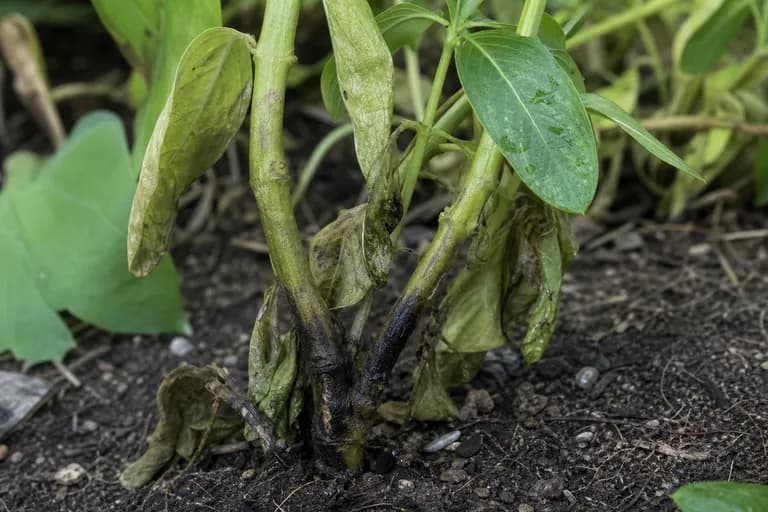
Pudrición del tallo por Phytophthora
EnfermedadLesiones marrón oscuro a negras en la base de los tallos, que causan marchitez repentina y colapso. Suele aparecer en tiempo fresco y húmedo o en suelo mal drenado.
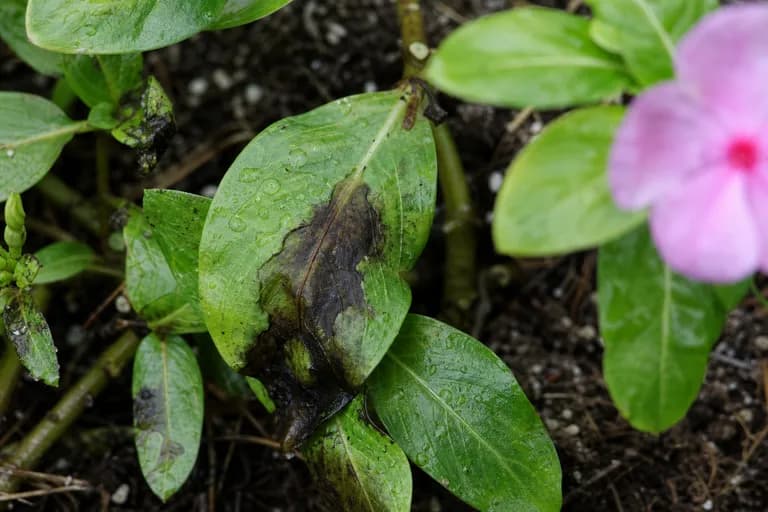
Pudrición aérea por Phytophthora
EnfermedadLesiones oscuras, empapadas de agua, en tallos y hojas por encima de la línea del suelo, que se extienden rápidamente en condiciones cálidas y húmedas. Las plantas enteras pueden colapsar en pocos días durante lluvias prolongadas.
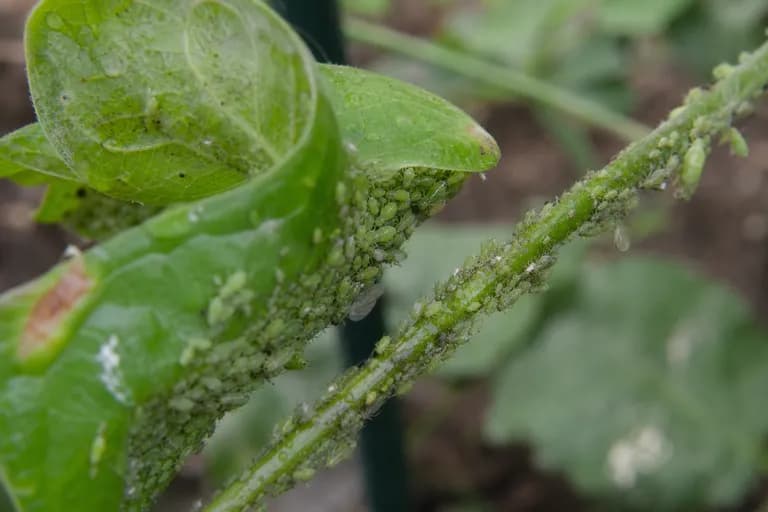
Pulgones
PlagaPequeños grupos de insectos en las puntas de los brotes y botones florales, con melaza pegajosa y posible fumagina. Por lo general, un problema menor en plantas de vinca sanas.
Solución de problemas comunes
La pudrición del tallo y la pudrición aérea por Phytophthora son, con diferencia, los problemas más graves, especialmente en temporadas frescas y húmedas. Elegir variedades resistentes como la serie Cora ha reducido drásticamente las pérdidas. Plantar demasiado pronto en suelo frío y húmedo es el mayor error que cometen los jardineros con la vinca. En suelo bien drenado y con calor, la vinca es notablemente sin problemas. Las hojas inferiores amarillentas suelen indicar exceso de riego, no falta de nutrientes.
Consejos de cultivo
- Start seeds indoors 12-16 weeks before the last frost date because vinca is exceptionally slow to germinate and grow in its early stages.
- Cover seed trays with opaque material during germination since vinca seeds require complete darkness to sprout successfully.
- Use a heat mat to maintain soil temperature at 24-27 degrees Celsius, as vinca will not germinate reliably in cool soil.
- Never transplant vinca outdoors until nighttime temperatures are consistently above 15 degrees Celsius, as cold soil causes root rot and stunted growth.
- Plant in the hottest, sunniest spot in your garden because vinca is one of the few annuals that genuinely thrives in extreme heat and intense direct sunlight.
- Ensure excellent soil drainage by amending heavy clay with coarse sand or perlite, since vinca is highly susceptible to Phytophthora root and stem rot in waterlogged conditions.
- Water deeply but infrequently, allowing the top few centimeters of soil to dry between waterings to mimic the plant's native seasonally dry Madagascar habitat.
- Avoid overhead irrigation once plants are established, as wet foliage promotes fungal diseases including aerial Phytophthora blight and Botrytis petal blight.
- Skip deadheading entirely because vinca is self-cleaning and will continuously produce new blooms without any removal of spent flowers.
- Choose disease-resistant cultivar series like Cora, Titan, or Valiant for the best performance against Phytophthora, which is the most common and devastating disease of annual vinca.
Cultiva tu mejor Vinca — y todo lo que la rodea.
Empieza un plan gratis hoy. Diseña tus bancales, coloca tu Vinca y deja que PlotMyGarden gestione el momento, el espaciado, las asociaciones y los recordatorios de la semilla a la cesta.
Elige tu Vinca
Serie Cora
Resistencia líder en el sector frente a la pudrición aérea por Phytophthora, con flores grandes sobre plantas compactas y una amplia gama de colores.
Serie Titan
Flores extragrandes de 5 cm en plantas vigorosas y resistentes a enfermedades, las flores más grandes disponibles en vinca anual.
Serie Pacifica
Plantas compactas y de floración temprana, con excelente rendimiento en el jardín y una gama completa de flores sólidas y bicolores.
Serie Mediterranean
Una variedad rastrera de vinca perfecta para cestas colgantes y macetas, que se extiende hasta 60 cm con tallos colgantes.
Serie Tattoo
Patrones únicos de venas oscuras en los pétalos que crean un llamativo aspecto tatuado en una gama de colores base.
A single packet of vinca seeds costing two to four dollars can produce 50-100 plants, each of which will bloom continuously from late spring through first frost. Compared to purchasing six-packs of nursery transplants at four to six dollars each, starting from seed saves a substantial amount for large plantings. Vinca also self-seeds in warm climates, providing free volunteer plants in subsequent years. Its extreme heat and drought tolerance means lower water bills compared to thirstier annuals like impatiens or begonias.
Recetas rápidas
Mezcla de potpourri con flores secas de vinca
15 min activos, 5-7 días de secadoConserve la belleza de las flores de vinca en un potpourri decorativo y fragante para el hogar. Este es un proyecto de manualidades únicamente y no está destinado al consumo.
5 ingredientesQué contiene
Beneficios para la salud
- Vincristine derived from Catharanthus roseus is a cornerstone chemotherapy drug used to treat acute lymphoblastic leukemia, Hodgkin lymphoma, and several other cancers.
- Vinblastine, another alkaloid from the plant, is used in treating Hodgkin disease, testicular cancer, breast cancer, and bladder cancer with significant clinical success.
- Growing vinca as a garden ornamental provides mental health benefits through the stress-reducing effects of gardening and enjoying colorful outdoor spaces.
- The low-maintenance nature of vinca makes gardening accessible to people with limited mobility or energy, supporting therapeutic horticulture programs.
- Research into semi-synthetic derivatives of vinca alkaloids has produced vinorelbine and vindesine, expanding the range of cancers treatable with compounds originating from this plant.
- Ongoing biotechnology research aims to produce vinca alkaloids through cell culture and engineered yeast, potentially making these life-saving medicines more affordable and accessible worldwide.
De dónde viene Vinca
Catharanthus roseus, conocida comúnmente como vinca anual o pervinca de Madagascar, es originaria de los bosques tropicales de Madagascar, una gran isla frente a la costa sureste de África. La especie evolucionó en el clima cálido y estacionalmente seco de la isla, desarrollando hojas gruesas y cerosas y raíces pivotantes profundas que le permiten soportar periodos prolongados sin lluvia. Los primeros pueblos malgaches reconocieron las propiedades medicinales de la planta y usaron decocciones de sus hojas y raíces para tratar diversas dolencias. Los exploradores europeos y los comerciantes coloniales encontraron la planta durante la era de los descubrimientos y la llevaron a regiones tropicales de todo el mundo, donde se naturalizó rápidamente gracias a su vigorosa auto-siembra y su tolerancia a suelos pobres. Para el siglo XVIII, Catharanthus roseus ya estaba establecida en el Caribe, India, el sudeste asiático y la África tropical, donde curanderos locales descubrieron de forma independiente sus usos medicinales. En Jamaica, los practicantes tradicionales preparaban una infusión de las hojas para tratar la diabetes, una práctica que finalmente conduciría a uno de los descubrimientos farmacéuticos más importantes del siglo XX. En la década de 1950, investigadores de la Universidad de Western Ontario y de Eli Lilly and Company estudiaron las supuestas propiedades antidiabéticas de la planta y, en su lugar, descubrieron los alcaloides de la vinca vincristina y vinblastina. Estos compuestos revolucionaron el tratamiento del cáncer, transformando la leucemia linfoblástica aguda infantil de una enfermedad casi siempre mortal en otra con una tasa de supervivencia superior al noventa por ciento. El descubrimiento también puso de relieve el enorme valor potencial del conocimiento etnobotánico y se convirtió en un caso emblemático en los debates sobre conservación de la biodiversidad y ética de la bioprospección. Hoy, Catharanthus roseus se cultiva tanto como apreciada anual ornamental tolerante al calor como cultivo farmacéutico, con investigación en curso sobre vías biosintéticas para producir alcaloides de vinca de forma más eficiente mediante ingeniería metabólica y biología sintética.
Vinca: ¿sabías que?
Datos fascinantes sobre Vinca
Los alcaloides de la vinca vincristina y vinblastina, derivados de Catharanthus roseus, se encuentran entre los fármacos de quimioterapia más importantes jamás descubiertos y han mejorado drásticamente las tasas de supervivencia en la leucemia infantil y el linfoma de Hodgkin.
Vinca: preguntas frecuentes
¿Cuándo debo plantar Vinca?
¿Cuáles son buenas plantas acompañantes para Vinca?
¿En qué zonas de rusticidad puede crecer Vinca?
¿Cuánto sol necesita Vinca?
¿A qué distancia debo espaciar Vinca?
¿Qué plagas y enfermedades afectan a Vinca?
¿Cómo almaceno Vinca después de la cosecha?
¿Cuáles son las mejores variedades de Vinca para cultivar?
¿Qué suelo necesita Vinca?
Is annual vinca the same as Vinca minor or Vinca major?
Is vinca poisonous to pets and children?
Why are my vinca plants wilting and dying even though I water them regularly?
Can I grow vinca as a perennial?
How are vinca alkaloids used in cancer treatment?
Do I need to deadhead vinca to keep it blooming?
Acabas de leer la teoría. Ahora cultívala en piloto automático.
Todo lo que hace que Vinca sea delicado — el momento, el espaciado, las asociaciones, la ventana de cosecha — es justo lo que PlotMyGarden resuelve por ti, para cada planta de tu huerto.
Un plan que conoce tu clima
Indica tu ubicación una vez. Recibe fechas de siembra, abonado y cosecha basadas en tu última helada real y el pronóstico en vivo — sin adivinar con un sobre genérico.
De la sección “Cuándo plantar”Planificador de bancales de arrastrar y soltar
Diseña bancales sobre una cuadrícula. Cada planta encaja con su espaciado correcto y ves toda la temporada antes de gastar un céntimo en semillas.
De la sección “Cultivo”Conflictos de asociación, detectados a tiempo
Más de 200 buenas y malas combinaciones comprobadas en vivo mientras plantas — para que un error que arruine la temporada nunca llegue a la tierra.
De la sección “Asociaciones”Recordatorios que sí vas a seguir
“Riega las judías.” “Recoge hoy antes de que se pase.” Oportunos, concretos y ligados a las plantas que de verdad cultivas.
De la sección “Cosecha”Escalonado, programado
¿Quieres cosechar seis semanas en vez de seis días? Reparte tus siembras automáticamente y te avisa cuando toca el siguiente lote.
De la sección “Cuándo plantar”Un registro que se vuelve más listo
Cada cosecha que registras le enseña tu huerto. El plan del año que viene parte de lo que de verdad funcionó en tu suelo, no en un manual.
De la sección “Resumen”Planta estos junto a Vinca
Más Anuales
Cultiva tu mejor Vinca — y todo lo que la rodea.
Empieza un plan gratis hoy. Diseña tus bancales, coloca tu Vinca y deja que PlotMyGarden gestione el momento, el espaciado, las asociaciones y los recordatorios de la semilla a la cesta.