Rudbeckia perenne
Una perenne fiable y alegra-jardín con flores doradas tipo margarita y prominentes conos centrales marrón oscuro a negro que florecen desde mediados del verano hasta el otoño.





En esta páginaResumen
Conoce Rudbeckia perenne
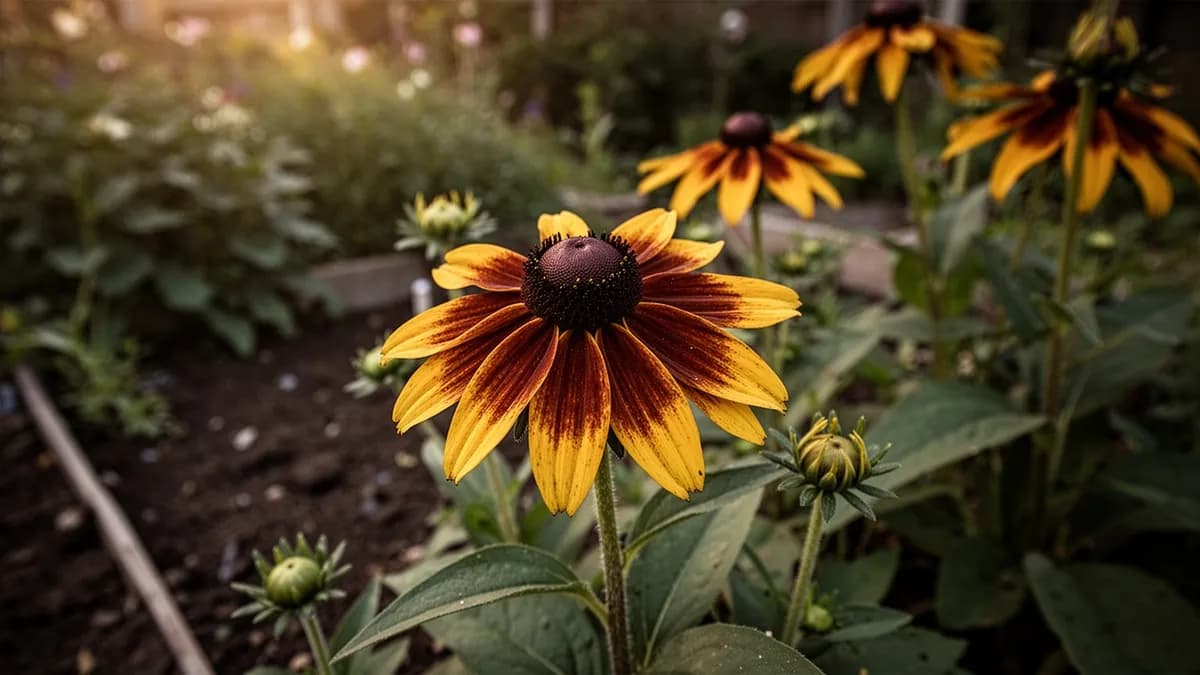
Una perenne fiable y alegra-jardín con flores doradas tipo margarita y prominentes conos centrales marrón oscuro a negro que florecen desde mediados del verano hasta el otoño. La rudbeckia perenne forma matas ordenadas y densas de 60-75 cm de alto y ancho, y se expande poco a poco por rizomas cortos sin volverse invasiva. Es una de las perennes más agradecidas para borduras soleadas y jardines de polinizadores.
Cuándo plantar Rudbeckia perenne
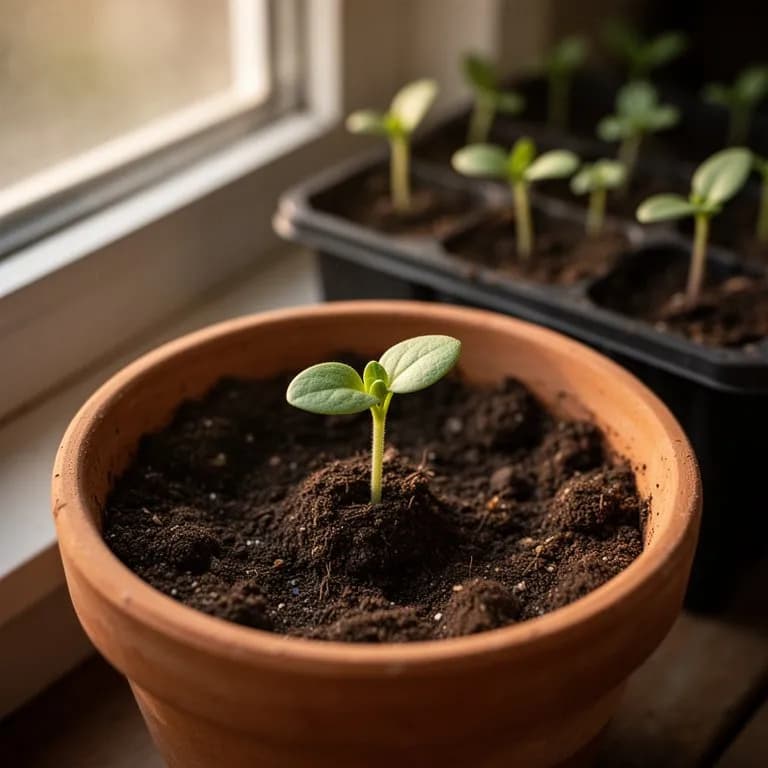
Siembre semillas de rudbeckia perenne en interior 8-10 semanas antes de la última helada, o directamente al aire libre en otoño. Presione las semillas sobre la superficie del compost húmedo sin cubrirlas, ya que la luz ayuda a la germinación. Espere plántulas en 14-21 días a 18-22°C. Los cultivares con nombre deben propagarse por división en primavera para obtener plantas idénticas. La división es sencilla: levante los macizos, descarte el centro leñoso y replante las secciones exteriores vigorosas con raíces sanas.
Tu año de Rudbeckia perenne
Ajustado a Zona 7 · temporada típica · la helada se va hacia el 2 abr y vuelve hacia el 1 nov
Planta Rudbeckia perenne Mar – Abr, Sep y cosecha Jul – Oct. Consulta los métodos de plantación y elige tu clima para adaptar los periodos.
Cómo cultivar Rudbeckia perenne
La rudbeckia perenne, en particular R. fulgida var. sullivantii 'Goldsturm', es una de las perennes más fiables y gratificantes del cultivo, y produce masas de margaritas amarillo dorado con prominentes centros cónicos marrón oscuro a negro desde finales de julio hasta octubre. Crece en matas limpias y densas de 60-75 cm de alto y ancho, y se extiende poco a poco mediante rizomas cortos sin llegar a ser invasiva.
Plántela a pleno sol o con ligera sombra en un suelo medio y bien drenado. Aunque es adaptable, la rudbeckia rinde mejor con humedad regular durante la temporada de crecimiento: un riego constante produce la floración más abundante. Separe las plantas 45 cm para lograr una plantación sólida que se cerrará en dos años. La planta tolera calor, humedad, sequía y suelos pobres una vez establecida.
Deje los distintivos conos oscuros de semillas en pie durante el invierno: aportan interés arquitectónico al jardín en reposo y alimento valioso para jilgueros y otras aves que comen semillas. Corte todo el crecimiento muerto a comienzos de la primavera antes de que aparezca el nuevo follaje basal. Divida los macizos cada 3-4 años en primavera para mantener el vigor y aumentar su reserva de plantas.
10 plantas caben en un bancal de 120 × 240 cm
Cada Rudbeckia perenne pide 45 cm de margen. El planificador guarda ese marco por ti — cada planta, cada bancal.
Los mejores vecinos de Rudbeckia perenne
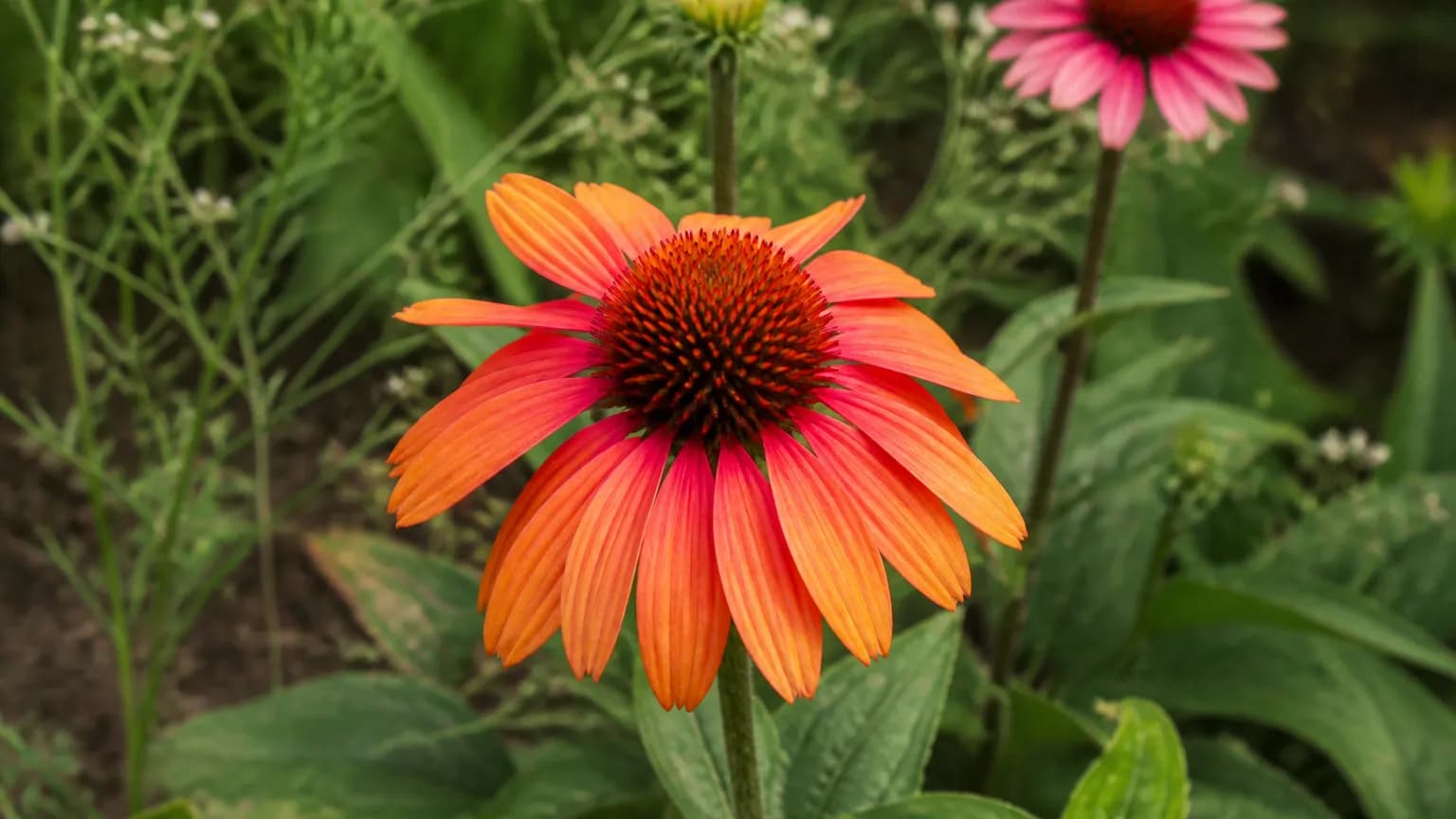
La rudbeckia perenne combina con casi cualquier otra perenne de verano. Compañeras clásicas incluyen equináceas, hemerocallis, rudbeckias de flor anual, lavanda y salvia. Su limpio esquema de amarillo y marrón actúa como puente neutro entre tonos más intensos. Plántela en jardines campestres con rosas, flox y delphinium para lograr un aspecto de bordura inglesa por excelencia. Las flores atraen sírfidos y otros insectos beneficiosos que ayudan a controlar los pulgones en las plantas vecinas.
Equinácea va a su lado.
Saber de huerto de siempre, cotejado con la tabla real de Rudbeckia perenne — prueba cualquier planta que cultives.
Prueba Rudbeckia perenne en un bancal, aquí mismo
Un bancal real del planificador con Rudbeckia perenne ya plantado. Toca una planta compañera para colocarla y mira cómo responde la comprobación de vecinos: verde para buenos vecinos, rojo si hay conflicto.


Guías de cultivo relacionadas
Abónalo bien
La rudbeckia perenne crece en suelos medios a fértiles, bien drenados, con un pH de 6.0-7.0. Tolera una amplia gama de tipos de suelo, pero rinde mejor en suelos moderadamente fértiles y bien drenados. Incorpore compost antes de plantar para mejorar el drenaje de los suelos arcillosos pesados, ya que la rudbeckia tolera muchos suelos pero florece mejor en condiciones aireadas. Añada una capa ligera de compost en superficie en primavera. Evite el exceso de fertilización, que produce demasiado follaje y menos flores.
Temperatura ideal
Compatibilidad de zonas de rusticidad
De la semilla a la cosecha, etapa por etapa
Germinación de semillas
Las semillas necesitan luz y deben sembrarse en la superficie o apenas cubiertas. La germinación puede ser irregular y mejora con estratificación en frío.
Desarrollo de plántulas
Las plántulas forman una roseta basal y crecen despacio al principio mientras construyen un sistema radicular fuerte.
Crecimiento vegetativo
Las plantas forman matas densas de follaje y tallos erectos, extendiéndose gradualmente por rizomas cortos.
Botones y floración
Los tallos florales producen abundantes flores tipo margarita doradas durante un largo periodo de verano a otoño.
Formación de semillas y dormancia
A medida que baja la temperatura, las flores se transforman en conos de semillas oscuras y el follaje desaparece para el reposo invernal.
Rebrote primaveral
En primavera emerge nuevo follaje basal y las plantas establecidas retoman un crecimiento vigoroso desde la corona y los rizomas.
Mantén la superficie uniformemente húmeda y evita enterrar la semilla.
Cuidar Rudbeckia perenne mes a mes
Qué hacer cada mes para tu Rudbeckia perenne
Octubre
Mes actualContinúe plantando divisiones y trasplantes para permitir que las raíces se establezcan antes del invierno. Reduzca el riego a medida que bajan las temperaturas y el crecimiento se ralentiza. Limpie las hojas caídas y los restos alrededor de las plantas para reducir los lugares de invernada de babosas y patógenos fúngicos.
Ten claro qué hacer en tu huerto, cada mes
Un correo al empezar cada mes: qué sembrar, plantar y hacer ahora mismo — para tu Rudbeckia perenne y todo lo que crece alrededor. Más un breve curso inicial para esquivar los errores clásicos.
- Qué hacer ahora mismo
- Ajustado a tu temporada
- Curso inicial incluido
Cosechar Rudbeckia perenne
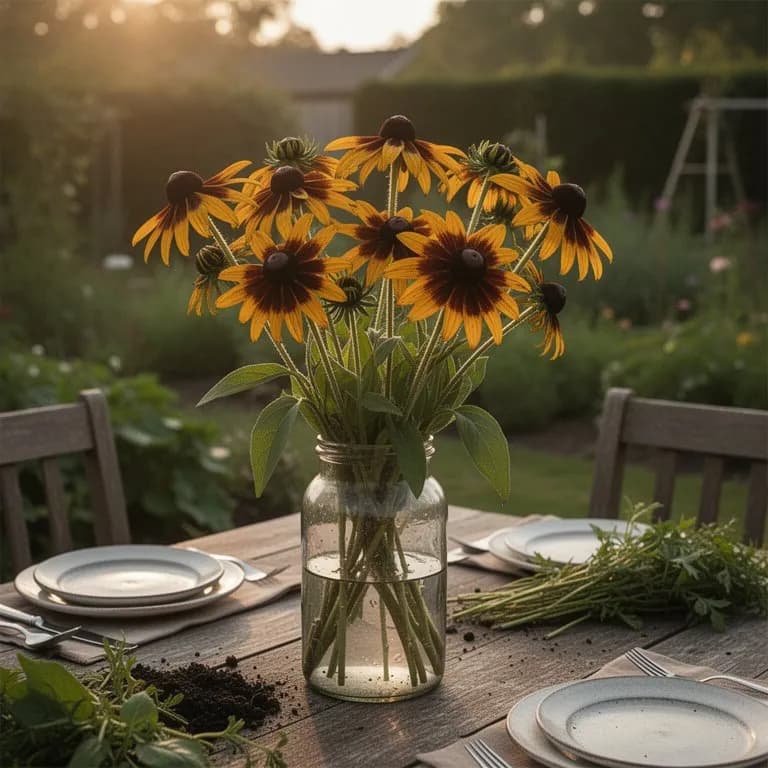
La rudbeckia perenne es una excelente flor cortada. Corte los tallos cuando las flores estén casi totalmente abiertas, por la mañana después de que el rocío se haya secado. Retire las hojas inferiores que quedarían por debajo de la línea de agua. Las flores duran de forma impresionante entre 7 y 14 días en un jarrón con agua limpia, cambiada cada 2-3 días. Para obtener la mayor duración, añada unas gotas de lejía y una pizca de azúcar al agua del jarrón. Corte con regularidad para fomentar la continuidad de la floración en el jardín.
se supone que plantas al comenzar el periodo — indica tu fecha real
Corta las flores cuando los pétalos estén completamente abiertos y el centro del cono esté firme y oscuro.
Almacenamiento y conservación
Las flores de rudbeckia perenne pueden secarse con gel de sílice para una conservación tridimensional: los pétalos amarillos y los conos oscuros mantienen bien el color. Prense flores individuales entre libros pesados para manualidades. Las semillas pueden guardarse de variedades no híbridas recogiendo las cabezuelas secas en otoño. Las flores no se secan bien al aire por sus pétalos carnosos, pero el secado con gel de sílice ofrece resultados excelentes en 3-5 días.
Qué falla — y cómo solucionarlo
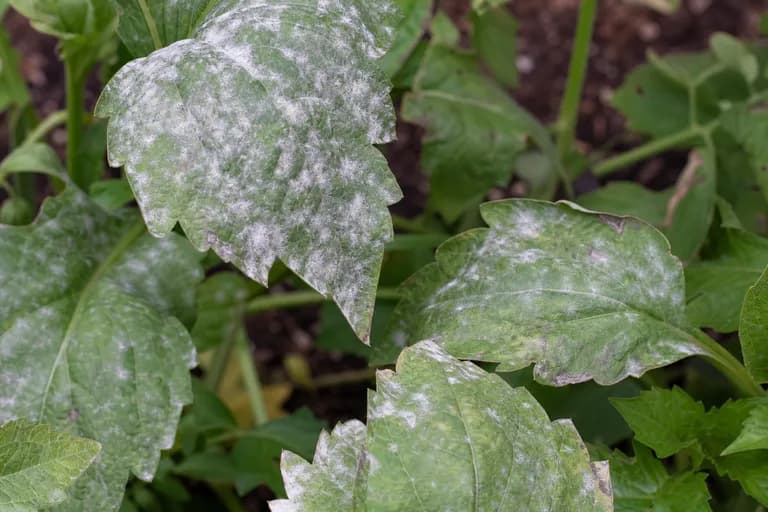
Pudrición de la corona
EnfermedadLas plantas se marchitan y mueren, con coronas blandas y pastosas a nivel del suelo. Es más común en suelos húmedos y pesados durante el invierno o en periodos prolongados de lluvia.
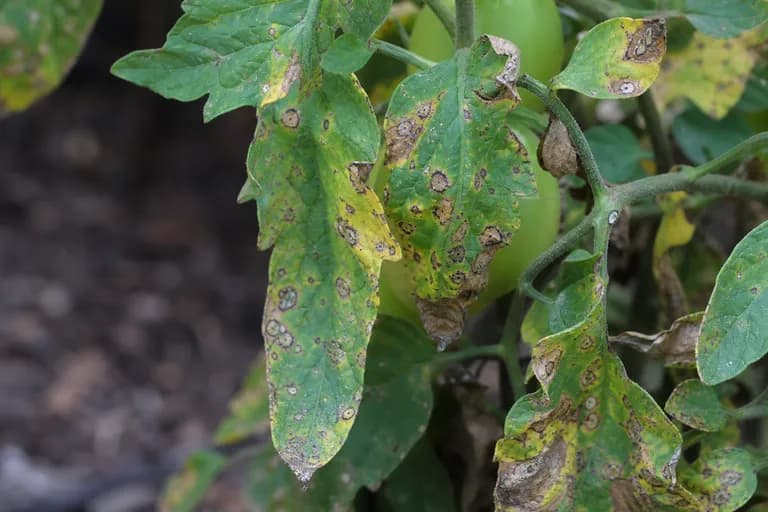
Pulgones
PlagaColonias en capullos florales y puntas de los tallos, que causan flores deformadas. Mielada pegajosa y posterior fumagina.
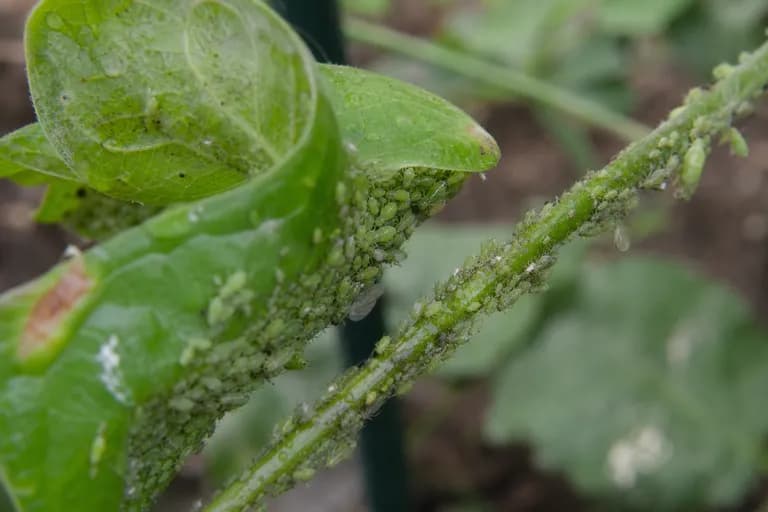
Mancha foliar de Septoria
EnfermedadManchas circulares marrones o negras en las hojas, a veces con un halo amarillento. Puede causar una defoliación importante en veranos húmedos.
Solución de problemas comunes
La podredumbre invernal en suelos húmedos y pesados es el principal problema. Mejore el drenaje antes de plantar y evite un mantillo invernal grueso pegado a la corona. Los tallos vencidos suelen deberse a demasiada sombra, suelo muy rico o macizos viejos y apretados: divida cada 3-4 años y cultive a pleno sol para conseguir las plantas más firmes. No quitar las flores marchitas reduce la floración y puede provocar demasiada auto-siembra. En veranos muy calurosos y húmedos puede ser de vida corta si no se mantiene una humedad constante.
Consejos de cultivo
- Plante rudbeckia a pleno sol, con al menos 6-8 horas de luz directa al día. Las plantas cultivadas en semisombra serán más largas y producirán menos flores y más pequeñas.
- Riegue en profundidad pero con poca frecuencia, dejando secar la capa superior del suelo entre riegos. La rudbeckia ya establecida tolera bastante bien la sequía y el exceso de agua favorece la podredumbre de raíces y las enfermedades fúngicas.
- Separe las plantas 45 cm para darles espacio y favorecer una buena circulación de aire. Las plantaciones densas aumentan el riesgo de oídio y de tallos débiles.
- Divida los macizos cada 3 o 4 años en primavera para mantener la vigorosidad y evitar que el centro se vacíe. Replante las secciones exteriores vigorosas y deseche el centro leñoso.
- Combine rudbeckia con gramíneas ornamentales, equinácea púrpura y salvia rusa para crear un esquema de plantación de bajo mantenimiento y favorable a los polinizadores, con meses de color e interés textural.
- Quite las flores marchitas con regularidad para prolongar la floración y evitar una auto-siembra excesiva si no desea plántulas voluntarias por todo el jardín.
- Aplique compost como cobertura ligera en primavera para alimentar el suelo sin excederse. Evite los abonos ricos en nitrógeno, que fomentan el follaje a costa de las flores.
- Deje algunas cabezuelas en pie para aves granívoras durante el invierno; además de bonitas, sirven de alimento a jilgueros y otros visitantes.
- Si el centro del macizo empieza a abrirse, no espere demasiado: la división temprana suele revitalizar la floración y mantener la forma compacta.
- En zonas muy húmedas, priorice el movimiento de aire y el drenaje por encima de cualquier otro ajuste; la rudbeckia tolera mejor la sequía que el suelo saturado.
Cultiva tu mejor Rudbeckia perenne — y todo lo que la rodea.
Empieza un plan gratis hoy. Diseña tus bancales, coloca tu Rudbeckia perenne y deja que PlotMyGarden gestione el momento, el espaciado, las asociaciones y los recordatorios de la semilla a la cesta.
Elige tu Rudbeckia perenne
Rudbeckia fulgida 'Goldsturm'
El estándar de oro de las rudbeckias perennes: compacta, muy florífera y absolutamente fiable. 75 cm de altura con masas de margaritas doradas.
Rudbeckia fulgida 'Little Goldstar'
Una versión más pequeña y compacta de 'Goldsturm', ideal para borduras más reducidas y contenedores. 45 cm de altura con la misma floración abundante.
Rudbeckia fulgida 'Viette's Little Suzy'
Una variedad enana de 30-35 cm con flores de color amarillo dorado intenso y centros cónicos oscuros, perfecta para el frente de las borduras.
Rudbeckia triloba
Una especie de vida más corta pero muy vigorosa, con abundantes flores pequeñas de color amarillo dorado. Ideal para praderas naturalistas.
Una sola Rudbeckia fulgida comprada por 4 a 8 dólares puede dividirse cada 3 a 4 años en 4 a 6 nuevas divisiones, llenando rápidamente los bancales sin coste adicional. En un periodo de 10 años, una sola planta original puede generar 20 o más plantas nuevas con un valor combinado de 80 a 160 dólares. La especie también se auto-siembra moderadamente en condiciones favorables, proporcionando plántulas voluntarias adicionales. Como la rudbeckia requiere muy poco mantenimiento una vez establecida, sin fertilizante suplementario y con riego mínimo después de la primera temporada, reduce de forma notable los gastos continuos de cuidado del jardín en comparación con plantas anuales que deben reemplazarse cada año.
Recetas rápidas
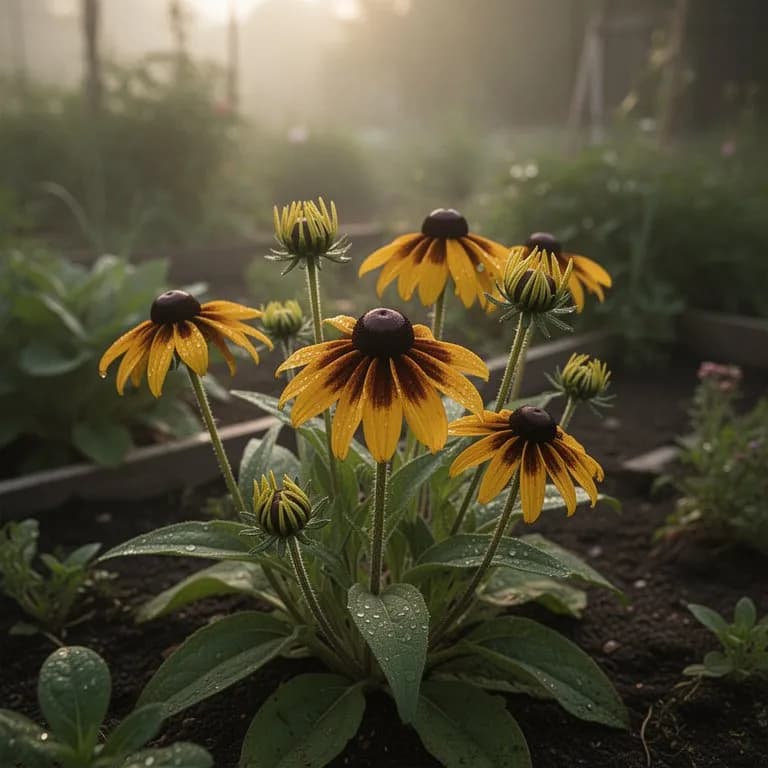
Marcapáginas de flor prensada de rudbeckia
10 minutos, más tiempo de prensadoConserve los vibrantes pétalos dorados de la rudbeckia prensándolos entre libros pesados y luego plastifíquelos o séllalos para crear bonitos marcapáginas que capturan la esencia de su jardín de verano durante todo el año.
5 ingredientes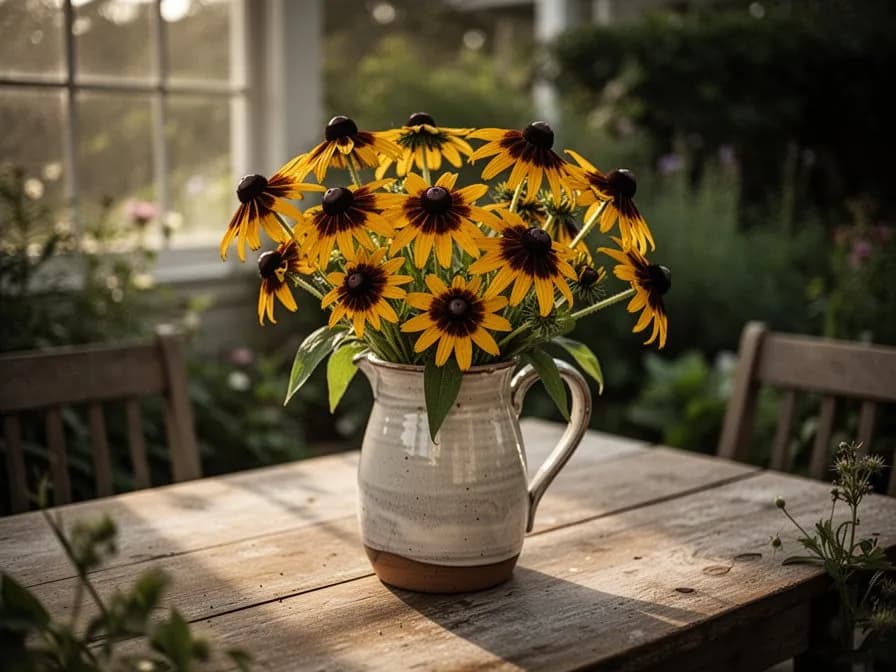
Corona otoñal de rudbeckia
20 minutosCree una corona espectacular de otoño usando cabezuelas secas de rudbeckia y flores conservadas, colocadas sobre una base de vid o de alambre. Los conos centrales oscuros aportan una textura maravillosa y duran meses.
5 ingredientesTinte natural de rudbeckia
30 minutosUse cabezuelas de rudbeckia gastadas para crear un hermoso tinte natural amarillo dorado para telas de algodón o lino. Los pétalos y conos contienen pigmentos naturales que producen un color sorprendentemente vivo y resistente a la luz.
5 ingredientesQué contiene
Beneficios para la salud
- Pasar tiempo cuidando y observando rudbeckias en el jardín se ha asociado con menos estrés y mejor bienestar mental, en consonancia con la investigación en terapia hortícola que muestra que la jardinería reduce los niveles de cortisol.
- Como planta de bajo mantenimiento y tolerante a la sequía, la rudbeckia reduce la necesidad de insumos químicos como fertilizantes sintéticos y pesticidas, lo que contribuye a un entorno de jardín más sano y a una menor exposición química para los jardineros.
- Cultivar rudbeckia a partir de semilla fomenta la actividad física al aire libre mediante la plantación, el deshierbe y el mantenimiento del jardín, contribuyendo a un ejercicio moderado regular que favorece la salud cardiovascular.
- Los conos de semillas y las flores de rudbeckia proporcionan recurso alimenticio a aves y polinizadores, lo que apoya la biodiversidad del jardín y la salud ecológica general.
- La presencia de rudbeckia en borduras mixtas aporta interés visual prolongado y puede favorecer hábitos de cuidado del jardín más consistentes y relajantes.
- Las cataplasmas tradicionales elaboradas con hojas trituradas de rudbeckia se han aplicado a pequeñas heridas, picaduras de insectos e irritaciones cutáneas para promover la curación y reducir la hinchazón.
De dónde viene Rudbeckia perenne
La rudbeckia perenne pertenece a un grupo de especies nativas de las praderas, prados abiertos y bordes de bosques de América del Norte. Rudbeckia fulgida, y en particular la variedad 'Goldsturm', se convirtió en una de las perennes de jardín más populares del siglo XX gracias a su abundante floración, su porte ordenado y su fiabilidad general. El género fue nombrado por Carl Linnaeus en honor a Olof Rudbeck el Joven y a su padre, profesores de botánica de la Universidad de Uppsala. Las especies de rudbeckia fueron utilizadas tradicionalmente por pueblos indígenas de Norteamérica con fines medicinales, especialmente en preparaciones de raíz. A medida que la jardinería de estilo pradera y naturalista ganó popularidad, la rudbeckia perenne se consolidó como una planta imprescindible para borduras soleadas, plantaciones de estilo campestre y jardines de polinizadores. Su capacidad para soportar calor, humedad y periodos de sequía una vez establecida la ha mantenido en las listas de plantas favoritas de jardineros de climas templados y cálidos.
Rudbeckia perenne: ¿sabías que?
Datos fascinantes sobre Rudbeckia perenne
La rudbeckia perenne fue desarrollada por el célebre obtentor estadounidense Luther Burbank hacia 1901, aunque la gran favorita del género es 'Goldsturm', una selección muy fiable y compacta.
Rudbeckia perenne: preguntas frecuentes
¿Cuándo debo plantar Rudbeckia perenne?
¿Cuáles son buenas plantas acompañantes para Rudbeckia perenne?
¿En qué zonas de rusticidad puede crecer Rudbeckia perenne?
¿Cuánto sol necesita Rudbeckia perenne?
¿A qué distancia debo espaciar Rudbeckia perenne?
¿Qué plagas y enfermedades afectan a Rudbeckia perenne?
¿Cómo almaceno Rudbeckia perenne después de la cosecha?
¿Cuáles son las mejores variedades de Rudbeckia perenne para cultivar?
¿Qué suelo necesita Rudbeckia perenne?
¿La rudbeckia Indian Summer es una anual verdadera o una perenne?
¿Por qué mis rudbeckias no están floreciendo?
¿Cómo guardo semillas de rudbeckia para el próximo año?
¿Las rudbeckias son tóxicas para mascotas o niños?
¿Qué plagas y enfermedades afectan con más frecuencia a la rudbeckia anual?
¿Puedo cultivar rudbeckia en contenedores en un balcón o patio?
Acabas de leer la teoría. Ahora cultívala en piloto automático.
Todo lo que hace que Rudbeckia perenne sea delicado — el momento, el espaciado, las asociaciones, la ventana de cosecha — es justo lo que PlotMyGarden resuelve por ti, para cada planta de tu huerto.
Un plan que conoce tu clima
Indica tu ubicación una vez. Recibe fechas de siembra, abonado y cosecha basadas en tu última helada real y el pronóstico en vivo — sin adivinar con un sobre genérico.
De la sección “Cuándo plantar”Planificador de bancales de arrastrar y soltar
Diseña bancales sobre una cuadrícula. Cada planta encaja con su espaciado correcto y ves toda la temporada antes de gastar un céntimo en semillas.
De la sección “Cultivo”Conflictos de asociación, detectados a tiempo
Más de 200 buenas y malas combinaciones comprobadas en vivo mientras plantas — para que un error que arruine la temporada nunca llegue a la tierra.
De la sección “Asociaciones”Recordatorios que sí vas a seguir
“Riega las judías.” “Recoge hoy antes de que se pase.” Oportunos, concretos y ligados a las plantas que de verdad cultivas.
De la sección “Cosecha”Escalonado, programado
¿Quieres cosechar seis semanas en vez de seis días? Reparte tus siembras automáticamente y te avisa cuando toca el siguiente lote.
De la sección “Cuándo plantar”Un registro que se vuelve más listo
Cada cosecha que registras le enseña tu huerto. El plan del año que viene parte de lo que de verdad funcionó en tu suelo, no en un manual.
De la sección “Resumen”Planta estos junto a Rudbeckia perenne
Más Perennes
Cultiva tu mejor Rudbeckia perenne — y todo lo que la rodea.
Empieza un plan gratis hoy. Diseña tus bancales, coloca tu Rudbeckia perenne y deja que PlotMyGarden gestione el momento, el espaciado, las asociaciones y los recordatorios de la semilla a la cesta.