Rábano Sandía
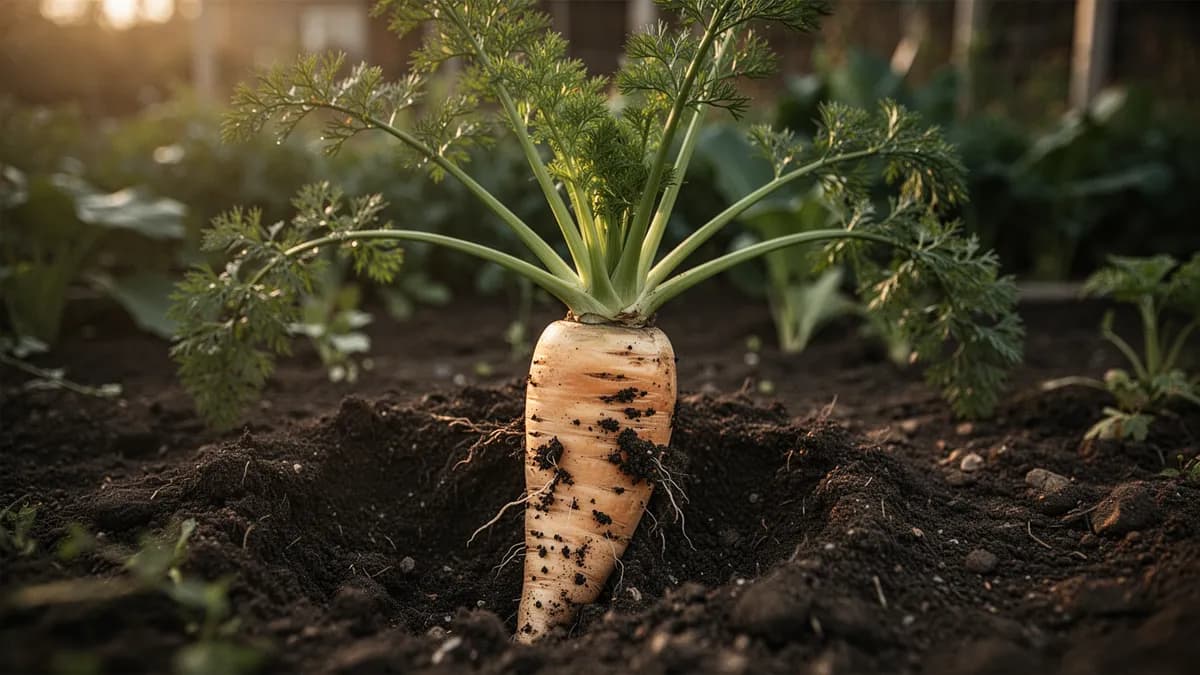
El rábano sandía (Raphanus sativus) es una variedad de rábano chino de gran belleza, con una piel verde pálido que oculta una pulpa de color magenta intenso que recuerda a la sandía.





En esta páginaResumen
Conoce Rábano Sandía
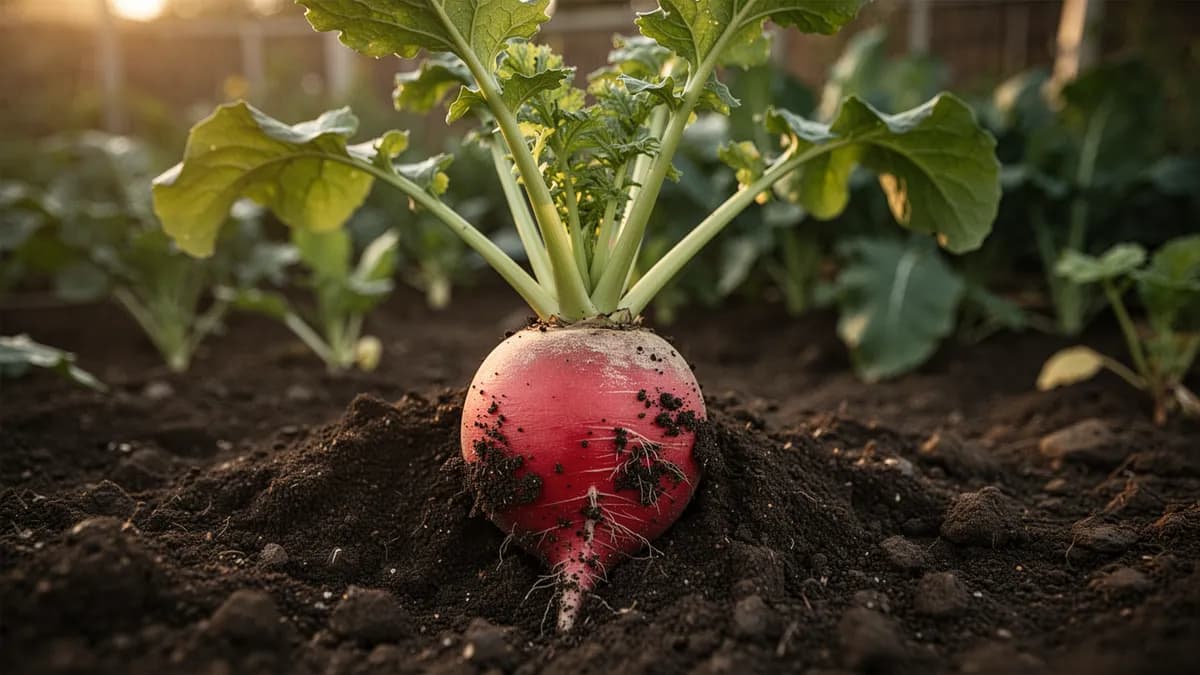
El rábano sandía (Raphanus sativus) es una variedad de rábano chino de gran belleza, con una piel verde pálido que oculta una pulpa de color magenta intenso que recuerda a la sandía. Originario de China, este rábano de invierno destaca por su sabor suave, ligeramente dulce y picante, con una textura crujiente y jugosa. Es muy apreciado tanto por su valor ornamental en la cocina como por su contenido en vitamina C, ácido fólico y antioxidantes.
Cuándo plantar Rábano Sandía
Siembre las semillas directamente en el suelo entre finales de julio y principios de septiembre para una cosecha de otoño óptima. No es recomendable el trasplante, ya que las raíces son sensibles a la perturbación. La siembra directa a 1-1,5 cm de profundidad con temperaturas del suelo de 10-18 °C produce la mejor germinación en 5-7 días. Realice siembras escalonadas cada 2 semanas para prolongar la temporada de cosecha.
Tu año de Rábano Sandía
Ajustado a Zona 7 · temporada típica · la helada se va hacia el 2 abr y vuelve hacia el 1 nov
Planta Rábano Sandía Jul – Sep y cosecha Oct – Dic. Consulta los métodos de plantación y elige tu clima para adaptar los periodos.
Cómo cultivar Rábano Sandía
El rábano sandía es un cultivo de clima fresco que se siembra a finales de verano o principios de otoño, ya que las temperaturas frescas son esenciales para desarrollar su característico color interior magenta brillante. Siembre las semillas directamente en el suelo a una profundidad de 1-1,5 cm, espaciando las plantas 10-15 cm entre sí en hileras separadas 30 cm. La germinación ocurre en 5-7 días a temperaturas de 10-18 °C.
Prepare el lecho de siembra aflojando el suelo a una profundidad de al menos 30 cm, ya que estos rábanos pueden alcanzar 8-10 cm de diámetro. Elimine piedras y terrones que puedan deformar las raíces. Mantenga el suelo uniformemente húmedo durante todo el ciclo de crecimiento, regando con frecuencia pero sin encharcar. Un acolchado ligero de paja ayuda a conservar la humedad y mantener frescas las raíces.
Evite la fertilización excesiva con nitrógeno, que favorece el crecimiento del follaje en detrimento de la raíz. Un abono equilibrado aplicado al momento de la siembra es suficiente. El rábano sandía necesita entre 55 y 70 días para madurar completamente, siendo las temperaturas nocturnas frescas (por debajo de 15 °C) las que intensifican el color rosado de la pulpa.
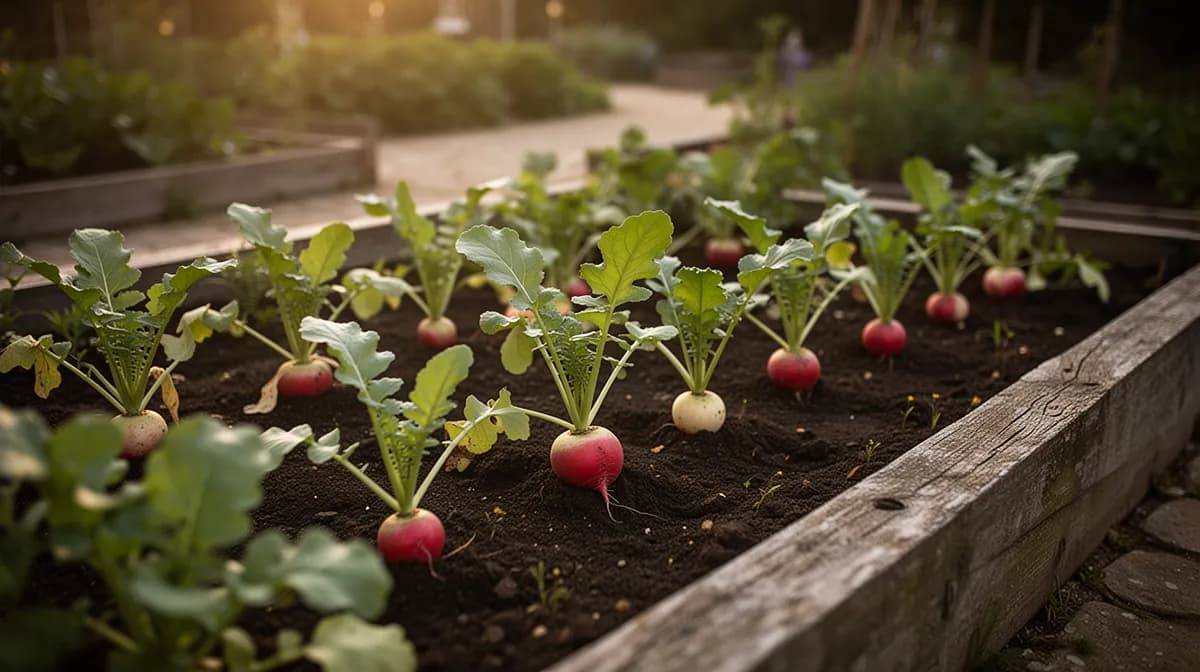
288 plantas caben en un bancal de 120 × 240 cm
Cada Rábano Sandía pide 10 cm de margen. El planificador guarda ese marco por ti — cada planta, cada bancal.
Los mejores vecinos de Rábano Sandía
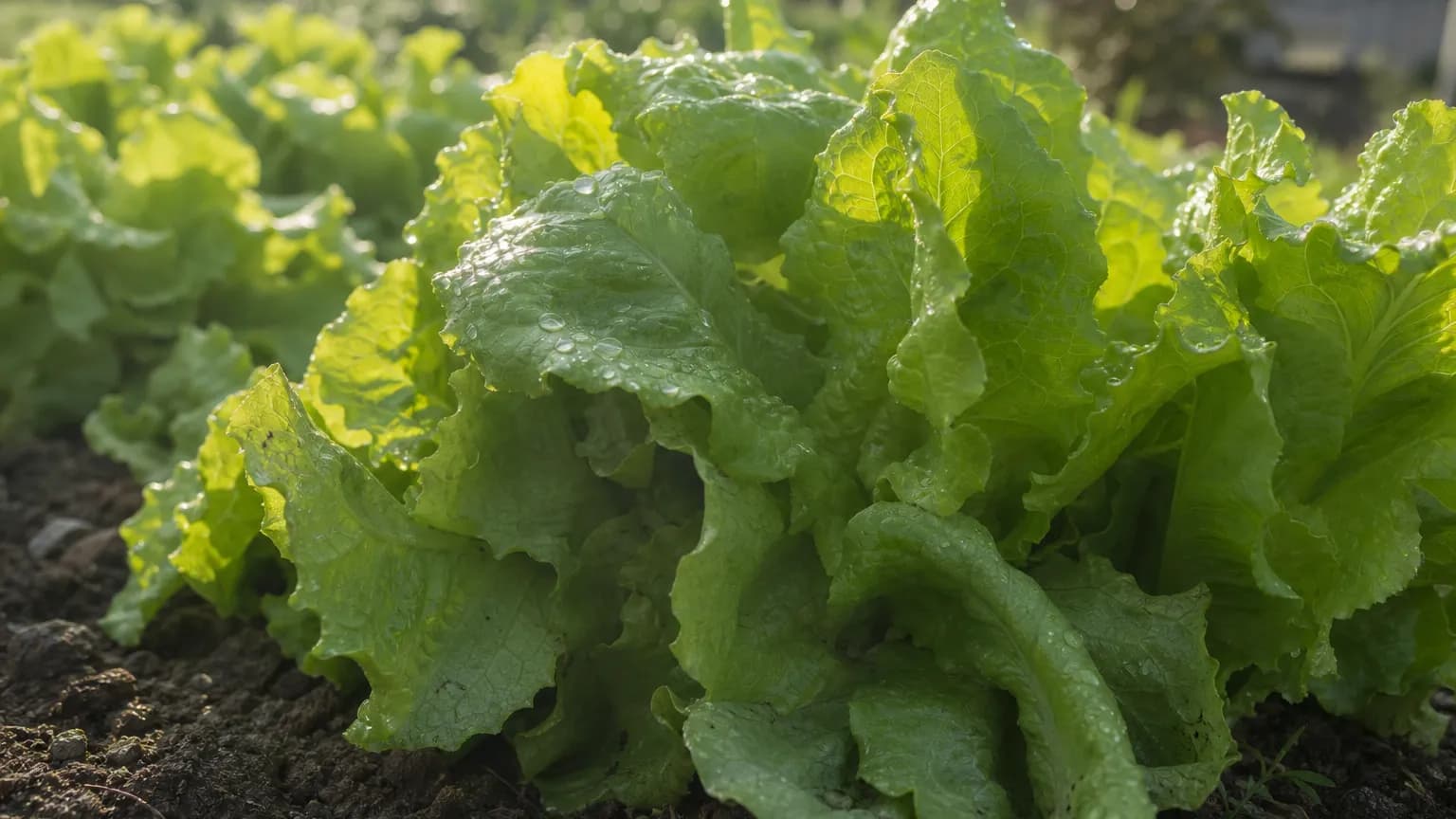
El rábano sandía se beneficia de la compañía de lechugas y espinacas, que proporcionan sombra ligera al suelo y ayudan a mantener la humedad. Las zanahorias y las remolachas son buenos compañeros de cultivo, ya que no compiten por espacio al tener diferentes profundidades radiculares. Evite plantar junto a brócoli y otras brassicas pesadas que competirían por los mismos nutrientes.
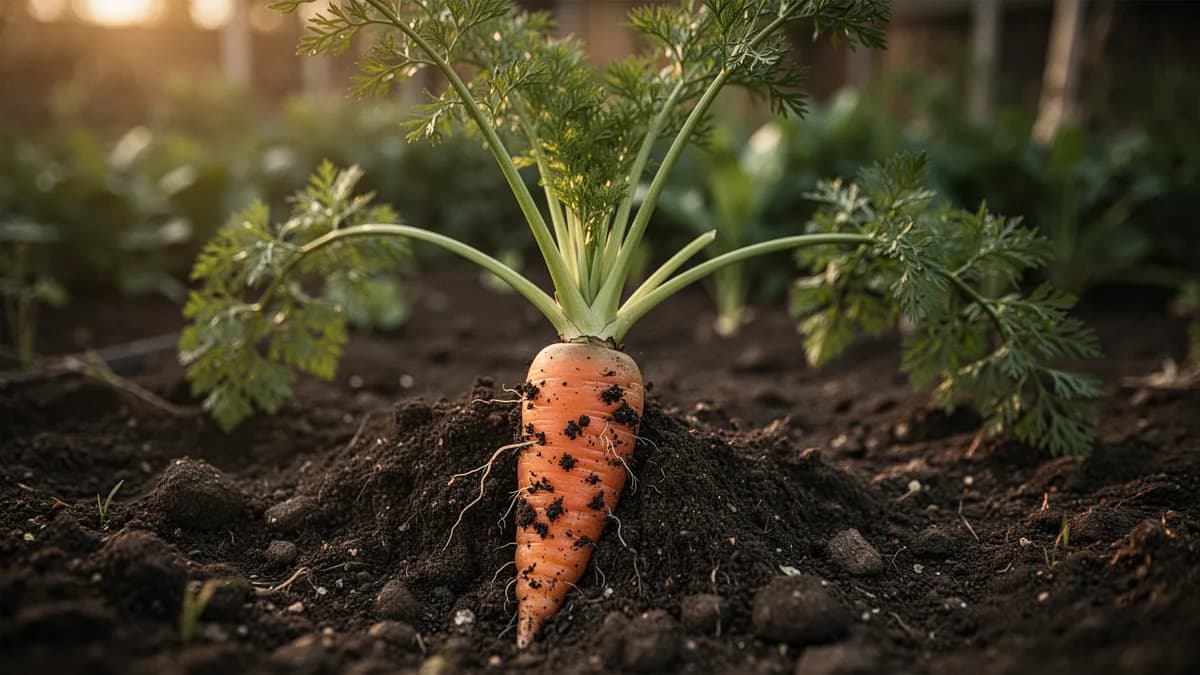
Zanahoria va a su lado.
Saber de huerto de siempre, cotejado con la tabla real de Rábano Sandía — prueba cualquier planta que cultives.
Prueba Rábano Sandía en un bancal, aquí mismo
Un bancal real del planificador con Rábano Sandía ya plantado. Toca una planta compañera para colocarla y mira cómo responde la comprobación de vecinos: verde para buenos vecinos, rojo si hay conflicto.


Guías de cultivo relacionadas
Abónalo bien
El rábano sandía prefiere suelos francos, sueltos y bien drenados con un pH de 6,0-7,0. Afloje el suelo a una profundidad mínima de 30 cm e incorpore compost maduro antes de la siembra. Evite el exceso de nitrógeno, que estimula el follaje a expensas de la raíz; un abono equilibrado bajo en nitrógeno al momento de la siembra es suficiente para todo el ciclo.
Temperatura ideal
Compatibilidad de zonas de rusticidad
De la semilla a la cosecha, etapa por etapa
Germinación
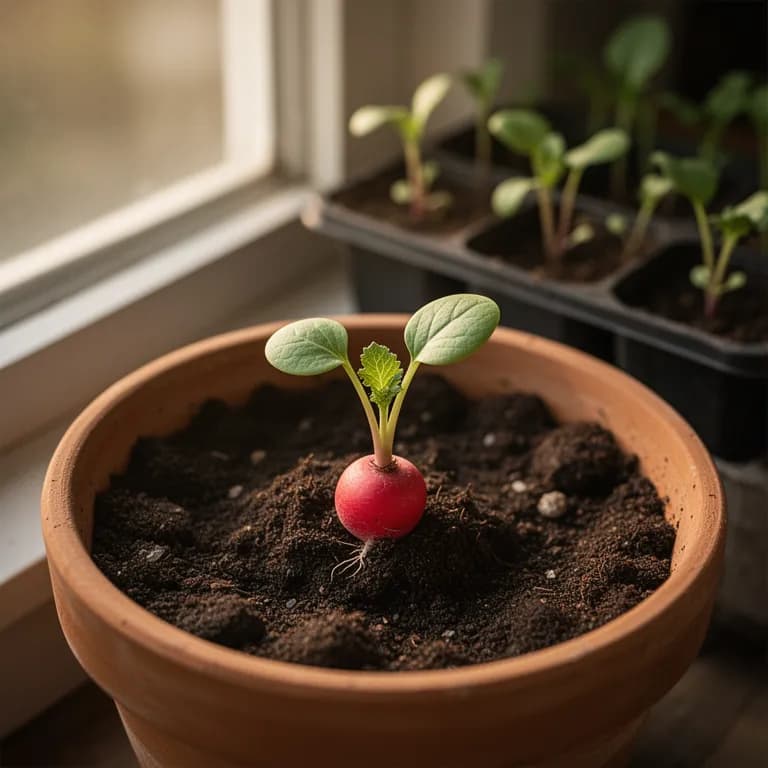
Las semillas sembradas a finales de verano germinan rápidamente en suelo cálido. Los cotiledones atraviesan la superficie en 5-7 días. La raíz principal comienza a establecerse de inmediato, anclando la plántula para un crecimiento rápido.
Desarrollo de hojas
Aparecen las hojas verdaderas con la forma rugosa y lobulada característica de las brassicas. La planta forma una roseta de 4-6 hojas que impulsa el crecimiento de la raíz mediante la fotosíntesis. Aclara las plántulas hasta dejarlas a 4-6 pulgadas de distancia en esta etapa.
Engrosamiento de la raíz
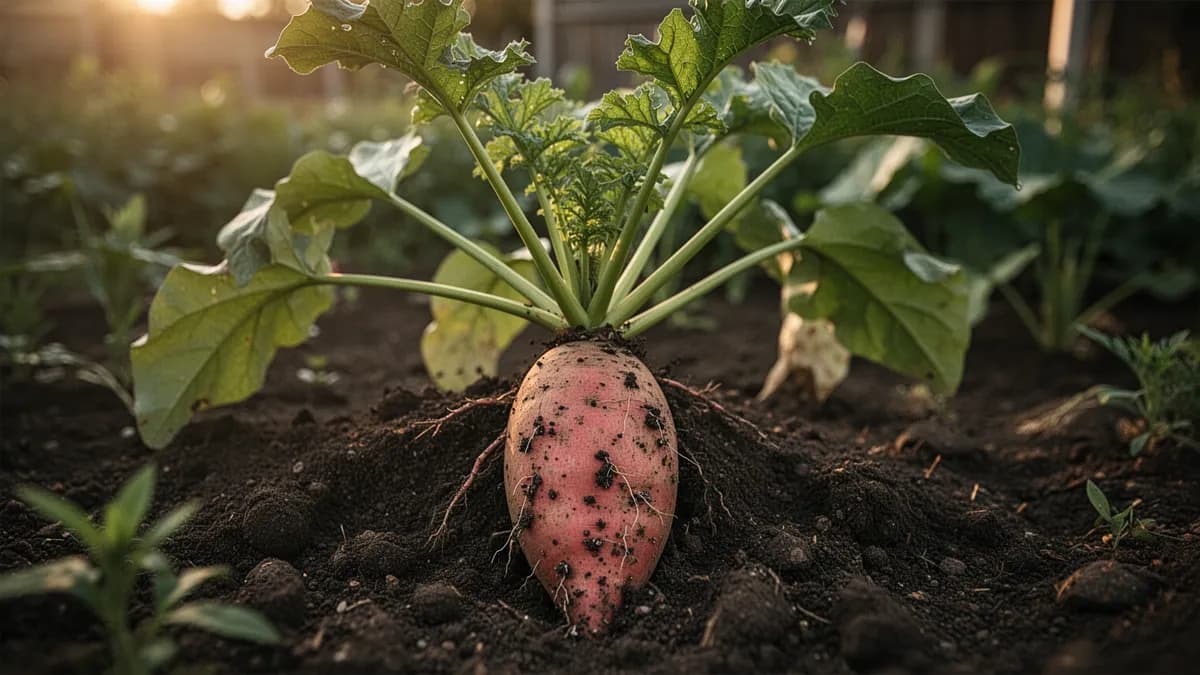
La raíz principal comienza a engrosarse visiblemente y sobresale ligeramente por encima de la línea del suelo. La parte exterior desarrolla su característico color verde-blanco. En el interior, la pulpa sigue siendo en su mayor parte blanca en esta etapa, con apenas ligeros indicios de rosa.
Desarrollo del color
A medida que las temperaturas se enfrían en otoño, la pulpa interior pasa de rosa pálido a un magenta intenso. Esta intensificación del color se debe a la producción de antocianinas, que aumenta con el clima fresco. La raíz alcanza 3-4 pulgadas de diámetro.
Cosecha
Las raíces están completamente desarrolladas, con 3-4 pulgadas de diámetro, carne firme y densa, e interior de un magenta rosa brillante. El sabor es suave y ligeramente dulce, con un toque final apenas picante. Cosecha antes de que una helada fuerte dañe las raíces.
Mantén el suelo constantemente húmedo, pero no encharcado. Una capa ligera de mantillo ayuda a conservar la humedad en el suelo cálido de finales de verano. Siembra a 1/2 pulgada de profundidad y evita compactar la superficie del suelo.
Cuidar Rábano Sandía mes a mes
Qué hacer cada mes para tu Rábano Sandía
Octubre
Mes actualBegin harvesting when roots reach 3-4 inches in diameter. Cut a test root to check interior color development. Light frosts enhance sweetness and color. Harvest before hard freeze.
Ten claro qué hacer en tu huerto, cada mes
Un correo al empezar cada mes: qué sembrar, plantar y hacer ahora mismo — para tu Rábano Sandía y todo lo que crece alrededor. Más un breve curso inicial para esquivar los errores clásicos.
- Qué hacer ahora mismo
- Ajustado a tu temporada
- Curso inicial incluido
Cosechar Rábano Sandía
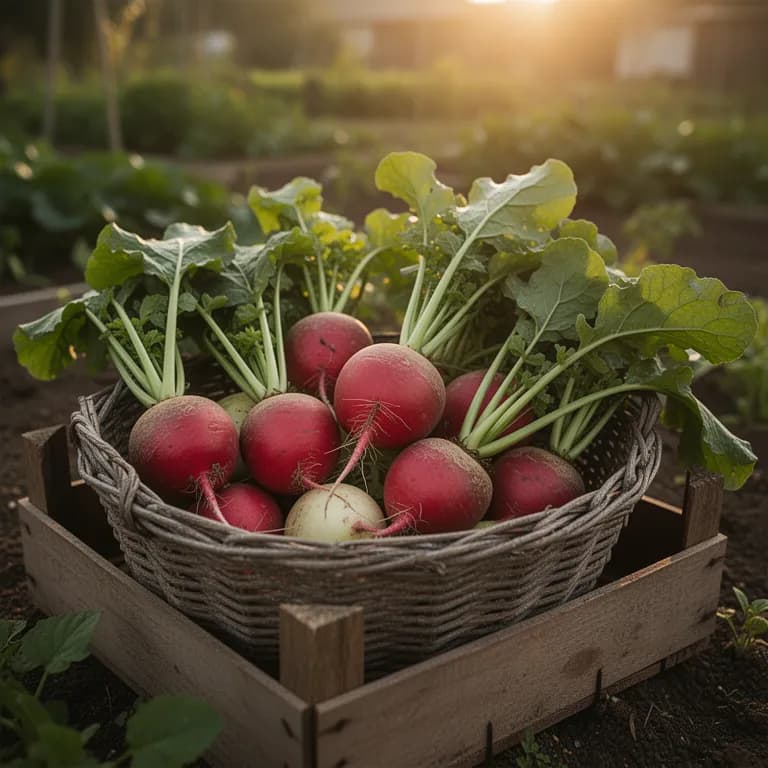
Coseche los rábanos sandía cuando alcancen 5-8 cm de diámetro, generalmente entre 55 y 70 días después de la siembra. Para verificar la madurez, retire suavemente la tierra alrededor de la corona y compruebe el tamaño. No retrase la cosecha, ya que los rábanos sobremaduros desarrollan una textura esponjosa y leñosa con sabor excesivamente picante. Tire firmemente del follaje o use una horquilla de jardín para extraer las raíces sin dañarlas.
se supone que plantas al comenzar el periodo — indica tu fecha real
Cosecha cuando las raíces midan 3-4 pulgadas de diámetro, normalmente entre 60 y 70 días después de la siembra.
Almacenamiento y conservación
Los rábanos sandía frescos se conservan en el cajón de verduras del refrigerador durante 2-3 semanas, envueltos en papel húmedo dentro de una bolsa perforada. Para preservación a largo plazo, pueden encurtirse en vinagre de arroz con azúcar y sal, manteniendo su hermoso color magenta durante meses. También se pueden deshidratar en rodajas finas para crear chips crujientes decorativos.
Qué falla — y cómo solucionarlo
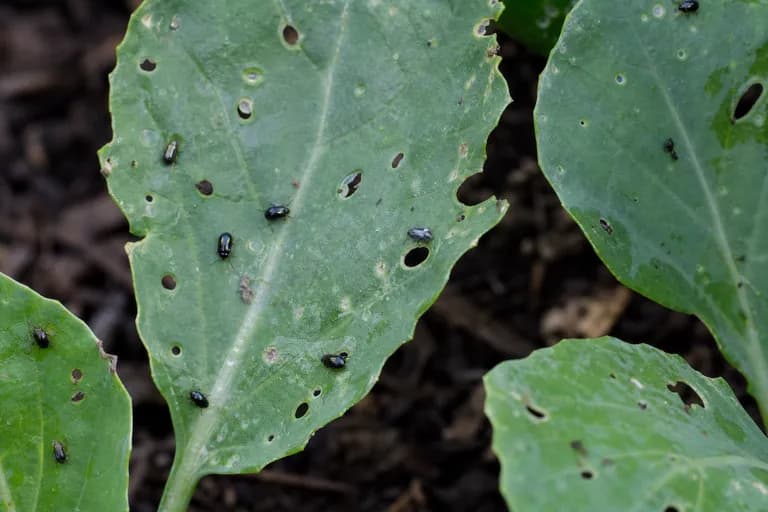
Pulga saltadora (Phyllotreta spp.)
PlagaPequeños agujeros redondos en las hojas que dan un aspecto de perdigonada, especialmente dañinos en plántulas jóvenes que pueden quedar completamente defoliadas.
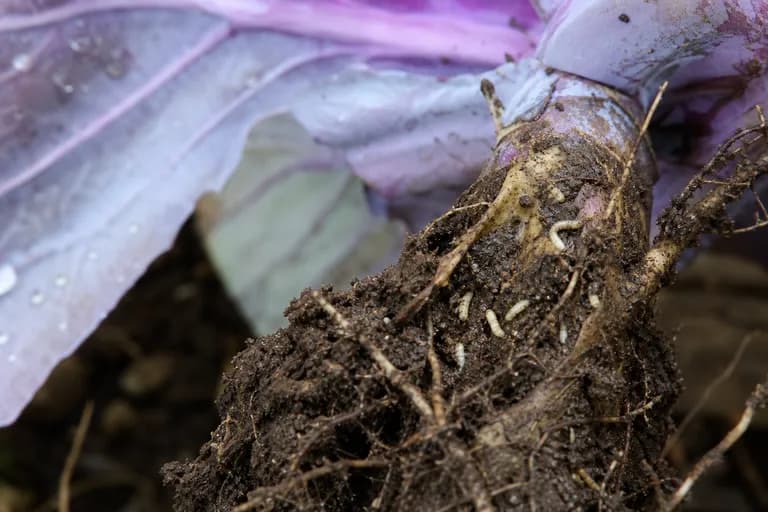
Mosca de la col (Delia radicum)
PlagaLas larvas blancas se alimentan de las raíces, creando túneles y galerías que provocan marchitez, amarillamiento foliar y pudrición secundaria de la raíz.
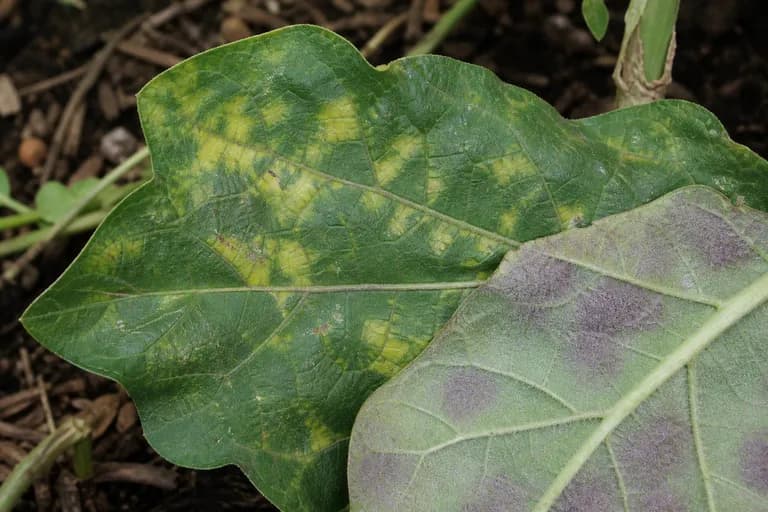
Podredumbre negra (Xanthomonas campestris)
EnfermedadLesiones en forma de V de color amarillo a marrón que se extienden desde los márgenes de las hojas hacia el interior. Las nervaduras oscurecidas son un signo distintivo.
Solución de problemas comunes
El problema más frecuente es la textura esponjosa y leñosa causada por una cosecha tardía o temperaturas demasiado cálidas durante el crecimiento. El riego irregular provoca agrietamiento de las raíces y sabor excesivamente picante. La siembra en primavera o verano suele dar resultados pobres, ya que el calor impide el desarrollo del color interior característico y favorece el espigado prematuro.
Consejos de cultivo
- Timing is everything: always plant watermelon radishes as a fall crop by direct sowing in July or August. Spring plantings almost always bolt before the roots develop their signature color, because increasing day length triggers flowering in this long-day-sensitive variety.
- Work the soil deeply — at least 8-10 inches — and remove all stones and debris. Watermelon radishes are large roots that fork and become misshapen when they encounter obstructions. Sandy loam is the ideal soil texture.
- Thin seedlings ruthlessly to 4-6 inches apart. Overcrowded plants produce small, elongated roots instead of the desired round, softball-sized globes. Thin when seedlings have 2-3 true leaves.
- Water deeply and consistently throughout the growing period. Irregular watering causes cracking, pithy texture, and uneven growth. Drip irrigation or soaker hoses work best for maintaining steady soil moisture.
- Avoid high-nitrogen fertilizer, which promotes excessive leaf growth at the expense of root development. A light application of balanced fertilizer at sowing time is sufficient. Side-dress with wood ash or kelp meal for potassium, which supports root quality.
- Mulch lightly around plants to keep the soil cool and retain moisture during warm early-autumn days. As temperatures drop, remove mulch to allow soil to cool naturally, which promotes better color development.
- Hill soil gently around any root shoulders that push above the soil line. Exposed root tops turn green and develop a bitter, tough skin. Keep roots fully covered for the best appearance and flavor.
- Harvest by checking a test root first — slice one open to verify the interior color has developed fully. The green-white exterior gives absolutely no clue about the ripeness of the magenta interior. Patience pays off; underripe roots lack the characteristic color.
Cultiva tu mejor Rábano Sandía — y todo lo que la rodea.
Empieza un plan gratis hoy. Diseña tus bancales, coloca tu Rábano Sandía y deja que PlotMyGarden gestione el momento, el espaciado, las asociaciones y los recordatorios de la semilla a la cesta.
Elige tu Rábano Sandía
Red Meat
La variedad clásica de rábano sandía con pulpa de color magenta vibrante y sabor dulce con un toque picante suave. Madura en 55-60 días.
Misato Rose
Variedad japonesa con una transición de color verde a rosa más gradual y delicada. Sabor excepcionalmente suave y dulce. 60-65 días.
Watermelon Radish
Selección mejorada con color interior más intenso y uniforme, y menor tendencia a volverse esponjosa. Raíces redondas de 7-8 cm de diámetro. 60 días.
Shinrimei
Variedad china tradicional de gran tamaño que puede alcanzar 10 cm de diámetro. Pulpa rosa brillante con anillo verde exterior. Sabor suave y crujiente. 65-70 días.
A packet of watermelon radish seeds costs $3-5 and contains 200-500 seeds — enough to plant multiple rows across several seasons. At specialty grocery stores and farmers' markets, watermelon radishes sell for $4-8 per pound due to their gourmet status. A single 10-foot row can produce $30-70 worth of radishes from a few cents worth of seed. The variety is rarely found in conventional supermarkets, making home growing the most reliable way to enjoy them.
Recetas rápidas
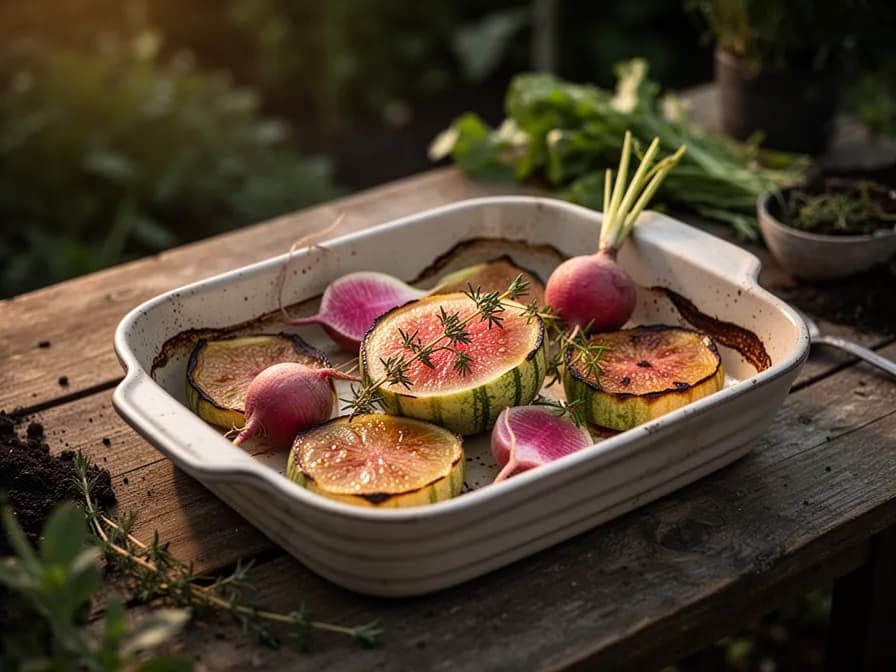
Watermelon Radish Carpaccio
10 minA stunning appetizer that showcases the radish's beauty. Paper-thin slices are arranged on a plate and dressed simply, letting the natural color be the star. Elegant enough for dinner parties, simple enough for weeknight meals.
7 ingredientesQuick-Pickled Watermelon Radish
15 min + 1 hr restA vibrant pickled condiment that retains the gorgeous pink color beautifully. The mild rice vinegar brine complements the radish's natural sweetness. These jewel-toned pickles elevate tacos, grain bowls, and charcuterie boards.
7 ingredientesWatermelon Radish and Avocado Toast
10 minA photogenic breakfast or snack that pairs creamy avocado with crisp, colorful radish slices. The contrast of textures and the visual pop of the pink rounds on green avocado makes this almost too pretty to eat.
7 ingredientesUsos culinarios
El rábano sandía es una estrella ornamental en la cocina, aportando un espectacular color magenta cuando se corta en rodajas finas y se sirve crudo en ensaladas, carpaccios vegetales o como guarnición decorativa. También es excelente encurtido con vinagre de arroz, asado al horno con aceite de oliva y miel donde carameliza deliciosamente, o rallado sobre tacos y bowls para añadir color y frescura crujiente.
Qué contiene
Beneficios para la salud
- Rich in anthocyanins, the powerful antioxidant pigments responsible for the pink-magenta flesh color. These compounds help combat oxidative stress and may reduce inflammation throughout the body.
- Excellent source of Vitamin C — 100g provides roughly 32% of the daily recommended intake, supporting immune function, skin health, and enhanced iron absorption from plant foods.
- Contains glucosinolates, sulfur-containing compounds that break down into isothiocyanates during digestion. Research suggests these compounds may support the body's natural detoxification pathways.
- High water content (over 90%) and low calorie density make watermelon radishes an excellent food for hydration and weight management — filling and satisfying with minimal caloric impact.
- Provides dietary fiber that supports digestive regularity and feeds beneficial gut bacteria, contributing to a healthy microbiome and improved nutrient absorption.
- Contains folate (Vitamin B9), which is essential for DNA synthesis, cell division, and is particularly important during pregnancy for preventing neural tube defects.
De dónde viene Rábano Sandía
The watermelon radish originated in China, where it has been cultivated for centuries as a prized culinary and ornamental root vegetable. Known in Chinese as 'xinlimei' (meaning 'beauty in the heart'), this heirloom variety belongs to the Raphanus sativus species within the daikon group of large Asian radishes. Chinese farmers selectively bred these radishes over generations for their striking internal coloration, creating a vegetable that delights the eye as much as the palate.
Watermelon radishes have long been featured in Chinese New Year celebrations, where their pink-red interior symbolizes good fortune and prosperity. Sliced rounds are served as part of festive meals, and the act of cutting open the unassuming green exterior to reveal the vivid pink inside is considered auspicious — beauty hidden within.
The variety made its way to Western markets only in the late 20th century, initially through Asian grocery stores and specialty farmers' markets. Its popularity surged in the 2000s as farm-to-table cuisine and Instagram-era food photography brought renewed interest in visually striking ingredients. Today, watermelon radishes are grown by specialty farmers across North America and Europe, prized by chefs and home gardeners alike for their mild flavor, crisp texture, and extraordinary visual appeal. They remain a testament to centuries of careful Chinese horticultural selection.
Rábano Sandía: ¿sabías que?
Datos fascinantes sobre Rábano Sandía
Watermelon radishes are an heirloom variety from China, where they are known as 'shinrimei' or 'beauty heart radish' — they have been cultivated for centuries in Chinese cuisine and traditional medicine.
Rábano Sandía: preguntas frecuentes
¿Cuándo debo plantar Rábano Sandía?
¿Cuáles son buenas plantas acompañantes para Rábano Sandía?
¿En qué zonas de rusticidad puede crecer Rábano Sandía?
¿Cuánto sol necesita Rábano Sandía?
¿A qué distancia debo espaciar Rábano Sandía?
¿Qué plagas y enfermedades afectan a Rábano Sandía?
¿Cómo almaceno Rábano Sandía después de la cosecha?
¿Cuáles son las mejores variedades de Rábano Sandía para cultivar?
¿Qué suelo necesita Rábano Sandía?
Why is my watermelon radish white inside instead of pink?
Can I grow watermelon radishes in spring?
How do I know when watermelon radishes are ready to harvest?
Why are my watermelon radishes pithy or spongy inside?
Do watermelon radishes lose their color when cooked?
Acabas de leer la teoría. Ahora cultívala en piloto automático.
Todo lo que hace que Rábano Sandía sea delicado — el momento, el espaciado, las asociaciones, la ventana de cosecha — es justo lo que PlotMyGarden resuelve por ti, para cada planta de tu huerto.
Un plan que conoce tu clima
Indica tu ubicación una vez. Recibe fechas de siembra, abonado y cosecha basadas en tu última helada real y el pronóstico en vivo — sin adivinar con un sobre genérico.
De la sección “Cuándo plantar”Planificador de bancales de arrastrar y soltar
Diseña bancales sobre una cuadrícula. Cada planta encaja con su espaciado correcto y ves toda la temporada antes de gastar un céntimo en semillas.
De la sección “Cultivo”Conflictos de asociación, detectados a tiempo
Más de 200 buenas y malas combinaciones comprobadas en vivo mientras plantas — para que un error que arruine la temporada nunca llegue a la tierra.
De la sección “Asociaciones”Recordatorios que sí vas a seguir
“Riega las judías.” “Recoge hoy antes de que se pase.” Oportunos, concretos y ligados a las plantas que de verdad cultivas.
De la sección “Cosecha”Escalonado, programado
¿Quieres cosechar seis semanas en vez de seis días? Reparte tus siembras automáticamente y te avisa cuando toca el siguiente lote.
De la sección “Cuándo plantar”Un registro que se vuelve más listo
Cada cosecha que registras le enseña tu huerto. El plan del año que viene parte de lo que de verdad funcionó en tu suelo, no en un manual.
De la sección “Resumen”Planta estos junto a Rábano Sandía
Más Hortalizas de raíz
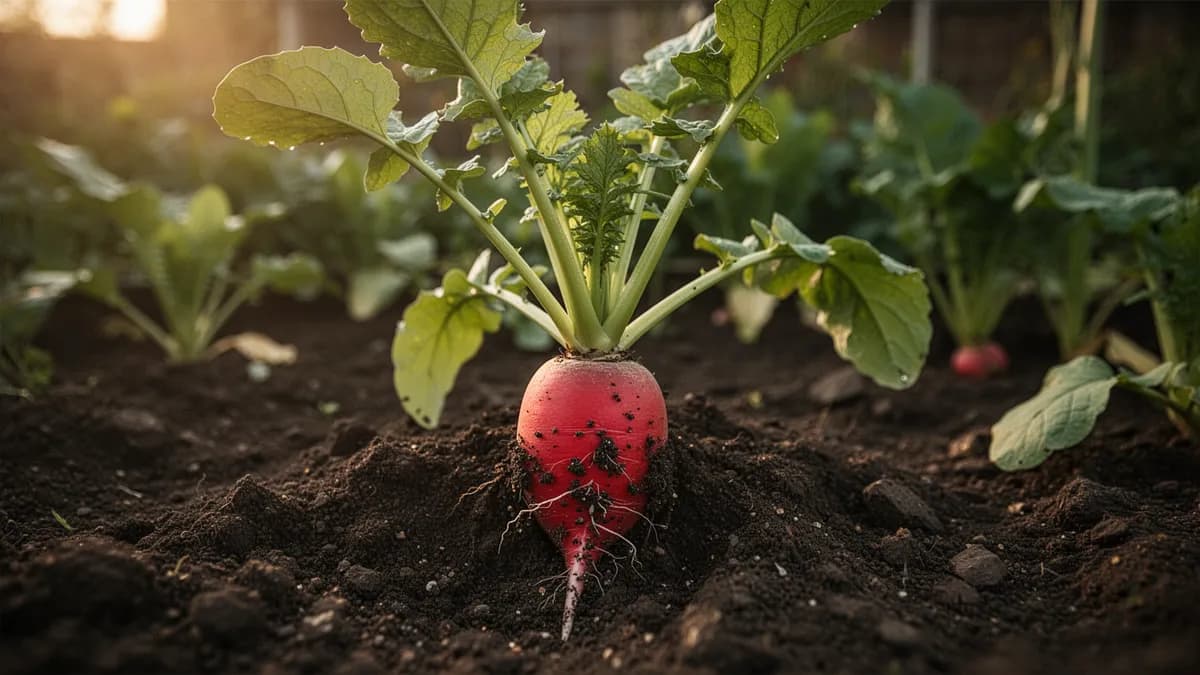
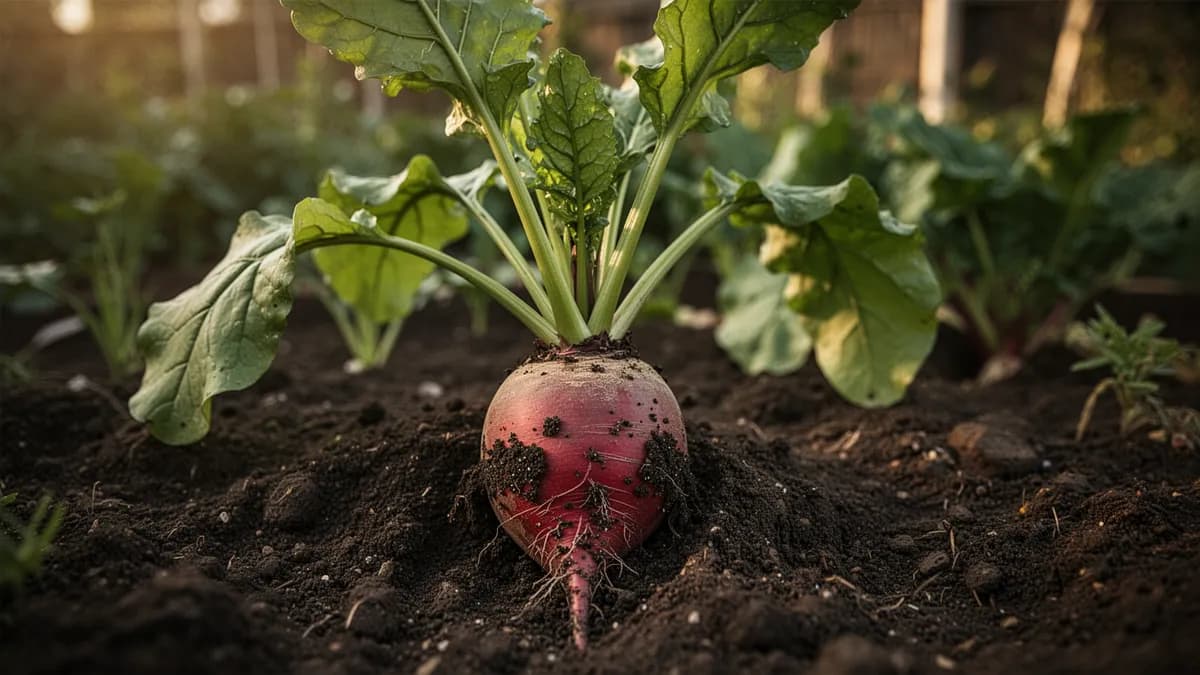
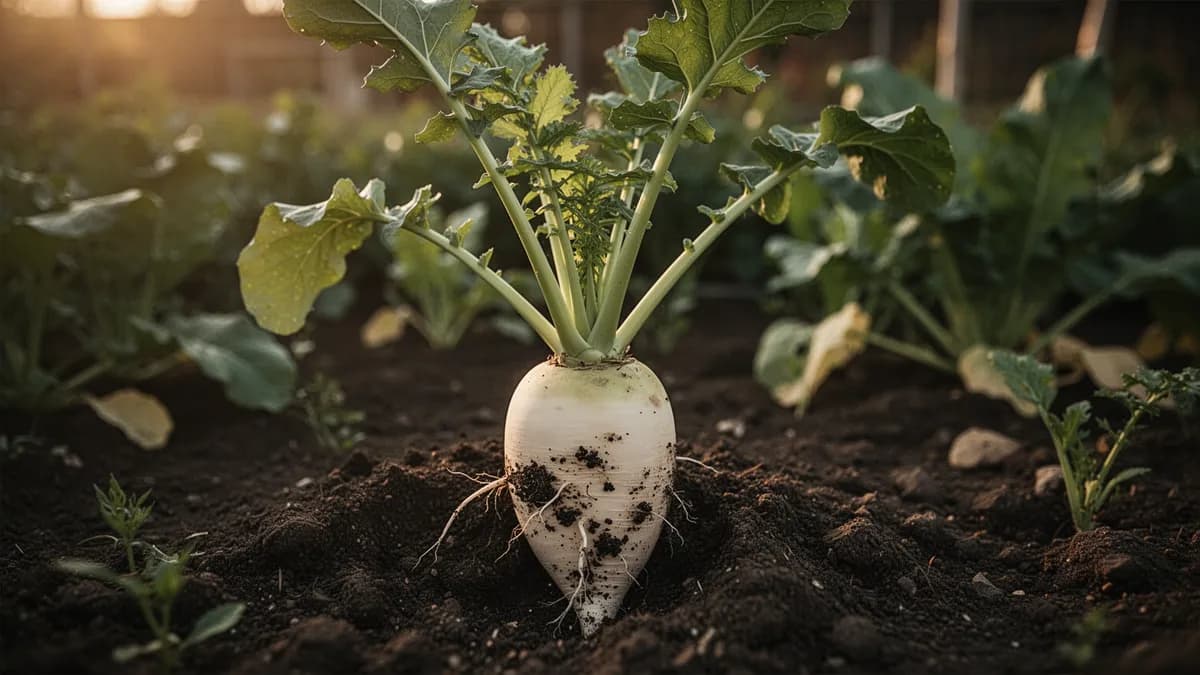
Diseños de jardín con Rábano Sandía
Cultiva tu mejor Rábano Sandía — y todo lo que la rodea.
Empieza un plan gratis hoy. Diseña tus bancales, coloca tu Rábano Sandía y deja que PlotMyGarden gestione el momento, el espaciado, las asociaciones y los recordatorios de la semilla a la cesta.