Quince
An ancient fruit tree producing large, aromatic, golden-yellow fruits that are hard and astringent when raw but transform into a deep rose-red, fragrant delicacy when cooked.





On this pageOverview
Meet Quince
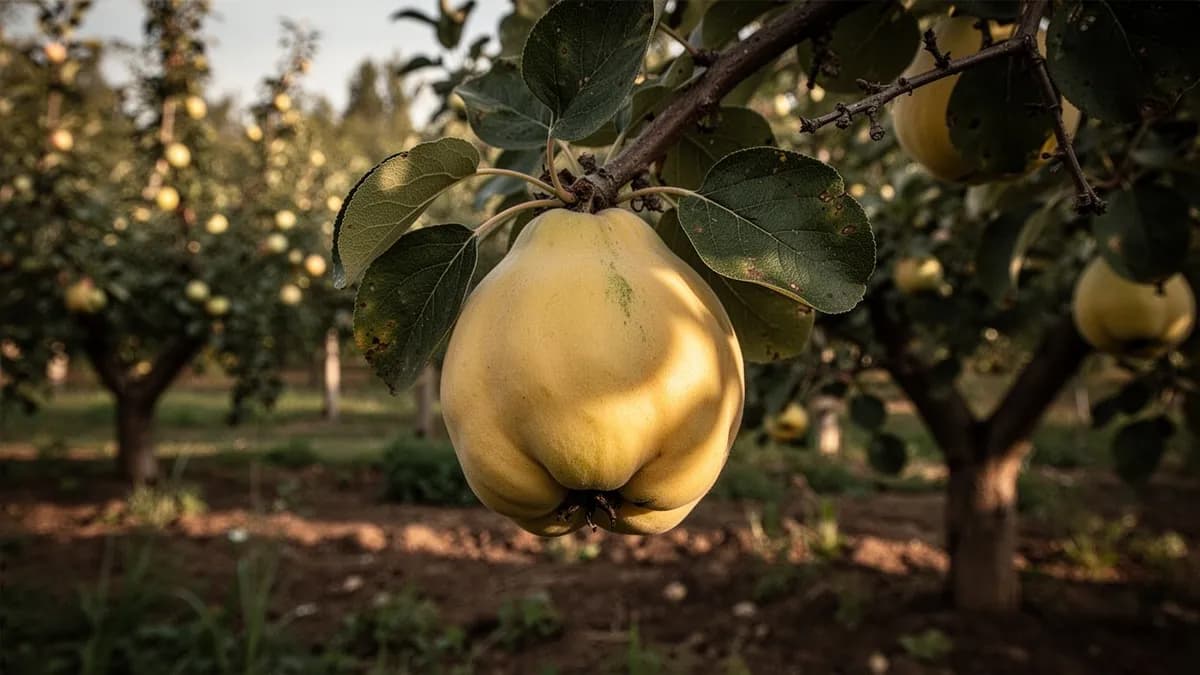
An ancient fruit tree producing large, aromatic, golden-yellow fruits that are hard and astringent when raw but transform into a deep rose-red, fragrant delicacy when cooked. Quince is the secret ingredient in authentic membrillo paste served with Manchego cheese. The trees are tough, self-fertile, and largely disease-free, making them excellent low-maintenance additions to the orchard.
When to plant Quince
Quince can be propagated from hardwood cuttings taken in late autumn, which is easier than seed propagation. Take eight to ten inch cuttings of current year wood, dip in rooting hormone, and plant in a sheltered nursery bed or deep pot of sandy potting mix. For seed propagation, extract seeds from ripe fruit, clean and stratify at 33 to 40 degrees Fahrenheit for eight to twelve weeks. Sow stratified seeds half an inch deep in spring. Seedlings grow moderately and can be transplanted after one year.
Your Quince Year
Composed for Zone 7 · typical seasons · frost passes Apr 2, returns Nov 1
Plant Quince Mar – Apr, pick Sep – Nov. Check the planting methods below and set your climate to personalize these windows.
How to grow Quince
Quince trees prefer full sun and deep, moisture-retentive soil with a pH of 6.0 to 7.0. Unlike most fruit trees, quince tolerates heavier clay and wetter conditions than pears or apples. Plant bare-root trees in early spring, spacing 12 to 15 feet apart for standard trees. Set the graft union above the soil line and stake for the first year. Water thoroughly at planting and mulch generously.
Quince is self-fertile, so a single tree will produce fruit, though cross-pollination with another quince variety may improve yields. The trees grow naturally into an attractive, spreading form and require minimal pruning beyond removing dead wood, water sprouts, and crossing branches. Prune in late winter while dormant to maintain an open center that allows light penetration.
Water regularly during the first two to three years while establishing, then quince becomes moderately drought-tolerant once its deep root system develops. Apply a balanced fertilizer in early spring and top-dress with compost. Quince trees are long-lived and can remain productive for 50 years or more with minimal attention. Fruit is borne on the tips of current season growth, so avoid heavy heading cuts that remove productive wood.
Quince needs more room than a 4 × 8 ft bed gives
Each Quince wants 300 cm of elbow room. The planner keeps that spacing for you — every plant, every bed.
Quince's best neighbours
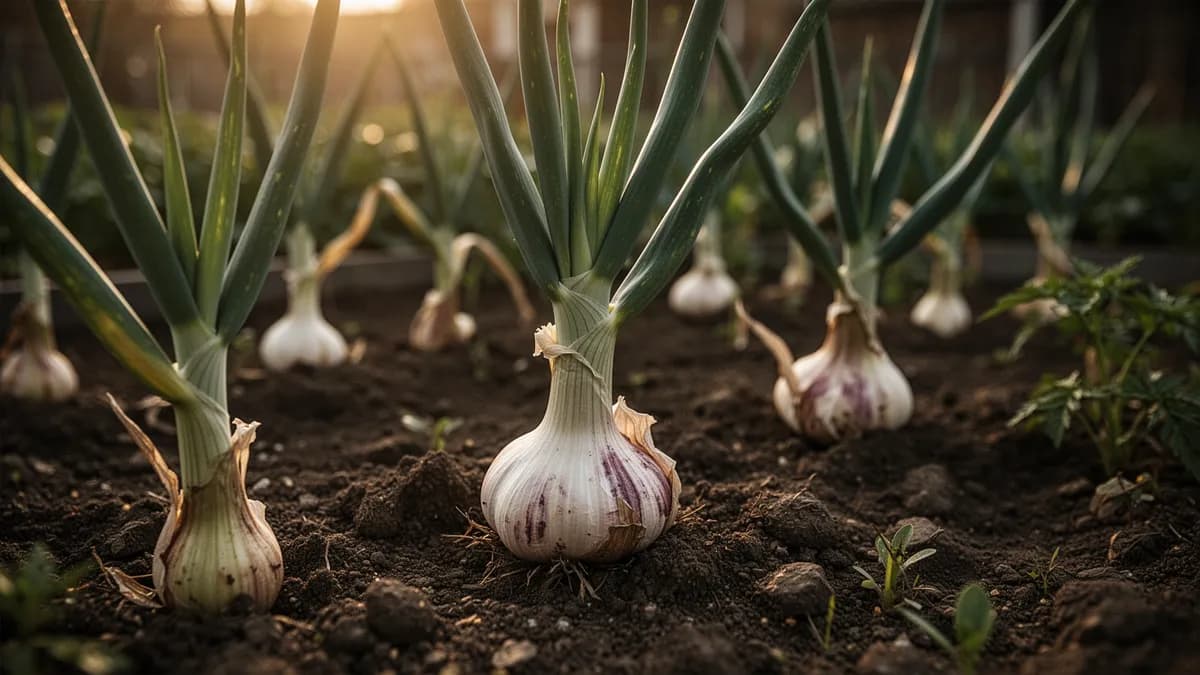
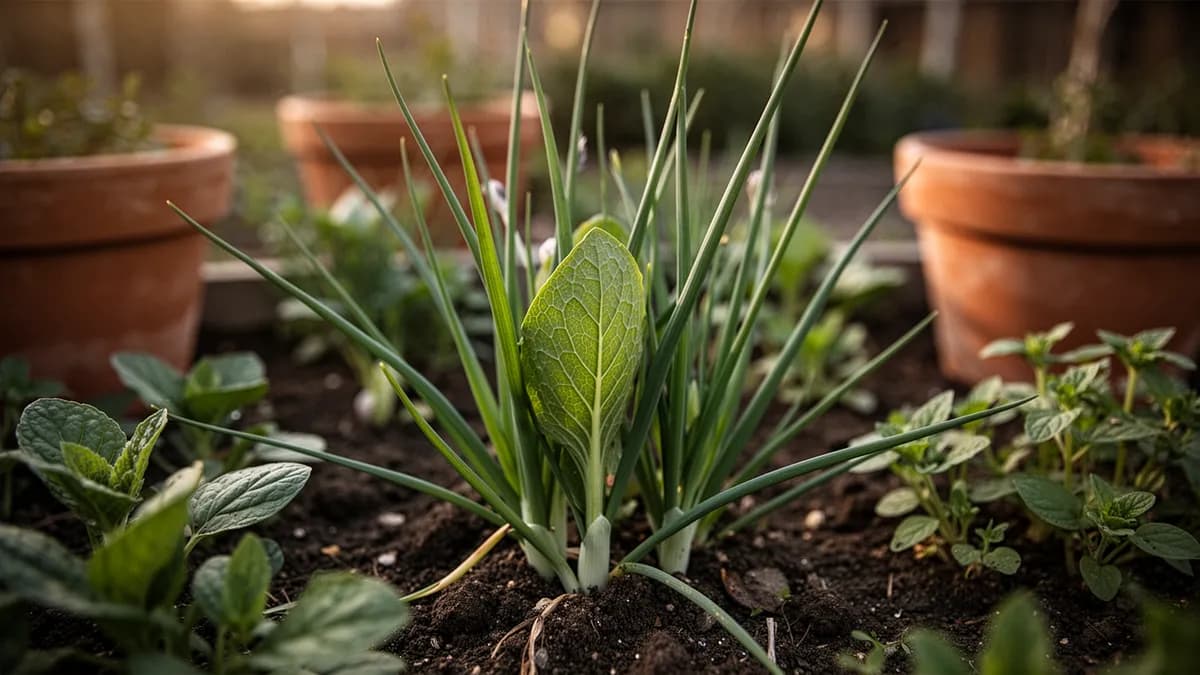
Quince trees have few specific companion planting requirements due to their self-sufficient nature. Comfrey grown beneath the canopy provides excellent mulch material and attracts pollinators. Garlic and chives planted nearby help deter borers. Wildflower meadow plantings around quince trees support beneficial insect populations. Avoid planting near juniper, which can harbor cedar-quince rust. Quince itself serves as rootstock for pear trees and grows well in mixed orchards.
Garlic belongs beside it.
Old growers' knowledge, checked against Quince's real companion table below — test any plant you're growing.
Try Quince in a bed — right here
A real planner bed with Quince already in it. Tap a companion to place it and watch the pairing checks answer — green for good neighbours, red for a clash.


Related growing guides
Feed it well
Quince is more tolerant of wet, heavy soils than most fruit trees, though it still prefers reasonably well-drained conditions. Ideal pH is 6.0 to 7.0. The trees are moderate feeders; apply a balanced fertilizer in early spring at about half the rate used for apple trees. Top-dress with compost or well-rotted manure annually to maintain soil organic matter. Quince has deep roots that can access subsoil nutrients, making it relatively undemanding once established. Excessive fertility promotes vegetative growth at the expense of fruit production.
Ideal Temperature
Hardiness Zone Compatibility
From seed to harvest, stage by stage
Dormant Establishment
After planting a bare-root or container-grown quince in late winter or early spring, the tree enters a dormant establishment phase. Roots begin expanding into the surrounding soil and the vascular system reconnects with the new environment. No visible top growth occurs at first.
First Leaf Break and Vegetative Growth
Buds swell and burst open into distinctive large, softly hairy leaves. The tree puts significant energy into building its scaffold of main branches. Growth can be vigorous, with shoots extending 30 to 60 cm in a single season on well-established trees.
Flowering
From late spring into early summer, solitary blossoms up to 5 cm across emerge at the tips of short spurs and new shoots. Flowers are white to pale pink, five-petaled, and highly attractive to bees. Most quince varieties are self-fertile, but cross-pollination improves fruit set.
Fruit Development and Swelling
After successful pollination, small green fruitlets form and slowly swell through summer and early autumn. The fruit remains hard and astringent throughout this period. The skin develops a protective grey-green down that gradually diminishes as the fruit ripens.
Ripening and Harvest
In mid to late autumn the fruit turns from green to a rich golden yellow and the characteristic quince fragrance becomes intense. The flesh softens slightly but remains firm. Fruit should be harvested before the first hard frost as severe cold causes internal browning.
Post-Harvest Dormancy
After harvest the tree drops its leaves and enters winter dormancy. This is the ideal window for structural pruning, pest management, and soil improvement. Chilling hours accumulated during dormancy are essential for reliable flowering and fruiting the following season.
Water deeply every 7 to 10 days during dry spells. Avoid fertilizing until new growth appears, as excess nitrogen at this stage can stress the root system.
Caring for Quince month by month
What to do each month for your Quince
October
You are hereMain harvest month for most varieties. Harvest all fruit before severe frosts arrive. Store sound fruit in a cool, dark, well-ventilated space, individually wrapped in paper and away from apples and pears whose flavour the quince aroma can taint. Process bruised or blemished fruit promptly.
Know exactly what to do in your garden — every month
One email at the start of each month: what to sow, plant, and tackle right now — for your Quince and everything growing around it. Plus a short starter course that helps you dodge the classic mistakes.
- What to do, right now
- Matched to your season
- Starter course included
Harvesting Quince
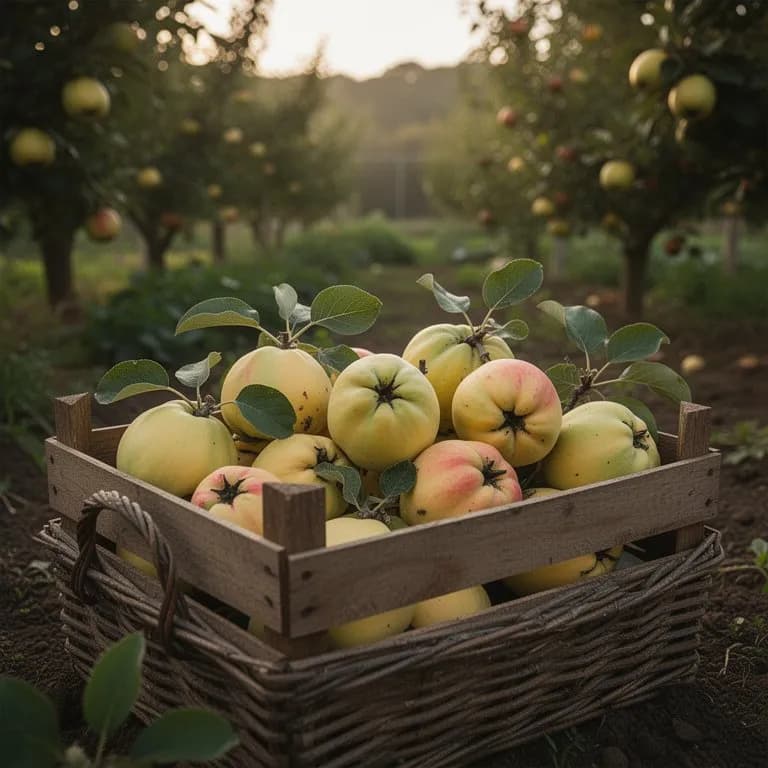
Quince fruits are harvested in late October to November after they have turned fully golden-yellow and developed their characteristic intense fragrance. Leave fruit on the tree as long as possible before hard frost to maximize sugar and aroma development. Ripe quince should be fragrant and yield slightly to pressure but will still be very firm compared to a ripe pear. Pick by twisting gently upward from the branch. A single ripe quince will perfume an entire room with its floral, honey-like aroma.
assuming you plant when the window opens — set your real date
Pick Quince promptly and the plant keeps producing.
Storage & Preservation
Store quince in a cool location at 32 to 40 degrees Fahrenheit for two to three months. Keep them separated from other fruit, as their strong aroma will transfer. Quince must be cooked before eating, and the most traditional preparation is membrillo, a firm paste served with cheese. They make outstanding jelly due to their extremely high pectin content, and quince jam or preserves are richly flavored. Roast halved quince with honey and spices, or poach in syrup until they turn a beautiful deep rose color.
What goes wrong — and the fix
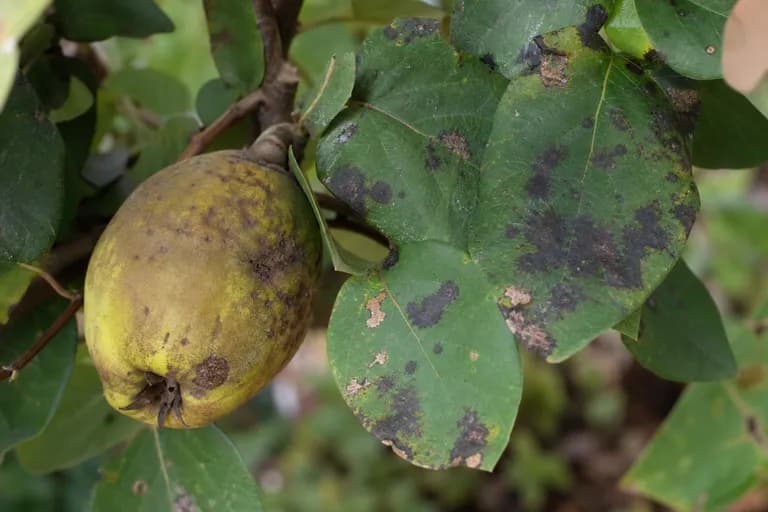
Quince Leaf Blight
DiseaseSmall irregular dark spots on leaves that merge and cause premature defoliation; fruit develops surface blemishes.
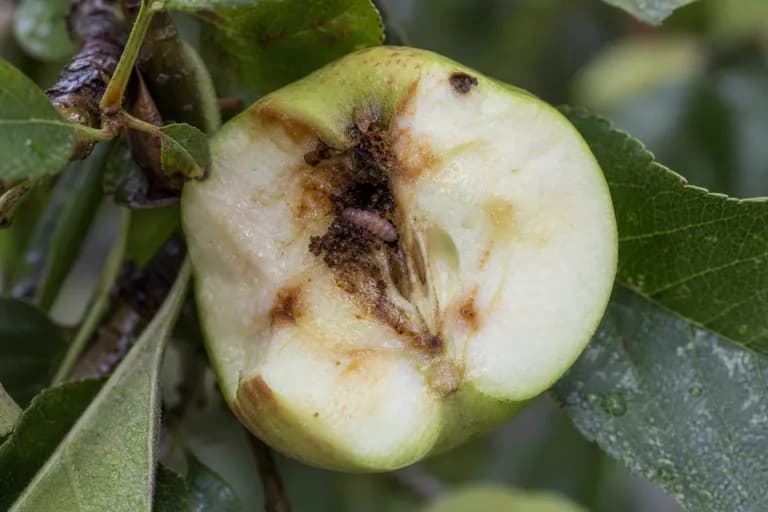
Codling Moth
PestEntry holes in fruit with frass-filled tunnels; larvae feed inside the fruit core causing internal damage.
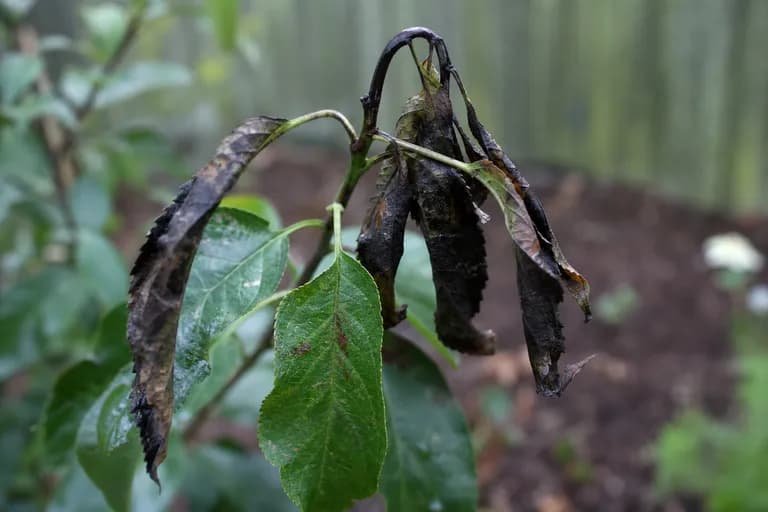
Fire Blight
DiseaseBlackened, wilted shoot tips; blossoms turn brown and die; bacterial ooze from bark cankers.
Troubleshooting Common Problems
The biggest challenge for quince growers is quince leaf blight, which causes premature defoliation in wet climates and weakens trees over time. The fruit is inedible raw for most varieties, which disappoints gardeners unfamiliar with the fruit. Trees can be slow to establish and may take three to five years to begin bearing. In cold climates at the edge of their range, late spring frosts can damage the early bloom. The irregular, gnarled growth habit can look messy to gardeners preferring formal orchard trees.
Growing Tips
- Plant quince in a position that receives full sun for at least six hours daily; while the tree tolerates partial shade, fruit size, colour, and flavour are significantly improved with maximum sun exposure, and air circulation through the canopy is essential for disease prevention.
- Quince prefers a deep, moisture-retentive but well-drained loam soil with a pH between 6.0 and 7.0; it tolerates heavier clay soils better than most fruit trees, but standing water around the roots will cause collar rot and eventual tree death, so improve drainage before planting on wet ground.
- Although most quince varieties are self-fertile and will produce fruit when grown alone, planting two or more different varieties in proximity consistently improves pollination, fruit set, and overall yield by 20 to 40 percent; good companions include 'Vranja', 'Meech's Prolific', and 'Champion'.
- Water young trees deeply and consistently during their first two to three summers, soaking the entire root zone to a depth of 30 to 40 cm every 7 to 10 days during dry periods; deep infrequent watering encourages deep rooting and drought resilience, while shallow frequent watering produces weak surface roots prone to stress.
- Prune quince in late winter while the tree is fully dormant, aiming to create an open goblet or vase shape that allows light and air to reach all parts of the canopy; remove crossing branches, water shoots, and any wood showing signs of fire blight by cutting 30 cm below the visible infection and sterilising tools between cuts.
- Apply a 7 to 10 cm layer of organic mulch such as wood chip or well-rotted straw over the root zone each spring, keeping the mulch 10 to 15 cm clear of the trunk to prevent collar rot; mulching reduces moisture loss, suppresses weeds, moderates soil temperature, and slowly feeds the tree as it breaks down.
- Harvest quince only when the fruit has turned fully golden yellow and the characteristic intense perfume is detectable from a short distance; underripe fruit lacks flavour and cooking quality, while fruit left too late in cold climates may suffer internal browning from frost damage.
- Store harvested quince separately from apples, pears, and other delicate produce, as the powerful aromatic volatile compounds released by ripening quince will permeate and flavour neighbouring stored fruit within days; wrap individual fruits in newspaper and place in a single layer in a cool, dark, ventilated space at 3 to 8°C.
- Fire blight (Erwinia amylovora) is the most serious disease threat to quince; recognise it by the characteristic shepherd's crook wilting of shoot tips and the scorched brown appearance of affected tissue, and respond immediately by pruning well below the infection with sterilised tools and burning the removed material.
- Quince makes an excellent espalier subject for training flat against a sunny wall or fence, which extends the season in cooler climates by harnessing reflected heat to ripen fruit that would remain green in an open position; the fan or horizontal tier espalier forms suit quince's natural growth habit particularly well.
Grow your best Quince yet — and everything around it.
Start a free plan today. Lay out your beds, drop in your Quince, and let PlotMyGarden handle the timing, spacing, companions and reminders from seed to harvest basket.
Pick your Quince
Smyrna
A large-fruited variety with bright yellow skin and intensely aromatic flesh; excellent for membrillo and baking.
Champion
The most widely grown American variety with large, tender, pear-shaped fruit that cooks down quickly.
Aromatnaya
A Russian variety notable for being one of the few quinces sweet enough to eat raw when fully ripe; highly aromatic.
Vranja
A vigorous Serbian variety producing very large, pear-shaped fruits with excellent flavor for preserves and jelly.
Orange
An heirloom variety with round fruit that develops an orange tinge when ripe; firm flesh excellent for slow cooking.
A mature quince tree producing 50 to 100 pounds of fruit annually can save a home gardener $150 to $400 or more each season compared to purchasing equivalent quantities of specialty quince fruit from farmers markets or gourmet grocery stores, where the fruit typically sells for $3 to $6 per pound when available at all. Beyond the raw fruit, homemade quince paste (membrillo) retails for $8 to $20 per small jar at artisan food shops, while a single productive tree can yield enough fruit to make dozens of jars for personal use and gifting. The tree itself requires minimal purchased inputs once established, as it is largely self-sufficient on natural rainfall in most temperate climates and requires little fertiliser beyond annual mulching with garden compost.
Quick recipes
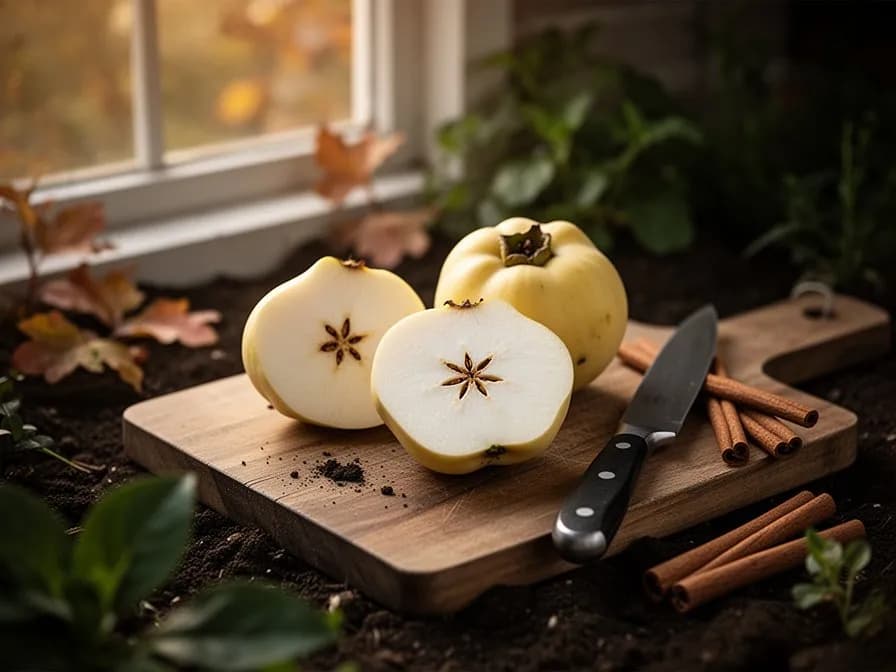
Classic Quince Membrillo (Quince Paste)
20 minutes prep, 1.5 to 2 hours cookingThis dense, jewel-coloured paste is the iconic preparation for quince. It slices cleanly when cold and pairs beautifully with aged cheeses, charcuterie, and crusty bread. The paste keeps for up to a year in the refrigerator and makes an exceptional homemade gift.
5 ingredients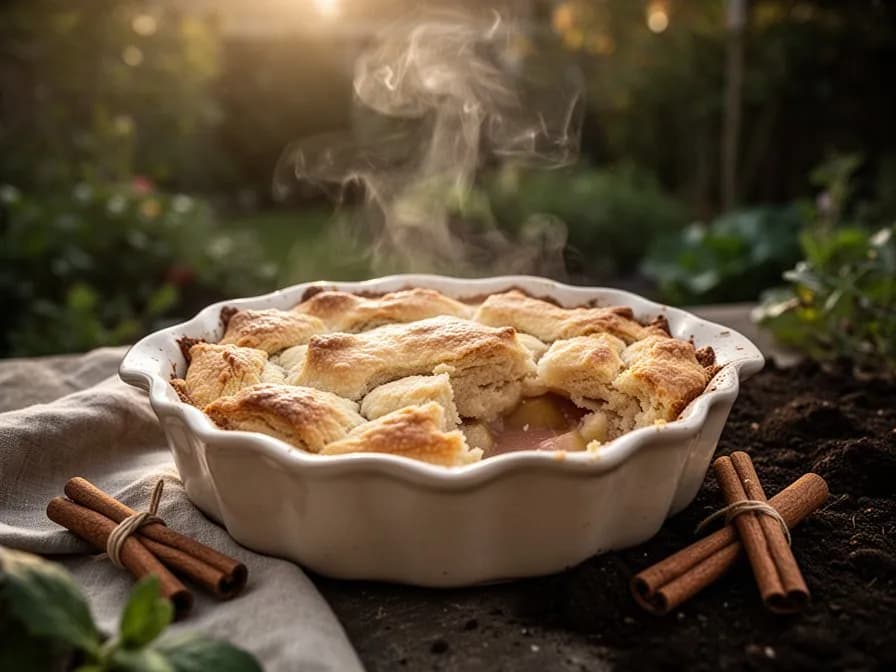
Slow-Roasted Quince with Honey and Star Anise
10 minutes prep, 1 hour roastingRoasting transforms quince from an astringent, rock-hard fruit into a tender, fragrant, deep-rose confection. Serve warm alongside Greek yoghurt, vanilla ice cream, or as a side dish with roast pork or duck. The cooking liquid reduces to a syrup perfect for drizzling.
7 ingredientsPersian-Style Lamb and Quince Stew (Khoresh Beh)
30 minutes prep, 2 hours cookingThis ancient Persian combination of tart quince with slow-braised lamb is one of the great meat and fruit pairings in world cooking. The quince breaks down to create a thick, fragrant sauce that is at once sweet, sour, and deeply savoury. Serve over saffron-scented basmati rice.
9 ingredientsCulinary Uses
Quince is a culinary treasure that transforms dramatically with cooking. Membrillo, or quince paste, is the classic preparation, sliced and served with Manchego cheese. Quince jelly is prized for its jewel-like clarity and floral perfume, setting firmly due to the fruit's exceptional pectin content. Add chunks of raw quince to apple pie for depth of flavor. Poach quince in wine and spices until they turn ruby red for an elegant dessert. The fruit also makes superb chutney and adds complexity to tagines.
What's inside
Health Benefits
- Quince is one of the richest fruit sources of pectin, a soluble dietary fibre that forms a gel in the digestive tract, slowing glucose absorption and helping to reduce LDL cholesterol levels, supporting cardiovascular health.
- The high concentration of tannins and polyphenols in quince has demonstrated significant anti-inflammatory effects in research studies, potentially reducing chronic inflammation associated with metabolic syndrome and inflammatory bowel conditions.
- Traditional herbalists across Persia, Turkey, and India have long prescribed quince preparations to soothe nausea, morning sickness, and gastrointestinal discomfort; modern research supports the use of quince syrup as a safe and effective adjunct treatment for pregnancy-related nausea.
- Quince contains meaningful levels of vitamin C and copper, both of which are essential cofactors for the synthesis of collagen, the structural protein supporting skin integrity, joint health, and wound healing.
- The seeds of quince contain a mucilaginous gel that has been used in traditional medicine as a demulcent to soothe irritated mucous membranes in the throat and digestive tract, providing relief from coughs, sore throats, and mild gastritis.
- Emerging research into the antioxidant polyphenols of quince, particularly chlorogenic acid and procyanidins, suggests potential protective effects against oxidative stress damage to cells, supporting overall healthy ageing and immune resilience.
Where Quince comes from
The quince (Cydonia oblonga) holds the distinction of being one of humanity's oldest companion plants, cultivated for at least four millennia across a remarkable geographic sweep from Central Asia to the Atlantic coast of Europe. The tree is believed to have originated in the Caucasus region and the area encompassing modern Iran and Turkey, where wild populations still exist in mountainous scrub and forest margins. From this heartland it spread rapidly along ancient trade routes, reaching Mesopotamia, the Levant, and the Mediterranean basin long before the rise of classical Greek civilization.
The ancient Greeks held quince in exceptional esteem. Plutarch records that Solon, the Athenian lawmaker of the sixth century BCE, decreed that brides should nibble quince before entering the bridal chamber to ensure sweetness of breath and auspicious beginnings to married life. The fruit was sacred to Aphrodite, goddess of love and beauty, and offerings of quince were placed in her temples. The city of Kydonia on Crete was so associated with the fruit that the Romans named it after the city, giving us the genus name Cydonia that persists in botanical Latin today.
Roman agricultural writers including Pliny the Elder and Columella described numerous quince varieties and elaborate cultivation techniques, and Roman cooks preserved the fruit in honey, wine, and brine. As the Roman Empire expanded, quince cultivation spread into Western Europe, including the British Isles, where it became established in monastery gardens and aristocratic orchards.
During the medieval period in Europe, quince was one of the most important fruits of the kitchen garden. It featured prominently in the earliest European cookbooks, used in pottages, sauces, and the forerunners of modern jams and jellies. The Arabic and Persian culinary traditions also embraced quince enthusiastically, incorporating it into slow-cooked meat dishes, rice pilafs, and confections that remain popular across the Middle East and North Africa today.
The Spanish and Portuguese brought quince cultivation to the Americas during the sixteenth century, where it adapted readily to the climates of South America and parts of North America. Today Argentina and Portugal remain among the world's leading producers, with the fruit deeply embedded in their culinary identities through membrillo and marmelada respectively. The relative decline of quince in northern European and North American home cooking during the twentieth century, as sweeter fresh fruits became available year-round, is now being reversed by a renewed appreciation for heritage fruits, artisan preserving, and the extraordinary depth of flavour that this ancient tree can offer.
Quince: did you know?
Fascinating facts about Quince
Quince is one of the oldest cultivated fruits in human history, with evidence of cultivation dating back more than 4,000 years to ancient Mesopotamia and the Fertile Crescent.
Quince questions, answered
When should I plant Quince?
What are good companion plants for Quince?
What hardiness zones can Quince grow in?
How much sun does Quince need?
How far apart should I space Quince?
What pests and diseases affect Quince?
How do I store Quince after harvest?
What are the best Quince varieties to grow?
What soil does Quince need?
Can I eat quince raw, or does it always need to be cooked?
Why does my quince turn pink or red when I cook it?
How long does a quince tree take to produce its first fruit?
Does quince need a lot of pruning, and when is the best time?
What is the difference between ornamental flowering quince (Chaenomeles) and fruiting quince (Cydonia)?
Can I grow quince in a container or a small garden?
You just read the theory. Now grow it on autopilot.
Everything that makes Quince fiddly — the timing, the spacing, the companions, the harvest window — is exactly what PlotMyGarden handles for you, for every plant in your garden.
A plan that knows your weather
Set your location once. Get sow, feed and harvest dates built around your real last-frost date and live forecast — no more guessing from a generic seed packet.
From the “When to plant” sectionDrag-and-drop bed planner
Design beds on a grid. Every plant snaps to its proper spacing, and you can see your whole season laid out before you spend a cent on seed.
From the “Growing guide” sectionCompanion conflicts, caught early
200+ good-and-bad pairings checked live as you plant — so a season-wrecking mistake never makes it into the ground.
From the “Companions” sectionReminders you'll actually act on
“Water the beans.” “Pick today before it turns.” Timely, specific, and tied to the plants you're really growing.
From the “Harvest” sectionSuccession, scheduled
Want a harvest for six weeks, not six days? It spaces your sowings automatically and reminds you when each new block is due.
From the “When to plant” sectionA record that gets smarter
Every harvest you log teaches it your garden. Next year's plan starts from what actually worked in your soil, not a textbook's.
From the “Overview” sectionPlant these alongside Quince
More Pome Fruits
Grow your best Quince yet — and everything around it.
Start a free plan today. Lay out your beds, drop in your Quince, and let PlotMyGarden handle the timing, spacing, companions and reminders from seed to harvest basket.