Granatapfelbaum
Ein trockenheitstoleranter, mehrstämmiger Baum oder großer Strauch, der juwelengleiche Früchte voller saftiger Samenkerne hervorbringt.





Auf dieser SeiteÜberblick
Granatapfelbaum im Überblick
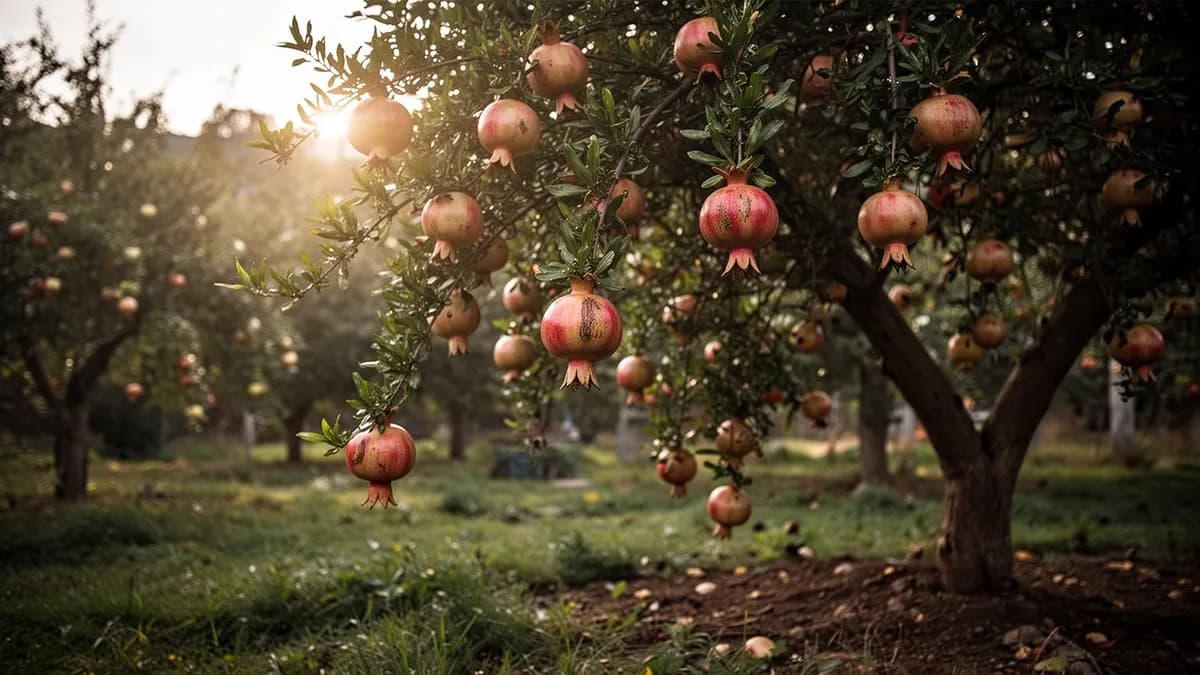
Ein trockenheitstoleranter, mehrstämmiger Baum oder großer Strauch, der juwelengleiche Früchte voller saftiger Samenkerne hervorbringt. Granatäpfel gedeihen in heißen, trockenen Sommern und vertragen auch nährstoffarme, alkalische Böden, was sie ideal für mediterrane und aride Klimazonen macht. Man kann sie zu einem einzelnen Stamm erziehen oder natürliches, buschiges Wachstum als attraktive Hecke zulassen. Die Früchte sind erntereif, wenn die Schale eine tiefe Farbe entwickelt und beim Klopfen ein metallisches Geräusch erzeugt.
Wann Granatapfelbaum pflanzen
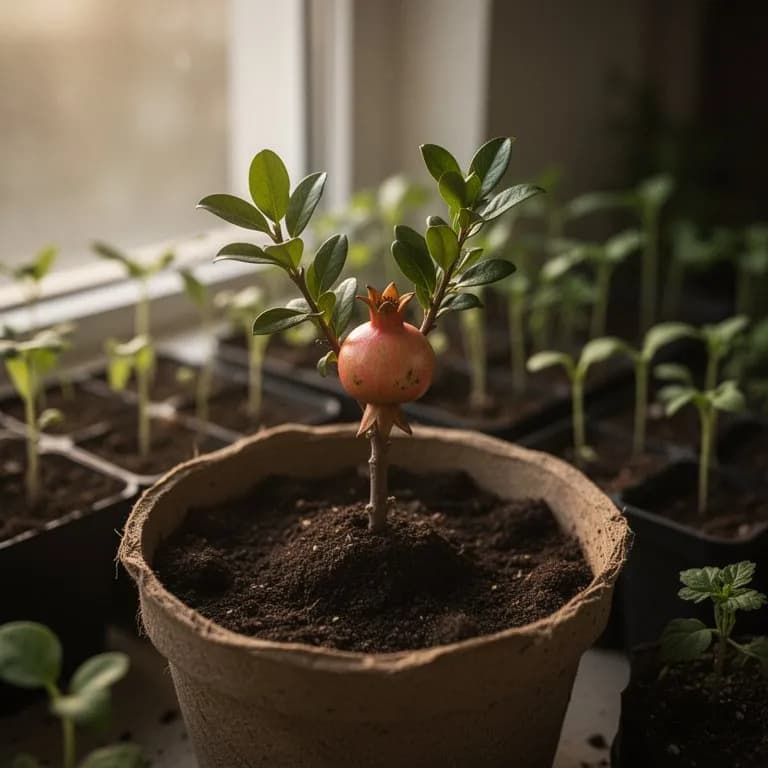
Granatäpfel lassen sich leicht durch Steckholz vermehren, das im Spätwinter geschnitten wird. Schneiden Sie 25 bis 30 cm lange Abschnitte von ruhendem, einjährigem Holz, tauchen Sie diese in Bewurzelungshormon und pflanzen Sie sie in gut durchlässige Blumenerde, wobei zwei Drittel des Stecklings eingegraben werden. Stecklinge bewurzeln sich problemlos in 6 bis 8 Wochen. Luftschichtung ist ebenfalls wirksam. Aus Samen gezogene Granatäpfel geben möglicherweise nicht die Sorteneigenschaften der Mutterpflanze wieder. Kübelvorgezogene Baumschulbäume tragen nach 2 bis 3 Jahren Früchte; Stecklinge können innerhalb von 3 Jahren tragen.
Dein Granatapfelbaum-Jahr
Abgestimmt auf Zone 7 · typische Saison · Frost geht um den 2. Apr. und kehrt um den 1. Nov. zurück
Granatapfelbaum Mär – Mai pflanzen, Sep – Nov ernten. Beachte die Pflanzmethoden unten und wähle dein Klima für passende Zeiträume.
So baust du Granatapfelbaum an
Granatäpfel gedeihen in heißen, trockenen Klimazonen mit voller Sonne und gut durchlässigem Boden. Sie vertragen eine Vielzahl von Bodenarten, darunter alkalische, lehmige und sandige Böden, können jedoch keine Staunässe tolerieren. In kühleren Zonen sollte man sie an einer südexponierten Wand pflanzen, um maximale Wärmeaufnahme zu erzielen. Der Abstand zwischen den Bäumen sollte 3,5 bis 5,5 Meter betragen, oder man pflanzt sie enger für eine Hecke. Granatäpfel können auch in großen Kübeln gezogen und in kalten Klimazonen im Winter ins Haus geholt werden.
Pflanzen Sie kübelvorgezogene Granatäpfel im Frühjahr nach dem letzten Frost. Gießen Sie im ersten Jahr regelmäßig, damit sich die Wurzeln etablieren. Einmal eingewachsen, sind Granatäpfel bemerkenswert trockenheitsresistent und benötigen nur bei längeren Trockenperioden und während der Fruchtentwicklung zusätzliches Wasser. Übermäßiges Gießen verursacht das Aufplatzen der Früchte und mindert die Fruchtqualität.
Granatäpfel wachsen natürlicherweise als mehrstämmige Sträucher. Für eine Baumform wählen Sie 3 bis 5 kräftige Stämme aus und entfernen alle Wurzelausläufer an der Basis während der gesamten Wachstumsperiode. Schneiden Sie im Spätwinter leicht zurück, um abgestorbenes Holz, sich kreuzende Äste und übermäßiges Innenwachstum zu entfernen. Mäßiger Rückschnitt fördert eine bessere Fruchtproduktion und Fruchtgröße. Die Früchte entwickeln sich an kurzen Trieben an zweijährigem Holz und älteren Ästen.
Für Granatapfelbaum ist ein Beet von 120 × 240 cm zu klein
Granatapfelbaum braucht 500 cm Platz pro Pflanze. Der Planer hält diesen Abstand für dich ein — jede Pflanze, jedes Beet.
Die besten Nachbarn für Granatapfelbaum
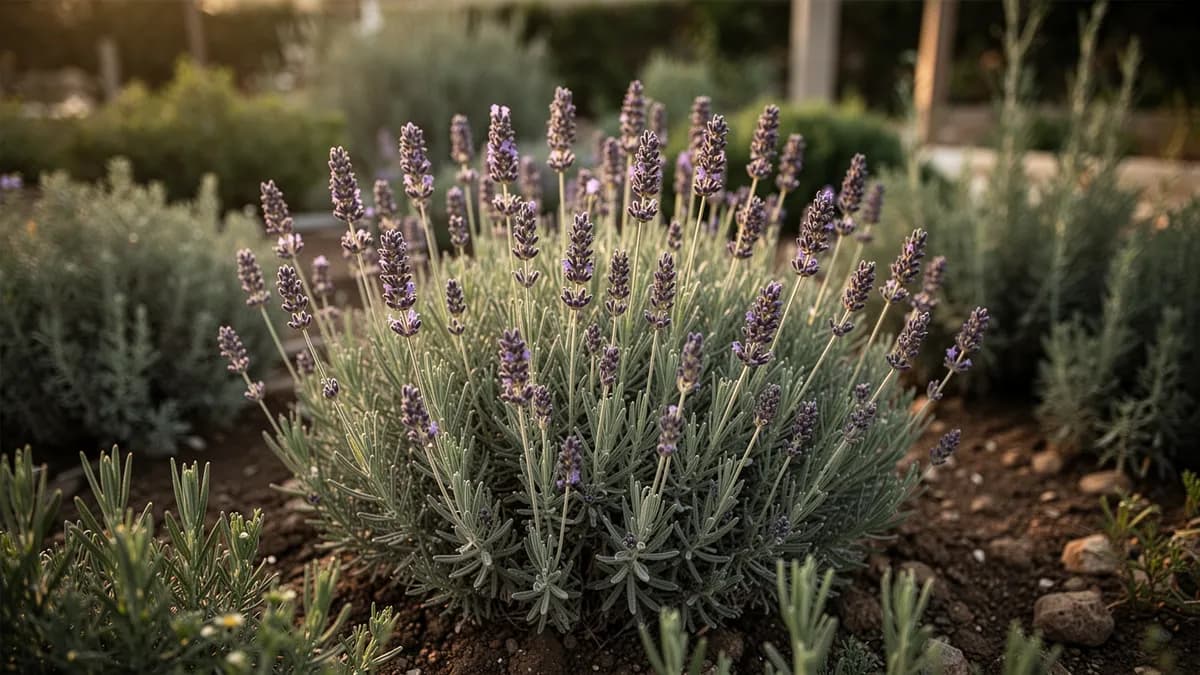
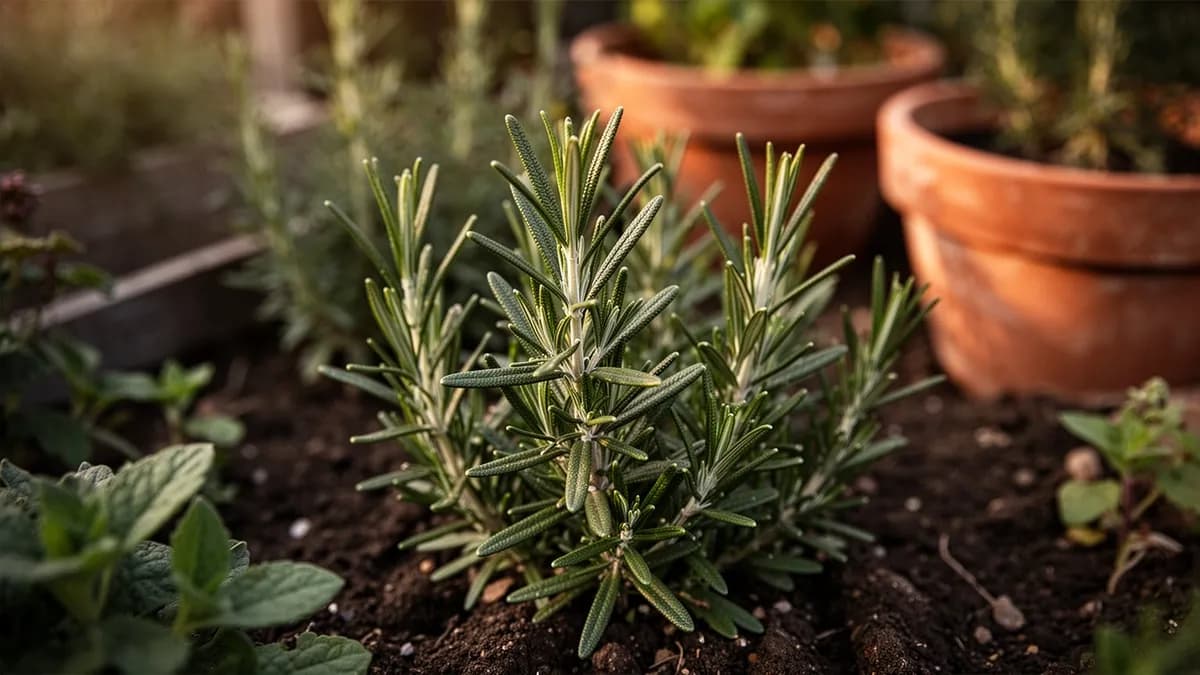
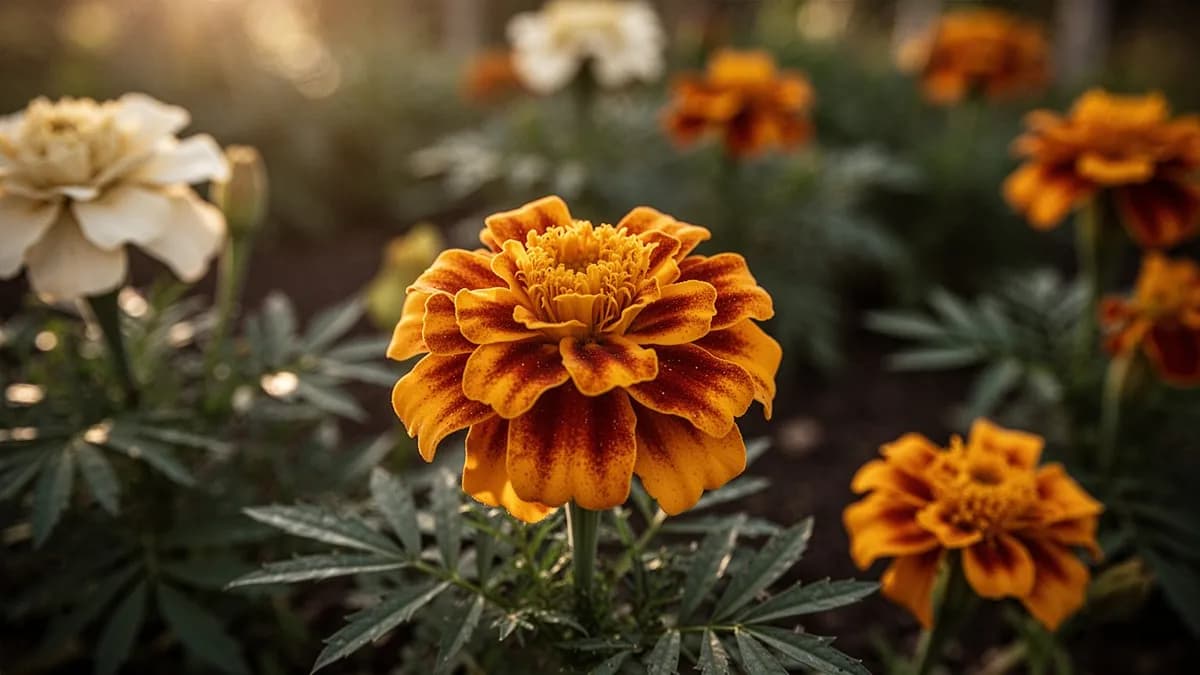
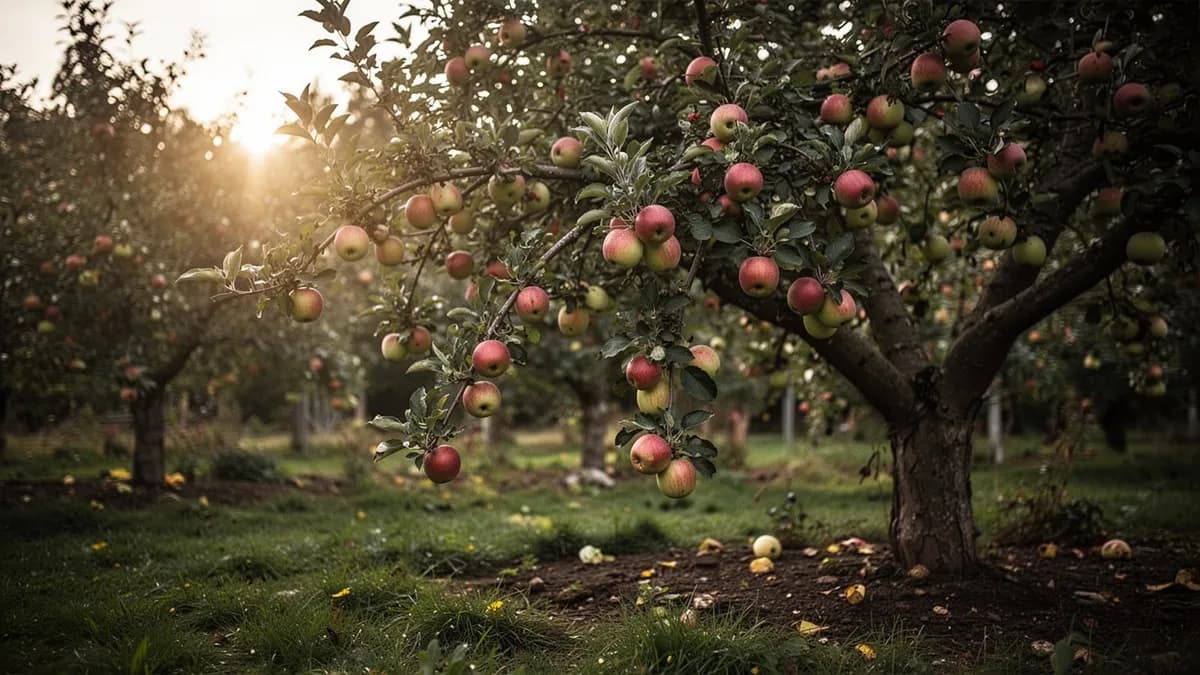
Lavendel und Rosmarin sind ausgezeichnete trockenheitsresistente Begleitpflanzen, die neben Granatäpfeln gut gedeihen. Tagetes locken Bestäuber an und halten bestimmte Schädlinge fern. Pflanzen Sie niedrig wachsende mediterrane Kräuter unter Granatapfelbäumen, um eine schöne und funktionale Landschaft zu schaffen. Vermeiden Sie feuchtigkeitsliebende Pflanzen, die häufiges Gießen erfordern, da dies der Vorliebe des Granatapfels für trockene Bedingungen schadet. Klee zwischen den Obstbaumreihen sorgt für Stickstofffixierung.
Lavendel gehört daneben. Walnussbaum nicht.
Altes Gärtnerwissen, geprüft an der echten Nachbartabelle von Granatapfelbaum — teste jede Pflanze, die du anbaust.
Probiere Granatapfelbaum direkt hier im Beet
Ein echtes Planer-Beet, Granatapfelbaum steht schon drin. Tippe einen Begleiter an, platziere ihn und sieh, wie die Nachbarschaftsprüfung antwortet — grün für gute Nachbarn, rot bei Streit.


Passende Anbau-Ratgeber
Richtig düngen
Granatäpfel wachsen in fast jedem gut durchlässigen Boden mit einem pH-Wert von 5,5 bis 7,5. Sie vertragen alkalische und salzhaltige Böden besser als die meisten Obstbäume. Düngen Sie im zeitigen Frühjahr leicht mit einem ausgewogenen Dünger; übermäßiger Stickstoff fördert das vegetative Wachstum auf Kosten der Früchte. Kalium ist wichtig für die Fruchtqualität. In den meisten Gartenböden liefert eine jährliche Kompostgabe ausreichend Nährstoffe. Kübel-Granatäpfel benötigen während der Wachstumsperiode regelmäßige Düngung.
Ideale Temperatur
Winterhärtezone-Kompatibilität
Von der Saat zur Ernte, Schritt für Schritt
Winterruhe und Knospenschwellung
Granatapfelbäume sind laubabwerfend und gehen im Spätherbst in die Winterruhe über, wobei sie ihre Blätter vollständig abwerfen. Während des Winters ruht der Baum und benötigt eine Kälteperiode von etwa 100 bis 200 Stunden unter 7 °C für eine optimale Fruchtproduktion. Im Spätwinter beginnen die Knospen an den grauborkenartigen Ästen zu schwellen und signalisieren den Beginn einer neuen Wachstumsperiode.
Blattaustrieb und vegetatives Wachstum
Hellgrüne, schmal-längliche Blätter treiben im frühen bis mittleren Frühling rasch aus den schwellenden Knospen aus. Neue Triebe strecken sich kräftig, und die Krone füllt sich schnell. Das glänzende Laub hat anfangs einen charakteristischen bronzefarbenen Ton, der zu tiefem Grün ausreift. Kräftige Wurzelausläufer erscheinen oft an der Basis und sollten umgehend behandelt werden.
Blütezeit
Spektakuläre orangerote, röhrenförmige Blüten erscheinen an den Triebspitzen und an kurzen Trieben vom späten Frühling bis zum Frühsommer. Granatapfelblüten gibt es in zwei Typen: vasenförmige fruchtbare Blüten, die Früchte ansetzen, und schlanke glockenförmige männliche Blüten, die Pollen liefern, aber ohne Fruchtbildung abfallen. Ein gesunder Baum kann Hunderte von Blüten hervorbringen, obwohl nur ein Bruchteil davon Früchte entwickelt.
Fruchtentwicklung
Nach erfolgreicher Bestäubung schwillt die Kelchröhre an und die kleine grüne Frucht beginnt während des Sommers zu wachsen. Die ledrige Schale wechselt allmählich von Grün über Gelb zu Rot- oder Rosatönen, je nach Sorte. Im Inneren entwickeln die Kerne ihre charakteristischen saftigen Samenmäntel. Gleichmäßiges Gießen in dieser Phase ist entscheidend, um das Aufplatzen der Früchte zu verhindern.
Fruchtreife und Ernte
Die Früchte erreichen die volle Reife vom Spätsommer bis Mitte Herbst, etwa fünf bis sieben Monate nach der Blüte. Reife Granatäpfel entwickeln eine satte Farbe, die Schale wird etwas rau und kantig statt rund, und beim Klopfen erzeugen sie ein metallisches Geräusch. Die Kerne im Inneren sind voll durchgefärbt und strotzen vor Saft. Überreife Früchte platzen am Baum auf und laden Insekten und Fäulnis ein.
Nach der Ernte und Laubfall
Nach der Ernteperiode beginnt der Baum, sich auf die Winterruhe vorzubereiten. Die Blätter verfärben sich im Herbst in ein auffälliges Goldgelb, bevor sie abfallen. Der Baum verlangsamt das aktive Wachstum und leitet Energie in die Wurzelspeicher um. Dies ist ein ausgezeichnetes Zeitfenster für die Beurteilung der Struktur und die Planung der Rückschnitte für die nächste Saison.
Schneiden Sie während der vollständigen Winterruhe vor Beginn der Knospenschwellung. Entfernen Sie abgestorbene, sich kreuzende und nach innen wachsende Äste, um eine offene Vasenform mit vier bis sechs Hauptstämmen beizubehalten. Bringen Sie eine 5–8 cm dicke Schicht Kompostmulch im Wurzelbereich auf, wobei Sie 15 cm Abstand zum Stamm halten, um Fäulnis zu vermeiden.
Granatapfelbaum Monat für Monat pflegen
Was du jeden Monat für deine Granatapfelbaum tun solltest
Oktober
Aktueller MonatSchließen Sie die Ernte spätreifender Sorten ab. Räumen Sie heruntergefallene Früchte und Pflanzenreste rund um die Baumbasis auf. Genießen Sie die goldene Herbstlaubfärbung, während sich der Baum auf die Winterruhe vorbereitet.
Immer wissen, was jetzt im Garten zu tun ist
Eine E-Mail zum Monatsanfang: was du jetzt säen, pflanzen und anpacken solltest — für deine Granatapfelbaum und alles, was drumherum wächst. Dazu ein kurzer Startkurs, der dich vor den klassischen Fehlern bewahrt.
- Was jetzt zu tun ist
- Passend zu deiner Saison
- Startkurs inklusive
Granatapfelbaum ernten
Granatäpfel sind erntereif, wenn die Schale eine tiefe Farbe entwickelt hat, die Frucht sich für ihre Größe schwer anfühlt und beim Klopfen ein metallisch klingendes Geräusch erzeugt. Die Schale kann bei Vollreife leicht aufplatzen, was ein normales Reifezeichen ist. Schneiden Sie die Früchte mit einer Gartenschere vom Baum, um ein Abreißen der Äste zu vermeiden. Granatäpfel reifen nach der Ernte nicht nach, daher sollten sie erst bei voller Reife gepflückt werden. Das Erntefenster liegt je nach Sorte und Klima typischerweise zwischen September und November.
angenommen, du pflanzt zu Beginn des Zeitraums — trage dein tatsächliches Datum ein
Ernte Granatapfelbaum zügig, dann trägt die Pflanze weiter.
Lagerung & Konservierung
Ganze Granatäpfel halten sich gekühlt 2 bis 3 Monate und bei kühler Raumtemperatur bis zu einem Monat. Die Kerne können herausgelöst und einlagig auf Backblechen eingefroren werden, dann in Gefrierbeuteln umgefüllt bis zu einem Jahr haltbar. Granatapfelsaft kann gepresst und in Behältern eingefroren oder zu Grenadinesirup und Granatapfelmelasse verarbeitet werden. Getrocknete Kerne ergeben ein säuerlich-knuspriges Topping. Granatapfelmelasse, hergestellt durch Einkochen des Saftes zu einem dickflüssigen Sirup, hält sich monatelang.
Was schiefgeht — und die Lösung
Granatapfelschmetterling
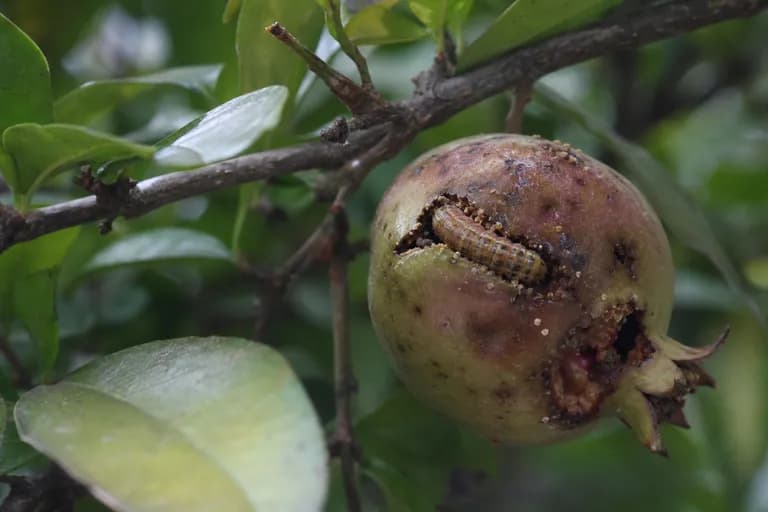
SchädlingLarven bohren sich in die sich entwickelnden Früchte und fressen an Samen und Kernen. Eintrittslöcher und Kotreste sind auf der Fruchtoberfläche sichtbar. Es entwickelt sich innere Fäulnis.
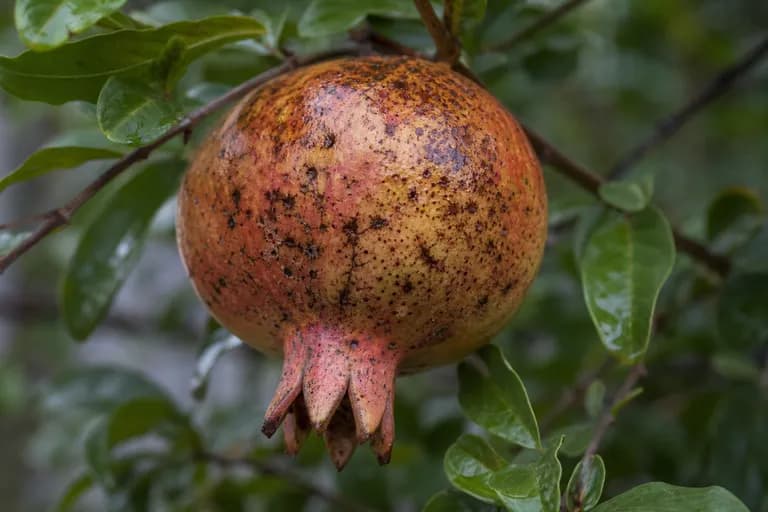
Cercospora-Fruchtfleckenkrankheit
KrankheitKleine dunkle Flecken auf der Fruchtoberfläche, die sich vergrößern und reißen können. Fruchtqualität und Aussehen verschlechtern sich erheblich.
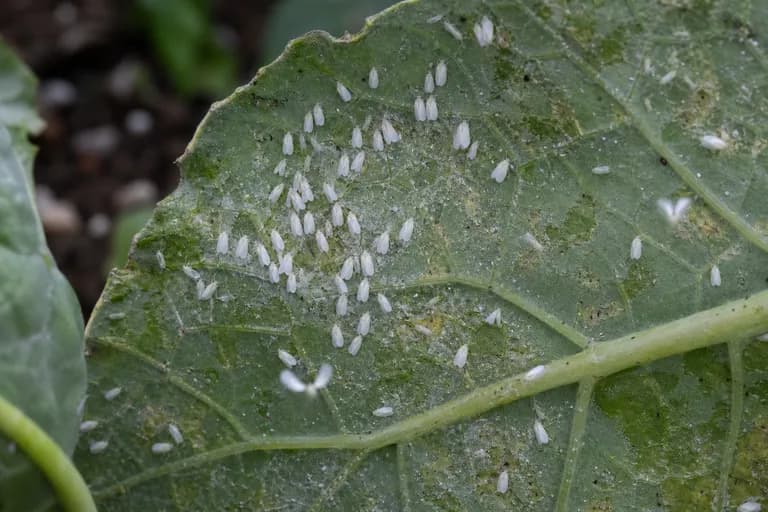
Weiße Fliegen
SchädlingWinzige weiße Insekten auf den Blattunterseiten. Vergilbende Blätter, Honigtauablagerungen und Rußtaupilze bei starkem Befall.
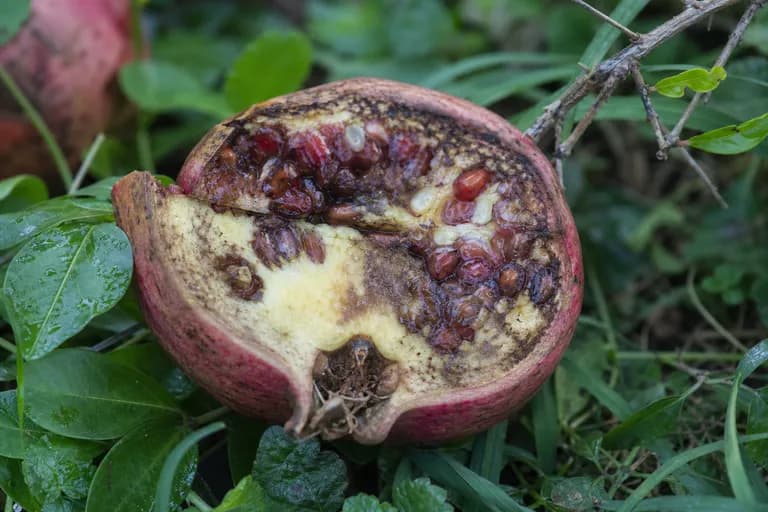
Herzfäule
KrankheitInnere Fruchtfäule, die von außen nicht sichtbar ist, bis die Frucht aufgeschnitten wird. Die Kerne werden braun und entwickeln einen unangenehmen Geschmack.
Fehlerbehebung bei häufigen Problemen
Das Aufplatzen der Früchte ist das häufigste Problem, verursacht durch unregelmäßiges Gießen oder starken Regen nach einer Trockenperiode. Sorgen Sie während der Fruchtentwicklung für gleichmäßige Feuchtigkeit. Übermäßiges Wachstum von Wurzelausläufern an der Basis erfordert regelmäßiges Entfernen, um die Baumform zu erhalten. In Grenzlagen kalter Zonen kann es im Winter zu Frostschäden kommen, aber die Bäume erholen sich meist von den Wurzeln aus. Schlechter Fruchtansatz kann durch unzureichende Wärme oder Bestäubung verursacht werden. Selbstfruchtbare Sorten profitieren möglicherweise trotzdem von Kreuzbestäubung für höhere Erträge.
Anbautipps
- Pflanzen Sie am sonnigsten verfügbaren Standort mit mindestens sechs bis acht Stunden direkter Sonneneinstrahlung täglich; Granatäpfel tragen im Schatten oder Halbschatten nicht gut.
- Sorgen Sie für ausgezeichnete Drainage, indem Sie an einem leichten Hang pflanzen oder schweren Lehmboden mit grobem Sand und organischem Material verbessern; Granatäpfel vertragen arme Böden, überleben aber keine Staunässe.
- Erziehen Sie junge Bäume zu einer mehrstämmigen Vasenform mit vier bis sechs Hauptstämmen, was die Lichtdurchlässigkeit, Luftzirkulation verbessert und die Ernte einfacher macht als eine Einzelstammform.
- Tragen Sie einen ausgewogenen Dünger im zeitigen Frühjahr und nochmals im späten Frühjahr auf, vermeiden Sie jedoch übermäßigen Stickstoff, der das Blattwachstum auf Kosten von Blüte und Fruchtbildung fördert.
- Gießen Sie während der Wachstumsperiode tief, aber selten, und lassen Sie die oberen 5 cm des Bodens zwischen den Bewässerungen abtrocknen; gleichmäßige Feuchtigkeit während der Fruchtentwicklung verhindert Aufplatzen.
- Entfernen Sie Wurzelausläufer während der gesamten Wachstumsperiode regelmäßig, da Granatäpfel stark ausläufernde Pflanzen sind und unkontrollierte Ausläufer Energie von der Fruchtproduktion abziehen.
- Schützen Sie sich entwickelnde Früchte in extrem heißen Klimazonen vor Sonnenbrand, indem Sie ausreichend inneres Laub belassen, anstatt die Krone im Sommer übermäßig auszudünnen.
- Ernten Sie Granatäpfel, indem Sie den Stiel mit einer scharfen Gartenschere abschneiden, anstatt zu drehen oder zu ziehen, was die Kelchkrone beschädigen und die Lagerfähigkeit verkürzen kann.
- Lagern Sie geerntete Granatäpfel an einem kühlen, trockenen Ort bis zu zwei Wochen bei Raumtemperatur oder kühlen Sie sie bei 5 °C bis zu zwei Monate ohne nennenswerten Qualitätsverlust.
- In Regionen kälter als USDA-Zone 8 ziehen Sie Granatäpfel in großen Kübeln, die während winterlicher Frostperioden in eine geschützte Garage oder ein Gewächshaus gebracht werden können, um Frostschäden zu verhindern.
Bau deine beste Granatapfelbaum an — und alles drumherum.
Starte heute kostenlos. Lege deine Beete an, setze deine Granatapfelbaum ein und lass PlotMyGarden Timing, Abstände, Begleiter und Erinnerungen von der Saat bis zum Erntekorb übernehmen.
Finde deine Granatapfelbaum
Wonderful
Die am weitesten verbreitete Handelssorte mit großen, tiefroten Früchten und reichhaltigen, säuerlich-süßen Kernen. Ertragreich und zuverlässig in heißen Klimazonen.
Eversweet
Nahezu kernlose Sorte mit sehr süßen Kernen und ohne zusammenziehende Adstringenz. Klarer, nicht färbender Saft. Gut zum Frischverzehr geeignet.
Angel Red
Weichkernige Sorte mit leuchtend roten Früchten und süßen Kernen. Hoher Ertrag, reift früher als Wonderful. Gute Saftsorte.
Russian 26
Eine der frosthärtesten Granatapfelsorten, übersteht Temperaturen bis minus 18 Grad Celsius. Mittelgroße Früchte mit süß-saurem Geschmack.
Parfianka
Turkmenische Erbstücksorte mit außergewöhnlich süßen, weinfarbenen Kernen und kleinen, essbaren Samen. Gilt als eine der wohlschmeckendsten verfügbaren Sorten.
Ein einzelner ausgewachsener Granatapfelbaum kann nach der Etablierung 50 bis 100 kg Früchte pro Jahr produzieren, im Wert von etwa 200 € bis 500 € bei Einzelhandelspreisen von 3 € bis 6 € pro Kilogramm. Frischer Granatapfelsaft kostet im Handel 10 € bis 15 € pro Liter, was bedeutet, dass die Ernte eines Hausbaums einem Gegenwert von 300 € bis 700 € allein an Saft entsprechen kann. Bäume leben und tragen über Jahrzehnte mit minimalen Betriebskosten, was die anfängliche Investition von 20 € bis 50 € für einen Baumschulbaum zu einer der besten langfristigen Renditen im Hausobstgarten macht.
Schnelle Rezepte
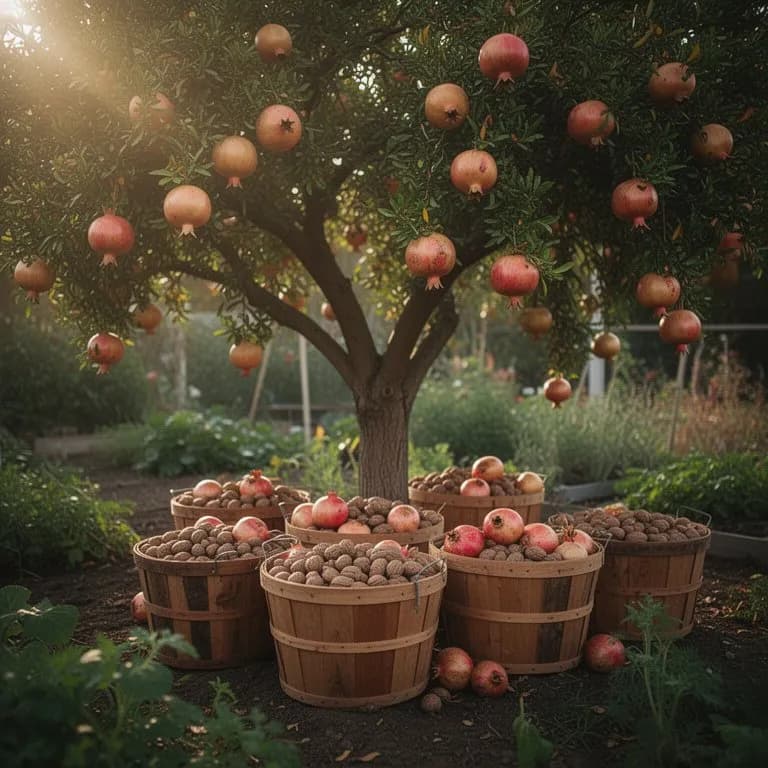
Granatapfel-Walnuss-Salat
10 Min.Ein lebhafter Herbstsalat, der frische Granatapfelkerne mit gerösteten Walnüssen, Babyspinat, zerbröseltem Feta-Käse und einer leichten Honig-Granatapfel-Vinaigrette kombiniert. Der Kontrast aus süß-sauren Kernen, knusprigen Walnüssen und cremigem Käse macht ihn zu einer eleganten Vorspeise oder einem leichten Mittagessen.
8 Zutaten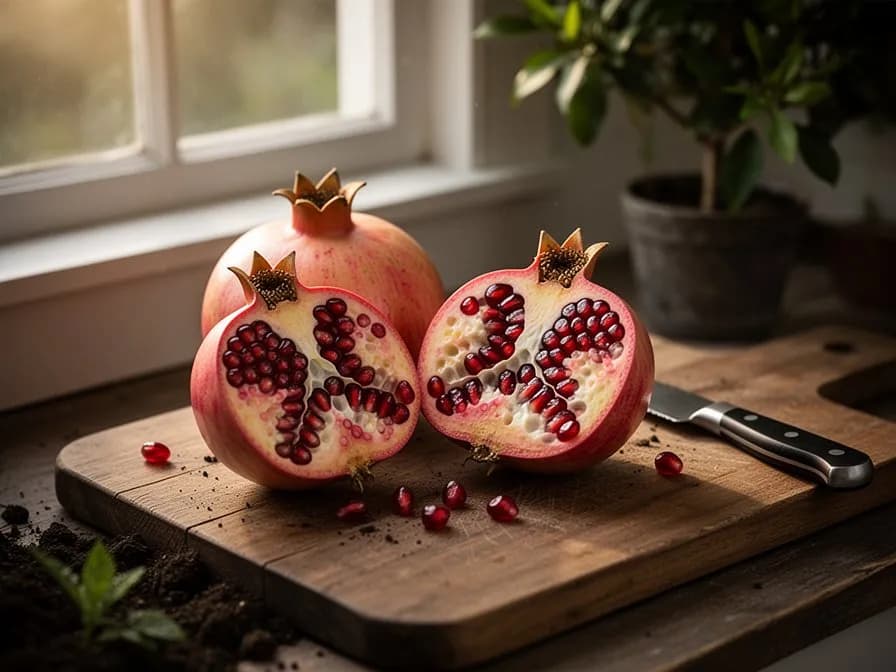
Granatapfel-Raita
5 Min.Eine erfrischende indische Joghurt-Beilage, gespickt mit rubinroten Granatapfelkernen, geröstetem Kreuzkümmel und frischer Minze. Dieses kühlende Raita passt perfekt zu scharfen Currys, gegrilltem Fleisch oder Fladenbrot und ist in weniger als fünf Minuten zubereitet.
6 Zutaten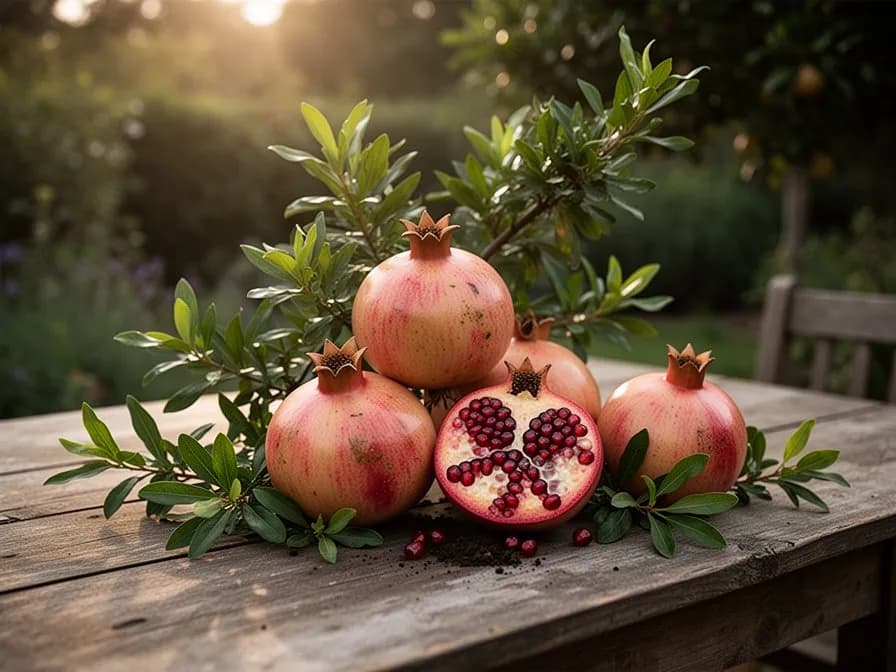
Granatapfelmelasse-Glasur
25 Min.Eine dickflüssige, säuerlich-süße Reduktion, hergestellt durch Einkochen von frischem Granatapfelsaft mit Zucker und Zitronensaft bis zur sirupartigen Konsistenz. Dieses vielseitige nahöstliche Grundprodukt eignet sich als Glasur für gebratenes Fleisch, als Topping über Hummus oder als Verfeinerung für gegrilltes Gemüse und Getreideschüsseln.
3 ZutatenKulinarische Verwendung
Granatapfelkerne verleihen Salaten, Getreideschüsseln und Joghurtparfaits juwelengleiche Schönheit und süß-sauren Biss. Der Saft wird für Cocktails, Saucen und das nahöstliche Würzmittel Granatapfelmelasse verwendet, das Marinaden und Glasuren Tiefe verleiht. Grenadinesirup, ursprünglich aus Granatapfelsaft hergestellt, aromatisiert Getränke und Desserts. Die Frucht ist außergewöhnlich reich an Antioxidantien, Vitamin C und Polyphenolen. Die Kerne harmonieren hervorragend mit Minze, Feta-Käse, Walnüssen und Lamm.
Was drinsteckt
Gesundheitsvorteile
- Reich an Punicalagin und Anthocyanen liefern Granatapfelkerne einen starken antioxidativen Schutz, der oxidativen Stress neutralisiert und das Risiko chronischer Krankheiten senken kann.
- Regelmäßiger Granatapfelkonsum wird mit verbesserter Herz-Kreislauf-Gesundheit in Verbindung gebracht, einschließlich niedrigerem systolischem Blutdruck und reduzierter arterieller Plaquebildung in klinischen Studien.
- Die entzündungshemmenden Verbindungen im Granatapfel, insbesondere Punicinsäure und Ellagitannine, können dazu beitragen, Symptome entzündlicher Gelenkerkrankungen wie Arthrose zu lindern.
- Granatapfel-Polyphenole unterstützen die Darmgesundheit, indem sie als Präbiotika wirken und das Wachstum nützlicher Lactobacillus- und Bifidobacterium-Bakterien im Darmmikrobiom fördern.
- Studien deuten darauf hin, dass Granatapfelextrakt das Gedächtnis und die kognitive Funktion bei älteren Erwachsenen verbessern kann, möglicherweise durch Steigerung der Hirndurchblutung und Verringerung von Neuroinflammation.
- Der hohe Gehalt an Vitamin C und Antioxidantien im Granatapfel unterstützt die Kollagensynthese und Hautreparatur und trägt zu gesünderer Haut bei, wobei sichtbare Zeichen der Hautalterung möglicherweise verlangsamt werden.
Woher Granatapfelbaum stammt
Der Granatapfel (Punica granatum) stammt aus der Region des heutigen Iran, Turkmenistan und Nordindien, wo wilde Verwandte noch immer in felsigen Vorgebirgshabitaten wachsen. Er zählt zu den frühesten domestizierten Obstbäumen der Menschheit; verkohlte Samen wurden an archäologischen Stätten im Jordantal gefunden und auf etwa 3000 v. Chr. datiert. Altmesopotamische Keilschrifttafeln erwähnen Granatapfelplantagen, und die Frucht wurde weithin in den Hängenden Gärten von Babylon angebaut. Von seinem iranischen Kerngebiet aus verbreitete sich der Granatapfel über Handelsrouten westwärts nach Ägypten, wo er als Symbol der Wiedergeburt in Gräbern beigelegt wurde, und ostwärts über die Seidenstraße nach China um etwa 100 v. Chr. Die Phönizier trugen ihn über das Mittelmeer und etablierten ihn in Karthago und auf der Iberischen Halbinsel. Die griechische Mythologie verwob die Frucht in die Geschichte von Persephone und verknüpfte sie mit dem Kreislauf der Jahreszeiten. Römische Legionen verbreiteten den Baum weiter in ihrem gesamten Imperium, und die Mauren perfektionierten seinen Anbau in Andalusien während des Mittelalters. Spanische Missionare brachten den Granatapfel im sechzehnten Jahrhundert nach Amerika und pflanzten ihn an Missionen in ganz Kalifornien und der Karibik. Heute wird der Granatapfel kommerziell im gesamten Mittelmeerraum, im Nahen Osten, in Indien, China und den trockeneren Regionen Amerikas angebaut. Die moderne westliche Gesundheitsbewegung entdeckte den Granatapfel Anfang der 2000er Jahre wieder, was zu einem Anstieg der kommerziellen Produktion und wissenschaftlichen Forschung zu seinen potenten Polyphenolverbindungen führte. Die jährliche Weltproduktion übersteigt mittlerweile drei Millionen Tonnen, wobei Indien, Iran und China die Produktion anführen.
Granatapfelbaum: Schon gewusst?
Faszinierende Fakten über Granatapfelbaum
Der Granatapfel gehört zu den ältesten kultivierten Früchten der Welt, mit archäologischen Belegen für seinen Anbau, die bis etwa 3000 v. Chr. in die Region des heutigen Iran und Nordindien zurückreichen.
Granatapfelbaum: Fragen & Antworten
Wann sollte ich Granatapfelbaum pflanzen?
Was sind gute Begleitpflanzen für Granatapfelbaum?
In welchen Winterhärtezonen kann Granatapfelbaum wachsen?
Wie viel Sonne braucht Granatapfelbaum?
Welchen Abstand sollte ich zwischen Granatapfelbaum lassen?
Welche Schädlinge und Krankheiten befallen Granatapfelbaum?
Wie lagere ich Granatapfelbaum nach der Ernte?
Was sind die besten Granatapfelbaum-Sorten zum Anbauen?
Welchen Boden braucht Granatapfelbaum?
Warum blüht mein Granatapfelbaum reichlich, setzt aber nur sehr wenige Früchte an?
Was verursacht das Aufplatzen oder Reißen von Granatäpfeln am Baum?
Können Granatapfelbäume in Kübeln wachsen und trotzdem Früchte tragen?
Woran erkenne ich, dass ein Granatapfel reif und erntefertig ist?
Welche Schädlinge und Krankheiten befallen Granatapfelbäume am häufigsten?
Wie lange dauert es, bis ein Granatapfelbaum aus Samen im Vergleich zu einem Baumschul-Setzling Früchte trägt?
Du hast die Theorie gelesen. Jetzt baue sie auf Autopilot an.
Alles, was Granatapfelbaum knifflig macht — das Timing, die Abstände, die Begleiter, das Erntefenster — genau das übernimmt PlotMyGarden für dich, für jede Pflanze im Garten.
Ein Plan, der dein Wetter kennt
Standort einmal festlegen. Aussaat-, Dünge- und Erntedaten rund um deinen echten letzten Frosttermin und die Live-Vorhersage — kein Raten mehr nach Saattüte.
Aus dem Abschnitt „Pflanzzeit“Beetplaner per Drag & Drop
Beete auf einem Raster gestalten. Jede Pflanze rastet im richtigen Abstand ein, und du siehst die ganze Saison, bevor du einen Cent für Saatgut ausgibst.
Aus dem Abschnitt „Anbau“Begleiter-Konflikte früh erkannt
Über 200 gute und schlechte Kombinationen werden beim Pflanzen live geprüft — so landet ein saisonruinierender Fehler nie in der Erde.
Aus dem Abschnitt „Begleiter“Erinnerungen, nach denen du wirklich handelst
„Gieß die Bohnen.“ „Heute ernten, bevor's umschlägt.“ Pünktlich, konkret und auf deine echten Pflanzen bezogen.
Aus dem Abschnitt „Ernte“Staffel-Aussaat, geplant
Sechs Wochen ernten statt sechs Tage? Die App verteilt deine Aussaaten automatisch und erinnert dich, wenn der nächste Satz fällig ist.
Aus dem Abschnitt „Pflanzzeit“Ein Verlauf, der schlauer wird
Jede protokollierte Ernte bringt der App deinen Garten bei. Der Plan fürs nächste Jahr startet bei dem, was in deinem Boden wirklich funktioniert hat.
Aus dem Abschnitt „Überblick“Pflanze diese neben Granatapfelbaum
Weitere Obstbäume
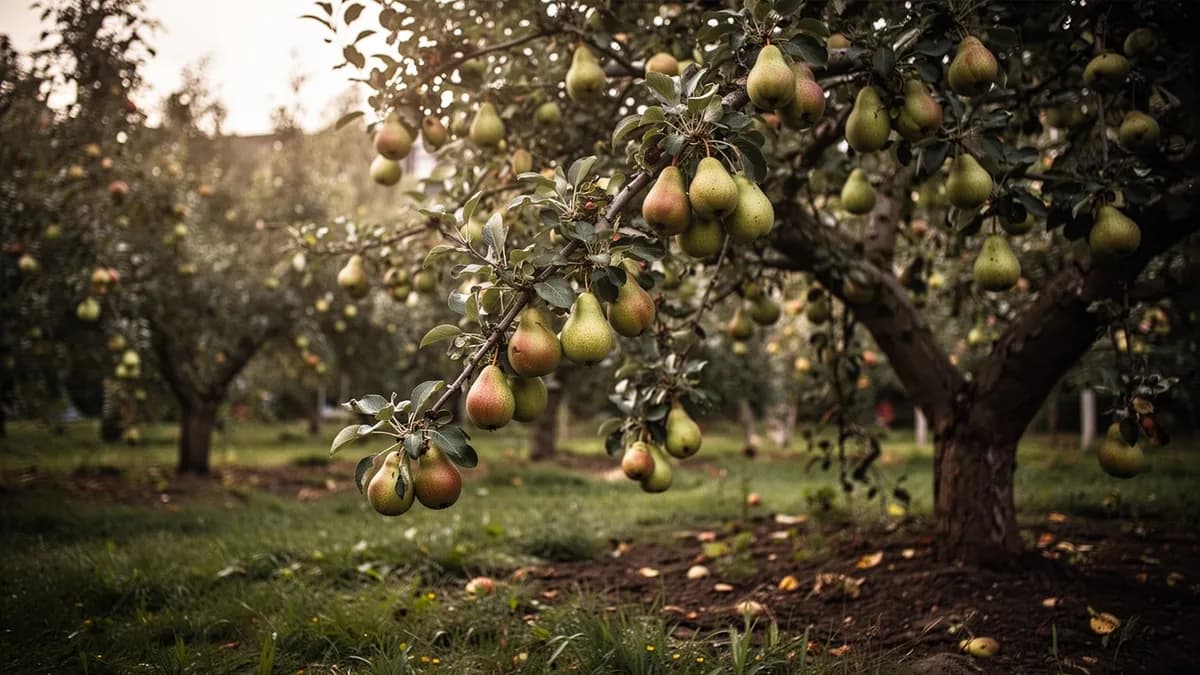
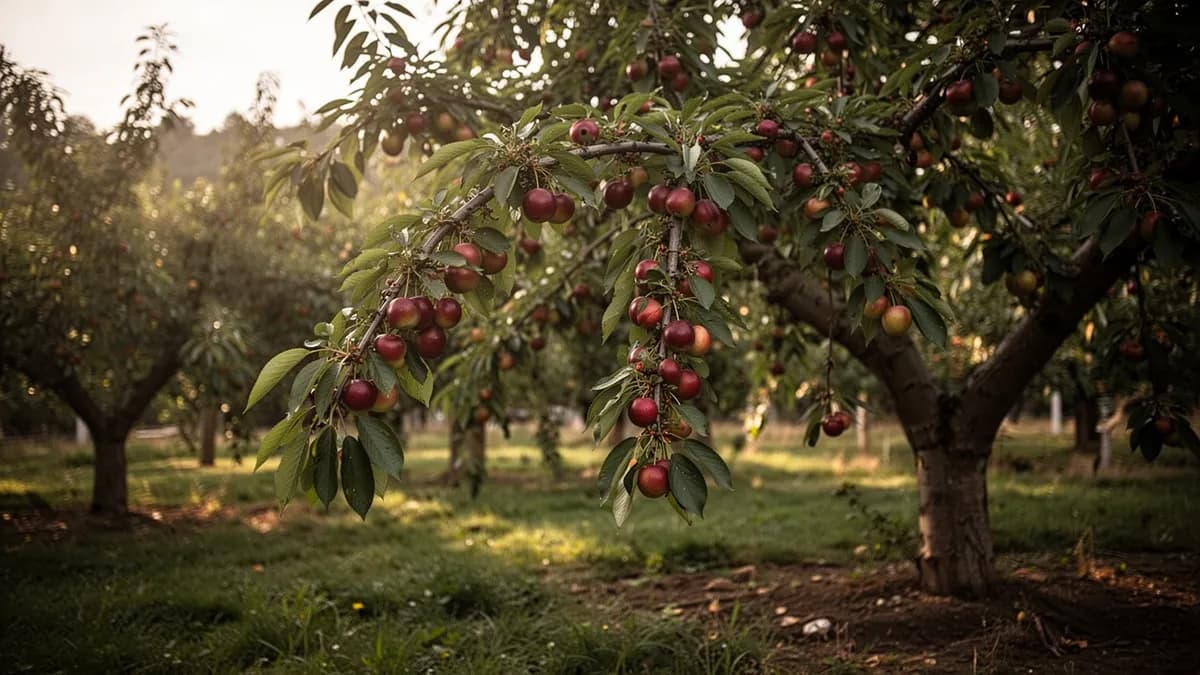
Halte Granatapfelbaum von diesen fern
Bau deine beste Granatapfelbaum an — und alles drumherum.
Starte heute kostenlos. Lege deine Beete an, setze deine Granatapfelbaum ein und lass PlotMyGarden Timing, Abstände, Begleiter und Erinnerungen von der Saat bis zum Erntekorb übernehmen.