Anémona Japonesa
Una elegante vivaz de final de temporada con delicadas flores en copa de color rosa o blanco sobre tallos altos y esbeltos que aportan gracia a los jardines otoñales.





En esta páginaResumen
Conoce Anémona Japonesa
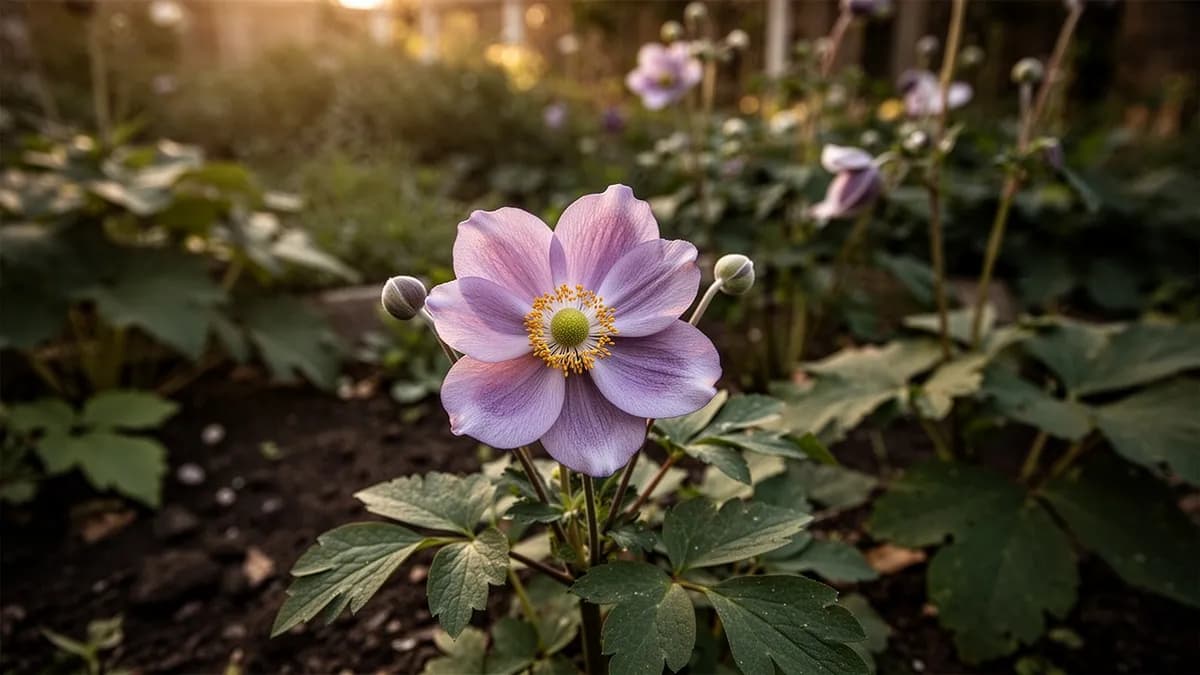
Una elegante vivaz de final de temporada con delicadas flores en copa de color rosa o blanco sobre tallos altos y esbeltos que aportan gracia a los jardines otoñales. Las anémonas japonesas tardan en establecerse, pero una vez asentadas se extienden mediante estolones para formar hermosas colonias. Prefieren suelos ricos en humus y húmedos, con protección frente a los vientos fuertes que pueden tumbar los tallos florales.
Cuándo plantar Anémona Japonesa
La división en primavera es el método de propagación más fiable. Los esquejes de raíz tomados en invierno también funcionan bien. La germinación por semilla es irregular y las plántulas pueden no conservar las características de las variedades seleccionadas. Para cultivar desde semilla, siembre semilla fresca en otoño y déjela en el exterior para la estratificación natural.
Vigilamos el calendario para que tú no tengas que hacerlo
Dinos una vez dónde cultivas. Ajustamos tus ventanas de siembra y cosecha a tu temporada local — y te avisamos en cuanto se abre cada una.
Mira tus fechas exactas de Anémona Japonesa
Comparte tu ubicación una vez y ajustaremos cada fecha de siembra y cosecha a tu temporada local real — no a un sobre genérico.
Se usa una vez para fijar tu temporada · nunca se comparteCómo cultivar Anémona Japonesa
Las anémonas japonesas se encuentran entre las vivaces de floración otoñal más elegantes, aportando color fresco al jardín desde agosto hasta octubre. Plante en primavera con una separación de 60 cm, en sombra parcial y suelo rico y húmedo. Se requiere paciencia, pues las plantas tardan en establecerse, pero recompensan generosamente la espera.
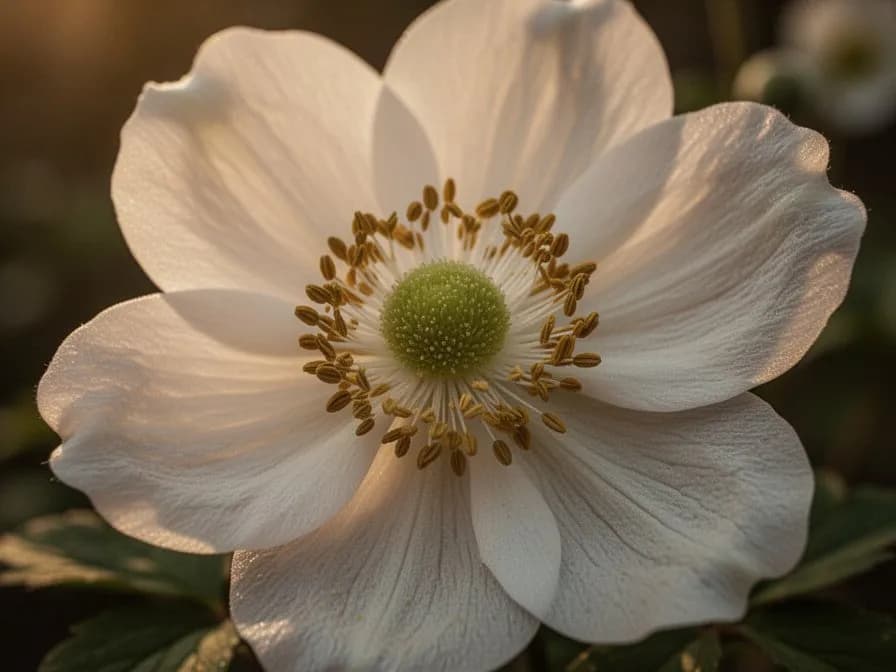
Las sedosas flores en copa flotan sobre tallos altos y esbeltos por encima de un atractivo follaje de aspecto parecido a la vid. Cada flor presenta en su centro un grupo dorado de estambres. Las anémonas japonesas florecen durante 6-8 semanas en otoño, un momento en que la mayoría de las vivaces ya han terminado.
Una vez establecidas (normalmente a los 2-3 años), las plantas se extienden mediante rizomas subterráneos formando bellas colonias en expansión. En algunos jardines esto es bienvenido; en otros requiere control. Proporcione una posición resguardada, ya que los altos tallos florales pueden inclinarse con el viento fuerte.
El planificador espacia cada planta por ti
Elige un tamaño de bancal y PlotMyGarden espacia tu Anémona Japonesa a 60 cm, cuenta cuántas caben y lo distribuye antes de comprar una sola semilla.
Los mejores vecinos de Anémona Japonesa
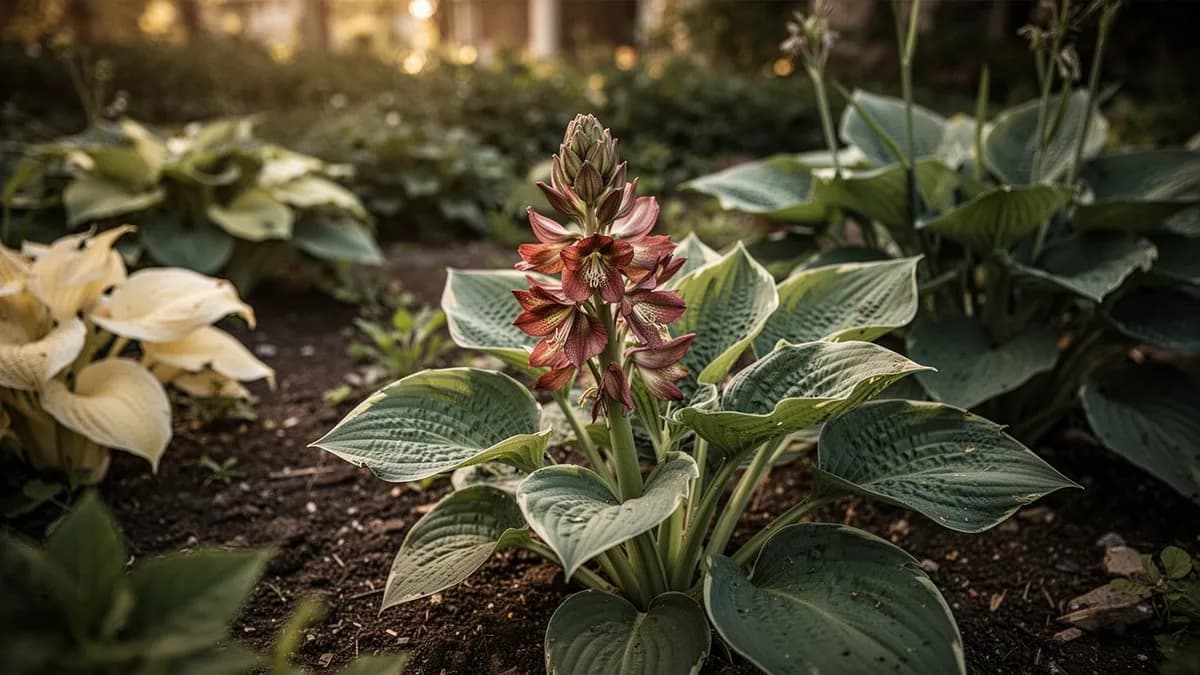
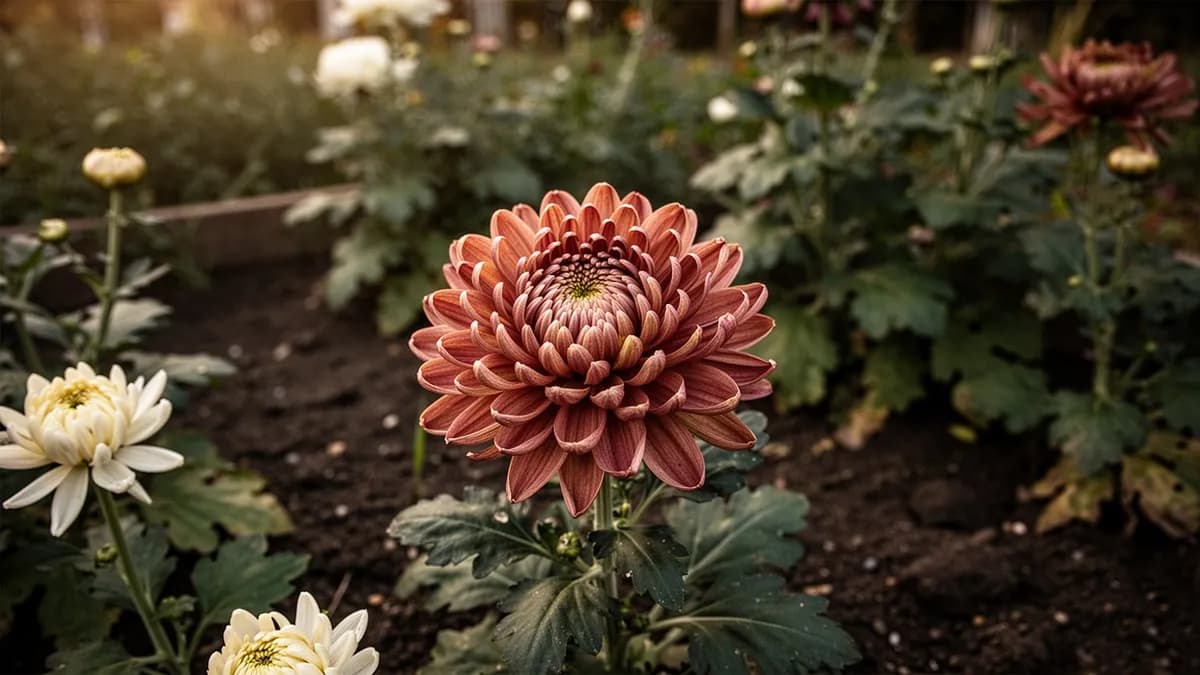
Las anémonas japonesas son compañeras clásicas de los ásteres, crisantemos y gramíneas ornamentales de final de temporada. Los altos tallos florales emergen bellamente entre plantas más bajas. Plante junto a hostas y helechos, que aportan interés estival mientras las anémonas desarrollan su follaje. Las variedades blancas son impresionantes en jardines de luz de luna.
Detecta conflictos antes de plantar, no después
Cada planta que colocas se comprueba contra sus vecinas en tiempo real. Las buenas combinaciones brillan en verde; los conflictos se marcan al instante — para que un error que arruine la temporada nunca llegue a la tierra.
Abónalo bien
Las anémonas japonesas prefieren un suelo rico, húmedo y bien drenado con un pH de 5.5-7.0. Enmiende con compost y acolche para retener la humedad. Aplique fertilizante equilibrado en primavera. La humedad constante durante el establecimiento es fundamental. Una vez establecidas, toleran condiciones más secas.
Temperatura ideal
Compatibilidad de zonas de rusticidad
De la semilla a la cosecha, etapa por etapa
Reposo invernal
Las anémonas japonesas están en pleno reposo durante el invierno, con todo el follaje aéreo muerto y retraído al nivel del suelo a finales del otoño. La planta sobrevive como una red de raíces y rizomas subterráneos gruesos, oscuros y algo frágiles que almacenan reservas energéticas para la siguiente temporada. En las regiones más frías (zonas USDA 4-5), la zona radicular se beneficia del aislamiento de un acolchado, ya que las raíces se encuentran relativamente cerca de la superficie del suelo. Durante esta fase, la planta acumula la exposición al frío necesaria que ayuda a regular el momento de la emergencia primaveral.
Emergencia primaveral
Los brotes frescos emergen muy tarde en primavera, a menudo no hasta mediados o finales de abril en climas templados, mucho después de que la mayoría de las vivaces estén creciendo activamente. El primer crecimiento aparece como hojas apretadas y de tonos oscuros que se van desplegando paulatinamente en el característico follaje basal trilobulado con forma de vid. El crecimiento es inicialmente lento mientras la planta restablece su dosel foliar y comienza a fotosintentizar para reponer las reservas radiculares. Esta emergencia tardía es completamente normal y no debe confundirse con la pérdida de la planta.
Crecimiento vegetativo y desarrollo del follaje
A lo largo de la primavera tardía y el inicio del verano, la planta forma un denso y atractivo montículo de follaje basal verde oscuro que alcanza 30-45 cm de altura. Las hojas son profundamente lobuladas y ligeramente vellosas, formando un grupo de cobertura sustancial que suprime las malas hierbas con eficacia. El sistema radicular se extiende lateralmente durante esta fase, con nuevos rizomas que se propagan hacia afuera desde el grupo madre: este es el mecanismo por el cual las anémonas japonesas pueden colonizar gradualmente un área a lo largo de varios años. Durante esta fase puramente vegetativa aún no son visibles los tallos florales.
Extensión de tallos y formación de capullos
Desde mediados hasta finales del verano, los altos y esbeltos tallos florales comienzan a elevarse sobre el follaje basal, alcanzando 60-120 cm según el cultivar y las condiciones. Estos tallos se ramifican repetidamente cerca de la parte superior, produciendo elegantes estructuras en candelabro que portan numerosos capullos redondos y bien cerrados. Los capullos suelen estar teñidos de rosa o verde y se sostienen sobre gráciles pedúnculos arqueados. Toda la planta adquiere una calidad aérea y arquitectónica a medida que se desarrolla el entramado de tallos. Esta es una fase crítica para la calidad de la flor, y la planta demanda mucha humedad del suelo y nutrientes.
Floración
La tan esperada temporada de floración comienza a finales de agosto o principios de septiembre y se prolonga durante seis a ocho semanas, a menudo hasta finales de octubre o incluso principios de noviembre en climas suaves. Los capullos se abren sucesivamente de abajo hacia arriba en cada tallo, proporcionando una exhibición que se renueva continuamente. Las flores individuales tienen forma de platillo, miden 5-8 cm de diámetro, con pétalos sedosos (técnicamente sépalos) en tonos de rosa, rosa intenso o blanco rodeando un anillo central de estambres dorado verdosos. Las flores son muy atractivas para los polinizadores de final de temporada, incluidos abejorros, sírfidos y mariposas que buscan néctar antes del invierno.
Desarrollo de cabezuelas de semillas y senescencia
Tras la caída de los pétalos, el grupo central de cada flor se transforma en una distintiva cabezuela de semillas esponjosa y algodonosa que capta la luz de manera preciosa en las mañanas de otoño. El follaje basal va amarilleando, oscureciéndose y colapsando a medida que la planta comienza a retirar los nutrientes de las hojas de vuelta al sistema radicular para el almacenamiento invernal. Los tallos florales marchitos permanecen en pie y siguen aportando interés estructural en el jardín de finales del otoño e inicios del invierno, complementando las gramíneas ornamentales y otras cabezuelas de semillas.
Aplique una capa de 5-8 cm de acolchado orgánico (hojarasca compostada, corteza compostada o paja) sobre la zona de la corona tras las primeras heladas fuertes para aislar las raíces, especialmente en jardines expuestos o más fríos. Marque la posición de la planta con una etiqueta, ya que las anémonas japonesas brotan muy tarde en primavera y es fácil dañar accidentalmente las coronas en reposo. Evite condiciones de encharcamiento, que pueden pudrir las raíces durante el invierno.
Cuidar Anémona Japonesa mes a mes
Qué hacer cada mes para tu Anémona Japonesa
Julio
Mes actualNo hay tareas de cuidado específicas para este mes.
Cosechar Anémona Japonesa
Corte los tallos de anémona japonesa cuando las primeras flores se hayan abierto y los capullos muestren color. Los tallos arqueados y elegantes aportan un movimiento refinado a los arreglos otoñales. Duran 5-7 días en el jarrón y combinan de maravilla con gramíneas ornamentales, dalias y follaje de otoño.
Contamos los días y te decimos cuándo recoger
Dinos cuándo plantaste y PlotMyGarden sigue la cuenta atrás de 365 días hasta la cosecha — y te avisa el día en que tu Anémona Japonesa está lista.
Almacenamiento y conservación
Las anémonas japonesas son completamente resistentes y no necesitan almacenamiento especial. Corte los tallos marchitos tras las heladas. Aplique un acolchado ligero para protección invernal, especialmente durante los primeros años. Divida solo en primavera y únicamente cuando sea necesario, ya que les desagrada la perturbación. Los esquejes de raíz tomados en invierno son el mejor método de propagación.
Qué falla — y cómo solucionarlo
Picudo de la vid
PlagaBordes de las hojas con muescas. Las larvas en el suelo se alimentan de las raíces.
Oídio
EnfermedadRevestimiento blanco en las hojas a finales de temporada. Generalmente es un problema estético.
Solución de problemas comunes
El lento establecimiento desespera a los jardineros impacientes: dé a las plantas 2-3 años para asentarse. Una vez establecidas, la expansión puede volverse agresiva. Es posible que los tallos altos necesiten soporte en lugares expuestos. Las plantas con demasiado sol o en suelo seco producen floraciones más cortas y menos vigorosas. El levantamiento invernal en zonas frías puede dañar las raíces superficiales: acolche bien.
Consejos de cultivo
- Plante en sombra parcial o en una posición que reciba sol matutino y sombra vespertina: las anémonas japonesas toleran el sol pleno en climas más frescos, pero se quemarán y tendrán dificultades bajo el sol de la tarde en regiones más cálidas.
- Enriquezca el hoyo de plantación con generosas cantidades de compost de jardín, hojarasca compostada o estiércol bien descompuesto para crear las condiciones húmedas y ricas en humus que estas plantas de borde forestal anhelan para un crecimiento óptimo.
- Riegue de forma constante y profunda durante toda la temporada de crecimiento, especialmente durante los dos primeros años de establecimiento: las anémonas japonesas tienen raíces superficiales y no tolerarán la sequía prolongada sin un declive significativo en la floración.
- Sea paciente durante el primer año tras la plantación, ya que las anémonas japonesas siguen la clásica regla de las vivaces: duermen el primer año, se arrastran el segundo año y dan un salto el tercer año, así que no juzgue su rendimiento hasta la tercera temporada de crecimiento.
- Acolche anualmente con 5-8 cm de material orgánico en primavera para conservar la humedad del suelo, moderar la temperatura de las raíces y mejorar gradualmente la estructura del suelo: la hojarasca compostada es ideal ya que imita el suelo natural del bosque.
- Contenga la expansión de los cultivares más vigorosos instalando una barrera vertical de raíces (una tira de plástico grueso o reborde metálico enterrada 30 cm de profundidad) alrededor de la zona de plantación, o cortando anualmente los rizomas errantes con una pala afilada.
- Evite perturbar innecesariamente los grupos establecidos: las anémonas japonesas resienten la perturbación de las raíces y pueden mostrar malestar durante toda una temporada después de ser trasladadas. Si debe trasplantar, hágalo en primavera y riegue generosamente durante el verano siguiente.
- Haga crecer la planta a través de una rejilla de ramas de guisante o soportes discretos en anillo colocados a principios del verano si su sitio está expuesto al viento, aunque en la mayoría de los jardines resguardados los esbeltos tallos se sostienen notablemente por sí solos a pesar de su altura.
- Elimine y deseche cualquier follaje afectado por el oídio, el problema de enfermedad más común, y mejore la circulación del aire alrededor del grupo podando las plantas vecinas superpobladas para reducir la humedad al nivel de las hojas.
- Combine con compañeras de final de temporada como Aster, Aconitum, Actaea, Persicaria y gramíneas ornamentales para un esquema de plantación otoñal naturalista que extiende la temporada del jardín bien entrado octubre y noviembre.
Elige tu Anémona Japonesa
Anemone 'Honorine Jobert'
Flores simples de un blanco puro con estambres dorados. La anémona japonesa más célebre, conocida desde 1858. Alta y de gran elegancia.
Anemone 'September Charm'
Flores simples de un delicado rosa plateado. Muy florífera y una de las variedades más fiables.
Anemone 'Pamina'
Flores semidobladas de un rosa intenso sobre plantas compactas de unos 60 cm. Adecuada para jardines más pequeños.
Anemone 'Whirlwind'
Flores semidobladas blancas sobre plantas vigorosas. Más resistente a la intemperie que las formas simples.
Una sola planta de anémona japonesa comprada (habitualmente entre 6-12 € / 8-15 $) se extenderá de forma constante mediante rizomas subterráneos una vez establecida en 2-3 años y podrá dividirse en docenas de nuevas plantas sin coste alguno. Una inversión inicial puede abastecer toda una bordura o compartirse generosamente con los jardineros del entorno. En comparación con la compra de plantas anuales cada año, un grupo maduro de anémona japonesa proporciona 6-8 semanas de color otoñal anualmente con cero gasto recurrente, ahorrando 30-60 € por metro cuadrado y año en costes de plantación.
Recetas rápidas
Arte botánico prensado de anémona japonesa
10 minutos de preparación + 2-3 semanas de prensadoLas flores de anémona japonesa se prensan de maravilla gracias a su forma plana y abierta y a la delicada textura de sus pétalos. Las flores prensadas conservan su suave color rosa o blanco de forma extraordinaria y crean exquisitas piezas de arte botánico, tarjetas de felicitación o composiciones enmarcadas. Seleccione flores recién abiertas en un día seco, prense entre papel absorbente bajo libros pesados y monte una vez completamente secas. Este es un proyecto de manualidades y no una receta culinaria, ya que la planta no es comestible.
5 ingredientesArreglo floral cortado de anémona japonesa
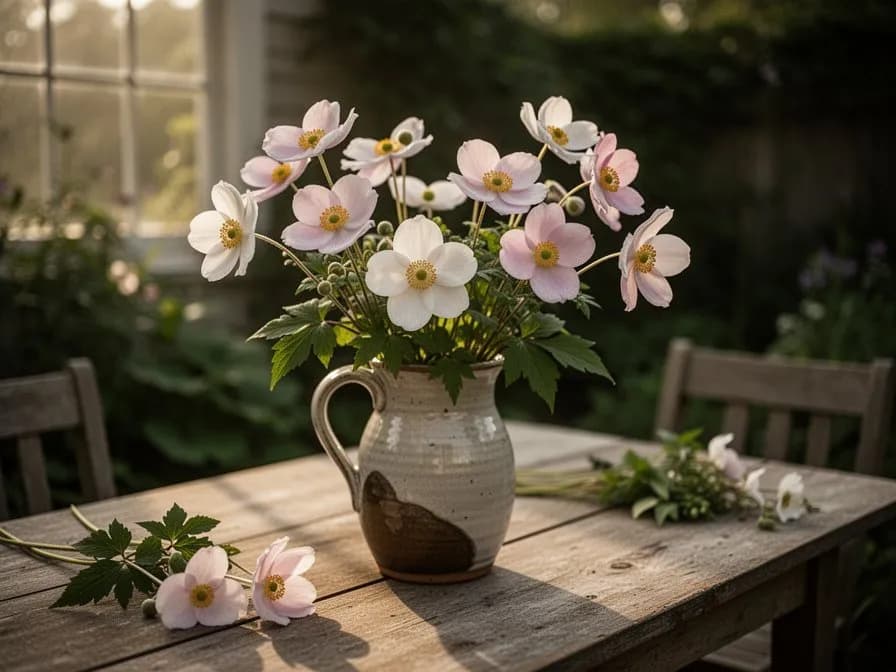
15 minutosLos largos tallos arqueados con gracia y las delicadas flores de la anémona japonesa la convierten en una excelente flor cortada para arreglos otoñales. Su calidad aérea y naturalista combina espléndidamente con gramíneas ornamentales, cabezuelas de semillas y follaje de otoño. Corte los tallos a primera hora de la mañana cuando las flores estén empezando a abrirse, chamusque los extremos de los tallos en agua hirviendo durante 10 segundos para evitar el marchitamiento y arregle en un jarrón alto. Espere una vida en el jarrón de 5-7 días con cambios regulares de agua.
5 ingredientesPropagación de anémona japonesa por esquejes de raíz
20 minutos de preparación + 8-12 semanas para enraizarLas anémonas japonesas se propagan fácilmente a partir de esquejes de raíz tomados a finales del otoño o principios del invierno cuando la planta está en reposo. Esta técnica aprovecha la capacidad natural de la planta para regenerarse a partir de fragmentos de raíz. Corte raíces sanas en secciones de 5-8 cm, colóquelas horizontalmente en bandejas con compost arenoso, cúbralas ligeramente y manténgalas frescas y húmedas. Los nuevos brotes emergerán en primavera, listos para trasplantar a maceta o al exterior para principios del verano.
5 ingredientesQué contiene
Beneficios para la salud
- Las anémonas japonesas son puramente ornamentales y no proporcionan beneficios nutritivos o dietéticos directos: son tóxicas si se ingieren y nunca deben comerse ni usarse en remedios caseros
- Cultivar y cuidar anémonas japonesas contribuye a los documentados beneficios para la salud mental de la jardinería, incluida la reducción del estrés, la mejora del estado de ánimo y un sentido de compromiso activo con el mundo natural
- El prolongado período de floración de final de temporada desde agosto hasta octubre proporciona recursos críticos de néctar y polen para abejorros, sírfidos y mariposas en un momento en que muchas otras plantas con flor han terminado, apoyando la salud de los polinizadores y la biodiversidad
- El denso follaje basal actúa como una cobertura vegetal eficaz del suelo, suprimiendo las malas hierbas y reduciendo la necesidad del uso de herbicidas en el jardín, contribuyendo a un ecosistema de jardín más saludable
- Como vivaz de bajo mantenimiento que regresa de forma fiable año tras año sin necesidad de replantación, las anémonas japonesas reducen el esfuerzo físico asociado a los esquemas de plantas anuales: especialmente beneficioso para jardineros con limitaciones de movilidad
- El suave movimiento ondulante de las flores de la anémona japonesa sobre sus esbeltos tallos tiene un documentado efecto visual calmante, y son recomendadas con frecuencia en el diseño de jardines terapéuticos y programas de horticultura terapéutica
De dónde viene Anémona Japonesa
La anémona japonesa (Anemone hupehensis y sus derivados híbridos Anemone × hybrida) es originaria de las montañas y los márgenes de los bosques del centro y suroeste de China, principalmente en las provincias de Hubei, Sichuan y Yunnan, donde crece en suelos húmedos y ricos en humus a altitudes de 400-1.800 metros. La especie fue introducida en Japón en una fecha temprana desconocida, probablemente hace varios siglos, donde se naturalizó ampliamente en jardines de templos, bordes de bosques y terrenos perturbados. Quedó tan firmemente establecida en Japón que cuando los botánicos europeos la encontraron allí en el siglo XIX asumieron que era una planta autóctona japonesa, de ahí el persistente pero engañoso nombre común.
El colector de plantas escocés Robert Fortune envió por primera vez ejemplares a Inglaterra en 1844 desde Shanghái, donde la encontró creciendo en los jardines de un comerciante adinerado. Las plantas fueron recibidas en el jardín de la Royal Horticultural Society en Chiswick, Londres, y llamaron de inmediato la atención por sus elegantes flores de floración tardía en un momento en que pocas vivaces de jardín seguían en flor. La especie pronto se cruzó de forma natural o fue hibridada deliberadamente con la especie nepalesa Anemone vitifolia, produciendo el vigoroso y florífero grupo híbrido clasificado actualmente como Anemone × hybrida, que son las plantas más comúnmente vistas en los jardines modernos.
El cultivar más famoso, Honorine Jobert, fue descubierto como una mutación de flor blanca en un jardín francés de Verdún en 1858 y fue reconocido de inmediato como una planta de excepcional belleza. Se propagó rápidamente y se distribuyó por toda Europa, recibiendo el Award of Garden Merit de la Royal Horticultural Society, un galardón que conserva en la actualidad. A lo largo de las eras victoriana y eduardiana, las anémonas japonesas se convirtieron en componentes esenciales de la bordura herbácea inglesa, apreciadas por su exhibición de final de temporada, su tolerancia a la sombra parcial y su hábito grácil y naturalista. Gertrude Jekyll, la influyente diseñadora de jardines, las recomendaba con frecuencia en sus esquemas de plantación.
Hoy en día, las anémonas japonesas se cultivan en todo el mundo en climas templados de las zonas USDA 4 a 8. Existen decenas de cultivares en tonos blancos, rosa pálido, rosa y magenta intenso, en formas simples, semidobladas y totalmente dobladas. Siguen siendo algunas de las vivaces de final de temporada más valiosas y plantadas, igualmente a gusto en jardines de estilo cottage, borduras formales y plantaciones naturalistas de bosque.
Anémona Japonesa: ¿sabías que?
Datos fascinantes sobre Anémona Japonesa
A pesar del nombre común "anémona japonesa", la especie Anemone hupehensis es originaria del centro de China, concretamente de la provincia de Hubei (antes romanizada como Hupeh). La planta fue introducida en Japón hace varios siglos, donde se naturalizó ampliamente en jardines de templos, bordes de bosques y terrenos perturbados, y fue posteriormente enviada a Europa desde jardines japoneses en la década de 1840, dando origen al nombre común engañoso pero ya firmemente establecido.
Anémona Japonesa: preguntas frecuentes
¿Cuándo debo plantar Anémona Japonesa?
¿Cuáles son buenas plantas acompañantes para Anémona Japonesa?
¿En qué zonas de rusticidad puede crecer Anémona Japonesa?
¿Cuánto sol necesita Anémona Japonesa?
¿A qué distancia debo espaciar Anémona Japonesa?
¿Qué plagas y enfermedades afectan a Anémona Japonesa?
¿Cómo almaceno Anémona Japonesa después de la cosecha?
¿Cuáles son las mejores variedades de Anémona Japonesa para cultivar?
¿Qué suelo necesita Anémona Japonesa?
¿Por qué mi anémona japonesa no ha aparecido todavía en primavera? ¿Ha muerto?
¿Cómo evito que las anémonas japonesas se extiendan de forma demasiado agresiva?
¿Pueden las anémonas japonesas crecer en sombra total?
¿Son las anémonas japonesas tóxicas para las mascotas y los niños?
¿Cuándo es el mejor momento para dividir las anémonas japonesas?
¿Por qué las hojas de mi anémona japonesa se están volviendo blancas y polvosas?
Acabas de leer la teoría. Ahora cultívala en piloto automático.
Todo lo que hace que Anémona Japonesa sea delicado — el momento, el espaciado, las asociaciones, la ventana de cosecha — es justo lo que PlotMyGarden resuelve por ti, para cada planta de tu huerto.
Un plan que conoce tu clima
Indica tu ubicación una vez. Recibe fechas de siembra, abonado y cosecha basadas en tu última helada real y el pronóstico en vivo — sin adivinar con un sobre genérico.
De la sección “Cuándo plantar”Planificador de bancales de arrastrar y soltar
Diseña bancales sobre una cuadrícula. Cada planta encaja con su espaciado correcto y ves toda la temporada antes de gastar un céntimo en semillas.
De la sección “Cultivo”Conflictos de asociación, detectados a tiempo
Más de 200 buenas y malas combinaciones comprobadas en vivo mientras plantas — para que un error que arruine la temporada nunca llegue a la tierra.
De la sección “Asociaciones”Recordatorios que sí vas a seguir
“Riega las judías.” “Recoge hoy antes de que se pase.” Oportunos, concretos y ligados a las plantas que de verdad cultivas.
De la sección “Cosecha”Escalonado, programado
¿Quieres cosechar seis semanas en vez de seis días? Reparte tus siembras automáticamente y te avisa cuando toca el siguiente lote.
De la sección “Cuándo plantar”Un registro que se vuelve más listo
Cada cosecha que registras le enseña tu huerto. El plan del año que viene parte de lo que de verdad funcionó en tu suelo, no en un manual.
De la sección “Resumen”Planta estos junto a Anémona Japonesa
Más Perennes
Cultiva tu mejor Anémona Japonesa — y todo lo que la rodea.
Empieza un plan gratis hoy. Diseña tus bancales, coloca tu Anémona Japonesa y deja que PlotMyGarden gestione el momento, el espaciado, las asociaciones y los recordatorios de la semilla a la cesta.