Meerrettich
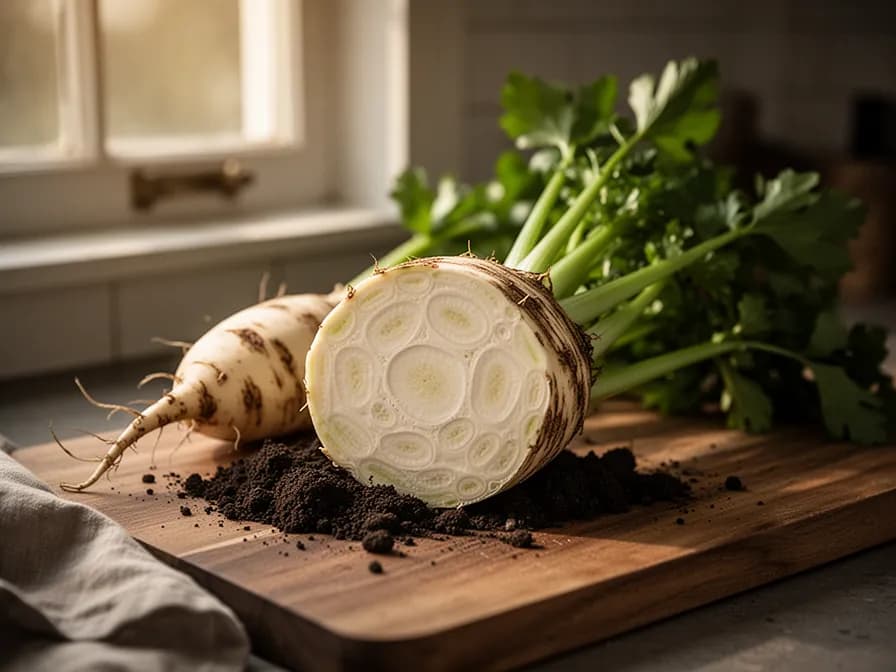
Eine kräftige Staude, die wegen ihrer scharfen weißen Wurzel angebaut wird, die frisch gerieben als feuriges Gewürz dient.





Auf dieser SeiteÜberblick
Meerrettich im Überblick
Eine kräftige Staude, die wegen ihrer scharfen weißen Wurzel angebaut wird, die frisch gerieben als feuriges Gewürz dient. Meerrettich breitet sich aggressiv aus, daher sollten Sie ihn in einem begrenzten Bereich oder großen Topf pflanzen, um zu verhindern, dass er den gesamten Garten übernimmt. Graben Sie die Wurzeln im Spätherbst nach einem Frost für den stärksten Geschmack aus, oder ernten Sie jederzeit von etablierten Pflanzen. Die frische Wurzel liefert eine deutlich intensivere und komplexere Schärfe als im Laden gekaufte zubereitete Versionen, mit einer nebenhöhlenreinigenden Wucht.
Wann Meerrettich pflanzen
Meerrettich wird fast ausschließlich aus Wurzelstecklingen und nicht aus Samen vermehrt. Kaufen Sie Wurzelfechser in Baumschulen im zeitigen Frühling. Schneiden Sie die Wurzeln in 15-20 cm lange Stücke, wobei Sie oben einen geraden und unten einen schrägen Schnitt machen, um die Pflanzrichtung zu kennzeichnen. Pflanzen Sie in einem 45-Grad-Winkel, wobei das gerade (obere) Ende 5 cm unter der Bodenoberfläche liegt. Pflanzabstand 60-75 cm. Die Pflanzen etablieren sich schnell und produzieren bereits im ersten Herbst erntereife Wurzeln. Teilen Sie etablierte Pflanzen alle 2-3 Jahre im zeitigen Frühling.
Dein Meerrettich-Jahr
Abgestimmt auf Zone 7 · typische Saison · Frost geht um den 2. Apr. und kehrt um den 1. Nov. zurück
Meerrettich Mär – Apr pflanzen, Okt – Nov ernten. Beachte die Pflanzmethoden unten und wähle dein Klima für passende Zeiträume.
So baust du Meerrettich an
Pflanzen Sie Meerrettich aus Wurzelstecklingen (Fechsern) im zeitigen Frühling, 4-6 Wochen vor dem letzten Frost. Setzen Sie die Wurzelstücke in einem 45-Grad-Winkel ein, wobei das obere Ende 5 cm unter der Bodenoberfläche liegt, mit einem Abstand von 60-75 cm. Meerrettich wächst kräftig aus selbst kleinen Wurzelfragmenten, daher sollten Sie ihn in ein eingefasstes Beet, einen eingegrabenen Behälter oder einen bestimmten Bereich pflanzen, in dem eine Ausbreitung akzeptabel ist.
Meerrettich verträgt eine breite Palette von Bedingungen, produziert aber die besten Wurzeln in tiefem, lockerem, fruchtbarem Boden. Gießen Sie während der Wachstumsperiode regelmäßig, um eine dicke Wurzelentwicklung zu fördern. Im Hochsommer schieben Sie die Erde beiseite und entfernen Sie Seitenwurzeln von der Hauptpfahlwurzel, um eine einzelne große Wurzel anstelle vieler kleiner zu fördern. Die großen Blätter können 60-90 cm erreichen und dichten Schatten erzeugen.
Meerrettich ist eine Staude, die Jahr für Jahr wiederkehrt. Für die schärfsten Wurzeln ernten Sie nach dem ersten starken Frost im Herbst, wenn die Pflanze in die Winterruhe eintritt. Alle im Boden verbliebenen Wurzelfragmente treiben erneut aus, was eine Beseitigung nahezu unmöglich macht, sobald die Pflanze etabliert ist. Teilen und pflanzen Sie alle 2-3 Jahre für die beste Wurzelqualität um.
10 Pflanzen passen in ein Beet von 120 × 240 cm
Meerrettich braucht 45 cm Platz pro Pflanze. Der Planer hält diesen Abstand für dich ein — jede Pflanze, jedes Beet.
Die besten Nachbarn für Meerrettich
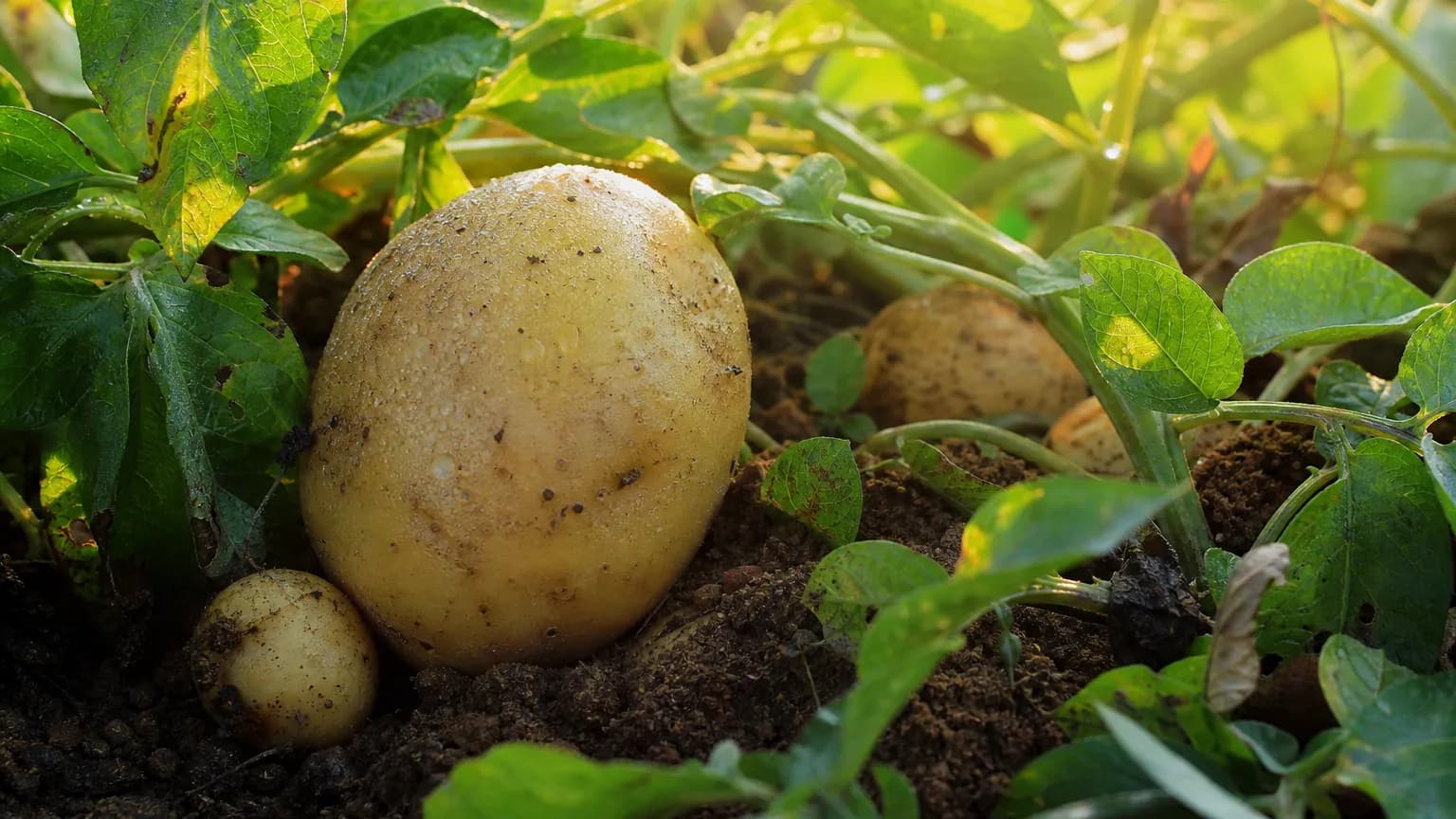
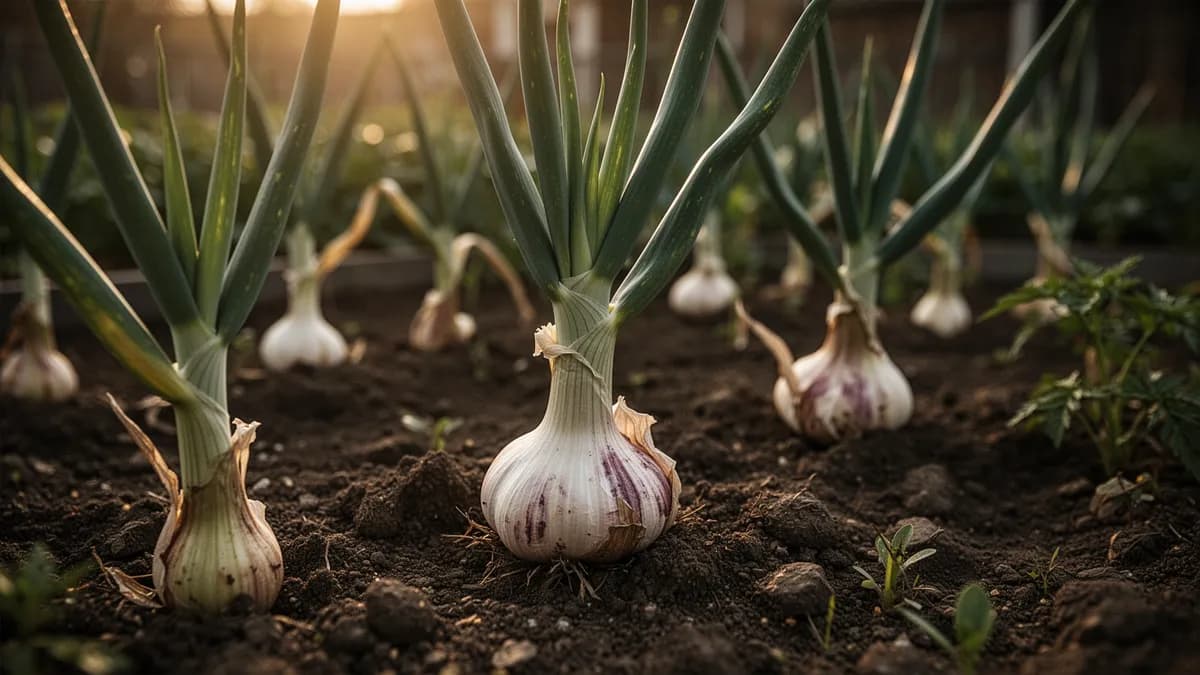
Meerrettich wird traditionell in der Nähe von Kartoffeln gepflanzt, wo er den Kartoffelkäfer abwehren und die Krankheitsresistenz erhöhen soll. Sein starker Geruch kann verschiedene Gartenschädlinge abschrecken. Pflanzen Sie ihn an den Rändern von Gartenbeeten, wo seine kräftige Ausbreitung kontrolliert werden kann. Vermeiden Sie die Pflanzung neben empfindlichen Kulturen, die von seinem aggressiven Wachstum überwältigt werden könnten. Knoblauch ist ein verträglicher Begleitpflanzenpartner. Halten Sie ihn von Erdbeeren und Kohlgewächsen fern, um gemeinsame Schädlingsprobleme zu vermeiden.
Kartoffel gehört daneben.
Altes Gärtnerwissen, geprüft an der echten Nachbartabelle von Meerrettich — teste jede Pflanze, die du anbaust.
Probiere Meerrettich direkt hier im Beet
Ein echtes Planer-Beet, Meerrettich steht schon drin. Tippe einen Begleiter an, platziere ihn und sieh, wie die Nachbarschaftsprüfung antwortet — grün für gute Nachbarn, rot bei Streit.


Passende Anbau-Ratgeber
Richtig düngen
Meerrettich produziert die besten Wurzeln in tiefem, lockerem, gut durchlässigem Boden mit einem pH-Wert von 6,0-7,0. Steiniger oder verdichteter Boden führt zu gegabelten, missgeformten Wurzeln. Verbessern Sie schweren Boden mit Kompost und Sand für gute Drainage und Wurzeldurchdringung. Geben Sie im Frühling bei Wachstumsbeginn einen ausgewogenen Dünger und setzen Sie im Hochsommer eine Kompostgabe als Seitendüngung. Vermeiden Sie übermäßigen Stickstoff, der das Blattwachstum auf Kosten der Wurzelentwicklung fördert. Tiefe Hochbeete sind ideal für das Wachstum gerader, dicker Wurzeln.
Ideale Temperatur
Winterhärtezone-Kompatibilität
Von der Saat zur Ernte, Schritt für Schritt
Wurzeletablierung
Im zeitigen Frühling im 45-Grad-Winkel gepflanzte Wurzelstecklinge beginnen innerhalb weniger Tage, feine weiße Feinwurzeln auszutreiben. Die im Wurzelstück gespeicherte Energie treibt das Anfangswachstum an, bevor Laub über der Bodenoberfläche erscheint. Bodentemperaturen über 7°C sind ausreichend, damit die Wurzelaktivität beginnt.
Blattaustrieb
Große, glänzende, dunkelgrüne Blätter mit gewellten Rändern durchbrechen die Bodenoberfläche und entfalten sich rasch. Die Blätter sind überraschend groß für die Größe des Wurzelstecklings und erreichen oft innerhalb weniger Wochen 30-45 cm Länge. Die Pflanze lenkt ihre Energie in den Aufbau von Photosynthesekapazität.
Vegetatives Wachstum
Die Pflanze tritt in eine Phase kräftigen oberirdischen Wachstums ein und bildet einen dichten Horst großer Grundblätter, die 60-90 cm hoch werden können. Das Wurzelsystem dehnt sich rasch aus, wobei die Hauptpfahlwurzel an Dicke gewinnt und Seitenwurzeln sich nach außen ausbreiten. Blütenstängel können erscheinen und sollten entfernt werden.
Wurzelverdickung
Mit dem nahenden Herbst verlagert die Pflanze ihre Energie von der Blattproduktion in die Wurzelspeicherung. Die Hauptpfahlwurzel verdickt sich erheblich und speichert die Kohlenhydrate und Glucosinolat-Verbindungen, die dem Meerrettich seine charakteristische Schärfe verleihen. Das Blattwachstum verlangsamt sich, während Nährstoffe nach unten verlagert werden.
Winterruhe und Ernte
Nach dem ersten starken Frost sterben die Blätter ab und die Pflanze tritt in die Winterruhe ein. Die Kälte löst eine letzte Umwandlung von Stärke in Zucker aus und intensiviert die scharfen Verbindungen in der Wurzel. Dies ist das optimale Erntefenster, in dem die Wurzeln maximalen Geschmack und Schärfe aufweisen.
Pflanzen Sie die Wurzelfechser, sobald der Boden im Frühling bearbeitbar ist. Stellen Sie sicher, dass das gerade geschnittene obere Ende nach oben zeigt und 5 cm unter der Bodenoberfläche liegt. Gießen Sie nach dem Pflanzen gut an, vermeiden Sie aber Staunässe.
Meerrettich Monat für Monat pflegen
Was du jeden Monat für deine Meerrettich tun solltest
Oktober
Aktueller MonatHaupterntemonat. Graben Sie nach dem ersten starken Frost die Wurzeln mit einer Grabegabel aus und arbeiten Sie vorsichtig, um die gesamte Pfahlwurzel zu extrahieren. Bewahren Sie bleistiftdicke Seitenwurzeln zum Wiedereinpflanzen im Frühling auf. Verarbeiten Sie geerntete Wurzeln sofort für den stärksten Geschmack.
Immer wissen, was jetzt im Garten zu tun ist
Eine E-Mail zum Monatsanfang: was du jetzt säen, pflanzen und anpacken solltest — für deine Meerrettich und alles, was drumherum wächst. Dazu ein kurzer Startkurs, der dich vor den klassischen Fehlern bewahrt.
- Was jetzt zu tun ist
- Passend zu deiner Saison
- Startkurs inklusive
Meerrettich ernten
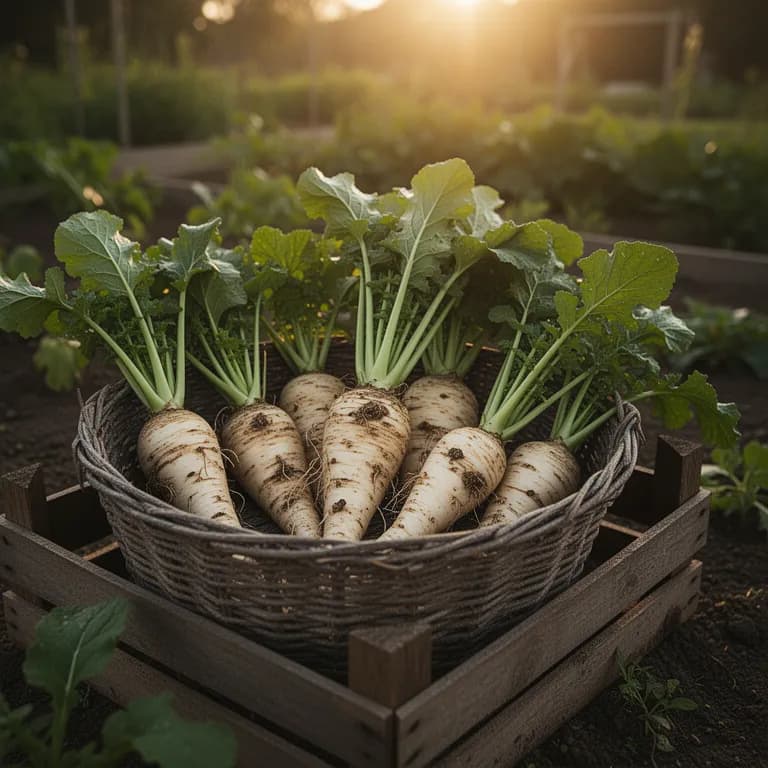
Ernten Sie Meerrettichwurzeln im Spätherbst nach dem ersten starken Frost für maximale Schärfe, oder im zeitigen Frühling, bevor das neue Wachstum beginnt. Graben Sie vorsichtig um die Pflanze herum und heben Sie die Hauptpfahlwurzel mit einer Grabegabel heraus. Wurzeln können auch jederzeit von etablierten Pflanzen geerntet werden, obwohl im Herbst gegrabene Wurzeln am schärfsten sind. Bewahren Sie bleistiftdicke Seitenwurzeln zum Wiedereinpflanzen auf. Die Wurzel sollte weiß und fest sein; entsorgen Sie weiche oder verfärbte Stellen. Verarbeiten Sie die Wurzeln sofort nach der Ernte für den intensivsten Geschmack.
angenommen, du pflanzt zu Beginn des Zeitraums — trage dein tatsächliches Datum ein
Ernte Meerrettich zügig, dann trägt die Pflanze weiter.
Lagerung & Konservierung
Lagern Sie unverarbeitete Meerrettichwurzeln in feuchtem Sand im Wurzelkeller oder in perforierten Plastikbeuteln im Kühlschrank bis zu 3 Monate. Für längere Haltbarkeit schälen und reiben Sie die Wurzel und mischen Sie sie mit Weißweinessig zur Konservierung (fügen Sie Essig sofort hinzu für milde Schärfe, oder warten Sie 3 Minuten für maximale Schärfe, bevor Sie den Essig zugeben). Zubereiteter Meerrettich hält sich 3-4 Monate im Kühlschrank. Wurzeln können auch ganz bis zu 6 Monate eingefroren und dann im gefrorenen Zustand gerieben werden.
Was schiefgeht — und die Lösung
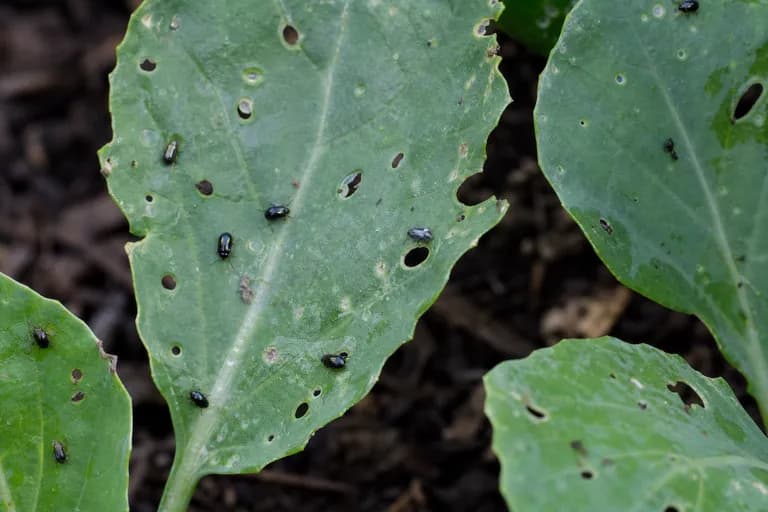
Erdflöhe
SchädlingKleine Schrotschusslöcher in den Blättern, starker Befall kann die Pflanzenvitalität verringern, besonders bei jungem Wachstum.
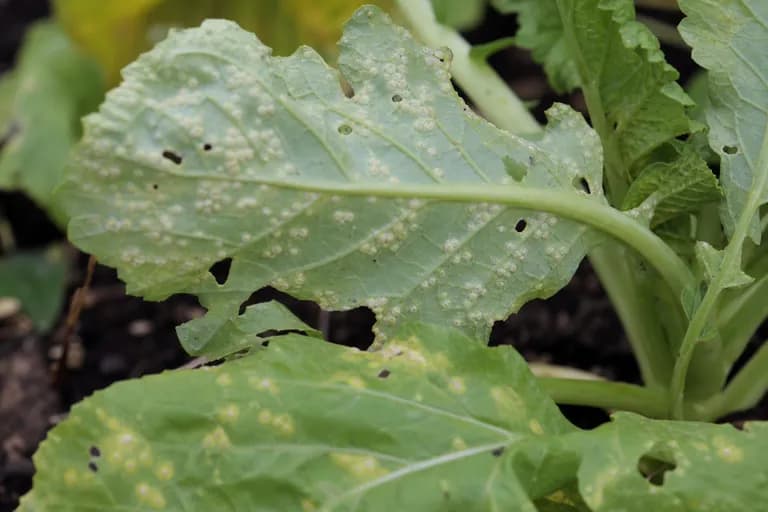
Weißrost
KrankheitWeiße Pusteln auf den Blattunterseiten, gelbe Flecken auf den Blattoberseiten, verformte Blätter.
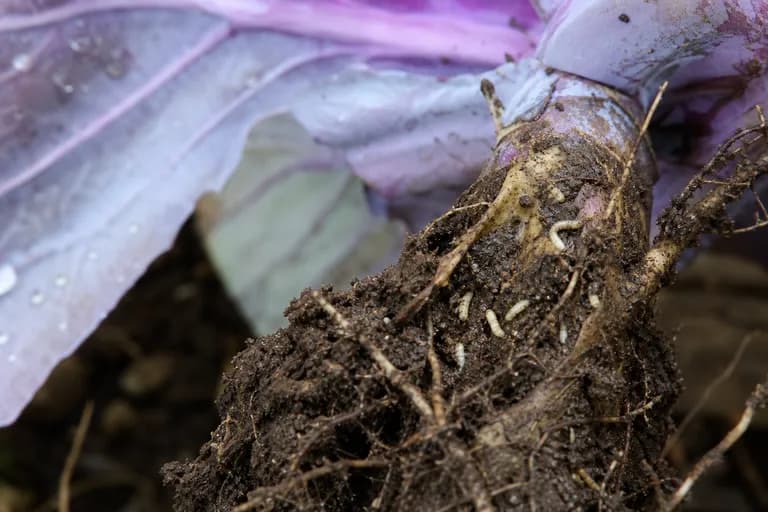
Wurzelmaden
SchädlingTunnel in den Wurzeln, bräunliche Narben auf der Wurzeloberfläche, welkende Pflanzen trotz ausreichender Bewässerung.
Fehlerbehebung bei häufigen Problemen
Die größte Herausforderung ist die Kontrolle der Ausbreitung; Meerrettich treibt aus jedem im Boden verbliebenen Wurzelfragment erneut aus. Pflanzen Sie in Behältern oder mit Wurzelsperren eingefassten Beeten. Dünne, gegabelte Wurzeln entstehen in steinigem oder verdichtetem Boden. Mild schmeckende Wurzeln deuten auf eine zu frühe Ernte in der Saison oder unzureichende Kälteeinwirkung hin. Blattkrankheiten wie Weißrost sind häufig, beeinträchtigen aber selten die Wurzelqualität. In sehr heißen Klimazonen (Zone 9 und höher) kann Meerrettich Probleme haben und kleinere Wurzeln produzieren, weil die Winterruhe nicht ausreichend ausgeprägt ist.
Anbautipps
- Die Eindämmung ist die wichtigste Überlegung überhaupt. Pflanzen Sie Meerrettich in einen bodenlosen 20-Liter-Eimer, der in den Boden eingegraben wird, ein Hochbeet mit festen Seitenwänden oder eine abgelegene Ecke des Gartens. Jedes im offenen Boden verbleibende Wurzelfragment bringt eine neue Pflanze hervor, und etablierte Bestände werden praktisch unmöglich zu entfernen.
- Tiefer, lockerer Boden ist das Geheimnis für dicke, gerade Wurzeln. Graben Sie den Pflanzbereich doppelt um, mindestens 45 cm tief, und verbessern Sie schweren Lehm mit großzügig Kompost und grobem Sand. Verdichteter oder steiniger Boden produziert gegabelte, dünne und schwer zu erntende Wurzeln.
- Entfernen Sie im Hochsommer die seitlichen Nebenwurzeln von der Hauptpfahlwurzel für die beste Ernte. Schieben Sie die Erde vom oberen Drittel der Wurzel beiseite und brechen Sie alle Seitenäste ab, dann bedecken Sie sie wieder mit Erde. Dies zwingt die Pflanze, eine dicke, leicht zu verarbeitende Hauptwurzel zu entwickeln, anstatt ein Gewirr dünner Wurzeln.
- Warten Sie mit der Ernte bis nach dem Frost. Im Sommer geerntete Wurzeln sind merklich milder und weniger komplex im Geschmack. Ein oder zwei starke Fröste lösen enzymatische Veränderungen aus, die die scharfen Verbindungen intensivieren und eine deutlich schärfere und geschmackvollere Wurzel ergeben.
- Verarbeiten Sie die Wurzeln im Freien oder bei guter Belüftung. Das Reiben von frischem Meerrettich setzt Allylisothiocyanat frei, das weitaus intensiver ist als Zwiebeldämpfe. Eine Küchenmaschine erleichtert das Reiben erheblich, aber öffnen Sie den Deckel auf Armlänge und wenden Sie das Gesicht ab — der erste Schwall der Dämpfe ist gewaltig.
- Kontrollieren Sie die Schärfestufe durch den Zeitpunkt der Essigzugabe. Sofortiges Hinzufügen von Essig nach dem Reiben ergibt einen milderen zubereiteten Meerrettich. Wenn Sie 3-5 Minuten warten, bevor Sie den Essig hinzufügen, kann die enzymatische Reaktion weiter fortschreiten, was ein deutlich schärferes Produkt ergibt. Experimentieren Sie, um Ihre bevorzugte Intensität zu finden.
- Teilen und pflanzen Sie alle 2-3 Jahre um für die beste Wurzelqualität. Alte, ungeteilte Pflanzen entwickeln eine dichte Masse dünner, holziger Wurzeln anstelle der dicken, scharfen Pfahlwurzeln, die Sie sich wünschen. Graben Sie den gesamten Horst im zeitigen Frühling aus, wählen Sie die besten bleistiftdicken Seitenwurzeln aus und pflanzen Sie sie in aufgefrischtem Boden.
- Meerrettichblätter sind essbar und können jung in Salaten oder gekocht wie andere Kohlgewächs-Blätter verwendet werden. Sie haben ein mildes Meerretticharoma und sind nahrhaft, obwohl die meisten Gärtner die Pflanze ausschließlich wegen der Wurzel anbauen.
Bau deine beste Meerrettich an — und alles drumherum.
Starte heute kostenlos. Lege deine Beete an, setze deine Meerrettich ein und lass PlotMyGarden Timing, Abstände, Begleiter und Erinnerungen von der Saat bis zum Erntekorb übernehmen.
Finde deine Meerrettich
Bohemian
Die am häufigsten angebaute Sorte mit großen weißen Wurzeln und starker Schärfe. Krankheitsresistent und wüchsig.
Maliner Kren
Hochwertige österreichische Sorte, die als eine der feinsten Qualitätswurzeln gilt. Hoher Ölgehalt für intensive Schärfe.
Big Top Western
Glatte, weiße Wurzeln mit weniger Seitenverzweigungen. Leichter zu verarbeiten und ergibt ein saubereres zubereitetes Produkt.
Variegata
Ziersorte mit cremefarbig gerandeten Blättern. Die Wurzeln sind etwas weniger scharf, aber die Pflanze dient sowohl als Nutz- als auch als Zierpflanze.
Ein einzelner Meerrettich-Wurzelfechser kostet 3-5 €, oder wird oft kostenlos von einem Gartennachbarn abgegeben, und produziert eine mehrjährige Pflanze, die auf unbegrenzte Zeit frische Wurzel liefert, ohne laufende Kosten. Ein kleines Glas zubereiteter Meerrettich kostet im Supermarkt 3-6 €, und frische Wurzeln in Premiumqualität erzielen auf Wochenmärkten 8-15 € pro Pfund. Eine etablierte Pflanze produziert 0,5-1,5 kg Wurzel pro Jahr — genug, um 6-12 Gläser zubereiteten Meerrettich im Wert von 18-72 € herzustellen. Über mehrere Jahre sind die Einsparungen erheblich, da die Pflanze jeden Frühling ohne Neupflanzung wiederkehrt. Der Geschmack von frisch geriebenem, selbst angebautem Meerrettich ist kommerziellen Produkten, die nach der Verarbeitung rasch an Schärfe verlieren, haushoch überlegen.
Schnelle Rezepte
Klassischer zubereiteter Meerrettich
15 Min.Das unverzichtbare selbstgemachte Gewürz — frisch geriebener Meerrettich in Essig konserviert, mit einer sauberen, nebenhöhlenreinigenden Schärfe, die jedem Supermarktprodukt weit überlegen ist. Der Zeitpunkt der Essigzugabe bestimmt die endgültige Schärfestufe.
4 ZutatenCremige Meerrettichsauce
10 Min.Eine samtige, würzige Sauce, die perfekt zu Rinderbraten, geräuchertem Lachs oder gegrilltem Steak passt. Die Sahne mildert die rohe Schärfe zu einer sanften, anhaltenden Wärme, die reichhaltige Proteine wunderbar ergänzt.
6 ZutatenMeerrettich-Rote-Bete-Relish (Chrain)
20 Min.Ein leuchtendes magentafarbenes Würzmittel aus der osteuropäisch-jüdischen Tradition — geröstete Rote Bete mildern die heftige Schärfe des Meerrettichs zu einem süßen, erdigen, würzigen Relish, das sich sowohl für festliche Tafeln als auch für alltägliche Brotbeläge eignet.
6 ZutatenKulinarische Verwendung
Frisch geriebener Meerrettich mit Essig ist das klassische Gewürz zu Rinderbraten und Tafelspitz. Mischen Sie ihn mit Sahne für eine mildere Sauce zu geräuchertem Fisch. Kombinieren Sie ihn mit Ketchup für eine scharfe Cocktailsauce. Geben Sie ihn in Bloody Marys für einen authentischen Kick. Rühren Sie ihn in Kartoffelpüree, gefüllte Eier oder Krautsalatdressing. Meerrettichbutter ist hervorragend zu gegrillten Steaks. Verwenden Sie ihn sparsam, da die Schärfe intensiv ist.
Was drinsteckt
Gesundheitsvorteile
- Reich an Glucosinolaten, schwefelhaltigen Verbindungen, die zu Isothiocyanaten mit nachgewiesenen antibakteriellen, antimykotischen und potenziell krebshemmenden Eigenschaften in Laborstudien abgebaut werden — Meerrettich enthält gemessen am Gewicht zehnmal mehr Glucosinolate als Brokkoli.
- Hoher Vitamin-C-Gehalt (28 % TW pro 100 g) unterstützt die Immunsystemfunktion, die Kollagensynthese und wirkt als starkes Antioxidans, das die Zellen vor oxidativem Schaden schützt.
- Die traditionelle Verwendung als natürliches Abschwellungsmittel ist wissenschaftlich fundiert — das flüchtige Allylisothiocyanat stimuliert die Schleimhäute in den Nasengängen und hilft bei Erkältungen und Atemwegsinfektionen, die Nebenhöhlenverstopfung zu lösen.
- Enthält Peroxidase-Enzyme, die auf ihre Fähigkeit untersucht wurden, dem Körper bei der Entgiftung und Beseitigung potenziell schädlicher Verbindungen zu helfen und die natürlichen Entgiftungsprozesse der Leber zu unterstützen.
- Liefert nennenswerte Mengen an Kalzium, Kalium, Magnesium und Phosphor, die Knochendichte, Muskelfunktion und Elektrolytgleichgewicht unterstützen — besonders bemerkenswert für ein Gewürz, das in kleinen Mengen verwendet wird.
- Die antibakteriellen Eigenschaften der Meerrettichverbindungen hemmen nachweislich das Wachstum lebensmittelbedingter Krankheitserreger einschließlich E. coli und Listerien, was teilweise seine traditionelle Verwendung als konservierendes Begleitgewürz zu rohem und gepökeltem Fleisch erklärt.
Woher Meerrettich stammt
Meerrettich (Armoracia rusticana) stammt aus Südosteuropa und Westasien, wobei seine wilden Ursprünge in der Region liegen, die das heutige Gebiet der Ukraine, Russlands und Ungarns umfasst. Archäologische Funde deuten darauf hin, dass er lange vor der gezielten Kultivierung wild gesammelt wurde. Die alten Ägypter kannten die Pflanze bereits um 1500 v. Chr., und frühe griechische Ärzte einschließlich Dioskurides dokumentierten ihre medizinische Verwendung bei Husten, Verdauungsbeschwerden und als äußerlich angewandtes hautreizendes Mittel bei Muskelschmerzen.
Die Kultivierung von Meerrettich als Nahrungspflanze begann ernsthaft im Mittel- und Osteuropa des Mittelalters. Im 13. Jahrhundert wurde er in Deutschland, Österreich und den skandinavischen Ländern weit verbreitet angebaut, hauptsächlich als Gewürz zu Fleisch und Fisch. Die Pflanze verbreitete sich Ende des 16. Jahrhunderts nach England, wo sie zunächst eher als Medizin denn als Lebensmittel angesehen wurde — es dauerte ein weiteres Jahrhundert, bis die Engländer die deutsche und polnische Sitte übernahmen, die Wurzel als Tischgewürz zu reiben. Die Briten nannten ihn zunächst red cole, bevor der Name horseradish üblich wurde.
Europäische Kolonisten brachten den Meerrettich im 17. Jahrhundert nach Nordamerika, wo er sich im gemäßigten Klima des Nordostens und Mittleren Westens der USA leicht einbürgerte. Die kommerzielle Meerrettichkultur in Amerika begann in den 1850er Jahren, als deutsche Einwanderer sich in den Schwemmlandgebieten des Mississippi im Südwesten von Illinois niederließen. Der tiefe, fruchtbare Schwemmboden erwies sich als ideal für die Produktion der langen, geraden Wurzeln, die die Verarbeitungsbetriebe bevorzugten. Zu Beginn des 20. Jahrhunderts war die Region um Collinsville, Illinois, zum dominierenden kommerziellen Meerrettichproduzenten der Welt geworden — eine Position, die sie bis heute beibehält und etwa 60 % der weltweiten Nachfrage deckt. Die Kultur bleibt eng mit ihrem mitteleuropäischen Erbe verbunden, und der feinste zubereitete Meerrettich wird noch heute nach Methoden hergestellt, die sich im Wesentlichen nicht von denen der deutschen und polnischen Küchen des 19. Jahrhunderts unterscheiden.
Meerrettich: Schon gewusst?
Faszinierende Fakten über Meerrettich
Meerrettich enthält Allylisothiocyanat, dieselbe flüchtige Verbindung, die auch in Senfgas vorkommt — wenn Sie die Wurzel reiben, brechen die Zellwände auf und das Enzym Myrosinase wandelt Sinigrin in dieses starke Reizmittel um, weshalb das Reiben von Meerrettich stärker zum Weinen bringen kann als das Schneiden von Zwiebeln.
Meerrettich: Fragen & Antworten
Wann sollte ich Meerrettich pflanzen?
Was sind gute Begleitpflanzen für Meerrettich?
In welchen Winterhärtezonen kann Meerrettich wachsen?
Wie viel Sonne braucht Meerrettich?
Welchen Abstand sollte ich zwischen Meerrettich lassen?
Welche Schädlinge und Krankheiten befallen Meerrettich?
Wie lagere ich Meerrettich nach der Ernte?
Was sind die besten Meerrettich-Sorten zum Anbauen?
Welchen Boden braucht Meerrettich?
Wie verhindere ich, dass Meerrettich meinen gesamten Garten übernimmt?
Warum ist meine selbst angebaute Meerrettichwurzel nicht so scharf wie erwartet?
Kann ich Meerrettich in einem Kübel auf der Terrasse oder dem Balkon anbauen?
Ist Meerrettich wirklich mehrjährig, und übersteht er strenge Winter?
Wann ist der beste Erntezeitpunkt, und kann ich das ganze Jahr über ernten?
Du hast die Theorie gelesen. Jetzt baue sie auf Autopilot an.
Alles, was Meerrettich knifflig macht — das Timing, die Abstände, die Begleiter, das Erntefenster — genau das übernimmt PlotMyGarden für dich, für jede Pflanze im Garten.
Ein Plan, der dein Wetter kennt
Standort einmal festlegen. Aussaat-, Dünge- und Erntedaten rund um deinen echten letzten Frosttermin und die Live-Vorhersage — kein Raten mehr nach Saattüte.
Aus dem Abschnitt „Pflanzzeit“Beetplaner per Drag & Drop
Beete auf einem Raster gestalten. Jede Pflanze rastet im richtigen Abstand ein, und du siehst die ganze Saison, bevor du einen Cent für Saatgut ausgibst.
Aus dem Abschnitt „Anbau“Begleiter-Konflikte früh erkannt
Über 200 gute und schlechte Kombinationen werden beim Pflanzen live geprüft — so landet ein saisonruinierender Fehler nie in der Erde.
Aus dem Abschnitt „Begleiter“Erinnerungen, nach denen du wirklich handelst
„Gieß die Bohnen.“ „Heute ernten, bevor's umschlägt.“ Pünktlich, konkret und auf deine echten Pflanzen bezogen.
Aus dem Abschnitt „Ernte“Staffel-Aussaat, geplant
Sechs Wochen ernten statt sechs Tage? Die App verteilt deine Aussaaten automatisch und erinnert dich, wenn der nächste Satz fällig ist.
Aus dem Abschnitt „Pflanzzeit“Ein Verlauf, der schlauer wird
Jede protokollierte Ernte bringt der App deinen Garten bei. Der Plan fürs nächste Jahr startet bei dem, was in deinem Boden wirklich funktioniert hat.
Aus dem Abschnitt „Überblick“Pflanze diese neben Meerrettich
Weitere Kreuzblütler
Gartenpläne mit Meerrettich
Bau deine beste Meerrettich an — und alles drumherum.
Starte heute kostenlos. Lege deine Beete an, setze deine Meerrettich ein und lass PlotMyGarden Timing, Abstände, Begleiter und Erinnerungen von der Saat bis zum Erntekorb übernehmen.