Riesling-Traube
Eine edle weiße Weintraube aus der deutschen Rheinregion, geschätzt für ihre Fähigkeit, das Terroir auszudrücken und Weine von knochentrocken bis üppig süß hervorzubringen.





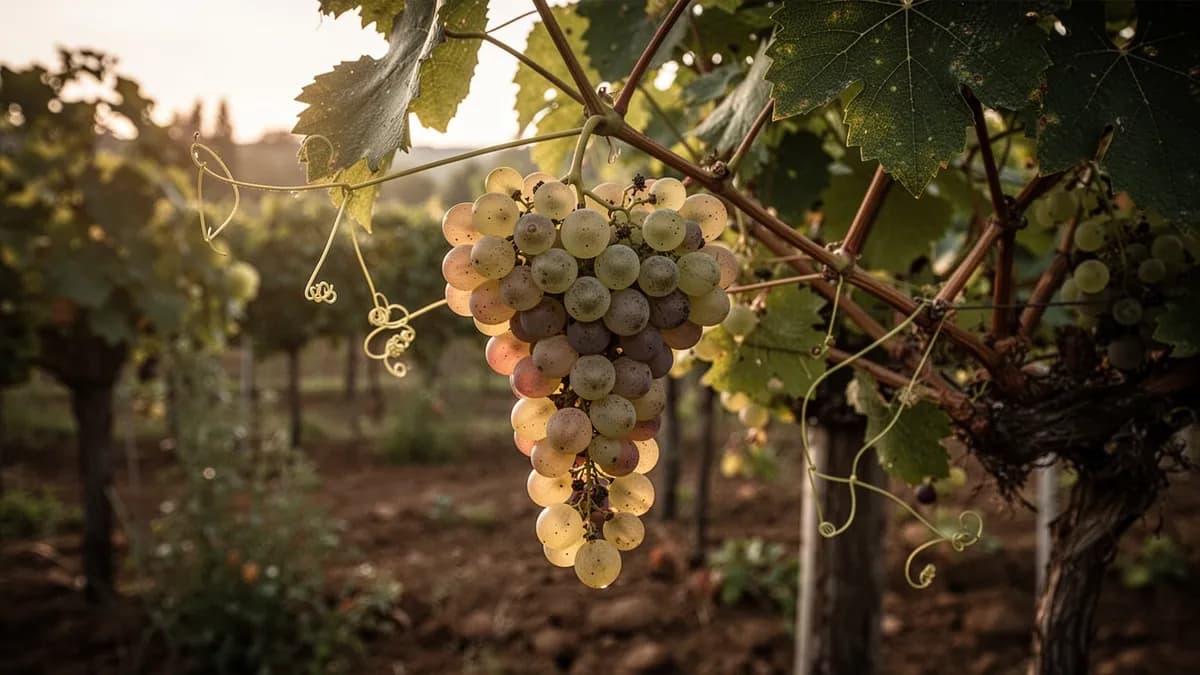
Auf dieser SeiteÜberblick
Riesling-Traube im Überblick
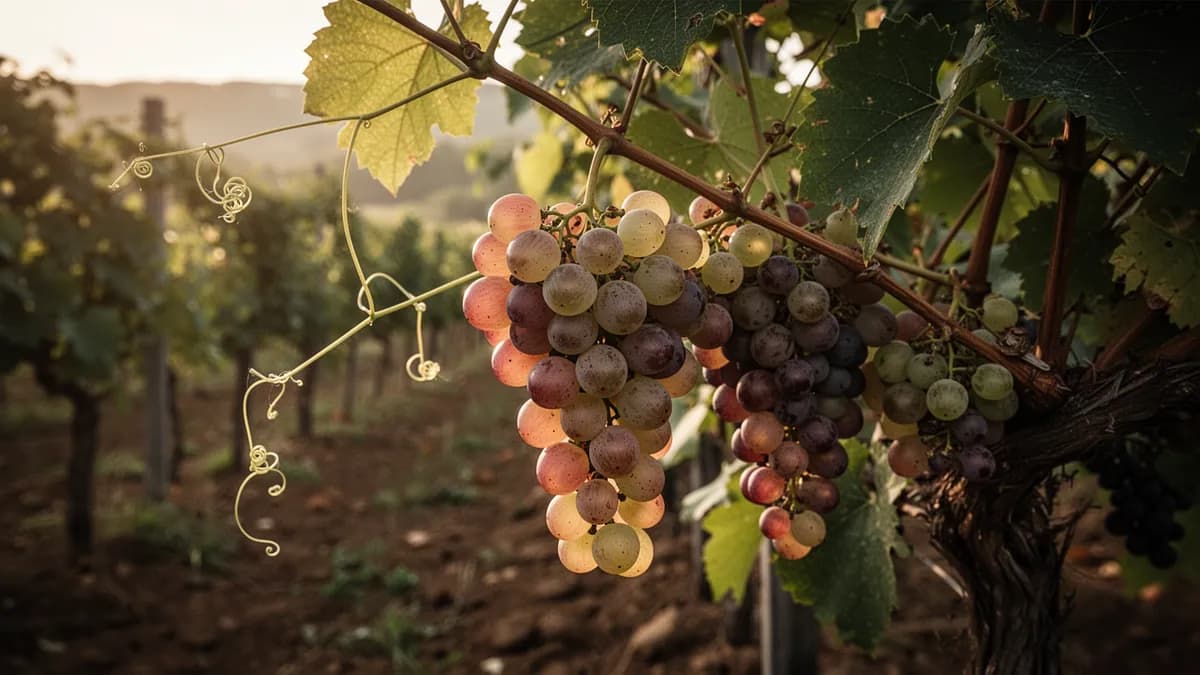
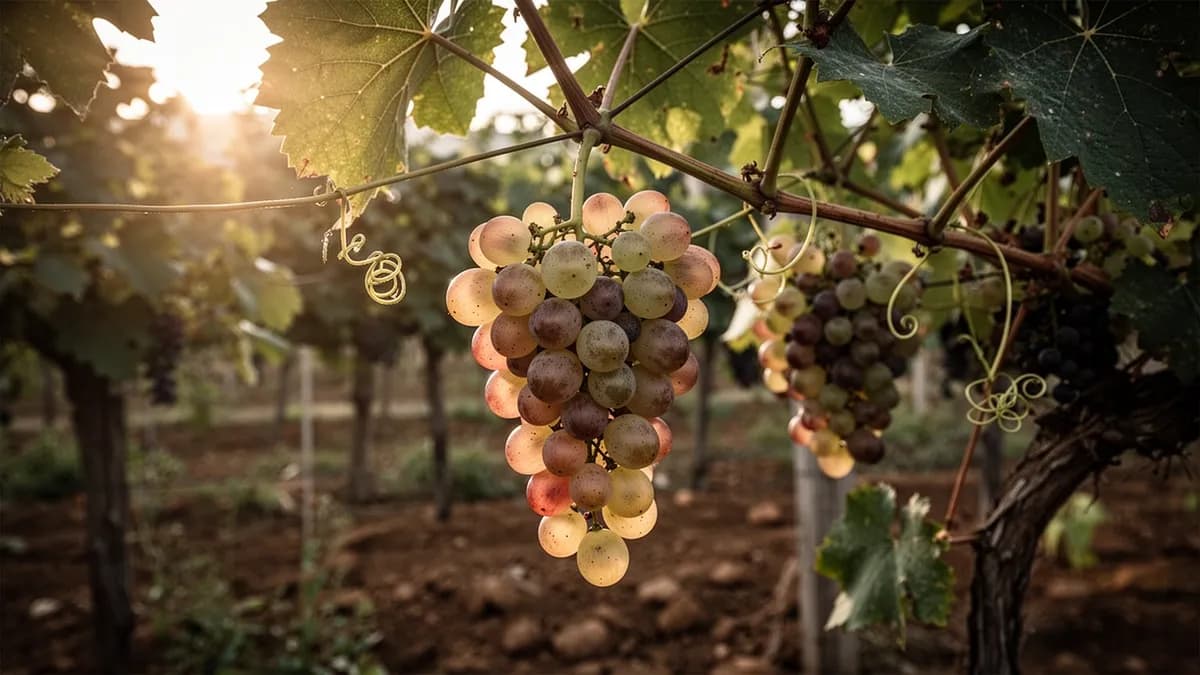
Eine edle weiße Weintraube aus der deutschen Rheinregion, geschätzt für ihre Fähigkeit, das Terroir auszudrücken und Weine von knochentrocken bis üppig süß hervorzubringen. Riesling ist eine der winterhärtesten Premium-Weintrauben und eignet sich daher für kühlere Klimazonen. Die spätreifenden Trauben entwickeln komplexe blumige und mineralische Aromen an steilen, gut durchlässigen Hängen.
Wann Riesling-Traube pflanzen
Riesling wird ausschließlich vegetativ durch ruhende Hartholzstecklinge vermehrt, die auf geeignete Unterlagen veredelt werden. Wählen Sie Stecklinge von zertifizierten virusfreien Mutterreben während des Winterschnitts, wobei Sie reifes Holz mit drei bis vier gut entwickelten Knospen bevorzugen. Die Tischveredlung auf Unterlagen wie SO4 zur Wuchskontrolle oder 5BB für Kalksteinverträglichkeit ist Standard. Die Unterlagenwahl ist für Riesling entscheidend, da der Terroirausdruck der Sorte von kontrolliertem Wuchs und tiefer Wurzeldurchdringung abhängt. In der Baumschule gezogene veredelte Reben werden nach einem Jahr Wachstum an ihren endgültigen Standort gepflanzt.
Dein Riesling-Traube-Jahr
Abgestimmt auf Zone 7 · typische Saison · Frost geht um den 2. Apr. und kehrt um den 1. Nov. zurück
Riesling-Traube Mär – Apr pflanzen, Sep – Nov ernten. Beachte die Pflanzmethoden unten und wähle dein Klima für passende Zeiträume.
So baust du Riesling-Traube an
Riesling gedeiht in kühlen bis gemäßigten Klimazonen, in denen eine lange, langsame Reifezeit den Trauben ermöglicht, ihre charakteristische aromatische Komplexität und lebhafte Säure zu entwickeln. Der ideale Standort ist ein steiler, nach Süden ausgerichteter Hang mit Schiefer-, Gneis- oder Kalksteinböden, die eine hervorragende Drainage bieten und Wärme auf das Blätterdach der Rebe zurückreflektieren. Riesling ist bemerkenswert winterhart und übersteht Wintertemperaturen bis minus 20 Grad Celsius, was ihn zu einer der wenigen Premiumsorten macht, die für nördliche Weinregionen geeignet sind. Pflanzen Sie veredelte Reben in einem Abstand von 1,2 bis 1,5 Metern in Reihen mit 1,8 Metern Abstand.
Erziehen Sie die Reben mit einem einfachen oder doppelten Guyot-Bogenschnitt-System, das in Deutschland und im Elsass traditionell ist, oder verwenden Sie ein vertikales Triebpositionierungssystem mit einem bilateralen Kordon. Riesling zeigt mäßiges Wachstum und natürlich kleine bis mittelgroße Trauben mit dickschaligen Beeren, die Botrytis besser widerstehen als die meisten weißen Sorten. Das Entlauben in der Fruchtzone ist weniger kritisch als bei dünnschaligen Sorten, aber eine gewisse Freilegung verbessert die Reifung und entwickelt die charakteristische Petrolinote in reifen Weinen.
Riesling ist eine spätreifende Sorte, die von einer verlängerten Reifezeit bis Oktober oder sogar November in manchen Regionen profitiert. Diese verlängerte Reifezeit ermöglicht es den Trauben, unglaublich komplexe Aromen zu entwickeln und gleichzeitig eine hohe natürliche Säure beizubehalten, die das Rückgrat aller großen Rieslingweine ist. Überwachen Sie die Zuckereinlagerung sorgfältig, da die Sorte je nach Erntezeitpunkt Weine in vielen Süßegraden hervorbringen kann. Verwenden Sie mäßige Mengen Kompost und vermeiden Sie übermäßigen Stickstoff, um den mineralisch geprägten Charakter zu erhalten, der bei dieser Sorte so geschätzt wird.
Für Riesling-Traube ist ein Beet von 120 × 240 cm zu klein
Riesling-Traube braucht 180 cm Platz pro Pflanze. Der Planer hält diesen Abstand für dich ein — jede Pflanze, jedes Beet.
Die besten Nachbarn für Riesling-Traube
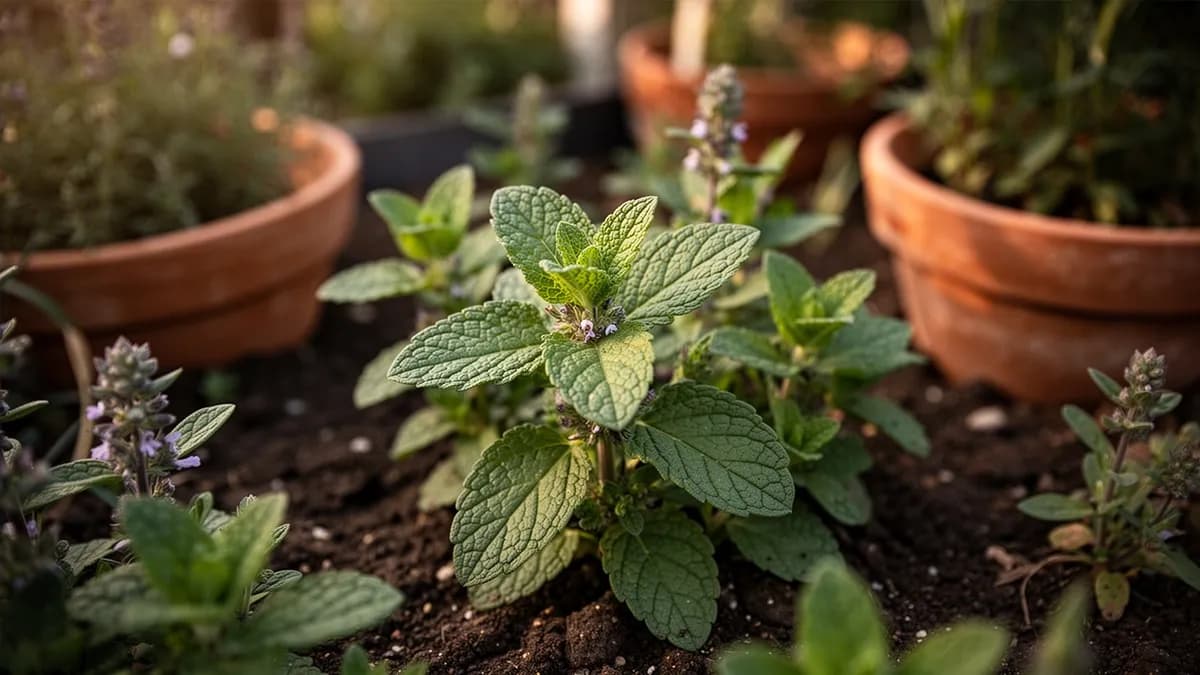
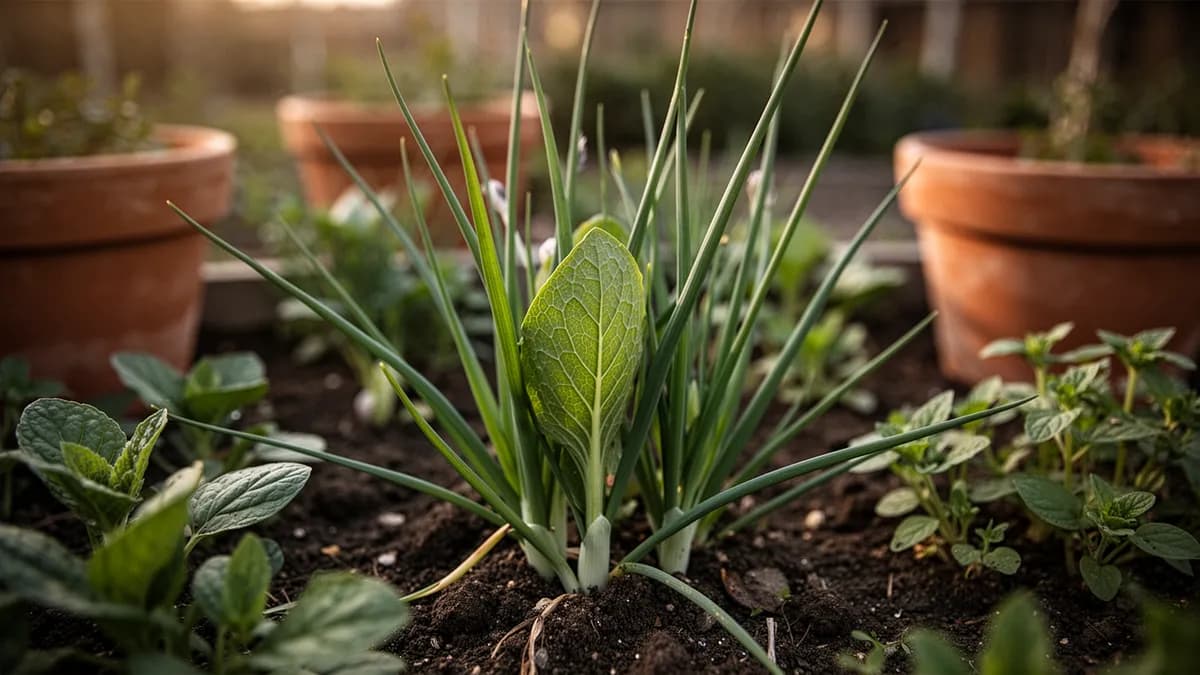
Schnittlauch und Ysop, die entlang der Weinbergreihen gepflanzt werden, locken Nützlinge an und können mit ihren Schwefelverbindungen Blattläuse abschrecken. Niedrig wachsender Weißklee zwischen den Reihen bindet Stickstoff sanft, ohne übermäßiges Rebwachstum zu fördern. Einheimische Wildblumenmischungen an den Weinbergrändern bieten Lebensraum für Raubinsekten, die Zikaden und Milben kontrollieren. Vermeiden Sie dichte Begleitpflanzungen, die um Wasser auf den gut durchlässigen Hängen konkurrieren, auf denen Riesling am besten gedeiht, da die Reben einen gleichmäßigen Zugang zu Feuchtigkeit über tiefe Wurzelsysteme benötigen.
Ysop gehört daneben.
Altes Gärtnerwissen, geprüft an der echten Nachbartabelle von Riesling-Traube — teste jede Pflanze, die du anbaust.
Probiere Riesling-Traube direkt hier im Beet
Ein echtes Planer-Beet, Riesling-Traube steht schon drin. Tippe einen Begleiter an, platziere ihn und sieh, wie die Nachbarschaftsprüfung antwortet — grün für gute Nachbarn, rot bei Streit.


Passende Anbau-Ratgeber
Richtig düngen
Riesling ist einzigartig in seiner Ausdruckskraft des Standorts, was die Bodenwahl entscheidend für den Weincharakter macht. Schiefer- und Gneisböden erzeugen Weine mit feuersteinartig-mineralischen Noten, Kalkstein verleiht breitere Struktur, und vulkanische Böden tragen rauchige Komplexität bei. Alle Standorte müssen eine hervorragende Drainage aufweisen, da Rieslingwurzeln anfällig für Staunässe sind. Halten Sie den Boden-pH-Wert je nach Substrat zwischen 5,5 und 7,5. Bringen Sie im Herbst sparsam organischen Kompost aus und ergänzen Sie mit Magnesium, wenn Sie auf sauren Schieferböden anbauen, wo ein Mangel häufig vorkommt. Vermeiden Sie starke Düngung, die den Terroirausdruck verwässert.
Ideale Temperatur
Winterhärtezone-Kompatibilität
Von der Saat zur Ernte, Schritt für Schritt
Winterruhe
Die Rebe ruht den Winter über ohne sichtbares Wachstum. Energie wird in verholzten Trieben und dem Wurzelsystem gespeichert. Diese Phase ist für die Rebe unerlässlich, um sich nach der Ernte zu erholen und sich auf kräftiges Frühlingswachstum vorzubereiten.
Knospenaufbruch
Winzige grüne Knospen schwellen an und brechen auf, wobei sie die ersten zarten Triebe der Saison freilegen. Riesling treibt unter den Weintrauben mäßig früh aus, was den Frostschutz in dieser Phase besonders wichtig macht, da junge Triebe extrem frostempfindlich sind.
Triebwachstum und Blüte
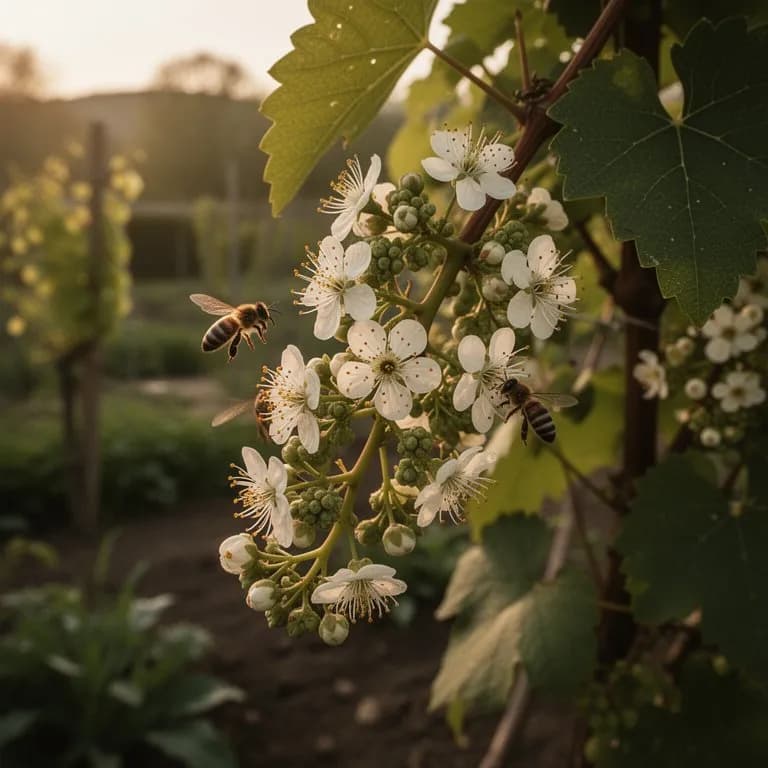
Triebe verlängern sich rasch und kleine Blütentrauben erscheinen. Die Blüte dauert etwa 10 bis 14 Tage und erfordert warme, trockene, windstille Bedingungen für eine zuverlässige Bestäubung. Riesling-Blüten sind selbstfruchtbar, sodass kein Kreuzbestäubungspartner benötigt wird.
Veraison und Beerenentwicklung
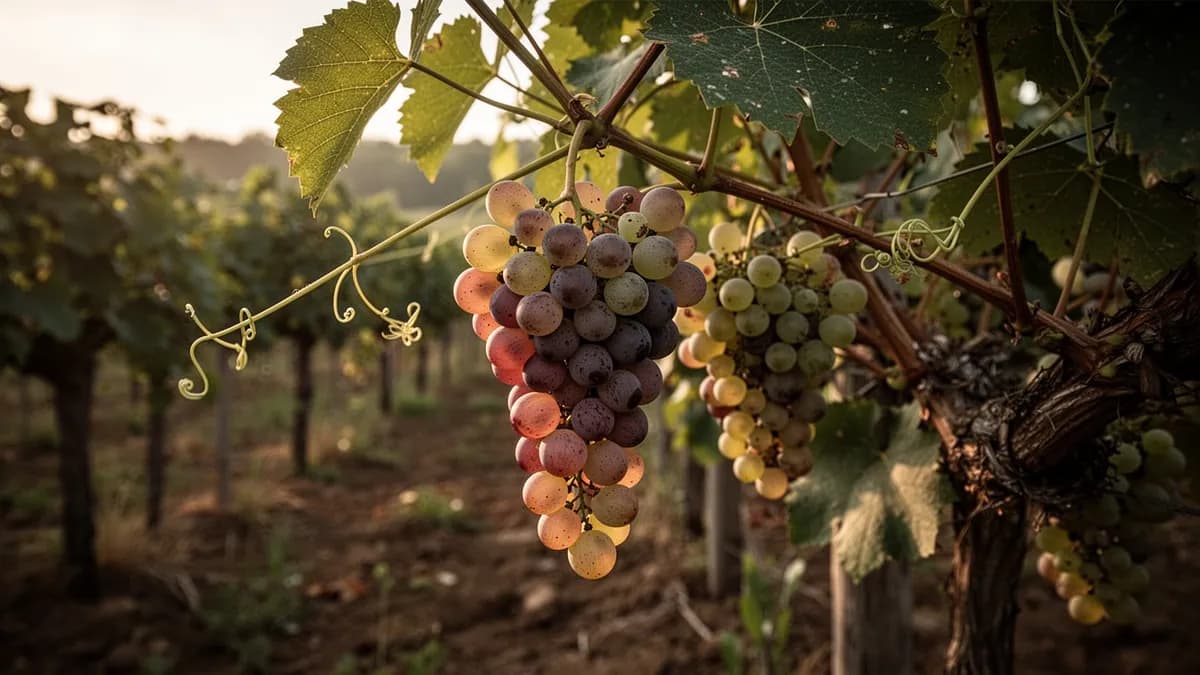
Die Beeren wechseln von hart und grün zu weich und durchscheinend mit einem goldgrünen Farbton. Die Zuckereinlagerung beschleunigt sich, während die Säure zu sinken beginnt. Riesling bewahrt seine natürliche Säure im Vergleich zu den meisten anderen Sorten außergewöhnlich gut, was die Grundlage seines typischen Weinstils bildet.
Reifung und Ernte
Riesling ist eine spätreifende Sorte, die von einer langen, langsamen Vegetationsperiode profitiert. Die verlängerte Reifezeit ermöglicht die vollständige Entwicklung komplexer aromatischer Verbindungen — insbesondere blumiger und petrolartiger Terpene. Ernteentscheidungen werden vom Zucker-Säure-Gleichgewicht geleitet und nicht allein vom Zucker.
Nachernte-Abhärtung
Nach der Ernte betreibt die Rebe weiterhin Photosynthese, um die Kohlenhydratreserven im Holz und in den Wurzeln aufzufüllen. Die Blätter vergilben allmählich und fallen ab, wenn die Temperaturen sinken. Eine angemessene Nachernpflege wirkt sich direkt auf den Ertrag und die Rebengesundheit der nächsten Saison aus.
Führen Sie den Winterschnitt vor dem Knospenschwellen durch. Wenden Sie ein Winteröl-Sprühmittel an, wenn in der Vorsaison Schildläuse vorhanden waren. Dies ist auch der beste Zeitpunkt, um Spalierdrähte zu reparieren oder zu ersetzen.
Riesling-Traube Monat für Monat pflegen
Was du jeden Monat für deine Riesling-Traube tun solltest
Oktober
Aktueller MonatSchließen Sie die Ernte ab. Wenden Sie eine Nachernte-Blattspritzung an, wenn die Blätter noch grün sind. Lassen Sie das Laub so lange wie möglich weiter photosynthetisieren. Beginnen Sie mit der Bodenverbesserung zwischen den Reihen durch Kompostgabe.
Immer wissen, was jetzt im Garten zu tun ist
Eine E-Mail zum Monatsanfang: was du jetzt säen, pflanzen und anpacken solltest — für deine Riesling-Traube und alles, was drumherum wächst. Dazu ein kurzer Startkurs, der dich vor den klassischen Fehlern bewahrt.
- Was jetzt zu tun ist
- Passend zu deiner Saison
- Startkurs inklusive
Riesling-Traube ernten
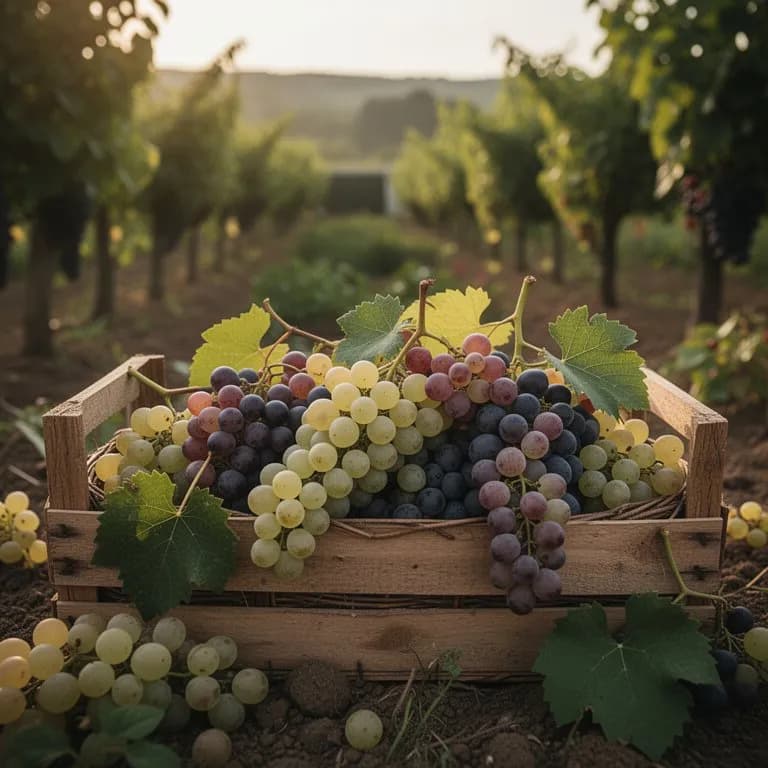
Der Erntezeitpunkt von Riesling hängt vollständig vom gewünschten Weinstil ab. Für trockene Weine ernten Sie, wenn die Säure noch hoch ist und der Zucker 19 bis 21 Brix erreicht, typischerweise im September. Für süßere Stile wie Spätlese und Auslese lassen Sie die Trauben bis Oktober oder November hängen, um den Zucker zu konzentrieren und gleichzeitig die Säure zu bewahren. Für Eiswein müssen die Trauben am Rebstock bei minus 7 Grad Celsius oder darunter gefrieren. Ernten Sie früh am Morgen, wenn die Früchte kühl sind. Behandeln Sie sie vorsichtig, um die Oxidation der empfindlichen Aromen zu vermeiden, und verarbeiten Sie den Weißtraubensaft sofort mit minimalem Schalenkontakt.
angenommen, du pflanzt zu Beginn des Zeitraums — trage dein tatsächliches Datum ein
Ernte Riesling-Traube zügig, dann trägt die Pflanze weiter.
Lagerung & Konservierung
Riesling-Trauben müssen innerhalb weniger Stunden nach der Ernte gepresst und verarbeitet werden, um die empfindlichen blumigen und zitrusartigen Aromen zu bewahren. Ganztraubenpressung mit minimalem Schalenkontakt ergibt die aromatischsten Weine. Der Saft sollte vor der Gärung kalt geklärt werden, um Feststoffe zu entfernen. Rieslingweine gehören zu den langlebigsten Weißweinen der Welt und entwickeln über Jahrzehnte komplexe Petrol- und Honigtöne, wenn sie mit hoher Säure produziert werden. Frische Trauben können zum späteren Entsaften eingefroren oder zu goldenen Rosinen getrocknet werden, obwohl die Sorte selten als Tafeltraube verwendet wird.
Was schiefgeht — und die Lösung
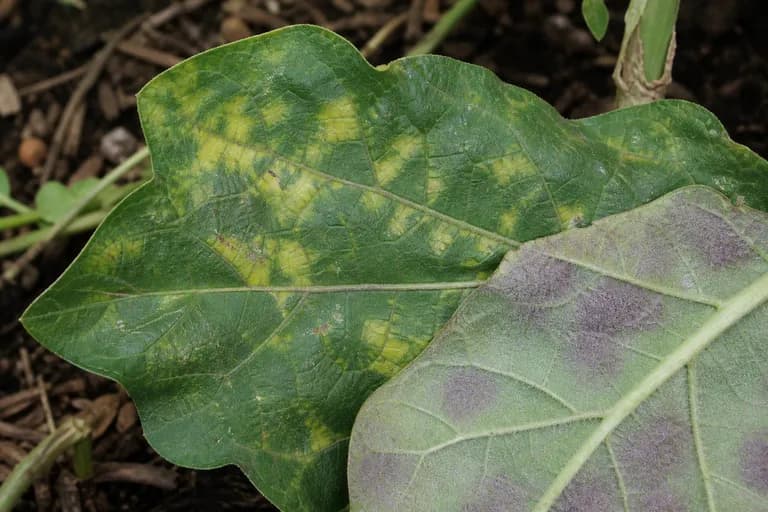
Falscher Mehltau
KrankheitGelbe, ölige Flecken auf der Blattoberseite mit weißem, flaumigem Pilzwachstum auf der Unterseite. Befallene Beeren werden braun und schrumpfen mit einem gräulichen Belag.
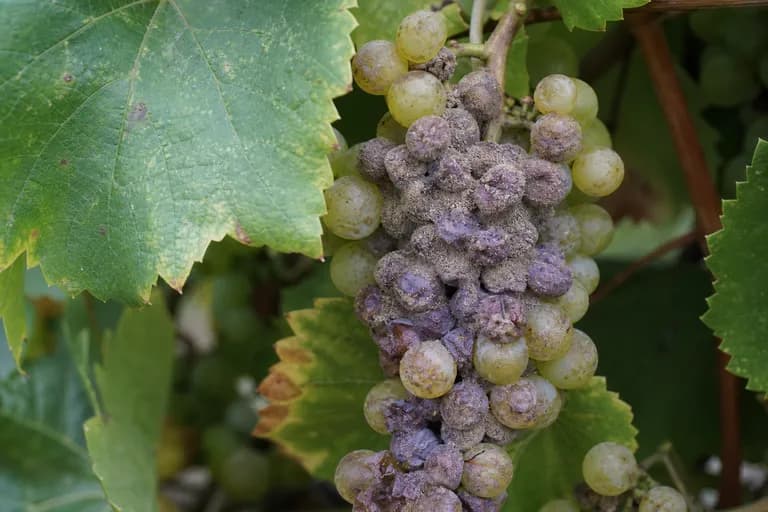
Edelfäule (Botrytis cinerea)
KrankheitDie Beeren schrumpfen und konzentrieren Zucker, da die Feuchtigkeit durch die pilzgeschädigten Schalen verdunstet. Ein grau-brauner Flaum bedeckt die befallenen Beeren.
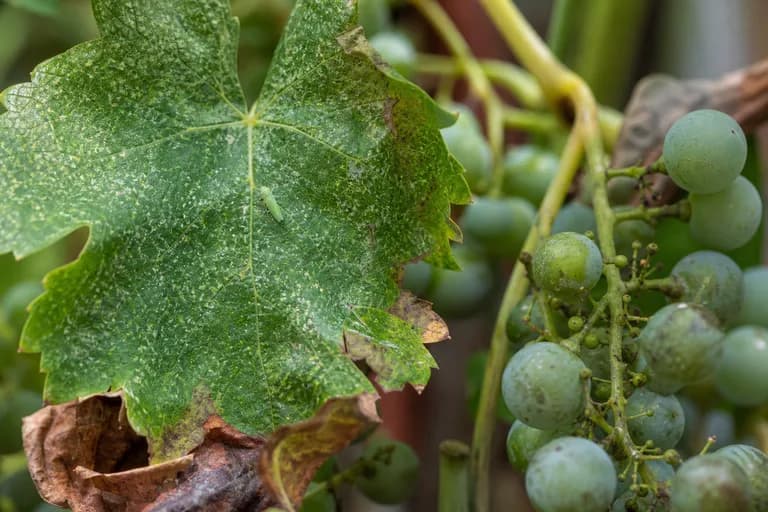
Rebzikade
SchädlingKleine weiße oder gelbe Sprenkelungen auf den Blättern, wenn Zikaden den Zellinhalt aussaugen. Starker Befall verursacht Braunfärbung der Blätter und verringerte Photosynthese.
Fehlerbehebung bei häufigen Problemen
Die größte Herausforderung bei Riesling ist die lange Reifezeit, die die Ernte in kühleren Jahrgängen Herbstregen und Frostrisiko aussetzt. Falscher Mehltau ist bei dieser Sorte eine größere Bedrohung als Echter Mehltau, besonders in feuchten Vegetationsperioden. Die Neigung der Sorte, extrem hohe Säure zu bewahren, kann zu herben, unausgewogenen Weinen führen, wenn nicht durch geeignete Standortwahl und Erntezeitpunkt gesteuert wird. Vogelschäden nehmen zu, wenn die Reifezeit bis in den Spätherbst reicht. Spätfröste können das frühe Wachstum an Talstandorten schädigen, weshalb Hangpflanzungen in Grenzlagen unerlässlich sind.
Anbautipps
- Wählen Sie vor allem den richtigen Standort: Riesling verlangt hervorragende Drainage, gute Luftzirkulation zur Vorbeugung von Pilzkrankheiten und maximale Sonnenexposition. Ein nach Süden ausgerichteter Hang (auf der Nordhalbkugel) mit mindestens 6 bis 8 Stunden direkter Sonne täglich ist ideal, und selbst eine mäßige Hanglage verbessert den Kaltluftabfluss dramatisch zum Schutz empfindlicher Frühlingstriebe.
- Pflanzen Sie Riesling auf einer schwach oder mittelstark wachsenden Unterlage wie 3309 Couderc oder 101-14 Mgt, wenn Sie in einer Region mit Reblaus- oder Nematodendruck leben — wurzelechte Reben sind nur auf reblausfreien Sandböden oder sehr isolierten Binnenstandorten sicher.
- Erziehen Sie Ihre Rebe an einem vertikalen Triebpositionierungssystem (VSP) mit zwei Fruchtruten-Drähten bei 60 und 90 cm und zwei Fangdrähten bei 140 und 170 cm. Dieses System macht das Laubdachmanagement unkompliziert und ist der Standard für die hochwertige Riesling-Produktion weltweit.
- Widerstehen Sie dem Drang, zu viel zu düngen: Riesling auf mäßig fruchtbarem Boden braucht wenig oder gar keinen zusätzlichen Stickstoff. Übermäßiger Wuchs erzeugt übermäßig beschattete Laubdächer, erhöhten Krankheitsdruck und verwässerte Fruchtaromen. Wenn das Wachstum schwach ist, reicht eine bescheidene Frühjahrsgabe von Kompost oder einem stickstoffarmen, ausgewogenen Dünger aus.
- Steuern Sie die Laubdachdichte während der gesamten Vegetationsperiode aggressiv, indem Sie Seitentriebe in der Fruchtzone entfernen, aufrechte Triebe zwischen Fangdrähte einstecken und 4 bis 6 Wochen nach der Blüte einen Teil der Blätter auf der Morgensonnenseite des Laubdachs entfernen, um den Lichteinfall und die Luftzirkulation zu verbessern.
- Riesling ist in feuchten Klimazonen mäßig anfällig für Echten und Falschen Mehltau. Entwickeln Sie ein konsequentes Vorbeugungsprogramm mit organischem Schwefel (gegen Echten Mehltau) und Kupferhydroxid (gegen Falschen Mehltau), das in einem Rhythmus von 10 bis 14 Tagen vom Knospenaufbruch bis zur Veraison angewendet wird und nach Regenereignissen verlängert wird.
- Reduzieren Sie den Ertrag in den Jahren 2 bis 4 auf eine Traube pro Trieb und bei reifen Reben in ertragstarken Jahren auf nicht mehr als 1 bis 1,5 Trauben pro Trieb. Überertrag ist der häufigste Fehler, den Hobbygärtner machen, und führt zu später, ungleichmäßiger Reifung und geschmacksarmen Früchten, die nie die volle aromatische Entwicklung erreichen.
- Schützen Sie in Kaltklimaregionen (USDA-Zonen 5 und 6) die Veredlungsstelle der Rebe in den ersten Wintern, indem Sie nach dem Laubfall 20 bis 30 cm Erde um die Stammbasis anhäufeln und den Hügel im Frühjahr vor dem Knospenschwellen wieder entfernen. Dies schützt den empfindlichsten Teil der Pflanze vor tiefem Frost.
- Ernten Sie Riesling nach Möglichkeit in mehreren Durchgängen statt alle Trauben auf einmal zu pflücken. Früher reifende Trauben in sonnenexponierten Positionen können zuerst bei optimaler Frische für den sofortigen Verzehr geerntet werden, während Trauben in schattigeren Positionen hängen gelassen werden, um zusätzliche Komplexität zu entwickeln — nach dem Vorbild der selektiven Lese, die in Deutschlands besten Riesling-Weingütern praktiziert wird.
- Lagern Sie geerntete Riesling-Trauben ungewaschen in einer einzigen Schicht auf einem flachen Tablett im Kühlschrank bei 0 bis 2 °C mit hoher Luftfeuchtigkeit. Richtig gelagerte Trauben bleiben 3 bis 5 Wochen in ausgezeichnetem Zustand und geben Ihnen ein verlängertes Zeitfenster, um frische Früchte einer einzelnen Ernte zu genießen.
Bau deine beste Riesling-Traube an — und alles drumherum.
Starte heute kostenlos. Lege deine Beete an, setze deine Riesling-Traube ein und lass PlotMyGarden Timing, Abstände, Begleiter und Erinnerungen von der Saat bis zum Erntekorb übernehmen.
Finde deine Riesling-Traube
Klon 21B
Der am weitesten verbreitete deutsche Riesling-Klon, der lockere Trauben mit ausgezeichneter aromatischer Intensität und zuverlässigen Erträgen hervorbringt. Für alle Riesling-Regionen geeignet.
Klon 198
Eine Geisenheimer Selektion mit kleineren Beeren und natürlich geringeren Erträgen, die konzentrierte Weine mit intensiver Mineralität hervorbringt. Bevorzugt für Premiumlagen.
Klon 110
Eine hochwertige Selektion, die für Weine mit besonders feiner blumiger Aromatik und eleganter Struktur bekannt ist. Beliebt im Elsass und in Deutschland.
Roter Riesling
Eine seltene rotschalige Mutation des Rieslings mit rosa getönten Beeren. Ergibt aromatische Weiß- oder Roséweine mit unverwechselbarem Charakter.
Ein gut etablierter Riesling-Rebstock in geeignetem Klima produziert ab der fünften Saison 4 bis 8 Kilogramm Früchte pro Jahr. Bei Bauernmarkt- oder Feinkostpreisen von 8 bis 15 Euro pro Kilogramm für Premium-Aromatafeltrauben kann ein einzelner reifer Rebstock jährlich 32 bis 120 Euro an frischem Obst repräsentieren. Hobbywinzer können die Ernte eines Rebstocks in etwa 3 bis 6 Flaschen Rieslingwein umwandeln, was bei Boutique-Weingut-Einzelhandelspreisen von 20 bis 40 Euro pro Flasche 60 bis 240 Euro an Gegenwert darstellt. Über eine 20-jährige produktive Lebensdauer — typisch für einen gut gepflegten Riesling-Rebstock — übersteigt der kumulative Wert von frischem Obst oder hausgemachtem Wein leicht 1.000 Euro pro Pflanze, was Riesling zu einer der wertvollsten Kulturen pro Quadratmeter macht, die dem Hobbygärtner in einem geeigneten Klima zur Verfügung stehen.
Schnelle Rezepte
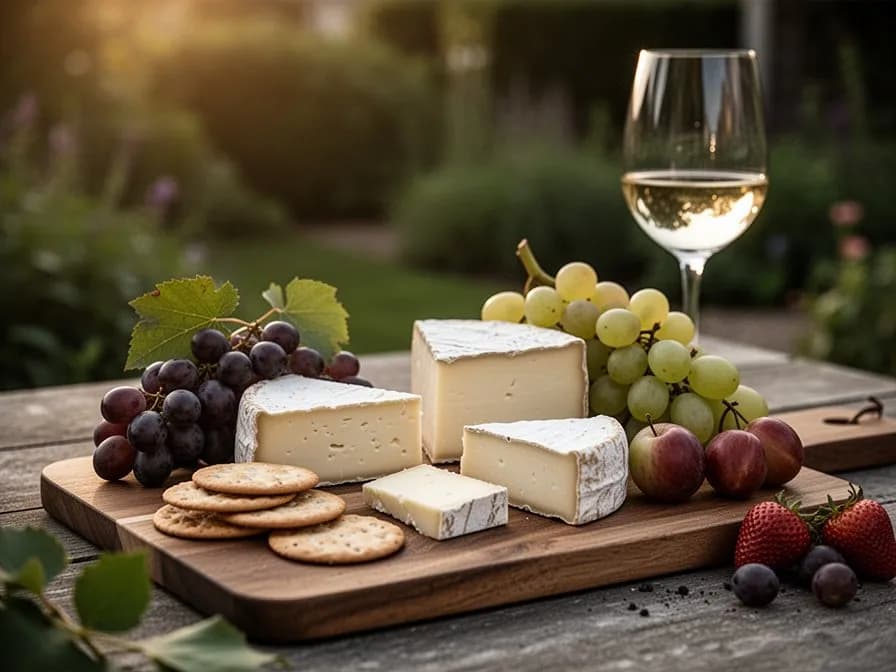
Frischer Riesling-Trauben-Fenchel-Salat
15 Min.Ein heller, erfrischender Salat, der die blumige Süße frischer Riesling-Trauben mit dem Anisknacken von gehobeltem Fenchel kombiniert, vollendet mit gerösteten Walnüssen und gereiftem Ziegenkäse für Tiefe und Reichhaltigkeit.
9 Zutaten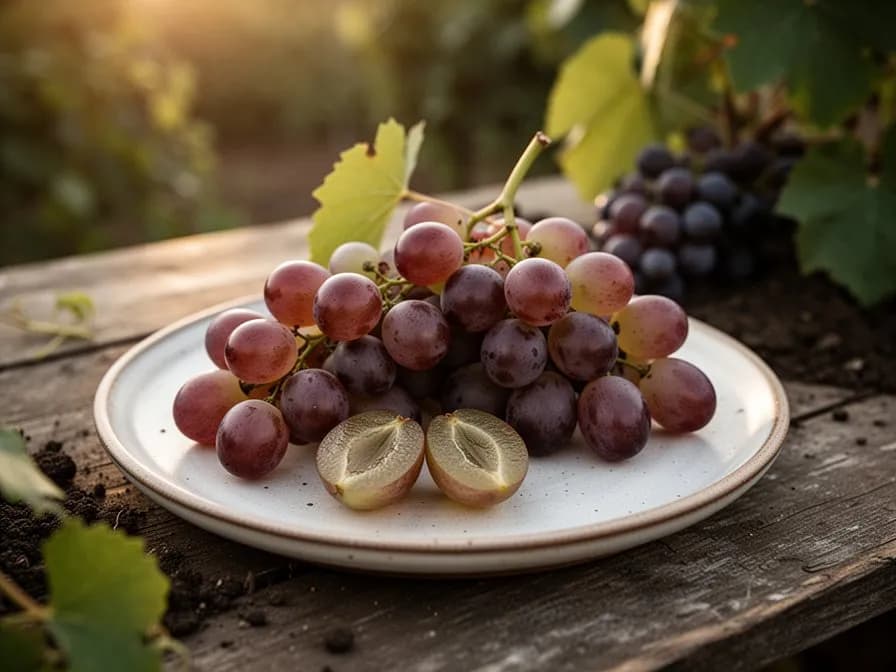
Riesling-Trauben-Focaccia mit Rosmarin und Meersalz
25 Min. aktiv, 2 Stunden insgesamtEine atemberaubende herzhaft-süße Focaccia, bei der Riesling-Trauben vor dem Backen in den Teig gedrückt werden. Ihr Saft karamellisiert zu marmeladenartigen Süßepools, umgeben von knusprigem, olivenölreichem Brot, das nach Rosmarin duftet.
10 ZutatenGekühlte Riesling-Trauben-Gazpacho
20 Min. plus KühlungEine elegante kalte Suppe, die frische Riesling-Trauben mit Gurke, grünem Apfel und einem Hauch Ingwer zu einer seidigen, blassgoldenen Suppe mit außergewöhnlicher aromatischer Tiefe verarbeitet — ein raffinierter erster Gang für sommerliche Unterhaltung.
10 ZutatenKulinarische Verwendung
Riesling produziert einige der vielseitigsten Speisebegleitweine der Welt, von knochentrocken bis intensiv süß. Trockener Riesling passt hervorragend zu Meeresfrüchten, asiatischer Küche und scharfen Gerichten dank seiner knackigen Säure und aromatischen Komplexität. Halbtrockene und süße Rieslinge ergänzen reichhaltige Pasteten, Blauschimmelkäse und Fruchtdesserts. Spätlese- und Eiswein-Rieslinge sind luxuriöse Dessertweine. Die frischen Trauben ergeben auch einen zarten, duftenden Traubensaft und ein helles Gelee.
Was drinsteckt
Gesundheitsvorteile
- Frische Riesling-Trauben enthalten hohe Gehalte an Resveratrol und anderen Stilbenoid-Polyphenolen, die in der Traubenschale konzentriert sind und die Labor- und klinische Forschung mit einer verringerten LDL-Cholesterin-Oxidation und verbesserter arterieller Flexibilität in Verbindung bringt.
- Die natürliche Weinsäure, die einzigartig für Trauben ist, unterstützt eine gesunde Verdauungsfunktion, indem sie nützliche Darmbakterien fördert und einen angemessenen Magensäurespiegel für eine korrekte Nährstoffaufnahme aufrechterhält.
- Riesling-Trauben liefern eine bedeutende Dosis Kalium pro Portion, ein Elektrolytmineral, das hilft, den Blutdruck zu regulieren, indem es den arteriellen Spannungseffekten von Natriumaufnahme entgegenwirkt.
- Das Flavonoid Quercetin, das reichlich in Traubenschalen vorkommt, wirkt als natürliches entzündungshemmendes Mittel und wurde auf sein Potenzial untersucht, saisonale Allergiesymptome zu reduzieren, indem es die Histaminfreisetzung hemmt.
- Der regelmäßige Verzehr frischer Trauben wurde in epidemiologischen Studien mit einer verbesserten kognitiven Leistung bei älteren Erwachsenen in Verbindung gebracht, möglicherweise aufgrund der durch Polyphenole vermittelten Reduzierung von Neuroinflammation und oxidativem Stress.
- Trauben enthalten Melatonin, ein Hormon und Antioxidans, das natürlich in der Traubenschale produziert wird und die gesunde Regulierung des zirkadianen Rhythmus unterstützen und schützende Wirkungen gegen oxidative Zellschäden während des Schlafs bieten kann.
Woher Riesling-Traube stammt
Die Ursprünge des Rieslings liegen im Rheintal in Deutschland, wo die erste dokumentierte Erwähnung der Traube in einem Lagerinventar von 1435 aus dem Keller des Grafen Johann IV. von Katzenelnbogen im Rheingau erscheint. Damit ist Riesling eine der wenigen Weintrauben, deren frühe Geschichte mit angemessener dokumentarischer Präzision bestimmt werden kann. Gegen Ende des 15. Jahrhunderts war die Sorte an den steilen Schieferhängen der Mosel fest etabliert, wo die einzigartige Kombination aus kühlen Temperaturen, hervorragender Sonnenlichtreflexion vom Wasser und wärmespeichernden blauen und grauen Schieferböden ideale Bedingungen für eine langsame, gleichmäßige Reifung schuf.
Im 16. und 17. Jahrhundert breitete sich der Riesling ostwärts ins Elsass, das damals zum Heiligen Römischen Reich gehörte, und südwärts nach Baden und Württemberg aus. Deutsche Rieslingweine wurden im 18. und 19. Jahrhundert am europäischen Adel enorm beliebt, und in den 1800er Jahren erzielten Spitzen-Mosel- und Rheingau-Rieslinge bei Auktionen Preise, die den großen Châteaux von Bordeaux gleichkamen oder sie übertrafen — eine bemerkenswerte Tatsache, die heute weitgehend vergessen ist.
Die Sorte gelangte Mitte des 19. Jahrhunderts mit deutschen Einwanderersiedlern nach Australien, die Weinberge im Barossa- und Clare-Tal in Südaustralien anlegten. Diese Regionen entwickelten trotz ihres wärmeren Klimas im Vergleich zu Deutschland einen eigenständigen australischen Riesling-Stil, der sich durch Limettenzesten, mineralische Noten und außergewöhnliche Langlebigkeit auszeichnet. Österreichische Winzer in der Wachau und im Kamptal nahmen den Riesling ebenfalls an und produzierten kraftvolle, trockene Ausprägungen auf steilen Terrassenweinbergen entlang der Donau.
In Nordamerika fasste der Riesling in der Finger-Lakes-Region im Bundesstaat New York, im Columbia Valley im Bundesstaat Washington und auf der Niagara-Halbinsel in Kanada sowie im Okanagan-Tal Fuß — allesamt kühlklimatische Gebiete, die in der Lage sind, die charakteristische natürliche Säure der Sorte zu bewahren. Heute wird Riesling auf jedem weinproduzierenden Kontinent angebaut und erlebt eine weltweite Renaissance unter jüngeren Weintrinkern, die seinen geringeren Alkoholgehalt, seine Speisefreundlichkeit und seine ausdrucksstarke Persönlichkeit schätzen. Hobbygärtner in kühl-gemäßigten Regionen bauen zunehmend Riesling für den Frischverzehr und die Hausweinbereitung in kleinen Mengen an, angezogen von seinen außergewöhnlichen Aromen und seiner zuverlässigen Winterhärte.
Riesling-Traube: Schon gewusst?
Faszinierende Fakten über Riesling-Traube
Riesling gilt als eine der drei großen weißen Weintrauben der Welt, neben Chardonnay und Sauvignon Blanc, und wird von Sommeliers für seine Fähigkeit geschätzt, das Terroir transparenter auszudrücken als fast jede andere Sorte.
Riesling-Traube: Fragen & Antworten
Wann sollte ich Riesling-Traube pflanzen?
Was sind gute Begleitpflanzen für Riesling-Traube?
In welchen Winterhärtezonen kann Riesling-Traube wachsen?
Wie viel Sonne braucht Riesling-Traube?
Welchen Abstand sollte ich zwischen Riesling-Traube lassen?
Welche Schädlinge und Krankheiten befallen Riesling-Traube?
Wie lagere ich Riesling-Traube nach der Ernte?
Was sind die besten Riesling-Traube-Sorten zum Anbauen?
Welchen Boden braucht Riesling-Traube?
Kann ich Riesling-Trauben außerhalb Deutschlands oder kühler Weinbauregionen anbauen?
Wie erkenne ich, wann Riesling-Trauben für den Frischverzehr erntereif sind?
Welches ist das beste Spaliersystem für einen Riesling-Rebstock im Hausgarten?
Ist Riesling besonders anfällig für bestimmte Schädlinge oder Krankheiten, auf die ich achten sollte?
Wie lange dauert es, bis ein Riesling-Rebstock eine nennenswerte Ernte bringt?
Können Riesling-Trauben für etwas anderes als Wein verwendet werden?
Du hast die Theorie gelesen. Jetzt baue sie auf Autopilot an.
Alles, was Riesling-Traube knifflig macht — das Timing, die Abstände, die Begleiter, das Erntefenster — genau das übernimmt PlotMyGarden für dich, für jede Pflanze im Garten.
Ein Plan, der dein Wetter kennt
Standort einmal festlegen. Aussaat-, Dünge- und Erntedaten rund um deinen echten letzten Frosttermin und die Live-Vorhersage — kein Raten mehr nach Saattüte.
Aus dem Abschnitt „Pflanzzeit“Beetplaner per Drag & Drop
Beete auf einem Raster gestalten. Jede Pflanze rastet im richtigen Abstand ein, und du siehst die ganze Saison, bevor du einen Cent für Saatgut ausgibst.
Aus dem Abschnitt „Anbau“Begleiter-Konflikte früh erkannt
Über 200 gute und schlechte Kombinationen werden beim Pflanzen live geprüft — so landet ein saisonruinierender Fehler nie in der Erde.
Aus dem Abschnitt „Begleiter“Erinnerungen, nach denen du wirklich handelst
„Gieß die Bohnen.“ „Heute ernten, bevor's umschlägt.“ Pünktlich, konkret und auf deine echten Pflanzen bezogen.
Aus dem Abschnitt „Ernte“Staffel-Aussaat, geplant
Sechs Wochen ernten statt sechs Tage? Die App verteilt deine Aussaaten automatisch und erinnert dich, wenn der nächste Satz fällig ist.
Aus dem Abschnitt „Pflanzzeit“Ein Verlauf, der schlauer wird
Jede protokollierte Ernte bringt der App deinen Garten bei. Der Plan fürs nächste Jahr startet bei dem, was in deinem Boden wirklich funktioniert hat.
Aus dem Abschnitt „Überblick“Pflanze diese neben Riesling-Traube
Weitere Rankfrüchte
Bau deine beste Riesling-Traube an — und alles drumherum.
Starte heute kostenlos. Lege deine Beete an, setze deine Riesling-Traube ein und lass PlotMyGarden Timing, Abstände, Begleiter und Erinnerungen von der Saat bis zum Erntekorb übernehmen.