Feijoa
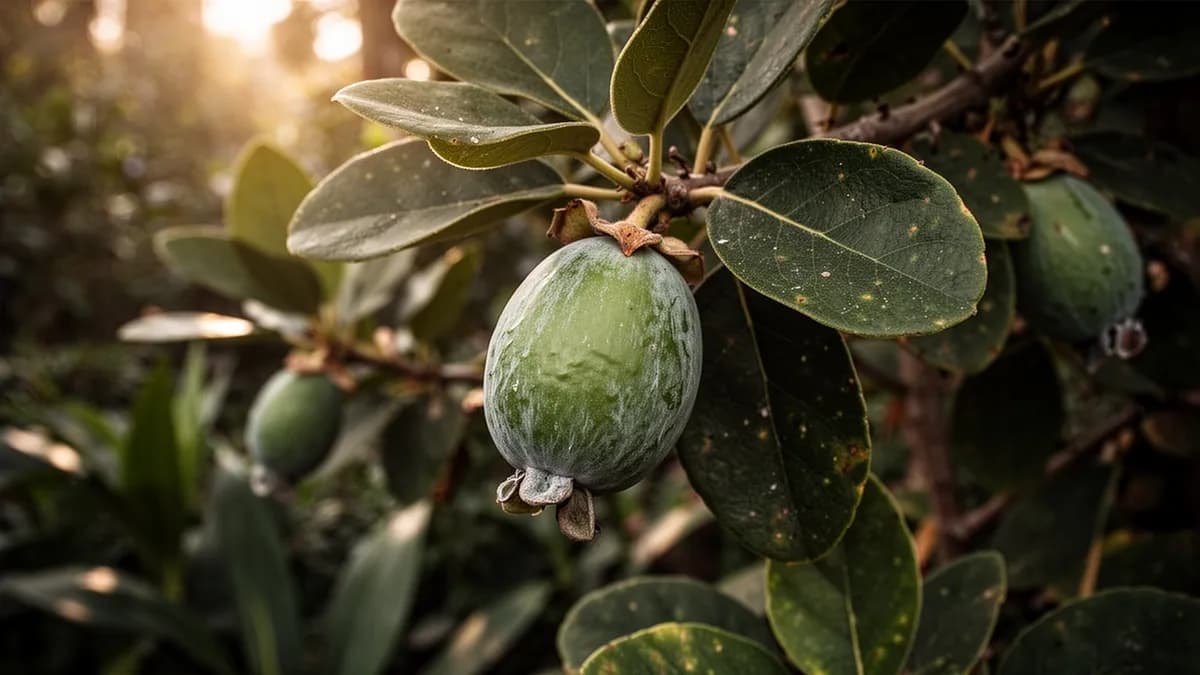
También conocida como guayaba ananá, este atractivo arbusto perenne produce frutos ovalados con una pulpa dulce y aromática que recuerda a la piña y la menta.





En esta páginaResumen
Conoce Feijoa
También conocida como guayaba ananá, este atractivo arbusto perenne produce frutos ovalados con una pulpa dulce y aromática que recuerda a la piña y la menta. La feijoa es una de las frutas subtropicales más resistentes al frío y, una vez establecida, tolera temperaturas de hasta -11 °C. Sus pétalos florales comestibles son dulces y resultan una guarnición hermosa y poco común para ensaladas.
Cuándo plantar Feijoa
Las semillas de feijoa germinan con facilidad, pero las plántulas no conservan fielmente la variedad madre, por lo que las plantas nacidas de semilla se usan sobre todo como portainjerto o con fines ornamentales. Extraiga las semillas de frutos maduros, lave la pulpa y séquelas sobre papel de cocina durante un día. Siémbrelas en la superficie de un semillero húmedo, presionándolas ligeramente pero sin cubrirlas, ya que necesitan luz para germinar. Mantenga una temperatura de 18 a 24 °C y una humedad constante. La germinación tarda entre 3 y 6 semanas. Trasplante las plántulas a macetas individuales cuando tengan dos pares de hojas verdaderas. Para variedades con nombre y calidad de fruto garantizada, compre plantas injertadas o cultivadas por esqueje en un vivero de confianza.
Tu año de Feijoa
Ajustado a Zona 7 · temporada típica · la helada se va hacia el 2 abr y vuelve hacia el 1 nov
Planta Feijoa Mar – May y cosecha Oct – Dic. Consulta los métodos de plantación y elige tu clima para adaptar los periodos.
Cómo cultivar Feijoa
La feijoa es un arbusto perenne o arbolito que suele crecer entre 3 y 4.5 metros de alto y de ancho, lo que la convierte en una excelente planta ornamental y frutal de doble propósito. Prospera en climas suaves y marítimos y es notablemente resistente al frío para ser una fruta subtropical, sobreviviendo a temperaturas de hasta -11 °C una vez establecida. Plántela a pleno sol para obtener la mejor producción de fruta, aunque en climas cálidos tolera algo de semisombra.
Las feijoas crecen bien en una amplia gama de suelos, desde arenosos hasta arcillosos, siempre que el drenaje sea adecuado. Una vez establecidas son relativamente tolerantes a la sequía, pero producen mejor fruta con humedad constante durante la temporada de crecimiento. Aplique una capa de 8 a 10 cm de mantillo orgánico alrededor de la base, manteniéndolo alejado del tronco. Fertilice ligeramente en primavera y a mediados del verano con un abono equilibrado.
La mayoría de las variedades de feijoa necesitan polinización cruzada para lograr un buen cuajado, así que plante al menos dos cultivares distintos a una distancia máxima de 4.5 metros entre sí. Las flores son polinizadas por aves y abejas, y los pétalos carnosos y dulces también son comestibles. La poda debe centrarse en mantener una forma de vaso abierto para permitir la entrada de luz y la circulación de aire. Elimine las ramas que se crucen y el crecimiento bajo a finales del invierno, antes de que empiece el nuevo brote.
Para Feijoa un bancal de 120 × 240 cm se queda corto
Cada Feijoa pide 240 cm de margen. El planificador guarda ese marco por ti — cada planta, cada bancal.
Los mejores vecinos de Feijoa
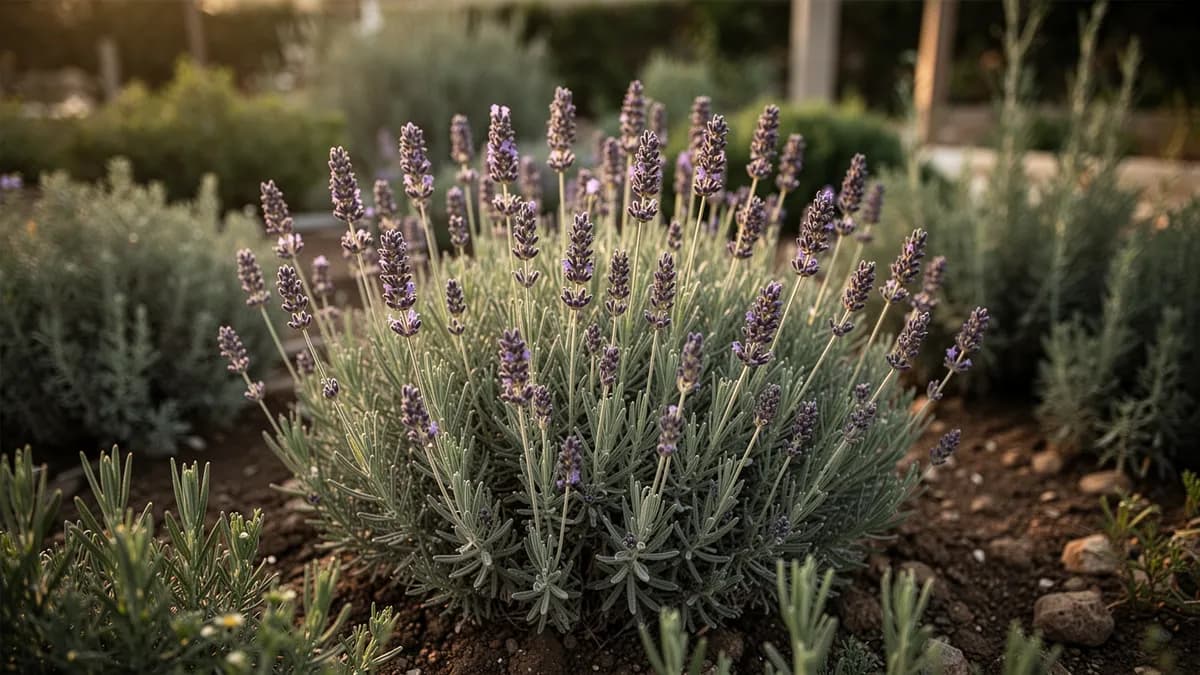
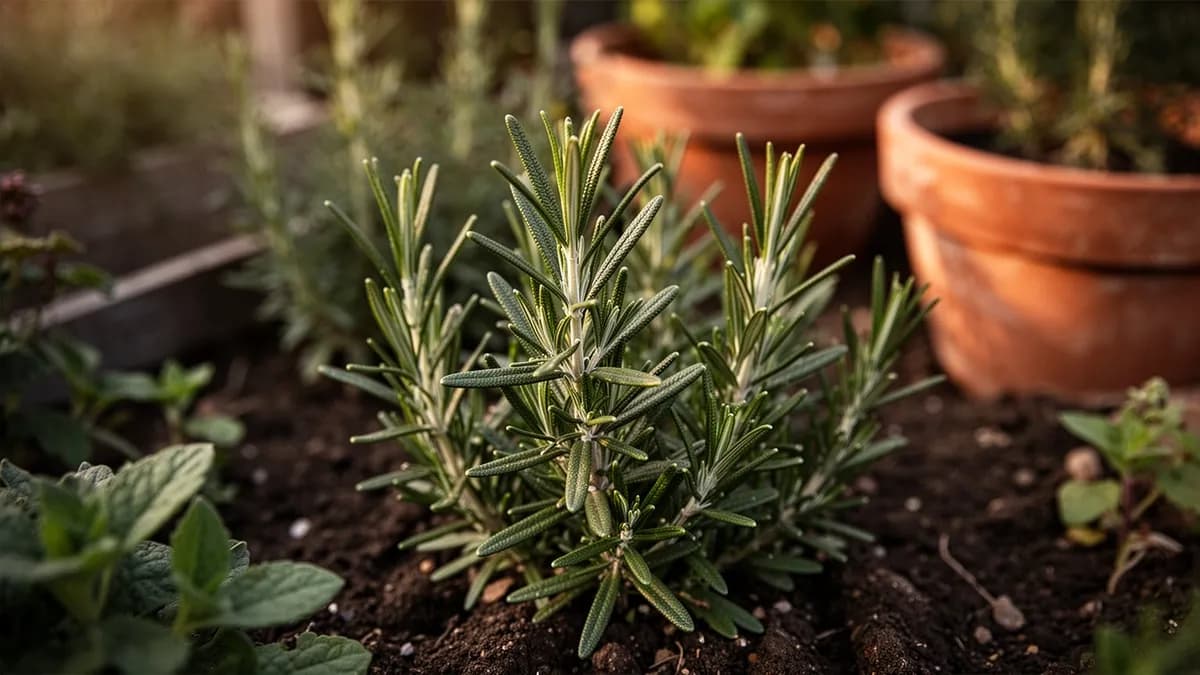
Las feijoas se benefician de la compañía de lavanda y romero, que atraen polinizadores y ahuyentan ciertas plagas. El consuelda plantado cerca actúa como acumulador dinámico de nutrientes, con sus raíces profundas extrayendo minerales que benefician a la feijoa cuando se usa como mantillo. Las capuchinas y las caléndulas alrededor de la base ayudan a disuadir pulgones y mosca blanca. Evite plantarlas cerca de nogales, que liberan juglona y pueden inhibir el crecimiento. Otros compañeros frutales como los arándanos y los cítricos pueden compartir rutinas similares de enmienda del suelo y beneficiarse de los mismos polinizadores.
Lavanda va a su lado.
Saber de huerto de siempre, cotejado con la tabla real de Feijoa — prueba cualquier planta que cultives.
Prueba Feijoa en un bancal, aquí mismo
Un bancal real del planificador con Feijoa ya plantado. Toca una planta compañera para colocarla y mira cómo responde la comprobación de vecinos: verde para buenos vecinos, rojo si hay conflicto.


Guías de cultivo relacionadas
Abónalo bien
Las feijoas se adaptan a una amplia gama de suelos, desde franco arenoso hasta arcilloso, siempre que el drenaje sea bueno. Prefieren un pH ligeramente ácido a neutro, entre 5.5 y 7.0. Estas plantas toleran moderadamente la sal, por lo que son adecuadas para jardines costeros. Aplique a comienzos de la primavera y otra vez a mediados del verano un fertilizante de liberación lenta equilibrado, como 10-10-10. Evite las aportaciones fuertes de nitrógeno, que favorecen el crecimiento de hojas en detrimento de la fructificación. Complemente con un fertilizante rico en potasio durante el periodo de fructificación para mejorar la calidad del fruto. Una capa de 8 a 10 cm de compost o astillas de corteza ayuda a conservar la humedad del suelo y suprimir las malas hierbas.
Temperatura ideal
Compatibilidad de zonas de rusticidad
De la semilla a la cosecha, etapa por etapa
Establecimiento
Tras la plantación, la feijoa concentra su energía en el desarrollo de las raíces. El crecimiento aéreo es lento y la planta puede parecer sin cambios durante varias semanas. El riego constante y el acolchado son críticos en esta etapa.
Crecimiento vegetativo
La planta desarrolla un crecimiento foliar vigoroso y forma su copa densa, verde grisácea característica. Las ramas engrosan y, durante esta fase de varios meses, se establece la estructura que sostendrá el fruto.
Primera floración
Normalmente entre el segundo y el tercer año, la feijoa produce su primera oleada de flores llamativas. Los pétalos son blancos y carnosos, con estambres de un rojo carmesí brillante. La polinización por aves y abejas prepara el terreno para el desarrollo del fruto.
Desarrollo del fruto
Los frutos pequeños y verdes se engrosan durante tres a cinco meses después de la polinización. La piel permanece verde incluso en plena madurez, por lo que las señales visuales son menos fiables que la prueba de caída natural. Los frutos alcanzan su tamaño final antes de que la pulpa madure.
Madurez de cosecha
Las feijoas maduran desde finales del verano hasta el otoño, normalmente de marzo a junio en el hemisferio sur. Los frutos maduros caen del árbol de forma natural. La pulpa se ablanda un poco y el aroma se vuelve intenso y fragante.
Dormancia y recuperación
Después de la cosecha, el árbol entra en un periodo de crecimiento reducido. Este es el momento ideal para podar, abonar con un fertilizante rico en potasio para reforzar las reservas de raíces y tratar cualquier problema de plagas o enfermedades antes de que comience la siguiente temporada de crecimiento.
Riegue en profundidad dos veces por semana durante los tres primeros meses y luego reduzca a una vez por semana. Evite alterar la zona radicular.
Cuidar Feijoa mes a mes
Qué hacer cada mes para tu Feijoa
Octubre
Mes actualPlena floración en primavera. Disfrute de los pétalos comestibles y evite cualquier aplicación de pesticidas. Compruebe la humedad del suelo: los vientos primaverales pueden secar la zona radicular más rápido de lo esperado.
Ten claro qué hacer en tu huerto, cada mes
Un correo al empezar cada mes: qué sembrar, plantar y hacer ahora mismo — para tu Feijoa y todo lo que crece alrededor. Más un breve curso inicial para esquivar los errores clásicos.
- Qué hacer ahora mismo
- Ajustado a tu temporada
- Curso inicial incluido
Cosechar Feijoa
Las frutas de feijoa maduran a mediados o finales del otoño, normalmente entre octubre y diciembre según el clima. El mejor indicador de madurez es que el fruto caiga naturalmente del árbol o se separe con facilidad con un giro suave. El fruto maduro tiene un aroma intenso, dulce y frutal. Corte la fruta por la mitad y saque con una cuchara la pulpa translúcida, de textura gelatinosa. La pulpa debe ser clara o ligeramente opaca; si es blanca y granulosa, la fruta aún no está madura. Si la pulpa está marrón, está pasada. Recoja a diario durante la temporada de fructificación, ya que los frutos maduran a lo largo de varias semanas.
se supone que plantas al comenzar el periodo — indica tu fecha real
Cosecha Feijoa a tiempo y la planta sigue produciendo.
Almacenamiento y conservación
Las feijoas frescas son bastante perecederas y solo duran de 3 a 5 días a temperatura ambiente una vez maduras. Guarde en el refrigerador las frutas ligeramente inmaduras hasta 2 semanas. Para conservarlas más tiempo, saque la pulpa y congélela en recipientes herméticos hasta por 12 meses. La feijoa da excelentes mermeladas, jaleas, chutneys y pastas de fruta. La pulpa también puede deshidratarse en forma de lámina de fruta o usarse para repostería. El vino y los licores de feijoa son populares en Nueva Zelanda, donde la fruta se cultiva ampliamente. La pulpa se oxida rápidamente al cortarla, así que añada zumo de limón si le importa el aspecto.
Qué falla — y cómo solucionarlo
Polilla de la guayaba
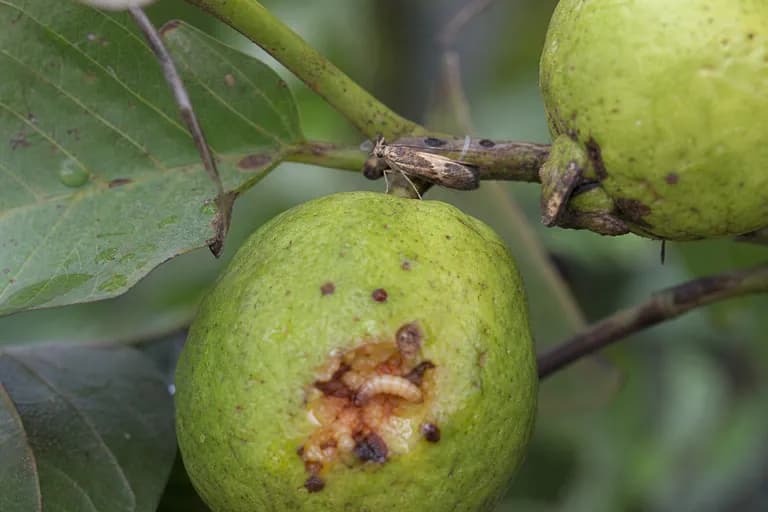
PlagaLas larvas perforan el fruto en maduración, dejando rastros marrones de excrementos y provocando pudrición interna. El fruto puede caer prematuramente o mostrar pequeños orificios de entrada cerca del extremo del cáliz.
Cochinillas
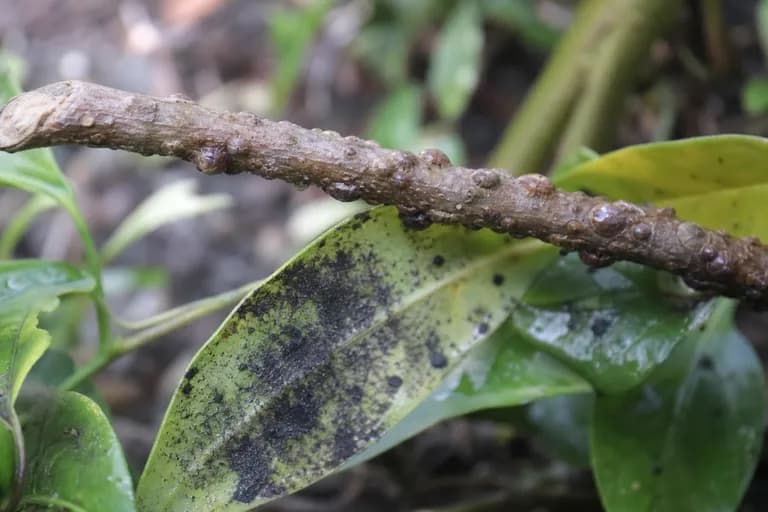
PlagaPequeñas protuberancias redondas u ovaladas en tallos y hojas, a menudo marrones o blancas. Las infestaciones intensas causan amarilleo de las hojas, menor vigor y crecimiento de fumagina sobre la melaza.
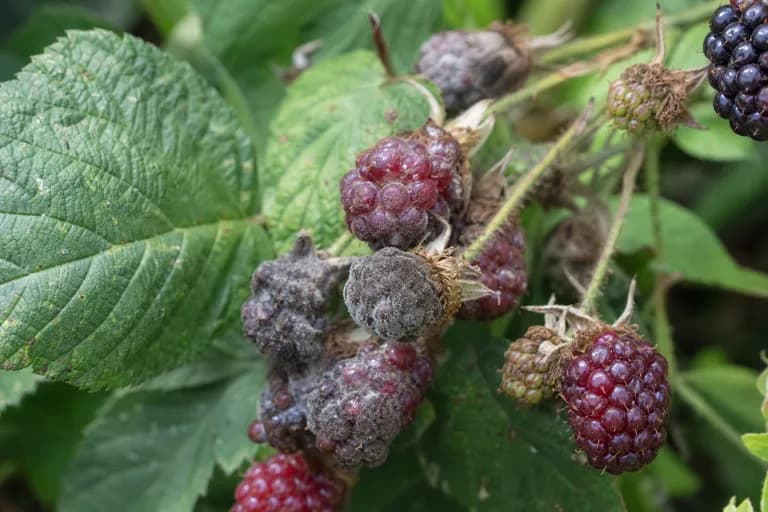
Pudrición de fruto por Botrytis
EnfermedadSe desarrolla moho gris y algodonoso sobre los frutos en maduración, especialmente en condiciones frescas y húmedas. El fruto se vuelve blando y encharcado, colapsa y queda cubierto de masas de esporas gris parduzcas.
Solución de problemas comunes
El escaso cuajado es la queja más común y suele deberse a la falta de polinización cruzada. Plante al menos dos variedades diferentes para obtener una fructificación fiable. La caída del fruto antes de madurar puede deberse al estrés hídrico durante el desarrollo, así que mantenga un riego constante desde la floración hasta la cosecha. El amarilleo de las hojas puede indicar deficiencia de hierro en suelos alcalinos; aplique hierro quelado o azufre para bajar el pH. Las aves pueden dañar los frutos en maduración, así que use malla antipájaros si esto se convierte en un problema. En climas muy calurosos, el sol puede quemar los frutos expuestos; mantenga una cobertura adecuada de la copa para dar sombra al fruto en desarrollo.
Consejos de cultivo
- Plante dos variedades distintas de feijoa separadas por no más de 5 metros para maximizar la polinización cruzada. Aunque algunas variedades son parcialmente autofértiles, la polinización cruzada produce de forma constante cosechas más abundantes y frutos más grandes y sabrosos.
- La feijoa prefiere un suelo ligeramente ácido, con un pH entre 6.0 y 6.5. Analice el suelo antes de plantar y enmiéndelo con azufre para bajar el pH si es necesario, ya que las condiciones alcalinas provocan amarilleo de las hojas por deficiencia de hierro.
- Aplique una capa de 10 cm de mantillo orgánico, como paja de guisante, astillas de madera o compost, alrededor de la base del árbol, manteniéndola a 10 cm del tronco. Esto regula la temperatura del suelo, retiene la humedad y suprime las malas hierbas competidoras.
- No coseche la feijoa arrancándola; espere a que el fruto caiga de forma natural. El fruto caído en el punto correcto de madurez es más dulce y aromático que el que se recoge demasiado pronto. Coloque una red suave bajo la copa durante la temporada de cosecha para atrapar la fruta.
- Pode la feijoa cada año después de que haya caído el último fruto, eliminando ramas que se crucen, madera muerta y tallos que crezcan hacia dentro para mantener una forma de vaso abierto. Esto mejora la entrada de luz en la copa y estimula nuevo crecimiento fructífero.
- La feijoa responde bien a una fertilización rica en potasio a finales del invierno, justo antes de que empiece la floración. Use un fertilizante específico para cítricos y frutales o una aplicación de sulfato de potasio para fomentar una fuerte formación de yemas florales y el desarrollo del fruto.
- Los árboles jóvenes de menos de tres años necesitan protección contra las heladas fuertes. Use tela antihielo o arpillera para envolver la copa en las noches en que se prevean temperaturas por debajo de -3 °C, hasta que el árbol esté totalmente establecido.
- Evite una fertilización fuerte con nitrógeno en verano, cuando el fruto se está formando, ya que el exceso de nitrógeno empuja el crecimiento foliar en detrimento del desarrollo del fruto y puede retrasar la maduración. Cambie a una mezcla baja en nitrógeno y enfocada en el fruto desde finales de primavera.
- Las feijoas en contenedor son posibles, pero requieren una maceta de al menos 60 litros y abonado regular, ya que la zona radicular restringida limita tanto la producción de fruta como la longevidad del árbol. Elija cultivares compactos o enanos para cultivo en maceta.
- Las cochinillas son la plaga más común de la feijoa. Revise tallos y envés de las hojas con regularidad y trate los ataques de inmediato con pulverización de aceite hortícola en invierno, cuando el árbol está dormido y las cochinillas son más vulnerables.
Cultiva tu mejor Feijoa — y todo lo que la rodea.
Empieza un plan gratis hoy. Diseña tus bancales, coloca tu Feijoa y deja que PlotMyGarden gestione el momento, el espaciado, las asociaciones y los recordatorios de la semilla a la cesta.
Elige tu Feijoa
Apollo
Fruto grande y ovalado, con sabor excelente y piel lisa. Planta vigorosa que produce cosechas abundantes. Requiere polinización cruzada con otra variedad para obtener el mejor cuajado.
Gemini
Fruto mediano a grande, con piel muy lisa y pulpa dulce y aromática. Buen compañero de polinización para Apollo. Porte compacto, adecuado para jardines pequeños.
Unique
Una de las pocas variedades autofértiles, que produce frutos medianos con buen sabor sin necesidad de compañero polinizador. Ideal para plantaciones de un solo árbol en espacios reducidos.
Coolidge
Variedad autofértil con frutos medianos en forma de pera. Muy disponible y de producción fiable. Buena elección para jardineros que solo tienen espacio para un árbol.
Mammoth
Produce el fruto más grande de todas las variedades de feijoa, de hasta 10 cm de largo. Sabor rico y complejo, con textura cremosa. Requiere polinización cruzada para obtener los mejores resultados.
Un solo árbol maduro de feijoa que produzca entre 40 y 80 kg de fruta por temporada puede ahorrar a una familia entre 120 y 300 dólares al año con precios minoristas habituales de 3 a 5 dólares por kilogramo. La fruta sobrante, que de otro modo se desperdiciaría, puede conservarse en mermelada, chutney o puré congelado, extendiendo el valor de cada cosecha a lo largo de todo el año. Los árboles requieren muy pocos insumos una vez establecidos: una aplicación anual de fertilizante y la poda anual son los principales costes recurrentes, lo que hace de la feijoa uno de los frutales más económicos para cultivadores domésticos en climas templados.
Recetas rápidas
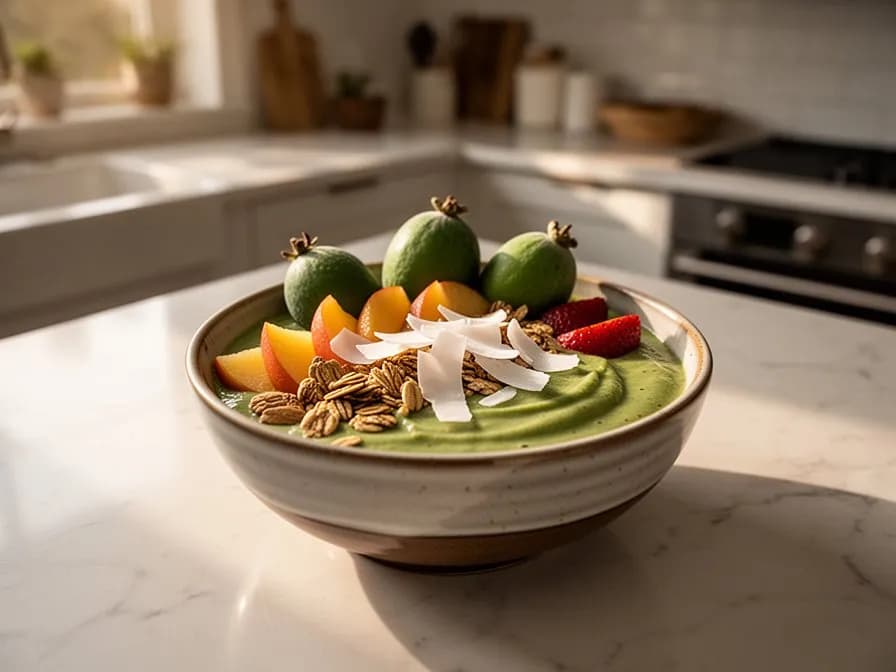
Batido de feijoa y jengibre
5 minutosUn batido vibrante y aromático que resalta el sabor tropical y floral de la feijoa. El jengibre corta el dulzor y aporta calidez, mientras que el plátano añade cremosidad y dulzor natural. Se disfruta mejor justo después de batirlo, cuando el aroma de la feijoa está en su punto máximo.
6 ingredientesCrumble de feijoa y manzana
20 minutos de preparación, 35 minutos de horneadoUn postre reconfortante de otoño que combina la intensidad aromática de la feijoa con la dulzura suave de la manzana. La cobertura crujiente de avena y azúcar moreno añade un crujiente satisfactorio que equilibra el relleno blando y meloso de abajo. Sírvalo caliente con natillas de vainilla o crema espesa.
9 ingredientesChutney de feijoa
15 minutos de preparación, 45 minutos de cocciónUna conserva agridulce que transforma los excedentes estacionales de feijoa en un condimento que dura meses en la despensa. El chutney combina de maravilla con cheddar curado, carnes frías y galletas integrales. El vinagre y el azúcar equilibran la dulzura floral de la feijoa y crean una conserva compleja y en capas.
9 ingredientesUsos culinarios
La pulpa de feijoa se come fresca cortando el fruto por la mitad y sacando con una cuchara su interior aromático y gelatinoso. Da excelentes batidos, helados y sorbetes. El chutney y el relish de feijoa combinan de maravilla con queso y embutidos fríos. La fruta se usa mucho en repostería para muffins, pasteles y crumbles. La mermelada y la jalea de feijoa son muy apreciadas por su sabor tropical con toque de menta. Los pétalos florales comestibles pueden añadirse a ensaladas o usarse como guarnición dulce. En Nueva Zelanda, la feijoa se utiliza en sidras artesanales, vinos e infusiones de vodka.
Qué contiene
Beneficios para la salud
- La feijoa es una de las pocas frutas que aporta una cantidad notable de yodo dietético, un oligoelemento esencial para una función tiroidea y una regulación metabólica saludables.
- El alto contenido de fibra dietética de la feijoa (unos 6.4 g por 100 g) favorece una microbiota intestinal diversa y saludable, el tránsito intestinal regular y una sensación sostenida de saciedad después de comer.
- La feijoa contiene niveles significativos de vitamina C y antioxidantes polifenólicos que ayudan a neutralizar los radicales libres, reduciendo el estrés oxidativo asociado con enfermedades crónicas y envejecimiento celular.
- Las investigaciones preliminares sobre extractos de hoja y fruto de feijoa han identificado actividad antimicrobiana frente a varias cepas bacterianas, lo que sugiere posibles aplicaciones en salud natural y conservación de alimentos.
- El folato presente en la feijoa favorece la síntesis y reparación del ADN, lo que convierte a la fruta en una valiosa adición a la dieta de mujeres en edad reproductiva y de cualquier persona que atraviese periodos de rápido crecimiento celular.
- La feijoa es relativamente baja en azúcares naturales en comparación con muchas frutas tropicales, lo que le da un impacto glucémico moderado y la convierte en una opción razonable para quienes controlan sus niveles de azúcar en sangre.
De dónde viene Feijoa
La feijoa, conocida botánicamente como Acca sellowiana, tiene su origen en las tierras altas subtropicales y frescas que atraviesan el sur de Brasil, Uruguay, Paraguay y la provincia de Misiones, en el norte de Argentina. Fue documentada por primera vez por botánicos europeos a comienzos del siglo XIX y recibió su nombre en honor al naturalista brasileño João da Silva Feijó y al botánico alemán Friedrich Sellow, que recogió ejemplares en la región durante sus exploraciones de Sudamérica en la década de 1820.
Durante buena parte del siglo XIX, la planta se cultivó sobre todo como ornamental, apreciada por sus llamativas flores con estambres carmesí y su follaje verde plateado, más que por su fruto comestible. Se introdujo en Europa a finales del siglo XIX, y Francia y la región de la Riviera se contaron entre los primeros adoptantes entusiastas. El fruto ganó un pequeño grupo de aficionados en el sur de Francia, donde se cultivó en jardines privados y ocasionalmente se vendió en mercados locales, aunque nunca alcanzó una escala comercial en Europa.
La suerte de la feijoa cambió de forma drástica cuando se introdujo en Nueva Zelanda a comienzos del siglo XX, encontrando un clima ideal en las suaves condiciones marítimas de la Isla Norte. Los cultivadores neozelandeses seleccionaron variedades de mejor producción y desarrollaron huertos especializados, estableciendo finalmente la feijoa como un alimento estacional básico de la dieta del país. Hoy, Nueva Zelanda produce la mayor parte de la cosecha comercial mundial de feijoa, y la fruta tiene un estatus cultural casi icónico, similar al del kiwi.
En California y en la cuenca mediterránea, la feijoa se ha cultivado como frutal de jardín desde finales del siglo XIX. El estado de California recoge varias variedades ornamentales en sus registros hortícolas que datan de 1900. Su tolerancia a heladas suaves, a la sequía una vez establecida y a suelos pobres la hizo atractiva para jardineros de una amplia gama de climas templados.
Los programas de mejora en Nueva Zelanda y, cada vez más, en Sudamérica y Europa, han producido numerosos cultivares nombrados, optimizados para tamaño del fruto, sabor, autofertilidad y duración de la temporada, transformando la feijoa de una curiosidad botánica en un cultivo frutal comercialmente importante y distribuido en todo el mundo.
Feijoa: ¿sabías que?
Datos fascinantes sobre Feijoa
Las flores de feijoa son completamente comestibles: los pétalos blancos y carnosos tienen un sabor ligeramente dulce y floral, lo que las convierte en una guarnición espectacular para postres y ensaladas de fruta sin dañar la planta.
Feijoa: preguntas frecuentes
¿Cuándo debo plantar Feijoa?
¿Cuáles son buenas plantas acompañantes para Feijoa?
¿En qué zonas de rusticidad puede crecer Feijoa?
¿Cuánto sol necesita Feijoa?
¿A qué distancia debo espaciar Feijoa?
¿Qué plagas y enfermedades afectan a Feijoa?
¿Cómo almaceno Feijoa después de la cosecha?
¿Cuáles son las mejores variedades de Feijoa para cultivar?
¿Qué suelo necesita Feijoa?
¿Cómo sé cuándo mis feijoas están maduras y listas para comer?
¿La feijoa necesita otro árbol para polinizarse o puede producir fruta por sí sola?
Mi feijoa florece cada año pero produce muy poca fruta. ¿Cuál es la causa?
¿Puedo cultivar feijoa en una maceta o contenedor?
¿Cuánto vive una feijoa y cuánto tarda en ser plenamente productiva?
¿Cuál es la mejor manera de almacenar y conservar la fruta de feijoa después de cosecharla?
Acabas de leer la teoría. Ahora cultívala en piloto automático.
Todo lo que hace que Feijoa sea delicado — el momento, el espaciado, las asociaciones, la ventana de cosecha — es justo lo que PlotMyGarden resuelve por ti, para cada planta de tu huerto.
Un plan que conoce tu clima
Indica tu ubicación una vez. Recibe fechas de siembra, abonado y cosecha basadas en tu última helada real y el pronóstico en vivo — sin adivinar con un sobre genérico.
De la sección “Cuándo plantar”Planificador de bancales de arrastrar y soltar
Diseña bancales sobre una cuadrícula. Cada planta encaja con su espaciado correcto y ves toda la temporada antes de gastar un céntimo en semillas.
De la sección “Cultivo”Conflictos de asociación, detectados a tiempo
Más de 200 buenas y malas combinaciones comprobadas en vivo mientras plantas — para que un error que arruine la temporada nunca llegue a la tierra.
De la sección “Asociaciones”Recordatorios que sí vas a seguir
“Riega las judías.” “Recoge hoy antes de que se pase.” Oportunos, concretos y ligados a las plantas que de verdad cultivas.
De la sección “Cosecha”Escalonado, programado
¿Quieres cosechar seis semanas en vez de seis días? Reparte tus siembras automáticamente y te avisa cuando toca el siguiente lote.
De la sección “Cuándo plantar”Un registro que se vuelve más listo
Cada cosecha que registras le enseña tu huerto. El plan del año que viene parte de lo que de verdad funcionó en tu suelo, no en un manual.
De la sección “Resumen”Planta estos junto a Feijoa
Más Frutas tropicales
Cultiva tu mejor Feijoa — y todo lo que la rodea.
Empieza un plan gratis hoy. Diseña tus bancales, coloca tu Feijoa y deja que PlotMyGarden gestione el momento, el espaciado, las asociaciones y los recordatorios de la semilla a la cesta.