Breadfruit
A starchy tropical fruit that is roasted, baked, or fried as a carbohydrate staple throughout the Pacific Islands.





On this pageOverview
Meet Breadfruit
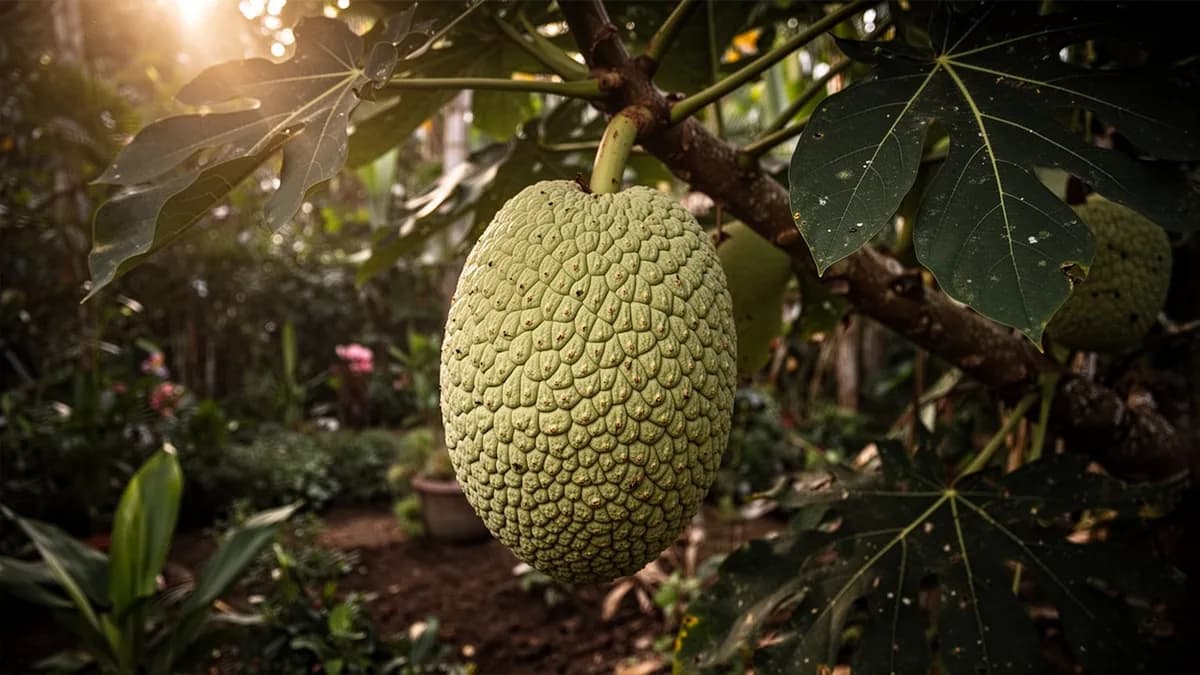
A starchy tropical fruit that is roasted, baked, or fried as a carbohydrate staple throughout the Pacific Islands. When cooked, the flesh has a bread-like texture and mild flavor similar to potato or fresh bread. Breadfruit trees are highly productive and can feed a family year-round in tropical climates.
When to plant Breadfruit
Most breadfruit varieties are seedless and must be propagated vegetatively. Root shoots that emerge near the base of mature trees are the easiest propagation method. Dig up shoots with attached roots when they are twelve to eighteen inches tall and transplant to pots or permanent locations. Root cuttings two to three inches in diameter and twelve inches long can also be planted horizontally in moist media. Air layering of branches is another reliable method for clonal propagation.
Your Breadfruit Year
Composed for Zone 7 · typical seasons · frost passes Apr 2, returns Nov 1
Plant Breadfruit Mar – May, pick May – Oct. Check the planting methods below and set your climate to personalize these windows.
How to grow Breadfruit
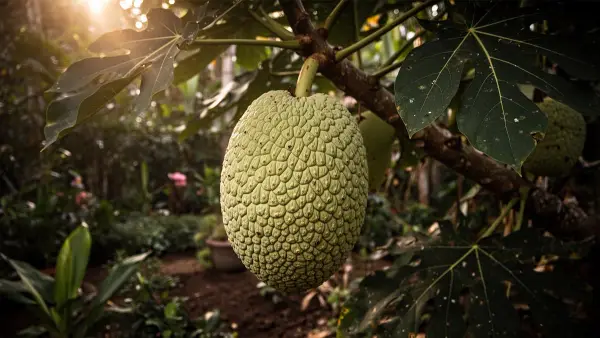
Breadfruit is a fast-growing tropical tree that thrives in warm, humid environments with temperatures between 60 and 100 degrees Fahrenheit, though optimal growth occurs above 70 degrees. Plant in a location with full sun and protection from strong winds, as the large leaves are susceptible to wind damage. The tree prefers deep, fertile, well-draining soil but adapts to a range of soil types including coral-based soils common in Pacific Island settings.
Water young trees regularly until established, after which breadfruit is moderately drought-tolerant. However, consistent moisture produces better fruit yields. Apply a balanced organic fertilizer three to four times per year. Breadfruit responds well to mulching with organic matter, which mimics the leaf litter of its native forest understory. Avoid excessive nitrogen, which can promote vegetative growth at the expense of fruiting.
Breadfruit trees naturally develop a tall, straight trunk with a spreading canopy reaching fifty to eighty feet. For home gardens, top the central leader at fifteen to twenty feet to encourage lateral branching and keep fruit within reach. Minimal pruning is needed beyond removing dead branches and maintaining shape. Most breadfruit varieties are seedless and propagated vegetatively through root shoots, root cuttings, or air layering.
Breadfruit needs more room than a 4 × 8 ft bed gives
Each Breadfruit wants 900 cm of elbow room. The planner keeps that spacing for you — every plant, every bed.
Related growing guides
Feed it well
Breadfruit adapts to a wide range of soil types including sandy, loamy, and even coral-based soils, provided drainage is adequate. Optimal pH ranges from 6.0 to 7.5. Apply a complete organic fertilizer three to four times per year, with emphasis on potassium for fruit production. Incorporate generous amounts of compost or well-rotted manure annually. In sandy soils, more frequent lighter fertilization helps prevent nutrient leaching. Micronutrient deficiencies are rare but supplement iron in alkaline soils.
Ideal Temperature
Hardiness Zone Compatibility
From seed to harvest, stage by stage
Establishment
The young tree focuses entirely on root development and establishing itself in its new location. Leaves are small and growth appears slow above ground, but a strong root system is forming.
Vegetative Growth
The tree begins vigorous above-ground growth, producing large, distinctive lobed leaves and increasing in height rapidly. Canopy development is the primary focus during this stage.
First Flowering
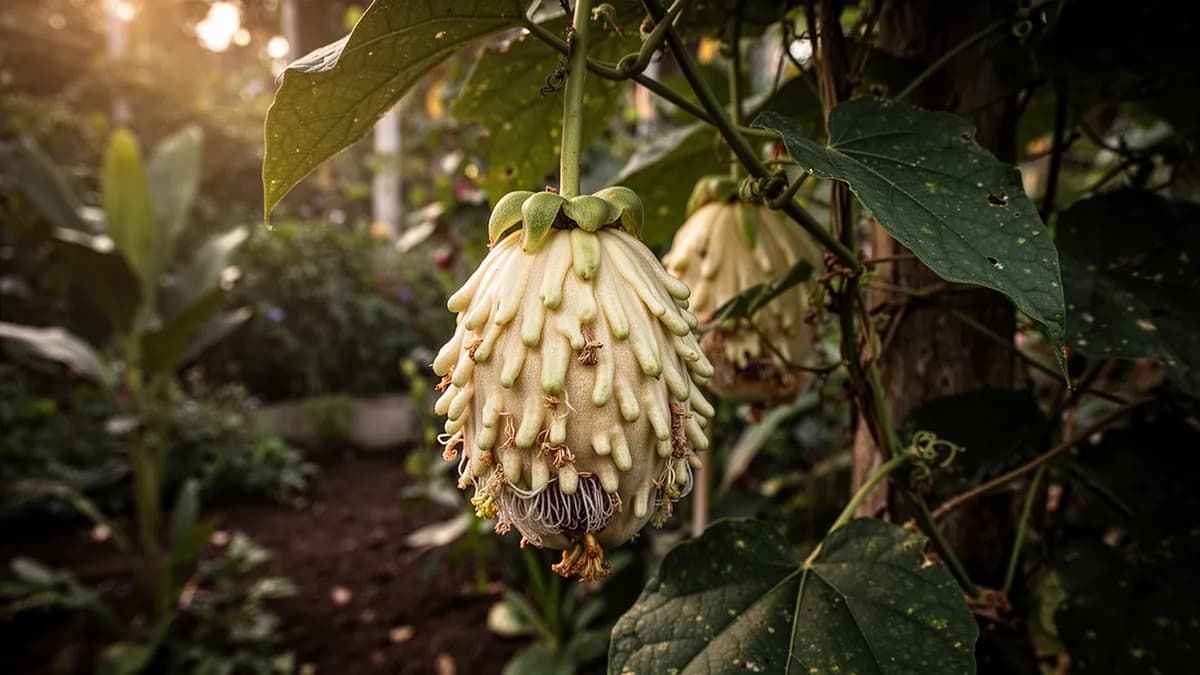
The tree produces its first male and female flower heads. Male flowers appear as elongated catkins while female flowers develop into the round fruit bodies. Pollination is primarily by wind and fruit bats.
Fruit Development
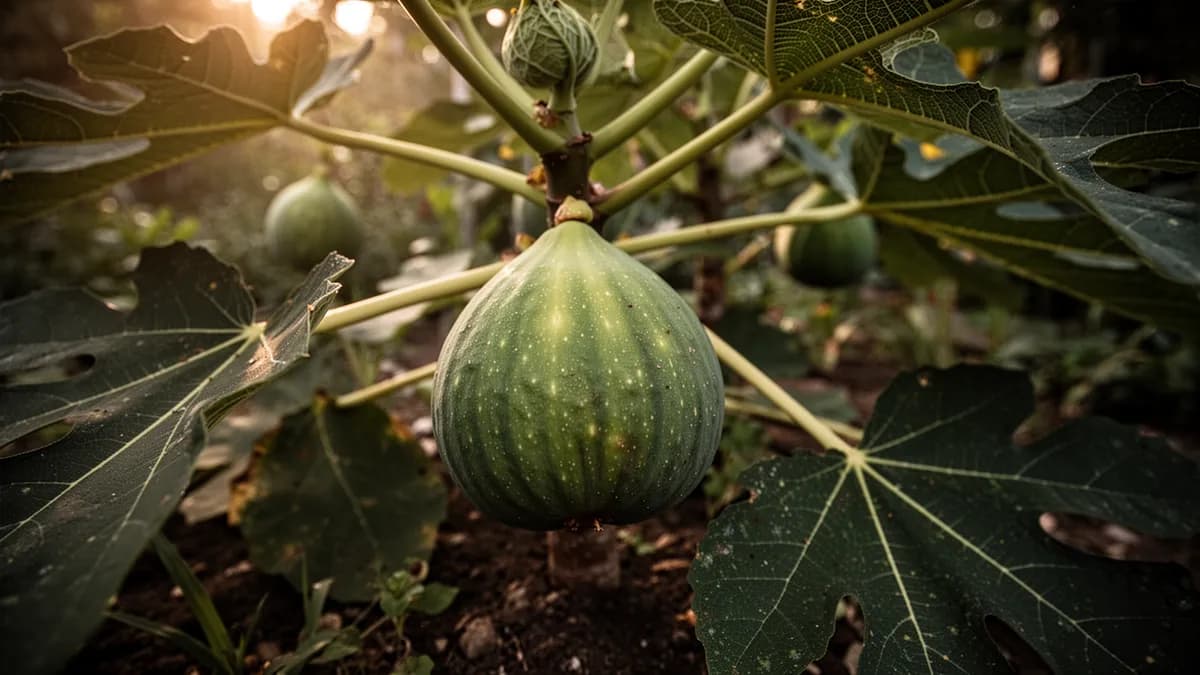
After successful pollination, the female flower heads swell into recognizable round fruits. They grow rapidly over 60-90 days, developing their characteristic warty green skin.
Ripening
Fruit transitions from firm and starchy to soft and sweet. Skin color shifts from bright green to yellow-green, and white latex droplets may appear on the surface. The flesh becomes creamy and aromatic.
Full Production
A mature breadfruit tree enters full bearing, producing 50-200 fruits per year depending on variety and growing conditions. Trees can remain productive for 50 years or more with proper care.
Water deeply every 2-3 days and avoid disturbing the root zone. Protect from wind with a temporary stake or windbreak.
Caring for Breadfruit month by month
What to do each month for your Breadfruit
October
You are herePrepare the soil around the tree for cooler, wetter months by topping up mulch to a depth of 10 cm. In subtropical regions, bring container-grown trees indoors or under cover before temperatures drop below 10°C.
Know exactly what to do in your garden — every month
One email at the start of each month: what to sow, plant, and tackle right now — for your Breadfruit and everything growing around it. Plus a short starter course that helps you dodge the classic mistakes.
- What to do, right now
- Matched to your season
- Starter course included
Harvesting Breadfruit
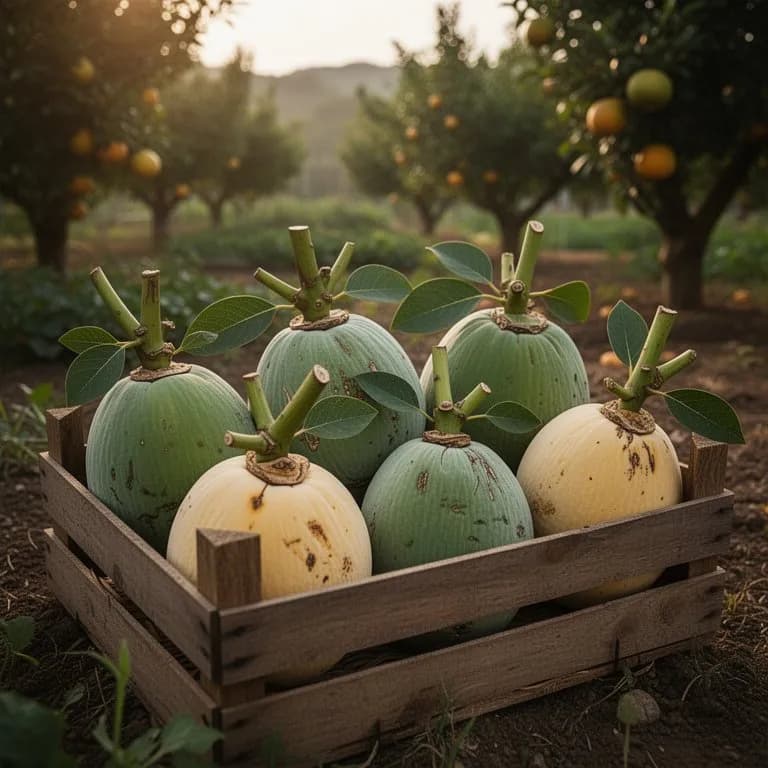
Breadfruit is harvested at different stages depending on intended use. For cooking as a starchy vegetable, pick when the skin is green and firm and the latex drips freely when the skin is scratched. For eating as a ripe fruit, wait until the skin turns yellowish-brown and yields to gentle pressure. Cut the stem with a sharp knife, being careful of the sticky white latex. A mature tree can produce one hundred to two hundred fruits per year in optimal conditions.
assuming you plant when the window opens — set your real date
Pick Breadfruit promptly and the plant keeps producing.
Storage & Preservation
Fresh green breadfruit stores at room temperature for two to three days or refrigerated for up to one week. Ripe breadfruit is very perishable and should be used within one to two days. For preservation, the cooked flesh can be frozen for up to three months. Traditionally, breadfruit is preserved by fermenting the cooked flesh in leaf-lined pits to create a storable paste. It can also be sliced and dried or made into flour for long-term storage.
What goes wrong — and the fix
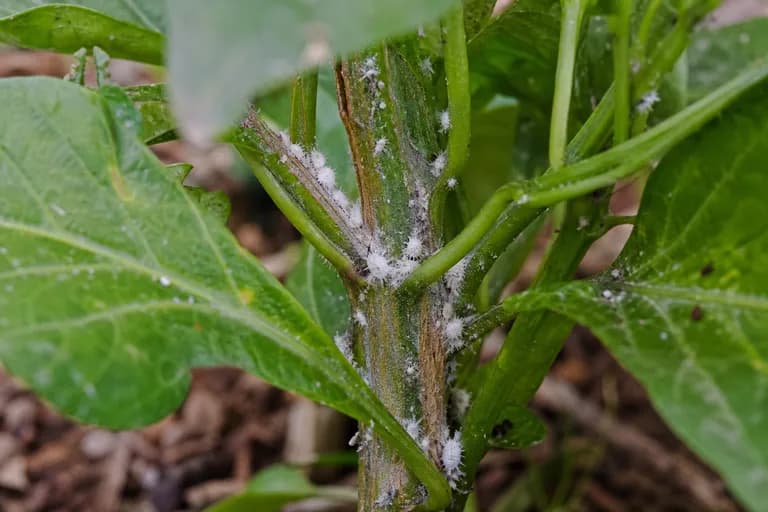
Mealybugs
PestWhite cottony masses on young shoots and fruit, honeydew production leading to sooty mold, stunted new growth, and leaf yellowing.
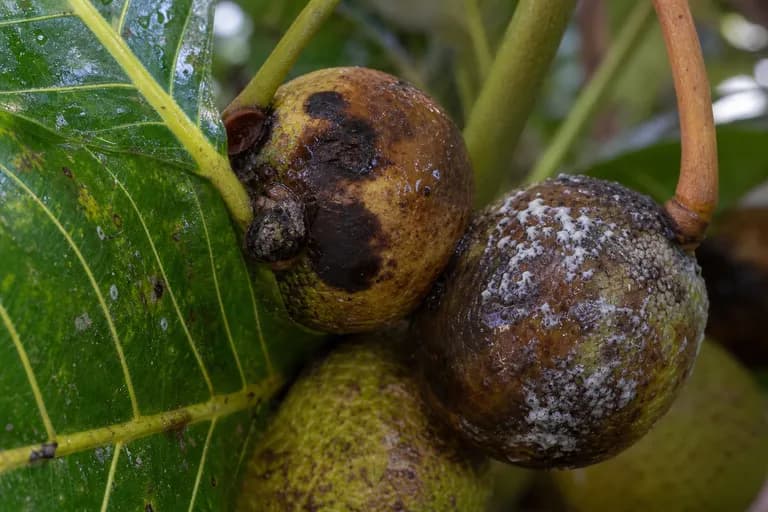
Fruit Rot
DiseaseSoft, brown, water-soaked areas on developing or ripe fruit, rapid decay spreading across the fruit surface, mold growth in humid conditions.
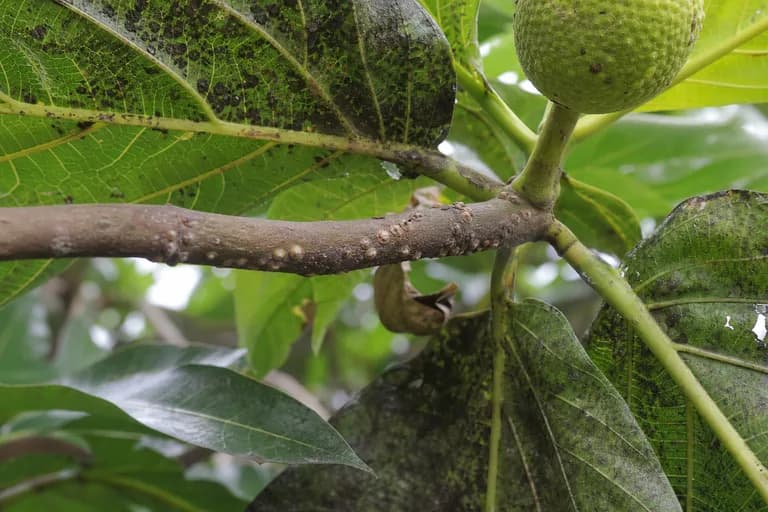
Soft Scale
PestBrown or tan oval bumps on branches and leaf undersides, honeydew production, sooty mold coating, branch dieback in severe cases.
Troubleshooting Common Problems
Breadfruit trees are sensitive to cold and suffer leaf drop below 60 degrees Fahrenheit, with severe damage or death below freezing. Wind damage to the large, delicate leaves is common during storms. Fruit drop can occur during dry spells or nutrient stress. The sticky white latex stains everything it contacts. Trees can become very large if not managed, making harvesting difficult. In some regions, fruit bats and birds consume ripening fruit before harvest.
Growing Tips
- Breadfruit performs best in deep, well-draining loamy or sandy-loam soils with a pH between 6.0 and 7.4. Avoid planting in areas where water pools after rain, as breadfruit is highly susceptible to root rot in waterlogged conditions.
- Always propagate breadfruit from root shoots, root cuttings, or stem cuttings rather than from seed. Seedling trees are highly variable in fruit quality and may take significantly longer to bear fruit than vegetatively propagated trees.
- Give your breadfruit tree generous spacing — at least 9-12 meters from other large trees and structures. The root system is wide-spreading and the canopy will eventually cover a large area. Overcrowding severely limits productivity.
- Young trees benefit enormously from a thick mulch layer extending to the drip line. Apply 10-15 cm of wood chip mulch, keeping it a few centimeters away from the trunk to prevent collar rot. Mulch conserves moisture, regulates soil temperature, and suppresses weeds.
- In the first two years, remove any flowers or fruits that form to allow the tree to direct all energy into root and canopy development. This sacrifice of early fruit production pays off with a much stronger, longer-lived tree.
- Breadfruit requires consistent moisture but not waterlogging. During dry periods, deep watering once or twice per week is far more beneficial than frequent shallow watering. Drip irrigation at the root zone is the most efficient approach.
- Container growing is possible for small spaces or cooler climates, but choose a large container of at least 200 liters and select a naturally dwarf variety such as 'Maafala' or 'Ma'afala'. Container trees will need more frequent fertilizing and watering than those in the ground.
- Harvest breadfruit at the firm-mature green stage for cooking as a starchy vegetable — the skin will have small white latex droplets on the surface indicating the fruit has reached full size but has not yet started softening. For sweet ripe eating, wait until the skin begins to yellow and the fruit yields to gentle pressure.
- Freshly harvested breadfruit does not store well and should be used within 1-3 days at room temperature. To extend shelf life, wrap uncut fruit in a damp cloth and refrigerate for up to one week, or process and freeze cooked breadfruit chunks for up to six months.
- In areas at the subtropical edge of breadfruit's range, plant on a north-facing slope (in the southern hemisphere) or south-facing slope (in the northern hemisphere) to maximize warmth and protect from cold southerly or northerly winds respectively. A wall or fence to the windward side can make a marginal site viable.
Grow your best Breadfruit yet — and everything around it.
Start a free plan today. Lay out your beds, drop in your Breadfruit, and let PlotMyGarden handle the timing, spacing, companions and reminders from seed to harvest basket.
Pick your Breadfruit
Ma'afala
A seedless Samoan variety producing round, medium-sized fruit with excellent texture when cooked. Very productive and widely grown throughout the Pacific.
Ulu Fiti
A highly productive seedless variety from Fiji with elongated fruit and creamy, smooth flesh when cooked. Tolerates a range of soil conditions.
Yellow
Named for the yellowish skin at maturity, this variety has a sweet flavor when ripe and can be eaten fresh. Popular as both a starch and a dessert fruit.
Otea
A seeded breadfruit variety from Polynesia with larger, denser fruit. The seeds are edible when roasted and have a chestnut-like flavor.
A single mature breadfruit tree producing 100-200 fruits annually can save a household $300-$800 per year in grocery costs depending on local fruit and vegetable prices. At a market value of $3-$8 per fruit in temperate regions where it must be imported, the economic value of home-grown breadfruit in the tropics is even more significant. One tree can realistically replace a substantial portion of a family's carbohydrate needs, reducing dependence on purchased grains and root vegetables. The tree's multi-decade productive lifespan means the investment in planting one pays dividends for generations.
Quick recipes
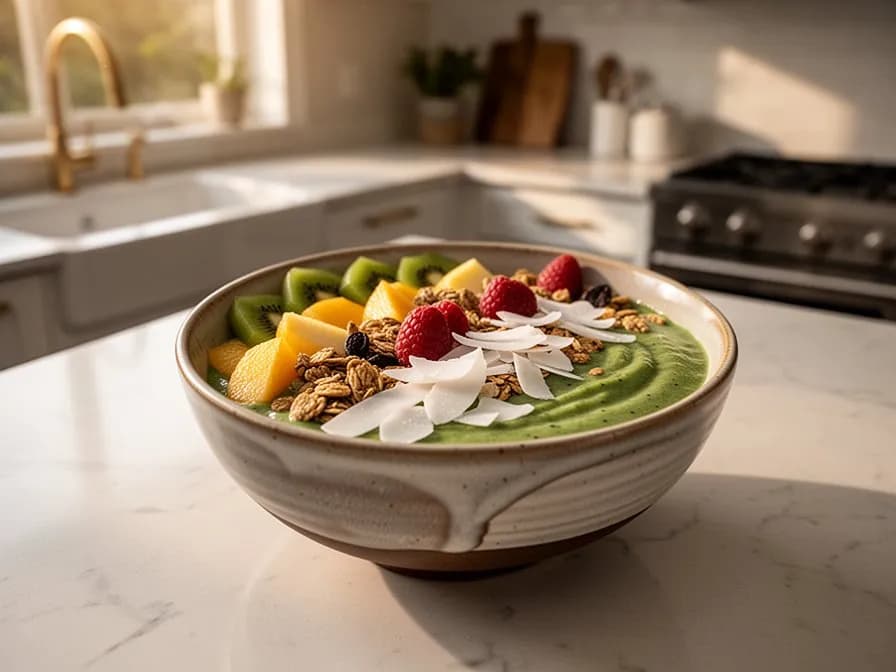
Roasted Breadfruit with Herb Butter
45 minutesThe simplest and most traditional way to enjoy breadfruit — roasted whole over an open flame or in an oven until the skin chars and the interior becomes fluffy and fragrant. Finished with compound herb butter, it makes a stunning centerpiece side dish.
7 ingredients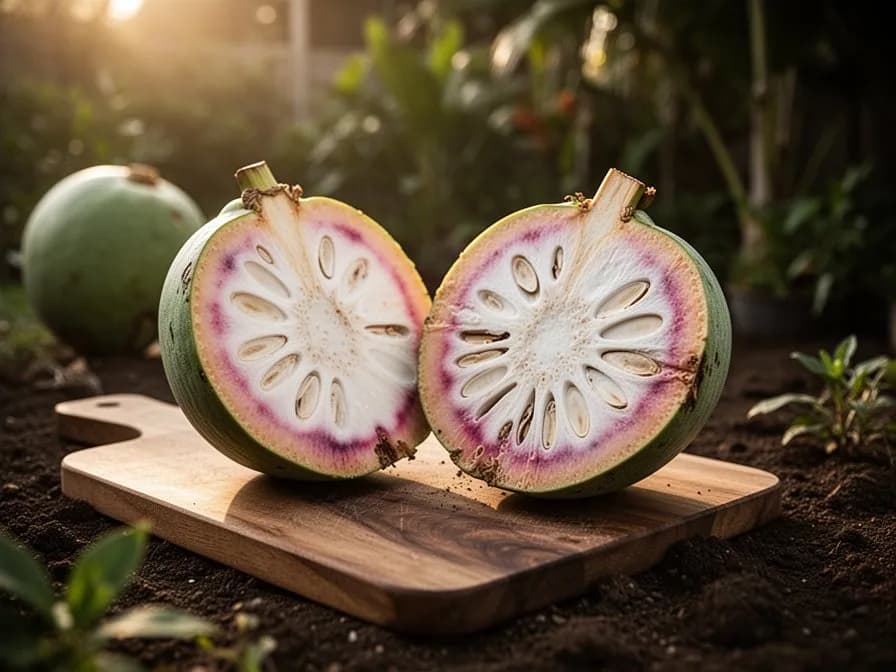
Breadfruit Curry
35 minutesA rich and satisfying curry that showcases breadfruit's ability to absorb flavors beautifully. The starchy chunks hold their shape during cooking and take on the deep spiced coconut sauce, creating a hearty vegetarian main course.
11 ingredientsBreadfruit Chips
25 minutesThinly sliced and fried or baked until golden and crisp, breadfruit chips are an addictive snack that rivals potato chips in crunch and flavor. Season simply with sea salt or experiment with spiced blends.
6 ingredientsCulinary Uses
Green breadfruit is cooked as a starchy staple similar to potato. It can be roasted over flame, baked, boiled, steamed, or fried into chips. The cooked flesh absorbs flavors well and is used in curries, stews, and chowders. Ripe breadfruit is sweeter and can be eaten fresh or used in desserts. The flour is used in gluten-free baking. Seeds from seeded varieties are boiled or roasted as a nutritious snack.
What's inside
Health Benefits
- Breadfruit is rich in dietary fiber, which supports healthy digestion, helps maintain stable blood sugar levels, and contributes to a feeling of fullness that can assist with weight management.
- The potassium content in breadfruit supports healthy cardiovascular function by helping to regulate blood pressure and counteracting the effects of dietary sodium.
- Breadfruit contains omega-3 and omega-6 fatty acids in favorable ratios, contributing to anti-inflammatory effects and supporting brain and heart health.
- As a complex carbohydrate with a moderate glycemic index compared to refined grains, breadfruit provides sustained energy release and may be a better choice than white rice or white bread for blood sugar management.
- The flavonoids and carotenoids present in breadfruit have antioxidant properties that help neutralize free radicals, potentially reducing the risk of chronic diseases and supporting immune function.
- Traditional medicine practices across the Pacific and Caribbean have used breadfruit leaves as a treatment for high blood pressure, diabetes management, and liver disease — uses that are now being investigated by modern researchers.
Where Breadfruit comes from
Breadfruit (Artocarpus altilis) has one of the most remarkable origin stories of any cultivated crop plant. Its story begins in the islands of Oceania, where it was first domesticated thousands of years ago from the wild seeded breadnut (Artocarpus camansi), native to New Guinea and the Philippines. Ancient Polynesian navigators, widely regarded as the greatest seafarers in human history, carried breadfruit cuttings aboard their voyaging canoes as they expanded their settlements across the vast Pacific Ocean. By the time European explorers arrived, breadfruit had been cultivated across a huge arc stretching from New Guinea through Micronesia, Melanesia, Polynesia, and as far as Hawaii and Easter Island.
For Pacific Island communities, breadfruit was far more than a staple food — it was a cultural cornerstone. In many traditions, the tree was associated with abundance, hospitality, and ancestral connection. Surpluses were preserved by fermenting breadfruit into a paste called ma or masi, which could be stored underground in pits for months or even years, providing a critical food reserve against drought and typhoon seasons.
European contact with breadfruit came through the journals of explorers like Joseph Banks, who accompanied Captain James Cook on his first voyage to Tahiti in 1769. Banks was captivated by the productivity of the breadfruit tree and famously championed the idea of transplanting it to the British Caribbean colonies as cheap food for enslaved workers. This proposal led to the ill-fated voyage of HMS Bounty under Captain William Bligh in 1787-1789 — the mutiny that occurred before the breadfruit plants could be delivered. Bligh persevered, and on a second expedition in 1792 successfully introduced breadfruit to the Caribbean islands of Jamaica and Saint Vincent.
Despite this dramatic introduction, breadfruit was initially rejected by enslaved people in the Caribbean, who were unfamiliar with it and resistant to being fed an imposed food. Over generations, however, it became deeply woven into Caribbean cuisine and culture. Today, breadfruit is cultivated throughout the humid tropics from Central America and the Caribbean through West Africa, South and Southeast Asia, and across the Pacific, feeding millions of people and attracting growing attention as a climate-resilient food crop for the 21st century.
Breadfruit: did you know?
Fascinating facts about Breadfruit
A single mature breadfruit tree can produce 200 or more fruits per year, providing enough calories to feed a family of four — making it one of the most calorie-dense and productive food trees on the planet.
Breadfruit questions, answered
When should I plant Breadfruit?
What hardiness zones can Breadfruit grow in?
How much sun does Breadfruit need?
How far apart should I space Breadfruit?
What pests and diseases affect Breadfruit?
How do I store Breadfruit after harvest?
What are the best Breadfruit varieties to grow?
What soil does Breadfruit need?
How long does it take for a breadfruit tree to produce fruit?
Can I grow breadfruit outside of the tropics?
What is the difference between ripe and unripe breadfruit, and how should each be used?
Does breadfruit require another tree for pollination?
Why are my breadfruit tree's leaves turning yellow?
How do I store and preserve breadfruit?
You just read the theory. Now grow it on autopilot.
Everything that makes Breadfruit fiddly — the timing, the spacing, the companions, the harvest window — is exactly what PlotMyGarden handles for you, for every plant in your garden.
A plan that knows your weather
Set your location once. Get sow, feed and harvest dates built around your real last-frost date and live forecast — no more guessing from a generic seed packet.
From the “When to plant” sectionDrag-and-drop bed planner
Design beds on a grid. Every plant snaps to its proper spacing, and you can see your whole season laid out before you spend a cent on seed.
From the “Growing guide” sectionCompanion conflicts, caught early
200+ good-and-bad pairings checked live as you plant — so a season-wrecking mistake never makes it into the ground.
From the “Companions” sectionReminders you'll actually act on
“Water the beans.” “Pick today before it turns.” Timely, specific, and tied to the plants you're really growing.
From the “Harvest” sectionSuccession, scheduled
Want a harvest for six weeks, not six days? It spaces your sowings automatically and reminds you when each new block is due.
From the “When to plant” sectionA record that gets smarter
Every harvest you log teaches it your garden. Next year's plan starts from what actually worked in your soil, not a textbook's.
From the “Overview” sectionMore Tropical Fruits
Grow your best Breadfruit yet — and everything around it.
Start a free plan today. Lay out your beds, drop in your Breadfruit, and let PlotMyGarden handle the timing, spacing, companions and reminders from seed to harvest basket.