Blutwurz
Eine frühjahrsephemere Wildblume mit reinweißen Blüten und orangerot gefärbtem Rhizomsaft, der historisch in traditionellen Heilmitteln verwendet wurde.





Auf dieser SeiteÜberblick
Blutwurz im Überblick
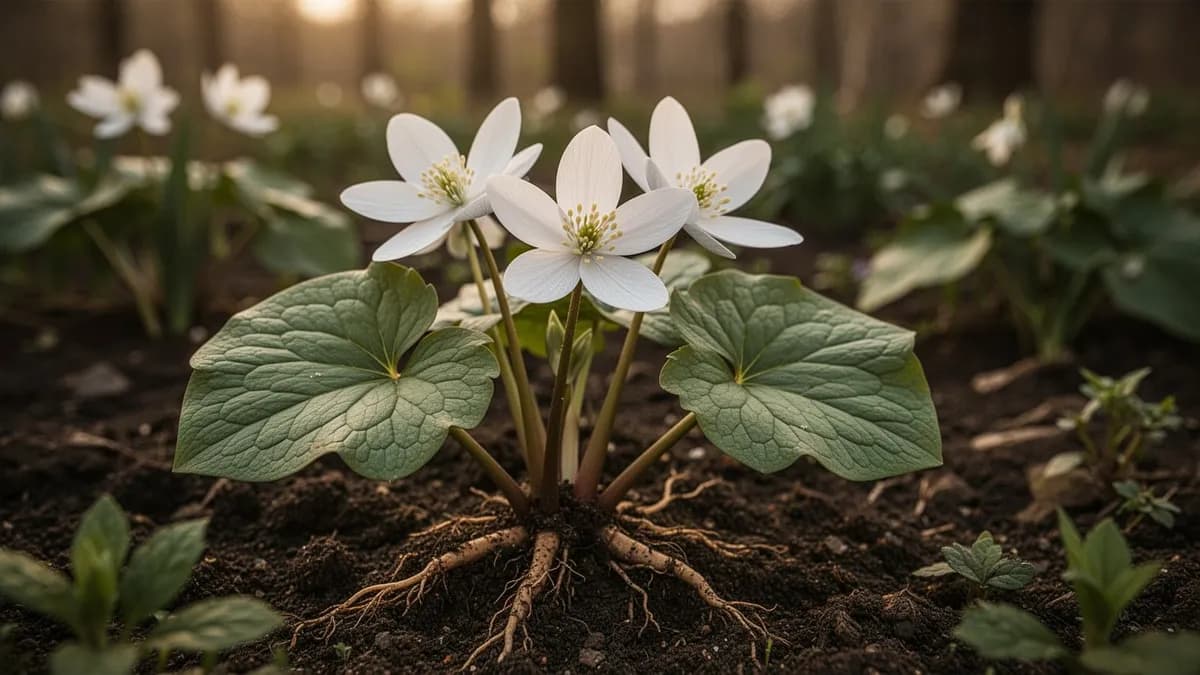
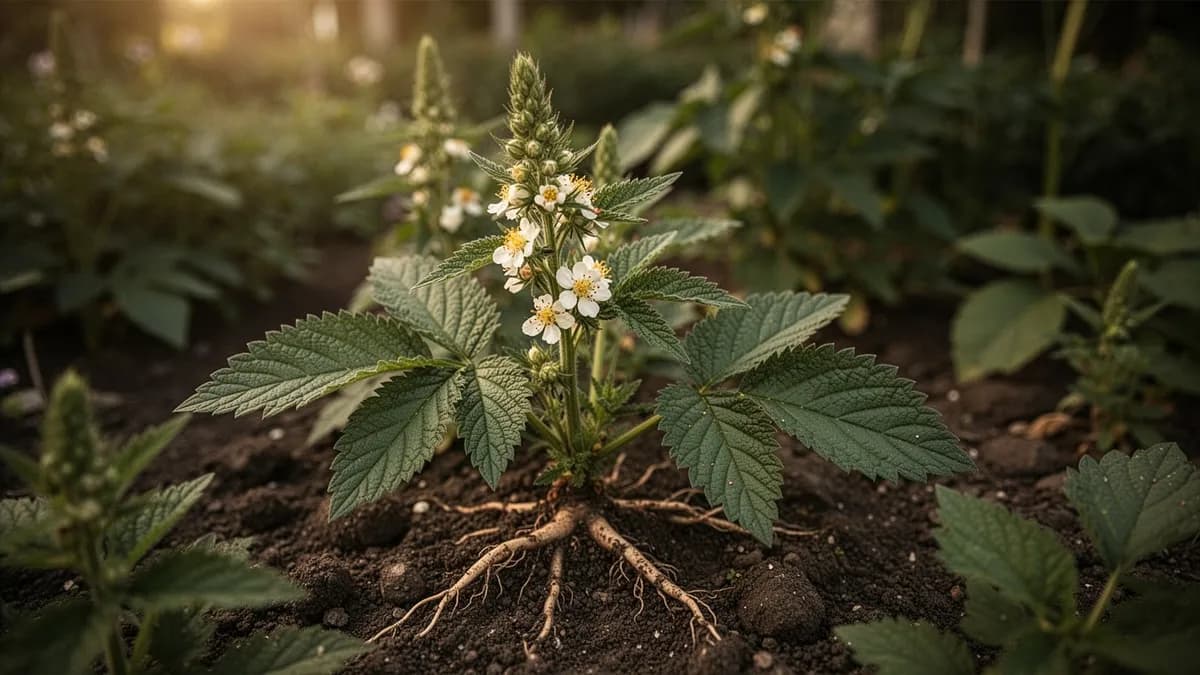
Eine frühjahrsephemere Wildblume mit reinweißen Blüten und orangerot gefärbtem Rhizomsaft, der historisch in traditionellen Heilmitteln verwendet wurde. Die Blutwurz treibt früh im Frühling aus, bevor sich das Kronendach der Bäume schließt, und bildet ein einzelnes gelapptes Blatt, das den Blütenstiel umhüllt. Im Herbst in humusreichen Waldboden pflanzen und den Kolonien erlauben, sich natürlich auszubreiten.
Wann Blutwurz pflanzen
Blutwurz-Samen haben fleischige Anhängsel (Elaiosome), die Ameisen anziehen und so in der Natur zur Verbreitung beitragen. Frische Samen sofort nach der Ernte im Sommer aussäen – sie verlieren rasch ihre Keimfähigkeit. In feuchte, humusreiche Erde drücken und im Freien über den Winter kalt stratifizieren. Die Keimung erfolgt im darauffolgenden Frühling. Sämlinge sind winzig und wachsen langsam; es dauert 3–4 Jahre, bis sie blühfähig sind. Die Teilung etablierter Rhizomhorste im Spätsommer (während der Ruhephase) ist deutlich schneller und zuverlässiger. Teilungen immer sofort in gleicher Tiefe wieder einpflanzen.
Dein Blutwurz-Jahr
Abgestimmt auf Zone 7 · typische Saison · Frost geht um den 2. Apr. und kehrt um den 1. Nov. zurück
Blutwurz Sep – Okt pflanzen, Apr – Mai ernten. Beachte die Pflanzmethoden unten und wähle dein Klima für passende Zeiträume.
So baust du Blutwurz an
Die Blutwurz ist eine faszinierende frühjahrsephemere Wildblume, die in den Laubwäldern des östlichen Nordamerikas heimisch ist. Sie bildet reinweiße Blüten mit goldenen Staubgefäßen, die erscheinen, bevor das Kronendach der Bäume sich belaubt. Jede Blüte wird von einem einzelnen, elegant gelappten blaugrünen Blatt umhüllt, das sich schützend um den Stängel legt. Rhizome im Herbst 5 cm tief und 20 cm auseinander in humusreichen Waldboden unter Laubbäumen pflanzen.
Einen humosen, gut durchlässigen Boden im Halb- bis Vollschatten bereitstellen. Die Blutwurz gedeiht im gefilterten Frühlingslicht von Laubwäldern und schließt ihren Wachstumszyklus ab, bevor schwerer Sommerschatten entsteht. Die Pflanzen ziehen sich bis Hochsommer ein, sobald das Laub abstirbt und die Bäume volles Kronendach bilden. Dieser ephemere Lebenszyklus macht die Blutwurz zur idealen Ergänzung für später aufgehende Pflanzen, die den Platz füllen.
Die Blutwurz breitet sich allmählich durch Rhizomwachstum aus und bildet mit der Zeit attraktive Kolonien. Die dicken Rhizome enthalten einen leuchtend orangeroten Saft (daher der gebräuchliche Name), der von Ureinwohnern Nordamerikas historisch als Farbstoff verwendet wurde. Rhizome vorsichtig handhaben, da der Saft Haut und Kleidung dauerhaft färbt. Dies ist eine Pflanze zum Anschauen – nicht zum Essen: Alle Pflanzenteile sind giftig, und der orangefarbene Saft darf nicht eingenommen werden. Sie wird am besten als dekorative Wildblume geschätzt.
72 Pflanzen passen in ein Beet von 120 × 240 cm
Blutwurz braucht 20 cm Platz pro Pflanze. Der Planer hält diesen Abstand für dich ein — jede Pflanze, jedes Beet.
Die besten Nachbarn für Blutwurz
Die Blutwurz ist ein klassischer Begleiter für andere frühlingshafte Waldwildblumen wie Waldlilien, Virginische Glockenblumen, Leberblümchen und Herzblume. Zusammen mit später aufgehenden Schattenpflanzen (Funkien, Farne, Astilben) pflanzen, die den Platz füllen, nachdem die Blutwurz eingezogen ist. In naturnahen Waldgärten schafft sie ein atemberaubendes Frühlingsschauspiel unter Laubbäumen. Die frühen Blüten bieten wichtigen Nektar für aufgehende Frühlingsbestäuber.
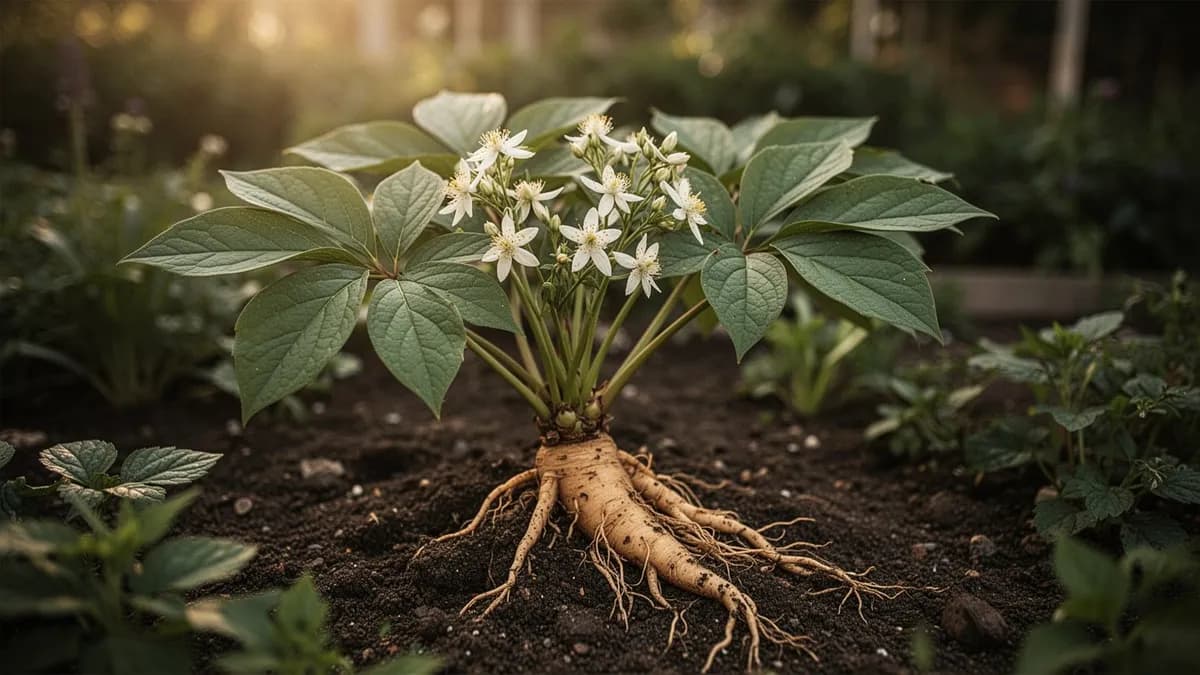
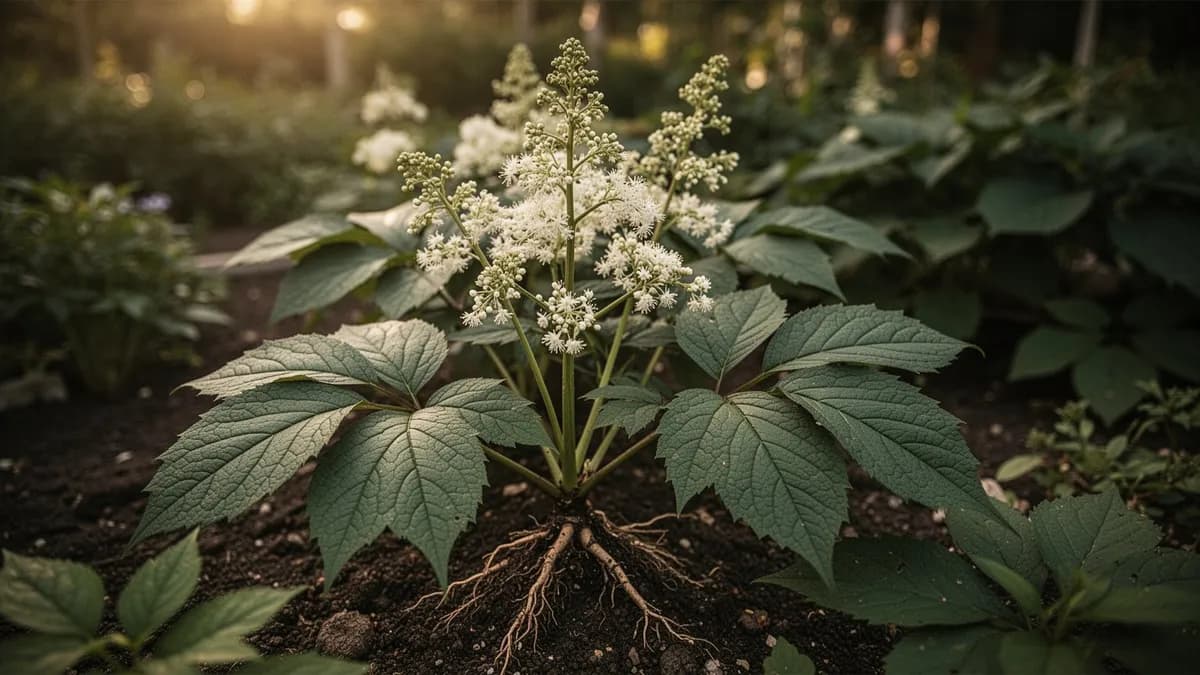
Ginseng gehört daneben.
Altes Gärtnerwissen, geprüft an der echten Nachbartabelle von Blutwurz — teste jede Pflanze, die du anbaust.
Probiere Blutwurz direkt hier im Beet
Ein echtes Planer-Beet, Blutwurz steht schon drin. Tippe einen Begleiter an, platziere ihn und sieh, wie die Nachbarschaftsprüfung antwortet — grün für gute Nachbarn, rot bei Streit.


Passende Anbau-Ratgeber
Richtig düngen
In humosem, gut durchlässigem Boden mit pH 5,0–6,5 anbauen. Mit reichlich Lauberde und reifem Kompost ergänzen, um natürliche Waldbodenbedingungen nachzubilden. Jedes Jahr im Herbst, wenn die Bäume ihr Laub abwerfen, mit zerhäckselten Blättern oder Lauberde abdecken. Keine zusätzliche Düngung erforderlich – die Blutwurz ist an den langsamen Nährstoffkreislauf von Waldböden angepasst. Den Boden im Frühling während des aktiven Wachstums gleichmäßig feucht halten; Sommerfeuchtigkeit ist weniger kritisch, da die Pflanzen sich in der Ruhephase befinden.
Ideale Temperatur
Winterhärtezone-Kompatibilität
Von der Saat zur Ernte, Schritt für Schritt
Winterruhe
Blutwurz-Rhizome ruhen durch den Winter im Boden, isoliert durch Laubstreu und Schneedecke. Das dicke, fleischige Rhizom speichert den alkaloidreichen roten Saft und die Energiereserven, die für das explosive Frühlingswachstum benötigt werden. Unterirdisch verlängert sich das Rhizom langsam und kann sich verzweigen, wodurch der Bestand der Kolonie über die Jahre allmählich zunimmt.
Frühlingsaustrieb und Blüte
Wenn die Bodentemperaturen im März oder Anfang April steigen, gehört die Blutwurz zu den allerersten Wildblumen, die austreiben. Jeder Wachstumspunkt schickt ein einzelnes, fest eingerolltes Blatt, das die Blütenknospe wie ein Mantel schützend umhüllt. Die Blüte entfaltet sich, bevor das Blatt sich vollständig öffnet, und zeigt 8–12 reinweiße Blütenblätter um eine Gruppe leuchtend gelber Staubgefäße. Einzelne Blüten sind ephemer und halten nur 1–2 Tage – manchmal nur einen einzigen Nachmittag, wenn die Temperaturen warm sind.
Blattentfaltung und Samenentwicklung
Nachdem die Blütenblätter abgefallen sind, entfaltet sich das einzelne handförmige Blatt vollständig und erreicht 15–25 cm Breite mit tief gebogenen, runden Lappen. Das Blatt hat eine charakteristische blaugrüne Farbe mit deutlicher Äderung. Eine längliche grüne Samenkapsel entwickelt sich an der Spitze des Blütenstiels. Im Inneren reifen kleine runde Samen heran, die jeweils ein fleischiges weißes Anhängsel namens Elaiosom entwickeln, das reich an für Ameisen attraktiven Lipiden ist.
Samenausbreitung
Die Samenkapsel öffnet sich im Spätfrühling und gibt Samen auf den Waldboden frei. Ameisen werden von den Elaiosomen angezogen und tragen die Samen zurück in ihre Nester, verbrauchen das fettreiche Anhängsel und hinterlassen den Samen in nährstoffreichen unterirdischen Kammern – eine Ausbreitungsstrategie namens Myrmekochorie. Diese durch Ameisen vermittelte Ausbreitung ist der wichtigste Mechanismus für die Kolonieausweitung über das Rhizomwachstum hinaus.
Blattseneszenz und Sommerruhe
Bis Ende Juni oder Anfang Juli vergilbt das Blutwurzblatt und verwelkt, wenn das Kronendach des Waldes vollständig geschlossen ist. Die Pflanze zieht sich vollständig in den Boden zurück und tritt in eine verlängerte Sommer- und Herbstruhe ein. Das Rhizom setzt sein langsames unterirdisches Wachstum fort, verlängert sich seitlich und verzweigt sich zu neuen Wachstumspunkten. Nährstoffe aus dem sterbenden Blatt werden ins Rhizom zurückgezogen, bevor es vollständig einzieht.
Rhizomwachstum und Knospanbildung
Im Verlauf des Spätsommers und Herbstes wächst das Rhizom langsam unterirdisch weiter, dehnt sein Verzweigungsnetz aus und bildet an den Rhizomspitzen die Blüten- und Blattknospen des nächsten Jahres. Jede Knospe ist bis zum Herbst vollständig vorgebildet und enthält eine miniaturhafte Blüte und ein fest zusammengedrücktes Blatt. Das Rhizom akkumuliert Sanguinarin und andere Benzylisochinolin-Alkaloide, die ihm seine charakteristische rote Farbe verleihen und als chemischer Schutz gegen Herbivorie und Pilzbefall dienen.
Ruhende Blutwurz-Beete im Winter nicht stören. Eine dicke Schicht natürlicher Laubstreu (5–8 cm) an Ort und Stelle belassen, um die Rhizome zu isolieren und die Bodenfeuchtigkeit zu erhalten. Betreten der Pflanzflächen vermeiden, da die Rhizome relativ flach liegen und durch Verdichtung beschädigt werden können.
Blutwurz Monat für Monat pflegen
Was du jeden Monat für deine Blutwurz tun solltest
Oktober
Aktueller MonatRhizomteilungen oder Neupflanzungen zu Beginn des Monats abschließen. Eine 5–8 cm dicke Schicht zerkleinerte Laubblätter (Eiche, Ahorn, Buche) über alle Blutwurz-Beete auftragen. Dieser Mulch ist unerlässlich, um natürliche Waldbodenbedingungen zu simulieren und die flachen Rhizome im Winter zu schützen.
Immer wissen, was jetzt im Garten zu tun ist
Eine E-Mail zum Monatsanfang: was du jetzt säen, pflanzen und anpacken solltest — für deine Blutwurz und alles, was drumherum wächst. Dazu ein kurzer Startkurs, der dich vor den klassischen Fehlern bewahrt.
- Was jetzt zu tun ist
- Passend zu deiner Saison
- Startkurs inklusive
Blutwurz ernten
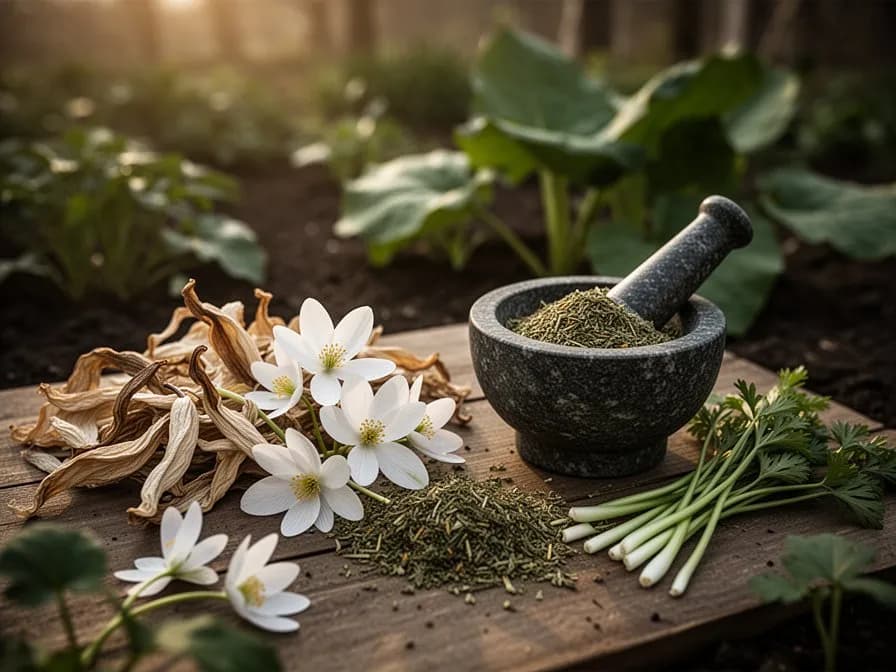
Blutwurz-Rhizome wurden historisch in traditionellen Heilmitteln verwendet, aber die Pflanze enthält giftige Alkaloide und muss sorgfältig behandelt werden. Falls Rhizome gesammelt werden, im Spätsommer während der Ruheperiode graben und nur einen kleinen Teil aus jeder Kolonie entnehmen. Der leuchtend orangerote Saft färbt alles, womit er in Berührung kommt. Rhizomstücke an einem gut belüfteten, lichtgeschützten Ort trocknen. Hinweis: Die innere Anwendung von Blutwurz wird wegen ihrer Giftigkeit nicht empfohlen. Die Pflanze wird am besten als dekorative Wildblume in Waldgärten genossen.
angenommen, du pflanzt zu Beginn des Zeitraums — trage dein tatsächliches Datum ein
Ernte Blutwurz zügig, dann trägt die Pflanze weiter.
Lagerung & Konservierung
Wenn für äußere Anwendung gesammelt, Rhizome reinigen und dünn aufschneiden, bevor sie bei niedriger Temperatur in einem Dörrgerät oder gut belüfteten Bereich getrocknet werden. Getrocknetes Material in luftdichten, dunklen Glasgläsern bis zu einem Jahr lagern. Das Alkaloid Sanguinarin ist die primäre Wirkverbindung. Für äußerliche topische Zubereitungen ausschließlich in Alkohol tinktieren. Alles Material stets mit Handschuhen handhaben, da der orangefarbene Saft Haut und Gewebe dauerhaft färbt. Vor der Verwendung von Blutwurzpräparaten stets qualifizierte Kräuterkundige konsultieren.
Was schiefgeht — und die Lösung
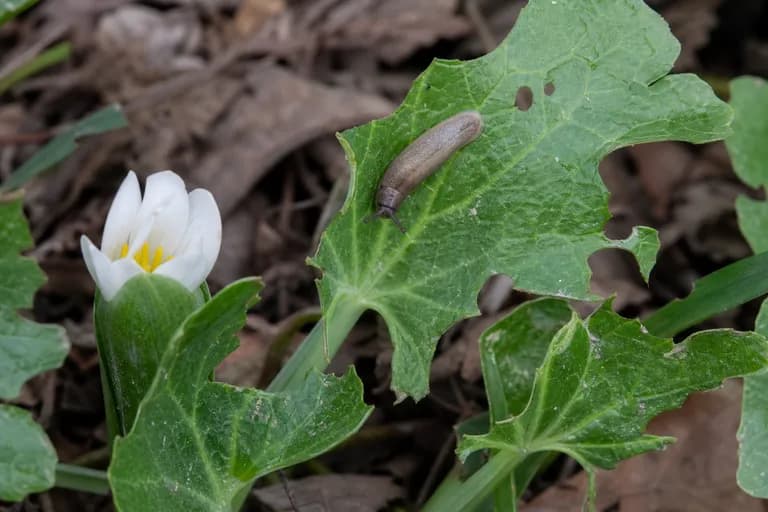
Schnecken
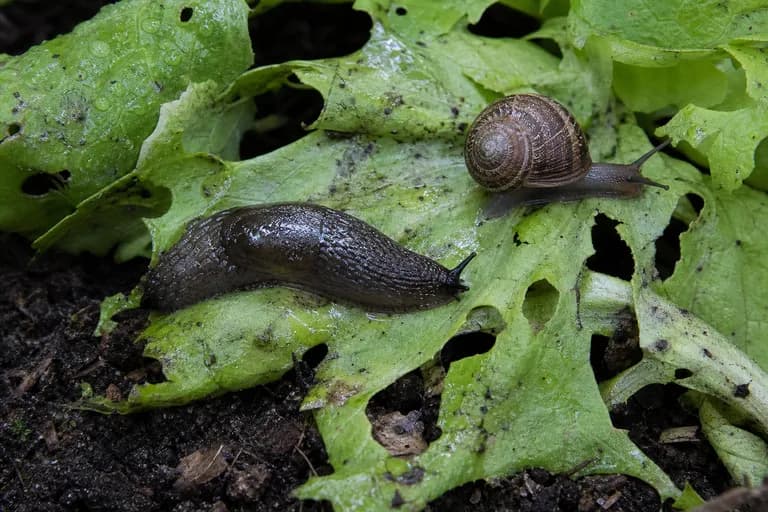
SchädlingSchäden an aufgehenden Blüten und jungen Blättern im Frühling. Schleimspuren rund um die Pflanzen.
Rehverbiss
SchädlingBlüten und Blätter werden im Frühling abgefressen, wenn das zarte Wachstum am verletzlichsten und die Rehe hungrig sind.
Fehlerbehebung bei häufigen Problemen
Die kurze Blütezeit (1–2 Wochen) kann enttäuschend sein – in großen Gruppen pflanzen für maximale visuelle Wirkung während des kurzen Blütefensters. Das Laub stirbt bis Hochsommer ab und hinterlässt Lücken; mit Farnen, Funkien oder anderen später aufgehenden Pflanzen kombinieren. Kolonien breiten sich langsam aus und brauchen Jahre, um beeindruckende Bestände zu bilden – Geduld ist gefragt. Der orangefarbene Saft färbt alles dauerhaft; Rhizome stets mit Handschuhen handhaben. Alle Pflanzenteile sind bei Einnahme giftig.
Anbautipps
- Die Blutwurz unter Laubhölzern ansiedeln, die im Sommer vollen Schatten bieten, aber im Frühling helles Licht durch kahle Äste lassen. Zuckerahorn, Eiche, Buche, Hickory und Tulpenpappel sind ideale Kronendachbegleiter. Immergrünen Schatten vermeiden, der das kritische frühe Frühlingslicht blockiert, das die Pflanze benötigt.
- Der Boden muss reich, humushaltig und gut durchlässig sein – er muss die tiefe Laubstreue-Schicht eines reifen Waldbodens nachahmen. Gartenboden großzügig mit kompostierten Blättern, Lauberde und reifem Kompost ergänzen. Die Blutwurz gedeiht nicht in schwerem Lehm, verdichtetem Boden oder chronisch nassen Standorten.
- Rhizome horizontal in 2–3 cm Tiefe im frühen Herbst (September–Oktober) pflanzen. Die Wachstumsknospen nach oben ausrichten. Rhizome 15–20 cm auseinander setzen, um Platz für die Kolonieausbreitung zu lassen. Nach dem Pflanzen gründlich wässern und mit 5–8 cm zerkleinerten Laubblättern mulchen.
- Beim Umgang mit Blutwurz-Rhizomen oder anderen Pflanzenteilen stets Handschuhe tragen. Der rot-orangefarbene Saft enthält Sanguinarin und andere giftige Alkaloide, die die Haut dauerhaft färben und Reizungen verursachen können. Werkzeug nach Gebrauch reinigen, um Saftübertragungen zu verhindern.
- Die Blutwurz benötigt keine ergänzende Düngung. Ihr Nährstoffbedarf wird vollständig durch zersetzendes Laub gedeckt – dasselbe natürliche Recycling, das sie in wilden Waldlebensräumen erhält. Chemische Dünger können tatsächlich die Mykorrhiza-Pilze schädigen, auf die die Blutwurz bei der Nährstoffaufnahme angewiesen ist.
- Eine gleichmäßige Laubstreue-Mulchschicht ganzjährig aufrechterhalten. Mit zerkleinerten Laubblättern jeden Herbst erneuern. Blätter aus Blutwurz-Beeten niemals zusammenrechen – die zersetzende organische Substanz ist die Grundlage des Wachstumsmilieus der Pflanze und schützt die flachen Rhizome vor Temperaturextremen.
- Die Blutwurz ist bemerkenswert schädlings- und krankheitsresistent dank ihrer potenten Alkaloidchemie. Rehe, Kaninchen, Wühlmäuse und die meisten Insekten meiden sie vollständig. Das macht sie zu einer hervorragenden Wahl für Waldgärten, in denen Herbivorie für andere Pflanzen ein Problem darstellt.
- Die Blutwurz mit anderen einheimischen Waldephemeralen für eine Abfolge von Frühlingsinteresse kombinieren: Virginische Glockenblumen, Waldlilien, Herzblume, Wilder Ingwer, Leberblümchen und einheimische Farne. Diese Begleiter teilen dieselben kulturellen Anforderungen und schaffen einen vielfältigen, ökologisch authentischen Waldgarten.
- Die Vermehrung aus Samen ist möglich, aber langsam. Frische Samen sofort nach der Ernte im Spätfrühling aussäen – Blutwurz-Samen haben keine Dormanz und keimen am besten, wenn sie umgehend gepflanzt werden. Sämlinge sind winzig und brauchen 3–5 Jahre, um blühfähig zu sein. Rhizomteilung im Herbst ist weitaus schneller und zuverlässiger.
- Beim Anbau der gefülltblühenden 'Multiplex'-Form beachten, dass sie keinen Samen ansetzt, da alle Fortpflanzungsstrukturen in Blütenblätter umgewandelt werden. Sie kann nur durch Rhizomteilung vermehrt werden. Diese begehrte Form vermehrt sich langsamer als die einfachblühende Art, produziert aber dramatisch länger anhaltende Blüten von 3–5 Tagen.
Bau deine beste Blutwurz an — und alles drumherum.
Starte heute kostenlos. Lege deine Beete an, setze deine Blutwurz ein und lass PlotMyGarden Timing, Abstände, Begleiter und Erinnerungen von der Saat bis zum Erntekorb übernehmen.
Finde deine Blutwurz
Sanguinaria canadensis (Einfachblühend)
Die typische Wildform mit reinweißen, 8-blättrigen Blüten. Ephemerer Frühlingsblüher, der bis Hochsommer einzieht.
Sanguinaria canadensis 'Multiplex'
Eine spektakuläre gefülltblühende Form, die an eine miniaturhafter weißer Seerose erinnert. Blüten halten länger als die einfache Form. Sehr begehrt.
Blutwurz-Rhizome von Spezialanbietern für einheimische Pflanzen kosten typischerweise 8–15 € pro Rhizom, wobei etablierte Horste der begehrten gefülltblühenden 'Multiplex'-Form 25–50 € oder mehr kosten. Einmal etabliert, vermehrt sich jedoch ein einzelnes Rhizom durch natürliche Teilung und ameisenverteilten Samen über 5–10 Jahre zu einer stattlichen Kolonie – und bietet ein sich ständig ausbreitendes Frühlingsschauspiel ohne zusätzliche Kosten. Eine bescheidene Anfangsinvestition von 5–10 Rhizomen (50–100 €) kann schließlich eine große Schattenfläche bedecken, die mit gekauften Pflanzen Hunderte von Euro kosten würde. Neben dem monetären Nutzen bietet die Blutwurz unersetzlichen ökologischen Wert als Lebensraum für einheimische Bestäuber und Ameisen und dient als lebende Verbindung zum botanischen Erbe der Laubwälder des östlichen Nordamerikas.
Schnelle Rezepte
Blutwurz-Naturfärbebad
2 StundenEinen lebhaften orangeroten Naturfarbauszug aus Blutwurz-Rhizomen herstellen – eine Technik, die von Ureinwohnern seit Jahrhunderten zum Färben von Textilien, Körben und Leder verwendet wird. Dieser Farbstoff funktioniert am besten auf Naturfasern wie Baumwolle, Leinen, Wolle und Seide, die mit Alaun vorgebeizt wurden. Stets Handschuhe tragen und in einem gut belüfteten Bereich arbeiten, da die Alkaloide Haut und Schleimhäute reizen können.
6 ZutatenGepresste Blutwurz-Botanik-Kunst
30 Min. aktiv, 2–3 Wochen PressenDie ätherische Schönheit der flüchtigen Frühlingsblüten der Blutwurz durch botanisches Pressen konservieren. Da die Blüten auf der Pflanze nur 1–2 Tage halten, bewahrt das Pressen ihre zarte Form dauerhaft. Nur aus eigenen, gut etablierten Gartenkolonien entnehmen und dabei nicht mehr als einige Blüten pro Saison nehmen. Die gepressten Exemplare ergeben atemberaubende gerahmte Kunstwerke, Grußkarten und Herbarbögen.
6 ZutatenBlutwurz-Gartenvermehrungs-Teilungen
20 Min.Die zuverlässigste Methode, die Blutwurz im Garten zu teilen und zu verbreiten, ist die Rhizomteilung im frühen Herbst. Dies ist kein Rezept zum Verzehr, sondern eine praktische Gartentechnik zur verantwortungsvollen Vermehrung dieser einheimischen Wildblume. Jede Teilung kann eine neue Kolonie begründen, die im folgenden Frühling blüht, was weit schneller ist als die 3–5 Jahre, die aus Samen erforderlich sind.
7 ZutatenWas drinsteckt
Gesundheitsvorteile
- Außergewöhnlicher Zierwert als eine der frühesten und schönsten einheimischen Frühlingsblumen des östlichen Nordamerikas. Die reinweißen Blüten, die aus dem kahlen Waldboden auftauchen, bieten in Waldgärten frühe saisonale Schönheit, wenn kaum andere Pflanzen blühen.
- Ökologisch wertvoll als frühe Pollenquelle für einheimische Bienen, Erdbienen und andere Bestäuber, die im frühen Frühling auftauchen, wenn kaum Blüten verfügbar sind. Die Unterstützung von Blutwurz-Kolonien hilft, Bestäuberpopulationen in einer kritischen, nahrungsarmen Phase zu erhalten.
- Die myrmekochore Samenausbreitungs-Beziehung mit einheimischen Ameisen macht die Blutwurz zu einer Zeigerart für gesunde Waldökosysteme. Ihr Vorkommen signalisiert intakte Ameisengemeinschaften und funktionale ökologische Beziehungen in Waldlebensräumen.
- Historische und kulturelle Bedeutung als eine Pflanze, die tief mit indigenen Wissenssystemen, frühem amerikanischem Kräuterwesen und dem Naturerbe der Laubwälder des östlichen Nordamerikas verflochten ist. Der Anbau der Blutwurz verbindet Gärtner mit Jahrhunderten ethnobotanischer Tradition.
- GIFTWARNUNG: Alle Teile der Blutwurz sind giftig und sollten niemals eingenommen, ohne professionelle Beratung auf die Haut aufgetragen oder in Hausmitteln verwendet werden. Das Alkaloid Sanguinarin verursacht Gewebesnekrose, schwere Magen-Darm-Beschwerden und kann in großen Mengen tödlich sein. Sogenannte 'Schwarze-Salbe'-Produkte, die Blutwurz enthalten, sind gefährlich und haben entstellende Verletzungen verursacht.
- Pflegeleichte ausdauernde Bodenbedeckung, die kein Düngen, Wässern (nach der Etablierung), Beschneiden oder Schädlingsmanagement benötigt. Die Blutwurz naturalisiert sich leicht unter geeigneten Waldbedingungen und bildet selbsttragende Kolonien, die Jahrzehnte andauern und praktisch keinen Pflegeaufwand erfordern.
Woher Blutwurz stammt
Die Blutwurz (Sanguinaria canadensis) ist eine ausdauernde Wildblume, die in den reichen, frischen Wäldern des östlichen Nordamerikas heimisch ist. Ihr natürliches Verbreitungsgebiet erstreckt sich von Nova Scotia und dem südlichen Quebec westwärts bis nach Manitoba und südwärts durch die Appalachen bis nach Nordflorida und Osttexas. Sie gedeiht in den humusreichen, gut durchlässigen Böden unter Laubhölzern – Zuckerahornbäumen, Eichen, Buchen und Tulpenpappeln – wo gefiltertes Frühlingslicht durch das kahle Kronendach eindringt, bevor die Blätter austreiben.
Jahrtausendelang hielten die Ureinwohner des östlichen Nordamerikas die Blutwurz sowohl für praktische als auch für zeremonielle Zwecke in hohem Ansehen. Die Cherokee, Irokesen, Algonquin und viele andere Völker verwendeten den leuchtend rot-orangefarbenen Rhizomsaft als Körperfarbe, Textilfarbstoff und Insektenschutzmittel. Medizinisch wurden kleine Mengen der Wurzel als Brechmittel, Atemwegsbehandlung und Wundverband zubereitet, wobei die Anwender die Giftigkeit der Pflanze verstanden und sie mit großer Sorgfalt und über Generationen weitergegebenem Wissen einsetzten. Die Haudenosaunee (Irokesen) trugen den Saft auf Ahornzuckerformen auf, um ihnen eine rote Farbe zu verleihen.
Europäische Kolonisten übernahmen die Blutwurz rasch aus dem indigenen Wissen und integrierten sie in die Materia Medica des frühen amerikanischen Kräuterwesens. Im 18. und 19. Jahrhundert erschien die Blutwurz in offiziellen Pharmakopöen und wurde von Eklektischen Ärzten weitverbreitet als Behandlung für Atemwegserkrankungen, Hautwucherungen und Fieber verkauft. Ihre umstrittenste historische Verwendung war in ätzenden Salben – kaustische topische Pasten, die auf Hautläsionen und Tumore aufgetragen wurden. Obwohl diese Zubereitungen Gewebe zerstören konnten, verursachte ihre unkontrollierte Wirkung schwere Narben und Gewebeschäden, und die moderne Medizin hat ihre Verwendung zur Selbstbehandlung entschieden abgelehnt.
Heute wird die Blutwurz vor allem als außergewöhnliche einheimische Zierpflanze für Waldgärten geschätzt. Ihre frühen Frühlingsblüten, ihre architektonische Belaubung und ihre pflegeleichte Natur haben sie zu einem Liebling unter Naturgärtnern und ökologischen Landschaftsgestaltern gemacht, die die Flora der Laubwälder des östlichen Nordamerikas wiederherstellen und feiern wollen.
Blutwurz: Schon gewusst?
Faszinierende Fakten über Blutwurz
Die Blutwurz (Sanguinaria canadensis) ist die einzige Art ihrer Gattung – sie hat keine nahen lebenden Verwandten und ist damit ein echter botanischer Einzelgänger in der Mohnfamilie (Papaveraceae) mit einer alten Abstammungslinie, die Millionen von Jahren zurückreicht.
Blutwurz: Fragen & Antworten
Wann sollte ich Blutwurz pflanzen?
Was sind gute Begleitpflanzen für Blutwurz?
In welchen Winterhärtezonen kann Blutwurz wachsen?
Wie viel Sonne braucht Blutwurz?
Welchen Abstand sollte ich zwischen Blutwurz lassen?
Welche Schädlinge und Krankheiten befallen Blutwurz?
Wie lagere ich Blutwurz nach der Ernte?
Was sind die besten Blutwurz-Sorten zum Anbauen?
Welchen Boden braucht Blutwurz?
Ist die Blutwurz sicher für einen Garten mit Kindern und Haustieren?
Wie schnell breitet sich die Blutwurz in einem Garten aus?
Warum hat meine Blutwurz geblüht, aber im nächsten Jahr nicht wieder?
Kann die Blutwurz in Behältern oder Töpfen angebaut werden?
Ist die Blutwurz dasselbe wie 'Schwarze Salbe' und ist sie sicher auf der Haut anzuwenden?
In welchen USDA-Zonen kann die Blutwurz wachsen?
Du hast die Theorie gelesen. Jetzt baue sie auf Autopilot an.
Alles, was Blutwurz knifflig macht — das Timing, die Abstände, die Begleiter, das Erntefenster — genau das übernimmt PlotMyGarden für dich, für jede Pflanze im Garten.
Ein Plan, der dein Wetter kennt
Standort einmal festlegen. Aussaat-, Dünge- und Erntedaten rund um deinen echten letzten Frosttermin und die Live-Vorhersage — kein Raten mehr nach Saattüte.
Aus dem Abschnitt „Pflanzzeit“Beetplaner per Drag & Drop
Beete auf einem Raster gestalten. Jede Pflanze rastet im richtigen Abstand ein, und du siehst die ganze Saison, bevor du einen Cent für Saatgut ausgibst.
Aus dem Abschnitt „Anbau“Begleiter-Konflikte früh erkannt
Über 200 gute und schlechte Kombinationen werden beim Pflanzen live geprüft — so landet ein saisonruinierender Fehler nie in der Erde.
Aus dem Abschnitt „Begleiter“Erinnerungen, nach denen du wirklich handelst
„Gieß die Bohnen.“ „Heute ernten, bevor's umschlägt.“ Pünktlich, konkret und auf deine echten Pflanzen bezogen.
Aus dem Abschnitt „Ernte“Staffel-Aussaat, geplant
Sechs Wochen ernten statt sechs Tage? Die App verteilt deine Aussaaten automatisch und erinnert dich, wenn der nächste Satz fällig ist.
Aus dem Abschnitt „Pflanzzeit“Ein Verlauf, der schlauer wird
Jede protokollierte Ernte bringt der App deinen Garten bei. Der Plan fürs nächste Jahr startet bei dem, was in deinem Boden wirklich funktioniert hat.
Aus dem Abschnitt „Überblick“Pflanze diese neben Blutwurz
Weitere Heilkräuter
Bau deine beste Blutwurz an — und alles drumherum.
Starte heute kostenlos. Lege deine Beete an, setze deine Blutwurz ein und lass PlotMyGarden Timing, Abstände, Begleiter und Erinnerungen von der Saat bis zum Erntekorb übernehmen.