Rucola
Ein pfeffriges, nussiges Salatgrün, das schnell wächst und Mischsalaten, Pizzen und Pastagerichten kräftigen Geschmack verleiht.





Auf dieser SeiteÜberblick
Rucola im Überblick
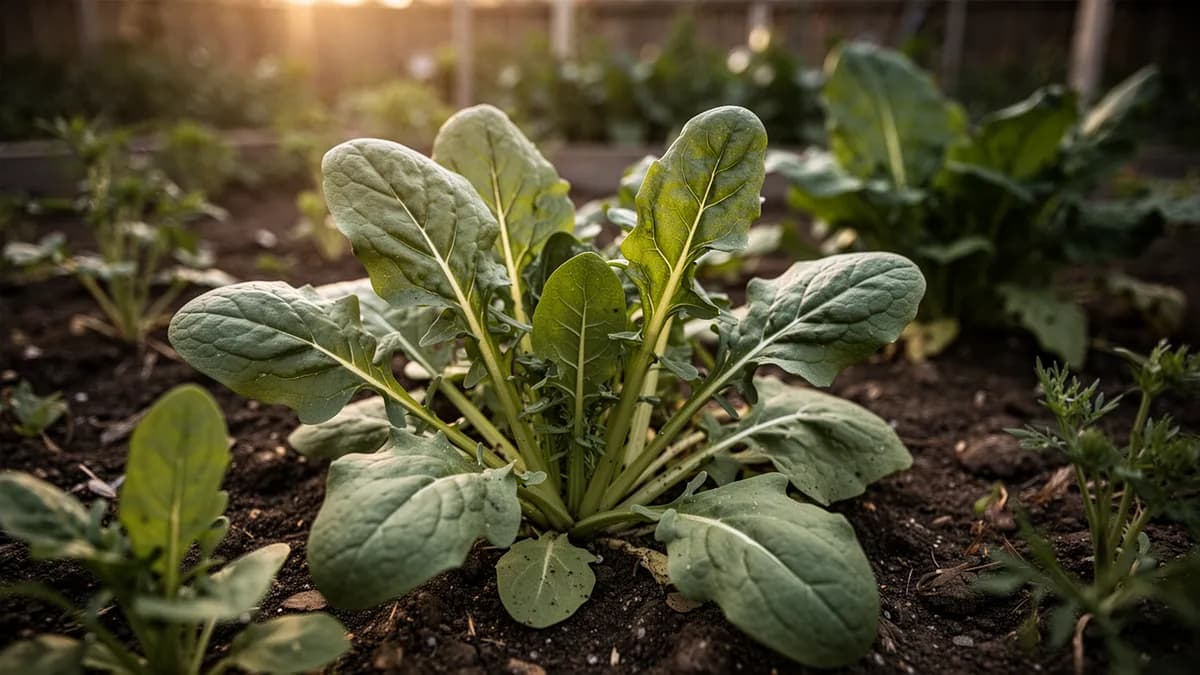
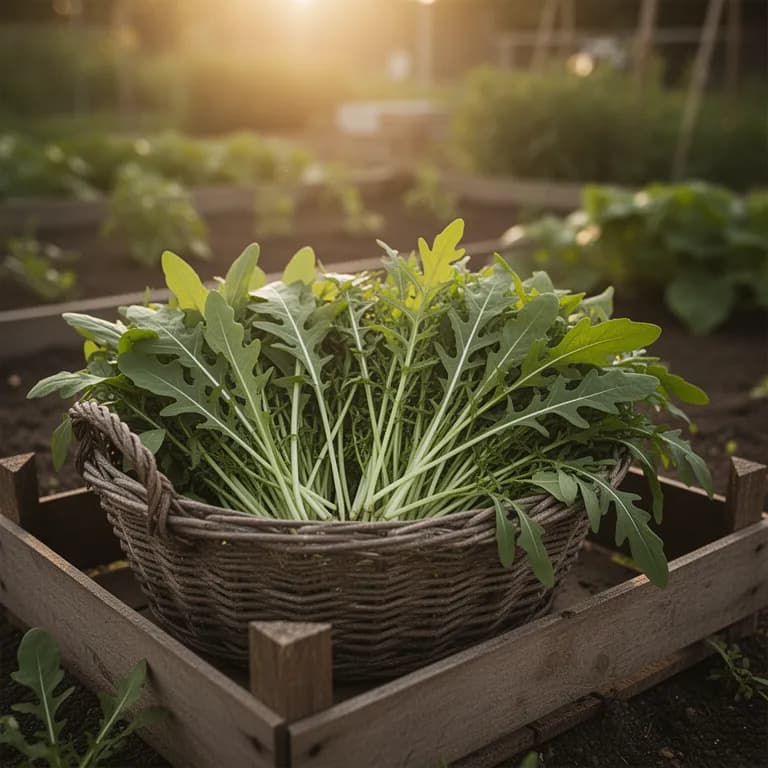
Ein pfeffriges, nussiges Salatgrün, das schnell wächst und Mischsalaten, Pizzen und Pastagerichten kräftigen Geschmack verleiht. Rucola gehört zu den schnellsten Kulturen von der Aussaat bis zur Ernte und ist bereits nach nur drei Wochen als Babyblattsalat pflückreif. Bei warmem Wetter schosst er schnell, wobei sich ein stärkerer Geschmack und kleine weiße Blüten entwickeln, die ebenfalls essbar sind. Säen Sie alle zwei Wochen nach und bieten Sie in wärmeren Monaten Nachmittagsschatten für eine milder schmeckende, länger haltbare Ernte.
Wann Rucola pflanzen
Säen Sie direkt ins Freie, 6 mm tief, sobald der Boden im Frühling 4°C erreicht, typischerweise 2-4 Wochen vor dem letzten Frosttermin. Die Samen keimen in 3-7 Tagen. Eine Vorkultur im Haus ist aufgrund der extrem schnellen Wachstumsrate unnötig. Für Babyblätter säen Sie breitwürfig dicht; für ausgewachsene Pflanzen vereinzeln Sie auf 10-15 cm Abstand. Säen Sie alle 2-3 Wochen im Frühling nach und beginnen Sie erneut vom Spätsommer bis Herbst. Samen bleiben 4-5 Jahre keimfähig, wenn sie kühl und trocken gelagert werden.
Dein Rucola-Jahr
Abgestimmt auf Zone 7 · typische Saison · Frost geht um den 2. Apr. und kehrt um den 1. Nov. zurück
Rucola Mär – Mai, Aug – Sep pflanzen, Apr – Jun, Sep – Nov ernten. Beachte die Pflanzmethoden unten und wähle dein Klima für passende Zeiträume.
So baust du Rucola an
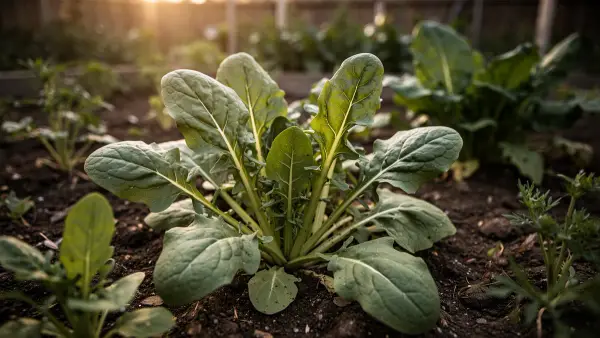
Säen Sie Rucolasamen direkt ins Freie, 6 mm tief, sobald 2-4 Wochen vor dem letzten Frosttermin möglich ist. Die Samen keimen in 3-7 Tagen selbst in kühlem Boden (Minimum 4°C). Vereinzeln Sie die Sämlinge auf 10-15 cm Abstand für ausgewachsene Blätter oder säen Sie breitwürfig dicht für Babyblätter. Reihenabstand sollte 20-30 cm betragen. Säen Sie alle 2-3 Wochen nach für eine kontinuierliche Ernte.
Rucola gedeiht bei kühlem Wetter zwischen 7-18°C und schosst schnell, wenn die Temperaturen 24°C überschreiten. In warmen Klimazonen bieten Sie Nachmittagsschatten und halten Sie den Boden gleichmäßig feucht, um das Schossen zu verzögern. Rucola ist relativ schädlingsresistent und benötigt in durchschnittlichem Boden nur minimale Düngung. Eine leichte Kompostgabe bei der Pflanzung reicht in der Regel aus.
Für eine Herbstkultur beginnen Sie im Spätsommer erneut mit der Aussaat. Im Herbst angebauter Rucola ist oft von bester Qualität, da die sinkenden Temperaturen mildere, zartere Blätter hervorbringen. In milden Wintergebieten (Zonen 8-11) kann Rucola den ganzen Winter über angebaut werden. Lassen Sie einige Pflanzen blühen und Samen bilden, damit sie sich auf natürliche Weise selbst aussäen; Rucola kommt in den Folgejahren bereitwillig als Freiwilliger wieder.
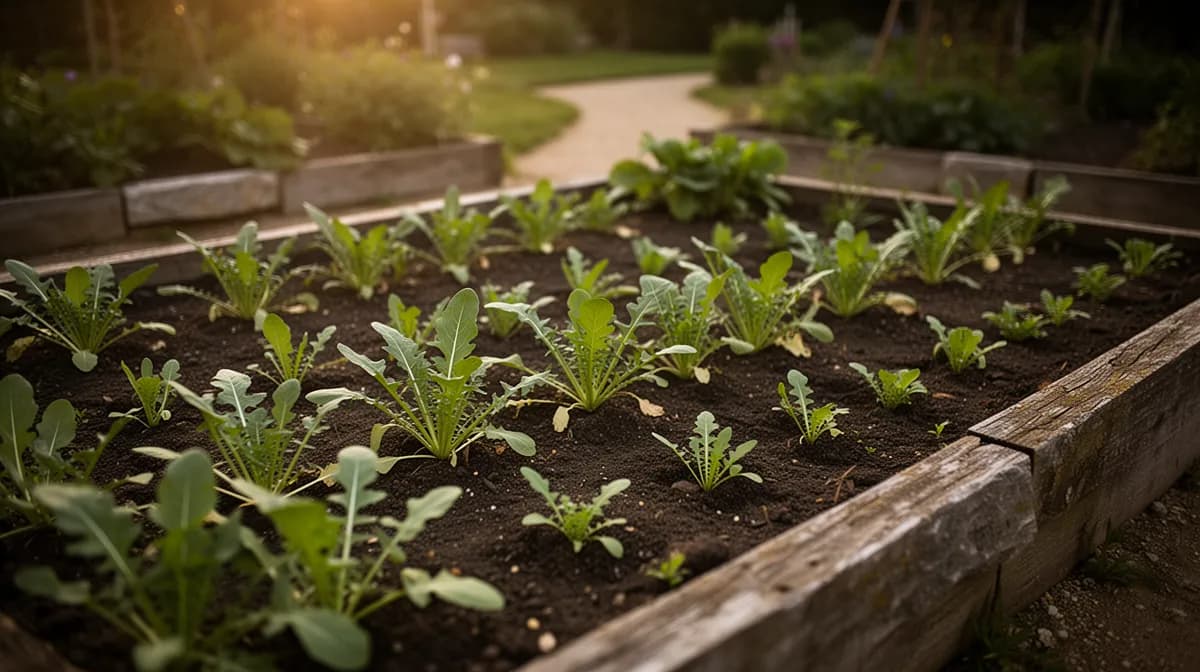
128 Pflanzen passen in ein Beet von 120 × 240 cm
Rucola braucht 15 cm Platz pro Pflanze. Der Planer hält diesen Abstand für dich ein — jede Pflanze, jedes Beet.
Die besten Nachbarn für Rucola
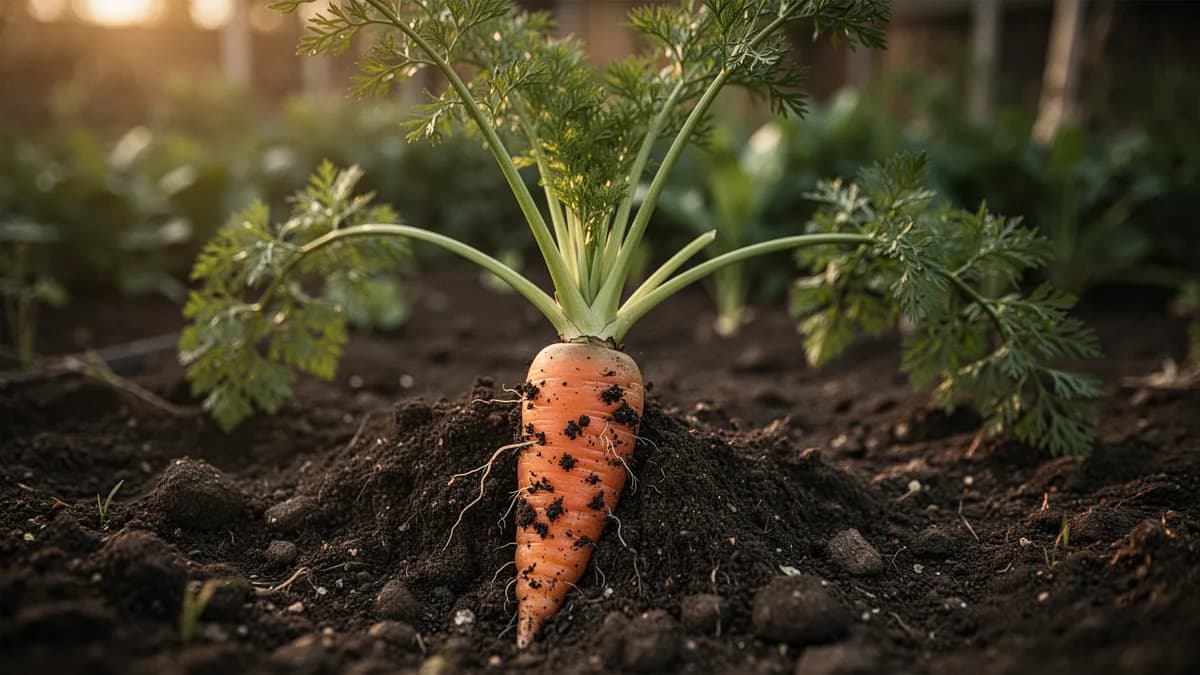
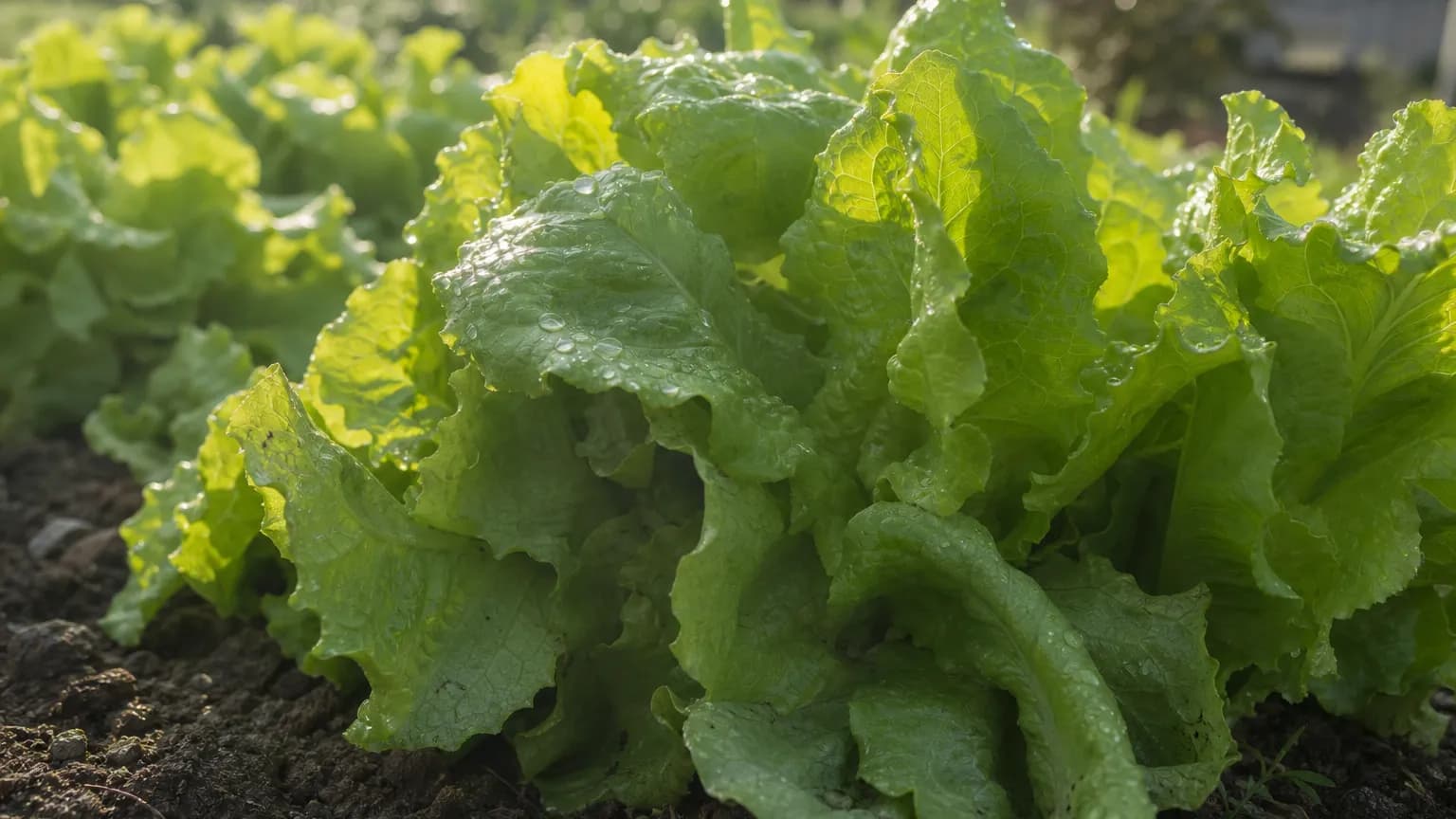
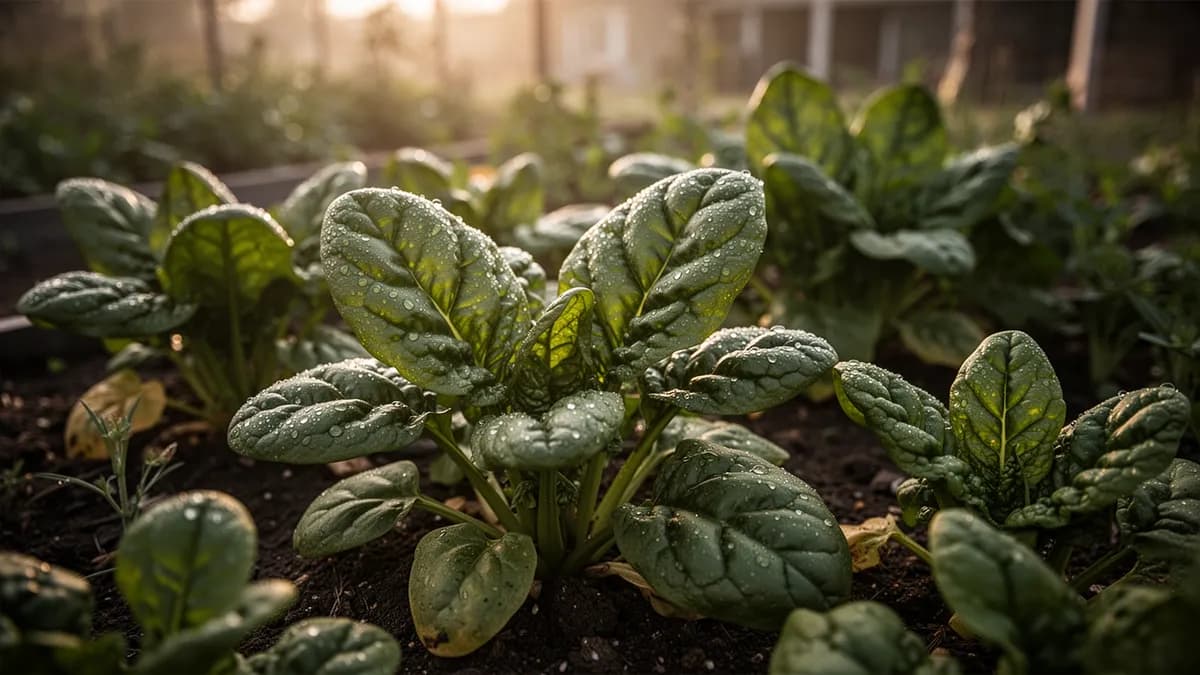
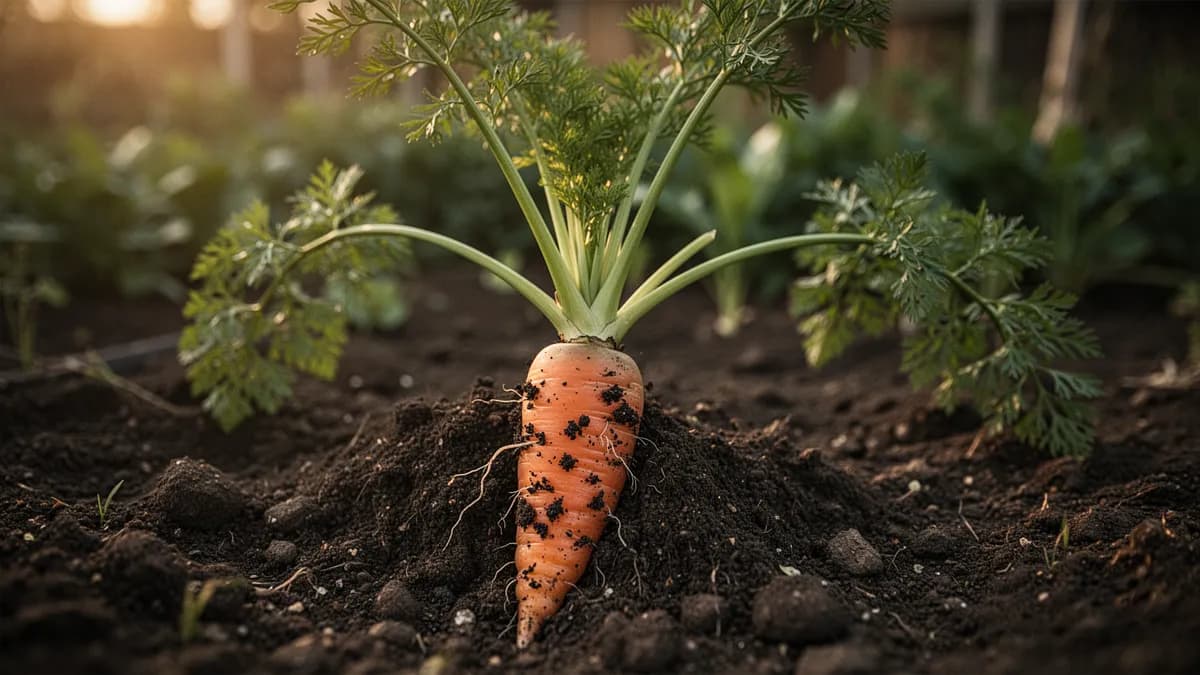
Rucola harmoniert gut mit Karotten, Kopfsalat, Spinat und Roten Beten als ergänzende Salatgarten-Begleiter. Sein schnelles Wachstum macht ihn zu einem hervorragenden Zwischenpflanzungspartner zwischen langsamer wachsenden Kulturen. Der pfeffrige Duft kann helfen, einige Schädlinge von benachbarten Pflanzen abzuschrecken. Vermeiden Sie die Pflanzung in der Nähe anderer Kohlgewächse, um den gemeinsamen Schädlingsdruck zu reduzieren. Hohe Pflanzen wie Tomaten oder Mais können im Sommer wohltuenden Nachmittagsschatten spenden, um die Rucola-Erntesaison zu verlängern.
Karotte gehört daneben.
Altes Gärtnerwissen, geprüft an der echten Nachbartabelle von Rucola — teste jede Pflanze, die du anbaust.
Probiere Rucola direkt hier im Beet
Ein echtes Planer-Beet, Rucola steht schon drin. Tippe einen Begleiter an, platziere ihn und sieh, wie die Nachbarschaftsprüfung antwortet — grün für gute Nachbarn, rot bei Streit.


Passende Anbau-Ratgeber
Richtig düngen
Rucola stellt geringe Ansprüche an den Boden, wächst aber am besten in fruchtbarem, gut durchlässigem Boden mit einem pH-Wert von 6,0-7,0. Arbeiten Sie vor der Pflanzung Kompost ein für beste Ergebnisse. Zusätzliche Düngung ist bei dieser schnell wachsenden Kultur selten nötig. Wenn der Boden nährstoffarm ist, reicht eine leichte Gabe ausgewogenen Granulatdüngers bei der Pflanzung aus. Vermeiden Sie übermäßigen Stickstoff, der üppiges, aber fade schmeckendes Wachstum fördert. Gleichmäßige Feuchtigkeit sorgt für die mildesten, zartesten Blätter.
Ideale Temperatur
Winterhärtezone-Kompatibilität
Von der Saat zur Ernte, Schritt für Schritt
Keimung
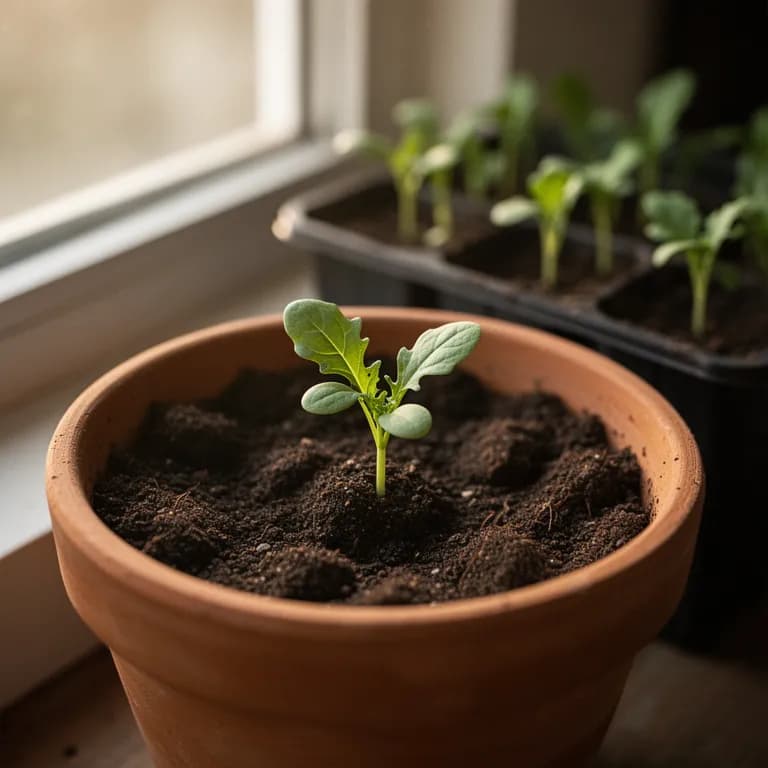
Rucolasamen keimen bemerkenswert schnell, oft innerhalb von 3-5 Tagen, selbst in kühlem Boden bei nur 4°C. Die winzigen Samen bilden kleine, abgerundete Keimblätter, die bei breitwürfiger Aussaat in dichten Büscheln erscheinen.
Babyblattstadium
Echte Blätter entwickeln sich schnell mit der charakteristischen gelappten Form. In diesem Stadium sind die Blätter klein (5-8 cm), zart und mild im Geschmack. Baby-Rucola ist die beliebteste Marktform und kann bereits 21 Tage nach der Aussaat geerntet werden.
Volle Blattentwicklung
Die Blätter erreichen ihre volle Größe (10-20 cm) mit tief gelappten, eichenblattförmigen Rändern. Der pfeffrige Geschmack intensiviert sich mit der Reife der Blätter. Rosetten bilden ein lockeres, aufrechtes Büschel von Blättern, die von einem zentralen Vegetationspunkt ausgehen.
Schossen
Ein zentraler Blütenstiel streckt sich schnell, besonders bei warmem Wetter oder langen Tagen. Die Blätter werden kleiner, zäher und deutlich pfeffriger. Kleine weiße oder cremefarbene vierblättrige Blüten erscheinen an der Spitze des Stiels.
Blüte und Samenbildung
Die Blüten werden von Bienen und kleinen Insekten bestäubt und bilden schlanke Samenschoten (Schoten), die trocknen und aufspringen, um kleine runde Samen freizusetzen. Die essbaren Blüten haben einen milden, würzigen Geschmack. Pflanzen, die Samen bilden dürfen, säen sich in den Folgejahren bereitwillig selbst aus.
Halten Sie den Boden während der Keimung gleichmäßig feucht, aber nicht staunass. Heizmatten oder spezielle Behandlungen sind nicht nötig — Rucola keimt bereitwillig unter kühlen Bedingungen, die die meisten anderen Samen zum Stillstand bringen würden.
Rucola Monat für Monat pflegen
Was du jeden Monat für deine Rucola tun solltest
Oktober
Aktueller MonatHaupterntemonat im Herbst. Rucola gedeiht hervorragend im kühlen Herbstwetter und produziert milde, zarte Blätter. In den Zonen 7-11 säen Sie weiterhin für die späte Herbst- und frühe Winterernte unter Vliesabdeckungen oder Frühbeetkästen.
Immer wissen, was jetzt im Garten zu tun ist
Eine E-Mail zum Monatsanfang: was du jetzt säen, pflanzen und anpacken solltest — für deine Rucola und alles, was drumherum wächst. Dazu ein kurzer Startkurs, der dich vor den klassischen Fehlern bewahrt.
- Was jetzt zu tun ist
- Passend zu deiner Saison
- Startkurs inklusive
Rucola ernten
Beginnen Sie mit der Ernte von Baby-Rucola-Blättern bereits 21 Tage nach der Aussaat, oder warten Sie 40 Tage für ausgewachsene Blätter. Schneiden Sie die Blätter 2-3 cm über dem Boden für die Schnitt-und-Nachwuchs-Ernte ab; die Pflanzen wachsen 2-3 Mal nach. Ernten Sie äußere Blätter einzeln oder schneiden Sie ganze Rosetten. Der Geschmack ist am mildesten, wenn die Blätter klein sind (5-8 cm) und bei kühlem Wetter. Größere, ältere Blätter und solche, die bei heißem Wetter gewachsen sind, haben einen stärkeren pfeffrigen Biss. Die Blüten sind ebenfalls essbar und haben einen mild-würzigen Geschmack.
angenommen, du pflanzt zu Beginn des Zeitraums — trage dein tatsächliches Datum ein
Ernte Rucola zügig, dann trägt die Pflanze weiter.
Lagerung & Konservierung
Lagern Sie ungewaschenen Rucola in einem mit Küchenpapier ausgelegten Plastikbeutel im Kühlschrank für 3-5 Tage. Rucola welkt schnell, verwenden Sie ihn daher umgehend für beste Qualität. Er lässt sich aufgrund seiner zarten Textur nicht gut einfrieren oder trocknen. Für eine längere Haltbarkeit bereiten Sie Rucola-Pesto zu (pürieren Sie ihn mit Olivenöl, Knoblauch, Pinienkernen und Parmesan) und frieren Sie es in Eiswürfelformen für bis zu 6 Monate ein. Rucola-Öl kann hergestellt werden, indem Sie Blätter mit Olivenöl pürieren und abseihen, um ein pfeffriges Veredelungsöl zu erhalten.
Was schiefgeht — und die Lösung
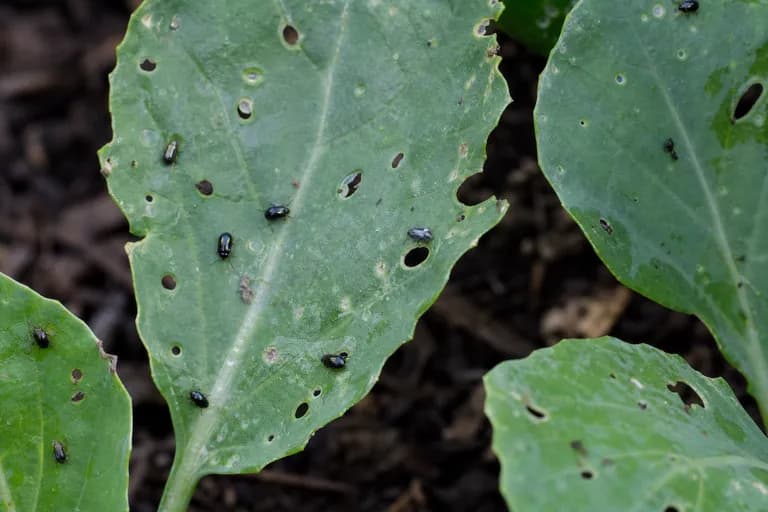
Erdflöhe
SchädlingWinzige runde Schrotschusslöcher in den Blättern, besonders bei jungen Sämlingen. Blätter sehen aus, als wären sie mit kleinen Löchern übersät.
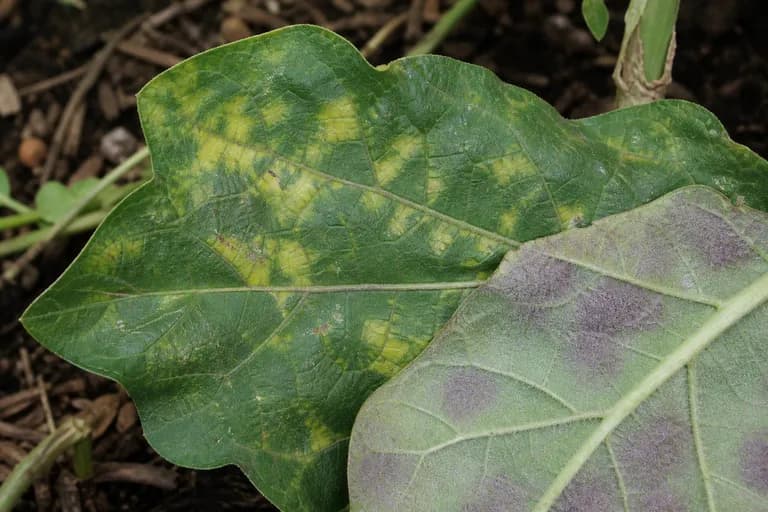
Falscher Mehltau
KrankheitGelbe Flecken auf den Blattoberseiten mit weiß-grauem, flaumigem Wachstum auf den Unterseiten. Blätter welken und werden braun.
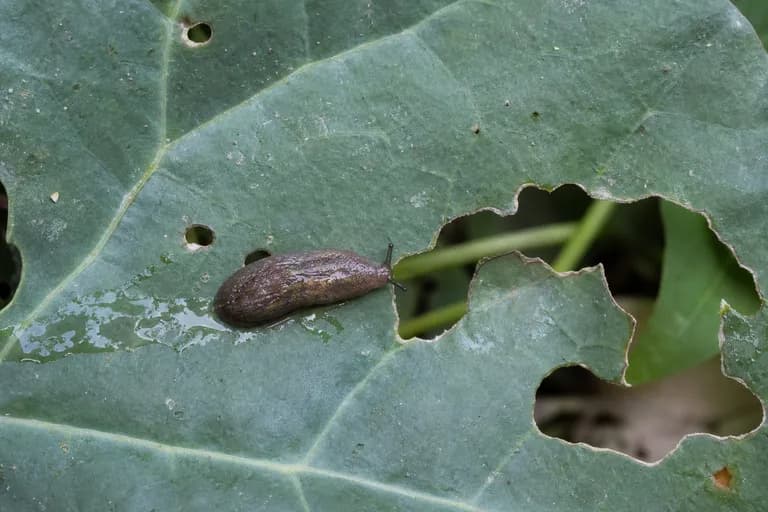
Schnecken
SchädlingUnregelmäßige Löcher in den Blättern mit schleimigen Spuren, Schäden sind nachts und bei nassem Wetter am schlimmsten.
Fehlerbehebung bei häufigen Problemen
Das Schossen ist die größte Herausforderung, ausgelöst durch Hitze, lange Tage und Trockenstress. Bieten Sie bei warmem Wetter Schatten und gleichmäßige Feuchtigkeit. Bittere, übermäßig pfeffrige Blätter sind die Folge von Hitzestress oder verspäteter Ernte. Erdflohschäden sind das häufigste Schädlingsproblem; verwenden Sie von Anfang an Vliesabdeckungen. Zu enger Stand führt zu spargeligem Wuchs und schlechter Luftzirkulation. Selbstaussaat kann zum Unkrautproblem werden, wenn Blüten Samen bilden dürfen; entfernen Sie unerwünschte Sämlinge umgehend.
Anbautipps
- Säen Sie ohne Ausnahme alle 2-3 Wochen nach — dies ist die wichtigste Einzelmaßnahme für eine kontinuierliche Rucola-Produktion. Eine einzelne Aussaat liefert nur 2-3 Wochen qualitativ hochwertige Ernte vor dem Schossen, daher sind gestaffelte Pflanzungen unerlässlich.
- Bieten Sie bei warmem Wetter Nachmittagsschatten durch Schattiernetze, hohe Begleitpflanzen oder strategische Beetplatzierung auf der Nordseite höherer Kulturen. Dieser einfache Schritt kann das Schossen um 1-2 Wochen verzögern und den Geschmack der Blätter mild halten.
- Gießen Sie gleichmäßig und lassen Sie den Boden nie vollständig austrocknen. Trockenstress beschleunigt das Schossen und erzeugt intensiv bittere, zähe Blätter. Mulchen Sie um die Pflanzen herum, um eine gleichmäßige Bodenfeuchtigkeit zwischen den Bewässerungen zu gewährleisten.
- Ernten Sie früh und oft. Beginnen Sie mit dem Schnitt von Babyblättern ab Tag 21 und setzen Sie die Schnitt-und-Nachwuchs-Ernte 2-3 cm über der Bodenoberfläche fort. Regelmäßiges Ernten stimuliert neues Wachstum und verzögert das Schossen.
- Säen Sie für Babyblätter breitwürfig dicht, anstatt die Pflanzen präzise zu platzieren. Ein dichter Rucola-Teppich kann mit der Schere wie eine lebende Salatbar geerntet werden, und der enge Stand unterdrückt auch Unkraut effektiv.
- Im Herbst gesäter Rucola ist fast immer besser als Frühjahrskulturen — die sinkenden Temperaturen erzeugen mildere, zartere Blätter mit weit weniger Schossdruck. Machen Sie den Herbst zu Ihrer primären Rucola-Saison.
- Lassen Sie am Ende jeder Saison einige Pflanzen blühen und aussamen. Rucola sät sich bereitwillig selbst aus, und freiwillige Sämlinge erscheinen oft in der folgenden Saison im selben Beet, ganz ohne Ihr Zutun.
- Pflanzen Sie Rucola zwischen langsam wachsenden Kulturen wie Tomaten, Paprika oder Kohlgewächsen. Der Rucola wird lange vor dem Zeitpunkt geerntet, an dem die größeren Pflanzen den Platz benötigen, und nutzt so jeden Quadratzentimeter effizient.
Bau deine beste Rucola an — und alles drumherum.
Starte heute kostenlos. Lege deine Beete an, setze deine Rucola ein und lass PlotMyGarden Timing, Abstände, Begleiter und Erinnerungen von der Saat bis zum Erntekorb übernehmen.
Finde deine Rucola
Astro
Schnell wachsender Standard-Rucola mit mildem, nussigem Geschmack. Bereits nach nur 21 Tagen als Babyblattsalat erntereif. Gute Hitzetoleranz.
Sylvetta (Wilde Rauke)
Mehrjährige wilde Art mit tief gelappten Blättern und intensivem pfeffrigem Geschmack. Langsamer wachsend, aber deutlich schossresistenter.
Rocket
Klassische italienische Sorte mit breiten, abgerundeten Blättern und mäßig pfeffrigem Geschmack. Kräftiger Wuchs und reichliche Produktion.
Dragon's Tongue
Einzigartige Sorte mit purpur geäderten Blättern. Mild-würziger Geschmack mit wunderschöner Präsentation in Salaten.
Eine einzelne Packung Rucolasamen für 2-4 € enthält 500-1.000 Samen — genug, um eine 3-5-Meter-Reihe mehrmals über die Saison zu besäen. Bio-Baby-Rucola kostet im Supermarkt 4-7 € pro 140-g-Packung, und ein einziges nacheinander besätes Beet kann das Äquivalent von 20-40 Packungen pro Saison produzieren, was einem Einzelhandelswert von 80-280 € entspricht. Da Rucola so schnell wachsend und produktiv ist, bietet er eine der höchsten Renditen aller Kulturen im Hausgarten.
Schnelle Rezepte
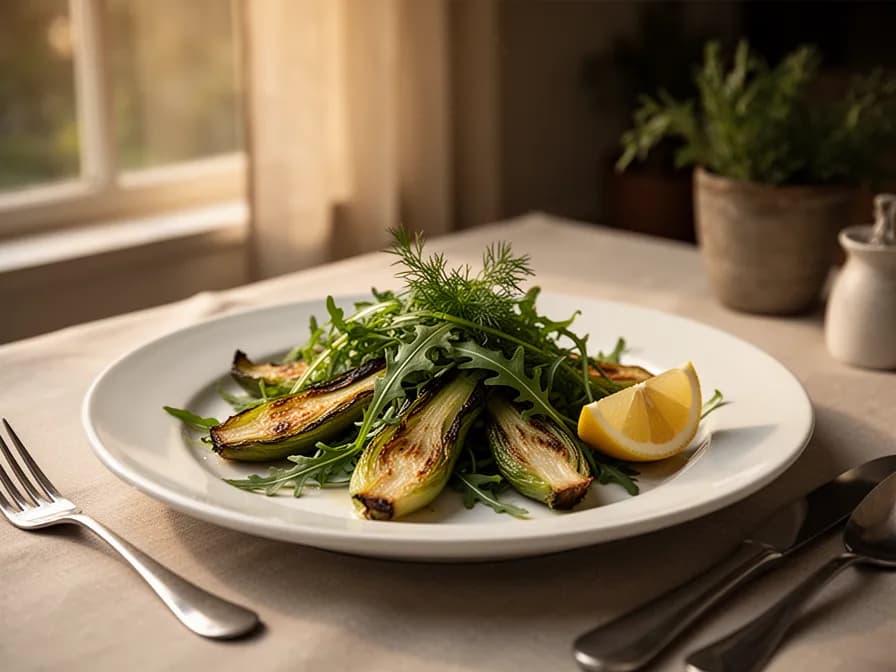
Klassischer Rucola-Salat mit Parmesan und Zitrone
10 Min.Die einfachste und ikonischste Art, Rucola zu servieren — pfeffrige Blätter, vermengt mit fruchtigem Olivenöl, kräftigen Parmesanspänen und spritziger Zitrone. Der Kontrast zwischen den bitteren Blättern, dem salzigen Käse und dem säuerlichen Dressing ist perfekt ausgewogen.
6 ZutatenRucola-Pesto
15 Min.Eine kräftige, pfeffrige Alternative zum traditionellen Basilikum-Pesto, die überschüssige Rucola-Ernten hervorragend verwertet. Der charakterstarke Geschmack passt wunderbar zu Pasta, gegrilltem Fleisch und knusprigem Brot. Lässt sich gut in Eiswürfelformen für die ganzjährige Verwendung einfrieren.
7 ZutatenRucola-Prosciutto-Flammkuchen
20 Min.Ein Flammkuchen in Restaurantqualität, der in wenigen Minuten zubereitet ist — knuspriger Teig, nach dem Backen mit frischem Rucola üppig belegt, dazu salziger Prosciutto und ein Spritzer Balsamico-Glasur. Die von der Hitze leicht gewelkten Blätter verschmelzen wunderbar mit den Belägen.
7 ZutatenKulinarische Verwendung
Rucola ist ein klassisches Salatgrün, gemischt mit gehobeltem Parmesan, Zitrone und Olivenöl. Streuen Sie ihn über heiße Pizza oder Pasta als frische, pfeffrige Garnitur. Pürieren Sie ihn zu Pesto als Alternative zu Basilikum. Fügen Sie ihn zu Sandwiches, Wraps und Getreideschalen hinzu. Lassen Sie ihn leicht in Risotto, Frittatas und Suppen welken. Verwenden Sie ihn als Bett für gegrilltes Fleisch, Fisch oder geröstetes Gemüse. Die essbaren Blüten eignen sich als wunderschöne, mild-würzige Garnitur.
Was drinsteckt
Gesundheitsvorteile
- Außergewöhnlich reich an Vitamin K (109 mcg pro 100 g, über 90 % TW), essentiell für die Blutgerinnung, Knochenmineralisierung und Herz-Kreislauf-Gesundheit — eine der reichhaltigsten verfügbaren Blattgemüsequellen.
- Reich an Glucosinolaten, insbesondere Erucin, die im Körper zu Isothiocyanaten umgewandelt werden — Verbindungen, die aktiv auf ihr Potenzial zur Hemmung des Krebszellwachstums und Unterstützung von Entgiftungsenzymen erforscht werden.
- Liefert Nitrate aus der Nahrung, die der Körper in Stickstoffmonoxid umwandelt — ein Molekül, das Blutgefäße entspannt, den Blutdruck senkt und die Durchblutung verbessert — Vorteile, die in mehreren klinischen Studien zu Blattgemüse bestätigt wurden.
- Gute Calciumquelle (160 mg pro 100 g) mit relativ niedrigem Oxalatgehalt im Vergleich zu Spinat, was bedeutet, dass ein höherer Prozentsatz des Calciums bioverfügbar ist und tatsächlich vom Körper aufgenommen wird.
- Enthält bedeutende Mengen an Folsäure (97 mcg pro 100 g), die die DNA-Synthese und Zellteilung unterstützt und besonders wichtig für Frauen im gebärfähigen Alter ist, um Neuralrohrdefekte zu verhindern.
- Reich an Beta-Carotin (Provitamin A) und Lutein, Carotinoid-Antioxidantien, die die Augengesundheit schützen, die Immunfunktion unterstützen und das Risiko einer altersbedingten Makuladegeneration reduzieren können.
Woher Rucola stammt
Rucola (Eruca vesicaria subsp. sativa) stammt aus dem Mittelmeerraum, mit wilden Populationen in Südeuropa, Nordafrika und Westasien. Archäologische Funde deuten darauf hin, dass er bereits im 1. Jahrhundert v. Chr. im östlichen Mittelmeerraum kultiviert wurde. Die Römer waren die Ersten, die Rucola ausführlich dokumentierten — Plinius der Ältere schrieb in seiner Naturgeschichte über seinen Anbau, und der Dichter Vergil erwähnte ihn in seinen Werken. Römische Ärzte verschrieben Rucola als Verdauungshilfe und Aphrodisiakum, ein Ruf, der bis weit in die Renaissance anhielt.
Im Mittelalter fiel Rucola in ganz Europa abwechselnd in und aus der Gunst. Die italienische und nahöstliche Küche pflegten eine ununterbrochene Tradition des Rucola-Anbaus, während Nordeuropa ihn weitgehend vergaß. In Italien blieb Rucola jahrhundertelang ein beliebtes Salatgrün und Pizza-Topping, das in Küchengärten auf der gesamten Halbinsel angebaut wurde. Die Pflanze breitete sich auch entlang der Handelsrouten nach Osten aus und etablierte sich in der indischen Küche, wo sie sowohl wegen ihrer Blätter als auch wegen ihrer ölreichen Samen angebaut wird.
Die moderne weltweite Beliebtheit von Rucola begann in den 1990er Jahren, als er zu einer Signaturzutat der New-American- und Farm-to-Table-Restaurantbewegungen wurde. Was einst ein unbekanntes europäisches Grün war, wurde innerhalb eines Jahrzehnts zum alltäglichen Supermarktprodukt. Heute wird Rucola weltweit kommerziell angebaut, mit Hauptproduktionsgebieten in Italien, der Türkei, Indien und den Vereinigten Staaten. Kalifornien und Arizona führen die amerikanische Produktion an und bauen Rucola ganzjährig für den Markt der abgepackten Salate an. Der schnelle Wachstumszyklus, die minimalen Anbauanforderungen und der kräftige Geschmack der Pflanze haben sie zu einem der beliebtesten Spezialgrüns sowohl für Hobbygärtner als auch für kommerzielle Erzeuger gemacht.
Rucola: Schon gewusst?
Faszinierende Fakten über Rucola
Rucola wird seit der Römerzeit angebaut und galt im antiken Rom als Aphrodisiakum — so sehr, dass der Anbau in Klostergärten während des Mittelalters verboten war.
Rucola: Fragen & Antworten
Wann sollte ich Rucola pflanzen?
Was sind gute Begleitpflanzen für Rucola?
In welchen Winterhärtezonen kann Rucola wachsen?
Wie viel Sonne braucht Rucola?
Welchen Abstand sollte ich zwischen Rucola lassen?
Welche Schädlinge und Krankheiten befallen Rucola?
Wie lagere ich Rucola nach der Ernte?
Was sind die besten Rucola-Sorten zum Anbauen?
Welchen Boden braucht Rucola?
Warum schmeckt mein Rucola so bitter und pfeffrig?
Wie verhindere ich, dass Rucola so schnell schosst?
Kann ich Rucola in Kübeln oder drinnen anbauen?
Ist Wilde Rauke anders als normaler Rucola?
Sind Rucola-Blüten essbar?
Wie oft kann ich Rucola ernten, bevor ich neu pflanzen muss?
Du hast die Theorie gelesen. Jetzt baue sie auf Autopilot an.
Alles, was Rucola knifflig macht — das Timing, die Abstände, die Begleiter, das Erntefenster — genau das übernimmt PlotMyGarden für dich, für jede Pflanze im Garten.
Ein Plan, der dein Wetter kennt
Standort einmal festlegen. Aussaat-, Dünge- und Erntedaten rund um deinen echten letzten Frosttermin und die Live-Vorhersage — kein Raten mehr nach Saattüte.
Aus dem Abschnitt „Pflanzzeit“Beetplaner per Drag & Drop
Beete auf einem Raster gestalten. Jede Pflanze rastet im richtigen Abstand ein, und du siehst die ganze Saison, bevor du einen Cent für Saatgut ausgibst.
Aus dem Abschnitt „Anbau“Begleiter-Konflikte früh erkannt
Über 200 gute und schlechte Kombinationen werden beim Pflanzen live geprüft — so landet ein saisonruinierender Fehler nie in der Erde.
Aus dem Abschnitt „Begleiter“Erinnerungen, nach denen du wirklich handelst
„Gieß die Bohnen.“ „Heute ernten, bevor's umschlägt.“ Pünktlich, konkret und auf deine echten Pflanzen bezogen.
Aus dem Abschnitt „Ernte“Staffel-Aussaat, geplant
Sechs Wochen ernten statt sechs Tage? Die App verteilt deine Aussaaten automatisch und erinnert dich, wenn der nächste Satz fällig ist.
Aus dem Abschnitt „Pflanzzeit“Ein Verlauf, der schlauer wird
Jede protokollierte Ernte bringt der App deinen Garten bei. Der Plan fürs nächste Jahr startet bei dem, was in deinem Boden wirklich funktioniert hat.
Aus dem Abschnitt „Überblick“Pflanze diese neben Rucola
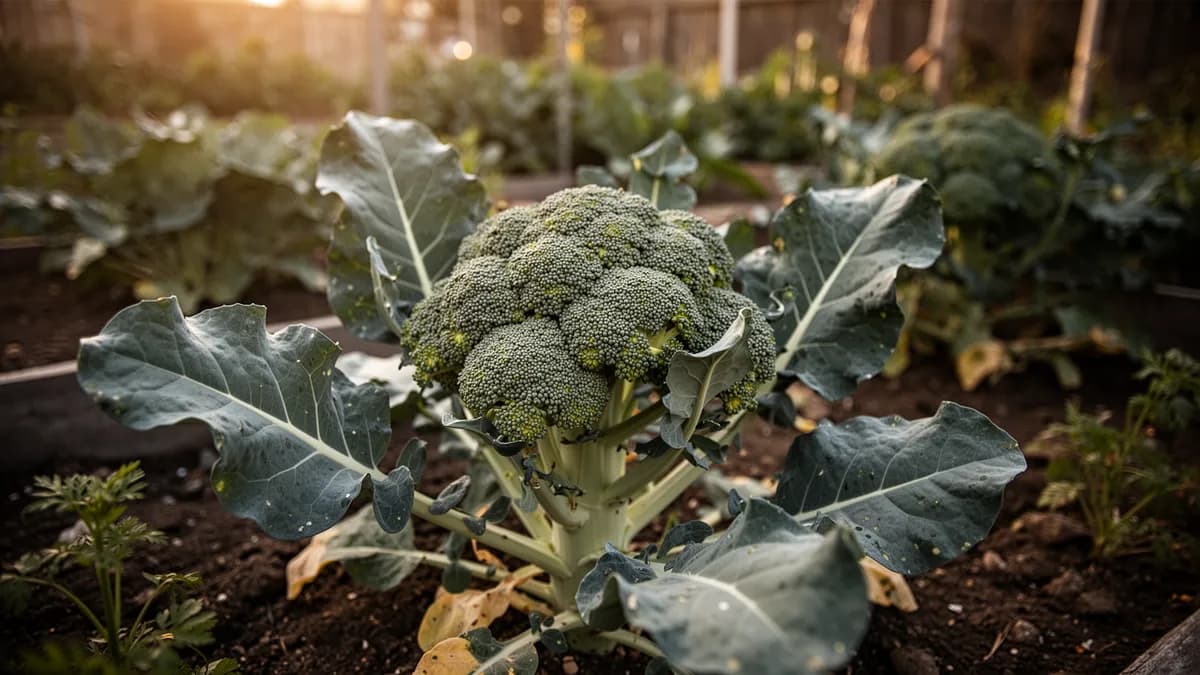
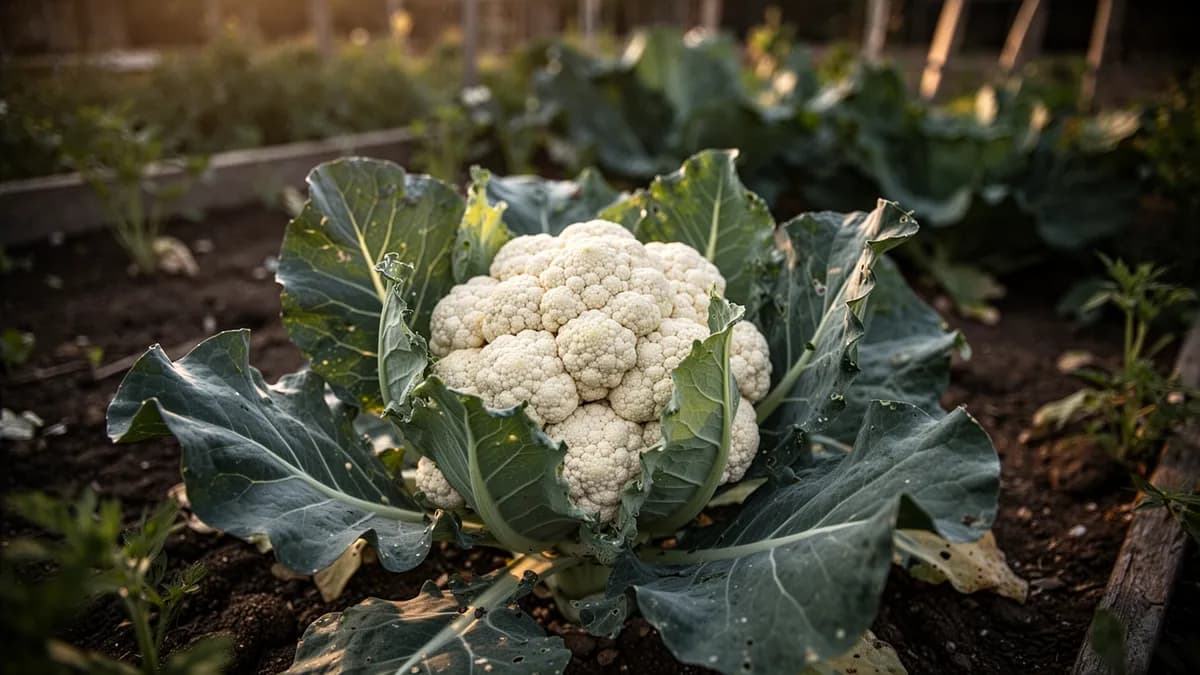
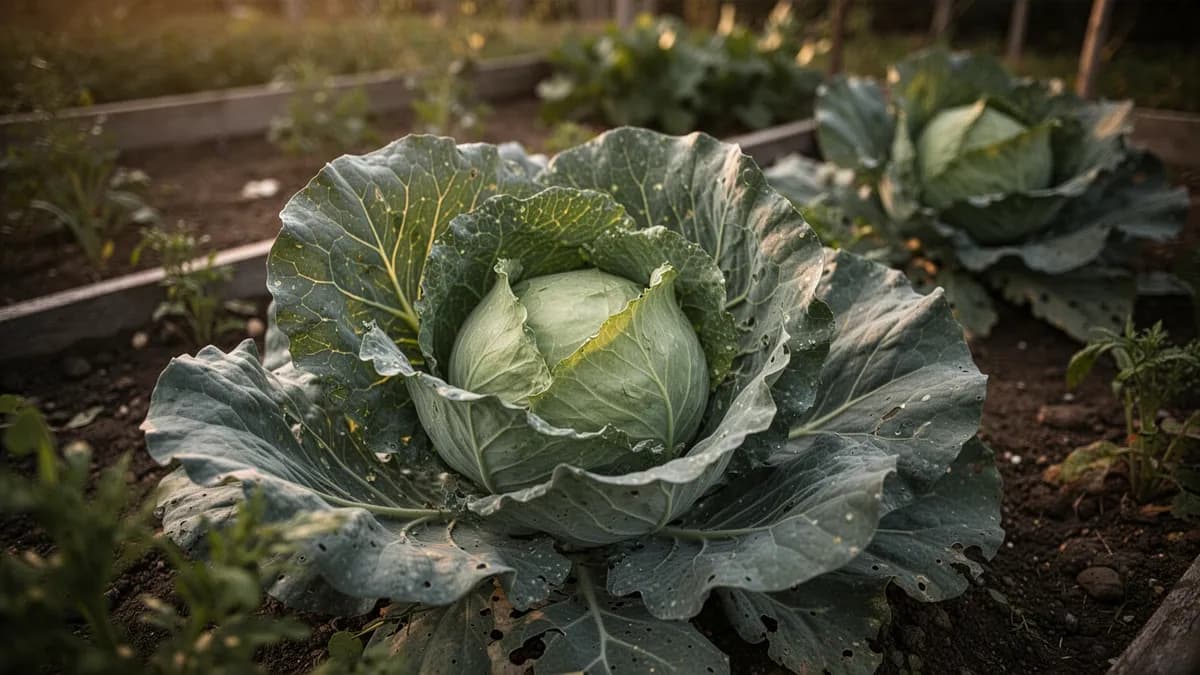
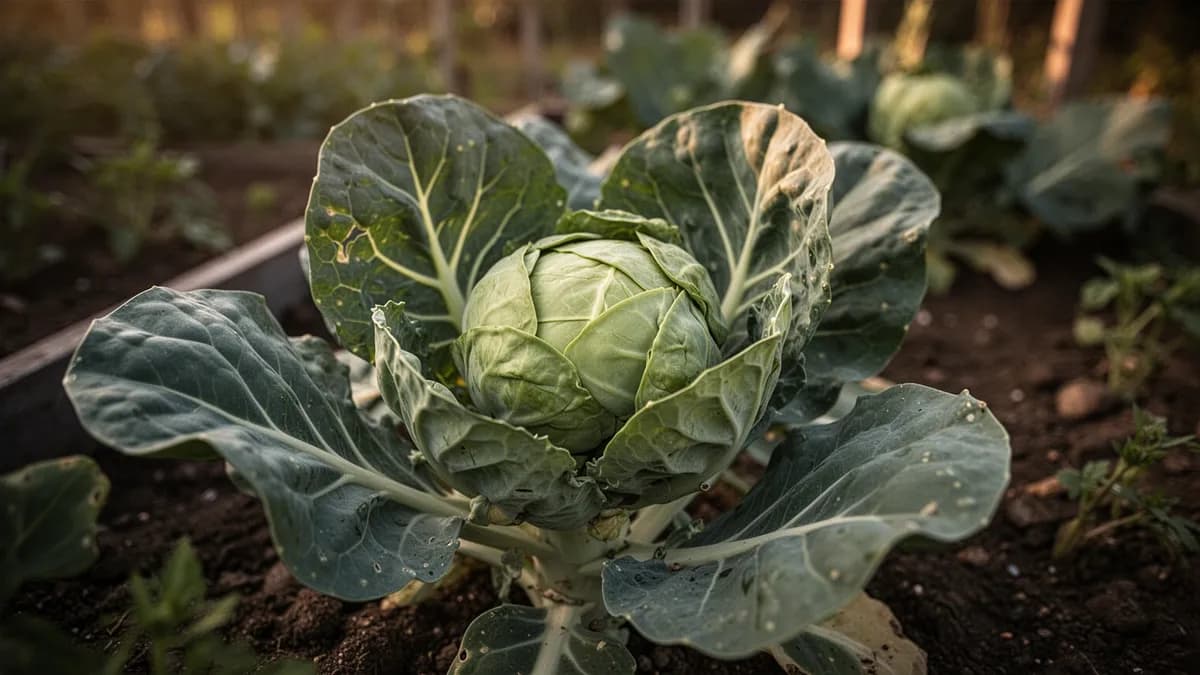
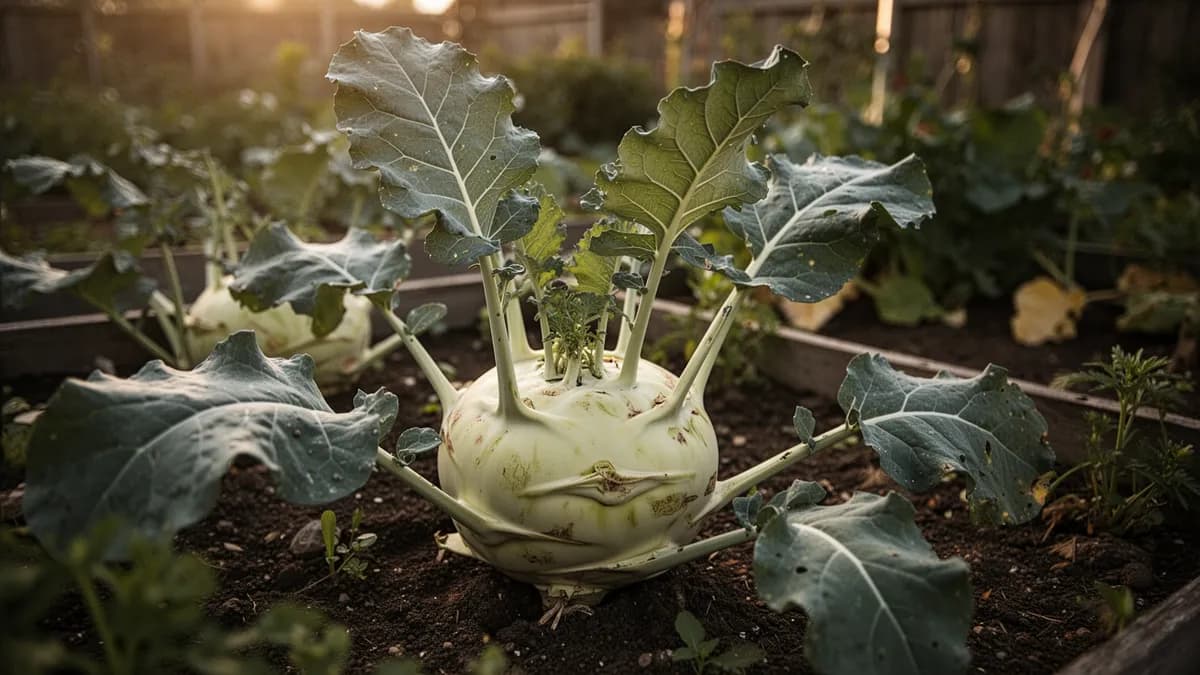
Weitere Kreuzblütler
Gartenpläne mit Rucola
Bau deine beste Rucola an — und alles drumherum.
Starte heute kostenlos. Lege deine Beete an, setze deine Rucola ein und lass PlotMyGarden Timing, Abstände, Begleiter und Erinnerungen von der Saat bis zum Erntekorb übernehmen.