Raíz de Cúrcuma
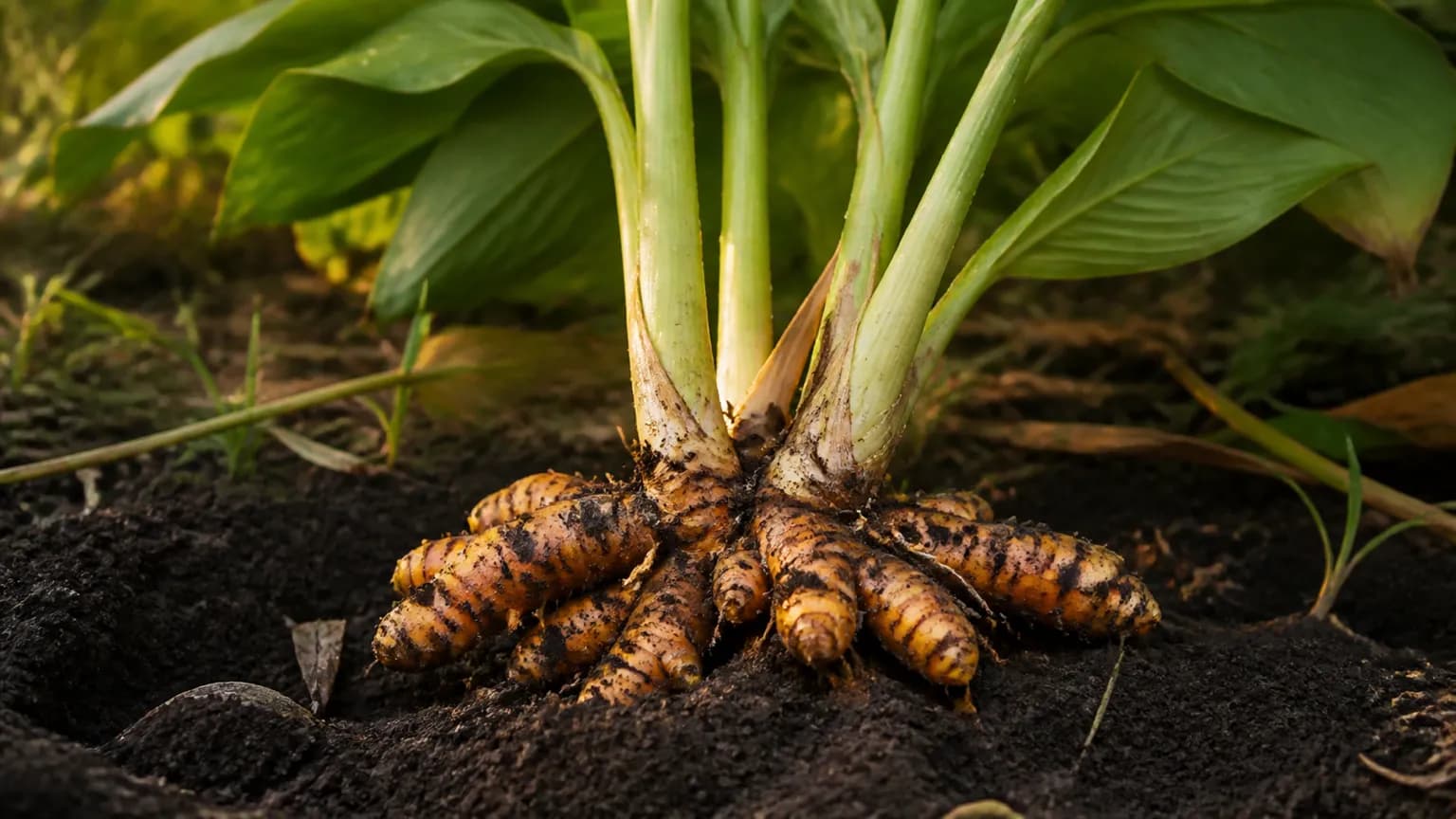
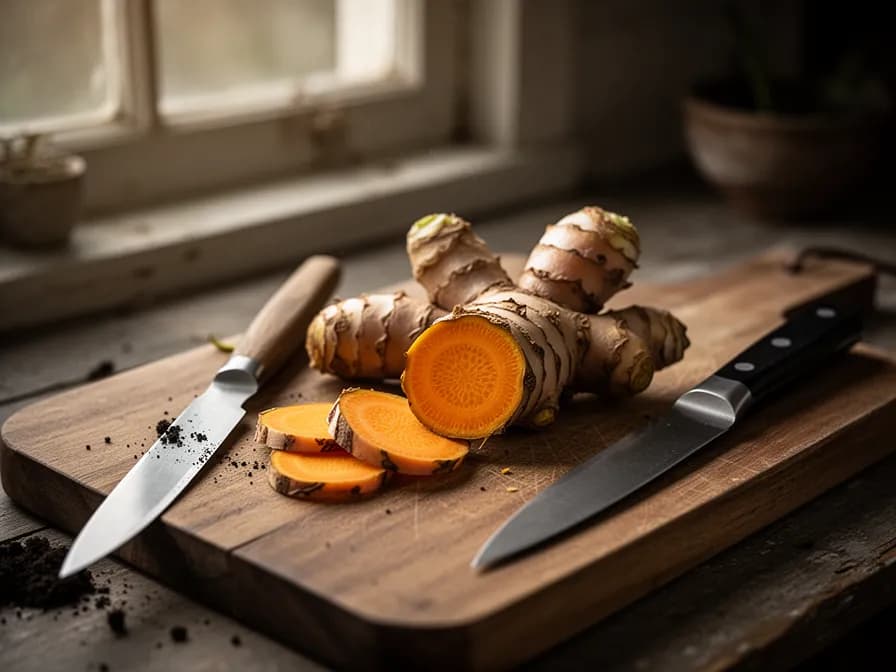
La cúrcuma (Curcuma longa) es una planta tropical de la familia del jengibre originaria del sudeste asiático, cultivada por sus rizomas de color naranja dorado intenso ricos en curcumina, un potente compuesto antiinflamatorio y antioxidante.





En esta páginaResumen
Conoce Raíz de Cúrcuma
La cúrcuma (Curcuma longa) es una planta tropical de la familia del jengibre originaria del sudeste asiático, cultivada por sus rizomas de color naranja dorado intenso ricos en curcumina, un potente compuesto antiinflamatorio y antioxidante. Produce hojas grandes y ornamentales similares al lirio y, en condiciones tropicales, espectaculares inflorescencias rosadas.
Cuándo plantar Raíz de Cúrcuma
Plantar trozos de rizoma fresco con al menos 2-3 yemas en macetas grandes con sustrato rico y húmedo a 5-7 cm de profundidad en primavera, cuando las temperaturas superen los 20 °C. Mantener cálido y húmedo; la brotación tarda 3-6 semanas. En climas templados, iniciar en interior en febrero-marzo para maximizar la temporada de crecimiento.
Tu año de Raíz de Cúrcuma
Ajustado a Zona 7 · temporada típica · la helada se va hacia el 2 abr y vuelve hacia el 1 nov
Planta Raíz de Cúrcuma Mar – May y cosecha Oct – Nov. Consulta los métodos de plantación y elige tu clima para adaptar los periodos.
Cómo cultivar Raíz de Cúrcuma
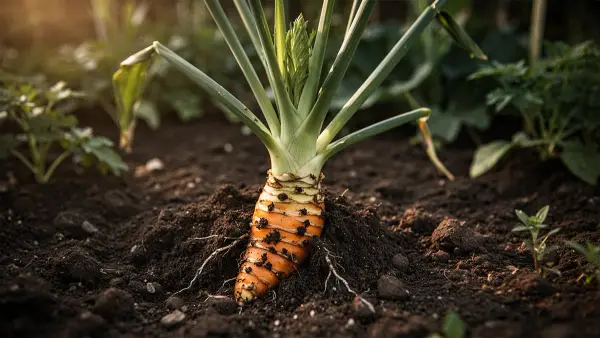
La cúrcuma requiere condiciones cálidas y húmedas con temperaturas consistentemente superiores a 20 °C durante una temporada de crecimiento larga de 8-10 meses. Plante trozos de rizoma con al menos 2-3 yemas a 5-7 cm de profundidad y 30-40 cm de separación en un lugar protegido a pleno sol o semisombra ligera.
El riego debe ser frecuente y abundante durante todo el período vegetativo activo, manteniendo el suelo consistentemente húmedo pero nunca encharcado. En climas templados, el cultivo en macetas grandes de al menos 30 cm de profundidad es la mejor opción, permitiendo trasladar las plantas al interior durante el invierno.
Aplique un acolchado orgánico grueso de 10-15 cm alrededor de las plantas para mantener la humedad y la temperatura del suelo. Fertilice mensualmente con compost líquido o abono orgánico equilibrado durante el crecimiento activo. Reduzca el riego gradualmente cuando las hojas comiencen a amarillear en otoño, señalando la entrada en dormancia.
32 plantas caben en un bancal de 120 × 240 cm
Cada Raíz de Cúrcuma pide 30 cm de margen. El planificador guarda ese marco por ti — cada planta, cada bancal.
Los mejores vecinos de Raíz de Cúrcuma
Se asocia excelentemente con el jengibre, que comparte requisitos de cultivo similares, y con frijoles que aportan nitrógeno al suelo. Los plátanos y árboles frutales proporcionan la sombra parcial beneficiosa, mientras que debe evitarse plantar junto a cultivos que requieran suelo seco como la lavanda o el romero.
Jengibre va a su lado.
Saber de huerto de siempre, cotejado con la tabla real de Raíz de Cúrcuma — prueba cualquier planta que cultives.
Prueba Raíz de Cúrcuma en un bancal, aquí mismo
Un bancal real del planificador con Raíz de Cúrcuma ya plantado. Toca una planta compañera para colocarla y mira cómo responde la comprobación de vecinos: verde para buenos vecinos, rojo si hay conflicto.


Guías de cultivo relacionadas
Abónalo bien
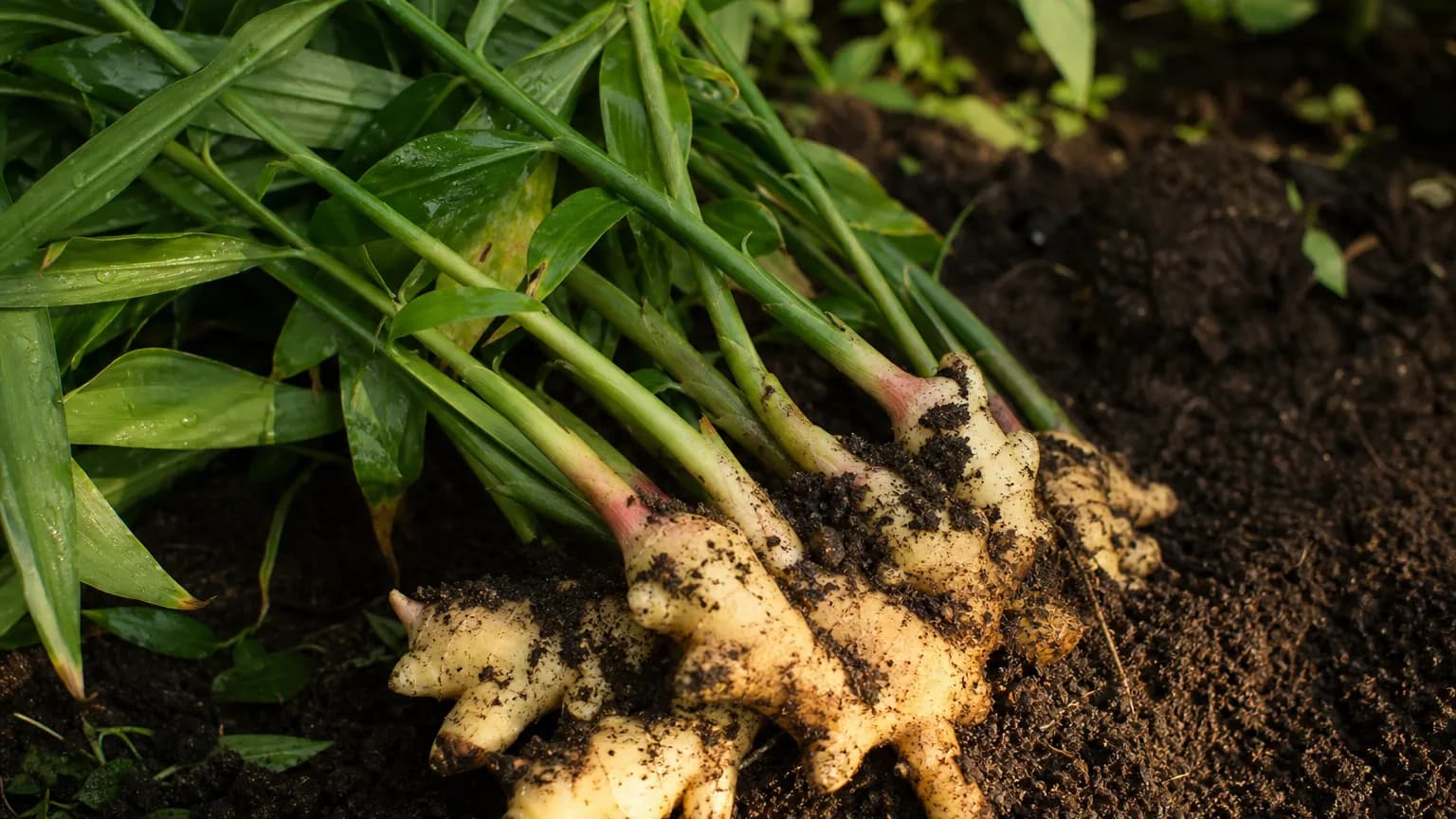
Necesita un suelo rico en materia orgánica, suelto y bien drenado con pH entre 5,5 y 7,0. Incorpore abundante compost y turba antes de plantar para mejorar la retención de humedad sin encharcamiento. Fertilice mensualmente con abono orgánico líquido rico en potasio durante el crecimiento activo.
Temperatura ideal
Compatibilidad de zonas de rusticidad
De la semilla a la cosecha, etapa por etapa
Brotación del rizoma
Los trozos de rizoma plantados desarrollan lentamente raíces y empujan brotes verdes hacia arriba a través de la superficie del suelo. La brotación es lenta y requiere calor y humedad constantes: la paciencia es esencial durante esta fase, ya que la emergencia puede tardar de 3 a 6 semanas según la temperatura del suelo.
Desarrollo de hojas
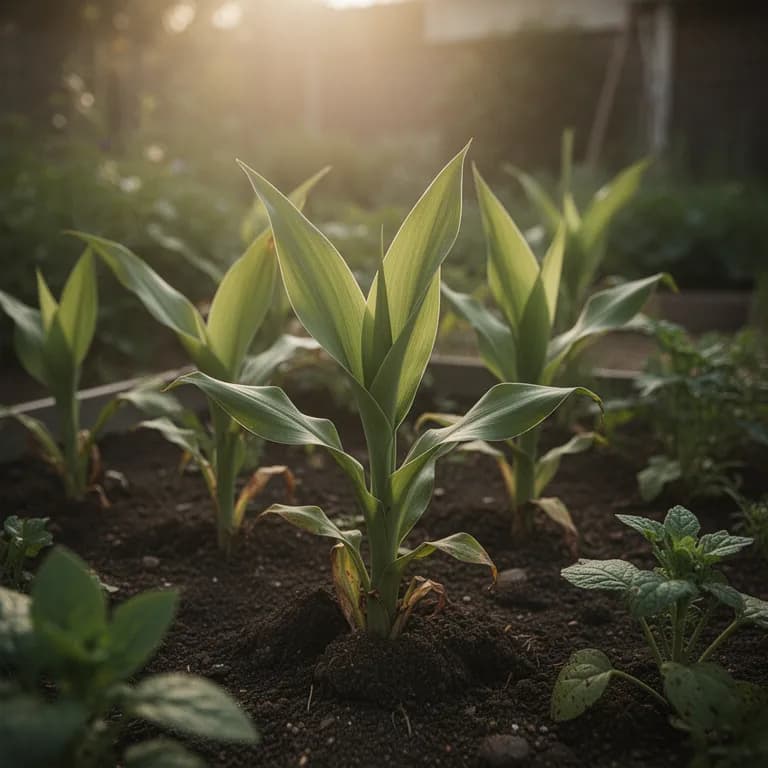
Las hojas enrolladas y lanceoladas se despliegan desde el brote central, formando un follaje amplio similar al de las cannas. De un solo trozo de rizoma pueden emerger varios brotes. Durante esta fase la planta construye su copa fotosintética, alcanzando una altura de 30-60 cm.
Crecimiento vegetativo activo
La planta alcanza su altura completa de 90-120 cm con una copa frondosa de hojas anchas y aromáticas. Bajo tierra, el sistema de rizomas se expande rápidamente, formando dedos ramificados a partir del rizoma madre. Esta es la principal fase de crecimiento, cuando tanto el follaje como los rizomas están en su máxima actividad metabólica.
Maduración del rizoma
A medida que se acerca el otoño, la planta desvía su energía de la producción de hojas al engrosamiento de los rizomas y a la acumulación de curcumina. Los dedos del rizoma se engrosan y desarrollan su característico color amarillo anaranjado intenso. El crecimiento de las hojas se ralentiza y algunas hojas inferiores empiezan a amarillear de forma natural.
Dormancia y cosecha
Las hojas se vuelven gradualmente amarillas, marrones y se secan a medida que la planta entra en dormancia. Este secado indica que los rizomas han alcanzado su madurez completa y su máximo contenido de curcumina. El follaje seco es un proceso natural, no una señal de enfermedad.
Mantén la temperatura del suelo entre 24 y 30°C (75-85°F) usando una manta térmica si empiezas en interior. Mantén el suelo constantemente húmedo, pero nunca encharcado. No desentierras los rizomas para comprobar el progreso; eso daña las raíces en desarrollo.
Cuidar Raíz de Cúrcuma mes a mes
Qué hacer cada mes para tu Raíz de Cúrcuma
Octubre
Mes actualLeaves begin to yellow and die back naturally — this signals rhizome maturity, not a problem. Reduce watering as foliage declines. In zones 9 and below, prepare for harvest once most foliage has dried back.
Ten claro qué hacer en tu huerto, cada mes
Un correo al empezar cada mes: qué sembrar, plantar y hacer ahora mismo — para tu Raíz de Cúrcuma y todo lo que crece alrededor. Más un breve curso inicial para esquivar los errores clásicos.
- Qué hacer ahora mismo
- Ajustado a tu temporada
- Curso inicial incluido
Cosechar Raíz de Cúrcuma
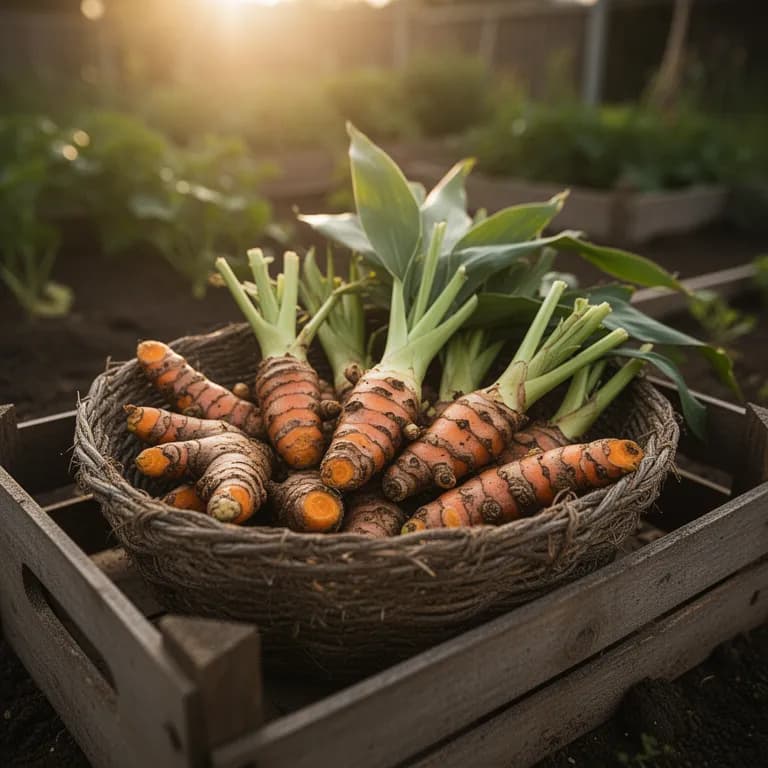
Los rizomas se cosechan cuando las hojas se marchitan y amarillean completamente, generalmente entre 240 y 300 días después de la plantación. Desentierre cuidadosamente con una horca de jardín para no dañar los rizomas, sacuda la tierra y deje curar al sol durante 2-3 días antes de almacenar o procesar.
se supone que plantas al comenzar el periodo — indica tu fecha real
A partir de bulbos, tubérculos o dientes
Cosecha cuando la mayoría de las hojas hayan empezado a amarillear y secarse de forma natural, unos 8-10 meses después de plantar.
Almacenamiento y conservación
Los rizomas frescos se conservan en el refrigerador envueltos en papel de cocina y dentro de una bolsa perforada durante 2-3 semanas. Para conservación prolongada, hervir los rizomas durante 45 minutos, secar al sol durante 10-14 días y moler hasta obtener el polvo de cúrcuma dorado; también se pueden congelar enteros o rallados.
Qué falla — y cómo solucionarlo
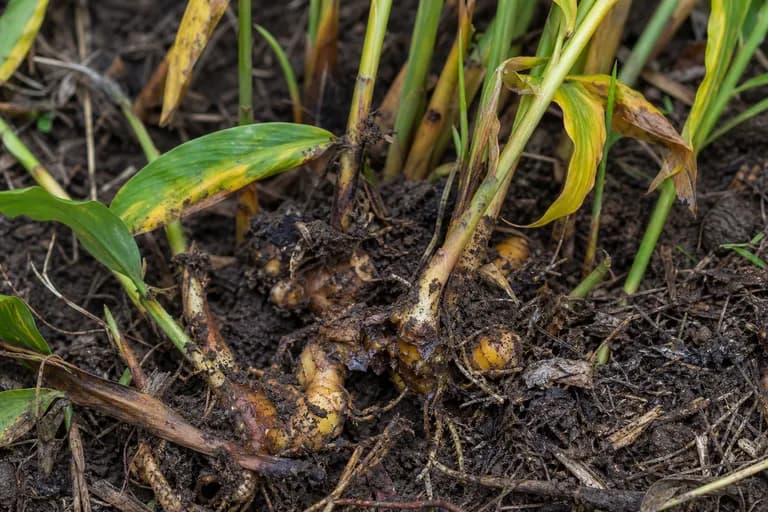
Pudrición del rizoma
EnfermedadMarchitez repentina del follaje, amarillamiento y desprendimiento de hojas. Al extraer los rizomas se observan áreas blandas, acuosas y malolientes de color marrón oscuro.
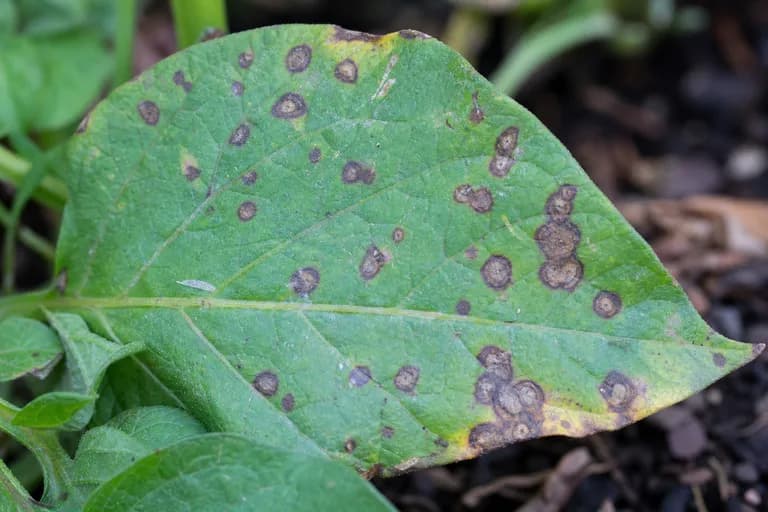
Taladro del rizoma
PlagaPerforaciones y galerías en los rizomas causadas por larvas de polilla barrenadora, provocando pudrición secundaria y pérdida de calidad del producto cosechado.
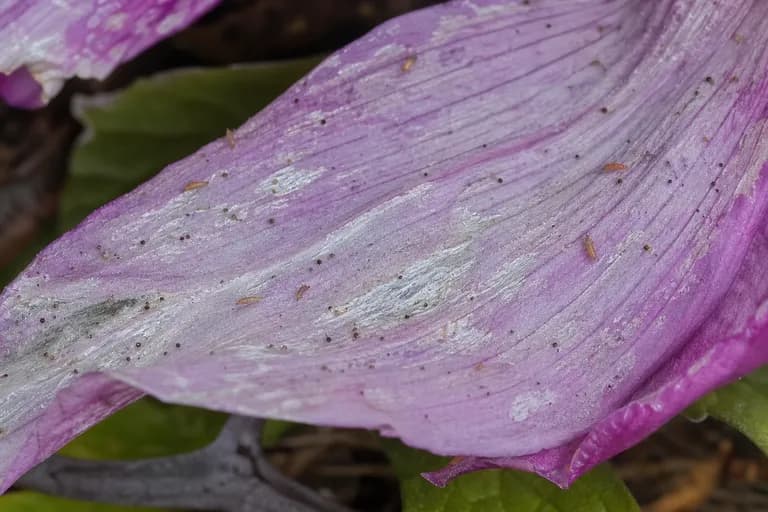
Mancha foliar
EnfermedadManchas marrones o pardas en las hojas que se expanden y confluyen en condiciones húmedas, reduciendo la capacidad fotosintética y debilitando la planta.
Solución de problemas comunes
Su ciclo de crecimiento extremadamente largo de 8-10 meses y su necesidad de calor constante hacen que sea muy difícil de cultivar al aire libre en climas templados fríos. El encharcamiento es su peor enemigo, provocando pudrición de rizomas; asegurar un drenaje perfecto es absolutamente esencial para el éxito del cultivo.
Consejos de cultivo
- Start with fresh, organic turmeric from a grocery store or farmer's market if you cannot find planting stock — supermarket rhizomes sprout readily as long as they have visible growth buds and have not been irradiated.
- Pre-sprout rhizomes indoors 8-10 weeks before planting outdoors. Place pieces on damp vermiculite or peat moss in a warm spot at 24-30°C (75-85°F). Sprouting before planting gives you a 6-8 week head start on the growing season.
- Container growing is strongly recommended in zones 8 and cooler. Use a pot at least 30 cm deep and 45 cm wide, with rich potting mix amended with compost. This allows you to move plants indoors when temperatures drop.
- Partial shade is genuinely preferred — unlike most vegetables, turmeric performs better with 4-6 hours of filtered sunlight or morning sun with afternoon shade. Full blazing sun can scorch the broad leaves, especially in low-humidity climates.
- Maintain consistent soil moisture throughout the growing season. Turmeric's tropical origins mean it expects regular rainfall — aim for 2.5-4 cm of water per week and never let the soil dry out completely during active growth.
- Hill soil or mulch around the base of the plant as it grows, similar to hilling potatoes. This covers developing rhizomes, prevents greening from light exposure, and encourages more branching of the underground rhizome system.
- Black pepper and turmeric are a synergistic pairing in the garden as well as the kitchen. Grow both in containers side by side if space allows — the piperine in black pepper increases curcumin bioavailability by up to 2000% when consumed together.
- Do not harvest too early. Turmeric needs a full 8-10 months to develop maximum rhizome size and curcumin content. Premature harvesting yields small, pale rhizomes with weak flavor. Wait for natural leaf dieback as the signal to dig.
Cultiva tu mejor Raíz de Cúrcuma — y todo lo que la rodea.
Empieza un plan gratis hoy. Diseña tus bancales, coloca tu Raíz de Cúrcuma y deja que PlotMyGarden gestione el momento, el espaciado, las asociaciones y los recordatorios de la semilla a la cesta.
Elige tu Raíz de Cúrcuma
Alleppey
Variedad india premium con el mayor contenido de curcumina (5-7%) y color naranja intenso, considerada el estándar de calidad mundial. Rizomas grandes, madura en 250-280 días.
Madras
Variedad india con color amarillo más claro y sabor más suave que la Alleppey, ampliamente utilizada en mezclas de curry. Buen rendimiento, madura en 240-270 días.
Hawaiian Red
Variedad hawaiana con rizomas de color rojo anaranjado intenso y sabor ligeramente picante y terroso. Adaptada a climas subtropicales, madura en 260-300 días.
White Mango Turmeric
Variedad rara (Curcuma amada) con rizomas de color blanco y aroma que recuerda al mango verde. Utilizada fresca en ensaladas y encurtidos asiáticos, madura en 240-280 días.
Fresh organic turmeric root sells for $8-15 per pound at specialty grocery stores and health food markets, while high-quality organic turmeric powder costs $15-30 per pound. A single planted rhizome piece costing $2-4 can produce 250-500g of fresh turmeric worth $5-15 at retail prices. Growing 6-10 plants yields enough fresh turmeric for a year's supply of golden milk, cooking spice, and homemade powder — a savings of $50-120 compared to purchasing equivalent organic products. The flavor and potency of freshly harvested turmeric far exceeds commercially dried powder that may be months or years old.
Recetas rápidas
Classic Golden Milk (Haldi Doodh)
10 minA warming Ayurvedic beverage combining fresh turmeric with aromatic spices and creamy milk — traditionally consumed before bed to support immunity and reduce inflammation. The addition of black pepper dramatically increases curcumin absorption.
7 ingredientesFresh Turmeric Pickle (Haldi ka Achar)
15 min + 3 days curingA tangy, spicy Indian condiment made from fresh turmeric rhizomes that develops complex flavor over several days of curing. This traditional pickle pairs perfectly with rice, dal, and flatbreads and keeps for months in the refrigerator.
8 ingredientesTurmeric Ginger Immunity Shot
5 minA potent, concentrated wellness shot combining fresh turmeric with ginger, lemon, and black pepper for maximum anti-inflammatory benefit. The sharp, warming flavor wakes up the senses and delivers a concentrated dose of curcumin.
6 ingredientesUsos culinarios
El rizoma fresco rallado o el polvo seco son esenciales en la cocina india para currys, dals y arroces, aportando color dorado y sabor terroso ligeramente amargo. También se usa para preparar leche dorada (golden milk) con leche caliente y especias, infusiones medicinales, pastas de curry tailandesas y como colorante natural en mostazas y quesos.
Qué contiene
Beneficios para la salud
- Curcumin, the primary bioactive compound in turmeric, is one of the most potent natural anti-inflammatory agents known — studies show it can match the effectiveness of some anti-inflammatory drugs by inhibiting NF-kB, a molecule that activates inflammatory genes in cells.
- Strong antioxidant activity from curcumin neutralizes free radicals directly while also stimulating the body's own antioxidant enzymes, providing a dual mechanism of protection against oxidative cellular damage.
- Research suggests curcumin may support brain health by increasing levels of Brain-Derived Neurotrophic Factor (BDNF), a growth hormone that promotes neuron formation and may help delay age-related cognitive decline.
- Anti-inflammatory and antioxidant properties of curcumin may support cardiovascular health by improving endothelial function — the lining of blood vessels that regulates blood pressure, clotting, and other heart-protective factors.
- Curcumin has demonstrated potential to support joint health and mobility, with clinical studies showing improvement in symptoms of osteoarthritis comparable to standard anti-inflammatory medications in some patients.
- The combination of curcumin with piperine (from black pepper) increases bioavailability by up to 2000% — always consume turmeric with black pepper and a source of fat for maximum absorption of its beneficial compounds.
De dónde viene Raíz de Cúrcuma
Turmeric (Curcuma longa) originated in the Indian subcontinent, most likely in the tropical forests of southern India and Southeast Asia. Archaeological and linguistic evidence suggests it has been cultivated for at least 4,000-5,000 years, with early use as a culinary spice, medicinal herb, and vibrant natural dye. Ancient Sanskrit texts including the Atharva Veda (circa 1500 BCE) reference turmeric as a remedy for a wide range of ailments, and it held a central place in Ayurvedic medicine as a blood purifier and anti-inflammatory agent.
Turmeric spread along ancient trade routes from India to Southeast Asia, China, and the Middle East. Arab traders introduced it to East Africa by the 8th century, and it reached West Africa and eventually the Caribbean through trade networks. Marco Polo described turmeric in his 13th-century writings, marveling at a spice that bore qualities similar to saffron. European traders brought turmeric to the West, where it became known as 'Indian saffron' due to its vivid coloring properties, though it never achieved the culinary prominence in European cooking that it holds in Asian cuisines.
Today, India dominates global turmeric production, growing over 1 million tonnes annually across states like Andhra Pradesh, Tamil Nadu, Odisha, and Karnataka. Other significant producers include Bangladesh, Pakistan, Sri Lanka, Myanmar, and Indonesia. Modern scientific interest in curcumin has driven a surge in global demand beyond traditional culinary use, with turmeric supplements, extracts, and functional foods becoming a multi-billion dollar industry. Despite millennia of cultivation, turmeric remains essentially unchanged from its ancestral form — still propagated vegetatively by rhizome division, still requiring the same tropical warmth and moisture, and still producing the same brilliant golden-orange pigment that made it one of humanity's earliest and most valued spice crops.
Raíz de Cúrcuma: ¿sabías que?
Datos fascinantes sobre Raíz de Cúrcuma
Turmeric has been used continuously for over 4,000 years in South Asian cuisine and traditional Ayurvedic medicine — archaeological evidence of turmeric residue has been found on cooking pots from ancient Indian sites dating to 2500 BCE.
Raíz de Cúrcuma: preguntas frecuentes
¿Cuándo debo plantar Raíz de Cúrcuma?
¿Cuáles son buenas plantas acompañantes para Raíz de Cúrcuma?
¿En qué zonas de rusticidad puede crecer Raíz de Cúrcuma?
¿Cuánto sol necesita Raíz de Cúrcuma?
¿A qué distancia debo espaciar Raíz de Cúrcuma?
¿Qué plagas y enfermedades afectan a Raíz de Cúrcuma?
¿Cómo almaceno Raíz de Cúrcuma después de la cosecha?
¿Cuáles son las mejores variedades de Raíz de Cúrcuma para cultivar?
¿Qué suelo necesita Raíz de Cúrcuma?
Can I grow turmeric from grocery store rhizomes?
How do I grow turmeric in a cold climate (zones 4-8)?
Why is my turmeric not sprouting after several weeks?
How do I make turmeric powder from my harvest?
Is it true that turmeric needs black pepper to be effective?
Acabas de leer la teoría. Ahora cultívala en piloto automático.
Todo lo que hace que Raíz de Cúrcuma sea delicado — el momento, el espaciado, las asociaciones, la ventana de cosecha — es justo lo que PlotMyGarden resuelve por ti, para cada planta de tu huerto.
Un plan que conoce tu clima
Indica tu ubicación una vez. Recibe fechas de siembra, abonado y cosecha basadas en tu última helada real y el pronóstico en vivo — sin adivinar con un sobre genérico.
De la sección “Cuándo plantar”Planificador de bancales de arrastrar y soltar
Diseña bancales sobre una cuadrícula. Cada planta encaja con su espaciado correcto y ves toda la temporada antes de gastar un céntimo en semillas.
De la sección “Cultivo”Conflictos de asociación, detectados a tiempo
Más de 200 buenas y malas combinaciones comprobadas en vivo mientras plantas — para que un error que arruine la temporada nunca llegue a la tierra.
De la sección “Asociaciones”Recordatorios que sí vas a seguir
“Riega las judías.” “Recoge hoy antes de que se pase.” Oportunos, concretos y ligados a las plantas que de verdad cultivas.
De la sección “Cosecha”Escalonado, programado
¿Quieres cosechar seis semanas en vez de seis días? Reparte tus siembras automáticamente y te avisa cuando toca el siguiente lote.
De la sección “Cuándo plantar”Un registro que se vuelve más listo
Cada cosecha que registras le enseña tu huerto. El plan del año que viene parte de lo que de verdad funcionó en tu suelo, no en un manual.
De la sección “Resumen”Planta estos junto a Raíz de Cúrcuma
Más Hortalizas de raíz
Diseños de jardín con Raíz de Cúrcuma
Cultiva tu mejor Raíz de Cúrcuma — y todo lo que la rodea.
Empieza un plan gratis hoy. Diseña tus bancales, coloca tu Raíz de Cúrcuma y deja que PlotMyGarden gestione el momento, el espaciado, las asociaciones y los recordatorios de la semilla a la cesta.