Guisantes Sugar Snap
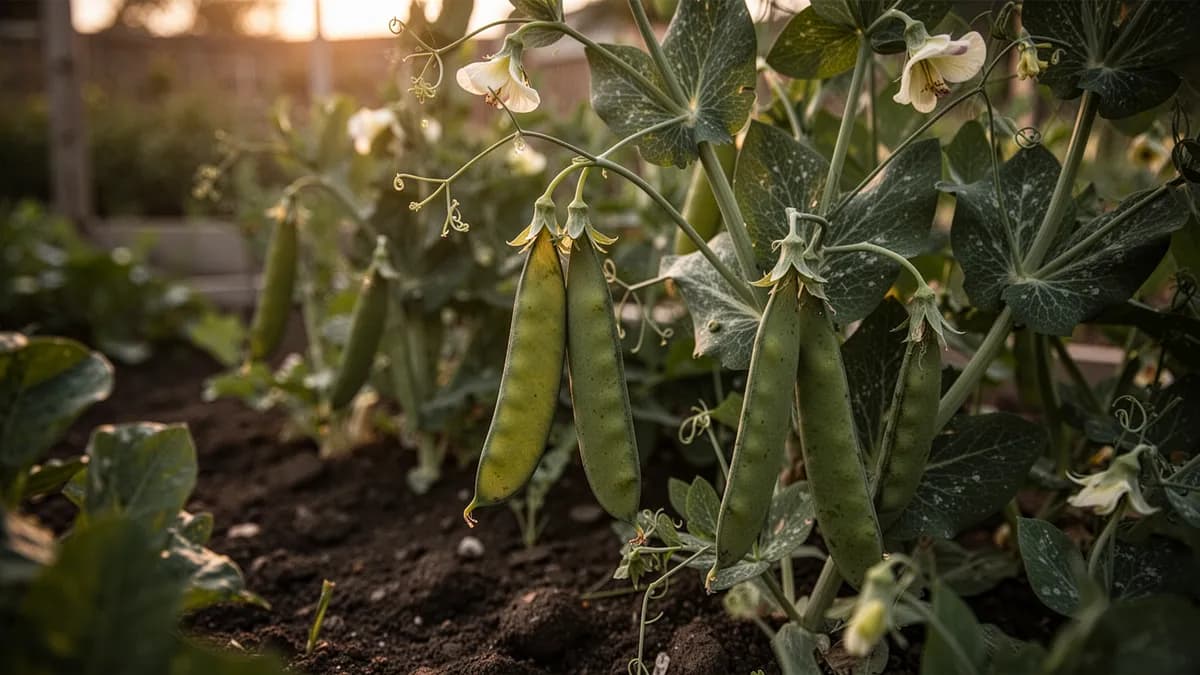
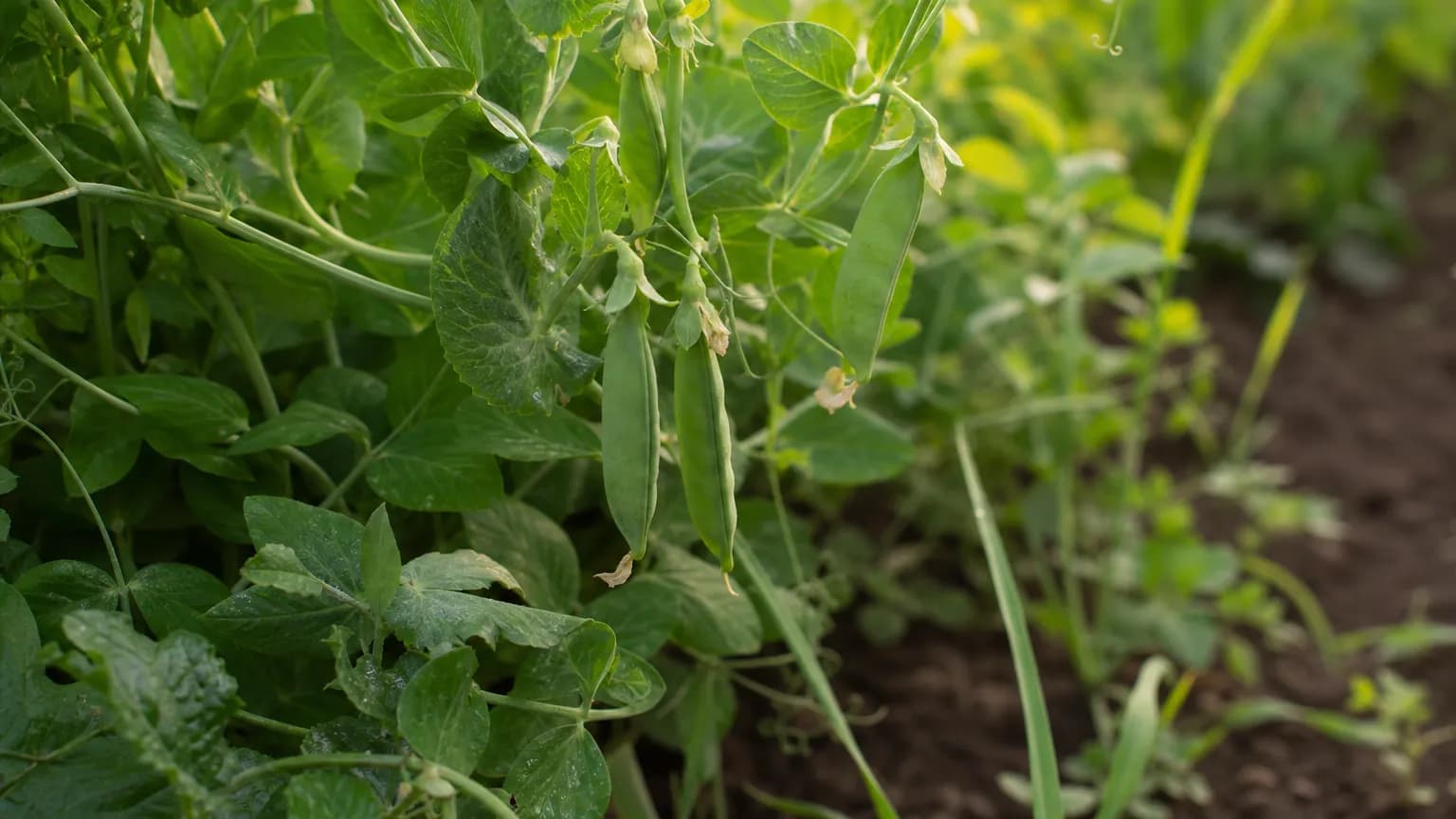
Los guisantes sugar snap (Pisum sativum var. macrocarpon) son una variedad de guisante que combina lo mejor de los tirabeques y los guisantes de grano: producen vainas gruesas, carnosas y crujientes con granos dulces completamente desarrollados en su interior, y todo se come entero.





En esta páginaResumen
Conoce Guisantes Sugar Snap
Los guisantes sugar snap (Pisum sativum var. macrocarpon) son una variedad de guisante que combina lo mejor de los tirabeques y los guisantes de grano: producen vainas gruesas, carnosas y crujientes con granos dulces completamente desarrollados en su interior, y todo se come entero. Desarrollados en la década de 1970, se han convertido en uno de los favoritos del huerto doméstico.
Cuándo plantar Guisantes Sugar Snap
Siembre directamente en el exterior en primavera temprana, ya que los guisantes no toleran bien el trasplante. Coloque las semillas a 3-5 cm de profundidad y 5-8 cm de separación. Inocule con Rhizobium antes de la primera siembra. La germinación ocurre en 7-14 días a 5-20 °C. Instale los soportes al momento de la siembra.
Tu año de Guisantes Sugar Snap
Ajustado a Zona 7 · temporada típica · la helada se va hacia el 2 abr y vuelve hacia el 1 nov
Planta Guisantes Sugar Snap Feb – Abr y cosecha May – Jul. Consulta los métodos de plantación y elige tu clima para adaptar los periodos.
Cómo cultivar Guisantes Sugar Snap
Los guisantes sugar snap son plantas de clima fresco que prosperan a temperaturas entre 10 y 20 °C. Siembre directamente en primavera temprana, tan pronto como el suelo pueda trabajarse, en un lugar a pleno sol con suelo suelto y bien drenado, pH entre 6,0 y 7,5. Instale un soporte vertical de 1,5-2 metros al momento de la siembra.
Coloque las semillas a 3-5 cm de profundidad con 5-8 cm de separación y 50-60 cm entre hileras. Inocule las semillas con Rhizobium leguminosarum para mejorar la fijación de nitrógeno. La germinación ocurre en 7-14 días. Para una cosecha más prolongada, realice siembras sucesivas cada 2 semanas durante la temporada fresca.
Riegue regularmente para mantener el suelo uniformemente húmedo, especialmente durante la floración y el llenado de vainas. Aplique acolchado para mantener el suelo fresco. Como leguminosa, el sugar snap fija su propio nitrógeno, así que evite la fertilización nitrogenada excesiva que favorece el follaje en detrimento de las vainas.
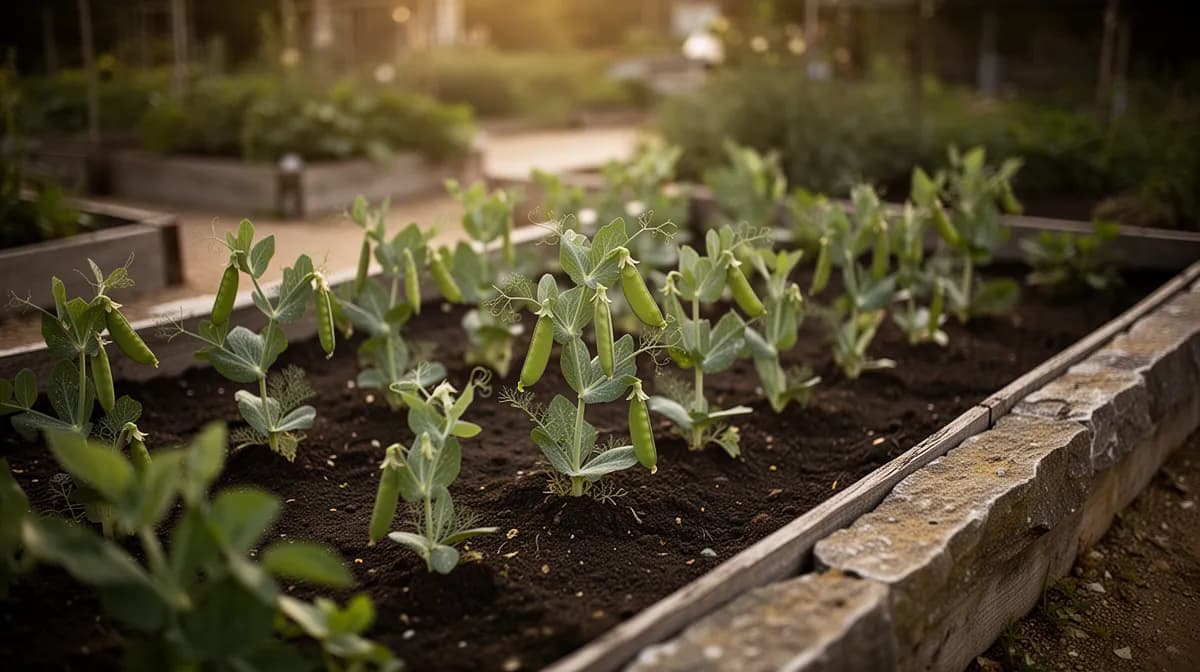
450 plantas caben en un bancal de 120 × 240 cm
Cada Guisantes Sugar Snap pide 8 cm de margen. El planificador guarda ese marco por ti — cada planta, cada bancal.
Los mejores vecinos de Guisantes Sugar Snap
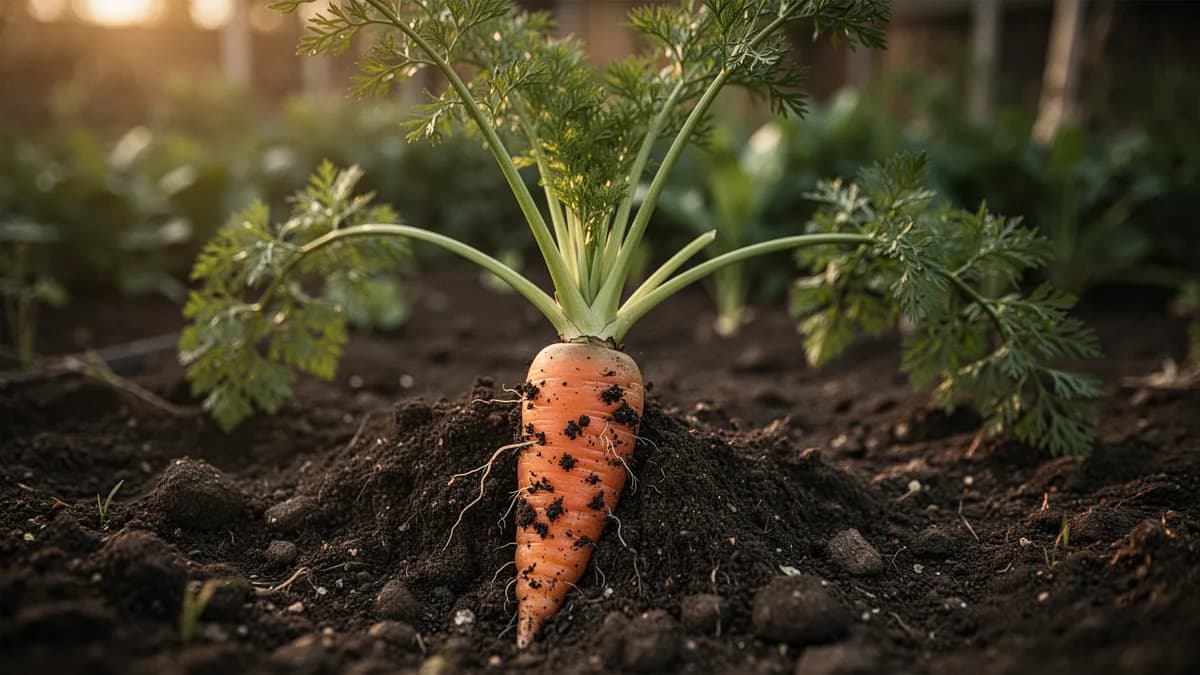
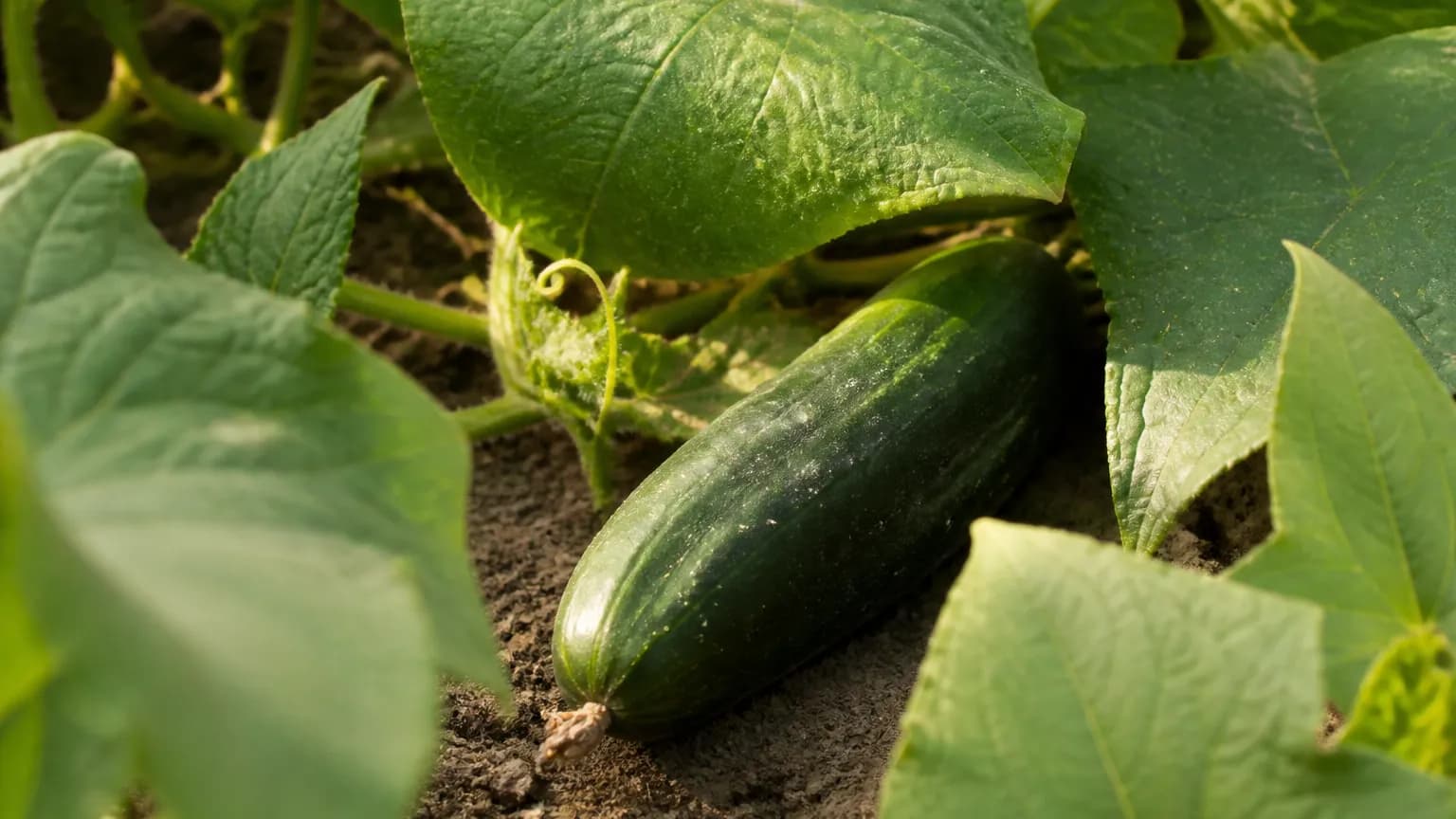
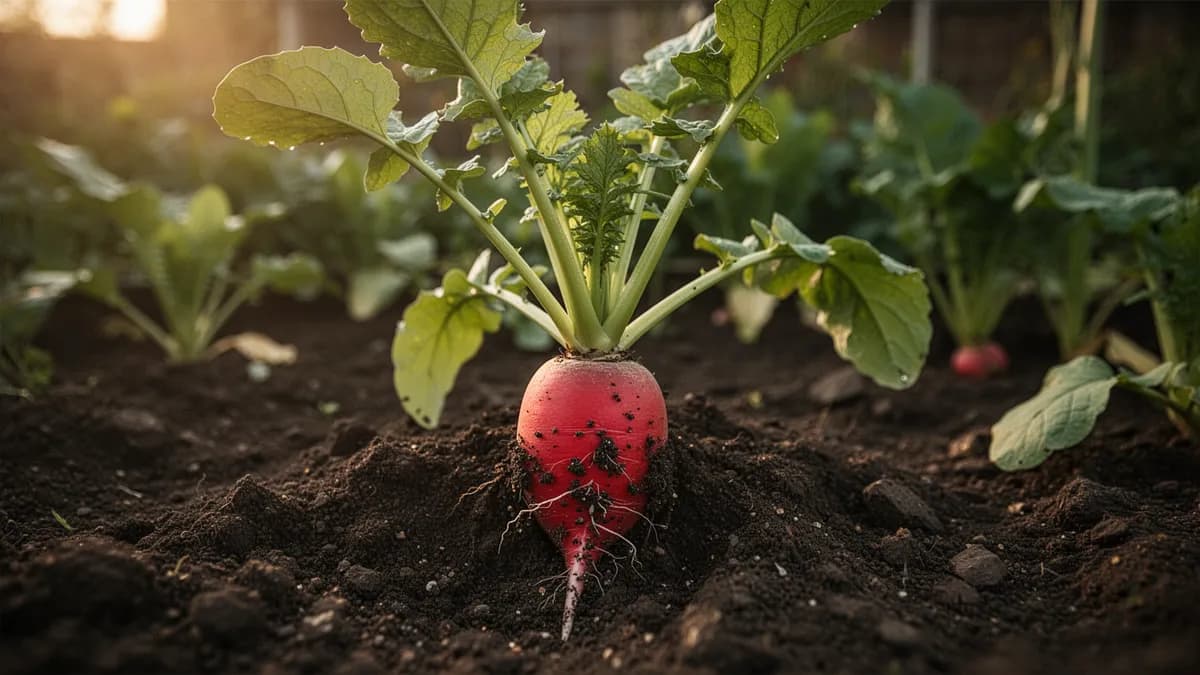
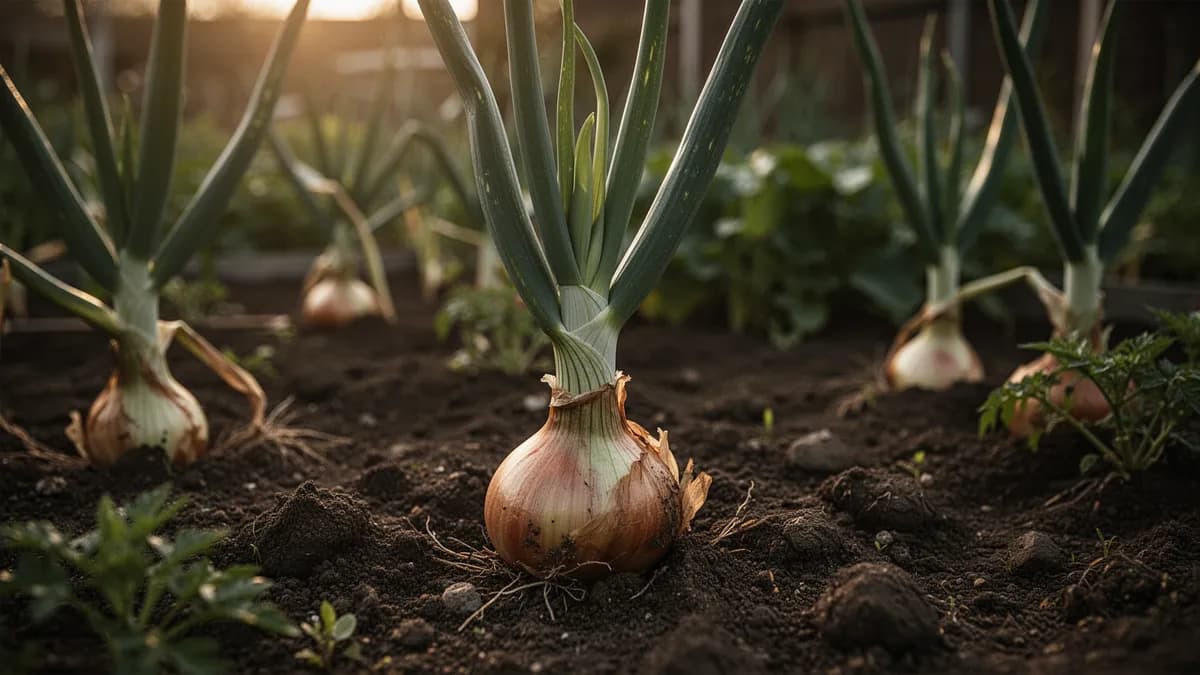
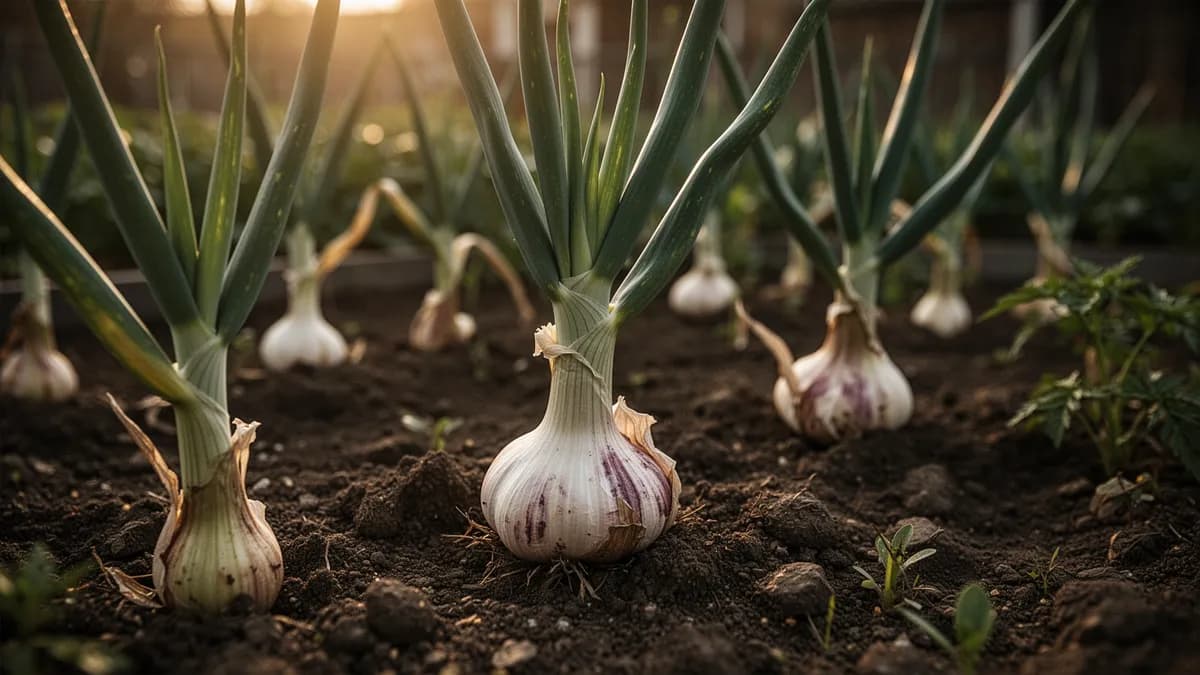
Los sugar snap son buenos compañeros de zanahorias, rábanos, nabos y lechugas, ya que fijan nitrógeno que beneficia a las plantas vecinas. Las hierbas aromáticas como la menta ayudan a repeler pulgones. Evite plantarlos cerca de ajos, cebollas y chalotas, que pueden inhibir el crecimiento de las leguminosas.
Zanahoria va a su lado. Cebolla no.
Saber de huerto de siempre, cotejado con la tabla real de Guisantes Sugar Snap — prueba cualquier planta que cultives.
Prueba Guisantes Sugar Snap en un bancal, aquí mismo
Un bancal real del planificador con Guisantes Sugar Snap ya plantado. Toca una planta compañera para colocarla y mira cómo responde la comprobación de vecinos: verde para buenos vecinos, rojo si hay conflicto.


Guías de cultivo relacionadas
Abónalo bien
Los sugar snap prefieren suelo suelto, bien drenado y moderadamente fértil, con pH entre 6,0 y 7,5. Como leguminosas, fijan su propio nitrógeno; inocule las semillas con Rhizobium. Aplique compost antes de la siembra y un fertilizante bajo en nitrógeno pero rico en fósforo y potasio. Evite el exceso de nitrógeno.
Temperatura ideal
Compatibilidad de zonas de rusticidad
De la semilla a la cosecha, etapa por etapa
Germinación de la semilla
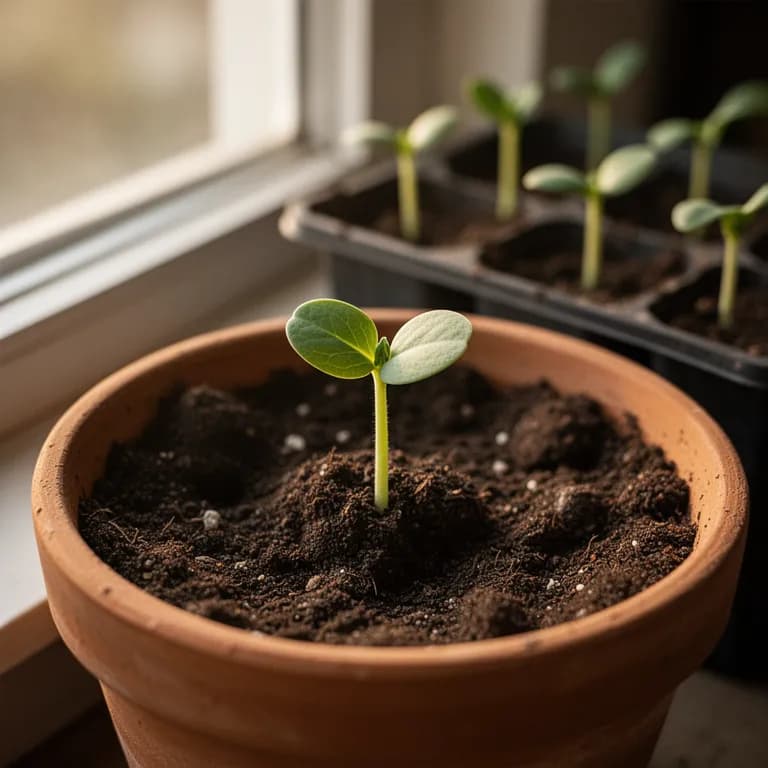
Las semillas se hinchan y emiten primero una raíz, seguida de un brote curvado que saca los cotiledones a la superficie del suelo.
Crecimiento de plántula
Aparecen las primeras hojas verdaderas y los zarcillos comienzan a buscar apoyo mientras se desarrollan nódulos fijadores de nitrógeno en las raíces.
Crecimiento de la enredadera
Las enredaderas crecen rápido y trepan por su soporte, con un follaje denso que va cubriendo el enrejado.
Floración
Aparecen flores delicadas a lo largo de la enredadera y forman vainas sin necesidad de visitas de polinizadores.
Desarrollo de la vaina
Las vainas se engrosan rápidamente y alcanzan la etapa ideal de cosecha crujiente mientras los guisantes del interior ya están completamente desarrollados.
Cosecha máxima
La planta sigue produciendo vainas nuevas durante varias semanas hasta que el calor frena el crecimiento.
Remoja las semillas durante la noche e инocúlalas con Rhizobium específico para guisantes antes de plantar. Siembra a 2.5 cm de profundidad en suelo húmedo. Protege de aves y ratones con una manta antiheladas hasta que emerjan las plántulas.
Cuidar Guisantes Sugar Snap mes a mes
Qué hacer cada mes para tu Guisantes Sugar Snap
Octubre
Mes actualFall crops begin flowering and setting pods in zones 6-8. Harvest regularly. In zones 9-10, continue tending winter plantings. Light frost actually sweetens the flavor of developing pods — no need to protect established vines.
Ten claro qué hacer en tu huerto, cada mes
Un correo al empezar cada mes: qué sembrar, plantar y hacer ahora mismo — para tu Guisantes Sugar Snap y todo lo que crece alrededor. Más un breve curso inicial para esquivar los errores clásicos.
- Qué hacer ahora mismo
- Ajustado a tu temporada
- Curso inicial incluido
Cosechar Guisantes Sugar Snap
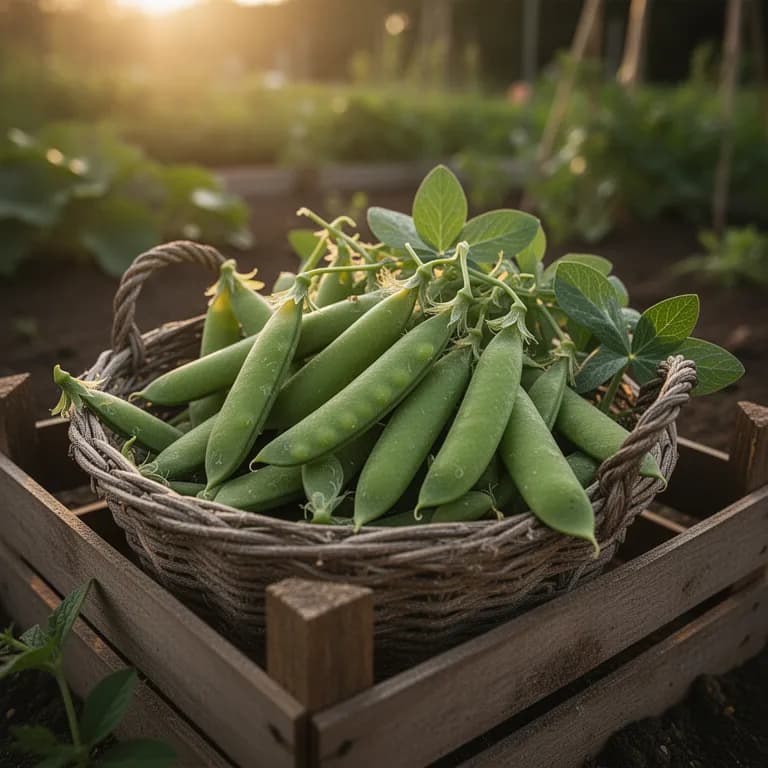
Coseche los sugar snap cuando las vainas estén llenas y redondeadas, con los granos bien desarrollados pero la vaina aún tierna y crujiente, generalmente entre 60 y 70 días. Recoja cada 1-2 días para estimular la producción continua. Las vainas deben romperse limpiamente al doblarlas; si están fibrosas, se han dejado demasiado tiempo.
se supone que plantas al comenzar el periodo — indica tu fecha real
Cosecha cuando las vainas estén gordas, redondas, de color verde brillante y se quiebren limpiamente al doblarlas.
Almacenamiento y conservación
Las vainas frescas se conservan en el refrigerador 4-5 días dentro de una bolsa perforada. Para congelación, retire los hilos, blanquee 1-2 minutos, enfríe en agua helada y congele. Los sugar snap congelados mantienen su calidad 8-10 meses. También se conservan bien en escabeche rápido con vinagre de arroz.
Qué falla — y cómo solucionarlo
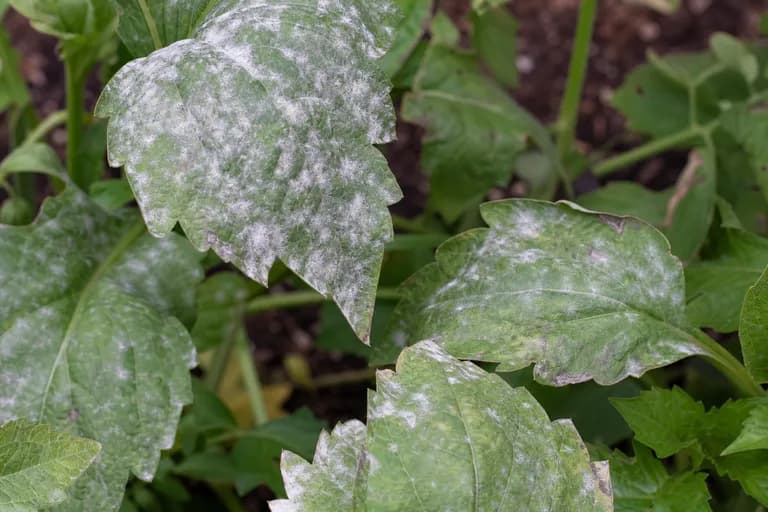
Oídio (Erysiphe pisi)
EnfermedadRecubrimiento blanquecino polvoriento en hojas, tallos y vainas. Las hojas afectadas amarillean y se secan, reduciendo la producción y calidad de las vainas.
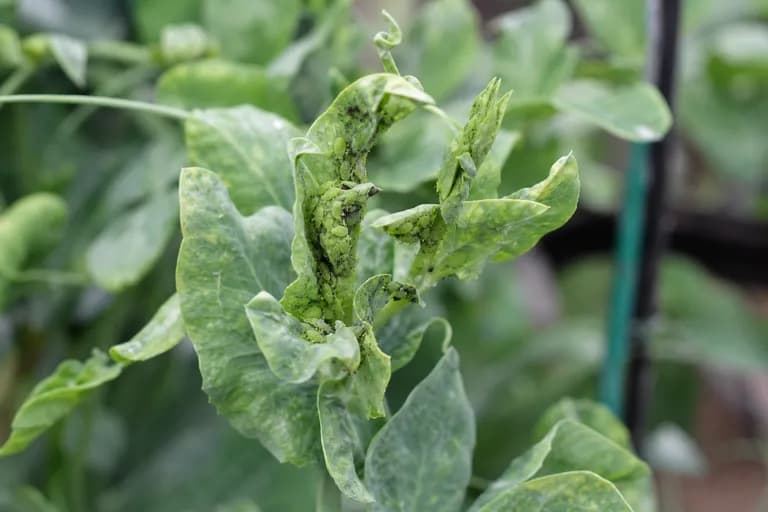
Pulgón del guisante (Acyrthosiphon pisum)
PlagaColonias densas de pulgones verdes en brotes tiernos, flores y vainas jóvenes. Causan deformación y enrollamiento de las hojas y pueden transmitir virus.
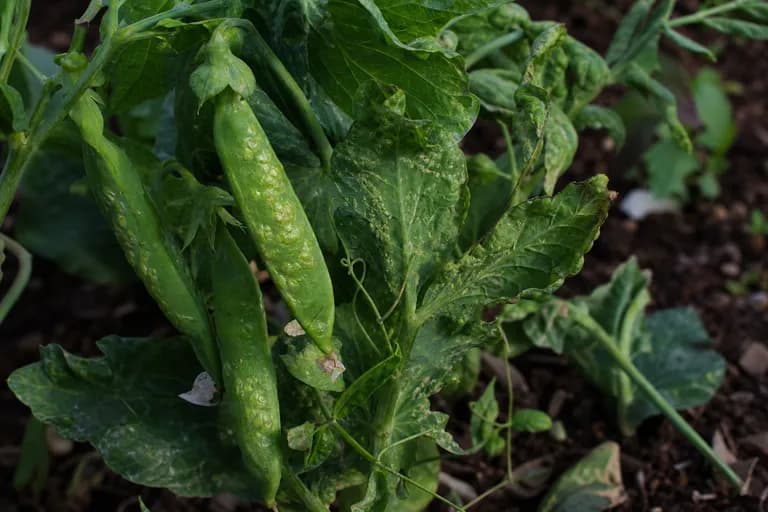
Marchitez por Fusarium (Fusarium oxysporum f. sp. pisi)
EnfermedadMarchitamiento progresivo comenzando por las hojas inferiores. Las hojas amarillean unilateralmente y al cortar el tallo se observa decoloración vascular marrón.
Solución de problemas comunes
El calor pone fin abruptamente a la producción; cuando las temperaturas superan los 25 °C, las plantas dejan de florecer y las vainas se vuelven fibrosas. Para alargar la cosecha, siembre lo más temprano posible y proporcione sombra parcial si es necesario. Los hilos laterales de las vainas pueden ser persistentes en algunas variedades y deben retirarse antes de consumirlas.
Consejos de cultivo
- Plant as early as humanly possible. Sugar snap peas race against rising temperatures, and every extra week of cool weather means more pods. Sow 4-6 weeks before the last frost — peas shrug off light freezes that would kill tomatoes and peppers.
- Inoculate seeds with pea-specific Rhizobium bacteria before planting. This is not optional for best results — inoculated plants fix their own nitrogen, grow more vigorously, and produce significantly more pods than uninoculated plants, especially in soil where peas have not been grown before.
- Install your trellis at planting time, not after. By the time vines need support they are growing inches per day, and untrained vines tangle into an unharvested mess on the ground. A simple system of twine strung between posts works perfectly.
- Succession-sow every 2-3 weeks for 2-3 plantings to extend the harvest window. Each planting produces for 3-4 weeks, so staggered sowings can stretch your sugar snap season from 4 weeks to 8-10 weeks in cool climates.
- Water consistently at the base rather than overhead. Wet foliage in warm, humid conditions invites powdery mildew — the most common disease of sugar snap peas. Drip irrigation or soaker hoses are ideal.
- Pick every single day during peak harvest. Pods go from perfect to overmature in 24-48 hours, and leaving ripe pods on the vine signals the plant to stop flowering. Frequent picking is the single most important thing you can do to maximize your total harvest.
- Do not fertilize with nitrogen. As legumes, peas fix their own nitrogen from the air. Adding nitrogen fertilizer promotes leafy vine growth at the expense of pod production and can actually inhibit the Rhizobium bacteria from forming nodules.
- Plan what comes next. When pea vines are spent in early summer, pull them and immediately plant warm-season crops like tomatoes, peppers, or beans in the same bed. These successor crops benefit enormously from the nitrogen that pea roots have deposited in the soil.
Cultiva tu mejor Guisantes Sugar Snap — y todo lo que la rodea.
Empieza un plan gratis hoy. Diseña tus bancales, coloca tu Guisantes Sugar Snap y deja que PlotMyGarden gestione el momento, el espaciado, las asociaciones y los recordatorios de la semilla a la cesta.
Elige tu Guisantes Sugar Snap
Sugar Snap
La variedad original desarrollada por Calvin Lamborn en 1979. Plantas altas de 150-180 cm que requieren soporte robusto. Vainas gruesas y muy dulces. 65-70 días.
Sugar Ann
Versión enana y temprana del sugar snap original. Plantas compactas de 60-70 cm que no requieren soporte. Resistente al oídio. Ideal para espacios reducidos. 55-60 días.
Super Sugar Snap
Versión mejorada del original con mejor resistencia a enfermedades y mayor producción. Plantas de 150 cm. Vainas especialmente crujientes y dulces. 65-70 días.
Cascadia
Variedad resistente al oídio y al virus del mosaico del guisante. Plantas de 80-90 cm. Vainas de excelente sabor con hilos reducidos. 60-65 días.
A packet of sugar snap pea seeds costs $3-5 and contains 50-100 seeds — enough to plant a 10-15 foot row that can produce 3-5 kg (7-11 lbs) of fresh pods. With organic sugar snap peas selling for $4-8 per pound at grocery stores and farmers markets, a single row can yield $30-80 worth of produce from a $4 seed packet. Sugar snap peas are also one of the easiest crops to grow, requiring minimal inputs beyond a trellis and water, making them one of the highest-return crops for beginning gardeners.
Recetas rápidas
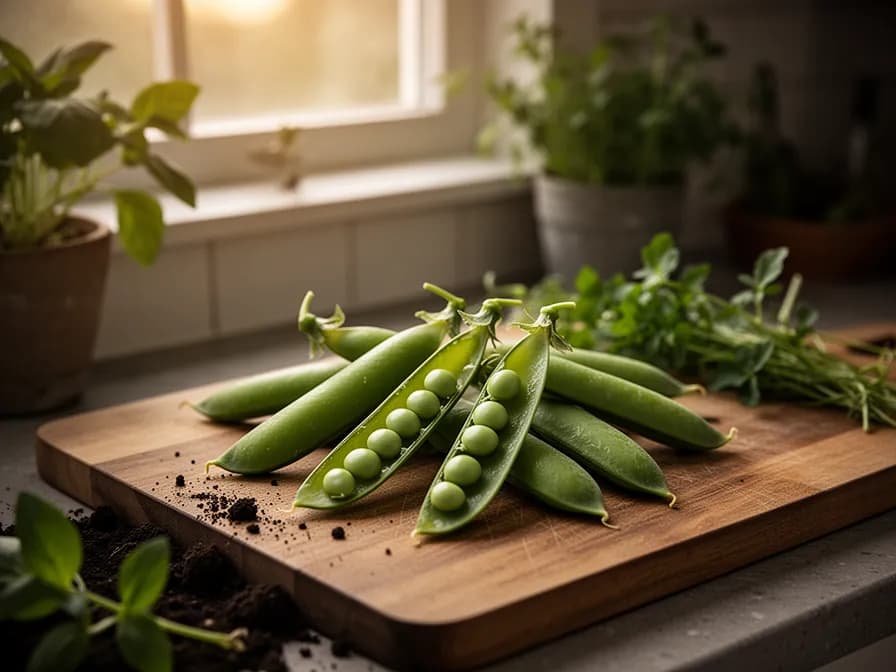
Sesame Ginger Sugar Snap Stir-Fry
10 minThe classic way to cook sugar snap peas — a lightning-fast stir-fry that keeps them brilliantly green and snappy. Fresh ginger and toasted sesame oil bring out the natural sweetness of the pods.
8 ingredientes
Sugar Snap Pea, Mint, and Feta Salad
10 minA bright spring salad that celebrates raw sugar snaps at their crunchy best. Fresh mint and tangy feta complement the natural sweetness of just-picked pods. No cooking required.
7 ingredientesGarlic Butter Sugar Snaps with Lemon
8 minAn elegant 5-minute side dish — sugar snap peas sauteed in butter with garlic until just barely tender, then finished with a squeeze of lemon. Simple, quick, and absolutely delicious alongside grilled fish or chicken.
6 ingredientesUsos culinarios
Los sugar snap se consumen enteros con su vaina, crudos o brevemente cocinados para mantener su crujido característico. Crudos, son un aperitivo refrescante con hummus o salsas cremosas. Se saltean brevemente con aceite de sésamo y ajo en la cocina asiática, se añaden al vapor sobre arroces, o se asan a la parrilla con un toque de sal marina. Su dulzor natural los hace irresistibles en ensaladas primaverales.
Qué contiene
Beneficios para la salud
- Exceptionally rich in vitamin C — a single cup of raw sugar snap peas provides over 100% of the daily value, supporting immune function, collagen production, and iron absorption from plant-based foods.
- Good source of vitamin A as beta-carotene (22% DV per 100g), an antioxidant that supports healthy vision, skin integrity, and immune defense against infections.
- Contains significant dietary fiber (2.6g per cup) that promotes digestive regularity, feeds beneficial gut bacteria, and helps maintain stable blood sugar levels after meals.
- Provides plant-based iron (2.1mg per cup), and the high vitamin C content in the same food dramatically enhances non-heme iron absorption — a natural pairing that benefits vegetarians and vegans.
- Rich in vitamin K, essential for proper blood clotting, bone metabolism, and cardiovascular health — important for all ages but especially for growing children and older adults.
- Low glycemic index and high fiber-to-calorie ratio make sugar snap peas an excellent food for blood sugar management, weight control, and sustained energy without blood sugar spikes.
De dónde viene Guisantes Sugar Snap
The sugar snap pea is a remarkably recent creation in the long history of pea cultivation. While garden peas (Pisum sativum) have been cultivated for over 10,000 years — making them one of humanity's oldest crops, with archaeological evidence from Neolithic settlements in the Near East, Turkey, and the Swiss lake dwellings — the sugar snap variety was not developed until the late 20th century.
In the 1960s, Dr. Calvin Lamborn at the Gallatin Valley Seed Company in Twin Falls, Idaho, began crossing snow peas (which have edible flat pods but small peas) with a mutant shell pea that had unusually thick, fleshy pod walls. After years of painstaking selection, he released the Sugar Snap pea in 1979. It combined the edible pod of the snow pea with the plump, sweet peas of a shelling variety — a combination that had never existed before. The variety was an immediate sensation, winning the prestigious All-America Selections gold medal in its debut year, one of very few vegetables to receive this honor.
The sugar snap pea's popularity spread rapidly worldwide during the 1980s and 1990s, and breeders quickly developed improved varieties including bush types like Sugar Ann (1984, also an AAS winner), stringless selections like Cascadia, and disease-resistant hybrids like Super Sugar Snap. Today, sugar snap peas are grown commercially across North America, Europe, Central America, and East Africa, and they have become one of the most popular crops for home gardens due to their ease of growing, heavy yields, and irresistible fresh-eating quality. The sugar snap pea stands as one of the great successes of modern plant breeding — a genuinely new vegetable that filled a niche no one knew existed.
Guisantes Sugar Snap: ¿sabías que?
Datos fascinantes sobre Guisantes Sugar Snap
Sugar snap peas were invented, not discovered — plant breeder Calvin Lamborn crossed a snow pea with a mutant thick-podded shell pea at the Gallatin Valley Seed Company in Idaho, releasing the first Sugar Snap variety in 1979. It immediately won an All-America Selections gold medal.
Guisantes Sugar Snap: preguntas frecuentes
¿Cuándo debo plantar Guisantes Sugar Snap?
¿Cuáles son buenas plantas acompañantes para Guisantes Sugar Snap?
¿En qué zonas de rusticidad puede crecer Guisantes Sugar Snap?
¿Cuánto sol necesita Guisantes Sugar Snap?
¿A qué distancia debo espaciar Guisantes Sugar Snap?
¿Qué plagas y enfermedades afectan a Guisantes Sugar Snap?
¿Cómo almaceno Guisantes Sugar Snap después de la cosecha?
¿Cuáles son las mejores variedades de Guisantes Sugar Snap para cultivar?
¿Qué suelo necesita Guisantes Sugar Snap?
Do I need to remove the strings from sugar snap peas before eating?
Why are my sugar snap pea plants flowering but not setting pods?
Can I grow sugar snap peas in containers?
Should I grow bush or climbing sugar snap peas?
Why do my sugar snap peas taste starchy instead of sweet?
Can I plant a fall crop of sugar snap peas?
Acabas de leer la teoría. Ahora cultívala en piloto automático.
Todo lo que hace que Guisantes Sugar Snap sea delicado — el momento, el espaciado, las asociaciones, la ventana de cosecha — es justo lo que PlotMyGarden resuelve por ti, para cada planta de tu huerto.
Un plan que conoce tu clima
Indica tu ubicación una vez. Recibe fechas de siembra, abonado y cosecha basadas en tu última helada real y el pronóstico en vivo — sin adivinar con un sobre genérico.
De la sección “Cuándo plantar”Planificador de bancales de arrastrar y soltar
Diseña bancales sobre una cuadrícula. Cada planta encaja con su espaciado correcto y ves toda la temporada antes de gastar un céntimo en semillas.
De la sección “Cultivo”Conflictos de asociación, detectados a tiempo
Más de 200 buenas y malas combinaciones comprobadas en vivo mientras plantas — para que un error que arruine la temporada nunca llegue a la tierra.
De la sección “Asociaciones”Recordatorios que sí vas a seguir
“Riega las judías.” “Recoge hoy antes de que se pase.” Oportunos, concretos y ligados a las plantas que de verdad cultivas.
De la sección “Cosecha”Escalonado, programado
¿Quieres cosechar seis semanas en vez de seis días? Reparte tus siembras automáticamente y te avisa cuando toca el siguiente lote.
De la sección “Cuándo plantar”Un registro que se vuelve más listo
Cada cosecha que registras le enseña tu huerto. El plan del año que viene parte de lo que de verdad funcionó en tu suelo, no en un manual.
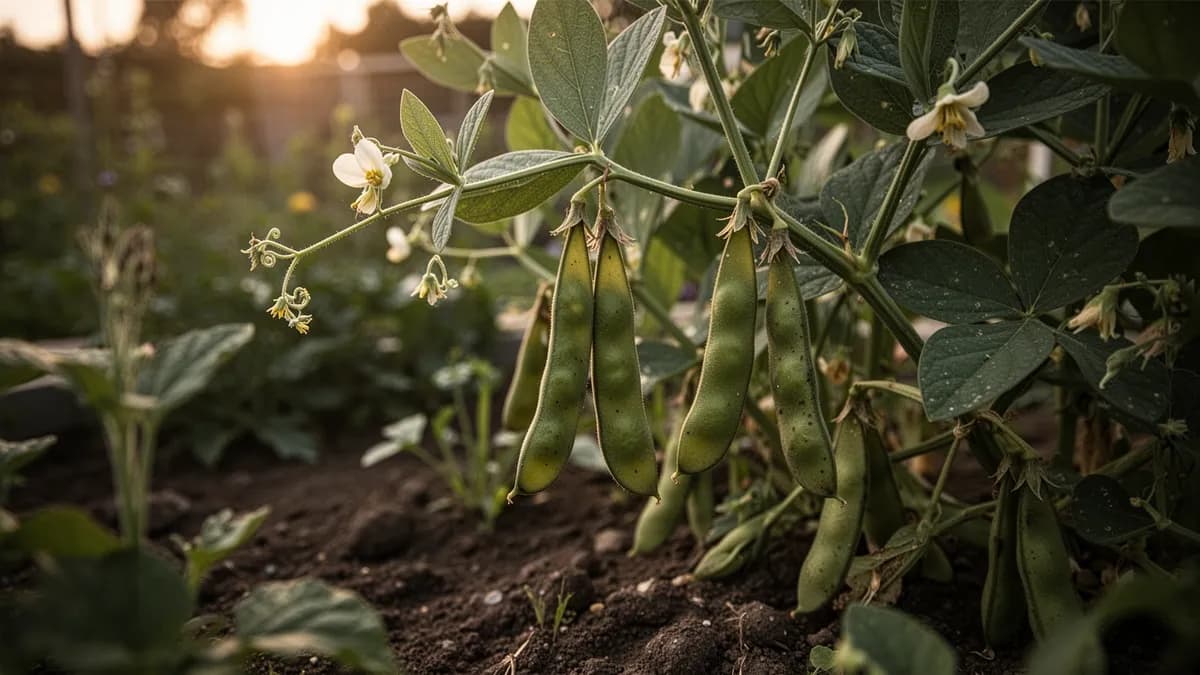
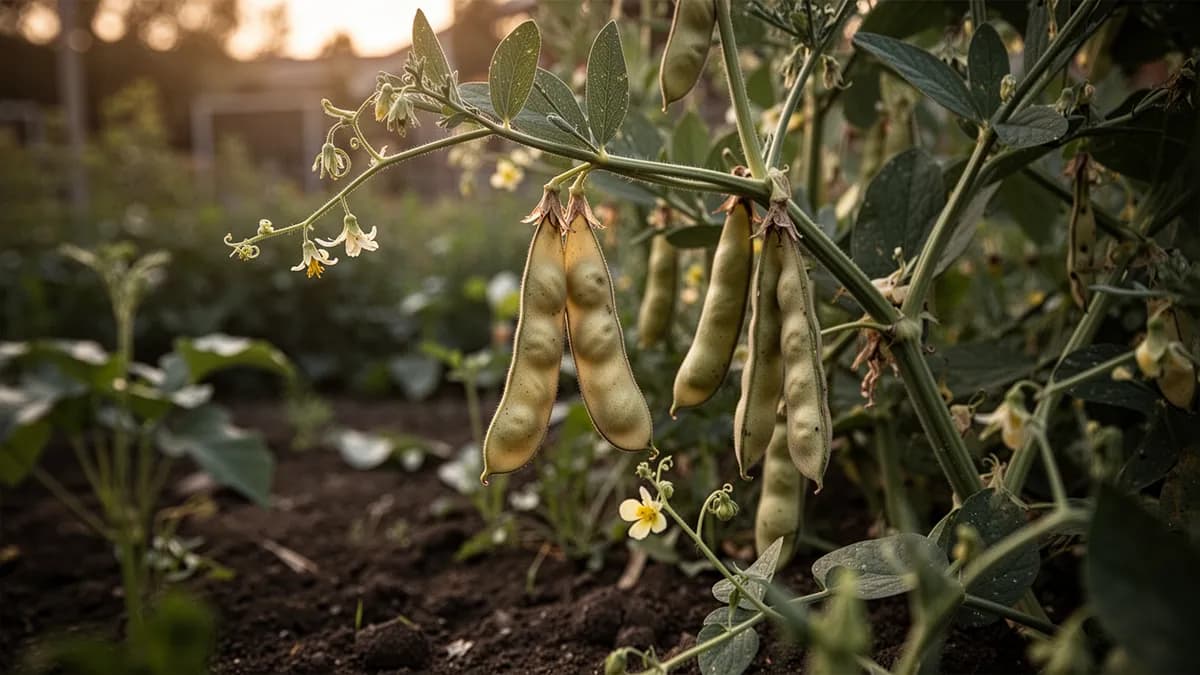
De la sección “Resumen”Planta estos junto a Guisantes Sugar Snap
Más Legumbres
Mantén Guisantes Sugar Snap lejos de estos
Diseños de jardín con Guisantes Sugar Snap
Cultiva tu mejor Guisantes Sugar Snap — y todo lo que la rodea.
Empieza un plan gratis hoy. Diseña tus bancales, coloca tu Guisantes Sugar Snap y deja que PlotMyGarden gestione el momento, el espaciado, las asociaciones y los recordatorios de la semilla a la cesta.