Haba
El haba (Vicia faba) es una leguminosa de origen mediterráneo cultivada desde hace más de 6.000 años, siendo una de las primeras plantas domesticadas por el ser humano.





En esta páginaResumen
Conoce Haba
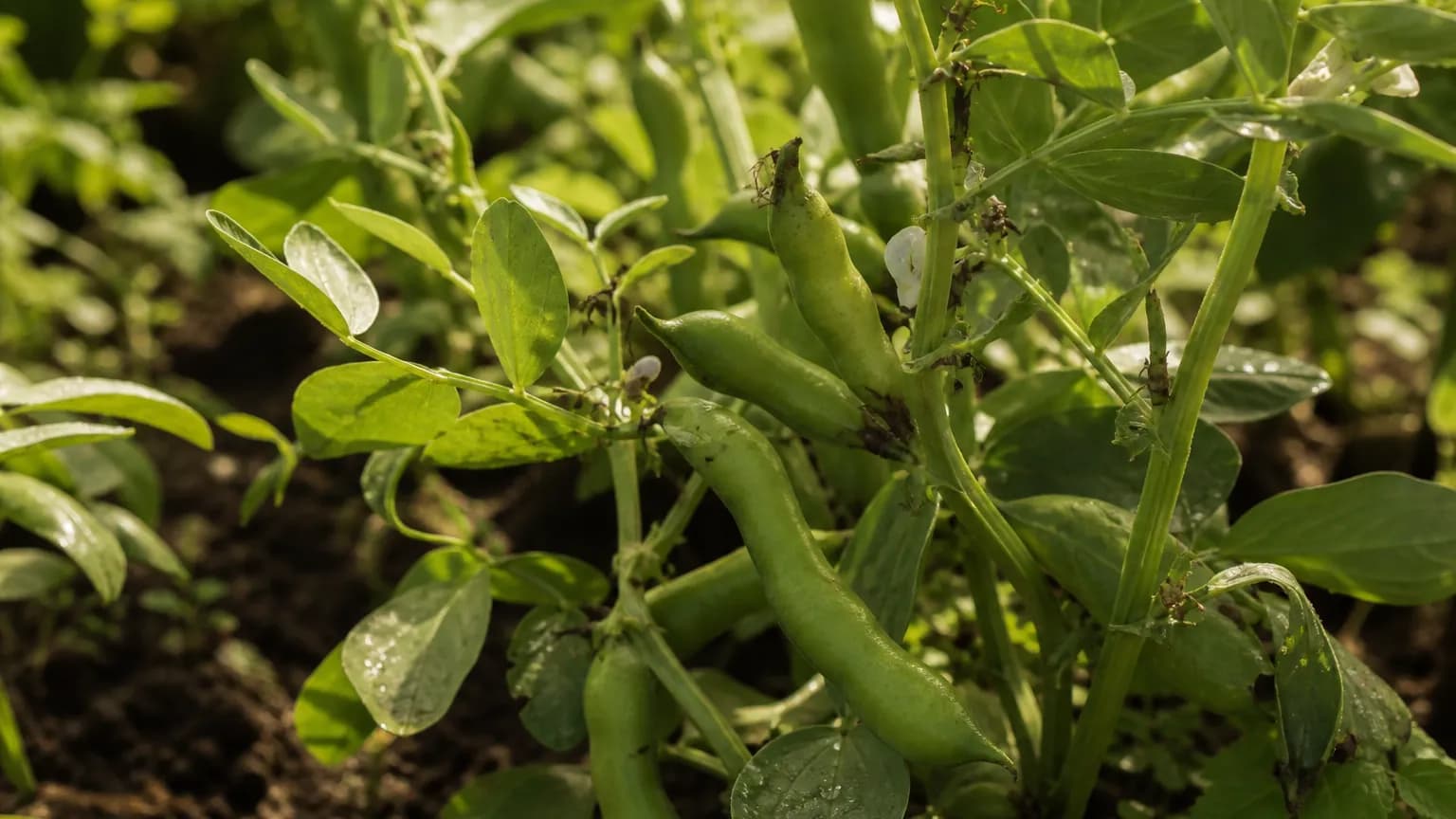
El haba (Vicia faba) es una leguminosa de origen mediterráneo cultivada desde hace más de 6.000 años, siendo una de las primeras plantas domesticadas por el ser humano. Produce grandes vainas acolchadas que contienen semillas planas y carnosas de color verde claro, apreciadas por su sabor dulce y terroso. Es una de las pocas leguminosas que tolera bien el frío, permitiendo siembras muy tempranas en la temporada.
Cuándo plantar Haba
Siembre directamente en el suelo tan pronto como la tierra sea trabajable, incluso en invierno en climas templados. Remoje las semillas durante 12-24 horas antes de la siembra para acelerar la germinación. Plante a 5 cm de profundidad con la cicatriz negra (hilo) hacia abajo. La germinación ocurre en 7-14 días. En regiones de inviernos suaves, la siembra de otoño produce cosechas más tempranas y abundantes.
Tu año de Haba
Ajustado a Zona 7 · temporada típica · la helada se va hacia el 2 abr y vuelve hacia el 1 nov
Planta Haba Feb – Abr y cosecha May – Jul. Consulta los métodos de plantación y elige tu clima para adaptar los periodos.
Cómo cultivar Haba
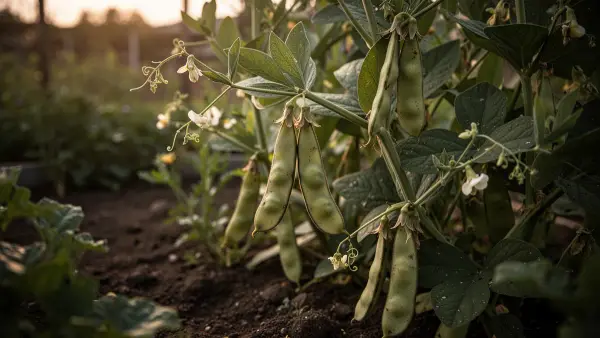
Las habas se siembran directamente en el suelo tan pronto como la tierra sea trabajable, generalmente entre finales de invierno y principios de primavera, ya que toleran heladas ligeras de hasta -5°C. Siembre las semillas a 5 cm de profundidad y 15-20 cm de separación, en hileras dobles con 20 cm entre filas y 60 cm entre pares de hileras. Las plantas alcanzan 60-120 cm de altura y pueden necesitar tutores o cuerdas laterales para evitar que se tumben con el viento.
Durante el crecimiento, mantenga el suelo uniformemente húmedo, especialmente durante la floración y la formación de vainas. Cuando las primeras flores aparezcan en la base de la planta, despunte los brotes superiores (corte los últimos 10 cm del tallo) para redirigir la energía hacia la producción de vainas y reducir las infestaciones de pulgones que prefieren los brotes tiernos.
Las habas son excelentes fijadoras de nitrógeno y mejoran la fertilidad del suelo para cultivos posteriores. Después de la cosecha, corte las plantas a nivel del suelo pero deje las raíces en el suelo para que los nódulos de nitrógeno se descompongan y enriquezcan la tierra. En climas templados, también pueden sembrarse en otoño para una cosecha temprana en primavera.
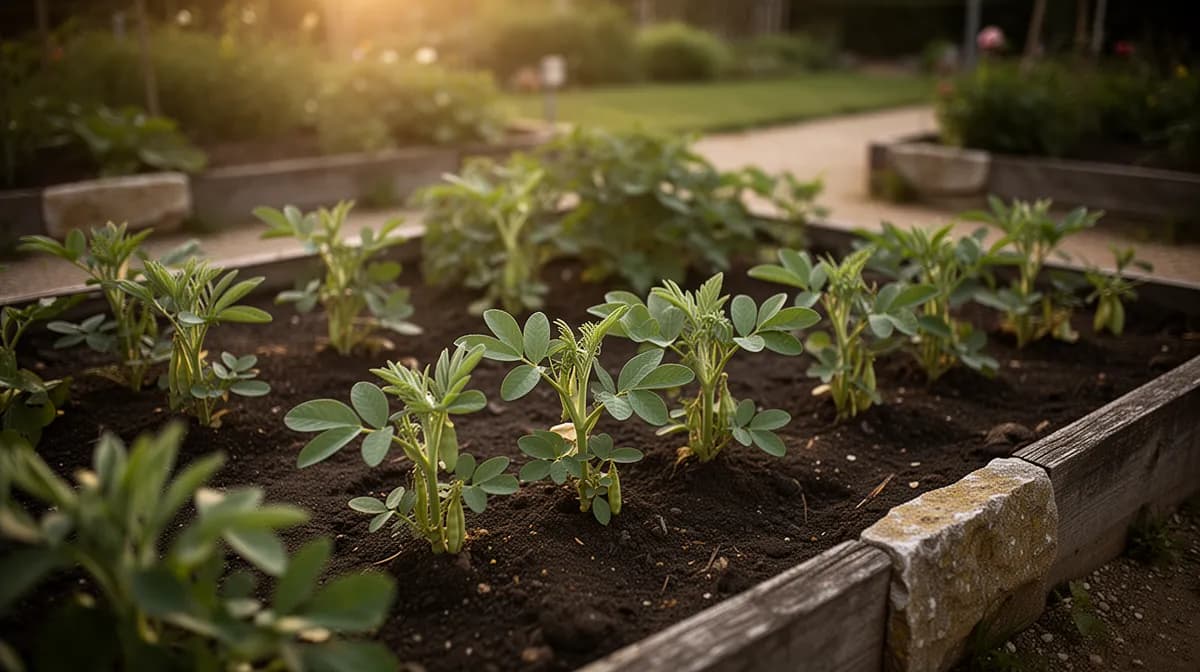
72 plantas caben en un bancal de 120 × 240 cm
Cada Haba pide 20 cm de margen. El planificador guarda ese marco por ti — cada planta, cada bancal.
Los mejores vecinos de Haba
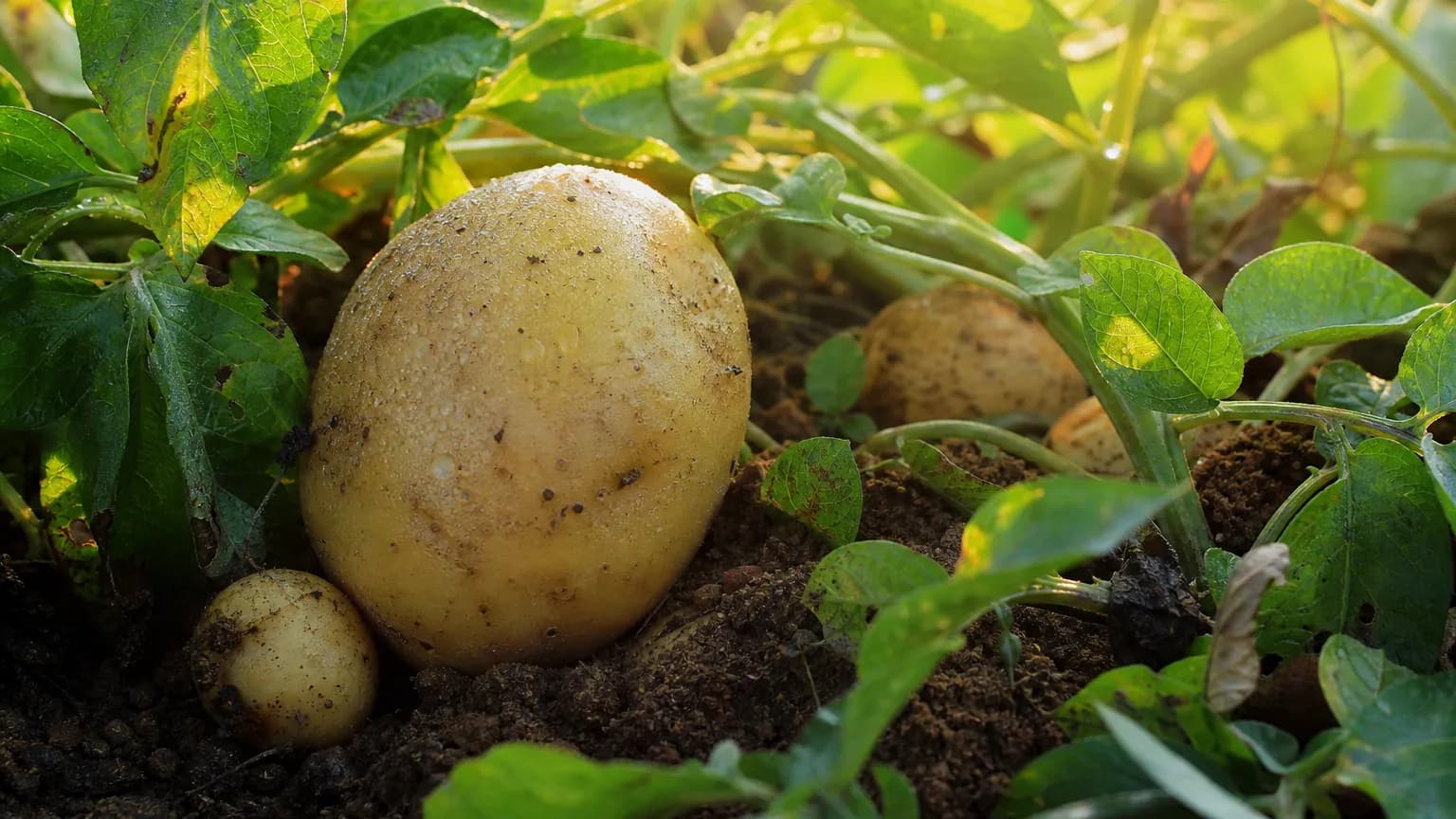
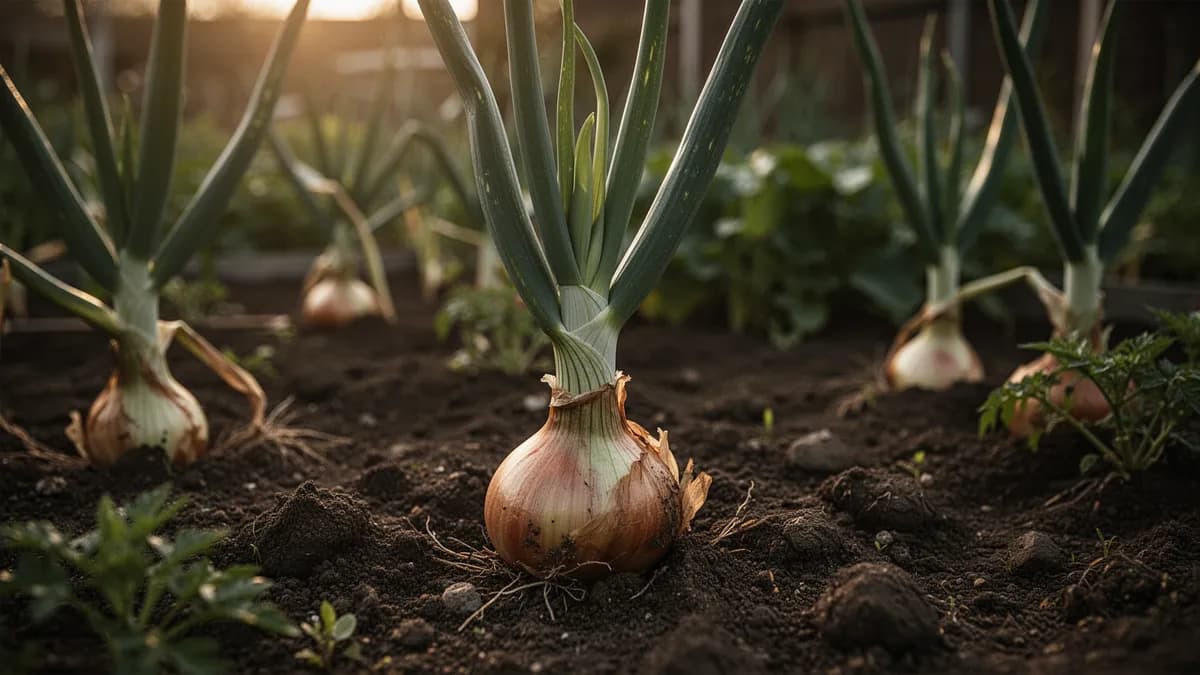
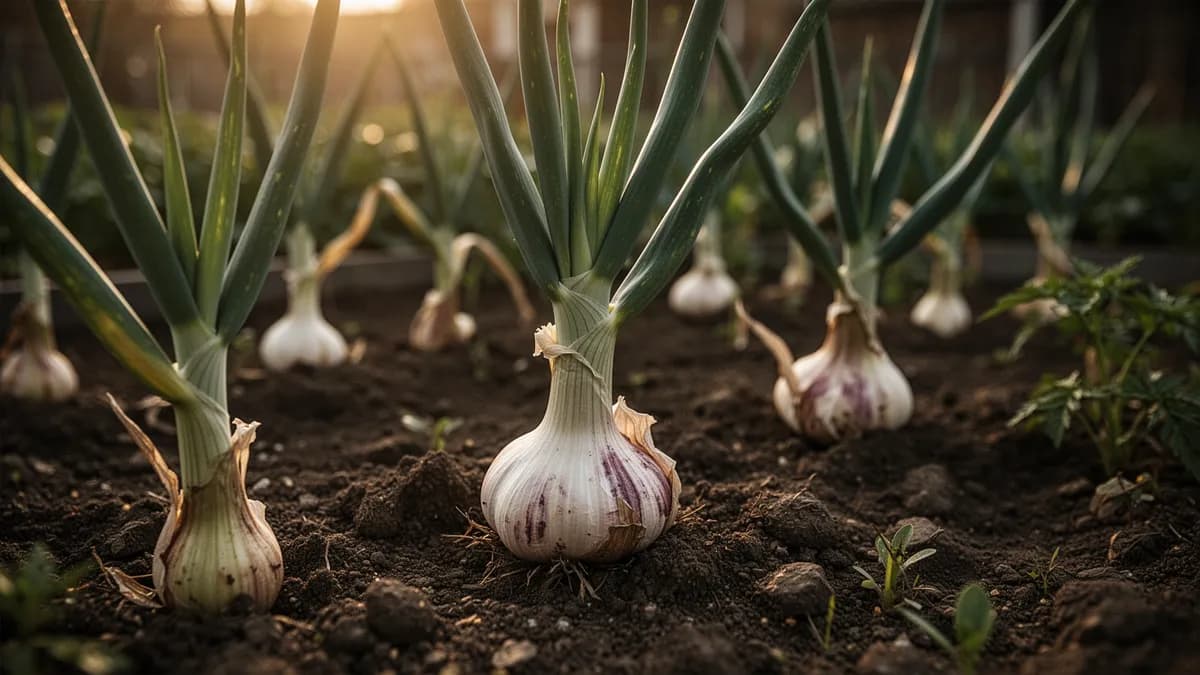
Excelente compañera de patatas, coles, lechugas y espinacas, a las que beneficia fijando nitrógeno en el suelo. Su floración atrae polinizadores beneficiosos al huerto. Evite plantarlas junto a cebollas, ajos y otras alliums, ya que los compuestos sulfurosos pueden inhibir la simbiosis con las bacterias fijadoras de nitrógeno (Rhizobium).
Papa va a su lado. Cebolla no.
Saber de huerto de siempre, cotejado con la tabla real de Haba — prueba cualquier planta que cultives.
Prueba Haba en un bancal, aquí mismo
Un bancal real del planificador con Haba ya plantado. Toca una planta compañera para colocarla y mira cómo responde la comprobación de vecinos: verde para buenos vecinos, rojo si hay conflicto.


Guías de cultivo relacionadas
Abónalo bien
Prefiere suelos arcillosos-limosos bien drenados con un pH entre 6,0 y 7,5. Como leguminosa fijadora de nitrógeno, no requiere fertilización nitrogenada; de hecho, el exceso de nitrógeno promueve el crecimiento vegetativo a expensas de la producción de vainas. Incorpore compost maduro antes de la siembra y aplique potasio y fósforo si el suelo es deficiente.
Temperatura ideal
Compatibilidad de zonas de rusticidad
De la semilla a la cosecha, etapa por etapa
Germinación
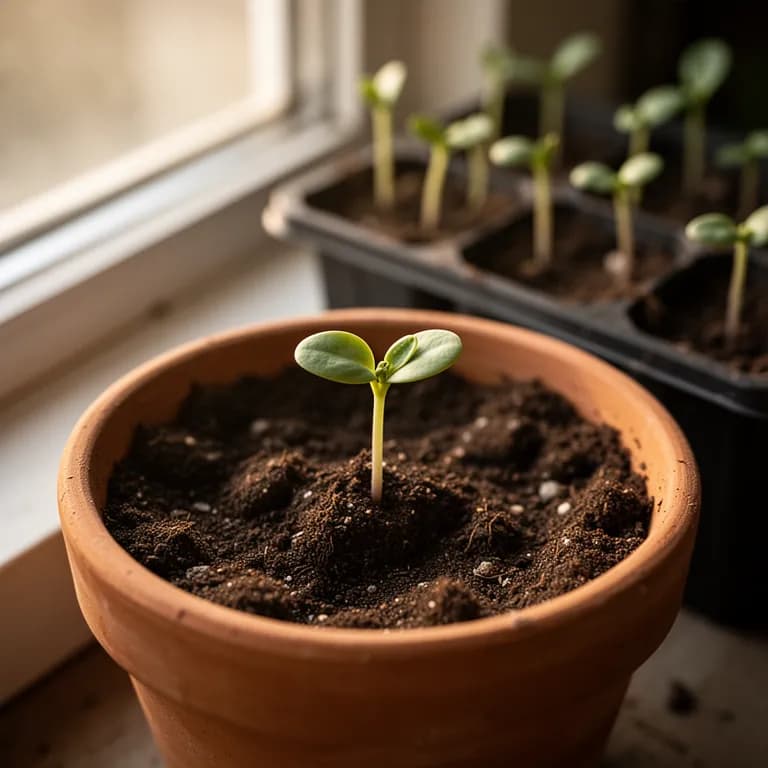
Las semillas grandes absorben agua con rapidez y primero emiten una raíz pivotante fuerte, seguida de un brote grueso y de tallo cuadrado. Las habas germinan de forma fiable en suelo fresco, incluso a 4 °C, lo que las convierte en uno de los cultivos más tempranos para sembrar en primavera.
Crecimiento vegetativo
Las plantas desarrollan sus característicos tallos erguidos y robustos con pares de hojas compuestas gris verdosas. El crecimiento es rápido con tiempo fresco y las plantas pueden alcanzar 60-90 cm en esta etapa. Los tallos cuadrados se vuelven leñosos y fuertes.
Floración
Los racimos de flores fragantes, con pétalos blancos marcados por manchas morado oscuro casi negras, se abren progresivamente desde la parte inferior de la planta hacia arriba. Cada racimo puede producir 2-6 vainas. Las abejas se sienten muy atraídas por estas flores ricas en néctar.
Desarrollo de las vainas
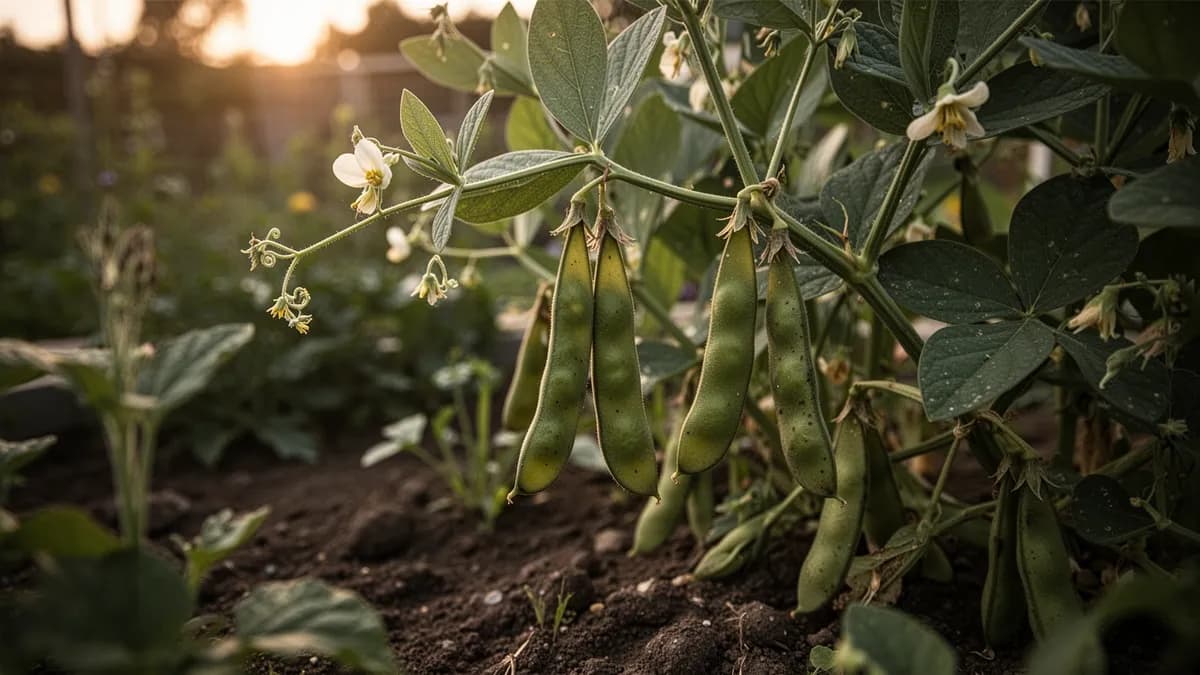
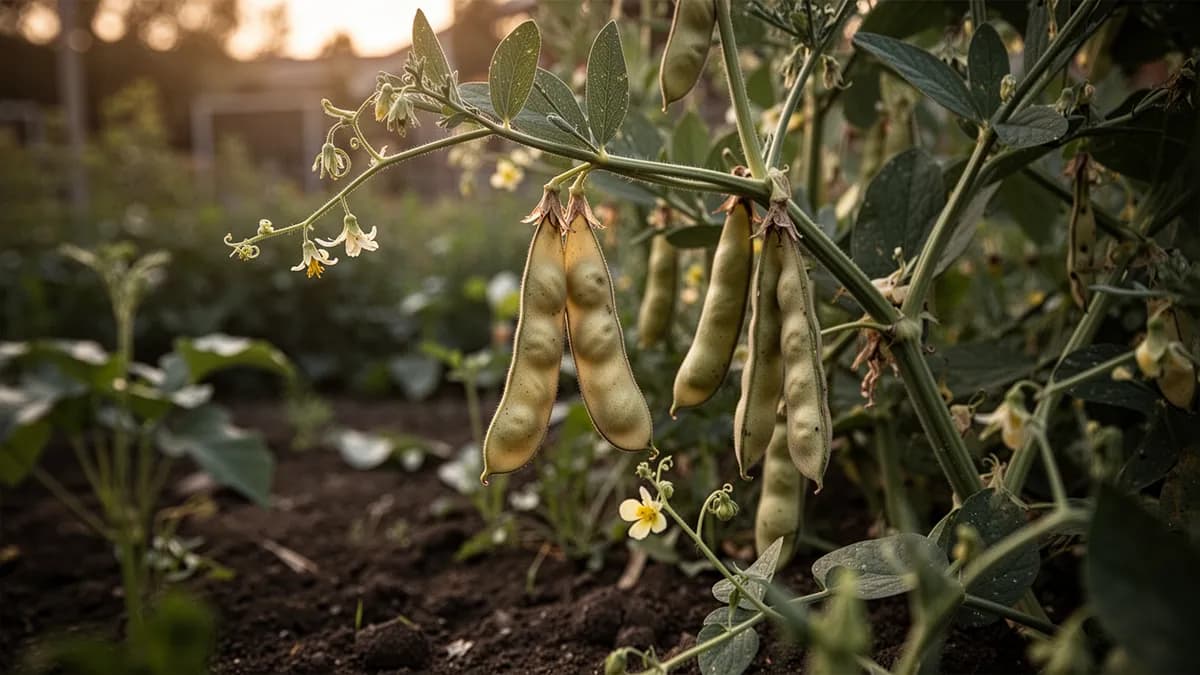
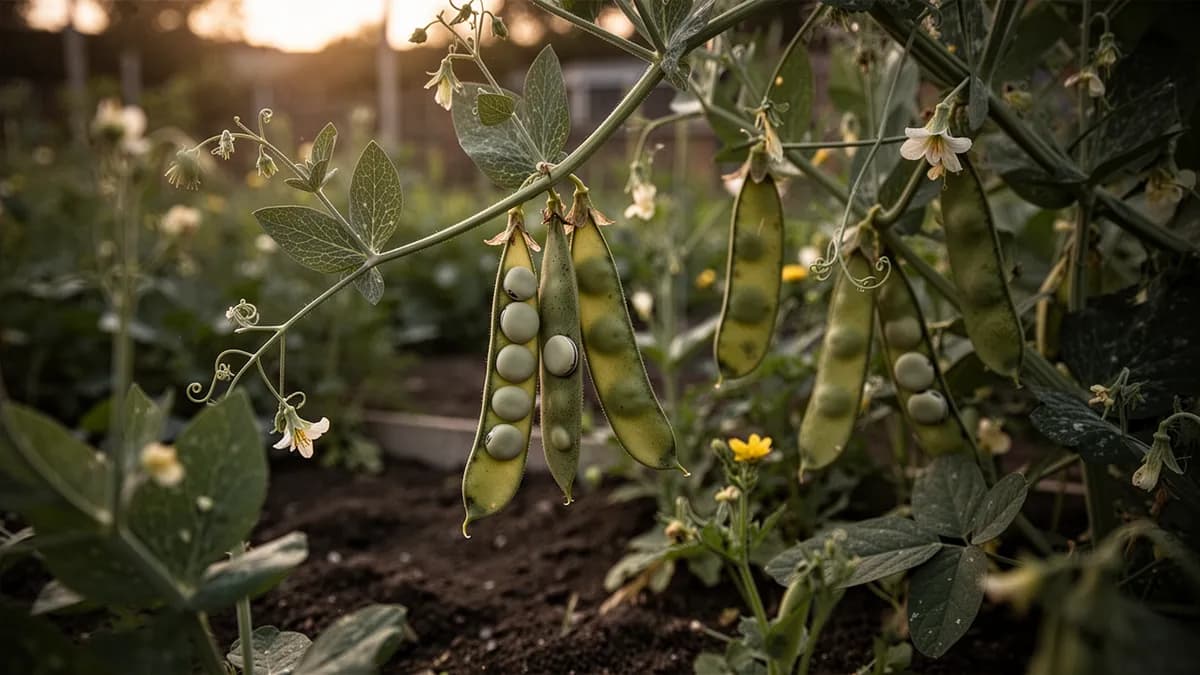
Las vainas gruesas y carnosas se forman y se llenan progresivamente desde la parte inferior de la planta hacia arriba. Las vainas están forradas por dentro con un interior suave y algodonoso que protege las habas en desarrollo. Cada vaina contiene 3-8 habas grandes, según la variedad.
Cosecha
Las vainas están listas cuando están gruesas y las habas son visibles a través de la pared de la vaina, pero antes de que se vuelvan marrones. Para consumir frescas, cosecha cuando las habas estén verdes brillantes y tiernas. Para habas secas, deja las vainas en la planta hasta que se vuelvan marrones y secas como papel.
Remoja las semillas durante la noche antes de sembrarlas para acelerar la germinación en 2-3 días. Siembra a 5 cm de profundidad en un suelo bien drenado. Mantén el suelo húmedo, pero no encharcado: las habas no toleran el agua estancada ni siquiera en esta etapa temprana.
Cuidar Haba mes a mes
Qué hacer cada mes para tu Haba
Octubre
Mes actualFall-sown favas should be germinating and establishing roots before winter dormancy. Ensure good drainage in beds to prevent waterlogging over winter. In cold climates, add favas to next year's crop rotation plan — they are ideal predecessors for heavy-feeding summer crops.
Ten claro qué hacer en tu huerto, cada mes
Un correo al empezar cada mes: qué sembrar, plantar y hacer ahora mismo — para tu Haba y todo lo que crece alrededor. Más un breve curso inicial para esquivar los errores clásicos.
- Qué hacer ahora mismo
- Ajustado a tu temporada
- Curso inicial incluido
Cosechar Haba
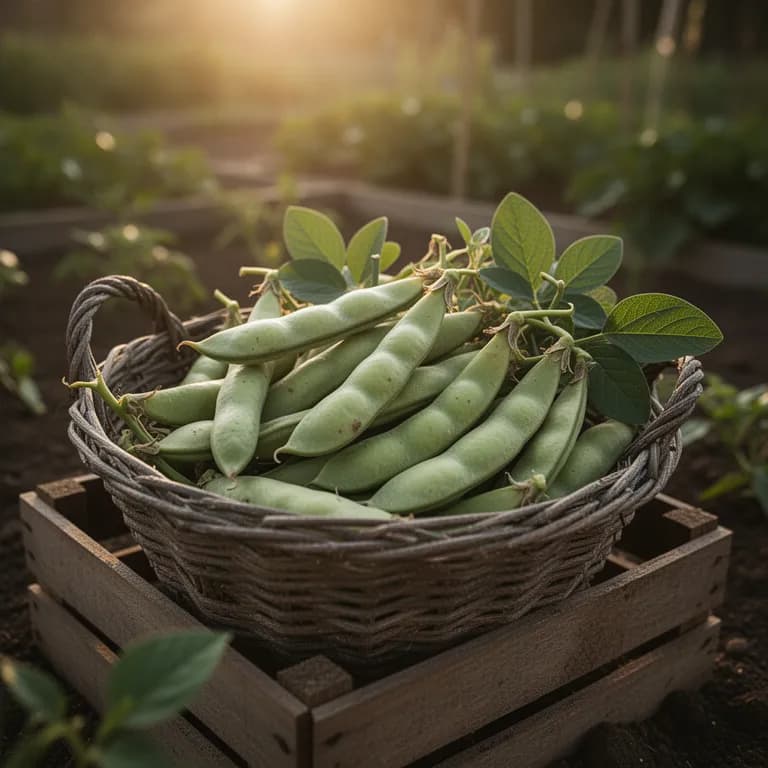
Las habas se cosechan cuando las vainas están bien llenas y firmes al tacto, pero antes de que las semillas desarrollen una piel gruesa y oscura, generalmente entre 75-90 días después de la siembra. Para verificar el punto óptimo, abra una vaina: las semillas deben estar tiernas, de color verde brillante y con la cicatriz del hilo aún verde o blanca. Coseche regularmente para estimular la producción continua de vainas.
se supone que plantas al comenzar el periodo — indica tu fecha real
Cosecha cuando las vainas estén gruesas, las habas sean visibles a través de la vaina y sigan verdes; para habas secas, espera a que las vainas se vuelvan marrones y secas como papel.
Almacenamiento y conservación
Las habas frescas en vaina se conservan en el refrigerador durante 3-5 días. Para congelación, desgrane las habas, blanquéelas durante 2 minutos en agua hirviendo, enfríe en agua helada y congele en bolsas, donde se conservan hasta 12 meses. También pueden secarse completamente en la planta para almacenamiento a largo plazo como legumbre seca, conservándose durante años en recipientes herméticos.
Qué falla — y cómo solucionarlo
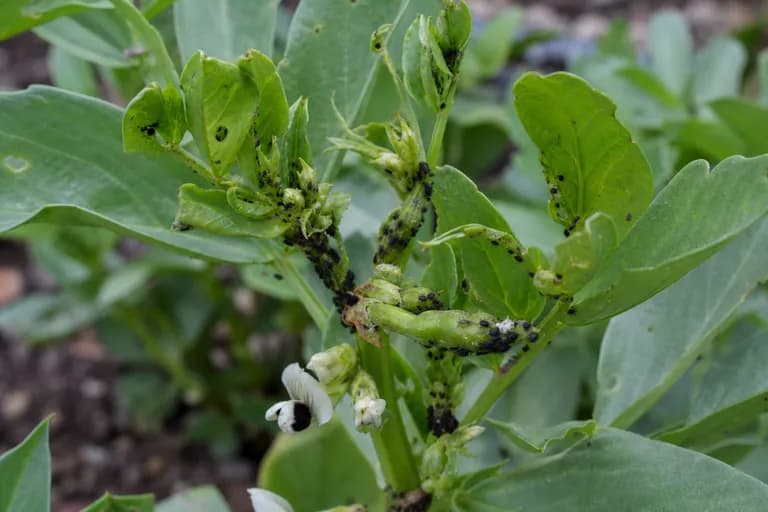
Pulgón negro del haba
PlagaColonias densas de pulgones negros que se concentran en los brotes apicales y el envés de las hojas jóvenes, causando enrollamiento, deformación y debilitamiento general de la planta. Secretan melaza que favorece la fumagina.
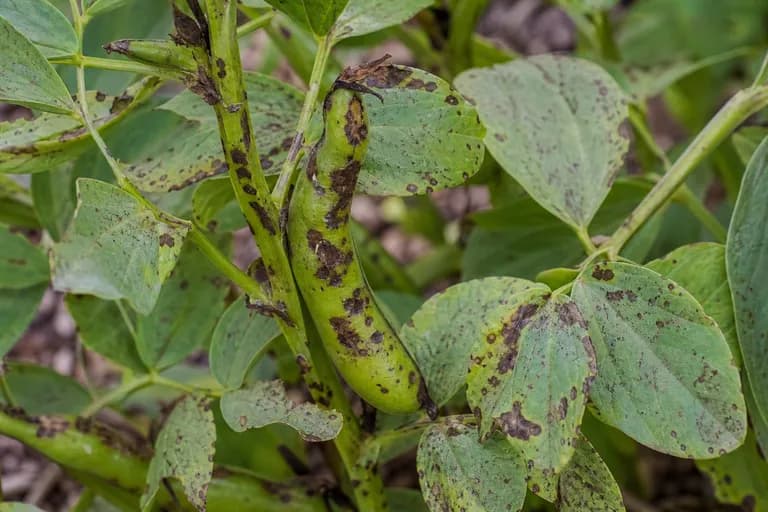
Mancha de chocolate (Botrytis fabae)
EnfermedadManchas circulares de color marrón oscuro a negro con bordes definidos en hojas, tallos y vainas, que recuerdan a gotas de chocolate. En condiciones húmedas, las manchas se expanden y pueden cubrir toda la hoja, causando defoliación prematura.
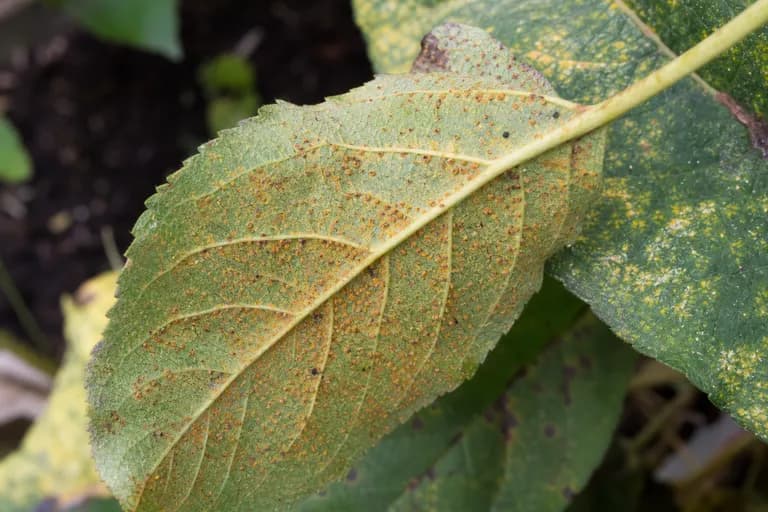
Roya del haba
EnfermedadPústulas pequeñas de color marrón anaranjado en el envés de las hojas, que liberan esporas pulverulentas al tocarlas. Las hojas severamente infectadas se amarillean y caen prematuramente, reduciendo el rendimiento.
Solución de problemas comunes
La mancha de chocolate es el problema más frecuente en climas húmedos, manifestándose como manchas oscuras en las hojas que pueden causar defoliación severa. El despunte tardío de los brotes apicales favorece infestaciones masivas de pulgón negro. En suelos mal drenados, las raíces son susceptibles a pudrición por Fusarium, especialmente si no se practica rotación de cultivos adecuada.
Consejos de cultivo
- Plant fava beans as early as possible in spring — they are one of the few crops that actually prefer cold soil and cool air. Sow 4-6 weeks before your last frost date, or even earlier if the ground is workable. In mild climates (zones 7-10), plant in October-November for overwintering and a very early spring harvest.
- Inoculate seeds with Rhizobium leguminosarum bacteria before planting, especially in beds where favas have never grown. This dramatically improves nitrogen fixation and can double your yield. Inoculant is inexpensive and available from most seed suppliers.
- Pinch out the growing tips when the first 4-5 clusters of pods have set at the bottom of the plant. This is the single most impactful thing you can do: it redirects energy from vegetative growth to pod filling, and removes the tender tips where black aphids congregate.
- Support plants early and well. Fava beans grow 90-150cm (3-5 feet) tall and become top-heavy with pods. Run string between stakes along each side of the row at 30cm intervals, or use individual stakes. Wind and heavy rain can lodge unsupported plants overnight.
- Double-peel for the best eating experience. After shelling beans from the pod, blanch in boiling water for 60 seconds, then plunge into ice water. The thin outer skin slips off easily, revealing the vibrant jade-green interior with a much more delicate, sweet flavor and creamy texture.
- Succession planting extends the harvest. Sow a second batch 3-4 weeks after the first. In regions with hot summers, choose the earliest-maturing varieties for later sowings to ensure harvest before temperatures consistently exceed 27°C (80°F).
- After harvest, cut plants at ground level but leave the roots in the soil. The root nodules contain fixed nitrogen that will slowly release as they decompose, directly benefiting whatever you plant next in that bed — tomatoes, squash, and corn are ideal followers.
- Water consistently but moderately. Fava beans need less water than most garden crops, but drought stress during flowering causes significant blossom drop. Aim for about 2.5cm (1 inch) per week, reducing after pods have filled. Avoid overhead watering to minimize chocolate spot disease.
Cultiva tu mejor Haba — y todo lo que la rodea.
Empieza un plan gratis hoy. Diseña tus bancales, coloca tu Haba y deja que PlotMyGarden gestione el momento, el espaciado, las asociaciones y los recordatorios de la semilla a la cesta.
Elige tu Haba
Broad Windsor
La variedad clásica inglesa con vainas largas que contienen 4-5 semillas grandes y planas de excelente sabor. Plantas robustas de 90-120 cm. Madura en 80-85 días. Muy resistente al frío.
Aguadulce Supersimonia
Variedad española de producción precoz y abundante, con vainas muy largas de hasta 30 cm que contienen 7-9 semillas. Ideal para siembras de otoño en climas mediterráneos.
Crimson Flowered
Variedad ornamental heredada con hermosas flores de color carmesí intenso en lugar de las típicas blancas con manchas negras. Las semillas son más pequeñas pero de sabor exquisito.
The Sutton
Variedad compacta enana de solo 30-40 cm de altura, ideal para jardines pequeños, macetas y cultivo en balcones. No requiere tutores. Produce vainas cortas con 3-4 semillas de buen tamaño.
Masterpiece Green Longpod
Variedad de vainas extra largas que contienen 8-10 semillas de color verde intenso que mantienen su color tras la cocción. Excelente para congelación.
Fresh fava beans are a premium seasonal ingredient, selling for $4-8 per pound shelled at farmers' markets and specialty grocers when available at all. A single $3 packet of seeds can produce 15-25 plants yielding 8-15 kg of fresh pods — equivalent to $60-150 worth of market-price shelled favas. Beyond direct food savings, favas planted as a cover crop add significant nitrogen to the soil, reducing fertilizer costs for subsequent crops by $10-20 per bed. Few garden crops deliver both gourmet-quality produce and measurable soil improvement.
Recetas rápidas
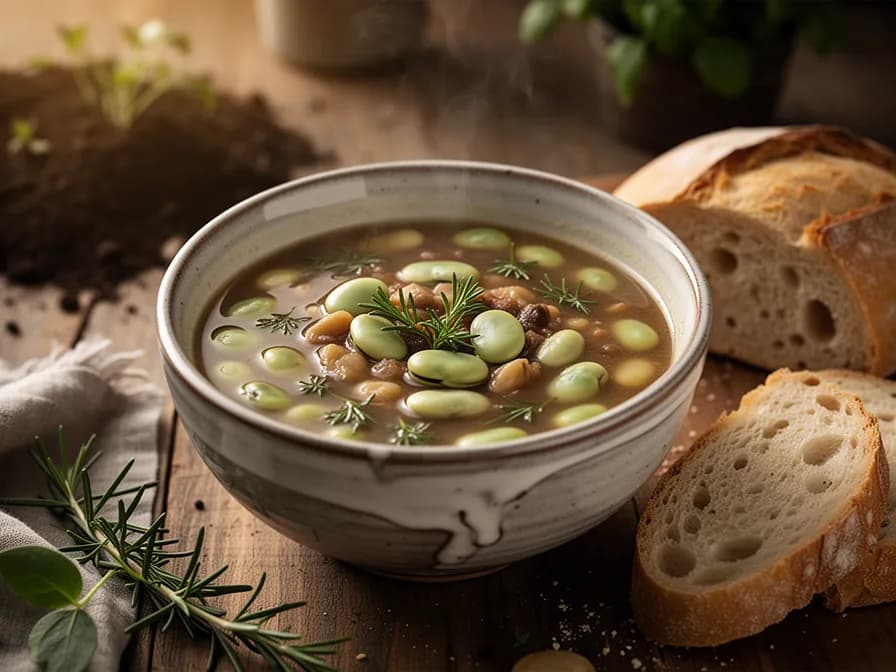
Fava Bean Crostini with Ricotta and Mint
20 minA quintessential spring appetizer from the Italian tradition. Bright green fava puree layered over creamy ricotta on crispy toasted bread, finished with fresh mint and a drizzle of your best olive oil. Simple, elegant, and unmistakably seasonal.
8 ingredientesFava Bean and Pecorino Salad
15 minA Roman springtime classic that pairs the sweetness of young fava beans with the sharp, salty bite of aged pecorino cheese. Best made with the freshest favas of the season, eaten raw or barely blanched when they are at their most tender.
7 ingredientes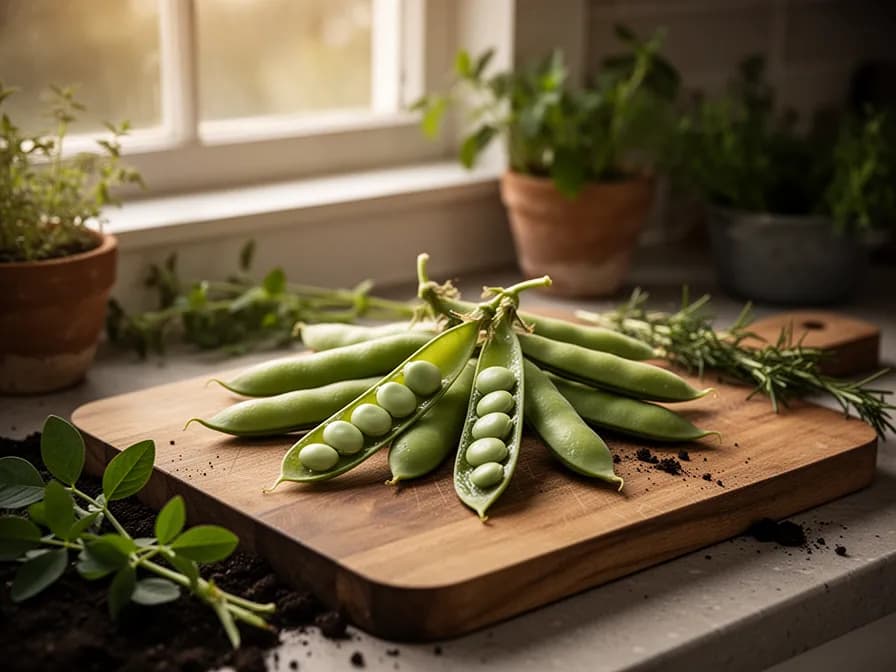
Ful Medames (Egyptian Fava Bean Stew)
25 min (with pre-cooked beans)One of the oldest known prepared dishes in human history, still eaten daily across the Middle East and North Africa. Slow-cooked fava beans mashed with garlic, lemon, and cumin create a hearty, protein-rich dish traditionally served for breakfast with warm flatbread.
8 ingredientesUsos culinarios
Las habas frescas se consumen al vapor, hervidas o salteadas, y son protagonistas de platos mediterráneos como las habas a la catalana con butifarra y menta. Se preparan en puré para crostini, en risottos primaverales con guisantes y espárragos, y en la tradicional ful medames egipcia con limón y aceite de oliva. Las habas secas se cuecen en potajes y guisos sustanciosos de invierno.
Qué contiene
Beneficios para la salud
- Outstanding plant-based protein source at 7.6g per 100g cooked — higher than most other beans, making favas particularly valuable for vegetarian and vegan diets as a complete amino acid source when paired with grains.
- Exceptionally rich in folate (vitamin B9), providing about 27% of the daily value per 100g serving. Folate is critical for DNA synthesis, cell division, and is especially important for pregnant women to prevent neural tube defects.
- Contains L-dopa (levodopa), a direct precursor to the neurotransmitter dopamine. Clinical studies have shown that regular fava bean consumption can increase blood L-dopa levels, with potential therapeutic implications for Parkinson's disease management.
- High in both soluble and insoluble dietary fiber (5.4g per 100g), supporting gut microbiome diversity, promoting regular bowel movements, and helping regulate blood sugar and cholesterol levels.
- Rich in minerals including iron (1.5mg per 100g), manganese, phosphorus, and magnesium — all essential for energy metabolism, oxygen transport, and bone health.
- Contains significant levels of thiamine (vitamin B1) and riboflavin (vitamin B2), supporting nerve function and energy production from food.
De dónde viene Haba
The fava bean holds a singular place in agricultural history as one of the very first crops cultivated by humans. Wild ancestors originated in the Mediterranean basin and Central Asia, and archaeological remains from Jericho and other Near Eastern sites date fava cultivation to at least 6000 BCE — making it older than wheat in some regions.
Fava beans were a dietary staple of ancient Egypt, Greece, and Rome, though they also carried complex cultural associations. The Egyptians considered them connected to the afterlife and placed them in tombs. Roman priests were forbidden to eat them or even speak their name. Pythagoras's famous prohibition against favas may have reflected either religious beliefs about the transmigration of souls or an early observation of favism — a genetic condition common in Mediterranean populations where consuming favas triggers hemolytic anemia.
Throughout the medieval period, fava beans were the primary legume of Europe, providing essential protein for peasant diets centuries before New World beans (Phaseolus species) arrived after 1492. The English word 'bean' originally referred exclusively to favas. They spread along trade routes to China, Ethiopia, and eventually worldwide. Today, fava beans remain a culinary cornerstone of Mediterranean, Middle Eastern, and North African cuisines — from Egyptian ful medames to Italian vignarola — and are increasingly valued by modern gardeners as both a food crop and a powerful soil-building cover crop.
Haba: ¿sabías que?
Datos fascinantes sobre Haba
Fava beans are one of the oldest cultivated crops in human history — archaeological evidence shows they were grown in the Near East as early as 6000 BCE, predating most other domesticated legumes by millennia.
Haba: preguntas frecuentes
¿Cuándo debo plantar Haba?
¿Cuáles son buenas plantas acompañantes para Haba?
¿En qué zonas de rusticidad puede crecer Haba?
¿Cuánto sol necesita Haba?
¿A qué distancia debo espaciar Haba?
¿Qué plagas y enfermedades afectan a Haba?
¿Cómo almaceno Haba después de la cosecha?
¿Cuáles son las mejores variedades de Haba para cultivar?
¿Qué suelo necesita Haba?
What is favism, and should I be concerned about eating fava beans?
How do I prevent black aphids on my fava bean plants?
Can I grow fava beans in hot climates?
Should I double-peel fava beans? It seems like a lot of work.
How do fava beans improve soil fertility?
When should I harvest fava beans for fresh eating vs. drying?
Acabas de leer la teoría. Ahora cultívala en piloto automático.
Todo lo que hace que Haba sea delicado — el momento, el espaciado, las asociaciones, la ventana de cosecha — es justo lo que PlotMyGarden resuelve por ti, para cada planta de tu huerto.
Un plan que conoce tu clima
Indica tu ubicación una vez. Recibe fechas de siembra, abonado y cosecha basadas en tu última helada real y el pronóstico en vivo — sin adivinar con un sobre genérico.
De la sección “Cuándo plantar”Planificador de bancales de arrastrar y soltar
Diseña bancales sobre una cuadrícula. Cada planta encaja con su espaciado correcto y ves toda la temporada antes de gastar un céntimo en semillas.
De la sección “Cultivo”Conflictos de asociación, detectados a tiempo
Más de 200 buenas y malas combinaciones comprobadas en vivo mientras plantas — para que un error que arruine la temporada nunca llegue a la tierra.
De la sección “Asociaciones”Recordatorios que sí vas a seguir
“Riega las judías.” “Recoge hoy antes de que se pase.” Oportunos, concretos y ligados a las plantas que de verdad cultivas.
De la sección “Cosecha”Escalonado, programado
¿Quieres cosechar seis semanas en vez de seis días? Reparte tus siembras automáticamente y te avisa cuando toca el siguiente lote.
De la sección “Cuándo plantar”Un registro que se vuelve más listo
Cada cosecha que registras le enseña tu huerto. El plan del año que viene parte de lo que de verdad funcionó en tu suelo, no en un manual.
De la sección “Resumen”Planta estos junto a Haba
Más Legumbres
Mantén Haba lejos de estos
Cultiva tu mejor Haba — y todo lo que la rodea.
Empieza un plan gratis hoy. Diseña tus bancales, coloca tu Haba y deja que PlotMyGarden gestione el momento, el espaciado, las asociaciones y los recordatorios de la semilla a la cesta.