Galanga
La galanga (Alpinia galanga) es un rizoma aromático tropical de la familia del jengibre, originario del sudeste asiático.





En esta páginaResumen
Conoce Galanga
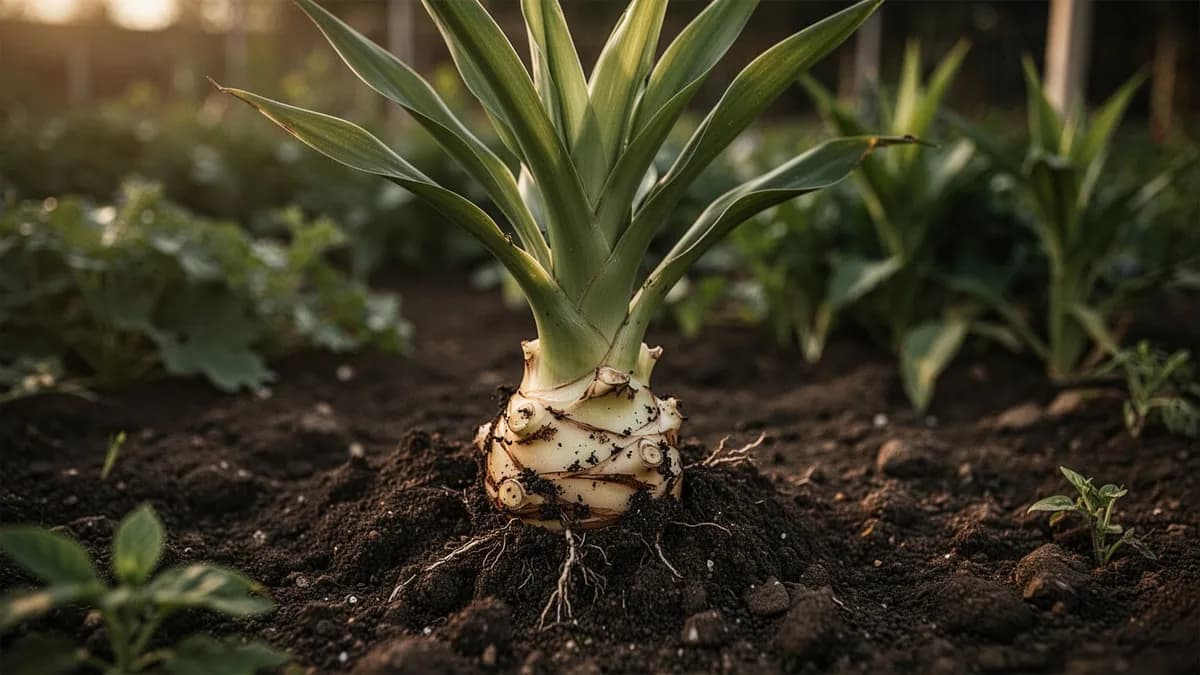
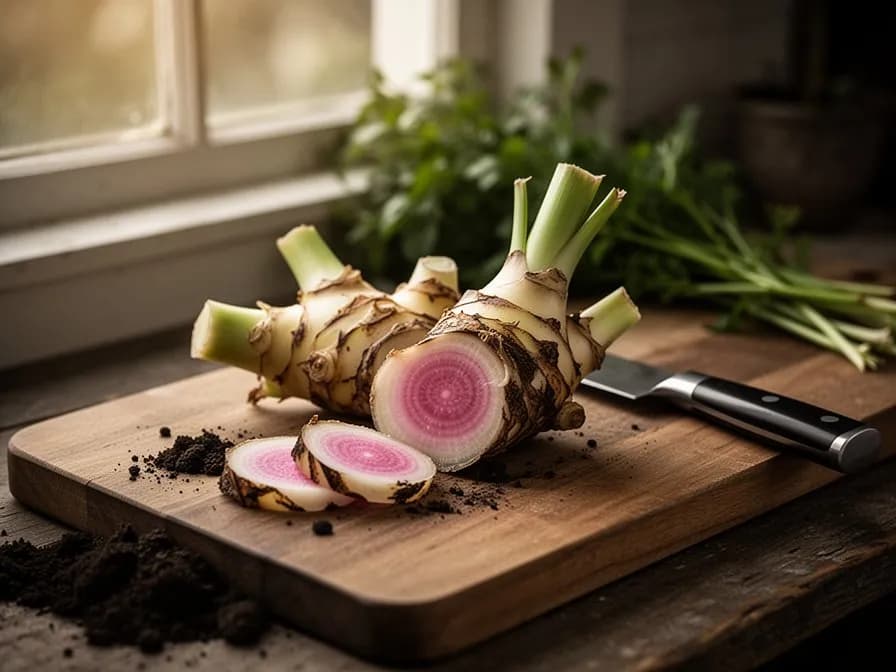
La galanga (Alpinia galanga) es un rizoma aromático tropical de la familia del jengibre, originario del sudeste asiático. A diferencia del jengibre común, la galanga tiene un aroma distintivo que combina notas cítricas, de pino y pimienta, con un sabor más penetrante y menos dulce. Es un ingrediente indispensable en las cocinas tailandesa, indonesia y malaya.
Cuándo plantar Galanga
La galanga se propaga casi exclusivamente por división de rizomas, ya que las semillas son difíciles de obtener y germinar. Seleccione trozos de rizoma con al menos 2-3 yemas visibles y plántelos a 5-8 cm de profundidad en sustrato cálido y húmedo. Mantenga la temperatura por encima de 22 °C. Los brotes emergen en 2-4 semanas. Trasplante cuando tengan 15-20 cm de altura.
Tu año de Galanga
Ajustado a Zona 7 · temporada típica · la helada se va hacia el 2 abr y vuelve hacia el 1 nov
Planta Galanga Abr – May y cosecha Oct – Nov. Consulta los métodos de plantación y elige tu clima para adaptar los periodos.
Cómo cultivar Galanga
Plante en un lugar cálido y protegido con sombra parcial a luz filtrada, imitando las condiciones del sotobosque tropical. En climas templados, cultive en macetas grandes que puedan trasladarse al interior durante el invierno. El suelo debe ser rico en humus, suelto, bien drenado pero constantemente húmedo, con pH entre 5,5 y 7,0.
Plante trozos de rizoma con al menos 2-3 yemas a 5-8 cm de profundidad en primavera, cuando las temperaturas superen los 20 °C. Espacie los rizomas 30-40 cm entre sí. La galanga necesita temperaturas constantes entre 22 y 35 °C y alta humedad ambiental para prosperar.
Riegue frecuentemente para mantener el suelo uniformemente húmedo sin encharcamiento. Pulverice las hojas regularmente en ambientes secos para aumentar la humedad. Fertilice mensualmente con un abono orgánico equilibrado durante la temporada de crecimiento. Aplique acolchado grueso para conservar la humedad y mantener las raíces frescas. Reduzca el riego en invierno si la planta entra en dormancia.
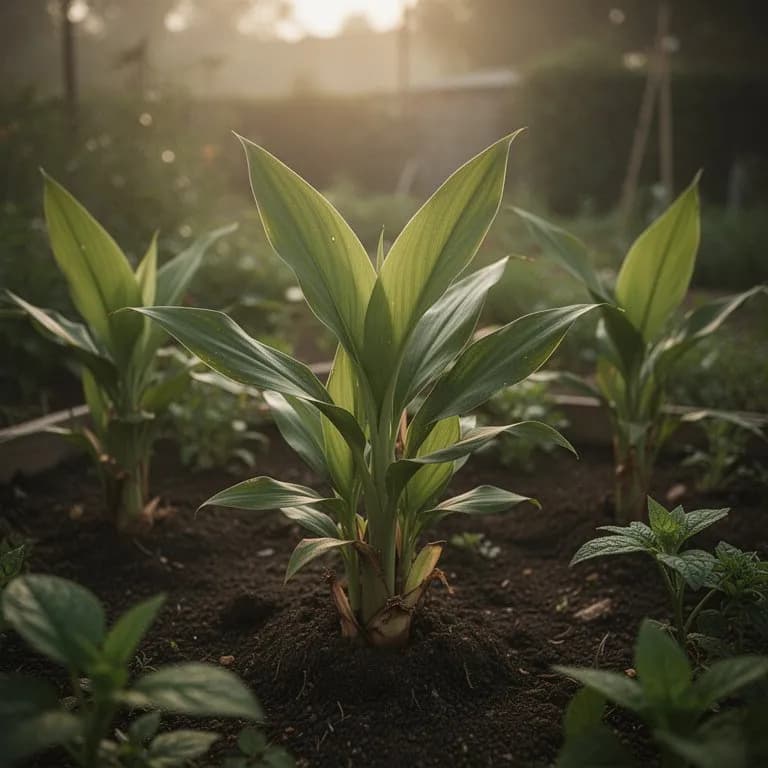
10 plantas caben en un bancal de 120 × 240 cm
Cada Galanga pide 45 cm de margen. El planificador guarda ese marco por ti — cada planta, cada bancal.
Los mejores vecinos de Galanga
En su hábitat tropical, la galanga crece bajo la sombra de árboles frutales. En cultivo, se asocia bien con otras plantas tropicales como el jengibre, la cúrcuma y la hierba limón que comparten necesidades de suelo húmedo y cálido. Las hojas grandes de taro o plátano pueden proporcionar sombra parcial beneficiosa.
Jengibre va a su lado.
Saber de huerto de siempre, cotejado con la tabla real de Galanga — prueba cualquier planta que cultives.
Prueba Galanga en un bancal, aquí mismo
Un bancal real del planificador con Galanga ya plantado. Toca una planta compañera para colocarla y mira cómo responde la comprobación de vecinos: verde para buenos vecinos, rojo si hay conflicto.


Guías de cultivo relacionadas
Abónalo bien
Requiere suelos sueltos, ricos en humus y constantemente húmedos pero bien drenados, con pH entre 5,5 y 7,0. Incorpore abundante compost, turba y material orgánico antes de plantar. Aplique fertilizante orgánico equilibrado mensualmente durante la temporada de crecimiento activo. El acolchado grueso es esencial para mantener la humedad y la temperatura del suelo.
Temperatura ideal
Compatibilidad de zonas de rusticidad
De la semilla a la cosecha, etapa por etapa
Plantación del rizoma
Se plantan secciones frescas de rizoma con 2-3 yemas de crecimiento (ojos) horizontalmente a 5-8 cm de profundidad en suelo cálido, bien drenado y rico en materia orgánica. Las superficies cortadas se espolvorean con fungicida o se dejan cicatrizar durante 24 horas antes de plantar. El desarrollo inicial de raíces ocurre bajo tierra sin crecimiento visible sobre la superficie durante 2-3 semanas.
Emergencia de brotes
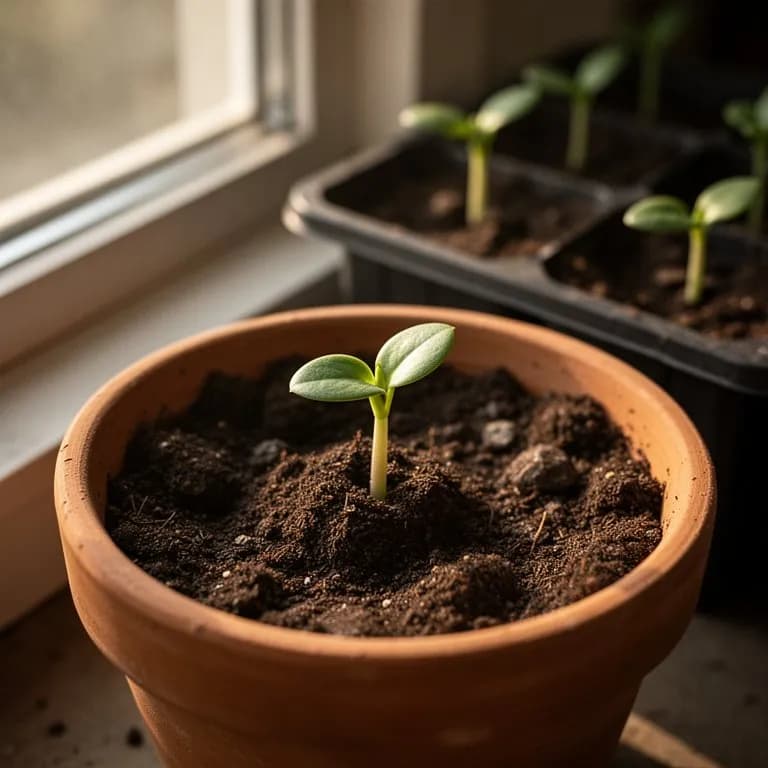
Brotes verde pálido emergen del suelo como lanzas de hojas bien enrolladas, parecidas a pequeños tallos de bambú. Cada yema de crecimiento produce un solo brote que se despliega lentamente hasta formar las primeras hojas. Los sistemas de raíces se expanden rápidamente bajo tierra, estableciendo la base de la red de rizomas que se desarrollará en los próximos meses.
Crecimiento vegetativo
Las plantas crecen con vigor en condiciones cálidas y producen varios tallos con hojas largas y lanceoladas dispuestas en un elegante patrón de abanico. Cada tallo puede alcanzar 1-1,5 metros de altura durante esta fase. Bajo tierra, el sistema de rizomas se expande hacia afuera, desarrolla nuevas ramas laterales y aumenta de masa. El crecimiento se acelera notablemente con alta humedad y temperaturas superiores a 28 °C.
Maduración del rizoma
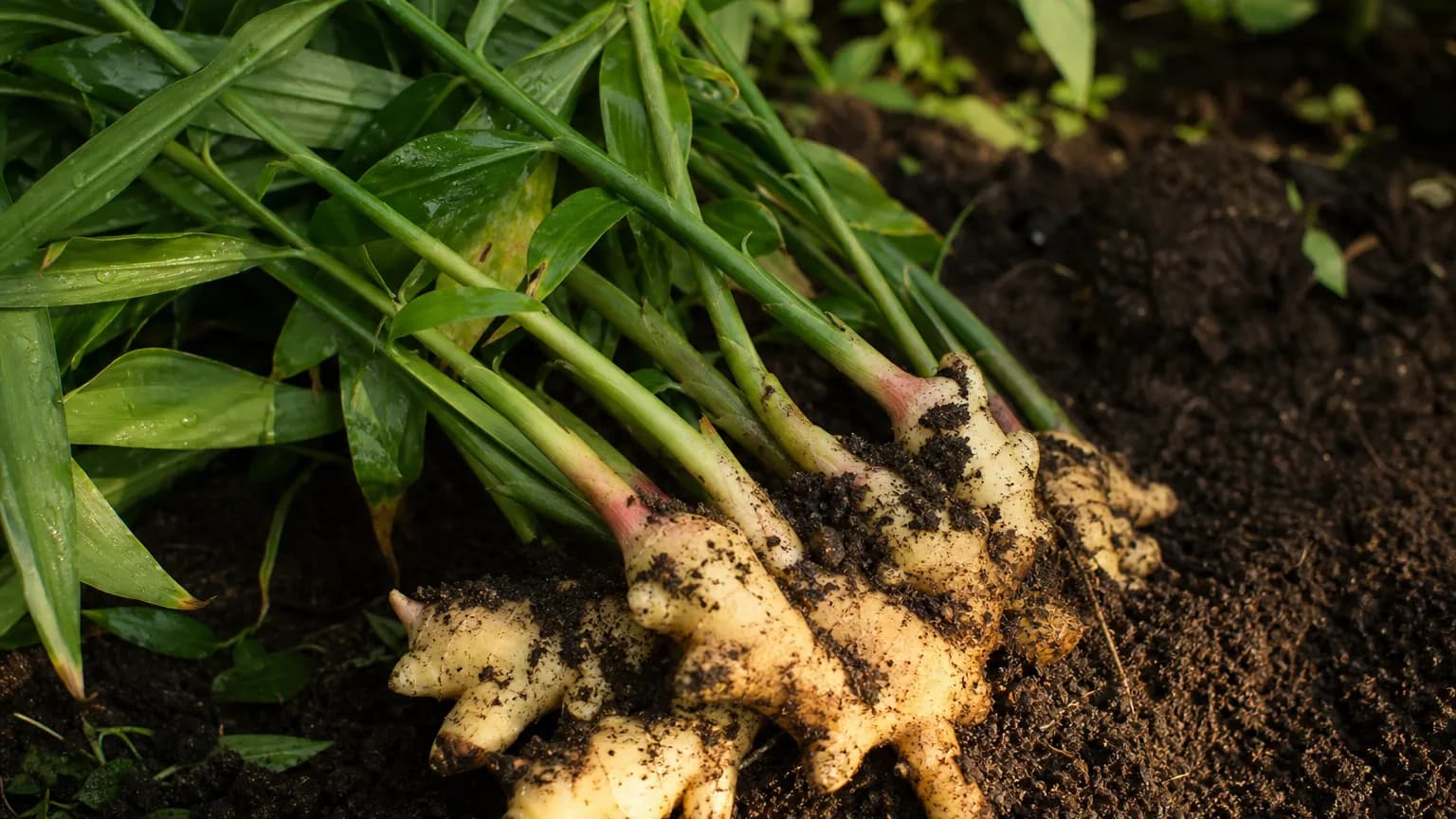
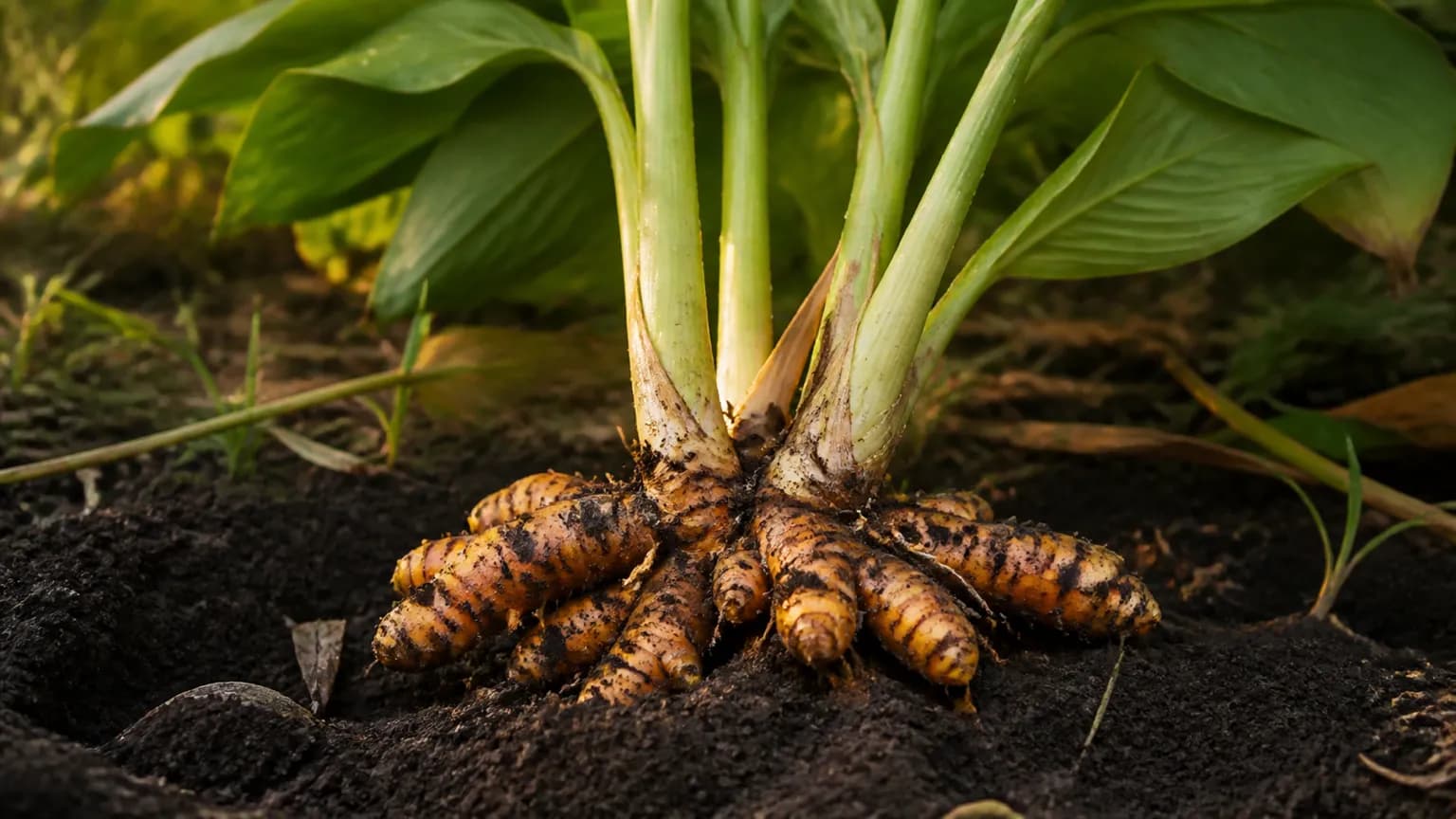
El sistema subterráneo de rizomas alcanza un tamaño considerable, y los segmentos individuales se vuelven firmes, densos y muy aromáticos. La piel desarrolla su característico color blanco rosado pálido con anillos bandeados distintivos. Las partes más viejas del rizoma se vuelven leñosas y fibrosas, mientras que las puntas de crecimiento más nuevas permanecen tiernas. Las plantas pueden alcanzar una altura total de 1,5-2 metros.
Cosecha y división
Los rizomas están listos para cosechar entre 10 y 14 meses después de la siembra. Se puede levantar todo el grupo o cortar partes y dejar la planta principal intacta para que siga creciendo. Las puntas jóvenes del rizoma son más tiernas y menos fibrosas, mientras que las secciones más viejas tienen el sabor más intenso pero son muy duras. Reserva piezas sanas con yemas de crecimiento para replantarlas.
Después de la cosecha
Después de la cosecha, la planta puede continuar a partir de las secciones de rizoma que queden si al menos una sección sana con yemas de crecimiento permanece en el suelo o se replanta. En climas sin heladas se comporta como una planta perenne y se expande lentamente mediante rizomas subterráneos.
Elige trozos de rizoma firmes y carnosos de al menos 5-8 cm de largo con yemas de crecimiento visibles. Planta en primavera cuando la temperatura del suelo sea constantemente superior a 22 °C. Mantén el suelo húmedo, pero nunca encharcado, para evitar la pudrición del rizoma.
Cuidar Galanga mes a mes
Qué hacer cada mes para tu Galanga
Octubre
Mes actualIn temperate zones, harvest rhizomes before the first frost by lifting the entire clump or cutting portions away. Reserve healthy pieces with growth buds for overwintering and replanting. In zones 10-12, partial harvesting can continue through winter.
Ten claro qué hacer en tu huerto, cada mes
Un correo al empezar cada mes: qué sembrar, plantar y hacer ahora mismo — para tu Galanga y todo lo que crece alrededor. Más un breve curso inicial para esquivar los errores clásicos.
- Qué hacer ahora mismo
- Ajustado a tu temporada
- Curso inicial incluido
Cosechar Galanga
Coseche los rizomas a partir de los 8-10 meses de crecimiento, cuando las hojas exteriores comienzan a amarillear y marchitarse. Excave cuidadosamente con una horquilla para no dañar los rizomas. Los rizomas jóvenes son más tiernos y aromáticos; los más viejos son más fibrosos y picantes. Deje siempre algunos rizomas con yemas en el suelo para la próxima temporada.
se supone que plantas al comenzar el periodo — indica tu fecha real
8-10 meses después de plantar, cuando el follaje empieza a amarillear y secarse en otoño.
Almacenamiento y conservación
Los rizomas frescos se conservan en el refrigerador envueltos en papel húmedo durante 2-3 semanas. Para congelación, corte en rodajas o ralle y congele en bolsas herméticas hasta 6 meses. Puede secarse en rodajas finas al sol o en deshidratador; la galanga seca tiene un sabor más concentrado pero diferente. También se puede conservar en vinagre o salmuera.
Qué falla — y cómo solucionarlo
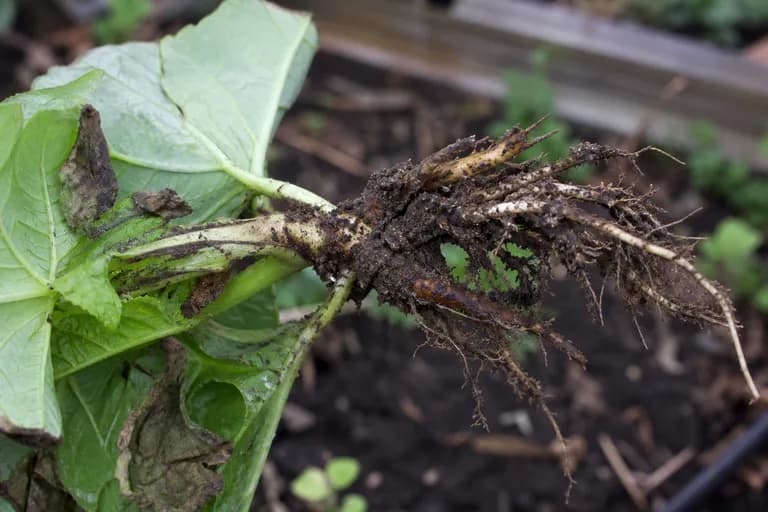
Pudrición del rizoma (Pythium spp.)
EnfermedadMarchitamiento súbito de las hojas, rizomas blandos y de color marrón oscuro con olor desagradable. La planta se colapsa desde la base.
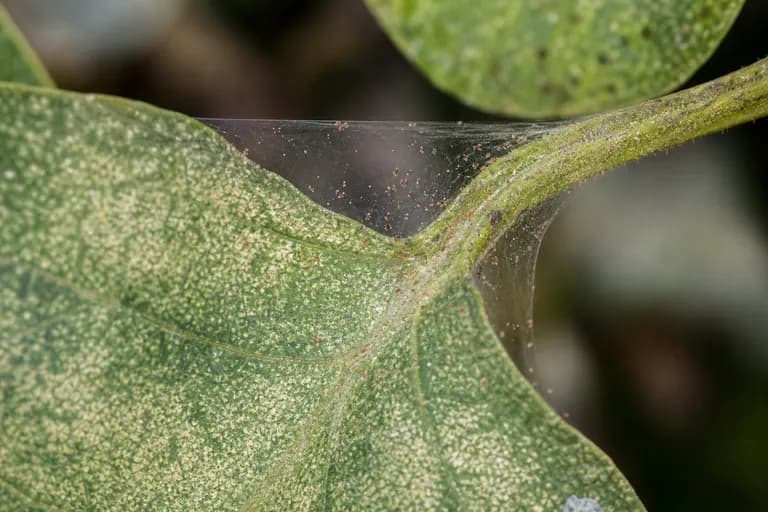
Araña roja (Tetranychus urticae)
PlagaPunteado amarillento fino en las hojas, telarañas finas visibles en el envés, hojas que se secan y caen en ambientes secos.
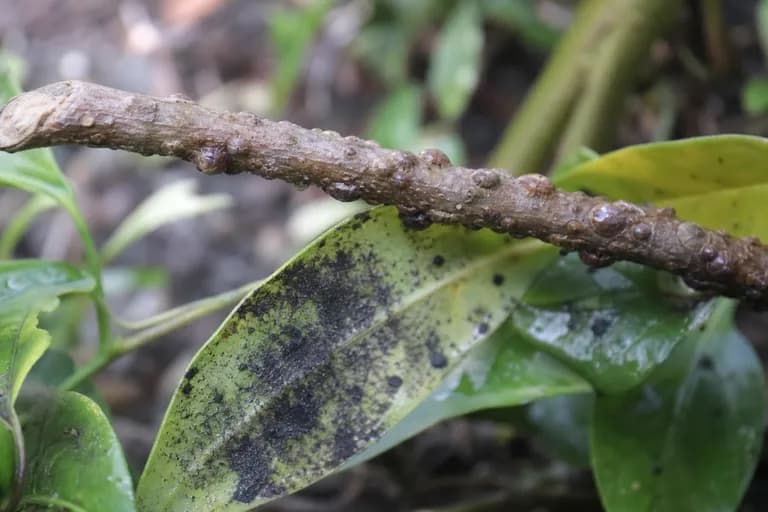
Cochinilla algodonosa (Pseudococcus spp.)
PlagaMasas algodonosas blancas en las axilas de las hojas y la base de los tallos. Debilitamiento general de la planta y producción de melaza.
Solución de problemas comunes
La falta de resistencia al frío es el principal desafío en climas templados: la galanga no sobrevive temperaturas por debajo de 10 °C y muere con heladas. En Europa debe cultivarse obligatoriamente en maceta trasladable al interior o en invernadero climatizado. La sequedad ambiental causa puntas de hojas marrones y favorece los ácaros. El exceso de agua estancada provoca pudrición del rizoma.
Consejos de cultivo
- Source fresh, firm rhizomes from Asian grocery stores if you cannot find nursery plants. Look for pieces that are plump and aromatic with visible pinkish growth buds. Avoid rhizomes that are shrivelled, soft, or show signs of mould — they are unlikely to sprout reliably.
- Galangal needs warmth above all else. In temperate climates, treat it as a container plant grown in at least a 40-litre pot so you can move it indoors for winter. Use a heat mat for starting rhizomes, and never plant outdoors until nighttime temperatures stay above 15°C (60°F).
- Provide rich, well-draining soil with abundant organic matter. Mix equal parts quality compost, perlite, and aged bark or coconut coir. Galangal is a heavy feeder in its tropical homeland where it grows in rich, constantly decomposing forest-floor humus.
- Unlike ginger, galangal prefers partial shade to dappled light rather than full sun, mimicking its natural forest-floor habitat. In hot climates, provide afternoon shade to prevent leaf scorch. Indoor plants benefit from a bright east-facing window or filtered light.
- Humidity is critical for healthy growth. Mist foliage regularly in dry climates, place container plants on pebble trays filled with water, or group tropical plants together to create a humid microclimate. Brown leaf tips are the first sign of insufficient humidity.
- Be patient — galangal is slower to establish than ginger and typically takes 10-14 months to reach harvestable size. Do not dig up rhizomes too early. The first season is about establishing the root system; the best harvests come from the second year onward.
- Divide and replant clumps every 2-3 years to maintain vigorous growth. Lift the entire clump in spring, separate into sections with 2-3 growth buds each, discard any old woody centres, and replant divisions in refreshed soil with added compost.
- Store harvested galangal in the refrigerator wrapped in damp paper towels inside a sealed plastic bag for up to 3 weeks. For long-term storage, slice or grate fresh galangal and freeze in small portions — it retains its aromatic compounds well when frozen and can go straight from freezer to pot.
Cultiva tu mejor Galanga — y todo lo que la rodea.
Empieza un plan gratis hoy. Diseña tus bancales, coloca tu Galanga y deja que PlotMyGarden gestione el momento, el espaciado, las asociaciones y los recordatorios de la semilla a la cesta.
Elige tu Galanga
Galanga mayor (Alpinia galanga)
La especie principal utilizada en la cocina tailandesa e indonesia. Rizomas grandes de color crema con anillos oscuros. Sabor cítrico-picante intenso. 8-10 meses.
Galanga menor (Alpinia officinarum)
Rizomas más pequeños y rojizos con sabor más penetrante y medicinal. Más utilizada en la cocina china y en la medicina tradicional. 6-8 meses.
Galanga de arena (Kaempferia galanga)
Rizoma plano con aroma alcanforado distintivo. Utilizada en la cocina indonesia y malaya para currys y salsas. Más compacta y fácil de cultivar en maceta. 6-8 meses.
Fresh galangal sells for $8-15 per pound at Asian grocery stores and $15-25 per pound at specialty Western markets, with limited availability and often questionable freshness. A single rhizome division costing $5-10 can produce 0.5-2 kg of fresh galangal in one growing season, saving $15-50 annually. The savings compound dramatically over time because galangal is a perennial — one initial planting can provide fresh rhizomes for years with simple division and replanting, effectively eliminating the recurring cost of this premium ingredient.
Recetas rápidas
Tom Kha Gai (Thai Coconut Galangal Soup)
30 minThailand's beloved coconut soup where galangal is the irreplaceable aromatic star. Thin slices of fresh galangal infuse the rich coconut broth with its distinctive piney, citrusy warmth — a flavour that ginger simply cannot replicate.
11 ingredientesThai Red Curry Paste with Fresh Galangal
25 minA vibrant homemade red curry paste where fresh galangal provides the aromatic backbone. Pounding the ingredients in a mortar releases the essential oils for a paste that is vastly more complex and fragrant than any store-bought version.
11 ingredientesIndonesian Soto Ayam with Galangal
45 minA fragrant Indonesian chicken soup built on a spice paste of galangal, turmeric, and lemongrass. The golden broth is ladled over rice noodles, shredded chicken, and a colourful array of garnishes for an endlessly customisable meal.
11 ingredientesUsos culinarios
Ingrediente esencial en las pastas de curry tailandesas, especialmente el curry verde y el curry rojo. Fundamental en la sopa tom kha gai (sopa de pollo con leche de coco y galanga) y el tom yam. En Indonesia se usa en el rendang y otros currys. Se corta en rodajas finas o se machaca para liberar su aroma. A diferencia del jengibre, no se come, sino que se retira del plato antes de servir.
Qué contiene
Beneficios para la salud
- Contains acetoxychavicol acetate (ACA), a potent bioactive compound studied extensively for its strong anti-inflammatory effects — research suggests it may inhibit inflammatory pathways involved in arthritis and other chronic conditions.
- Traditional remedy for digestive complaints across Southeast Asia — galangal stimulates digestive enzyme production, relieves nausea and bloating, and has demonstrated carminative properties that help expel gas and soothe stomach discomfort.
- Rich in galangin and other flavonoid antioxidants that help neutralize free radicals and protect cells from oxidative damage linked to aging and chronic disease.
- Demonstrated antimicrobial and antifungal properties in laboratory studies — galangal extracts have shown effectiveness against several food-borne pathogens including certain strains of E. coli, Staphylococcus, and Candida.
- Used in traditional Chinese medicine as a warming herb for improving circulation and treating cold-related conditions — modern research supports mild vasodilatory effects that may help improve peripheral blood flow.
- Contains compounds that may support respiratory health — galangal has been used for centuries in Ayurvedic and Southeast Asian folk medicine to treat coughs, bronchitis, and nasal congestion, with preliminary research suggesting expectorant and bronchodilatory activity.
De dónde viene Galanga
Galangal (Alpinia galanga) originated in the tropical forests of Indonesia, likely on the island of Java, where wild populations still grow in humid lowland and montane forests. The plant was domesticated thousands of years ago across the Malay Archipelago and became a foundational aromatic in the cuisines and traditional medicine systems of Southeast Asia. Greater galangal spread throughout the region via ancient maritime trade routes, becoming integral to the cooking of Thailand, Indonesia, Malaysia, Cambodia, Laos, and Vietnam long before written records existed.
Galangal reached China via overland and sea trade routes and was recorded in Chinese materia medica by at least the 6th century, where it was classified as a warming herb used to treat stomach ailments, hiccups, and cold-related conditions. From China and the Arab trading world, galangal made its way to Europe during the Middle Ages, where it became a fashionable and expensive spice. Medieval European cooks used it in spiced wines (hippocras), meat dishes, and confections, while physicians prescribed it for a wide range of ailments. Hildegard von Bingen, the 12th-century German mystic and herbalist, considered galangal a gift from God and recommended it extensively in her writings.
As European trade shifted toward the New World spices and galangal's supply chains remained difficult, the rhizome gradually fell out of fashion in Western cooking by the 17th century. It persisted in traditional medicine and was largely forgotten in European kitchens until the late 20th century, when the global popularity of Thai and Southeast Asian cuisine reintroduced it to Western palates. Today galangal is cultivated commercially in Thailand, Indonesia, Malaysia, India, and southern China. Thailand is the largest exporter, and fresh galangal is now widely available in Asian grocery stores worldwide, restoring a spice that was once as coveted in medieval Europe as saffron and black pepper.
Galanga: ¿sabías que?
Datos fascinantes sobre Galanga
There are actually two distinct species commonly called galangal: greater galangal (Alpinia galanga), widely used in Southeast Asian cooking, and lesser galangal (Alpinia officinarum), which is smaller, more pungent, and traditionally favoured in Chinese and medieval European medicine.
Galanga: preguntas frecuentes
¿Cuándo debo plantar Galanga?
¿Cuáles son buenas plantas acompañantes para Galanga?
¿En qué zonas de rusticidad puede crecer Galanga?
¿Cuánto sol necesita Galanga?
¿A qué distancia debo espaciar Galanga?
¿Qué plagas y enfermedades afectan a Galanga?
¿Cómo almaceno Galanga después de la cosecha?
¿Cuáles son las mejores variedades de Galanga para cultivar?
¿Qué suelo necesita Galanga?
Can I grow galangal from rhizomes bought at the grocery store?
What is the difference between galangal and ginger — can I substitute one for the other?
Can galangal survive winter outdoors in temperate climates?
How do I know when galangal rhizomes are ready to harvest?
Why are the leaves on my galangal turning yellow or brown at the tips?
Is galangal safe to eat raw, or must it be cooked?
Acabas de leer la teoría. Ahora cultívala en piloto automático.
Todo lo que hace que Galanga sea delicado — el momento, el espaciado, las asociaciones, la ventana de cosecha — es justo lo que PlotMyGarden resuelve por ti, para cada planta de tu huerto.
Un plan que conoce tu clima
Indica tu ubicación una vez. Recibe fechas de siembra, abonado y cosecha basadas en tu última helada real y el pronóstico en vivo — sin adivinar con un sobre genérico.
De la sección “Cuándo plantar”Planificador de bancales de arrastrar y soltar
Diseña bancales sobre una cuadrícula. Cada planta encaja con su espaciado correcto y ves toda la temporada antes de gastar un céntimo en semillas.
De la sección “Cultivo”Conflictos de asociación, detectados a tiempo
Más de 200 buenas y malas combinaciones comprobadas en vivo mientras plantas — para que un error que arruine la temporada nunca llegue a la tierra.
De la sección “Asociaciones”Recordatorios que sí vas a seguir
“Riega las judías.” “Recoge hoy antes de que se pase.” Oportunos, concretos y ligados a las plantas que de verdad cultivas.
De la sección “Cosecha”Escalonado, programado
¿Quieres cosechar seis semanas en vez de seis días? Reparte tus siembras automáticamente y te avisa cuando toca el siguiente lote.
De la sección “Cuándo plantar”Un registro que se vuelve más listo
Cada cosecha que registras le enseña tu huerto. El plan del año que viene parte de lo que de verdad funcionó en tu suelo, no en un manual.
De la sección “Resumen”Planta estos junto a Galanga
Más Hortalizas de raíz
Cultiva tu mejor Galanga — y todo lo que la rodea.
Empieza un plan gratis hoy. Diseña tus bancales, coloca tu Galanga y deja que PlotMyGarden gestione el momento, el espaciado, las asociaciones y los recordatorios de la semilla a la cesta.