Zanahoria Danvers
Una variedad clásica de zanahoria americana con forma cónica, hombros anchos y excelente tolerancia al calor.





En esta páginaResumen
Conoce Zanahoria Danvers
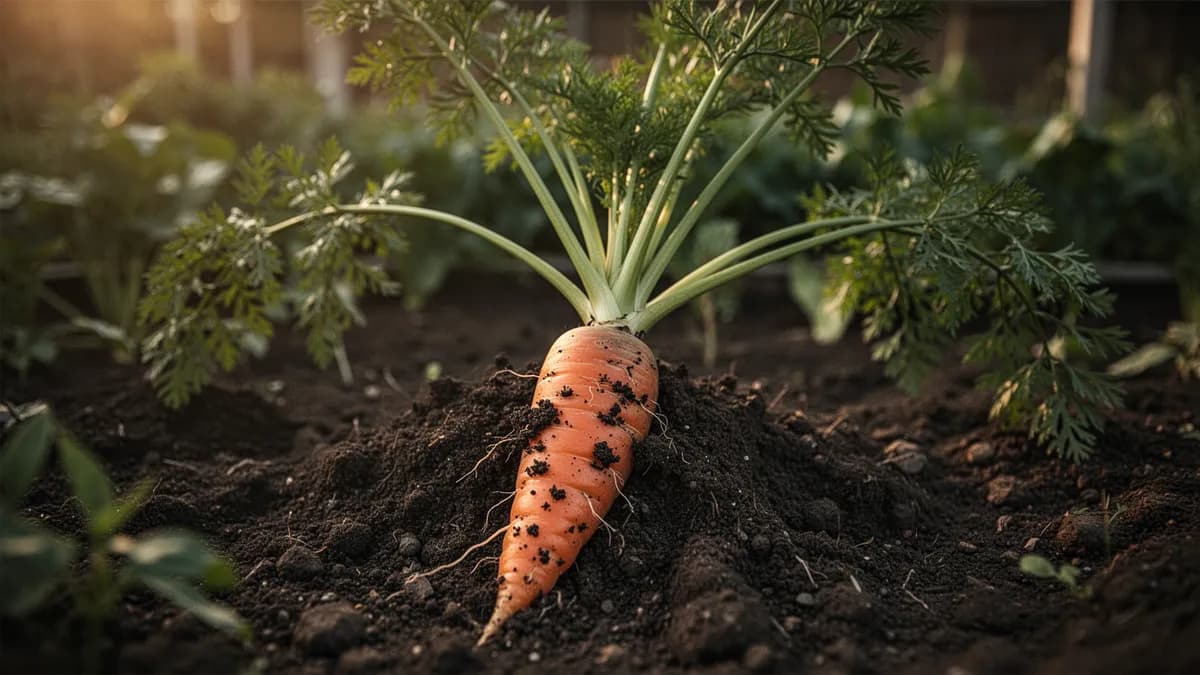
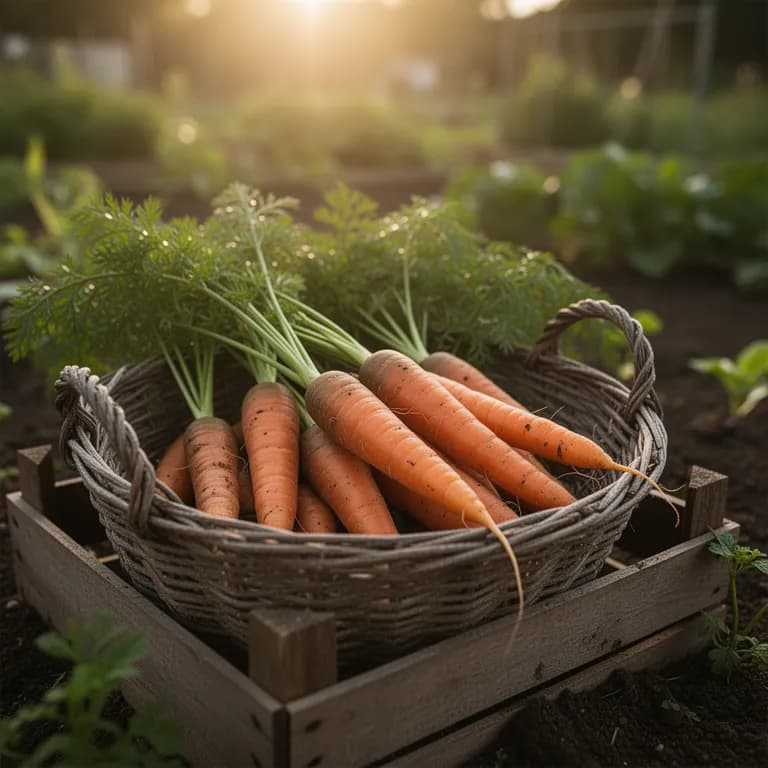
Una variedad clásica de zanahoria americana con forma cónica, hombros anchos y excelente tolerancia al calor. Las zanahorias Danvers fueron criadas para rendir bien en los suelos pesados de Massachusetts y son más indulgentes con condiciones de cultivo menos que ideales. Las raíces cónicas se almacenan excepcionalmente bien y desarrollan un sabor rico y dulce cuando se dejan en el suelo hasta el otoño. Use para enlatar, almacenamiento y consumo fresco, y aprecie su adaptabilidad a una amplia gama de tipos de suelo.
Cuándo plantar Zanahoria Danvers
Siembre solo directamente; las zanahorias no se trasplantan. Siembre a 0.5 cm de profundidad 2-4 semanas antes de la última helada. Mezcle semillas diminutas con arena para espaciamiento uniforme. Mantenga superficie del suelo húmeda por período de germinación de 10-21 días. Raclare progresivamente a 5-8 cm. Las semillas peletizadas reducen el trabajo de raclare. Siembre sucesivamente cada 3-4 semanas. Las semillas permanecen viables por 3 años.
Tu año de Zanahoria Danvers
Ajustado a Zona 7 · temporada típica · la helada se va hacia el 2 abr y vuelve hacia el 1 nov
Planta Zanahoria Danvers Mar – May, Ago – Sep y cosecha Jun – Ago, Oct – Nov. Consulta los métodos de plantación y elige tu clima para adaptar los periodos.
Cómo cultivar Zanahoria Danvers
Siembre semillas de zanahoria Danvers directamente a 0.5 cm de profundidad, 2-4 semanas antes de la última helada. Las semillas germinan en 10-21 días a 13-24°C. Mantenga el suelo húmedo durante la germinación. Raclare a 5-8 cm de distancia. Las zanahorias Danvers toleran suelos más pesados mejor que la mayoría de las variedades, haciéndolas ideales para jardines con condiciones de arcilla o pedregosas.
La forma cónica les permite atravesar suelo más denso que los tipos cilíndricos. Aún así, trabajar el suelo a 25-30 cm de profundidad mejora la calidad de la raíz. Proporcione humedad consistente y evite el encharcamiento. Abono lateral ligeramente con fertilizante bajo en nitrógeno a mitad de temporada.
Los tipos Danvers maduran en 65-75 días y desarrollan un sabor fuerte y robusto ideal para cocinar. Se mantienen bien en el suelo y se almacenan mejor que la mayoría de las variedades debido a la piel gruesa y carne densa. Siembra sucesiva cada 3-4 semanas para cosecha continua.
450 plantas caben en un bancal de 120 × 240 cm
Cada Zanahoria Danvers pide 8 cm de margen. El planificador guarda ese marco por ti — cada planta, cada bancal.
Los mejores vecinos de Zanahoria Danvers
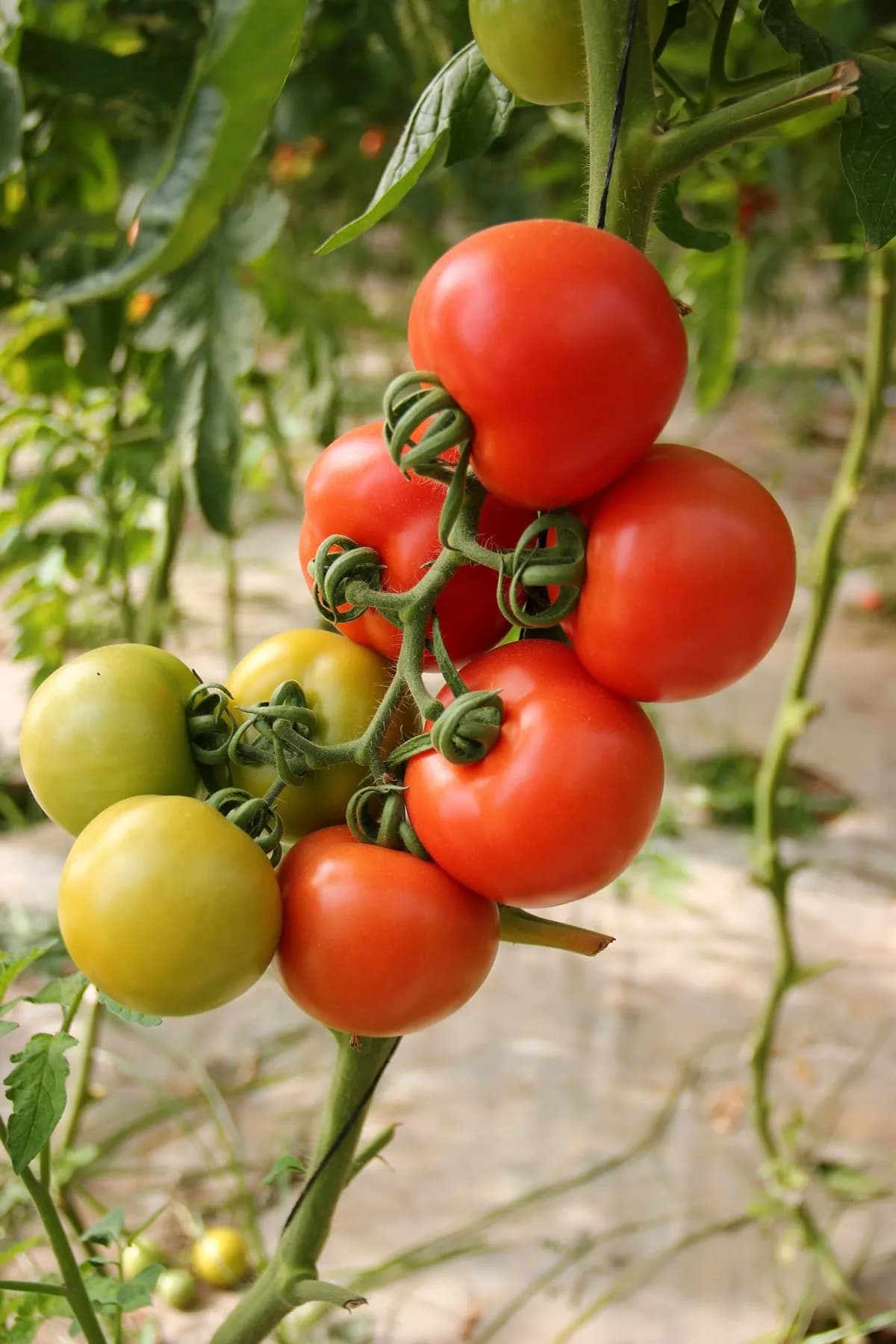
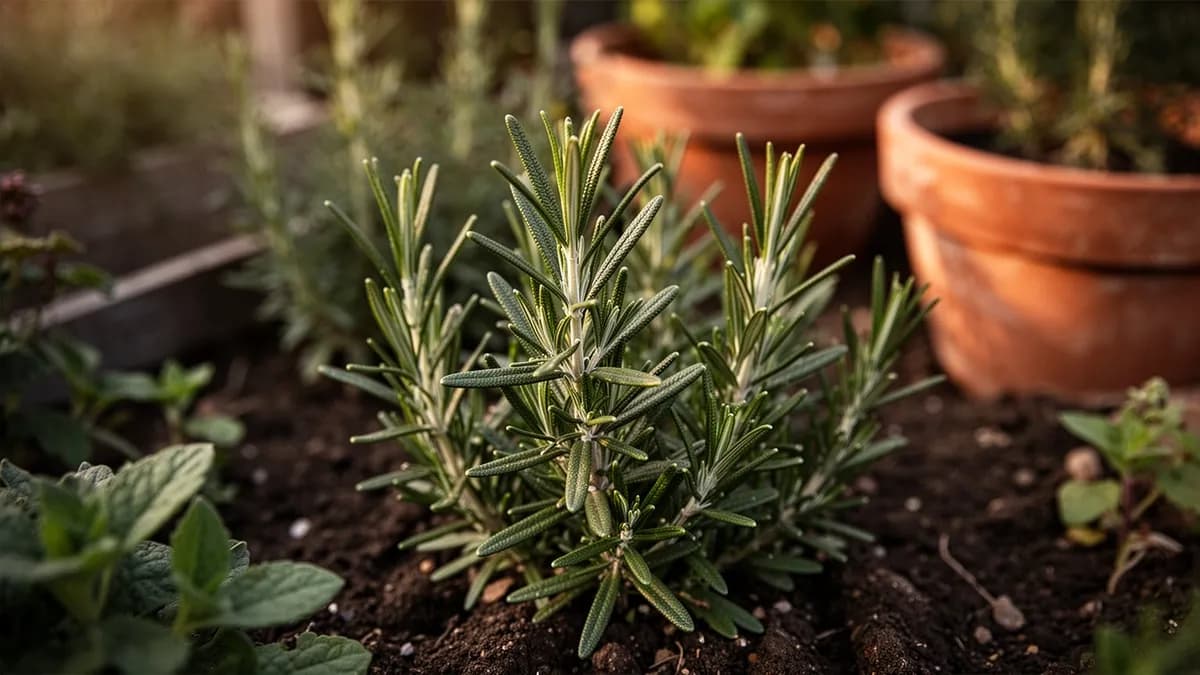
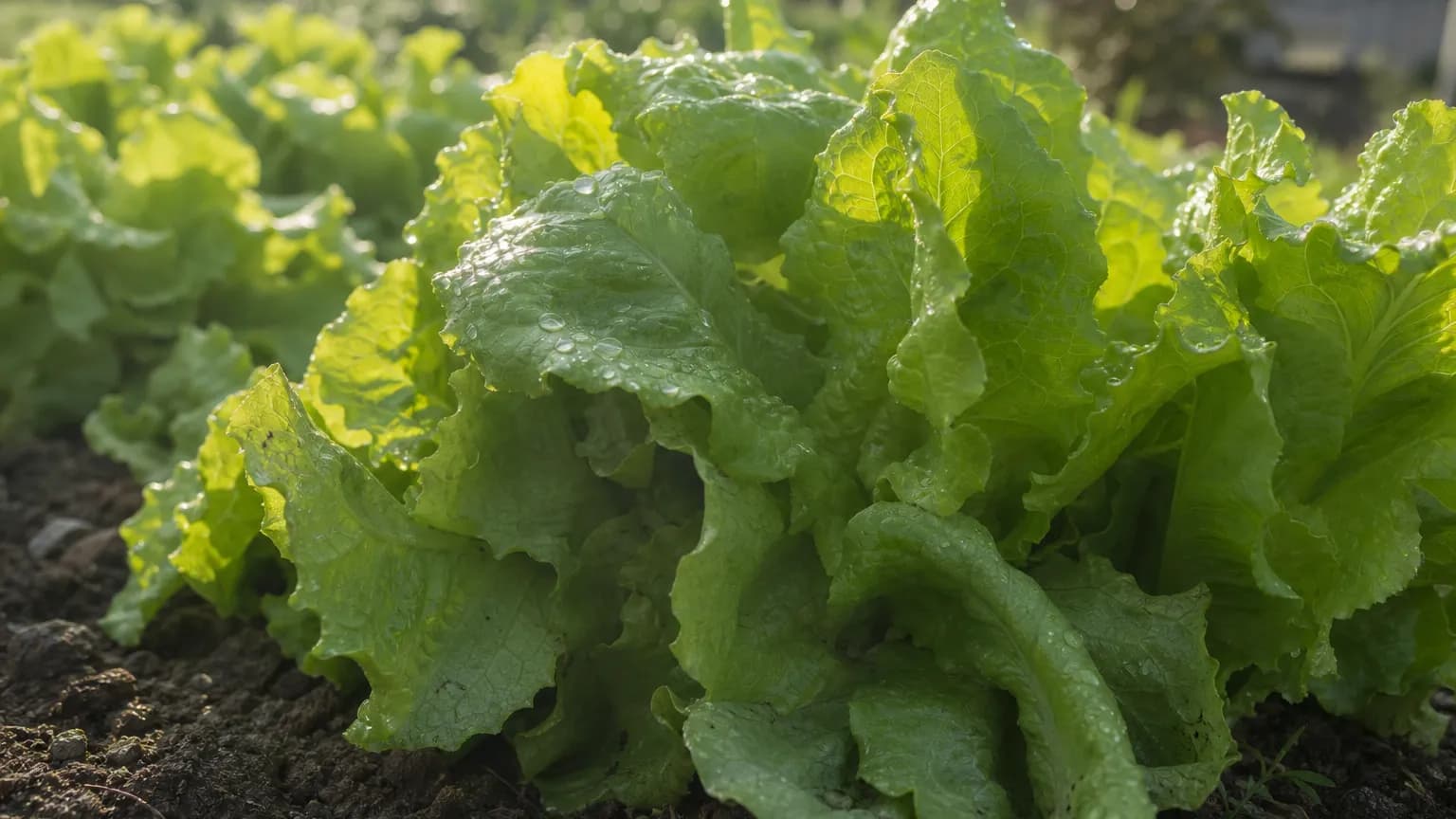
Las zanahorias Danvers crecen bien con cebollas, puerros y cebollín, que ayudan a enmascarar el aroma de zanahoria de las moscas de la zanahoria. Los tomates y romero son vecinos beneficiosos. La lechuga y rábanos se interplantan bien. Evite eneldo y chirivías cercanas. Las raíces cónicas penetran y aflojan suelo más pesado, beneficiando cultivos subsecuentes.
Tomate va a su lado. Eneldo no.
Saber de huerto de siempre, cotejado con la tabla real de Zanahoria Danvers — prueba cualquier planta que cultives.
Prueba Zanahoria Danvers en un bancal, aquí mismo
Un bancal real del planificador con Zanahoria Danvers ya plantado. Toca una planta compañera para colocarla y mira cómo responde la comprobación de vecinos: verde para buenos vecinos, rojo si hay conflicto.


Guías de cultivo relacionadas
Abónalo bien
Las zanahorias Danvers son más tolerantes de suelos pesados e imperfectos que la mayoría de tipos de zanahoria. Crecen en suelo franco-arcilloso que causaría bifurcación en otras variedades. Enmendar con compost y trabajar el suelo a 25-30 cm todavía produce las mejores raíces. Mantenga pH a 6.0-6.8. Aplique fertilizante bajo en nitrógeno al plantar. Evite estiércol fresco.
Temperatura ideal
Compatibilidad de zonas de rusticidad
De la semilla a la cosecha, etapa por etapa
Germinación
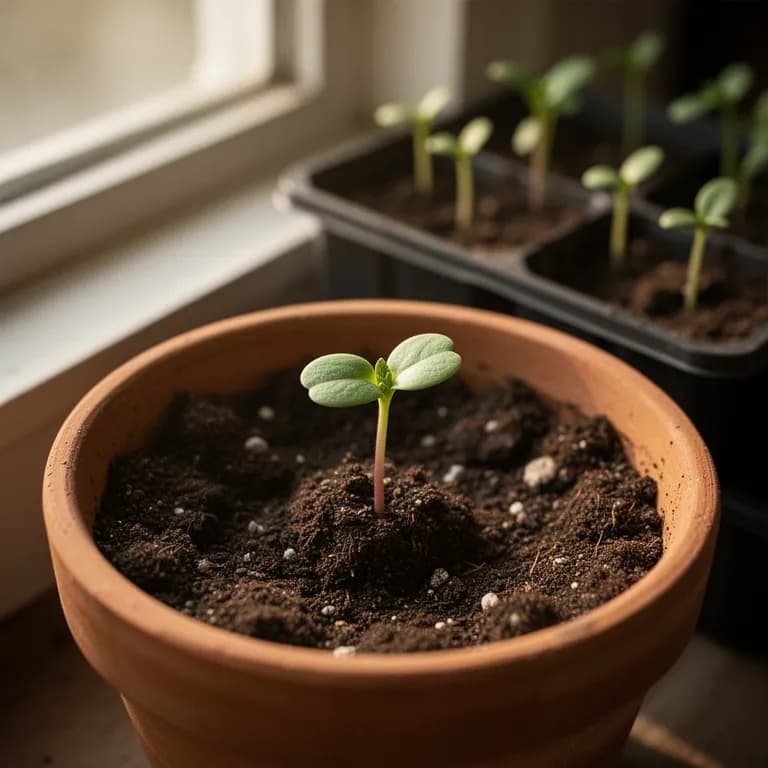
Las diminutas semillas de zanahoria germinan lentamente y necesitan humedad constante en la superficie del suelo. La primera señal es un brote fino, parecido a la hierba, que se despliega en un par de cotiledones estrechos. La germinación tarda 10-21 días a temperaturas del suelo de 55-75 °F, con un rango óptimo de 60-65 °F.
Establecimiento de plántulas
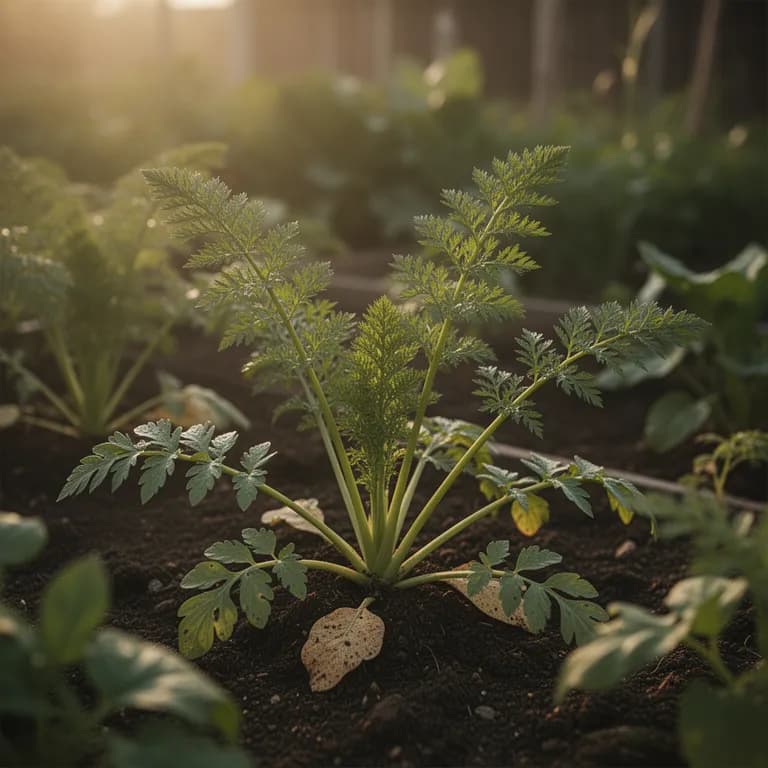
Aparecen las primeras hojas verdaderas con el aspecto característico, plumoso y compuesto del follaje de la zanahoria. La raíz principal comienza su descenso y las plántulas deben aclararse hasta dejar 2-3 pulgadas entre ellas para evitar la competencia. En esta etapa, las raíces son finas como un hilo y blancas.
Desarrollo de la raíz
La raíz pivotante se engrosa rápidamente y desarrolla la característica forma cónica de Danvers con hombros anchos. La raíz pasa de blanca a naranja pálido a medida que se acumula beta-caroteno. El follaje crece con vigor, alcanzando 12-18 pulgadas de alto, y la raíz desciende hasta 6-8 pulgadas.
Engrosamiento y coloración
Las raíces alcanzan casi su tamaño final, con los hombros expandiéndose hasta 1,5-2 pulgadas de ancho. El color naranja intenso se acentúa a medida que los carotenoides se concentran en la pulpa. La característica forma cónica de Danvers queda completamente definida. El contenido de azúcar aumenta de forma constante, especialmente cuando las temperaturas nocturnas se enfrían.
Madurez y cosecha
Las raíces alcanzan su tamaño completo con 6-8 pulgadas de largo y hombros de 1,5-2 pulgadas de ancho. La variedad Danvers se conserva bien en el suelo sin volverse harinosa ni leñosa, lo que permite una ventana de cosecha más amplia. El sabor sigue mejorando con las temperaturas frescas del otoño a medida que los almidones se convierten en azúcares.
Mantén las 2,5 cm superiores del suelo siempre húmedas; incluso unas pocas horas de sequedad pueden matar las plántulas emergentes. Cubre las filas con una capa fina de vermiculita o una tira de arpillera húmeda para conservar la humedad sin que se forme costra.
Cuidar Zanahoria Danvers mes a mes
Qué hacer cada mes para tu Zanahoria Danvers
Octubre
Mes actualHarvest remaining spring carrots for storage. Fall-sown Danvers continue developing roots as long as the ground remains unfrozen. Apply 6-8 inches of straw mulch over fall carrots for in-ground winter storage in zones 5-7.
Ten claro qué hacer en tu huerto, cada mes
Un correo al empezar cada mes: qué sembrar, plantar y hacer ahora mismo — para tu Zanahoria Danvers y todo lo que crece alrededor. Más un breve curso inicial para esquivar los errores clásicos.
- Qué hacer ahora mismo
- Ajustado a tu temporada
- Curso inicial incluido
Cosechar Zanahoria Danvers
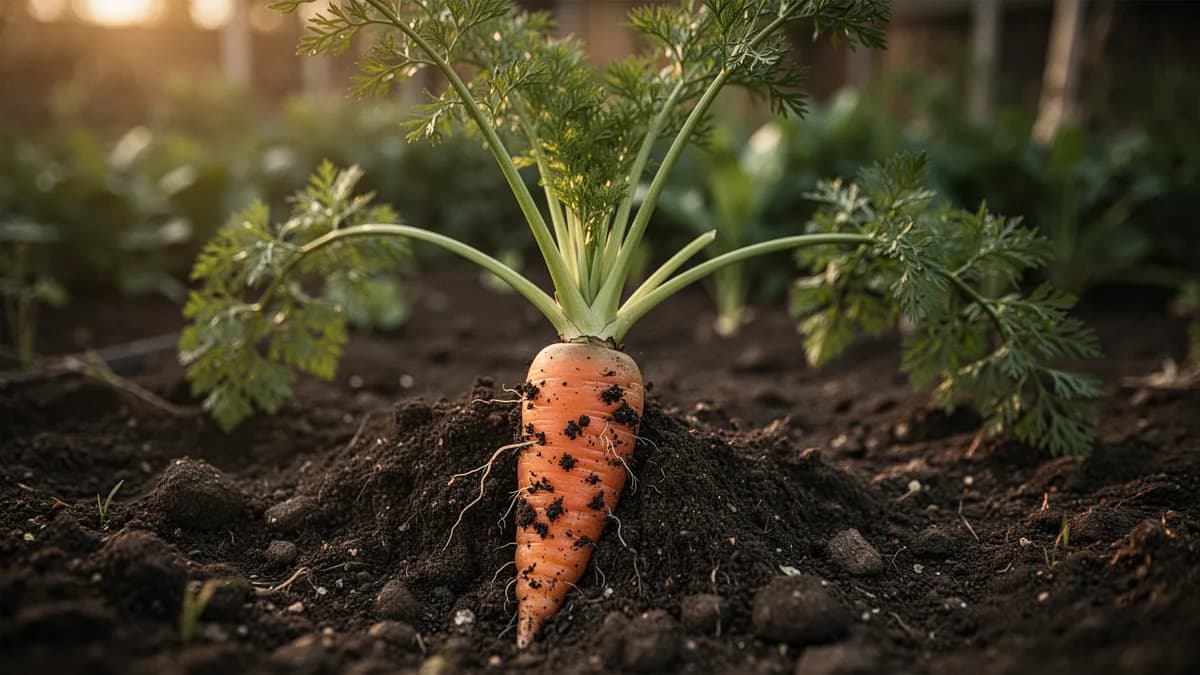
Coseche zanahorias Danvers cuando las raíces tienen 15-20 cm de largo y los hombros tienen 4-5 cm de ancho, típicamente 65-75 días después de la siembra. Afloje el suelo con un tenillo antes de tirar. Danvers se almacena bien en el suelo bajo acolchado hasta principios de invierno. El sabor fuerte se vuelve más pronunciado con el tamaño y el clima frío. Coseche también las hojas para uso culinario.
se supone que plantas al comenzar el periodo — indica tu fecha real
Cosecha cuando las raíces estén casi maduras: 6-8 pulgadas de largo con hombros de 1,5-2 pulgadas de ancho, normalmente 65-75 días después de la siembra.
Almacenamiento y conservación
Danvers son zanahorias de almacenamiento excepcionales. Remueva las hojas y almacene en bolsas perforadas en el refrigerador por 6-8 semanas, o empacar en arena húmeda en una bodega a 0-4°C por hasta 5-6 meses. La carne densa y piel gruesa resisten la deshidratación. Excelente para enlatar, congelar después de escaldar, y deshidratar. Elección tradicional para mermelada de zanahoria y zanahorias encurtidas.
Qué falla — y cómo solucionarlo
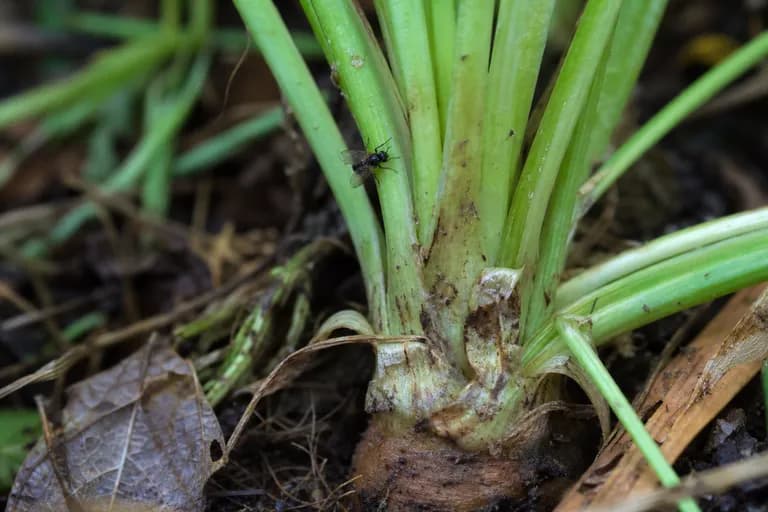
Mosca de la zanahoria
PlagaTúneles de color óxido en raíces, cicatrices oscuras en superficie de raíz, follaje marchito.
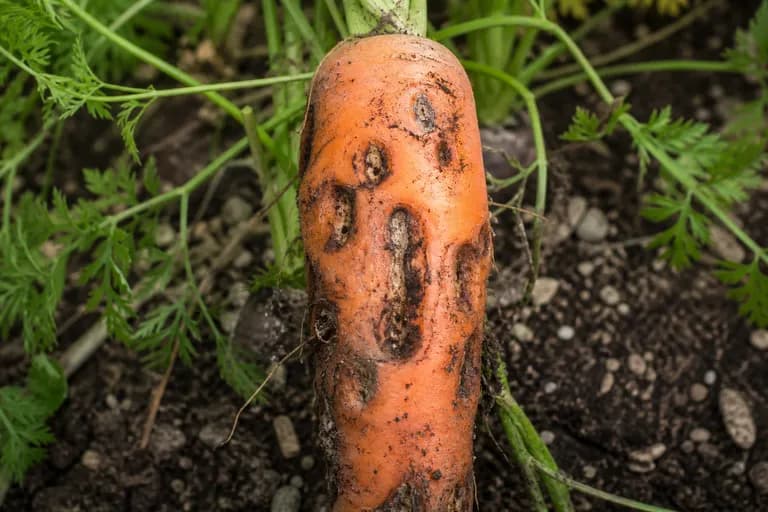
Pudrición cavernosa
EnfermedadLesiones ovales y hundidas en superficies de raíz, manchas marrones oscuras que se profundizan con el tiempo.
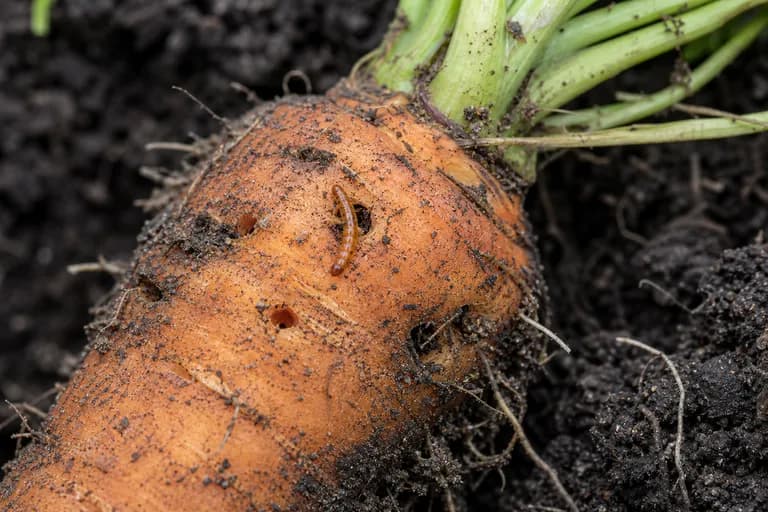
Gusanos alambre
PlagaPequeños agujeros redondos perforados en raíces, larvas marrones delgadas visibles en suelo.
Solución de problemas comunes
Aunque más tolerante al suelo que la mayoría de zanahorias, Danvers todavía se bifurca en condiciones muy pedregosas. El sabor fuerte puede ser demasiado intenso para consumo fresco comparado con tipos Nantes más dulces. Los hombros verdes por exposición solar son comunes; coloque tierra sobre raíces expuestas. La germinación lenta requiere paciencia y humedad consistente.
Consejos de cultivo
- Never transplant carrots — always direct sow. Carrot taproots are extremely sensitive to disturbance, and transplanted carrots invariably produce forked, stunted, or misshapen roots regardless of how carefully they are handled.
- Prepare the soil deeply but avoid adding fresh manure or high-nitrogen amendments within 6 months of planting. Excess nitrogen causes hairy, forked roots with poor flavor, and fresh manure introduces pathogens that cause cavity spot and other root diseases.
- Mix tiny carrot seeds with fine sand or dry coffee grounds at a 4:1 ratio before sowing to achieve more even spacing and dramatically reduce the tedious work of thinning. Alternatively, use pelleted seeds for precise placement.
- Cover newly sown rows with a strip of burlap, lightweight row cover, or a thin layer of vermiculite to maintain surface moisture during the critical 10-21 day germination period. Remove burlap immediately when sprouts appear.
- Thin ruthlessly and early — crowded carrots produce thin, twisted roots that are useless in the kitchen. Thin to 2 inches at the first true leaf stage and to 3 inches a week later. Use scissors to snip unwanted seedlings rather than pulling, which disturbs neighboring roots.
- Hill soil over exposed carrot shoulders throughout the growing season. Green shoulders from sun exposure contain chlorophyll and bitter compounds that affect flavor. A 1-inch mounding of soil prevents this entirely.
- Succession plant every 3 weeks from early spring through midsummer for a continuous harvest from June through December. Danvers carrots are particularly well-suited to succession planting because they hold in the ground without becoming pithy.
- For the sweetest flavor, time your final sowing so carrots mature in cool autumn weather. Carrots exposed to temperatures below 10°C (50°F) convert stored starches to sugars as a natural antifreeze response, producing roots that taste almost candy-sweet.
Cultiva tu mejor Zanahoria Danvers — y todo lo que la rodea.
Empieza un plan gratis hoy. Diseña tus bancales, coloca tu Zanahoria Danvers y deja que PlotMyGarden gestione el momento, el espaciado, las asociaciones y los recordatorios de la semilla a la cesta.
Elige tu Zanahoria Danvers
Danvers Semi-larga
La variedad clásica con raíces cónicas de 18-20 cm. Sabor fuerte, excelente almacenamiento, confiable en suelo pesado.
Danvers 126
Selección mejorada con raíces más uniformes y mejor resistencia a enfermedades.
Yellowstone
Tipo Danvers de carne amarilla con sabor suave y dulce. Añade variedad de color a las plantaciones de zanahoria.
A packet of Danvers carrot seeds costs $2-4 and contains 500-1,000 seeds — enough to plant a 15-meter (50-foot) row yielding 150-300 carrots worth $30-75 at organic grocery prices ($2-4 per pound). The real savings come from storage: Danvers carrots kept in a root cellar or under mulch provide fresh carrots for 5-6 months without any ongoing cost, replacing weekly purchases throughout fall and winter. Growing your own also eliminates the tasteless, rubbery quality of mass-produced carrots — homegrown Danvers pulled from cool soil are incomparably sweeter and more flavorful.
Recetas rápidas
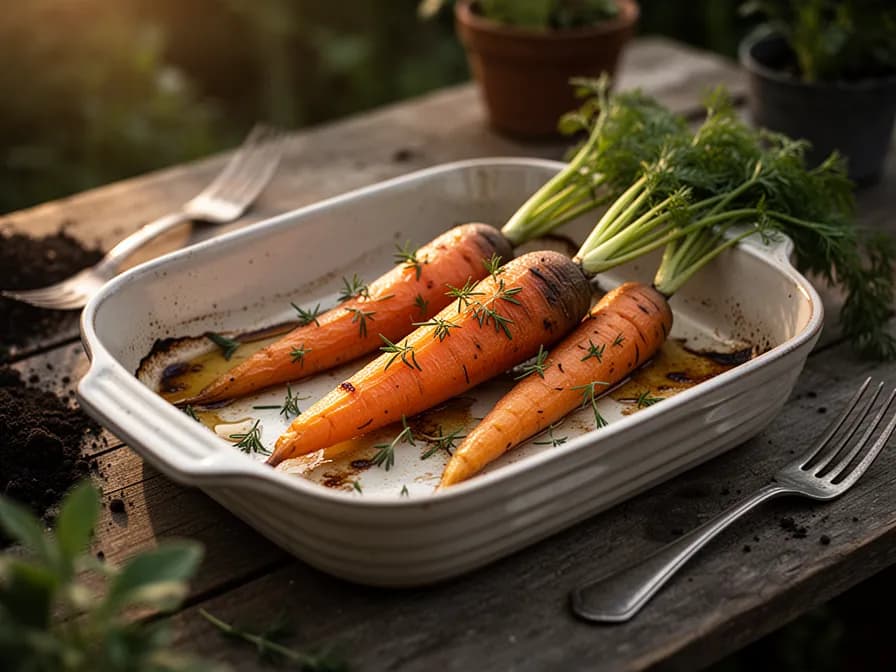
Honey-Roasted Danvers Carrots
35 minThick-cut Danvers carrots roasted at high heat until caramelized and tender, finished with a drizzle of honey and fresh thyme. The robust Danvers flavor intensifies beautifully with roasting, creating a side dish that converts even carrot skeptics.
7 ingredientesCreamy Danvers Carrot Soup
45 minA velvety, deeply flavored carrot soup that showcases the rich, full taste of Danvers carrots. Ginger and cumin add warmth, while a swirl of cream and toasted seeds provide an elegant finish.
10 ingredientesClassic Carrot Cake with Cream Cheese Frosting
75 minA moist, richly spiced carrot cake using freshly grated Danvers carrots for superior flavor and texture. The dense Danvers flesh grates beautifully and adds moisture and natural sweetness that store-bought carrots cannot match.
13 ingredientesUsos culinarios
Las zanahorias Danvers destacan en preparaciones cocinadas donde su sabor robusto brilla. Ideales para sopas, guisos, asados y estofados. Hacen excelente jugo de zanahoria con sabor rico y completo. Ase para caramelizar. Elección tradicional para enlatar y preservar. Ralle en pastel de zanahoria y panes rápidos. La carne firme mantiene forma bien en platos cocinados.
Qué contiene
Beneficios para la salud
- Exceptionally rich in beta-carotene, which the body converts to vitamin A — essential for maintaining healthy vision, immune function, and skin integrity. A single medium Danvers carrot provides over 200% of the daily recommended intake.
- Contains falcarinol and falcarindiol, polyacetylene compounds that have shown anti-inflammatory and potential anti-tumor properties in laboratory studies, with higher concentrations found in carrots grown in healthy, organic soil.
- The soluble fiber (pectin) in carrots slows digestion and helps regulate blood sugar levels after meals, giving carrots a low glycemic index of 39 despite their naturally sweet taste.
- Rich in lutein and zeaxanthin, carotenoid antioxidants that accumulate in the retina and help protect against age-related macular degeneration — the leading cause of vision loss in adults over 60.
- Provides potassium (320mg per 100g) that helps counterbalance dietary sodium, supporting healthy blood pressure and reducing cardiovascular disease risk when consumed as part of a vegetable-rich diet.
- Cooking carrots actually increases the bioavailability of beta-carotene by breaking down cell walls — lightly steamed or roasted Danvers carrots deliver significantly more absorbable nutrients than raw ones.
De dónde viene Zanahoria Danvers
The Danvers carrot traces its origins to the town of Danvers, Massachusetts, where local market gardeners in the mid-19th century selectively bred a carrot suited to the region's heavy, stony soils. By 1871, the Danvers Half Long variety was formally introduced to the seed trade and quickly became one of the most popular carrots in America. Its conical, tapering shape allowed the root to push through dense clay and rocky ground that would cause longer, cylindrical varieties to fork and deform.
The broader story of carrot cultivation stretches back over 5,000 years to the highlands of Afghanistan and Persia (modern Iran), where wild Daucus carota was first domesticated — not for its root, but for its aromatic seeds and leaves. Early cultivated carrots were purple, yellow, and white. The orange carrot familiar today was developed by Dutch breeders in the 16th and 17th centuries through careful selection of yellow-rooted varieties with higher carotene content.
Danvers carrots represent an important chapter in American horticultural innovation. As the United States industrialized in the late 1800s, practical, adaptable vegetable varieties were in high demand for both home gardens and commercial production. The Danvers type filled this niche perfectly — it was reliable in imperfect soil, stored exceptionally well through New England winters in root cellars, and had a strong, satisfying flavor ideal for soups, stews, and canning. The variety remains commercially significant today, with Danvers 126 (an improved selection developed for more uniform roots and better disease resistance) still grown by market gardeners and home growers across North America who value its toughness, storage quality, and rich cooking flavor.
Zanahoria Danvers: ¿sabías que?
Datos fascinantes sobre Zanahoria Danvers
The Danvers carrot was developed in Danvers, Massachusetts around 1871 specifically to grow in the town's heavy, rocky soil — making it one of the first American-bred carrot varieties and a landmark in vegetable breeding history.
Zanahoria Danvers: preguntas frecuentes
¿Cuándo debo plantar Zanahoria Danvers?
¿Cuáles son buenas plantas acompañantes para Zanahoria Danvers?
¿En qué zonas de rusticidad puede crecer Zanahoria Danvers?
¿Cuánto sol necesita Zanahoria Danvers?
¿A qué distancia debo espaciar Zanahoria Danvers?
¿Qué plagas y enfermedades afectan a Zanahoria Danvers?
¿Cómo almaceno Zanahoria Danvers después de la cosecha?
¿Cuáles son las mejores variedades de Zanahoria Danvers para cultivar?
¿Qué suelo necesita Zanahoria Danvers?
Why are my Danvers carrots forking or producing misshapen roots?
How do I get Danvers carrot seeds to germinate reliably?
When is the best time to harvest Danvers carrots for storage?
What makes Danvers different from Nantes or Imperator carrots?
Can I grow Danvers carrots in containers or raised beds?
Acabas de leer la teoría. Ahora cultívala en piloto automático.
Todo lo que hace que Zanahoria Danvers sea delicado — el momento, el espaciado, las asociaciones, la ventana de cosecha — es justo lo que PlotMyGarden resuelve por ti, para cada planta de tu huerto.
Un plan que conoce tu clima
Indica tu ubicación una vez. Recibe fechas de siembra, abonado y cosecha basadas en tu última helada real y el pronóstico en vivo — sin adivinar con un sobre genérico.
De la sección “Cuándo plantar”Planificador de bancales de arrastrar y soltar
Diseña bancales sobre una cuadrícula. Cada planta encaja con su espaciado correcto y ves toda la temporada antes de gastar un céntimo en semillas.
De la sección “Cultivo”Conflictos de asociación, detectados a tiempo
Más de 200 buenas y malas combinaciones comprobadas en vivo mientras plantas — para que un error que arruine la temporada nunca llegue a la tierra.
De la sección “Asociaciones”Recordatorios que sí vas a seguir
“Riega las judías.” “Recoge hoy antes de que se pase.” Oportunos, concretos y ligados a las plantas que de verdad cultivas.
De la sección “Cosecha”Escalonado, programado
¿Quieres cosechar seis semanas en vez de seis días? Reparte tus siembras automáticamente y te avisa cuando toca el siguiente lote.
De la sección “Cuándo plantar”Un registro que se vuelve más listo
Cada cosecha que registras le enseña tu huerto. El plan del año que viene parte de lo que de verdad funcionó en tu suelo, no en un manual.
De la sección “Resumen”Planta estos junto a Zanahoria Danvers
Más Hortalizas de raíz
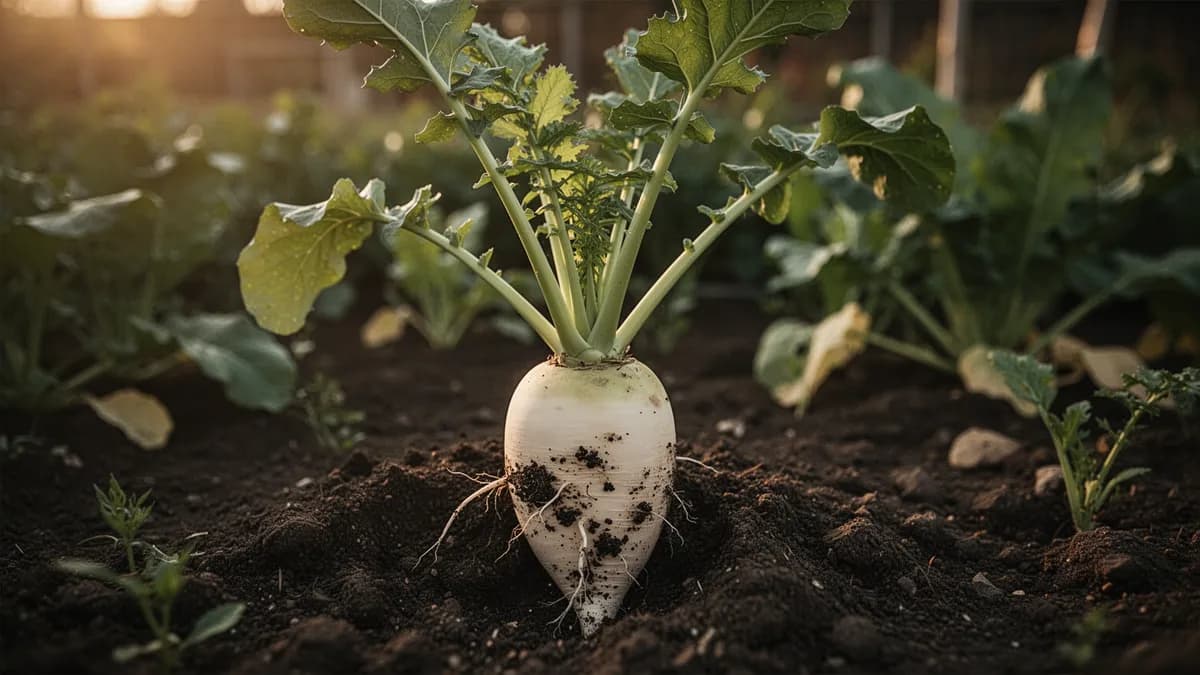
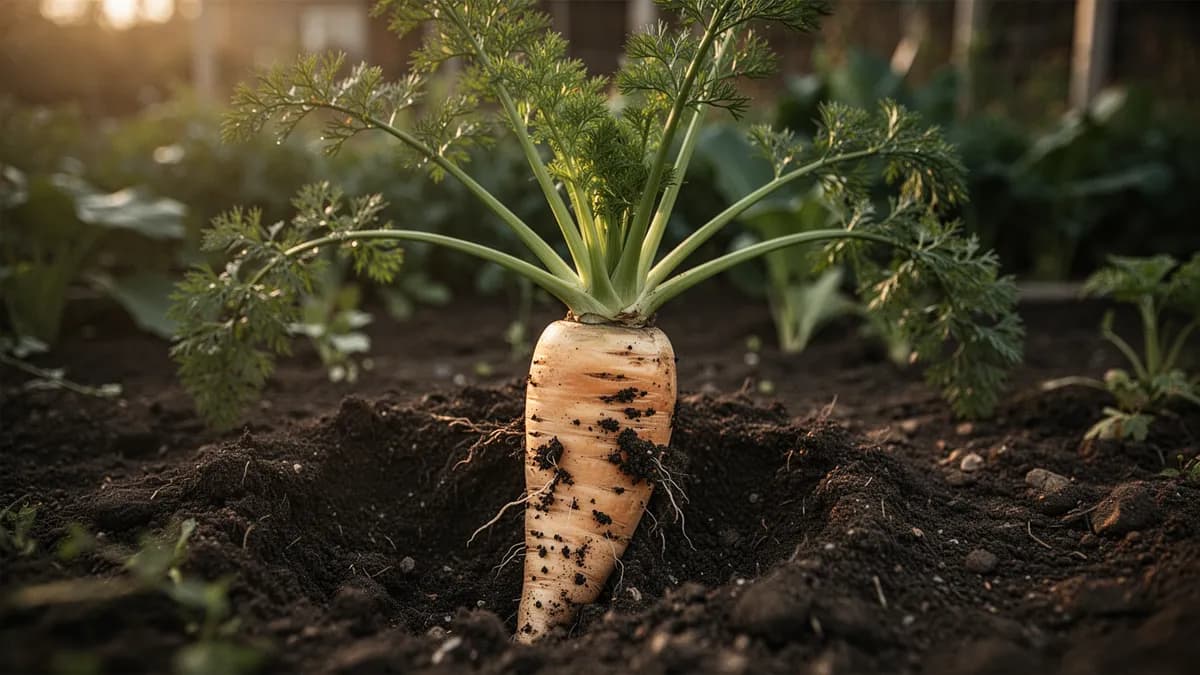
Mantén Zanahoria Danvers lejos de estos
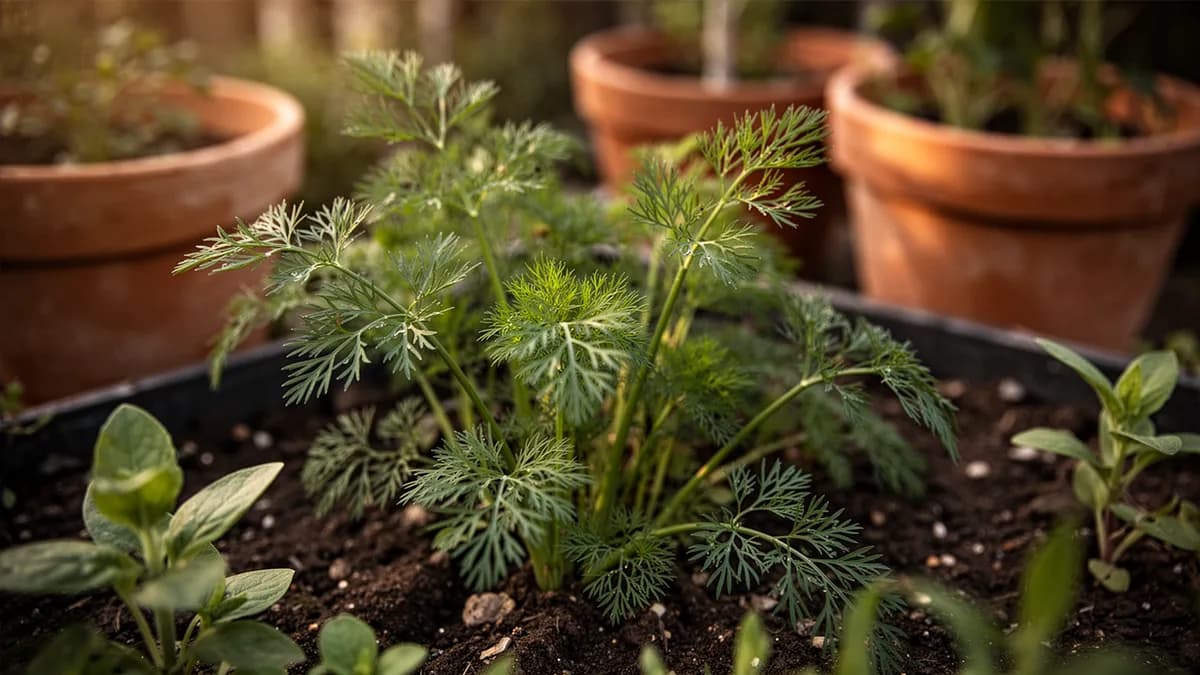
Cultiva tu mejor Zanahoria Danvers — y todo lo que la rodea.
Empieza un plan gratis hoy. Diseña tus bancales, coloca tu Zanahoria Danvers y deja que PlotMyGarden gestione el momento, el espaciado, las asociaciones y los recordatorios de la semilla a la cesta.