Zanahoria Chantenay
Una zanahoria corta y robusta con hombros anchos y punta roma que rinde bien en suelos poco profundos o arcilla pesada.





En esta páginaResumen
Conoce Zanahoria Chantenay
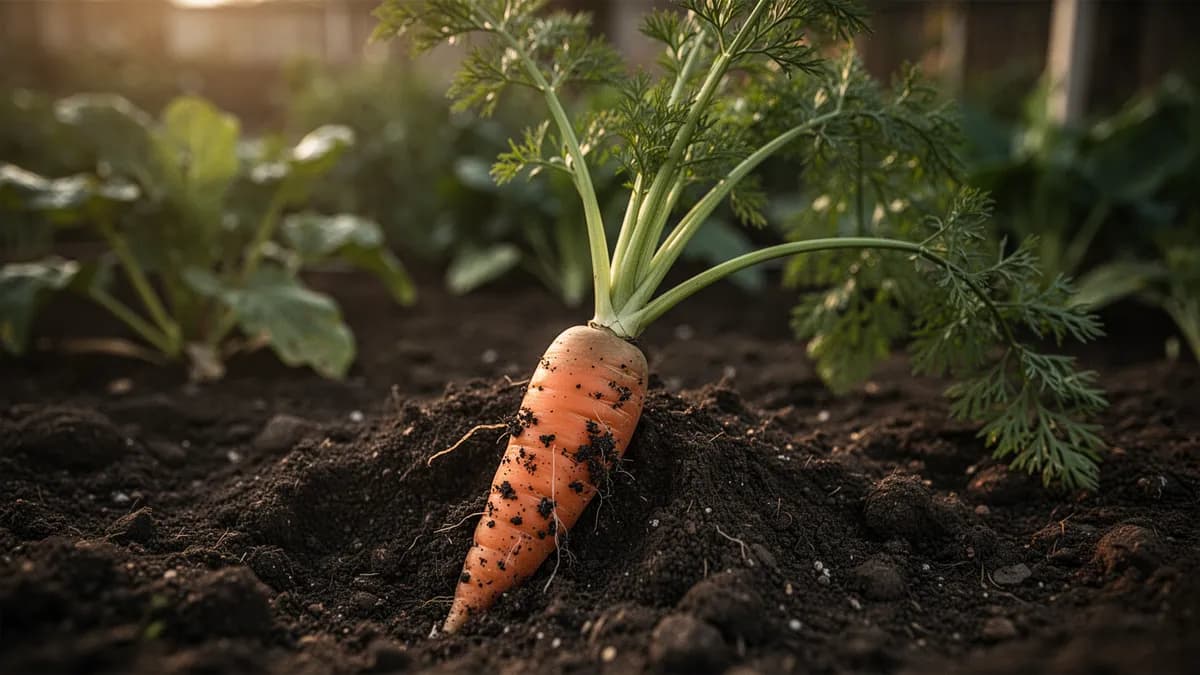
Una zanahoria corta y robusta con hombros anchos y punta roma que rinde bien en suelos poco profundos o arcilla pesada. Las zanahorias Chantenay son ideales para cultivo en contenedor debido a su tamaño compacto, alcanzando solo 13-15 cm de longitud. El núcleo ancho y carne densa las hacen excelentes para cocinar y extraer jugo, con un color naranja profundo que indica alto contenido de betacaroteno. Estas productoras confiables son una buena elección para jardines con condiciones de suelo menos que perfectas.
Cuándo plantar Zanahoria Chantenay
Siembre solo directamente; nunca trasplante. Siembre a 0.5 cm de profundidad 2-4 semanas antes de la última helada. Mezcle semillas pequeñas con arena para distribución uniforme. Mantenga humedad del suelo para germinación de 10-21 días. Raclare a 5-8 cm de distancia. Las semillas peletizadas simplifican el espaciamiento. Siembre sucesivamente cada 3-4 semanas. Las semillas permanecen viables por 3 años.
Tu año de Zanahoria Chantenay
Ajustado a Zona 7 · temporada típica · la helada se va hacia el 2 abr y vuelve hacia el 1 nov
Planta Zanahoria Chantenay Mar – May, Ago – Sep y cosecha Jun – Ago, Oct – Nov. Consulta los métodos de plantación y elige tu clima para adaptar los periodos.
Cómo cultivar Zanahoria Chantenay
Siembre semillas de Chantenay directamente a 0.5 cm de profundidad, 2-4 semanas antes de la última helada. Las semillas germinan en 10-21 días a 13-24°C. Raclare a 5-8 cm de distancia. Las zanahorias Chantenay necesitan solo 15-20 cm de profundidad de suelo, haciéndolas la mejor elección para arcilla pesada, contenedores o bancales elevados poco profundos.
Prepare el suelo trabajando los 20 cm superiores, incorporando compost para drenaje. La forma corta y cónica atraviesa suelo difícil mejor que cualquier otro tipo de zanahoria. Proporcione humedad consistente y alimentación ligera con fertilizante bajo en nitrógeno. Las raíces Chantenay maduran en 65-75 días.
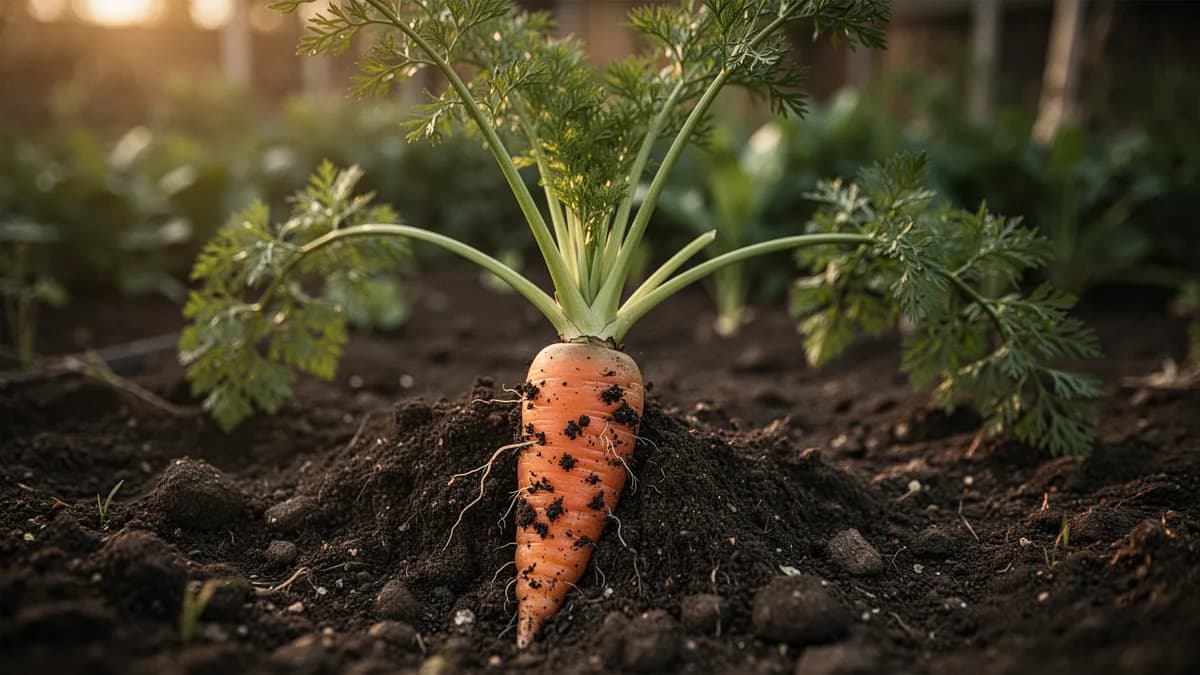
Los hombros anchos a menudo empujan sobre la superficie del suelo. Coloque tierra sobre hombros expuestos para prevenir verdeo y amargor. Estas zanahorias desarrollan dulzura excepcional, especialmente después de las heladas. Siembra sucesiva cada 3-4 semanas. Los tipos Chantenay se almacenan muy bien debido a la carne densa y gruesa.
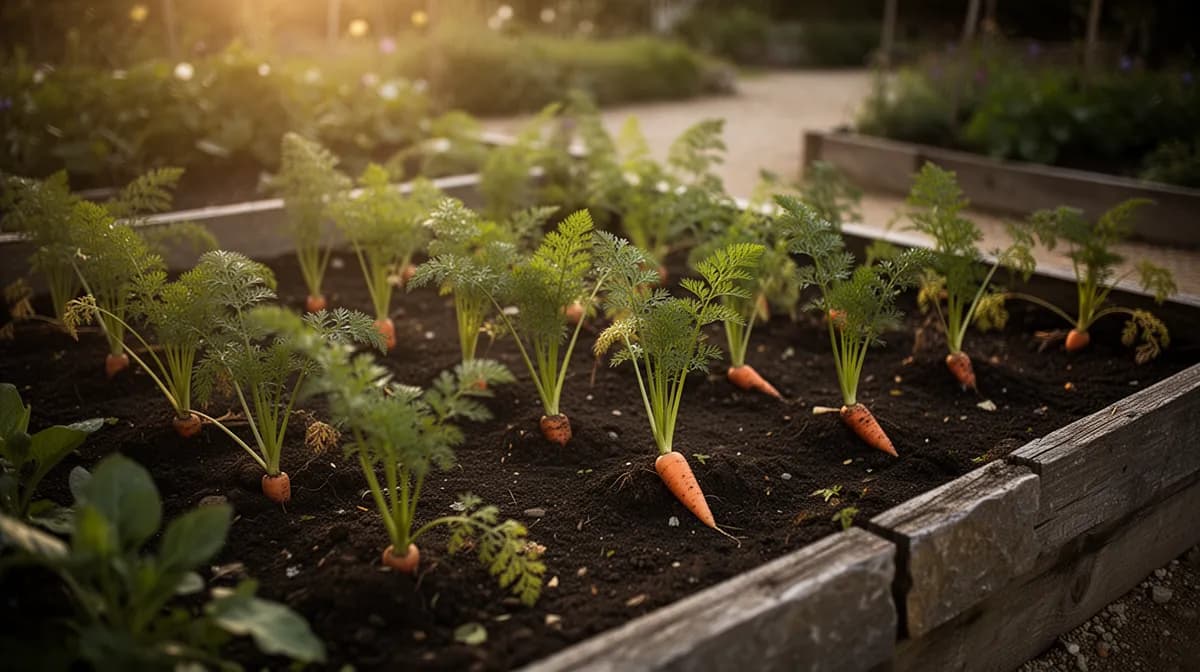
450 plantas caben en un bancal de 120 × 240 cm
Cada Zanahoria Chantenay pide 8 cm de margen. El planificador guarda ese marco por ti — cada planta, cada bancal.
Los mejores vecinos de Zanahoria Chantenay
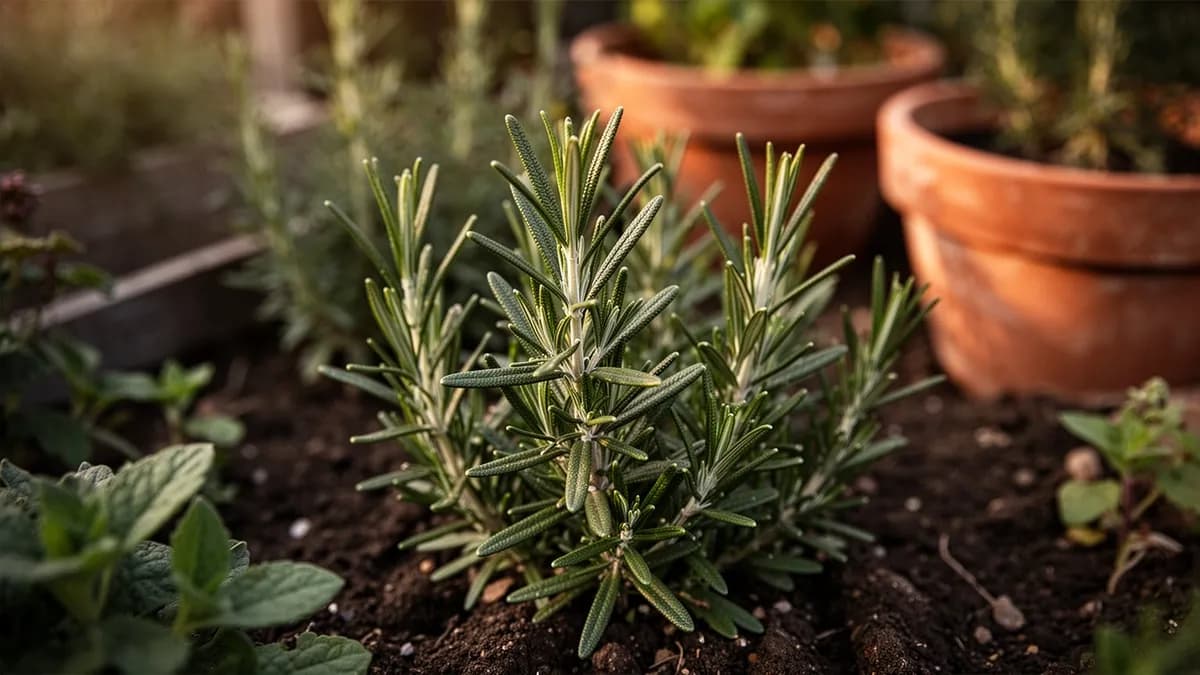
Las zanahorias Chantenay crecen bien con cebollas, puerros, cebollino, tomates y romero. Su tamaño compacto las hace excelentes para interplantar entre cultivos más grandes. Las raíces cortas no compiten profundamente con plantas vecinas. Ideal para plantaciones companion en contenedor con hierbas y verduras de ensalada.
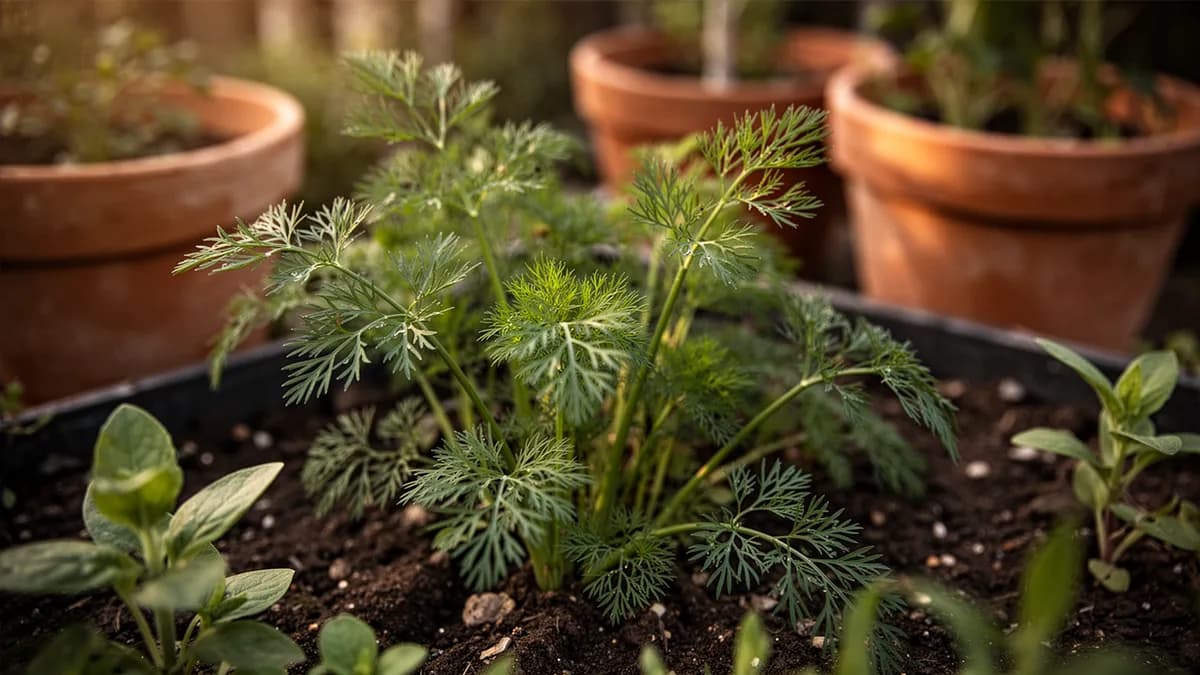
Tomate va a su lado. Eneldo no.
Saber de huerto de siempre, cotejado con la tabla real de Zanahoria Chantenay — prueba cualquier planta que cultives.
Prueba Zanahoria Chantenay en un bancal, aquí mismo
Un bancal real del planificador con Zanahoria Chantenay ya plantado. Toca una planta compañera para colocarla y mira cómo responde la comprobación de vecinos: verde para buenos vecinos, rojo si hay conflicto.


Guías de cultivo relacionadas
Abónalo bien
Las zanahorias Chantenay son el tipo de zanahoria más tolerante al suelo, rindiendo bien en arcilla pesada, suelo pedregoso y suelos poco profundos. Trabaje el suelo a solo 20 cm de profundidad. Enmienda suelo pesado con compost para drenaje mejorado. Aplique fertilizante bajo en nitrógeno al plantar. Las raíces cortas requieren menos preparación de suelo que cualquier otro tipo de zanahoria.
Temperatura ideal
Compatibilidad de zonas de rusticidad
De la semilla a la cosecha, etapa por etapa
Germinación
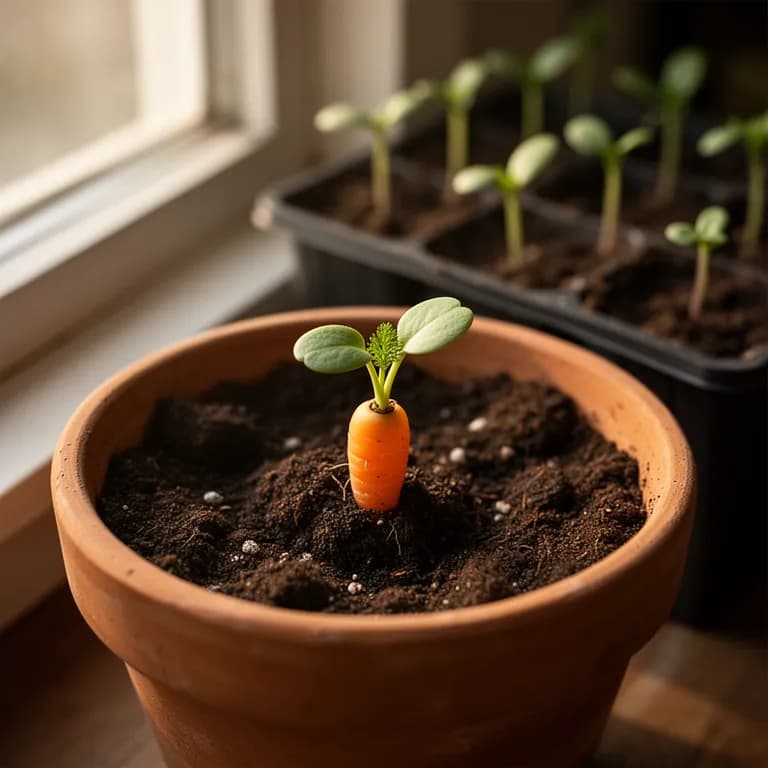
Las semillas de zanahoria Chantenay son diminutas y germinan lentamente, necesitando 10–21 días a temperaturas del suelo de 13–24 °C. La primera señal de vida es una hoja de cotiledón fina, parecida a una brizna de hierba, que no se parece en nada al follaje plumoso definitivo. La germinación suele ser irregular si la superficie del suelo forma costra.
Establecimiento de plántulas
Aparecen las primeras hojas verdaderas con el característico follaje de zanahoria, finamente dividido y parecido a un helecho. Las plántulas son frágiles y crecen despacio durante esta fase. La raíz pivotante comienza a alargarse hacia abajo, y este es el momento de aclarar las plantas al espaciamiento adecuado.
Crecimiento vegetativo
El follaje plumoso se expande rápidamente y alcanza 20-30 cm de altura. La raíz pivotante se engrosa y empieza a desarrollar su forma cónica característica. Los anchos hombros de la zanahoria Chantenay comienzan a formarse, y la raíz adquiere su intenso color naranja a medida que se acumula betacaroteno.
Engrosamiento de la raíz
La raíz de la zanahoria Chantenay se expande rápidamente en diámetro y desarrolla su perfil característico, ancho de hombros y robusto. Los hombros pueden sobresalir 1-2 cm por encima de la superficie del suelo. El núcleo se reduce proporcionalmente mientras la corteza externa se engrosa con azúcares y betacaroteno. El sabor se vuelve notablemente más dulce durante esta fase.
Madurez y cosecha
Las raíces alcanzan su tamaño completo con 12-15 cm de largo y hombros de 4-5 cm de ancho. El follaje puede empezar a amarillear ligeramente en los bordes exteriores. Las zanahorias Chantenay se conservan bien en el suelo en esta etapa y, de hecho, se vuelven más dulces después de una helada ligera, que desencadena la conversión de almidón en azúcares.
Mantén el semillero constantemente húmedo; riega suavemente con un pulverizador fino dos veces al día si es necesario. Cubre con una capa fina de vermiculita o arpillera para retener la humedad y evitar que se forme costra. Nunca dejes que la superficie se seque durante esta fase crítica.
Cuidar Zanahoria Chantenay mes a mes
Qué hacer cada mes para tu Zanahoria Chantenay
Octubre
Mes actualHarvest fall-sown Chantenay carrots after the first light frost, which converts starches to sugars and dramatically improves sweetness. In mild zones, leave carrots in the ground under a thick layer of straw mulch for harvesting through winter. Cure harvested roots briefly before storage.
Ten claro qué hacer en tu huerto, cada mes
Un correo al empezar cada mes: qué sembrar, plantar y hacer ahora mismo — para tu Zanahoria Chantenay y todo lo que crece alrededor. Más un breve curso inicial para esquivar los errores clásicos.
- Qué hacer ahora mismo
- Ajustado a tu temporada
- Curso inicial incluido
Cosechar Zanahoria Chantenay
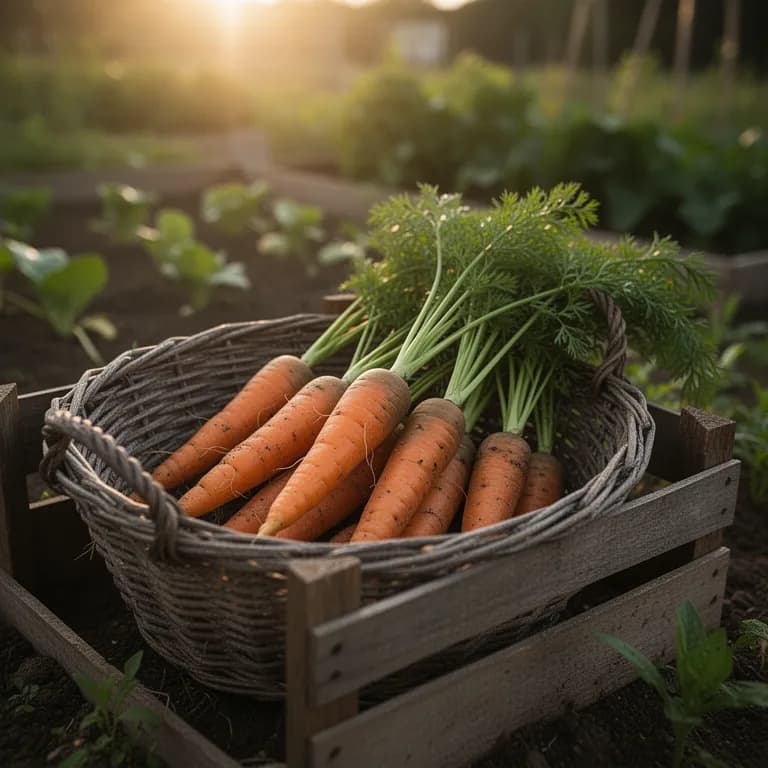
Coseche zanahorias Chantenay cuando los hombros tienen 4-5 cm de ancho y las raíces tienen 13-15 cm de largo, típicamente 65-75 días después de la siembra. Las puntas anchas empujan visiblemente hacia arriba cuando se acercan a la madurez. Tire o afloje con un tenillo. Chantenay se mantiene bien en el suelo y tolera ligera sobremadurez sin volverse tan leñosa como tipos más largos. Coseche después de heladas para el sabor más dulce.
se supone que plantas al comenzar el periodo — indica tu fecha real
Cosecha cuando los hombros midan 1,5-2 pulgadas de ancho y las raíces 5-6 pulgadas de largo, normalmente 65-75 días desde la siembra. Cosecha después de las heladas para un sabor más dulce.
Almacenamiento y conservación
Las zanahorias Chantenay son excelentes para conservar. Almacene en el refrigerador por 6-8 semanas o en una bodega en arena húmeda a 0-4°C por 5-6 meses. La carne gruesa y densa resiste la deshidratación. Ideal para enlatar, congelar y deshidratar debido a textura firme que mantiene forma. Hacen excelentes monedas y trozos de zanahoria para sopas. Encurtir con especias como snack crujiente preservado.
Qué falla — y cómo solucionarlo
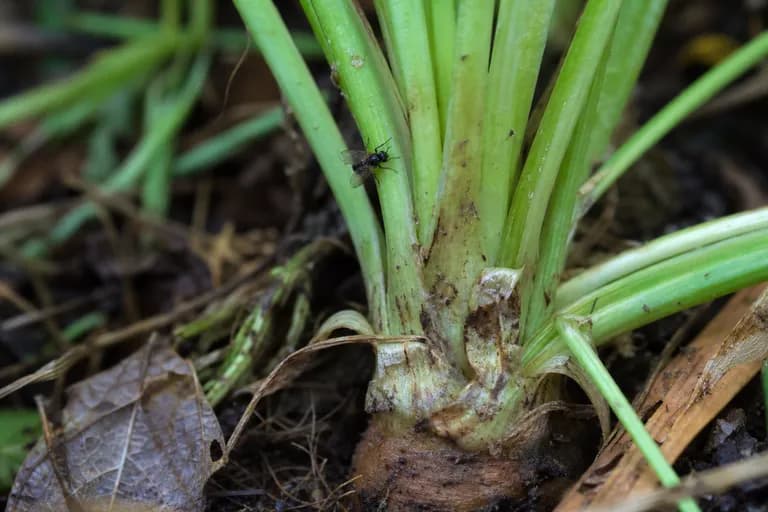
Mosca de la zanahoria
PlagaTúneles oxidados en raíces, cicatrices oscuras, follaje marchito.
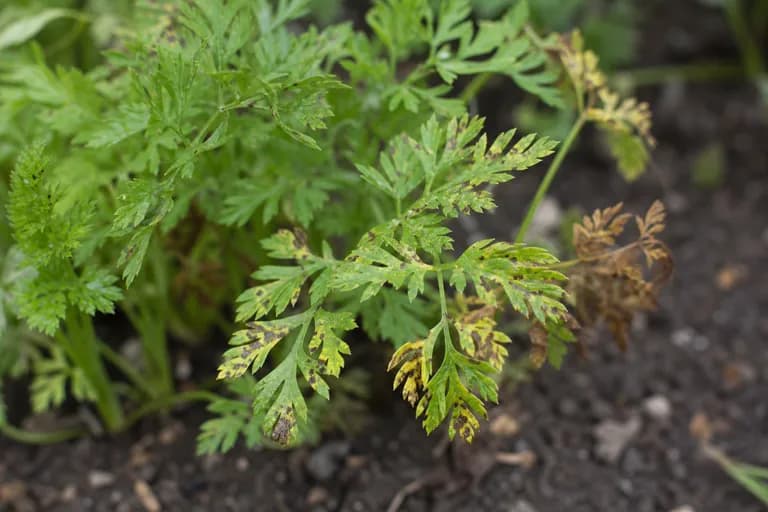
Tizón foliar
EnfermedadManchas marrones en hojas con halos amarillos, follaje muere prematuramente.
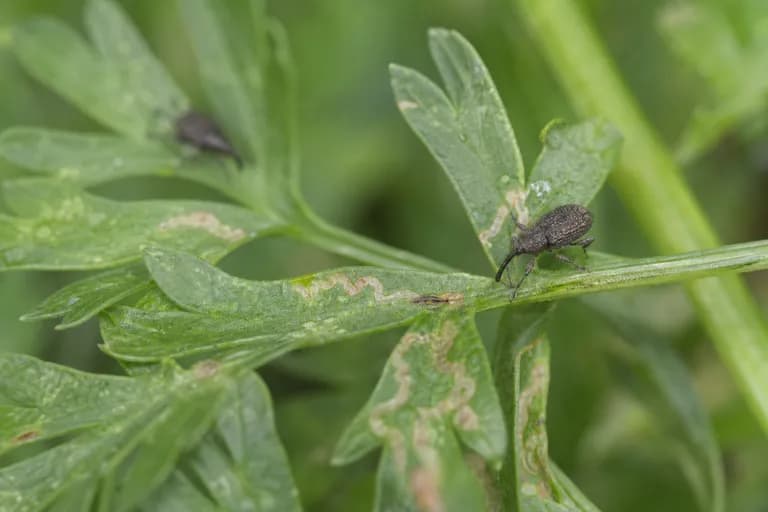
Gorgojo de la zanahoria
PlagaTúneles en zigzag en puntas de raíz, pequeños escarabajos oscuros, larvas alimentándose en área de corona.
Solución de problemas comunes
Los hombros verdes son comunes debido a puntas anchas empujando sobre el suelo; coloque tierra sobre raíces expuestas. El tamaño más corto significa menor rendimiento por metro de fila comparado con variedades más largas. La carne densa puede volverse leñosa si las raíces crecen demasiado grandes; coseche al tamaño recomendado. El agrietamiento es menos común que en tipos más delgados. El sabor fuerte puede ser demasiado robusto para algunas preferencias de consumo fresco.
Consejos de cultivo
- Choose Chantenay varieties specifically for difficult soils. If your garden has heavy clay, rocky ground, or shallow topsoil, Chantenay types will outperform Nantes, Imperator, and Danvers varieties every time — their short, stout roots push through obstacles that cause longer carrots to fork.
- Never add fresh manure or high-nitrogen fertilizer to carrot beds. Excess nitrogen causes hairy, forked roots with lush tops and poor-quality roots. Prepare beds with well-aged compost worked into the top 20 cm and use a low-nitrogen fertilizer like 5-10-10.
- Mix tiny carrot seeds with fine sand or radish seeds before sowing for more even distribution. Radish seeds germinate in 4-5 days and mark the row, while also breaking the soil surface crust that can prevent delicate carrot seedlings from emerging.
- Keep the seed bed religiously moist during the 10-21 day germination period. This is the single most common point of failure for carrot growers. Use a fine mist sprayer and cover the bed with burlap, vermiculite, or lightweight row cover to prevent crusting.
- Hill soil over exposed Chantenay shoulders as roots mature. The broad tops of Chantenay carrots commonly push 1-2 cm above the soil surface, and any portion exposed to sunlight turns green and develops a bitter, unpleasant taste from chlorogenic acid compounds.
- Harvest after the first autumn frost if possible. Cold exposure triggers a survival response in the carrot root, converting stored starches to sugars that act as a natural antifreeze — this dramatically improves sweetness and is why fall-harvested carrots taste noticeably better than summer ones.
- For container growing, Chantenay is the best carrot type available. Use containers at least 20 cm deep with good drainage. Fill with a loose, sandy potting mix — never use garden soil in containers as it compacts and prevents root development. Water consistently as containers dry quickly.
- Practice crop rotation and never plant carrots in the same bed more than once every 3-4 years. Carrot rust fly larvae overwinter in the soil near previous carrot plantings, and soil-borne diseases like cavity spot and black rot accumulate with repeated carrot cultivation.
Cultiva tu mejor Zanahoria Chantenay — y todo lo que la rodea.
Empieza un plan gratis hoy. Diseña tus bancales, coloca tu Zanahoria Chantenay y deja que PlotMyGarden gestione el momento, el espaciado, las asociaciones y los recordatorios de la semilla a la cesta.
Elige tu Zanahoria Chantenay
Chantenay de corazón rojo
Heirloom clásico con carne naranja profunda, casi sin corazón. Dulzura sobresaliente y sabor rico.
Chantenay Real
Selección mejorada con piel más suave y forma más uniforme. Confiable en amplia gama de suelos.
Hércules
Híbrido Chantenay grande con hombros de 8 cm. Muy productivo y excelente para almacenamiento.
A packet of Chantenay carrot seeds costs $2-4 and contains 500-1,000 seeds — enough for 15-30 meters of row. At store prices of $2-4 per pound for conventional carrots and $4-7 per pound for organic, a single $3 seed packet can produce $30-80 worth of carrots. The savings are even greater compared to specialty baby or Chantenay-type carrots sold at farmers markets for $5-8 per bunch. Homegrown Chantenay carrots also store for 5-6 months in a root cellar, eliminating the need to purchase carrots through winter.
Recetas rápidas
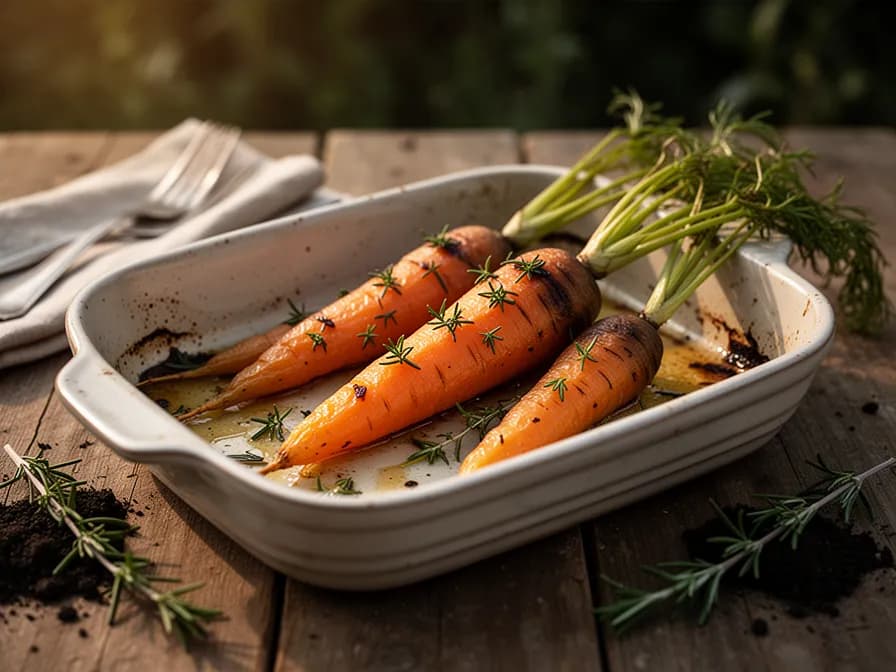
Honey-Roasted Whole Chantenay Carrots
35 minThe dense, sweet flesh of Chantenay carrots caramelizes beautifully when roasted whole at high heat. A glaze of honey, butter, and fresh thyme transforms these stout roots into an elegant side dish with rich, concentrated flavor.
7 ingredientesCreamy Chantenay Carrot Soup
40 minThe thick, nearly coreless flesh of Chantenay carrots produces an exceptionally smooth and velvety soup without the need for straining. A touch of fresh ginger and a swirl of cream elevate this simple soup into something memorable.
8 ingredientesQuick-Pickled Chantenay Carrot Coins
15 min plus 1 hour restingThick Chantenay carrot coins hold up perfectly to pickling, retaining a satisfying crunch that thinner carrot varieties lose. These tangy, slightly sweet pickled rounds are an addictive snack and a vibrant addition to sandwiches, grain bowls, and cheese boards.
8 ingredientesUsos culinarios
Las zanahorias Chantenay destacan en cocción con su sabor rico y dulce que se intensifica al asar, estofar o cocer a fuego lento. La carne densa mantiene forma bellamente en platos de cocción larga. Ideal para enlatar enteras o en rodajas. Haga puré para sopas de zanahoria ricas. Las raíces gruesas hacen excelentes bastones de zanahoria. Ralle en productos horneados para humedad y dulzura.
Qué contiene
Beneficios para la salud
- Chantenay carrots are one of the richest vegetable sources of beta-carotene, which the body converts to vitamin A — essential for maintaining healthy vision, particularly night vision, and supporting immune cell production and function.
- The soluble fiber (pectin) in carrots helps lower LDL cholesterol by binding bile acids in the digestive tract, supporting cardiovascular health when consumed regularly as part of a balanced diet.
- Contains luteolin and other flavonoids that have demonstrated anti-inflammatory effects in studies, potentially reducing the risk of chronic inflammatory conditions including cardiovascular disease.
- Rich in polyacetylenes, particularly falcarinol, a natural compound unique to carrots and related plants that has shown promising anticancer activity in laboratory research, especially against colon cancer cells.
- The high fiber content (2.8g per 100g) promotes healthy digestion and feeds beneficial gut bacteria, supporting a balanced microbiome that plays a role in immune function, mood regulation, and nutrient absorption.
- Provides vitamin K1 (13.2 mcg per 100g) that is essential for proper blood clotting and works synergistically with calcium and vitamin D to maintain bone mineral density.
De dónde viene Zanahoria Chantenay
The carrot (Daucus carota subsp. sativus) originated as a wild plant in Persia (modern-day Iran and Afghanistan) around the 10th century, where it was first cultivated not for its root but for its aromatic leaves and seeds. Early cultivated carrots were purple and yellow, with thin, bitter, branching roots quite unlike the sweet, fleshy roots we know today. Arab traders spread the plant westward through North Africa and into Moorish Spain by the 11th century, and eastward into India and China.
The transformation from a medicinal herb to a sweet root vegetable occurred gradually across centuries of selection in the Mediterranean region and Northern Europe. By the 14th century, purple and yellow carrots were common in European gardens, and the familiar orange carrot emerged in the Netherlands during the 16th and 17th centuries through careful selective breeding. Dutch growers developed sweeter, less bitter varieties with smoother, less branching roots that became the ancestors of all modern orange carrots.
The Chantenay type was developed in the 1830s in the Chantenay-sur-Loire district near Nantes, France, where local market gardeners bred a short, stout carrot specifically adapted to the region's heavy alluvial clay soils. The broad, conical shape allowed the root to push through dense soil that would cause longer varieties like Nantes or Imperator to fork and deform. The Chantenay quickly became popular throughout France and was introduced to American gardens by the 1880s. Today, Chantenay remains one of the most widely grown carrot types worldwide, valued for its soil adaptability, dense flesh ideal for cooking and processing, and exceptional storage qualities. The Red Cored Chantenay, introduced in the early 1900s, remains one of the best-selling heirloom carrot varieties more than a century after its development.
Zanahoria Chantenay: ¿sabías que?
Datos fascinantes sobre Zanahoria Chantenay
The Chantenay carrot was developed in the Chantenay-sur-Loire region near Nantes, France in the 1830s, specifically bred by French market gardeners for the heavy clay soils of the Loire Valley where longer carrot varieties consistently failed.
Zanahoria Chantenay: preguntas frecuentes
¿Cuándo debo plantar Zanahoria Chantenay?
¿Cuáles son buenas plantas acompañantes para Zanahoria Chantenay?
¿En qué zonas de rusticidad puede crecer Zanahoria Chantenay?
¿Cuánto sol necesita Zanahoria Chantenay?
¿A qué distancia debo espaciar Zanahoria Chantenay?
¿Qué plagas y enfermedades afectan a Zanahoria Chantenay?
¿Cómo almaceno Zanahoria Chantenay después de la cosecha?
¿Cuáles son las mejores variedades de Zanahoria Chantenay para cultivar?
¿Qué suelo necesita Zanahoria Chantenay?
Why are my Chantenay carrots forked or misshapen?
Can I grow Chantenay carrots in containers?
Why are the tops of my Chantenay carrots green and bitter?
When should I harvest Chantenay carrots — how do I know they are ready?
How do Chantenay carrots compare to other carrot types?
Acabas de leer la teoría. Ahora cultívala en piloto automático.
Todo lo que hace que Zanahoria Chantenay sea delicado — el momento, el espaciado, las asociaciones, la ventana de cosecha — es justo lo que PlotMyGarden resuelve por ti, para cada planta de tu huerto.
Un plan que conoce tu clima
Indica tu ubicación una vez. Recibe fechas de siembra, abonado y cosecha basadas en tu última helada real y el pronóstico en vivo — sin adivinar con un sobre genérico.
De la sección “Cuándo plantar”Planificador de bancales de arrastrar y soltar
Diseña bancales sobre una cuadrícula. Cada planta encaja con su espaciado correcto y ves toda la temporada antes de gastar un céntimo en semillas.
De la sección “Cultivo”Conflictos de asociación, detectados a tiempo
Más de 200 buenas y malas combinaciones comprobadas en vivo mientras plantas — para que un error que arruine la temporada nunca llegue a la tierra.
De la sección “Asociaciones”Recordatorios que sí vas a seguir
“Riega las judías.” “Recoge hoy antes de que se pase.” Oportunos, concretos y ligados a las plantas que de verdad cultivas.
De la sección “Cosecha”Escalonado, programado
¿Quieres cosechar seis semanas en vez de seis días? Reparte tus siembras automáticamente y te avisa cuando toca el siguiente lote.
De la sección “Cuándo plantar”Un registro que se vuelve más listo
Cada cosecha que registras le enseña tu huerto. El plan del año que viene parte de lo que de verdad funcionó en tu suelo, no en un manual.
De la sección “Resumen”Planta estos junto a Zanahoria Chantenay
Más Hortalizas de raíz
Mantén Zanahoria Chantenay lejos de estos
Cultiva tu mejor Zanahoria Chantenay — y todo lo que la rodea.
Empieza un plan gratis hoy. Diseña tus bancales, coloca tu Zanahoria Chantenay y deja que PlotMyGarden gestione el momento, el espaciado, las asociaciones y los recordatorios de la semilla a la cesta.