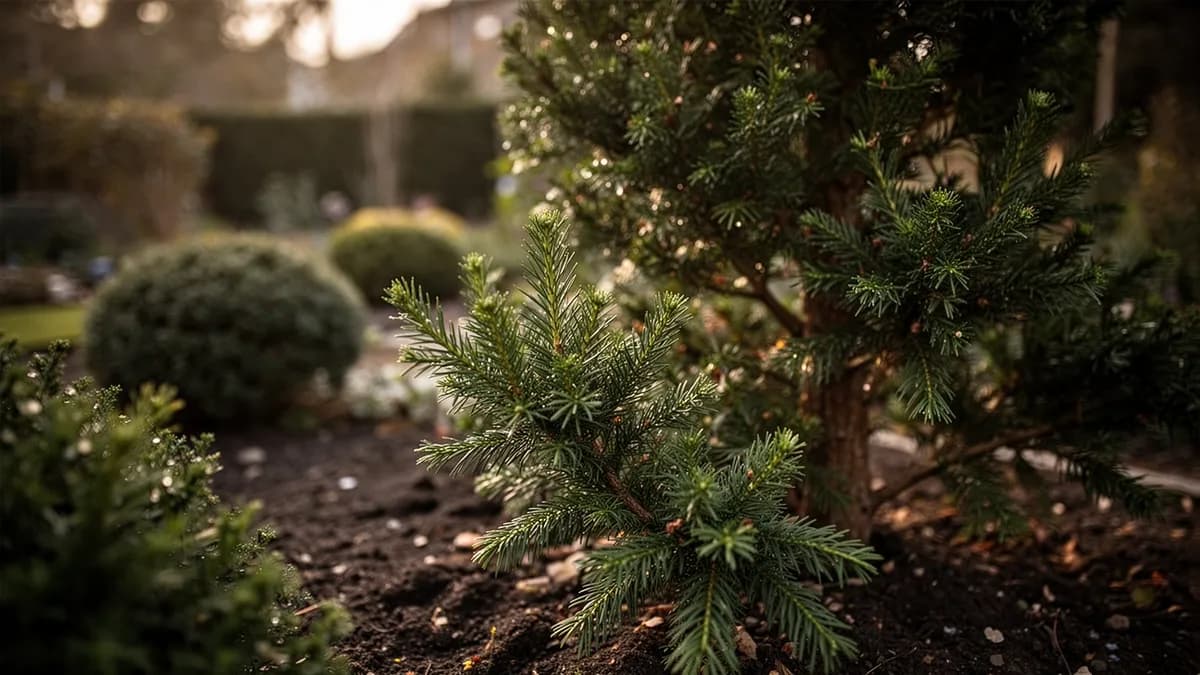
Yew Tree
Taxus baccata
At a Glance
An ancient, long-lived evergreen with dense, dark green needles that tolerates heavy shade and aggressive pruning better than almost any other conifer. Yews are premier hedge and topiary plants and can be cut back to bare wood and will regenerate, unlike most conifers. All parts of the plant except the fleshy red aril are highly toxic to humans and livestock, so plant with caution around children and animals. They demand excellent drainage and will die quickly in waterlogged soil, making raised beds beneficial in heavy clay areas.
Planting & Harvest Calendar
Growth Stages
From Seed to Harvest
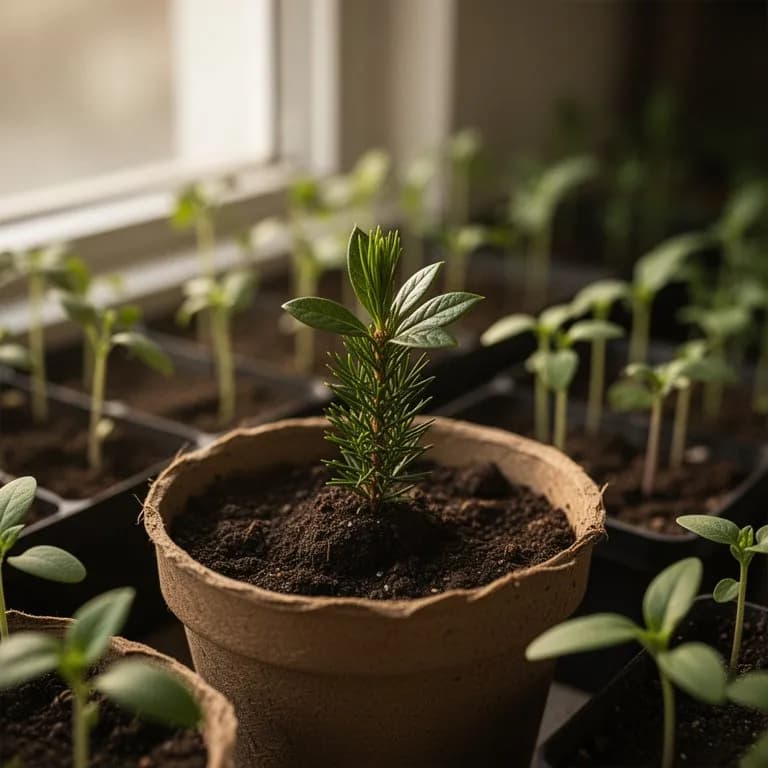
Seed Germination and Emergence
Days 0–120
Yew seeds require an extended double dormancy period that can last eighteen months or more in the wild. After cold stratification the embryo slowly activates and a tiny radicle pushes through the seed coat. The first shoot emerges bearing a whorl of seed leaves that look slightly broader than the mature needles. Germination rates are naturally low and erratic which is why nursery propagation overwhelmingly favours cuttings.
💡 Care Tip
Stratify seeds in damp sand at 20 degrees Celsius for three months then transfer to 4 degrees Celsius for a further three months before sowing. Keep the seed tray in a sheltered cold frame with consistent moisture and be prepared to wait up to two years for full germination. Alternatively take semi-ripe heel cuttings in late summer for far more reliable results.
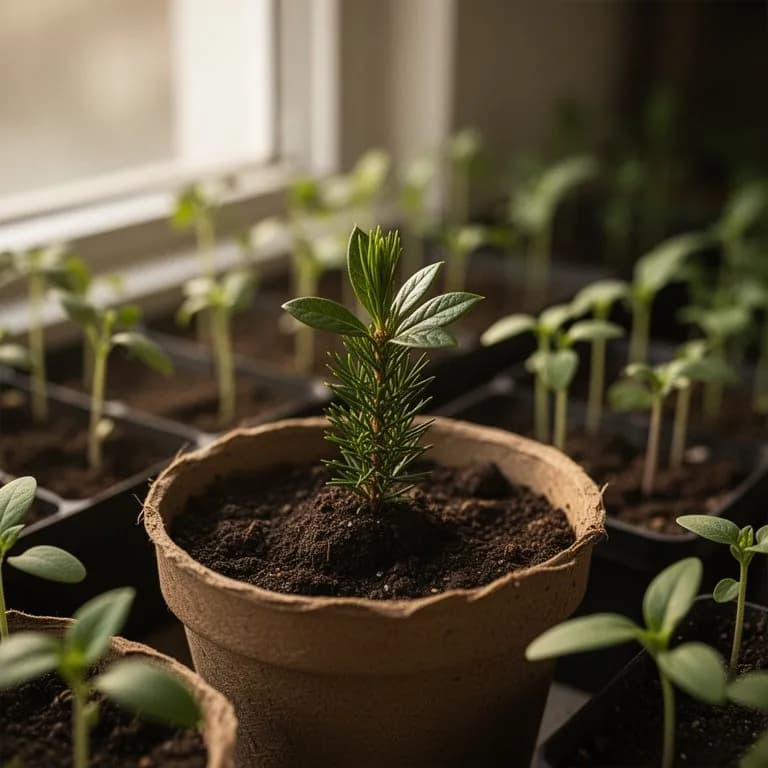
A young yew seedling showing its first season of tender bright-green needle growth before foliage darkens with maturity
Monthly Care Calendar
What to do each month for your Yew Tree
May
You are hereCheck soil moisture levels regularly as the main growth flush accelerates. Hand-weed around the base of young plants to reduce competition for water and nutrients. Stake any tall newly planted specimens that show signs of wind rock to prevent root disturbance.
Did You Know?
Fascinating facts about Yew Tree
The English longbow that dominated medieval European warfare for over two centuries was crafted almost exclusively from yew heartwood and sapwood, combining compression and tension strength in a single stave to create the most formidable ranged weapon of its era.
The reddish-brown bark of a mature yew develops deep fissures and peels in thin flakes revealing purple-brown underbark
Yews are the most shade-tolerant conifers and among the finest plants for formal hedging, topiary, and foundation planting. Unlike most conifers, yews regenerate from old wood and tolerate severe pruning — even cutting to stumps. Plant in well-drained soil in full sun to deep shade.
Excellent drainage is critical — yews die rapidly in waterlogged soil. In heavy clay, plant in raised beds or amend heavily. They are extremely long-lived, with specimens in European churchyards over 1,000 years old. All parts except the fleshy red aril surrounding the seed are highly toxic.
Taxus baccata, the common or English yew, is native across a vast range spanning western, central, and southern Europe, north-west Africa, northern Iran, and south-west Asia. It thrives in the understorey of mixed deciduous and coniferous woodlands from sea level to around 2,000 metres in mountainous regions, favouring well-drained calcareous soils and sheltered valleys with high humidity. The species is exceptionally long-lived and slow-growing, with ancient specimens found in churchyards, sacred groves, and protected woodland pockets throughout its range. Fossil pollen records place yew in European forests since the Tertiary period, surviving multiple ice ages in southern refugia before recolonising northward as glaciers retreated. In human cultural history, yew holds an almost unparalleled significance among trees. Celtic and pre-Christian societies regarded it as a tree of death and rebirth due to its evergreen nature and extraordinary longevity, and many of the oldest churchyard yews in Britain and France are believed to mark sites that were sacred long before the arrival of Christianity. The wood was prized above all others for the construction of longbows, and the demand for yew staves during the Hundred Years War was so great that it contributed to the near-elimination of large yews from much of continental Europe. In the modern era the discovery that the bark of the related Pacific yew contained the anti-cancer compound taxol transformed the genus from an ornamental curiosity into a pharmaceutical resource of immense importance. Today Taxus baccata is widely planted as a hedging and topiary plant in formal gardens, as a specimen tree in parks and estates, and is increasingly valued in conservation for its role in ancient woodland ecosystems and its status as one of only three native conifers in Britain.
Yew seeds require double dormancy: warm-stratify for 90 to 120 days, then cold-stratify for 60 to 90 days. Germination is slow and erratic over 1 to 2 years. Named cultivars are propagated by semi-hardwood cuttings taken in late summer or fall. Cuttings root slowly over 3 to 4 months with rooting hormone and bottom heat. Female plants are preferred for berry production.
Yews demand well-drained soil above all else — they will die in wet conditions. They tolerate pH from 5.5 to 7.5 and grow in sand, loam, or clay as long as drainage is excellent. Apply balanced fertilizer in early spring for young plants. Established yews need minimal feeding. Mulch with organic material but keep mulch away from the trunk.
Check Your Zone
See if Yew Tree is suitable for your location.
-20°C – 30°C
-4°F – 86°F
Yew is remarkably cold-hardy and tolerates temperatures down to minus 20 degrees Celsius once established. It grows best in a cool temperate climate with average summer highs between 18 and 25 degrees Celsius and is notably intolerant of prolonged heat above 35 degrees Celsius or humid subtropical conditions. The species is well adapted to the mild maritime climates of western Europe and performs poorly in regions with hot dry summers unless provided with shade and supplemental irrigation.
Common issues affecting Yew Tree and how to prevent and treat them organically.
Root rot from poor drainage is the most common cause of yew death. Brown, dying patches are almost always drainage-related. Winter burn occurs in exposed, windy sites. Deer browse yews despite their toxicity. Taxine alkaloids in all parts (except arils) are fatally toxic to humans and livestock. Black vine weevil larvae can kill plants by destroying root systems.
Yews excel as foundation plants paired with flowering shrubs like azaleas, hydrangeas, and viburnums. Shade-tolerant perennials including hostas, ferns, hellebores, and epimedium grow well beneath yew hedges. Spring bulbs like snowdrops and crocus naturalize at the base. The dark green foliage provides an excellent backdrop for colorful flowering plants.
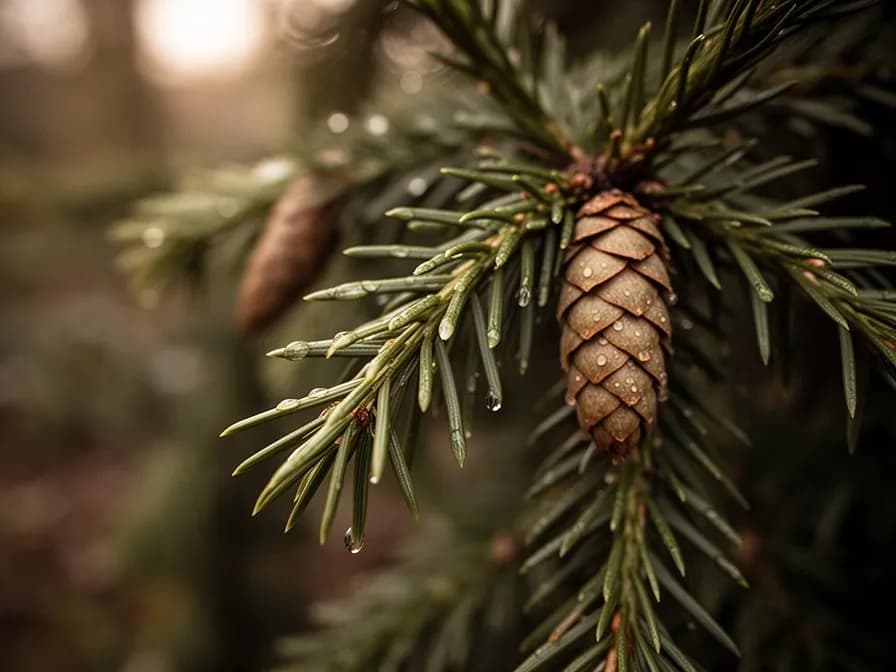
The striking scarlet arils of the female yew are the only non-toxic part of the entire tree though the enclosed seed is highly poisonous
- 1Plant yew in well-drained soil as the species is highly susceptible to root rot in waterlogged conditions and will decline rapidly if planted in heavy clay that remains saturated through winter.
- 2Yew tolerates deep shade better than almost any other conifer and will grow successfully on the north side of buildings and beneath the canopy of deciduous trees where few other evergreens survive.
- 3When planting a yew hedge space individual plants 45 to 60 centimetres apart for a single row or stagger in a double row at 90 centimetre spacing for a denser screen that fills in more quickly.
- 4Always wear gloves when pruning yew and wash hands thoroughly afterwards as the foliage sap can cause skin irritation and the alkaloids can be absorbed through cuts or abrasions.
- 5Never burn yew clippings on an open fire or bonfire as the smoke contains toxic taxine alkaloids that are dangerous to inhale and can cause serious respiratory distress.
- 6Yew responds exceptionally well to hard pruning and can be cut back to bare wood to rejuvenate an overgrown hedge or reshape a neglected specimen, a characteristic shared by very few other conifer species.
- 7Keep all yew clippings, fallen arils, and pruning waste securely away from horses, cattle, and other livestock as yew is one of the most toxic plants to domestic animals with even a small quantity of foliage causing rapid death.
- 8Apply a balanced granular fertiliser such as Growmore at 70 grams per square metre around the root zone each spring to support healthy dense growth, particularly for hedges that are clipped annually.
- 9Water newly planted yew regularly throughout the first two growing seasons to establish a deep root system but reduce watering once established as mature yew is remarkably drought-tolerant.
- 10If growing yew in a container for topiary use a loam-based compost such as John Innes No 3 with added perlite for drainage and repot every three to four years to prevent the root ball from becoming congested.
WARNING: All parts of yew are highly toxic except the fleshy red aril. Do NOT harvest yew for any edible purpose. Yew branches are harvested for holiday decorating — the dark green foliage and red berries are traditional. The anticancer compound taxol (paclitaxel) is derived from Pacific yew bark commercially. Yew wood is prized for traditional English longbows.
Cut yew branches last well indoors for 3 to 4 weeks. Their dense, dark foliage makes excellent wreath material. Dried yew foliage retains its color reasonably well. Store cut branches in cool conditions and mist occasionally. Remember that all parts are toxic — keep away from children and pets, and wash hands after handling.
Plan your garden with ease
Love growing Yew Tree? Use our free garden planner to design your beds, track planting dates, and get personalized care reminders.
Nutritional Info
Per 100g serving
0
Calories
Health Benefits
- WARNING: All parts of the yew are highly toxic except the thin fleshy aril surrounding the seed
- The seed inside the aril is lethal if chewed and must never be consumed
- Foliage, bark, and wood contain taxine alkaloids that cause fatal cardiac arrest in humans and most livestock
- Yew is not a food plant and has no meaningful nutritional value for human consumption
- The aril flesh alone is technically edible but consumption is strongly discouraged due to the extreme danger posed by the enclosed seed
- Taxol and related taxane compounds extracted from yew foliage are used in cancer chemotherapy but are administered only under strict medical supervision
💰 Why Grow Your Own?
Yew is primarily grown as an ornamental, hedging, and topiary plant rather than a food crop. A single container-grown yew from a nursery costs between 15 and 40 pounds depending on size, while bare-root hedging plants can be purchased for as little as 3 to 5 pounds each when bought in bulk. A mature yew hedge increases property value significantly, with estate agents estimating that well-maintained formal yew hedging adds 5 to 15 percent to the value of period and country properties. Growing yew from cuttings at home is straightforward and can save hundreds of pounds on a hedging project that might otherwise cost 500 to 2,000 pounds in nursery stock alone.
Quick Recipes
Simple recipes using fresh Yew Tree
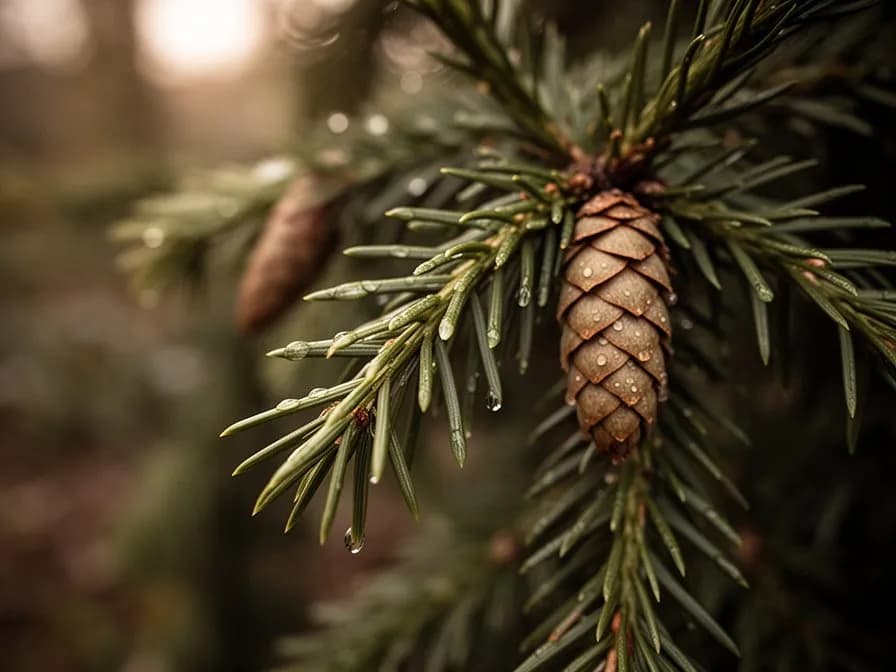
Yew Aril Jelly (Caution: Advanced Foraging Only)
90 minutes plus setting timeA delicate rose-pink jelly made exclusively from the fleshy arils of the yew with all seeds meticulously removed. This preparation requires expert foraging knowledge and extreme care as the seeds and all other parts of the tree are fatally toxic. The resulting jelly has a mild sweet flavour reminiscent of ripe plum with a faintly resinous undertone.
Yew Hedge Pruning Wreath (Decorative Craft)
45 minutesA traditional evergreen wreath fashioned from fresh yew hedge clippings wired onto a moss-filled frame. Yew foliage holds its colour and shape exceptionally well when cut and has been used in decorative garlands and funeral arrangements for centuries. Always wear gloves when handling yew and keep finished wreaths away from areas where children or pets might chew on the foliage.
Yew-Smoked Salt (Using Dried Yew Wood Chips)
3 hoursYew wood produces a distinctive aromatic smoke that imparts a subtle sweet resinous flavour to coarse salt when cold-smoked in a covered barbecue or dedicated smoker. The resulting salt is used sparingly as a finishing condiment. Only the untreated heartwood is used and all foliage bark and seed material must be excluded as they contain toxic alkaloids that are not destroyed by heat.
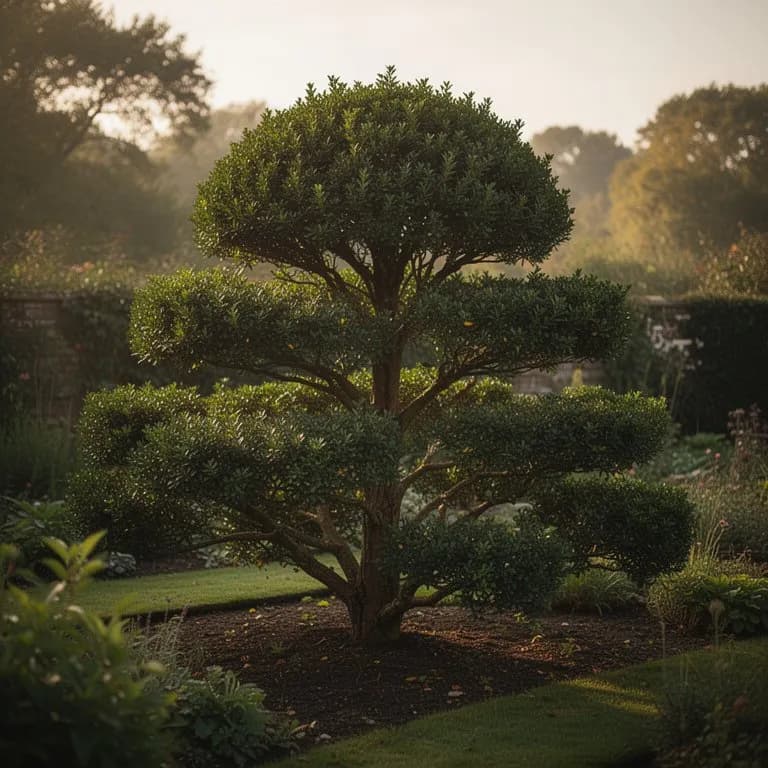
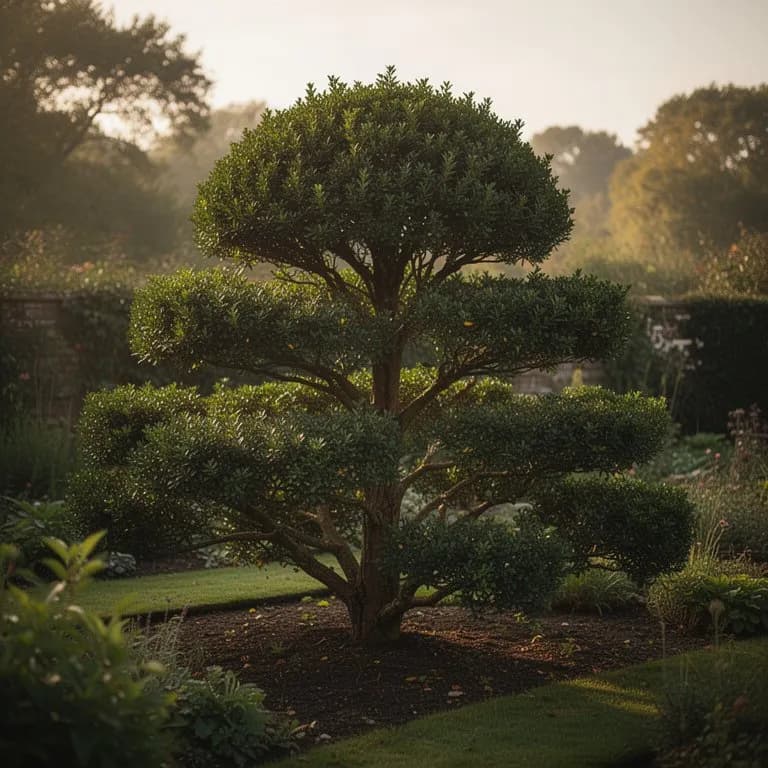
The slow dense growth of yew makes it the ideal species for intricate topiary work that holds its form for decades
Yield & Spacing Calculator
See how many Yew Tree plants fit in your garden bed based on the recommended 500cm spacing.
0
Yew Tree plants in a 4×4 ft bed
0 columns × 0 rows at 500cm spacing
Popular Varieties
Some of the most popular yew tree varieties for home gardeners, each with unique characteristics.
Hicks Yew (Taxus x media Hicksii)
Columnar form excellent for hedging. Dense dark green foliage. 12-20 feet tall and 6-10 feet wide. One of the most popular yew cultivars.
Spreading Yew (Taxus cuspidata)
Low-spreading Japanese yew with excellent cold hardiness to zone 4. Useful groundcover and foundation plant reaching 4-5 feet tall.
Brown's Yew (Taxus x media Brownii)
Dense, rounded form reaching 6-8 feet. Excellent for foundation planting without heavy pruning. Good cold hardiness.
Emerald Spreader
Low, wide-spreading form with bright green foliage reaching only 2-3 feet tall. Excellent groundcover and edging plant for shaded areas.
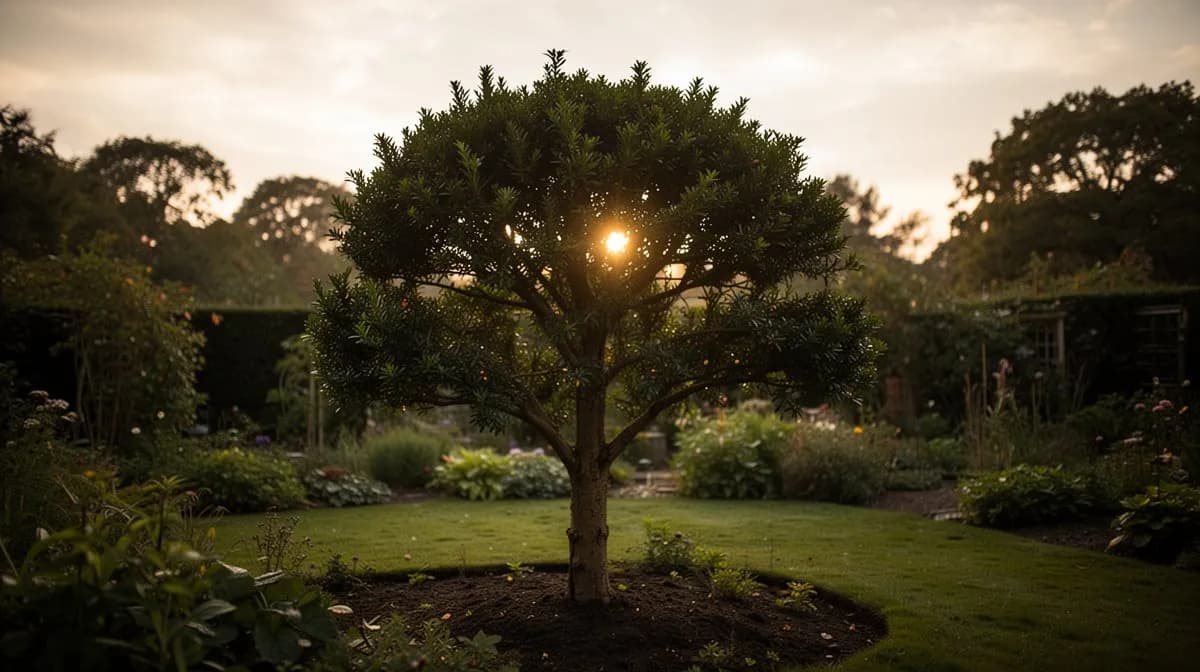
Yew is the premier hedging conifer in European garden design prized for its ability to regenerate from hard pruning and hold a crisp shape year-round
When should I plant Yew Tree?
Plant Yew Tree in March, April, October, November. It takes approximately 3650 days to reach maturity, with harvest typically in .
What are good companion plants for Yew Tree?
Yew Tree grows well alongside Daffodil, Pansy. Companion planting can improve growth, flavor, and natural pest control.
What hardiness zones can Yew Tree grow in?
Yew Tree thrives in USDA hardiness zones 5 through 8. With greenhouse protection, it may be grown in zones 3 through 9.
How much sun does Yew Tree need?
Yew Tree requires Partial Sun (3-6h). This means 3-6 hours of sunlight, ideally morning sun with afternoon shade.
How far apart should I space Yew Tree?
Space Yew Tree plants 500cm (197 inches) apart for optimal growth and air circulation.
What pests and diseases affect Yew Tree?
Common issues include Black Vine Weevil, Root Rot (Phytophthora), Scale Insects. Prevention through good garden practices like crop rotation, proper spacing, and companion planting is the best approach. See the detailed pests and diseases section above for symptoms, prevention, and treatment for each.
How do I store Yew Tree after harvest?
Cut yew branches last well indoors for 3 to 4 weeks. Their dense, dark foliage makes excellent wreath material. Dried yew foliage retains its color reasonably well. Store cut branches in cool conditions and mist occasionally. Remember that all parts are toxic — keep away from children and pets, and ...
What are the best Yew Tree varieties to grow?
Popular varieties include Hicks Yew (Taxus x media Hicksii), Spreading Yew (Taxus cuspidata), Brown's Yew (Taxus x media Brownii), Emerald Spreader. Each has unique characteristics suited to different growing conditions and culinary preferences. See the varieties section above for detailed descriptions.
What soil does Yew Tree need?
Yews demand well-drained soil above all else — they will die in wet conditions. They tolerate pH from 5.5 to 7.5 and grow in sand, loam, or clay as long as drainage is excellent. Apply balanced fertilizer in early spring for young plants. Established yews need minimal feeding. Mulch with organic mat...
Is yew really as poisonous as people say?
Yes. All parts of the yew tree except the fleshy red aril surrounding the seed contain taxine alkaloids that are rapidly fatal to humans and most mammals. Ingesting even a small handful of needles can cause death within hours through cardiac arrest. The seeds inside the arils are equally toxic if chewed. Yew poisoning is particularly dangerous because there is no effective antidote and symptoms can progress from mild nausea to fatal cardiac arrhythmia with alarming speed.
Can I plant yew if I have children or pets?
Yew can be grown safely in gardens with children and pets provided sensible precautions are taken. The risk is primarily from ingestion of foliage or seeds. Teach children never to eat any part of the tree, clear fallen arils from play areas in autumn, and supervise pets around the tree. Many thousands of gardens contain yew hedges and topiary without incident. However if you have horses or livestock with access to the garden yew should be avoided entirely as it is one of the most common causes of sudden death in horses.
How fast does yew grow and how long until my hedge is established?
Yew grows approximately 20 to 40 centimetres per year under good conditions, which is slower than alternatives like Leylandii or laurel but faster than many people assume. A yew hedge planted at 60 centimetre spacing will typically form a solid screen within five to seven years and reach a functional height of 1.5 to 2 metres within eight to ten years. The slower growth rate is actually an advantage for hedging because it means less frequent trimming and a denser more formal finish.
When and how should I trim a yew hedge?
Trim yew hedges once a year in late summer, ideally in August or early September after the main growth flush has hardened but while there is still time for any cut surfaces to heal before winter. For very formal hedges a second lighter trim in late June can maintain crisp lines through the summer. Always use sharp tools to make clean cuts and taper the hedge so that it is slightly wider at the base than the top to allow light to reach the lower branches and prevent bare patches developing at the base.
Can a yew tree that has been cut back hard recover?
Yew is one of the very few conifers that can regenerate from bare wood after hard pruning. Even a tree or hedge that has been cut back to the main trunk will typically produce vigorous new shoots from dormant buds within six to eight weeks during the growing season. For best results carry out renovation pruning in late February or early March, feed generously, and water well through the following summer. It is advisable to cut back only one side of a hedge per year to reduce stress on the plant.
What is the connection between yew trees and the cancer drug taxol?
Taxol (paclitaxel) was originally discovered in the bark of the Pacific yew (Taxus brevifolia) in the 1960s and proved to be a revolutionary chemotherapy drug. Because stripping bark killed the trees, a semi-synthetic process was developed using 10-deacetylbaccatin III extracted from the renewable needle foliage of the European yew (Taxus baccata). Today yew hedge clippings from gardens, estates, and managed plantations across Europe are collected and processed to supply the pharmaceutical industry with this vital precursor compound.
Ready to Grow Yew Tree?
Add Yew Tree to your garden plan and start designing your perfect layout.

Vladimir Kusnezow
Gardener and Software Developer
Zone 6b gardener. Growing vegetables and fruits in soil and hydroponics for 6 years. I built PlotMyGarden to plan my own gardens.
Jump to Section