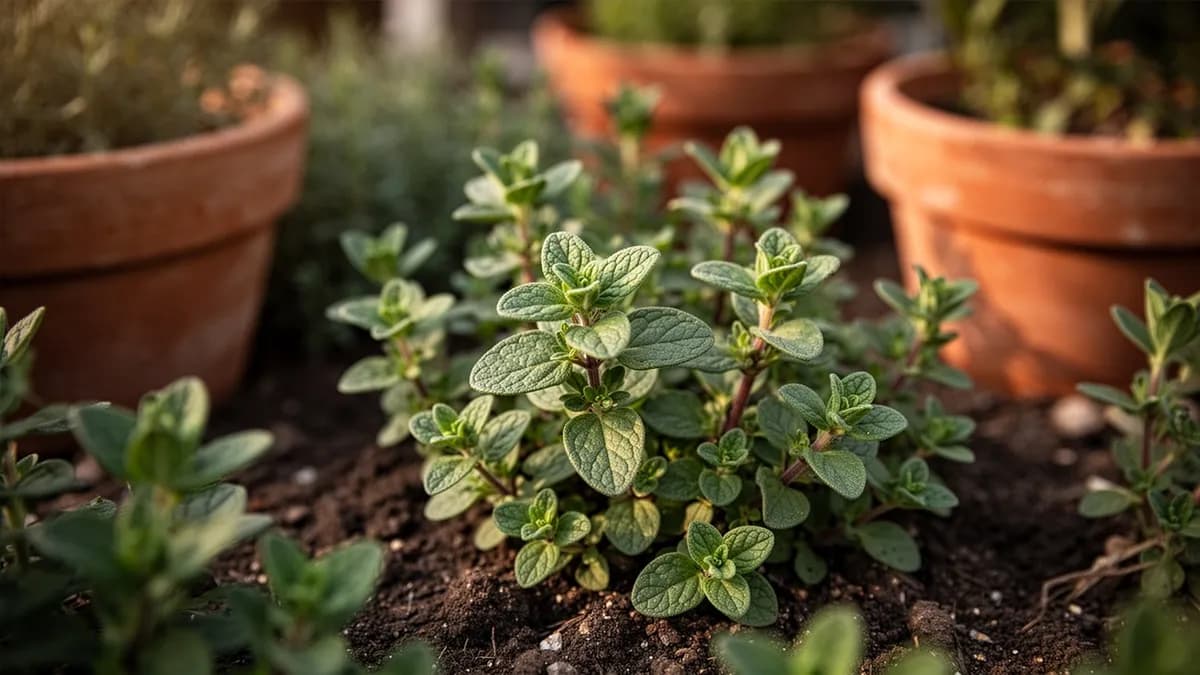
French Thyme
Thymus vulgaris 'French'
At a Glance
It's planting season for French Thyme! Start planning your garden now.
The preferred culinary thyme with narrow grey-green leaves and a sweeter, more refined flavor than English thyme. French thyme is slightly less cold-hardy but produces superior flavor for bouquet garni, soups, and sauces. Provide excellent drainage and avoid overwatering to prevent root rot in this Mediterranean native.
Planting & Harvest Calendar
Growth Stages
From Seed to Harvest
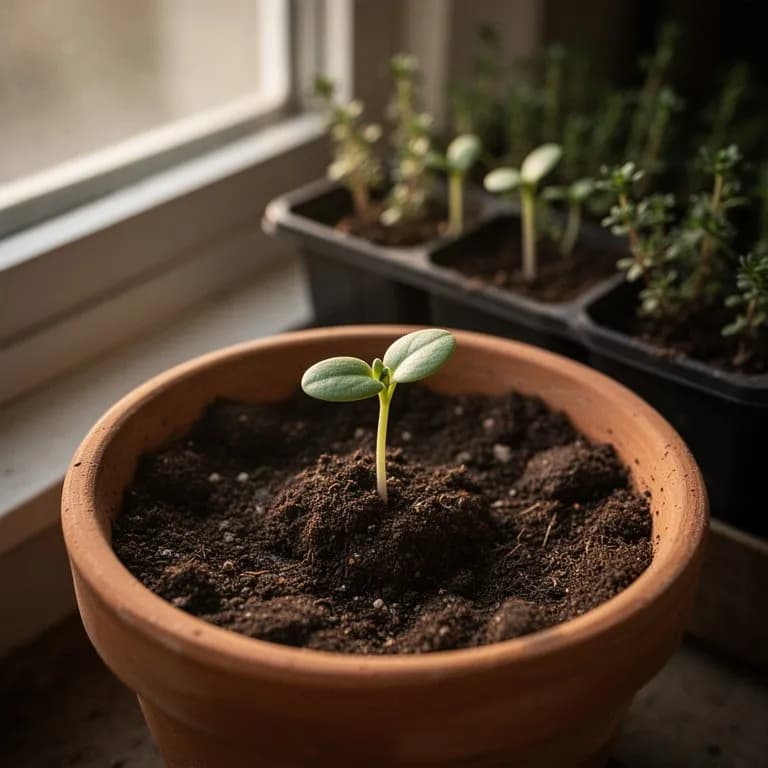
Seed Germination
Days 0–21
French thyme seeds are exceptionally tiny — nearly dust-like — and require light to germinate. Seeds are pressed onto the surface of moist seed-starting mix without covering. Germination is slow and uneven, typically taking 14-21 days at temperatures of 18-24°C (65-75°F). The first seedlings appear as minuscule paired leaves barely visible to the naked eye.
💡 Care Tip
Surface-sow seeds and press gently into moist soil — do not cover with mix as thyme seeds need light to germinate. Mist with a spray bottle rather than watering from above to avoid washing seeds away. A humidity dome helps maintain consistent surface moisture during this slow germination period.
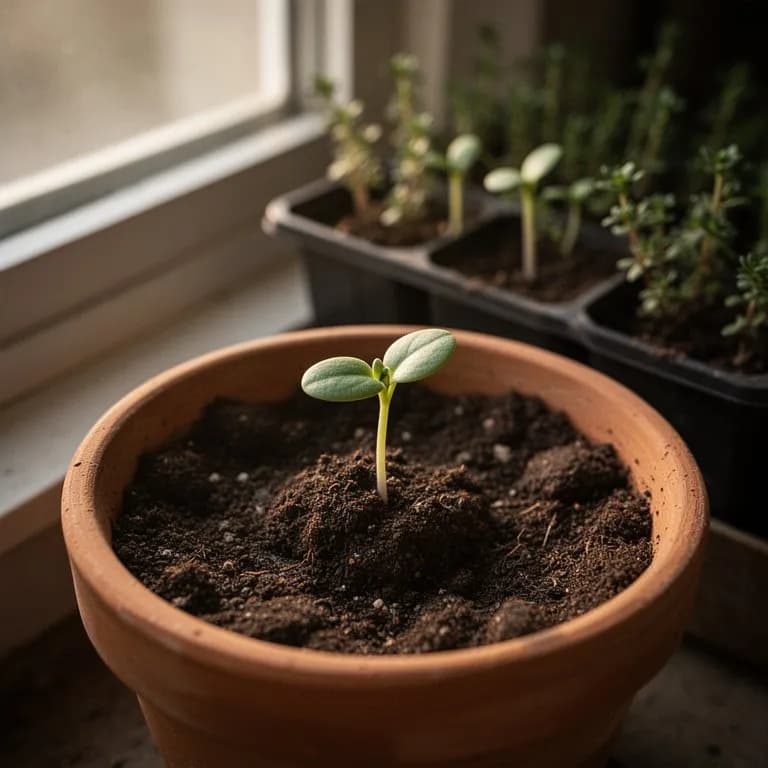
French thyme seedlings are extremely small and slow-growing — patience is essential in the first weeks
Monthly Care Calendar
What to do each month for your French Thyme
May
You are herePrimary planting month for most zones. Transplant thyme into full sun with excellent drainage — raised beds, rock gardens, or gravel gardens are ideal. Space plants 20-30 cm apart. Water newly planted thyme regularly for 2-3 weeks until roots establish, then reduce watering significantly.
Did You Know?
Fascinating facts about French Thyme
Ancient Egyptians used thyme in their embalming process — the herb's powerful antimicrobial compound thymol helped preserve mummified remains, and traces of thyme have been found in Egyptian tombs dating back over 3,500 years.
Start French thyme from nursery transplants, stem cuttings, or root divisions for the most reliable results. While seeds are available, germination is slow and erratic. Take 3-4 inch cuttings from soft new growth in late spring, strip the lower leaves, and root in a perlite-sand mix under a humidity dome. Cuttings root in 2-4 weeks. Divide established plants in spring by carefully pulling apart rooted sections.
Plant French thyme in full sun with sharply drained, lean soil at a pH of 6.0-8.0. It thrives in the same dry, rocky, alkaline conditions found in its native southern France. Space plants 9-12 inches apart. French thyme forms a compact, upright mound 6-12 inches tall with tiny, narrow grey-green leaves that are more refined in both appearance and flavor than English thyme.
Water moderately until established, then reduce to occasional deep watering. French thyme is drought-tolerant once its root system is developed but is less cold-hardy than English thyme, so provide winter protection in zone 5 with evergreen boughs or a gravel mulch. Shear plants lightly after flowering in early summer to maintain a compact shape. Replace plants every 3-4 years when they become excessively woody, or rejuvenate by layering stems into the surrounding soil.
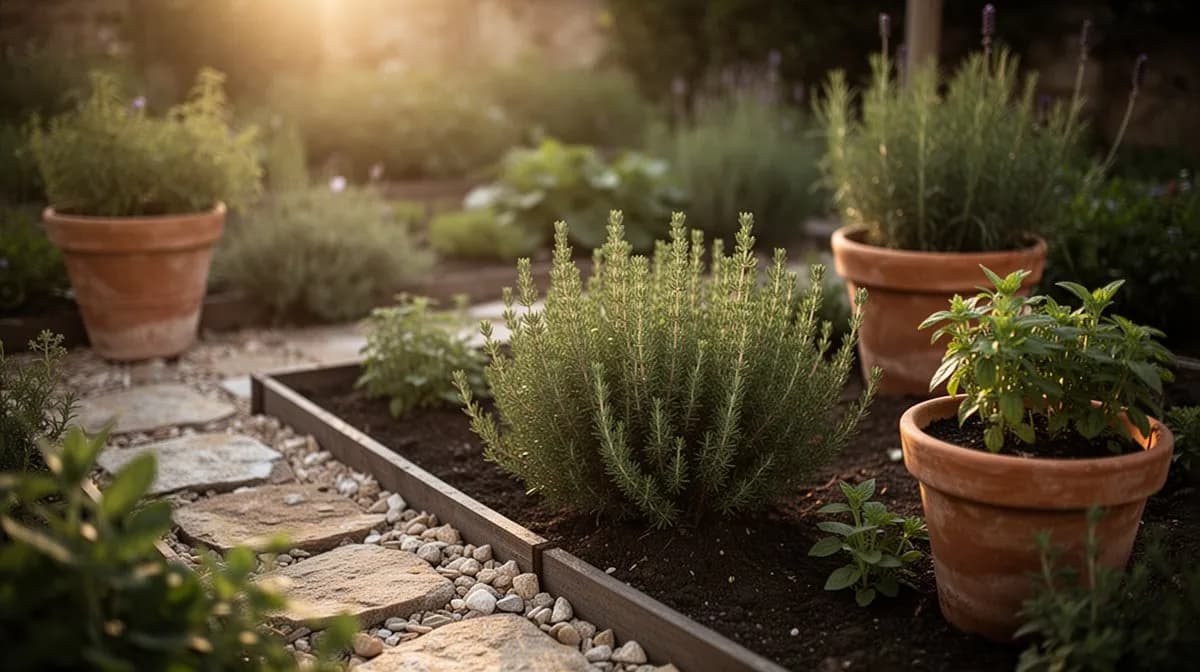
French thyme makes an elegant and aromatic edging plant along pathways and garden borders
French thyme (Thymus vulgaris 'French') traces its origins to the sun-baked limestone hillsides and garrigue scrublands of the western Mediterranean basin. Wild thyme has carpeted the rocky slopes of southern France, Spain, Italy, and North Africa for millennia, thriving in the thin, alkaline soils and intense sunshine that characterize this region. The species evolved alongside lavender, rosemary, and oregano in these harsh, drought-prone landscapes, developing the concentrated essential oils that serve as both defense against herbivores and protection against the relentless Mediterranean sun.
The ancient Egyptians were among the first to recognize thyme's remarkable preservative properties, incorporating it into their embalming practices. The Greeks elevated thyme to a symbol of courage and elegance — the phrase 'to smell of thyme' was a high compliment implying grace and refinement. Greek physicians including Hippocrates and Dioscorides documented thyme's medicinal uses for respiratory ailments, digestive complaints, and wound treatment. The Romans spread thyme cultivation throughout their empire, using it to purify rooms, flavor cheeses, and as an aromatic addition to baths.
During the medieval period, thyme became deeply embedded in European culture and folk medicine. Monks cultivated it in monastery herb gardens for both culinary and medicinal purposes, and it featured prominently in apothecary preparations for coughs, sore throats, and digestive troubles. The development of French haute cuisine from the 17th century onward cemented thyme's position as the cornerstone herb of European cooking — the indispensable component of bouquet garni, herbes de Provence, and countless classic sauces and braises.
French thyme specifically was refined through centuries of selection by Provençal gardeners and herbalists who favored plants with the sweetest, most complex flavor and the most upright, productive growth habit. This selection produced the cultivar known today as French thyme, distinguished from common thyme by its narrower, grey-green leaves, more compact form, and superior culinary aroma. Today, French thyme is cultivated on every inhabited continent and remains the single most important culinary herb in Western cooking traditions.
French thyme seeds can be sown indoors 8-10 weeks before the last frost, but germination is slow and inconsistent. Scatter tiny seeds on the surface of moist, well-drained seed mix and press in without covering, as they need light. Maintain 60-70°F soil temperature and keep consistently moist. Germination takes 14-28 days. Seedlings are extremely small and slow-growing initially. For faster, more reliable results, propagate from cuttings or divisions of established plants. Rooted cuttings are ready to transplant in 4-6 weeks.
French thyme demands lean, fast-draining soil above all else. Sandy, rocky, or gravelly soil with a pH of 6.0-8.0 is ideal. In clay soils, plant in raised beds with a mix of sand, perlite, and minimal compost. Feed sparingly with a light application of balanced granular fertilizer in early spring only. Over-fertilizing produces soft, lush growth with diminished essential oil content and inferior flavor. Gravel mulch around the plant base keeps the crown dry and prevents the rot that organic mulch can promote.
Check Your Zone
See if French Thyme is suitable for your location.
10°C – 30°C
50°F – 86°F
French thyme is a Mediterranean herb that thrives in warm, dry conditions. The optimal growing temperature range is 18-28°C (65-82°F), but established plants tolerate a remarkable temperature range. Thyme is hardy to USDA zones 5-9, surviving winter temperatures down to -23°C (-10°F) when planted in well-drained soil — winter wet rather than cold is the primary killer. In summer, thyme handles temperatures above 35°C (95°F) without stress, provided soil drainage is excellent. Essential oil production and flavor intensity increase with warmth and sun exposure.
Common issues affecting French Thyme and how to prevent and treat them organically.
French thyme is less cold-hardy than English thyme and may suffer dieback in zone 5 winters without protection. Good drainage is more critical than cold protection, as winter wet kills more plants than cold alone. Plants become woody and hollow in the center after 3-4 years; replace or rejuvenate by layering outer stems. In humid climates, fungal diseases are more prevalent; ensure wide spacing and full sun exposure. Container-grown French thyme needs a gritty, fast-draining mix and careful watering to avoid root rot.
French thyme is a valuable companion plant that deters cabbage worms, whiteflies, and tomato hornworms with its aromatic essential oils. Plant near brassicas (cabbage, broccoli, Brussels sprouts) for pest protection. It grows well alongside rosemary, sage, and lavender in Mediterranean-style herb gardens with similar lean, dry soil preferences. French thyme's compact size makes it an excellent border or edging plant around vegetable beds. The flowers attract pollinators and beneficial predatory wasps in early summer.
- 1Start thyme from nursery transplants rather than seed for faster results. Seed germination is slow (14-21 days), erratic, and seedlings grow very slowly for the first two months. A single nursery plant for a few dollars will produce harvestable sprigs months ahead of seed-started plants.
- 2Drainage is the single most critical factor for thyme success. In heavy clay or poorly drained soil, plant thyme in raised beds, mounds, or containers with a mix of 50% potting soil and 50% coarse sand or perlite. Thyme in soggy soil will develop root rot and die, often within weeks.
- 3Plant thyme in full sun with at least 6-8 hours of direct sunlight daily. Thyme grown in partial shade becomes leggy, sparse, and produces significantly less essential oil — resulting in weak flavor. South-facing walls and stone surfaces provide excellent reflected heat.
- 4Water established thyme sparingly — it is far more likely to die from overwatering than from drought. Allow the soil to dry out completely between waterings. In most climates, natural rainfall is sufficient for established plants. Only water during prolonged droughts lasting more than 2-3 weeks.
- 5Prune thyme back by one-third in early spring just as new growth appears. This prevents plants from becoming excessively woody and bare in the center. Never cut into old, leafless wood — thyme cannot regenerate from bare stems, and severe pruning will kill branches.
- 6Propagate thyme easily by layering — pin low-growing stems to the soil surface with a small stone or wire staple. The buried section will root in 4-6 weeks and can be severed from the parent plant. This is the simplest and most reliable method for home gardeners.
- 7Harvest thyme just before the flowers open for maximum essential oil concentration and the most intense culinary flavor. Cut stems 5-8 cm from the base, leaving enough leafy growth for the plant to recover quickly.
- 8Companion plant thyme alongside tomatoes, peppers, eggplant, and brassicas. Thyme's strong aroma helps deter cabbage worms, whiteflies, and aphids. Planted near roses, thyme discourages blackfly infestations. Its low, spreading habit also serves as a living mulch that suppresses weeds.
- 9Overwinter thyme successfully in cold zones by ensuring perfect drainage and applying a light mulch of gravel or pine needles after the ground freezes. Avoid heavy organic mulch that holds moisture against stems. Container plants can be overwintered in an unheated garage near a bright window.
- 10Replace thyme plants every 3-5 years when they become overly woody with sparse foliage. Propagate replacements from layering or cuttings in late summer so new plants are ready to take over when old ones decline. Rotate planting locations to prevent soil-borne disease buildup.
Harvest French thyme sprigs throughout the growing season by cutting 3-4 inch stem tips just above a leaf node. The finest flavor develops just before flowering begins in early summer. French thyme's narrow, grey-green leaves have a sweeter, more complex flavor than English thyme, making it the preferred variety for French cuisine. Harvest in the morning for peak essential oil content. Regular light harvesting encourages dense, bushy growth. After flowering, shear the whole plant by one-third to stimulate fresh aromatic growth.
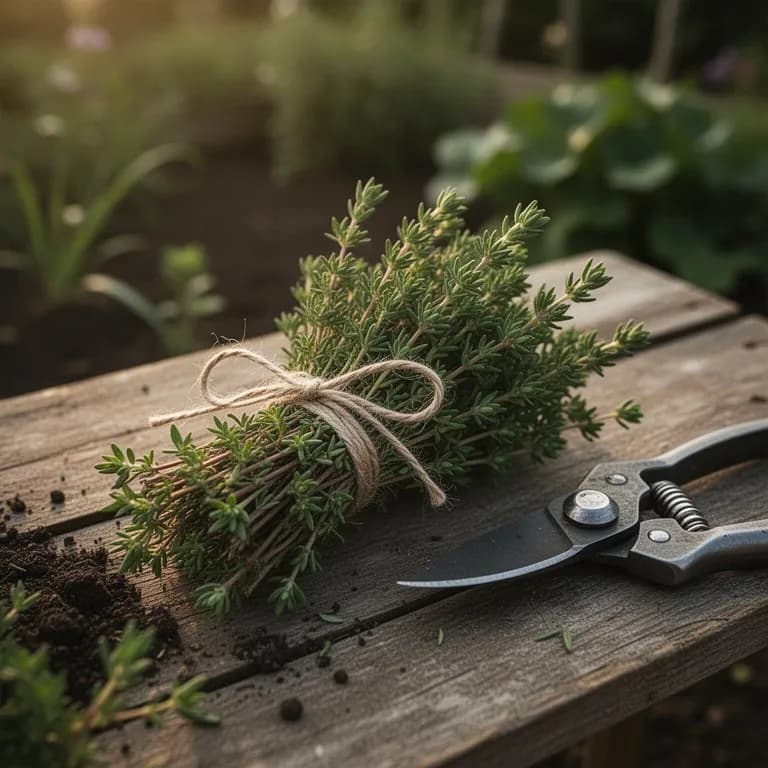
Harvest thyme sprigs just before flowering for the most intense essential oil concentration and flavor
Fresh French thyme keeps for 1-2 weeks in the refrigerator wrapped in a damp paper towel inside a sealed bag. French thyme dries exceptionally well, retaining much of its sweet, complex flavor. Hang small bundles in a warm, dark location for 1-2 weeks. Strip dried leaves from woody stems and store in airtight glass jars for up to 18 months. Frozen sprigs in sealed bags maintain good flavor for 6 months. French thyme is the essential component of bouquet garni and herbes de Provence blends, both of which store well dried.
Plan your garden with ease
Love growing French Thyme? Use our free garden planner to design your beds, track planting dates, and get personalized care reminders.
Nutritional Info
Per 100g serving
101
Calories
Health Benefits
- Remarkably high in vitamin C with 160mg per 100g of fresh leaves (178% DV) — one of the highest concentrations of any culinary herb, supporting immune function and collagen synthesis
- Excellent source of vitamin A at 4751 IU per 100g (95% DV), primarily as beta-carotene, supporting vision health, skin integrity, and immune system function
- Contains 14g of dietary fiber per 100g (56% DV), though this is most relevant for dried thyme used in larger quantities in teas and herbal preparations
- Rich in iron at 17.5mg per 100g (97% DV), making thyme one of the most iron-dense herbs — even small amounts used in cooking contribute meaningfully to daily intake
- Contains the powerful phenolic compound thymol, which has been extensively studied for its antimicrobial, antifungal, and antioxidant properties and is used commercially in mouthwashes and disinfectants
- Provides significant manganese (1.7mg per 100g, 75% DV), a trace mineral essential for bone health, metabolism, and antioxidant enzyme activation
💰 Why Grow Your Own?
Fresh thyme sells for $2-4 per small bundle (15-20g) at grocery stores, and a single jar of dried thyme (15-30g) costs $3-7. A single thyme plant costing $3-5 from a nursery (or pennies to grow from seed) produces enough fresh and dried thyme to replace $40-80 worth of store-bought thyme per year. Since French thyme is a hardy perennial lasting 3-5 years, a one-time investment of a few dollars yields hundreds of dollars in fresh herbs. Growing your own also means access to fresh thyme year-round — incomparably superior to the wilted, flavorless sprigs often found in grocery store plastic clamshells.
Quick Recipes
Simple recipes using fresh French Thyme
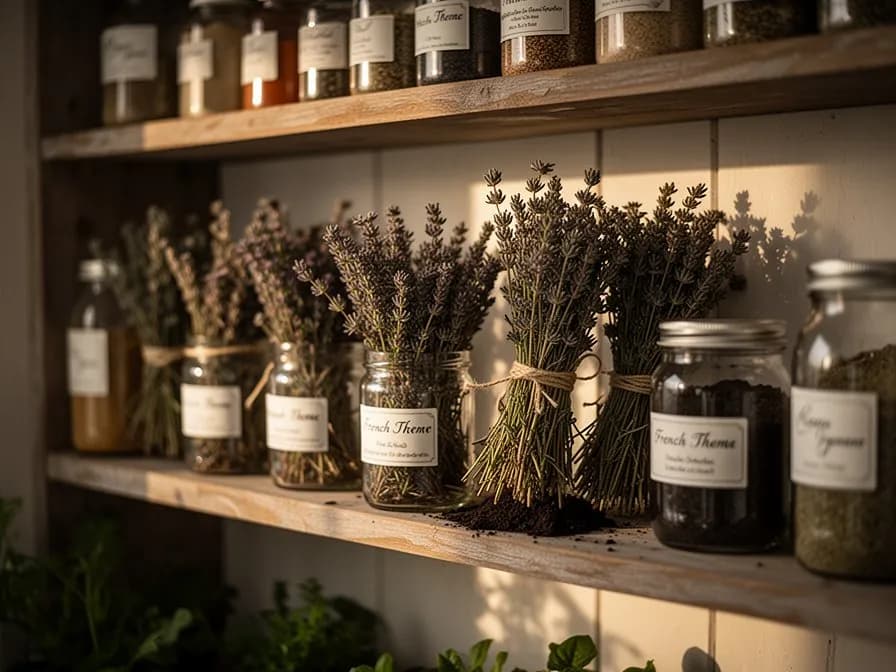
Classic French Bouquet Garni
5 minThe essential herb bundle of French cuisine — fresh thyme, parsley, and bay leaf tied together and simmered in soups, stews, braises, and stocks. This aromatic bundle infuses dishes with the deep herbal backbone that defines French comfort cooking.
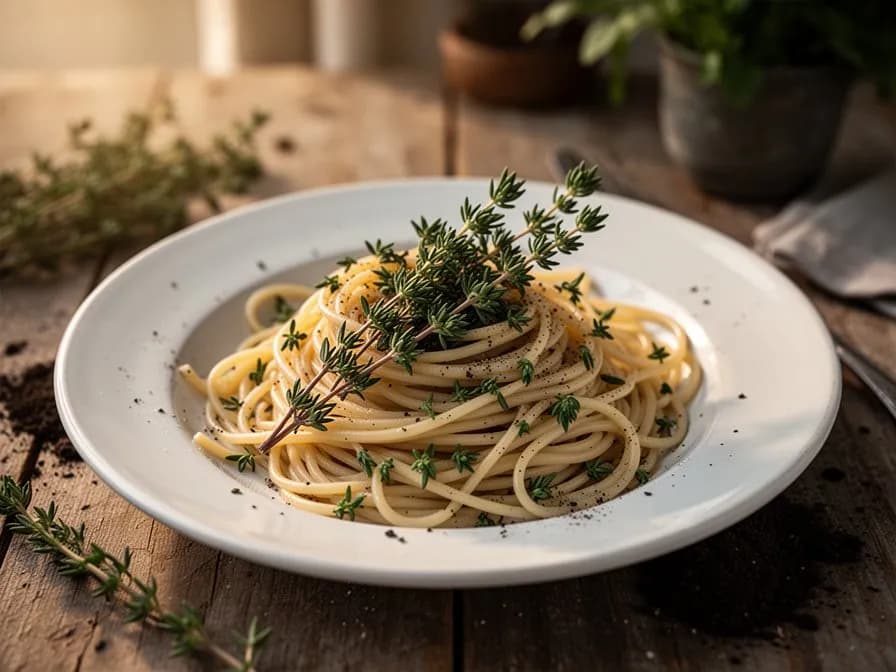
Lemon Thyme Roasted Chicken
75 minA timeless roast where fresh thyme transforms a simple chicken into something extraordinary. Thyme sprigs are tucked under the skin, stuffed into the cavity with lemon, and scattered over root vegetables to create an aromatic, golden masterpiece.
Fresh Thyme and Honey Tisane
10 minA soothing herbal tea made from fresh thyme sprigs steeped in hot water with honey and lemon. This traditional remedy for sore throats and coughs is also a delightful everyday beverage with gentle calming properties.
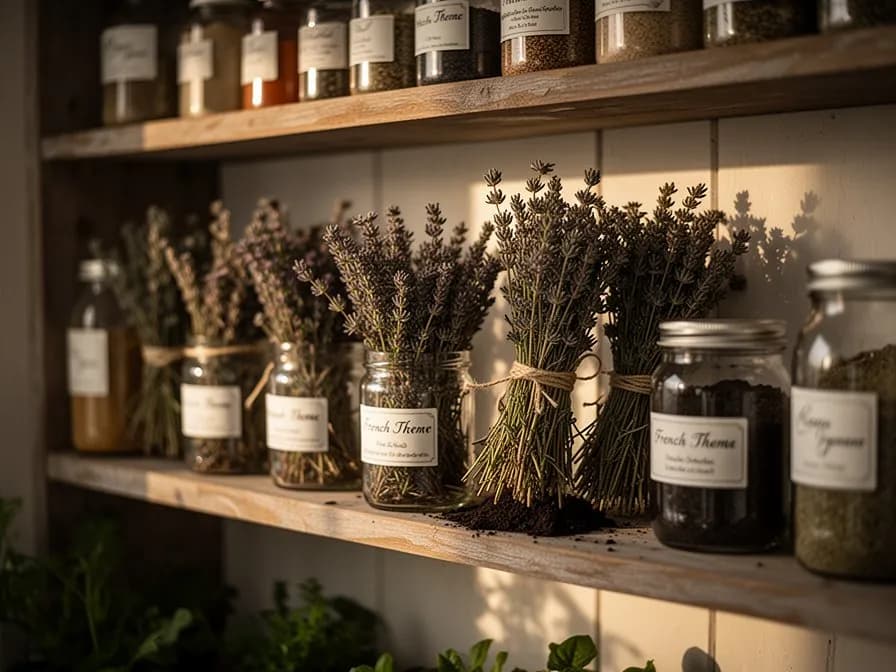
Thyme is the indispensable herb in a classic French bouquet garni — the foundation of French cooking
Yield & Spacing Calculator
See how many French Thyme plants fit in your garden bed based on the recommended 25cm spacing.
16
French Thyme plants in a 4×4 ft bed
4 columns × 4 rows at 25cm spacing
Popular Varieties
Some of the most popular french thyme varieties for home gardeners, each with unique characteristics.
French Thyme (standard)
The classic narrow-leaved culinary thyme with superior sweet flavor and grey-green foliage. The preferred variety for bouquet garni and fine French cooking.
French Summer Thyme
A slightly more compact selection with excellent heat tolerance and concentrated flavor. Performs particularly well in hot, dry summer climates.
Narrow-Leaf French Thyme
An extra-fine-leaved selection with the most intense essential oil concentration. Prized by professional chefs for its refined, delicate character.
French thyme is the premier culinary thyme variety, prized by chefs for its sweeter, more nuanced flavor compared to English thyme. It is the essential thyme for bouquet garni, herbes de Provence, soups, stocks, and sauces in classical French cuisine. Use it to season roasted chicken, braised meats, root vegetables, and cream-based dishes. French thyme holds its flavor well during long cooking and improves slow-cooked stews, cassoulet, and braises. The delicate sweetness pairs beautifully with mushrooms, onions, and winter squash.
When should I plant French Thyme?
Plant French Thyme in March, April, May. It takes approximately 85 days to reach maturity, with harvest typically in January, February, March, April, May, June, July, August, September, October, November, December.
What are good companion plants for French Thyme?
French Thyme grows well alongside Rosemary, Bay Laurel, Sage. Companion planting can improve growth, flavor, and natural pest control.
What hardiness zones can French Thyme grow in?
French Thyme thrives in USDA hardiness zones 5 through 10. With greenhouse protection, it may be grown in zones 3 through 11.
How much sun does French Thyme need?
French Thyme requires Full Sun (6-8h+). This means at least 6-8 hours of direct sunlight daily.
How far apart should I space French Thyme?
Space French Thyme plants 25cm (10 inches) apart for optimal growth and air circulation.
What pests and diseases affect French Thyme?
Common issues include Root Rot, Gray Mold (Botrytis), Aphids. Prevention through good garden practices like crop rotation, proper spacing, and companion planting is the best approach. See the detailed pests and diseases section above for symptoms, prevention, and treatment for each.
How do I store French Thyme after harvest?
Fresh French thyme keeps for 1-2 weeks in the refrigerator wrapped in a damp paper towel inside a sealed bag. French thyme dries exceptionally well, retaining much of its sweet, complex flavor. Hang small bundles in a warm, dark location for 1-2 weeks. Strip dried leaves from woody stems and store i...
What are the best French Thyme varieties to grow?
Popular varieties include French Thyme (standard), French Summer Thyme, Narrow-Leaf French Thyme. Each has unique characteristics suited to different growing conditions and culinary preferences. See the varieties section above for detailed descriptions.
What soil does French Thyme need?
French thyme demands lean, fast-draining soil above all else. Sandy, rocky, or gravelly soil with a pH of 6.0-8.0 is ideal. In clay soils, plant in raised beds with a mix of sand, perlite, and minimal compost. Feed sparingly with a light application of balanced granular fertilizer in early spring on...
What is the difference between French thyme and common thyme?
French thyme (Thymus vulgaris 'French') is a specific cultivar of common thyme selected for superior culinary qualities. Compared to generic common thyme, French thyme has narrower, more delicate grey-green leaves, a sweeter and more complex aroma with less harshness, and a more compact, upright growth habit. It is the preferred thyme for fine cooking and is the standard variety grown in Provençal herb gardens. Common thyme seed can produce variable plants with inconsistent flavor, while French thyme is propagated vegetatively to maintain its specific qualities.
Can French thyme survive winter outdoors?
Yes — French thyme is hardy to USDA zones 5-9 and can survive winter temperatures down to approximately -23°C (-10°F) when planted in well-drained soil. The key to winter survival is drainage, not temperature. Thyme planted in heavy, wet soil will rot over winter even in mild climates. In zones 4-5, a light mulch of gravel or evergreen boughs applied after the ground freezes provides additional protection. Container-grown thyme should be moved to a sheltered spot or unheated garage in cold climates.
How do I dry and store thyme from my garden?
Cut thyme stems in the morning after dew has evaporated but before the midday heat disperses the essential oils. Bundle 5-8 stems together and hang upside down in a warm, dark, well-ventilated area for 1-2 weeks. Once completely dry, strip the tiny leaves from the stems by running your fingers down the stem against the growth direction. Store dried thyme leaves in airtight glass jars away from light and heat. Properly stored home-dried thyme retains excellent flavor for 1-2 years — far longer than commercial dried thyme.
Why is my thyme plant turning brown and dying?
The most common cause of thyme decline is root rot from overwatering or poor drainage. Check that the soil drains quickly and that the plant is not sitting in moisture. Other causes include: excessive humidity and poor air circulation promoting fungal disease, heavy mulch holding moisture against stems, cutting too far into old woody growth (thyme cannot regenerate from bare wood), or the natural end of the plant's 3-5 year productive lifespan. Improve drainage, reduce watering, remove mulch from around stems, and ensure adequate spacing between plants.
Can I grow French thyme in a pot or container?
Absolutely — thyme is one of the best herbs for container growing. Use a wide, shallow pot (at least 20 cm diameter) with excellent drainage holes. Fill with a fast-draining mix of potting soil combined with 30-40% perlite or coarse sand. Place in the sunniest spot available — a south-facing windowsill, balcony, or patio is ideal. Water only when the soil is completely dry. Container thyme can be brought indoors for winter in cold climates, though it needs the brightest window possible and minimal watering during dormancy.
Is French thyme safe to use during pregnancy or for children?
Culinary amounts of French thyme used in normal cooking are generally considered safe for pregnant women, nursing mothers, and children. However, concentrated thyme essential oil and therapeutic-dose thyme supplements should be avoided during pregnancy as thymol in large doses can stimulate uterine contractions. Thyme tea in moderate amounts (1-2 cups daily) is widely used in European traditional medicine for coughs in children over age 2. As with any herb used medicinally, consult a healthcare provider for specific guidance regarding pregnancy or use with young children.
Ready to Grow French Thyme?
Add French Thyme to your garden plan and start designing your perfect layout.

Vladimir Kusnezow
Gardener and Software Developer
Zone 6b gardener. Growing vegetables and fruits in soil and hydroponics for 6 years. I built PlotMyGarden to plan my own gardens.
Jump to Section