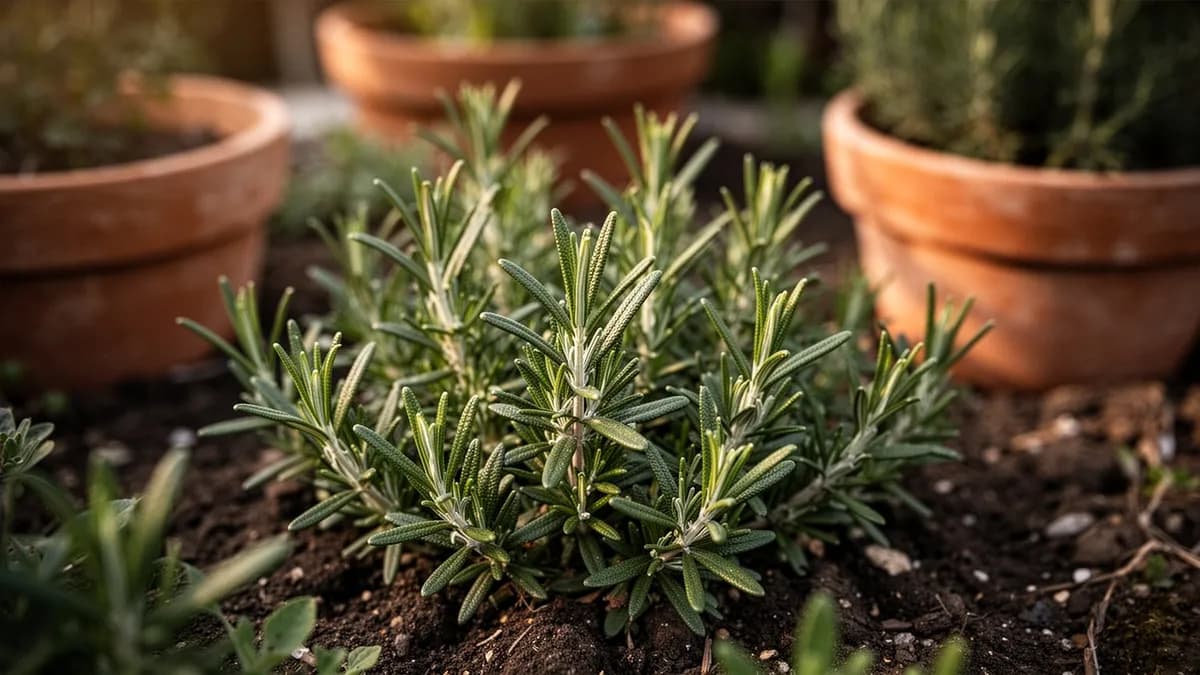
Prostrate Rosemary
Salvia rosmarinus 'Prostratus'
At a Glance
It's planting season for Prostrate Rosemary! Start planning your garden now.
A ground-hugging rosemary that grows only 6 inches tall but spreads to 4 feet wide, ideal for cascading over walls and raised beds. The trailing branches produce pale blue flowers in spring and have the same piney culinary flavor as upright varieties. Use in rock gardens, as ground cover on slopes, or in hanging baskets for a Mediterranean effect.
Planting & Harvest Calendar
Growth Stages
From Seed to Harvest

Cutting / Propagation
Days 0–28
Semi-hardwood cuttings are taken from healthy stems and placed in well-draining medium. Roots begin to develop within two to four weeks under warm, humid conditions.
💡 Care Tip
Dip cutting ends in rooting hormone and keep soil consistently moist but not waterlogged. A humidity dome speeds root formation.
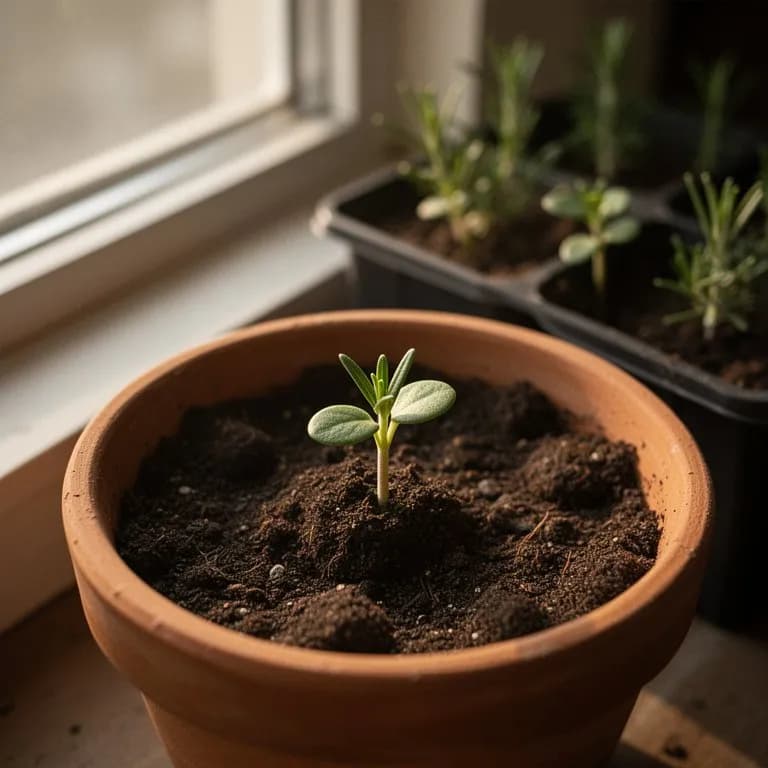
A rooted cutting ready for transplanting
Monthly Care Calendar
What to do each month for your Prostrate Rosemary
May
You are hereMay: Enjoy the peak flowering period. Harvest sprigs for culinary use as needed. Ensure adequate spacing for air circulation as growth accelerates.
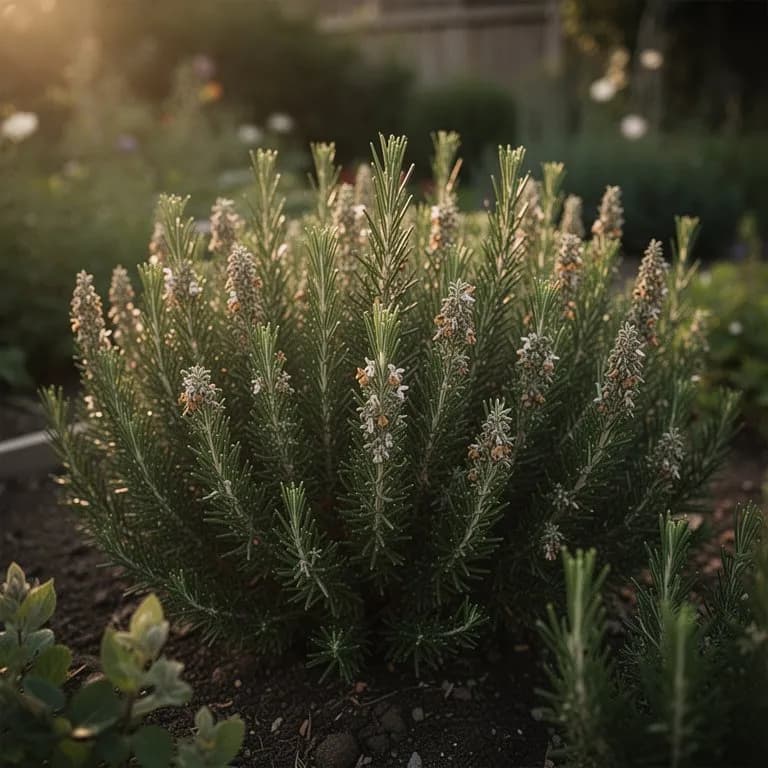
Evergreen foliage persists through mild winters
Did You Know?
Fascinating facts about Prostrate Rosemary
Prostrate rosemary can cascade up to 60-90 centimeters over walls and ledges, making it one of the most dramatic trailing herbs in Mediterranean garden design.
Prostrate rosemary is a stunning trailing variety that grows only 15cm tall but spreads up to 120cm wide, creating a fragrant evergreen ground cover or dramatic cascading display over walls and raised beds. Plant in full sun with excellent drainage, spacing 60cm apart. This variety is less cold-hardy than upright types, so it is best suited for zones 8-11 or as a container plant brought indoors in winter.
Like all rosemary, prostrate forms demand perfect drainage above all else. Plant in rocky, sandy, or gravelly soil and never allow roots to sit in water. In raised beds and walls, the natural drainage is ideal. Water deeply but infrequently—allow soil to dry between waterings. A gravel mulch complements the Mediterranean aesthetic and keeps the trailing stems off wet soil.
Prune lightly after flowering to maintain dense growth and prevent woody, bare centers. The trailing habit makes prostrate rosemary ideal for cascading over terrace walls, hanging baskets, and the edges of large containers. In cold climates, grow in containers that can be moved to a frost-free location in winter. Indoor plants need maximum light and good air circulation to stay healthy.

Used as a fragrant, evergreen ground cover in Mediterranean gardens
Prostrate rosemary (Salvia rosmarinus 'Prostratus') is a trailing cultivar of the common rosemary, native to the rocky limestone cliffs and coastal scrublands of the Mediterranean Basin. Wild rosemary has been documented growing along the shores of southern Europe, North Africa, and western Asia for thousands of years, thriving in the harsh conditions of thin, alkaline soils, intense sunlight, and salt-laden winds. The naturally prostrate forms were likely first noticed growing on steep seaside cliffs in regions such as the Balearic Islands, Sardinia, and the southern coast of France, where the low-growing habit offered survival advantages against relentless coastal gales.
The ancient Greeks and Romans held rosemary in high regard, associating it with memory, fidelity, and the afterlife. Greek scholars reportedly tucked sprigs into their hair while studying, and the herb was burned at funerals and weddings alike as a symbol of remembrance. The Romans introduced rosemary cultivation throughout their empire, spreading it to Britain and northern Europe where it was grown in monastery herb gardens throughout the medieval period.
The specific prostrate form gained horticultural recognition in the twentieth century as gardeners and landscapers sought drought-tolerant, low-maintenance ground covers for Mediterranean and xeriscape gardens. It became especially popular in California, Australia, and other regions with dry summers, where it serves as both an ornamental and a functional erosion-control plant. Today, prostrate rosemary is valued worldwide not only for its culinary uses, identical to upright rosemary, but also for its landscape versatility. It cascades beautifully over retaining walls, spills from elevated containers and hanging baskets, and forms dense, aromatic ground cover that suppresses weeds and supports pollinator populations with its abundant spring blooms.
Like all rosemary, prostrate forms are best propagated vegetatively. Take 10cm semi-ripe cuttings in late spring to midsummer from healthy trailing stems. Remove lower leaves and dip cut ends in rooting hormone. Insert into a well-draining mix of perlite and peat, maintaining warmth (20°C) and humidity with a clear cover. Mist daily and roots should develop in 6-8 weeks. Layering is particularly easy with prostrate types—pin a trailing stem to moist soil with a wire staple and roots form at the contact point within 8 weeks.
Plant in lean, perfectly drained soil with pH 6.0-7.5. The ideal mix for containers is equal parts potting soil, perlite, and coarse sand. In the ground, amend heavy soil with grit and gravel. Minimal feeding—a light compost application in spring suffices. Over-fertilizing produces lanky, weak growth with reduced aroma. Top-dress containers with slow-release fertilizer once in spring. Excellent for xeriscaping and Mediterranean-style gardens.
Check Your Zone
See if Prostrate Rosemary is suitable for your location.
-5°C – 35°C
23°F – 95°F
Prostrate rosemary thrives in warm, Mediterranean-type climates with temperatures between 15 and 30 degrees Celsius. It tolerates light frost down to approximately minus five degrees Celsius for brief periods but suffers damage below that. In hot summers it performs well up to 35 degrees Celsius provided it has excellent drainage and is not overwatered. It is hardy in USDA zones 8 through 11, though with winter protection it can survive in sheltered spots of zone 7.
Common issues affecting Prostrate Rosemary and how to prevent and treat them organically.
Woody, bare centers develop in older plants—prevent by regular light pruning of trailing tips to promote branching. Cold damage kills stems from the tips back; move containers indoors before first frost in cold zones. Trailing stems resting on wet soil develop rot—elevate with gravel or position trailing over edges of walls and containers. Indoor plants in winter need maximum light; supplement with grow lights to prevent etiolation.
Prostrate rosemary provides ground-level pest deterrence when planted beneath taller crops. The aromatic oils repel carrot fly, cabbage moths, and bean beetles. Use as a living mulch beneath roses, where it suppresses weeds while deterring aphids. The spreading habit fills gaps between stepping stones and along paths, releasing fragrance when brushed. Pairs well with other drought-tolerant Mediterranean companions like thyme and lavender.
- 1Plant in sharply draining soil amended with coarse sand or perlite. Prostrate rosemary is highly susceptible to root rot in heavy, waterlogged soils and will decline rapidly if drainage is poor.
- 2Choose a location with full sun exposure of at least six to eight hours daily. Insufficient light causes leggy, sparse growth and reduces essential oil production and flavor intensity.
- 3Water deeply but infrequently, allowing the top five centimeters of soil to dry completely between waterings. Overwatering is the most common cause of prostrate rosemary failure.
- 4Avoid high-nitrogen fertilizers which promote soft, weak growth vulnerable to pests and cold damage. A single light application of balanced slow-release fertilizer in spring is sufficient.
- 5Elevate containers or use hanging baskets to showcase the trailing habit. Ensure pots have generous drainage holes and use a gritty, well-draining potting mix.
- 6Prune lightly after the main flowering period in late spring to maintain a compact shape and encourage dense new growth. Never cut into old, bare wood as rosemary does not regenerate well from leafless stems.
- 7Provide winter protection in USDA zones 7 and 8 by mulching the root zone with gravel and covering with horticultural fleece during hard freezes. Move container plants to a sheltered location or indoors.
- 8Propagate from semi-hardwood cuttings taken in late spring or early autumn. Cuttings of about ten centimeters root readily in a mix of perlite and peat within three to four weeks.
- 9Space plants 60 to 90 centimeters apart when using as ground cover to allow for their spreading habit. They will knit together to form a dense, weed-suppressing mat within two years.
- 10Monitor for spider mites and whiteflies, especially on indoor plants or during hot, dry periods. A strong spray of water or insecticidal soap addresses most infestations effectively.
Harvest prostrate rosemary by snipping stem tips 8-10cm long from the outer edges of the trailing growth. Avoid cutting into thick, woody interior stems, as rosemary does not regenerate well from old wood. The trailing stems are slightly more pliable than upright varieties, making them easy to harvest with scissors. Flavor is equivalent to upright rosemary—piney, aromatic, and excellent for cooking. Harvest year-round in mild climates.
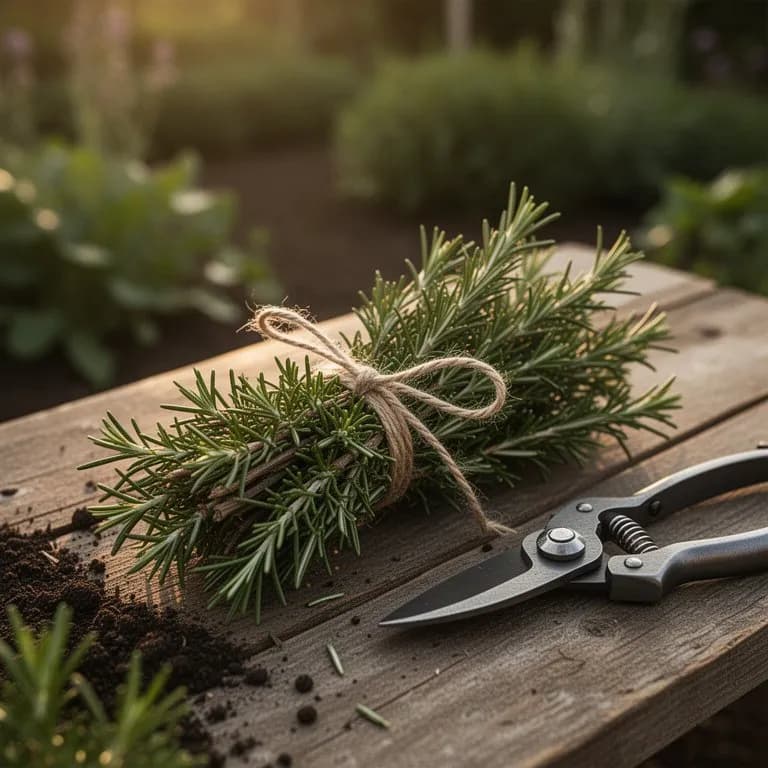
Harvested sprigs ready for culinary or decorative use
Fresh prostrate rosemary stores for 2-3 weeks refrigerated in a sealed bag with a damp paper towel. Dry small bundles by hanging in a warm, dark area for 1-2 weeks. The small, dense leaves dry quickly and retain excellent flavor. Strip dried leaves from stems and store in airtight jars away from light for up to one year. Freeze fresh sprigs in freezer bags for convenient cooking access. Infuse in olive oil for a flavored cooking oil.
Plan your garden with ease
Love growing Prostrate Rosemary? Use our free garden planner to design your beds, track planting dates, and get personalized care reminders.
Nutritional Info
Per 100g serving
131
Calories
Health Benefits
- Rich in antioxidant compounds including rosmarinic acid and carnosic acid
- Contains iron at 6.65 mg per 100g, contributing 37% of daily recommended intake
- Good source of calcium at 317 mg per 100g, supporting bone health
- Provides dietary fiber at 14.1g per 100g of dried herb
- Contains manganese, an essential trace mineral important for metabolism
- Low in sodium, making it an excellent salt-free seasoning alternative
💰 Why Grow Your Own?
A single prostrate rosemary plant costs between three and eight dollars and can provide fresh rosemary year-round for five to fifteen years in suitable climates. Considering that a small packet of fresh rosemary at the grocery store costs two to four dollars, one established plant can save a household over fifty dollars per year. Its dual function as both a culinary herb and an ornamental ground cover or trailing plant eliminates the need for separate landscape plantings, adding further value. Propagation from cuttings is straightforward, allowing gardeners to produce unlimited new plants at no additional cost.
Quick Recipes
Simple recipes using fresh Prostrate Rosemary

Rosemary-Infused Olive Oil
5 minutes plus 2 weeks infusionA fragrant finishing oil made by steeping fresh prostrate rosemary sprigs in quality extra virgin olive oil. Use it to drizzle over grilled vegetables, crusty bread, or roasted potatoes for an instant flavor boost.
Rosemary and Sea Salt Focaccia
30 minutes plus 2 hours risingA classic Italian flatbread topped with fresh rosemary needles and flaky sea salt. The aromatic oils from prostrate rosemary release beautifully during baking, filling the kitchen with an irresistible fragrance.
Lemon Rosemary Roasted Chicken Thighs
15 minutes plus 40 minutes cookingJuicy chicken thighs roasted with lemon, garlic, and generous handfuls of fresh rosemary. The prostrate variety works especially well here as the tender young tips are less woody than upright rosemary.
Yield & Spacing Calculator
See how many Prostrate Rosemary plants fit in your garden bed based on the recommended 60cm spacing.
4
Prostrate Rosemary plants in a 4×4 ft bed
2 columns × 2 rows at 60cm spacing
Popular Varieties
Some of the most popular prostrate rosemary varieties for home gardeners, each with unique characteristics.
Prostratus
The standard prostrate form with pale blue flowers and classic trailing habit. Most widely available cascading rosemary.
Irene
A vigorous prostrate selection with deep blue flowers and excellent trailing coverage. Slightly more cold-tolerant than standard prostrate.
Huntington Carpet
An extremely flat-growing selection that hugs the ground tightly. Pale blue flowers. Excellent as a true ground cover.
Santa Barbara
A compact prostrate variety with bright blue flowers. Slightly more upright than pure prostrate forms, growing to 30cm tall.
Prostrate rosemary has the same excellent culinary flavor as upright varieties. Use fresh sprigs with roasted meats, fish, vegetables, and potatoes. The flexible trailing stems are perfect for wrapping around roasts before cooking. Chop fresh leaves into bread doughs, focaccia, and pizza toppings. Infuse in olive oil for dipping bread. Use woody stems stripped of leaves as aromatic skewers for grilling. Pairs perfectly with garlic, lemon, and olive oil.
When should I plant Prostrate Rosemary?
Plant Prostrate Rosemary in March, April, May. It takes approximately 90 days to reach maturity, with harvest typically in January, February, March, April, May, June, July, August, September, October, November, December.
What are good companion plants for Prostrate Rosemary?
Prostrate Rosemary grows well alongside Sage, Thyme, Lavender. Companion planting can improve growth, flavor, and natural pest control.
What hardiness zones can Prostrate Rosemary grow in?
Prostrate Rosemary thrives in USDA hardiness zones 8 through 11. With greenhouse protection, it may be grown in zones 6 through 12.
How much sun does Prostrate Rosemary need?
Prostrate Rosemary requires Full Sun (6-8h+). This means at least 6-8 hours of direct sunlight daily.
How far apart should I space Prostrate Rosemary?
Space Prostrate Rosemary plants 60cm (24 inches) apart for optimal growth and air circulation.
What pests and diseases affect Prostrate Rosemary?
Common issues include Root Rot, Scale Insects, Powdery Mildew. Prevention through good garden practices like crop rotation, proper spacing, and companion planting is the best approach. See the detailed pests and diseases section above for symptoms, prevention, and treatment for each.
How do I store Prostrate Rosemary after harvest?
Fresh prostrate rosemary stores for 2-3 weeks refrigerated in a sealed bag with a damp paper towel. Dry small bundles by hanging in a warm, dark area for 1-2 weeks. The small, dense leaves dry quickly and retain excellent flavor. Strip dried leaves from stems and store in airtight jars away from lig...
What are the best Prostrate Rosemary varieties to grow?
Popular varieties include Prostratus, Irene, Huntington Carpet, Santa Barbara. Each has unique characteristics suited to different growing conditions and culinary preferences. See the varieties section above for detailed descriptions.
What soil does Prostrate Rosemary need?
Plant in lean, perfectly drained soil with pH 6.0-7.5. The ideal mix for containers is equal parts potting soil, perlite, and coarse sand. In the ground, amend heavy soil with grit and gravel. Minimal feeding—a light compost application in spring suffices. Over-fertilizing produces lanky, weak growt...
What is the difference between prostrate rosemary and upright rosemary?
Prostrate rosemary grows in a low, trailing habit reaching only 15-30 centimeters tall but spreading 90-150 centimeters wide, while upright rosemary grows as a bushy shrub up to 120-180 centimeters tall. Both share the same aromatic foliage, flavor, and flowers. The prostrate form is ideal for ground cover, cascading over walls, and hanging baskets, whereas upright types are better suited as hedges and standalone shrubs. Culinarily, they are interchangeable.
Can prostrate rosemary survive frost and cold winters?
Prostrate rosemary is hardy to approximately minus five degrees Celsius and performs best in USDA zones 8 through 11. It can tolerate light, brief frosts but prolonged exposure to temperatures below minus seven degrees Celsius will likely cause significant damage or death. In zones 7 and colder, grow it in containers that can be moved to a cool, bright indoor location for winter, or provide heavy mulching and fleece protection for plants in the ground.
How do I propagate prostrate rosemary from cuttings?
Take semi-hardwood cuttings of about ten centimeters from healthy, non-flowering stems in late spring or early autumn. Strip the lower leaves, dip the cut end in rooting hormone, and insert into a well-draining mix of equal parts perlite and peat. Keep the medium consistently moist and provide bright indirect light and warmth. Roots typically develop within three to four weeks. Once well-rooted, harden off and transplant to their permanent location.
Why is my prostrate rosemary turning brown and dying?
The most common cause is overwatering or poor soil drainage, which leads to root rot. Prostrate rosemary requires soil that dries out between waterings. Other causes include insufficient sunlight, extreme cold damage, or fungal diseases encouraged by humid, stagnant air. Check the roots for dark, mushy tissue indicating rot. Improve drainage, reduce watering frequency, ensure full sun exposure, and prune away any dead growth to help the plant recover.
Is prostrate rosemary safe to use in cooking?
Yes, prostrate rosemary is the same species as culinary rosemary and is completely safe and delicious for cooking. The leaves have the same aromatic oils, flavor, and fragrance as upright varieties. The tender young tips of trailing stems can be especially pleasant in cooking as they tend to be slightly less woody. Use it fresh or dried in roasted meats, breads, soups, marinades, and infused oils just as you would any rosemary.
How much space does prostrate rosemary need to spread?
A single prostrate rosemary plant typically spreads 90 to 150 centimeters wide and 15 to 30 centimeters tall at maturity. When planting as ground cover, space plants 60 to 90 centimeters apart to allow them to fill in and form a continuous mat within one to two years. If grown over a wall or in a hanging basket, the trailing stems can cascade 60 to 90 centimeters downward. Give it adequate room to spread and avoid crowding it with other plants.
Ready to Grow Prostrate Rosemary?
Add Prostrate Rosemary to your garden plan and start designing your perfect layout.

Vladimir Kusnezow
Gardener and Software Developer
Zone 6b gardener. Growing vegetables and fruits in soil and hydroponics for 6 years. I built PlotMyGarden to plan my own gardens.
Jump to Section