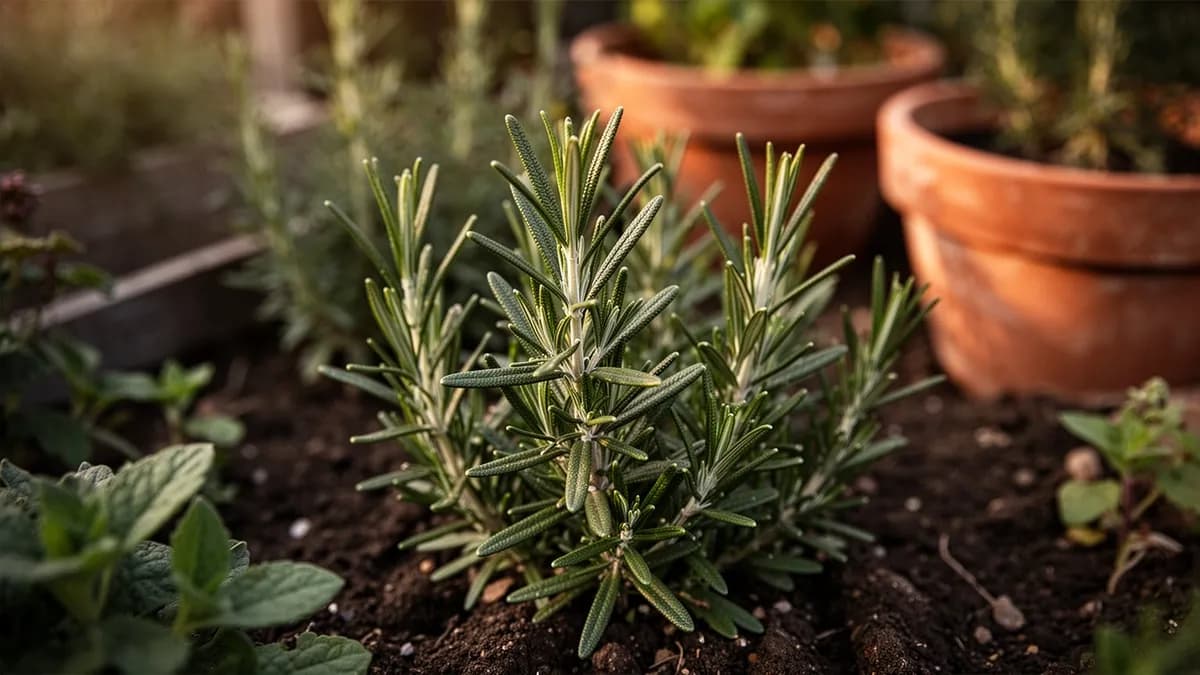
Rosemary
Salvia rosmarinus
At a Glance
It's planting season for Rosemary! Start planning your garden now.
A woody perennial Mediterranean herb with needle-like leaves and excellent drought tolerance once established. Plant in well-drained, sandy or gravelly soil and avoid overwatering, which can cause root rot in this low-moisture species. Rosemary can be shaped into hedges, topiaries, or grown in containers and brought indoors in cold climates where it is not winter-hardy. Its robust, piney flavor pairs beautifully with roasted meats, potatoes, and breads, and it retains its aroma well when dried.
Planting & Harvest Calendar
Growth Stages
From Seed to Harvest
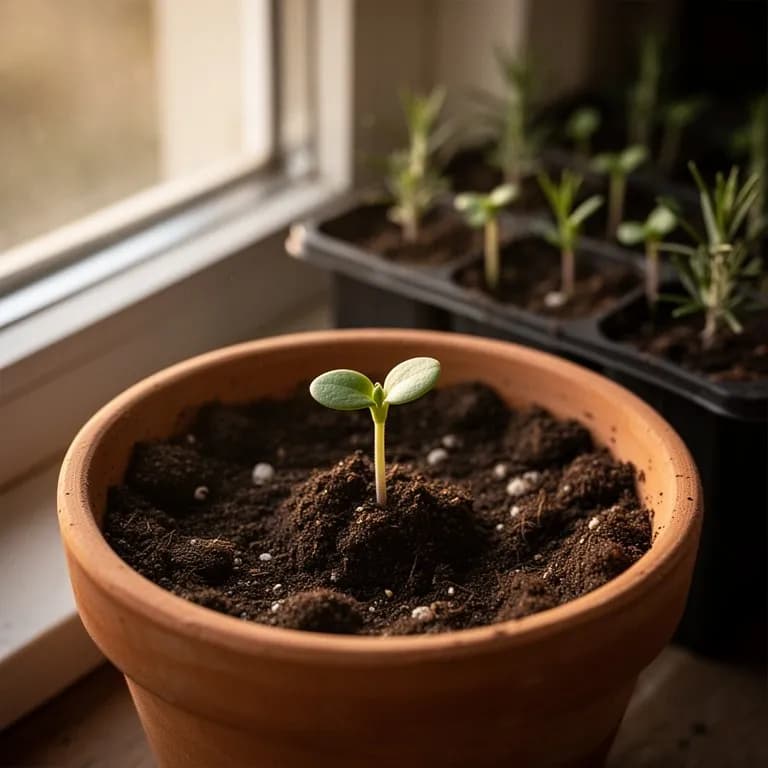
Seed Germination
Days 0–21
Rosemary seeds are notoriously slow and unreliable to germinate. Seeds require consistent warmth around 20-25°C and light exposure. Germination rates are typically only 30-50%, so sow generously.
💡 Care Tip
Keep the soil surface moist but not waterlogged. Use a heat mat to maintain consistent soil temperature and do not cover seeds deeply as they need light to germinate.
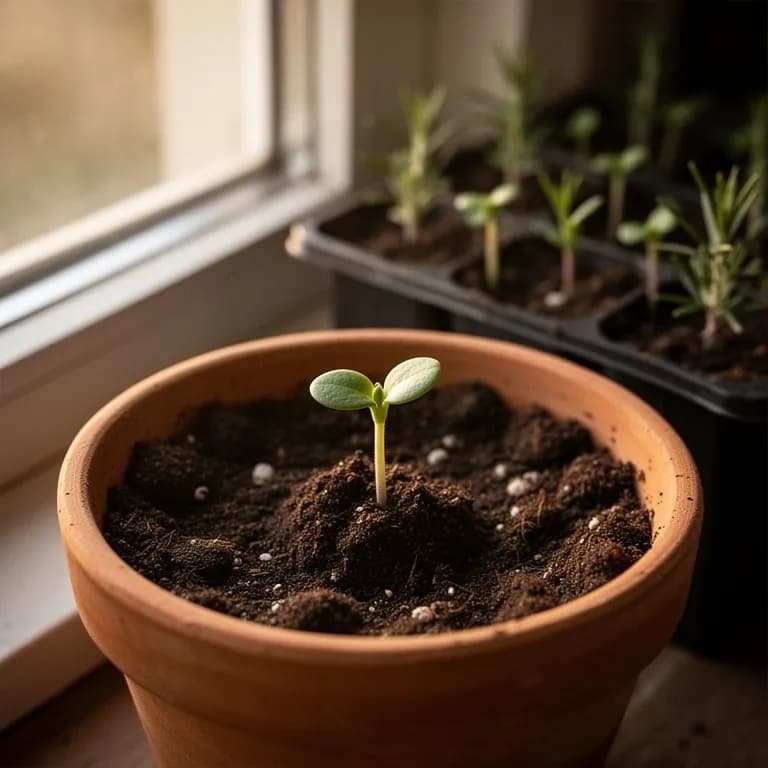
Rosemary seedlings are slow to establish but reward patient gardeners
Monthly Care Calendar
What to do each month for your Rosemary
May
You are hereHarvest fresh sprigs regularly to promote bushy growth. Watch for powdery mildew in humid conditions. Ensure good air circulation around plants.
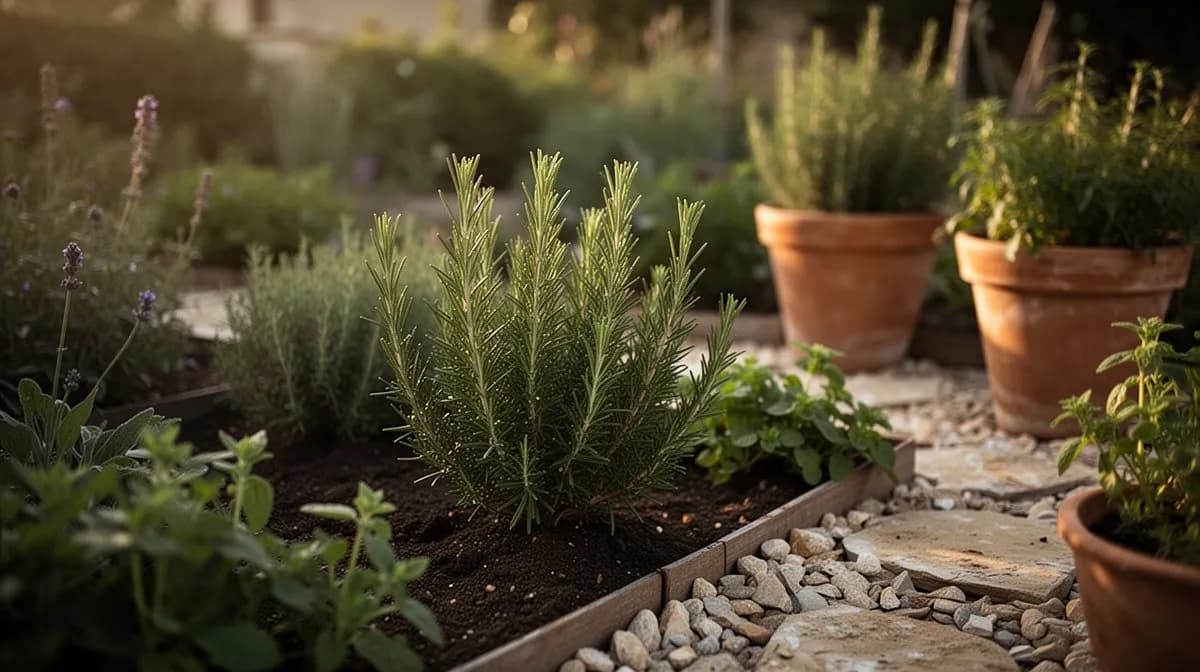
Container-grown rosemary thrives in well-drained pots with plenty of sunlight
Did You Know?
Fascinating facts about Rosemary
Rosemary was traditionally tossed into graves and carried at funerals as a symbol of remembrance, a custom dating back to ancient Egypt.
Start rosemary from cuttings or nursery transplants rather than seed, as seed germination is slow and unreliable with rates often below 50%. Take 4-6 inch stem cuttings from new growth in late spring, strip the lower leaves, dip in rooting hormone, and insert into a mix of perlite and peat. Roots typically develop in 3-4 weeks under warm, humid conditions.
Prepare a planting site with sharply drained, sandy or gravelly soil amended with lime if your soil is acidic, as rosemary prefers a pH between 6.0 and 7.5. Space plants 24-36 inches apart to allow good air circulation. In clay-heavy soils, plant in raised beds or mounds to prevent waterlogging, which is the most common cause of rosemary failure.
Water sparingly once established, allowing the soil to dry between waterings. Rosemary is highly drought-tolerant and suffers far more from overwatering than underwatering. Prune after flowering to maintain shape and encourage dense growth. In zones colder than 7, grow rosemary in containers and move indoors to a bright, cool window for winter, reducing watering but never letting the rootball dry out completely.
Rosemary (Salvia rosmarinus, formerly Rosmarinus officinalis) is native to the dry, rocky coastal regions of the Mediterranean basin, particularly the limestone hills of southern France, Spain, Italy, Greece, and North Africa. The name 'rosemary' derives from the Latin 'ros marinus,' meaning 'dew of the sea,' a poetic reference to the plant's natural habitat along misty Mediterranean cliffs where morning dew settles on its fragrant leaves. Archaeological evidence suggests rosemary has been used by humans for over 5,000 years. The ancient Egyptians placed rosemary sprigs in tombs, while the Greeks and Romans burned it as incense in temples and used it medicinally. Hippocrates, Galen, and Dioscorides all documented its therapeutic properties. During the Middle Ages, rosemary became deeply intertwined with European folk traditions. It was woven into bridal wreaths to symbolize fidelity, placed under pillows to ward off nightmares, and burned in sickrooms as a disinfectant. Queen Elizabeth of Hungary reportedly used a rosemary-based tonic known as 'Hungary Water' in the 14th century, one of the earliest recorded perfumes. Spanish explorers brought rosemary to the Americas in the early colonial period, and it quickly naturalized in the warm climates of California and the American South. Today, major commercial production occurs in Spain, Morocco, Tunisia, France, and the United States. Modern research has validated many traditional uses, with studies confirming its antimicrobial, anti-inflammatory, and cognitive-enhancing properties. Rosemary remains one of the world's most popular and widely cultivated culinary and medicinal herbs.
Rosemary is difficult to grow from seed, with germination rates of 30-50% and a long germination period of 14-28 days. If starting from seed, sow indoors 10-12 weeks before the last frost. Press seeds lightly onto the surface of moist seed-starting mix without covering, as they need light. Maintain temperature at 65-70°F. Seedlings grow very slowly for the first several months. For faster results, propagate from 4-6 inch stem cuttings taken from new growth in late spring, which root reliably in 3-4 weeks.
Rosemary demands well-drained, lean soil with a pH of 6.0-7.5. Sandy, gravelly, or rocky soils are ideal. Avoid rich, heavy soils and excessive organic matter, which retain too much moisture around roots. Add crushed limestone if your soil is acidic. Rosemary needs minimal fertilization; a single application of balanced slow-release fertilizer in early spring is sufficient. Over-fertilizing produces lush but less aromatic growth. Top-dress with a thin layer of compost annually rather than using concentrated fertilizers.
Check Your Zone
See if Rosemary is suitable for your location.
-5°C – 30°C
23°F – 86°F
Rosemary thrives in warm, Mediterranean-type climates with temperatures between 15-25°C. It can tolerate brief frosts down to -5°C once established, but prolonged freezing will damage or kill the plant. In hot climates above 30°C, ensure adequate watering and some afternoon shade. Container plants should be brought indoors when sustained temperatures drop below -5°C.
Common issues affecting Rosemary and how to prevent and treat them organically.
The most frequent cause of rosemary death is overwatering and poor drainage, which leads to root rot. Yellowing needles often signal waterlogged soil rather than nutrient deficiency. Brown, crispy tips on indoor plants indicate insufficient humidity or underwatering during dry winter heating. Leggy, sparse growth results from inadequate sunlight. Indoor rosemary is especially prone to powdery mildew in stagnant air. Sudden dieback of branches can indicate root problems or canker disease; prune affected wood back to healthy tissue and improve drainage.
Rosemary's strong aromatic oils repel carrot fly, cabbage moths, and bean beetles, making it an excellent companion for brassicas and root vegetables. It thrives alongside other Mediterranean herbs like sage and thyme, as they share preferences for dry, lean soil and full sun. Rosemary also attracts beneficial pollinators during its flowering period. Keep rosemary away from basil and mint, which require much more moisture and would suffer in rosemary's dry conditions.
- 1Start rosemary from stem cuttings rather than seed for much faster and more reliable results. Take 10-15 cm cuttings from healthy new growth, strip the lower leaves, and root in moist perlite or water.
- 2Plant rosemary in extremely well-draining soil. Mix sand or perlite into heavy clay soils, or grow in raised beds. Rosemary roots will rot quickly in waterlogged conditions.
- 3Water deeply but infrequently, allowing the soil to dry out completely between waterings. Overwatering is the number one killer of rosemary plants, far more dangerous than underwatering.
- 4Provide at least 6-8 hours of direct sunlight daily. Rosemary grown in shade becomes leggy, loses flavor intensity, and is more susceptible to fungal diseases.
- 5Avoid heavy fertilization which produces lush but less flavorful growth. A light application of balanced fertilizer once or twice during the growing season is sufficient.
- 6Prune regularly by harvesting sprigs from the tips to maintain a compact, bushy shape. Never cut into old woody growth below the green foliage as it may not regenerate.
- 7In cold climates (below USDA zone 7), grow rosemary in containers that can be moved indoors to a bright, cool location for winter. A sunny south-facing window is ideal.
- 8Improve air circulation around plants to prevent powdery mildew and other fungal problems. Avoid crowding rosemary with other plants and do not mulch directly against the stems.
- 9Harvest rosemary in the morning after the dew has dried but before the heat of the day for the highest concentration of essential oils and the best flavor.
- 10Layer or mound-layer established plants by bending low branches to the ground and covering with soil to encourage rooting. This creates new plants while rejuvenating the parent.
Harvest rosemary sprigs at any time during the growing season by cutting 4-6 inch stem tips with sharp scissors or pruning shears. Avoid cutting into old woody growth, which regenerates poorly. For the best flavor, harvest in the morning after dew has evaporated. Never remove more than one-third of the plant at a time to maintain vigor. Rosemary can be harvested year-round in mild climates, and the flavor actually intensifies during cooler weather when growth slows.
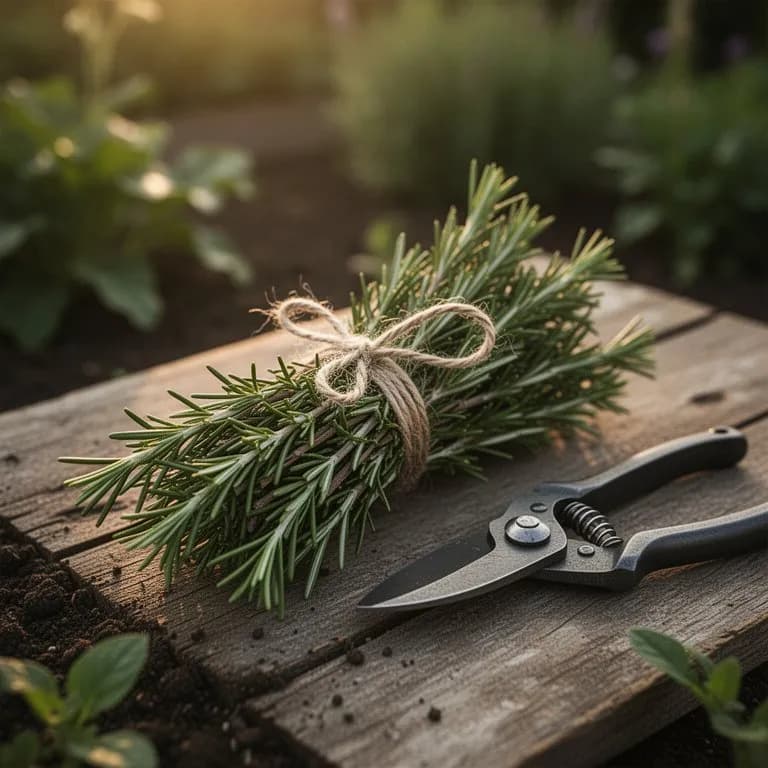
Harvest rosemary sprigs regularly to encourage bushy, compact growth
Fresh rosemary keeps for 1-2 weeks wrapped in a damp paper towel inside a sealed plastic bag in the refrigerator. For long-term storage, strip leaves from stems and freeze in airtight containers or freeze whole sprigs in freezer bags. Rosemary dries exceptionally well by hanging small bundles upside down in a warm, dark location for 1-2 weeks. Store dried leaves in airtight jars away from light. Rosemary-infused olive oil and vinegar are excellent preservation methods that also create flavorful cooking ingredients.
Plan your garden with ease
Love growing Rosemary? Use our free garden planner to design your beds, track planting dates, and get personalized care reminders.
Nutritional Info
Per 100g serving
131
Calories
Health Benefits
- Exceptionally rich in antioxidants including rosmarinic acid and carnosol
- Good source of iron at 6.65 mg per 100g (37% DV)
- Contains significant calcium at 317 mg per 100g (32% DV)
- Provides manganese at 0.96 mg per 100g (42% DV)
- Rich in B-vitamins including folate at 109 mcg per 100g
- Values shown per 100g of fresh rosemary leaves
💰 Why Grow Your Own?
A single rosemary plant costs around $3-5 and can produce fresh sprigs year-round for 5-10 years in suitable climates. Considering that a small package of fresh rosemary at the grocery store costs $2-4 and dried rosemary jars cost $4-7, one plant can save $50-100 or more per year. Rosemary is also extremely easy to propagate from cuttings, allowing you to grow unlimited free plants from a single purchase.
Quick Recipes
Simple recipes using fresh Rosemary
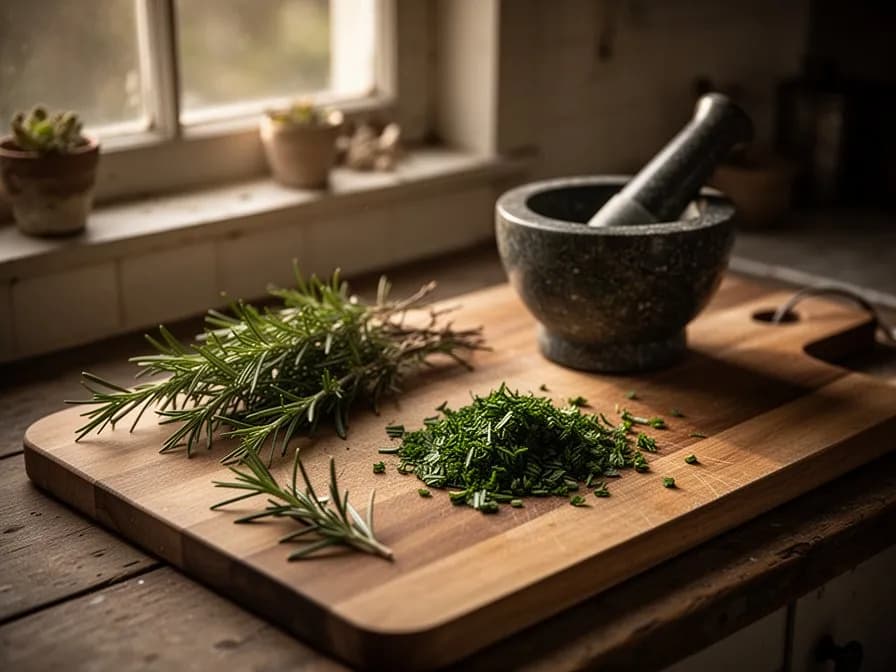
Rosemary Garlic Roasted Potatoes
40 minutesCrispy golden potatoes infused with fragrant rosemary and roasted garlic. A classic side dish that pairs perfectly with roasted meats and grilled vegetables.
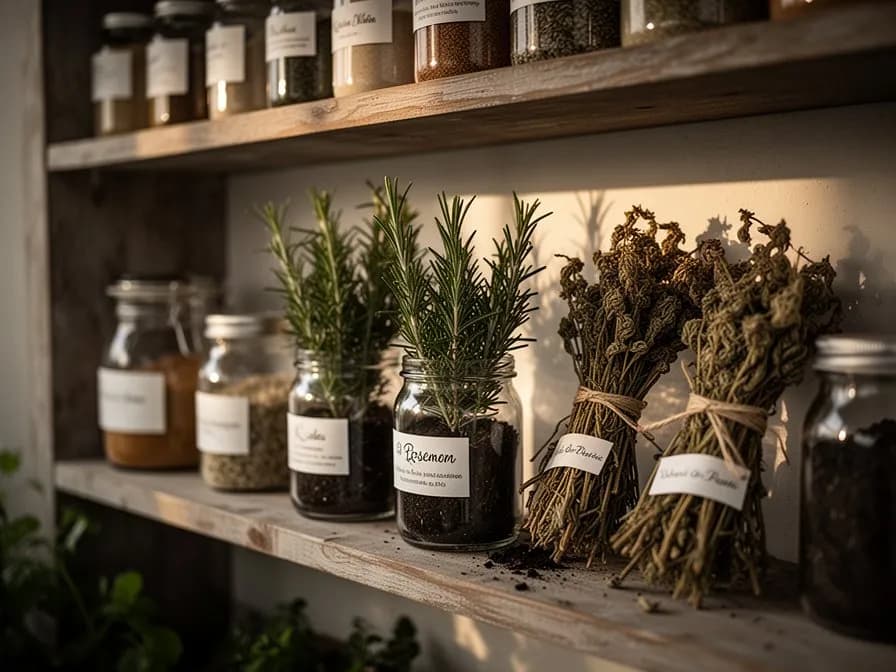
Rosemary Simple Syrup
15 minutesA versatile aromatic syrup perfect for cocktails, lemonade, iced tea, and drizzling over desserts. The piney sweetness of rosemary adds a sophisticated herbal note to any drink.
Rosemary Focaccia Bread
2.5 hours (including rise time)Pillowy soft Italian flatbread topped with fragrant rosemary, flaky sea salt, and fruity olive oil. This classic bread is simple to make and fills the kitchen with an irresistible aroma.
Yield & Spacing Calculator
See how many Rosemary plants fit in your garden bed based on the recommended 60cm spacing.
4
Rosemary plants in a 4×4 ft bed
2 columns × 2 rows at 60cm spacing
Popular Varieties
Some of the most popular rosemary varieties for home gardeners, each with unique characteristics.
Tuscan Blue
An upright variety reaching 4-6 feet with broad, intensely aromatic leaves. Excellent culinary rosemary with strong flavor and vigorous growth.
Arp
The most cold-hardy rosemary cultivar, surviving temperatures to -10°F. Light green leaves with a slightly lemony flavor, ideal for northern gardeners.
Prostrate (Creeping) Rosemary
A trailing variety perfect for hanging baskets, rock walls, and ground cover. Grows only 6-12 inches tall but spreads 4-8 feet wide.
Salem
A vigorous upright variety with excellent cold tolerance and strong flavor. Dark green needles on sturdy stems, reaching 3-4 feet tall.
Spice Islands
Prized by chefs for its exceptionally high essential oil content and bold pine-pepper flavor. Upright growth to 4 feet with narrow, dark green leaves.
Rosemary is indispensable with roasted lamb, chicken, pork, and potatoes. Add whole sprigs to roasting pans, soups, and stews for deep herbal flavor. Strip leaves from stems and mince finely for focaccia, bread doughs, and compound butters. Rosemary pairs beautifully with garlic, lemon, olive oil, and other Mediterranean ingredients. Use woody stems as aromatic skewers for grilling vegetables and meats.
When should I plant Rosemary?
Plant Rosemary in March, April, May. It takes approximately 90 days to reach maturity, with harvest typically in January, February, March, April, May, June, July, August, September, October, November, December.
What are good companion plants for Rosemary?
Rosemary grows well alongside Sage, Thyme, Carrot, Cabbage. Companion planting can improve growth, flavor, and natural pest control.
What hardiness zones can Rosemary grow in?
Rosemary thrives in USDA hardiness zones 7 through 11. With greenhouse protection, it may be grown in zones 5 through 12.
How much sun does Rosemary need?
Rosemary requires Full Sun (6-8h+). This means at least 6-8 hours of direct sunlight daily.
How far apart should I space Rosemary?
Space Rosemary plants 60cm (24 inches) apart for optimal growth and air circulation.
What pests and diseases affect Rosemary?
Common issues include Root Rot, Powdery Mildew, Spider Mites, Spittlebugs. Prevention through good garden practices like crop rotation, proper spacing, and companion planting is the best approach. See the detailed pests and diseases section above for symptoms, prevention, and treatment for each.
How do I store Rosemary after harvest?
Fresh rosemary keeps for 1-2 weeks wrapped in a damp paper towel inside a sealed plastic bag in the refrigerator. For long-term storage, strip leaves from stems and freeze in airtight containers or freeze whole sprigs in freezer bags. Rosemary dries exceptionally well by hanging small bundles upside...
What are the best Rosemary varieties to grow?
Popular varieties include Tuscan Blue, Arp, Prostrate (Creeping) Rosemary, Salem, Spice Islands. Each has unique characteristics suited to different growing conditions and culinary preferences. See the varieties section above for detailed descriptions.
What soil does Rosemary need?
Rosemary demands well-drained, lean soil with a pH of 6.0-7.5. Sandy, gravelly, or rocky soils are ideal. Avoid rich, heavy soils and excessive organic matter, which retain too much moisture around roots. Add crushed limestone if your soil is acidic. Rosemary needs minimal fertilization; a single ap...
Why is my rosemary turning brown and dying?
The most common cause of rosemary decline is root rot from overwatering or poorly draining soil. Rosemary is a Mediterranean plant adapted to dry, rocky conditions. Ensure your soil drains freely, reduce watering frequency, and never let the pot sit in a saucer of water. Brown tips can also indicate frost damage or fungal infection in humid conditions.
Can rosemary survive winter outdoors?
Rosemary is hardy to USDA zones 7-10 and can survive winters outdoors in mild climates where temperatures rarely drop below -10°C. In colder regions, grow rosemary in containers and bring it indoors to a bright, cool location (10-15°C is ideal) before the first hard frost. Some cold-hardy varieties like 'Arp' and 'Hill Hardy' can tolerate temperatures down to -15°C with protection.
How do I propagate rosemary from cuttings?
Take 10-15 cm stem cuttings from healthy new growth in spring or early summer. Strip the leaves from the bottom half, dip the cut end in rooting hormone (optional but helpful), and insert into moist perlite, vermiculite, or a well-draining potting mix. Keep in bright indirect light and mist regularly. Roots typically develop in 3-6 weeks. You can also root cuttings in a glass of water, changing it every few days.
Is rosemary safe for pets?
Rosemary is generally considered non-toxic to dogs and cats by the ASPCA. In fact, rosemary extract is commonly used as a natural preservative in many commercial pet foods. However, consuming large quantities of the essential oil (not the plant itself) could cause stomach upset in pets. The plant is safe to grow in gardens and homes with pets.
Why does my indoor rosemary keep dying?
Indoor rosemary struggles primarily due to insufficient light, poor air circulation, and overwatering. Place it in your sunniest window (south-facing is best) or supplement with a grow light for 12-14 hours daily. Allow the soil to dry between waterings and ensure the pot has drainage holes. Indoor heating creates dry air which rosemary tolerates, but avoid placing it near heating vents that cause temperature fluctuations. A cool room (15-20°C) is preferable to a warm one.
When and how should I prune rosemary?
Prune rosemary in late spring after flowering, or lightly throughout the growing season by harvesting sprigs from the tips. Remove up to one-third of the plant at a time, cutting just above a leaf node on green wood. Avoid cutting into bare woody stems below the foliage line, as rosemary often fails to regenerate from old wood. Annual pruning keeps plants compact, prevents legginess, and encourages fresh aromatic growth.
Ready to Grow Rosemary?
Add Rosemary to your garden plan and start designing your perfect layout.

Vladimir Kusnezow
Gardener and Software Developer
Zone 6b gardener. Growing vegetables and fruits in soil and hydroponics for 6 years. I built PlotMyGarden to plan my own gardens.
Jump to Section