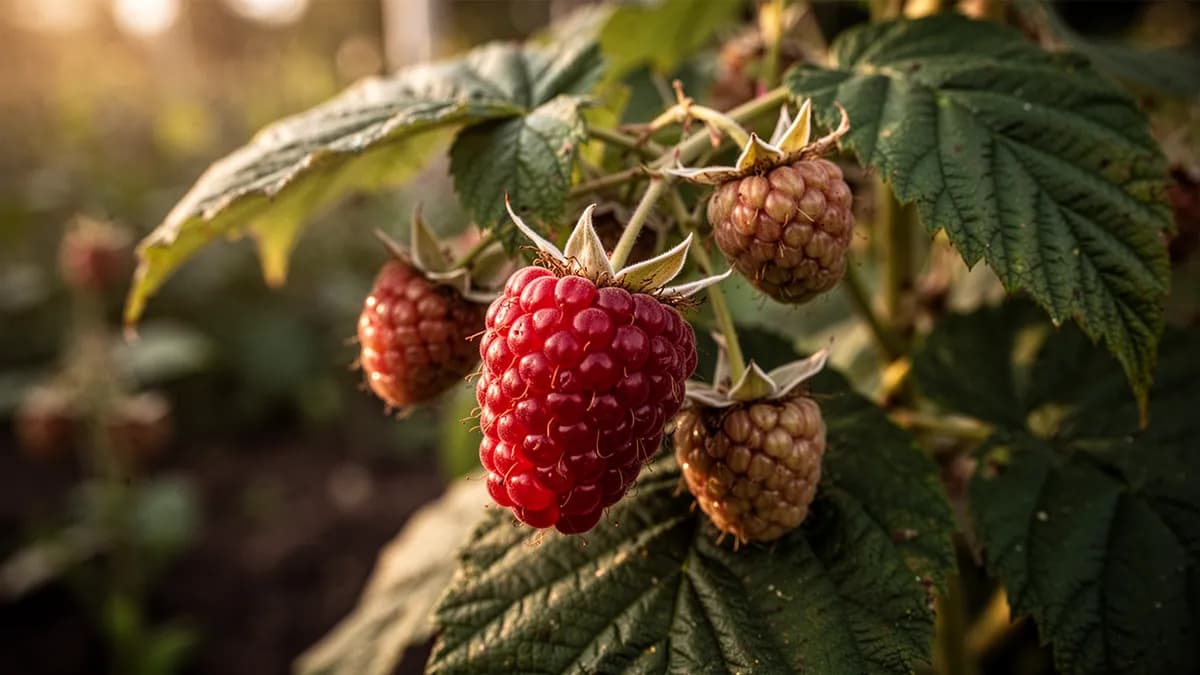
Raspberry
Rubus idaeus
At a Glance
A thorny cane fruit producing delicate berries on biennial canes, requiring support and annual pruning. Summer-bearing varieties fruit on second-year canes called floricanes, while everbearing types also produce a fall crop on first-year primocanes. Train canes along a post-and-wire trellis system and remove spent floricanes immediately after harvest to improve air circulation. Raspberries prefer rich, well-drained soil and consistent moisture, and the delicate berries should be picked every day or two when ripe.
Planting & Harvest Calendar
Growth Stages
From Seed to Harvest
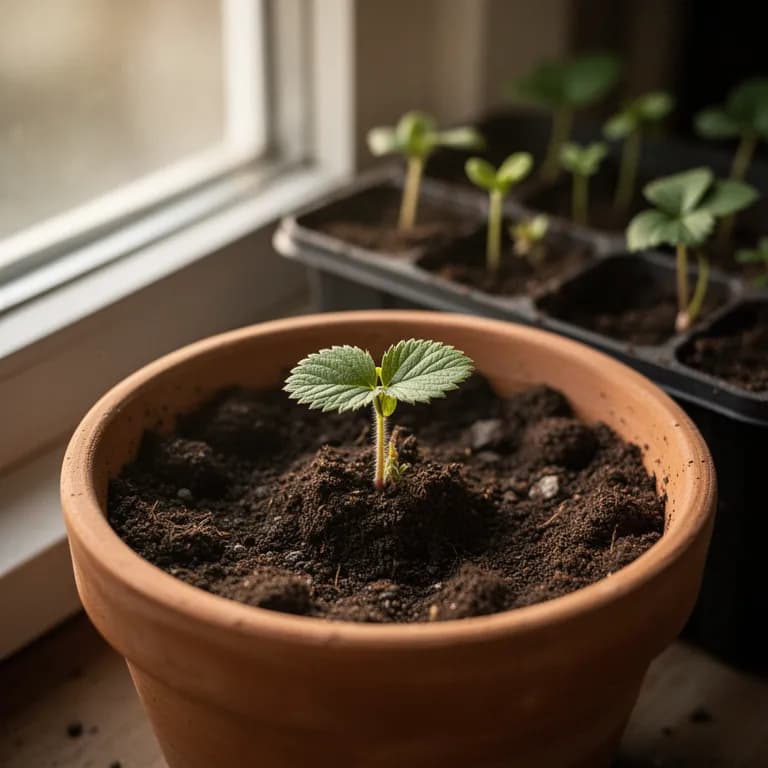
Dormant Bare Root
Days 0–30
Raspberry plants are typically established from bare root canes or container transplants planted in late winter to early spring while still dormant. The root system begins establishing underground before any visible top growth appears, developing fine feeder roots that anchor the plant and prepare for nutrient uptake.
💡 Care Tip
Plant bare root canes 5-8 cm deep in well-drained soil amended with compost. Cut canes back to 15-20 cm above ground level after planting. Water thoroughly and apply 8-10 cm of organic mulch around the base to conserve moisture and suppress weeds.
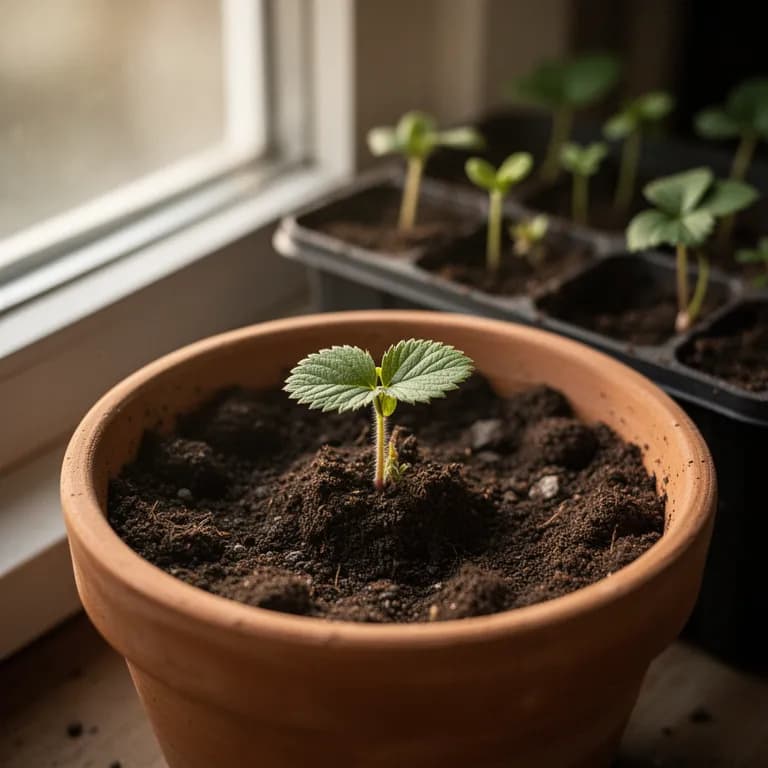
First-year primocanes pushing up from the root system in spring, beginning their two-year growth cycle
Monthly Care Calendar
What to do each month for your Raspberry
May
You are hereContinue tying primocanes to supports as they grow. Monitor for signs of raspberry sawfly larvae feeding on leaves. Water deeply during dry spells, providing 2.5-4 cm per week. Remove any suckers growing outside the intended row boundaries.
Did You Know?
Fascinating facts about Raspberry
Each raspberry is an aggregate fruit made up of 75 to 120 individual drupelets, each one a tiny complete fruit with its own seed, all clustered around a central core called the receptacle which stays behind on the plant when the berry is picked.
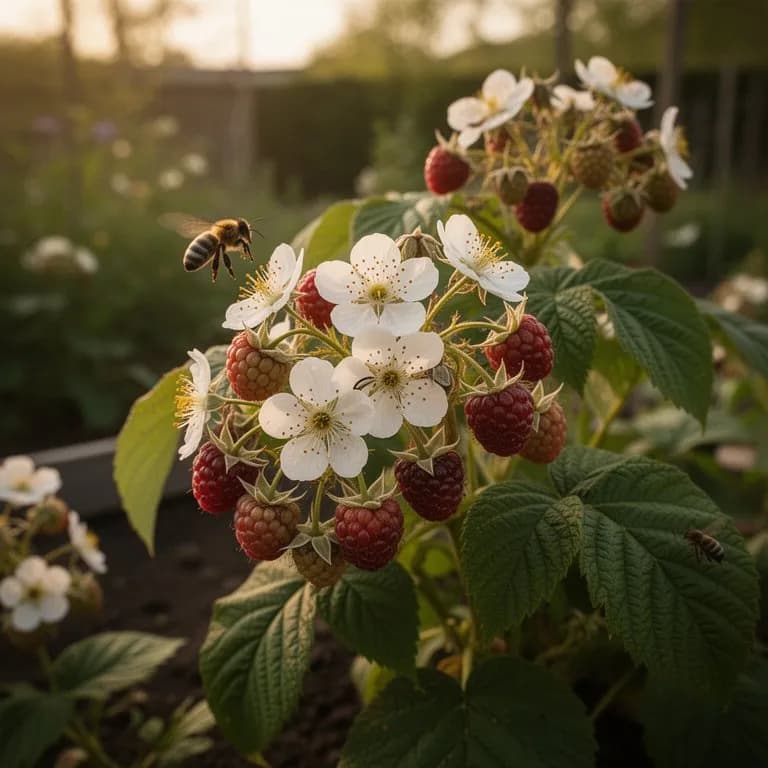
Raspberry flowers attract pollinators in late spring, with each blossom producing a single fruit
Choose a site with full sun and well-drained, fertile soil with a pH between 5.5 and 6.5. Avoid locations where tomatoes, peppers, eggplant, or other brambles were previously grown to reduce soilborne disease risk. Prepare the bed by incorporating several inches of aged compost and ensuring adequate drainage, as raspberries are particularly susceptible to root rot in waterlogged conditions.
Plant dormant bare-root canes in early spring, setting them two to three inches deeper than they grew in the nursery. Space summer-bearing varieties 18 to 24 inches apart in rows six to eight feet apart. Install a post-and-wire trellis system before planting or shortly after to support the canes as they grow. Water deeply at planting and maintain consistent moisture throughout the growing season.
Apply a three-to-four-inch mulch layer of straw or wood chips to conserve moisture and suppress weeds. For summer-bearing types, cut spent floricanes to the ground immediately after harvest and tie new primocanes to the trellis. For everbearing types, you can either mow all canes to the ground in late winter for a single fall crop or selectively prune for both summer and fall harvests. Fertilize in early spring with a balanced fertilizer or aged compost.
The raspberry (Rubus idaeus) takes its species name from Mount Ida in modern-day Turkey, where according to Greek mythology the nymph Ida pricked her finger while picking berries for the infant Zeus, staining the previously white fruits red with her blood. Wild raspberries are native to a vast range stretching across Europe and northern Asia, from the British Isles east through Siberia to Japan. Archaeological evidence confirms that humans have gathered wild raspberries since the Paleolithic era, with seeds found in cave dwellings across Europe dating back thousands of years. The Romans are credited with spreading raspberry cultivation throughout their empire during the first centuries CE, distributing plants across Britain, Gaul, and the Iberian Peninsula. Roman records from the fourth century describe raspberry cultivation in formal gardens, and the plant was widely recognized for both its culinary and medicinal value. Through the medieval period, raspberries were primarily collected from wild brambles or grown in monastery gardens, valued as much for their medicinal properties as for their fruit. Monks used raspberry leaf tea as a remedy for various ailments, a practice that continues in herbal traditions today. Formal raspberry breeding began in earnest in 18th-century Britain, with gardeners selecting superior wild clones for larger fruit size, better flavor, and improved cane vigor. By the 19th century, hundreds of named varieties existed in European nursery catalogs. European settlers introduced cultivated raspberries to North America, where they encountered native black and red raspberry species already used by Indigenous peoples. The cross-pollination of Old World breeding knowledge with New World wild genetics produced many important modern cultivars. Today raspberries are grown commercially on every continent except Antarctica, with major production in Russia, Poland, the United States, Serbia, and Mexico.
Raspberries are propagated vegetatively rather than from seed. The easiest method is transplanting suckers that emerge from the spreading root system in spring. Dig up healthy suckers with a portion of root when they are four to six inches tall and replant immediately. Tip layering works well for black and purple raspberries: bend a primocane tip to the ground in late summer, bury it two inches deep, and sever the rooted new plant the following spring. Root cuttings taken in late fall and stored in moist sand until spring also produce new plants reliably.
Raspberries perform best in well-drained, loamy soil with a pH of 5.5 to 6.5, enriched with plenty of organic matter. Amend heavy clay soils with compost and raised beds. Apply a balanced 10-10-10 fertilizer in early spring at a rate of about five pounds per 100 feet of row. Side-dress with compost or aged manure in early summer. Avoid excessive nitrogen, which promotes lush cane growth at the expense of fruit production and increases disease susceptibility.
Check Your Zone
See if Raspberry is suitable for your location.
-5°C – 30°C
23°F – 86°F
Raspberries grow best between 15-25°C (60-77°F) during the growing season and require a period of winter chill below 7°C (45°F) to break dormancy and fruit properly. Dormant canes tolerate temperatures down to -30°C in hardy varieties, though -5°C is the safe lower limit during active growth. Heat above 30°C reduces fruit quality and can cause sunscald on berries. Ideal summer conditions combine warm days with cool nights below 20°C for optimum sugar development.
Common issues affecting Raspberry and how to prevent and treat them organically.
Crumbly or misshapen berries often result from poor pollination or viral infection. Canes dying back during summer may indicate cane borer or Phytophthora root rot in poorly drained soil. Excessive suckering can quickly turn a raspberry patch into a tangled thicket, so thin canes aggressively each spring. Fruit mold is common during wet harvest seasons and can be reduced by improving air circulation through proper trellis training and cane spacing.
Garlic and chives planted among raspberry rows help deter aphids that transmit mosaic virus, their pungent oils masking the scent of the canes from pest insects. Marigolds attract beneficial insects and their root exudates suppress certain soil nematodes. Avoid planting near blackberries to prevent disease cross-contamination, and keep raspberries away from potatoes, which may harbor Verticillium wilt that can spread to brambles.
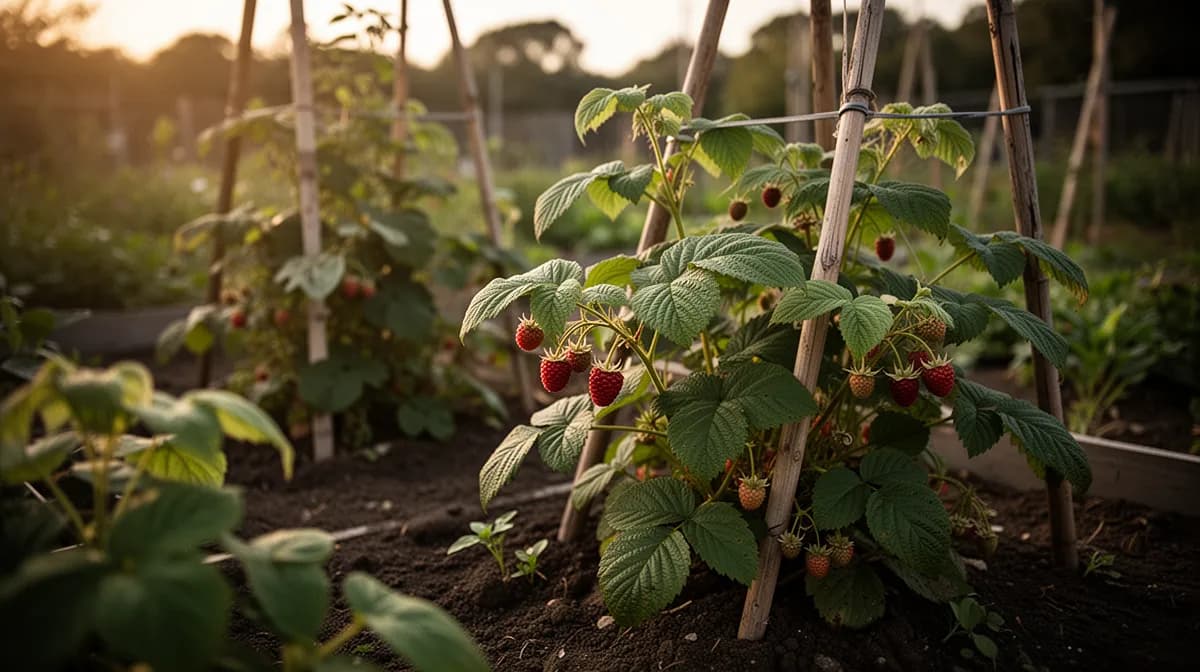
Companion planting with garlic and marigolds helps deter common raspberry pests
- 1Plant raspberries in a site with full sun and excellent air circulation, in slightly acidic soil with a pH of 5.5-6.5. Avoid planting where tomatoes, peppers, potatoes, or eggplant have grown in the past three years to reduce the risk of Verticillium wilt transmission.
- 2Install a T-bar or double-wire trellis system before or at planting time. Stretch horizontal wires at 60 cm and 120 cm heights to support canes and keep fruit off the ground, making harvest easier and reducing disease pressure.
- 3Mulch heavily with 8-10 cm of straw, wood chips, or shredded leaves to suppress weeds, retain soil moisture, and keep the shallow root system cool during summer heat. Refresh mulch annually in early spring.
- 4Water raspberries deeply and consistently, providing 2.5-4 cm per week through drip irrigation or soaker hoses. Avoid overhead watering which wets foliage and fruit, promoting gray mold and other fungal diseases.
- 5Prune summer-bearing varieties in late winter by removing all spent floricanes at ground level and thinning remaining primocanes to 10-12 per linear meter. For everbearing types, mow all canes to the ground in late winter for the simplest management and a single heavy fall crop.
- 6Feed raspberry plants twice per year: apply a balanced granular fertilizer in early spring as new growth emerges, and follow with a potassium-rich feed after harvest to support root development and winter hardiness.
- 7Control the spread of raspberry suckers by mowing or hoeing any canes that emerge outside the designated row. Left unchecked, raspberries will spread aggressively via underground runners and can quickly colonize adjacent garden beds.
- 8Remove and destroy any canes showing signs of disease such as purple blotches, orange rust pustules, or wilting tips immediately to prevent pathogens from spreading to healthy canes throughout the patch.
- 9Harvest raspberries every two to three days during the fruiting season, picking in the cool morning hours when berries are firm. Ripe berries will slip off the receptacle with a gentle tug and should be refrigerated immediately as they are highly perishable.
- 10Propagate new plants for free by transplanting healthy root suckers that emerge around the patch in spring. Dig them with a generous portion of roots attached and replant immediately in prepared soil at the same depth.
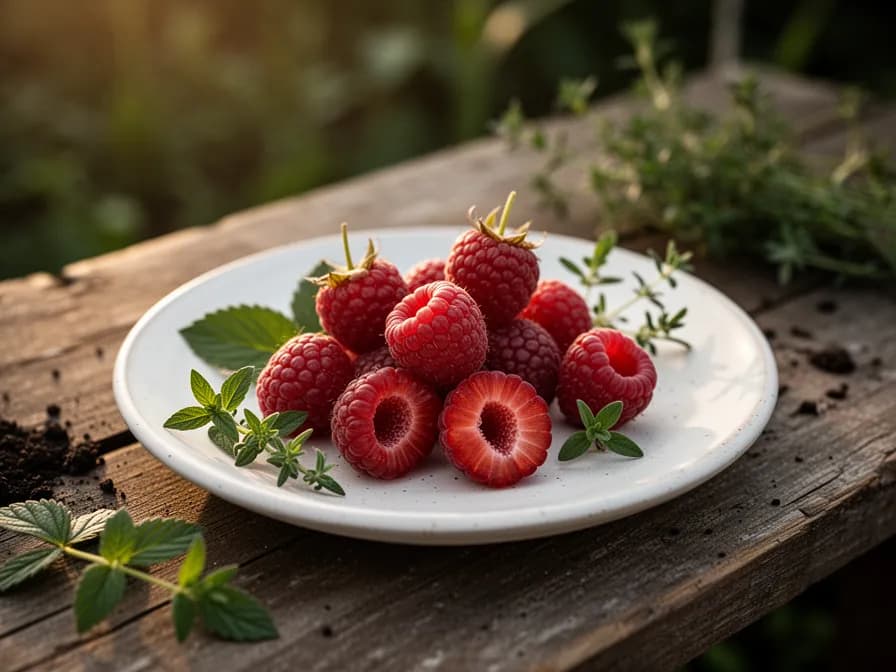
Raspberries are ripe when they pull away from the white core receptacle easily and without resistance. The berry should slip off the plant with the gentlest tug. Harvest every one to two days during peak season, as berries deteriorate quickly once ripe. Pick in the morning when berries are cool and dry. Handle gently and place in shallow containers to avoid crushing the delicate fruit. Summer-bearing varieties produce for about four weeks, while everbearing types offer a second harvest in early fall.
Raspberries are extremely perishable and should be refrigerated immediately after picking, where they will last one to three days at most. Do not wash until ready to eat. For longer storage, freeze berries in a single layer on a baking sheet, then transfer to freezer bags for up to twelve months. Raspberries make exceptional jam, preserves, and fruit syrups. They also freeze-dry well and can be used in baked goods, smoothies, and desserts year-round.
Plan your garden with ease
Love growing Raspberry? Use our free garden planner to design your beds, track planting dates, and get personalized care reminders.
Nutritional Info
Per 100g serving
52
Calories
Health Benefits
- Exceptionally high in dietary fiber at 6.5g per 100g serving, providing 26% of the daily value and ranking among the highest-fiber fresh fruits available
- Excellent source of vitamin C with 26.2 mg per 100g (44% DV), supporting immune function, collagen synthesis, and iron absorption from plant foods
- Rich in manganese (0.67 mg per 100g, 34% DV), an essential trace mineral important for bone health, metabolism, and antioxidant enzyme function
- Contains significant levels of ellagic acid and quercetin, powerful polyphenol antioxidants that help protect cells from oxidative damage and chronic inflammation
- Low glycemic index fruit (GI of 32) making raspberries a smart choice for blood sugar management compared to many other fruits
- Good source of vitamin K (7.8 mcg per 100g, 10% DV) which plays a key role in blood clotting and calcium regulation for bone health
💰 Why Grow Your Own?
A single raspberry plant costing $5-10 can produce 1-2 kg of fruit per year for 10-15 years once established, with the patch expanding naturally through root suckers. At typical supermarket prices of $4-6 per 170g punnet, one established plant produces the equivalent of $25-70 worth of berries annually. A small patch of 6-10 plants can easily yield $150-500 worth of fruit each season, making raspberries one of the best return-on-investment crops for home gardeners. Homegrown raspberries also offer superior flavor since commercial berries are picked underripe for shipping durability.
Quick Recipes
Simple recipes using fresh Raspberry

Fresh Raspberry Jam (No Pectin)
25 minutesA simple three-ingredient refrigerator jam that lets the pure flavor of garden-fresh raspberries shine through. Unlike commercial jams, this recipe uses less sugar and no added pectin, relying on the natural pectin in raspberries and a brief cook time for a soft-set texture with intense berry flavor.
Raspberry Vinaigrette Salad Dressing
5 minutesA vibrant, fruity dressing made by blending fresh raspberries with tangy vinegar and olive oil. This versatile vinaigrette transforms simple green salads, pairs beautifully with goat cheese and walnuts, and works equally well as a marinade for grilled chicken or drizzled over roasted beets.
Raspberry Overnight Oats
10 minutesA healthy make-ahead breakfast that combines the natural sweetness of fresh raspberries with creamy oats for a nutritious start to the day. Simply assemble in the evening and wake up to a ready-to-eat meal packed with fiber, antioxidants, and sustained energy from whole grains.
Harvesting ripe raspberries by gently pulling them from the receptacle when they detach easily
Yield & Spacing Calculator
See how many Raspberry plants fit in your garden bed based on the recommended 60cm spacing.
4
Raspberry plants in a 4×4 ft bed
2 columns × 2 rows at 60cm spacing
Popular Varieties
Some of the most popular raspberry varieties for home gardeners, each with unique characteristics.
Heritage
The classic everbearing red raspberry producing reliable crops in both summer and fall, with excellent disease resistance and widely adapted performance.
Tulameen
A summer-bearing variety producing exceptionally large, firm berries with outstanding flavor, considered the gold standard for fresh market quality.
Caroline
A vigorous everbearing variety with large, flavorful berries and good heat tolerance, maturing earlier than Heritage in fall.
Joan J
A thornless primocane-fruiting variety producing large, dark red berries on sturdy, self-supporting canes ideal for home gardens.
Boyne
An extremely cold-hardy summer-bearer suited to northern climates, producing medium-sized berries with classic raspberry flavor.
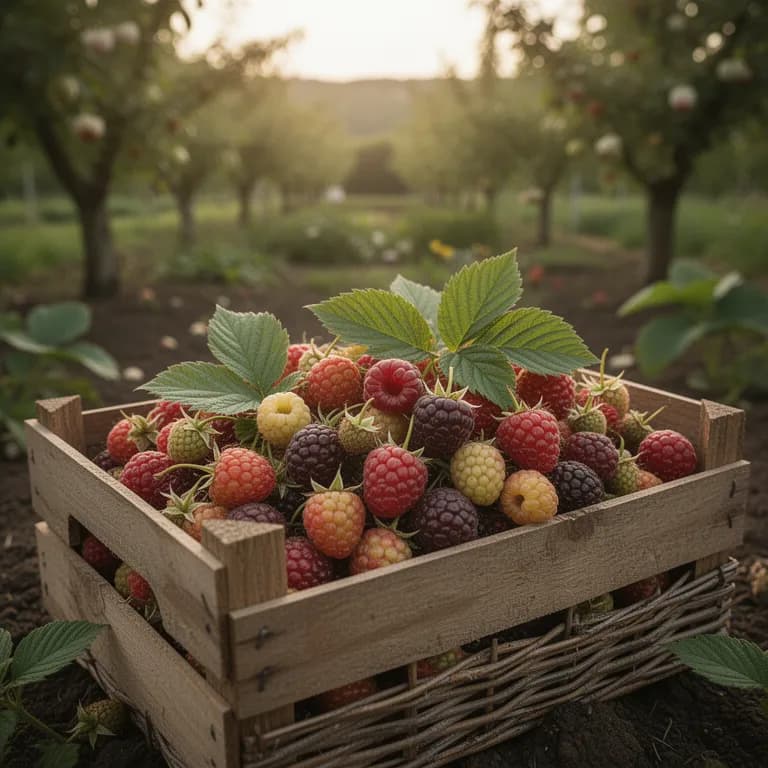
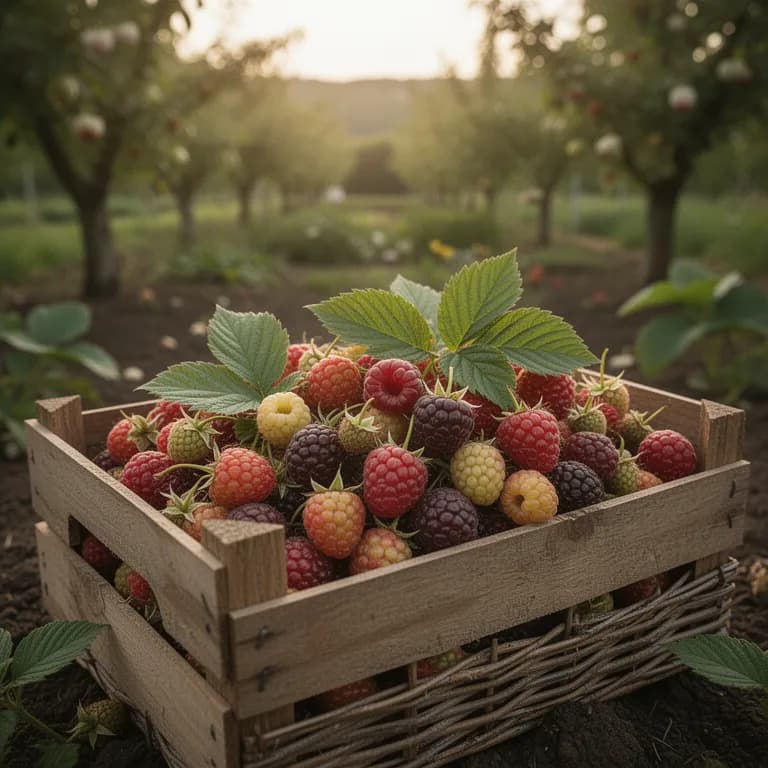
Popular raspberry types: red Heritage, golden Anne, and black Jewel varieties side by side
Raspberries are prized for their intense, sweet-tart flavor and delicate texture. They are exceptional fresh, in tarts, pies, and crumbles, and pair beautifully with chocolate, lemon, peach, and cream. Rich in vitamin C, fiber, and ellagic acid, they are a nutritional powerhouse. Raspberry coulis is a classic dessert sauce, and raspberry vinegar adds depth to salad dressings and glazes.
When should I plant Raspberry?
Plant Raspberry in March, April. It takes approximately 365 days to reach maturity, with harvest typically in June, July, August.
What are good companion plants for Raspberry?
Raspberry grows well alongside Garlic, Marigold, Chives. Companion planting can improve growth, flavor, and natural pest control.
What hardiness zones can Raspberry grow in?
Raspberry thrives in USDA hardiness zones 3 through 9. With greenhouse protection, it may be grown in zones 1 through 10.
How much sun does Raspberry need?
Raspberry requires Full Sun (6-8h+). This means at least 6-8 hours of direct sunlight daily.
How far apart should I space Raspberry?
Space Raspberry plants 60cm (24 inches) apart for optimal growth and air circulation.
What pests and diseases affect Raspberry?
Common issues include Raspberry Cane Borer, Raspberry Mosaic Virus, Spur Blight, Japanese Beetles. Prevention through good garden practices like crop rotation, proper spacing, and companion planting is the best approach. See the detailed pests and diseases section above for symptoms, prevention, and treatment for each.
How do I store Raspberry after harvest?
Raspberries are extremely perishable and should be refrigerated immediately after picking, where they will last one to three days at most. Do not wash until ready to eat. For longer storage, freeze berries in a single layer on a baking sheet, then transfer to freezer bags for up to twelve months. Ra...
What are the best Raspberry varieties to grow?
Popular varieties include Heritage, Tulameen, Caroline, Joan J, Boyne. Each has unique characteristics suited to different growing conditions and culinary preferences. See the varieties section above for detailed descriptions.
What soil does Raspberry need?
Raspberries perform best in well-drained, loamy soil with a pH of 5.5 to 6.5, enriched with plenty of organic matter. Amend heavy clay soils with compost and raised beds. Apply a balanced 10-10-10 fertilizer in early spring at a rate of about five pounds per 100 feet of row. Side-dress with compost ...
What is the difference between summer-bearing and everbearing raspberries?
Summer-bearing (floricane-fruiting) raspberries produce one large crop in early to midsummer on second-year canes called floricanes. They typically yield more fruit in a concentrated period, making them ideal for preserving. Everbearing (primocane-fruiting) varieties produce fruit on first-year canes, typically yielding a moderate fall crop and a smaller early summer crop the following year on the same canes. Everbearing types are simpler to prune since you can mow all canes to the ground each winter, but they generally produce less total fruit than summer-bearing varieties.
Why are my raspberry canes dying back or wilting at the tips?
Wilting or dying cane tips are most commonly caused by the raspberry cane borer, a small beetle that girdles the cane with two rings of punctures near the tip to lay its eggs. The solution is to prune the affected cane 15 cm below the lowest visible ring and destroy the cutting. Other causes include raspberry crown borer, Verticillium wilt from contaminated soil, or winter damage to insufficiently hardened canes. If many canes are affected, check the base of canes for sawdust-like frass indicating crown borer activity.
How do I prevent raspberry plants from spreading too aggressively?
Raspberries spread via underground runners that send up new suckers, sometimes meters away from the parent plant. To contain them, install a root barrier of heavy plastic or sheet metal 30-45 cm deep around the planting area. Alternatively, maintain a mowed or cultivated border strip at least 60 cm wide around the patch and remove suckers as they appear. Regular mowing of surrounding lawn areas also keeps suckers in check. Some gardeners grow raspberries in large raised beds with solid bottoms to completely prevent underground spread.
When is the best time to plant new raspberry canes?
The ideal time to plant raspberries is in late winter to early spring while canes are still dormant, as soon as the ground can be worked. This gives plants the entire growing season to establish their root system before winter. In mild-winter regions (zones 8-9), fall planting from November to December also works well. Avoid planting in the heat of summer when transplant stress is greatest. Container-grown plants from nurseries can technically be planted any time during the growing season if kept well-watered, but dormant bare-root planting in spring remains the most successful approach.
Why are my raspberries small and crumbly instead of plump and firm?
Small, crumbly berries with missing drupelets are almost always caused by poor pollination, often due to cold, wet, or windy weather during bloom that reduces bee activity. Other causes include drought stress during fruit development, raspberry bushy dwarf virus (which produces characteristically crumbly fruit), or nutrient deficiencies, particularly boron. Ensure adequate pollinator habitat near your patch, water consistently during fruit set, and test your soil every few years. If crumbly fruit persists despite good conditions, the plants may be virus-infected and should be replaced with certified disease-free stock in a new location.
Can I grow raspberries in containers on a patio or balcony?
Yes, raspberries can grow well in large containers of at least 45-60 liters with good drainage. Use a quality potting mix amended with compost and choose compact or everbearing varieties like 'Raspberry Shortcake' or 'BrazelBerries' which stay under one meter tall. Container raspberries need more frequent watering than in-ground plants, often daily in summer, and benefit from liquid fertilizer every two weeks during the growing season. Provide a small trellis or stake for support. Containers should be insulated or moved to a sheltered location in winter to protect roots from freezing solid, as container plants lack the ground insulation that in-ground plants enjoy.
Ready to Grow Raspberry?
Add Raspberry to your garden plan and start designing your perfect layout.

Vladimir Kusnezow
Gardener and Software Developer
Zone 6b gardener. Growing vegetables and fruits in soil and hydroponics for 6 years. I built PlotMyGarden to plan my own gardens.
Jump to Section