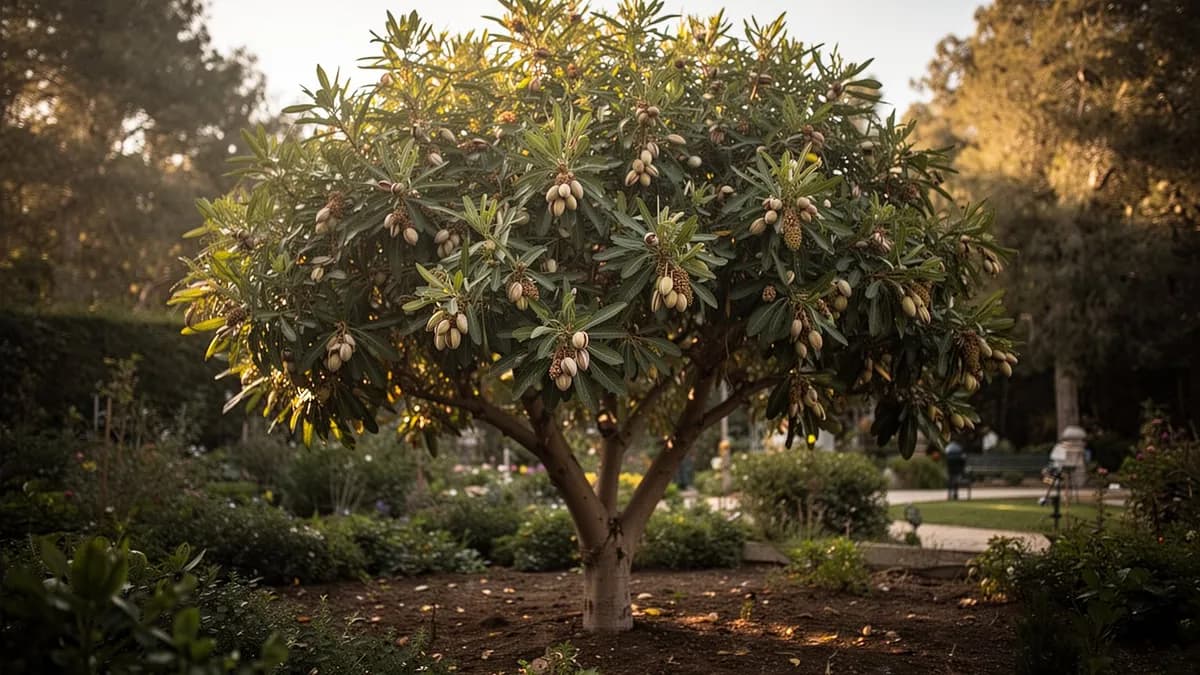
Pistachio Tree
Pistacia vera
At a Glance
A desert-adapted tree that requires long, hot summers and cold winters to produce its prized green nuts. Pistachios are dioecious, meaning you need both a male and female tree for nut production, with one male sufficient for up to ten females. They are extremely drought-tolerant once established and thrive in alkaline soil that would challenge most other trees. Trees take five to seven years to begin bearing but remain productive for over a century.
Planting & Harvest Calendar
Growth Stages
From Seed to Harvest
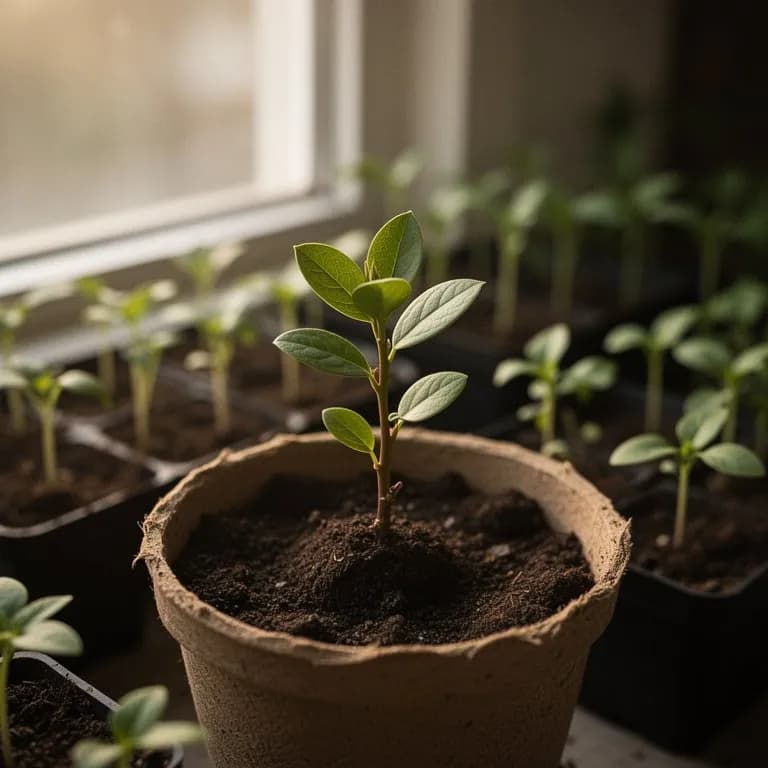
Seed Germination and Rootstock Establishment
Days 0–90
Pistachio seeds require stratification at 5 degrees Celsius for 6 to 8 weeks before planting. Seedlings emerge within 2 to 4 weeks after sowing in warm soil. Rootstock varieties such as Pistacia atlantica or UCB-1 are commonly used for their vigor and disease resistance.
💡 Care Tip
Keep soil consistently moist but not waterlogged during germination. Provide protection from direct afternoon sun for young seedlings.
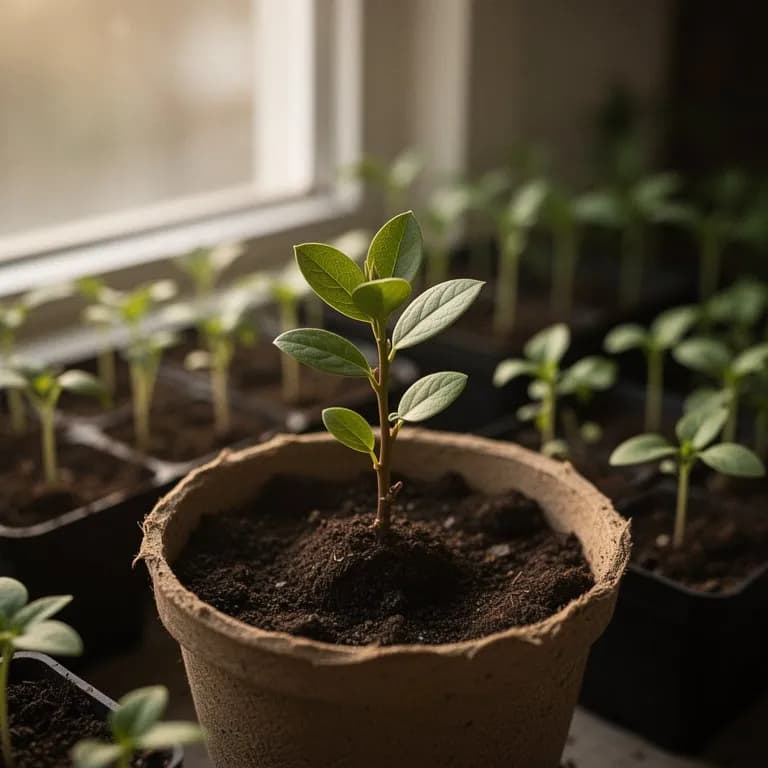
A pistachio seedling developing its first set of pinnate compound leaves.
Monthly Care Calendar
What to do each month for your Pistachio Tree
May
You are hereBegin monitoring for leaffooted bugs and stink bugs that attack developing nuts. Apply foliar zinc sprays to correct deficiencies. Thin excessive fruit clusters if the tree is in a heavy on-year.
Did You Know?
Fascinating facts about Pistachio Tree
Pistachios are one of the oldest flowering nut trees, with archaeological evidence of consumption dating back to 7000 BCE in what is now Turkey and the Middle East.
Pistachio trees are desert-adapted deciduous trees native to Central Asia that require a specific combination of long, extremely hot summers and cold winters with 600 to 1000 chill hours. They grow 25 to 30 feet tall and thrive in USDA zones 7 through 11 where summers are arid and winters provide adequate chilling. Plant in full sun in well-drained soil with a pH of 7.0 to 8.0; pistachios actually prefer slightly alkaline soil that would stress most other trees. Space trees 20 to 25 feet apart.
Pistachios are dioecious, meaning individual trees are either male or female. Only female trees produce nuts, but a male pollinator is essential. One male tree provides sufficient wind-borne pollen for up to 8 to 10 female trees. Plant the male upwind of the females for best pollination. The most common pollinizer for the Kerman variety is Peters. Trees begin bearing at 5 to 7 years and reach full production at 15 to 20 years.
Water pistachio trees deeply but infrequently, allowing the soil to dry between irrigations. They are extremely drought-tolerant once established but produce larger nut crops with summer irrigation every 2 to 4 weeks. Avoid overwatering, which promotes root disease and reduces nut quality. Prune young trees to develop a strong modified central leader structure with well-spaced scaffold branches. Pistachios tend toward alternate bearing, producing heavy crops in even years and light crops in odd years.
The pistachio tree (Pistacia vera) is native to the arid regions of Central Asia and the Middle East, with its center of origin spanning from modern-day Iran and Turkmenistan through Afghanistan and into parts of western Pakistan. Archaeological sites in southeastern Turkey have yielded pistachio shell remnants dating to approximately 7000 BCE, making it one of the earliest cultivated nut crops in human history. Ancient Persians prized pistachios as a symbol of wealth and prosperity, and the nut featured prominently in royal gardens and trade routes along the Silk Road. The trees spread westward through the Roman Empire, reaching Italy and the broader Mediterranean basin by the first century CE. Arab traders further distributed pistachios across North Africa and into the Iberian Peninsula during the medieval period. Commercial cultivation expanded significantly in the 19th and 20th centuries as improved irrigation techniques made large-scale orchard production feasible in semi-arid climates. Iran remained the world's dominant producer for centuries until the late 20th century, when California's Central Valley emerged as a major production region following the introduction of the Kerman cultivar in the 1960s by plant explorer William E. Whitehouse. Today, the global pistachio industry is valued at over 5 billion dollars annually, with Iran, the United States, and Turkey collectively accounting for roughly 85 percent of world production. The crop continues to gain popularity worldwide due to its nutritional profile, distinctive flavor, and adaptability to water-scarce agricultural environments where many other crops struggle to thrive.
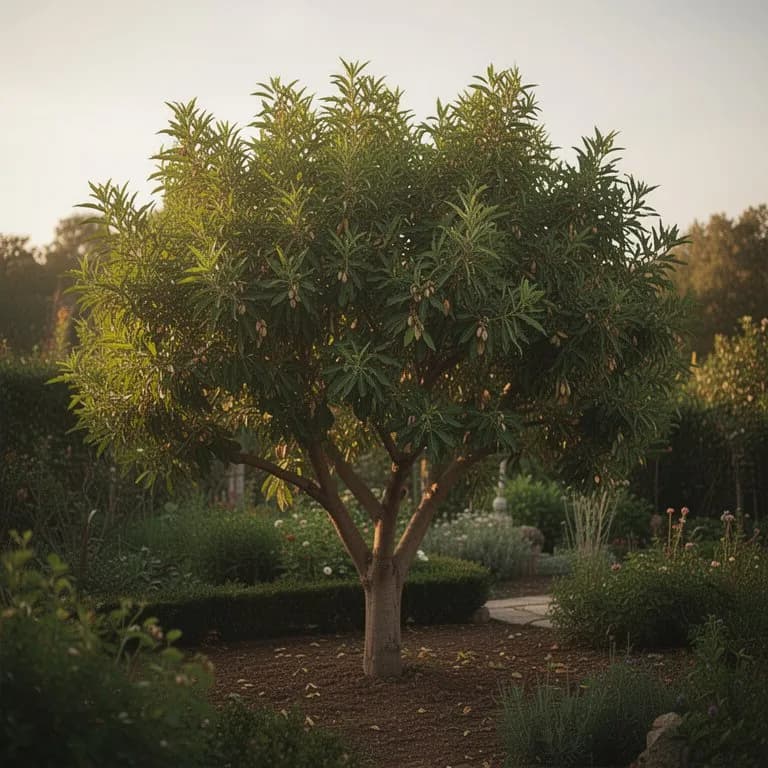
A fully mature pistachio tree can reach 20 to 30 feet in height with a broad, spreading canopy.
Pistachio trees are propagated by budding or grafting female varieties onto seedling rootstock. UCB-1 hybrid rootstock, a cross of Pistacia atlantica and Pistacia integerrima, is the industry standard due to its superior vigor, cold tolerance, and Verticillium resistance. Seeds germinate after stratification but produce variable offspring, and the sex cannot be determined until the tree blooms at 4 to 5 years. T-budding in late summer is the standard grafting method. Purchase grafted nursery trees of known sex for home planting.
Pistachios are uniquely adapted to alkaline, well-drained soils with a pH of 7.0 to 8.0 where most other fruit and nut trees would struggle. They tolerate saline conditions and poor soil better than nearly any nut crop. Deep sandy loam is ideal. Apply nitrogen fertilizer in spring at moderate rates, as excessive nitrogen promotes vegetative growth and worsens alternate bearing. Boron and zinc are important micronutrients; apply based on leaf tissue analysis. UCB-1 rootstock handles the widest range of soil conditions.
Check Your Zone
See if Pistachio Tree is suitable for your location.
-10°C – 42°C
14°F – 108°F
Pistachio trees thrive in hot, dry summers with temperatures between 35 and 42 degrees Celsius during the growing season, which is essential for proper nut development and shell splitting. They require cold winters with sustained temperatures below 7 degrees Celsius to accumulate 600 to 1000 chill hours for adequate dormancy. Mature trees can tolerate brief winter lows down to minus 10 degrees Celsius when fully dormant, but late spring frosts below minus 2 degrees Celsius during bloom can devastate the crop. High humidity is detrimental and promotes fungal diseases like Botryosphaeria.
Common issues affecting Pistachio Tree and how to prevent and treat them organically.
Alternate bearing is the most significant production issue, with heavy crops one year followed by light crops the next. This pattern is inherent to the species and difficult to manage. Insufficient chill hours in warm-winter areas prevent proper dormancy and reduce nut set. Humidity and summer rain cause serious fungal problems, making pistachios poorly suited to humid climates. The requirement for both male and female trees means dedicating space to non-producing male pollinizers. Early shell splitting in hot weather exposes nuts to insect damage.
Pistachio orchards are typically maintained with clean cultivation or sparse ground cover due to their arid climate requirements. In home gardens, plant drought-tolerant Mediterranean herbs like rosemary, lavender, and oregano around pistachio trees. These companions thrive in the same alkaline, well-drained conditions and attract pollinators. Avoid moisture-loving plants that require frequent irrigation, as excess water around pistachios promotes root disease. Native bunchgrasses and drought-tolerant wildflowers provide ground cover without excess moisture.
- 1Plant at least one male pollinator tree for every 8 to 12 female trees, positioning the male upwind of the females to maximize wind pollination efficiency.
- 2Choose UCB-1 rootstock for superior vigor, cold tolerance, and resistance to Verticillium wilt and Phytophthora root rot compared to other rootstock options.
- 3Provide full sun exposure with at least 8 hours of direct sunlight daily and ensure the planting site has excellent air circulation to minimize fungal disease pressure.
- 4Use deep, infrequent irrigation to encourage deep root development. Pistachio trees are drought-tolerant once established but require consistent moisture during the nut-fill period from June through August.
- 5Maintain soil pH between 7.0 and 8.0 as pistachios are well adapted to alkaline soils. Avoid planting in heavy clay or poorly drained soils where root rot is common.
- 6Apply zinc foliar sprays in spring to prevent zinc deficiency, which is the most common micronutrient problem in pistachio orchards and causes leaf rosetting and reduced nut size.
- 7Prune to an open-vase canopy shape to maximize sunlight penetration and air movement through the tree, which improves nut quality and reduces Alternaria late blight risk.
- 8Remove all mummy nuts remaining on the tree after harvest as they harbor navel orangeworm larvae and Aspergillus fungi that can contaminate the next season's crop.
- 9Avoid overhead irrigation as wet foliage and hulls promote Botryosphaeria panicle and shoot blight, the most economically damaging disease of pistachios in humid climates.
- 10Protect young trunks from sunburn by painting with diluted white latex paint or using tree wraps, as bark damage from sun exposure creates entry points for wood-boring insects.
Pistachios are ready to harvest in September when the hull loosens from the shell and the shell splits open naturally. The split shell is the hallmark of a ripe pistachio. Shake branches or use a mechanical shaker to drop clusters onto tarps. Process immediately by removing hulls within 24 hours, as delays cause shell staining and off-flavors in the kernel. Sort nuts into split (marketable) and unsplit categories. Dry split nuts promptly to prevent mold development.
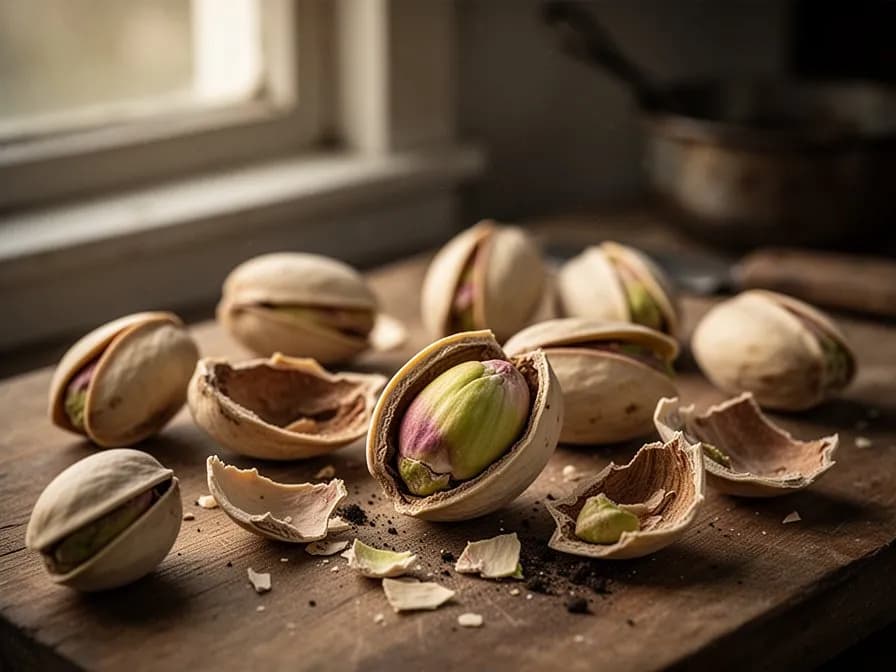
The characteristic shell split occurs naturally as pistachios ripen in late summer.
Dry harvested pistachios to below 7 percent moisture by spreading in a single layer in a warm, ventilated area for 3 to 4 days, or use a dehydrator at 130 degrees Fahrenheit. In-shell pistachios store at room temperature for 3 months and in the refrigerator for up to a year. Shelled kernels keep best frozen in airtight containers for up to 2 years. Roasting and salting are the most popular preparation methods. Pistachios can also be ground into butter, used as a coating for meats, or incorporated into ice cream and confections.
Plan your garden with ease
Love growing Pistachio Tree? Use our free garden planner to design your beds, track planting dates, and get personalized care reminders.
Nutritional Info
Per 100g serving
562
Calories
Health Benefits
- One of the lowest-calorie and lowest-fat nuts, with a high proportion of heart-healthy monounsaturated and polyunsaturated fats.
- Excellent source of vitamin B6, providing over 80 percent of the daily value per 100 grams, supporting brain function and metabolism.
- Contains more antioxidants than most other nuts, including lutein, zeaxanthin, and gamma-tocopherol, which support eye health.
- High in plant-based protein at approximately 20 grams per 100 grams, making them a valuable protein source for vegetarians.
- Rich in phosphorus, manganese, and copper, all essential minerals for bone health and enzymatic function.
- Contains significant amounts of the amino acid L-arginine, which promotes healthy blood vessel function and circulation.
💰 Why Grow Your Own?
A single mature pistachio tree can produce 40 to 60 pounds of dry, in-shell nuts per year during on-crop years. With retail pistachio prices averaging 12 to 18 dollars per pound, one productive tree could yield 480 to 1080 dollars worth of nuts annually. Even accounting for alternate bearing cycles that reduce yield in off years, a home-grown pistachio tree can save a household several hundred dollars per year on nut purchases once it reaches full production around year 10 to 12. The trees are also exceptionally long-lived, offering decades of harvests from a single planting investment.
Quick Recipes
Simple recipes using fresh Pistachio Tree
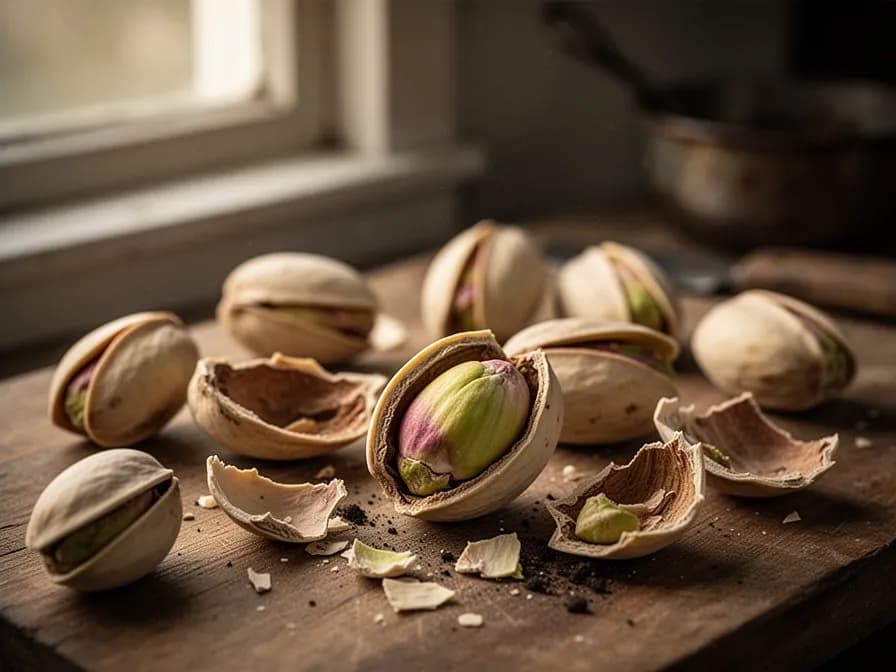
Pistachio Dukkah Spice Blend
10 minutesA fragrant Egyptian-inspired nut and spice blend perfect for dipping bread with olive oil, seasoning roasted vegetables, or topping hummus and salads.
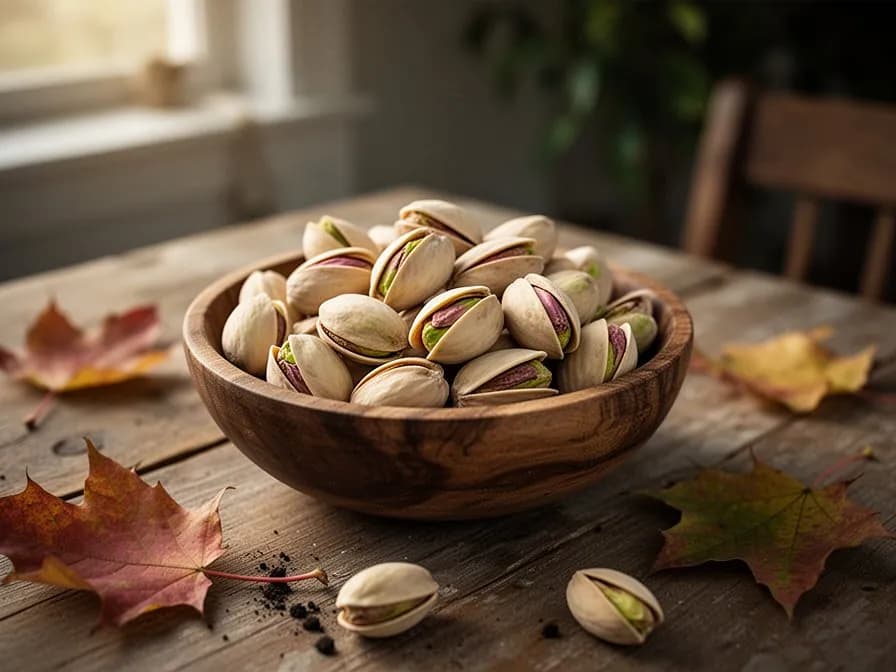
Pistachio Pesto Pasta
15 minutesA vibrant twist on classic basil pesto, using pistachios instead of pine nuts for a richer, slightly sweet flavor that pairs beautifully with pasta, grilled chicken, or crusty bread.
Rose and Pistachio Energy Bites
20 minutesNo-bake Middle Eastern inspired energy bites combining pistachios with dates and a hint of rose water, perfect as a healthy snack or post-workout treat.
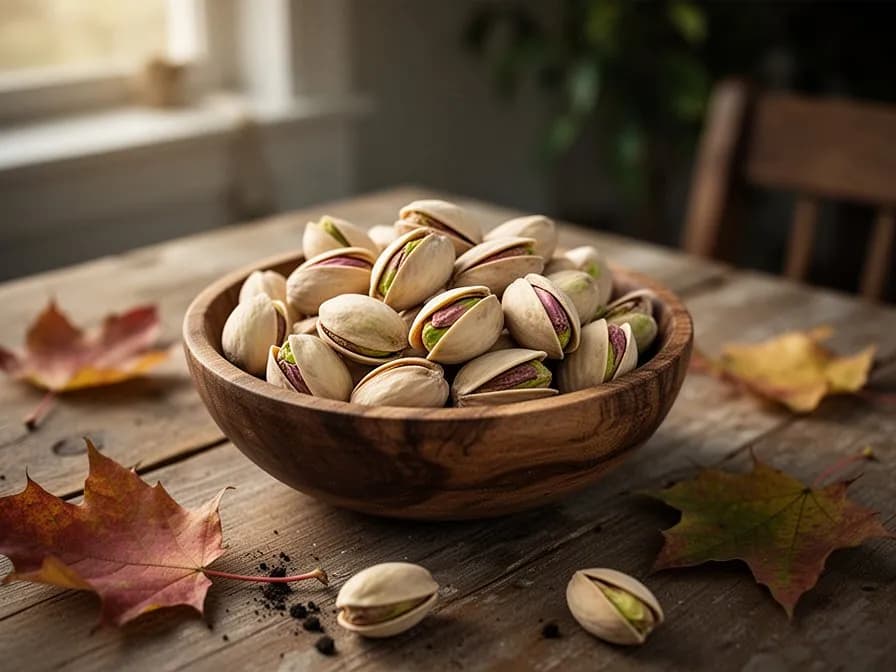
Roasted pistachios are one of the most popular and nutritious snack nuts worldwide.
Yield & Spacing Calculator
See how many Pistachio Tree plants fit in your garden bed based on the recommended 600cm spacing.
0
Pistachio Tree plants in a 4×4 ft bed
0 columns × 0 rows at 600cm spacing
Popular Varieties
Some of the most popular pistachio tree varieties for home gardeners, each with unique characteristics.
Kerman
The dominant female commercial variety worldwide, producing large nuts with excellent split rate and vivid green kernels. Requires Peters as a male pollinizer.
Peters
The standard male pollinizer variety for Kerman. Produces abundant pollen with good timing overlap for Kerman bloom.
Golden Hills
A newer female variety that ripens earlier than Kerman, allowing harvest before fall rains in some climates. Good nut quality and productivity.
Lost Hills
Another early-ripening female variety with large nuts and excellent kernel quality. Good alternate-bearing resistance compared to Kerman.
Pistachios are prized for their vivid green color, distinctive flavor, and versatility. Roasted and salted pistachios are among the world's most popular snack nuts. The ground kernels are essential in Middle Eastern baklava, Turkish delight, and halva. Pistachio ice cream and gelato are perennial favorites. The nuts add color and crunch to salads, couscous, rice pilafs, and crusted fish or lamb. Pistachios are rich in protein, fiber, and heart-healthy fats.
When should I plant Pistachio Tree?
Plant Pistachio Tree in March, April. It takes approximately 2555 days to reach maturity, with harvest typically in September, October.
What are good companion plants for Pistachio Tree?
Pistachio Tree grows well alongside Lavender, Rosemary. Companion planting can improve growth, flavor, and natural pest control.
What hardiness zones can Pistachio Tree grow in?
Pistachio Tree thrives in USDA hardiness zones 7 through 11. With greenhouse protection, it may be grown in zones 5 through 12.
How much sun does Pistachio Tree need?
Pistachio Tree requires Full Sun (6-8h+). This means at least 6-8 hours of direct sunlight daily.
How far apart should I space Pistachio Tree?
Space Pistachio Tree plants 600cm (236 inches) apart for optimal growth and air circulation.
What pests and diseases affect Pistachio Tree?
Common issues include Alternaria Late Blight, Pistachio Psyllid, Verticillium Wilt. Prevention through good garden practices like crop rotation, proper spacing, and companion planting is the best approach. See the detailed pests and diseases section above for symptoms, prevention, and treatment for each.
How do I store Pistachio Tree after harvest?
Dry harvested pistachios to below 7 percent moisture by spreading in a single layer in a warm, ventilated area for 3 to 4 days, or use a dehydrator at 130 degrees Fahrenheit. In-shell pistachios store at room temperature for 3 months and in the refrigerator for up to a year. Shelled kernels keep bes...
What are the best Pistachio Tree varieties to grow?
Popular varieties include Kerman, Peters, Golden Hills, Lost Hills. Each has unique characteristics suited to different growing conditions and culinary preferences. See the varieties section above for detailed descriptions.
What soil does Pistachio Tree need?
Pistachios are uniquely adapted to alkaline, well-drained soils with a pH of 7.0 to 8.0 where most other fruit and nut trees would struggle. They tolerate saline conditions and poor soil better than nearly any nut crop. Deep sandy loam is ideal. Apply nitrogen fertilizer in spring at moderate rates,...
How long does it take for a pistachio tree to start producing nuts?
Pistachio trees typically begin producing their first small crops at 5 to 7 years of age when grown from grafted nursery stock. However, significant commercial-level production does not begin until the tree is 8 to 12 years old. Patience is essential with pistachio cultivation, but the payoff is a tree that can remain productive for over a century.
Do I need more than one pistachio tree to get nuts?
Yes. Pistachio trees are dioecious, meaning individual trees are either male or female. Only female trees produce nuts, but they require pollen from a nearby male tree to set fruit. You will need at least one male tree planted within 50 feet of your female trees. The cultivar Peters is the most widely used male pollinator for the popular Kerman female variety.
Why did my pistachio tree produce a large crop one year and almost nothing the next?
Pistachio trees are strongly alternate bearing, meaning they naturally cycle between heavy crop years called on years and light crop years called off years. This is a normal physiological trait of the species caused by hormonal signals from developing fruit that inhibit flower bud formation for the following year. Proper fertilization, irrigation management, and moderate pruning can help reduce the severity of alternate bearing but will not eliminate it entirely.
Can pistachio trees grow in humid climates?
Pistachio trees strongly prefer hot, dry climates and do not perform well in regions with high humidity or regular summer rainfall. Humid conditions promote serious fungal diseases including Botryosphaeria panicle blight and Alternaria late blight, which can devastate crops and damage trees. The best growing regions have dry summers, cold winters, and annual rainfall below 15 inches during the growing season.
How do I know when pistachios are ready to harvest?
Pistachios are ready for harvest when the hull, which is the fleshy outer covering, changes from green to a rosy reddish-yellow color and separates easily from the inner shell. The hard shell underneath will have split open naturally, which is the distinctive feature of a ripe pistachio. Typically 70 to 80 percent of the nuts on a tree should show hull split before you begin harvesting, usually in late August to early September in most growing regions.
What is the most common pest problem for pistachio trees?
The navel orangeworm is the most economically damaging pest of pistachios. This moth larva infests nuts through the split shell, feeding on the kernel and contaminating it with frass and potentially aflatoxin-producing Aspergillus fungi. Sanitation is the most important control measure. Remove all mummy nuts left on the tree and the ground after harvest, as these serve as overwintering sites for the pest. Timely harvest before the worm population peaks also significantly reduces damage.
Ready to Grow Pistachio Tree?
Add Pistachio Tree to your garden plan and start designing your perfect layout.

Vladimir Kusnezow
Gardener and Software Developer
Zone 6b gardener. Growing vegetables and fruits in soil and hydroponics for 6 years. I built PlotMyGarden to plan my own gardens.
Jump to Section