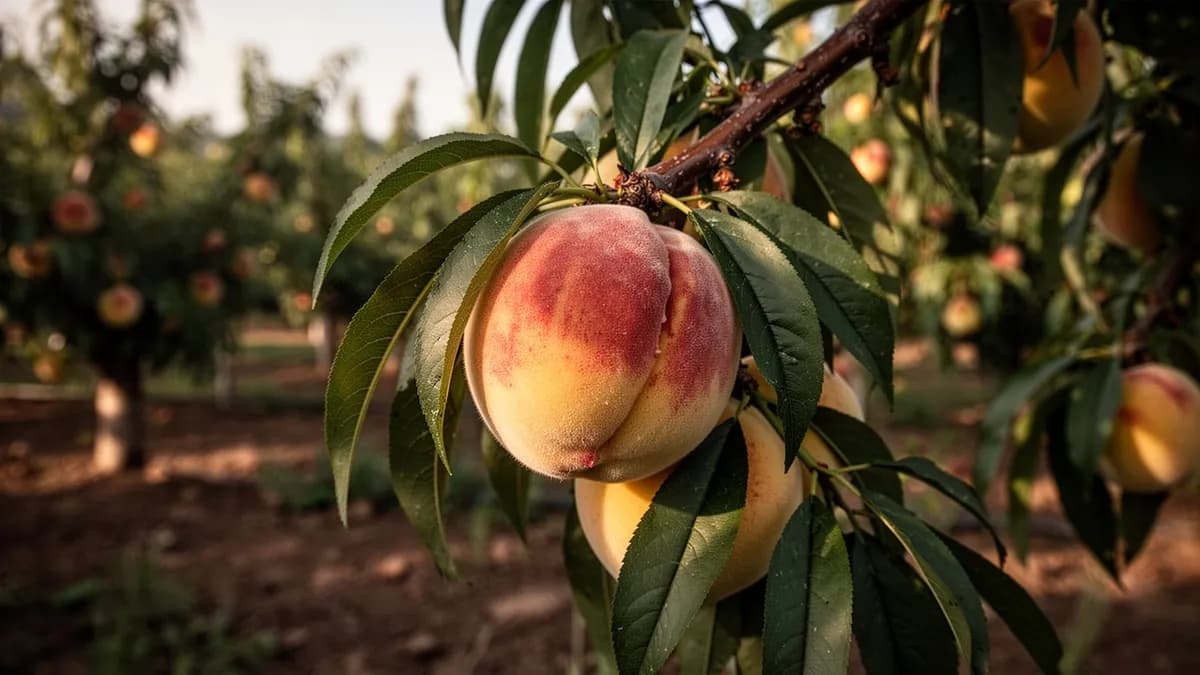
Elberta Peach
Prunus persica 'Elberta'
At a Glance
A classic heirloom freestone peach introduced in 1875, still prized for its large, golden-yellow fruits with red blush and rich, aromatic flavor. Elberta is self-fertile and requires about 800 chill hours, making it well-suited to temperate climates. The fruits are excellent for canning, freezing, and fresh eating.
Planting & Harvest Calendar
Growth Stages
From Seed to Harvest
Dormancy and Chilling
Days 0–75
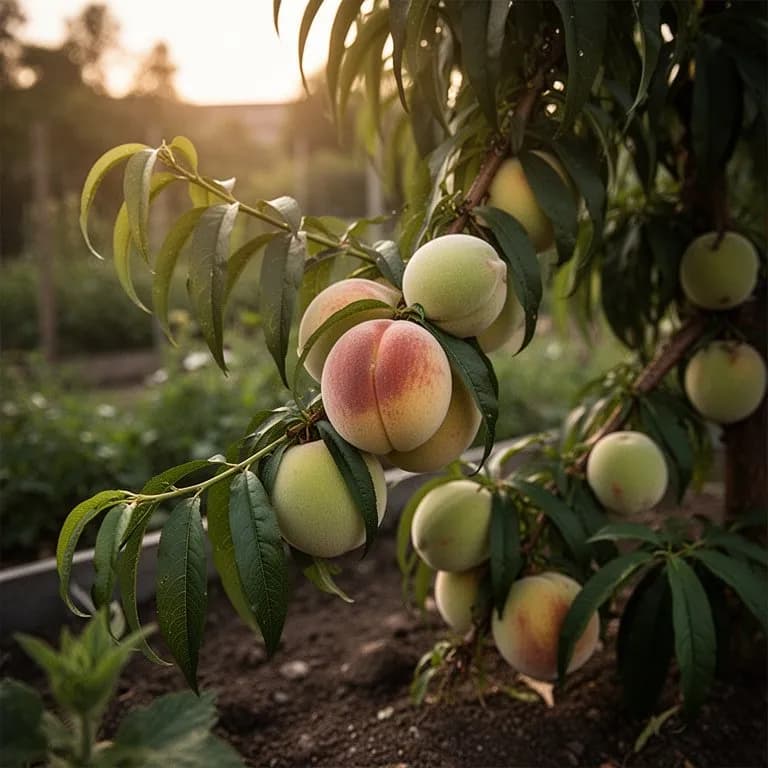
Elberta enters full dormancy after leaf drop in autumn, its reddish-brown branches bearing plump, cone-shaped flower buds set along the previous season's vigorous shoots. Below ground, the root system continues slow activity, drawing on carbohydrate reserves stored in the wood. Most critically, the tree is accumulating its required chilling hours — Elberta needs approximately 800–1,000 hours below 7 °C to break dormancy evenly and set a full crop. This high chilling requirement makes Elberta best suited to USDA zones 5–8 and unsuitable for mild-winter climates below zone 8b.
💡 Care Tip
Perform all major structural pruning during dormancy before bud swell begins. Elberta is a naturally vigorous grower and benefits from moderately heavy pruning — removing 30–40% of one-year-old wood — to maintain an open canopy at a manageable height of 3–4 metres. Apply a dormant horticultural oil spray on a dry day above 4 °C to control scale insects and overwintering mite eggs.
Monthly Care Calendar
What to do each month for your Elberta Peach
April
You are hereNo specific care tasks for this month.
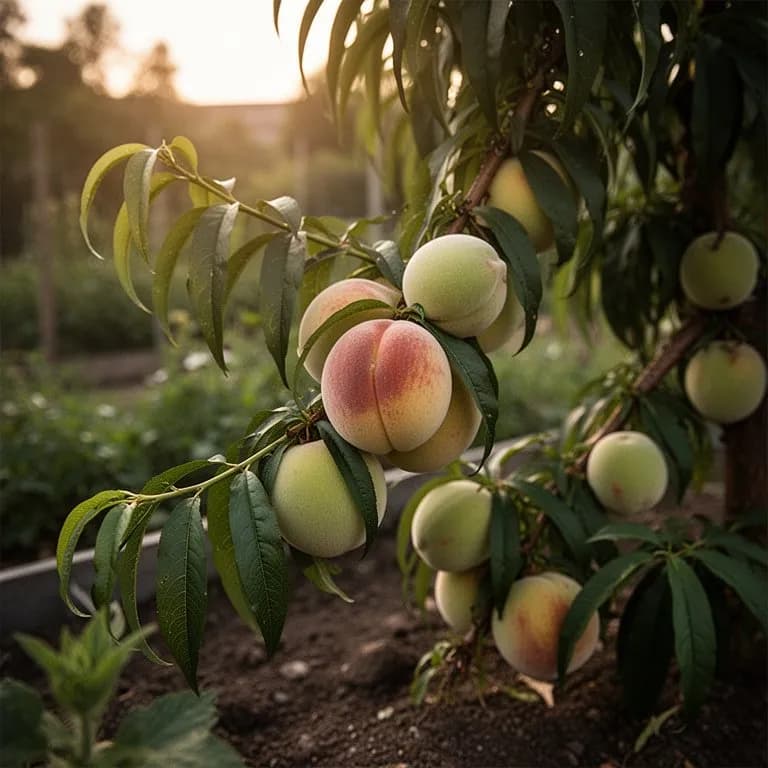
Annual open-center pruning is essential for Elberta: the variety is naturally vigorous and will rapidly grow into a dense, shaded canopy if not kept in check each dormant season.
Did You Know?
Fascinating facts about Elberta Peach
The Elberta peach was introduced in 1870 by Samuel Henry Rumph of Marshallville, Georgia, who named it after his wife, Clara Elberta Moore. Within two decades it had become the dominant commercial peach variety across the entire eastern United States and remained so for nearly a century.
Elberta peach trees need full sun and well-drained soil with a pH of 6.0-6.5. Plant bare-root trees in late winter, spacing them 15-20 feet apart for standard trees or 8-12 feet for semi-dwarf. Elberta is self-fertile but benefits from cross-pollination with varieties like Redhaven or Hale for heavier crops. The tree requires approximately 800 chill hours below 45°F.
Water deeply every 7-10 days during the growing season, increasing frequency during fruit swell in summer. Thin fruit aggressively when marble-sized to 6-8 inches apart on branches to ensure large, well-colored fruit and prevent limb breakage. Train to an open vase shape with 3-4 main scaffolds, keeping the center open for sunlight and air circulation.
Prune annually in late winter, removing 30-40% of the previous year's growth to encourage fresh fruiting wood. Apply nitrogen fertilizer in early spring and a second light application after fruit set. Protect blossoms from late frost with overhead sprinklers or frost cloth, as Elberta blooms relatively early in the season.
The Elberta peach occupies a singular place in American agricultural history as the variety that transformed peach growing from a regional cottage industry into a national commercial enterprise. Its story begins in Marshallville, Georgia, where Samuel Henry Rumph, a passionate horticulturist and farmer, made a fortuitous cross in 1870 between a Chinese Cling peach — a variety tracing its lineage directly to Chinese cultivars introduced to the American Southeast via colonial-era trade — and an heirloom freestone called Old Mixon Free. Rumph named the resulting seedling after his wife, Clara Elberta Moore, and could scarcely have imagined that he was introducing what would become the defining American peach for the next hundred years.
The timing of Elberta's introduction was decisive. The post-Civil War expansion of the railroad network across the American South gave Georgia farmers their first reliable means of shipping fresh perishable produce to northern urban markets quickly enough to arrive in edible condition. Elberta, with its exceptional shipping firmness, large and uniform fruit size, striking golden-and-red appearance, and extended season compared to earlier varieties, proved perfectly suited to the new commercial reality. By the 1880s Elberta had spread beyond Georgia throughout the entire peach-growing belt of the eastern United States, and by the turn of the 20th century it dominated commercial plantings from South Carolina to Michigan.
The canning industry's explosive growth in the early 20th century cemented Elberta's dominance. Its dense, non-stringy yellow flesh, clean freestone separation, and ability to hold color and texture through heat processing made it the preferred variety for canning factories from the American Southeast to California's Central Valley. The image of golden canned peach halves in light syrup that appeared on millions of kitchen shelves through the mid-20th century was almost invariably an Elberta.
In the latter half of the 20th century, newer varieties with higher yields, earlier ripening, or specific disease resistances gradually displaced Elberta in commercial orchards. Yet the variety's combination of exceptional flavor, reliable performance, large fruit size, and historical prestige ensured its survival in home gardens and specialty orchards worldwide. Today, more than 150 years after its introduction in a Georgia farmyard, Elberta remains one of the most widely available and beloved peach varieties for home growers across the temperate world — a living link between the origins of organized American fruit breeding and the modern garden.
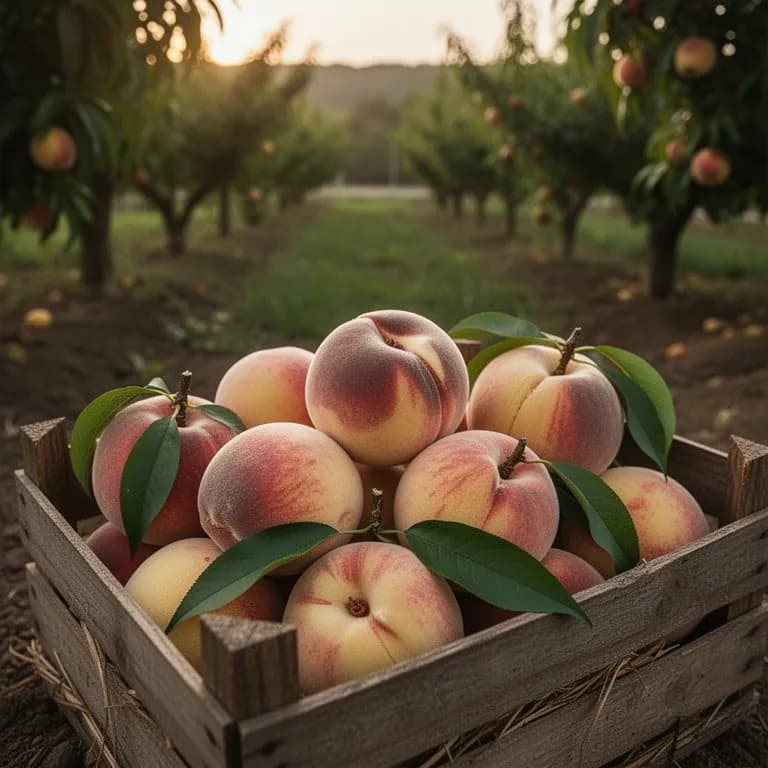
The Elberta peach is the benchmark freestone variety: massive golden fruit with a flaming red blush, rich aroma, and dense, non-stringy yellow flesh that has defined American peach culture since the 1870s.
Elberta peach pits can produce viable seedlings, though offspring will vary from the parent. Crack the pit carefully to extract the seed, or plant the whole pit. Cold-stratify in moist sand at 33-40°F for 90-120 days. Sow one inch deep in spring in well-drained potting mix. Seedlings emerge in 3-4 weeks. For true-to-type Elberta, graft budwood onto seedling rootstock or onto Lovell or Guardian rootstock using T-budding in late summer.
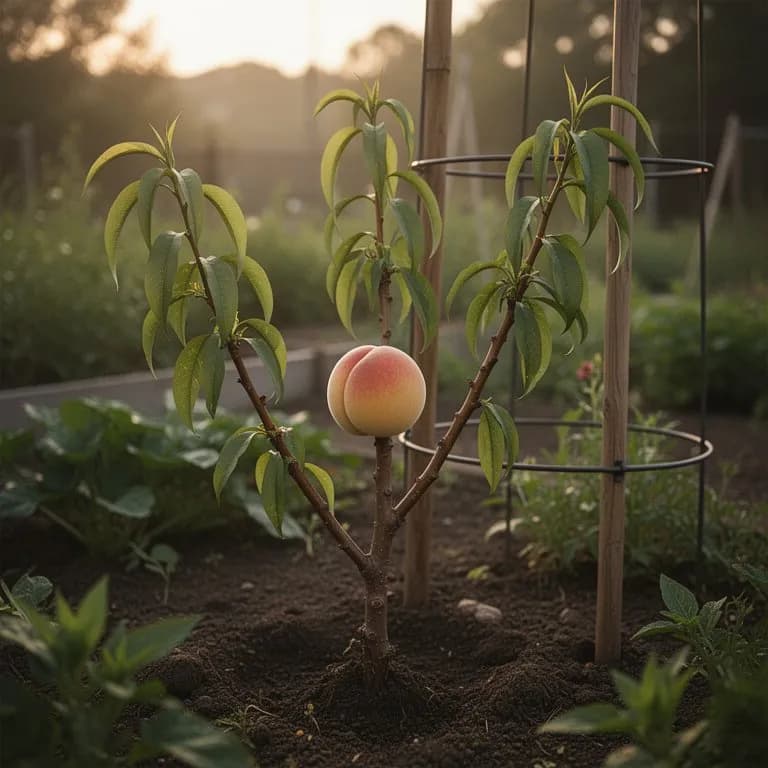
Bare-root Elberta trees planted in late winter or early spring establish quickly in well-drained soil and typically produce their first modest harvest within two to three growing seasons.
Elberta thrives in well-drained sandy loam with pH 6.0-6.5. Heavy clay soils must be amended with compost or planted on raised mounds. Apply 1-2 pounds of 10-10-10 fertilizer per tree in early spring, increasing with tree age. Supplement with calcium to prevent bitter pit and firm fruit walls. Avoid excessive nitrogen, which promotes leafy growth over fruit production. Mulch with 3-4 inches of straw or wood chips.
Check Your Zone
See if Elberta Peach is suitable for your location.
7°C – 30°C
45°F – 86°F
Elberta is a classic high-chill temperate peach variety that performs best in climates with reliably cold winters and warm, moderately dry summers. It requires approximately 800–1,000 hours below 7 °C during winter dormancy — one of the highest chilling requirements of any major commercial peach variety — making it best suited to USDA hardiness zones 5 through 8 and equivalent climates. In zones with insufficient winter chill (below approximately 500 hours), Elberta blooms erratically, sets poorly, and produces a fraction of its potential yield; it is not recommended for warm-winter climates below zone 8b without significant site selection advantages such as a high-elevation or north-facing position. During the growing season, optimal daytime temperatures of 22–30 °C produce the highest sugar accumulation and flavor complexity in ripening Elberta fruit. Temperatures consistently above 35 °C during fruit swell cause sunburn on the red cheek, reduce color uniformity, and can trigger premature softening with diminished flavor. Open Elberta blossoms are damaged at -2 °C and reliably killed at -4 °C; because Elberta blooms in mid-season, it has somewhat better late-frost tolerance than early-blooming varieties, though a single severe late frost can still eliminate the entire crop in a matter of hours.
Common issues affecting Elberta Peach and how to prevent and treat them organically.
Late frost damage to early-opening blossoms is Elberta's greatest vulnerability in cooler zones. Peach leaf curl devastates unsprayed trees every spring. Brown rot can destroy an entire crop during wet, humid ripening periods. Peach tree borers attack stressed trees at the soil line. Short fruit life after harvest means prompt refrigeration is essential. Squirrels and birds target ripe fruit aggressively.
Plant garlic and chives around the base to repel borers and aphids. Tansy attracts beneficial insects while deterring peach pests. Comfrey at the drip line accumulates potassium and makes excellent mulch. Nasturtiums serve as aphid trap crops. Avoid planting near walnuts due to juglone sensitivity. Clover between rows fixes nitrogen and supports beneficial predatory insects.
- 1Elberta's 800–1,000 chilling hour requirement is the first and most important consideration before planting: growers in zones 8b and warmer should select low-chill peach alternatives rather than attempting Elberta in climates that will never provide adequate winter chill, as the variety will consistently disappoint without it.
- 2Plant Elberta in the warmest, most sun-exposed, best-drained position on your property — a south-facing slope or in front of a masonry wall that absorbs and radiates heat will advance ripening by one to two weeks, extend the effective growing season, and provide critical warmth during the bloom period when late frosts are still a risk.
- 3Elberta is naturally one of the most vigorous peach varieties and will consistently grow taller than you want it without annual hard pruning — commit to removing 30–40% of last season's wood each winter not as a corrective measure but as a standard annual practice that keeps the tree at a manageable height of 3–4 metres and maintains a supply of productive new fruiting wood throughout the open canopy.
- 4Never skip the dormant lime-sulfur or copper spray for peach leaf curl: Elberta is moderately susceptible to Taphrina deformans and the disease, while not fatal in a single season, progressively weakens the tree over years of repeated defoliation, reducing fruit size, delaying ripening, and making the tree more vulnerable to secondary stresses including drought and canker.
- 5Elberta sets fruit so heavily that without decisive hand-thinning the tree's energy is diluted across hundreds of undersized, bland peaches — thinning to one fruit every 20 cm feels extreme but the reward is fruit that reaches its full 200–350 g potential size with Brix levels measurably higher than unthinned fruit from the same tree.
- 6Elberta's long and outstanding canning history is not merely tradition: the variety's firm, low-acid, non-stringy flesh genuinely outperforms most modern varieties in heat processing. If you have surplus production, water-bath canning Elberta halves in light syrup is one of the most efficient and rewarding ways to preserve the harvest, yielding jars that maintain excellent flavor and texture for 12–18 months.
- 7Brown rot (Monilinia fructicola) is Elberta's most serious seasonal threat and can destroy ripe fruit on the tree within 48–72 hours of a warm rain event: apply a preventative fungicide spray 7–10 days before anticipated ripeness, remove any infected fruit immediately upon discovery, harvest promptly rather than leaving ripe fruit hanging, and ensure good canopy airflow through annual pruning.
- 8Elberta's large fruit and heavy crop loads make branch breakage a real seasonal risk — install padded props or ties to support heavily laden scaffold branches before the weight of developing fruit exceeds the branch's structural capacity, typically in late June or early July when fruit is in its rapid expansion phase.
- 9Water consistency during the final 3–4 weeks before harvest is critical for Elberta in particular: the variety's large fruit size and dense flesh make it more prone to pit splitting and skin cracking than smaller-fruited varieties when subjected to alternating dry spells and heavy irrigation, and cracked fruit is an immediate brown rot infection site.
- 10When selecting a planting site for Elberta, actively avoid low-lying frost pockets — hollows, valley floors, and positions at the base of slopes where cold air pools on still spring nights — because even a single night at -3 °C during bloom will eliminate the entire year's crop from an otherwise perfectly healthy tree.
Elberta peaches ripen in late July to August, turning golden yellow with a red blush. Freestone fruits separate easily from the pit when ripe. Test ripeness by gentle pressure near the stem end and by fragrance. Pick when the ground color changes from green to yellow. Handle carefully to avoid bruising. A mature standard tree produces 100-150 pounds annually. Harvest over 2-3 weeks as fruit ripens unevenly.
A mature Elberta tree at peak production can fill basket after basket — typical yields of 30–70 kg per tree represent hundreds of dollars in fresh-market value from a single specimen.
Ripe Elberta peaches keep 3-5 days at room temperature or up to two weeks refrigerated at 32-35°F. The freestone flesh is ideal for canning in light syrup, which was Elberta's original claim to fame. Freeze sliced peaches with ascorbic acid to prevent browning. Make peach preserves, jam, butter, and chutney. Elberta also dries beautifully and makes excellent peach brandy and peach wine.
Plan your garden with ease
Love growing Elberta Peach? Use our free garden planner to design your beds, track planting dates, and get personalized care reminders.
Nutritional Info
Per 100g serving
39
Calories
Health Benefits
- Elberta's deep golden-yellow flesh is notably rich in beta-carotene compared to white-fleshed peach varieties, providing meaningful provitamin A activity that supports immune function, vision health, and skin cell integrity.
- Fresh Elberta peaches contain approximately 89% water by weight, making them naturally hydrating and exceptionally satisfying per calorie — at just 39 kcal per 100 g, they are one of the most voluminous low-energy snacks available from the home garden.
- The edible skin of Elberta peaches is particularly rich in polyphenol antioxidants including chlorogenic acid, catechins, and quercetin — compounds associated with reduced cardiovascular disease risk and anti-inflammatory activity.
- Provides a useful source of potassium (190 mg per 100 g) — a mineral essential for regulating blood pressure, maintaining proper fluid balance, and supporting healthy nerve and muscle function throughout the body.
- Elberta peaches contain natural sugars primarily as sucrose, glucose, and fructose in a ratio that the body absorbs gradually, providing sustained energy without the sharp blood glucose spikes associated with refined sugars.
- Contains niacin (vitamin B3), pantothenic acid, and trace minerals including copper and manganese — micronutrients that support energy metabolism, connective tissue formation, and antioxidant enzyme activity.
💰 Why Grow Your Own?
Premium heirloom and organic Elberta peaches command $7–12 USD per kilogram at specialty grocers and farmers markets where they can be found; even standard-quality conventional peaches rarely sell below $3–5 per kilogram during peak season. A single well-managed Elberta tree at mature production typically yields 30–70 kg of fruit annually over a productive lifespan of 15–20 years — a cumulative harvest value of $1,350–$8,400 at mid-range retail prices, from a tree whose bare-root purchase cost is typically $25–60. Beyond the financial comparison, home-grown Elberta harvested at true tree-ripeness — something the commercial supply chain cannot replicate — delivers a depth of aroma and sweetness that makes the comparison with supermarket peaches almost unfair.
Quick Recipes
Simple recipes using fresh Elberta Peach
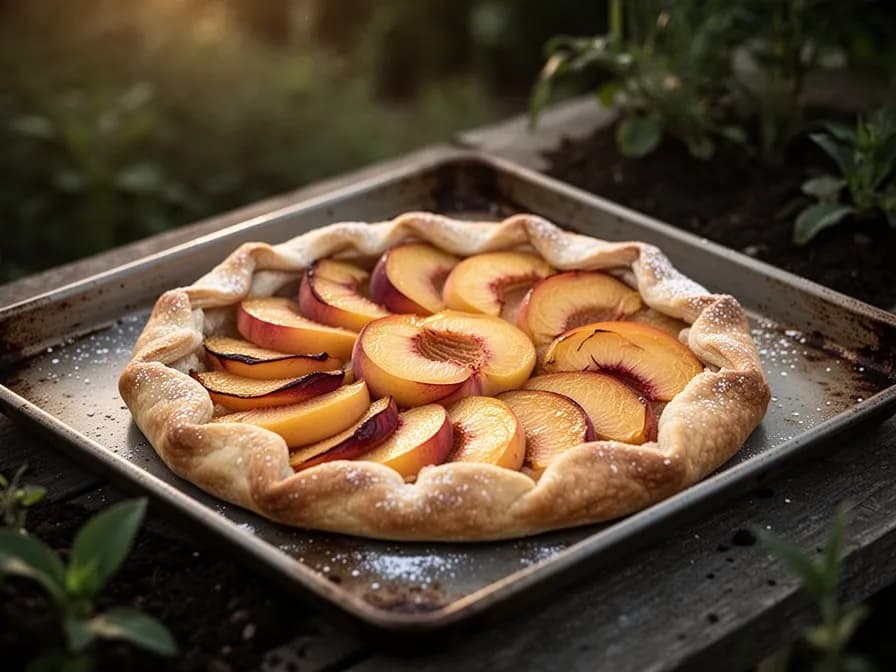
Elberta Peach Preserves
50 minutesA classic stovetop preserve that captures the full aromatic richness of tree-ripened Elberta peaches in a lightly gelled, intensely flavored spread. Elberta's naturally dense, low-acid flesh benefits from a generous squeeze of lemon to achieve a clean set without commercial pectin. Makes approximately five 250 ml jars that keep sealed for up to 18 months — a true taste of summer preserved for the year ahead.
Southern Elberta Peach Pie
30 minutes active, 55 minutes bakingA double-crust pie that lets the flavor of fresh Elberta peaches take center stage. The variety's firm, non-stringy flesh holds its shape beautifully through baking while releasing caramelized, intensely peachy juices that thicken into a glossy filling. The generous quantity of fruit and restrained spicing are the hallmarks of a traditional Southern peach pie — serve warm with a scoop of vanilla ice cream.
Grilled Elberta Peaches with Brown Sugar and Bourbon
15 minutesA quick summer dessert that caramelizes Elberta's natural sugars over direct heat, adding a lightly smoky complexity to the fruit's already rich flavor. Halved peaches are brushed with a brown sugar and bourbon glaze and grilled flesh-side down until deep golden and juicy. Serve alongside vanilla bean ice cream or crème fraîche with a scattering of toasted pecans.
Yield & Spacing Calculator
See how many Elberta Peach plants fit in your garden bed based on the recommended 400cm spacing.
0
Elberta Peach plants in a 4×4 ft bed
0 columns × 0 rows at 400cm spacing
Popular Varieties
Some of the most popular elberta peach varieties for home gardeners, each with unique characteristics.
Elberta (Standard)
The original 1875 Georgia introduction with large, yellow-fleshed freestone fruit and classic peach flavor.
Early Elberta
A sport ripening 7-10 days before standard Elberta with similar size, color, and freestone character.
Gleason Early Elberta
An improved early selection with better color and slightly firmer flesh than the original.
Fay Elberta
A bud sport with more consistent production and slightly better cold hardiness than standard Elberta.
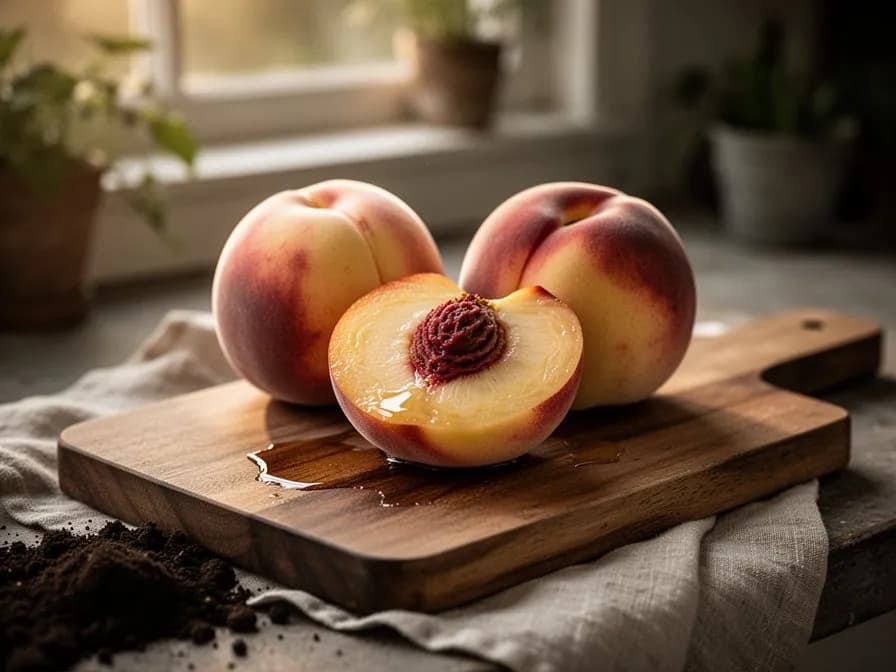
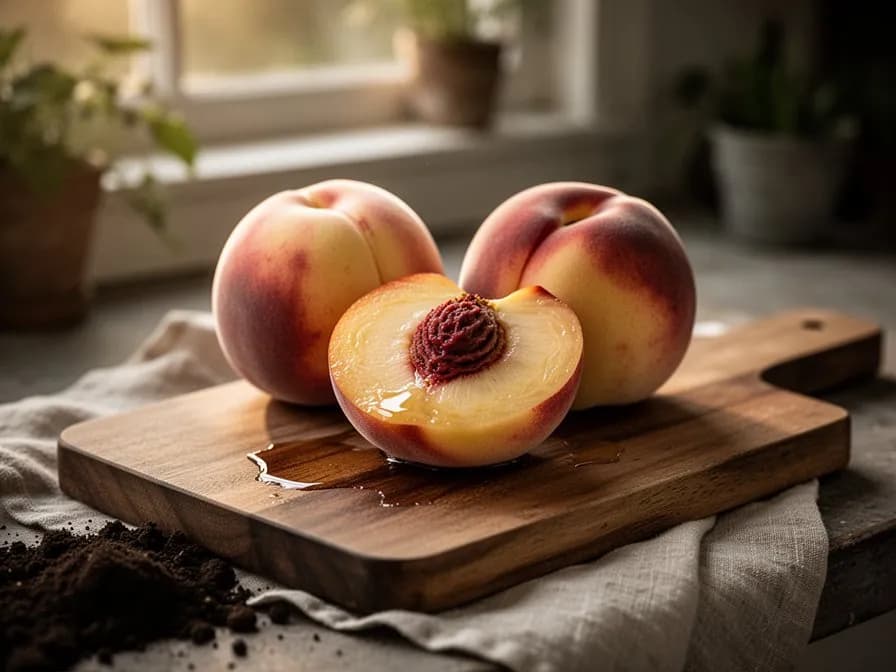
Elberta is a true freestone variety: the golden-yellow flesh separates cleanly from the pit at full ripeness, making it ideal for fresh eating, canning, freezing, and jam-making with no knife work around the stone.
Elberta is the quintessential canning peach, with firm flesh that holds up beautifully in syrup. It excels in peach cobbler, pie, and crisp. The rich aromatic flavor makes outstanding peach ice cream, sorbet, and bellini cocktails. Use for peach salsa, chutney, grilled peach halves, and peach barbecue sauce paired with pork or chicken.
When should I plant Elberta Peach?
Plant Elberta Peach in February, March. It takes approximately 1095 days to reach maturity, with harvest typically in July, August.
What are good companion plants for Elberta Peach?
Elberta Peach grows well alongside Garlic, Chives. Companion planting can improve growth, flavor, and natural pest control.
What hardiness zones can Elberta Peach grow in?
Elberta Peach thrives in USDA hardiness zones 5 through 9. With greenhouse protection, it may be grown in zones 3 through 10.
How much sun does Elberta Peach need?
Elberta Peach requires Full Sun (6-8h+). This means at least 6-8 hours of direct sunlight daily.
How far apart should I space Elberta Peach?
Space Elberta Peach plants 400cm (157 inches) apart for optimal growth and air circulation.
What pests and diseases affect Elberta Peach?
Common issues include Peach Leaf Curl, Peach Tree Borer, Brown Rot, Oriental Fruit Moth. Prevention through good garden practices like crop rotation, proper spacing, and companion planting is the best approach. See the detailed pests and diseases section above for symptoms, prevention, and treatment for each.
How do I store Elberta Peach after harvest?
Ripe Elberta peaches keep 3-5 days at room temperature or up to two weeks refrigerated at 32-35°F. The freestone flesh is ideal for canning in light syrup, which was Elberta's original claim to fame. Freeze sliced peaches with ascorbic acid to prevent browning. Make peach preserves, jam, butter, and...
What are the best Elberta Peach varieties to grow?
Popular varieties include Elberta (Standard), Early Elberta, Gleason Early Elberta, Fay Elberta. Each has unique characteristics suited to different growing conditions and culinary preferences. See the varieties section above for detailed descriptions.
What soil does Elberta Peach need?
Elberta thrives in well-drained sandy loam with pH 6.0-6.5. Heavy clay soils must be amended with compost or planted on raised mounds. Apply 1-2 pounds of 10-10-10 fertilizer per tree in early spring, increasing with tree age. Supplement with calcium to prevent bitter pit and firm fruit walls. Avoid...
Is Elberta a good variety for beginner home growers?
Elberta is an excellent choice for beginner home growers in appropriate climates — USDA zones 5 through 8 where 800 or more chilling hours accumulate reliably each winter. It is vigorous, self-fertile, adaptable to a range of well-drained soil types, and reliably productive when basic care is provided. The variety's requirements are well understood after 150 years of cultivation, its disease susceptibilities are predictable, and it is widely available from nurseries in bare-root and container form. The main skills a beginner must learn are annual open-center pruning, diligent fruit thinning, and a simple three- or four-spray fungicide program for peach leaf curl and brown rot. Growers in warm-winter climates below zone 8b should instead select a low-chill variety specifically recommended for their area, as Elberta without sufficient winter chill will consistently underperform regardless of how well everything else is managed.
How does Elberta compare to modern peach varieties for home use?
Modern peach varieties — such as Redhaven, Reliance, Contender, and various proprietary club varieties — typically offer advantages in specific areas: earlier ripening, improved disease resistance, higher color on the skin, or adaptability to a wider range of climates including low-chill zones. However, Elberta holds its own against most modern introductions in the qualities home growers value most: exceptional fruit size when properly thinned, a rich, complex, intensely peachy flavor at tree-ripeness that many modern varieties bred for shipping firmness cannot match, outstanding performance for canning and preserving, and proven reliability over more than 150 years of documented performance across diverse growing regions. Many experienced home orchard growers maintain an Elberta alongside newer varieties specifically for its flavor and culinary versatility.
Why are the Elberta peaches on my tree small despite a good-looking crop?
Small fruit size in Elberta is almost invariably caused by insufficient fruit thinning. Elberta is a prolific setter and without aggressive hand-thinning it will produce enormous numbers of small, undersized peaches whose combined weight exceeds the tree's ability to supply adequate water, sugars, and nutrients to each individual fruit. The solution is to thin early — once fruitlets reach marble size — leaving one fruit every 20 cm along each branch. This feels counterproductive but the result is dramatically larger fruit: studies consistently show that properly thinned Elberta peaches are 40–80% heavier and significantly higher in soluble solids (Brix) than fruit from the same tree left unthinned. Persistently small fruit can also indicate insufficient irrigation during the rapid expansion phase, potassium or calcium deficiency, or accumulated rootstock stress, but thinning insufficiency is by far the most common cause.
What is the best way to preserve a large Elberta harvest?
Elberta was commercially selected in part for its outstanding suitability for preservation, and all major methods work exceptionally well with this variety. Water-bath canning of Elberta halves or slices in light syrup is the traditional approach and produces jars that maintain excellent texture, color, and flavor for 12–18 months on the shelf — Elberta's firm, non-stringy flesh holds its shape through heat processing far better than softer modern varieties. Freezing is even simpler: peel, slice, and toss with a small amount of ascorbic acid or lemon juice to prevent browning, then freeze in single layers on trays before transferring to sealed bags; frozen Elberta slices keep well for 10–12 months. Jam, preserves, and fruit butters benefit from Elberta's dense, low-moisture flesh and intense flavor. Dehydrating Elberta slices at 57–60 °C produces richly flavored dried peaches superior to most commercial products.
My Elberta tree produces heavily one year and almost nothing the next — why?
Elberta, like many vigorous peach varieties, can develop a biennial bearing pattern — alternating between heavy and light crops — often triggered by a combination of factors. The most common is inadequate fruit thinning in a heavy year: the enormous energy expenditure of bringing an excessive crop to maturity depletes carbohydrate reserves and suppresses flower bud initiation for the following season. A severe late frost that eliminates most of one year's crop can also set up biennial tendencies by allowing the tree to over-invest in vegetative growth that year. The corrective approach is consistent, aggressive thinning every year without exception to maintain even carbohydrate reserve levels, followed by the post-harvest potassium and phosphorus fertilization that supports flower bud formation. Also ensure sufficient irrigation after harvest — a water-stressed tree cannot initiate a full complement of flower buds for the following season.
Can Elberta be grown as a fan-trained tree against a wall?
Yes — fan training Elberta against a south-facing masonry wall (north-facing in the Southern Hemisphere) is an excellent approach, particularly in marginal climates at the cooler edge of its range where the reflected and stored wall heat provides a meaningful microclimate advantage. Fan training suits Elberta's vigorous growth habit and produces a productive, accessible, and visually striking garden feature. The key differences from freestanding open-center culture are the training system — maintaining two main laterals from a low trunk and tying all fruiting shoots horizontally or at 45-degree angles — and the more frequent summer pruning required to keep the fan flat against the support. Irrigation is more critical for wall-trained trees, as the wall zone dries faster than open ground. Allow at least 3.5–4.5 metres of wall width and 2.5–3 metres of height for a mature Elberta fan.
Ready to Grow Elberta Peach?
Add Elberta Peach to your garden plan and start designing your perfect layout.

Vladimir Kusnezow
Gardener and Software Developer
Zone 6b gardener. Growing vegetables and fruits in soil and hydroponics for 6 years. I built PlotMyGarden to plan my own gardens.
Jump to Section