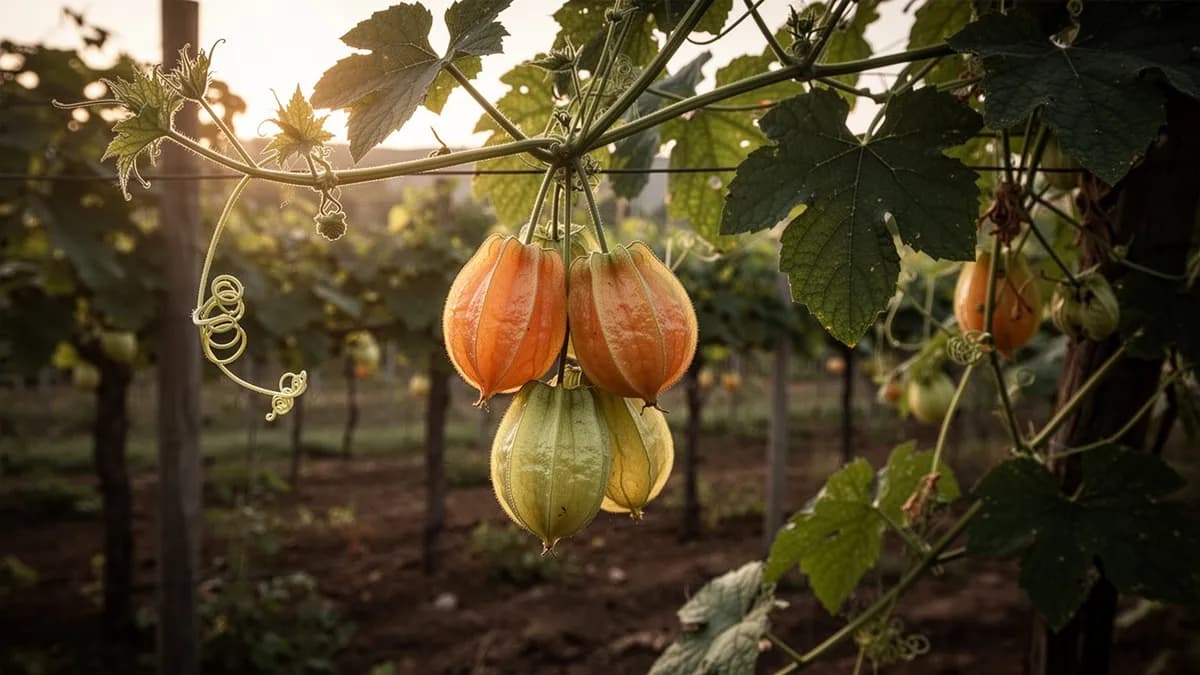
Maypop
Passiflora incarnata
At a Glance
It's planting season for Maypop! Start planning your garden now.
The hardiest passion fruit species, native to the southeastern United States and producing egg-sized yellow-green fruits with sweet, aromatic pulp. Maypop is herbaceous, dying back to the ground each winter and re-emerging in late spring from spreading underground roots. The spectacular fringed purple-and-white flowers are among the most ornamental of any fruiting vine.
Planting & Harvest Calendar
Growth Stages
From Seed to Harvest
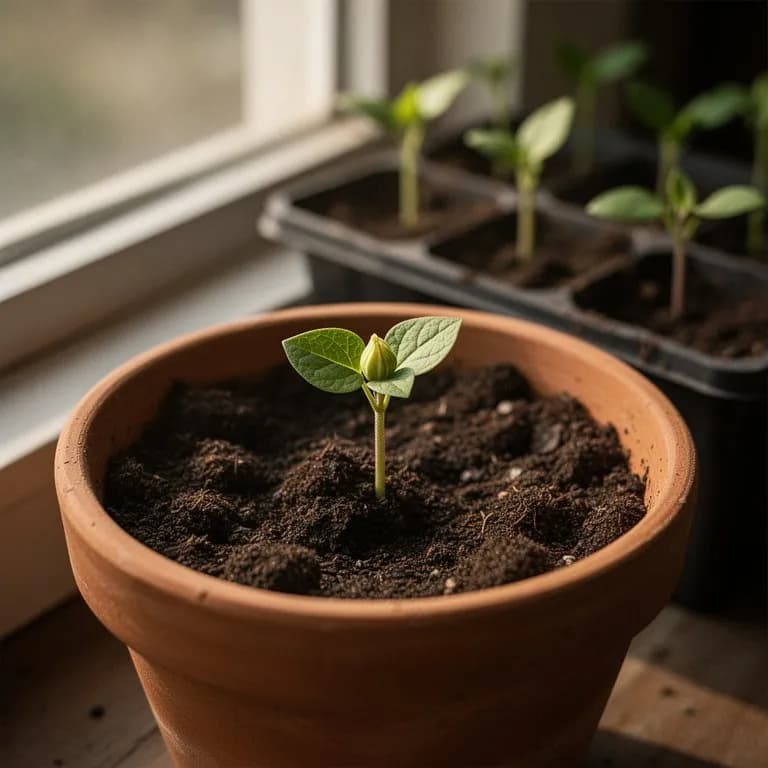
Seed Germination
Days 0–28
Maypop seeds have a hard outer coat and require scarification or cold stratification to break dormancy. Seeds should be soaked in warm water for 24 hours and then nicked with a file before sowing 1 cm deep in warm, moist seed-starting mix. Germination is notoriously slow and erratic, often taking 2-4 weeks even under ideal conditions of 27-30°C soil temperature.
💡 Care Tip
Stratify seeds in the refrigerator for 8-12 weeks before sowing to improve germination rates. Use a heat mat to maintain consistent soil warmth of 27°C or higher. Be patient—some seeds may take up to 12 weeks to sprout. Keep the medium evenly moist but not soggy.
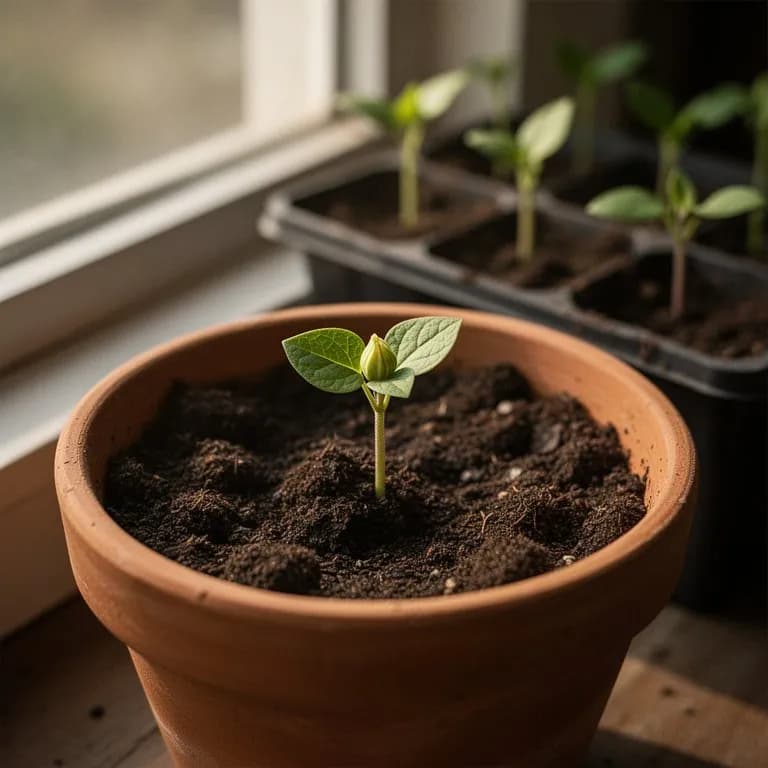
A maypop seedling showing its characteristic three-lobed leaf shape within weeks of germination
Monthly Care Calendar
What to do each month for your Maypop
May
You are hereTransplant hardened-off seedlings outdoors after all danger of frost has passed and nighttime temperatures consistently exceed 15°C. Guide new vine growth onto trellis structures. Begin regular watering schedule of 2.5-5 cm per week. Apply balanced organic fertilizer. Mulch around the base of plants.
Did You Know?
Fascinating facts about Maypop
Maypop gets its common name from the loud popping sound the hollow fruits make when stepped on, a game that was popular among children in the rural American South.
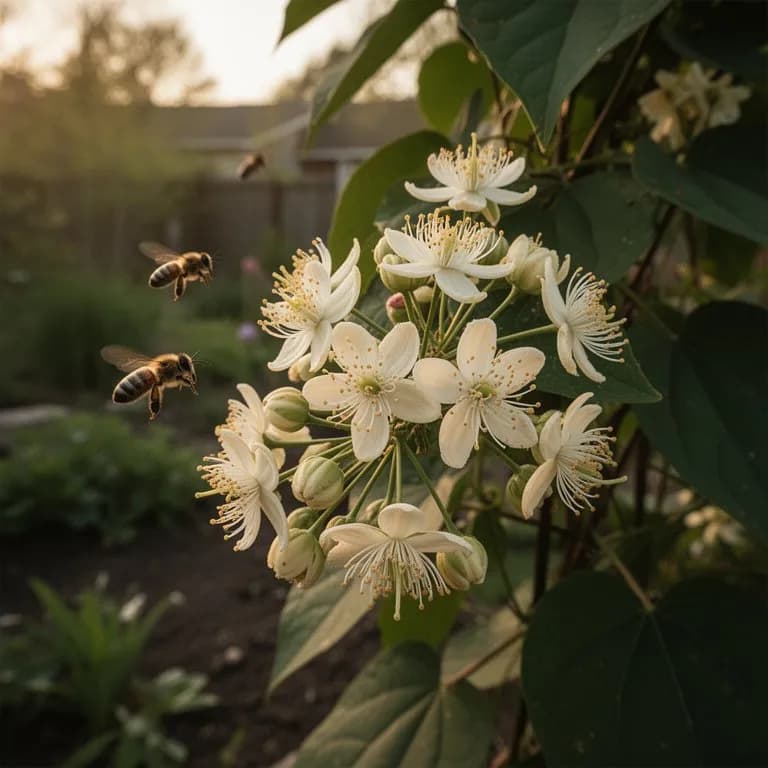
The elaborate flower structure features wavy purple and white filaments called the corona, with five stamens and three stigmas
Maypop is uniquely suited to temperate gardens because it is fully herbaceous, dying completely to the ground each winter and regenerating from vigorous underground rhizomes the following spring. This means it can survive winter temperatures as low as minus 20 degrees Celsius in zone 5, making it the only passion fruit species suitable for cold-climate gardens. Plant rhizome divisions or seedlings in spring after the soil has warmed, spacing them 2 to 3 meters apart along a sturdy trellis, fence, or arbor.
The vine emerges in late spring, typically May, and grows rapidly to 5 or 6 meters by midsummer. Provide a strong support structure of wires, netting, or lattice, as the vine becomes heavy with foliage and fruit by late summer. Maypop spreads aggressively via underground rhizomes and can become invasive in garden beds. Consider planting within a root barrier made of buried sheet metal or thick plastic extending 60 cm deep to contain the spreading roots.
Flowers appear from June through September on new growth, with each spectacular bloom lasting only one day. Most maypop selections require cross-pollination from a genetically distinct vine for good fruit set, so plant at least two different seedlings or named varieties. Large carpenter bees are the most effective pollinators, as they are heavy enough to depress the flower structures and access the pollen. Hand pollination with a small paintbrush can supplement natural pollination and dramatically improve fruit yields.
Passiflora incarnata, commonly known as maypop, purple passionflower, or wild apricot, is a perennial climbing vine native to the southeastern United States. Its natural range extends from Texas and Florida northward through the Appalachian foothills to southern Pennsylvania, Illinois, and Kansas, making it the most cold-tolerant species in the entire Passiflora genus. Archaeological evidence suggests that Indigenous peoples cultivated and utilized maypop for thousands of years before European contact. The Cherokee, Chickasaw, Houma, and other southeastern tribes harvested the ripe fruits as a seasonal food source, brewed the leaves and roots into medicinal teas to treat anxiety, insomnia, and pain, and applied root poultices to wounds and skin inflammations. When Spanish explorers and missionaries encountered the striking flowers in the 1500s, they interpreted the complex floral anatomy as a divine representation of the Passion of Christ—hence the name passionflower. This religious symbolism helped popularize the plant in European botanical gardens by the early 1600s, where it was grown as an ornamental curiosity and studied for its medicinal properties. European herbalists quickly adopted passionflower preparations for nervous conditions, and by the 19th century it had become one of the most widely used sedative herbs in Western herbal medicine. Today, Passiflora incarnata extract is approved in the European Pharmacopoeia for the relief of mild anxiety and sleep disorders, and it appears in numerous over-the-counter herbal supplements worldwide. In modern American gardens, maypop is experiencing a revival of interest as gardeners seek native plants that provide food, medicine, and critical habitat for pollinators and butterflies, particularly the gulf fritillary. Its vigorous growth habit, spectacular flowers, and edible fruits make it a uniquely multifunctional addition to permaculture systems, edible landscapes, and native plant restoration projects throughout its extensive natural range.
Maypop seeds require scarification and cold stratification for reliable germination. Nick the hard seed coat with a file or soak in warm water for 24 hours, then stratify in moist sand at 4 degrees Celsius for 60 to 90 days. Sow stratified seed in warm, moist compost at 25 to 30 degrees Celsius. Germination is often slow and erratic, taking 2 to 12 weeks. Division of established rhizomes in early spring is a faster and more reliable propagation method, producing fruiting vines in the same growing season. Root cuttings of 10 cm taken in late winter also establish well.
Maypop adapts to a wide range of soil types, from sandy to clay, reflecting its native habitat across the diverse soils of the southeastern United States. The vine grows most vigorously in fertile, well-drained loam with a pH of 6.0 to 7.0. Apply a balanced fertilizer in late spring as new growth emerges, and side-dress with compost in midsummer. Avoid excessive nitrogen, which promotes lush vine growth at the expense of flower and fruit production. The spreading rhizome system benefits from a deep organic mulch that moderates soil temperature and retains moisture.
Check Your Zone
See if Maypop is suitable for your location.
10°C – 35°C
50°F – 95°F
Maypop thrives in warm summer conditions between 24-35°C during the active growing season. Vine growth slows significantly below 15°C, and above-ground portions are killed by hard frost. However, the root system is exceptionally cold-hardy, surviving winter soil temperatures as low as -20°C (USDA Zone 5). Optimal flowering and fruit set occur when daytime temperatures are consistently between 26-32°C with warm nights above 18°C. The plant requires a minimum of 150 frost-free days for reliable fruit production.
Common issues affecting Maypop and how to prevent and treat them organically.
Aggressive spreading via underground rhizomes is the main challenge with maypop. The vine can pop up several meters from the original planting and is difficult to eradicate once established in garden beds. Late emergence in spring, often not until May or June, can worry gardeners who fear the vine has died over winter. Poor fruit set is common when only a single clone is planted, as many selections are self-incompatible. The Gulf Fritillary butterfly caterpillar can defoliate vines in late summer, though many gardeners welcome these as they become beautiful butterflies.
Maypop grows well alongside other native southeastern plants such as butterfly weed, bee balm, and coneflowers that attract the large pollinators needed for fruit set. Plant near flowering herbs to encourage carpenter bee populations. Avoid planting maypop near vegetable gardens, as the spreading rhizomes can infiltrate raised beds and compete with crops. Groundcovers of clover or creeping thyme beneath the trellis suppress weeds and fix nitrogen. The vine provides excellent living shade for a south-facing patio or arbor during summer.
Carpenter bees and bumblebees are the primary pollinators of maypop due to their large body size
- 1Plant at least two genetically distinct maypop vines within close proximity to ensure cross-pollination, as the species is self-incompatible and a single plant cannot set fruit on its own even with abundant pollinator activity.
- 2Install a strong, permanent trellis or fence support system before planting, as mature vines become heavy and can topple lightweight structures. A sturdy wooden or metal trellis at least 2 meters tall is ideal for optimal growth and easy harvesting.
- 3Contain the spreading root system by planting inside a buried root barrier made from heavy plastic edging sunk at least 45 cm deep around the planting area, or grow in a large raised bed with a solid bottom to prevent suckers from colonizing your entire garden.
- 4Start seeds with a combination of cold stratification (8-12 weeks in the refrigerator) followed by scarification (nicking the seed coat with a file or sandpaper) to break the double dormancy mechanism and dramatically improve germination rates from under 5% to over 50%.
- 5Provide full sun exposure of at least 6-8 hours daily for maximum flowering and fruit production. Maypop will grow in partial shade but will produce significantly fewer flowers and fruits in shaded conditions compared to full sun plantings.
- 6Water deeply and consistently during the fruit development period from July through September, providing 2.5-5 cm of water per week. Inconsistent watering during this critical stage can cause developing fruits to drop prematurely from the vine.
- 7Embrace the gulf fritillary caterpillars that will inevitably appear on your vines rather than treating them as pests. Healthy maypop vines grow fast enough to tolerate significant caterpillar feeding, and the beautiful orange butterflies they become are effective pollinators and a delight to watch.
- 8Harvest fruits only when they have turned fully yellow and feel slightly soft to gentle pressure, or better yet, collect them from the ground after they drop naturally from the vine. Green maypop fruits will not ripen after picking and have an unpleasant astringent taste.
- 9Propagate new plants easily from 15 cm stem cuttings taken in late spring, root suckers separated from the parent plant in early spring, or by layering low-growing stems into contact with moist soil where they will root at the nodes within a few weeks.
- 10Apply a thick winter mulch of 10-15 cm over the root zone after the first killing frost, especially if gardening in USDA Zones 5 or 6 where extreme cold snaps could damage the crown. Straw, shredded leaves, or pine needles all work well as insulating winter mulch materials.
Maypop fruits ripen from August through October, turning from green to yellow-green and eventually developing a wrinkled, slightly soft skin when fully ripe. The fruit drops from the vine when mature, so placing a soft mulch or collecting net beneath the trellis simplifies harvesting. Ripe fruits have a strong, sweet tropical aroma and the pulp surrounding the seeds is intensely flavored. Each vine can produce 20 to 50 fruits per season depending on pollination success. Unripe green fruits are inedible and potentially mildly toxic, so only harvest fully ripe specimens.
Fresh maypop fruits keep for only a few days at room temperature once fully ripe, as the thin skin allows rapid moisture loss. Refrigeration extends shelf life to about one week. The aromatic pulp can be separated from the seeds by pressing through a sieve and frozen in small portions for use throughout winter. Maypop pulp makes an excellent jelly with a unique tropical passion fruit flavor. The strained juice can be concentrated into a syrup for cocktails and desserts. The seeds are edible and crunchy, adding texture when the pulp is eaten fresh.
Plan your garden with ease
Love growing Maypop? Use our free garden planner to design your beds, track planting dates, and get personalized care reminders.
Nutritional Info
Per 100g serving
97
Calories
Health Benefits
- Exceptionally high in dietary fiber at over 10 g per 100 g serving, supporting digestive health and satiety
- Rich source of vitamin C with approximately 30 mg per 100 g, comparable to many citrus fruits
- Contains significant amounts of iron at 1.6 mg per 100 g, contributing to healthy red blood cell production
- Good source of riboflavin (vitamin B2) at 0.13 mg per 100 g, supporting energy metabolism
- Provides a notable amount of potassium at 348 mg per 100 g, supporting heart health and fluid balance
- Contains bioactive compounds including flavonoids (chrysin, vitexin) and alkaloids (harman, harmine) with demonstrated calming properties
💰 Why Grow Your Own?
A single established maypop vine can produce 30-50 ripe fruits per season, with each fruit yielding about 2-3 tablespoons of pulp. Organic passion fruit typically costs $4-8 per fruit at specialty grocery stores, meaning a productive vine could provide $120-400 worth of fruit annually. Additionally, the leaves can be dried for passionflower tea, which retails for $12-25 per 100 g package. Since maypop is a perennial that returns from its roots each year and often spreads via suckers, a single initial investment of $8-15 for a plant can yield a decade or more of harvests with virtually no ongoing cost beyond basic garden inputs.
Quick Recipes
Simple recipes using fresh Maypop
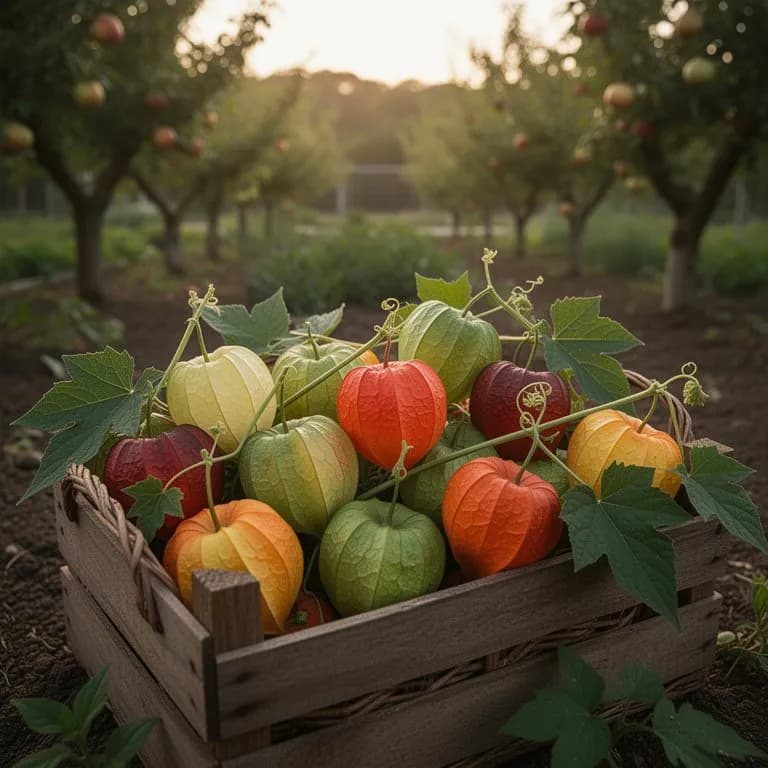
Fresh Maypop Passion Fruit Juice
10 minutesA refreshing tropical-tasting juice made from ripe maypop pulp. The sweet-tart flavor of fresh maypop combines beautifully with a touch of honey for a unique homegrown beverage that captures the essence of a southern summer garden.
Maypop Pulp Yogurt Parfait
10 minutesA beautiful layered parfait that showcases the aromatic pulp of fresh maypops over creamy yogurt and crunchy granola. The seeds add a pleasant crunch and the tangy-sweet pulp contrasts perfectly with the cool yogurt base.
Maypop Passion Fruit Curd
25 minutesA silky, intensely flavored fruit curd made with strained maypop juice. This versatile spread works on toast, as a tart filling, or spooned over ice cream. The concentrated maypop flavor is bright, tropical, and utterly unique among homegrown preserves.
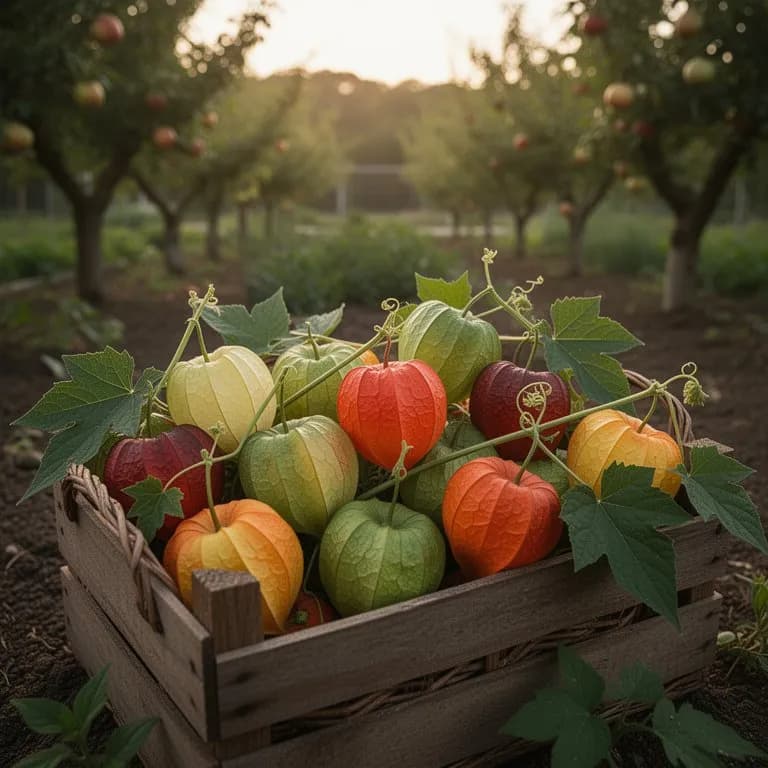
Fully ripe maypop fruits drop from the vine and develop a wrinkled, slightly soft skin when ready to eat
Yield & Spacing Calculator
See how many Maypop plants fit in your garden bed based on the recommended 200cm spacing.
0
Maypop plants in a 4×4 ft bed
0 columns × 0 rows at 200cm spacing
Popular Varieties
Some of the most popular maypop varieties for home gardeners, each with unique characteristics.
Incense
A popular cultivar selected for large, fragrant fruit with abundant sweet pulp. Vigorous grower with particularly showy flowers. Widely available from nurseries.
Byron Beauty
Selected for ornamental value with extra-large, deeply fringed flowers in purple and white. Good fruit production when cross-pollinated with a different variety.
Maypop Native Selections
Wild-collected seed strains from various southeastern US populations. Variable in fruit size, flavor, and cold hardiness but well-adapted to local conditions.
Maypop has a true passion fruit flavor, sweet and intensely aromatic with tropical notes of guava and citrus. The pulp is delicious eaten fresh from the fruit with a spoon, seeds and all. It makes an exceptional jelly, juice, and flavoring for ice cream and yogurt. The pulp can be used as a substitute for common passion fruit in any recipe. Maypop leaves and flowers are also used in herbal teas traditionally valued for their calming properties.
When should I plant Maypop?
Plant Maypop in April, May. It takes approximately 365 days to reach maturity, with harvest typically in August, September, October.
What are good companion plants for Maypop?
Maypop grows well alongside Passion Fruit. Companion planting can improve growth, flavor, and natural pest control.
What hardiness zones can Maypop grow in?
Maypop thrives in USDA hardiness zones 5 through 9. With greenhouse protection, it may be grown in zones 3 through 10.
How much sun does Maypop need?
Maypop requires Full Sun (6-8h+). This means at least 6-8 hours of direct sunlight daily.
How far apart should I space Maypop?
Space Maypop plants 200cm (79 inches) apart for optimal growth and air circulation.
What pests and diseases affect Maypop?
Common issues include Gulf Fritillary Caterpillar, Fusarium Root Rot, Cucumber Mosaic Virus. Prevention through good garden practices like crop rotation, proper spacing, and companion planting is the best approach. See the detailed pests and diseases section above for symptoms, prevention, and treatment for each.
How do I store Maypop after harvest?
Fresh maypop fruits keep for only a few days at room temperature once fully ripe, as the thin skin allows rapid moisture loss. Refrigeration extends shelf life to about one week. The aromatic pulp can be separated from the seeds by pressing through a sieve and frozen in small portions for use throug...
What are the best Maypop varieties to grow?
Popular varieties include Incense, Byron Beauty, Maypop Native Selections. Each has unique characteristics suited to different growing conditions and culinary preferences. See the varieties section above for detailed descriptions.
What soil does Maypop need?
Maypop adapts to a wide range of soil types, from sandy to clay, reflecting its native habitat across the diverse soils of the southeastern United States. The vine grows most vigorously in fertile, well-drained loam with a pH of 6.0 to 7.0. Apply a balanced fertilizer in late spring as new growth em...
Why is my maypop vine producing flowers but no fruit?
The most common reason for flowers without fruit is a lack of cross-pollination. Passiflora incarnata is self-incompatible, meaning pollen from the same plant or a genetically identical clone cannot fertilize its own flowers. You need at least two genetically distinct plants (grown from different seeds or sourced from different parent plants) to achieve fruit set. Additionally, maypop requires large-bodied pollinators like carpenter bees and bumblebees to effectively transfer the heavy pollen between flowers. If these pollinators are scarce in your area, you can hand-pollinate by transferring pollen from the anthers of one plant to the stigmas of another using a small paintbrush.
How do I stop maypop from spreading and taking over my garden?
Maypop spreads vigorously through underground root suckers that can emerge several meters from the parent plant. To manage this, install a physical root barrier of heavy plastic or metal edging buried at least 45 cm deep in a complete ring around the planting area. Alternatively, grow maypop in a large container or raised bed with a solid bottom. Regularly patrol the perimeter of your planting and cut any emerging suckers at ground level. Mowing over suckers in lawn areas will also suppress their growth. In small gardens, consider growing maypop in a 75-liter or larger container with a sturdy trellis.
When is the right time to harvest maypop fruits, and how do I know they are ripe?
Maypop fruits are ripe when they turn from green to yellow or yellowish-green and feel slightly soft when gently squeezed. The most reliable indicator of ripeness is when fruits detach from the vine and drop to the ground on their own. A slightly wrinkled skin indicates full ripeness and peak sweetness. Never harvest green, firm fruits as they will not ripen off the vine and taste unpleasantly sour and astringent. Ripe fruits typically appear from late August through October depending on your climate and when pollination occurred. Check under the vine daily during this period as fallen fruits can attract insects or spoil quickly on damp ground.
Can I grow maypop from seed, and how long until it produces fruit?
Yes, maypop can be grown from seed, but germination requires patience and proper preparation. Seeds have a hard coat that must be scarified (nicked or sanded) and cold-stratified in the refrigerator for 8-12 weeks to break dormancy. Even with proper treatment, germination can take 2-8 weeks at warm soil temperatures of 27-30°C. Seed-grown plants typically do not flower or fruit in their first year, as they focus energy on root and vine establishment. Expect your first flowers and potential fruit in the second or third growing season. For faster results, start with nursery plants or root divisions from established vines, which can flower and fruit in their first full growing season.
Is maypop passionflower safe to use as an herbal tea, and what are the benefits?
Maypop (Passiflora incarnata) has a long history of safe use as an herbal tea and is approved by the European Medicines Agency for mild anxiety relief and sleep support. The dried leaves, stems, and flowers are traditionally brewed into a calming tea. Studies suggest the flavonoids chrysin and vitexin in passionflower interact with GABA receptors to produce mild relaxation effects. To make tea, steep 1-2 teaspoons of dried aerial parts in hot water for 10-15 minutes. However, consult your healthcare provider before use if you are pregnant, nursing, taking sedative medications, or scheduled for surgery, as passionflower may enhance the effects of sedative drugs.
Will maypop survive winter in cold climates, and how do I protect it?
Maypop is the hardiest passionflower species and its root system can survive temperatures as low as -20°C, making it reliable in USDA Zones 6-9 and possible in sheltered Zone 5 locations. The above-ground vine will die back completely after the first hard frost, which is normal. To maximize winter survival in cold areas, apply a 10-15 cm layer of insulating mulch (straw, shredded leaves, or pine needles) over the root zone after the vines die back in fall. In Zone 5, choose a planting site against a south-facing wall or building for added warmth. New growth will emerge from the roots in late spring once soil temperatures warm. Do not worry if shoots appear late compared to other plants—maypop is one of the last perennials to emerge in spring.
Ready to Grow Maypop?
Add Maypop to your garden plan and start designing your perfect layout.

Vladimir Kusnezow
Gardener and Software Developer
Zone 6b gardener. Growing vegetables and fruits in soil and hydroponics for 6 years. I built PlotMyGarden to plan my own gardens.
Jump to Section