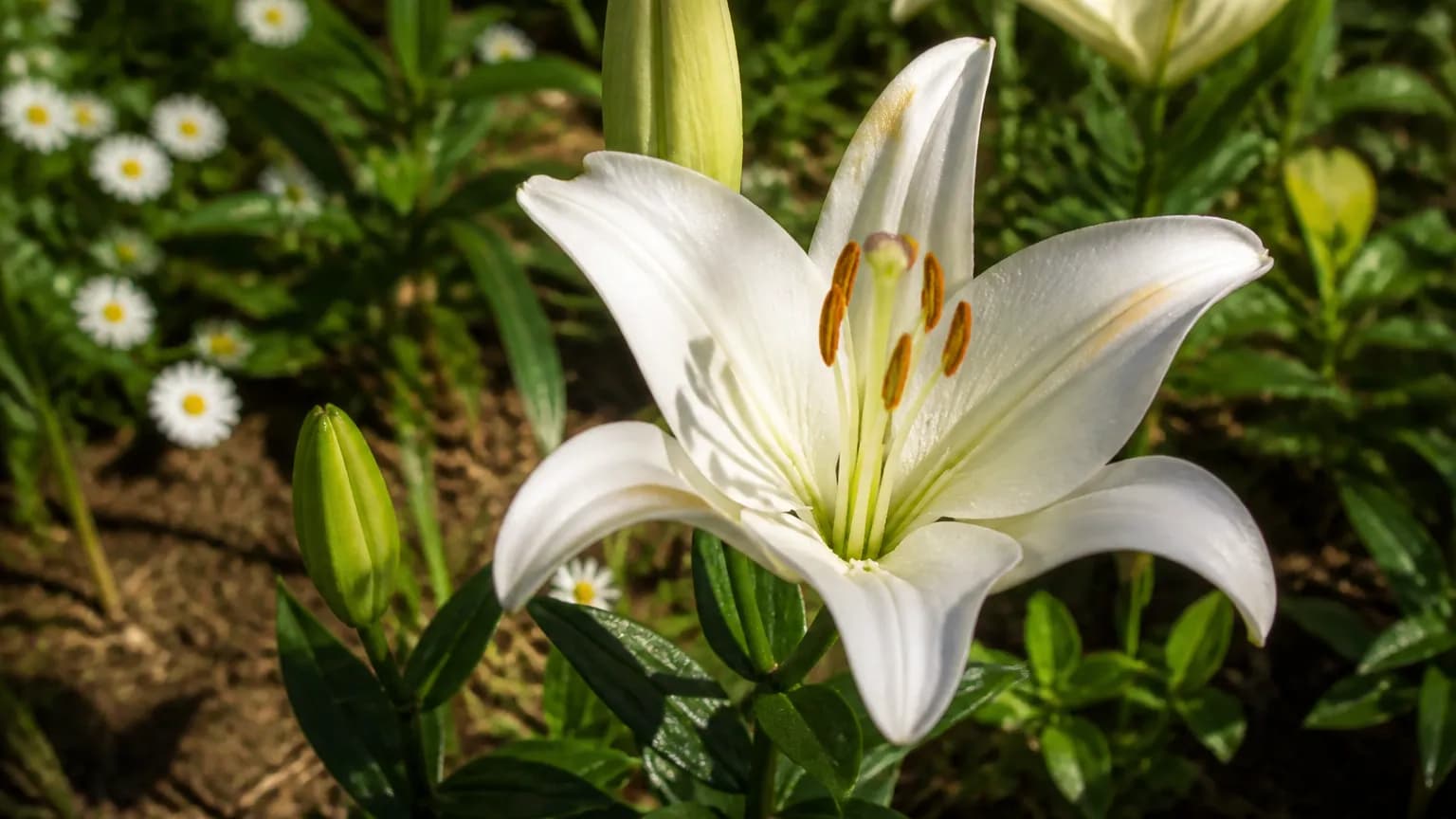
Oriental Lily
Lilium orientalis
At a Glance
A late-summer lily with enormous, outward-facing or pendulous flowers in pink, white, and crimson with an intoxicating fragrance. Oriental lilies prefer slightly acidic soil and afternoon shade in hot climates to prevent flower bleaching. Stake tall varieties and plant near seating areas where their powerful perfume can be enjoyed.
Planting & Harvest Calendar
Growth Stages
From Seed to Harvest
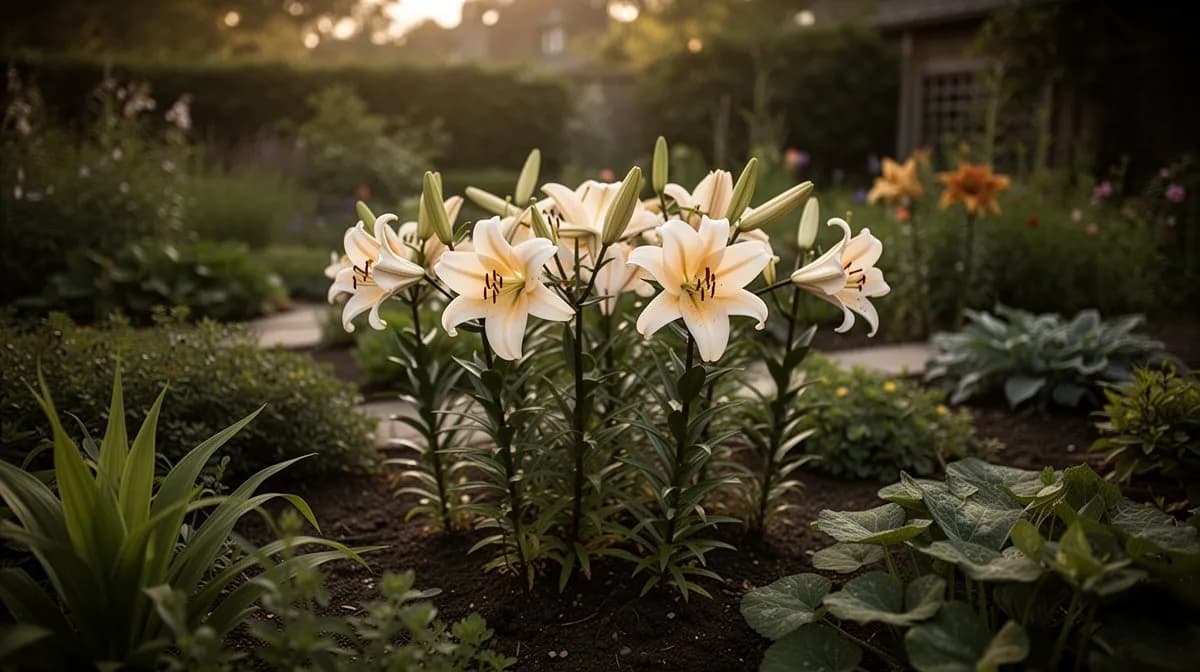
Bulb Dormancy & Planting
Days 0–30
Oriental Lily bulbs are planted in autumn or early spring while dormant. The bulbs are large, composed of overlapping fleshy scales without a protective papery tunic, making them vulnerable to drying out. Once planted 15–20 cm deep in well-drained, slightly acidic soil (pH 5.5–6.5), the bulb begins developing basal roots from the root plate at the bottom. Stem roots will later emerge from the underground portion of the stem above the bulb. During this stage, the bulb is drawing on stored carbohydrate reserves to fuel root establishment and prepare for the coming growth flush.
💡 Care Tip
Never let bulbs dry out before planting — store them in slightly damp peat moss or vermiculite if you cannot plant immediately. Mulch the planting area with 8–10 cm of organic material to insulate the soil and maintain even moisture levels throughout the dormancy period.
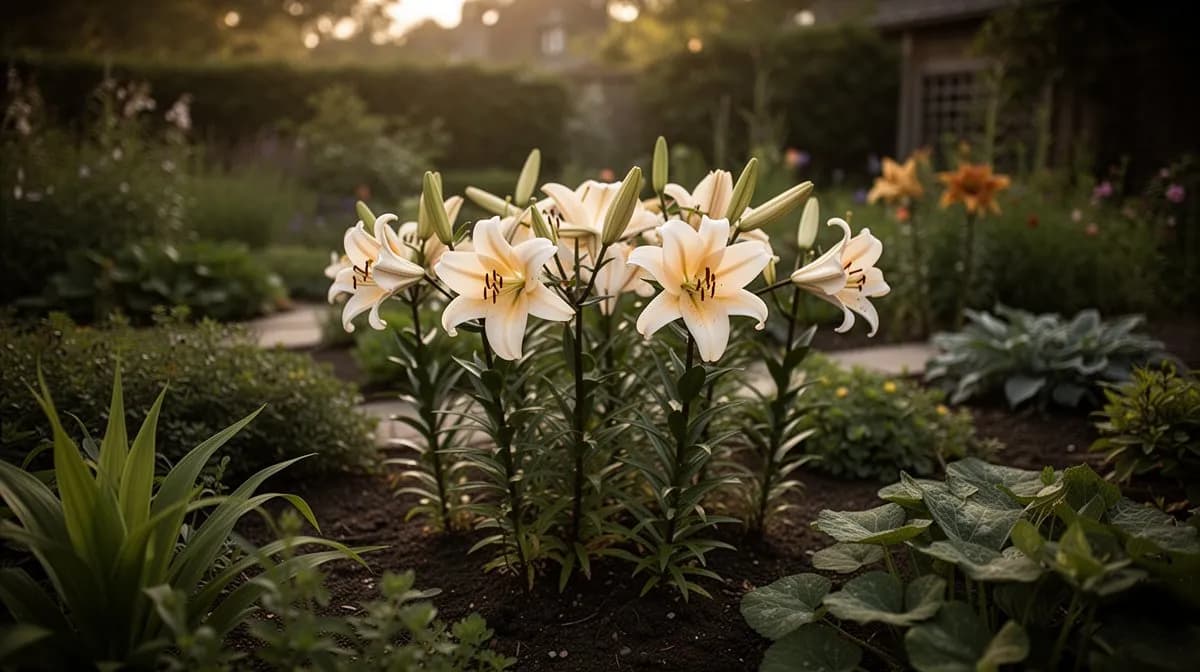
Oriental Lily bulbs should be planted 15–20 cm deep and 30 cm apart in autumn or early spring, with the pointed end facing upward
Monthly Care Calendar
What to do each month for your Oriental Lily
May
You are hereStake tall cultivars before they reach full height. Begin biweekly liquid feeding with a high-potassium fertilizer. Watch for lily leaf beetle (Lilioceris lilii) — handpick adults and check undersides of leaves for orange egg clusters. Water deeply and consistently.
Did You Know?
Fascinating facts about Oriental Lily
The Stargazer lily, the most famous Oriental hybrid, was created by California lily breeder Leslie Woodriff in 1978 — he named it because its flowers face upward toward the sky, unlike most lilies that nod downward.
Oriental lilies are the aristocrats of the lily world, producing enormous, outward-facing or pendulous flowers with an intoxicating, heady fragrance that perfumes the entire garden. Blooming in mid to late summer (July-August) after Asiatic lilies have finished, they extend the lily season with flowers up to 25cm across in white, pink, crimson, and bicolor patterns, often with dramatic spots and papillae.
Plant bulbs 15-20cm deep in spring or autumn in well-drained, humus-rich, acidic soil (pH 5.5-6.5). Oriental lilies are less tolerant of alkaline conditions than other lily groups and may develop chlorosis (yellow leaves) in limy soil. In hot climates, provide afternoon shade to prevent flower bleaching and extend bloom life. Cool, moist roots are essential—mulch heavily.
Stake tall varieties before they flower, as the enormous blooms are heavy. Remove developing seed pods after flowering to conserve energy. Oriental lilies are somewhat less vigorous than Asiatics and may need replacement every 3-5 years, though in ideal conditions they can persist and multiply well.
Oriental Lilies trace their origins to the mountainous regions of Japan, where their parent species Lilium auratum (the gold-banded lily) and Lilium speciosum (the Japanese lily) grow wild on volcanic slopes and forest margins. Lilium auratum was first introduced to Western horticulture in 1862 when specimens were shipped from Yokohama to London, where they caused a sensation at the Royal Horticultural Society. The species proved difficult to cultivate in European gardens, being susceptible to viral diseases and intolerant of alkaline soils. Lilium speciosum, introduced somewhat earlier from Japan and China, proved hardier but still challenging. Systematic hybridization between these and related species began in earnest in the 1950s, led by breeders in Oregon, California, the Netherlands, and New Zealand. The breakthrough came when Jan de Graaff's Oregon Bulb Farms and later Leslie Woodriff developed crosses that combined the spectacular flower size and fragrance of the Japanese species with improved garden vigor and disease resistance. Woodriff's creation of the Stargazer lily in 1978 revolutionized the industry — it was the first upward-facing Oriental hybrid, making it ideal for both garden display and the cut flower trade. Today, the Netherlands is the world's largest producer of Oriental Lily bulbs, with Dutch growers exporting hundreds of millions of bulbs annually to markets worldwide. Modern breeding programs continue to expand the range of colors, improve virus tolerance through tissue culture propagation, and develop compact cultivars suited to container growing. The OT (Orienpet) hybrids, crossing Orientals with trumpet lilies, have further extended the range with even larger flowers and greater heat tolerance.
Oriental lilies are propagated by bulb scales, offsets, or stem bulbils. For scale propagation, remove a few outer scales from a healthy bulb, dust with fungicide, and place in a sealed bag with damp vermiculite at 20°C. Tiny bulblets form at the base of each scale in 6-8 weeks. Pot up and grow on for 2-3 years to flowering size. Bulb offsets can be separated at lifting time and grown on.
Oriental lilies require acidic, well-drained, humus-rich soil with a pH of 5.5-6.5. They struggle in alkaline conditions—acidify with sulfur or use ericaceous compost in containers. Incorporate plenty of leaf mold and composted bark. Feed in spring with ericaceous fertilizer and again with high-potassium feed as buds develop. Heavy mulching with acidic materials (pine bark, leaf mold) is essential.
Check Your Zone
See if Oriental Lily is suitable for your location.
15°C – 25°C
59°F – 77°F
Oriental Lilies thrive in moderate temperatures between 15°C and 25°C during the growing season. They are less heat-tolerant than Asiatic lilies and may struggle in regions with prolonged temperatures above 30°C, where bud blast and shortened bloom periods are common. Night temperatures of 15–18°C are ideal for flower development and color intensity. The bulbs are hardy to USDA zone 4 (approximately -34°C) when properly mulched, and require 6–8 weeks of winter chill below 7°C to break dormancy and produce vigorous spring growth.
Common issues affecting Oriental Lily and how to prevent and treat them organically.
Chlorosis (yellowing leaves) in alkaline soil is the most common oriental lily problem—test soil pH and acidify if above 6.5. Lily beetles are devastating; inspect and hand-pick relentlessly. The heavy flowers of tall varieties need staking. Oriental lilies are shorter-lived than Asiatics and may need periodic replacement. In very hot climates, the flowers bleach in direct sun; provide afternoon shade.
Oriental lilies are best planted where their incredible fragrance can be enjoyed—near seating areas, entrances, and beneath open windows. Combine with blue delphiniums, white roses, and silver-leaved artemisia for a classic color scheme. The tall stems benefit from lower-growing companions that shade the roots: hostas, heuchera, and low-growing geraniums are ideal. Plant after Asiatic lilies for a continuous lily season.
- 1Plant Oriental Lily bulbs at a depth of three times the bulb height (typically 15–20 cm deep) in well-drained, humus-rich soil with a slightly acidic pH of 5.5–6.5 for best results.
- 2Choose a planting site that receives at least 6 hours of direct sunlight on the upper stems and flowers, but where the root zone is shaded by low companion plantings to keep soil cool.
- 3Ensure excellent drainage by incorporating coarse grit, perlite, or sharp sand into heavy clay soils — Oriental Lily bulbs rot quickly in waterlogged conditions, especially during winter dormancy.
- 4Mulch generously with 8–10 cm of bark chips, leaf mold, or pine needles to maintain soil moisture, suppress weeds, and provide the slightly acidic conditions that Oriental Lilies prefer.
- 5Stake tall cultivars early in the growing season using bamboo canes or grow-through ring supports, positioning them before buds develop to avoid piercing roots or damaging stems.
- 6Remove spent flower heads immediately after petals drop, but leave the entire stem and foliage intact until it has turned completely brown and dry — the green leaves photosynthesize to replenish the bulb for next year's blooms.
- 7Water deeply and consistently during the growing season, providing approximately 2.5 cm of water per week, but reduce watering gradually after flowering as the foliage begins to yellow and senesce.
- 8Feed every two weeks from shoot emergence through flowering with a liquid fertilizer high in potassium (such as tomato feed) to promote strong stems and abundant, richly colored blooms.
- 9Never store Oriental Lily bulbs in a dry place for extended periods — unlike tulips and daffodils, they lack a protective papery tunic and will desiccate rapidly, losing viability within days.
- 10Keep Oriental Lilies well away from cats, as all Lilium species are extremely toxic to felines — even tiny amounts of pollen or leaf material can cause fatal kidney failure within hours of ingestion.
Oriental lilies are premium cut flowers. Cut when the first bud in the cluster is showing color and beginning to open. The remaining buds will open over 7-10 days, providing an extended display. Remove orange pollen anthers immediately to prevent staining. One stem of an oriental lily can perfume an entire room. Leave at least one-third of the stem on the plant.
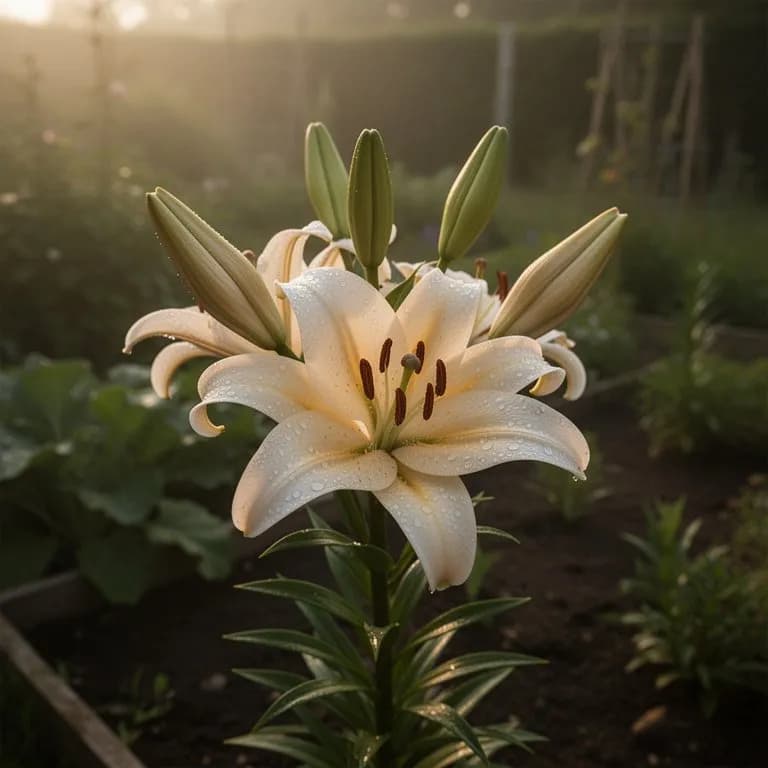
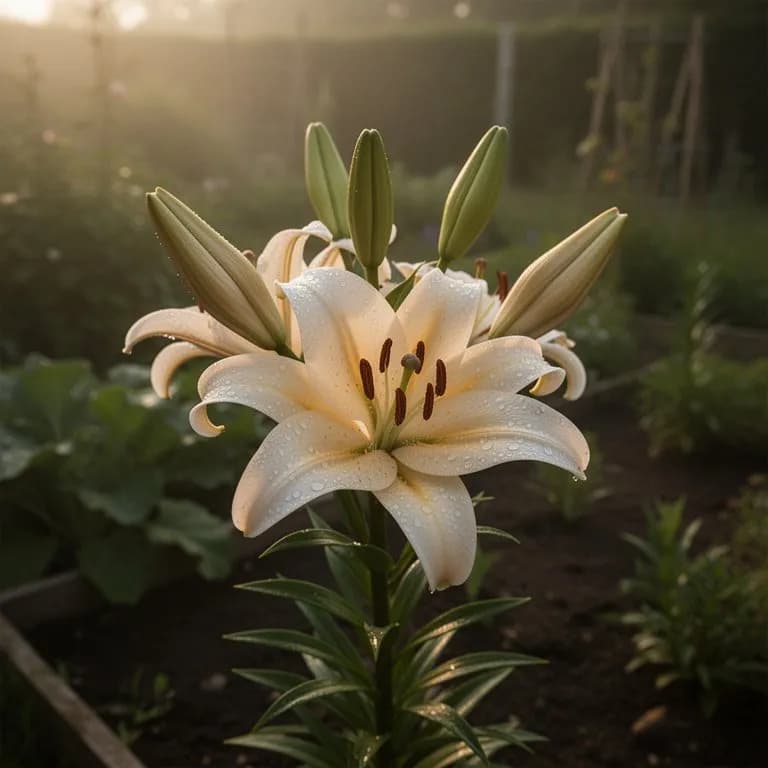
At peak bloom, Oriental Lilies display their signature recurved petals with papillae spotting and long stamens bearing rust-colored pollen
Oriental lily bulbs are best left in the ground in well-drained acidic soil. If lifting, handle carefully—they have no protective papery skin. Store briefly in barely damp peat or sphagnum moss in a cool place. Never allow bulbs to dry out. Flowers can be preserved in silica gel for dried arrangements—their large size makes impressive preserved specimens.
Plan your garden with ease
Love growing Oriental Lily? Use our free garden planner to design your beds, track planting dates, and get personalized care reminders.
Nutritional Info
Per 100g serving
0
Calories
Health Benefits
- Oriental Lilies are grown exclusively as ornamental plants and are not consumed as food
- All parts of Oriental Lily plants are toxic if ingested, especially to cats, causing acute kidney failure
- Some Lilium species such as L. lancifolium and L. brownii have edible bulbs used in East Asian cuisine, but Oriental hybrids are not among them
- Lily bulbs used in traditional Chinese medicine (bai he) come from specific species, not Oriental hybrid cultivars
- The intense fragrance compounds produced by Oriental Lilies are used in perfumery and aromatherapy research
- Never confuse ornamental Oriental Lilies with edible lily bulb species — proper identification is essential for safety
💰 Why Grow Your Own?
A single Oriental Lily bulb costing $3–$6 will naturalize and multiply over several years, producing increasingly large clumps with more flowering stems each season. A mature clump can yield 10–15 cut flower stems per season, with comparable bouquets retailing for $15–$30 each at florists. After 3–4 years, clumps can be divided to expand plantings or share with other gardeners, effectively producing dozens of new bulbs from the original investment. Container-grown Oriental Lilies also save money by eliminating the need for expensive fresh flower purchases during summer months.
Quick Recipes
Simple recipes using fresh Oriental Lily
Oriental Lily Cut Flower Arrangement
15 minutesCreate a stunning centerpiece arrangement using freshly cut Oriental Lily stems. The intense fragrance and dramatic blooms make this an ideal focal point for dining tables and entryways. Cut stems when the first bud begins to open for maximum vase life of 10–14 days.
Dried Oriental Lily Petal Potpourri
10 minutes active, 2 weeks dryingPreserve the beauty and fragrance of spent Oriental Lily petals by creating a richly scented potpourri. While the fresh fragrance fades during drying, adding essential oils and fixatives produces a lovely decorative and aromatic blend that captures the essence of the summer garden.
Pressed Oriental Lily Botanical Art
20 minutes active, 3–4 weeks pressingTransform individual Oriental Lily petals and smaller blooms into beautiful pressed botanical art suitable for framing or card-making. The vivid pink and crimson spotted patterns of varieties like Stargazer preserve remarkably well when properly pressed and dried.
Cut when the first bud on each stem begins to open for the longest vase life, which can exceed 10–14 days with proper care
Yield & Spacing Calculator
See how many Oriental Lily plants fit in your garden bed based on the recommended 30cm spacing.
16
Oriental Lily plants in a 4×4 ft bed
4 columns × 4 rows at 30cm spacing
Popular Varieties
Some of the most popular oriental lily varieties for home gardeners, each with unique characteristics.
Lilium 'Stargazer'
The world's most popular oriental lily—deep pink with white edges and crimson spots. Intoxicating fragrance.
Lilium 'Casa Blanca'
Enormous pure white flowers with an overwhelming sweet fragrance. The ultimate white garden lily.
Lilium 'Muscadet'
White with pink spots and a lovely fragrance, more compact than many orientals at 80cm.
When should I plant Oriental Lily?
Plant Oriental Lily in March, April, October, November. It takes approximately 100 days to reach maturity, with harvest typically in July, August.
What are good companion plants for Oriental Lily?
Oriental Lily grows well alongside Lily, Asiatic Lily, Trumpet Lily. Companion planting can improve growth, flavor, and natural pest control.
What hardiness zones can Oriental Lily grow in?
Oriental Lily thrives in USDA hardiness zones 4 through 9. With greenhouse protection, it may be grown in zones 2 through 10.
How much sun does Oriental Lily need?
Oriental Lily requires Full Sun (6-8h+). This means at least 6-8 hours of direct sunlight daily.
How far apart should I space Oriental Lily?
Space Oriental Lily plants 30cm (12 inches) apart for optimal growth and air circulation.
What pests and diseases affect Oriental Lily?
Common issues include Lily Beetle, Botrytis, Virus Diseases. Prevention through good garden practices like crop rotation, proper spacing, and companion planting is the best approach. See the detailed pests and diseases section above for symptoms, prevention, and treatment for each.
How do I store Oriental Lily after harvest?
Oriental lily bulbs are best left in the ground in well-drained acidic soil. If lifting, handle carefully—they have no protective papery skin. Store briefly in barely damp peat or sphagnum moss in a cool place. Never allow bulbs to dry out. Flowers can be preserved in silica gel for dried arrangemen...
What are the best Oriental Lily varieties to grow?
Popular varieties include Lilium 'Stargazer', Lilium 'Casa Blanca', Lilium 'Muscadet'. Each has unique characteristics suited to different growing conditions and culinary preferences. See the varieties section above for detailed descriptions.
What soil does Oriental Lily need?
Oriental lilies require acidic, well-drained, humus-rich soil with a pH of 5.5-6.5. They struggle in alkaline conditions—acidify with sulfur or use ericaceous compost in containers. Incorporate plenty of leaf mold and composted bark. Feed in spring with ericaceous fertilizer and again with high-pota...
Why do my Oriental Lily buds turn brown and fall off without opening?
This condition is called bud blast and is most commonly caused by inconsistent watering, particularly allowing the soil to dry out during the critical bud development stage. Other causes include extreme heat above 30°C, sudden temperature fluctuations, transplant shock, or insufficient light. To prevent bud blast, maintain even soil moisture throughout the growing season, mulch to buffer soil temperature, and ensure the plants receive at least 6 hours of direct sunlight daily.
How do I prevent the orange pollen from staining everything?
The most effective prevention is to remove the anthers with tweezers or your fingers as soon as each flower opens, before the pollen matures and becomes powdery. Work carefully and wear old clothes, as the pollen pigments bind strongly to fabrics. If pollen does land on clothing, do not rub or wet it — instead, use sticky tape to lift the dry pollen grains off the fabric, then launder as normal. For pollen on hard surfaces, let it dry completely and brush away with a dry cloth.
Can I grow Oriental Lilies in containers on my balcony or patio?
Yes, Oriental Lilies grow exceptionally well in containers, and many compact cultivars like Muscadet, Mona Lisa, and Magic Star are specifically suited to container culture. Use a pot at least 30 cm deep and wide, with excellent drainage holes. Fill with a high-quality peat-free potting mix amended with perlite for drainage. Plant 3 bulbs per 30 cm pot for a full display. Feed regularly with liquid fertilizer during the growing season and water consistently. In winter, move containers to a sheltered location where they receive the necessary cold period without being waterlogged.
When is the best time to divide Oriental Lily clumps?
The ideal time to divide Oriental Lilies is in early to mid autumn, after the foliage has fully died back but while the soil is still warm enough for new root growth before winter. Carefully lift the entire clump with a garden fork, gently separate the bulbs, and replant immediately at the original depth of 15–20 cm. Discard any soft, damaged, or diseased bulbs. Each division should have healthy roots and at least one or two plump scales. Replant as quickly as possible, as the bulbs dry out rapidly once exposed to air.
Are Oriental Lilies really dangerous to cats?
Yes, all true lilies in the genus Lilium, including Oriental hybrids, are extremely toxic to cats and can cause acute kidney failure even from very small exposures. Ingesting petals, leaves, pollen, or even drinking water from a vase containing lily stems can be fatal. Symptoms include vomiting, lethargy, and loss of appetite, progressing to kidney failure within 24–72 hours. If you have cats, either avoid growing Oriental Lilies entirely or ensure they are planted in areas completely inaccessible to your cats. If you suspect your cat has had any contact with lily plant material, seek emergency veterinary care immediately.
How can I extend the flowering season of my Oriental Lilies?
You can extend the overall display by planting multiple cultivars with staggered bloom times — early varieties like Muscadet flower in early July, mid-season types like Stargazer bloom in mid to late July, and late cultivars like Casa Blanca extend into August. Planting bulbs at different depths (15 cm and 20 cm) within the same bed can also stagger emergence and flowering by a week or more. Additionally, planting some bulbs in shadier spots will delay their flowering compared to those in full sun, further extending the season across your garden.
Ready to Grow Oriental Lily?
Add Oriental Lily to your garden plan and start designing your perfect layout.

Vladimir Kusnezow
Gardener and Software Developer
Zone 6b gardener. Growing vegetables and fruits in soil and hydroponics for 6 years. I built PlotMyGarden to plan my own gardens.
Jump to Section