Trumpet Lily
A majestic lily with large trumpet-shaped flowers that flare outward, combining the hardiness of Asiatics with the fragrance of Orientals.





On this pageOverview
Meet Trumpet Lily
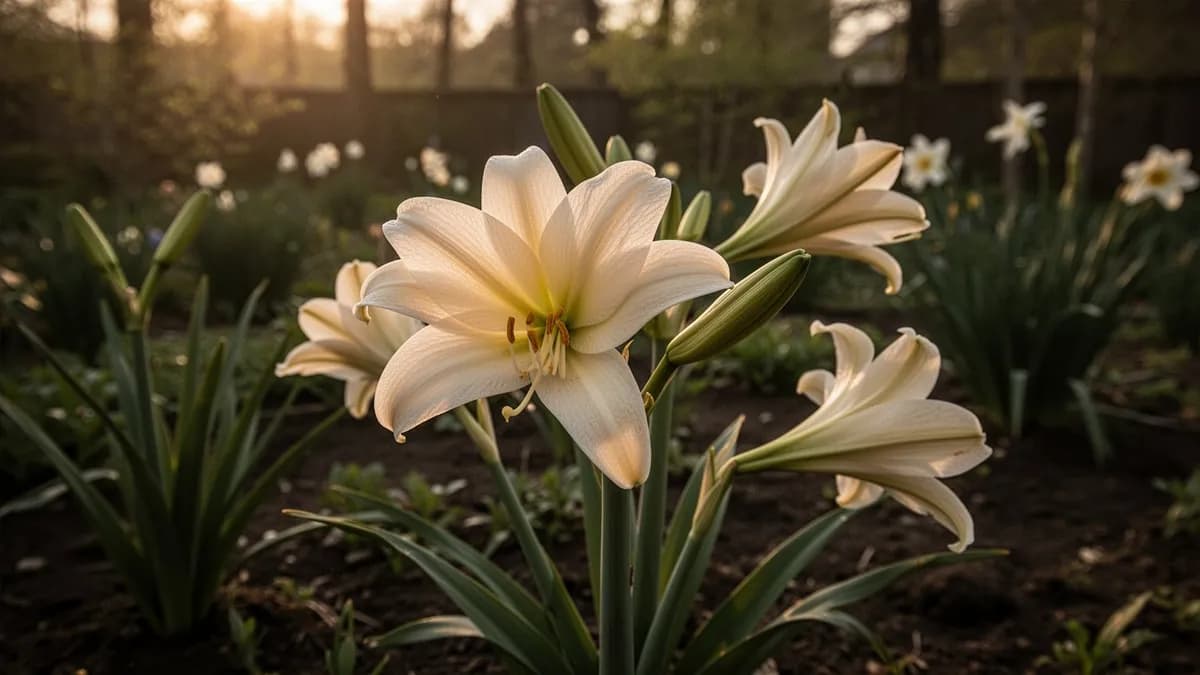
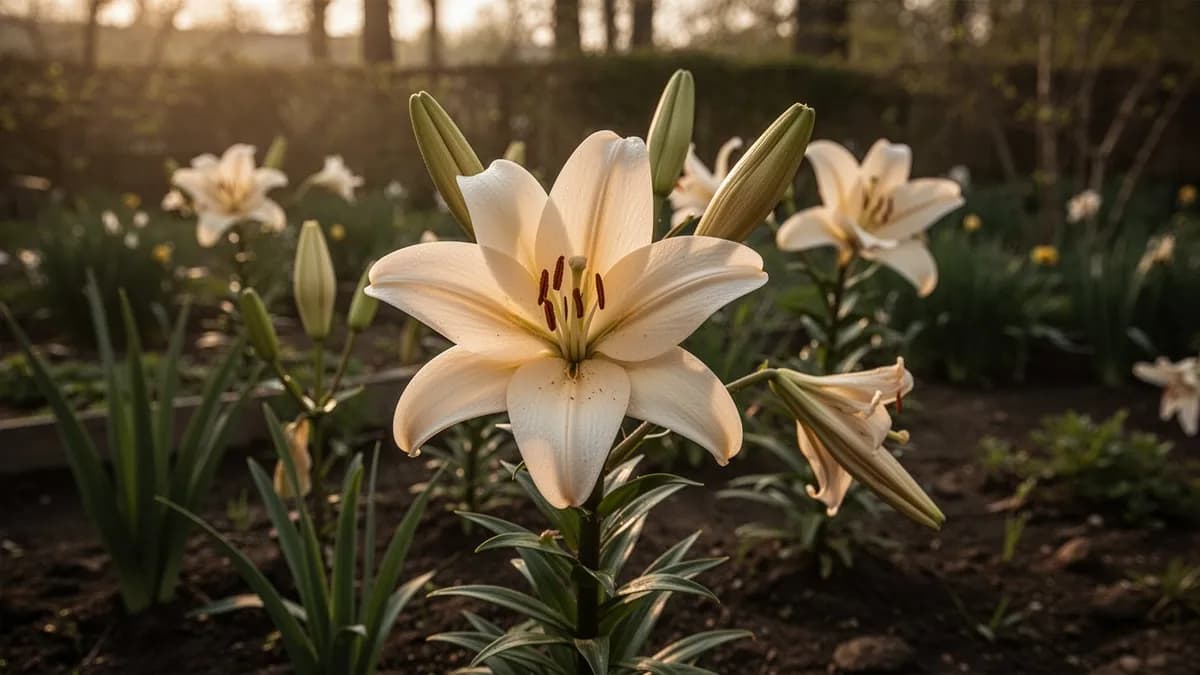
A majestic lily with large trumpet-shaped flowers that flare outward, combining the hardiness of Asiatics with the fragrance of Orientals. Trumpet lilies can reach six feet tall and produce multiple fragrant blooms per stem in white, yellow, and pink. They are excellent garden plants that increase well in rich, well-drained soil.
When to plant Trumpet Lily
Lilium regale is one of the easiest lilies to grow from seed, germinating readily if sown fresh in autumn. Most trumpet lily hybrids are propagated by bulb scales or offsets. Seed-grown regal lilies can flower in 2-3 years.
Your Trumpet Lily Year
Composed for Zone 7 · typical seasons · frost passes Apr 2, returns Nov 1
Plant Trumpet Lily Mar – Apr, Oct – Nov, pick Jul – Aug. Check the planting methods below and set your climate to personalize these windows.
How to grow Trumpet Lily
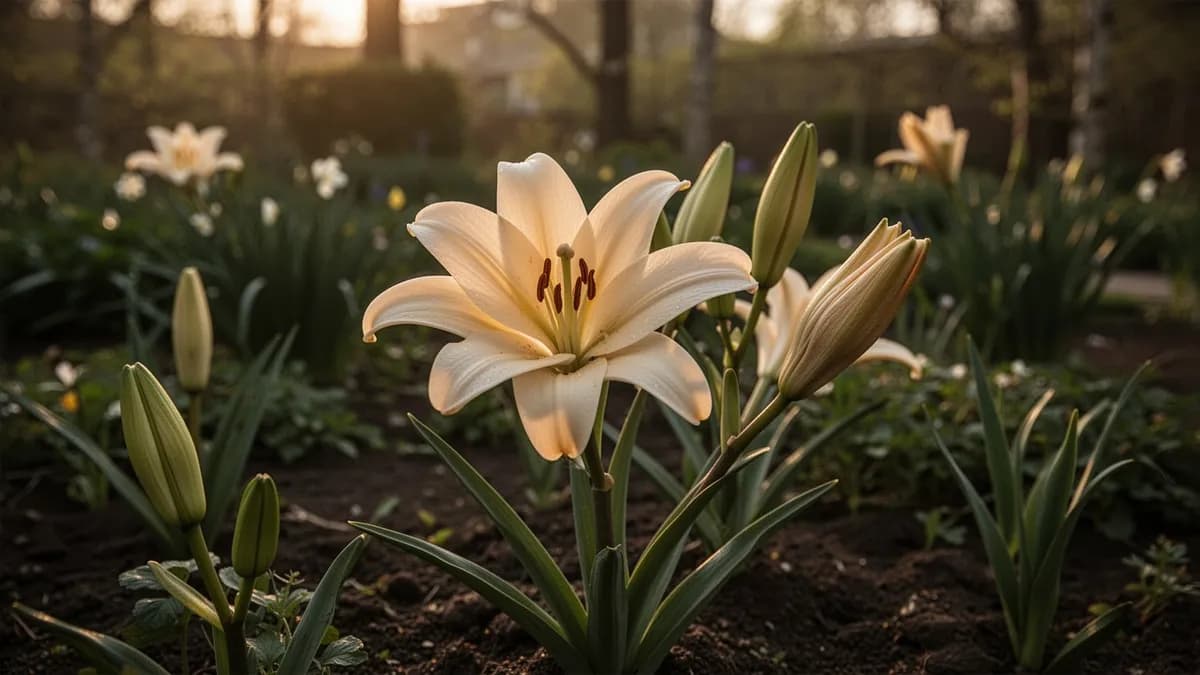
Trumpet lilies produce large, outward-flaring trumpet-shaped flowers with a glorious fragrance, combining the cold hardiness of Asiatic lilies with the intoxicating perfume of orientals. Growing 120-180cm tall on strong stems, they bloom in mid-summer (July-August) and can carry 12-20 flowers per stem on mature plants. The regal lily (Lilium regale) is the most famous trumpet lily.
Plant bulbs 20cm deep in autumn or spring in well-drained, fertile soil in full sun. Trumpet lilies are more tolerant of alkaline soil than oriental types, accepting a pH range of 6.0-7.5. Good drainage is essential—mulch heavily to keep roots cool and moist. Install stakes at planting time for these tall, heavy-flowering plants.
Trumpet lilies are long-lived and increase well in favorable conditions, gradually forming multi-stemmed clumps that become more impressive each year. Remove developing seed pods after flowering and allow foliage to ripen naturally to nourish the bulb.
32 plants fit a 4 × 8 ft bed
Each Trumpet Lily wants 30 cm of elbow room. The planner keeps that spacing for you — every plant, every bed.
Trumpet Lily's best neighbours
Trumpet lilies create dramatic focal points in borders. Plant among lower perennials that shade the roots—lavender, catmint, and low-growing geraniums are ideal partners. The tall stems rise above most companions, creating a layered effect. Combine with Asiatic lilies (earlier) and oriental lilies (later) for continuous lily blooms June through September.
Lily belongs beside it.
Old growers' knowledge, checked against Trumpet Lily's real companion table below — test any plant you're growing.
Try Trumpet Lily in a bed — right here
A real planner bed with Trumpet Lily already in it. Tap a companion to place it and watch the pairing checks answer — green for good neighbours, red for a clash.


Related growing guides
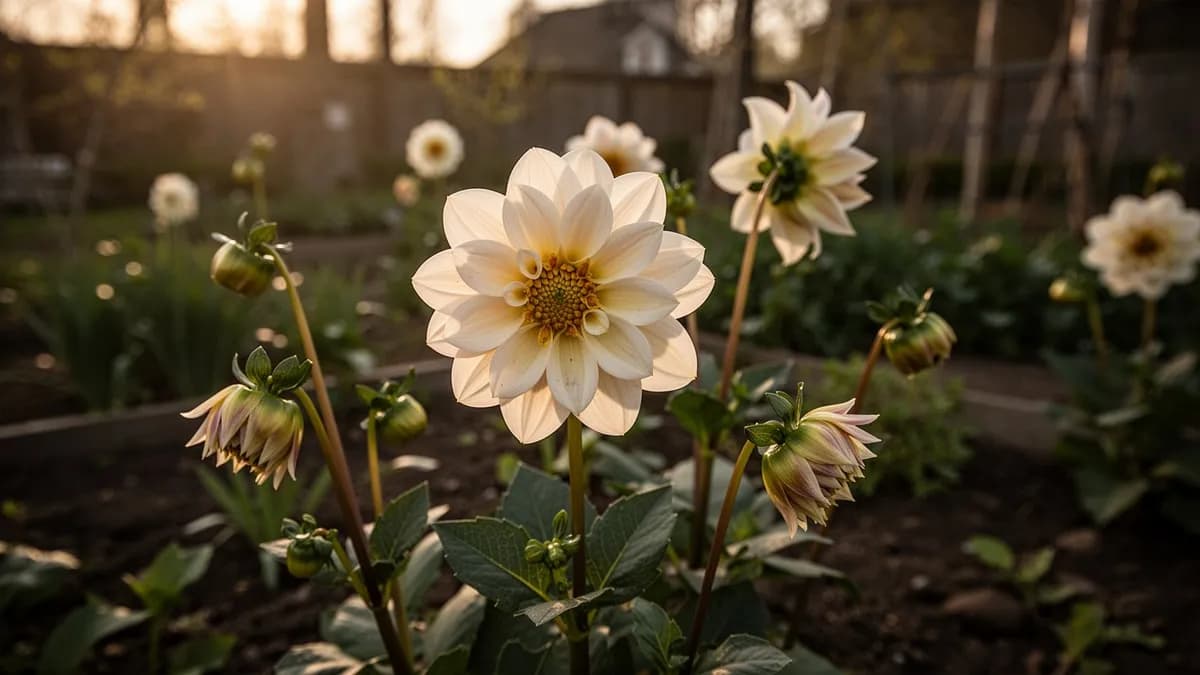
Feed it well
Trumpet lilies grow in well-drained, fertile soil with a pH of 6.0-7.5—more alkaline-tolerant than oriental types. Incorporate compost and bone meal before planting. Feed in spring with balanced bulb fertilizer and high-potassium feed as buds develop. Heavy mulching keeps roots cool.
Ideal Temperature
Hardiness Zone Compatibility
From seed to harvest, stage by stage
Bulb Dormancy & Planting
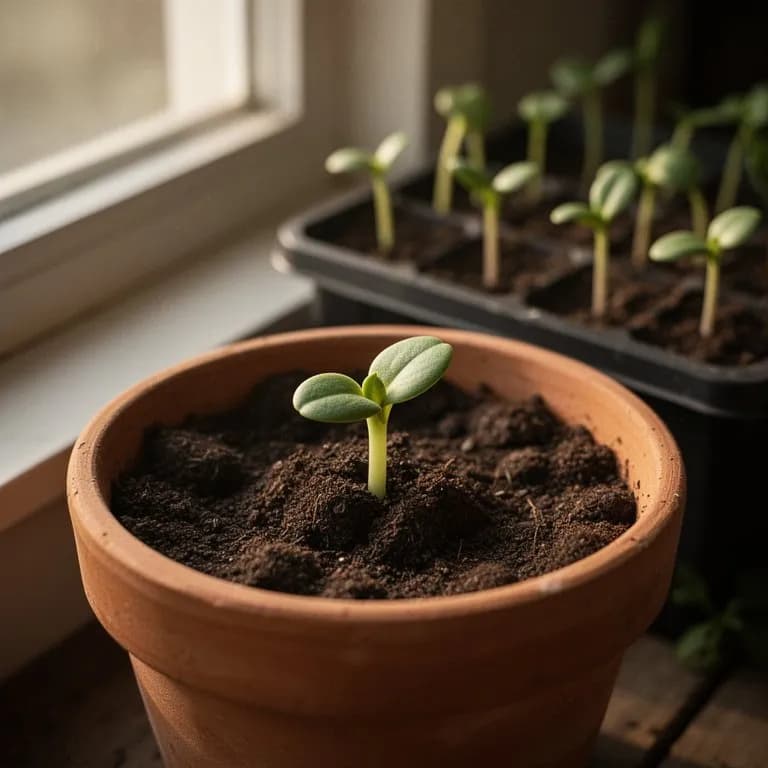
Trumpet lily bulbs are planted in fall or early spring. The large, fleshy bulbs should be placed 6 to 8 inches deep in well-drained soil enriched with compost. Roots begin developing from the basal plate within two weeks of planting when soil temperatures are between 40°F and 55°F.
Root Establishment & Early Shoot Growth
Below the soil surface, an extensive root system develops from both the basal plate and the underground portion of the stem. A sturdy green shoot pushes upward through the soil as temperatures warm. Stem roots, which form above the bulb along the buried stem, are critical for nutrient uptake and plant stability.
Vegetative Growth & Stem Elongation
The plant enters rapid vertical growth, producing a strong, unbranched stem clothed in narrow, lance-shaped leaves arranged in whorls. Trumpet lily stems typically reach 3 to 6 feet tall depending on the cultivar. During this stage the plant is building the energy reserves needed for flower production.
Bud Formation & Flowering
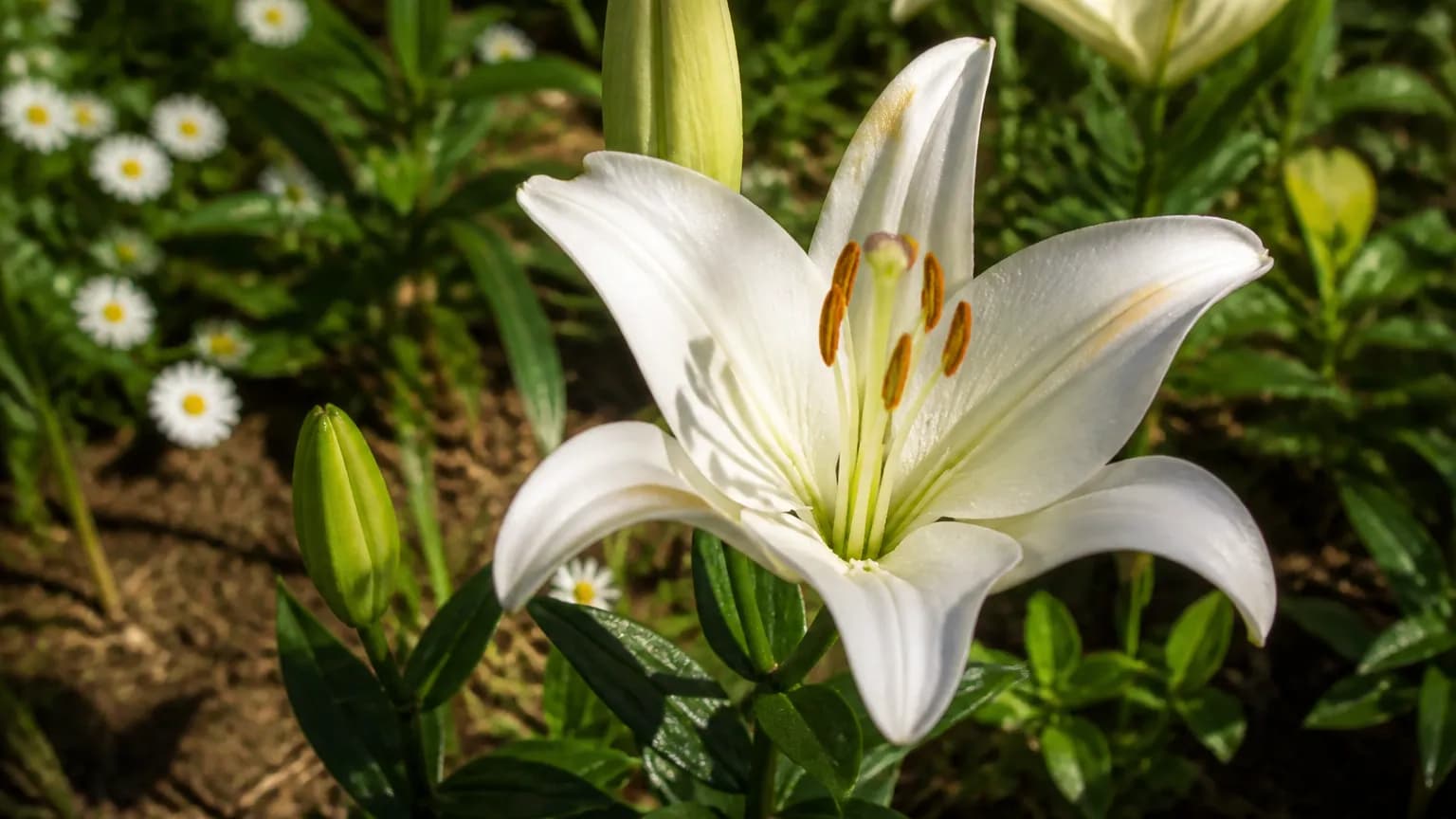
Flower buds form at the top of the stem in a loose raceme. Each bud swells and elongates before opening into a large, outward-facing or slightly nodding trumpet shape measuring 6 to 10 inches long. Blooms release a powerful, sweet fragrance, especially in the evening hours. Flowers last 2 to 3 weeks on the plant and open sequentially.
Seed Set & Post-Bloom Energy Storage
After flowering, seed pods may develop if pollination occurred. The plant redirects energy from the stem and leaves back into the bulb for next season. Foliage gradually yellows as nutrients are translocated downward. The bulb increases in size and may produce small offset bulblets around its base.
Bulb Dormancy & Overwintering
The bulb enters dormancy as temperatures drop. In USDA zones 4 through 9, trumpet lily bulbs are reliably winter-hardy when properly mulched. During dormancy the bulb slowly develops the embryonic flower bud for the following season inside its core. Offset bulblets continue to mature underground.
Handle bulbs carefully as trumpet lily scales are fragile. Never let bulbs dry out before planting; store them in slightly damp peat moss if planting is delayed.
Caring for Trumpet Lily month by month
What to do each month for your Trumpet Lily
October
You are herePlant new bulbs for next season. Dig and divide established clumps every 3 to 4 years. Amend soil with bone meal and compost at planting time.
Know exactly what to do in your garden — every month
One email at the start of each month: what to sow, plant, and tackle right now — for your Trumpet Lily and everything growing around it. Plus a short starter course that helps you dodge the classic mistakes.
- What to do, right now
- Matched to your season
- Starter course included
Harvesting Trumpet Lily
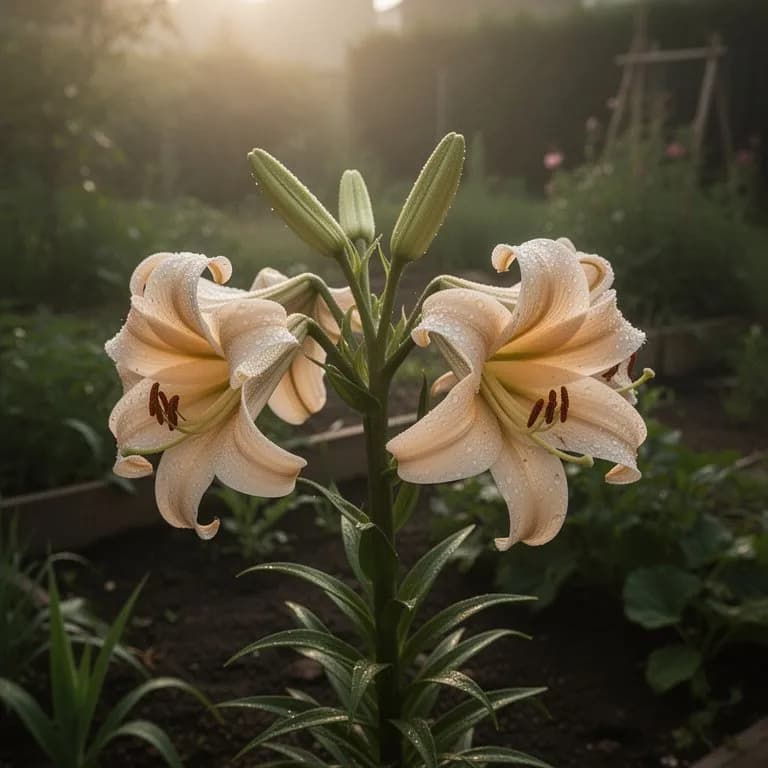
Trumpet lilies make magnificent cut flowers. Cut when the first buds show color and are beginning to open—remaining buds open in sequence over 7-10 days. One stem perfumes an entire room. Remove pollen anthers to prevent staining. Leave at least one-third of the stem on the plant.
assuming you plant when the window opens — set your real date
From bulbs, tubers or cloves
Pick Trumpet Lily promptly and the plant keeps producing.
Storage & Preservation
Leave bulbs in the ground year-round in well-drained soil. If moving or dividing, lift in autumn, handle carefully (no protective skin), and replant immediately. Store briefly in barely damp peat or vermiculite if needed.
What goes wrong — and the fix
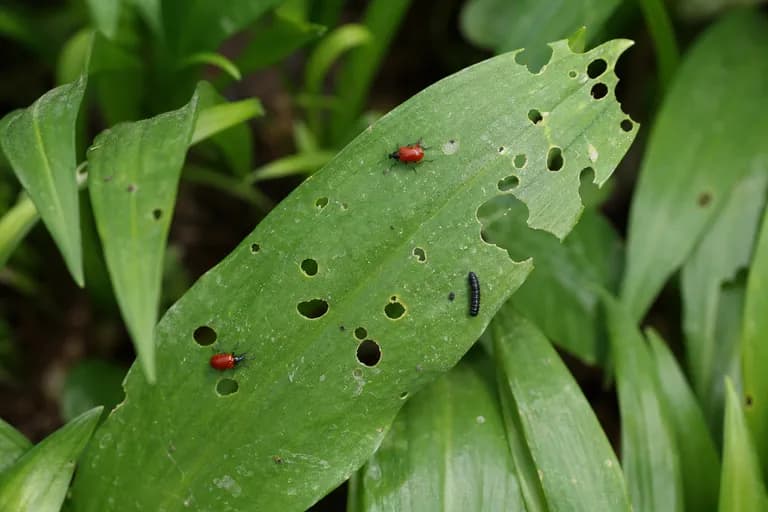
Lily Beetle
PestBright red beetles and black-coated larvae defoliating plants from April onward.
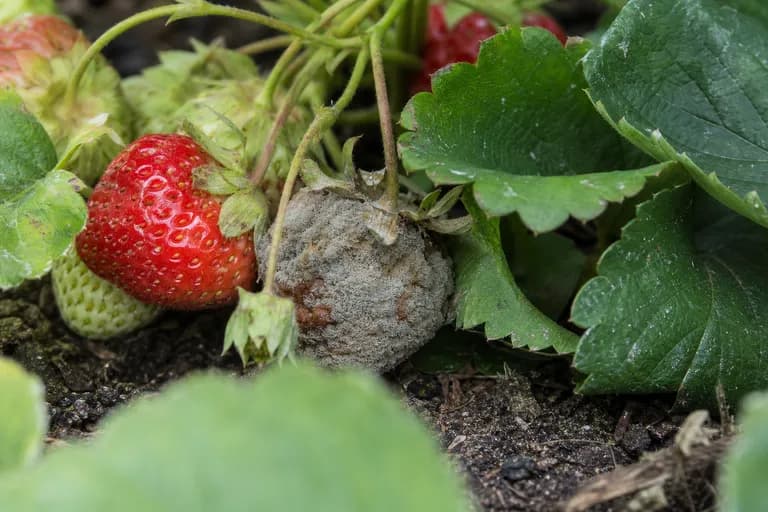
Botrytis
DiseaseBrown spots on leaves and flower buds in wet weather. Grey mold on affected tissue.
Troubleshooting Common Problems
Lily beetles are the main pest—inspect and remove from April. Very tall stems need staking before flower weight causes them to lean or snap. Wind damage to heavy flowers in exposed positions. Virus diseases cause decline over years; remove affected plants.
Growing Tips
- Plant trumpet lily bulbs at a depth of 6 to 8 inches, which is roughly three times the height of the bulb, to provide stability for the tall stems and protect from temperature fluctuations.
- Choose a site that receives at least 6 hours of direct sunlight but offers some light afternoon shade in hot climates to prevent flower colors from fading and reduce heat stress.
- Ensure excellent soil drainage by amending heavy clay soils with coarse sand, perlite, or fine gravel, as trumpet lily bulbs will rot quickly in waterlogged conditions.
- Mulch with 3 to 4 inches of organic material such as shredded bark or straw to keep roots cool, retain moisture, and suppress weeds without smothering emerging shoots.
- Water deeply once per week during the growing season, providing about 1 inch of water, and reduce watering after flowering as the foliage begins to yellow and the bulb enters dormancy.
- Remove spent flowers immediately after they fade to prevent seed formation, but always leave the stem and foliage intact until they have completely dried down to feed the bulb.
- Stake tall cultivars early in the season using bamboo stakes or metal supports, tying stems loosely with soft twine to prevent wind damage without constricting growth.
- Apply a balanced slow-release fertilizer at planting time and again when shoots emerge in spring, switching to a low-nitrogen, high-potassium formula as flower buds develop to promote strong blooms.
- Watch for the red lily beetle and its larvae, which can defoliate plants rapidly; inspect leaves regularly and hand-pick adults and larvae in the early morning when they are less active.
- Divide overcrowded clumps every 3 to 4 years in early autumn by carefully lifting the bulb cluster, separating offset bulblets, and replanting immediately at the proper depth and spacing of 12 to 15 inches apart.
Grow your best Trumpet Lily yet — and everything around it.
Start a free plan today. Lay out your beds, drop in your Trumpet Lily, and let PlotMyGarden handle the timing, spacing, companions and reminders from seed to harvest basket.
Pick your Trumpet Lily
Lilium regale
The classic regal lily with white trumpets flushed purple on the outside and golden throats. Spectacular fragrance.
Lilium 'Pink Perfection'
Deep rose-pink trumpets with a powerful fragrance. Tall and vigorous at 150cm.
Lilium 'African Queen'
Warm apricot-orange trumpets that glow in the garden. Strong grower with excellent fragrance.
A single trumpet lily bulb costing $4 to $8 will naturalize and multiply over the years, producing offset bulblets that can be separated and replanted. After 3 to 4 years, one original bulb can yield 3 to 5 blooming-size divisions, effectively reducing the per-plant cost to under $2. Compared to purchasing cut trumpet lilies from a florist at $15 to $25 per stem, growing your own provides dramatic savings while delivering fresh, fully fragrant blooms that far surpass the quality of commercially shipped flowers.
Quick recipes
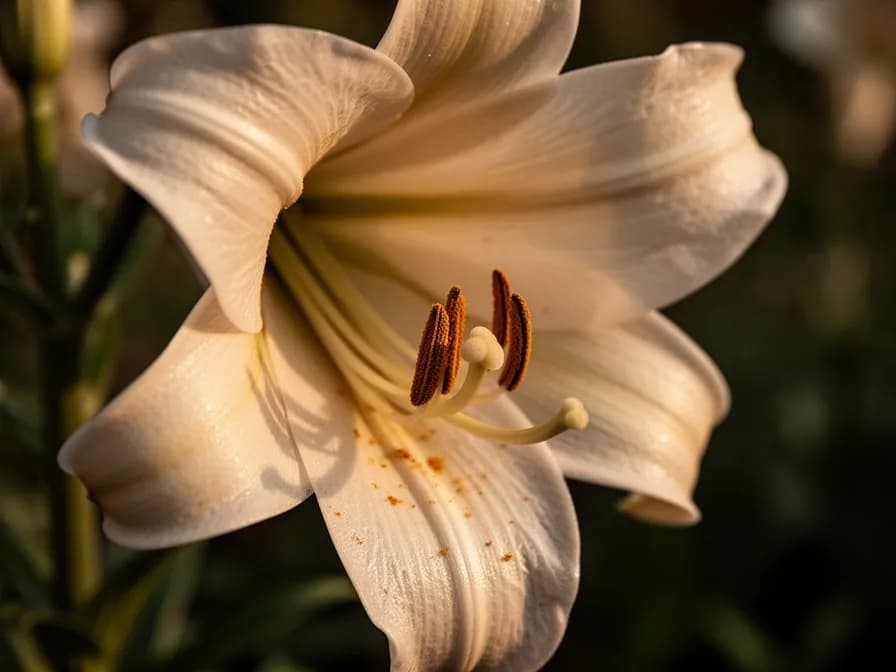
Stir-Fried Lily Bulb with Celery and Goji Berries
15 minutesA classic Chinese stir-fry that highlights the delicate, slightly sweet crunch of fresh lily bulb petals paired with crisp celery and nutrient-rich goji berries. This light dish is commonly served as a health-promoting side in Cantonese cuisine.
8 ingredients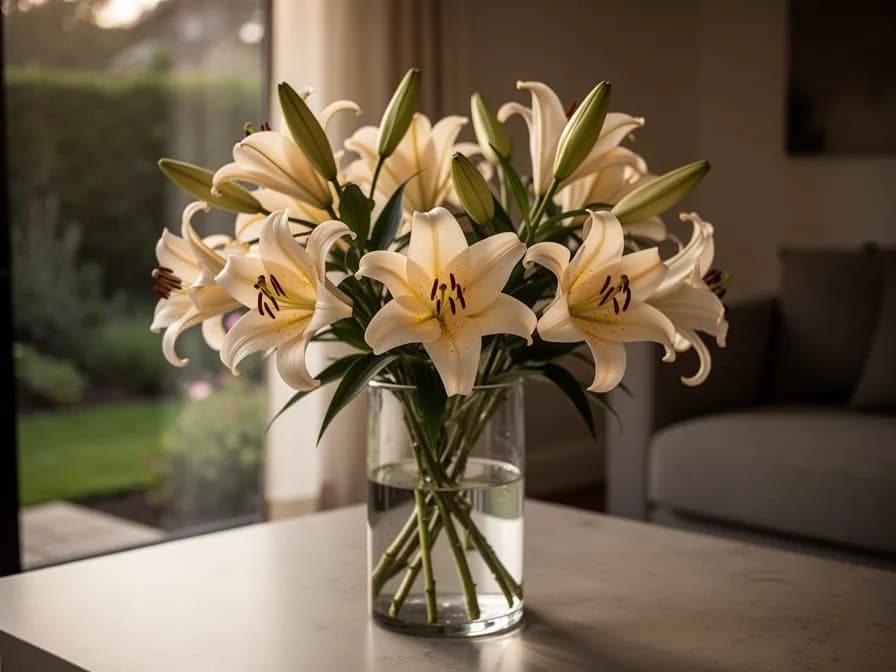
Lily Bulb and Red Date Sweet Soup
40 minutesA nourishing Chinese dessert soup combining dried lily bulb petals with red dates and rock sugar. This soothing tong sui is traditionally enjoyed warm in autumn and winter to moisturize dry skin and promote restful sleep.
6 ingredientsChilled Lily Bulb and Snow Fungus Salad
25 minutes plus chillingA refreshing cold salad that combines blanched lily bulb petals with rehydrated snow fungus, cucumber, and a light rice vinegar dressing. This dish showcases the lily bulb's crisp texture and clean, mildly sweet flavor in a contemporary presentation.
8 ingredientsWhat's inside
Health Benefits
- Dried lily bulbs have been used in traditional Chinese medicine for centuries to help soothe dry coughs and support respiratory health due to their natural mucilaginous compounds.
- Lily bulbs contain bioactive saponins and phenolic acids that exhibit antioxidant activity, helping to neutralize free radicals in the body.
- The complex carbohydrates in lily bulbs provide sustained energy release and may support stable blood sugar levels when consumed as part of a balanced meal.
- Traditional practitioners consider lily bulbs a calming food that may promote restful sleep and reduce anxiety, a use supported by preliminary research on their sedative alkaloid content.
- Lily bulbs are a natural source of collagen-supporting amino acids such as proline, which may contribute to skin elasticity and connective tissue health.
- The soluble fiber in lily bulbs supports digestive health by promoting beneficial gut bacteria and helping maintain regular bowel function.
Where Trumpet Lily comes from
Trumpet lilies trace their ancestry to several wild lily species native to eastern Asia, particularly Lilium longiflorum from the Ryukyu Islands of Japan, Lilium regale from the mountainous valleys of western Sichuan province in China, and Lilium sargentiae from similar Chinese highland regions. Lilium longiflorum was first described by the Swedish botanist Carl Peter Thunberg in 1794 after encountering it during his travels in Japan, and it quickly became one of the most commercially important lilies in the world, eventually becoming the iconic Easter lily of the Western floral trade. Lilium regale was introduced to Western horticulture by the renowned plant explorer Ernest Henry Wilson, who collected bulbs in the Min River valley of China in 1903 and again in 1908 during a harrowing expedition in which he broke his leg in a rockslide. Wilson recognized the extraordinary garden potential of this tough, fragrant species and sent over 6,000 bulbs to the Arnold Arboretum in Boston. The modern trumpet lily hybrids, classified as Division VI in the international lily classification system maintained by the Royal Horticultural Society, were largely developed through the pioneering work of Jan de Graaff at Oregon Bulb Farms in the mid-20th century. De Graaff crossed L. regale, L. sargentiae, L. leucanthum, and L. sulphureum to produce the famous Aurelian hybrids beginning in the 1940s, creating vigorous plants with improved hardiness, disease resistance, and a wider color range including gold, apricot, and pink shades beyond the white of the parent species. Today trumpet lilies remain prized by gardeners worldwide for their dramatic stature, enormous fragrant blooms, and reliable perennial performance in temperate climates across USDA hardiness zones 4 through 9.
Trumpet Lily: did you know?
Fascinating facts about Trumpet Lily
Trumpet lilies are among the most fragrant of all lily divisions, with a single stem capable of perfuming an entire garden on a warm summer evening.
Trumpet Lily questions, answered
When should I plant Trumpet Lily?
What are good companion plants for Trumpet Lily?
What hardiness zones can Trumpet Lily grow in?
How much sun does Trumpet Lily need?
How far apart should I space Trumpet Lily?
What pests and diseases affect Trumpet Lily?
How do I store Trumpet Lily after harvest?
What are the best Trumpet Lily varieties to grow?
What soil does Trumpet Lily need?
When is the best time to plant trumpet lily bulbs?
Why are my trumpet lily buds turning brown and falling off before opening?
How do I protect trumpet lilies from lily beetles?
Can trumpet lilies be grown in containers?
How long do trumpet lilies bloom each year?
Are trumpet lilies toxic to cats?
You just read the theory. Now grow it on autopilot.
Everything that makes Trumpet Lily fiddly — the timing, the spacing, the companions, the harvest window — is exactly what PlotMyGarden handles for you, for every plant in your garden.
A plan that knows your weather
Set your location once. Get sow, feed and harvest dates built around your real last-frost date and live forecast — no more guessing from a generic seed packet.
From the “When to plant” sectionDrag-and-drop bed planner
Design beds on a grid. Every plant snaps to its proper spacing, and you can see your whole season laid out before you spend a cent on seed.
From the “Growing guide” sectionCompanion conflicts, caught early
200+ good-and-bad pairings checked live as you plant — so a season-wrecking mistake never makes it into the ground.
From the “Companions” sectionReminders you'll actually act on
“Water the beans.” “Pick today before it turns.” Timely, specific, and tied to the plants you're really growing.
From the “Harvest” sectionSuccession, scheduled
Want a harvest for six weeks, not six days? It spaces your sowings automatically and reminds you when each new block is due.
From the “When to plant” sectionA record that gets smarter
Every harvest you log teaches it your garden. Next year's plan starts from what actually worked in your soil, not a textbook's.
From the “Overview” sectionPlant these alongside Trumpet Lily
More Bulbs
Grow your best Trumpet Lily yet — and everything around it.
Start a free plan today. Lay out your beds, drop in your Trumpet Lily, and let PlotMyGarden handle the timing, spacing, companions and reminders from seed to harvest basket.