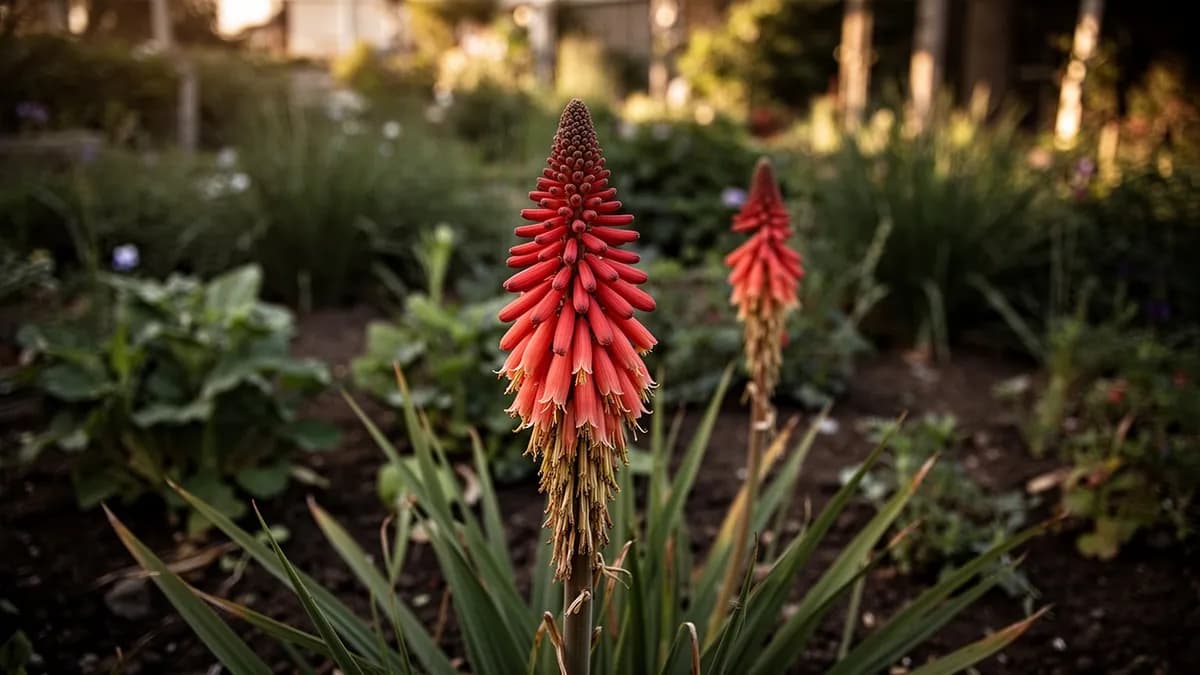
Red Hot Poker
Kniphofia uvaria
At a Glance
A dramatic perennial with tall, torch-like flower spikes in fiery shades of red, orange, and yellow that attract hummingbirds. Red hot pokers demand excellent drainage and will rot in waterlogged soil, especially during winter. They are drought-tolerant once established and create bold architectural statements in sunny borders.
Planting & Harvest Calendar
Growth Stages
From Seed to Harvest
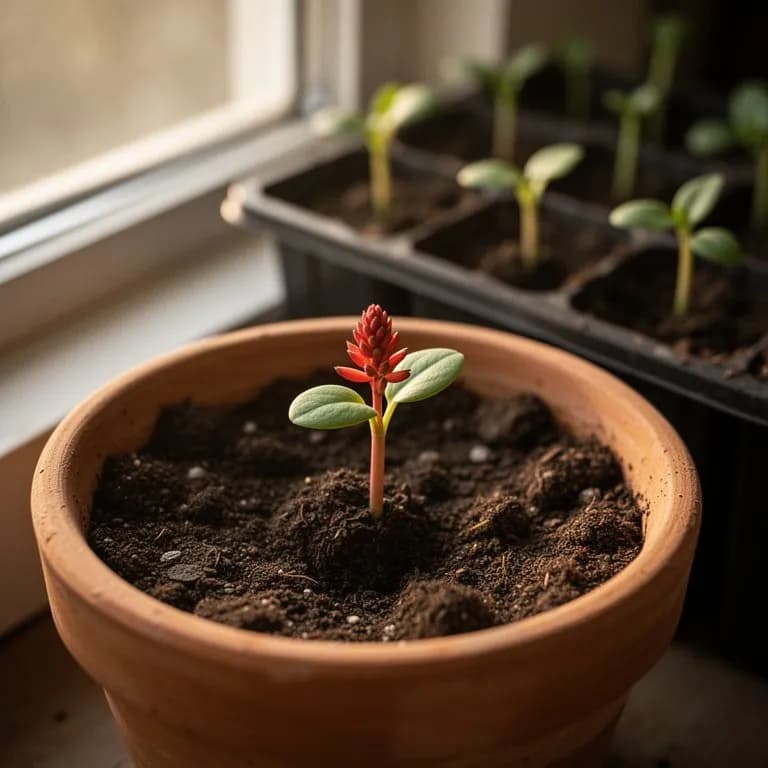
Seed Germination
Days 0–28
Kniphofia seeds are small, black, and angular. They require light to germinate and should be surface-sown on moist, well-drained seed compost. Germination is often erratic and can take anywhere from 14 to 28 days at temperatures between 18-22°C (65-72°F). Fresh seed germinates far more reliably than stored seed, as viability declines rapidly after the first year.
💡 Care Tip
Sow seeds on the surface of moist compost and press gently without covering. Place trays in a bright location out of direct sun and maintain consistent moisture with a fine mist. A clear plastic cover helps retain humidity but should be removed daily to prevent damping off.
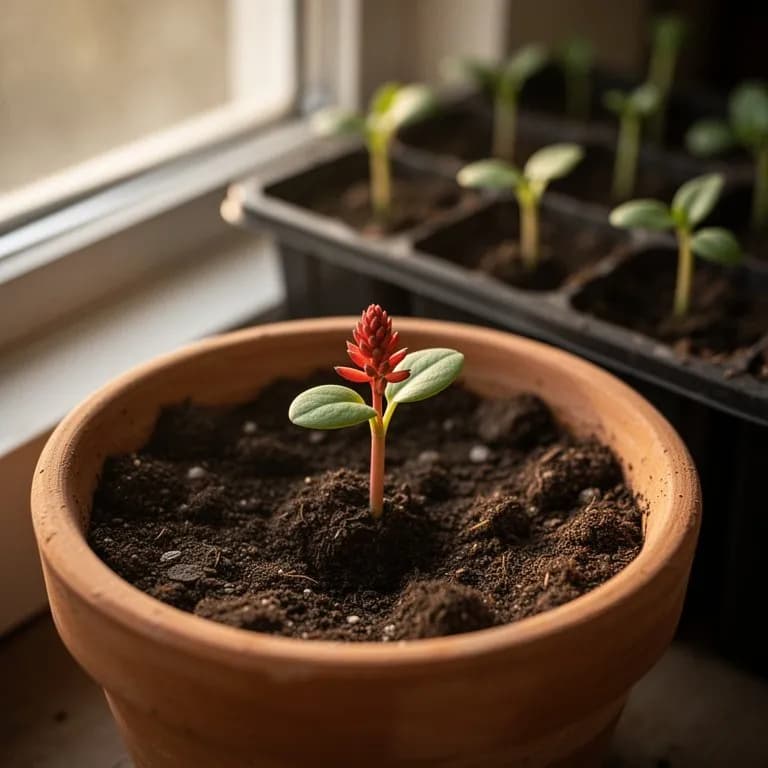
Kniphofia seedlings developing their characteristic narrow, keeled leaves in the first months after germination
Monthly Care Calendar
What to do each month for your Red Hot Poker
May
You are hereMonitor for early flower spike emergence on established clumps. Maintain consistent watering during dry spells, providing approximately 2.5 cm per week. Stake tall cultivars in exposed locations. Apply a mulch of gravel or bark chips around plants to suppress weeds and conserve moisture.
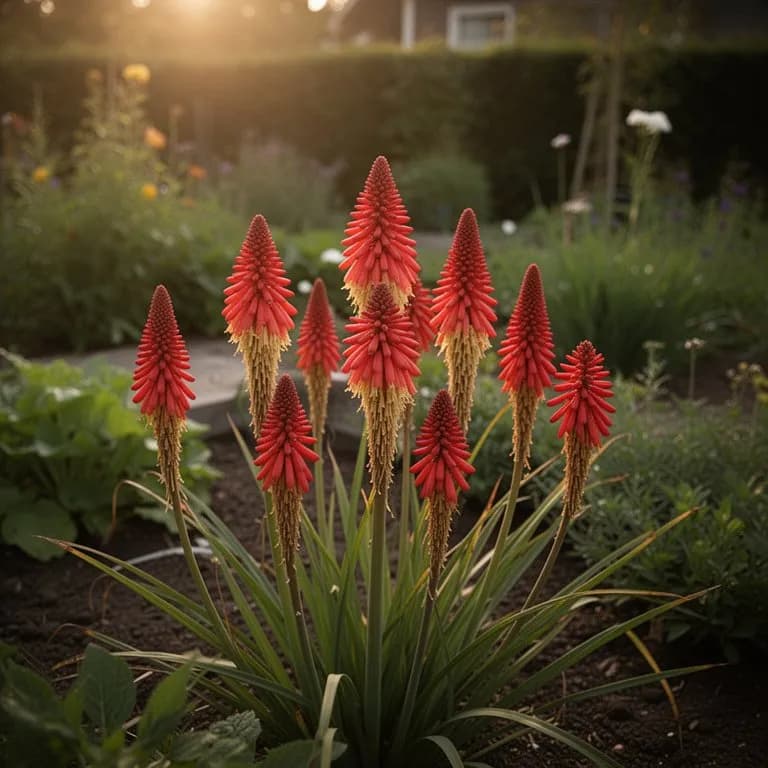
Tying Kniphofia leaves into a topknot over the crown protects the growing point from winter moisture and frost damage
Did You Know?
Fascinating facts about Red Hot Poker
Kniphofia is native to eastern and southern Africa, from Ethiopia south to the Cape of Good Hope, where it grows naturally in moist grasslands, along stream banks, and on mountain slopes up to 4,000 metres elevation.
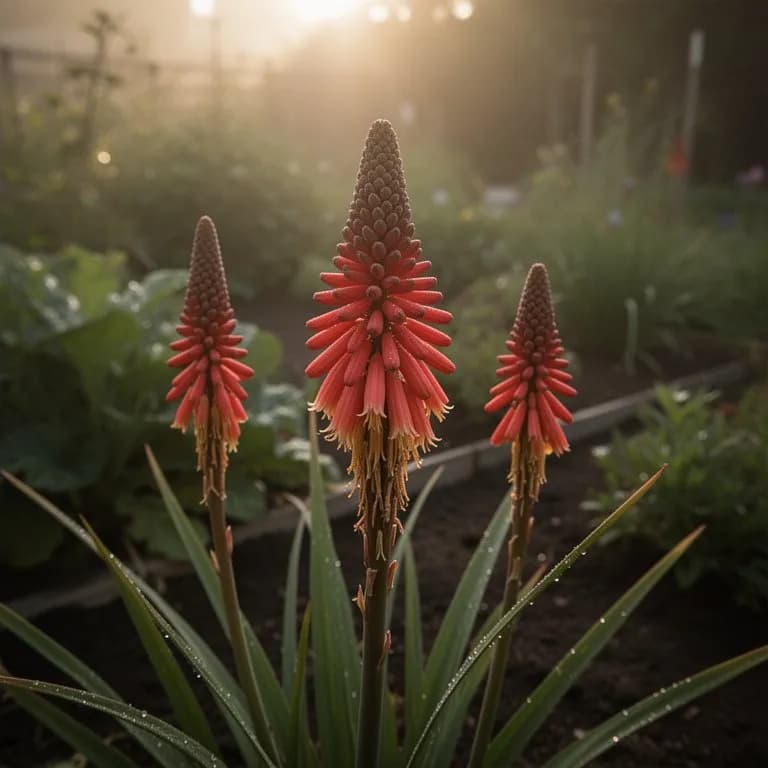
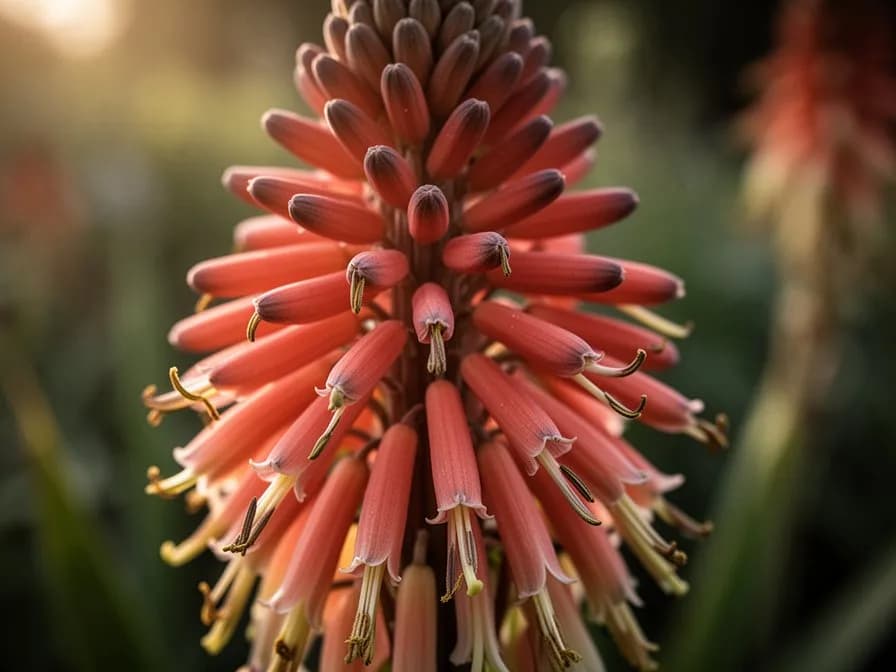
The distinctive tubular florets of Kniphofia open sequentially from the base upward, creating a striking bicolor effect
Red hot pokers are dramatic, architectural perennials from South Africa that produce tall, dense flower spikes resembling flaming torches in the garden. The bicolored spikes—typically orange-red at the top fading to yellow at the base—can reach 90-150cm tall above clumps of grassy, strap-shaped evergreen foliage. Modern hybrids offer a wider color range including pure yellow, cream, coral, and deep red.
Plant in full sun in well-drained soil. Drainage is absolutely critical—kniphofia's thick, fleshy roots rot quickly in waterlogged winter soil. In heavy clay, add generous amounts of gravel to the planting area or plant on a raised mound. Once established, red hot pokers are remarkably drought-tolerant and need little supplemental watering.
In cold winter areas (Zones 5-6), protect the crown with a thick mulch of straw or dry leaves in late autumn, and tie the foliage up in a loose bundle to shed rain away from the crown. This prevents water from sitting in the crown and causing rot during winter freezes. Remove old flower stalks after blooming but leave the evergreen foliage intact over winter. Tidy up dead leaves in early spring as new growth emerges.
Kniphofia, commonly known as red hot poker or torch lily, is a genus of flowering plants in the family Asphodelaceae, native to Africa with the greatest diversity found in the grasslands and mountain regions of South Africa and Ethiopia. The genus was first described by the German botanist Conrad Moench in 1794 and named after Johann Hieronymus Kniphof, an 18th-century German physician and botanical illustrator. The earliest Kniphofia species were introduced to European gardens in the late 17th century, with Kniphofia uvaria arriving in the Netherlands by 1707. However, it was during the Victorian era that the plant achieved widespread popularity in British and European gardens. The Victorians prized Kniphofia for its bold, architectural form and vivid colouring, which suited the fashion for dramatic subtropical bedding displays. Notable plant collectors including William Burchell and Francis Masson brought back new species from expeditions to the Cape Colony throughout the 19th century, expanding the range of available forms. The renowned German nurseryman Max Leichtlin was instrumental in hybridising Kniphofia during the 1880s and 1890s, creating many of the garden hybrids that formed the basis of modern cultivar ranges. In the early 20th century, the plant fell somewhat out of fashion as garden tastes shifted toward more naturalistic planting styles, but a revival began in the 1960s and 1970s when breeders developed compact, free-flowering cultivars better suited to smaller modern gardens. Today, Kniphofia enjoys renewed popularity among garden designers worldwide, valued for its vertical accent in perennial borders, its drought tolerance once established, and its exceptional ability to attract hummingbirds and other pollinators. Major breeding programmes in the United Kingdom, the Netherlands, and South Africa continue to produce new cultivars with extended flowering seasons, novel colour ranges, and improved cold hardiness.
Kniphofia can be grown from fresh seed sown in autumn or spring. Sow on the surface of gritty compost at 15-20°C. Germination takes 2-4 weeks. Seed-grown plants are variable and may take 2-3 years to flower. Division of established clumps in spring is more reliable for named cultivars—carefully separate offset shoots with roots, treat cut surfaces with fungicide, and replant in well-drained soil immediately.
Red hot pokers require well-drained to sharply drained soil with a pH of 6.0-7.5. Sandy or gravelly loam is ideal; heavy clay must be amended with generous grit and organic matter. These plants are adapted to lean conditions and need little feeding—a light application of balanced slow-release fertilizer in spring is sufficient. Avoid high-nitrogen feeds and rich, moisture-retentive soil that promotes soft growth susceptible to rot.
Check Your Zone
See if Red Hot Poker is suitable for your location.
-12°C – 35°C
10°F – 95°F
Kniphofia is surprisingly hardy for a plant of African origin, with most garden hybrids tolerating temperatures down to -12°C (10°F) when planted in well-drained soil and given winter crown protection. The ideal growing temperature range is 15-30°C (59-86°F), with active growth beginning when soil temperatures consistently exceed 10°C in spring. Plants can withstand brief heat spikes above 35°C provided they receive adequate moisture, but prolonged extreme heat may cause leaf tip scorch. Winter hardiness varies significantly between species and cultivars, with K. caulescens and K. northiae being among the most cold-tolerant, while K. pauciflora and tropical species require frost-free conditions.
Common issues affecting Red Hot Poker and how to prevent and treat them organically.
Winter crown rot from wet soil is overwhelmingly the biggest problem. Ensure drainage is excellent and protect crowns from excessive winter moisture. Failure to flower usually indicates insufficient sun, over-feeding with nitrogen, or plants that are too young—seedlings may take 2-3 years to flower. Floppy foliage in shade is unattractive; full sun produces the most compact growth. In very cold areas, apply winter mulch after the first hard frost.
Red hot pokers create stunning combinations with blue agapanthus, purple salvia, and golden ornamental grasses. The fiery spikes are dramatic among lower-growing perennials like coneflowers, daylilies, and sedum. Plant in groups of three or more for the most impactful display. In gravel gardens, pair with Mediterranean plants like lavender, rosemary, and euphorbias. The flowers are excellent for attracting hummingbirds.
Kniphofia is a magnet for hummingbirds and sunbirds, which are perfectly adapted to feed from its tubular flowers
- 1Plant Kniphofia in full sun with at least six hours of direct sunlight daily for the best flowering performance; plants grown in partial shade produce fewer and shorter flower spikes.
- 2Excellent drainage is absolutely essential for Kniphofia survival, especially in winter. Amend heavy clay soils generously with coarse grit, perlite, or sharp sand before planting, or consider raised beds in poorly drained areas.
- 3Position the crown of the plant at soil level or very slightly above when planting; burying the crown too deeply is the most common cause of rot and plant loss in Kniphofia.
- 4Water newly planted Kniphofia deeply and regularly throughout the first growing season to establish a strong root system, then reduce supplemental watering as established plants are remarkably drought-tolerant.
- 5Apply a balanced granular fertilizer such as 10-10-10 in early spring as new growth appears, and follow up with a potassium-rich feed in late summer to encourage flower bud formation for the following year.
- 6Deadhead spent flower spikes by cutting them at the base of the stem as soon as the last florets fade; this redirects energy to the rhizome and may encourage a secondary flush of blooms in some cultivars.
- 7In regions where winter temperatures drop below minus ten degrees Celsius, tie the evergreen foliage into a loose topknot over the crown in late autumn to shed rain and insulate the growing point from frost damage.
- 8Avoid cutting back Kniphofia foliage in autumn in cold climates, as the leaves provide essential insulation for the crown; instead, remove dead and damaged leaves in early spring once new growth is clearly emerging.
- 9Divide congested clumps every three to four years in late spring by lifting, washing, and separating individual fans with a portion of healthy rhizome; this maintains flowering vigour and provides new plants for free.
- 10When selecting cultivars, choose a range of early, mid, and late-flowering varieties to extend the display from late spring through to the first frosts; popular choices include early-blooming 'Alcazar', mid-season 'Royal Standard', and late-flowering 'Percy's Pride'.
Red hot poker spikes make dramatic, long-lasting cut flowers. Cut when the lower florets on the spike are open and upper ones are still in bud. The spikes last 7-10 days in a vase, with florets opening in sequence. Remove individual spent florets as they fade to keep the arrangement looking fresh. The architectural quality of the spikes makes them excellent in modern, minimalist arrangements.
Red hot poker spikes do not dry successfully for arrangements due to their fleshy structure. However, the dried seed pods have a rustic appeal in winter arrangements. For garden preservation, divide large clumps in spring by carefully separating offset shoots with roots attached. Treat cut surfaces with fungicide and replant immediately in well-drained soil. Seed can be collected from mature pods and sown fresh in autumn.
Plan your garden with ease
Love growing Red Hot Poker? Use our free garden planner to design your beds, track planting dates, and get personalized care reminders.
Nutritional Info
Per 100g serving
0
Calories
Health Benefits
- Kniphofia is grown exclusively as an ornamental plant and is not consumed as food; no nutritional data is applicable
- The nectar produced by Kniphofia flowers is a vital food source for sunbirds, hummingbirds, and many species of bees and butterflies
- Some traditional African medicinal systems use Kniphofia root extracts to treat chest complaints and digestive ailments, though these uses are not scientifically validated
- The roots of certain Kniphofia species contain anthraquinone compounds called knipholone and related derivatives, which are the subject of ongoing pharmacological research
- Knipholone and related compounds isolated from Kniphofia foliosa have demonstrated antioxidant and anti-inflammatory properties in laboratory studies
- Kniphofia should not be ingested as a home remedy, as the concentrated anthraquinone compounds can be irritating and potentially toxic without proper preparation
💰 Why Grow Your Own?
A single Kniphofia plant purchased for around $8-15 can be divided every three to four years into four to six new plants, meaning your initial investment can yield dozens of plants over a decade. Established clumps also self-sow modestly in favourable conditions, providing free seedlings. Compared to purchasing annual bedding plants each year, a well-maintained Kniphofia border provides decades of dramatic colour with minimal ongoing cost. The plants are drought-tolerant once established, reducing water bills, and their ability to attract pollinators can improve fruit and vegetable yields in nearby garden beds.
Quick Recipes
Simple recipes using fresh Red Hot Poker
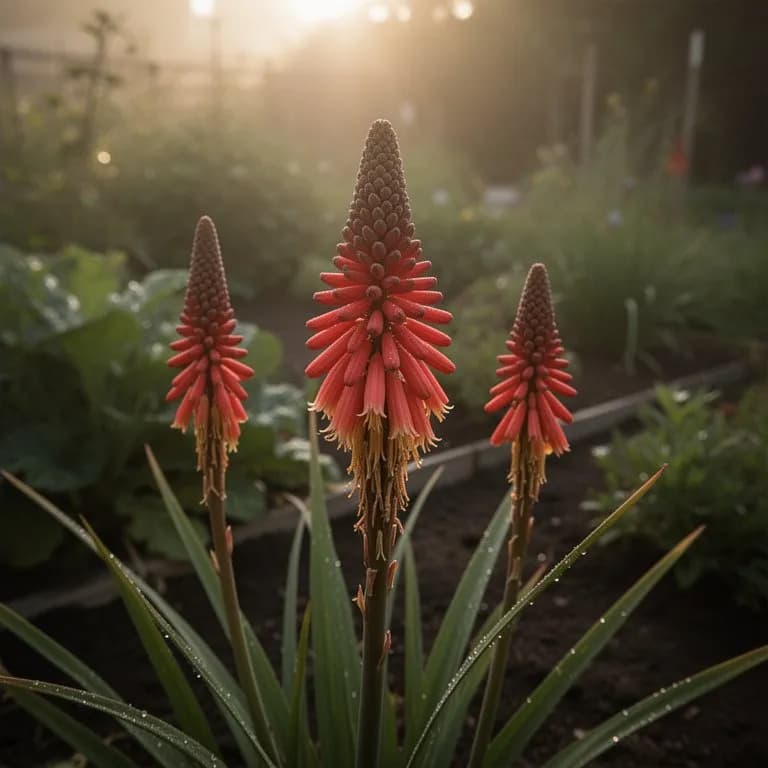
Kniphofia Cut Flower Arrangement
15 minutesRed hot poker spikes make dramatic, long-lasting cut flowers that bring bold vertical interest to any arrangement. Cut spikes when the lower third of the florets have opened for the longest vase life. They pair beautifully with ornamental grasses, dahlias, and late-summer perennials in large-scale arrangements.
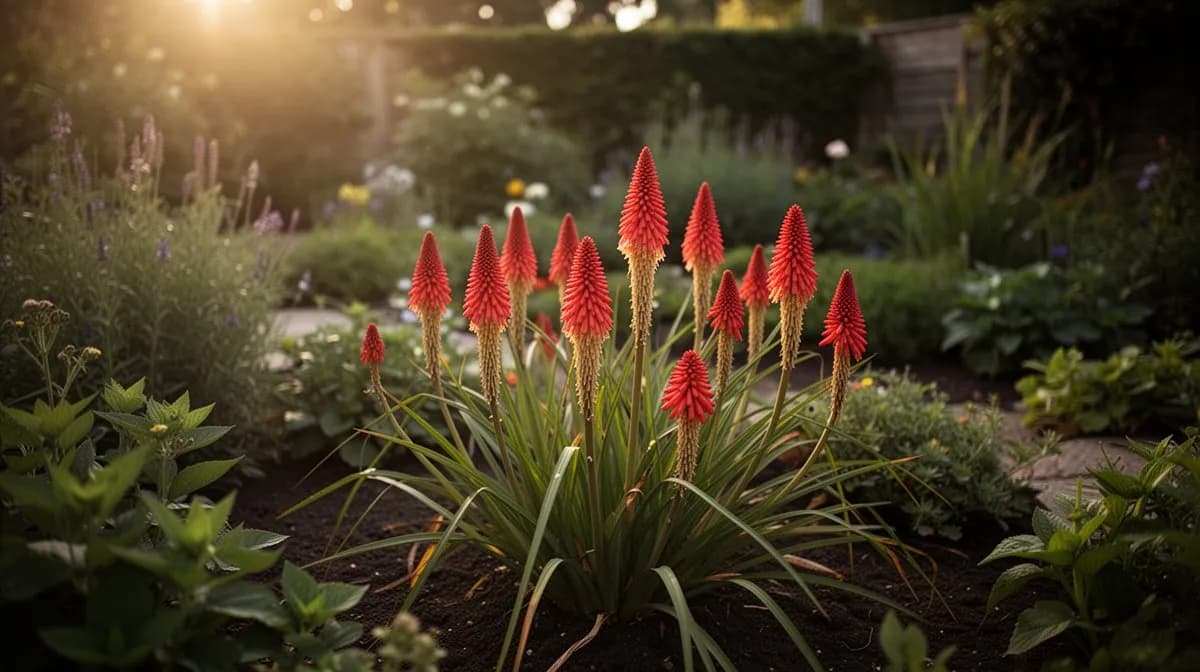
Kniphofia Nectar Garden Border Design
30 minutes planningDesign a pollinator-friendly border centred on Kniphofia cultivars chosen for successive blooming from late spring through autumn. This planting plan creates a continuous nectar corridor that attracts hummingbirds, butterflies, and bees throughout the growing season while providing stunning colour and structural interest.
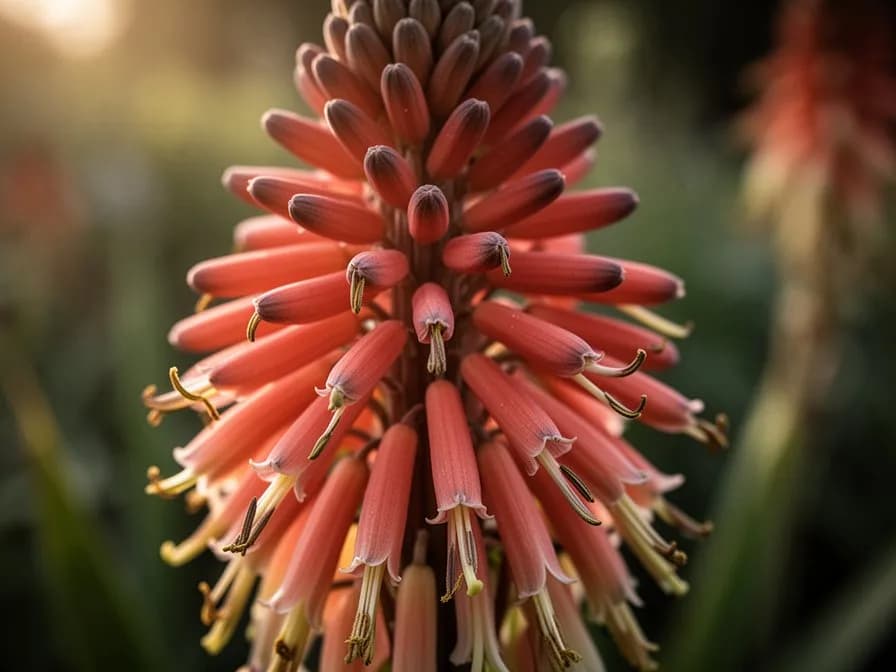
Kniphofia Division and Propagation Project
45 minutesRejuvenate an overcrowded Kniphofia clump by dividing it into multiple healthy plants. Division is the most reliable propagation method, producing plants identical to the parent that will typically flower in their first or second year. This is best done in late spring when new growth is actively emerging.
Dividing established Kniphofia clumps every three to four years maintains vigour and provides new plants for the garden
Yield & Spacing Calculator
See how many Red Hot Poker plants fit in your garden bed based on the recommended 60cm spacing.
4
Red Hot Poker plants in a 4×4 ft bed
2 columns × 2 rows at 60cm spacing
Popular Varieties
Some of the most popular red hot poker varieties for home gardeners, each with unique characteristics.
Kniphofia 'Alcazar'
A reliable classic with orange-red pokers fading to golden yellow at the base. Strong grower reaching 100cm.
Kniphofia 'Ice Queen'
Elegant pale green buds opening to creamy white, creating a cool, sophisticated look. Tall at 120cm.
Kniphofia 'Tawny King'
Warm tawny-amber flowers on 100cm stems, a subtle alternative to the brighter orange-red varieties.
Kniphofia 'Popsicle' Series
Compact varieties (60cm) in a range of colors including 'Mango Popsicle,' 'Lemon Popsicle,' and 'Papaya Popsicle.' Ideal for smaller gardens and containers.
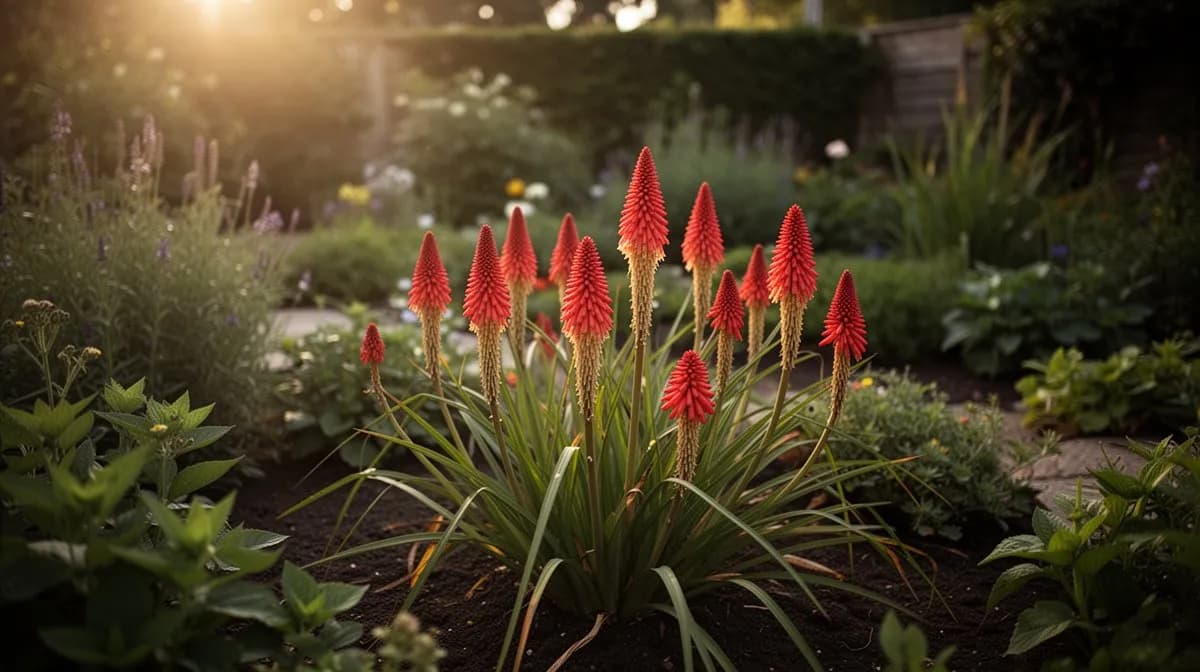
A stunning perennial border featuring multiple Kniphofia cultivars in shades of red, orange, yellow, and cream
When should I plant Red Hot Poker?
Plant Red Hot Poker in March, April, September. It takes approximately 365 days to reach maturity, with harvest typically in June, July, August, September.
What are good companion plants for Red Hot Poker?
Red Hot Poker grows well alongside Agapanthus, Daylily, Coneflower. Companion planting can improve growth, flavor, and natural pest control.
What hardiness zones can Red Hot Poker grow in?
Red Hot Poker thrives in USDA hardiness zones 5 through 9. With greenhouse protection, it may be grown in zones 3 through 10.
How much sun does Red Hot Poker need?
Red Hot Poker requires Full Sun (6-8h+). This means at least 6-8 hours of direct sunlight daily.
How far apart should I space Red Hot Poker?
Space Red Hot Poker plants 60cm (24 inches) apart for optimal growth and air circulation.
What pests and diseases affect Red Hot Poker?
Common issues include Crown Rot, Thrips, Lily Moth. Prevention through good garden practices like crop rotation, proper spacing, and companion planting is the best approach. See the detailed pests and diseases section above for symptoms, prevention, and treatment for each.
How do I store Red Hot Poker after harvest?
Red hot poker spikes do not dry successfully for arrangements due to their fleshy structure. However, the dried seed pods have a rustic appeal in winter arrangements. For garden preservation, divide large clumps in spring by carefully separating offset shoots with roots attached. Treat cut surfaces ...
What are the best Red Hot Poker varieties to grow?
Popular varieties include Kniphofia 'Alcazar', Kniphofia 'Ice Queen', Kniphofia 'Tawny King', Kniphofia 'Popsicle' Series. Each has unique characteristics suited to different growing conditions and culinary preferences. See the varieties section above for detailed descriptions.
What soil does Red Hot Poker need?
Red hot pokers require well-drained to sharply drained soil with a pH of 6.0-7.5. Sandy or gravelly loam is ideal; heavy clay must be amended with generous grit and organic matter. These plants are adapted to lean conditions and need little feeding—a light application of balanced slow-release fertil...
Why is my Kniphofia not flowering?
The most common reasons for Kniphofia failing to flower are insufficient sunlight (they need at least six hours of direct sun), soil that is too rich in nitrogen (which promotes leaf growth at the expense of flowers), plants that are too young (seed-grown plants often take two to three years to bloom), or overcrowded clumps that need dividing. Ensure your plant has full sun, well-drained soil, and apply a potassium-rich fertilizer in late summer to encourage bud formation.
How do I protect Kniphofia in cold winters?
In regions with harsh winters, protect Kniphofia by leaving the foliage intact through autumn and tying it into a loose bundle over the crown to shed moisture and insulate the growing point. Apply a thick dry mulch of straw, bracken, or bark chips around the base, keeping it clear of the crown itself. Good drainage is critical as winter crown rot caused by sitting in cold, wet soil kills more Kniphofia than frost alone. In extremely cold areas below USDA zone 5, consider growing Kniphofia in large containers that can be moved to a frost-free shed or garage.
When and how should I divide Kniphofia?
Divide Kniphofia clumps in late spring when new growth is actively emerging, typically every three to four years or when the centre of the clump becomes bare and unproductive. Lift the entire clump with a garden fork, wash off the soil to see the rhizome structure clearly, and separate individual fans each with a healthy piece of rhizome and roots. Trim the foliage by half to reduce moisture loss, replant divisions immediately at the original depth in well-drained soil, and water thoroughly. Most divisions will flower in their first or second year after replanting.
Are Kniphofia plants toxic to pets or children?
Kniphofia is not listed as toxic by the ASPCA or most major poison control databases, and it is generally considered safe around pets and children. However, the plant is not intended for consumption, and the roots contain anthraquinone compounds that can cause gastrointestinal irritation if ingested in large quantities. The stiff, pointed leaf tips can also cause minor skin scratches. As with all ornamental plants, it is sensible to discourage children and pets from chewing on any part of the plant.
Can I grow Kniphofia in containers?
Yes, Kniphofia can be grown successfully in large containers of at least 40 cm diameter and depth. Use a free-draining compost mix of equal parts loam-based compost, sharp grit, and perlite. Ensure the container has generous drainage holes and stand it on pot feet to prevent waterlogging. Container-grown plants need more frequent watering in summer and a liquid feed every two to three weeks during the growing season. In cold climates, container growing has the advantage of allowing you to move plants to a sheltered position in winter.
Which Kniphofia varieties are best for beginners?
For beginners, look for robust, free-flowering hybrids that are widely available and reliably hardy. 'Royal Standard' is a classic choice with red and yellow bicolour spikes blooming in mid-summer. 'Alcazar' produces vibrant orange-red spikes from early summer and is extremely vigorous. 'Percy's Pride' offers elegant lime-green to cream spikes in late summer and is very cold-hardy. For smaller gardens or containers, compact varieties like 'Flamenco' (mixed colours, 60 cm tall) or 'Popsicle' series are excellent choices that flower in their first year from divisions.
Ready to Grow Red Hot Poker?
Add Red Hot Poker to your garden plan and start designing your perfect layout.

Vladimir Kusnezow
Gardener and Software Developer
Zone 6b gardener. Growing vegetables and fruits in soil and hydroponics for 6 years. I built PlotMyGarden to plan my own gardens.
Jump to Section