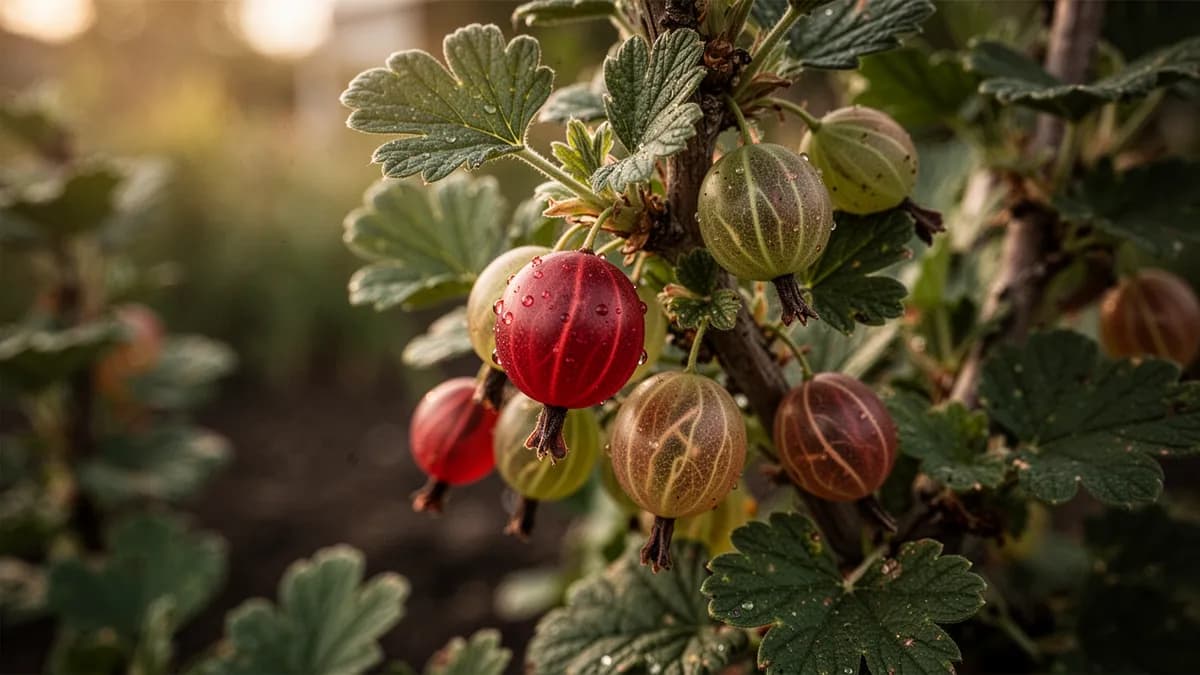
Gooseberry
Ribes uva-crispa
At a Glance
A thorny, shade-tolerant bush producing tart berries excellent for preserves and pies when cooked with sugar. Gooseberries thrive in cool climates and actually prefer some afternoon shade, making them ideal for partially shaded garden spots. Prune to an open goblet shape each winter, removing old wood to encourage young fruiting branches and improve air circulation. Harvest berries slightly underripe for cooking and jam-making, or leave them to fully ripen on the bush for sweet fresh eating.
Planting & Harvest Calendar
Growth Stages
From Seed to Harvest
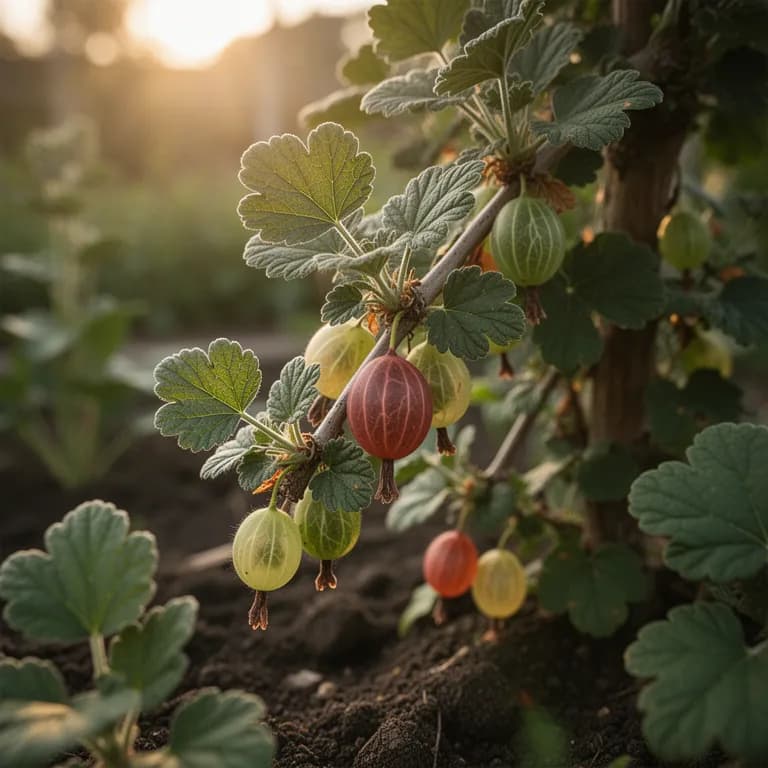
Dormancy & Planting
Days 0–30
Bare-root or potted plants are established during the dormant season. Roots begin anchoring in loose, well-drained soil. No visible above-ground growth occurs, but root activity is continuous during mild spells.
💡 Care Tip
Plant in a sheltered, sunny or partially shaded spot. Dig in plenty of well-rotted compost and apply a balanced fertiliser at planting. Ensure the crown sits just at soil level.
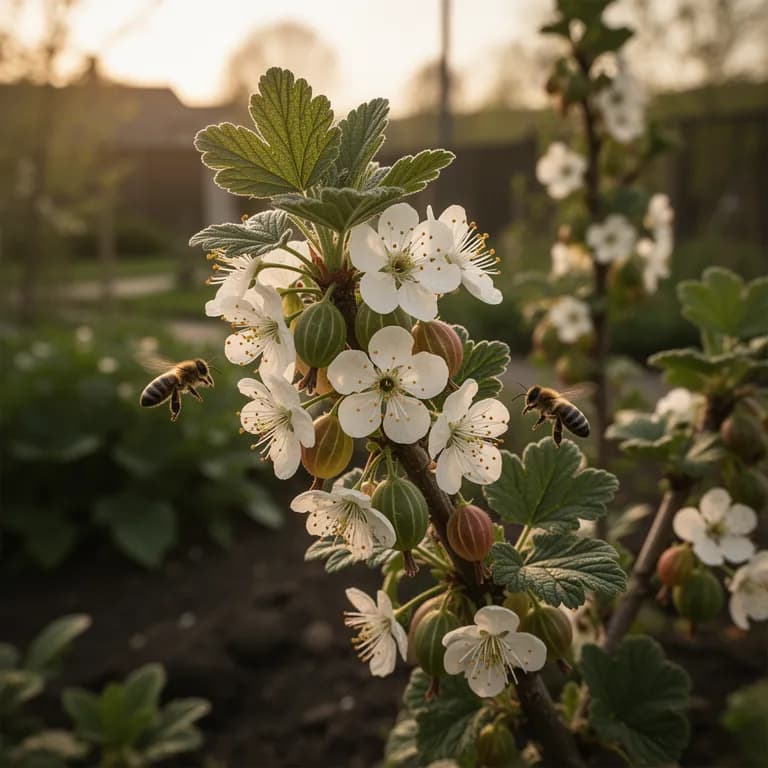
Delicate flowers appear in early spring before the leaves fully open
Monthly Care Calendar
What to do each month for your Gooseberry
May
You are hereThin fruitlets, removing every other berry along each stem. This is the single most effective step for increasing berry size. Apply a second balanced feed. Tie in any new shoots being trained on a cordon or fan.
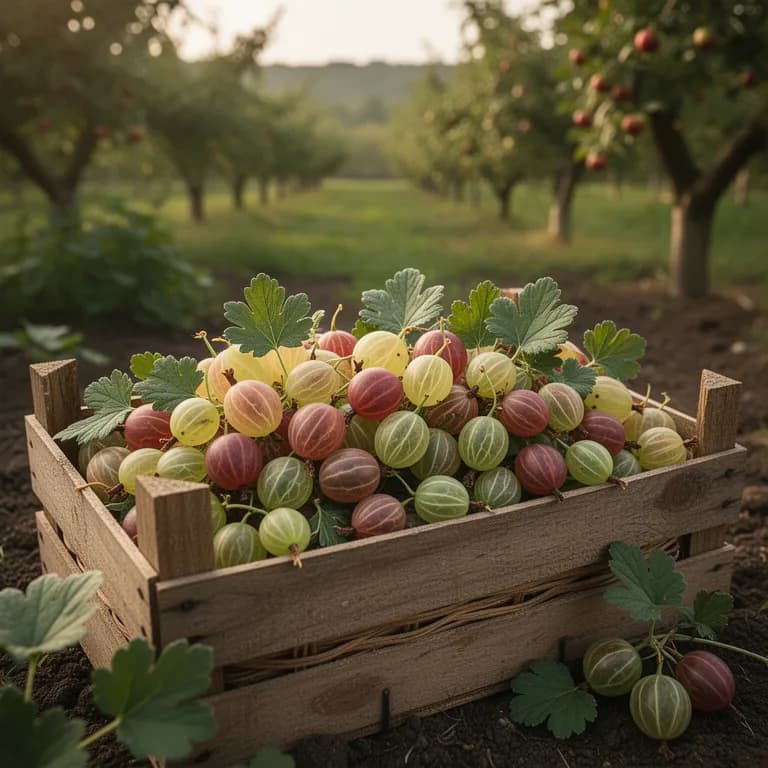
Thinning young fruits in May improves the size of the remaining crop
Did You Know?
Fascinating facts about Gooseberry
Gooseberries were so prized in Victorian England that competitive "Gooseberry Shows" were held across the north of England — the Egton Bridge Old Gooseberry Society, founded in 1800, still holds its annual show in Yorkshire today.
Gooseberries are among the most forgiving fruit bushes, thriving in partial shade and cool climates where many other fruits struggle. Plant bare-root bushes in late fall or early spring in moisture-retentive but well-drained soil enriched with generous amounts of compost. Space plants three to four feet apart and set the root ball slightly deeper than it was in the nursery to encourage additional rooting from buried stems.
Prune gooseberries to an open goblet shape with eight to ten main branches, removing old wood older than three years at the base each winter. This open center allows sunlight and air to reach the interior, reducing the risk of powdery mildew, which is the most persistent disease of gooseberry bushes. Tip-prune lateral branches to five leaves in midsummer to improve fruit size and encourage fruiting spur formation for the following year.
Mulch with a thick layer of well-rotted manure or compost in late winter, keeping it away from the stem to prevent rot. Gooseberries have shallow root systems and benefit from consistent moisture during fruit development. Net bushes before fruits begin to color to protect from birds, which find ripe gooseberries irresistible. In regions where white pine blister rust is a concern, check local regulations before planting Ribes species.
Gooseberry (Ribes uva-crispa) is native to the Caucasus region, the mountains of northern Africa, and across temperate Europe, where it grows naturally on rocky slopes, woodland edges, and hedgerows. Its cultivation in European gardens is documented from at least the 13th century, and it became particularly embedded in the culinary and horticultural traditions of Britain, Germany, and Scandinavia.
By the 16th century, gooseberries were being cultivated extensively in English monastery gardens and kitchen gardens, valued both for their culinary versatility and their hardiness in the cool, wet climate of northern Europe. The Tudor kitchen made heavy use of the sharp, unripe fruit as a sauce for rich meats — particularly mackerel and goose — and the plant was mentioned in numerous herbals of the period, including Turner's Herbal of 1568.
The 18th and 19th centuries saw an explosion of interest in gooseberry breeding, centred primarily in Lancashire and Yorkshire in northern England. Working-class weavers and miners formed gooseberry clubs and dedicated years of careful selection to producing fruits of extraordinary size. At the height of this craze, hundreds of named varieties existed, with prize-winning berries individually weighed in grains on jewellers' scales. The record-breaking berry "Woodpecker," grown in the early 19th century, weighed over 35 dwt — a figure that still stands as a benchmark in gooseberry cultivation history.
The plant crossed the Atlantic with European settlers and became established in colonial American gardens, though its cultivation was curtailed in the early 20th century following the discovery that Ribes species act as an alternate host for white pine blister rust. A federal eradication programme destroyed millions of plants and effectively ended commercial gooseberry growing in the US for several decades.
In the 21st century, interest has revived strongly, driven by the farm-to-table movement, renewed enthusiasm for heritage and unusual fruits, and the plant's exceptional productivity and low maintenance requirements. Modern breeding has produced thornless varieties, improved disease resistance, and a wider colour range — from the classic pale green through yellow, pink, white, and deep red — bringing new appeal to both ornamental and productive gardens worldwide.
Gooseberries are most easily propagated from hardwood cuttings taken in late autumn after leaf fall. Select healthy, straight stems of the current year's growth about twelve inches long, remove the lower buds to prevent suckering, and insert two-thirds of the cutting into moist soil or sand. Cuttings root readily over winter without rooting hormone and can be transplanted to permanent positions the following autumn. Layering is another reliable method: bend a low branch to the ground, peg it down, and cover with soil. Sever from the parent once well rooted.
Gooseberries prefer cool, moisture-retentive soil with a pH of 6.0 to 6.5 enriched with plenty of organic matter. Heavy clay soil suits them better than light sandy soil, which dries out too quickly for their shallow roots. Apply a thick mulch of well-rotted manure or compost in late winter and supplement with a high-potassium fertilizer such as sulfate of potash in early spring to promote fruit development. Avoid excessive nitrogen, which produces soft growth vulnerable to mildew.
Check Your Zone
See if Gooseberry is suitable for your location.
-20°C – 28°C
-4°F – 82°F
Gooseberries are fully hardy cool-climate shrubs that require a period of winter chilling to produce well. They thrive in temperate regions with cool summers and can tolerate hard frosts down to around -20°C when fully dormant. They perform best where summer temperatures remain below 28°C; prolonged heat above this level stresses the plants, reduces fruit quality, and increases susceptibility to powdery mildew. In hotter climates, positioning in partial afternoon shade is essential. Late spring frosts around -2°C to -4°C can damage open flowers and cause significant crop losses, so shelter from cold air pockets is important at planting time.
Common issues affecting Gooseberry and how to prevent and treat them organically.
Powdery mildew is by far the most common problem, particularly with older European varieties in humid climates. Choose resistant cultivars and prune for airflow to minimize this issue. Premature fruit drop usually indicates drought stress during the swelling period. Birds will strip ripe fruit quickly, so netting is essential. In some areas of the United States, growing Ribes species is restricted due to their role as an alternate host for white pine blister rust.
Chives and garlic planted around gooseberry bushes help deter aphids and may reduce the incidence of powdery mildew through their sulfur-containing compounds. Marigolds attract beneficial insects that prey on common gooseberry pests. Tansy and wormwood are traditional companion plants believed to repel sawfly moths. Avoid planting near fennel, which inhibits the growth of many fruit plants through allelopathic chemicals released by its roots.
- 1Plant gooseberries on a short "leg" — a clear stem of 15–20 cm between the soil and the first branches. This simplifies weeding around the base, improves air circulation at ground level, and significantly reduces the risk of fungal diseases splashing up from the soil.
- 2The single most important annual task is winter pruning to an open goblet shape. Aim for three to five permanent main stems with no crossing branches and plenty of light reaching the centre. This alone will reduce powdery mildew and improve fruit size more than any other intervention.
- 3Thinning the fruitlets in May — removing every other berry along each stem — is counterintuitive but dramatically increases the size and quality of the remaining crop. Use the thinnings for cooking; they have excellent flavour for jam and sauces even when unripe.
- 4Gooseberries are one of the few fruiting shrubs that thrive in partial shade. A north-facing wall or a spot receiving only four to five hours of direct sun is perfectly acceptable and can even be advantageous in warmer regions, slowing ripening for better flavour development and reducing mildew pressure.
- 5Gooseberry sawfly can devastate a bush in under a week. Check the undersides of leaves in the centre of the bush from mid-March onwards — eggs and tiny caterpillars are easy to miss until defoliation begins. Early hand-picking or treatment is far more effective than trying to manage a heavy infestation.
- 6For growing in small spaces, train gooseberries as cordons against a wall or fence. Single cordons take up as little as 30 cm of horizontal space and can be trained vertically to 1.8 m. They are easier to net, easier to prune, and easier to harvest than open bushes, with minimal reduction in yield per linear metre.
- 7Apply a potassium-rich fertiliser (such as sulphate of potash or a tomato feed) in early spring and again immediately after harvest. Potassium is the key nutrient for fruit quality, flavour, and disease resistance in gooseberries. Avoid excessive nitrogen, which promotes soft leafy growth attractive to aphids and mildew.
- 8Gooseberries can be propagated very easily from hardwood cuttings taken in autumn. Cut pencil-thick shoots of current year's growth into 20–25 cm lengths, remove all but the top two buds, and push into gritty compost or directly into the ground. Most will root freely over winter with minimal attention.
- 9Mulching deeply — 7–10 cm — with well-rotted compost or wood chip each autumn serves multiple purposes: it conserves moisture, suppresses weeds, feeds the soil life, and buries overwintering fungal spores that would otherwise re-infect the plant in spring.
- 10To extend the harvest season, plant at least two varieties with different ripening times. Pair an early variety such as 'Invicta' (ready from early June in milder areas) with a later variety such as 'Leveller' or 'London' which ripens in mid to late July, giving a harvest window of six weeks or more from a single small planting.
For cooking and jam-making, harvest gooseberries when they are full-sized but still firm and slightly underripe, as the higher pectin content produces better set jams. For fresh eating, leave berries on the bush until they soften, change color, and develop their full sweetness. Pick berries individually by hand, wearing gloves to protect against thorns. Thin the crop in late spring by picking every other berry for cooking, allowing the remaining fruit to grow larger for dessert quality.
Fresh gooseberries keep for one to two weeks in the refrigerator. They freeze exceptionally well without any preparation: simply spread on a tray, freeze solid, and transfer to bags for up to twelve months. Gooseberry jam is a classic preserve prized for its sharp, distinctive flavor and excellent set due to high natural pectin. The berries also make superb chutneys, fruit fools, crumbles, and wine. Gooseberry curd is a traditional English delicacy similar to lemon curd.
Plan your garden with ease
Love growing Gooseberry? Use our free garden planner to design your beds, track planting dates, and get personalized care reminders.
Nutritional Info
Per 100g serving
44
Calories
Health Benefits
- Exceptionally high in vitamin C — richer per 100 g than most citrus fruits
- Good source of dietary fibre supporting digestive health
- Contains flavonoids including quercetin and kaempferol with antioxidant properties
- Provides vitamin B5 (pantothenic acid) important for energy metabolism
- Rich in copper, a trace mineral supporting immune function and collagen formation
- Low glycaemic index makes them suitable for blood sugar management
- Contains isorhamnetin and anthocyanins in red varieties linked to cardiovascular health
💰 Why Grow Your Own?
A single established gooseberry bush purchased for around £8–£15 can produce 5–10 kg of fruit annually for 20 or more years. At typical shop prices of £4–£8 per 250 g punnet for fresh gooseberries (when available at all), a productive bush can save £80–£200 worth of fruit in a single season. Over a decade, the cumulative saving from one or two bushes easily exceeds £1,000, making the gooseberry one of the most financially rewarding fruiting plants available to home gardeners in temperate climates.
Quick Recipes
Simple recipes using fresh Gooseberry
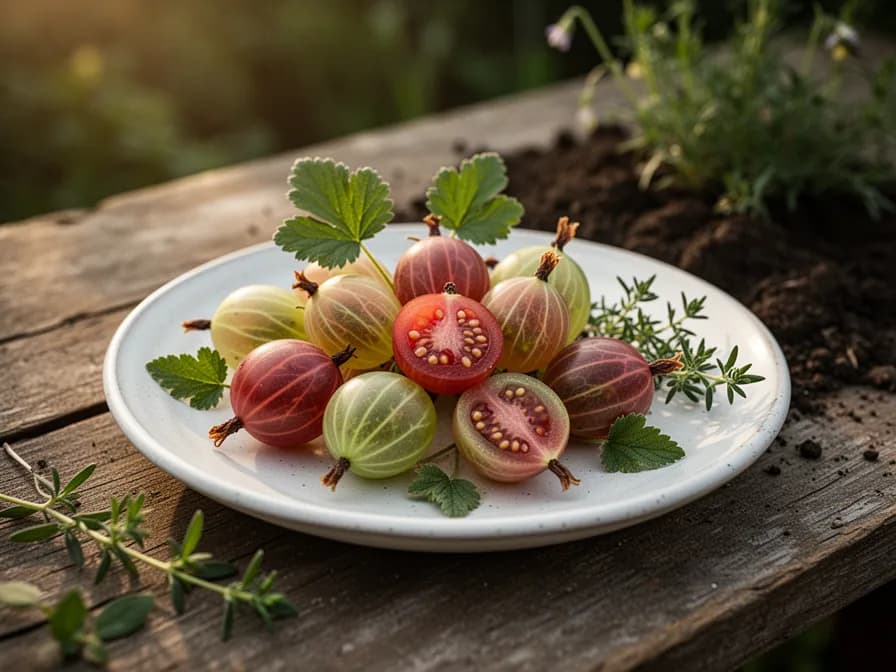
Classic Gooseberry Fool
20 minutesA quintessential British summer dessert requiring no cooking beyond a brief simmer. Sharp stewed gooseberries are folded through lightly whipped cream or thick custard, creating a cloud-like pudding that perfectly balances tart and sweet. Ready in minutes and endlessly adaptable.

Gooseberry & Mackerel Sauce
15 minutesA revival of the Tudor original — sharp underripe gooseberries cooked down with butter and a little sugar into a bright, tangy sauce that cuts through the richness of grilled mackerel or oily fish. Simple, seasonal, and strikingly good.
Gooseberry & Elderflower Jam
45 minutesGooseberries are naturally high in pectin, making them ideal for jam with a perfect set. The addition of elderflower cordial gives a fragrant, floral note that elevates this preserve beyond the ordinary. Excellent on sourdough toast or with soft cheese.

Gooseberry jam is one of the most classic preserves in British cooking
Yield & Spacing Calculator
See how many Gooseberry plants fit in your garden bed based on the recommended 120cm spacing.
1
Gooseberry plants in a 4×4 ft bed
1 columns × 1 rows at 120cm spacing
Popular Varieties
Some of the most popular gooseberry varieties for home gardeners, each with unique characteristics.
Invicta
A heavy-cropping, mildew-resistant green variety with large, tart berries ideal for cooking and preserves.
Hinnonmaki Red
A Finnish-bred variety with excellent mildew resistance producing sweet-tart red berries good for both fresh eating and cooking.
Pixwell
An American cultivar with few thorns and pink berries that hang below the branches for easy picking.
Captivator
A nearly thornless variety with sweet, reddish-pink berries and good disease resistance for home gardens.
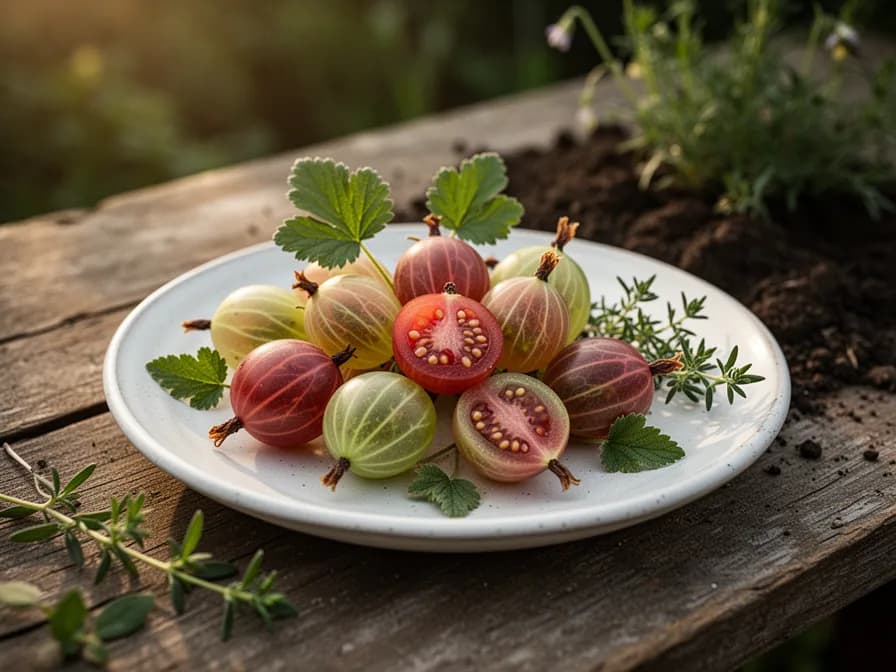
Red-fruited varieties develop rich sweetness when fully ripe
Gooseberries excel in traditional British desserts including fools, crumbles, and pies, where their tartness balances sugar beautifully. They make outstanding jam and jelly due to their high pectin content. Pair with elderflower for a classic flavor combination in cordials and desserts. Green gooseberries add a sharp tang to sauces for oily fish like mackerel. Ripe dessert varieties are delicious eaten fresh.
When should I plant Gooseberry?
Plant Gooseberry in March, April. It takes approximately 365 days to reach maturity, with harvest typically in June, July.
What are good companion plants for Gooseberry?
Gooseberry grows well alongside Chives, Garlic, Marigold. Companion planting can improve growth, flavor, and natural pest control.
What hardiness zones can Gooseberry grow in?
Gooseberry thrives in USDA hardiness zones 3 through 10. With greenhouse protection, it may be grown in zones 1 through 11.
How much sun does Gooseberry need?
Gooseberry requires Partial Sun (3-6h). This means 3-6 hours of sunlight, ideally morning sun with afternoon shade.
How far apart should I space Gooseberry?
Space Gooseberry plants 120cm (47 inches) apart for optimal growth and air circulation.
What pests and diseases affect Gooseberry?
Common issues include Powdery Mildew, Gooseberry Sawfly, Leaf Spot (Septoria). Prevention through good garden practices like crop rotation, proper spacing, and companion planting is the best approach. See the detailed pests and diseases section above for symptoms, prevention, and treatment for each.
How do I store Gooseberry after harvest?
Fresh gooseberries keep for one to two weeks in the refrigerator. They freeze exceptionally well without any preparation: simply spread on a tray, freeze solid, and transfer to bags for up to twelve months. Gooseberry jam is a classic preserve prized for its sharp, distinctive flavor and excellent s...
What are the best Gooseberry varieties to grow?
Popular varieties include Invicta, Hinnonmaki Red, Pixwell, Captivator. Each has unique characteristics suited to different growing conditions and culinary preferences. See the varieties section above for detailed descriptions.
What soil does Gooseberry need?
Gooseberries prefer cool, moisture-retentive soil with a pH of 6.0 to 6.5 enriched with plenty of organic matter. Heavy clay soil suits them better than light sandy soil, which dries out too quickly for their shallow roots. Apply a thick mulch of well-rotted manure or compost in late winter and supp...
Why are my gooseberry leaves covered in white powder?
This is American gooseberry mildew (Podosphaera mors-uvae), the most common disease of gooseberries. It thrives in warm, humid conditions with poor air circulation. Remove all affected shoot tips immediately and dispose of them — do not compost. Going forward, prune the bush to a more open shape to improve airflow, avoid high-nitrogen feeds, and mulch to prevent soil splash. Resistant varieties such as 'Invicta', 'Hinnonmäki Red', and 'Pax' suffer far less from this disease and are worth choosing if mildew is a recurring problem.
My gooseberry bush was completely stripped of leaves overnight — what happened?
This is almost certainly gooseberry sawfly (Nematus ribesii). The caterpillars, which are pale green with black spots, feed in groups and can defoliate an entire bush in just a few days. Check the undersides of leaves — particularly deep inside the centre of the bush where damage often starts unnoticed. Pick off caterpillars by hand if the infestation is manageable, or use an approved organic insecticide. The bush will usually recover and re-leaf if it has not been completely defoliated multiple times. From next season, begin checking for eggs on the undersides of inner leaves from mid-March onwards.
Can I grow gooseberries in containers?
Yes, gooseberries grow well in containers, particularly when trained as standards — a single vertical stem topped with a rounded head. Use a container of at least 40–50 litres with good drainage. A loam-based compost such as John Innes No. 3 is preferable to peat-free multipurpose for its weight (which prevents toppling) and better long-term nutrient retention. Water consistently through the growing season — containers dry out quickly — and feed with a balanced liquid fertiliser every two weeks from bud break to harvest. Repot every two to three years in late winter.
When is the right time to harvest gooseberries?
Gooseberries can be harvested at two distinct stages depending on intended use. For cooking — pies, crumbles, jam, sauces — pick fruits from late May to mid-June while they are still firm, green, and sharp. Their high pectin content at this stage makes them excellent for preserves with a reliable set. For eating fresh, leave fruits on the bush until they fully ripen — usually from late June to late July depending on variety — when they become soft, translucent, and develop their full sweetness. Colour is a useful guide: green varieties become slightly translucent and yield to gentle pressure; red and yellow varieties develop their full colour and soften noticeably.
How far apart should I plant gooseberry bushes?
For open bush forms, allow 1.2–1.5 metres between plants to give each bush room to develop its full framework and to allow adequate air circulation, which is important for disease control. For cordons trained against a wall or along wires, space single cordons 30–40 cm apart and double cordons 60–75 cm apart. Standards require at least 1.2 metres. If planting in a row with other fruiting shrubs, keep gooseberries away from raspberries and blackcurrants where possible — the proximity can complicate management of shared pests such as sawfly and aphids.
Do gooseberries need another plant nearby for pollination?
Gooseberries are largely self-fertile, meaning a single plant will set a full crop without a pollination partner. This makes them ideal for small gardens where space allows for only one or two plants. That said, planting two or more varieties will generally improve fruit set and yield through cross-pollination. Early flowering varieties can sometimes be caught by late frosts before bees are fully active, so choosing a slightly later-flowering variety as a companion can act as an insurance policy. Bumble bees are the primary pollinators, and encouraging them by planting early-flowering herbs and perennials nearby will benefit the entire fruit garden.
Ready to Grow Gooseberry?
Add Gooseberry to your garden plan and start designing your perfect layout.

Vladimir Kusnezow
Gardener and Software Developer
Zone 6b gardener. Growing vegetables and fruits in soil and hydroponics for 6 years. I built PlotMyGarden to plan my own gardens.
Jump to Section