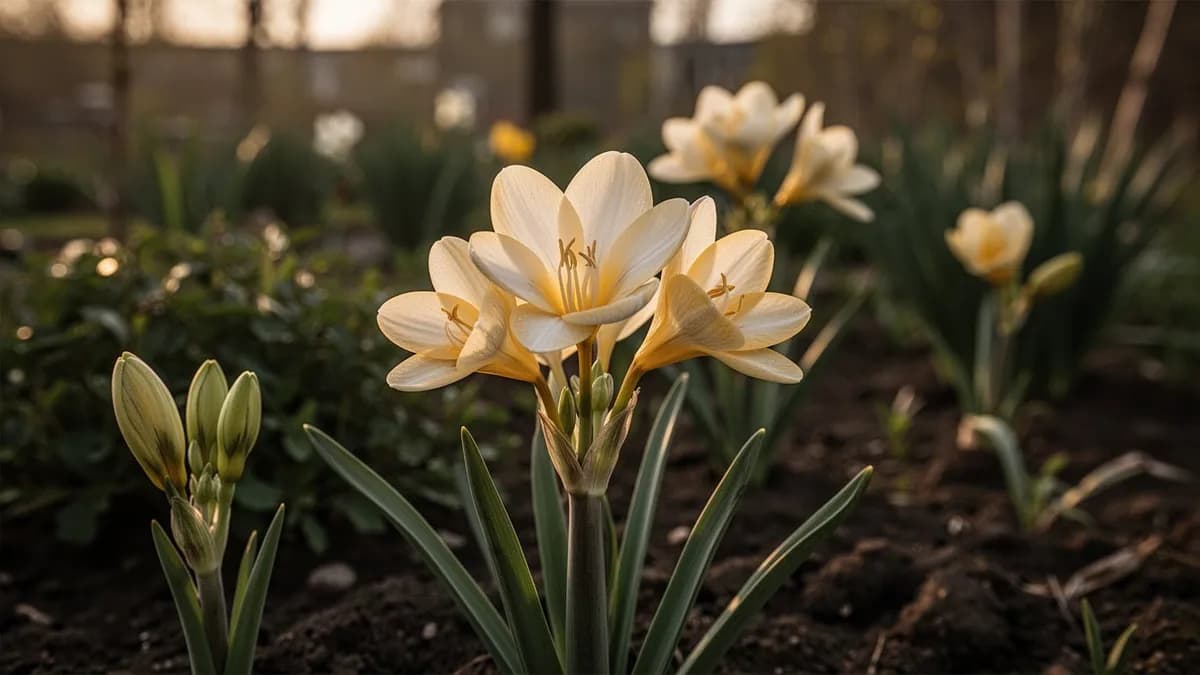
Freesia
Freesia x hybrida
At a Glance
A South African corm with deliciously fragrant, one-sided flower sprays in a rainbow of colors including white, yellow, pink, and red. Freesias are treasured for their sweet perfume and make outstanding cut flowers lasting over a week in water. They are tender and best grown in pots in cold climates, brought indoors for winter.
Planting & Harvest Calendar
Growth Stages
From Seed to Harvest
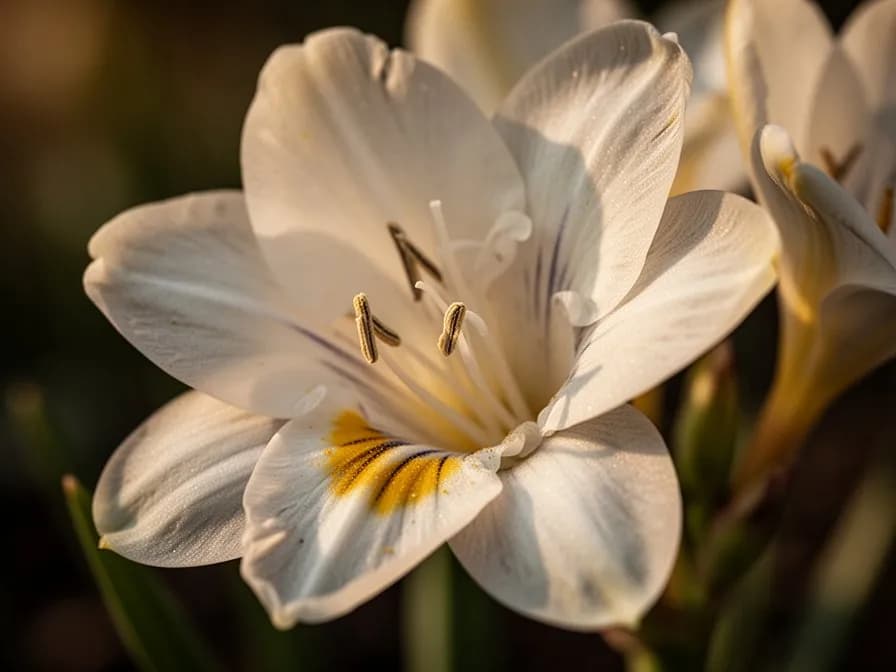
Corm Planting
Days 0–14
Plant freesia corms pointed end up, approximately 5 cm deep and 5-8 cm apart in well-drained soil enriched with compost. In frost-prone areas, plant in early spring after the last frost date; in mild climates, plant in autumn for late-winter blooms.
💡 Care Tip
Soak corms in lukewarm water for 30 minutes before planting to jump-start root development. Choose a site with full sun to light afternoon shade.
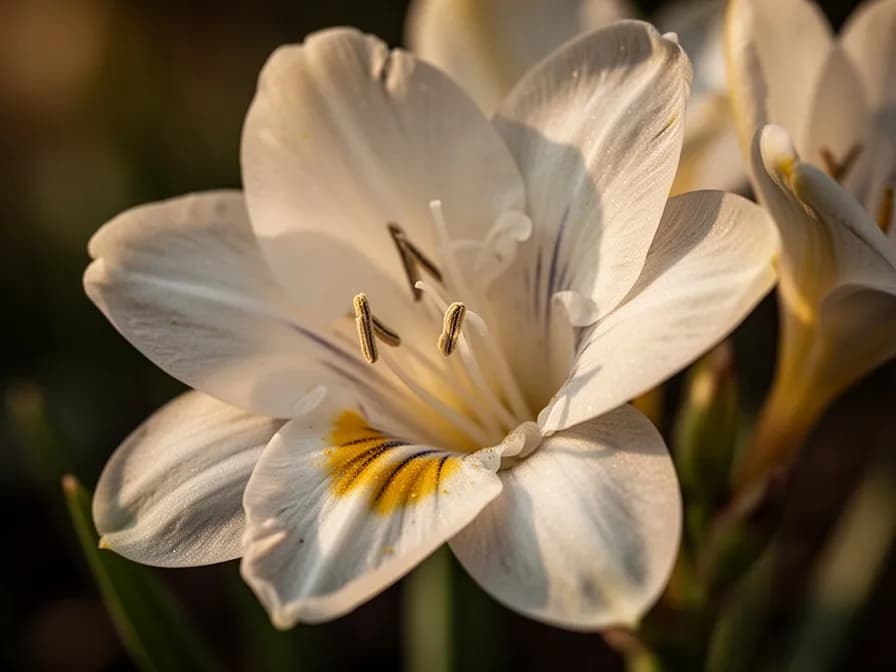
Healthy freesia corms should be firm and free of mold, planted pointed end up at a depth of about 5 cm
Monthly Care Calendar
What to do each month for your Freesia
May
You are hereStems elongate rapidly and buds begin forming. Switch to a high-potassium fertilizer to promote strong blooms. Tie stems loosely to stakes if they start to lean, and watch for aphids on tender bud tips.
Did You Know?
Fascinating facts about Freesia
Freesias are native to the eastern side of southern Africa, primarily in the Cape Provinces of South Africa, where they grow on rocky sandstone slopes and along stream banks in the fynbos biome.
Freesias are South African corms that thrive in Mediterranean climates with cool, wet winters and dry summers. In zones 9-11, plant corms 2 inches deep and 3 inches apart in autumn for late winter and spring blooms. In colder zones, grow freesias in containers that can be brought indoors before frost.
Plant in a sunny, sheltered position—freesias need warmth and protection from wind, which can damage the slender, wiry stems. The stems naturally lean to one side as the flowers open, so provide support with twiggy sticks or thin bamboo stakes. Insert supports early before the stems begin to bend.
Water regularly during active growth, keeping the soil evenly moist but never waterlogged. After flowering, continue watering until foliage yellows, then stop completely and allow the corms to dry out during summer dormancy. Potted freesias can be stored dry in their containers until autumn growth resumes.
Freesias originate from the southern and eastern Cape regions of South Africa, where roughly twenty wild species grow in the sandy, well-drained soils of the fynbos ecosystem. The first botanical description of a freesia species dates to 1766, when the plant was collected near the Cape of Good Hope, though it was initially classified under other genera. In 1866 the Danish-German botanist Christian Friedrich Ecklon formally established the genus Freesia, naming it after his close friend and fellow plant collector Friedrich Heinrich Theodor Freese. European hybridizers began crossing wild species in the late nineteenth century, and by the early 1900s Dutch and English growers had produced the first large-flowered cultivars in yellow and white. The introduction of tetraploid breeding lines in the mid-twentieth century dramatically expanded the color palette to include reds, pinks, oranges, mauves, and bicolors, while also increasing flower size and stem strength. Today the Netherlands remains the world center of freesia breeding and production, growing over one billion stems annually for the global cut-flower market. Freesias gained cultural significance in many countries: in Victorian England they represented trust and lasting friendship, and they remain a traditional seventh-anniversary flower. South African wildflower enthusiasts still seek out the delicate, highly scented species forms in their natural fynbos habitat, where several species are considered vulnerable due to habitat loss from agriculture and urbanization. The flower's enduring popularity is owed to its intensely sweet fragrance, its graceful arching stems, and its remarkable longevity as a cut flower, qualities that have made it a staple in wedding bouquets and floral design around the world for more than a century.
White freesias are considered the most intensely fragrant among all freesia color varieties
Freesias can be grown from seed and typically flower in 8-10 months. Sow seeds 1/4 inch deep in moist seed compost in late spring. Keep at 65-70°F (18-21°C) for germination, which takes 3-4 weeks. Grow seedlings on in pots through summer, keeping them watered. Transfer to a cool greenhouse or bright windowsill in autumn. Seed-grown freesias often produce interesting color variations not found in commercial corm selections.
Freesias require well-drained, sandy-loam soil enriched with compost. A pH of 6.0-7.0 is ideal. Good drainage is critical—corms rot quickly in soggy soil. When planting in containers, use a mix of two parts potting soil, one part perlite, and one part coarse sand. Apply a balanced liquid fertilizer every two weeks during active growth. Switch to a high-potassium feed once buds form to enhance flower quality and fragrance.
Check Your Zone
See if Freesia is suitable for your location.
7°C – 21°C
45°F – 70°F
Freesias thrive in cool to moderate temperatures between 7 and 21 degrees Celsius. They perform best with daytime temperatures around 15-18 degrees Celsius and cool nights around 7-10 degrees Celsius. Temperatures above 25 degrees Celsius inhibit bud formation and can cause flower drop, while prolonged exposure below minus 2 degrees Celsius damages foliage and corms. In warm climates, plant in autumn for winter-spring flowering when temperatures are naturally cooler.
Common issues affecting Freesia and how to prevent and treat them organically.
Flopping stems are the biggest complaint—the one-sided flower sprays cause stems to lean and eventually collapse without support. Plant in sheltered spots and provide early staking. Blind shoots (no flowers) result from corms that are too small (discard any under 1 cm diameter) or insufficient sunlight. In cold climates, outdoor freesias rarely succeed—grow them in containers for reliable results.
In mild climates, freesias combine beautifully with other South African bulbs like sparaxis, ixia, and babiana, which share similar growing requirements. Plant alongside ranunculus and anemones for a spring cutting garden. In containers, pair with trailing lobelia or alyssum around the base. The sweet fragrance of freesias complements rather than competes with the scents of nearby lavender and stocks.
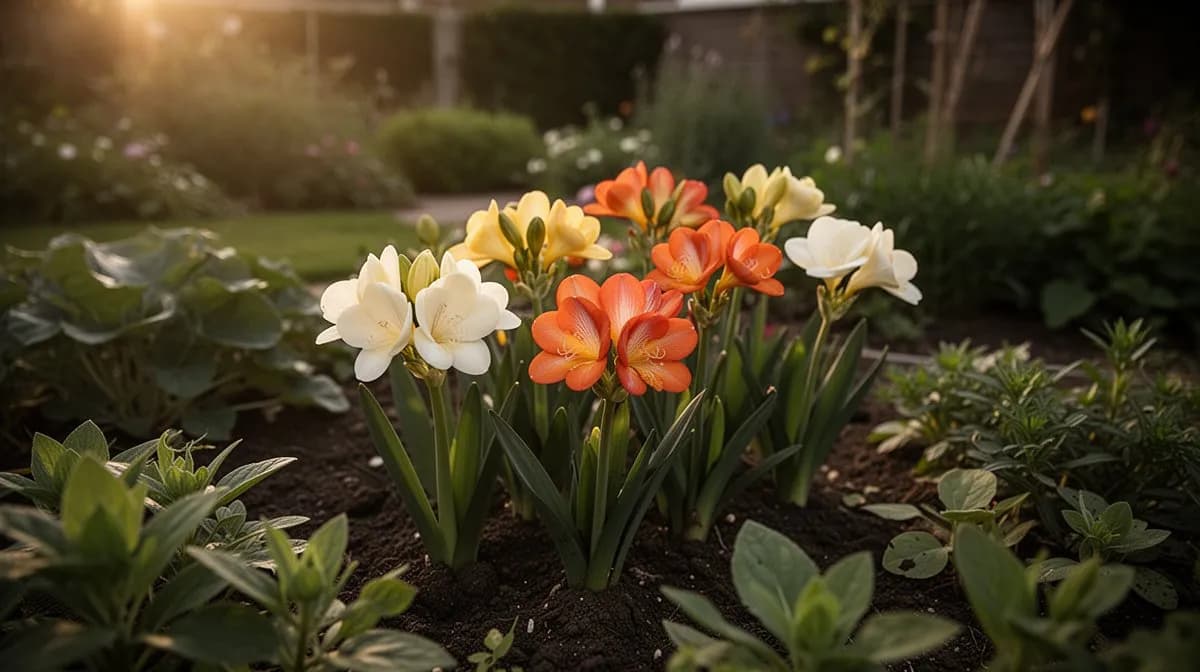
Freesias pair beautifully with other spring-blooming bulbs like ranunculus and anemones in cottage-style borders
- 1Plant freesia corms in groups of at least 10-15 for the best visual impact and fragrance effect, spacing them 5-8 cm apart in clusters rather than single rows.
- 2Provide full sun for at least six hours daily, though light afternoon shade in hot climates prevents heat stress that can abort flower buds prematurely.
- 3Use a well-drained sandy loam soil with a slightly acidic to neutral pH of 6.0-7.0; heavy clay soils should be amended generously with coarse sand and compost to prevent corm rot.
- 4Water regularly during active growth but allow the top centimeter of soil to dry between waterings. Overwatering is the most common cause of freesia corm failure.
- 5Support the slender stems with ring stakes, short bamboo canes, or brushwood twigs inserted at planting time, as freesia stems invariably lean and topple without support once buds develop.
- 6Apply a balanced liquid fertilizer every two weeks during leaf growth, then switch to a high-potassium formula once flower buds appear to intensify color and fragrance.
- 7In zones colder than USDA 8, lift corms after foliage dies back and store them dry at room temperature. In zones 9-11, corms can remain in the ground year-round if drainage is excellent.
- 8Stagger plantings every two weeks from early spring through mid-spring to extend the flowering season over six to eight weeks rather than having all blooms at once.
- 9Remove spent flowers promptly but leave the stems and foliage intact until they yellow naturally, as premature removal starves the corm and reduces next year's bloom count.
- 10Watch for aphids on emerging buds and treat early with a strong water spray or insecticidal soap. Freesias are relatively pest-free but aphids can distort flowers if left unchecked.
Cut freesias for arrangements when the first one or two florets on the spray have opened and the remaining buds show color. Cut in the cool of early morning with long stems. The remaining buds will continue to open sequentially up the spray over 5-7 days, providing an evolving display. The fragrance is strongest when flowers first open. Place stems in cool water with floral preservative immediately after cutting.
After foliage dies back naturally, lift and cure corms in a warm dry location for four to six weeks before storage
In zones 9-11, corms can remain in the ground year-round, going dormant during dry summer months. In containers or colder areas, stop watering after foliage yellows and store pots or lifted corms in a dry place at 65-75°F (18-24°C) for the summer dormancy period. Unlike spring bulbs, freesia corms do not need cold storage—they are warm-climate bulbs. Replant or resume watering in early autumn.
Plan your garden with ease
Love growing Freesia? Use our free garden planner to design your beds, track planting dates, and get personalized care reminders.
Nutritional Info
Per 100g serving
0
Calories
Health Benefits
- Freesias are strictly ornamental and are not edible; no part of the plant should be consumed.
- The essential oil extracted from freesia flowers is used in aromatherapy for its calming and mood-lifting properties.
- Freesia fragrance compounds include linalool and geraniol, which are also found in many culinary herbs.
- Some studies suggest freesia essential oil has mild antimicrobial properties when used in diffusers.
💰 Why Grow Your Own?
A single bag of 25 freesia corms costs around 8-12 dollars and can yield 50-75 cut flower stems in the first season. Comparable freesia bouquets retail for 10-15 dollars per bunch of 10 stems at florists. By growing your own, you can produce the equivalent of 60-100 dollars worth of premium cut flowers from one affordable bag of corms. Because freesias multiply through offset cormlets each year, your stock can double annually at no additional cost, making them one of the most economical cut flowers for home gardeners. After three years of replanting offsets, a single initial purchase can sustain an ongoing supply of fragrant blooms indefinitely.
Quick Recipes
Simple recipes using fresh Freesia
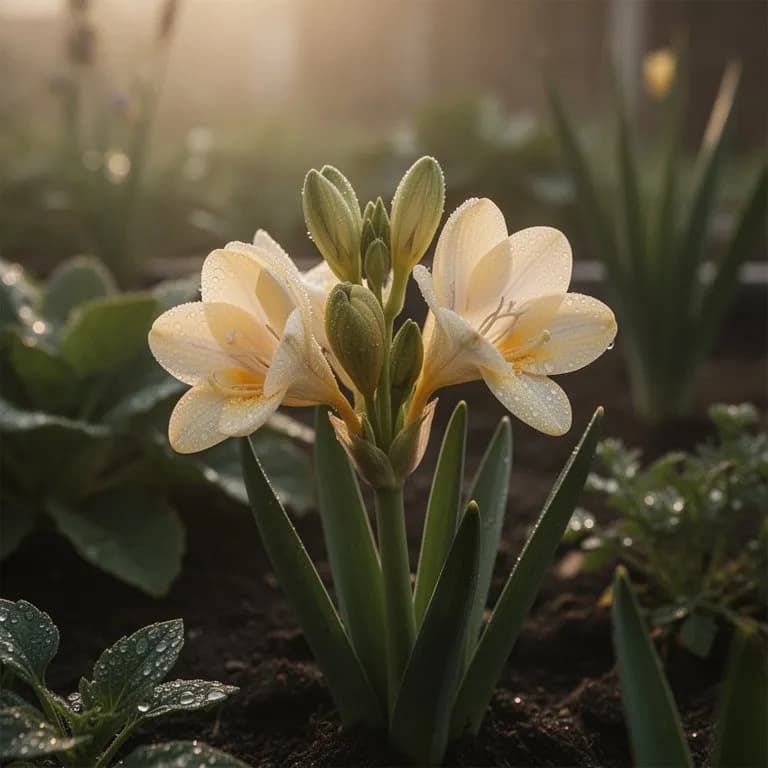
Freesia Fragrance Bouquet for the Home
10 minutesCreate a stunning and intensely fragrant fresh freesia arrangement that will perfume a room for up to ten days. Cut stems at an angle and arrange in a clean vase with cool water and flower preservative for maximum longevity.
Dried Freesia Potpourri Blend
20 minutes active, 2-3 weeks drying timePreserve the sweet scent of your freesia harvest by air-drying blooms and combining them with complementary dried flowers, herbs, and a few drops of essential oil for a natural homemade potpourri that makes a lovely gift.
Freesia-Infused Linen Spray
15 minutes plus overnight infusionCapture the delicate citrus-floral scent of freesias in a light linen and room spray. This simple infusion uses fresh petals steeped in distilled water with a touch of vodka as a natural preservative for a refreshing homemade mist.
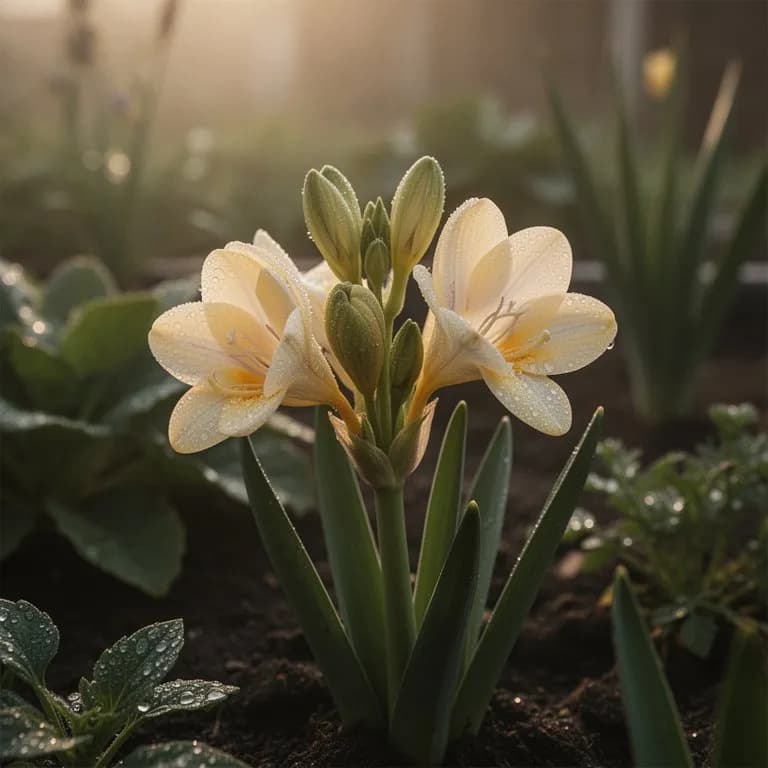
Cut freesias when the first one or two florets open for the longest vase life of up to ten days
Yield & Spacing Calculator
See how many Freesia plants fit in your garden bed based on the recommended 8cm spacing.
225
Freesia plants in a 4×4 ft bed
15 columns × 15 rows at 8cm spacing
Popular Varieties
Some of the most popular freesia varieties for home gardeners, each with unique characteristics.
Freesia 'Oberon'
Large double red flowers with outstanding fragrance and strong stems. One of the best red freesia varieties.
Freesia 'Gold River'
Rich golden-yellow single flowers with an intense, sweet fragrance. Vigorous grower with multiple flower sprays.
Freesia alba
The pure white species freesia with the most powerful fragrance of all. Graceful and elegant single flowers.
Freesia 'Blue Heaven'
Soft lavender-blue flowers with a delicate sweet scent. Unusual coloring that adds cool tones to spring gardens.
Freesia 'Royal Champion'
Deep violet-purple single flowers with a sweet, penetrating fragrance. Robust and floriferous.
When should I plant Freesia?
Plant Freesia in September, October. It takes approximately 120 days to reach maturity, with harvest typically in March, April, May.
What are good companion plants for Freesia?
Freesia grows well alongside Ranunculus, Anemone (De Caen), Tulip. Companion planting can improve growth, flavor, and natural pest control.
What hardiness zones can Freesia grow in?
Freesia thrives in USDA hardiness zones 9 through 11. With greenhouse protection, it may be grown in zones 7 through 12.
How much sun does Freesia need?
Freesia requires Full Sun (6-8h+). This means at least 6-8 hours of direct sunlight daily.
How far apart should I space Freesia?
Space Freesia plants 8cm (3 inches) apart for optimal growth and air circulation.
What pests and diseases affect Freesia?
Common issues include Aphids, Freesia Leaf Spot, Corm Rot (Fusarium). Prevention through good garden practices like crop rotation, proper spacing, and companion planting is the best approach. See the detailed pests and diseases section above for symptoms, prevention, and treatment for each.
How do I store Freesia after harvest?
In zones 9-11, corms can remain in the ground year-round, going dormant during dry summer months. In containers or colder areas, stop watering after foliage yellows and store pots or lifted corms in a dry place at 65-75°F (18-24°C) for the summer dormancy period. Unlike spring bulbs, freesia corms d...
What are the best Freesia varieties to grow?
Popular varieties include Freesia 'Oberon', Freesia 'Gold River', Freesia alba, Freesia 'Blue Heaven', Freesia 'Royal Champion'. Each has unique characteristics suited to different growing conditions and culinary preferences. See the varieties section above for detailed descriptions.
What soil does Freesia need?
Freesias require well-drained, sandy-loam soil enriched with compost. A pH of 6.0-7.0 is ideal. Good drainage is critical—corms rot quickly in soggy soil. When planting in containers, use a mix of two parts potting soil, one part perlite, and one part coarse sand. Apply a balanced liquid fertilizer ...
Can freesias be grown in pots and containers?
Absolutely. Freesias perform exceptionally well in containers at least 15 cm deep with drainage holes. Use a free-draining potting mix of equal parts compost, perlite, and coarse sand. Plant corms 5 cm deep and 3-5 cm apart, and place the pot in a sunny, sheltered location. Container growing is ideal in cold climates because you can move pots indoors before frost.
Why are my freesia stems falling over?
Freesias have naturally wiry, slender stems that cannot support the weight of their flower clusters without help. This is normal behavior, not a sign of poor health. Install ring supports, small stakes, or a grid of twine and stakes at planting time. Ensuring full sun also helps produce sturdier, shorter stems that are less prone to flopping.
How do I get my freesias to rebloom the following year?
The key is allowing the foliage to die back naturally after flowering, which takes six to eight weeks. During this period the leaves photosynthesize and recharge the corm with stored energy. Keep watering lightly until the leaves turn fully yellow, then stop watering and either lift the corms for storage or leave them in the ground in mild climates. Feed during the growing season to build strong corms.
Are freesias fragrant in all colors?
Fragrance intensity varies significantly by color. White and yellow freesias are consistently the most fragrant, producing the classic sweet citrus-honey scent. Red, pink, and purple varieties tend to have a lighter fragrance or may be nearly scentless depending on the cultivar. If fragrance is your priority, choose white or cream varieties from named fragrant cultivar lines.
When is the best time to plant freesia corms?
Timing depends on your climate. In USDA zones 9-11 with mild winters, plant in autumn (September to November) for late winter and early spring blooms. In colder zones 3-8, plant in spring after the last frost date when soil has warmed to at least 13 degrees Celsius. You can also start corms indoors in pots six weeks before your last frost date and transplant outside when conditions permit.
Do freesias attract pollinators to the garden?
Yes, freesias attract bees, butterflies, and other beneficial pollinators with their bright colors and sweet fragrance. In their native South Africa, they are pollinated primarily by long-tongued solitary bees. In home gardens, honeybees and bumblebees frequently visit freesia flowers. Planting freesias alongside vegetable gardens can help boost pollination rates for nearby food crops.
Ready to Grow Freesia?
Add Freesia to your garden plan and start designing your perfect layout.

Vladimir Kusnezow
Gardener and Software Developer
Zone 6b gardener. Growing vegetables and fruits in soil and hydroponics for 6 years. I built PlotMyGarden to plan my own gardens.
Jump to Section